
5—
Geography's Contributions to Scientific Understanding
Geography contributes to science as a part of the broad, creative, multidisciplinary effort to advance the frontiers of knowledge. In so doing it offers significant insights into some of the major questions facing the sciences, related to the pursuit of knowledge both for its own sake and for the sake of improving society's well-being.
In this chapter, geography's contributions to scientific understanding, both actual and potential, are illustrated by way of example. The chapter itself is organized around the three "lenses" through which geographers view the world—integration in place, interdependencies between places, and interdependencies among scales. These constitute the major sections in this chapter, along with spatial representation. For each of these sections the chapter uses examples from geography's subject matter to illustrate how geographic thinking and approaches contribute to scientific understanding generally. The chapter then provides examples of how such thinking can be used to address important scientific and societal issues. These illustrations are followed by a similarly brief and selective discussion of spatial representation.
For the sake of brevity, and because the report is directed primarily to audiences outside of the discipline, the chapter illustrates geography's contributions by using a few examples, chosen primarily to illustrate the range of geographic research. Far more research by geographers has contributed significantly to science than is noted here specifically, of course. Examples of this research are referenced throughout this report.
Integration in Place
Geography's traditional interest in integrating phenomena and processes in particular places has a new relevance in science today, in connection with the search for what some have called a ''science of complexity."
Geography's Subject Matter
From its work on integration in place, geography has produced a substantial literature related to the challenges of integration in place and the significance of such integrative perspectives for scientific understanding. Two examples are environmental-societal dynamics and the distinctiveness of place.
Example: Environmental-Societal Dynamics
At least since Malthus,1 the relationship between population and its social and environmental resource base has been a central issue for science, and geography has long focused on the nature of that relationship, ranging from local and contemporary contexts to global and historic processes. Geographers are involved in both data collection and analysis to identify connections among changes in population, environment, and social responses.
For example, geographers have reconstructed population-resource dynamics for a large number of places throughout the world. Following Butzer (1982), several important facets of the relationship over the long-term may be distilled from these works, such as the following:
- Sustained population growth is not the norm at subglobal (regional) levels; given sufficient time, locales and regions may display significant declines in population.
- These declines are typically associated with political devolution.
- Populations do not always, or regularly, approach the limits allowed by the sociotechnological conditions in which they exist.
- Human-induced environmental change involves continual trial-and-error adjustments on the part of the population. Among agrarian-based societies, these adjustments are consciously related to a strategy to balance short- and long-term needs.
As another example, flows of materials, energy, and ideas across places have powerful impacts on human uses of the environment, and such impacts can mask basic understanding of contemporary environmental change. The sixteenth-
century depopulation of the Americas is exemplary in this regard (see Sidebar 5.1). Spanish conquistadors reported large Indian populations throughout the Americas, but within 100 years these populations were reduced by two-thirds or more in Middle and South America as new diseases and sociopolitical orders were introduced from Europe and Africa. Not only is this event, which has received considerable research attention by geographers (Denevan, 1992), significant for historical demography and epidemiological history, it also has significant implications for understanding contemporary land cover change, a central issue in global change research.
Human impacts on the Earth have become sufficiently apparent and worrisome in the past few decades that the science of human-environment relationships has become a high priority concern across disciplinary and national lines. Witness, for instance, the rise of the Intergovernmental Panel on Climate Change, the International Geosphere-Biosphere Programme, and the Human Dimensions of Global Environmental Change Programme. Geography is contributing signifi-
|
SIDEBAR 5.1 Pre-Hispanic Populations and Their Collapse The collapse of pre-Hispanic native populations in the Americas is not seriously disputed, nor is its primary cause: introduced infectious diseases (Cook and Lovell, 1992). Yet some 400 years later the size of the Native American population during the contact period and the scale and trajectory of its collapse remain two of the most controversial issues in American demographic history. This controversy is perhaps most pronounced for the Basin of Mexico (now greater Mexico City). Eve-of-conquest population estimates for the basin range between 1 million and 3 million. Some 100 years later, only 70,000 to 350,000 Native Americans remained—a minimal loss of 65 percent of the original population. Geographer Thomas Whitmore (1992) utilized a human-ecological simulation model to test various hypotheses for the size of the pre-Hispanic population and the trajectory of its collapse. The model accounted for demographic changes in age structure, mortality, fertility, and migration caused by introduced diseases, food shortages, homicide, and other factors; agricultural changes caused by excess mortality and ill health; and disease changes, that is, how individual epidemics affected human health and mortality. Exogenous forcing functions, such as extreme or poor weather, homicide, and labor withdrawal, were also addressed. The model was calibrated by using accepted or conservative estimates for parameter values and was fine tuned using sensitivity tests. Three historical population reconstructions were simulated for the basin, ranging from mild to severe depopulation. The simulations supported "moderate" depopulation, in which a 1519 basin population of 1.6 million was reduced in a series of steplike catastrophes to about 180,000 in 1610—a 90 percent loss, with 80 percent of the loss occurring in the first 50 years. The simulations suggest that the most important factor in depopulation was short-term increases in mortality caused by disease. Other factors, such as homicide, were overwhelmed in importance by the virulence of new diseases in a population with no or little immunities. |
cantly to agenda setting and research in these initiatives (Townshend, 1992; Henderson-Sellers, 1995; Turner et al., 1995).
Example: The Distinctiveness of Place
As noted in Chapter 3, one of the characteristic perspectives of geography is that place matters. In other words, where something takes place affects what takes place because of the mediating effects of local conditions. Geographers' concern with place leads them to explore not only the particular characteristics of individual places but also the processes by which humans divide up or appropriate portions of the Earth's surface for various purposes. As such, geographers direct attention to human territoriality, defined by Sack (1981, p. 55) as "the attempt to affect, influence, or control actions and interactions (of people, things, and relationships) by asserting and attempting to enforce control over a specific geographical area." Geographers are interested in human territoriality because the divisions of the Earth's surface reflect and shape the ways in which people think about the places where they live, as well as their decisions and actions.
It is impossible to understand human history fully, or past and present human actions, without reference to territoriality. Rather than simply asking questions about what happens in a given territorial unit, geographers consider how and why that unit came into being in the first place, and its history of development (Earle et al., 1996). Geographers have addressed a wide variety of issues related to territoriality, including disjunctions between political territories and environmental regions, ways in which territorial constructs affect ethnic relations, and the uses of territorial strategies to achieve social ends (Demko and Wood, 1994).
Geographic research on the distinctiveness of place addresses a range of economic, political, and social issues such as industrial agglomeration and regional economic development, the role of place-based political identities, places as foci for personal and societal opportunities or constraints, and the cultural meaning of the environment in which people live (see Sidebar 5.2). Research along these lines is shaping the way that place is conceptualized across the social sciences. For example, after a long history of asserting that geographic clusters of prosperity are temporary aberrations, economists now recognize that the evolving characteristics of places make such inequalities the rule rather than the exception (Arthur, 1988; Krugman, 1991). Geographers have gone beyond economic mechanisms to examine the role of political and social processes in constructing local "governance structures" that promote economic dynamism (Storper and Walker, 1989). This research attempts to make sense of evolving but persistent geographic inequalities in economic prosperity at all spatial scales.
Most studies of political preferences in modern states assume that differences are products of social cleavages along class, religious, or demographic lines. This assumption relegates place to a minor role in the political arena; to the extent that place-based identities and influences are considered at all, they are
|
SIDEBAR 5.2 The Rise of Silicon Valley Geography's attention to place is exemplified by research on the extraordinary economic success of Silicon Valley. This success reflects the coming together of economic, political, and social processes in a place, creating new conditions that reinforce but may eventually undermine economic success (Hall and Markusen, 1985; Scott, 1988a; Saxenian, 1994). Silicon Valley had appropriate preconditions for high-technology industry, showing the importance of certain local conditions as a trigger for agglomeration. Yet at the same time these conditions did not predetermine the success of Silicon Valley because they could be found in a number of other places. Geographers have demonstrated how the growth of industrial districts in new locations such as Silicon Valley and southern California reflects the rise of new industrial sectors with new economic and labor requirements and, in some cases, a desire to develop their activities at some distance from locations associated with more traditional modes of production (Storper and Walker, 1989). A combination of competition and cooperation accelerated technological change and secured market niches for selected firms. In places like Silicon Valley, there is a mutually reinforcing feedback between place characteristics and economic activities. This feedback reflects economic interdependencies and political interventions in supporting economic growth and demonstrates how agglomeration generates increasing returns, which create economic dynamism. Silicon Valley is an example of a new and distinctive combination of economic, political, and social activities, now developing in just a few places, with broader ramifications for many other locations (Scott, 1988b, c). Certain conditions in Silicon Valley may eventually lead to an undermining of economic growth. These conditions include high labor costs, which are inducing the relocation of low-wage, less skilled employment to Southeast Asia and some skilled software development work to India and China. These conditions also include congestion, environmental pollution, and even poverty and reinforced social inequality between higher-paid salaried employees and lower-skilled wage workers (Saxenian, 1994). In addition, the decentralized organizational structure of Silicon Valley may also hinder longer-term economic prosperity because it encourages excessive competition, hypermobility of skilled labor, and industrial fragmentation (Florida and Kenney, 1990). The questions of how places adjust their local conditions to retain economic dynamism and who in those places benefits from this dynamism are issues of continuing research, for both those concerned with the geographic organization of economic activities within the United States and those concerned with reinforcing the competitive edge of the United States in the world economy. |
treated as anachronisms that have resisted the general trend toward the nationalization of political life. That is, where people live is thought to be of minor importance. Geographic research, however, has established the importance of "the fluid, constantly reworked local political cultures of particular places" (Agnew, 1992, p. 68), demonstrating the continued importance of the experience of place in the political process.
Similarly, geographic work has highlighted the importance of place in the formation of cultural and social identities and experiences. In this late-twentieth-century world, as Americans struggle to address the tensions and celebrate the richness of human differences—of ethnicity, race, nationality, gender, and generation—a focus on the ways that ideas about place serve to divide people but also to connect them can offer new visions for personal and social values (Agnew, 1987).
Geographers have also challenged the tendency of much social science research to treat the environment in which people live merely as a passive byproduct of history. They have argued that the material characteristics of the environments in which people live reflect and influence personal, social, and environmental understandings. As the social sciences begin to take more seriously the role of symbols and images in human affairs, geography's concern with the social dimensions of landscapes has taken on new relevance and visibility. Geographers have done a great deal of research to uncover the political/social meanings, influences, and conflicts embedded in landscapes (e.g., see Cosgrove and Daniels, 1988; Anderson and Gale, 1992) and representations of landscapes (e.g., Harley, 1990; Pickles, 1995b).
By focusing on the tangible environments where people live and work, geographic research is part of a growing thrust within the social sciences to understand the importance of everyday life in social change (e.g., Giddens, 1985). At the same time, geographers are affecting the direction of that thrust by linking human ideas and actions to the settings in which they are embedded.
Geography's Relevance to Issues for Science and Society
Geographic research addressing integration in place has put the discipline at the frontier of experimentation with integration as a challenge for science. Geography's experience with integration in place also has been fruitful in providing insights to issues of interest to science at large, as illustrated by the following examples of complexity and nonlinearity and central tendency and variation. Geographic research on integration in place is also important to scientific understanding of important societal issues. Three examples are given below—on economic health, ecosystem change, and conflict and cooperation—to illustrate this importance.
Example: Complexity and Nonlinearity
Places are natural laboratories for the study of complexity because places exhibit a wide array of interlocking processes and activities, as well as interconnections with other places. Nonlinear growth and decline also are found locally in part because introduced processes or activities may not encounter well-developed moderating influences. Geographers have examined the complex and nonlinear systems of places to better understand how and why places change. Historical
research on the evolution of the American urban system, for example, illustrates the evolutionary nature of human settlement systems. This research shows that early settlement patterns can create "path dependencies" for the future evolution of settlement systems. It also shows how economic restructuring, such as the shift from mercantilism to industrial capitalism, can create "bifurcation" of settlement systems with new nodes of growth in some regions and dissipation of growth in others (Borchert, 1967, 1987; Conzen, 1975; Dunn, 1980; Pred, 1981). Theoretical research has identified how the complexity of spatial economic dynamics reflects disequilibrating contradictions and social conflicts, resulting in periodic attempts by the private sector and the state to overcome emerging conflicts and crises through spatial restructuring (Harvey, 1982; Sheppard and Barnes, 1990).
Geographers have applied systems theory to help understand the complex interactions between nature and society that are caused by natural hazards, including multiple adjustments and attendant feedbacks (Cutter, 1993). Geographers have also examined the mechanisms of ecosystem stability and change, especially human and other agents of short-and long-term ecosystem change (Zimmerer, 1994). Ideas about chaotic behavior or catastrophic events within places, additionally, have contributed to research on growth within and among cities (Allen and Sanglier, 1979; Dendrinos, 1992). These studies illustrate geographers' contributions to a more fundamental understanding of environmental and social systems in ways that should engage ecologists, engineers, mathematicians, physicists, and other members of the scientific community.
Other geographic research has been directed toward the identification and description of patterns that may have emerged from nonlinear, complex, or chaotic dynamics. Fractal dimensions, in particular, have been used to simplify and represent the outcomes of nonlinear, chaotic, or complex dynamics (Goodchild and Mark, 1987). Urban settings (Batty and Longley, 1994) as well as satellite and map images (Malanson et al., 1990) have been usefully analyzed and characterized with fractals.
Example: Central Tendency and Variation
Interactions in space and with nature tend to result in certain spatial and environmental regularities, leading to the study of expected outcomes, or central tendencies, across geography's domains of interest (Chorley and Haggett, 1967). Geographers have recognized, however, that observable geometries in the social and physical worlds are dynamic in their nature and multidimensional in their explanation. Certain geographic patterns reflect efficiency (as in economic production systems), but only under rather narrowly defined conditions that are subject to change (such as the time or cost of travel) and to inherent variability. Together, change and inherent variability often influence the observed variation, which can take the form of unsystematic departures from central tendency, changes to the central tendency itself, or alterations in the variance structure. Changes in variation can signal shifts from one system state to another; therefore, variation cannot be
ignored without deleterious or sometimes catastrophic consequences. Geographic research into the nature of change and variability, as well as into central tendency, has revealed much about the dynamics of places (Dendrinos, 1992). As in other sciences, geographers also have recognized that variation and central tendency are usually interdependent and cannot be evaluated or understood separately.
Example: Economic and Social Health
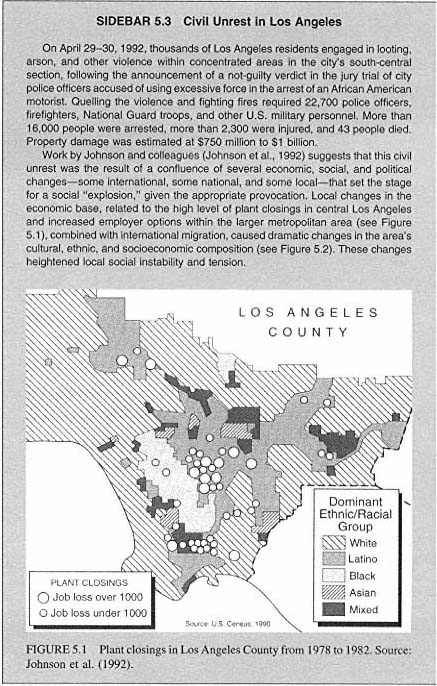
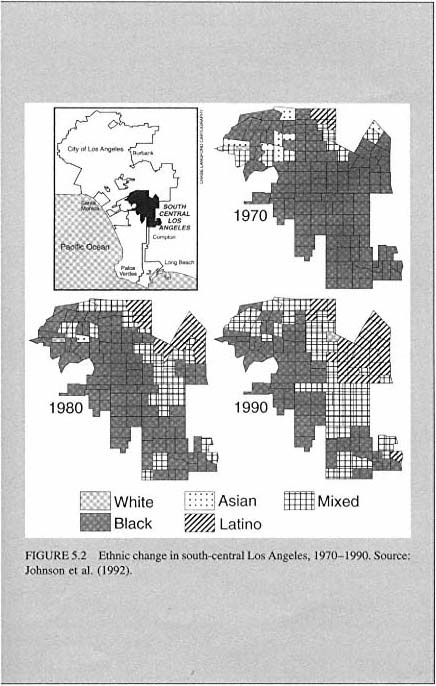
A geographic perspective recognizes that economic changes can create or exacerbate economic imbalances across places, whether or not the economic system overall is trending toward or away from equilibrium. A particular concern of geographers is the implications of economic change for different groups in society within a place, especially for groups distinguished by class, gender, and race. Related issues include the composition of the work force as rooted in social forces and potentials for cooperation versus conflict (see Sidebar 5.3).
Geographers have examined high-technology centers to evaluate their potential as models for regional growth in other areas (see Sidebar 5.2). They have noted that locational considerations are different for innovation centers than for other industrial activities such as branch plants (e.g., high skill levels are especially important for innovation centers). Since labor is less mobile than capital, regional growth related to technological change is likely to follow existing patterns of labor skills, which increases the challenges for areas that do not now have competitive skill levels (Malecki, 1991).
Example: Environmental Change
Scientific concerns about environmental change have increased markedly in the past few decades. Geographers have made important contributions to the understanding of such changes through their research on human-induced climate change, ecosystem dynamics and biodiversity, and earth surface processes.
For example, human populations are increasingly concentrated in urban and suburban regions. Land surfaces in these areas, in turn, are being transformed into highly unnatural mosaics, mosaics often dominated by interconnected and impervious patches of buildings and transportation networks. With the transformation of rural landscapes into suburban and urban landscapes comes dramatic changes in local and regional climates (see Sidebar 5.4). Urban heating and drying, for example, have been measured and simulated by geographers for decades (e.g., Terjung and O'Rourke, 1980; Arnfield, 1982; Grimmond and Oke, 1995). Geographers' research not only has brought to light climatic consequences of urbanization, but their models have begun to provide a means for assessing the potential climatic impacts of future urbanization.
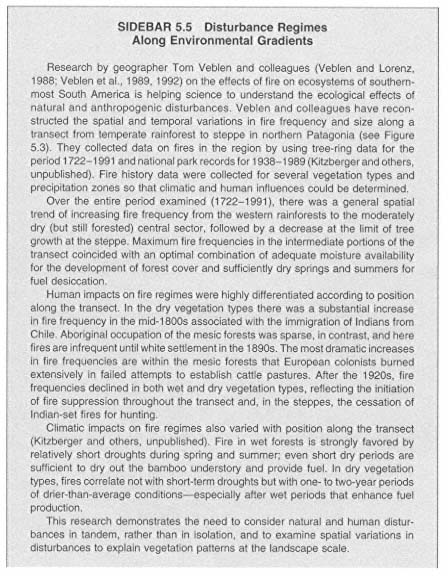
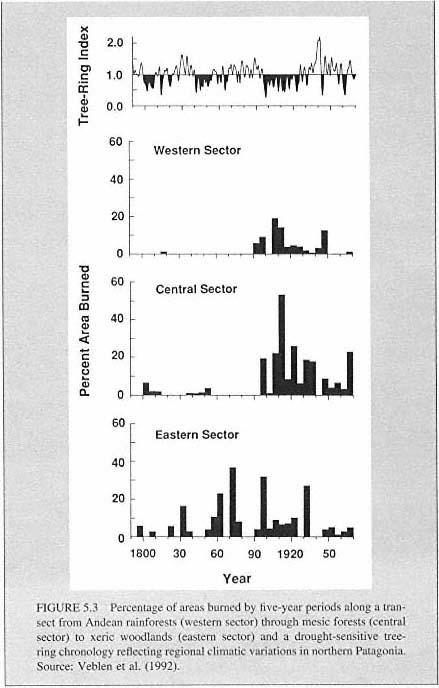
Another focus of environmental change research involves reconstructing recent disturbance patterns and ecosystem processes in forest, shrubland, and desert communities through careful fieldwork and historical analyses (see Sidebar 5.5).
|
SIDEBAR 5.4 Urban Climatology Urbanization dramatically alters the land surface and converts preurban local or regional climates into distinctively "urban climates." Probably the best known and most intensively studied urban-climatic feature is the "urban heat island," although considerable attention has also been directed toward the effects of urbanization on precipitation, humidity, wind, and the air quality regimes of cities. Using integrated programs of fieldwork and numerical modeling, geographers have been at the forefront of assessing urban influences (especially the effects of urban surface materials and morphology) on local and regional climates (Oke, 1987). Research by geographers also is beginning to suggest that extensive land surface changes associated with urban-and suburbanization occurring worldwide may be contributing to global climate change. Sue Grimmond and Tim Oke have been particularly effective at integrating in-the-field measurement programs with the numerical modeling of urban climates (Grimmond and Oke, 1995; Grimmond et al., 1996). Making and evaluating heat and moisture flux observations, as well as compiling surface character databases, their research teams have examined a number of North American cities, including Los Angeles, Chicago, Miami, Vancouver, Sacramento, Tucson, and Mexico City. Not only have they documented the considerable variability that exists both within and between cities, but their analyses show that daily patterns of the fluxes and the timing of the peaks are remarkably similar among the cities. Their measurements further indicate that evapotranspiration is even higher than expected in many residential areas, owing to the irrigation of planted vegetation. Evapotranspiration in other parts of the city tends to be quite low, as available energy mostly warms the urban fabric. Grimmond and colleagues have also been able to use geographic information systems (GISs) to help synthesize land surface information, field measurements, and model simulations (Grimmond and Souch, 1994). Their innovative approaches are revealing the often elusive source regions of the heat and moisture fluxes (e.g., evapotranspiration), as well as the character of the land cover in those source regions (see Plate 6). Although others have investigated source regions, Grimmond and colleagues are identifying and quantifying them more precisely than ever before and in turn are clarifying the spatial and temporal relationships between urbanization and attendant climate change. Their results have the potential to help isolate the influences of built environments on global climate change. |
Geographers also are addressing ecosystem disturbance and change over longer time scales through analysis of lake sediments from a variety of ecosystems (Horn, 1993; Liu and Fearn, 1993; Whitlock, 1993). The pooling of paleoenvironmental datasets over large regions has allowed geographers to map species ranges and ecosystem boundaries for selected times during the past 2 million years (Wright et al., 1993). These maps document the biotic response to past global changes and also provide a means of evaluating models of the Earth's climate system.
One of the most pressing issues for global and regional environmental change is ecosystem change, including the loss of biodiversity (USGCRP, 1994). Geogra-
phy has a long tradition of studying landscapes, particularly the impacts of physical and human processes on landscapes and their ecosystems. For example, geographers study the distributions of plant and animal species and how these distributions are shaped by local and regional environmental conditions—including human activity—and by human-influenced migration and selection (Sauer, 1988). Geography also has a long tradition of studying the spatial patterning and
 |
human and nonhuman determinants of biodiversity within both ''natural" and agricultural landscapes. This tradition predates recent concerns about biodiversity loss.
An important focus of recent geographic work has been spatial variations in the nature, recurrence, and biotic consequences of human and natural disturbances such as fires, treefalls, forest clearance, and floods (Vale, 1982). This research provides essential knowledge for devising systems to preserve biodiversity at local, regional, and global scales (Baker, 1989a; Young, 1992; Medley, 1993; Savage, 1993).
In their focus on Earth surface processes, geographers are paying increased attention to the nature of change itself, and the transitions between different change states. There also is increasing interest in the flows of energy and mass through and across the Earth surface system as an avenue to understanding the underlying structure of environmental change. Geographic investigations explore such changes on time scales ranging from less than a single year to hundreds of thousands of years.
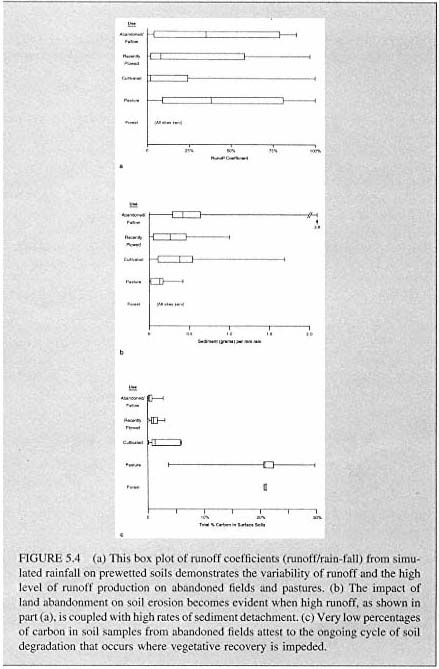
At time scales of decades to centuries, geographic work is concerned mainly with documenting changes in Earth surface systems and assessing underlying causes. One focus of geographic research, for example, involves the reconstruction of historical dimensions of glaciers through photographs and surveys in order to assess regional climate change (e.g., Chambers et al., 1991). Another important focus of geographic work at these time scales concerns the effects of human settlement on river systems—for example, the work of Kesel et al. (1992) on the effects of human settlement on the sediment load of the Mississippi River; several decades of work by M.G. Wolman and his students on the effects of urbanization on water and sediment runoff to rivers; work beginning with Grove Karl Gilbert on the impacts of mining on river systems (see also James, 1989; Mossa and Autin, 1996); work by T. Dunne and other geographers (e.g., Abrahams et al., 1995) on land-use changes in developing countries on slope and stream processes (see Sidebar 5.6); and work by Trimble et al. (1987) on the effects of revegetation on river dynamics.
At time scales of 10,000 to 100,000 years, another concern of geographic research has been understanding connections between climatic changes and the Earth's physical response, such as the effects of orbital changes on the amount of effective solar radiation received at the Earth's surface (Cervany, 1991). These so-called Orbital or Milankovitch changes have been used to explain periodic "floods" of icebergs in the northern Atlantic and other ocean surface responses (Broecker, 1994), and terrestrial changes in climate as recorded by rock varnish (Liu and Dorn, 1996). Evidence for terrestrial climate change has been documented from such diverse sources as wind-deposited silts (loess) on the Great Plains (Feng et al., 1994), lake fluctuations in the Great Basin (Currey, 1994), and glacial moraines in the Sierra Nevada (Scuderi, 1987).
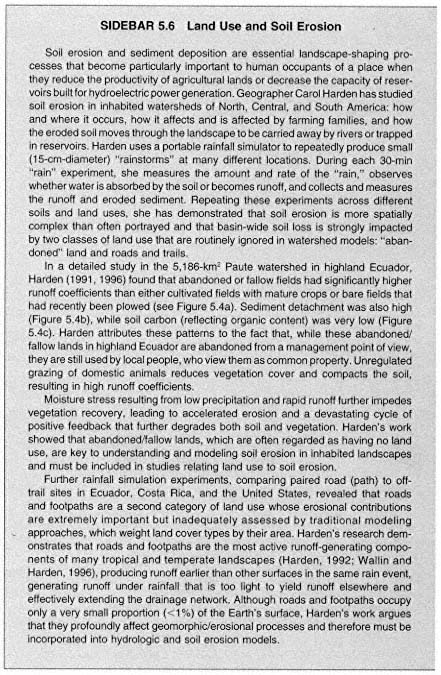
Example: Conflict and Cooperation
In any effort to understand how individuals and groups relate to one another, context is fundamental. Geography's concerns with the integration of phenomena in place and the positioning of one place with respect to others are key to an understanding of context; they focus attention on the importance of such matters as resources, land use, and the distribution and movements of peoples. Geographic work highlights the connections between social forces and the material and spatial circumstances in which they are embedded.
For example, geographers have shown how conflicts over water have affected everything from territorial disputes in the Middle East (Kliot, 1994) to gender relations in West Africa (Carney, 1993; Schroeder, 1993). Research into the so-called urban underclass has shown how the geographic concentration of minority populations is contributing to their alienation as a result of discrimination and suburban exclusion in the housing market, suburbanization of well-paid jobs, inadequate financing of education in central cities, and the out-migration of better-off ethnic minorities who have gained access to suburban housing markets (e.g., Jackson, 1987).
Studies along these lines contribute to larger efforts to understand the nature of social and ethnic conflicts. They point to the necessity of moving beyond sociological analysis to understand how the material and spatial attributes of specific places affect the formation and interaction of social and ethnic groups. Such studies provide insights into connections and relationships that matter in the ongoing interdisciplinary effort to better understand the forces shaping conflict and cooperation.
Interdependencies Between Places
In many ways, geography is a science of flows. It sees the world not as a static mosaic of spatial units but as an ever-changing tapestry of landscapes, movements, and interactions. As noted in Chapter 3, geographers recognize that "place" is defined in part by the movement of peoples, goods, and ideas from other locations.
Geography's Subject Matter
Studies of interdependencies between places are well represented in geography's literatures. For example, for more than a generation, geography has been a leader in improving quantitative models that help to explain, predict, and optimize spatial interactions. Contemporary work in this field seeks to incorporate behavioral dimensions of spatial interaction and to capitalize on advances in spatial econometrics. Although there has been heated debate over the meaning
of mathematical formulations of such models, their continued widespread application is testimony to their usefulness in many practical situations.
Contributions by geographers to our understanding of the interdependencies between places are illustrated by studies of spatial economic flows, human migration, and watershed dynamics, as illustrated in the following subsections.
Example: Spatial Economic Flows
Following the basic work of Wilson (1974) and others, geographers have researched the movement of people, commodities, and capital and the spatial choice patterns of consumers in relation to alternative service sites. This research addresses spatial interactions of individuals at the microlevel and interregional flows at the macrolevel.
At the microlevel, geographers have observed that patterns of spatial interaction differ by socioeconomic class and gender (Hanson, 1986), affected by such characteristics as income, family responsibilities and geographic relationships within an extended family, and the experience and expectations of the individual and of those with whom the individual interacts. To the extent that these effects can be modeled and generalized, they help geographers understand the operation of local labor markets, shopping patterns, and information diffusion. An interdisciplinary body of research by geographers, economists, and sociologists has indeed shown that one of the most persistent empirical correlates of commodity and population flows is distance, even in situations where standard economic and sociological variables perform inconsistently. Geographers argue, however, that distance itself is not a datum but a social construction whose influence changes with shifts in the barriers between, and communication technologies linking, different places.
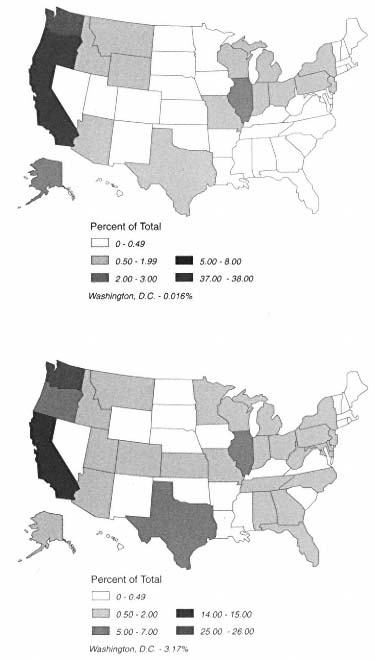
Data on interactions among places (e.g., population migration, technological diffusion, and commercial trade) are less commonly available than data on analogous characteristics in individual places. The problem is compounded by the multiple geographic scales at which interactions occur. For example, case-study, survey-based data suggest that trade between states in the United States has probably been increasing over the past two decades, yet more is known about each state's international trade than about its trade with other parts of the country. Figure 5.5 shows purchases and sales of selected Washington State firms with other regions of the United States. Although spatial patterns of sales and purchases vary significantly from state to state, there is a symmetry of states' sales to and purchases from interstate regions, despite the different nature of goods imported and exported from a given state. Correlation coefficients for state firms' sales and purchases by region are on the order of 0.7 and are highly significant (Beyers, 1983).
Modeling of spatial interaction data is at the heart of geographic analysis. The expansion method of generating models that embed temporal or spatial shifts
in key parameters allow researchers to uncover greater specificity of spatial relationships. This method has gained widespread use in geographic analysis, from its introduction into the literature (Casetti, 1972) to its use in a range of applications and interpretations (Jones and Casetti, 1992). Research by geographers and regional scientists has shown how to derive spatial interaction models based on either traditional information theory or optimal decision making theory. This theoretical work has been extended to analysis of the interaction between consumers and suppliers of services. Spatial interaction simulations can pose "what if" questions about retail patterns and behavior similar to the questions about the flows of goods among states. Much of the literature in relatively new academic journals such as Geographical Systems; Location Science; and Computers, Environments, and Urban Systems contains illustrations of such models.
Example: Human Migration
Decisions to relocate are among the more important decisions made by households, with far-reaching implications for the links between places. Conceptualization of the search and selection process by Wolpert (1965) and Brown and Moore (1971) has been formalized in a model of decision making and housing search under uncertainty (Smith et al., 1979). This model incorporates both preferences and expectations of relocation decisions and provides important insights into household searches within the residential environment.
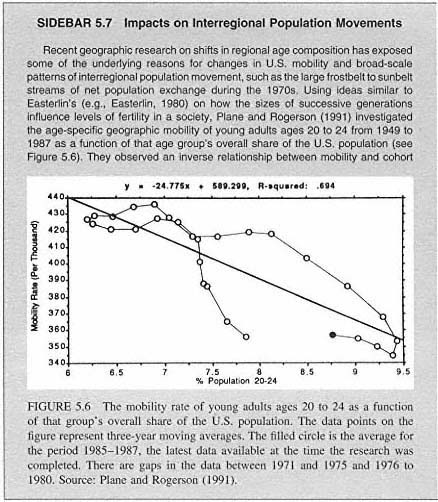
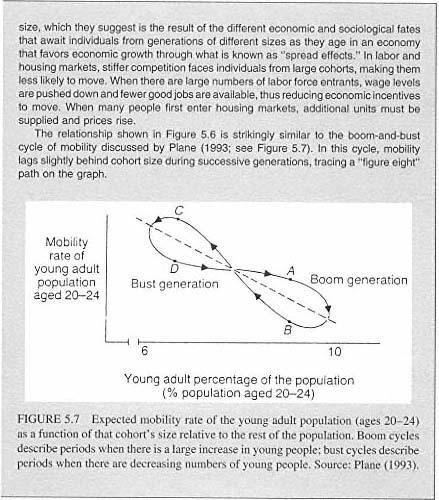
Recent work on modeling of migration and mobility seeks to address the dynamic nature of the process and the way in which decisions to move are related to age, family composition, and economic circumstances (Clark, 1992; Clark et al., 1994). For example, one of the strongest microlevel determinants of whether individuals are likely to move is age or stage in the life cycle (see Sidebar 5.7). During the 1970s, all of these influences were evidenced as the extremely large baby boom cohort (people born from 1946 to 1964) passed through the peak mobility ages (ages 20-34).
Few social science variables can be confidently forecasted far into the future. Barring major calamities, however, the inexorability of the aging process makes future age composition one of the best independent variables for population forecasting applications. As geographers learn more about these demographic influences on migration, population analysts should become better able to inform public policy at both national and local scales.
Example: Watershed Dynamics
Through their research, physical geographers have demonstrated the importance of interdependencies between places on understanding the environment. A major contribution to research on river ecosystems, for instance, has been the
 |
recognition and analysis by geographers of spatial connections and long-distance impacts. Although spatial analysis of river behavior began in the 1940s, a thorough understanding of the geography of processes has emerged only recently. Until the mid-1970s, many natural science disciplines addressed the workings of individual ecosystem components and their connections to adjacent components. The description and analysis of riparian habitats critical to desirable or endangered species, for example, involved a focus on local dynamics of vegetation, soil, and water. Similarly, the behavior of rivers was understood in terms of the hydraulics and mechanics of the materials at a given location. This focus on analytic approaches improved scientific understanding of local processes, but it was less successful in predicting externally induced changes in these environments.
 |
Beginning in the mid-1970s, physical geographers (and scientists in other disciplines who use geographic perspectives) adopted a more holistic view that emphasized spatial patterns, connections, and long-distance impacts. Riparian habitats were seen to respond to changes in the watershed upstream, as well as to local dynamics. For example, William Baker (1989b), Jacob Bendix (1994), and George Malanson (1993) have shown that the composition and dynamics of riparian forests depend both on local conditions and on the location of forests in the stream network and the distant areas that contribute water and nutrients. Similarly, analysis of the movement of pollutants in watersheds to the Chesapeake Bay and other East Coast estuaries showed how our understanding of estuarine
environmental quality could be enhanced through analysis of events in the upstream watersheds (Marcus and Kearney, 1991). Using theoretical constructs from this work, the U.S. Environmental Protection Agency (EPA) has developed more effective monitoring and remedial measures to control contamination from runoff into these estuaries.
Geomorphology has also become more concerned with the spatial perspective, and geomorphic systems analysis has been expanded to incorporate location and spatial connections for measuring and mapping physical forces and stresses, hydraulic resistance, and sediment yields. The result has been greater effectiveness in predicting environmental changes at critical locations—for instance, at a salmon spawning area in a river—based on system-wide changes that are connected in space by slopes and channel networks. As a consequence, geomorphology became more useful to society: geomorphologists now participate in U.S. Department of Agriculture field units, EPA investigations of bridge sites and other civil works, planning for geomorphic hazard mitigation, evaluations of critical habitats, and efforts to stabilize public lands.
Relevance to Issues for Science and Society
Spatial interdependence is an issue of great importance in a wide range of sciences, from physics and astronomy to climatology and geopolitics. Geography's perspectives on this phenomenon have contributed to our understanding of several issues of interest to science generally, including complexity and nonlinearity and relationships between form and function, as illustrated by the following examples. Geography's concern with spatial interdependence is also directly relevant to the base of scientific knowledge related to critical issues for society—as shown by subsequent examples on conflict and cooperation and human health.
Example: Complexity and Nonlinearity
A distinctive contribution of geographic research to the theory and modeling of complex systems (Pines, 1986) is the recognition that changing patterns of interactions between places can be a significant source of complexity. This observation has been made by other scientists as well (Farmer, 1990), but it has received little attention as yet in the social sciences, spatial demographics being an exception. In this field, researchers are beginning to consider migration as a dynamic rather than a static phenomenon, and they are treating spatial demographics as a nonlinear dynamic system of the kind now popularized in chaos and complexity theory. Researchers recognize that behavior depends not only on the rules governing individual migration decisions but also on the locational configuration of interacting populations (Haag and Dendrinos, 1983; Sheppard, 1985).
This research has established three conceptual insights that have relevance
to geography and science at large: (1) the stability of any spatial system depends on the nature of the spatial interactions in that system; (2) knowledge of the geographic configuration of a system is significant to understanding its dynamic behavior; and (3) spatial systems with dynamic interactions may exhibit properties of path dependence, considerable sensitivity to initial conditions and external perturbations, and unpredictability over relatively short time horizons.
While these insights can be linked directly to recent arguments in complexity theory, they reflect long-standing concerns in human geography, where there has been continuing criticism of the equilibrium orientation of the theories developed in the 1960s to account for the location of economic activities and settlement systems. Allen Pred's detailed historical research on the evolution of the U.S. urban system (Pred, 1977, 1981), for example, anticipated these conceptual insights, demonstrating how initial advantage, cumulative causation, and interdependencies between cities shaped the system. This demonstrated in practice the ideas of increasing returns and agglomeration that Paul Krugman (1991) has attempted to draw to the attention of economists. Pred's work, together with that of a number of other geographers (cf. Harvey, 1982; Massey, 1984; Scott, 1988a, b; Storper and Walker, 1989; Markusen et al., 1991), has shown how spatial economic processes introduce instability and dynamic complexity, but also path dependence and inertia, into the evolution of any existing economic system.
Geographers have also demonstrated theoretically that spatial dynamics limit the generality of standard economic theories, whether of a neoclassical or political-economic persuasion. They have shown that spatial economies may be highly unstable, that standard theses about specialization and trade and perfect competition may become problematic, and that the free flow of capital between regions need not result in an equalization of profit rates or of access to capital (Webber, 1987; Sheppard and Barnes, 1990). Others have used the conceptual insights associated with nonlinear dynamics to describe more broadly the evolutionary dynamics of settlement systems (Allen and Sanglier, 1979; Dendrinos, 1992).
Similar debates are emerging in research at the microlevel of individual spatial decision making, where standard theories again are dominated by models of spatial equilibrium. For example, recent research into theories of spatial price equilibrium suggests that, in realistic spatial systems, any price equilibrium is at best locally quasi-stable, because some firms are locationally disadvantaged relative to others and because consumers change their pricing decisions in response to price differences (Sheppard et al., 1992). Furthermore, even quite small disturbances from this equilibrium may result in a complex and persistent disequilibrium dynamic of price fluctuation and price ''wars."
Example: Form and Function
Another theme of geographic research has been that interactions in space tend to result in—and in turn are affected by—certain regularities in spatial
pattern, and geographers have contributed substantially to the multidisciplinary literatures on this phenomenon, particularly as it relates to location theory. One impetus for this research was the observation that a given spatial pattern can result from very different processes—suggesting that function cannot be inferred directly from such patterns.
Just as other disciplines such as physics, astronomy, and biology see patterns as both a reflection of nonrandom processes and an influence on them, geography observes and tries to understand patterns in human settlement and natural landscapes. In part, no doubt, the interest in patterns relates to geography's characteristic use of maps and other graphic displays of information in seeking understanding.
Just as in the case of models of spatial interaction, however, geographers have learned that observable geometries in the social and physical worlds are dynamic in their nature and multidimensional in their explanation. Thus, geographers recognize that in order to understand such dynamic processes it is important to observe them in both time and space. This has stimulated efforts to develop tools for dynamic multidimensional visualization as one way to explore these complex geometries (Dorling and Openshaw, 1992). Geography's curiosity about patterns has stimulated leading scholars to examine patterns in time as well as space and, in turn, how the two kinds of patterns are related (see Sidebar 5.8).
Example: Conflict and Cooperation
Conflicts are rarely confined to one place. They are influenced by developments in other regions, and their effects are usually widely felt. In the ongoing
|
SIDEBAR 5.8 Long-Wave Rhythms in Transnational Urban Migration Comprehensive studies of consistencies of pattern and rhythm in economic and political history have shown that a variety of data and their change over time are consistent with "Kondratiev waves" of growth rates, prices, and associated political stresses. Essentially, the explanation is that new technoeconomic systems exhibit a life cycle from innovation to peak activity to replacement and that the expansion and decline of such systems, in succession, stimulate rises and falls in price inflation and other economic forces. Geographers have shown that such long-wave rhythms can affect spatial flows as well. For example, geographer Brian Berry has shown that global urban growth from 1830 to 1980 displays long-wave rhythmic behavior (Berry, 1991; Berry et al., 1994). By compiling urban growth and migration data for this period, Berry was able to show that the rhythmic behavior was related in part to surges and sags in transnational urban migration; during the same period, domestic rural-to-urban migration exhibited noncyclical trends. This analysis indicated that long-wave historical patterns of economic development have affected spatial patterns of urban growth and that such development has "successively ratcheted global urban growth to new levels of interdependency" (Berry, 1991). |
effort to understand the forces of conflict, there is a critical need to consider the relationships among and between places: which places are implicated in particular conflicts and how those conflicts affect different regions and territories. Geography's long-standing concern with identifying, mapping, and analyzing spatial structures and flows speaks to this need. It is manifest, for example, in geopolitical studies that seek to understand how views of territory emanating from different places shape conflict, in studies that explore changing patterns of contact and communication, and in studies that focus on the movement of peoples.
A few examples show the importance of considering such matters in research on conflict and cooperation. Working within the geopolitical tradition, Saul Cohen (1991) has shown how changes in strategic understandings following the demise of the Cold War order have transformed strategic areas of competition—shatter-belts—into gateway regions that link formerly separated territories. Studies in the geography of communication and information have shown how new patterns of connectivity can influence conflict and cooperation (Brunn and Leinbach, 1991). Geographic work on refugees provides direct evidence of the interconnectedness of place, highlighting how flows of people destabilize political regimes and challenge fundamental notions of citizenship and community (Wood, 1994).
Example: Human Health
One of the best illustrations of spatial interdependence can be found in geographic research addressing the spread of infectious diseases. The spread of such diseases is a highly spatial process that can often be understood and predicted by using spatial modeling techniques (see Sidebar 5.9). Research by geographers on the spread of infectious diseases incorporates many of geography's perspectives related to location, synthesis, and scale.
Interdependencies Among Scales
It is impossible to talk about place without reference to scale, and it is impossible to talk about interdependencies between places without considering a variety of different scales. From the earliest times of theory development, geography has been deeply concerned with interdependencies among scales, from global to local. This body of experience is highly relevant for basic and applied science. Relationships between microscale and macroscale phenomena and processes are receiving research attention in many fields of science and are central to knowledge-based questions about such societal concerns as global change.
Attention to interdependencies among scales enables geographers to avoid at least two types of errors. First, the nature of a given phenomenon or process is obscured when it is viewed at the wrong spatial scale. For example, inaccurate or incomplete understandings of local processes and dynamics can result from inferring relationships at one scale based on data collected at another—inferring
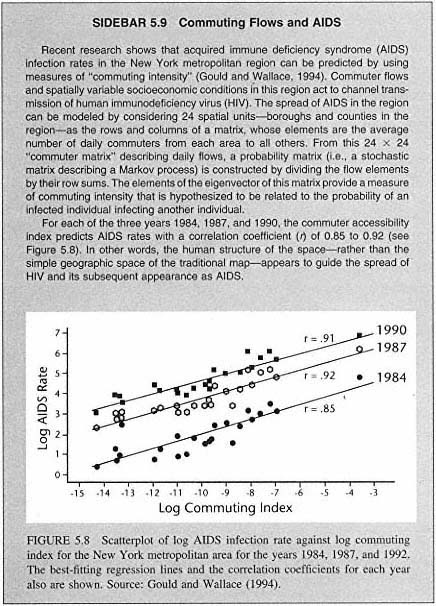
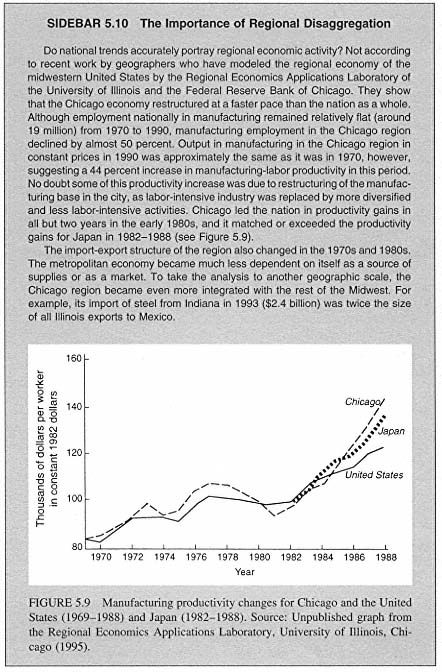
subnational trends based on national data (Sidebar 5.8). Second, inadequate attention to scale can result in serious misinterpretations of cause and effect. For instance, an exclusive focus on local scales can lead to explanations in terms of local causes, even when controlling processes occur at regional or global scales (cf. Sidebar 5.10). Likewise, a focus on regional scales of analysis can conceal problems that exist at the local level. Infant mortality rates are exceedingly high in many local areas in U.S. cities, for example, but appear to have fairly uniformly low rates when viewed at the regional level, as is commonly done. Tracing such connections from scale to scale—in particular, examining the importance of processes that operate at intermediate or "mesoscales"—is a significant contribution of geographic scholarship to science.
Relevance to Issues for Science and Society
Across the spectrum of sciences, and increasingly a major focus of geography, is the linkage between macroscale and microscale processes—that is, how phenomena at different time and space scales interact in surprising, disjunctive, and unpredictable ways. Biologists struggle to understand linkages between molecules, cells, and organisms; ecologists between patches, ecosystems, and biomes; and economists between firms, industries, and economies. In these efforts, variants of at least three questions persist: Is behavior of the macrounit of study reducible to the aggregate of microunits? What is universal across scale and what is particular to the scale of analysis? How do agency and structure interact at different scales? Nowhere are these questions more pressing than in the great interdisciplinary questions of origin, organization, and change—in particles, in life, in societies, or in the cosmos.
By not assuming that macroscales are simply aggregates of microscale events and by focusing on mesoscale phenomena to tease out the linkages, geographers help inform our understanding of scale-dependent processes in such diverse science fields as landscape ecology, regional economics, or epidemiology (see, e.g., Sidebars 5.5 and 5.10). In major integrated studies such as those on global change, geographers actively pursue links between global change and local places, enhancing understanding of both scales (e.g., Wilbanks, 1994). Scale relationships are important for scientific understanding of important societal issues such as population and resources, environmental change, economic health, and conflict and cooperation, as shown in the following sections.
Example: Population and Resources
Perhaps no topic evokes more emotion in global change studies than the ultimate human causes of environmental change—the subject of an extended scholarly and public debate. Population and resource use figures prominently in this debate; the "well-known" IPAT identity, representing how environmental
impact (I) is a consequence of self-reinforcing interdependencies among population (P), affluence (A), and technology (T), is sometimes identified as the controlling process in environmental change, in part because the PAT variables tend to show the strongest associations with atmospheric carbon dioxide and forest and agricultural land cover changes. However, local case studies by geographers often point to a large range of more "socially nuanced" factors as the principal triggers of human actions that give rise to trace gas emission, deforestation, and increased cultivation (Meyer and Turner, 1992; Kasperson et al., 1995).
Where global change is concerned, for example, it is clear that some forcing functions operate at a global scale: greenhouse gas composition in the atmosphere and related changes in global climate systems, global financial systems and patterns of control, and movements of technology and information. It is equally clear that most of the individual decisions that underlie economic activities, resource use, and population dynamics are made at local scales. In other words, global processes have impacts on local places, but local actions are the foundations for global trends (Kates, 1995).
Critical questions for science in understanding global change include (1) clarifying the scale(s) at which change should be observed and analyzed and (2) tracing linkages between processes that operate at macro- and microscales. Tracing these connections from scale to scale is a significant contribution to science by geographic scholarship (Blaikie and Brookfield, 1987; Roberts and Emel, 1992; Meyer and Turner, 1994).
Beyond global change per se, geography seeks to identify dynamics between scales for various kinds of resource use and development questions (e.g., Zimmerer, 1991; Bassett and Crummey, 1993; Emel and Roberts, 1995). A particular interest has been in the effects of multinational economic and political structures on regions and localities in developing countries (Watts, 1983; Carney, 1993), especially in areas where ecologies are delicately balanced (see Sidebar 5.11), but similar conditions have been observed in the United States as well (Pulido, 1996).
Example: Environmental Change
The scale of operations plays an important role in deciphering connections among climatic systems. Many of the recent advances in research into global climate change have emphasized the global scale, and the connections among components of the global climate system are now much better understood than they were just a few years ago. From the standpoint of human experience, however, climate is much like politics: it is local. Making the process connection between the now better-understood global circulation patterns and the critical effects they have on small areas (drainage basins of a few hundred square kilometers, for example) has been elusive. Part of the problem is related to computing power and technology, which is stretched to the limit in the simulation of global processes—it is simply not feasible to model local climates in global
|
SIDEBAR 5.11 Food and Famine in the Sahel Climate change and markets operate globally through hierarchical systems over which farmer, herder, or district manager have minimal influence. The environmental and social problems these land managers encounter are often well beyond their immediate control, although they may take the blame for the outcomes that follow (Blaikie and Brookfield, 1987). The drought-prone Sahelian region of West Africa is a case in point. People in this region suffer from periodic food crises and, on occasion, widespread and devastating starvation. In the early 1970s the entire region was in the grips of severe famine, and throughout the 1980s, despite foreign aid support, food insecurity was endemic. The Sahel came to be seen as a so-called basket case, a region of structurally induced hunger, declining food output per capita, and a high degree of famine proneness. Insofar as the semiarid tropics are characterized by drought and unreliable rainfall, the Sahelian famine proved something of a test case for understanding the complex relationships between environmental perturbations and catastrophic collapse of food entitlements resulting in mass starvation. Geographers have reconstructed the history of food crises in the Sahel region, focusing on the dynamics among processes at different geographic scales and the way that these dynamics affect particular places, groups, and classes. This research employed a variety of oral and archival historical sources in combination with ethnographic analysis of social and environmental processes at the community level. For the Sokoto Caliphate (1806-1902) and the colonial and postcolonial periods of north-central Nigeria, for example, the work demonstrated how the integration of peasants into regional and global markets often rendered them increasingly vulnerable to drought-induced harvest failure (Watts, 1983). Famine was not simply the product of colonialism. Rather, market changes exposed some sections of society to the combined volatilities of weather and world markets. Farmers were in some sense cognitively and practically prepared for variability in rainfall, implementing a standard farm plan every year by orchestrating soil quality, seed varieties, and water conservation practices in relation to the actual distribution of rainfall events. This indigenous practice revealed the capacity of local people to experiment with local resources and to respond to weather variability. However, almost one-third of all rural households were not self-sufficient in food even in normal years. This group of households was especially vulnerable to weather variations and seasonal fluctuations in grain prices. In periods of severe drought, many poor households were forced to liquidate their assets systematically, sometimes resulting in the sale of land and permanent out-migration in search of money, work, and food. Famines thereby intensified existing patterns of social inequality and risk, further polarizing already differentiated communities. |
simulations. What is needed is a set of theories that provides rules for connecting a changing global geography of mass and energy with local outcomes.
In ecosystems there is a nested hierarchy of scales so that relatively simple localized assemblages of life forms and their related physical and chemical systems aggregate into larger, ever more complicated associations. Different explanations apply to the behavior and arrangement of the systems at different
scales. A riparian forest, for example, adjusts to changes in flooding, groundwater levels, and nutrient loadings in the water and soil. These adjustments are measurable and meaningful within just a few meters in the vertical dimension. At the opposite end of the scale, in biomes—or subcontinental assemblages of ecosystems—these local driving mechanisms are meaningless, and the most useful explanations lie almost completely in the climatological realm. Within a given biome, distributions may be explained best by geologic and landform variables. Successful scientific explanations therefore must start with selecting the controlling variable that is most closely associated in scale terms with the object of study.
Management of environmental change also has important scale considerations. Watershed management in the United States provides an instructive example. Throughout the twentieth century, watershed management has progressively become a federal responsibility. However, the result of national management was a scale mismatch because there are no basins that are truly national in size. Local interests, including resource developers, water and power users, conservationists, and preservationists, have felt isolated from the decision making process that directly affected them and their watersheds. In the latter part of the century, more localized decision making is becoming common. In Massachusetts, for example, the state coordinates watershed associations organized along drainage basin boundaries. These administrative entities bring together the stakeholders in basins of a few hundred square kilometers to reach compromise solutions in management questions. In the Pacific Northwest, watershed councils of federal, state, local, and tribal representatives operate within basin boundaries to address such problems as balancing economic development and preservation of salmon, objectives that rely on the same watershed resources. The most effective scale for governmental administration of watersheds remains an open question, but the EPA, the U.S. Bureau of Reclamation, the Tennessee Valley Authority, and several other agencies are supporting a National Research Council study of the issue2 with the ultimate goal of better matching the scales of natural and administrative process.
Example: Economic Health
The economic health of a locality, region, or nation depends on the interaction of processes that operate at many different scales—ranging from global capital flows to local labor markets. Geographers have long been interested in this interplay of global, regional, and local processes—for example, those between global economic forces and local social forces.
Research on economic inequality has revealed that patterns of growth and
decline are not uniform across nations, regions, or cities. "Third-world inequality" includes rapidly growing small countries, oil-rich countries, and large countries, which seem incapable of breaking out of real poverty. Much like the fractal images of mathematics, extremes of poverty replicate themselves at spatial scales ranging from the global to the neighborhood, implying an irreducible spatial complexity to social irregularity. The heterogeneity across spatial scales reflects variations in political, institutional, and social characteristics and adaptations among places. It also reflects complex processes linking very different scales. Thus, international capital flows link inner-city sweat shops that manufacture clothing in both third-world and first-world economies with affluent and far-flung suburbs and "edge cities" of metropolitan regions.
Differences in economic paths between countries and regions are shaped by differences within those places and also by their differing situations within larger-scale economic and political processes. Within metropolitan areas in many industrialized countries, for instance, suburbanization during the past 25 years has included not only residential development but also the complete range of economic, political, and social activities, with two glaring exceptions: the poorest and least educated households (see Sidebar 5.3) and the highest-order service activities often most directly connected with the global economy. This "spatial mismatch" between the work experience of many inner-city residents and the employment opportunities available nearby has been studied in some detail by geographers and sociologists, including its relationships to processes and policies at regional and national scales.
Example: Conflict and Cooperation
The interest of geographers in scale-related issues involving the connectivity of places is timely because the roles of nation states and localities are undergoing profound change. Developments from both "above" and "below" are challenging the autonomy and power of the state. Internationalization of the economy, development of transport and communications linkages across international boundaries, and growth of substate nationalism and regionalism have pushed scale-related issues of regional formation and interregional interactions to the fore. Although states continue to play powerful roles in many arenas, such issues cannot adequately be addressed using the conventional construct of the state as a discrete analytical unit independent of cross-scale dynamics.
Conflict and cooperation is a good example of a scale-dependent issue that has received recent attention from geographers. Through analyses that look beyond the scale of the state, geographers have contributed to our understanding of the influence of the global economy on local political developments (Taylor, 1993); the nature and importance of cross-border cooperation for the management of social, political, and economic issues (Murphy, 1993); the impacts of global economic restructuring on patterns of interaction (Dicken, 1992); and the influence
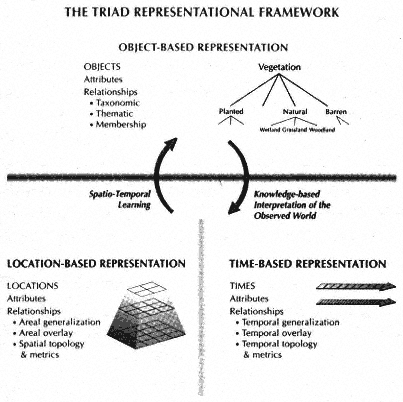
Figure 5.10
A spatiotemporal framework in which object-based representations, location-based representations, and time-based representations are treated as complementary approaches to representation of space-time phenomena. This framework is currently applied to design a spatiotemporal data structure that supports research and policy analysis associated with issues of forest succession and management. This integrated view of location, object, and time extends the ability of GISs as a framework for synthesis by considering time (and change) directly, rather than as simply an attribute of space.
Source: After Peuquet (1994).
of different social, cultural, and political boundaries on human relatedness (Lewis, 1991).
Spatial Representation
Many of the substantive contributions by geography to science are rooted in spatial representation. The relevance of geographic research in advancing representational theory and representational tools used throughout science is clear from the widespread interest in GISs and geographic information analysis, but
the potential for contribution is far broader. The use of spatial representation as a way to facilitate creative thinking, especially related to nonlinear dynamics, has increased rapidly in the past two decades with the growing decentralized use of computer graphic technologies. Similarly, the use of methods and tools for spatial representation is fundamental to geographic synthesis. GISs, in particular, act as a framework through which information from disparate sources can be integrated and linked to mathematical models and to visual display. Spatial representation has become part of the everyday research experiences of a great many scientists.
Much of the recent geographic research on spatial representation is focused on finding better ways to represent the dynamics of the ''real world," for example, by extending fundamental concepts of spatial representation into the temporal domain. Key questions addressed by this research include the following:
- What is a "feature" or an "entity" in space-time, and how should these features be classified and coded in digital representation? The development of digital Spatial Data Transfer Standards, a component of the National Information Infrastructure, promises a classification effort with implications for science that rival those of the Linnaean classification in biology.
- What is the best approach for creating space-time data structures that have a built-in capacity to handle change (in characteristics of spatial or temporal
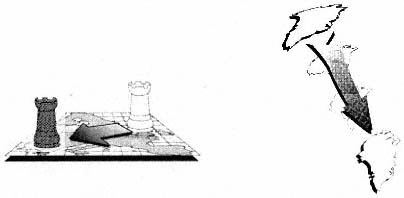
Figure 5.11
Two of Philip Gersmehl's (1990) nine "metaphors" for map animation. These metaphors provide conceptual models that map animation designers can use as a basis for building dynamic representations of spatial-temporal processes. The "stage and play" metaphor treats a map as a base (or stage) on which action plays out in the form of moving objects and territories particularly suited to representation of human spatial behavior associated with migration or war. The "metamorphosis" metaphor was based on the concept of a flexible dynamic object that changes shape over time; it is particularly suited to representation of processes in which area features change size and shape, such as desertification, growth of cities, or the spread of an oil spill.
- entities as well as in what constitutes an entity) and the flexibility to support spatial, attribute, and temporal queries; links to process models; and dynamic geographic visualization (GVis) (see Figure 5.10)?
- Can generalization, spatial filtering, and other geographic "operators" currently applied to spatial data be adapted to space-time data, or is a fundamentally different approach to geographic operators needed?
- What are the appropriate conceptual models and associated design principles for dynamic display of spatiotemporal data (see Figure 5.11)?
|
SIDEBAR 5.12 Representing Reliability of Geographic Information Spatial data support a broad range of research and policy decisions; thus, issues of spatial data reliability (i.e., the quality of spatial data) are central. The National Center for Geographic Information and Analysis, supported by the National Science Foundation, plays a major role in setting the national research agenda through a research initiative (Beard and Buttenfield, 1991) and research challenge on "Visualization of Data Quality" (Buttenfield and Beard, 1994). The winning project in this challenge integrated principles of GVis and exploratory data analysis in the design of an interactive interface for data analysis. The interface allows analysts to monitor spatial and temporal trends in dissolved inorganic nitrogen (DIN) in the Chesapeake Bay as well as to consider spatial variation in the reliability of DIN estimates (see Plate 6). An alternative to treating reliability as an attribute of data (that can be mapped) is to approach the problem as a question of selecting among a range of possible representations. The more these representations differ, the less reliable any one of them is as the model of reality. An intriguing example of reliability representation that adopts this perspective was developed for application with remotely sensed images. These images result from classification of electromagnetic signals for grid cells (called pixels) that represent square patches of the Earth's surface. The classification procedure involves determining the likelihood that the Earth area represented by the pixel is in each of several possible categories (e.g., vegetation types). Traditional classified images represent only the most likely category for each pixel (even when the signal processed for that pixel makes classification ambiguous). Multiple images can be used to convey the range of "possible" alternatives to this "best guess." The procedure developed is based on using the fuzzy class memberships (derived through the pixel classification process) as parameters of an error model. The error model generates possible versions of the "truth" (i.e., a version that might result from interpretation by one geographer, soil scientist, or ecologist; see Plate 7). An important assumption in implementing the error model is that the outcomes of neighboring pixels are correlated (i.e., that locations near one another are likely to be similar). In Plate 7, the extent of intrapixel correlation is controlled to produce the four realizations. As the size of this spatial dependence parameter increases, the size of inclusions (i.e., alternative vegetation categories within a region having an otherwise common classification) on the map increases as well (from upper left to lower right in the figure). |
A simple but dramatic synthesis of research directed to these four questions is a video developed by geographers at the U.S. Geological Survey. In the video, topographic maps, satellite imagery, land-use maps, and digital terrain models are linked in a dynamic depiction of urbanization in the San Francisco Bay Area between 1850 and 1990 (see Plate 9). The same representational tools are currently being linked to a prototype urban growth model so that analysts can investigate what human occupance of the bay area might look like in 200 years.
Geographic research contributions to the science of spatial representation include work on the classification of geographic entities and visual representations of data reliability (see Sidebar 5.12). Geographers are also linking cognitive and digital representations of space—for example, as part of an interdisciplinary effort to understand the interaction between human spatial cognition and way finding. One component of this research focuses on visually impaired populations (Golledge, 1991), work that has implications for the guidance of robotic vehicles. Additional basic research has addressed such issues as scale effects in spatial cognition, ways in which orientation and direction information is handled in memory, development of configurational (i.e., maplike) understanding, and the ability of visually impaired people to use configurational knowledge to determine shortcuts or take detours around obstructions.
Reflections on Geography's Contributions to Science
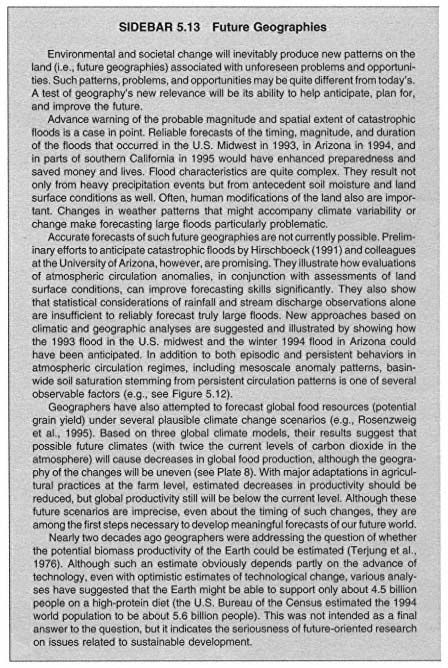
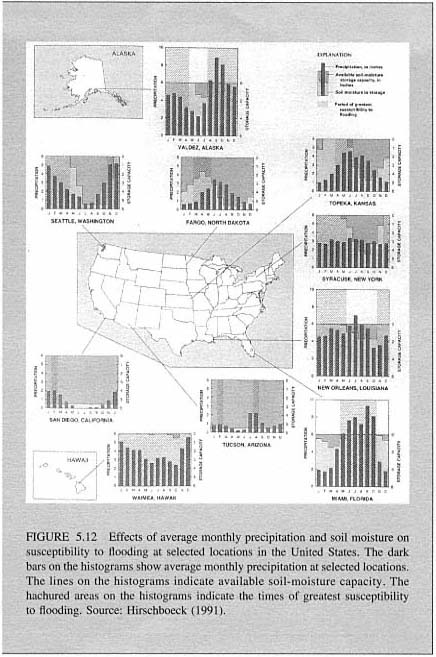
By way of example, this chapter has illustrated how geography's perspectives and techniques contribute to understanding key issues in science and strengthen what science offers to the resolution of critical societal problems. The potential for further contributions is significant. For instance, a powerful tool for integrating a variety of dynamic processes to anticipate possible futures is the description of "future geographies"—maps of evolving patterns of change, related to real places and the concerns of those who live there (see Sidebar 5.13).
If geography is to increase its contributions to scientific understanding, however, both geography and the other sciences need to develop more productive partnerships that combine their unique perspectives and approaches to problem solving. Geography itself needs to be engaged more often in research activities that embrace and pursue broader contributions to science, at least partly by showing a greater concern for critical research problem definition by the larger research community. The family of sciences, in turn, needs to be better informed about geography and how its perspectives can contribute to scientific understanding. Both of these priorities call for increased interactions between geographers and their counterparts in other sciences: increases in quantity, quality, diversity, and orientation to critical issues.


