
| This page in the original is blank. |
Engineering for Development in Environmentally Sensitive Areas: Oil Operations in a Rain Forest
June Lindstedt-Siva, Lou C. Soileau IV, Dilworth W. Chamberlain, and Martin L. Wouch
The Dilemma of Development in Natural Habitats
Human populations and their support systems have expanded to the point that they can potentially affect global ecology. Perhaps the most significant impacts are the long-term ecological effects that result from anthropogenic disturbance, modification, and conversion of natural habitats. The result is that native plant and animal populations are reduced, confined to small areas, or lost altogether. At some point the survival of species themselves may be in jeopardy. Most species become endangered or threatened not for genetic or physiological reasons, but because their habitat is modified or eliminated, or they are overharvested.
Rapid human population increases are occurring in less developed, tropical countries where biological diversity is greatest. Here, deforestation is resulting in the rapid loss of rain forest habitat, potentially eliminating species about which little is known. Pressure on natural systems comes from basic survival needs for food and fuel and from the desire of the people and their governments to raise the country's standard of living, provide housing, and promote industrialization and modem agricultural development. The problem is not confined to the developing world; industrialized countries are also losing natural habitats.
There is little hope of stopping natural habitat losses in the near term. This is as true in the Santa Monica Mountains of southern California as in the forests of Brazil. Some important habitats can be protected in parks or reserves, but this strategy saves only habitat "islands" and, alone, cannot ensure maintenance of biodiversity over time. Solutions for the long-term must emphasize finding ways
to maintain the ecological integrity and functions of "developed" areas. This approach is consistent with the concept of sustainable development (Lovejoy, 1994).
Development That Preserves Ecological Integrity
The following are examples of development that has resulted in preservation of ecological or biological integrity as defined by Angermeier and Karr (1994). In each of these examples, most of the land is maintained in open space, and "facilities" occupy only a small portion. In addition, public access is restricted.
Camp Pendleton Marine Base in San Diego County, California, contains many small wetlands that would have been converted to marinas and condominiums long ago had they not been on the military base. Because so many acres of wetlands have been lost to development in southern California, the small remaining wetlands at Camp Pendleton are increasingly important to coastal ecology.
Point Mugu Naval Air Station in Ventura County, California, also supports many acres of wetlands, and some endangered species. In addition, because it is protected from disturbance, this is one of the few parts of the southern California mainland coast where seals and sea lions regularly haul out to rest.
Vandenberg Air Force Base in Santa Barbara County has some of the best rocky intertidal habitat in California, supporting the biodiversity that was lost from more populated areas of the coast many years ago.
The Guadalupe Dunes oil field in Santa Barbara County consists of oil wells, pipelines, roads, and oil storage and treatment facilities. Because most of this coastal property is maintained in open space and public access is restricted, it is one of the last places in the region where native dune vegetation survives, including some endangered species. Because of public use (dune buggies, dirt bikes), dunes adjacent to the oil field are damaged so that they no longer support native vegetation.
Similarly, in Kern County, California, oil fields are some of the only remaining large tracts of land that have not been converted to agriculture or urbanization. Here, too, native plants and animals are present, including several endangered species. One working oil field was recently designated an ecological preserve and is being managed as such, in cooperation with state agencies. This management will continue beyond the life of the oil field (Loll and Steinhauer, 1993).
For these examples, protection of natural ecosystems was often an unforeseen by-product of the type of development that occurred. However, today these environments are protected by design, as part of managing the facilities. It is the latter, environmental protection by design, that must be encouraged and supported both domestically and internationally.
Environmental Planning and Management Process
The goals of environmental planning and management are to minimize the adverse environmental impacts of development and to maintain or enhance the ecological integrity and functions of the natural system. The principles can be applied to development as diverse as an agricultural crop, housing tract, power plant, or oil production. The interdisciplinary process of environmental planning and management requires interaction of the environmental sciences, engineering, and operations. It can be applied to ongoing operations or new projects, though it has its greatest effect when applied to new projects early in their development, when siting, design, and engineering options are still open.
Figure 1 illustrates the process. The process begins when a project proposal is developed, including siting and design alternatives. An environmental reconnaissance study is conducted to identify the major ecological features of each site.
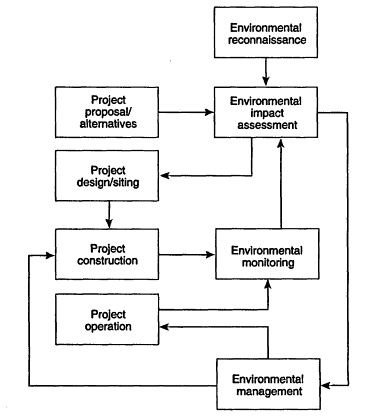
FIGURE 1
Environmental planning and management process.
This need not be, and in most cases cannot be, a lengthy and expensive study. Much can be learned by knowledgeable scientists from a literature review, site visit, and study of topographic maps and aerial or satellite photos. On the basis of this information, an environmental impact assessment is prepared. This includes an analysis of the potential impacts of the various alternatives as well as recommendations of alternatives and mitigation measures. This information is fed back into an environmental management plan for the project siting and design process. The site and project design alternatives are selected and permits and other approvals are obtained.
During the construction phase of the project, environmental monitoring begins. Monitoring may begin before construction if additional, site-specific environmental data are needed. Monitoring to establish a baseline against which to measure future impacts is usually not feasible because of the time, scope, and cost of a study required to define natural variation. Therefore, the monitoring program must focus on environmental parameters and populations likely to be affected during the construction and operations phases of the project. Environmental impacts are assessed and the information is fed back into an environmental management plan that becomes part of the operations plan for the project. Monitoring continues to some degree during operations so that impacts can be assessed continually and the management and operations plan can be modified as necessary.
Once this process is completed, the environmental and engineering information generated becomes extremely valuable to those planning similar developments or different projects in similar habitats. Therefore, dissemination of the results—including both successes and failures—is critical.
Oil Development in an Ecuador Rain Forest
Tropical forests are complex environments that support a greater diversity of plant and animal species than any other terrestrial habitat. Most of these species (e.g., insects) have not been named, described, or studied by scientists. Raven (1994) estimates that there are 8-10 million species on earth, though only 1.4 million have been named. Tropical forests are also rich in substances, both medicinal and industrial, that are useful to their indigenous residents as well as society at large (Lewis, 1990).
Tropical rain forests receive 80-300 inches of rainfall a year (Holdridge, 1967). They typically consist of a relatively tight canopy of broad-leafed evergreen trees and two or more underlying layers of trees and shrubs. Undergrowth vegetation is usually sparse because little sunlight reaches the forest floor. Soils are typically acidic and poor in nutrients. Nutrient cycling depends on degradation of leaf litter, fallen trees, and shrubs on the forest floor. Because this cycle is so easily altered by disturbance, tropical forests are among the world's most sensitive environments (Wilson, 1988). The largest remaining contiguous tracts
of tropical forests are in the Amazon drainage of South America and in central Africa.
The scientific community has recognized the problem of deforestation in the tropics for a long time. In 1980 a National Research Council panel predicted that most forests would not exist as they were at that time by the close of the century (National Research Council, 1980). Deforestation in the tropics is also thought to influence local climate and contribute toward global climate change (Wilson, 1988). The ecology of humid tropical systems is poorly understood. Substantial research is needed to develop sustainable uses in these systems as well as methods to reduce impacts of development and restore damaged systems (National Research Council, 1982; National Science Board, 1989).
The environmental impacts of development in the tropics are closely linked to socioeconomic effects. Bringing development of any kind to semi-isolated indigenous populations generally brings profound changes to those cultures. Contact alone may expose communities to diseases for which no immunity has been developed. Alteration of the natural habitat may deplete or alter traditional food and water sources. When two cultures come into contact, the dominant culture will, in the long run, submerge the other culture unless preventive steps are taken.
Major Environmental and Social Issues
Deforestation and habitat alteration are occurring rapidly in the tropics worldwide. Historically, the primary cause of deforestation in South America has been invasion by colonists who clear the forest to raise cattle or grow crops. Governments have also "opened" new areas, encouraging colonization and other types of development. Roads are probably the major contributing factor in deforestation. Wherever roads have been built into previously isolated areas, the result has been encroachment by "outsiders," followed by deforestation and environmental degradation as well as profound social impacts. Oil development in the tropics has often also included major road construction.
Compared with deforestation and habitat loss, environmental pollution from oil operations using contemporary technologies and practices is a lesser, though potentially significant issue in the tropics. When vegetation is removed and heavy equipment used, there is a high potential for soil erosion and contamination of streams used for drinking water as well as fishing. Garbage and sanitation wastes as well as oil exploration and production wastes are potentially significant sources of contamination in these sensitive environments. Air pollution associated with operations may be locally significant.
In the past, when areas of tropical forest were "developed," the results were often also detrimental to indigenous people. Uncontrolled, spontaneous colonization by outsiders often displaced the local populations and introduced diseases. Colonists in all parts of the world have been tenacious and relentless. Stopping or
slowing colonization is extremely difficult, especially when there are roads into an area and when colonization is an attractive option for improving the lives of settlers. Social consequences may include displacement of indigenous people and degradation or depletion of resources needed for survival (drinking water and native plants and animals), erosion of culture, alcoholism and other ills, and the possibility of making communities dependent on the outside world with no way to maintain or return to traditional ways if outside support systems are removed.
ARCO Project
It is in this context that ARCO Oriente Inc. (a subsidiary of Atlantic Richfield Company [ARCO] based in Quito) is exploring for oil in Ecuador. ARCO International Oil and Gas Company (AIOGC), a division of ARCO, has oversight responsibility for ARCO Oriente. The site is Block 10, a forested area on the eastern slopes of the Andes and part of the Amazon drainage basin (Figure 2). The remainder of this paper describes the major environmental and social issues relevant to the project (Lindstedt-Siva and Chamberlain, 1991), and discusses some of the ARCO programs in place during the exploration phase, as well as plans for the development phase of the project. These plans will be finalized and implemented if ARCO and the government of Ecuador agree to proceed with the development project. The following discussion outlines an approach to oil development that, in many respects, represents a major departure from conventional operations and, in our view, a significant advance in environmental protection.
Exploration Phase
Oil exploration and production in Ecuador began early in the 1900s, first along the Pacific coast and later in the interior. ARCO Oriente Inc. began exploring for petroleum in Ecuador in November 1988. ARCO and its partner, AGIP (Overseas) Ltd., are service contractors for the Ecuador state petroleum company, PETROECUADOR, by an agreement signed in June 1988. Block 10 covers 200,000 hectares (494,000 acres) in Pastaza Province. PETROECUADOR and other oil companies produce approximately 390,000 barrels of oil a day from fields north of Block 10.
Between November 1988 and July 1989, seismic exploration was conducted throughout the block (Figure 3) except in the extreme southwest corner, where operations were discontinued in deference to the wishes of indigenous people living in the area. Seismic lines (narrow paths to aid deployment of seismic exploration equipment) as well as footpaths and helipads needed to support the seismic operations were cleared by hand (chain saw and machete) and occupied an estimated 341 acres. A subsequent seismic operation conducted between August 26 and September 29, 1991, resulted in hand-clearing an additional 14.4 acres.
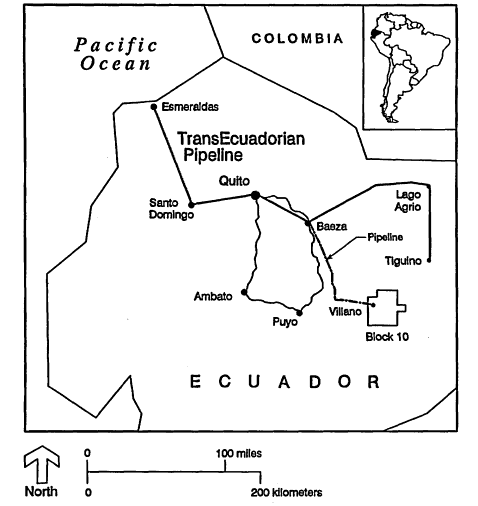
FIGURE 2
ARCO International Oil and Gas Co., ARCO Oriente, Block 10, Pastaza Province, Ecuador.
Three exploratory oil wells were drilled at two roughly 4.5-acre sites, Moretecocha and Villano, named for nearby villages and chosen with assistance from the villagers. One well was drilled near Moretecocha and two near Villano. Oil has been found at both locations, but the Villano wells appear to have standalone commercial potential. Possible pipeline routes have been surveyed from the Villano discovery area.
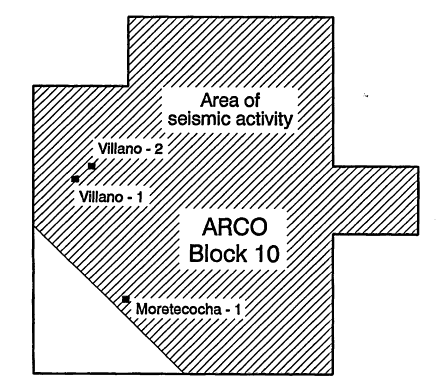
FIGURE 3
Seismic operations and exploratory well sites, Block 10.
Environmental and Social Strategies
A major goal of the company is to minimize adverse environmental and social effects of the project. Environmental guidelines for rain forest exploration operations were developed by ARCO before drilling the first exploratory well (AIOGC, 1990). Major elements include the following:
- Build no new roads—move all equipment and personnel using existing out-of-forest roads, aircraft, or on foot.
- Minimize the ''footprint'' of all operations (seismic lines, helipads, campsites, drill sites)—the smallest feasible footprint minimizes vegetation removal and reduces all other environmental impacts accordingly.
- Minimize the use of heavy equipment (tractors)—use hand methods (machete, chain saw) when vegetation must be removed. Natural restoration of disturbed areas is much faster if the topsoil is not disturbed.
- Consult with local communities—informing and involving residents of villages nearest to, and most affected by, the project is vital. For example, local
- villagers help select trees to be used in construction, participate in cutting lumber, and advise ARCO on other environmental and social issues, such as identification of wildlife and plant species, and on the locations of cultural significance to villages. Although primary emphasis has been at the "grass roots," it is also important to encourage dialogue with all indigenous groups that express an interest in such dialogue.
- Restore disturbed sites.
Lumber Harvesting and Transport
Drill sites were designed to be smaller (4.5 acres) than those commonly constructed in the area (about 12 acres). Some lumber was required for construction at drill sites and campsites. Indigenous residents, in cooperation with Ecuadorian foresters, selected trees for harvest on the basis that they were fast-growing and not used to make canoes or otherwise significant to the community (e.g., special use or meaning). Trees were cut by hand using chain saws at remote locations, taking care to minimize canopy gaps. Boards were cut at the remote site, then transported to the construction site by helicopter or footpath. This method of harvesting and transporting lumber is unconventional and greatly reduced the ecological impacts of the project over what it would have been expected if lumber were harvested and transported through the forest in the conventional way using heavy equipment (McMeekin, 1991; McMeekin and Zak, 1990).
This method of selective harvesting closely mimics natural treefall in that only single trees are cut in a given area; there is no "clearing." Gaps in the canopy due to natural treefall create light gaps of up to 360 square meters. Light can penetrate to ground level in these gaps, creating microhabitats and stimulating plant growth (Brokaw, 1982; Connell, 1979). For ARCO operations, trees were selected and harvested at unevenly spaced intervals, depending on the location of trees meeting the selection criteria. After six months, gaps created from timber harvesting displayed vegetation regeneration similar in genetic diversity and structure to that found in natural treefall gaps, although trampling and a thick layer of sawdust slowed recovery of some areas (Woodward-Clyde, 1992). Recovery in exposed areas begins with the growth of sun-tolerant species as the first stage of the succession process that leads to natural restoration of the forest (Brown and Press, 1992).
Construction and Heavy Equipment
Construction of drill sites for exploratory wells was the only part of the project that required the use of heavy equipment in remote areas. The drilling rig and supporting heavy equipment were brought to the site in sections by helicopter and assembled at the site. Heavy equipment use was permitted only within the
confines of the drill site. After construction and drilling were completed, all equipment was disassembled and removed by helicopter.
Reclamation
Natural recovery of helipads, seismic lines, and campsites was rapid because vegetation was cut by hand (using chain saws and machetes) and top soil was not disturbed. Where heavy equipment was used to construct drill sites, recovery has taken more time. Reclamation programs were implemented to enhance the recovery process. Topsoil removed to construct drill sites was retained and protected on-site. Nurseries were established at each drill site to provide native plant seedlings. Monitoring of the initial phase of reclamation at the Moretecocha-1 well site indicated that additional work was appropriate; this work has been recently completed. A reclamation program incorporating what was learned at Moretecocha was implemented at the site where the Villano-2 and Villano-3 wells were drilled. This site was occupied for about two and one-half years and may be used in the future if the oil discovery is developed. The plans for both the Moretecocha (most recent phase) and Villano sites included contractual terms for local indigenous monitoring and maintenance to tend the vegetation and replace any plants failing to survive, as well as to report problems at the sites requiring attention from ARCO.
Social Issues
The situation with regard to indigenous communities in Ecuador is complex. There are three major groups living in Block 10—Quichua, Huaorani, and Schuar. These indigenous groups, the colonists, provincial leaders, and the Ecuadorian government are involved in an ongoing controversy over land fights and development issues. However, Ecuador has made progress in resolving land fights issues by granting such fights to various communities in 1992. Several organizations claim to represent the various indigenous communities, and it has been a challenge for ARCO to cooperate with any one organization without alienating another. In attempting to minimize such controversy and keep the consultation and decision making close to the communities that are nearest to, and likely to be most affected by, oil operations, ARCO has focused more attention on communities than on the larger, representative organizations. ARCO Oriente personnel meet regularly with communities to maintain communication, exchange information, and resolve issues. ARCO Oriente has developed partnerships with communities in the vicinity of operations by negotiating agreements with them for the use of their land, rather than merely assuming the fight to use the land according to agreements with the Ecuadorian government. As a result of consultation and negotiation, ARCO has provided support to the communities in the form of medical assistance, training, educational supplies, school structures, and airship
improvements. The goal of this support is that it result in positive changes in the community that will last beyond the life of the project.
Development Phase
As of this writing, ARCO and AGIP are preparing a field development plan that the government of Ecuador will use to decide whether or not the project should proceed to the development phase. In anticipation of development, a number of environmental studies and planning exercises were completed. Whether or not the project proceeds, the ideas and strategies that emerged from this process have broken new ground and provided what may be a model for development in environmentally sensitive areas.
Conventional Technology and Approaches
Conventional development of an oil field requires construction of drill sites, pipelines, gathering and processing facilities, and pump stations. Technology and construction methods for these facilities are well established and accepted in the industry and are currently common practice in Ecuador and elsewhere. Drill sites in this region have historically occupied about 12 acres. They are connected to one another and to support facilities by roads. Pipelines are used to transport oil from wells to gathering and treatment facilities and for shipment out of the area. Pipeline construction requires road construction first, so that equipment can be moved to the site. Roads are also required for access to the oil fields and pipeline for routine operations. Pipelines are typically monitored from aircraft, requiring that pipeline corridors be cleared of vegetation so that leaks or other problems can be detected from the air.
In addition, remote operations complicate the problem of transporting workers to and from the oil fields. Normally, workers are housed in the field for shifts of 7 to 14 days. Oil field operations continue 24 hours a day; therefore, a contingent of 40 to 50 personnel is not unusual.
Environmentally Based Technology
During planning, all conventional approaches to drilling, operations, and logistics were challenged. Can alternative approaches be developed that will reduce environmental and social impacts of the project over conventional approaches? Is it possible to develop an oil field in a remote forest without roads? Can alternative methods be found to construct and monitor a pipeline without roads and without breaking the forest canopy?
When we first asked these questions, the nearly universal response was that it is not possible to develop a project without roads. At a minimum, an unconventional, roadless project was expected to be costly. The more the questions were
studied, however, the more likely it looked that at least some of the challenges could be met. The following concepts emerged from these studies.
The Offshore Model
The goals of a roadless operation with a small footprint caused the project team to search for an alternative model to conventional oil field development technology. The key breakthrough in our thinking came when the project leader (L. C. Soileau) visualized oil production in a rain forest using the only current example of oil production without roads, an offshore operation (Figure 4a). The setting of a remote, tropical rain forest is directly analogous to an offshore site. If the offshore model is applied to this onshore situation, many of the same practices and development techniques used by ARCO in open waters could be applied cost-effectively to the rain forest environment. ARCO had already gained experience developing small-footprint operations as part of the large oil production project on the North Slope of Alaska. The goal there was to minimize impacts on tundra.
Refining the Offshore Model
Conventional contemporary onshore development with a road was evaluated to give baselines for development and construction time, cost, and risk as well as the socioenvironmental impacts. This approach was evaluated against conventional offshore development as well as variations of the offshore model.
The conventional offshore approach is to house personnel on platforms, along with processing facilities for oil, gas, and water. Logistical support for the platforms (e.g., crew and equipment transport) is provided by boat or helicopter. The rain forest version of this approach would be to locate processing facilities and personnel quarters in a compact design at the drill site with logistical support by air.
The second alternative evaluated is production processing in the field while housing personnel at the nearest community with support facilities (water, electricity, housing, roads). This hybrid concept allows for location of oil, gas, and water processing at the oil field as in a conventional development combined with the offshore approach to logistics and support.
A third alternative, locating processing facilities as well as worker housing at the nearest urban community along the oil pipeline route, is the current preferred model (Figure 4b). Here there is access to electric power, roads to other areas, and existing support systems for oil field workers, including housing and telecommunications. The equipment and systems at the oil field are minimized and as simple, reliable, and durable as possible. This approach concentrates people at the population center and reduces the number of people required in the field. The
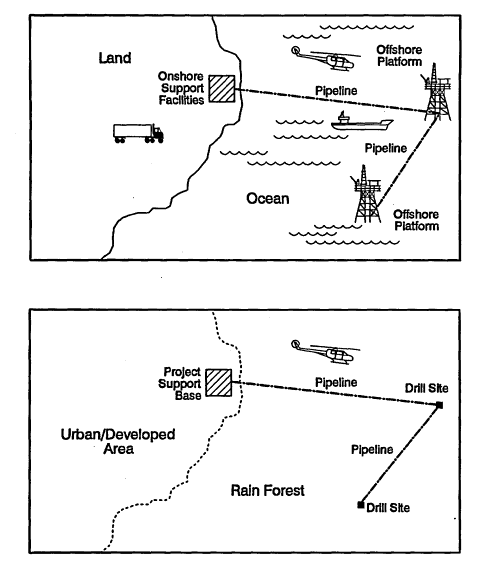
complication of this approach is the isolation of producing wells from field supervisors and work crews.
Production Processing Technology
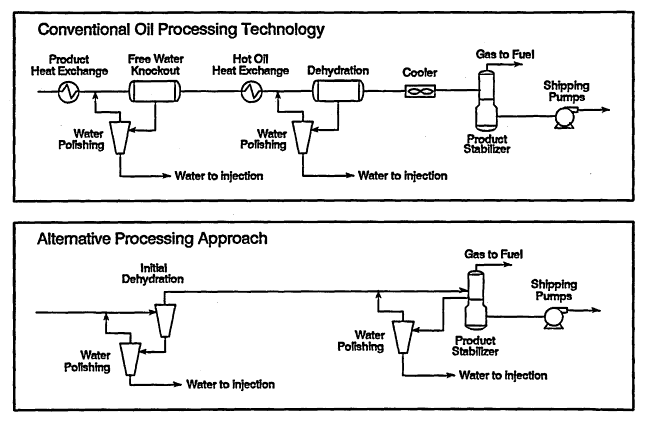
Conventional contemporary oil field technology used to separate and treat produced oil, gas, and water is complex, requiring close monitoring and maintenance (Figure 5a, conventional technology). Project engineers studied various alternatives and finally developed a simpler, low-maintenance approach (Figure 5b, alternative technology). This alternative minimizes the acreage required for equipment as well as numbers of workers required to support it. This minimizes environmental impact and also reduces the opportunity for social interaction between indigenous communities and oil workers. The lack of road access gives protection from colonization by outsiders and maintains local control. The indigenous communities will continue to manage their lands and resources and can make the deliberate decision to discourage or encourage entry of colonists, other industries, or agriculture. In addition, since company and contractor personnel will visit the field only as needed, greater control of cultural "evolution" will be exercised by the indigenous people themselves. There are possibilities for long-term employment of local people, if desired. Further, with flexibility designed into the pipeline, power, and processing systems, future discoveries can be integrated into this plan with continued minimal impact.
Costs
Costs for a remote operation are higher than costs for conventional operations during the construction phase. However, the offshore model approach will reduce costs over the long-term because of the smaller number of personnel that must be maintained at remote locations, the simplicity and lower maintenance required for production equipment, and the lack of road construction and maintenance.
Pipeline Options
Many pipeline options were evaluated. Only three constraints were placed on engineering teams: (1) the capability of transporting 30,000 barrels a day, (2) no permanent roads leading to developed areas, and (3) a cleared right-of-way less than 20 feet wide, rather than the conventional 60 feet. Numerous innovative techniques for constructing and monitoring the pipeline have emerged.
One of the more unusual concepts was to design a land pipelay barge . Constructing a pipeline offshore requires a specially made barge that transports the pipe to the offshore location and contains equipment needed to weld, wrap, inspect, and lay the pipeline on the seafloor. The ARCO team thought that tree
removal could be minimized by designing a land barge of multiple, wheeled platforms linked together. The right-of-way for the pipeline would be slightly wider than the barge since each platform would straddle the pipeline ditch. Each platform would serve a separate function. The lead unit would trench the ditch. The second unit would carry the sections of pipe and feed them one by one into the automatic welding machine. The third unit would quench and wrap the pipe. The fourth unit would inspect and drop the pipeline into the ditch. The fifth unit would refill the ditch. Using retired military-tracked heavy vehicles, this concept may yet be viable.
Using manual labor to construct the pipeline would reduce the need for heavy equipment and roads. This approach would require either laying the pipeline on the surface or digging the ditch by hand. A surface line would minimize tree loss and corridor width. However, conventional 15- to 24-inch-diameter pipe is difficult or impossible to move by hand. In addition, welding machines are required to connect the 40-foot sections. This problem could be solved by using high-pressure plastic pipe that could be fused together with machines that can be carried by humans over rough terrain. Alternatively, two smaller parallel pipelines could be installed rather than one larger one. The smaller pipe would be easier to handle in the field.
Another approach is to use flexible, armored pipe such as is used offshore. This pipe is reinforced, high-pressure rubber hose wrapped in a metal sheath. Long sections of coiled pipe could be flown along the pipeline route, uncoiled and connected by hand, and laid around the larger trees.
Consideration was given to a double pipeline with oil flowing through the center pipe and monitoring equipment in the space between the small and large pipe. Such a double-walled pipe could be laid in the Villano River. Although there would be temporary disruption to the river, this technique would minimize vegetation removal and soil disturbance during pipeline construction as well as the need for roads to transport equipment.
To avoid constructing a permanent road along the pipeline, it may be possible to build temporary roads that would be dismantled after pipeline construction. Temporary roads could be surfaced with reusable materials, such as surplus steel plating from military aircraft runways or "lumber" made from recycled plastic waste. This material could be moved along the pipeline route and used as road surface for the heavy ditching and pipe-moving equipment. In many places, temporary bridges could be used and then removed to eliminate permanent river crossings.
The terrain may require tunneling through small hills, under streams, or from the top to the bottom of escarpments. Sections of the pipeline could be laid in these small-diameter tunnels to eliminate permanent bridges and impede the crossing of any of these natural barriers by off-road vehicles or horse-drawn carts.
Using these concepts, it may be possible to design the pipeline so that the
right-of-way is 20 feet or less. With a corridor of this size, the natural forest canopy may be preserved or easily restored.
Pipeline Monitoring and Maintenance
Once the pipeline is laid, it must be monitored for breaks, corrosion, and leaks. Normally, a pipeline route is observed by periodic overflights using a small airplane or a helicopter. If this pipeline is constructed using techniques that allow the forest canopy to remain unbroken, airborne observation will not be possible. Again using the offshore model, flow meters could be used to monitor the volume of oil in the pipe at various points. Pressure monitors can be used to detect leaks. As is the case in all major pipelines, instruments are placed in the pipe to clear the line of extraneous fluids and monitor corrosion. To take the place of aerial observation, indigenous people who live along the route could be hired to walk the line and report any leaks or damage.
Selecting an Approach
Some of these concepts may be viable and find their way into the project. Availability of materials such as superhigh-pressure plastic pipe or the feasibility of "land barges" will be considerations. Cost will also be a major consideration. Reinforced flexible pipe, for example, would be extremely expensive and may not even be available in the large diameter required. However, exploring ideas such as these has enabled project personnel to completely rethink the process of constructing, maintaining, and monitoring a pipeline.
Current Status of Environmental Planning and Management
The type of environmental planning and management described here is not widely practiced, even in developed countries. Yet, if we hope to conserve natural ecosystems and reduce the rate of loss of biological diversity, sound environmental planning and management are critical. The process need not be lengthy or expensive. The key for the long-term is adequately trained environmental scientists, engineers, and operating personnel working together. These teams must be challenged to "break the mold" and depart from conventional thinking.
Science and Engineering Needs
Environmental planning and management is based on getting information from the environment and feeding it back into the management plan of the project. We must find better, less expensive, and less time-consuming ways to obtain this information. We need scientifically sound, rapid assessment and monitoring
methods that are affordable. Neither industries nor government regulatory agencies have the resources to do long-term, baseline studies to inventory species and document natural variation of populations. Yet, accurate environmental data, useful in the project management process, are needed. For most development projects around the world, in both developing and industrialized countries, resources will not be available to support the type of environmental studies that have been required in North America and western Europe, and these fall short of a real baseline. More effective, less costly methods are needed everywhere.
Since it will not be possible to study everything, we need to develop methods that focus on those parameters that will tell us most about the environment at least cost. Are there different or better ways to make use of satellite-generated data and aerial photography? Can some populations be used as indicators of environmental quality to eliminate the need to monitor all populations (e.g., birds, ants, butterflies)? Are there some stages of the life cycle more appropriate to monitor than others (e.g., larvae)? What physical parameters would yield the most appropriate information about the environment in the least time at the least cost? Under the auspices of Conservation International, two biologists, Al Gentry and Ted Parker, developed the Rapid Assessment Program, which uses satellite imagery, aerial reconnaissance, and field surveys to develop an inventory of species in just a few weeks (Roberts, 1991). In addition, a panel of tropical scientists recommended that specific key plant and animal populations be surveyed prior to development activities in the tropics (National Research Council, 1982). These are good examples of approaches to this problem.
Durable, low-cost instrumentation is needed for environmental monitoring from temperature probes to current meters to animal collars that use satellite telemetry for tracking. The extent to which monitoring can be automated and equipment made durable and easy to use will determine its applicability in project management.
One way to reduce the loss of natural ecosystems is by restoring damaged systems, creating new systems, and enhancing existing systems. There have been several projects to create or restore wetlands. Others have successfully restored natural forest habitats. Experiments have been conducted on enhancement of marine ecosystems by building ''artificial reefs.'' There is a great need to develop methods to restore, create, and enhance ecosystems and to strengthen the science base underlying them. This includes careful monitoring of projects and dissemination of the information, whether they succeed or fail. In some cases, such as wetlands, regulations are ahead of science. To support the national goal of "No Net Loss" of wetlands, regulators may require wetlands creation or restoration as a condition of permitting activities in wetlands. However, issuing a permit does not necessarily make it possible to create a functioning wetlands ecosystem. Generally, more funding agency support and more attention from the academic community are needed to support the emerging field of restoration ecology.
Environmental planning and management are not emphasized in academic
curricula in ecology or engineering, the two major disciplines required to practice them. Courses in this subject should be available for majors in both of these disciplines. Few universities require classes in ecology for engineering students or engineering for ecologists. To achieve an environmentally compatible development, engineers must have a basic understanding of the environments in which they will be working and environmental scientists must learn some of the language and constraints of engineering. Sound environmental planning and management require the cooperative interaction of these disciplines. It would aid the process if this interaction began during the training of its practitioners. It is important to build a base of environmental planners and managers in all countries.
Industries and government agencies participating in the environmental planning and management process should also disseminate the information gained from development projects. The possibility of a central bibliographic database should be explored.
Moving Toward Sustainable Development
If there is a chance to preserve natural habitats and the biodiversity they support, it will not be enough to focus on creating parks and refuges and conducting biological Surveys. Parks and refuges are of value in that they preserve samples of diversity. Inventories are essential, but they document what is being lost while doing little to reverse the trend. A long-term solution to the problem requires that more attention be given to land that will be "used," that is, to develop methods that allow use of the land while maintaining its ecological integrity and functions. This area has not received much attention from the academic community or national funding agencies. Few "developers" (from slash-and-burn colonists in the rain forest to housing developers in the United States) have the resources to conduct the long-term studies required even to inventory the species that are Present, much less to gain a complete understanding of the systems in which the development will take Place. Yet ecologically based management methods must be applied if natural systems are to be maintained outside parks and preserves.
The following are examples of questions that need the attention of the research community and funding agencies.
Will undisturbed corridors in the midst of a development maintain the overall ecological integrity of the system? How large should corridors be? What configurations?
Which has less ecological impact overall, high-density or low-density housing? What are the ecological and social trade-offs?
What kinds of monitoring can best and most cost-effectively indicate when an activity is damaging an ecosystem? When is a damaged system "recovered?" Is it possible to determine when a "restored" system is self-sustaining?
How clean is "clean" in the ecological sense? For example, in cleaning up an oil spill, is ecological recovery faster if some oil is left in the environment rather than using extreme measures, such as high-pressure hot water, to remove it?
Are there methods to restore damaged or degraded habitats more effectively than natural recovery? Which methods are ineffective or actually increase damage or prolong recovery?
These questions identify areas of research and reporting that have "fallen through the cracks." They are not seen as part of the mission of any agency or funding group. Yet there is a great need to develop the science base in these areas that have practical and immediate application. To develop the methods requires the collaboration of environmental scientists and engineers, much the way in which AIOGC developed unconventional strategies for its Ecuador development project. One further element is required for implementation of sound environmental planning and management practices, a supportive regulatory framework.
Discussion
The Villano Field oil discovery in Ecuador is requiring ARCO to become innovative in designing an exploration and development plan with the goal of minimizing environmental and social impacts. A key feature of ARCO's work in the area is that oil exploration was conducted and a plan was developed for oil production and transportation without construction of new roads and with a significantly reduced "footprint." Although operations have been conducted elsewhere without constructing roads to remote areas, the ARCO concept is a significant departure from conventional operations, with clear environmental and social benefits. By applying lessons learned from oil operations around the world and encouraging creative technical thinking, a plan is being developed which is operationally sound, cost-effective, and proven by application in an offshore environment. The plan is consistent with the environmental and cultural objectives of the company and the indigenous people in the area.
There is the broader question of whether to develop oil resources in Ecuador or in other rain forests. The fact is that oil development will occur in Ecuador; the country's economy depends on oil revenues. If ARCO does not produce the oil, some other company probably will do so by making use of conventional technology and practices now common in the area. The approach described in this paper is, in ARCO's view, a major advance in environmental protection that has application beyond the single project.
A major effort is needed to strengthen the science base as well as train and encourage scientists and engineers to practice the innovative thinking and collaboration required to implement sound environmental planning and management. Environmental scientists and engineers in the academic community must develop programs to promote this field. Industry scientists and engineers must be
empowered to take risks and think unconventionally, since it is through them that most new ideas will be generated and applied in the field. Governments need to develop regulatory frameworks that support, rather than impede, this process. Supporting and encouraging sound environmental planning and management offers some hope that the ecological integrity and functions of natural systems may be maintained when development occurs.
References
AIOGC. 1990. Guidelines for Exploration in the Tropical Rain Forests of Eastern Ecuador. Safety, Health and Environmental Protection Department, ARCO International Oil and Gas Co., Plano, Texas.
Angermeier, P. L., and J. R. Karr. 1994. Biological integrity versus biological diversity as policy directives. BioScience 44(10):690-697.
Brokaw, N. V. L. 1982. Treefalls: Frequency, timing and consequences. In The Ecology of a Tropical Rain Forest, E.G. Leigh, Jr., A. S. Rand, and D. M. Windsor, eds. Washington, D.C.: Smithsonian Institution Press.
Brown, N., and M. Press. 1992. Logging rainforests the natural way? New Scientist 133(1812) (March 14):25-29.
Connell, J. H. 1979. Tropical rain forests and coral reefs as open non-equilibrium systems. In Population Dynamics, R. Anderson, B. Turner, and L. Taylor, eds. Oxford, England: Blackwell Press.
Holdridge, L. R. 1967. Life Zone Ecology, rev. ed. San Jose, Costa Rica: Tropical Science Center.
Lewis, S. 1990. The Rainforest Book. Los Angeles: Living Plant Press.
Lindstedt-Siva, J., and D. W. Chamberlain. 1991. Petroleum Operations in Ecuador: Recommendations for Environmentally-Based Oil Development in a Tropical Forest. Report to ARCO International Oil and Gas Co., Plano, Texas.
Loll, S., and R. Steinbauer. 1993. Coles Levee and North Dauphin Island win ARCO Environmental Award in AOGC "sweep." Environmental News 12(3):1-2.
Lovejoy, T. E. 1994. People and biodiversity. Nature Conservancy 44(1) (January/February):29-33.
McMeekin, D. T. 1991. Report on Environmental and Ethnic Issues During All Phases of the Development of the Moretecocha I Well Location, ARCO Oriente, Inc. D.T.M. Cia. Ltda, Quito, Ecuador, October 1.
McMeekin, D. T., and V. Zak. 1990. A Survey of the Physical Environment: Moretecocha Well Location, ARCO Oriente, Inc. D.T.M. Cia. Ltda, Quito, Ecuador. May.
National Research Council. 1980. Research Priorities in Tropical Biology. Washington, D.C.: National Academy Press.
National Research Council. 1982. Ecological Aspects of Development in the Humid Tropics. Washington, D.C.: National Academy Press.
National Science Board. 1989. Loss of Biological Diversity: A Global Crisis Requiring International Solutions. A Report to the National Science Board Task Force on Biological Diversity. Publ. NSB-89-171. Washington, D.C.: National Science Foundation.
Raven, P. H. 1994. Defining biodiversity. Nature Conservancy 44(1) (January/February):10-15.
Roberts, L. 1991. Ranking the rain forests. Science 251:1559-1660.
Wilson, E. O. 1988. Biodiversity. Washington, D.C.: National Academy Press.
Woodward-Clyde, International. 1992. Environmental Impact Evaluation, Proposed Exploratory Well Villano No. 3, Villano, Oriente Basin, Ecuador.
| This page in the original is blank. |


