
5
The Mission of Research
Oral health researchers in U.S. dental schools and universities, together with researchers in government, postgraduate institutes, and industry, have built a base of scientific and clinical knowledge that has been widely communicated and used to improve oral health. Their ongoing research initiatives combined with broad advances in the biomedical sciences will add to these achievements in the future. Discoveries in genetics, molecular and cell biology, immunology, and pharmacology, as well as in materials and computer sciences, will reshape the character and focus of dental practice and dental education itself. Vaccines against caries and periodontal disease, new anti-infectious agents, sophisticated simulation models, even genetic therapies are all likely to materialize in the future. The main questions are not whether but when they will arrive and in what specific form.
Many of the basic science discoveries that will be most influential in shaping future oral health and oral health practice will occur outside dental schools—in university science departments, in medical schools, and in government, industrial, and other research laboratories. This means that dental school research programs must be linked to basic research programs outside the school. Involvement with medical school and other university research activities will be increasingly important.
Some dental schools are vital centers for the creation of new knowledge about oral diseases and their prevention or treatment.
Nonetheless, many dental schools and dental faculty still have little or no involvement with research or, more broadly, scholarship. Twenty percent of the dental schools received two-thirds of the research and training funds distributed by the National Institute of Dental Research (NIDR) in 1991. As described in Chapter 2, NIDR was created in 1948 to bolster the very limited research and research training capacity of dental schools as well as to conduct its own research program. It remains the major source of support for oral health research and for training of oral health researchers.
This chapter begins with a discussion of broad goals for dental schools. It then reviews basic data on funding sources, amounts, and targets of oral health research. Later sections discuss major issues and concerns, in particular, funding constraints and shortages of well-trained oral health researchers. The background papers by Greenspan and by Jeffcoat and Clark provide a selective overview of the current state of, and future prospects for, oral health science and technology and of the role of dental schools in technology transfer. The paper by Bader and Shugars focuses on outcomes and health services research.
Broad Goals For Research In The Dental School
As stated in Chapter 1, the committee strongly believes that dental education should be scientifically based and undertaken in an environment in which the creation and acquisition of new scientific and clinical knowledge are valued and vigorously pursued. The research standards for dental schools published by the Commission on Dental Accreditation support this goal (Table 5.1).
In addition to creating new knowledge, the research mission includes disseminating such knowledge, educating clinicians to critically assess scientific and technological innovations, and educating future researchers. Conceptualized somewhat differently, these dimensions include a mix of scholarly activities: discovery, integration, application, and teaching (Boyer, 1990; Bepko, 1991). However categorized, these elements of research and scholarship are linked by the broad common goal of improved oral health and should influence all elements of the dental school curriculum. Their scope is sufficiently broad that they offer opportunities for faculty contributions beyond the laboratory or clinical trial—important as those traditional venues of research are.
The creation or discovery of new knowledge is the heart of the university's research mission. Within the diverse components of
TABLE 5.1
Research Standards for Accreditation
|
1. Research, the process of scientific inquiry involved in the development and dissemination of new or improved knowledge, must be an integral component of the mission of each dental educational institution. |
|
As the advancement of the profession, and ultimately the health of the public, depends upon the development and dissemination of new or improved knowledge, dental education institutions must accept the obligation to do research. Research, whether basic, clinical, behavioral or that leading to improved oral health care delivery, must be in evidence. |
|
Although it is recognized that institutional priorities will vary in relation to research, education and service, research efforts must be of such quantity and quality as to support the stated mission of the institution. In addition, there should be an appropriate balance among these three activities to ensure that institutional objectives are being fully realized. |
|
2. A formal research development plan must be evident to ensure the continual support of the research mission of the institution. |
|
The administrative responsibilities for the development, monitoring and continuance of research activities should be clearly outlined. |
|
3. The amount of time and resources available for faculty research should be sufficient to support the objectives of the institution. |
|
There should be clearly evident a mechanism whereby interested faculty and students at all levels might become meaningfully involved in research endeavors. Institutional resources should be available to provide interim support for faculty in the event that funds for sponsored research lapse. |
|
SOURCE: CDA, 1993a. |
the modem university, discovery can take varied forms. Past Institute of Medicine (IOM) studies of health research have identified a ''continuum" of relevant research fields, including: "the biomedical sciences, which inquire into the basic nature of life through deeper understanding of life process; the clinical sciences, which translate fundamental research into medical practice; population-based sciences, such as epidemiology and biostatistics; the behavioral and social sciences; biophysics, bioengineering, and clinically oriented medical engineering and physics; the hybrid sciences, such as nutritional and environmental sciences; health services research, which studies the health care system; and technology transfer" (IOM, 1979, 1990d, p. 30, emphasis added).
The creation of new knowledge often involves studies that cross disciplines. For dental faculty, interdisciplinary research—particularly when it involves clinical faculty—has the additional benefit of reducing the isolation for which dental schools have sometimes been criticized (Hogness, 1982; McCallum, 1983; Ranney,
1989; Littleton, 1992). The focus of such integrating research is highly varied and includes basic biological processes at the cellular and molecular levels, pharmacological methods for preventing or treating oral disease, biomaterials development, ''hard tissue engineering" (involving bone and tooth structures), and oral health epidemiology and behavior. The background paper by Greenspan, for example, discusses how approaches combining molecular biology, molecular immunology, and epidemiology are advancing basic scientific knowledge of periodontal diseases.
In addition to basic and clinical research, both behavioral research and health services research are essential for the improvement of oral health in individuals and populations. Basic scientific discoveries and clinical advances do not automatically benefit individuals or communities. Access to these advances may be limited by organizational, behavioral, financial, or other barriers, and clinical advances may not directly address the problems of particular population subgroups. A major goal of behavioral, epi-demiological, and health services research is to identify the factors that encourage or thwart the various steps required to move from scientific knowledge to improved health. Basic, clinical, and health services research, taken together, can reinforce and support the emphasis on health outcomes that is demanded in today's health care system.
In addition to creating knowledge, dental schools are also important vehicles for disseminating and integrating knowledge through their predoctoral, graduate, and continuing education programs. They play a role in the process of technology transfer, which involves the movement of new applications of knowledge from academic, governmental, and commercial research centers to the practice setting.
At their best, dental school faculty and curricula act as critical filters that help students and practitioners to separate well-founded from ill-founded claims for the effectiveness of specific new—and old—interventions. At their worst, as this committee heard on occasion, faculty are neither immersed in advances in science and technology nor prepared to scrutinize rigorously claims for the effectiveness of new (to say nothing of established) clinical practices.1 The committee's site visits produced repeated references
to the archetype of the nonscholarly faculty member—the "checker" who inspects student work but makes no contribution through critical thinking or research.2
In disseminating knowledge and participating in technology transfer, the objectives for dental education are not merely to promote the appropriate adoption of new techniques, drugs, or materials but more generally to promote informed and intelligent practice. This requires the curricular framework described in Chapter 4, one that provides a practice-relevant foundation in the basic sciences and that incorporates research findings and evaluation in classroom and chairside clinical instruction. Coursework in research methods and participation in research projects are other components of a curriculum designed to promote professional inquisitiveness, intellectual confidence, and critical appraisal skills that students will take with them into practice. Further, faculty who are actively involved in the conduct and evaluation of research can exemplify the critical cast of mind that all health professionals should possess.
Continuing education programs offer a potentially important opportunity for dental schools to help clinicians learn about scientific and clinical advances and to evaluate their effectiveness critically. In the committee's site visits, faculty and practitioners argued that dental schools can go beyond the narrow technique and product focus of many commercial programs to present practitioners with an evidence- and outcomes-oriented assessment of new technologies. Such assessments are particularly important for practitioners whose formal education did not provide the evaluative skills and perspectives advocated in this report and who, thus, may be more vulnerable to enthusiastically promoted but inadequately tested new technologies.
Finally, with the active support of NIDR, dental schools have a major responsibility for educating future dental researchers. Small
but important support for research training also comes from private foundations (e.g., the Robert Wood Johnson clinical scholars program) and industry. Oral health research does and should draw on researchers trained in medical schools and graduate schools, but a stronger dental school role in research education is an important means to strengthen the link between the basic and clinical sciences in dental schools, solidify the position of dental schools in research-intensive universities and academic health centers, and direct research to oral health problems. Expanding and strengthening the pool of capable basic science and, especially, clinical researchers are, at the same time, preconditions for expanding and strengthening the research productivity of dental schools.
Research Revenues, Expenditures, And Publications
Measuring the output of research activities in dental schools is difficult. Therefore, this summary focuses on inputs, in particular, research funding. It also includes some information on research productivity as measured by publications.
Data on research revenues and expenditures for dental schools come from two primary sources, the American Dental Association (ADA) and the National Institute of Dental Research. ADA data do not include institutions that offer only postgraduate dental education programs such as the Eastman Dental Center and the Mayo Graduate School of Medicine. To the extent that dental faculty are involved in multidisciplinary research projects that are administered by other units (e.g., medical schools), dental school involvement in research may be understated. In addition, the research activity of dental school faculty may not be reflected in the financial figures for other reasons, for example, if foundations refuse to pay full overhead costs for research contracts, schools may categorize the funds they do provide as gift income not research revenues.
The ADA reports dental school expenditures for research in four categories: basic science, clinical science, behavioral science, and training grants (Table 5.2). As measured by expenditures, the major focus of research is clinical, followed by basic science, training, and—a very distant fourth—behavioral science research. ADA data for 1993 show that 46 of 55 schools reported expenditures for clinical research, 38 for basic science, 34 for training, and 11 for behavioral research.
For the reporting year ending June 30, 1993, revenues from sponsored education, research, and research training accounted for more than
$125 million out of total dental school revenues of more than $1 billion.3 The contribution of sponsored education, research, and training to total revenues varies enormously across schools. It ranges from less than 2 percent at nine schools to 56 percent at one school. For the next highest school, the figure drops to just under 28 percent (ADA, 1994a). The mean for all schools is about 10 percent. By way of comparison, federal research grants and contracts alone account for 12 percent of medical school revenues, and all sources of research and training grants and contracts contribute about 20 percent of their revenues (Krakower et al., 1993).
In 1993, more than 70 percent of dental school research revenues came from the federal government, while 22 percent came from nongovernmental sources and 7 percent from state and local governments (Table 5.3). The great majority of federal support comes from NIDR, with other agencies—including other divisions of the National Institutes of Health—contributing the remainder. The committee found no comprehensive data on these other sources.4
NIDR spending for its external or extramural research program falls into several categories as depicted in Figure 5.1. The entire extramural program receives not quite 75 percent of the total NIDR budget, about 90 percent of which goes for specific research projects, support for research centers, and other research. About one-third of NIDR extramural research funds are provided to institutions other than dental schools (e.g., advanced education institutions and medical schools).
A commonly used measure of research productivity relies on individual or institutional publications (Harrington, 1987; McGuire et al., 1988). The rationale is that the number of scientific publications and the type of these publications are useful indicators of "an institution's contribution to knowledge" (Lipton, 1990). One analysis found 50 dental institutions worldwide (including advanced education institutions) with 40 or more articles published in 1987 and 1988 in journals included in the Science Citation Index. Thirteen of these 50 institutions had 90 or more articles. (Of the 4,300
TABLE 5.2
Dental School Expenditures (dollars) for Research, 1993
|
Sponsored Research and Training |
Public |
Private |
All |
|
Basic science |
42,321,201 (46%) |
11,440,330 (54%) |
53,761,532 (47%) |
|
Clinical science |
43,639,741 (47%) |
6,499,781 (31%) |
50,139,523 (44%) |
|
Behavioral science |
955,682 (1%) |
145,949 (1%) |
1,141,631 (1%) |
|
Training grants |
5,677,073 (6%) |
3,044,359 (14%) |
8,721,432 (8%) |
|
Total |
92,633,697 (100%) |
21,130,419 (100%) |
113,764,118 (100%) |
|
SOURCE: Data compiled from American Dental Association, 1994a. |
|||
TABLE 5.3
Dental School Revenues (dollars) from Research, 1993
|
Sponsored Research and Training |
Public |
Private |
All |
|
Nongovernment |
22,017,372 (23%) |
5,492,424 (20%) |
27,509,796 (22%) |
|
State or local government |
5,864,445 (6%) |
2,849,836 (10%) |
8,714,281 (7%) |
|
Federal government |
69,243,174 (71%) |
19,554,257 (70%) |
88,797,431 (71%) |
|
Total |
97,144,991 (100%) |
27,896,517 (100%) |
125,021,508 (100%) |
|
SOURCE: Data compiled from American Dental Association, 1994a. |
|||
journals indexed, 29 focused on dentistry.) Twenty-two of the first group of 50 institutions and seven of the second group of 13 most productive schools were located in the United States; three of the six foreign institutions were in Scandinavian countries (Lipton, 1990).
Focus Of Research And Research Training
As indicated by the ADA expenditure data reported above, clinical research accounts for the major part of dental school research, with basic research a relatively close second. Although ADA reports do not further identify the substantive focus of research, NIDR data are helpful here.
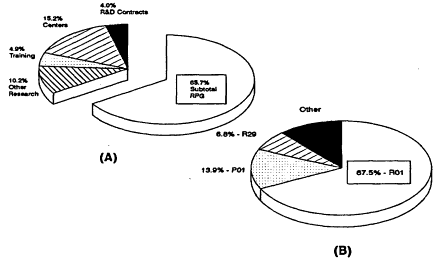
Figure 5.1
Percentage distribution of National Institute of Dental Research (NIDR) extramural obligations, FY 1993 (total extramural program - $118,363,000; research projects - $77,805,000). A: All programs; B: Research project grants (RPGs). NOTE: R01 - traditional project grants; R29 - first independent research support and transition (FIRST) award; and P01 - research program projects.
Center grants: P20, P30, and P50. SOURCE: NIDR, 1993a.
The focus of NIDR funding has shifted considerably over the institute's history. As reported by Harris (1989), 37 percent of research grants in the NIDR's first three award years were devoted to caries, fluoride, and restorative materials; 10 percent to periodontal disease; 10 percent to nutrition; and 8 percent to craniofacial abnormalities. By 1985, caries and restorative materials accounted for 28 percent of funding; periodontal and soft tissue disease for 34 percent; and craniofacial development, pain, and behavioral science research for 27 percent. Figure 5.2 shows the distribution of NIDR extramural funds across 19 research areas in 1993.
NIDR data do not distinguish between basic and clinical research projects. Data reported by Harris (1989) indicate that the majority of articles published by extramural researchers supported by NIDR concerned "bioscientific" topics not confined to oral conditions.
In addition to individual research projects, NIDR supports 29 research centers, most of them affiliated with dental schools. The varied foci of these centers are revealed in Table 5.4. In FY 1993,
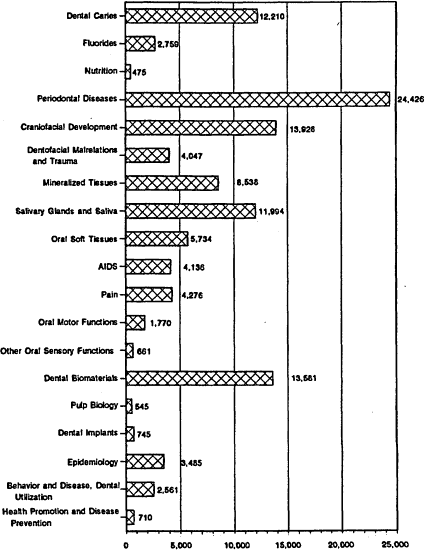
TABLE 5.4
NIDR Research Centers Support: Number of Projects and Number of Subprojects by Type of Center and Institution, FY 1993
|
Type of Center and Institution |
Department |
No. of Projects |
No. of Subprojects |
Awarded Amounts |
|
Research Centers in Oral Biology |
|
5 |
27 |
$ 4,720,173 |
|
State University of New York at Buffalo |
Oral Biology |
|
|
|
|
University of Alabama at Birmingham |
Oral Biology |
|
|
|
|
University of California at San Francisco |
Stomatology |
|
|
|
|
University of Pennsylvania |
Research Center in Oral Biology |
|
|
|
|
University of Washington |
Oral Biology |
|
|
|
|
Research Centers on Oral Health in Aging |
|
2 |
8 |
1,252,581 |
|
University of Iowa |
Dows Institute for Dental Research |
|
|
|
|
University of Texas Health Science |
|
|
|
|
|
Center at San Antonio |
Dental Diagnostic Science |
|
|
|
|
Caries Research Centers |
|
2 |
11 |
1,570,588 |
|
Forsyth Dental Center |
Clinical Trials/Experimentation |
|
|
|
|
University of Rochester |
Dental Research |
|
|
|
|
Craniofacial Anomalies Research Centers |
|
3 |
12 |
2,074,512 |
|
University of Iowa |
Biology |
|
|
|
|
University of Pennsylvania |
Human Genetics |
|
|
|
|
University of Southern California |
Basic Sciences |
|
|
|
|
Materials Science Research Centers |
|
3 |
12 |
2,070,843 |
|
American Dental Association Health |
|
|
|
|
|
Foundation |
Paffenbarger Research Center |
|
|
|
|
University of Florida |
Dental Biomaterials |
|
|
|
|
University of Michigan at Ann Arbor |
Biologic and Materials Sciences |
|
|
|
TABLE 5.4
NIDR Research Centers Support: Number of Projects and Number of Subprojects by Type of Center and Institution, FY 1993
|
Type of Center and Institution |
Department |
No. of Projects |
No. of Subprojects |
Awarded Amounts |
|
Orofacial Pain Research Centers |
|
1 |
4 |
626,018 |
|
University of California at San Francisco |
Oral and Maxillofacial Surgery |
|
|
|
|
Periodontal Diseases Research Centers |
|
3 |
11 |
1,797,353 |
|
Forsyth Dental Center |
Microbiology |
|
|
|
|
State University of New York at Buffalo |
Oral Biology |
|
|
|
|
Virginia Commonwealth University |
None |
|
|
|
|
Clinical Core Centers |
|
3 |
14 |
1,706,443 |
|
University of Iowa |
Dows Institute for Dental Research |
|
|
|
|
University of Minnesota, Twin Cities |
Polymer Science and Engineering |
|
|
|
|
University of Washington |
Center for Research in Oral Biology |
|
|
|
|
Developmental Centers |
|
6 |
30 |
2,109,414 |
|
Meharry Medical College |
None |
|
|
|
|
New York University |
Dental Materials Science |
|
|
|
|
University of California at Los Angeles |
Public Health and Preventive Dentistry |
|
|
|
|
University of Maryland, Baltimore |
|
|
|
|
|
Professional School |
Pathology |
|
|
|
|
University of Medicine and Dentistry of |
|
|
|
|
|
New Jersey |
Pediatric Dentistry |
|
|
|
|
University of Texas Health Science |
|
|
|
|
|
Center at San Antonio |
Pediatric Dentistry |
|
|
|
|
HIV Center (cofunding support) |
|
1 |
1 |
46,650 |
|
New York State Psychiatric Institute |
Psychiatry |
|
|
|
|
Total |
|
29 |
130 |
$17,974,575 |
|
SOURCE: National Institute of Dental Research, 1993a. |
||||
about 15 percent of the extramural budget was directed to research centers (NIDR, 1993a).
Not surprisingly, nongovernmental research sponsored by pharmaceutical and other commercial companies appears to be product oriented. One major segment focuses on products such as bonding agents, amalgams, and other restorative materials. Another segment emphasizes pharmaceuticals including antibacterials, remineralization agents, saliva substitutes, and anti-inflammatory drugs.
Slightly less than 5 percent of NIDR extramural funds were allocated for training in FY 1993 (NIDR, 1993a). Of the $5,860,000 for training, 11 percent went directly to individuals, with the remainder channeled through institutional training programs. The total training allocation in 1993 was less than it was in 1970, even before adjustment for inflation. The National Research Service Award (NRSA) program, established in 1974, supports short-term training (e.g., in designing clinical trials) and longer-term training including post-D.D.S./D.M.D. training leading to a Ph.D. In 1993, NIDR supported 177 trainees and 23 fellows. The Physician Scientist Award for Dentists, created in 1984, and the Dentist Scientist Award (DSA) program, created in 1985, supported 118 trainees in 1993. The NRSA and DSA programs together, according to one recent estimate (NAS, 1994), produce ''on average, fewer than one clinical scholar or potential clinical scholar per dental school per year."
The Research Work Force
Data on the oral health research work force come largely from surveys of dental faculty conducted by the American Association of Dental Schools (AADS). A recent analysis of these data (Solomon, 1993) conservatively defined oral health research workers as full-time faculty at dental schools or advanced dental education institutions who had a primary appointment in the dental institution and who either had a Ph.D. or held a primary research appointment (i.e., spent at least 80 percent of their time on research and other noninstructional activities). The AADS analysis identified 910 oral health research workers in 1992-1993, scarcely changed from the 906 such workers in 1986-1987 and 925 in 1989-1990. Given the 14 percent decrease in dental school enrollments during the period, the author of the analysis suggested that these steady numbers probably reflect an increased emphasis on research.
The exclusion of faculty with joint medical-dental school appointments and of non-Ph.D. researchers that spend less than 80
percent of their time on research undoubtedly makes the above figures a considerable underestimate of those actively involved in oral health research, especially clinical research. The American Association for Dental Research has about 5,000 members, although not all are actively and significantly involved in research. The actual dental research work force that may be mobilized by a dental school, of course, also includes technical personnel, postdoctoral students or fellows, and to a much lesser extent, predoctoral students. Faculty from other professional schools within the university may also support a school's research activities.
Like the health sciences research work force and the population in general (IOM, 1990d), the average age of the oral health research work force is increasing. New members of the work force are somewhat less likely than departing members to hold Ph.D.s, may not ''have rigorous academic training in research," and may be "severely handicapped in the highly competitive race for scarce research grants" (Solomon, 1993, p. 825).
Expanding Research Capacity And Accomplishments
If new knowledge is to continue to advance the oral health of the public, the dental school must support the fundamental commitment of the university to research and scholarship. The research mission, however, poses significant challenges for dental schools. As described in Chapter 2, most dental schools at midcentury lacked the resources and perhaps the will to conduct serious research, despite calls for such initiative from leading practitioners. Research is still a low priority at many schools (AADR, 1993).
In the survey of deans undertaken by the committee with the assistance of the American Association of Dental Schools almost half the deans cited developing new knowledge as of "very high" importance to their schools. It was, however, outranked as a priority by educating general practitioners, providing patient care, contributing to the intellectual and organizational life of the university or academic health science center, promoting a strong dental profession, and educating specialty practitioners. Contributing to new clinical knowledge was ranked more important than contributing to new knowledge in the basic sciences. The majority of the deans believed that developing new knowledge would be "more important" or "much more important" to their schools in the future. Only one expected this objective to become less important (in the area of basic sciences). A recent survey also suggested
that deans were weighing faculty scholarship more heavily and that a successful bid for tenure required a considerably higher level of publications than in the past (Scheetz and Mendel, 1993).
Common obstacles to increased dental school involvement in research and research training include limited discretionary funds for research training; heavy time demands on faculty for "intensive, direct, and constant supervision" of students engaged in often irreversible clinical procedures; a technique-oriented culture; and lack of mentors and role models for young investigators (IOM, 1994b). Many established programs also face the perennial financial burden of modernizing or replacing facilities or equipment outdated by time and technological advances. As noted in an earlier IOM report, unsuitable research facilities hamper both research performance and research education (IOM, 1990d). That report argued generally for the development of a coherent federal policy to set priorities for renewing and expanding the health sciences research infrastructure.
For schools that do not now have a significant research program, initiating such a program is a formidable undertaking. It requires concentrated groundwork related to several major questions (McCallum, 1983; Ranney, 1989) including the following: (1) What funds are available to recruit a critical mass of new faculty and establish a sustainable research group? (2) Does any existing discipline or department within the school offer a core research capacity? (3) Can visiting or other short-term appointments help stimulate research activity? (4) Does the organization of the basic science and clinical departments obstruct wider research capacity? (5) What collaborative or other resources can be found elsewhere in the university or academic health center?
Answering these questions and implementing a developmental strategy demand leadership from the level of the department chair through the dean to the senior levels of the university and academic health center. Department chairs, however, may be unwilling or unable to provide leadership unless they have strong research backgrounds. Deans may be willing but not able to lead without outside support. And university officials may be capable of leading but unwilling to commit their attention and resources. If they are willing to lead, university officials can support the dean financially and politically in working through or around obstacles to change.
Given the expense and complexity of pursuing important research topics, Ranney (1989, p. 80) argues that "dental schools in and of themselves will not be able to develop the manpower and
facilities to keep abreast of and capture for their programs those advances in knowledge that facilitate advances in oral health care. If we don't participate [in the parent university], someone else will do it without us." Not incidentally, if oral health researchers successfully collaborate, they also demonstrate their value to their parent institution (DePaola, 1989; Ranney, 1989).
The challenges facing the individual dental school are to a considerable degree replicated at the national level. In particular, strengthening aggregate capacity in oral health research faces twin problems of limited overall funding and limited research capacity.
Funding
The best organizational predictors of dental school research productivity, according to a 1987 study, were level of NIDR funding, student-to-faculty ratio, and number of dental-related books in the library (Harrington, 1987). The study also concluded that the single best predictor of institutional academic reputation was research productivity (measured by number of publications).
As noted earlier, 20 percent of the dental schools received two-thirds of the research and training funds distributed by NIDR in 1991. Twenty years earlier, 20 percent of dental schools received more than three-quarters of these funds. Thus, research activity has become somewhat less narrowly concentrated than in the past.
At the same time that research activity has become somewhat more widely distributed, funding has become more thinly spread. Total NIDR appropriations have not kept pace with inflation in the biomedical research and development sector. As Table 5.5 reveals, when calculated in constant dollars with 1970 as a base year, NIDR appropriations were lower in 1993 than in 1973. Although the committee would certainly like to see funding for oral health research grow, it recognizes the budget constraints under which policymakers are operating. Dentistry has to make a strong case for the need for more resources and its capacity to use them effectively.
Paradoxically, some university officials and deans of dental schools view research as an added source of revenue, whereas others fear that it may be a net drain on resources.5 As one IOM report noted, "there is speculation that many institutions underreport
TABLE 5.5
Total NIDR Appropriations FY 1970-1993 in Current and Constant Dollars
indirect costs to keep the overall costs of research low, thus helping their individual institutions remain competitive nationally" (IOM, 1990d, p. 155). In order to guard against the latter possibility, university officials, deans, and faculty need to reach agreement about the costs to be covered in sponsored research. Definition of indirect costs and support for faculty salaries are major issues. 6 Health professions schools have become increasingly con-
cerned about recovering the indirect costs of research, but it is not clear how successful this effort has been.
Schools have become increasingly aggressive in seeking private support, primarily from industry, but data are not available to track their success. Industry may support student fellowships, provide grants for basic science research, collaborate in faculty-initiated research, and award contracts for research using protocols provided by the sponsor. Of all U.S. spending on health research and development in 1992, an estimated 48.3 percent came from industry compared to slightly more than 47 percent from public sources (NIH, 1993, p. 2). Industry is more likely to conduct research in its own facilities rather than to fund research elsewhere. In contrast, about 24 percent of federally funded health and development research is conducted in government laboratories compared to 52.7 percent in institutions of higher education (NIH, 1993, p. 4).
One industry-based researcher has described what dental schools interested in support from industry should be capable of doing to meet industry expectations (Sakkab, 1983). He cites (1) the ability to recruit patients with appropriate problems or characteristics; (2) the availability of clinical faculty able to measure variables of interest to industry (e.g., stain removal, loss of attachment); (3) the existence of written protocols to protect against bias and conflict of interest; and (4) the stability to maintain multiyear studies.
Although data are scarce on such efforts, a number of schools have drawn on the resources of the larger university to create collaborative research relationships with medical, public health, engineering, and other programs. This strategy has the additional advantage of helping integrate the school with other parts of the university.
|
|
will apply to all federal agencies that fund research at the institution. Three categories of indirect costs are relatively straightforward: operation and maintenance expenses, use charges for buildings and equipment, and library expenses. For specific research projects, it is more difficult to define indirect costs associated with sponsored projects administration, general administration, student administration and services, and departmental administration. Indirect costs became increasingly important beginning in 1966 when the federal government shitted from a policy of direct support for physical plant maintenance and replacement to support through the indirect cost component for research. The small (2 percent) depreciation component of indirect costs assumes a 50-year life span for buildings, a figure that might be reasonable for classrooms or dormitories but may be too long for many research facilities (IOM, 1990d). |
Data on involvement in internally supported and unsponsored research are virtually nonexistent. Involvement in such intramural research or scholarship may be more a sign of commitment to scholarship or to preparation for sponsored research than a significant contribution to the research mission of the dental school (or its financing). Such involvement is, however, important. It may provide ideas for future research, influence students' education in critical thinking, and enliven the intellectual environment.
Human Resources
Although funding limits dental schools efforts to fulfill their research mission, the dearth of capable researchers is perhaps a more fundamental (albeit related) problem. A recent committee of the National Research Council's Office of Scientific and Engineering Personnel (OSEP) cited an "alarming shortage of trained researchers in oral health." It called for "at least 200 graduates per year" to supply dental schools' needs. That is roughly four times the current number. OSEP also recommended that "at least half of a dental school faculty should be clinical scholars . . . The other half . . . should be scholarly clinicians" (NAS, 1994). This committee concurs in the spirit of that recommendation.
At the level of the individual dental school, the options for increasing faculty research capacity are basically two: (1) train or recruit new faculty or (2) retrain or develop existing faculty. Collectively, the recruitment strategy requires training more new researchers. If this does not happen, schools will merely be raiding each other for the same small group.
Creating Dentist Scientists
Although dental schools recruit basic scientists without dental training, they also need to recruit or train research faculty who are dentists to help focus research on oral health problems rather than on problems that other research sites could pursue equally well. Since its birth, NIDR has made the training of dental scientists a high priority. NIDR provides institutional support for research training programs in eight schools (another four programs are being or have been phased out). The agency is now considering the initiation of a D.D.S./Ph.D. program similar to that in medicine, an emphasis recommended in the OSEP report (NAS, 1994). Such an approach has the advantages of targeting people who are—from the start—interested in a research career and of
limiting their debt load, a burden that can deter dental graduates from research training. It requires, however, a commitment of dental schools and universities to provide the appropriate educational opportunities.
In an attempt to assess the productivity of its research training programs, NIDR has tracked the number of trainees in different programs who have later submitted applications for its funds and received awards. This short-term analysis is presented in Table 5.6. The data indicate a fairly low yield in applications and awards for some programs, and NIDR is proposing to restructure some of them. The committee noted, however, that short-term training programs to improve student and faculty awareness and appreciation of research and research methods should not be expected to produce research grants and, thus, cannot be appropriately evaluated with conventional measures. This activity accounts for a small proportion of training funds and, in the committee's view, warrants continuation as a small but visible sign that an appreciation and understanding of research is important for nonresearchers.
A number of problems with the dental scientist program were noted in the committee's site visits, liaison panel meetings, and other information collection activities. One is the competitiveness gap and, relatedly, the tenure issue mentioned earlier. A second problem, reported by dental school deans, involves salary disparities. The stipend for those in some NIDR training programs may be higher than starting salaries at dental schools. NIDR is planning to adjust stipends to avoid such disparities.
A recent task force created for an Institute of Medicine study of career paths in clinical research set forth priorities for expanding the research capacity (Appendix B in IOM, 1994b, reprinted in the June 1994 issue of the Journal of Dental Education). The group distinguished three categories of research talent: (l) the senior dental clinical scientist who has specialty training,7 a Ph.D., and postdoctoral training in research methods, who can plan and manage major clinical research projects; (2) the dentist scientist who has specialty training, preferably a basic science Ph.D., and research experience, who can become involved in clinical research in collaboration with research methodologists and other clinical investigators; and (3) dental clinical research associates, who have
TABLE 5.6
Research Grant Activity (FY 1985-1992) of Physician (K11) and Dentist (K15, K16) Scientists
|
Mechanism |
No. of Appointees |
No. of Graduates |
No. of Grant Applicants (% of graduates) |
No. of Applications |
No. of Grantees (% of graduates) |
No. of Grants |
Grants as Percentage of Applicants |
|
K11 |
40 |
23 |
13 (57%) |
38 |
8 (35%) |
13 |
34 |
|
K15 |
41 |
24 |
7 (29%) |
23 |
2 (8%) |
4 |
17 |
|
K16 |
145 |
59 |
13 (22%) |
23 |
8 (14%) |
8 |
35 |
|
Total |
226 |
106 |
33 (31%) |
84 |
18 (17%) |
25 |
30 |
|
SOURCE: National Institute of Dental Research, 1993a. |
|||||||
little formal research training but are excellent clinicians able to be active participants in research. This committee supports these distinctions and directions but would add that advanced general dentistry be considered as a form of specialty training in this context.
In addition, the committee notes that training need not result in a Ph.D. to increase clinical research capacity. For example, although Chapter 4 argues that a master's degree in a dental specialty is not sufficient training for a research career, it can help prepare clinical faculty to participate as partners in clinical research under the direction of fully trained researchers. In addition, those in specialty fellowship programs could be placed in clinical research centers or laboratories of established investigators inside or outside the dental school to learn the scientific method by participation.
Faculty Development Programs
A major objective of many faculty development programs is to improve research skills. In the responses of the deans surveyed, however, this objective was outranked as a priority for faculty development by four other areas.8 One of these areas, patient outcomes assessment, however, covers some similar methodological and conceptual ground.
Limits of (existing) faculty development strategies should be noted. To free faculty time for research training requires financial resources. It may also require schools to bring in clinicians from the community to fill in for absent clinical faculty, and finding the appropriate person may be difficult, particularly in smaller communities (Dirksen, 1992). Nonetheless the committee believes all schools should attempt to build faculty capacity even when circumstances are difficult.
Other Issues
Other problems also complicate dental school efforts to build and maintain a research faculty. These problems involve personnel policies, organizational arrangements, and physical location.
As noted in Chapter 4, many dental and medical schools have revised unduly restrictive personnel policies by creating nontenure career tracks for clinical faculty and sometimes research faculty (Kennedy, 1984; Kalkwarf, 1986). This special track strategy acknowledges that many valuable faculty may not be ''triple threats" in research, teaching, and service. It aims less at the problem of adding research capacity than at obstacles to the sensible use and rewarding of trained researchers.
The organizational structure of universities and academic health centers may also create difficulties for dental schools. On the one hand, when basic science faculty are part of the medical school, they may have little attachment to the research and educational missions of the dental school. On the other hand, when these faculty are located in the dental school, they may lack the critical mass to generate fundable research. Some of these problems might be resolved by a separate basic sciences unit designed and managed to serve the research and teaching missions of all the health professions schools (and, to some degree, other parts of the university). Depending on particular institutional circumstances, a freestanding department could create additional overhead and coordination costs; or it could permit some economies of scale in both stimulating and conducting multidisciplinary research.
Some dental schools are physically and organizationally isolated from their parent university or academic health center. This isolation impairs communication (even with the advent of electronic mail); imposes bureaucratic costs; and limits the sharing of expensive facilities, equipment, and support staff. These are not insignificant problems, although the existence of multiuniversity and even multinational research projects demonstrates that collaborative work among physically separate researchers is possible.
Dental schools may structure their research activities in several different ways. Some are organized along traditional departmental structures. As indicated above, some schools have created research centers with support from NIDR, and others have created centers with different sources of support (e.g., the periodontal research center at the University of Alabama at Birmingham, which receives support from other public and private sources).
Extending Research Opportunities
In addition to building oral health research capacity by training more and better researchers and seeking additional research funds, researchers and policymakers should also explore creative strategies to extend traditional avenues for acquiring clinical knowl-
edge and to make use of untapped faculty resources. Such strategies will also help schools to respond to patient and purchaser pressure for more and quicker information about the effectiveness of different clinical strategies.
Used carefully and critically, quasi-experimental and nonexperimental (e.g., survey and epidemiological) research can help build understanding of what works and what does not work in health care. The focus of such strategies tends to be on clinical and behavioral rather than basic science research. The idea is not to replace or undermine the most demanding of traditional research strategies but to supplement them.
The exacting requirements and high expense land sometimes ethical or practical infeasibility) of randomized controlled clinical trials (RCTs) restrict their use and probably contribute to faults in their practical implementation (Moher et al., 1994; Schulz et al., 1994). A poorly designed or executed RCT may provide less valid and reliable information than another, theoretically less rigorous strategy. In addition, because RCTs aim to ascertain efficacy (effects under controlled conditions) rather than effectiveness (results under actual conditions of practice), their value to clinicians may be limited.
Alternatives to the classical RCT include ''large simple trials" (Zelen, 1993),9 analyses of large data bases collected for other purposes (e.g., insurance claims) (Tilson, 1993; IOM, 1994d),10 and
nonrandomized clinical practice studies (Horn and Hopkins, 1994). Clinical practice studies generally focus on areas in which important patient outcomes (e.g., postsurgicial infections) occur and can be measured within a short period rather than over many months or years.11 They are often relatively easily replicated and thus amenable to confirming tests in additional sites. In discussions of the merits of simpler research strategies, randomization and physical rather than statistical control of patient variability are among the most controversial issues.
At their best, simpler clinical studies would generate outcomes information that is superior to the impressionistic and anecdotal "knowledge" base that must often be relied upon today. They would require (1) careful selection of target clinical processes, patients, and outcomes of interest; (2) definition, application, and monitoring of replicable study protocols; (3) valid and reliable measures of key variables; (4) statistical procedures to control for other factors that might influence outcomes (e.g., age of patient; comorbid conditions); and (5) adequate systems for recording, retrieving, and analyzing information. In principle, research sites could include general and specialty student clinics, faculty practice plans, extramural clinics, and even private practices. In any research that extends across multiple research sites, the strict adherence of investigators to research protocols is an important concern as demonstrated by the controversy over the violations discovered in the National Surgical Adjuvant Breast and Bowel Project (Angell and Kassirer, 1994).
Dental schools, dental societies, and other organizations interested in oral health research (e.g., NIDR, AADS, American Association for Dental Research, ADA, American Dental Hygienists' Association) should evaluate the opportunities for expanded use of simple clinical studies in dentistry and consider collaborating on protocols and priorities for such studies. They might, for example, (l) identify important clinical questions to which relatively inexpensive research strategies could make a contribution;
(2) develop standardized designs, measures, software and communications networks, and reporting formats that could be used or modified by clinical faculty; (3) test and replicate the approach in selected schools; (4) develop supportive training programs and an ongoing clearinghouse function; and (5) seek funding for these
activities from government, industry, foundations, health agencies (e.g., American Cancer Society), and intramural university sources.
Dental schools provide a practical place to conduct clinical studies because they have available large numbers of eligible patients who, in the normal course of events, will receive treatments of interest to researchers. The simplest studies would impose protocols to structure clinical observations and assessments, while more ambitious studies could attempt quasi-experimental designs.12 As with any such studies, threats to internal and external validity of findings would have to be carefully considered to assess, for example, the possible impact of special characteristics of the patient population or the extent to which patients were lost to follow-up.
In their background paper, Bader and Shugars suggest that "practitioner networks" based on study clubs, continuing education courses, and general practice residencies could be employed to extend the range of research. Dental schools and dental societies could play a role in structuring and facilitating the activities of these groups, for example, by helping establish computer links for the easy exchange of protocols, data, and questions. Such involvement would have the added advantage of increasing communication between the schools and the practice community and guiding inquiry to issues of direct concern to practitioners.
To repeat, the call here is not for casual or uncritical research but for the careful planning and discriminating application of research strategies to extend knowledge and encourage broader faculty participation in research.13 Given, however, the history of
disputes over the allocation of resources between basic and applied research in many fields of science, decisionmakers should be prepared to manage similar conflicts and protect research integrity if the directions discussed here are pursued. In addition, innovative research strategies need to be scrutinized for potential harms to patients including failure to secure informed consent when appropriate.
Research And The Mission Of Education
The ardent pursuit of research funding and reputation can strengthen or weaken the educational mission of the dental school. A re-search-oriented school also needs to recognize and reward excellence in teaching, incorporate a scientific perspective into all elements of dental education, and invigorate the curriculum with the spirit of faculty research. In addition, interested students should have a direct opportunity to learn research methods, to undertake research projects as part of regular classes, and to participate in faculty and independent research projects. Providing the latter opportunity requires the following: faculty to teach and to guide or mentor students; facilities accessible to students; some funds for materials and supplies; time aside from the crush of required coursework and clinical experience; and a showcase for students to present their research (Clarkson and Kremenak, 1983; Gibson, 1993; Keller et al., 1993; Winston, 1993). These requirements, in turn, dictate that schools designate a faculty member or administrator responsible for seeing that these conditions are met. The results of student research (in process or final) can be presented through "table clinics" and poster sessions at individual schools, professional conferences, and similar settings. In particular, presentations at the annual meeting of the American Association for Dental Research offer exposure to the broader dental research community.
|
|
enrolling all patients in a clinical protocol for some problem and then tracking them over time. Participants could learn about the "controllable" ways that information is lost or compromised, for example, through poor adherence to protocols and incomplete or imprecise record keeping. By assessing the impact of these and other less controllable problems such as the loss of patients to follow-up, clinicians could ask the critical question: Is some information (what has been collected) better than none, or is the information so flawed as to be seriously misleading? Even if the answer in the initial stages is the latter, a base has been laid for better future performance. |
Beyond broadly encouraging scientific habits of mind in students, dental schools should continue to seek, identify, and inspire predoctoral students with the requisite interest and talents to pursue research careers. Creating research opportunities for students and providing faculty mentors are important strategies for doing so (Hein, 1983). Since 1979 the NIDR has provided short-term training grants to support and stimulate student research programs. With its lower research profile, dentistry may be less attractive than medicine to students with the interests, background, and mind-set that would make them candidates for a research career, but it is still important to search for and encourage such students.
Findings And Recommendations
Too many dental schools and dental faculty are minimally involved in research and scholarship. The low priority placed on research has important negative consequences. First, faculty in such schools contribute little to the knowledge base for improving oral health or increasing the effectiveness and efficiency of oral health services. Second, students in these schools miss the stimulation and critical edge provided by a research-engaged faculty. Third, schools with low research productivity put themselves in jeopardy in most universities and academic health centers, and they may detract from the reputation of dental research and education more generally. Fourth, lack of research and scholarship within a dental school tends to diminish the school's role as a disseminator of critically evaluated practice advice to dental practitioners.
The committee concurs generally in the finding of the National Academy of Sciences' Office of Scientific and Engineering Personnel that a substantial increase in oral health research graduates is needed (NAS, 1994). It also recognizes the problems facing schools that are trying to build or maintain a strong research program. These include, most notably, limited funding and a dearth of capable researchers. The organizational structure of the basic science faculty may contribute as well.
Other problems include the time demands on many clinical faculty and their frequent isolation from possible collaborators elsewhere in the university or academic health center. Institutions without a strong track record in research may lack the administrative and departmental leadership necessary to plan and achieve change. For institutions committed to research, achiev-
ing a reasonable balance between research and educational missions may be a challenge.
The committee urges dental schools to work together and to involve national and local professional societies in devising new avenues for clinical knowledge development. In doing so, they can take advantage of the statistical, data base, communications, measurement, and other research techniques and protocols that are emerging from the growing field of outcomes research.
The committee understands that dental schools will differ in how they define the specifics of their research mission. Schools will need to be selective and set priorities for establishing and maintaining research capacity based on a critical mass of faculty talent, physical facilities, funding, and other resources. Some schools can reasonably aspire to be real centers of research excellence; all dental schools should value scholarship and the creation of new knowledge.
To expand oral health knowledge and to affirm the importance of research and scholarship, each dental school should
- support a research program that includes clinical research, evaluation and dissemination of new scientific and clinical findings, and research on outcomes, health services, and behavior related to oral health;
- extend its research program, when feasible, to the basic sciences and to the transformation of new scientific knowledge into clinically useful applications;
- meet or exceed the standard for research and scholarship expected by its parent university or academic health center;
- expect all faculty to be critically knowledgeable about scientific advances in their fields and to stay current in their teaching and practice; and
- encourage all faculty to participate in research and scholarship.
To build research capacity and resources, as well as foster relationships with other researchers, all dental schools should develop and pursue collaborative research strategies that start with the academic health center or the university and extend to industry, government, dental societies, and other institutions able to support or assist basic science, clinical, or health services research.
To strengthen the research capacity of dental schools and
faculty, the committee recommends that the National Institute of Dental Research
- continue to evaluate and improve its extramural training and development programs;
- focus more resources on those extramural programs with greater demonstrated productivity in strengthening the oral health research capacity of dental schools and faculties; and
- preserve some funding for short-term training programs intended primarily to increase research understanding and appreciation among clinical teaching faculty and future practitioners.
Summary
Research is a fundamental mission of dental education, but one not uniformly honored among schools. Certainly, the situation is vastly improved from the 1940s and 1950s, thanks largely. to training programs supported by the National Institute of Dental Research. Nonetheless, the field still suffers from a shortage of well-trained researchers, particularly clinical researchers.
Improving research productivity in dentistry will require leadership from inside and outside—that is, from the university and the academic health center, from the public and private sectors, and from the practice community. The key objectives are to establish research as a priority; to secure new funding and redistribute existing resources; to develop creative strategies to extend the scope of oral health research; to attract qualified new people and develop existing faculty; and to sustain this capacity over time.


