
3
Employment and Disabilities
Jerome I. Elkind Raymond S. Nickerson Harold P. Van Cott Robert C. Williges
INTRODUCTION
In all aspects of daily life, people with disabilities encounter a multitude of problems that limit their ability to live independently, to travel, to use recreation facilities, and to obtain and perform jobs. The effect of these limitations on the individual and their cost to society are great; government, through various legislative initiatives, has made it possible for people with disabilities to participate more fully in the activities and opportunities enjoyed by the population at large. In addition to prohibiting discrimination against people with disabilities in the workplace and educational institutions, these initiatives require that equipment, facilities, and even jobs be designed to be reasonably accessible to disabled people. The human factors community can make important contributions to these designs and thereby enhance the ability of disabled people to fulfill their potential. This chapter discusses the nature of these contributions and the research that is needed to enable them.
The disabled population is very large. According to Census Bureau data, approximately 30 percent of the U.S. population, about 75 million people, report having sensory, physical, or cognitive disabilities (Bureau of the Census, 1987, 1989). These figures do not correct for the incidence of multiple disabilities in individuals, but, even with such correction, the numbers would be very large. Table 3.1 shows the incidence of the different types of disability. The number of people whose disabilities are sufficiently
TABLE 3.1 Incidence of Major Types of Disability (1990 estimates)
|
Disability |
Persons (000s) |
Percentage of Population |
|
Sensory |
|
|
|
Visually handicapped |
8,600 |
3.4 |
|
Hearing handicapped |
22,000 |
8.8 |
|
Motor |
|
|
|
Orthopedic impairments |
23,400 |
9.6 |
|
Cognitive |
|
|
|
Specific learning disabilities |
18,700 |
7.5 |
|
Speech impaired |
2,000 |
0.9 |
|
Mentally retarded |
3,000 |
1.2 |
|
Total |
77,700 |
31.4 |
severe to interfere with work and other activities is, of course, substantially less, but still very large. Approximately 30 million people have severe disabilities; their distribution is shown in Table 3.2 (Elkind, 1990).
People with disabilities find it much more difficult to be gainfully employed than do people who are able-bodied, and their earning power is thereby much diminished. The rate of unemployment among disabled people who would like to work is several times higher than the national average (Kraus and Stoddard, 1989). The percentage of people who live below the poverty line in the United States is between two and three times greater for people with a disability that interferes with their ability to work than for the total working-age population (Vachon, 1990). As a result, 50 percent of the disabled population have an annual household income at or below $15,000, principally derived from social security, public assistance, and other transfer programs. Almost half of the disabled population live at or near the poverty level. Maintenance support programs cost approximately $100 billion per year, and this has doubled in the last 10 years (Vanderheiden, 1990). Other economic costs of disability, such as lost productivity, are even greater.
The population of people with disabilities can, however, also be viewed as an underutilized resource for the country. Although nationwide employment is relatively high, the workforce is growing much more slowly than it has in the past (Rauch, 1989; Vaughan and Berryman, 1989). Some economists are concerned that, as a consequence of the slowdown in the number of people entering the workforce and the alarming statistics on school dropout rates and academic achievement, the country's workforce could be inadequate
TABLE 3.2 Summary of Severe Impairments (1990 estimates)
|
Disability |
Persons (000s) |
Percentage of Population |
|
Sensory |
|
|
|
Visual impairment |
|
|
|
Legally blind |
580 |
0.2 |
|
Severely impaired vision |
1,500 |
0.6 |
|
Hearing impairments |
|
|
|
Severe to profound bilateral hearing loss |
2,400 |
1.0 |
|
Motor |
|
|
|
Disability interfering with work |
13,300 |
5.3 |
|
Orthopedic impairments |
|
|
|
Back or spine |
3,300 |
1.3 |
|
Hips and lower limbs |
4,100 |
1.6 |
|
Severed spinal cord |
580 |
0.2 |
|
Cognitive |
|
|
|
Specific learning disabilities |
6,200 |
2.5 |
|
Impaired speech interfering with work |
200 |
0.1 |
|
Mental retardation |
3,000 |
1.2 |
|
Total |
33,160 |
14.0 |
to meet the demands that are likely to be placed on it over the next decade or so. The disabled population, if better utilized, could help make up for the expected shortfall.
Thus, the need to increase employment opportunities for people with disabilities can be compellingly argued on both equity and economic grounds. These concerns are responsible for the legislation on accommodations for the disabled.
The great advances made in recent years in computer and communications technologies are making it possible for disabled people to perform the essential functions of an increasing number of jobs. Personal computers have been especially important in making these technologies affordable by individuals and are fostering a flowering of assistive devices and systems for people with disabilities (Bowe, 1984). The combination of computer and communications technologies—telenetworking—makes it possible to take jobs to people who find it difficult or impossible to take themselves to jobs (see Chapter 6). It has great potential for enhancing the possibility of employment for disabled people and for generally increasing their access to other people and resources (Nickerson, 1986).
Related technologies that have considerable potential for enhancing the
employment opportunities of people with disabilities are robotics and tele-operator systems. These should be especially germane to the design and operation of prosthetic and orthotic devices (Sheridan, 1980).
PROBLEM DEFINITION
The term disability encompasses a wide range of conditions that can affect individuals as a result of a birth defect, an accident, a disease, or as an accompaniment of aging. The Americans With Disabilities Act of 1990 (ADA) indicates the scope of the term as it is now being used by those concerned with public policy. The act defines a person with a disability as someone with a physical or mental impairment that substantially limits one or more major life activities (or a person with a record of such an impairment, or a person regarded as having such an impairment). A physical impairment is defined as any physiological disorder or cosmetic disfigurement or an anatomical loss affecting one or more of the following body systems: neurological, musculoskeletal, special sense organs, respiratory (including speech organs), cardiovascular, reproductive, digestive, genito-urinary, hemic and lymphatic, and skin and endocrine. Mental impairment includes mental retardation, organic brain syndrome, emotional and mental illness, and specific learning disabilities. Major life activities include such things as walking, talking, seeing, hearing, caring for oneself, and working (Texas Young Lawyers Association, 1990).
Thus, the ADA focuses attention on the interaction between activities and disability. We represent this interaction by the matrix in Figure 3.1. One axis shows the different kinds of impairments grouped under the general categories of sensory, motor, and cognitive. The other axis shows the major activities of living grouped under the general categories of work,
|
|
Functional Ability |
||
|
Task/Activity |
Sensory |
Motor |
Cognitive |
|
Workplace |
|
|
|
|
Home |
|
|
|
|
Transportation |
|
|
|
|
Recreation |
|
|
|
|
Safety/security |
|
|
|
FIGURE 3.1 Task/activity: functional ability matrix.
home, transportation, recreation, and safety/security. This structure is consistent with the definitions in the ADA and is similar to the structure used in a recent Committee on Human Factors report on aging (Czaja, 1990).
The matrix of Figure 3.1 defines a vast problem domain that covers virtually all the activities and functions that people perform in daily living and all sensory, motor, and cognitive systems (since any of them might be impaired). As is apparent from the title of this chapter, we do not attempt to discuss human factors contributions to this entire domain. The committee decided that focusing on a single activity/function subdomain would make the scope of the discussion more manageable. It chose to focus on employment in recognition of the pivotal role of employment in an individual's independence, self-esteem, and access to a fuller and richer life. Many of the techniques, data, and even designs that are used to enhance employment potential will also be appropriate for life activities in other areas, such as the home and recreation. Yet even the topic of employment is huge.
Increased employment for disabled people will have to come largely in the information-oriented segment of our society. Already more than 55 percent of the workforce is engaged in information-oriented jobs; this percentage has been increasing annually (Strassmann, 1985) and is expected to continue to increase for the foreseeable future (Kraut, 1987). Given that so many jobs and so much growth are in the information sector, an important challenge is to find ways to make information jobs more accessible to disabled people and to increase their ability to compete for these jobs. Greater accessibility can come from making the tools that information workers use and the environment in which they work less restrictive in terms of the capabilities of the user. Competitiveness can be enhanced through training and rehabilitation, but also through augmentation—often computer-based—of the capabilities of disabled persons in order to improve job performance. For these reasons, our discussion will focus on increasing access to computer-based equipment by disabled people and on the use of computer technology to improve access in general.
Let us now consider the problems that people with disabilities encounter in performing jobs for which they are qualified. The ADA is also helpful here in providing us with some useful definitions. The ADA prohibits discrimination against a qualified individual in matters relating to employment. It defines a qualified individual as one who with or without a reasonable accommodation is able to perform the essential functions of a particular job. Accommodation includes making existing facilities accessible, restructuring jobs, acquiring or modifying equipment or devices, and modifying work policies. For the accommodation to be considered reasonable, it must not be unduly burdensome because of the difficulty or expense involved. Accommodation can be made by changing the nature of the job or the equipment used to perform it or by providing individuals who have a
disability with assistive devices so that they can perform their jobs adequately. The definition used in the ADA allows for a growing set of reasonable accommodations. As both technology and our knowledge of disabilities advance, it will be possible to provide more capable assistive devices, a wider range of equipment modifications, and better access to facilities as well as to restructure more jobs to fit individual capabilities at acceptable costs.
The language of the ADA leads us to think in terms of modifying existing work environments, equipment, and jobs. It would be far better if modification were not necessary because the needs of people with disabilities had been taken into account when the environments, equipment, and jobs were designed initially. Given that it is probably not always possible to accommodate every type of disability at the outset, a second objective of initial design should be to provide access facilities that allow assistive equipment to be readily added so that disabled persons can work effectively. In fact, this kind of access was the objective of earlier federal legislation, the Rehabilitation Act of 1973 as amended in 1986 by Public Law 99-506, which required equal access for disabled people to office equipment, transportation, and buildings. Newell (1995), Vanderheiden (1990), and others argue that the extraordinary needs of people with disabilities are often only the exaggerated needs of the able-bodied population, and that taking these extraordinary needs into account produces better and more widely useful design solutions for everyone. They argue for designs that both able-bodied and disabled people can use effectively with no additional modification or, at worst, with augmentations that are easy to add.
We encounter some especially challenging problems when we design to meet the extraordinary requirements of people with disabilities. First, design data on the capabilities and performance of the disabled population are often not available, and, when available, they are much more limited in scope than data on the able-bodied population. Most research over the years has focused on the able-bodied population and on establishing average performance characteristics. Studies of individual differences in performance are the exception (Egan and Gomez, 1985). Further, it is common practice to exclude disabled people from studies of population averages, so that they are not even statistically represented in the results. Since the capabilities and performance of disabled people in the areas of their disabilities are, by definition, well outside the range exhibited by the able-bodied population, the data about the able-bodied and the design assumptions used for them do not provide much guidance on how to accommodate disabilities in design. This makes designing for disabled people difficult and the outcome uncertain. Clearly obtaining a better database about the capabilities of the disabled population is an important need.
Second, the disabled population is not homogeneous but exhibits a wide
range of individual differences, both within a disability subgroup and across disability subgroups. The variability in performance among individuals with disabilities is great, and the needs for augmentative support are quite diverse. For example, a computer workstation for word processing that is to be used by people with different types of disabilities should be able to provide displays in large type for people with visual impairments, speech output for those who are blind, somewhat differently designed speech output for people with dyslexia, and special keyboards and speech input for those with motor impairments. And these are just some of possibilities. The wide range of individual capabilities has led to a tendency to design to individual requirements. While individual design may lead to good results for the individuals, it is expensive and its cost will constrain the number of people who can be served. There is a need to develop generic approaches to design that are aimed at the major disability subgroups and that allow tailoring to individual needs.
Third, employment is a large and complex domain. There are many different kinds of jobs requiring different combinations of skills. For most jobs, we do not have either a good characterization of the component skills required or a good specification of the level of competence required in each skill area. Thus, the design problem is not well specified from a requirements side. Furthermore, each work situation must be considered as a system that involves many different work-related tasks, a set of personal care and mobility activities, and a variety of interactions with other people inside and outside the firm. All of these must be taken into account at a satisfactory level for there to be a successful work situation.
Our discussion concentrates on the technology and on other tangible aspects of enabling disabled people to obtain employment. Technology by itself does not solve the problems of unemployment. One must also deal with the sociology of the workplace and with the disincentives to going back to work. For disabled people there can be many disincentives to working, such as lack of social acceptance, difficulty in transportation, and economic penalties. Ability to do the work is just one aspect of the problem, but it is the one to which the human factors community can contribute most directly, so it is the focus of this chapter.
HUMAN FACTORS CONTRIBUTIONS
The unemployment and underemployment of disabled people is a complex problem with technical, psychological, sociological, political, and economic components. Disabled people encounter many disincentives to seeking employment, but a key one is inability to function satisfactorily at the workplace; that is, to perform the tasks required by the job and to take care of personal needs that arise. The human factors community is well equipped
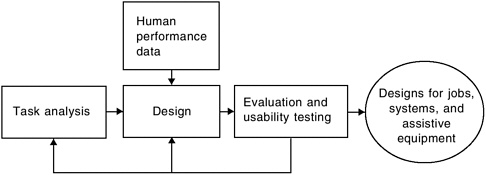
FIGURE 3.2 Human factors design process.
to address this problem by designing accommodations that lower barriers to work and that enable disabled people to perform the jobs for which they are qualified. Moreover, efforts by human factors specialists to accommodate the needs of the disabled population in equipment design will advance human factors as a discipline by directing its attention to designs and methods that will be effective over a much wider range of individual capabilities (Griffith et al., 1989).
This is a classical human factors systems design problem of matching tasks to human capabilities through analysis and redesign of tasks, design of work environments, design of equipment used for performing work-related tasks, and design of assistive devices that enhance individual performance or that provide special interfaces to equipment. The design process proceeds iteratively through the stages illustrated in Figure 3.2 until a satisfactory result is achieved. The stages of the design process are the following:
-
gathering data about relevant human performance characteristics;
-
conducting an analysis of tasks required for successful performance of the job;
-
design of the job, systems for performing work tasks, and assistive equipment; and
-
evaluation of the designs through the use of models, simulation tools, and user experiments.
Human Performance Design Data
Human factors design proceeds from a base of knowledge about human capabilities, capacities, and limitations that is relevant to the design problem. A large body of such information is available in databases, design guides, and models to inform human factors design for able-bodied users (see, e.g., Boff and Lincoln, 1988). However, very few data of this kind are
available for most disabled populations. Not only does this make informed design for people with disabilities difficult, but it also gives the human factors community an opportunity to extend the knowledge base to include the disabled population (see Kelley and Kroemer, 1990, on the extension of the anthropometric database to the elderly).
Task Analysis
Task analysis is the appropriate starting point for human factors design. Human factors designers draw upon a portfolio of techniques to develop an understanding of the tasks that people must perform in a system and of the perceptual, motor, and cognitive capabilities needed to perform them. These techniques include observations, video analyses, taxonomies, scenario generation, timeline, workload, and input/output analyses (Elkind et al., 1990). In principle, these techniques are directly applicable to designing for people with disabilities. Typically, however, jobs and tasks from common work situations have not often been subject to this kind of detailed examination. Further, it is necessary to probe beneath the surface of how jobs are performed by their present incumbents, who are for the most part able-bodied, and extract the essential requirements for effective performance in these jobs. Disabled workers may have to perform jobs differently, and it is important to characterize the jobs at a level that allows restructuring to accommodate people with specific limitations. These kinds of analyses are properly within the domain of human factors.
Design
We are concerned with three types of design:
-
design or redesign of jobs so that disabled people can perform the essential tasks and not be disqualified by inability to perform nonessential tasks;
-
design of equipment and systems so that they are accessible for use by disabled people; and
-
design of assistive equipment to enhance the performance of people with disabilities or to allow them to use systems and equipment designed for the general able-bodied population.
There are extensive opportunities and an enormous need for human factors contributions to these design efforts. In most cases, these designs will be carried out by teams in which human factors specialists work with specialists from other engineering disciplines. As with other human-machine systems design, human factors focuses on the functions users are asked to perform, user-equipment interfaces, user performance, usability
evaluation, and other activities related to the user and the impact of the system or device on the user. The human factors specialist would be expected to bring knowledge about the special characteristics and requirements of the disabled subgroups for whom the design is intended and about how to customize designs to the particular requirements of individuals within a subgroup.
Of the three types of design activities mentioned above, job design for disabled people has probably received the least attention from human factors specialists. Analysis of jobs often reveals opportunities for redistributing tasks among members of a team so that the disabled members are given assignments they can perform or so that the job can be accomplished in some other way that does not require the use of capabilities that are impaired. An example of redistribution would be reassigning the task of writing status reports from a person with severe dyslexia to a team member who does not have this disability. An example of a different way of accomplishing a task would be allowing a mobility-impaired worker to use electronic and computer technology to do office tasks from home (Williges and Williges, 1995).
A key problem in design of accessible equipment and systems is to make them usable by both able-bodied and disabled persons without imposing performance penalties on the able-bodied or excessive cost penalty on anyone. Much of the attention in this area has been on interface designs that are usable by people who do not have normal sensory, manipulative, or communication abilities. If accessibility by both disabled and able-bodied people is not possible, then a backup position is to design so that interfaces are available that allow special assistive devices to be added to make the original equipment or system accessible. This problem has received considerable attention (Vanderheiden, 1988). An example of an accessible system is one that provides both visual and auditory displays of all information that is presented so that persons with either impaired vision or impaired hearing can function as well as persons with normal sight and hearing.
Literally thousands of assistive devices have been designed to enhance the performance of disabled people or to enable them to use systems designed for the able-bodied (ABLE DATA, 1989; Trace Research and Development Center, 1988). Increasingly, these devices are being implemented with computer hardware and software that provide disabled users with capabilities that they are lacking. Examples are speech generation devices for those with severe speech impairments and eye tracking systems as a substitute for keyboard input for those with severe manipulatory impairments. Many of these devices have had the benefit of human factors contributions, but many have not. This is a rich area given the range of disabilities that must be accommodated, as shown in Figure 3.1, and the variety of tasks, equipment, and systems that are encountered in the workplace.
Evaluation Models, Tools, and Experiments
Evaluation of proposed designs and usability experiments are essential to the design process. It is important to conduct user experiments to determine how well disabled individuals can use both existing and proposed designs. Only by careful examination of the shortcomings of existing equipment is it possible to know where to place the effort on making improvements. These studies must take a wide range of disabilities into consideration. Such experimental studies are not easy to conduct and offer an opportunity for a major contribution from the human factors community, which is skilled in this area.
Not all design evaluation studies need be done with human subjects. It is often very effective to use computer models and simulations of human performance to evaluate alternative designs. Using such models for evaluation is less expensive and time-consuming than using human subjects. Selecting and using such models and tools is an area in which human factors specialists have expertise. For example, models and design evaluation tools have become increasingly important to human factors aspects of the design of aircraft (Elkind et al., 1990).
However, most current models describe the normal population and do not encompass disabled populations. Models need to be extended, and this will require using and adding to the body of relevant data about the performance of disabled populations. Human factors specialists can assist in these tasks and help develop models of human performance that represent the performance of people with specified disabilities.
CURRENT STATE OF THE ART AND HUMAN FACTORS NEEDS
Human Performance Design Data
Human factors—with its focus on applying knowledge about human characteristics to the design of tasks, machines, machine systems, and environments—requires a body of systematic and quantitative data about human characteristics. The design references and texts that compose the database for human factors contain little that directly addresses the characteristics of disabled segments of the population. This should not be a surprise since, until recently, the human factors literature has paid little attention to the problems of the disabled. Only a small percentage of the papers in the journal Human Factors deals with disabilities. Although this journal has published two special issues on disabilities, in 1978 and 1990, relatively little has appeared between the two issues. Handbooks sometimes include a chapter on disability (Salvendy, 1987) and sometimes have data relevant to
the elderly (Boff and Lincoln, 1988), but for the most part these areas are not covered with any degree of completeness. Vanderheiden (1990) comments that disabilities and other functional limitations are only peripherally mentioned in textbooks. Courses on disability in human factors curricula are rare. Little or no attention is paid in the standard curriculum to the needs, characteristics, or design considerations required to accommodate persons with reduced abilities.
In the last few years, human factors researchers have become more interested in the problems that disabled people encounter in gaining employment and in being able to use the facilities that able-bodied people take for granted. Federal legislation has been directly responsible for the increased concern for the disabled population on the part of business and their product designers, and this has influenced the human factors community. A 1990 Human Factors special issue, Assisting People With Functional Impairments, a similar Human Factors special issue on Aging also in 1990, and a forthcoming book on disabilities and human computer interaction (Edwards, 1995) are all indications of the growing interest in this area. So there is hope that the body of human factors design data for the disabled will grow more rapidly in the future, but it will take many years before it becomes adequate.
Other disciplines, however, have been active over the years developing large bodies of data about different segments of the disabled population. There is an extensive literature from the medical, rehabilitation, occupational therapy, prosthesis, and other specialized communities on the characteristics of various disabled populations. Not much of this information has found its way into the human factors literature, in part because it is not well organized for use in human factors design.
The field of aging provides an interesting example of the problem, one that is relevant to our purposes inasmuch as elderly people who are disabled compose a major component of the disabled population. Smith (1990) comments that, although 50 years of laboratory research have provided a large amount of information about the physical and psychological changes that occur with aging, there has been little application of this information to human factors design. This is because much of the information is not in the reference works and because the information that is included is largely prescriptive and not quantitative. Smith points out that major effort is required to review the research data on aging, extrapolate from them, fill in important gaps, and structure the data so that they are useful for human factors design.
The situation for the principal areas of disability is much the same. Therefore, an important research need is to build a more adequate human factors database for the major disability subgroups and to get these data included in the standard design references and texts. Much of this database
can be obtained from the study of existing literature from other fields, but in many areas new laboratory research will almost certainly be required.
Given the number of different disabilities and the fact that they can affect all areas of performance, it will take considerable effort to assemble a satisfactory body of data and considerable care to organize it into useful form. It will be important to segment the disabled population into subgroups of individuals with reasonably common characteristics of impairment and to identify parameters of performance that allow representation of individual differences. The models and simulations of performance discussed above provide a directly usable and practical framework for organizing the data for many areas of disability. Therefore, it should be kept in mind that the impaired functions of disabled people are usually not sharply segmented from those of the able-bodied population. That is to say, the distribution of performance is not bimodal. Therefore it should be possible to characterize the performance capabilities and limitations of people with disabilities by performance parameters at the tail of the distribution.
Task Analysis
The state of the art is much better in task analysis for disabilities than in human factors design data. In designing for disabled people, human factors specialists can apply a collection of already well-developed and widely used analysis techniques. The human factors designers do not need to develop or extend the techniques themselves but must merely apply them to jobs and tasks that disabled people are capable of performing. The lack of descriptive data may inhibit the use of these techniques, but that is a problem with the data and needs to be addressed separately, as discussed above, not a problem with the analysis techniques themselves.
Skill Requirements for Jobs
Task analysis at the job level is clearly important given our focus on increasing the employment potential of people with disabilities. Much work has already been directed toward establishing the skill requirements of different types of jobs to provide a principled method for selecting personnel to perform these jobs (see Chapter 2). Much of this work has been in the context of personnel selection for jobs in the military; a recent example is the Army Selection and Classification Project (Campbell, 1990; Peterson et al., 1990).
In this approach, existing jobs are examined; the tasks currently composing them are identified; the skills of current incumbents are determined; a set of tests of knowledge, aptitude, and performance is administered to
ascertain skill levels of successful incumbents in these jobs; and the results are used to establish criteria for selecting job candidates. The same approach has been applied to jobs in the civilian sector, and in particular by companies that have a large number of people in a single job category, for example, telephone information operators. There is a need to carry out this kind of skills requirements analysis on more jobs in the civilian sector, and it would probably make sense to do so with a representative sample of jobs that provides insight about the mismatch between the skills required and the skills possessed by disabled people in major segments of the economy.
There are two problems with applying this approach to disabled people. The most important is that the method analyzes existing jobs and existing incumbents. Thus, it assumes that the jobs, which have evolved with able-bodied workers, will be done in the same way by disabled workers. Furthermore, it tends to require that disabled workers have the skill levels of the able-bodied. It will be necessary to separate the essential functions of a job from the ancillary functions so that it can be determined whether or not people with a particular type and level of impairment are qualified for such a job. (We deliberately use the language of the ADA here.) The second problem is that the method takes for granted certain ancillary skills or capabilities, such as mobility, that may be impaired in disabled populations. Thus, it will be necessary, when applying the method, to cast a somewhat wider net than is usual when identifying the tasks that compose a job.
Taxonomies
We would like to avoid having to anlayze every job in detail and be able to work in terms of broader job types or categories. To do this, we need to have taxonomies of functions that workers perform in various types of jobs. The notion of taxonomy is simple; it takes effort to develop taxonomies for different types of jobs, and as a result coverage is spotty. Office information work is a particularly important type of job because more than half the workforce is employed in such jobs, and the number is increasing (Kraut, 1987; Strassmann, 1985). There has been some effort to develop taxonomies of office information work activities, but no generally accepted, detailed taxonomy exists. Williges and Williges (1995) provide a preliminary taxonomy of information tasks and task activities performed in professional offices, as does Czaja (1987), who identifies and analyzes tasks such as document preparation, meeting, conferencing, filing and retrieving, communication, decision making, and transacting. Taxonomies of meetings also have been developed (Short et al., 1976). This is an area that requires more work.
Timeline Analysis
Timeline analysis is a detailed unfolding in time of the tasks that a person performs, the information required for the task, the decisions made, and the actions taken. The analysis can be done at increasing levels of detail and, at the limit, examines individual manipulative motions in the spirit of time and motion study. It should not be a surprise to find that Gilbreth and Gilbreth ([1917] 1973) applied this kind of analysis to the study of disabled soldiers and how to return them to gainful employment. Their work provides the intellectual origins for what human factors calls task analysis, and even for our special interest in the employment of people with disabilities.
Timeline analysis provides a detailed look at job and task requirements, with an emphasis on speed of performance and on competition for cognitive, sensory, and motor resources (Corker et al., 1986). Slow performance and competition for reduced resources are common problems encountered by disabled people. Timeline analysis is therefore a very useful tool in determining what kinds of accommodations are required to make jobs accessible. Detailed timeline analyses of office and other jobs, especially when performed by disabled workers, are generally not available. It would be valuable to have an analysis of a representative sample of jobs being performed by people with different kinds of impairments.
Design
Design and Redesign of Jobs
An enormous amount of work has been directed toward design for disabled people, but almost all of it has focused on equipment and systems design. Many assistive devices are described in the technical literature, as well as in catalogs and product brochures. There is little in the technical literature about design or redesign of jobs to accommodate disabled workers. As part of an interest in communications and computer alternatives to travel and commuting, Williges and Williges (1995) address this subject in terms of office information jobs. It would be very useful to have a collection of case histories of jobs that have been designed or redesigned to accommodate specific disabilities.
As is pointed out in other chapters of this book (Chapters 2 and 8), the primary skill requirements of many jobs have been shifting from physical to cognitive. This is true not only in the service sector but also in manufacturing and industrial production. Many jobs have been redesigned to accommodate this shift. To be sure, the redesign has been motivated, for the most part, by new requirements imposed by the introduction of new technologies
in the office or plant, and not by the desire to create new work possibilities for people with disabilities. Nonetheless, the fact that redesign is occurring on such an extensive scale provides opportunities for rethinking job requirements with disabled workers in mind.
Another major development is that technology is spawning a growing variety of aids to the performance of intellectual work (see Chapter 11). Again, for the most part, these aids were not designed to increase job opportunities for disabled people. Yet some of the aids have the potential for doing that, and others could, with some adaptation, be used to that end.
As a way of maximizing the effective use of limited resources, there is much to be said for the strategy of looking for ways to turn technological developments to the advantage of people with disabilities. We believe that many of the technological developments around computer and communication technologies have the potential to enhance the job opportunities of disabled people greatly. Realizing this potential will require some attention to a variety of human factors issues relating to the adaptation of devices to special user needs.
Design for Accessibility
It would be enormously beneficial to disabled populations if common devices, systems, and environments were designed to be accessible to people with disabilities as well as to able-bodied people. However, as Vanderheiden (1990) points out, the disabled population, although large in total, is composed of many subgroups, many of which are small. It is clearly impossible to design everything to be accessible to all subgroups, just as it is inefficient to have distinct product designs for each disability subgroup. The sensible path lies somewhere between these extremes. For most types of impairments there are economical ways of designing products so that they are accessible, or at least more accessible, to major segments of the disabled population (Newell, 1995).
There are many examples of successful accessible design (Mueller, 1990; Sorensen, 1979). Public facilities for physically disabled people are the most visible example. It is now routine to have cuts in sidewalks so that wheelchair users and others with mobility impairment can handle street crossings, toilets in public buildings are routinely designed to accommodate wheelchairs, and ramps are now provided as an alternative to stairs. In general, it is now known how to design buildings so that they accommodate people in wheelchairs. This is done in new construction at what is now considered to be an acceptable cost and, in some areas, at negligible cost.
Electronic equipment is not so far along. Some computer systems do offer facilities for those with impaired hand control, for example, ''sticky" keys, which allow a command that normally requires simultaneous activation
of keys to be invoked by sequential activation. However, computers have not typically been designed with functionally impaired users in mind and are simply not accessible to many people with mobility, sensory, or cognitive limitations. Many of the capabilities that computer systems need in order to be accessible to people with sensory and physical impairments are summarized in a design guide addressing this issue (Vanderheiden, 1988).
When it is not possible to include accessibility facilities in a design, it may still be possible to provide standard interfaces that can be used to integrate special equipment designed for particular disabilities groups. Blind users, for example, need a device that transforms visual images on a computer display into auditory or tactile displays. It is not economical to provide such facilities for all users when only a small number will use them. Yet the data from which the visual display was constructed can be made available to software and hardware makers, which can implement the alternative displays. This is not likely to be a burden on the design (if it is part of the initial specifications). Enabling such special adaptations requires careful design of the interfaces. Such design, in turn, requires good understanding of the kinds of adaptive devices that disabled users will need. Interface requirements and recommendations to enable the use of devices to assist blind and physically handicapped people in using computer systems have also been developed (Vanderheiden, 1988).
Clearly more can be done to improve the built-in accessibility of products and facilities. We need more specific data about how to assist people with different kinds of impairment, and we need to develop new techniques for providing needed assistance. This is especially true for cognitive disabilities. Making fuller provision for the disabled will certainly have an impact on system design.
Design of Assistive Devices and Systems
Many adaptive hardware devices and specially designed software packages have been developed to enable disabled people to use computers (Casali and Williges, 1990; ABLE DATA, 1989; Trace Research and Development Center, 1988). The number of devices available to assist the disabled in using other kinds of equipment (e.g., automobiles) and devices that replace or improve upon an impaired function (e.g., eyeglasses, communication devices) is also large. New assistive devices and systems that perform better, offer new functions, or are cheaper continue to be developed. In particular, we can expect increased attention to and progress in the development of assistive aids to cognitive functions as a result of advances in computer technology and cognitive science. This is important because people with cognitive disabilities are a very large subgroup, one often bypassed in the development of assistive devices because the impairments are difficult
to address. The need for better assistive devices remains large and the opportunities for progress are great.
The rich menu of assistive devices and systems raises the problem of how to locate and select a particular device that matches the needs of an individual user. Large databases catalog the devices that are available (ABLE DATA, 1989; Trace Research and Development Center, 1988), but these do not provide detailed information on the characteristics of the devices or the types of users for which they are best suited. Obtaining detailed information about device or system characteristics is not easy, especially for complex software for which the demands on cognitive ability, and even motor and sensory abilities, are difficult to determine and even harder to describe. Without detailed information, the only way to select a device from a set of candidates is by trial and error.
There have been several attempts to provide a systematic method for selecting assistive devices and systems. For example, Behrmann (1989) describes an expert system for the selection of a computer input-output aid that uses subjective ratings by therapists of the suitability of each type of equipment for persons in each of several disability subgroups. Casali (1995) and Rosen and Goodenough-Trapagnier (1989) describe a more comprehensive and quantitative approach to this problem; their approach uses detailed information about particular types of devices together with a set of tests for evaluating the residual capabilities of the disabled user, a tool for eliciting information from the user regarding task needs, a method for integrating this information to select the appropriate combination of device characteristics, and a test of usability. Casali addresses computer cursor control devices; Rosen and Goodenough-Trapagnier address augmentative communication devices. Theirs is a logical approach, but it requires a large body of information and the development of efficient tests of capabilities and methods for integration. Systematic selection remains a major problem for which there are only hints of a solution.
Evaluation Models, Tools, and Experiments
Design is iterative and requires repetitive evaluation of prospective designs that eventually converge on a final solution that satisfies the requirements. Evaluation is facilitated by models of human performance and computer tools to run the models, so that it is not necessary to rely entirely on experiments with human subjects for evaluation. Models and tools covering many areas of human performance have been developed. There are many gaps in coverage, especially in cognitive functions, but this is an active area and progress continues to be made. For example, anthropometric models have been developed to evaluate cockpit design and layout as well as maintenance operations (McDaniel and Askren, 1985; Paquette, 1990). The
National Aeronautics and Space Administration (NASA) and the U.S. Army are developing a human factors computer-aided engineering facility for the design of helicopter cockpits (Army-NASA Aircrew/Aircraft Integration program, Hartzell et al., 1984) that includes models of workload (Corker et al., 1986) and vision (Larimer et al., 1989; see also Elkind et al., 1990 for a summary of vision models being considered). Simple cognitive models have been developed. Very important and widely used are the Model Human Processor and the GOMS model for evaluating human computer interface designs developed by Card et al. (1983). Recently, a more comprehensive model of cognitive function, SOAR cognitive architecture, has been proposed by Newell (1990).
These computer-based tools are potentially directly applicable to the disabled population, but the models they use provide, at best, only a framework for representing the performance of this population. The problem is that these models are derived from psychological research that attempts to be rigorously grounded and relatively general—characteristics that are achieved through experimental controls and statistical analysis and, thus, at the expense of richness and detail. The resulting models, paradoxically, describe the normal case even if there is not even a single exemplar of that case. Individual differences dissolve into variance from the mean, or worse, are considered outside the scope of the model. Thus, almost by definition, the capabilities of people with disabilities often lie outside general models.
A general model has heuristic value so long as we are willing to modify it significantly when it fails to adequately describe a specific person's condition—in other words, when we are willing to bend the model to the person rather than the person to the model. The resulting new model can then be usefully studied to evaluate designs and to produce new designs that are likely to better address the specific needs of persons with disabilities. Elkind and Shrager (1995) applied this method to computer-supported composition by dyslexic individuals. It is important to keep in mind that each person with a disability has specific impairments from a complex class of impairments and must be understood individually. Assistive devices and systems must be adjusted for these individual differences. To adapt general models so that they represent the characteristics of disabled populations and of individuals within these populations will require new data from these populations and probably some model extensions. This will take considerable effort.
SUMMARY OF RESEARCH NEEDS
In the preceding sections, we have mentioned several areas in which research and technology development are needed. In this section we summarize
these needs to provide specific recommendations for a human factors program to enhance employment opportunities for people with disabilities.
Human Performance Design Data
An important research need is to build a more adequate human factors design database for the major disability subgroups and to get these data included in the standard design references and texts. Much of the needed database can be obtained from a study of existing literature from other fields, but in some areas new laboratory research will be required. Such data are a prerequisite for a principled methodology for design for disabled people.
Data are required for all major disability subgroups. A structure must be developed and key performance parameters identified so that the data can be applied to disability subgroups that have distinctly different performance characteristics and still allow customization to individual performance, when required. An effort should be made to integrate the data into existing computer models and simulations of human performance in order to guide the data collection process and to make these models useful for design for people with disabilities.
Task Analysis
A set of interesting representative jobs should be selected (a) as a focus for efforts aimed at understanding job requirements and (b) to provide a set of useful case studies. Given the importance of information work as a source of employment, this sector should be given priority in selection of jobs. Standard skills requirements methods should be applied to these jobs to establish their requirements, or a body of skill requirements data should be obtained from the literature. For each job, essential functions should be extracted from the total set of requirements and used to identify the disability subgroups whose impairment does not disqualify them for that job.
Taxonomies of the functions that workers perform in each of the representative set of jobs should be developed. An effort should be made to structure the taxonomies so that a core set of functions is identified that applies across many jobs.
Timeline analyses of the representative set of jobs should be performed with workers from different disability subgroups. These analyses should be used to identify areas where specific disability groups encounter performance limitations and resource constraints in order to guide job redesign and design of assistive devices and systems.
Design
A set of case histories of jobs that have been designed or redesigned to accommodate specific disabilities should be developed from actual experience or collected from the literature. These will serve as examples to disabled people and employers.
A concerted effort should be made to improve the accessibility of computer applications. The major computer systems used in work situations should be identified, their accessibility evaluated, and the changes required to make them accessible to the disabled workforce specified. Principal software vendors should be encouraged to implement these changes. Design guides for achieving accessible designs should be extended to cover a wider range of applications, systems, and disabilities.
These guides should include specification of interfaces required to facilitate integration of assistive devices and software into computer operating systems. Special attention should be given to making systems more accessible to users with cognitive disabilities. New technologies and improvements on existing technologies for assisting disabled users in performing cognitive functions should be investigated and developed.
Continued support should be provided for the development of new and improved assistive device technology that will enable a larger fraction of the disabled population to perform a wider variety of jobs effectively. Systematic methods for characterizing assistive devices and systems and matching them to particular users should be investigated and tested.
Evaluation Models, Tools, and Experiments
Performance data for people with specific disabilities should be incorporated into existing computer-based performance models and simulation tools so that they can be applied to designing for people with disabilities. Where necessary, these models should be extended so that they can represent the performance of disability subgroups. They should also be used to help distinguish between performance aspects of tasks that are essential to getting the tasks done and those that are not and to help identify ways in which tasks can be modified so they are more manageable by people with specific disabilities. Many of the necessary performance data do not now exist and will have to be obtained through experimentation.
Another kind of tool that could be very useful for people with disabilities is an accessible and easy-to-use database that would provide information regarding job-related (and other) resources that they can tap into. Consider the problem that people with specific disabilities currently have in finding out whether there exist assistive devices that could benefit them, and if so, where they are, whether they work as claimed, and how to go
about acquiring them. The establishment of systems that could provide this kind of information seems to us to be a worthwhile goal. Clearly, there are human factors issues involved in ensuring the usefulness and usability of such systems.
One can even imagine a nationwide network-accessible information exchange tailored to the needs of people with disabilities. This could provide up-to-date information not only about assistive devices but also about employment opportunities, services, training programs, activities of special-interest groups, recent legislation pertaining to disabilities, and who is doing what in disability-related research and development, as well as suggestions and advice on the use of specific devices. Such an exchange would put disabled people in two-way contact with other individuals and groups with common problems/interests. It would permit the asking of "Does anybody know?" questions of the type one commonly finds on electronic bulletin boards. And it could serve as a gateway to other network-accessible resources.
In our view, one of the attractions of modern telecommunications technology is its potential to enrich the lives of people with disabilities in a variety of ways. It is not safe to assume, however, that this potential will be realized without explicit efforts by technologists, particularly those with a special interest in the human dimensions of technological change.
REFERENCES
ABLE DATA 1989 ABLE DATA: The Resource for Disability-Related Consumer Products . Newington, Conn.: Adaptive Equipment Center (181 E. Cedar St.).
Behrmann, M. 1989 Development of an Expert System for Assistive Technology Identification. Presentation at Closing the Gap conference, Minneapolis, Minn.
Boff, K.B., and J.E. Lincoln 1988 Engineering Data Compendium, Human Perception and Performance . Wright-Patterson Air Force Base, Ohio: Armstrong Aerospace Medical Research Laboratory .
Bowe, F.G. 1984 Personal Computers and Special Needs. Berkeley, Calif.: Sybex Computer Books.
Bureau of the Census 1987 Statistical Abstract of the United States. Washington, D.C.: U.S. Department of Commerce. 1989 Statistical Abstract of the United States. Washington, D.C.: U.S. Department of Commerce.
Campbell, J.P. 1990 An overview of the Army Selection and Classification Project (Project A). Personnel Psychology 43:231-239.
Card, S.K., T.P. Moran, and A. Newell 1983 The Psychology of Human-Computer Interaction. Hillsdale, N.J.: Erlbaum.
Casali, S.P. 1995 A physical skills-based strategy for choosing an appropriate interface method. In A.D.N. Edwards, ed., Extra-Ordinary Human-Computer Interaction. London, England: Cambridge University Press.
Casali, S.P., and R.C. Williges 1990 Data bases of accommodative aids for computer users with disabilities. Human Factors 32:407-422.
Corker, K., L. Davis, B. Papazian, and R. Pew 1986 Development of an Advanced Task Analysis Methodology and Demonstration for Army-NASA Aircrew/Aircraft Integration. Report 6124. Cambridge, Mass.: Bolt Beranek and Newman.
Czaja, S.J. 1987 Human factors in office automation. Pp. 1587-1616 in G. Salvendy, ed., Handbook of Human Factors. New York: Wiley.
Czaja, S.J., ed. 1990 Human Factors Research Needs for an Aging Population. Panel on Human Factors Research Issues for an Aging Population, Committee on Human Factors, National Research Council. Washington, D.C.: National Academy Press.
Edwards, A.D.N., ed. 1995 Extra-Ordinary Human-Computer Interaction. London, England: Cambridge University Press.
Egan, D.E., and L.M. Gomez 1985 Assaying, isolating, and accommodating individual differences in learning a complex skill. Pp. 173-217 in R.F. Dillon, ed., Individual Differences in Cognition, Vol. 2. Orlando, Fla.: Academic Press.
Elkind, J.I. 1990 The incidence of disabilities in the United States. Human Factors 32:397-405.
Elkind, J.I., and J. Shrager 1995 Modeling and analysis of dyslexic writing using speech and other modalities. In A.D.N. Edwards, ed., Extra-Ordinary Human-Computer Interaction . London, England: Cambridge University Press.
Elkind, J.I., S.K. Card, J. Hochberg, and B.M. Huey, eds. 1990 Human Performance Models for Computer-Aided Engineering. Committee on Human Factors, National Research Council. San Diego, Calif.: Academic Press.
Gilbreth, F.B., and L.M. Gilbreth [1917] 1973 Applied Motion Study. Easton, Pa.: Hive Publishing.
Griffith, D., D.J. Garder-Bonneau, A.D.N. Edwards, J.I. Elkind, and R.C. Williges, eds. 1989 Human factors research with special populations will further advance the theory and practice of the human factors discipline. Pp. 565-566 in Proceedings of the Human Factors Society 33rd Annual Meeting. Santa Monica, Calif.: Human Factors Society.
Hartzell, E.J., E.W. Aiken, and J.W. Vorhees 1984 Aircrew-aircraft integration issues in future U.S. Army helicopters. In AGARD Human Factors Considerations in High Performance Aircraft . Moffett Field, Calif.: NASA Ames Research Center.
Kelley, P.L., and K.H.E. Kroemer 1990 Anthropometry of the elderly: status and recommendations. Human Factors 32:571-595.
Kraus, L.E., and S. Stoddard 1989 Chart Book on Disability in the United States: An InfoUse Report . National Institute on Disability and Rehabilitation Research. Washington, D.C.: U.S. Department of Education.
Kraut, R.E. 1987 Technology and the Transformation of White Collar Work. Hillsdale, N.J.: Lawrence Erlbaum Associates.
Larimer, J., A. Arditi, J. Bergen, and N. Badler 1989 Visibility Modeling Project. Moffett Field, Calif.: National Aeronautics and Space Administration.
McDaniel, J.W., and W.B. Askren 1985 Computer-Aided Design Models to Support Ergonomics. Wright-Patterson Air Force Base, Ohio: Harry G. Armstrong Aerospace Medical Research Laboratory.
Mueller, J. 1990 The Workplace Workbook: An Illustrated Guide to Job Accommodation and Assistive Technology. Washington, D.C.: Dole Foundation (available from RESNA Press).
Newell, A.F. 1990 Unified Theories of Cognition. Cambridge, Mass.: Harvard University Press. 1995 Extra-ordinary human-computer interaction. In A.D.N. Edwards, ed., Extra-Ordinary Human-Computer Interaction. London, England: Cambridge University Press.
Nickerson, R.S. 1986 Using Computers: Human Factors in Information Systems. Cambridge, Mass. : MIT Press.
Paquette, S.P. 1990 Human Analogue Models for Computer-Aided Design and Engineering Applications. Natick, Mass.: Army Natick Research and Engineering Center.
Peterson, N.G., L.M. Hough, M.D. Dunnette, R.L. Rosse, J.S. Houston, and J.L. Toquam 1990 Project A: specification of the predictor domain and development of new selection/classification test. Personnel Psychology 43:247-276.
Rauch, J. 1989 Kids as capital. Atlantic Monthly August:56-61.
Rosen, M.J., and C. Goodenough-Trapagnier 1989 The Tufts-MIT prescription guide: assessment of users to predict the suitability of augmentative communication devices. Applied Technology 1(3):51-61.
Salvendy, G., ed. 1987 Handbook of Human Factors. New York: Wiley.
Sheridan, T.B. 1980 Computers and human alienation. Technology Review 83:60-67, 70-73.
Short, J., E. Williams, and B. Christie 1976 The Social Psychology of Telecommunications. New York: Wiley.
Smith, D.B.D. 1990 Human factors and aging: an overview of research needs and applications opportunities. Human Factors 32:509-526.
Sorensen, R.J. 1979 Design for Accessibility. New York: Wiley.
Strassmann, P.A. 1985 Information Payoff: The Transformation of Workers in the Electronic Age. New York: Free Press.
Texas Young Lawyers Association 1990 The Americans With Disabilities Act: An Overview. Austin: Texas Young Lawyers Association (P.O. Box 12487).
Trace Research and Development Center 1988 Trace Center Resource Book. Trace Research and Development Center on Communication, Control, and Computer Access for Handicapped Individuals. Madison: University of Wisconsin.
Vachon, R.A. 1990 Employing the disabled. Issues in Science and Technology 6(2):44-50.
Vanderheiden, G.C. 1988 Considerations in the Design of Computers and Operating Systems to Increase Their Accessibility to Persons With Disabilities. Design Consideration Task Force, Trace Research and Development Center on Communication, Control, and Computer Access for Handicapped Individuals. Madison: University of Wisconsin. 1990 Thirty-something million: should they be exceptions? Human Factors 32:383-396.
Vaughan, R.J., and S.E. Berryman 1989 Employer-sponsored training: current status, future possibilities. National Center on Education and Employment NCEE Brief 4:1-4.
Williges, R.C., and B.H. Williges 1995 Travel alternatives for the mobility impaired: the surrogate electronic traveler (SET). In A.D.N. Edwards, ed., Extra-Ordinary Human-Computer Interaction. London, England: Cambridge University Press.


