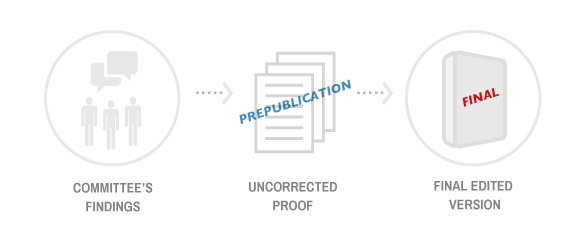
Below are the first 10 and last 10 pages of uncorrected machine-read text (when available) of this chapter, followed by the top 30 algorithmically extracted key phrases from the chapter as a whole.
Intended to provide our own search engines and external engines with highly rich, chapter-representative searchable text on the opening pages of each chapter.
Because it is UNCORRECTED material, please consider the following text as a useful but insufficient proxy for the authoritative book pages.
Do not use for reproduction, copying, pasting, or reading; exclusively for search engines.
OCR for page 11
Introduction
Much has been expected and desired of guidelines for clinical practice, and
much has been feared. A 1992 Institute of Medicine (IOM) report on practice
guidelines noted that guidelines have been tied in some way positively or
negatively to concerns about quality of care, patient empowerment, professional
autonomy, medical liability, access to care, rationing, competition, benefit design,
utilization variation, bureaucratic micromanagement of health care, and more.
Recently, several legislative proposals to reform health care in the United States
included a major role for practice guidelines. Although these proposals were not
acted upon, guidelines are likely to remain a visible component of the
restructuring of the health care system now underway.
Experience has, however, tempered initial suggestions that guidelines would
provide quick fixes for cost and quality problems. Naive optimism has generally
been replaced by greater understanding ofthe difficulties involved in developing
credible and useful guidelines, implementing them, and evaluating their effects.
Fortunately, policymakers, health care organizations, and others are showing
considerable persistence and energy in trying to work through these challenges.
They are tackling tougher clinical problems than in the past and investing more
in explicit efforts to measure whether guidelines are producing the desired
outcomes and, if not, to identify why. The conceptualization of outcomes and
effectiveness is becoming more sophisticated in several respects, for example, in
distinguishing between short- and long-term outcomes, in considering how
patients view specific outcomes, and in developing new tools for measuring
different kinds of outcomes. An increasing number and range of local
institutions are investing their own resources in systematic efforts to formulate
or adapt guidelines that are both compatible with local objectives and
environments and consistent with evidence about the outcomes of alternative
11
OCR for page 12
12
SEWING PRIORITIES FOR CLINICAL PRACTICE GUIDELINES
preventive, diagnostic, and therapeutic interventions. The enterprise, in other
words, is both evolving and expanding.
Although not universally welcomed by clinicians, guidelines have gained
greater legitimacy. Their acceptance reflects an increased recognition of the
value of evidence-based guidelines, the refinement of methods for developing
guidelines, the accumulating experience with guidelines of health care providers
and others, and the changing incentives in health care delivery and financing.
Since the IOM first examined practice guidelines, cost pressures have
intensified. That guidelines should examine the cost implications of clinical
problems and alternative courses of care is more generally accepted, but debate
continues about how developers of guidelines should consider costs in
formulating recommendations. In a 1992 report, another IOM committee
recommended that "every set of clinical practice guidelines be accompanied by
information on the cost implications of alternative preventive, diagnostic, and
management strategies for the clinical situation in question." It noted that the
recommendation posed a number of methodological and practical challenges and
that some developers of guidelines (e.g., managed care organizations) might be
better able than others to make cost-effectiveness judgments because they have
better information and more consistent objectives. Others groups might be better
advised to emphasize clinical judgments.
The preoccupation with cost containment among providers and purchasers
of care has created some concern that the incentives for undertreatment are
multiplying as the incentives for overutilization of health care are being
dismantled. Those with broad responsibility for the public's health most
notably, federal and state governments have a clear duty to monitor potential
quality-of-care problems, consider the needs of disadvantaged groups, and
address such problems and needs in guidelines for clinical practice. Changes
in the health care environment have implications for the federal government's
role in supporting the creation and use of sound guidelines for clinical practice.
That role was established in 1989 (P.L. 101-239) when Congress created the
Agency for Health Care Policy and Research (AHCPR). The broad purposes of
the organization were "to enhance the quality, appropriateness, and effectiveness
of health care services . . . through the establishment of a broad base of scientific
research and through promotion of improvements in clinical practice and in the
organization, financing, and delivery of health care services." One specific way
the agency was to promote these purposes was by sponsoring and encouraging
the development, dissemination, and evaluation of clinical practice guidelines.
In 1992, reflecting some concern about the agency's choice of topics for
guidelines development, Congress directed that the agency report to it in June
1995 on "optimal methods for setting priorities for guidelines topics" (P.L. 102-
410~. The AHCPR, in turn, requested guidance from IOM on this subject, and
this report presents the analyses and recommendations developed by a formally
appointed IOM study committee.
OCR for page 13
INTRODUCTION
13
Consistent with committee and staff discussions with the AHCPR's
leadership, this report examines priority setting in the context of the
organization's overall responsibilities, objectives, and resources. The immediate
audience is the AHCPR and other government policymakers, but much of what
the report says about priority setting and related issues should interest a larger
audience of clinicians, administrators, and researchers. Chapter 4, in particular,
moves beyond the issue of procedures and criteria for setting priorities to raise
questions about the processes for developing and disseminating guidelines and
the role of AHCPR.
BACKGROUND
The legislation that created AHCPR reflected growing public anxieties about
possible inappropriate use of medical care and its cost, although the statute itself
did not explicitly identify costs or cost containment as an objective for clinical
practice guidelines. These concerns arose from many sources, including data
showing wide variations in the use of medical services, research questioning the
value of many expensive or common services, and analyses noting that the
effectiveness of many services has never been established. Alarmed by
escalating health care costs and limited government success with various cost
containment initiatives, policymakers decided that more effort should be devoted
to expanding knowledge about what works and what does not work ~ health
care and at what cost.
The 1989 legislation consolidated within AHCPR a health services research
agenda that had already begun to focus on medical care effectiveness through
three programs: (1) the Effectiveness Initiative of the Health Care Financing
Administration (HCFA), (2) the Patient Outcomes Assessment Research Program
of the National Center for Health Services Research (NCHSR), and (3) the
Office for Health Technology Assessment (OHTA), also part of NCHSR. The
new agency completely replaced NCHSR, thereby assuming responsibility for all
the center's programs in health services research, not just those related to
effectiveness studies.'
Through its Center for Medical Effectiveness Research, AHCPR has formed
a number of multi-year, multi-institutional Patient Outcome Research Teams
iAs of November 1, 1994, the eight major divisions of AHCPR were Office of
Planning and Resource Management, Office of Science and Data Development, Office
of the Forum for Quality and Effectiveness in Health Care, Office of Health Technology
Assessment, Center for Medical Effectiveness Research, Center for General Health
Services Intramural Research, Center for General Health Services Extramural Research,
and Center for Research Dissemination and Liaison.
OCR for page 14
14
SEITING PRIORITIES FOR CLINICAL PRACTICE GUIDELINES
(PORTs) to study the outcomes and costs of alternative treatments for specific
clinical problems. ~ some cases, PORTs are providing knowledge that can be
used by others to develop guidelines. In other areas, the PORTs themselves are
developing patient care recommendations.
The OHTA continues to provide HCFA with assessments and reviews of
technologies being considered for coverage under the Medicare program.2 The
1989 legislation, however, broadened OHTA's focus and called for an IOM
study to recommend priorities for the selection of assessment topics. After
discussion between the agency and the IOM, the study was reformulated to focus
on methods for setting priorities. The project report, Setting Pr~or~tiesforHealth
Technology Assessment: A Model Process, was published in 1992,3 and that
document has constituted an important point of reference for the current study.
The model process it recommended is discussed in Chapters 2 and 3; Appendix
A reproduces the summary of that report.
Within AHCPR, the Office of the Forum for Quality and Effectiveness in
Health Care was created to oversee guidelines development activities. The
concept behind the Forum was not that it would produce "federal" guidelines but,
rather, that it would "arrange for" guidelines to be developed through a
cooperative public-pr~vate effort. As of October 31, 1994, the AHCPR had
published 13 sets of guidelines and had 8 under development (fable 1.1~. In
addition, a list of new topics under consideration was scheduled for publication
in the Federal Register in late 1994.
Practice guidelines constitute a relatively small part of AHCPR's
responsibilities. For fiscal year 1994, $5.7 million of the agency's $154 million
budget was allocated for the guideline panels and contracts managed by the
Forum. This figure does not include Forum staff and overhead costs. Other
parts of AHCPR also have responsibilities related to guideline dissemination and
other tasks, but their fiscal impact is small.
COTTA assessments were the primary basis for three of the five national Medicare
coverage decisions published by HCFA between October 1992 and February 1994 (GAO,
1994~. Most coverage decisions are made by the 32 contractors that administer the Part
B (physician) program. A U.S. General Accounting Office (GAO) report has suggested
that HCFA "increase its assessment capabilities" by making better use of the evaluation
capabilities of the contractors' medical directors and those of private insurers.
3This report, in turn, built upon an earlier pilot study on national priorities for
assessing clinical conditions and medical technologies (IOM, 1991~.
OCR for page 15
INTRODUCTION
TABLE 1.1 AHCPR Guidelines as of December 1, 1994
15
Published Guidelines
-
Under Development
Acute pain management: operative or
medical procedures and trauma
Urinary incontinence in adults
Pressure ulcers in adults: prediction
and prevention
Cataract in adult: management of
functional impairment
Depression in primary care: Vol. 1:
detection and diagnosis; Vol. 2:
treatment of major depression
Sickle cell disease: screening,
diagnosis, management and
counseling in newborns and infants
Evaluation and management of early
HIV infection
Benign prostatic hyperplasia:
diagnosis and treatment
Management of cancer pain
Unstable angina: diagnosis and
management of
Heart failure: evaluation and care of
patients with left ventricular
systolic dysfunction
Otitis media with effusion in young
children
Quality determinants of
mammography
Acute low back problems in adults
Treatment of pressure ulcers in adults
Post stroke rehabilitation
Cardiac rehabilitation
Recognition and initial assessment of
Alzbeimer's and related dementias
Urinary incontinence in adults-
update
Smoking prevention and cessation
Screening for colorectal cancer
Chronic pain: headache
SOURCE: AHCPR.
COMMITTEE APPROACH
Composition and Activities
To undertake the study requested by AHCPR, the IOM appointed a 12-
member committee in early 1994. Members were selected for their expertise and
experience with clinical practice guidelines, health care delivery and financing,
health services research, and health policy. The committee met in March and
OCR for page 16
16
SEWING PRIORITIES FOR CLINICAL PRACTICE GUIDELINES
August 1994. AHCPR staff were invited to both meetings and made
presentations on the agency's activities and concerns.
In conjunction with its August meeting, the committee organized an
invitational workshop to gain additional perspectives on issues in priority setting.
~ he meeting agenda and a list of participants appears in Appendix B.)
Workshop participants also considered more general questions that the agency's
new leadership posed about the Forum's roles and focus. As background for the
workshop and the report, the committee commissioned several short papers that
dealt with malpractice, local protocol development, and primary care as issues
that might be considered in setting priorities for guidelines development. (These
papers are included as Appendixes C, D, and E.)
In developing this report, the committee drew on other IOM work in the
areas of practice guidelines, health care technology, effectiveness research,
quality assurance and improvement, and, as mentioned above, priority setting for
technology assessment. Particularly relevant to this report are earlier analyses
and advice concerning clinical conditions that should receive priority in HCFA's
Effectiveness Initiative (IOM, 1989b, 1990a,b,f), quality assurance strategies for
the Medicare program (IOM, 1990h), ways to improve consensus development
within the National Institutes of Health program for evaluating biomedical
technologies and practices (IOM, 1 990d), and methods for developing guidelines
for clinical practice and for assessing guidelines to inform potential users of their
strengths and limitations (IOM, 1990c, 1992a).
When AHCPR requested this IOM study, it asked that priority-setting
methods for guidelines be assessed in terms of organizational feasibility as well
as achievement of the agency's objectives for improving the quality,
effectiveness, and appropriateness of health care services. In contrast, when
AHCPR asked for the earlier IOM study for technology assessment, it requested
a process that would be viewed as objective, broadly based, and defensible
against charges of institutional bias. The nature of the earlier request to the IOM
reflected AHCPR's awareness that OHTA technology assessments had been
undertaken largely in response to HCFA's requests for coverage advice and could
be perceived as biased toward HCFA's economic concerns. The extent to which
OHTA is actually broadening the kinds of topics it assesses is yet to be
demonstrated, but, as described later in this report, the office has proposed and
provisionally adopted a more open and explicit process for priority setting, as
recommended by the IOM. Much of this report draws comparisons and contrasts
between the two AHCPR units as a basis for considering future directions for the
Forum's priority-setting processes.
The committee also reviewed new or updated information on priority-setting
processes used by several public and private groups with significant investments
in guidelines development, technology assessment, and similar activities. These
groups include both national and local organizations. Consistent with the policies
OCR for page 17
INTRODUCTION
17
of the National Research Council, this report was reviewed by outside reviewers
with expertise in the field.
Definitions
Because terminology is so variable, the committee needed to define several
terms that are central to this report. Clinical practice guidelines are
"systematically defined statements to assist practitioner and patient decisions
about appropriate health care for specific clinical circumstances" (IOM, 1990c,
p. 38~. They provide clinical advice (and sometimes ethical, organizational, and
other advice), and they may take many forms, such as algorithms, computer-
based protocols, and policy documents. Some groups, such as the American
Medical Association, prefer to speak of practice parameters or practice policies
rather than guidelines and to focus mostly or entirely on advice for practitioners
(or, more narrowly, physicians).
One use of guidelines is in formulating medical review criteria, another task
required of AHCPR. These are "systematically developed statements that can
be used to assess the appropriateness of specific health care decisions, services,
and outcomes" (IOM, 1990c, p. 44~. Because the Forum's review criteria build
on its practice guidelines, priorities for the latter necessarily become priorities for
the former.
As broadly defined by the Office of Technology Assessment (OTA, 1978),
the term medical technology covers "drugs, devices, medical and surgical
procedures, and the organizational and supportive systems" employed in patient
care. In this formulation, pain medications, lasers, repairs of hip fractures,
intensive care units, and computer-based patient records are all medical
technologies. Technology assessments present information on patient care
alternatives for patients, clinicians, and others (IOM, 1992b), or, more narrowly,
they provide analyses of technologies as "input to policy decisions" regarding
insurance coverage or equipment purchase decisions (OTA, 1994~.
The line between a guideline (which assists decisionmaking) and an
assessment (which provides information) is not sharp. The different terms are
useful primarily as rough indications of the focus, purpose, and style of
evaluations. Practice guidelines tend to focus in the first instance on clinical
conditions (e.g., benign prostatic hyperplasia), although the content of a guideline
must typically present assessments of one or more technologies.4 Most
40f the guidelines already developed or planned by AHCPR, at least one (quality
determinants of mammography) is directed more to a technology than to a clinical
condition. Of the 30 potential topics about which the agency requested comments in
1993, three (tests of uteroplacental insufficiency in prenatal care, antibiotic therapy, and
OCR for page 18
18
SETTING PRIORITIES FOR CLINICAL PRACTICE GUIDELINES
technology assessments focus on technologies, but often they do so within the
specific framework oftheir appropriateness for a particular clinical problem (e.g.,
autologous bone marrow transplants for breast cancer). In contrast to guidelines,
technology assessments are more often staff documents rather than products of
expert panels (OTA, 1994~.
The term clinical condition has no precise definition. It is used- sometimes
broadly and sometimes quite narrowly to label a health state characterized by
a set of signs and symptoms indicating a departure from normal function,
appearance, or feeling (derived from Stedman 's Medical Dictionary, 24th edition,
1982~. Hypertension, malignant hypertension, and hypertension in diabetics are
all clinical conditions, but the latter two are more narrowly defined than the first.
Clinical condition and clinical problem are sometimes treated as synonyms in
this report.
In the context of this report, a priori-setting method consists of several
possible elements that may vary in character or even presence in actual
organizations. These elements include
· criteria (based on program objectives) to be considered in setting priorities;
· techniques for
judging or scoring topics on each criterion,
establishing weights for each criterion, and
-combining criterion scores to achieve an overall score or rank for a
topic; and
· procedures for
- identifying participants and their roles,
nominating topics for initial examination,
screening topics and identifying a set for more intensive examination,
Collecting information about individual topics relevant to identified
criteria, and
making and reviewing decisions about final topics.
Principles
The 1992 IOM report on priorities for technology assessment proposed four
principles for any priority-setting process. The process should (1) be consistent
with the mission of the organization that is to use it, (2) provide results usable
to that organization, (3) be feasible for the organization to implement, and (4) be
efficient. This committee endorsed these principles and added another that is
genetic screening and counseling during prenatal care) are wholly or partly described in
terms of technologies (AHCPR, 1993~.
OCR for page 19
INTRODUCTION
19
essentially a corollary of the first principle cited above: (5) for public agencies,
in particular, the topic selection process should be open and defensible.
Although not a principle per se, the committee viewed priority setting as an
exercise in selecting a set of good, sound topics for guidelines development. The
process should distinguish among topics of high, moderate, or low importance
and then avoid the selection of unimportant topics. A moderately important topic
might, however, be selected in preference to a more important topic if the
development process promised to be particularly easy and inexpensive.
Note that the principles cited above apply to the priority-setting process as
a whole. They do not, in themselves, constitute criteria for actually selecting
specific guidelines topics. Selection criteria related to the costs, prevalence, or
other aspects of a clinical problem are discussed in Chapter 2.
Furthermore, neither the principles nor the selection criteria discussed in this
report describe desirable characteristics of processes for developing, publishing,
disseminating, or evaluating guidelines. Two earlier IOM reports on clinical
practice guidelines (1990c, 1992a) discussed these issues and offered
recommendations. During its discussions, however, the committee sometimes
found it had unintentionally shifted from a focus on desirable characteristics of
a priority-setting process to desirable characteristics of a guideline development
process or its product. Thus, it is important to emphasize that, unless otherwise
indicated, this discussion of criteria and procedures applies to priority setting, not
guidelines development.
PRIORITY SETTING IN OTHER ORGANIZATIONS
In addition to consulting general discussions of priority setting (Eddy, 1989;
Phelps and Parente, 1990; IOM, 1992b), the committee examined priority-setting
processes and criteria used by several public and private organizations in addition
to the Forum and OHTA. For the most part, they represent the more well-
developed programs for guidelines development and technology assessment.
Some organizations, for example, the Centers for Disease Control and
Prevention, have multiple units involved with guidelines, and their objectives and
processes are both variable and difficult to summarize.
Within organizations, priority-setting processes generally evolve from quite
informal to somewhat more formal and explicit as guideline programs mature.
Nonetheless, those involved in priority setting concede that more formal
processes break down on occasion in favor of less explicit, more informal modes
of decisionmaking. As far as the committee could determine, the organizations
cited below have not formally evaluated the effectiveness oftheir priority-setting
processes. The American College of Physicians has, however, surveyed
members' attitudes about the value of their overall guidelines program and
increased the emphasis on topics relevant to members.
OCR for page 20
20
SEWING PRIORITIES FOR CLINICALPRACTICE GUIDELINES
The organizations and processes described below are presented for
illustrative purposes and are listed in alphabetical order. The committee did not
assess their individual strengths and weaknesses or the degree to which the
processes were actually employed in topic selection.
American College of Physicians
The American College of Physicians (ACP) is a private membership
organization for specialists in internal medicine. It was founded in 1915 to foster
excellence and professionalism in the practice of medicine. Initially developed
in the late 1970s in response to queries from the Blue Cross and Blue Shield
Association, the ACP's Clinical Efficacy Assessment Program (CEAP) is one of
the oldest formal programs for assessing technologies and clinical practices and
formulating practice guidelines (IOM, 1985, 1992b; ACP, 1993; White, 1994~.
CEAP staff solicit nominations for guidelines from ACP members. In recent
surveys, members assigned the highest priority to creating guidelines on the
treatment of common conditions, diagnosis of common conditions, and referral
to specialists. After earlier surveys indicated that members found CEAP
assessments interesting but not necessarily useful in practice, those surveyed are
now asked to assign priorities to topics based on the potential usefulness of a
guideline to their practices. CEAP committee members assess potential topics
using the following criteria:
adequacy of knowledge base,
relevance to internists,
clinical impact,
estimated aggregate costs,
degree of uncertainty about appropriate practice, and
· likelihood that an assessment will change practice.
Staff provide information on these criteria when feasible. The topics are not
explicitly scored on each criterion, and the criteria are not explicitly weighted.
The ACP Board of Governors makes the final selection of topics.
Intermountain Health Care
Intermountain Health Care (IHC) is a nonprofit, multi-institutional health
care system serving Utah, Idaho, and Wyoming (see Appendix D). It includes
24 hospitals, 33 clinics, 6 home health agencies, and 10 women's centers. IHC's
interest in clinical practice guidelines has evolved as part of its broader
OCR for page 21
INTRODUCTION
21
commitment to continuous quality improvement. It develops, tests, and revises
practice guidelines in the form of detailed process-of-care protocols. IHC sets
priorities for protocol topics based on four factors:
· quality, including clinical impact (probability of improving outcomes),
volume (prevalence of problem), and "problem proneness" (variability in cost,
length of stay, or outcomes);
· financial considerations (especially capitated or fixed per-case payment for
services);
· customer interest and community considerations; and
· operational feasibility, including compatibility with standards of the Joint
Commission on the Accreditation of Health Care Organizations, availability of
outcomes measures, and existence of a clinical "champion" (i.e., a clinician with
a special interest in the subject).
Each component of these factors is scored from 1 (low) to 3 (high, and the
unweighted average of the component scores serves as the factor score. The
average of the factor scores is in turn computed to yield an overall score for a
topic. (See Appendix D for a table showing scores for 16 clinical topics.)
Although any clinician can nominate a condition for consideration, many of the
initial topics for protocols have been selected from the 30 to 40 conditions that
account for roughly 70 percent of the institution's inpatient volume. Once a
topic is selected, guidelines developed by outside organizations are assessed to
determine whether they are a sound starting point for a more detailed protocol.
For example, from the AHCPR guidelines on prevention of pressure ulcers, IHC
developed and tested process-of-care protocols derived from the care options
identified by the original guidelines. Staff have developed a methodology of
clinical practice improvement that treats the care setting as a "clinical laboratory"
for studies "designed to generate valid statistical inferences about the operational,
day-to-day elements of the process of clinical care" (Horn and Hopkins, 1994,
p. 2~.
Kaiser Permanente, Northern California Region
Kaiser Permanente is a nonprofit, group model, integrated health care service
plan that serves 2.5 million members in Northern California. Its guidelines
program is coordinated by the Permanente Medical Group's Department of
Quality and Utilization, and its priority-setting process is part of the annual
business plan (J. Crosson, personal communication, August 29, 1994~. Issues for
guidelines development are selected on a review of six criteria:
OCR for page 22
22
SETTING PRIORITIES FOR CLINICALPRACTICE GUIDELINES
· Health impact. (How many people are at risk? How well do we perform
in meeting the health outcomes important to our members? Is there variation in
those outcomes? How significantly does the condition affect a member's or
family's quality of life?)
· Resource utilization. (What volume and mix of resources are utilized?
What is the total cost of these resources? Does variation exist?)
· Importance to customers. (Is the condition important to purchasers? Is
the condition important to members? Is the condition important to the
communities in which we operate?)
· Judgment of medical professionals. (Do physicians think the condition is
important for improvement andlor study? Do other medical professionals think
the condition is important?)
· Ability to influence outcomes. (What potential exists for improvement?
Can potential improvements be measured? What level of resources would be
needed for improvement?)
· Organizational issues. (What advantages or disadvantages would arise by
competitively focusing on this area? Is this area already receiving adequate
support elsewhere in the organization? What opportunities exist in this area to
work with other organizations, including other health plans?)
State of Minnesota
In 1992, the Minnesota legislature adopted abroad set ofhealth care reforms
~GnnesotaCare Act of 1992) that included a program to develop, revise, and
disseminate practice parameters to minimize unnecessary, unproven, or
ineffective care (Gifford, 1994~. The law established a Practice Parameter
Advisory Committee (PPAC) to advise the state's commissioner of health. The
law also allowed practice parameters approved by the AHCPR or national health
professional associations to be adopted without a formal rule-making process.
State-approved practice parameters would be "an absolute defense" against an
allegation that the provider did not comply with "accepted standards of practice
in the community" ~IinnesotaCare Act of 1992, Article 7: Minnesota Statute
section 62J:32 subd. 2 and 3~. Approved practice parameters are to be promoted
and disseminated to the appropriate practitioners, but their use will not be
mandated by the state.
The Minnesota law established two criteria for selecting topics for large-
scale outcomes studies that were included in the reform agenda. On the
recommendation of the PPAC, these criteria were also adopted by the
commissioner for selecting topics for practice parameter approval. The two
legislative criteria are whether the clinical condition accounts for significant total
costs (based on the frequency of the problem and cost per case) and is commonly
OCR for page 23
INTRODUCTION
23
treated in hospitals (on an inpatient or outpatient basis) or freestanding outpatient
surgical centers.
In the process of establishing priorities for selecting guideline topics, the
PPAC adopted three additional criteria: potential for cost savings (i.e., whether
an effective intervention exists and significant variation in practice exists),
accessibility of outcomes data, and current or near-future availability of AHCPR
or other national guidelines in the condition area.
The commissioner of health, on the recommendation of the PPAC, has also
established that practice parameters being considered for approval will first be
formally assessed against a set of explicit criteria. To assess the soundness of
guidelines or parameters developed by other organizations, PPAC uses a
modified version of the provisional guideline assessment instrument developed
by the IOM (1992a).
Office of Medical Applications and Research,
National Institutes of Health
Established in 1977, the consensus development program of the Office of
Medical Applications and Research (OMAR) is one of the most visible
technology and practice assessment efforts in the world. It has been widely
studied, copied, and criticized (IOM, 1990d,g; NIH, 1993; Ferguson, 1994~.
OMAR considers its assessments as part of the information base for guidelines
rather than as guidelines per se. The assessments focus on the newest scientific
knowledge or on areas where clinicians' application of established knowledge is
limited. Most topics are suggested by individual institutes. Criteria for topic
selection include
· the importance of the topic to public health,
· the existence of controversy about the scientific basis of the practice,
· the availability of evidence for evaluation,
· a gap between existing practice and a superior alternative clearly
demonstrated by research, and
· the amenability of an issue to technical clarification.
Potential topics are not formally scored on the basis of these criteria using
empirical data or explicit subjective estimates, nor are they fonnally ranked.
Selections are based on overall subjective assessments.
In 1990, an IOM committee recommended a number of changes in various
aspects of the OMAR's processes (IOM, 1990d). Among the recommendations
relevant to topic selection processes and criteria were that OMAR (1) actively
solicit topic suggestions throughout the health care system; (2) expand its focus
to include clinical conditions, not just specific technologies; (3) extend its
OCR for page 24
24
SEITING PRIORITIES FOR CLINICAL PRACTICE GUIDELINES
concerns beyond safety and efficacy to clinical effectiveness and social, legal,
and ethical issues; and (4) establish an advisory committee to provide guidance
on topic selection and other matters. According to the program's director, the
program has not been fundamentally restructured, although specific consensus
conferences may have adopted the broader focus suggested in 1990. OMAR
officials have discussed establishing an advisory committee, but administrative
changes and new rules that abolish existing advisory committees and preclude
new ones have blocked this step.
U.S. Preventive Services Task Force
The U.S. Preventive Services Task Force (USPSTF) is an independent panel
that is appointed by the Assistant Secretary of Health of the Department of
Health and Human Services (5JSPSTF, 1989; C. DiGuiseppe, personal
communication, November 4, 1994~. It assesses scientific evidence on the
effectiveness of preventive services. The Task Force worked from 1984 to 1989
to prepare its Guide to Clinical Preventive Services, which presented evidence-
based guidelines for primary care clinicians on the appropriate content of the
periodic health examination. A new Task Force was appointed in July 1990 to
assess interventions not previously evaluated and to update assessments for which
new evidence had become available.
The first Task Force began by identifying 100 conditions that were leading
causes of death and disability in the United States and were potentially
preventable through clinical interventions. These conditions were ranked by the
entire membership using a Delphi technique, and about half were selected for
coverage in the 1989 report. In addition, another dozen topics were added after
individual Task Force members volunteered to prepare the reviews. The second
Task Force created an open-ended subjective list of potential topics for
assessment or reassessment. These topics were rank ordered on the basis of
explicit scores on the
· frequency of the condition (rated on a five-point scale based on how
frequently the condition is seen in routine primary care);
· severity of the condition (rated on a five-point scale, with one point
indicating a mild, self-limiting condition with temporary impact on productivity
and quality of life [for example, the common cold] and five points indicating a
condition that is almost uniformly fatal [for example, AIDS]~; and
· potential impact (rated on a five-point scale based on the degree of
uncertainty about appropriate practice and the likelihood that a practice guideline
would affect the use of preventive intervention and the outcome for the target
condition).
OCR for page 25
INTRODUCTION
25
Two criteria-cost and availability of research evidence that were
originally to be part of the scoring scheme were eliminated because of the lack
of staff resources to gather sufficient data for valid scoring. After the second
Task Force ranked conditions, concerns were raised about possible bias against
prenatal and pediatric conditions. The scores were then adjusted to raise the
rankings of several such conditions. For conditions that were first covered in the
1989 report, a high ranking affected only the timing and intensity of review
because all but two of the original conditions originally included were updated
for the second edition.
OVERVIEW OF REPORT
Chapter 2 examines criteria for topic selection, possible changes in these
criteria, and the rationale for differences in Forum and OHTA criteria. Chapter
3 reviews current AHCPR procedures for setting guidelines priorities and
considers modifications to these procedures. Chapter 4 summarizes the
committee's conclusions on priority setting and briefly discusses future roles for
AHCPR. The background papers commissioned for the study are included as
appendixes.
OCR for page 26
Representative terms from entire chapter:
clinical practice