
8
Overview of Dietary Intakes During Military Exercises
Carol J. Baker-Fulco1
Not Eating Enough, 1995
Pp. 121–149. Washington, D.C.
National Academy Press
INTRODUCTION
Nutrition influences how well a soldier can train and fight. An optimal diet may be helpful in delaying fatigue, improving performance during training or combat, and avoiding injuries, while certain nutrient deficiencies can seriously impair performance. Military rations provide for the nutritional needs of the majority of service members; unfortunately, what is provided is not always consumed. If soldiers do not consume adequate rations, mental and physical performance and morale may suffer.
The purpose of this chapter is to present an overview of results of many ration consumption studies conducted by the Military Nutrition Division
(MND) so that the Committee on Military Nutrition Research can put the issue of underconsumption of rations into perspective and determine what interventions are warranted. Is there really a problem? If so, is underconsumption a problem of such magnitude as to threaten health or performance, or is the problem mainly one of degrading morale or wasting of food dollars?
METHODS
MND conducts ration tests in the field, using troops in their usual environments while they perform their everyday military duties. Most ration studies are performed to assess the nutritional impact of a prototype or an improved version of an operational ration. Data have been collected mostly from men, ages 19 to 30 years. Mean body weights have ranged from 75 to 81 kg. Study durations have varied from 5 to 30 days, although most studies lasted 7 to 10 consecutive days. One major exception was the Combat Field Feeding System-Force Development Test and Experimentation (CFFS-FDTE) conducted in Hawaii in 1985, which recorded food intake on days 2, 3, 6, 7, 12, 13, 18, 19, 24, 25, 30, 31, 36, 37, 42, and 43 of a 44-d field exercise (USACDEC/USARIEM, 1986). In all of the other field studies summarized in this chapter, although the study duration varied, data was collected on consecutive days.
In studies when most food intake was obtained from military dining facilities or when hot meals were served in the field, the dietary intake data were usually collected by visual estimation. For this method, the test subject presented his or her tray to a data collector before sitting down to eat. The data collector recorded the food items and visually compared the portion sizes of foods on the subject's tray to a weighed standard of the same food. The data collectors were trained to estimate portion sizes to within 10 percent. After the meal, the test subject returned to the data collector, who recorded the quantity of food remaining on the tray. Foods consumed outside the dining facility were recorded by the subject on food records.
For studies of individual field rations, dietary intakes were also obtained by self-recorded food record. Cards that were precoded and printed with the menu items were provided to the subjects. The subject had only to circle the proportion of a serving consumed next to the appropriate menu item. There were separate prompts for recording canteens or cups of water. When it was important to determine water intake accurately, subjects were provided with graduated bottles or canteens to measure their fluid consumption. A food record is a reasonably accurate method of collecting food intake data because ration items are individually packaged, single serving-sized pouches or bars. When the test subjects were accessible, dietitians collected and reviewed the
food records with the subjects daily. In some situations, the subjects were not accessible, and therefore, weekly log books were used.
LIMITATIONS
While the MND studies collectively represent dietary intakes in the military, they cannot be used to look at trends or changes in dietary intakes. Although the study samples often represented large segments of the military, they were not random samples of military personnel. The number of test subjects was often small, and data were often collected for only a few days at the beginning of a field exercise. The data should thus not be interpreted to represent usual dietary intakes of the populations studied. Rather, the data reflect the exact nature and quantity of individual foods consumed within defined periods of time. The data collected do not account for intraindividual variations due to day of the week (weekday or weekend) or season of the year. Many studies did not record or analyze intakes of commercial or nonration foods ("pogey bait"). In addition, the ration composition data are based on few samples and do not reflect losses that would occur due to prolonged storage.
RESULTS AND DISCUSSION
Dietary and Energy Intakes in Garrison
Table 8-1 shows typical energy, carbohydrate, and protein intakes of MND study groups in garrison. Garrison studies evaluate soldiers' intake patterns in a more free-living situation while they perform their daily jobs and eat at least some of their meals in the dining facility on post. The results in Table 8-1 of the Fort Lewis and the two Fort Devens studies differ from the figures published in the original technical reports (Szeto et al., 1987, 1988). These reports did not include foods consumed outside of the dining facility, nor did they present mean total dietary intakes. The daily means reported were totals of the mean breakfasts, mean lunches, and mean dinners of whichever study participants ate those meals. The data were subsequently reanalyzed for mean total dietary intakes and for foods consumed outside of the military dining facilities. The corrected data for these four studies are reported in Table 8-1.
Soldiers do not necessarily consume less in the field than in garrison. Energy intakes in garrison have ranged from 2,730 kcal at Fort Lewis to 3,260 kcal at Fort Devens. Except for a slightly lower energy intake by the Fort Lewis group, energy and protein intakes met Military Recommended Dietary Allowances (MRDAs) (AR 40-25, 1985). Energy intakes were relatively high
TABLE 8-1 Mean Dietary Intakes of Military Men in Garrison
|
Year |
Location |
N |
Study Duration (days) |
Energy (kcal) |
Carbohydrate (g) |
Protein (g) |
Reference |
|
1986 |
Ft. Lewis |
31 |
6 |
2,730 |
313 |
103 |
Szeto et al., 1987 |
|
1987 |
Ft. Devens |
54 |
7 |
3,260 |
400 |
114 |
Szeto et al., 1988 |
|
1988 |
Ft. Devens |
51 |
8 |
3,131 |
353 |
126 |
Szeto et al., 1989 |
|
1991 |
Ft. Chaffee* |
32 |
30 |
2,901 |
358 |
125 |
Thomas et al., unpublished |
|
* Ft. Chaffee garrison data consist of total dietary intakes of the control group for a 30-d Meal, Ready-to-Eat (MRE) study. This group consumed two meals in a dining facility. They were provided 1 MRE/d for consumption at the worksite.
|
|||||||

compared to a mean energy intake of 2,667 kcal for men aged 19 to 34 years in the 1985 Nationwide Food Consumption Survey-Continuing Survey of Food Intakes by Individuals (NFCS-CSFII) (USDA, 1986).
MND also has studied students in military academy or school situations, where the subjects were more restricted, were typically required to attend all meals in the dining facility, and generally were more physically active than when in their usual jobs. Results of these studies are shown in Table 8-2. Study populations have been cadets at West Point; students of the Noncommissioned Officer Academy at Fort Riley, Kansas; enlisted basic trainees at Fort Jackson, South Carolina; and Marine Officer Candidates at Quantico, Virginia. The high energy intakes reflect the high levels of physical activity inherent in the training schedules of these schools.
Dietary intakes in garrison and academy situations have been presented as a reference point with which to interpret intakes in the field. They show the relatively high energy intakes when service men are not in the field. Unwanted weight gain is often a problem in garrison, while weight loss is typically observed in field situations. Depending on the quantity of physical training and the ease of obtaining food, either undesirable weight loss or weight gain tend to occur in academy or school situations.
TABLE 8-2 Mean Dietary Intakes of Military Men in Academy or Training Situations
|
Year |
Location |
N |
Study Duration (days) |
Energy (kcal) |
Carbohydrate (g) |
Protein (g) |
Reference |
|
1979 |
West Point |
13 |
5 |
3,738 |
432 |
125 |
Kretsch et al., 1986 |
|
|
|
6 |
|||||
|
1986 |
NCO* Academy |
43 |
8 |
3,199 |
387 |
124 |
Carlson et al., 1987 |
|
1988 |
Enlisted Basic |
41 |
7 |
3,199 |
410 |
125 |
R.W. Rose et al., 1989 |
|
1990 |
West Point |
11 |
7 |
3,564 |
482 |
130 |
Klicka et al., 1993 |
|
|
|
9 |
|||||
|
1990 |
Marine OCS |
12 |
5 |
4,430 |
559 |
160 |
Baker-Fulco et al., 1992 |
|
|
|
1 |
1992 |
||||
|
1991 |
Marine OCS |
16 |
5 |
4,647 |
706 |
169 |
Baker-Fulco et al., 1994 |
|
|
|
2 |
|||||
|
* Noncommissioned Officer.
|
|||||||
Dietary and Energy Intakes in the Field
Table 8-3 presents the abbreviations used for military operational rations and a brief description of the rations. Energy requirements during field exercises are probably as high as during the academy or school situations, yet much lower energy intakes were found (see Table 8-4). For most of these studies, the high end of the MRDA energy allowance range was used (i.e., 3,600 kcal) to assess adequacy. For the Fort Hood study, in which physical activities were only moderate, 3,200 kcal was selected as a better criterion.
The only field study group that met the energy allowance was the Fort Sill group. Due to a last-minute moratorium on the Meal, Ready-to-Eat (MRE), this group received three hot A Ration meals while engaged in sustained operations. Not only did they receive three hot meals, but because hot meals were trucked out at specific times, meal times were scheduled, and the troops were given ample time to eat. This is the only field study that showed a mean weight gain by the subjects. The Fort Sill study clearly illustrates the benefit of providing scheduled, hot meals.
TABLE 8-3 Military Rations
|
Ration |
Description* |
|
A |
Perishable, semi-perishable, and staple foods served in garrison dining facilities. A Rations require refrigeration facilities and trained cooks. |
|
B |
Canned or dried foods not requiring refrigeration but requiring trained cooks to prepare. |
|
T (Tray Pack) |
Fully cooked, canned foods requiring only reheating. Used when group feeding is possible, but trained cooks and refrigeration are not available. |
|
MRE (Meal, Ready-to-Eat) |
Individual operational ration. Three menus per day provide an average of 3,900 kcal. The MRE has gone through numerous revisions since introduction. The version number refers to date of packaging. |
|
RCW (Ration, Cold Weather) |
Individual operational ration designed for cold-weather operations. Consists of low-moisture foods to avoid freeze-thaw damage and contains less protein and sodium to conserve body water. |
|
* For more detailed description of each ration, see Darsch and Brandler (Chapter 7 in this volume). |
|
Most of MND's ration studies revealed a variable weight loss during field exercises. Although no ration group in the 1985 Hawaii study of the Combat Field Feeding System-Force Development Test and Experimentation (CFFS-FDTE) lost greater than 3 percent of initial body weight, many individuals lost more than 5 percent of body weight during the 44-d field exercise. Approximately 9 percent, 10 percent, and 17 percent of men in the 2:T Ration, 2:A Ration, and 1:T Ration groups, respectively, lost more than 5 percent of their initial body weight. Thirty-seven percent of the men in the 2:B & 1:MRE group lost greater than 5 percent body weight.
Although the energy intake of the Fort Hood group was lower than the allowance, the group, as a whole, maintained body weight. This relatively high energy intake was partly attributable to the widespread availability of commercial snack foods. Between-meal foods and fluids accounted for 25 percent of the total energy intake. Only 44 percent of the MRE meals were consumed (Rose, 1989).
The very low energy intakes seen in the Bolivia study were probably due to the effects of altitude-induced anorexia. Abrupt exposure to high altitudes often results in symptoms of acute mountain sickness. These symptoms include headache, anorexia, nausea, vomiting, and malaise, all of which can interfere with the desire to eat. Food intakes are usually reduced 10 to 50 percent during acute altitude exposure (Askew, 1993). However, even after the symptoms of acute mountain sickness subside, depressed food intakes persist (Baker et al.,
TABLE 8-4 Mean Dietary Intakes and Weight Loss of Military Men during Field Studies
|
Ration |
Year |
Environment and Location |
N |
Study Duration (days) |
Energy (kcal) |
Carbohydrate (g) |
Protein (g) |
Weight Loss (%) |
Reference |
|
A |
1986 |
Temperate, Ft. Sill, OK |
31 |
8 |
3,713 |
467 |
129 |
0.0 |
Rose and Carlson, 1986 |
|
2:A & 1:MRE |
1985 |
Temperate, Hawaii |
33 |
16 out of 44* |
3,047 |
334 |
113 |
~1.3 |
USACDEC/USARIEM, 1986 |
|
2:T & 1:MRE |
1985 |
Temperate, Hawaii |
33 |
16 out of 44* |
2,689 |
354 |
105 |
~1.4 |
USACDEC/USARIEM, 1986 |
|
1:T & 2:MRE |
1985 |
Temperate, Hawaii |
38 |
16 out of 44* |
2,715 |
335 |
107 |
~2.1 |
USACDEC/USARIEM, 1986 |
|
MRE VI |
1985 |
Temperate, Hawaii |
167 |
2 |
2,445 |
254 |
98 |
NA |
USACDEC/USARIEM, 1986 |
|
MRE VI |
1986 |
Temperate, Camp Ethan Allen, VT |
17 |
30 |
2,782 |
318 |
112 |
2.2 |
Askew et al., 1987 |
|
2:A or B & 1:MRE VI |
1988 |
Hot, Ft. Hood, TX |
? |
8 |
3,056 |
404 |
113 |
1.0 |
M.S. Rose et al., 1989 |
|
2:B & 1:MRE VIII |
1990 |
High altitude, Bolivia |
35 |
15 |
2,140 |
244 |
97 |
2.0 |
Edwards et al., 1991 |
|
2:B & 1:MRE VIII + Suppl.§ |
1990 |
High altitude, Bolivia |
32 |
15 |
2,265 |
271 |
100 |
2.0 |
Edwards et al., 1991 |
|
MRE XII |
1991 |
Temperate, Ft. Chaffee, AR |
32 |
30 |
2,901 |
358 |
125 |
4.8 |
Thomas et al., unpublished |
|
*, The Combat Field Feeding System-Force Development Test and Experimentation (CFFS-FDTE) conducted in Hawaii in 1985, recorded food intake on days 2, 3, 6, 7, 12, 13, 18, 19, 24, 25, 30, 31, 36, 37, 42, and 43 of a 44-d field exercise; |
|||||||||


1989). Mean weight losses in the Bolivia study were 2 percent of initial body weight for both the supplemented and control groups, consistent with body weight losses reported by other investigators for a 2-wk period at moderate altitude (Boyer and Blume, 1984; Fulco et al., 1985). The soldiers in this study were heavy equipment operators and not very physically active. Had they been required to perform the hard work typical of many high altitude field operations, weight losses may have been much greater.
MND's most recent ration study was a 30-d trial of the MRE conducted at Fort Chaffee, Arkansas. The control group for this study underwent the same training activities as the test group, but received two hot A Ration meals in a fixed dining facility on post and 1 MRE/d to be eaten at the worksite. The test group received 3 MREs/d. Both groups had scheduled meal times and were given ample time to eat. Flameless ration heaters were provided with the MREs. Because the MRE test group ate their breakfast and dinner rations at their bunks in the barracks, they avoided many of the situational factors that are thought to influence food consumption negatively (Hirsch and Kramer, 1993), such as they were protected from the elements, had ready access to potable water, and could wash their hands. Irregardless of this positive environmental situation, the test group consumed about 450 kcal less than the control group, and both the test and the control groups lost weight. The MRE test group lost a mean of 4.8 percent of initial body weight (9.1 lb or 4.1 kg) by day 30, while the control group lost a mean of 2.4 percent (4.3 lb or 2.0 kg).
The above studies show that soldiers typically do not consume enough rations during field operations to maintain body weight. For the most part, the longer the field study, the greater the weight loss. When more fresh foods and a greater variety of foods are offered, energy intakes are greater and weight losses are less. The presence of scheduled feeding periods, which occurs when hot foods are provided, enhances ration intakes.
Dietary and Energy Intakes During Cold Weather Field Training
Winter conditions in arctic and subarctic areas impose many constraints on the adequate feeding of troops. Freezing affects not only the ability to open ration packages but also the palatability and acceptability of the ration. All tasks take longer in cold-weather operations, leaving less time to prepare and consume food or beverages. Table 8-5 shows the results of cold-weather ration studies. Although energy intakes were higher in the cold-weather studies than what was observed in other field studies, they did not come close to the 4,500 kcal energy allowance for cold-weather operations. Based on the MRDA,
TABLE 8-5 Mean Dietary Intakes of Military Men during Cold-Weather Training
|
Ratio |
Year |
Location |
N |
Study Duration (days) |
Energy (kcal) |
Carbohydrate (g) |
Protein (g) |
Weight Loss (%) |
Reference |
|
4:MRE |
1986 |
New Hampshire |
16 |
9 |
2,733 |
302 |
99 |
4.0 |
Roberts et al., 1987 |
|
4:MRE III |
1988 |
MMWTC* |
8 |
11 |
3,217 |
369 |
133 |
3.3 |
Morgan et al., 1988 |
|
31/2:MRE VIII |
1989 |
Alaska |
31 |
10 |
2,802 |
NA |
NA |
2.0 |
Edwards et al., 1989 |
|
MRE VIII + Suppl. |
1989 |
Alaska |
34 |
10 |
3,553 |
NA |
NA |
1.7 |
Edwards et al., 1989 |
|
MRE VIII + Suppl. |
1990 |
Alaska |
72–76 |
8 |
2,729 |
320 |
114 |
1.6 |
Edwards et al., 1990 |
|
RCW§ |
1986 |
New Hampshire |
18 |
9 |
2,751 |
384 |
83 |
3.0 |
Roberts et al., 1987 |
|
RCW |
1988 |
MMWTC |
10 |
11 |
2,892 |
410 |
95 |
3.4 |
Morgan et al., 1988 |
|
RCW |
1988 |
Alaska |
16 |
8 |
2,891 |
386 |
92 |
3.1 |
Roberts et al., 1989 |
|
RCW |
1990 |
Alaska |
68–76 |
8 |
2,943 |
421 |
97 |
1.7 |
Edwards et al., 1990 |
|
2:T# & 1:MRE |
1991 |
Alaska |
37 |
10 |
3,271 |
375 |
134 |
1.1 |
King et al., 1992 |
|
*, Marine Mountain Warfare Training Center, Pickel Meadows, Calif.; |
|||||||||
energy deficits ranged from approximately 950 to 1,770 kcal, and averaged 1,500 kcal for all studies.
The 1991 Alaska study (King et al., 1992) was the only cold-weather study that MND conducted in which hot meals were provided. Not unexpectedly, this study had one of the highest energy intakes and the least weight loss of any of the cold-weather tests.
Dietary and Energy Intakes of Military Women
Table 8-6 presents the energy, carbohydrate, and protein intakes of military women in garrison and in the field. Energy intakes ranged from 1,832 kcal at Fort Lewis to 2,592 kcal in enlisted basic training. All of the women studied had energy intakes greater than the 1985–1986 NFCS-CSFII results for women 19 to 34 years of age, which averaged 1,558 kcal (USDA 1987, 1988). The current MRDA for women is 2,000 to 2,800 kcal.
MND has conducted only two studies in the field that included women. The first study was a hot-weather study at Fort Hood, Texas, in which the women received two hot meals and had liberal access to commercial snack foods. The women (as did the men in this study), on average, maintained body weight. The other field study was conducted at high altitude in Bolivia. Again, a depression of food intakes was seen at high altitude; however, body weight losses averaged only 0.74 percent, which indicates that energy intakes were sufficient to provide for the women's physical activity.
Intentional Weight Loss
Some of the weight losses observed during field operations are intentional. Many soldiers use field exercises as opportunities to diet. When asked prior to a number of different studies about their desire to lose or gain weight, 12 to 86 percent of participants reported that they wanted to lose weight (Edwards et al., 1989; USACDEC/USARIEM, 1986). However, up to 26 percent of study populations expressed the desire to gain weight (King et al., 1992). Although MND usually saw a mean body weight loss in its studies, there was always a small proportion of soldiers who gained weight.
Carbohydrate
Perhaps of more concern than the energy deficit observed during field studies is the carbohydrate deficit. Carbohydrates are very important in a
TABLE 8-6 Dietary Intakes of Military Women
|
Ration |
Year |
Environment and Location |
N |
Study Duration (days) |
Energy (kcal) |
Carbohydrate (g) |
Protein (g) |
Reference |
|
Garrison |
||||||||
|
A |
1987 |
Temperate, Ft. Lewis, WA |
12 |
6 |
1,832 |
212 |
75 |
Szeto et al., 1987 |
|
Academy/Training |
||||||||
|
A |
1979 |
Temperate, West Point, NY |
54 |
5 |
2,454 |
284 |
84 |
Kretsch et al., 1986 |
|
A |
1988 |
Hot, enlisted basic training, Ft. Jackson, SC |
40 |
7 |
2,467 |
318 |
96 |
R.W. Rose et al., 1989 |
|
A |
1990 |
Temperate, West Point, NY |
86 |
5 |
2,314 |
325 |
79 |
Klicka et al., 1993 |
|
A |
1993 |
Temperate, enlisted basic training, Ft. Jackson, SC |
49 |
7 |
2,592 |
365 |
82 |
King et al., 1994 |
|
Field |
||||||||
|
2:B & 1:MRE |
1988 |
Hot, Ft. Hood, TX |
?* |
8 |
2,343 |
328 |
82 |
M.S. Rose et al., 1989 |
|
2:B & 1:MRE |
1990 |
High altitude, Bolivia |
13 |
15 |
1,668 |
218 |
68 |
Edwards et al., 1991 |
|
* Technical report did not report sample size of gender groups. |
||||||||
physically active population. Field operations typically involve repeated, short-duration, high-intensity activities that rely heavily on carbohydrate stores for energy (Saltin and Karlsson, 1971). In addition, soldiers frequently must perform extended activities of moderate intensity, such as road marches. Availability of carbohydrate fuels determines endurance during prolonged activities. Potentially contributing to carbohydrate depletion is an increased usage of muscle glycogen during exercise performed in hot environments (Fink et al., 1975), and glycogen usage is increased when individuals shiver in the cold (Jacobs et al., 1985). Muscle glycogen depletion can occur over repeated days of heavy activity (Costill et al., 1971). Failure to restore muscle and liver glycogen stores will result in fatigue and disorientation and may increase the risk of injury (Williams, 1988).
There is no MRDA for carbohydrate. Sports nutritionists recommend a diet of at least 8 g/kg of body weight per day for individuals working hard for several hours a day. This corresponds to a carbohydrate intake of 500 to 600 g or approximately 65 percent of total calories. A carbohydrate intake of 6 g/kg/d is considered sufficient for persons exercising for 1 hour or less per day. This level would equate to about 400 to 500 g of carbohydrate per day.
MND found mean carbohydrate intakes greater than 400 g in only four field studies. One of these studies was the Fort Sill study in which three hot A Ration meals were fed (mean carbohydrate intake, 467 g) (Rose and Carlson, 1986). Another study was the Fort Hood study in which two hot B Ration meals were provided (M.S. Rose et al., 1989). The other two studies were cold-weather studies in which the high-carbohydrate Ration, Cold Weather (RCW) was the sole ration provided (Edwards et al., 1990; Morgan et al., 1988). The RCW provides about 650 g of carbohydrate, while the MRE provides about 475 g of carbohydrate.
Protein
Although energy and carbohydrate intakes are generally lower than desired, mean protein intakes almost always approach the MRDA of 100 g for men and 80 g for women (Tables 8-4, 8-5, and 8-6). The MRDA levels are probably adequate, although they are not as generous as they may seem. Energy deficits combined with increased levels of physical activity would increase the absolute protein requirement. Most of the studies that found mean protein intakes below the MRDA were conducted in the cold and involved the RCW, which was designed to contain less protein in an effort to conserve body water. Protein intakes ranged from 12 percent of calories for men consuming the RCW in the New Hampshire study (Roberts et al., 1987) to 18 percent of calories for men in the Bolivia study (Edwards et al., 1991). The women in the
altitude study in Bolivia consumed only 68 g of protein, but protein intakes still averaged 16 percent of calories (Edwards et al., 1991).
One reason why protein intakes are relatively high is that service members, whether in garrison or eating operational rations in the field, typically consume the entree. Entrees are the major protein contributors in military rations. Because of the disproportionately greater consumption of the high-protein entrees, mean protein intakes during the MRE studies were 16 to 17 percent of calories, even thought the MRE provided only 14 to 15 percent of calories as protein (see Tables 8-4, 8-5, and 8-6).
Micronutrients
Calcium is one of the micronutrients of concern. Figure 8-1 depicts mean calcium intakes of most of the MND study groups. The Recommended Dietary Allowance (RDA) of 1,200 mg was used for comparison because many of the study participants were 25 years of age or less (NRC, 1989). These data reveal the problem of promoting adequate calcium intake in the field. The three field-study populations that met the RDA for calcium received aseptically-packaged milk as part of their hot meal provision. None of the studies with women found a mean calcium intake meeting the RDA of 1,200 mg, although all but
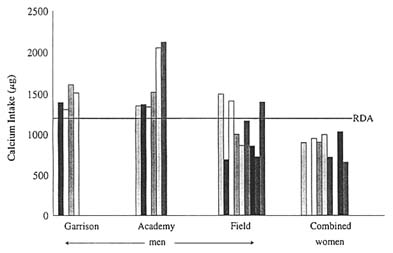
FIGURE 8-1 Mean calcium intakes of male and female service members compared to the Recommended Dietary Allowance (RDA) (NRC, 1989) of 1,200 mg for individuals 19 to 24 years of age. Data were combined from several studies as listed in endnote 1.
two studies met the MRDA for calcium of 800 mg2. These two studies included women in Bolivia and the recent study of women undergoing basic training at Fort Jackson.
Figure 8-2 charts the folate intakes of most of the MND study groups. Very few of the groups met the MRDA for folate of 400 µg (AR 40-25, 1985). If the 1989 reduced RDA values for folate were used for comparison, (men: 200 µg; women: 180 µg), four of seven field studies with men for which folate was analyzed would have found adequate intakes, and study means of three of the four studies with women would have met the criterion. Given that almost all female service members are of child-bearing age, the higher MRDA figure may be more appropriate. An argument often presented to counter the findings of low folate intakes is that there are too many missing values for folate in the ration data base. Data are thus also missing in the present analysis, but most of the ration items for which folate data are missing would be insignificant sources of this nutrient.
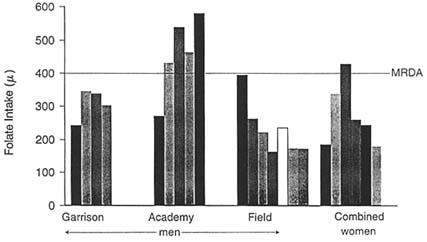
FIGURE 8-2 Mean folate intakes of male and female service members compared to the Military Recommended Dietary Allowance (MRDA) (AR 40-25, 1985) of 400 µg. Data for folate were not reported due to missing food composition data.
Data were combined from several studies as follows listed in endnote 2.
Food Waste
Another way to measure underconsumption of rations is to look at food waste. When energy intakes were compared to calories provided, energy intakes were consistently 1,000 to 2,000 kcal less than issue. Table 8-7 presents nutrient consumptions as a percentage of what was provided. Mean energy intakes ranged from 47 to 78 percent of the energy provided when the ration approximated energy requirements. Only in the study in which the Ration, Lightweight (RLW) was provided as a restricted ration did ration consumption approach 100 percent (Askew et al., 1987). MND study participants tended to consume more of the protein in the ration than they did energy or carbohydrate. Eleven of the 14 study groups listed in Table 8-7 consumed a greater percentage of the protein in the ration than they did of the energy provided. This finding illustrates the disproportionate consumption of ration components, with service members favoring the high-protein entrees. Despite a significant amount of food waste, soldiers tended to rate the amount of food provided as insufficient.
One reason nutrients are not consumed is that they are not taken to the field. When soldiers were allowed to take only the ration components they wanted to the field (based on two studies that were able to document this information), they took only 3,400 to 3,600 kcal, which was about 70 percent of the ration issued (Askew et al., 1987; Roberts et al., 1987). Of this, they consumed about 2,700 kcal. These two study groups were provided 4,023 kcal and 4,892 kcal, respectively. Space in the backpack is at a premium and therefore, soldiers will not carry what they know they will not eat or what is too heavy or too bulky. This fact was reemphasized by a study conducted by Natick Research, Development and Engineering Center at Fort Chaffee, Arkansas in 1985 (Siegal et al., 1985). One test group in the study was allowed to take to the field only what they ''normally would take." This "normal" group took a combination of ration components and commercial products. Unfortunately, the amount of food or ration items actually taken was not quantified; however, judging by nutrient intakes, the quantity taken was minimal. The normal group consumed a mean of only 1,028 kcal, 126 g of carbohydrate, and 41 g of protein over the 12 days of the study. They consumed 689 kcal and 855 kcal less, respectively, than the other two test groups who were intentionally provided calorically restricted rations.
Variety
Increasing the variety of tastes, textures, or colors increases food intakes (Rolls et al., 1981, 1982). This fact was exemplified by a study conducted in
TABLE 8-7 Proportion of Nutrient Provision Consumed (in Percent)
|
Ration |
Year |
Location |
Energy |
Carbohydrate |
Protein |
Fat |
Reference |
|
RLW* |
1986 |
Camp Ethan Allen, VT |
98 |
100 |
94 |
97 |
Askew et al., 1987 |
|
2:RLW† |
1988 |
MMWTC‡ |
76 |
86 |
77 |
67 |
Morgan et al., 1988 |
|
2:RLW + Suppl.§ |
1989 |
Mt. Rainier, WA |
47 |
47 |
51 |
41 |
Jones et al., 1990 |
|
4:MRE III |
1986 |
White Mountains, NH |
56 |
55 |
57 |
55 |
Roberts et al., 1987 |
|
MRE VI |
1986 |
Camp Ethan Allen, VT |
69 |
64 |
74 |
74 |
Askew et al., 1987 |
|
4:MRE VIII |
1988 |
MMWTC |
62 |
57 |
69 |
67 |
Morgan et al., 1988 |
|
MRE VIII + Suppl. |
1989 |
Alaska |
78 |
76 |
70 |
79 |
Edwards et al., 1989 |
|
MRE VIII + Suppl. |
1990 |
Alaska |
59 |
~57 |
~59 |
~79 |
Edwards et al., 1990 |
|
MRE XII |
1991 |
Ft. Chaffee, AR |
55 |
50 |
65 |
58 |
Thomas et al., unpublished** |
|
RCW |
1986 |
White Mountains, NH |
61 |
56 |
77 |
65 |
Roberts et al., 1987 |
|
RCW |
1988 |
MMWTC |
65 |
62 |
79 |
65 |
Morgan et al., 1988 |
|
RCW |
1988 |
Alaska |
57 |
51 |
65 |
64 |
Roberts et al., 1989 |
|
RCW |
1990 |
Alaska |
64 |
~64 |
~81 |
~68 |
Edwards et al., 1990 |
|
2:T & 1:MRE |
1991 |
Alaska |
51 |
44 |
60 |
57 |
King et al., 1992 |
|
*, Ration, Lightweight, a completely dehydrated, restricted calorie ration, provided approximately 1,976 kcal, 194 g of carbohydrate, 68 g of protein, and 103 g of fat; |
|||||||

Alaska in 1989 (Edwards et al., 1989). When a supplement pack containing candy, jerky, and trail mix was added to the MRE, energy intakes were higher (3,533 Kcal) than when the same number of calories (4,565 kcal) was provided by simply providing more MREs (2,802 kcal) (Figure 8-3). Not only did the supplements contribute to energy intakes, but consumption of the MRE was greater as well.
In contrast, the next year when 4,604 kcal were provided by a similar supplement pack with the MRE, energy intakes were only 2,729 kcal (Edwards et al., 1990). However during this second year, physical activities of the test unit were much lower than those of the unit studied in 1989. Based on energy intake and body weight loss, assuming that the energy deficit incurred by body weight loss is 3,500 kcal per pound, energy expenditures were 4,603 kcal and 3,954 kcal for the MRE VIII + supplement groups in 1989 and 1990, respectively. But weight losses of the two supplemented groups were comparable, 1.7 percent and 1.6 percent for the 1989 and 1990 study groups, respectively. So, although the unit studied the second year did not require as many calories and, therefore, theoretically needed to eat less and could more easily meet their needs, the weight-loss data indicate that they experienced the
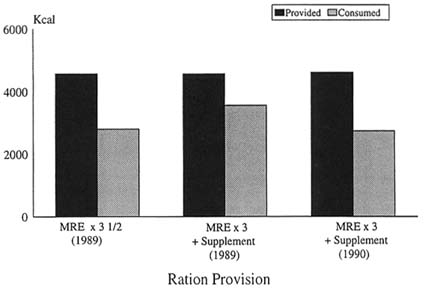
FIGURE 8-3 Effect of supplement pack with the Meal, Ready-to-Eat (MRE) on energy intakes during two cold-weather field studies. Figures in parentheses are the years of the respective studies. Three or 3 1/2 MREs (3 1/2:MRE) were provided as the ration. Data compiled from Edwards et al. (1989, 1990).
same energy deficit. Therefore, whereas increasing the variety of ration components should be done to enhance dietary intakes, this should not be expected to prevent weight loss.
Energy Intakes Versus Energy Expenditures
The best way to assess energy deficit during field operations is to compare energy intakes to actual energy expenditures. MND has used the doubly labeled water method (Schoeller and van Santen, 1982) to measure energy expenditures in subsamples of study groups in six field studies. Table 8-8 presents the results of these studies.
Energy deficits ranged from 520 kcal/d, in a group that was moderately active in a temperate environment, to 2,199 kcal/d in a group conducting a difficult mountain operation under extreme winter conditions. Average energy deficit for the six studies was 1,552 kcal/d or 34 percent.
Table 8-8 Energy Intake as a Proportion of Energy Expenditure
|
Year |
Environment and Location |
Energy Expenditure (kcal) |
Energy Intake (kcal) |
Difference (kcal) |
Proportion (%) |
Reference |
|
1986 |
Temperate, Vermont |
3,480 |
2,960 |
520 |
85 |
Askew et al., 1987 |
|
1988 |
Cold, high altitude, California. |
4,900 |
3,132 |
1,768 |
64 |
Morgan et al., 1988 |
|
1990 |
Cold, Alaska |
180 |
3,060 |
2,120 |
59 |
Edwards et al., 1990 |
|
1991 |
Cold, Alaska |
4,250 |
3,330 |
920 |
78 |
King et al., 1992 |
|
1990 |
Cold, high altitude, Washington† |
4,557 |
2,358 |
2,199 |
52 |
Jones et al., 1990 |
|
1990 |
Cold, high altitude, Bolivia |
3,549 |
2,200 |
1,349 |
64 |
Edwards et al., 1990 |
|
. Marine Mountain Warfare Training Center, Pickel Meadows, Calif. † This study was not included in the rest of this paper because of small sample size and short duration. Data from Hoyt et al. (1994). |
||||||
The doubly labeled water data confirm that a significant component of the weight losses observed during field operations is due to an energy deficit and cannot be solely attributed to a fluid deficit. Although partly explainable, the energy deficits and resulting acute weight losses are of concern. Significant weight loss is almost always accompanied by loss of lean body mass as well as fat. The greater the energy deficit and the leaner the individual, the greater is the relative contribution of lean tissues to the energy deficit (Forbes, 1987). Military weight control standards insure that most service members are relatively lean. An energy deficit in excess of 1,000 kcal/d in lean individuals could lead to detrimental losses of glycogen, body water, electrolytes, and body proteins.
CONTRIBUTING FACTORS
There is no single cause of ration underconsumption in the field, and there will be no simple solution. Most of the factors that MND has identified that contribute to underconsumption fall into one of four interrelated categories: the ration, training schedule, environment, and command emphasis.
The Ration
Provision of at least one hot meal per day enhances nutrient intake. It does not seem to matter whether the hot meal is a T or B Ration, but there is an even greater benefit if the hot meal is an A Ration meal. When hot meals are provided, the primary reasons soldiers give for not getting enough to eat is dislike of the ration, not receiving enough food to eat, and lack of variety or boredom with the food. Taste fatigue of sweets is common. Providing more food positively affects absolute nutrient intakes, although service members seem to consume a relatively smaller proportion of the ration provided. In other words, the enhanced intakes are at the expense of greater food waste. When soldiers must carry their own food, they have to juggle competing priorities for positions in the rucksack. Food and nutrition often lose out.
Training Schedule and Situation
When prepackaged rations are provided, the commonly cited reason for not getting enough to eat is insufficient time to prepare and eat the rations. On days when soldiers are moving their position, ration intakes are low, whereas on days that soldiers are stationary, energy intakes increase because they have
more time and greater opportunity to heat and eat the rations. In the Fort Sill study (Rose and Carlson, 1986), it appears that intakes were high not just because A Rations were provided, but also because there were fairly regular, scheduled meal periods.
Environment
Environmental stress adds to the physical and emotional stress of field operations or combat. There are increased energy and water requirements in hot, cold, and high-altitude environments. Furthermore, these environments may induce anorexia and an inappropriate thirst response in some individuals. Dehydration itself results in anorexia. The availability of potable water directly affects water and ration intakes, especially if ration components require rehydration before eating.
Harsh environments may also directly affect the training schedule because all tasks are more difficult and take longer to accomplish. This further erodes the time available to prepare and eat rations. In the cold, the process of eating is more bothersome because it is difficult to rehydrate or heat a ration in the cold, to get water and keep it from freezing, and to open ration packages with gloved or cold, stiff hands.
Environment also affects the quality of foods. Foods that are hot in the kitchen tent may literally be ice cold by the time they reach the squad tent. In hot weather, foods may be served at temperatures inappropriate to the type of food, for example, aseptically packaged milk served at 95¹F (35¹C). Blowing dust or sand can quickly render a meal unsuitable for consumption. Food preferences are also altered at environmental extremes. In cold weather, soldiers prefer hot foods and cocoa, while in the heat, they prefer ice tea and Kool Aid. A high-fat diet may be tolerated in the cold, but it is not well tolerated at high altitude. Preference for fat has been expressed in the Arctic while a preference for carbohydrate has been recorded at high altitude (Ward et al., 1989).
Command Emphasis
Commanders and soldiers view the energy deficit as acceptable and unavoidable. The consequences of inadequate intakes of carbohydrate, protein, sodium, water, or other nutrients are not appreciated. Field feeding decisions are based more on personal preference and logistical considerations than on nutrition. R. M. Kark (1954, p. 193) found that, "Loss of military efficiency through inadequate nutrition is most often due to inadequate planning, catering
or supply, and to inadequate training or indoctrination." Lack of command emphasis on the importance of ration consumption may be perceived by the troops as an indication that nutrition is not important.
CONCLUSIONS AND RECOMMENDATIONS
The available data clearly show consistent energy and carbohydrate deficits, whether based on comparisons with dietary allowances, nutrient provisions, or energy requirements. The carbohydrate deficit is of concern, as it is more detrimental to performance. Carbohydrate stores are finite and easily depleted, whereas fat stores are relatively unlimited. Although simple energy imbalances are well tolerated for short periods, further research is needed on the effects of frequent weight cycling at the levels reported here in healthy, nonobese populations.
Although short-term vitamin or mineral deficits are well tolerated, the nutritional consequences of frequent, repeated periods of inadequate intake may not be so benign. The reduction in military populations will result in an increase in the amount of time spent in the field by the remaining troops. This effect is already being felt by some units that are in the field 40 to 50 percent of the time (Personal communication, C. Thomas, Dietitian, 55th Medical Group, Fort Bragg, N.C., 1993). The low calcium and folate intakes by female service members are also of concern; these nutrients are also often low in the diets of military women when in garrison (Klicka et al., 1993; Kretsch et al., 1984, 1986; R.W. Rose et al., 1989).
Although weight losses in the field are not inevitable, they are certainly difficult to prevent because of the myriad of contributing factors, many of which are not under the control of the individual or the commander. The goal should not be to prevent weight loss, but to prevent unacceptable levels of weight loss. Some recommendations are:
-
Define what constitutes an unacceptable weight loss.
-
Require unit commanders to weigh their troops immediately before and after a field operation (similar to a coach weighing the team before and after practice). This would emphasize the importance of maintaining food and water intakes in the field.
-
Just as the military has been fairly successful with water discipline, they may need to consider developing some form of food discipline as well.
-
Greater emphasis should be placed on the promotion of optimal carbohydrate intakes.
-
Efforts to increase the variety of ration components should target snack foods as well as entrees, since these "eat-on-the-go" foods provide most of the carbohydrates.
-
Just as there are 12 or more MRE entrees, there could be 12 or more different starches and snacks. Slight variations in taste, texture, form, or color could constitute the differences (e.g., various flavors of crackers).
-
The return of sweetened beverage bases to all ration menus should be investigated, as these were popular and effective sources of carbohydrate. Half of the MRE menus now contain artificially sweetened beverage-base powder.
ENDNOTES
|
1. |
Data on calcium intakes for Figure 8-1 were combined from the following studies: Garrison: Szeto et al. (1987, 1988, 1989) and C. D. Thomas et al. (U.S. Army Research Institute of Environmental Medicine, Natick, Mass., unpublished data); Academy: Baker-Fulco et al. (1990, 1994), Carlson et al. (1987), Klicka et al. (1993), Kretsch et al. (1986), and R. W. Rose et al. (1989); Field: Askew et al. (1987), Edwards et al. (1990, 1991), King et al. (1992), Morgan et al. (1988), Roberts et al. (1989), Rose and Carlson (1986), M.S. Rose et al. (1989), and C. D. Thomas et al. (U.S. Army Research Institute of Environmental Medicine, Natick, Mass., unpublished data); Combined Women: Edwards et al. (1991), King et al. (1994), Klicka et al. (1993), Kretsch et al. (1986), M.S. Rose et al. (1989), R.W. Rose et al. (1989), and Szeto et al. (1987). |
|
2. |
Data on folate intakes for Figure 8-2 were combined from the following studies: Garrison: Szeto et al. (1987, 1988, 1989) and C. D. Thomas et al. (U.S. Army Research Institute of Environmental Medicine, Natick, Mass., unpublished data); Academy: Baker-Fulco et al. (1992, 1994), Carlson et al. (1987), Klicka et al. (1993), and Kretsch et al. (1986); Field: Edwards et al. (1990, 1991), Morgan et al. (1988), Roberts et al. (1989), Rose and Carlson (1986), M.S. Rose et al. (1989), and C. D. Thomas et al. (U.S. Army Research Institute of Environmental Medicine, Natick, Mass., unpublished data); Combined Women: Edwards et al. (1991), King et al. (1994), Klicka et al. (1993), Kretsch et al. (1986), M.S. Rose et al. (1989), and Szeto et al. (1987). |
REFERENCES
AR (Army Regulation) 40-25 1985, See U.S. Department of the Army, the Navy, and the Air Force, 1985.
Askew, E.W 1993. Nutrition and performance at environmental extremes. Pp. 455–474 in Nutrition, Exercise and Sport, 2d ed., I. Wolinsky and J.F. Hickson, eds. Ann Arbor, Mich.: CRC Press.
Askew, E.W., I. Munro, M.A. Sharp, S. Siegel, R. Popper, M. Rose, R.W. Hoyt, J.W. Martin, K. Reynolds, H.R. Lieberman, D. Engell, and C.P Shaw 1987. Nutritional status and physical and mental performance of special operations soldiers consuming the Ration, Lightweight, or the Meal, Ready-to-Eat military field ration during a 30-day field exercise. Technical Report T7-87, AD A179 553. Natick, Mass.: U.S. Army Research Institute of Environmental Medicine.
Baker, C.J., P.B. Rock, C.S. Fulco, L.A. Trad, and A. Cymerman 1989. High altitude-induced anorexia. Fed. Am. Soc. Exp. Biol. J. 3(4):A987.
Baker-Fulco, C.J., J.C. Buchbinder, S.A. Torri, and E.W. Askew 1992. Dietary status of Marine Corps officer candidates. Fed. Am. Soc. Exp. Biol. J. 6(4):A1682.
Baker-Fulco, C.J., S.A. Torri, J.E. Arsenault, and J.C. Buchbinder 1994. Impact of menu changes designed to promote a training diet [abstract]. J. Am. Diet. Assn. 94(suppl.):A9.
Boyer, S.J., and F. Duane Blume 1984. Weight loss and changes in body composition at high altitude. J. Appl. Physiol.: Respirat. Environ. Exercise Physiol. 57:1580–1585.
Carlson, D.E., T.B. Dugan, J.C. Buchbinder, J.D. Allegretto, and D.D. Schnakenberg 1987. Nutritional assessment of the Ft. Riley Non-Commissioned Officer Academy dining facility. Technical Report T14-87. Natick, Mass.: U.S. Army Research Institute of Environmental Medicine.
Costill, D.L., R. Bowers, G. Branam, and K. Sparks 1971. Muscle glycogen utilization during prolonged exercise on successive days. J. Appl. Physiol. 31:834–838.
Edwards, J.S.A., D.E. Roberts, T.E. Morgan, and L.S. Lester 1989. An evaluation of the nutritional intake and acceptability of the Meal, Ready-to-Eat consumed with and without a supplemental pack in a cold environment . Technical Report T18-89. Natick, Mass.: U.S. Army Research Institute of Environmental Medicine.
Edwards, J.S.A., D.E. Roberts, S.H. Mutter, and R.J. Moore 1990. A comparison of the Meal, Ready-to-Eat VIII with supplemental pack and the Ration, Cold Weather consumed in an arctic environment. Technical Report T21-90. Natick, Mass.: U.S. Army Research Institute of Environmental Medicine.
Edwards, J.S.A., E.W. Askew, N. King, C.S. Fulco, R.W. Hoyt, and J.P. DeLany 1991. An assessment of the nutritional intake and energy expenditure of unacclimatized U.S. Army soldiers living and working at high altitude. Technical Report T10-91. Natick, Mass.: U.S. Army Research Institute of Environmental Medicine.
Fink, W., D.L. Costill, P. Van Handel, and L. Getchell 1975. Leg muscle metabolism during exercise in the hot and cold. Eur. J. Appl. Physiol. 34:183–190.
Forbes, G.B. 1987. Lean body mass-body fat interrelationships in humans. Nutr. Rev. 45(8):225–231.
Fulco, C.S., A. Cymerman, N.A. Pimental, A.J. Young, and J.T. Maher 1985. Anthropometric changes at high altitude. Aviat. Space Environ. Med. 56:220–224.
Hirsch, E.S., and F.M. Kramer 1993. Situational influences on food intake. Pp. 215–243 in Nutritional Needs in Hot Environments, B.M. Marriott, ed. A report of the Committee on Military Nutrition Research, Food and Nutrition Board, Institute of Medicine. Washington, D.C.: National Academy Press.
Hoyt, R.W., T.E. Jones, C.J. Baker-Fulco, D.A. Schoeller, R.B. Schoene, R.S. Schwartz, and E.W. Askew 1994. Doubly labeled water measurement of human energy expenditure during exercise at high altitude. Am. J. Physiol. 266 (Regulatory Integrative Comp. Physiol. 35):R966–R971.
Jacobs, I., T.T. Tomet, and D. Kerrigan-Brown 1985. Muscle glycogen depletion during exercise at 9¹C and 21¹C. Eur. J. Appl. Physiol. 54:35–39.
Jones, T.E., R.W. Hoyt, C.J. Baker, C.B. Hintlian, P.S. Walczak, R.A. Kluter, C.P. Shaw, D. Schilling, and E.W. Askew 1990. Voluntary consumption of a liquid carbohydrate supplement by special operations forces during a high altitude cold weather field training exercise. Technical Report T20-90. Natick, Mass.: U.S. Army Research Institute of Environmental Medicine.
Kark, R.M. 1954. Studies on troops in the field. Pp. 193–195 in Nutrition Under Climatic Stress, H. Spector and M.S. Peterson, eds. A report of the Committee on Foods, Advisory Board on Quartermasters Research and Development. Washington, D.C.: National Academy on Sciences/National Research Council.
King, N., S.H. Mutter, D.E. Roberts, E.W. Askew, A.J. Young, T.E. Jones, M.Z. Mays, M.R. Sutherland, J.P. DeLany, B.E. Cheema, and R. Tulley 1992. Nutrition and hydration status of soldiers consuming the 18-man Arctic Tray Pack ration module with either the Meal, Ready-to-Eat or the Long Life Ration Packet during a cold weather field training exercise. Technical Report T4-92. Natick, Mass.: U.S. Army Research Institute of Environmental Medicine.
King, N., J.E. Arsenault, S.H. Mutter, C. Champagne, T.G. Murphy, K.A. Westphal, and E.W. Askew 1994. Nutritional intake of female soldiers during the U.S. Army basic combat training. Technical Report T94-17. Natick, Mass.: U.S. Army Research Institute of Environmental Medicine.
Klicka, M.V., D.E. Sherman, N. King, K.E. Friedl, and E.W. Askew 1993. Nutritional assessment of cadets at the U.S. Military Academy: Part 2. Assessment of nutritional intake. Technical Report T94-1. Natick, Mass.: U.S. Army Research Institute of Environmental Medicine.
Kretsch, M.J., H.E. Sauberlich, and J.H. Skala 1984. Nutritional status assessment of Marines before and after the installation of the "multi-restaurant" food service system at the Twenty-Nine Palms Marine Corps Base, California. Report No. 192. Presidio of San Francisco, Calif.: Letterman Army Institute of Research.
Kretsch, M.J., P.M. Conforti, and H.E. Sauberlich 1986. Nutrient intake evaluation of male and female cadets at the United States Military Academy, West Point, New York. Report No. 218. Presidio of San Francisco, Calif.: Letterman Army Institute of Research.
Morgan, T.E., L.A. Hodges, D. Schilling, R.W. Hoyt, E.J. Iwanyk, G. McAninch, T.C. Wells, and E.W. Askew 1988. A comparison of the Meal, Ready-to-Eat, Ration, Cold Weather, and Ration, Lightweight nutrient intakes during moderate altitude cold weather field training operations. Technical Report T5-89. Natick, Mass.: U.S. Army Research Institute of Environmental Medicine.
NRC (National Research Council) 1980. Recommended Dietary Allowances, 9th revised ed. Report of the Committee on Dietary Allowances, Food and Nutrition Board, Division of Biological Sciences, Assembly of Life Sciences. Washington, D.C.: National Academy of Sciences.
1989. Recommended Dietary Allowances, 10th ed. Report of the Subcommittee on the Tenth Edition of the RDAs, Food and Nutrition Board, Commission on Life Sciences. Washington, D.C.: National Academy Press.
Roberts, D.E., E.W. Askew, M.S. Rose, M.A. Sharp, S. Bruttig, J.C. Buchbinder, and D.B Engell 1987. Nutritional and hydration status of special forces soldiers consuming the Ration, Cold Weather or the Meal, Ready-to-Eat ration during a 10-day cold weather field training exercise. Technical Report T8-87, AD A179 886. Natick, Mass.: U.S. Army Research Institute of Environmental Medicine.
Roberts, D.E., B.J. McGuire, D.B. Engell, C.A. Salter, and M.S. Rose 1989. Role of water consumption on consumption of the Ration, Cold Weather. Technical Report T13-89. Natick, Mass.: U.S. Army Research Institute of Environmental Medicine.
Rolls, B.J., E.A. Rowe, E.T. Rolls, B. Kingston, A. Megson, and R. Gunary 1981. Variety in a meal enhances food intake in man. Physiol. Behav. 26:215–221.
Rolls, B.J., E.A. Rowe, and E.T. Rolls 1982. How sensory properties of foods affect human feeding behavior. Physiol. Behav. 29:409–417.
Rose, M.S. 1989. Between-meal food intake for reservists training in the field. Technical Report T15-89. Natick, Mass.: U.S. Army Research Institute of Environmental Medicine.
Rose, M.S., and D.E. Carlson 1986. Effects of A Ration meals on body weight during sustained field operations. Technical Report T2-87. Natick, Mass.: U.S. Army Research Institute of Environmental Medicine.
Rose, M.S., P.C. Szlyk, R.P. Francesconi, L.S. Lester, L. Armstrong, W. Matthew, A.V. Cardello, R.D. Popper, I. Sils, G. Thomas, D. Schilling, and R. Whang 1989. Effectiveness and acceptability of nutrient solutions in enhancing fluid intake in the heat. Technical Report T10-89. Natick Mass.: U.S. Army Research Institute of Environmental Medicine.
Rose, R.W., C.J. Baker, C. Salter, W. Wisnaskas, J.S.A. Edwards, and M.S. Rose 1989. Dietary assessment of U.S. Army basic trainees at Fort Jackson, South Carolina. Technical Report T6-89. Natick, Mass.: U.S. Army Research Institute of Environmental Medicine.
Saltin, B., and J. Karlsson 1971. Muscle glycogen utilization during work of different intensities. Pp. 289–300 in Muscle Metabolism During Exercise, B. Pernow and B. Saltin, eds. New York: Plenum Press.
Schoeller, D.A., and E. van Santen 1982. Measurement of energy expenditure in humans by doubly labeled water method. J. Appl. Physiol. 53:955–959.
Siegal, S.F, P.M. Poole, E.W. Askew, M.A. Kinney, C. Shaw, J. Aylward, and S. Hunter 1985. Twelve-day field test of Ration, Lightweight, 30-day at Fort Chaffee, Arkansas. Technical Report TR-87/032. Natick, Mass.: U.S. Army Natick Research and Development Center.
Szeto, E.G., D.E. Carlson, TB. Dugan, and J.C. Buchbinder 1987. A comparison of nutrient intakes between a Ft. Riley contractor-operated and a Ft. Lewis military-operated garrison dining facility. Technical Report T2-88. Natick, Mass.: U.S. Army Research Institute of Environmental Medicine.
Szeto, E.G., T.B. Dugan, and J.A. Gallo 1988. Nutrient intakes of habitual diners in a military-operated garrison dining facility. Ft. Devens I. Technical Report T3-89. Natick, Mass.: U.S. Army Research Institute of Environmental Medicine.
Szeto, E.G., J.A. Gallo, and K.W. Samonds 1989. Passive nutrition intervention in a military-operated garrison dining facility. Ft. Devens II. Technical Report T7-89. Natick, Mass.: U.S. Army Research Institute of Environmental Medicine.
USACDEC/USARIEM (U.S. Army Combat Developments and Experimentation Center and U.S. Army Research Institute of Environmental Medicine) 1986. Combat Field Feeding System-Force Development Test and Experimentation (CFFS-FDTE). Technical Report CDEC-TR-85-006A. Vol 1, Basic Report; vol. 2, Appendix A; vol. 3, Appendixes B through L. Fort Ord, Calif.: U.S. Army Combat Developments and Experimentation Center.
USDA (U.S. Department of Agriculture) 1986. Nationwide Food Consumption Survey, Continuing Survey of Food Intakes by Individuals. Men 19–50 years, 1 day. NFCS, CSFII Report No 85-3. Hyattsville, Md.: Nutrition Monitoring Division, Human Nutrition Information Service.
1987. Nationwide Food Consumption Survey, Continuing Survey of Food Intakes by Individuals. Women 19–50 Years and Their Children 1–5 Years, 4 days. NFCS, CSFII Report No. 85-4. Hyattsville, Md.: Nutrition Monitoring Division, Human Nutrition Information Service.
1988. Nationwide Food Consumption Survey, Continuing Survey of Food Intakes by Individuals. Women 19–50 Years and Their Children 1–5 Years, 4 days. NFCS, CSFII Report No. 86-3. Hyattsville, Md.: Nutrition Monitoring Division, Human Nutrition Information Service.
U.S. Departments of the Army, the Navy, and the Air Force 1985. Army Regulation 40-25/Naval Command Medical Instruction 10110.1/Air Force Regulation 160–95. ''Nutrition Allowances, Standards, and Education." May 15. Washington, D.C.
Ward, M.P., J.S. Milledge, and J.B. West 1989. Nutrition and intestinal function. Pp. 283–292 in High Altitude Medicine and Physiology, M.P. Ward, J.S. Milledge, and J.B. West, eds. Philadelphia: University of Pennsylvania Press.
Williams, M.H. 1988. Carbohydrates—The main energy food. Pp. 50–75 in Nutrition for Fitness and Sport, 2d ed., M.H. Williams, ed. Dubuque, Ia.: William C. Brown Publishers.
DISCUSSION
ROBERT NESHEIM: Thank you very much. We have time for a question.
RICHARD JANSEN: Are there any systematic weight data coming back from Operation Desert Shield and/or Desert Storm on the weight of the troops when they were deployed?
CAROL BAKER-FULCO: No, that unfortunately was not obtained. What I noticed, when soldiers anecdotally tell you how much weight they lost, is a grossly inflated amount in any situation.
PRISCILLA DOLLOFF-CRANE: We had a unit come back to Fort Lee from Somalia. Not Desert Shield and Desert Storm but Somalia. They were on a 2.5-m deployment from January to the middle of March 1993. Coincidentally, their commander had them perform PT (physical training) tests shortly before their deployment, and she had good starting weights for them. When she brought them back, we asked her to weigh them again. The weight ranges for fit troops were anywhere from a 10-to 35-lb drop in that 2.5-m period. They were not overweight to begin with, and there was no command pressure to lose weight. The commander did notice a lot of performance deficiencies during that time. There was not a scientific analysis, but the data are there to support the finding.
GILBERT LEVEILLE: Did they have a problem with diarrhea at that point?
PRISCILLA DOLLOFF-CRANE: No, not so much diarrhea. It was the environmental and psychological stress factors that were pronounced in the environment they were working in. Of course, nobody is sensitized to exactly what we said in terms of the command emphasis and the leadership issues involved. That is, it is accepted that you are going to lose some weight. The thing is that we are traditionally in 2-wk exercises so this attitude we have all developed is that weight loss is okay. Over a short period of time, we do not have compensatory measures in place for that.
HOWARD SCHUTZ: There are two points that are going to recur when we come up with questions. First, when we focus on carbohydrate, is the level required for maintenance of glycogenic performance supported by data? Do we really have data to support a relationship between performance and intake?
CAROL BAKER-FULCO: Not in soldiers, no.
EDWARD HIRSCH: And the second point related to that. When we talk about things like folate, I was intrigued by your comment that they eat the entree and don't eat the other stuff. Have we really looked at adding whatever nutrients we are going to add to the entree rather than to the peripheral items?
(NO ANSWER HERE TO QUESTION)
HOWARD SCHUTZ: Was there any relationship between any of the underconsumption and any of the changes in the MRE that the previous speakers discussed? Because apparently there has been improvement over time. Have you noticed any reflection of that in the underconsumption data?
CAROL BAKER-FULCO: Almost during any study where we are comparing a new to an old ration, the new ration will fare much better, at least the first year we study it. If that becomes the control the next year, that is the poor ration. There is a big novelty factor.
STEPHEN PHINNEY: Have there been any attempts to add carbohydrate supplements to water to capitalize on your emphasis on the water discipline? If you get the caloric density of the beverage to 25 kcal/cc, 2 liters of water will give you 1,000 kcal of carbohydrate per day.
CAROL BAKER-FULCO: Not in conjunction with water discipline, but almost as an ergogenic aid, as a supplement. Special operations forces would use this more as a supplement.
ROBERT NESHEIM: In the sports world, it has become a component of success.
CAROL BAKER-FULCO: Yes. A liquid supplement seems to be much better.
ROBERT NESHEIM: I think we have to be a little careful in looking at what might be a carbohydrate requirement, for example, in terms of maintaining muscle glycogen because a soldier is not a marathon runner. The level of activity for a soldier is not as high for a prolonged period of time. Consequently, even on a lower carbohydrate intake, there is an opportunity for regeneration of muscle glycogen if they are eating. So I think we cannot make those direct translations, and we have to be very careful.
DAVID SCHNAKENBERG: I think it is not a question of whether you can maintain or restore muscle glycogen by adding carbohydrate if you have not fixed the caloric energy deficit. I mean, if you put in even 400, 500, or 600 g
of carbohydrate, if you still have an energy deficit, you are going to have difficulty in restoring your energy.
EDWARD HIRSCH: I just wanted to ask Carol quickly about women and the number of women in your samples. Are they substantial enough?
CAROL BAKER-FULCO: I am not sure if I have the actual N values of the women. I can look it up and answer, but I cannot remember the N values now. I have been pulling this data from reports, and they are all jumbled up in my mind right now.
EDWARD HIRSCH: Because the numbers we are starting to see are five or six or seven in a group in a field study and never quite enough to know what is going on.


