
12
Effects of Beverage Consumption and Hydration Status on Caloric Intake
Dianne Engell1
Not Eating Enough, 1995
Pp. 217–237. Washington, D.C.
National Academy Press
INTRODUCTION
Water intake is essential for survival and critical for optimal performance. It is generally recognized that adequate fluid consumption is important to military operations because hypohydration can lead to performance decrements and life-threatening heat injuries in hot climates (e.g., Adolph et al., 1947; Ladell, 1955; Pitts et al., 1944; Saltin, 1964). Drinking is also important to the health and performance of military personnel because of the contribution of beverages to energy intake. Beverage consumption has direct and indirect effects on caloric intake. The direct contribution of drinking to energy intake is obvious: beverages themselves are a good source of calories. The indirect influence on caloric intake is less apparent, but research indicates that limited fluid intake, when associated with hypohydration, leads to reduced food intake.
This chapter will discuss both the direct and indirect effects on caloric intake of drinking water and nonalcoholic beverages. A brief overview of research addressing the sensory, psychological, and environmental influences on fluid consumption will also be presented to provide background information and a rationale for recommendations found at the end of the chapter.
CONTRIBUTION OF BEVERAGE CONSUMPTION TO CALORIC INTAKE IN THE FIELD
The direct contribution of beverages to caloric intake in the field can be assessed from a data base of field study results that are part of the U.S. Army Natick Research, Development and Engineering Center's (NRDEC) ration testing program. While some of NRDEC's work on drinking behavior involves experiments designed specifically to determine the effects of sensory or situational factors on beverage consumption, other information on drinking behavior stems from the ration testing program in which rations are evaluated in realistic military field settings. The methodology for these field studies includes monitoring food and beverage intake and subjects' body weights and collecting acceptance ratings of rations and associated products such as packaging, heating devices, and utensils. In collaboration with the U.S. Army Institute of Environmental Medicine (USARIEM), NRDEC also monitors urine-specific gravity to assess hydration status. Data from these field studies serve not only as the basis for evaluating rations and related products, but they also provide insight into human eating and drinking behavior.
This discussion will focus on beverage consumption in field studies where the Meal, Ready-to-Eat (MRE) was the sole source of sustenance. The MRE is the primary operational ration when troops are deployed, a time when hypohydration is most common (see Kramer, Chapter 17 in this volume). Beverage consumption data from field studies of the MRE are an excellent source of information to determine the contribution of beverages to daily caloric intake in the field because different versions of the MRE have been tested repeatedly in different environments. The MRE data base is also the most extensive of the ration data bases.
Over the past 10 years, some of the food components in the MRE have been improved, others have been dropped, and new products have been added. A summary of these changes can be found in Chapter 7 of this volume by Darsch and Brandler. The beverage components, all of which are found in powdered form, have also changed over the years. The earliest versions of the MRE included a package of coffee in each meal and cocoa in 7 of the 12 menus. In response to feedback from soldiers and evidence indicating that flavoring enhanced water intake in the field (Engell and Hirsch, 1991), a
package of fruit-flavored beverage powder was added to each MRE meal in addition to coffee and cocoa. This version of the MRE, with coffee and fruit-flavored beverages in all of the menus and cocoa in 7 of the menus, was produced from 1987 to 1992 (MRE VII-MRE XII). package of fruit-flavored beverage powder was added to each MRE meal in addition to the coffee and cocoa. In 1993, 6 of the 12 sugar-sweetened fruit drinks were replaced with aspartame-sweetened beverages. Future versions will substitute sugar-sweetened tea for coffee in 6 of the 12 menus. Additional beverages such as cider, carbonated beverage tablets, and shakes have also been tested as part of an accelerated development program called the Soldier Enhancement Program (SEP), but these additional beverages will probably not be included in the next version of the ration because of shelf-life requirements and costs. Table 12-1 summarizes the changes in MRE beverage composition from 1980 until 1993; Table 12-2 presents the nutritional composition of these beverages.
Five MRE field studies were analyzed to determine the contribution of beverages to overall energy intake (Engell et al., 1987; Hirsch et al., 1985; Lester et al., 1989, 1993; Popper et al., 1987). In each of these studies, which included two or more experimental groups, the average food and beverage intake reported for each group was based on data from at least 40 male soldiers consuming only the MRE for at least 1 week.
TABLE 12-1 Beverage Products Found in Meal, Ready-to-Eat (MRE) Rations
TABLE 12-2 Nutrient Composition of Meal, Ready-to-Eat (MRE) Beverages
In the studies in which soldiers were consuming an early version of the MRE—the MRE IV (Engell et al., 1987; Hirsch et al., 1985; Popper et al., 1987)—beverage consumption accounted for 178 to 274 kcal, representing 8 to 10 percent of the overall daily energy intake. With the addition of flavored fruit drinks to the MRE, the caloric contribution of beverages to overall consumption increased considerably. In all of the studies in which troops were consuming the Improved MRE, MRE VII, or MRE VIII (Lester et al., 1989, 1993; Popper et al., 1987), beverage consumption contributed 15 to 17 percent of the calories consumed in 1 day. Comparatively, Block et al. (1985) have found that nonalcoholic beverage consumption contributes about 15 percent of the calories consumed in the typical American diet.
The one exception to the 15–17 percent contribution of beverages to caloric intake in the field when the MRE VIII was consumed occurred in a cold weather study. Troops in one of three experimental groups consuming the MRE VIII (Lester et al., 1989) consumed only 13 percent of their daily intake in the form of beverages. In this study, each group was given a different heating device to heat their ration and water for beverages. In the two groups that reported they could heat water relatively easily, hot drink (coffee and cocoa) consumption was 181 and 187 kcal/d, but in the group that considered the process of heating water to be more difficult, hot drink consumption contributed only 52 kcal to daily energy intake. The results indicate that the relatively reduced intake of beverage calories was due to the limited consumption of hot cocoa in these studies with male soldiers.
In one of the most recently conducted MRE studies (Lester et al., 1993), 539 kcal were contributed by SEP MRE beverages, representing 20 percent of
the daily caloric intake. This is a significant contribution because hot cocoa was not part of this ration prototype, and hot cocoa has contributed significantly to overall caloric intake in previous comparable studies. The chocolate, vanilla, and strawberry shakes found in this version of the SEP MRE contributed 69 percent of these 539 kcal and were a good source of protein, fat, and calcium, in addition to the carbohydrate which is the primary nutrient found in most of the other MRE beverages. Although the shakes received very good acceptance ratings in the field and their consumption contributed significantly to caloric intake, the inclusion of the shakes in future versions of the MRE is not planned at this time.
Analyses of the data on energy intake indicate (with one exception: Popper et al., 1987) that as the number of beverages in the MRE increased, soldiers chose to drink them and thus more beverage calories were consumed (Figure 12-1). Although this finding appears to be an improvement in terms of increasing daily caloric intake in the field, it could only be considered a real enhancement if the additional calories represent an incremental increase in overall daily intake and do not displace calories ingested in other forms. The calories ingested as drinks have been in fact found to be a true increment in daily caloric consumption, because consumption rates of the other ration
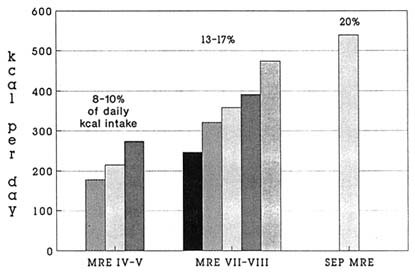
FIGURE 12-1 Energy intake (kcal) from beverages in Meal. Ready-to-Eat (MRE) IV-VIII field studies. Roman numerals IV-VIII refer to production dates starting in 1980. For example, MRE V was produced in 1985. SEP, Soldier Enhancement Program, an accelerated ration development program. Each bar represents data from at least 40 male soldiers consuming the ration for at least 1 week.
components (e.g., entrees, starches, spreads, cakes) are not significantly different.
The most striking example from military field studies to illustrate that beverage calories add to total caloric intake is the author's 1983 study conducted at Fort Benning (unpublished data, 1983). In this study, beverage intake of soldiers receiving flavored, caloric beverages was compared to intake of soldiers who received only water. Although caloric intake from solid food (B Rations) was the same in the beverage conditions, the soldiers who received the flavored beverage consumed 1,050 kcal more each day than the soldiers who had only water to drink. The contribution of beverage calories to overall caloric intake has also been shown in other studies (Booth, 1988; de Castro, 1993; Rolls et al., 1990; Tordoff and Alleva, 1990).
EFFECTS OF WATER AVAILABILITY AND HYDRATION STATUS ON FOOD INTAKE
In addition to making a direct, positive contribution to energy intake, the amount of fluid consumed can also have an indirect effect on caloric intake. The first to note that limited fluid intake led to reduced appetite and solid food intake were Adolph and Wills (1947). In one experiment conducted in the California desert, the effects of exercise-induced hypohydration on food intake were studied. Eight men were served a K Ration lunch either (1) after a 1-h walk, (2) following a 3-h walk, or (3) on a control day without exercise. Most studies addressing the effects of limited fluid intake on food intake in humans, including this study, have resorted to measures like rapid body weight loss or urine-specific gravity to assess hydration status. Although there are more precise indices of hypohydration, research indicates that rapid body weight loss or urine-specific gravity levels can be used to indicate hypohydration (Francesconi et al., 1987).
The results of the Adolph and Wills study (1947) showed that after walking in the desert for either 1 or 3 hours, the men lost about 2 percent of their body weight. When offered lunch with 100–700 g of water, they reduced their food consumption (Figure 12-2). This study suggested that hypohydration causes a reduction in voluntary food intake. However, as Adolph and Wills pointed out, the interpretation of the 1947 study is somewhat limited because the experimental design was not balanced. In addition, information relating the amount of water intake to food consumed by individuals during the meal was not provided. This shortcoming limits interpretation because it is not known if hypohydration or the amount of drinking at the meal affected food consumption.
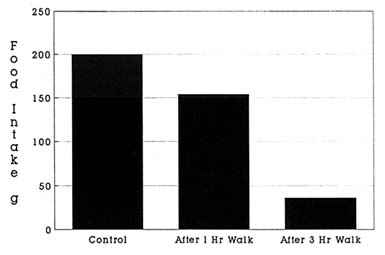
FIGURE 12-2 Effect of heat- and exercise-induced hypohydration on food consumption. After a 1-h walk, subjects lost 1.8 percent of their body weight; after 3 hours, 2.3 percent of their body weight was lost. SOURCE: Data from Adolph and Wills (1947).
Several years ago this author began to explore the effects of limited water intake on food consumption (Engell, 1988). In a repeated measures design experiment, 17 soldiers (all men) were assigned to two conditions, ad-libitum water and restricted water, for 2 days. On each of these 2-d trials, subjects alternated between ad-libitum and restricted water intake conditions. When subjects were in the ad-libitum condition they could drink as much as they wanted between and with meals; when in the restricted condition, they were allowed only 8 oz (0.24 L) of water with their meals and nothing to drink between meals, which corresponded to 40 percent of the water consumed in the ad-libitum condition. Food intake (which consisted of MRE rations supplemented with commercial foods provided by the experiment) was ad libitum in both conditions. Scales measuring hunger, thirst, loss of appetite, and fullness were completed before and after each meal.
By the end of the 2-d period, subjects lost about 2 percent of their body weight when in the restricted water intake condition, a loss similar to that observed in the Adolph et al. (1947) study. The results, which are consistent with those of Adolph and Wills (1947) and Bass et al. (1955), show that inadequate water intake leads to a significant reduction in food intake (Figure 12-3). A significant negative correlation between subjects' thirst ratings and
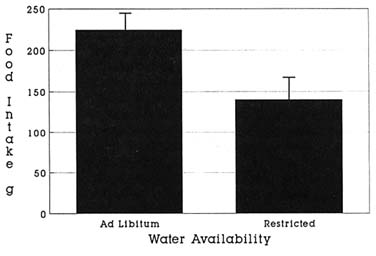
FIGURE 12-3 Effect of limited water availability of food intake. Subjects in the restricted water intake group lost approximately 2 percent of their body weight. Figure shows voluntary reduction in food intake. SOURCE: Adapted from Engell (1988).
food intake was found (r = -0.47; P <0.05); in addition, a significant positive correlation between thirst ratings and loss of appetite ratings was observed (r = 0.52; P <0.05). Although this experiment demonstrated that limited water intake reduces food consumption and that thirst is negatively correlated with food intake, the question of whether hypohydration or limited water availability during a meal is responsible for the reduced food intake was not resolved.
The next experiment addressed the question of whether the amount of drinking water at one meal affects food consumption (Engell, 1993). Soldiers who had not been deprived of food or water were served an ad-libitum lunch on 5 separate days. On the first day, water intake was ad libitum. On the following test days, subjects were given either no water or 25 percent, 50 percent, or 75 percent of average ad-libitum consumption. Premeal ratings of thirst were the same in all groups; however, by the end of the meal, the thirst ratings were elevated in the groups with limited available water. Results indicated that despite differences in thirst levels and different amounts of water available with the meal, average food intake in the five experimental conditions was not affected. Rolls et al. (1990) also found that food consumption was not affected by limiting beverage intake during a meal.
Results from these studies (Engell, 1993; Rolls et al., 1990) demonstrate that peripheral thirst sensations are not solely responsible for reduced food
intake and that the lubricating effects of water are not essential to maintain normal levels of food consumption during one meal. The desire for lubrication was, however, suggested in the Engell (1993) study. The amount of water available did not affect the intake of even the driest foods, such as granola bars and cookies, but it did affect the intake of condiments, such as mayonnaise and mustard. The intake of these lubricating items was larger in the groups that had the least amount of water available with their meal.
In another study germane to this discussion of the effects of water availability and hypohydration on food consumption, Engell (1993) investigated the effects of water temperature on water intake. Subjects were assigned to one of three groups that varied according to drinking water temperature (40¹, 72¹, 103¹F [4.4¹, 22.2¹, 39.4¹C]). Water was available during a 6-h period of walk/rest cycles in a 103¹F (39.4¹C) chamber prior to an ad-libitum MRE meal. As expected, subjects consumed more of the cooler beverages, resulting in a range of hydration levels. As in the previously reported study, the amount of water consumed at lunch did not affect the amount of food consumed. However, a significant correlation between hypohydration (as indicated by rapid body weight loss) and food intake was found: the more hypohydrated the individual, the smaller the quantity of food consumed.
The results of the studies reviewed in this section indicate that hypohydration rather than peripheral thirst sensations is probably responsible for the voluntary reduction of food intake associated with limited water consumption. Elevated thirst is not associated with reduced food consumption unless it is associated with hypohydration (as indicated by rapid body weight loss or elevated urine-specific gravity). It is possible, however, that when individuals expect an extended period of limited beverage consumption, food consumption may be reduced even if hypohydration is not yet evident. This possibility, which suggests that learning or experience with hypohydration may affect food intake, has not been investigated. Although the role of experiential factors in fluid intake in animals has received some attention (Fitzsimons and Le Magnen, 1969; Holland, 1991), the role of learning in human fluid intake has not been studied directly.
Does the research just reviewed elucidate the reasons for the inadequate ration consumption observed in military field settings? Laboratory and field studies have demonstrated that hypohydration leads to reduced food intake, and hypohydration (as indicated by elevated urine-specific gravity levels) has been observed repeatedly in field studies (Edwards et al., 1989; Francesconi et al., 1987; Popper et al., 1987; Salter et al., 1991).
It is important to note that when measures of hydration status (e.g., mean urine-specific gravity) are reported to be normal, a significant number of men may be hypohydrated on several days during a field exercise. For example, the average urine-specific gravity levels were 1.0238 and 1.0233 in a recent field
study (Salter et al., 1991), but 20 to 25 percent of the men on several days had urine-specific gravity levels at or exceeding 1.030, which is indicative of hypohydration (Francesconi et al., 1987). Similarly, in the Popper et al. study (1987), the mean urine-specific gravity level for each group was below 1.03, but on most of the test days there was at least one group in which 25 percent of the men had urine-specific gravity levels above 1.03.
Although current evidence suggests that hypohydration could be one of the contributors to inadequate food consumption in the field, no analytical studies have been completed to assess directly the effects of hydration status on food intake in the field. Additional analyses on existing data bases and additional research are required to answer the question properly. For example, using the existing data bases to assess the effects of hydration status on food intake using individual's data may clarify the question.
FACTORS AFFECTING FLUID INTAKE DURING MILITARY FIELD EXERCISES
Hypohydration occurs in the field not only in extreme environments where climatic conditions place extraordinary demands on fluid balance, but also in temperate climates where water needs are moderate (Hirsch et al., 1985; Popper et al., 1987; Salter et al., 1991). The incidence of hypohydration in temperate environments where rates of water loss are relatively low suggests that there are conditions in the field that limit fluid intake. This supposition was addressed in one of the author's studies that demonstrated that beverage intake was higher in garrison than in field conditions when the same MRE ration was available (F. M. Kramer and D. Engell, U.S. Army Natick Research, Development and Engineering Center, Natick, Mass., unpublished data, 1990).
In this study, MRE foods and beverages were served either in a comfortable garrison setting or under typical field conditions. When the intake data were analyzed to determine what MRE components contributed to the increase of 1,000 kcal observed in garrison, it was found that beverage and dessert consumption was higher in garrison, and intake of all other ration components was the same in both conditions (Figure 12-4). Although the explanation for the difference in beverage consumption requires further study, one possibility is that soldiers drank more in garrison than in the field because beverages are easier to consume. In the field, beverage consumption requires more effort: soldiers need to prepare beverages and are required to wash their canteen cups following use. The effects of environmental influences (e.g., beverage accessibility) and sensory factors (e.g., flavor) on beverage intake will be briefly reviewed below.

FIGURE 12-4 Food and beverage consumption of the Meal, Ready-to-Eat (MRE) in field and garrison conditions. Beverages and dessert intake account for the 1,000 kcal difference in consumption; all other ration components were consumed similarly in field and garrison conditions. SOURCE: F. M. Kramer and D. Engell (U.S. Army Natick Research, Development and Engineering Center, Natick, Mass., unpublished data, 1990).
The Influence of the Drinking Environment on Fluid Intake
Beverage accessibility, when defined as the amount of effort required to obtain drinking water at a meal, has been studied in humans in two experiments (Engell and Hirsch, 1991; Engell et al., 1993). When the amount of effort required to obtain water is minimally increased from that expected in a meal setting (i.e., when it is moved off the dining table), individuals reduce their drinking significantly. For example, Figure 12-5 shows that when the drinking water was moved from a dining table to only 20 ft (6.1 m) away, drinking was reduced by 56 percent; moving the water further away from the subjects than 20 ft had no additional effect.
The effect of beverage accessibility over a longer period of time would be of interest when considering fluid intake levels in field settings, but there are no data available. However, data related to soldiers' perceptions of how convenient it is to refill their canteens in the field are available. In a recently conducted survey, 615 soldiers who had participated in field training exercises
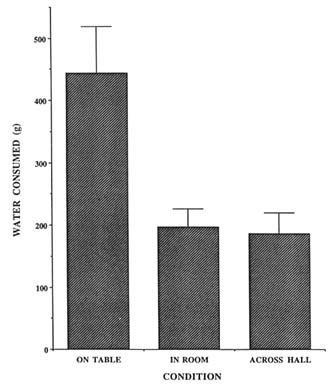
FIGURE 12-5 Effect of effort to obtain water during a meal on water intake.The water was either on the table, approximately 20 ft (6.1 m) across the room, or approximately 40 ft (12.2 m) across the hall. SOURCE: Adapted from Hirsch and Kramer (1993).
in diverse environments (e.g., Panama, Korea, New Jersey, Florida) were asked about their beverage preferences, consumption rates, and other issues related to their drinking habits in the field and at home (D. Engell, U.S. Army Natick Research, Development and Engineering Center, Natick, Mass., unpublished data, 1994). When requested to rate how convenient it was to obtain water in the field, only 52 percent of the soldiers said that obtaining water was convenient, which suggests that water intake in the field could be limited by the amount of effort required to refill canteens.
Another influential factor affecting fluid intake is food availability. About 70 percent of all normal fluid intake in humans occurs at mealtimes (see de Castro, 1988; Engell, 1988; Phillips et al., 1984). Food-associated drinking
may be mediated by actual or anticipated physiological changes brought on by food consumption, as suggested by Kraly (1991). Alternatively, environmental factors, such as the relative ease of beverage accessibility at mealtimes, or social factors may be responsible for this pattern of normal fluid intake.
The social environment in which soldiers eat and drink could also affect the amount of beverage consumed in the field. Several studies have shown that social models and social facilitation influence food intake (see de Castro, Chapter 20 in this volume). However, information on the impact of a social model on nonalcoholic beverage consumption is considerably more limited (Engell et al., 1993). In this recent study, groups of 20 male subjects were served a meal with drinking water, either alone or with a confederate who drank either a relatively small or large quantity of water. When the confederate drank a large amount of water, subjects consumed more water than when they were alone or with the confederate who drank a small amount of water [ F (2,53) = 3.48, P < 0.05] (Figure 12-6).
The Effects of Beverage Attributes on Fluid Intake
Beverage attributes have been shown to have powerful effects on consumption. Beverages with higher hedonic ratings are consumed more than those with lower ratings, and the flavor and temperature of beverages, as well

FIGURE 12-6 Effect of a social model on water intake during a meal [F (2,53) = 3.48, P < 0.05]. Figure shows intake of subjects eating and drinking either alone or with a confederate who consumed either a relatively small or large amount of water.
as the amount of beverage variety, have been shown to affect the acceptance and amount consumed (see Engell and Hirsch [1991] for a review). The relative impact of environmental conditions (e.g., water accessibility, social factors) and beverage attributes (e.g., flavor, temperature) on beverage intake in the field have not been assessed.
Beverage appropriateness (see Schutz, Chapter 18 in this volume) or individuals' reasons for drinking beverages on particular occasions may also affect beverage choice and consumption. In the aforementioned survey of soldiers' beverage preferences and intake patterns (D. Engell, U.S. Army Natick Research, Development and Engineering Center, Natick, Mass., unpublished data, 1994), soldiers were asked to choose the primary reason for consuming the beverages found in rations. The ''motivation profile" for the various beverages was found to be different. For example, the primary reason for drinking water was to quench thirst, whereas the primary reason for drinking milk was because of its nutritional benefits. Figure 12-7 shows the main reasons soldiers drink water and beverages found currently in rations.
SUMMARY AND RECOMMENDATIONS
The direct and indirect contributions of beverage intake to caloric consumption in the field were discussed. The direct contribution of beverages to the energy intake of soldiers was found to be significant: beverages contribute as much as 20 percent to daily caloric intake in the field. The indirect influence of beverage consumption on caloric intake was also found to be significant. Studies demonstrating that hypohydration rather than elevated thirst or beverage availability at a meal limits food intake were reviewed. When individuals are slightly hypohydrated, as indicated by rapid body weight loss or elevated urine-specific gravity levels, they voluntarily reduce the amount of food they consume. It was argued that hypohydration could be at least partially responsible for the ration underconsumption observed in the field. Finally, a brief overview of the sensory and situational factors with the potential to affect beverage intake was presented to provide a foundation for recommendations for enhancing beverage intake in the field.
The following recommendations present ways to increase beverage consumption in the field. Most importantly, beverage consumption should been couraged to prevent hypohydration, which can lead to performance decrements and severe heat injuries. It is also important to optimize beverage consumption because drinking contributes significantly to overall caloric intake.
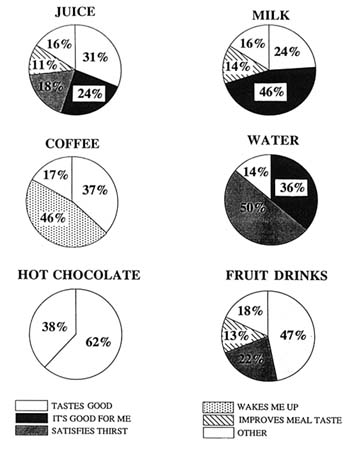
FIGURE 12-7 Primary reasons for consuming different beverages in the field. Percentages represent the proportion of soldiers who were training in diverse environments. Soldiers completed an extensive questionnaire addressing beverage preferences, consumption patterns, and drinking habits in the field and in garrison. SOURCE: D. Engell (U.S. Army Natick Research, Development and Engineering Center, Natick, Mass., unpublished data, 1994).
Recommendations Related to Ration Products
-
Supplementing the rations with nutritionally-dense beverages should be considered. The excellent potential for increasing total caloric intake by using beverage supplements in the field is supported by research findings (Blair, 1991; Booth, 1988; Porikos and Van Itallie, 1984)
-
Replacing the aspartame-sweetened drinks in the rations with higher calorie drinks could increase overall caloric intake in the field. Laboratory research has shown that caloric intake at a meal (Rolls et al., 1990) and over a longer period of time (Porikos and Van Itallie, 1984; Tordoff and Alleva, 1990) are significantly less when subjects are given aspartame-sweetened beverages than when caloric counterparts are consumed. Although some research has indicated that aspartame increases appetite and could increase daily caloric intake, this possibility has been dismissed (Renwick, 1994).
-
Including more diverse beverage products also could increase caloric intake. Diversity is important because variety enhances consumption (Rolls et al., 1980; Engell and Hirsch, 1991) and because beverages are consumed at different times for different reasons (Figure 12-7).
-
Adding new beverage products to the system also may enhance consumption or at least prevent monotony from reducing consumption. For example, in 1986 when the fruit beverages were first introduced into the MRE, 73 percent of them were consumed (Popper et al., 1987); however, in 1991 only 26 percent of these beverages in a similarly configured MRE were consumed by soldiers at the same field site (Lester et al., 1993). Future research should address how often beverages (and other ration items) need to be added and how varied or "new" they need to be in order to optimize consumption.
-
Individuals who plan future ration configurations should continue to use consumer research data (preference and usage data) from focus groups, surveys, and field studies to make their decisions. For example, when considering beverage additions and substitutions, soldiers' preferences and past patterns of intake should be reviewed.
-
Drinking water should be cooled in the field. Research has shown that the temperature of water and other beverages has a significant impact on the amount consumed (Boulze et al., 1983; Hubbard et al., 1984; Sandick et al., 1984). When soldiers were asked about the acceptance of the drinking water temperature on recent beverage questionnaire, 62 percent said the water was too warm. Methods of cooling water should be evaluated and, if necessary, an improved system should be implemented in the field.
Recommendations Related to Situational Issues: The Field Environment
-
Beverage intake may be enhanced by optimizing conditions in the field. For example, commanders should ensure that troops have adequate time for meals, because most of all normal drinking occurs at mealtimes (de Castro, 1988; Engell, 1988; Phillips et al., 1984). Troops who are hypohydrated also tend to replace their water deficits during mealtimes (Adolph et al., 1947; Szlyk et al., 1990).
-
The water distribution system should be evaluated and improved, if necessary, to make water more convenient to obtain. Research has shown that increasing the amount of effort required to obtain drinking water reduces consumption (Engell and Hirsch, 1991; Engell et al., 1993), and about 50 percent of 615 troops recently surveyed described the location of their water supply in the field as less than convenient.
-
Reducing the effort required to prepare beverages may also increase beverage consumption rates. It is also possible that soldiers avoid preparing beverage bases because of the time, effort, or water demand associated with washing the canteen cup. The use of a disposable cup, for example, could be considered.
-
Officers and noncommissioned officers (NCOs) may consider drinking copiously in the presence of their troops, because it has been shown that social models can increase the amount that individuals drink (Engell et al., 1993). Although the effects of a model on beverage intake in a military setting have not been shown, the impact of the presence of a NCO on food intake has been demonstrated (Engell et al., 1990).
REFERENCES
Adolph, E.F., and J.H. Wills 1947. Thirst. Pp. 241–253 in Physiology of Man in the Desert, E.F. Adolph and Associates, eds. New York: Interscience Publishers, Inc.
Adolph, E.F., A.H. Brown, D.R. Goddard, R.E. Gosselin, J.J. Kelly, G.W. Molnar, H. Rahn, A. Rothstein, E.J. Towbin, J.H. Wills, and A.V. Wold 1947. The Physiology of Man in the Desert. New York: Interscience Publishers, Inc.
Bass, D.E., C.R. Kleeman, M. Quinn, A. Henschel, and A.H. Hegnauer 1955. Mechanisms of acclimatization to heat in man. Med. Anal. Rev. 34:323–380.
Blair, A.J. 1991. When are calories most fattening? Appetite 17:161.
Block, G., C.M. Dresser, A.M. Hartman, and M.D. Carroll 1985. Nutrient sources in the American diet: Quantitative data from the NHANES II survey. II: Macronutrients and fats. Am. J. Epidemiol. 122:27–40.
Booth, D.A. 1988. Mechanisms from models—actual effects from real life: The zero-calorie drink-break option. Appetite II (suppl.):94–102.
Boulze, D., P. Montastruc, and M. Cabanac 1983. Water intake, pleasure and water temperature in humans. Physiol. Behav. 30:97–102.
de Castro, J.M. 1988. A microregulatory analysis of spontaneous fluid intake by humans: Evidence that the amount of liquid ingested and its timing is mainly governed by feeding. Physiol. Behav. 43:705–714.
1993. The effects of spontaneous ingestion of particular foods or beverages on the meal pattern and overall nutrient intake of humans. Physiol. Behav. 53:1133–1144.
Edwards, J.S.A., D.E. Roberts, T.E. Morgan, and L.S. Lester 1989. An evaluation of the nutritional intake and acceptability of the Meal, Ready-to-Eat, with and without a supplemental pack in a cold environment. Technical Report T18–89. Natick, Mass.: U.S. Army Research Institute of Environmental Medicine.
Engell, D. 1988. Interdependency of food and water intake in humans. Appetite 10:133–141.
1993. Effects of water intake on food palatability and intake [abstract]. Appetite 20:149.
Engell, D., and E. Hirsch 1991. Environmental and sensory modulation of fluid intake in humans. Pp. 382–388 in Thirst: Physiological and Psychological Aspects, D.J. Ramsay and D.A. Booth, eds. London: Springer-Verlag.
Engell, D.B., D.E. Roberts, E.W. Askew, M.S. Rose, J. Buchbinder, and M.A. Sharp 1987. Evaluation of the Ration, Cold Weather during a 10-day cold weather field training exercise . Technical Report TR-87/030. Natick, Mass.: U.S. Army Natick Research, Development and Engineering Center.
Engell, D., F.M. Kramer, S. Luther, and S. Adams 1990. The effect of social influences on food intake. Presented at the Society for Nutrition Education Annual Meeting, Anaheim, Calif.
Engell, D., T. Malafi, and M. Salomon 1993. Effects of modeling and effort on drinking in humans. Presented at the 11th International Conference on the Physiology of Food and Fluid Intake (ICPFFI 11), University of Oxford, Department of Experimental Psychology, Oxford, England.
Fitzsimons, J.T., and J. Le Magnen 1969. Eating as a regulatory control of drinking in the rat. J. Comp. Physiol. Psychol. 67:273–283.
Francesconi, R.P., R.W. Hubbard, P.C. Szlyk, D. Schnakenberg, D. Carlson, N. Leva, I. Sils, L. Hubbard, V. Pease, J. Young, and D. Moore 1987. Urinary and hematologic indexes of hypohydration. J. Appl. Physiol. 62:1271–1276.
Hirsch, E., and F.M. Kramer 1993. Situational influences on food intake. Pp. 215–243 in Nutritional Needs in Hot Environments , B.M. Marriott, ed. A report of the Committee on Military Nutrition Research, Food and Nutrition Board, Institute of Medicine. Washington, D.C.: National Academy Press.
Hirsch, E., H.L. Meiselman, R.D. Popper, G. Smits, B. Jezior, I. Lichton, N. Wenkam, J. Burt, M. Fox, S. McNutt, M.N. Thiele, and O. Dirige 1985. The effects of prolonged feeding Meal, Ready-to-Eat (MRE) operational rations. Technical Report TR-85/035. Natick, Mass.: U.S. Army Natick Research and Development Center.
Holland, P.C. 1991. Learning, thirst and drinking. Pp. 279–292 in Thirst: Physiological and Psychological Aspects, D.J. Ramsay and D.A. Booth, eds. London: Springer-Verlag.
Hubbard, R.W., B.L. Sandick, W.T. Matthew, R.P. Francesconi, J.B. Sampson, M.J. Durkot, O. Maller, and D. Engell 1984. Voluntary dehydration and alliesthesia for water. J. Appl. Physiol. 57:865–875.
Kraly, F.S. 1991. Effects of eating on drinking. Pp. 296–312 in Thirst: Physiological and Psychological Aspects, D.J. Ramsay and D.A. Booth, eds. London: Springer-Verlag.
Ladell, W.S.S. 1955. The effects of water and salt intake upon the performance of men working in hot and humid environments. J. Physiol. 127:11–46.
Lester, L.S., F.M. Kramer, J. Edinberg, S. Mutter and D.B. Engell 1989. Evaluation of the canteen cup stand and ration heater pad: Effects on acceptability and consumption of the Meal, Ready-to-Eat in a cold weather environment. Technical Report TR-90/008L. Natick, Mass.: U.S. Army Natick Research, Development and Engineering Center.
Lester, L.S., L.L. Lesher, M. Salomon, D.B. Engell, S.L. Dewey, J.L. Ward II, C. Thomas, and J. Kalick 1993. Nutritional and hedonic consequences of consuming the Meal, Ready-to-Eat (MRE) VIII or the Soldier Enhancement Program (SEP) MRE. Technical Report TR-93/015. Natick, Mass.: U.S. Army Natick Research, Development and Engineering Center.
Phillips, P.A., B.J. Rolls, J.C.G. Ledingham, and J.J. Morton 1984. Body fluid changes, thirst, and drinking in man during free access to water. Physiol. Behav. 33:357–363.
Pitts, G.C., R.E. Johnson, and F.C. Consolazio 1944. Work in the heat as affected by intake of water, salt and glucose. Am. J. Physiol. 142:253–259.
Popper, R., E. Hirsch, L. Lesher, D. Engell, B. Jezior, B. Bell, and W.T. Matthew 1987. Field evaluation of improved MRE, MRE VII, and MRE IV. Technical Report TR-87/027. Natick, Mass.: U.S. Army Natick Research, Development and Engineering Center.
Porikos, K.P., and T.B. Van Itallie 1984. Efficacy of low-calorie sweeteners in reducing food intake: Studies with aspartame. Pp. 296–312 in Aspartame, L.D. Stegink and L.J. Filer, eds. New York: Marcel Dekker.
Renwick, A.G. 1994. Intense sweeteners, food intake, and the weight of a body of evidence. Physiol. Behav. 55:139–143.
Rolls, B.J., R.J. Wood, and E.T. Rolls 1980. Thirst: The initiation, maintenance, and termination of drinking. Pp. 263–321 in Progress in Psychbiology and Physiological Psychology, vol. 9, J.M. Sprague and A.N. Epstein, eds. New York: Academic Press.
Rolls, B.J., S. Kim, and I.C. Fedoroff 1990. Effects of drinks sweetened with sucrose or aspartame on hunger, thirst and food intake in men. Phyisol. Behav. 48:19–26.
Salter, C.A., D. Engell, F.M. Kramer, L.S Lester, J. Kalick, K.L. Rock, L.L. Lesher, S.L. Dewey, and D. Caretti 1991. The relative acceptability and consumption of the current and proposed versions of the T Ration. Technical Report TR-91/031. Natick, Mass.: U.S. Army Natick Research, Development and Engineering Center.
Saltin, B. 1964. Aerobic and anaerobic work capacity after dehydration. J. Appl. Physiol. 19:1114–1118.
Sandick, B.L., D.B. Engell, and O. Maller 1984. Perception of drinking water temperature and effects for humans after exercise. Physiol. Behav. 32:851–855.
Szlyk, P.C., I.V. Sils, R.P. Francesconi, and R.W. Hubbard 1990. Patterns of human drinking: Effects of exercise, water temperature, and food consumption. Aviat. Space Environ. Med. January:43–48.
Tordoff, M.G., and A.M. Alleva 1990. Effect of drinking soda sweetened with aspartame or high fructose corn syrup on food intake and body weight. Am. J. Clin. Nutr. 51:963–969.
Tournier, A., and J. Louis-Sylvestre 1991. Effects of the physical state of a food in subsequent intake in human subjects. Appetite 16:17–24.
DISCUSSION
BARBARA ROLLS: One thing people might be interested in was whether the same number of calories in a liquid or solid form would have different effects on satiety. There's been one study, a French study, where Tournier and Louis-Sylvestre (1991) took a food and served it either as a soup or a pâté and found that the calories in a liquid form were less satiating. So more food was eaten following a solid than following the same number of calories as a liquid. Therefore, that's another potential way to increase intake. If you provide a very nutrient-dense drink, it perhaps will boost overall caloric intake. And that's what some of the supplements are.
Dianne, what do you think about David Booth's suggestion that a good way to increase calorie intake is to have drinks between meals? He says that drinks between meals slip in unregulated, and they're one of the major factors in obesity. If you can control those between-meal drinks and calories, you can keep intake down. Have you looked at timing of drinks at all?
DIANNE ENGELL: I've conducted one study that addressed the timing of adlibitum drinking (Engell, 1988). The results showed that about 70 percent of all drinking occurred at mealtimes, so it is quite possible that supplemental drinks would be consumed during meals and not between meals. The sensory characteristics of the beverage and its appropriateness for different uses would probably affect the timing of its consumption. Your point about "liquid calories" is interesting. I think that adding nutrient-dense beverages to the rations would be an excellent idea (regardless of when they would be consumed). Results from the Tournier and Louis-Sylvestre study (1991) and data from our field studies and your and others' laboratory work suggest that calories in beverages could increase caloric intake in the field.
JOHN DE CASTRO: What I found with the ad-libitum intake is that calories consumed in the form of liquids do not displace solid intake within meals and that most drinking occurs at mealtimes (de Castro, 1988, 1993). And it seems to be carbohydrate specific, going back to Barbara's point before. The carbohydrates just are not compensated for and you can sneak extra calories in that way quite easily.


