
2
Use of Simulation in Training and Licensing: Current State of Practice
Because of recent trends in the marine industry toward smaller crew size, heightened public concern about marine safety and expectations for improvements, and changes in navigation and ship control technology, the integration of marine simulation into mariner training programs offers advantages and opportunities to improve human performance in a safe environment.
RATIONALE FOR USING SIMULATORS
In this report, the simulator refers to the hardware or apparatus that generates the simulation. Simulation refers to the representation of conditions approximating actual or operational conditions. Simulations can be formalized into scenarios that are used for teaching and performance evaluation. A scenario is a specific simulation with a specific objective.
The theoretical rationale for the use of simulators for training is based on the concept of skill transfer—that is, the ability to adapt skills learned in one context to performance or task execution in another. Because no situation is ever identical to a previous experience, the fact that an individual becomes more skilled with each repetition of a similar task attests to the fact of transfer. Indeed, a faith in the "fact" of transfer constitutes the basic justification for all formal training programs. It is assumed that skills and knowledge learned in a classroom can be applied effectively to relevant situations outside the classroom.
No training environment will be exactly the same as the operating situation. To ensure that all training goals are met, it may be appropriate to supplement the learning with apprenticeships or a similar formal mechanism to reinforce learning.
Traditional classroom teaching has for generations been an effective method for teaching theory. Teaching methods usually include the instructor lecturing to the class, with the possibility of use of an overhead projector, chalkboard, or sometimes a movie or video to amplify training objectives. In the traditional setting, the instructor in direct control and may or may not invite questions and discussion.
With the addition of simulation to the course curriculum, the instructor can fill the gap between theory and application (MacElrevey, 1995). The instructor can create an interactive environment where instructor and students actively participate in a demonstration applying theory to the real-world (see additional discussion in Chapter 3).
TYPES OF SIMULATORS
Marine Simulator Classification
The physical (including engineering and technical) environment in which transfer of learning occurs consists of hardware, software, and the resulting displays and physical settings or conditions simulated. The physical environment and capabilities vary substantially among marine simulators. Unlike the highly structured environment of commercial air carrier simulators, with its well-defined classifications, technical specifications, and standards, the marine industry is just now developing a standard terminology for describing simulators. Industry-wide technical specifications or performance standards have yet to be adopted.
The simulator classification system proposed for adoption by the International Marine Organization (IMO) (see Box 2-1) is used in this report for consistency with current international developments. Under this system, simulators fall into four major categories—full-mission, multi-task, limited-task, and special-task simulators (also referred to as desktop or PC simulators).
Currently, there is no plan to include technical specifications for simulators in the IMO's efforts to revise the international marine Standards for Training, Certification, and Watchkeeping (STCW) guidelines. The STCW guidelines are expected, however, to include simulator performance standards to guide the effective and uniform use of simulators for marine professional development and certification. These performance standards are expected to prescribe minimum criteria that must be met: for example, field-of-view requirements for different types of functions and tasks such as watchkeeping and shiphandling (IMO News, 1994; Muirhead, 1994).
Within the marine industry, the International Marine Simulator Forum, an organization of simulator facility operators and other interested parties, and the International Maritime Lecturers Association, an international professional organization of marine educators and trainers, have been working to develop technical standards for simulators that would complement and support the STCW guidelines.
|
BOX 2-1 Marine Operations Bridge Simulators Classifications Proposed to International Maritime Organization (IMO) Within the marine industry, the terminology used to describe or classify simulators varies greatly. The terminology used in this report has been proposed for adoption by the IMO. Category I: Full mission. Capable of simulating full visual navigation bridge operations, including capability for advanced maneuvering and pilotage training in restricted waterways. Category II: Multi-task. Capable of simulating full visual navigation bridge operations, as in Category I, but excluding the capability for advanced restricted-water maneuvering. Category III: Limited task. Capable of simulating, for example, an environment for limited (instrument or blind) navigation and collision avoidance. Category IV: Special task. Capable of simulating particular bridge instruments, or limited navigation maneuvering scenarios, but with the operator located outside the environment (e.g., a desktop simulator using computer graphics to simulate a bird's-eye view of the operating area). SOURCE: Drown and Lowry (1993). |
Simulator and Simulation Validity
Simulators and simulations vary greatly among facilities. Any discussion of simulator and simulation standardization needs to include issues of validation and validity. Validation is the process of evaluating specified characteristics of a simulator or simulation against a set of predetermined criteria. Assessing simulator or simulation validity generally includes consideration of two components—fidelity and accuracy. Fidelity describes the degree of realism or similarity between the simulated situation and real operation. Accuracy describes the degree of correctness of the simulation, with a focus on ship trajectory and location of aids to navigation and other critical navigational cues. The issues of simulator and simulation performance, technical standards, and validation are discussed in more detail in Chapter 7 and in Appendix D.
Computer-Based and Physical Scale-Model Simulators
A wide range of simulator capabilities are in use for training worldwide. Marine simulator capabilities for channel design and mariner training developed along two parallel and complementary lines—computer-based simulators and
physical scale models. Computer-driven ship-bridge simulators, which originated in the 1960s, are used at many locations in the United States and worldwide. These simulators range from ''blind pilot" (radar only) pilothouse mockups, to full-bridge mockups with projection systems, to fully equipped bridges on motion platforms approaching the level of sophistication associated with commercial and military aviation visual cockpit simulators.
The first computer-based simulators were based on simplified mathematical models1 for a ship's hydrodynamics. These early models were coupled with rudimentary bridge mockups controlled by computers. Simulator technology has evolved with improvements in computer hardware, along with increasing knowledge from naval architects of appropriate models for ship dynamics. Ship-bridge simulators have also benefited from advances in computer-generated imagery (CGI) technology.
Complementary developments to ship-bridge simulator capabilities have occurred with the use of physical scale models of ships, referred to as manned models. The use of manned models was initiated in France in 1966. Manned models in the form of scale models of ships are used primarily for shiphandling training. Radio-controlled scale models have also been used for shiphandling training, but only to a very limited extent. Although scale models have not been developed for training in either the coastwise or inland towing industries, where on-the-job training for shiphandling is common practice, they have been used extensively for channel design and developing maneuvering strategies in new and unusual situations.
Figure 2-1 is a simple schematic of the types of marine simulators. Box 2-2 lists the locations of category I and II simulator facilities in the United States. Rapid advances in microcomputer hardware and software programming capabilities have also increased the number of microcomputer desktop simulators now available.
Full-Mission and Multi-Task Ship-Bridge Simulators
The study of ship maneuvering originated from the need to design ships with maneuverability characteristics that either meet specific requirements (turning circle diameter or tactical diameter was an early specified requirement) or were reasonable for the ship's mission. As the mathematical theory and hydrodynamics of ship movements advanced, more accurate computer-driven mathematical models were developed to represent and predict ship trajectories.
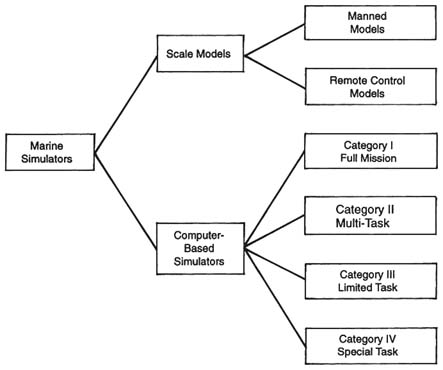
FIGURE 2-1
Types of Marine simulators.
These early models used analog computers. With the introduction of digital computers, more complex models were developed for ship design. Ship-bridge simulators, capable of involving people in a real-time experience, were developed by combining digital computer-based models with bridge equipment, bridge mockups, and visual projection systems. As computer technology and CGI advanced, so did ship-bridge simulators. Modern computers made it practical to create ship-bridge simulators for full-mission and multi-task training. Computers also made it practical to combine actual radar equipment with mathematical models of vessel behavior to create radar simulators for use as an element of full-mission or multi-task training, or as a limited-task, stand-alone training device.
Full-mission, multi-task, and limited-task simulators are, as a rule, operated in real time and can appear to be quite realistic. This realism is referred to as face validity or apparent validity (NRC, 1992). Ship-bridge simulators are used for all types of operational scenarios. There are several important issues in using computer-based marine simulators (NRC, 1992), including:
- whether the appropriate vessel maneuverability cues are present and correctly portrayed in the simulation,
|
BOX 2-2 Location of U.S. Facilities with Category I and Category II Simulatorsa East Coast, North Region Maine Maritime Academy, Castine Massachusetts Maritime Academy, Buzzards Bay MarineSafety International, Newport, Rhode Island U.S. Merchant Marine Academy, Kings Point, New York SUNY Maritime, Bronx, New York Seaman's Church Institute, New York Maritime Institute of Technology and Graduate Studies, Linthicum Heights, Maryland Harry Lundeberg School of Seamanship, Piney Point, Maryland East Coast, South Region STAR Center, Dania, Florida Great Lakes Region Great Lakes Maritime Academy, Traverse City, Michigan STAR Center, Toledo, Ohio Gulf Coast Region Texas Maritime, Galveston West Coast, North Region STAR Center, Seattle, Washington California Maritime, San Francisco West Coast, South Region MarineSafety International, San Diego, California Mid-Continent Region U.S. Army Corps of Engineers, Vicksburg, Mississippi |
-
- whether the ship's maneuvering response is correct,2 and
- the relative importance of accuracy in these areas.
Full-mission and multi-task ship-bridge simulators place the trainee inside a bridge mockup with actual bridge equipment or fully functional and configured
|
2 |
The difficulties of properly modeling ship response are discussed in Appendix D, which deals with the complexities of hydrodynamic interactions, the nonlinear nature of ship motions, and their practical impact on trajectory responses in simulations. |
emulations of bridge equipment. Figures 2-2 and 2-3 are views of the bridge of a full-mission simulator. The trainees is provided with correct or approximately correct angular relationships, depending on how projection screens are wrapped around the bridge. Normally, the complete ship-bridge simulator will integrate noise, normal information inputs and distractions from equipment, movement about the bridge, involvement of other bridge personnel, multiple tasks, and stress associated with the combined effects of these and other components.
In varying degrees, simulators take advantage of training, transfer, and retention benefits suggested by human performance literature for training systems approximating real operating conditions. From a technical perspective, in a high-fidelity, full-mission ship-bridge simulator, the training environment is expected to approach equivalency with the actual operating environment being simulated. The resulting simulation provides a relatively complete, realistic, and risk-free training environment suited for full-scale operational situations. Subject to the capabilities of individual simulators, the ship-bridge simulator-based training environment is suitable for such courses as:
- bridge team management;
- bridge resource management;
- shiphandling in open waters, channels, and waterways;
- docking and undocking evolutions (especially if equipped with bridge wings or configured as a bridge-wing simulator);
- bridge watchkeeping, including terrestrial and electronic navigation;
- rules of the road; and
- emergency procedures.
Despite current advances, simulators are not perfect. For example, limitations in the visual scene appear to encourage more reliance on electronic equipment, especially radar, than is common practice in unrestricted visibility conditions.
Limited-Task Simulators
Limited-task simulators place the trainee inside a training environment that is more limited in its capabilities to simulate navigation and collision avoidance situations. Limited-task simulators for underway vessel operations include radar simulators and "blind-pilot" simulators.
Radar Simulators. Radar simulators are an effective tool for mariner training. Developed independently from ship-bridge simulators, these simulators were first used for mariner training in the 1960s. Analog computers and coastline generators produced visual presentations on actual radar equipment. Simple linear equations of motion were used to predict ship trajectories.
Although digital coastline generators were available for military applications as early as 1973, transition to digital radar simulators in commercial marine applications followed the introduction of digital radars into commercial maritime
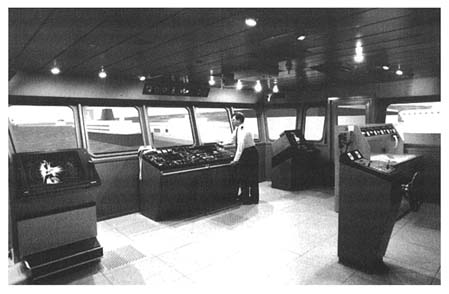
FIGURE 2-2
View of the bridge of a full-mission simulator. (STAR Center, Dania, Florida)
operations in the early 1980s. Today, virtually all radar simulators use digital data. The development of digital computers enables the use of sophisticated, mathematical trajectory and prediction models to drive radar simulators, either independently or as an element of a ship-bridge simulator. Some radar simulators are at the level of ship-bridge simulators, but without the visuals. Many are less sophisticated.
Radar simulators are operated in real time. When operated as stand-alone, radar simulators train mariners to use radar. The application of stand-alone radar simulators for ships' officers tends to focus on open-sea work and approaches to pilot boarding areas where shallow water and bank effects are either not present or not relevant to training objectives. For navigation and piloting training, where shallow or restricted water effects are often an element of the training objectives, it may be necessary to assess the capabilities of the equations of motion used to drive the radar simulator to determine whether radar simulation is suitable.
Because shallow water and bank effects were generally not considered important to training objectives, and because the computational capabilities for using sophisticated equations of motion were expensive, most earlier radar simulators featured lower-fidelity, less-sophisticated equations of motion than ship-bridge simulators. Thus, the representation of hydrodynamic interactions for waterway operations is, in general, less accurate than that achieved through use of latest-generation mathematical models. The latest generation of microcomputers
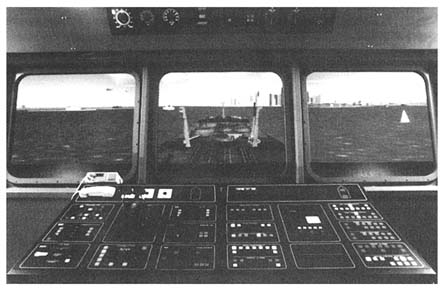
FIGURE 2-3
Views of the bridge of a full-mission simulator. (STAR Center, Dania, Florida)
have the capability to use fidelity equations of motion in stand-alone radar simulations; older microcomputers need to be linked.
"Blind-Pilot" Simulators. Blind-pilot simulators generally consist of a fully operating bridge mockup with a radar, but without visual CGI. Simulators of this type have been installed by a number of training facilities as a lower-cost alternative to ship-bridge simulators with visual scenes. Some blind-pilot simulators are configured so that they can be upgraded to include CGI.
In general, blind-pilot simulators are driven by the same mathematical model used for a ship-bridge simulator with visual CGI displays. Some radar simulations are also configured to appear as a small ship's bridge. These latter simulations are typically driven by less-sophisticated mathematical models than those used for full-mission or multi-task simulators.
Blind-pilot simulators that use the same mathematical model as a full-mission or multi-task ship-bridge simulator can be linked with them to enable multiple vessel interactions within the context of the training scenario. Because of the absence of the visual scene, the range of training that can be conducted is more limited than for a full-mission or multi-task ship-bridge simulator. Thus, although bridge team management training could be conducted on blind-pilot simulators, the full range of cues that prompt decision making and action are not present for all operating conditions. The training that occurs is often less complete and representative of human performance than is possible in a ship-bridge simulator.
Blind-pilot simulators are suitable for radar observer training and applied training in electronic navigation. Their utility for situational awareness is limited to conditions of reduced visibility because of the absence of visual scenes.
Special-Task Simulators
The substantial rise in computational power and the rapid spread of multi-media compact disk drives in desktop computers has stimulated considerable interest in the potential of these special-task simulator systems for training beyond traditional computer-aided learning.
Special-task simulators place the participant outside a functional mockup of a ship-bridge or bridge equipment. The training environment produced is highly simplified and typically requires artificial interactions between student and simulator, such as controlling all operations through keyboard commands and data entries. The participant must conceptualize the ship-bridge or bridge equipment more than in a full-mission or multi-task simulator. The simplified environment of a special-task simulator can provide a highly focused learning experience for specific nautical knowledge needs and tasks. The trainee may not, however, react in the same manner as when aboard ship because the manner and form of the stimuli and interactions differ greatly from actual operating conditions.
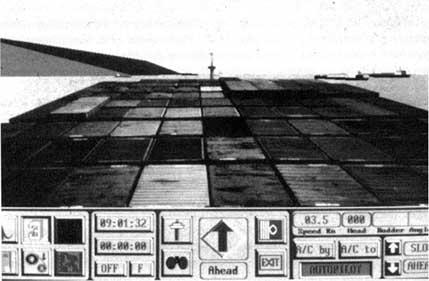
FIGURE 2-4
Elements of a sample PC-based simulator program. (Photo courtesy of PC Maritime, Ltd.)
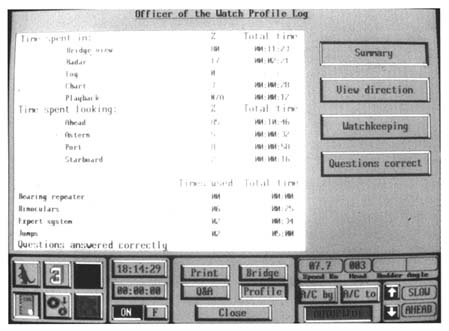
FIGURE 2-5
Elements of a sample PC-based simulator program. (Photo courtesy of PC Maritime, Ltd.)
Basic microcomputer desktop simulators normally consist of a single microcomputer, a single monitor or screen projection, and an input device, usually a keyboard. In contrast to the full range of conditions generated with full-mission ship-bridge simulators, the training environment created by a microcomputer desktop simulator is greatly simplified. Figures 2-4 and 2-5 illustrate elements of a sample PC-based simulator program.
The cue domain of the desktop training environment is not only greatly simplified from actual operating conditions, but also differs significantly in manner, form, and correctness of the presentation. For example, detail and accuracy of visual displays are generally incomplete. Visual display images are smaller than real life because details are compressed as a result of screen size, and only one sector (e.g.,90 degrees) can be viewed. There is also a single-data entry device (such as a keyboard, mouse, or specially configured device) and only visual representation of equipment controls rather than actual controls.
The operation of bridge equipment on microcomputers can be very artificial. Angular relationships are distorted for several reasons, including the relatively flat screen, the need to call up different screens through keyboard entries to view other sectors and instrument displays, and a lack of depth perception. One alternative, to display on several screens, can be costly.
Although angular relationships can be correctly displayed with a bird's-eye view, the display is even more restrictive than a visual display. Visual depth perception problems can be avoided when using radar emulations that have the ability to measure distances. Bird's-eye views that move a vessel "footprint" over an electronic chart or similar geographic display are very difficult to correlate with real operating conditions. This problem exists because of scaling factors, the mariner's lack of familiarity with the use of electronic charts (which are only now beginning to enter the commercial fleets), and the difficulties in correlating geographic representations that do not take the form of electronic charts with reference features actually used for navigation.
Manned Models
An early application of physical modeling of ships for training occurred in 1966 with the building of the world's first manned-model training facility in France. This facility was initially developed for training masters in the maneuvering capabilities and shiphandling procedures for very large crude carriers. At that time the size of these carriers represented a quantum jump in vessel size, with attendant changes in maneuverability. An engineering organization with extensive experience in port and harbor development was selected as the contractor and has operated the commercial facility since its opening (Graff, 1988). Three additional manned-model training facilities have been developed, one each in England, the U.S. Navy Amphibious Base in Little Creek, Virginia, and, more recently, Poland. The Little Creek facility, where a number of merchant mariners received shiphandling training in conjunction with Naval Reserve training, was closed by the U.S. Navy in 1993 as a cost-reduction measure.
Physical models, in contrast to ship-bridge and radar simulators, always simulate ship motions and shiphandling in fast time because of scaling factors. Manned models are believed by many to provide realistic representation of bank effects, anchor effects, shallow water, and ship-to-ship interactions. For manned models, the hull forms and water medium give a more realistic representation of important hydrodynamic forces acting on ships during typical maneuvers, at least for the particular ships modeled. Figures 2-6 and 2-7 are examples of manned-model simulators.
Manned models are well suited for shiphandling training over a wide range of operating conditions, limited principally by the resources and body of water available at the three existing commercial facilities. The models place the trainee inside a real operating environment, albeit at modified physical and time scales. Nevertheless, the behavior of the manned models, at their scale, creates training conditions that closely approximate operating conditions and vessel behavior at full-scale.
Manned models are used primarily by experienced mariners who have the operational experience needed to adjust to the training environment and are able to adapt lessons learned to real-world applications. Less experienced mariners
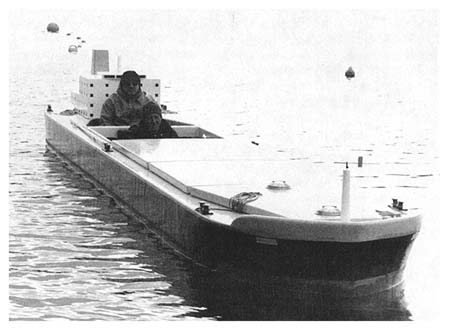
FIGURE 2-6
An example of a manned-model simulator. (The Southampton Institute, Warsash Maritime Centre, United Kingdom)
may require additional model time to develop a frame of reference for transferring training insights to full-scale conditions.
Limitations of scale models (acknowledged by operators of manned-model facilities) include exaggerated effect of wind, restrictions on the number of different ship types and channel configurations, stereoscopic effects of human perception at a reduced scale, and significantly compressed operating time scale. In particular, the vessel size and time scaling must be adapted to during training and subsequently interpolated into skills and abilities in actual operations. Despite these concerns, there is wide support, particularly among pilots, for use of manned-model simulators.
Virtual Reality Training Systems
The latest development in simulator-based training is the emergence of virtual environment technology. A recent report (NRC, 1994b) states that:
Virtual environment systems differ from traditional simulator systems in that they rely much less on physical mockups for simulating objects within reach of the operator and are much more flexible and reconfigurable. Virtual environment systems differ from other previously developed computer-centered
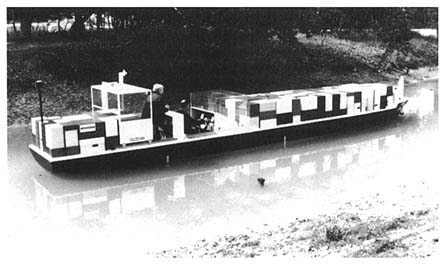
FIGURE 2-7
An example of a manned-model simulator. (SOGREAH Port Revel Centre)
systems in the extent to which real-time interaction is facilitated, the perceived visual space is three-dimensional rather than two-dimensional, the human-machine interface is multimodal, and the operator is immersed in the computer generated environment.
Unlike existing ship-bridge simulators, virtual environment systems use helmets with a video display and sound capabilities, and its sensor systems detect movements of a person's extremities. Such systems, although currently somewhat limited in capabilities, are progressing toward more complete simulations of visual environments and toward development of better simulations of sound and feel. If successful in achieving realistic training environments, some virtual environment technologies have the potential to reduce simulator costs. Other virtual environment technologies may increase costs, but they may also significantly extend simulator capabilities.
The NRC report also found that ''despite the enthusiasm and the 'hype' surrounding the synthetic environment (SE) field, there is a substantial gap between the technology available and the technology needed to realize the potential of SE systems envisioned in the various application domains" (NRC, 1994b). At this time it is unclear which of the diverse features of virtual environments will enhance training effectiveness. A major research program funded by the U.S. Navy is currently exploring this issue. The goal of this program. Virtual Environment for Submarine Pilot Training, is to develop, demonstrate, and evaluate the training potential of a stand-alone virtual reality-based system for deck officer training and to integrate this system with existing submarine piloting and training simulators (Hays, 1995).
The potential of virtual reality must be balanced against the fact that the current manner and form of virtual reality simulations are substantially different from the ship-bridge operating environment and normal context in which mariners perform. There is no research to determine whether or to what degree a realistic virtual environment simulation might be possible for the commercial marine operating environment. It also remains unclear whether enhanced technological capabilities of virtual environments will improve current levels of simulator effectiveness generally, and, if they do, whether use of these capabilities will be cost-effective. Given the state of the U.S.-flag merchant marine, it would seem impractical to invest in virtual environment research at this time. The results of research from other sectors might be adapted in the future.
USE OF MARINE SIMULATORS FOR TRAINING
The existing training methodology in the marine industry has evolved based on old technologies, developed as ships have developed—slowly, over a long period of time, in a conservative industry. Initially, the method for using simulators in training was as an addition or complement to existing programs.
Simulation enables creation of dynamic, real life situations in a controlled classroom environment where deck officers and pilots can:
- practice new techniques and skills;
- obtain insight from instructors and peers;
- transfer theory to real-world situations in a risk-free operating environment;
- deal with multiple problems concurrently rather than sequentially; and
- learn to prioritize multiple tasks under similar high stress, changing conditions to those in actual ship-board operations.
Simulators can also be used effectively to bring a new dynamic into the classroom by combining books and lectures with real-time simulator-based instruction to teach rather than just explain real operating skills.
Although simulation can be a relatively low-cost option for training, use of simulation must be based on its suitability to training objectives. An expensive full-mission simulator for early instruction of navigation skills, for example, may be inappropriate if a less-expensive, limited-task simulator, or even interactive microcomputer-based instruction, would meet training objectives. A well-designed program of instruction will use a less-expensive, limited-task training device or interactive microcomputer-based system, designed to focus on specific tasks, rather than a full-mission device that is better suited for systematically integrating all performance components.
The recent growth of all forms of marine simulators, and particularly ship-bridge simulators, is driven substantially by technology. Simulator facility operators have taken advantage of rapid advances in computer computational capabilities and
graphic imagery to enhance the training marketing potential. Smaller, faster microcomputers with greater memory capacity have made it technically and financially practical to drive desktop simulators with complex hydrodynamic models at a reasonable cost.
The latest advances in computational capabilities and software have permitted the addition of highly detailed visual scenes linked to full-motion platforms, providing a high level of apparent realism to marine simulators. However, whether these features achieve a sufficiently faithful reproduction of real-world effects, or add significant value to simulator-based training, has not been determined through either quantitative or qualitative assessments.
Motivations for Simulator-Based Training
Simulation as a Teaching Tool
Simulator-based training permits hands-on training to be conducted in a realistic marine environment without interfering with the vessel's operation or exposing it to risk. Training can continue independent of adverse weather conditions, vessel operating schedules, and other training conditions (e.g., harbors and waterways). The following sections discuss simulation characteristics as a teaching tool.
Safety. Risks associated with training on operational equipment are a concern in any industry. Within the commercial air carrier industry, the widespread use of simulators in training has reduced training accidents.
Simulators allow students to repeat a risky operation several times if needed. Unlike training on operational equipment, where an instructor must be prepared to intervene at all times, risky maneuvers can be safely practiced on a simulator. Simulation enables the placement of full responsibility on the prospective officer-of-the-watch before that individual actually assumes the duties of a licensed deck officer.
This teaching situation is different from that aboard a school ship, where a licensed deck officer is ultimately responsible for the vessel's safety and must necessarily intercede and tutor as appropriate to the situation. Intervention, or even of such an intervention, can cause very significant differences among candidates for third mates in the level of confidence and ability to lead watchkeeping teams.
In on-the-job training, concerns for safety of the vessel might cause an instructor to intervene earlier than is desirable for efficient progress of learning. During real operations, it may be necessary to interrupt training to avoid a real life accident. In simulator-based training, the instructor can allow students to make mistakes, to see the consequences, and possibly to practice recovery procedures. Although there is limited objective evidence on the value of permitting
students to make and recover from errors, many instructors believe students can receive full benefit from the training event only if given the freedom to make mistakes.
Lesson Repetition. Using simulation, the instructor can terminate a training scenario as soon as its point has been made or repeat it until the lesson has been well learned. In contrast, opportunities for repetition are very limited during actual at-sea operations; the opportunity to repeat an exercise in on-the-job training aboard ship may not occur for weeks or months.
Recording and Playback. Another feature of simulator-based training is the ability to record and play back the just-completed scenario for review, evaluation, and debriefing purposes. As a teaching tool, recording and playback empower the instructor to let mistakes and accidents happen for instructional emphasis and allow trainees to review their actions and their correct and incorrect decisions and experience the results of their performance after the exercise is completed. As an assessment tool, recording and playback can provide a history of performance that serve as a "second opinion" if a candidate challenges an assessor's opinion, thereby minimizing what might be an otherwise subjective licensing assessment.
Flexibility. Simulator-based training permits systematic scheduling of instructional conditions as desired by the instructional staff or as directed in the training syllabus. Simulation permits the use of innovative instructional strategies that may speed learning, enhance retention, or build resistance to the normally disruptive effects of stress.
Multiple Tasks and Prioritization. Deck officers at all levels of responsibility must continually decide at any given time, in any given situation, which among a number of tasks are most important. Before simulator-based training, a new officer's initial training often consisted of a range of skills that were taught, practiced, and examined separately. Use of simulation in training programs makes it possible to transfer classroom skills and to practice and prioritize multiple tasks simultaneously. Simulation training enhances development of skills and provides the opportunity to exercise judgment in prioritizing tasks.
Training on New Technologies. By employing features such as the ability to repeat training exercises and to record and play back performance, simulators can provide a safe environment for training mariners in the use of new equipment. For some new equipment it is possible to place desktop simulators on board ships to provide an opportunity for independent training.
Peer Interactions. Simulator-based training at simulator facilities can provide a forum for peer interactions and evaluations that might not otherwise occur. Because of the often solitary nature of their work, masters and pilots can routinely serve for years without having their work observed or critiqued by their
peers. Simulator-based training can provide an opportunity for these mariners to improve their competency and learn new techniques by having old habits challenged and corrected in a safe environment.
Cost Effectiveness
Although the most obvious goal of using simulation is improving performance, cost effectiveness is also important. Simulators in the commercial air carrier (see below) and marine industries generally (although not invariably) cost less to build and operate than the operational equipment being simulated. The commercial air carrier industry is able to conduct transition training to a new aircraft entirely in simulators and at substantial savings over costs of the same training conducted entirely in an actual aircraft.
In the marine industry, any calculation of savings comparing cost of using commercial ships solely as training platforms with those of simulators are almost entirely speculative. Training aboard commercial ships can be difficult or, in some cases, impractical because of risk, operating practices, and schedules. In addition, continuing training is mandatory in the commercial air carrier industry, while it is not in the marine industry. Without mandatory requirements, some shipping companies will not finance simulator-based training.
The Need to Reinforce Simulator-Based Training
The committee found that once a simulator-based training course has been completed, learned knowledge, skills, and abilities are generally not systematically reinforced. However, the committee also found examples in which simulator-based training programs were integrated with the actual operations or followed up with on-board training. In cadet training, there is an ongoing research effort to reinforce simulator training. The Maritime Academy Simulator Committee3 has designed a shipboard-experience profile survey form. The form, which is to be completed by each cadet after completion of his or her training cruise, commercial sea year, or simulator course, is an attempt to reinforce simulator-based training.
Some shipping companies reinforce simulator-based training. For example, in one shipping company the instructor who conducted simulator-based training for company employees subsequently conducted onboard training "simulations"
(i,e., drills) to extend theory into practice. Another shipping company has a program that relieves an entire bridge team from duty, flies them to a simulator facility for specialized training, and returns them to their vessel where the lessons can be immediately applied. This approach provided a climate for constructive change because the vessel's master and all deck officers were exposed to the same concepts. Company management involvement in the training program demonstrated its commitment to the application of training results.
The training of an entire bridge team (including engineering officers) as a unit can mitigate the lack of universal standardized procedures for bridge team operations (as opposed to standing orders aboard individual vessels), a common situation that constrains transfer of training lessons to actual operations. Standardization can occur because the bridge team trains together, is provided the same training, and is kept together as a team.
Training Limitations of Desktop Computers
Desktop computers normally provide a single workstation, designed for use by one person at a time, even if linked into a training network. Trainees are isolated and do not interact with other bridge team members or pilots. Trainees can also be isolated from the instructor, particularly if training is not conducted at a training facility. The desktop training environment provides neither the same cues nor instructional oversight common with a ship-bridge simulator.
Instructional oversight can be improved for desktop training by placing microcomputer simulation workstations in a classroom or laboratory and linking them to an instructor control station with diagnostic capabilities. This approach has been adopted by several manufacturers of software for rules-of-the-road-desk-top training simulators. Providing the diagnostics at each workstation may enhance individual training; it is not, however, a substitute for student-instructor interaction and debriefings.
Microcomputer desktop simulators present a very artificial training environment compared to the latest generation of ship-bridge simulators. The manner of stimulating human performance is substantially different. These differences do not mean that desktop simulators lack training value, but the capabilities and limitations of desktop simulators need to be understood. The committee could not find any data or research that investigated whether these differences significantly affect training outcomes. In particular, an understanding of transfer effectiveness is less well developed for microcomputer-based simulators than for ship-bridge simulators.
The simplified training environment of desktop simulators may be modified by physically separating input devices to require participant movement, involving several individuals in the simulation, or by including multiple monitors. Several training system companies have developed software and entry devices that make it possible to emulate specific nautical systems, such as radars and
global maritime distress safety systems. Capabilities of some of these systems approach small-scale, limited-task simulators.
Examples of Training not Currently Appropriate for Ship-Bridge Simulators
Heavy-Weather Training
With current technology, some tasks for operating in heavy weather (e.g., shiphandling) are learned more effectively at sea than in current-generation computer-based or manned-model simulators that are not capable of re-creating the motion experienced by ships in heavy-weather. Some other heavy-weather tasks (e.g., steering) are more effectively learned aboard a rolling and pitching ship, where actual forces of the ship working in the sea can be felt. Currently available motion-base simulators are not adequately validated for complex interactions among steering, heavy seas, and wind.
Shiphandling Training for Pilots
There is general agreement among pilots that simulators are very useful for teaching shiphandling principles and theory for enhancing pilot skills, for providing a forum for pilots to teach new or refined techniques to each other, and for developing and testing methods for handling new ship types or operating under changing port conditions (NRC, 1994a). There is also, however, a consensus among pilot organizations that full-mission ship-bridge simulators are not as effective for instructing pilots in underway close-quarters shiphandling.
Pilots routinely learn shiphandling skills during the course of their work from senior pilots in one-on-one, hands-on training experiences. Pilots effectively use the ship for training. Changes in the industry have not significantly altered this situation. With virtually no exceptions, simulator-based or other training is not substituted for required trips over a pilotage route for familiarization or shiphandling training for independent marine pilots, although the USCG does, in special situations, allow such a substitution for federal pilot endorsements.
SIMULATION IN MARINE LICENSING
Refinements to improve the marine certification process with respect to STCW guidelines are under way, as are several USCG-initiated measures to improve U.S. marine licensing. In particular, comprehensive guidelines for application of simulation in marine certification are under development by the IMO, an initiative supported by the USCG. These changes are being approached within the domain of existing sea-time requirements. The practice of unstructured
learning during sea time as a basis for professional development has not been quantitatively examined by the IMO or the USCG to determine whether this method satisfies modern marine safety needs or results in properly trained mariners. Nevertheless, there is growing recognition that existing practices are not optimum for modern operating conditions (see discussion in Chapter 6).
In 1993 the USCG appointed a "focus group" consisting of USCG officers and civilian employees familiar with marine licensing and commercial or USCG operations to study the licensing program and make recommendations for challenges. The group's report, Licensing 2000 and Beyond (Anderson et al., 1993), contains a number of recommendations concerning increased use of simulators for training and licensing mariners. The report includes broad-reaching, often innovative, and controversial concepts. It is, however, limited with respect to the inclusion of facts and analysis.
The focus group observed that "although sea service experience and static testing techniques have formed the traditional basis for the seaman's training, licensing, and the certification process, this arrangement alone no longer provides the best methodology for ensuring professional proficiency." They concluded that "given the pace and sophistication of technological change within the industry and complexity of the affected trades, a mixture of comprehensive training and sea service experience offers the best opportunity to achieve higher standards of the professionalism and casualty reduction goals."
The report recommends that the USCG adopt fundamental, higher-order principles to guide the agency's marine licensing program, including a stronger, more focused role in establishing competency standards and determining competency. The report also recognizes that use of simulators to test more than definitive subject knowledge for example, as a "road test" of individual abilities—has not been fully demonstrated.
The focus group explicitly noted that there is a mismatch between requirements for radar observer certification and actual use of radar. The group noted a need for a well-developed course-approval methodology, including adequate training for USCG personnel involved in overseeing review, approval, and maintenance of approved courses.
With respect to sea-time requirements, the report opined that "proper utilization of the approved course concept would allow reductions in actual sea service experience, enhancement of professional proficiency and in many instances elimination of the U.S. Coast Guard's examination process." The report also strongly stated that "until such time as the quality and integrity issues surrounding 'approved courses' are resolved, no further move towards reliance on such courses should be contemplated."
The focus group recognized that its findings reflected a USCG perspective and recommended submitting the report to the USCG's Merchant Personnel Advisory Committee (MERPAC) for validation. The report was referred to MERPAC at its December 1994 meeting.
Current Use of Simulation in USCG Licensing
The USCG has been involved in the development and approval of training courses for merchant mariners for over half a century. The agency's role has evolved to one in which it approves courses used to satisfy international and national marine certification and licensing requirements, including courses where some limited remission of sea service is granted. The USCG has, in the past few years, expanded its concept of using training and associated course approvals to include training courses that could be voluntarily substituted for an examination. Required radar endorsements are an example. In one specialized case, the agency allows substitution of specialized training for some round trips required for a federal first-class pilot's license or endorsement on selected port entry routes in the Great Lakes. By linking training to examination requirements, the USCG has broadened its domain of course approvals.
Radar Observer Certification
The STCW guidelines require candidates for certification as masters, chief mates, and officers in charge of navigation for oceangoing ships over 200 gross registered tons to demonstrate knowledge of the radar fundamentals, operation, and use for navigation and collision avoidance purposes (IMO, 1993). For this demonstration the candidate uses a radar simulator or, if not available, a maneuvering board.
The USCG has promulgated regulations requiring radar observer certification meet STCW guidelines. This certification uses radar training courses involving examinations of knowledge and practical simulator demonstrations. Courses must be approved by the USCG to meet the regulatory requirement. To receive a certificate, candidates must successfully complete a curriculum including fundamentals, operation, and use of radar; interpretation and analysis of radar information; and plotting.
Course Approvals and Sea-Service Credit
Subpart C of 46 CFR Part 10 contains general USCG guidelines to approve instruction courses. Currently, some approved courses are accepted as partial credit toward required sea service. Among these are small number of courses that use a simulator as one of the instructional tools. For time spent in approved, full-mission simulator-based courses, the USCG presently grants equivalent sea-service credit for a portion of the license upgrade required sea service (USCG, 1993).
Courses are reviewed by the USCG prior to approval and are periodically audited thereafter, subject to the availability of resources. Each course is individually evaluated for sea-time credit to be granted. "Simulator training cannot be
substituted for recency requirements, but can be substituted for a maximum of 25 percent of the required service for any license transaction" (46 CFR 10.305).
The USCG grants some equivalency for simulator-based training in lieu of service leading to endorsements for special operations, such as service as off-shore oil port mooring master and competence certificates for liquid natural gas carrier officers. Some of the specific criteria for USCG course approvals are described in Appendix C.
Recent Changes in USCG Use of Simulation in Licensing
In November 1994, the USCG accepted an unsolicited proposal from the SIMSHIP Corporation to conduct a training course that would combine training, written examination, and ship-bridge simulator assessment. This course will be equivalent to the written examination for the master's unlimited oceans license and may be selected by the applicant as an alternative to the written examination (see Appendix F).
The use of combined training and examination is a hybrid. Licensed master mariners employed by the simulator operating company (rather than USCG license examiners) are authorized to perform simulator-based training and conduct portions of the examination using simulations.
Approval of this course represents one of only two instances (the other being the radar observer certification) in which the USCG has delegated its role as licensing examiner. The efficacy of this approach and adequacy of agency resources to oversee and implement these programs are issues of concern within the marine community because, as currently structured, none of the master's license program elements—training instructors, licensing assessors, simulator platform, or training and testing scenarios—have been validated.
Approval of this course does, however, represent an important opportunity for the USCG to conduct significant research in the use of simulators for evaluation and assessment. As a part of its program oversight, the agency should require the simulator facility operator to document all changes made to the primary program elements, including the training course curriculum and the simulator scenarios. The agency should collect and analyze this and other data concerning factors such as transfer effectiveness and long-term performance of candidates who successfully complete the course. The data collected could be used to revise and improve the USCG licensing program.
USE OF SIMULATION IN NONFEDERAL MARINE LICENSING
State pilotage authorities are responsible for the establishment of training and license requirements and implementation criteria or standards. None of the state authorities currently require pilots to participate in marine simulator-based training or evaluations as a condition of original licensing. Several pilot
associations have begun to incorporate marine simulation into their apprentice programs as a supplement to existing training requirements. A growing number of state pilotage authorities and pilot associations have established continuing professional development requirements that require specific training, such as manned-model shiphandling courses, simulator-based courses, or bridge resource management using interactive videos or other training media.
COST OF SIMULATOR-BASED TRAINING
The cost of simulator training varies widely, depending on the simulator facility used, the requirements of the particular training program, and the travel, housing, and food expenses for trainees. The committee was able get actual cost figures from several facility operators and developed the following general cost information:
- Most computer-based simulator training programs appear to cost $500 to $700 per day per student.
- Manned-model simulator shiphandling training courses cost approximately twice that amount, or $1,000 to $1,400 per day per student.
- Many simulator facilities provide housing and meal facilities, which are available at a moderate cost to students. Others have cooperative arrangements with nearby hotels and motels. Lodging and meal allowances are at least $100 to $150 per day per student.
- Travel costs are the largest variable, since the training facility can be located across the country or outside of the United Sates.
The committee visited East Coast facilities where West Coast-based students were undergoing training. In another case, a Northeast-based facility was training students who had traveled from the Gulf Coast. Several pilot associations sent candidates for shiphandling training to European manned-model facilities. In contrast, cadets undergoing training at various maritime academies are all in residence.
The cost of the training is also affected by the specific training requirements of the company. Some commercial fleet operating companies require nongeneric, port- and ship-type-specific simulation models with customized simulator scenarios. These one-time development costs can be significant and are in addition to the general estimates of the costs noted above. Companies and individual students that can use a facility's training programs, with generic ship types, ports, and relatively standard scenarios are not subject to these additional development costs.
These costs of training are clearly significant. For the most part, the costs are paid by the employer, either directly or through employer contributions to union training funds. The committee also found that some facilities attempt to offer special rates to individual students who do not have an employer
affiliation. However, for most mariners, the cost of simulator training is considered beyond the reach of those who lack a union or employer sponsor.
SIMULATION IN THE COMMERCIAL AIR CARRIER INDUSTRY
In using simulators for training and certification, the application of simulators in the commercial air carrier industry represents a state of the art. The modern aircraft simulator is an invaluable resource for commercial pilot training and certification, due in part to the influence and direction of the Federal Aviation Administration (FAA).
The operation of commercial aircraft differs significantly from commercial ships with respect to operating environment, operating platforms, and professional regulation. The regulatory concepts used in the commercial air carrier industry differ substantially from marine transportation. Professional certification in the commercial air carrier industry is platform-specific, whereas marine certification is necessarily much more generalized. In addition, as discussed in Chapter 1, the duties and responsibilities of a marine deck officer are very broad, ranging from watchkeeping to conducting ship's business. Commercial air carrier pilots, in general, have a much narrower range of responsibilities. Despite these differences, it is possible to identify concepts and frameworks within the commercial air carrier system that could be adapted and applied to the marine industry.
Airplane Simulators for Certification and Training
As simulators have increased in ability to behave like aircraft, the commercial air carrier industry and the FAA have increased the permissible amount of training and checking accomplished in a simulator. Use of flight simulators in certification of commercial air carrier pilots is voluntary, with the single exception of low-level windshear training, a particularly critical emergency maneuver which is part of recurrent training requirements. All other flight maneuvers required as part of recertification may be carried out in a flight simulator or in an actual aircraft. The philosophy behind this substitution for specific levels of training and checking is an assessment of simulator fidelity. In general, more critical maneuvers must be conducted either in a real aircraft or in a simulator that looks, feels, and behaves like one.
The earlier (late 1960s), relatively inflexible, regulatory standards for airmen focused on pilot technical performance in individual duty positions (e.g., captain, first officer, flight engineer). Regulations concerning pilot qualifications were explicitly oriented around the individual's capacity to perform the duties of the position without assistance. Training and checking focused on the captain. Considerably less attention was given to training and checking other crew
members with no particular requirement to provide training of individuals to operate as a crew.
In 1988 the U.S. National Transportation Safety Board (NTSB) issued Safety Recommendation A-88-71, directing a review of all initial and recurrent flight crew training programs to ensure that they included simulator or cockpit exercises involving cockpit resource management.4 The original motivation for the recommendation was the result of a study that found that at least 60 percent of commercial air carrier accidents could be attributed to some form of preventable crew error (Longridge, n.d.).
In 1994 the NTSB strengthened its call for crew resource management by proposing that all U.S. Part 1215 carriers be required to provide their flight crews with the standardized, comprehensive crew resource management program, focussing on decision making and challenging another crew member's errors. The impetus behind this second action was a study of 37 major U.S. air carrier accidents between 1978 and 1990. The study found that, of the 302 specific errors identified in these accidents, the most common were related to procedures, tactical decisions, and failure to monitor or challenge another crew member's error (NTSB, 1994). These causes closely reflect the causes identified by the NTSB in marine industry accidents cited in Chapter 1.
The Advanced Qualification Program
In 1991, partially in response to the 1988 NTSB recommendation, the FAA established the Advanced Qualification Program (AQP). The program provides certified air carriers and training centers with a voluntary alternative for training, qualifying, and certifying regional and major air carrier crew performance. The AQP offers U.S. air carriers the flexibility to tailor training and certification activities to carrier's particular needs and operational circumstances.
The AQP is distinguished by its emphasis on proficiency-based training and qualification. Each AQP applicant, rather than the FAA, develops its own set of proficiency objectives, based on a level of job-task analysis sufficiently detailed to justify substitution for traditional training and checking requirements. The analysis required to apply for AQP is substantial. The focus is on identifying the frequency at which essential knowledge, skills, and abilities are reinforced during actual operations and the rates at which they degrade. Once these factors are
determined, it is anticipated that AQP applicants will be able to conduct interim refresher training using less costly alternatives in place of the highest level of visual flight simulation.
Refresher training is directed toward knowledge, skills, and abilities identified in the analysis as degrading more quickly. Such skills must be restored more quickly than now occurs through annual recertification. This approach would in turn enable the AQP applicant to reduce recertification frequency through a visual flight simulation course.
The arduous job-task analysis required by the FAA to qualify for AQP is expensive—one airline spent over $1 million to develop its analysis. The prospective reduction in recertification training costs, however, was anticipated to recover the analysis cost in less than two years.
Instructor Qualification
Flight simulator instructors are required to be licensed pilots to ensure their technical competence and credibility with the airmen being trained. Each instructor and checker is required to participate actively in either an approved, regularly scheduled line-flying program as a flight crew member or in an approved line-observation program in the airplane type for which that person is instructing or checking. Each instructor and checker is given a minimum of four hours training to establish familiarity with the facility operator's advanced simulator-based training program. Instructions include training policies, instruction methods, simulator controls operation, simulator limitations, and minimum equipment required for each training course.
Air Carrier Simulator-Model Validation
Validation of an aircraft simulator model typically involves the following four levels (though the actual process may vary by facility) (NRC, 1992):
- individual modules or subprograms,
- small packages or groups of subprograms related to functionality (e.g., propulsion systems),>
- dynamic response verification of the complete mathematical model, and
- pilot-in-the-loop, which allows for some minor adjustments to models to improve realism of simulated pilot cues.
Air Carrier Simulator Classification and Qualification
The evolution of simulator technology and the increase in use have required a similar evolution in the thoroughness and complexity of simulator qualification
criteria. Simulators in the commercial air carrier industry are divided into four designated levels. Complexity of the highest level is not required of all simulators. There are also a series of ''training-device"6 levels, which are generally nonvisual or limited-task training tools. The FAA has published criteria for:
- qualifying a simulator or training device and determining the qualification level,
- determining what training and checking is allowed for each level simulator, and
- calculating credits allowed for training-device use in the completion of specific training and checking events in air carrier flight training programs and in pilot certification activities.
Simulators are evaluated, qualified at a particular level, and recurrent evaluations are required every four months through the National Simulator Evaluation Program (NSEP). Simulators are evaluated as objectively as possible. Performance and handling qualities are evaluated according to the engineering specifications of the actual aircraft being modeled (NRC, 1992), and pilot acceptance is determined through a subjective validation test conducted by a qualified FAA pilot. The NSEP specifies exact maneuvers and tests to be performed and acceptable tolerance limits for each test.
Differences Between Air Carrier and Marine Simulators
The use of simulators in the commercial air carrier industry reflects, in part, different operating environments, practices, and "fleet" composition. In the certification of simulators, there are several fundamental differences between visual flight and ship-bridge simulators. For example, visual flight simulators for commercial air carries are linked directly to development of specific airframes and are not modified to permit training in multiple airframes (NRC, 1992). This practice is possible because of the large numbers of like airframes owned and operated by commercial airlines.
In contrast, ship-bridge simulators are not only developed independently from the vessels they simulate, but are also routinely used to train in multiple hull forms and sizes. As a result, some marine simulator facilities either use a number of models to meet the specific application needs of training sponsors or adjust their models to simulate a number of different vessels types or sizes.
Unlike commercial air carrier simulators, there are no industrywide standards for marine simulators. Marine simulators vary greatly in mathematical hydrodynamic models, scenario databases, and algorithms. The practice by some simulator operators of adjusting simulator models can cause problems. Problems with marine simulator models—and research needed for measuring and assuring the validity of ship performance models and scenarios—are discussed in Chapter 7 and Appendix D.
In training on simulators, the concept of bridge team and bridge resource management in the marine industry is similar to that of cockpit resource management. Also, the concept of using all levels of simulators, special task through full-mission (as practiced in commercial air carrier training) for the progressive development of knowledge, skills, and abilities could be adapted to marine operations. The combined training and assessment approach approved by the FAA would, however, be very difficult—if not impractical—to implement in the marine sector.
REFERENCES
Anderson, D.B., T.L. Rice, R.G. Ross, J.D. Pendergraft, C.D. Kakuska, D.F. Meyers, S.J. Szczepaniak, and P.A. Stutman. 1993. Licensing 2000 and Beyond. Washington, D.C.: Office of Marine Safety, Security, and Environmental Protection, U.S. Coast Guard.
Drown, D.F., and I.J. Lowry. 1993. A categorization and evaluation system for computer-based ship operation training. Pp. 103–113 in MARSIM'93. International Conference on Maritime Simulation and Ship Maneuverability, St. Johns, Newfoundland, Canada, September 26-October 2.
Graff, J. 1988. Training of maritime pilots—the Port Revel viewpoint. Pp. 62–76 in Proceedings of Pilot Training, Southampton, England, July 12–13.
Hays, R. 1995. Personal communication to Committee on Ship-Bridge Simulation Training, National Research Council, describing Navy's virtual environment for submarine piloting training.
IMO (International Maritime Organization). 1993. STCW 1978: International Convention on Standards of Training, Certification, and Watchkeeping, 1978. London, England: IMO.
IMO News. 1994. World maritime day 1994: better standards, training, and certification—IMO's response to human error. IMO News (3):i– xii.
Longridge, T.M. n.d. The Advanced Qualification Program: Matching Technology to Training Requirements. Washington, D.C.: Federal Aviation Administration.
MacElrevey, D.H. 1995. Shiphandling for the Mariner, 3rd ed. Centreville, Maryland: Cornell Press.
Muirhead, P. 1994. World Maritime University, personal communication to Wayne Young, Marine Board, September 20.
NRC (National Research Council). 1992. Shiphandling Simulation: Application to Waterway Design. W. Webster, ed. Committee on Shiphandling Simulation, Marine Board. Washington, D.C.: National Academy Press.
NRC (National Research Council). 1994a. Minding the Helm: Marine Navigation and Piloting. Committee on Advances in Navigation and Piloting, Marine Board. Washington, D.C.: National Academy Press.
NRC (National Research Council). 1994b. Virtual Reality: Scientific and Technological Challenges. N.I. Durlach and A.S. Mavor, eds. Committee on Virtual Reality Research and Development. Commission on Behavioral and Social Sciences and Education. Washington, D.C.: National Academy Press.
NTSB (National Transportation Safety Board). 1994. A Review of Flight crew Involved, Major Accidents of U.S. Air Carriers, 1978 through 1990 . Safety NTSB/SS– 94–01. Washington D.C.: NTSB.
USCG (U.S. Coast Guard). 1993. Written communication from USCG OPA 90 staff to Committee on Ship-Bridge Simulation Training, National Research Council, July 23.


