




Below is the uncorrected machine-read text of this chapter, intended to provide our own search engines and external engines with highly rich, chapter-representative searchable text of each book. Because it is UNCORRECTED material, please consider the following text as a useful but insufficient proxy for the authoritative book pages.
2 Asbestiform Fibers: H i s t o r i c a ~ B a c k g r o u n d , T e r m i n o ~ o g y , and Physicochemica~ Properties Unlike many environmental substances that are discrete entities definable by a fixed chemical structure, asbestiform fibers comprise a group of materials that are lens easily defined. They have a broad range of chemical compositions and crystal structures, sizes, shapes, and properties, and have been described with diverse terminology. These factors have led to some difficulties in studying and classifying the effects of these materials over the years. This chapter provides a brief historical overview of asbestos use, defines some of the mineralogical terms related to asbestos and other asbestiform fibers, describes the physical properties that characterize these fibers, and then discusses the biological relevance of the various physicochemical properties. As used in this report, the term asbestiform fibers includes fibers that possess great strength and flexibility, durability, a surface structure relatively free of defects, and several other properties described later. Commercial quality asbestos is an example of an asbestiform fiber. ASBESTOS IN HISTORY In some ways asbestos resembles organic material, such as hair or cotton, more than it resembles minerals. Some ancient philosophers apparently had difficulty deciding whether asbestos should be considered a plant or a stone. Plinius (77 A.D.) compromised and referred to asbestos as "linum vivum (durable linen). He postulated that it was originally a plant that adopted partial mineralogical properties to survive at high temperatures. Asbestos has been used at least from the beginning of recorded history. The Egyptians used asbestos as embalming cloth; the Romans used it for cremation wrappings and for everlasting wicks in the lamps of the Vestal Virgins. Charlemagne is supposed to have had an asbestos table- cloth that he cleaned after feasts by tossing it into the flames of a fireplace. Marco Polo reported that asbestos clothing was used in China. In 1647, de Boot gave a recipe for a "miraculous asbestos ointment" to cure various infectious skin diseases (Figure 2-~. 25
26 ,l~rAr,`. Ex Atnianto lini~net~tutn act tines puerorum, Foam ad Viscera tibiaru n~itaculofu~ fit fiequcnn mo "do' ~l° Accipiuntur A~nia~ri unc. qusruor, plumbi `~.m~n`~ uncle ~ 2,tUtiX Ul1C1X ~U2,aC calc~nanrur, scenic pul~rcnEaea~n vitro ~na~cranrur cum aceto,ac quo- ei~lie per n~cnEe~n ·n.~reria agitator {c~ncI;poR mcn- fcm cbullienda cat unius Ilor:e quadrants, ac quic {ccre finirur, doncc i~c]areEcar: deice illius accri CI;lti qua~titas, cure pati quantitate olei rofacci, mil~cctur, do',ec I'ona fiat unia li',imenti forma: co i''u'~girur c.,rt~: Crib t`,eun' t~t cico fi~ctur: ad rca- bictn, &~tlcer:itibiarutn vefipeti parses ung~'ntur, Alum doncc {anentur. Si lapis Eric cutn aqua vital, & Sac to charo folvatur,ac cxigua parrio inane quo~idiemu licri albo ~nendrno 13boranti dctur,mox [inatur. ~'A~ m..fr~. FIGURE 2-1. de Boot's recipe from 1647 for an asbestos ointment. Roughly translated, it states: Multiple application, miraculous asbestos ointment for juvenile "tines" (head-fungus?) and shinbone ~ skin? ~ ulcer. Take 4 oz asbestos , 12 oz lead (oxide? ) , 2 oz zinc oxide, and calcinate. Thereupon pulverize into glass while adding vinegar, and agitate it daily for a month. After a month, boil it for a quarter hour and let it cure until it becomes clear. Thereafter, add some vinegar, mix it with rose-petal oil until it becomes a homogeneous ointment.... From Zoltai, 1978. Most of these and other early applications of asbestos were rela- tively isolated examples. Asbestos was not available in large enough amounts for widespread use until the extensive Canadian deposits were discovered late in the 19th century. Subsequently, asbestos came into wide use for insulation, reinforcement of tiles and cements, and as an absorbent, thickener, and f iller. MINERALOGICAL TERMINOLOGY . . . .. Before discussing ache properties associated with asbestifo.= fibers, a few definitions are provided. A MINERAL is usually defined as a
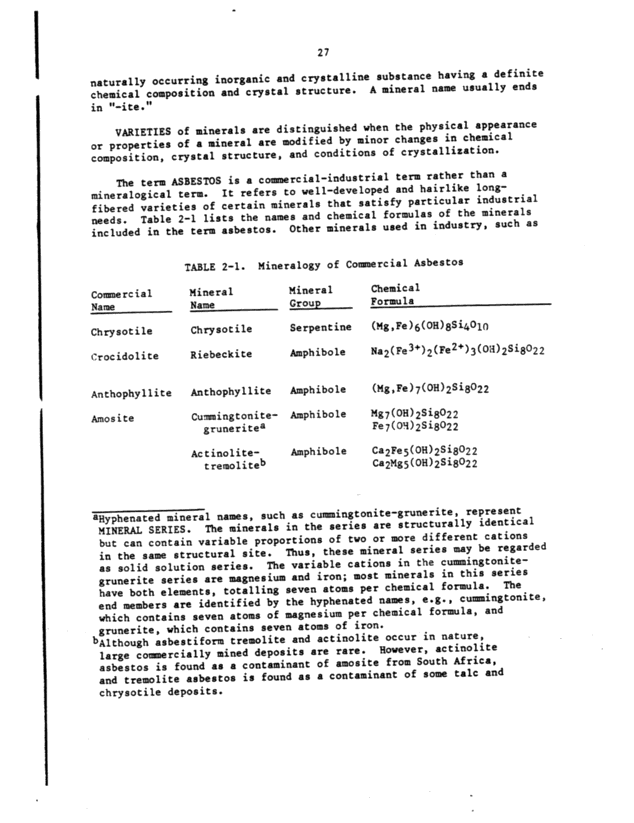
1 27 naturally occurring inorganic and crystalline substance having a definite chemical composition and crystal structure. A mineral name usually ends in lt-ite. 11 VARIETIES of minerals are distinguished when the physical appearance or properties of a mineral are modified by minor changes in chemical composition, crystal structure, and conditions of crystallization. The term ASBESTOS is a commercial-industrial term rather than a mineralogical term. It refers to well-developed ant hairlike long- fibered varieties of certain minerals that satisfy particular Industrial needs. Table 2-1 lists the names and chemical formulas of the minerals included in the term asbestos. Other minerals uset in industry, such as TABLE 2-1 . Minera logy of Commercial Asbestos Commercial Mineral Mineral Chemical Name Group Formula Chry sot i le Chry so t i le Se spent ine (Mg, Fe ~ 6 ~ OH ~ IS i4O~o Croc ido 1 i te Riebecki te Amph ibo le Anthophyllite Anthophyllite Amphibole Na2(Fe3+~2(Fe2+~3~0'`1~2si8O22 (Mg,Fe)7~0H)2Si8O22 Amos ite Cumoingtonite- Amphibole Mg7 (0H) 2si8O22 gruneritea Fe7~0~2si8O22 Ac t inol ite- Amphibole Ca2Fe, ~ OH) 2S i8O22 tremoliteb Ca2Mg5(OH)2si8O22 Hyphenatet mineral name s, such as cummingeoniee-grune rite ~ repre sent MINERAL SERIES. The minerals in the series are structurally identical but can contain variable proportions of two or more different cations in the same structural site. Thus, these mineral series may be regarded as solid solution series. The variable cations in the cu~ingtonite- grunerite series are magnesium and iron; most minerals in this series have both elements, ~cotalling seven atoms per chemical formula. The end members are identified by the hyphenated names, e.g., cu~mnington~te, which contains seven atoms of magnesium per chemical formula, and grunerite, which contains seven atoms of iron. Although asbestiform tremolite and actinolite occur In nature, large commercially mined deposits are rare. However, actinol~te asbestos in fount as a contaminant of amosiee from South Africa, and tremolite asbestos i. found an a contaminant of some talc and hrysotile deposits.
28 1 palygorsklte,1 may also crystallize as well-developed, thin hairlike ~ f1berr (1.e. , ID the asbeotlfo D habit), but they are Dot called asbestos. | The different klcds of asbestos belong to two groups of minerals: serpentine and amphibole. The most common asbestos, chrysotile, is a member of the serpentine group. Because of their layered silicate structure, serpentine minerals usually crystallize as thin platy crystals; however, some of them, e.g., chrysotile, occasionally crystallize as thin hairlike fibers. In chrysotile, the structural layers are curled up to form scrolls or tubes (see Figure 2-2~. All the other kinds of asbestos belong to the amphibole group. Their crystal structure is characterized by parallel chains of silica tetrahedra. Because of the strength of these chains, amphibole crystals are either prismatic or acicular (needlelike). The asbestiform varieties of amphiboles have essentially the same crystal structure as the non- asbestiform varieties. Figure 2-3 shows schematically the structure of amphibole crystals looking down the silica chains. Historically, mineralogists have had difficulty recognizing that Asbestos minerals" are actually varieties of several other minerals. Thus, Werner's recognition in the lath century that amphibole asbestos is a variety of amphibole mineral was an important contribution to mineralogy (Freiesleben, 1817~. Chrysotile was not identified as a variety of serpentine until IB53. Amosite was not recognized as a mixture of asbestiform actinolite and grunerite until 194S, and the term "aoosite" is still used as a trade name for some asbestos. CRYSTAL refers to a solid with a highly ordered, periodic arrangement of atoms. The arrangement of atoms is called the CRYSTAL STRUCTURE. CRYSTALLIZATION HABIT refers to the distinct nature and shapes of individual crystals or aggregations of several crystals. The crystalli- zation habit of a mineral is usually identified by terms describing its appearance, such as equant (equidimensional), filiform (hairlike), etc., according to the dominant geometric shape. The basic properties of minerals usually do not vary with different crystallization habits, but a noteworthy exception is the a~bestiform habit. ASBESTIFORM HABIT refers to the unusual crystallization habit of a mineral when the crystals are thin, hairlike fibers. Historically, the definition of the asbestiform habit was based primarily on appearance, and the properties were only implied. At present, the definition of asbestiform habit is often augmented to include a statement on the The term "attapulgite" is a commercial designation for materials that consist of asbestiform and platy palygorskite. Although the latter term is more precise mineralogically, in this report the committee generally uses "attapulglte" for consistency. Not all pal~gorskite (attapulgite) is asbestiform.
1 29 bit FIGURE 2-2. Electron microphotograph of a cross section of chrysotile fibers displaying the scroll-like and tubular growth of the layered serpentine structure. From Yada, 1967. 1/ AA /V\ TIA/\~I/ ~ ~ - Of' ~V7;~ ~ SiO4 ~ MoO6 · ce · OH rev`"; c,# a,' 8,' A,,' FIGURE 2-3. Diagram of the structure and cleavage of amphibole cry8tal8. Because of structural weakness, the crystal preferentially breaks along the (110) and (110) planes, parallel with the c-axis ~ yielding acicular fragments. From Zoltai, 1979.
30 properties of asbestiform fibers, i.e., shape; enhanced strength, flexibility, ant durability; tiameter-dependent strength; and unique surfaces. The fibers of asbestos are good examples of the asbestiform habit. Asbestiform describes a special type of fibrosity. Fibrous is a broad term that includes, for example, asbestos 88 well as pseudomorphic fibrous quartz. Asbestos is composed of distinct fibers with unique properties, whereas most fibrous quartz breaks into odd shaped fragments unrelated to its apparent fibrous appearance. The proper use of mineralogical nomenclature for fibrous materials, particularly asbestos, and problems that have arisen from improper usage have been discussed in several reports (Campbell et al., 1977; Lange r et al., 1979; Zoltai, 1978~. Thus, the term asbestiform has been used in a-variety of ways in the past, sometimes applying only to asbestos or to fibers that look like asbestos. This committee has developed and used a definition that is more circumspect mineralogically. ACICULAR crystals are crystals that are extremely long and thin and have a small diameter. (An acicular crystal is a special type of PRISMATIC crystal. A prismatic crystal has one elongated dimension and two other dimensions that are approximately equal. ~ As defined by the American Geological Institute (1980), a mineral fragment must be at least three times as long as it is wide to be called acicular. Acicular crystals or fragments are not expected to have the strength, flexibility, or other properties of asbestiform fibers. However, small diameter acicular crystals with a high aspect ratio may be ASBESTIFORM if they are strong and f lexible. Larger diameter crystals, even if stronger and more f lexible than the parent mineral, are usually described as FILIFORM or HAIRLIKE. The limiting upper diameter of whiskers (see definition below) is usually considered to be 15 ~m; the same diameter may be used for the definition of asbestiform fibers. FIBROUS refers to (1) single crystals that resemble organic fibers such as hair or cotton and (2) large crystals or crystalline aggregates that look like they are composed of fibers (i.e., long, thin, needlelike elements) (Dana and Ford, 1932~. The apparent fibers do not need to be separable. If the fibers are separable and are strong and flexible, they are ASBESTIFORM. If they have the normal strength and brittleness of the mineral, they are ACICULAR. If the apparent fibers are not separable, the specimen may be a single crystal or a multiple (polycrystalline) aggregate displaying a fibrous pattern (resulting, for example, from striation or pseudomorphic replacement of an initially fibrous mineral). me term MINERAL FIBERS has traditionally referred to crystals whose appearance and properties resembled organic fibers, such as hair and cotton. In some recent literature, however, the term sometimes refers only to the appearance of the material, and there can be confusion about whether particular properties are also implied. .
31 CLEAVAGE refers to the preferential breakage of crystals along certain planes of structural weakness. Such planes of weakness are called cleavage planes. A mineral with two distinct cleavage planes will preferentially fracture along there planes ant will produce ACICULAR fragments (Figure 2-3~ . Minerals with one c leavage plane produce PLATY fragments, and those with three or more cleavage planes yield POLYHEDRAL fragments. Minerals without cleavage planes fracture into IRREGULAR, nongeometric fragments. The strength ant flexibility of cleavage frag- ments are approximately the same as those of single crystals. Cleavage cannot produce the high s t rength and f lex ib i 1 fry of asbe s t i form E ibe rs . COMMI~JTION is the breaking town of material into smal ler (more minuted particles. WHISKERS refer to synthetic crystals that share the properties of asbestiform fibers. For more extensive definitions, see Campbell et al. (1977), Zoltai and Wylie ( 1979), and Walton ( 1982~ . SOURCES OF MINERAL PARTICLES Many types of mineral fragments are formed as the result of the constant weathering of rocks, as well as from various human activities. In general, the mineral composition of these particles approximately reflects the relative abundance of the minerals in the earth's crust. These particles are transported by water and air before being eventually deposited in unconsolidated sedimentary rocks, and the very small particles may remain in the environment (i.e., air and water) for extended periods. A substantial proportion of these suspended particles have the apparent morphology of asbestiform f ibers. However, most of these fiber-shaped particles are not asbestiform. For example, the suspended particles include elongated cleavage fragments of chain silicate and other minerals, such as the most colon mineral, feldspar. PHYSICAL PROPERTIES OF ASBESTIFORM FIBERS A complete listing of the physical properties of asbestiform fibers would be very extensive. However, their common properties, as compared with nonasbestiform crystals of the same minerals, comprise a relatively short list: · f iberlike morphology and dimensions enhanced strength and flexibility ~ lame tar-dependent strength · increased physical ant chemical durability · improved surface structure (i.e., relatively free of defects)
32 In addition, the presence and the quality of these properties depends on the conditions present during fiber growth. A continuum of these properties is possible. For example, high quality" commercial asbestos has all these properties to a great extent, whereas other, more brittle fibers may have these properties to a lesser extent. Moat whiskers and some amorphous materials, such as fibrous glass, may also have many of these properties, including fiber morphology, flexibility, and diameter-dependent strength. Therefore, in this report, some of the properties of asbestiform fibers are also assumed to apply to these other materials. Many natural minerals, such as palygorskite (attapulgite), and some synthetic fibers have properties of asbestiform fibers to some extent. Appendix B lists many of these materials accompanied, in some instances, by brief comments related to human exposure or to health effects. The properties listed above are discussed in the following section, primarily as they apply to asbestos. Fiberlike Morphology The shape of these fibers is characterized by small crystal diameter, by extreme length to width ratio (aspect ratio), and by smooth and parallel longitudinal faces. The longitudinal faces may be: · rational crystallographic faces (indexable by lattice parameters) that are similar or identical to the prismatic faces of other crystals of the same materials; · crystallographically irrational planes (not indexable by lattice parameters--~ne of the most unusual characteristics of high-quality amphibole asbestos fibers); or · curved, scroll-like or tubular structures, as in chrysotile and carbon whiskers. Although acicular crystals and acicular fragments may also display a high aspect ratio, that ratio is almost always small compared to that of asbestos, since nonasbestiform crystals are more brittle and break more readily across the longitudinal axis. Comminution of asbestos, especially the amphibole varieties, may also produce some fragments with length-to-width ratios very similar to those observed for acicular crystals and fragments, but these are usually only a small proportion of the total mineral mass and would still be expected to possess the properties of asbestiform fibers. At present, to determine whether a sample of particles seen in a microscope contains asbestiform fibers, it is generally necessary to know the origin of the sample. However, on average, acicular fragments are shorter than asbestiform fibers (Campbell et al., 1979~. l
33 Enhanced Strength and Flexibility Asbestos, whiskers, and fibrous glass with sufficiently small diameters have great strength and flexibility. The tensile strength of commercial quality asbestos fibers is 20 to 50 times greater than that of the nonasbestiform crystals of the name minerals. For example, the strength of grunerite crystals is approximately 1 , 000 kg/cm2, whereas the strength of a~bestiform grunerite (also called amosite) may reach 40, 000 kg/cm2. Whiskers and fine fibers of glass also possess extreme strength. Although the usual crystals of most minerals are brittle ant cannot be bent more than a few degrees, asbestiform fibers are highly flexible and may also be somewhat elastic. In general, measurement of the bending strength of fibers is an acceptable approximation of tensile strength. Diameter-Dependent Strength One of the properties shared by high quality fibers of asbestos, whiskers, and glass is their diameter-dependent strength. That is, the strength of the fibers per unit of cross-section area increases as the diameter decreases. Thus, the smaller the diameter of the fiber, the greater its strength. The diameter-dependent variation in the strength of fine wires was first observed by van Musschenbroeck (1729~. In the ensuing centuries, similar observations were made by later investigators (e.g., Karmarsch, 1824; Gersener, 1831), including famous bridge builders in the early 19th century (Dufour, 1823; Seguin, 1824; Telford, 1814~. An apparent strength-diameter effect was also observed in glass fibers by Threlfall (1890) and confirmed and quantitatively analyzed by Griffith (1921~. The tismeter-dependent strength of asbestos fibers was first studied by Nadgornyi en al. (1965~. Later, the effect was observed in asbestiform varieties of other minerals by Maleev et al. (1972~. Figure 2-4 illustrates the strength-diameter effect in fibrous glass and asbestos. Appendix C provides further discussion of the effect. Increased Physical and Chemical Durability Asbestos fibers are more resistant to physical stress than are nonasbestos varieties of the came mineral. For example, asbestiform fibers are much more difficult to grins to a powder in a mortar than are the corresponding nona~bestiform cryseale. Furthermore, high quality amphibole asbestos does not possess prismatic cleavage planes. Similarly, fibers of asbestos are more resistant to dissolution by acids than are other crystals of the same minerals. Thus, Walker (1981)
30,000 25,000 20,000 ~ 1 5,000 at t 0,000 5,000 34 I ~G LASS F I BERS .I_ - 1 1 O 25 50 75 100 125 0 DIAMETER bum) 25,000 20,000 E - - of LO in 1 5,000 1 0,000 5,000 it, ASBESTOS _ · Chr~sotile-U.S.S.R . - Anthophyllite-U.S.S.R. 0 Crocidol~te-South African - l\; t\~\ oOv \ ~0 0 ~ ~ ~_ ~0 . ~~-I_ o o 5 10 15 20 25 DIAMETER (pm) FIGURE 2-4. Illustration of the strength~diameter effect. Data from Griffith, 1921 (glass fibers) and Nadgornyi et al., 1965 (asbestos ~ . noted that dissolution of grunerite cleavage fragments was initiated on all surfaces, whereas dissolution of the asbestiform grunerite fibers required stronger acid and began at the ends of the fibers--a process that resulted in the development of inverted cones at the end of the fibers. finis observation suggests that the external structure of asbestiform fibers is more resistant to acids than is the internal structure. In many cases, the solid fibers became partially hollow cylinders before the surface,dlasolved. Glass and rock wool fibers also dissolve from the ends (Woin~arovits-Hrapka, 1977, 197B, 1979~. (See Figure 2-5. ~ Defect-Eree Surface Structure Many asbestos fibers have the shiny luster and high reflectivity indicative of a surface structure that is relatively free of defects. Investigators have noted the low density or the absence of surface defects in whiskers (Bokshtein et al., 1968; Brewer, 1956; Jones and Duncan, 1971; Mehan and Herzog, 1970; Webb et al., 1966) and in glass fibers (Bartenev and Izmailova, 1962; Griffith, 1921; Moorthy et al., 1956).
. 7;~ e - 35 - . i 3~ - : At- it-- ! PI ~ , . _ _ FIGURE 2-5. The dissolution pattern of a glass fiber (from Wojnarovits- Hrapka, 1977) and amosite fibers (from Walker, 1981~. The lack of surface defects may be partly responsible for the high strength of the surface layer of asbe~tiform fibers. The strength may also be enhanced by the differences in bonding between the internal and surface structures of these fibers (Gerstner, 1831; Griffith, 1921; Joffe _ al., 1924; Orowan, 1933; Selia and Voigt, 1893; Weibull, 1939~. Growth-Dependent Fiber Quality Although the conditions prevailing during crystallization can affect the physical and chemical properties of crystals, the effect is usually minor. However, the conditions of growth great ly inf luence the properties of asbestos, whisker, and glass fibers. A strong surface structure with relatively few defects can develop only when the crystal grows in only one direction. Such unidirectional growth can be achieved 1
36 if, for example, there is unidirectional tension or sudden release of stress. In major asbestos deposits, therefore, the fibers usually crystallize parallel with tension and perpendicular to the wall of the fracture veins. In laboratories, whiskers are grown experimentally by creating various types of physical and chemical conditions that promote unidirectional growth (Wagner, 1970~. Because the physical quality of the fibers depends on the growth conditions, f iber properties will vary as the growth conditions vary. BIOLOGICALLY RELEVANT PHYSICOCHEMICAL PROPERTIES - The various pathological effects associated with asbestiform fibers are discussed in detail in Chapters 5 and 6. However, the properties of the fibers that may be relevant to those effects are introduced here, along with some of the evidence for the ir importance . Resoirabilitv Only fibers with mean aerodynamic diameters less than approximately 3 Am enter the small airways. This feature is discussed in greater detail in the section on biodisposition in Chapter 5. See also Leineweber (1980), Timbrell (1965), and Walton (1982~. Size and Aspect Ratio (Length:Diameter) Dimensional characteristics of fibers determine not only where they will deposit in the respiratory tract but also how a cell will respond to them. In animals, shorter fibers and particles may be engulfed by scavenger cells and thereby may be substantially prevented from interaction with other cell types. Thus, after being inhaled, these fibers may be present for extended periods in the cytoplasm of airway epithelial cells, in membrane-bound vesicles, or in macrophages (Mossman et al., 1977; Suzuki and Churg, 1969~. Longer fibers, which are incapable of undergoing phagocytosis (i.e., being engulfed by cells), are associated with marked cytotoxic alterations In vitro in animals, but toxicity is reduced substantially when larger fibers are milled to smaller sizes (Brown et al., 1978; Ksw et al., 1982; Lipkin, 1980~. Unfortunately, the reduction in toxicity cannot be attributed solely to the reduction in size, since milling also alters to some degree the crystallinity and surface features of the fibers, and these properties may also exert some effect (Lange r et al., 1978~. The greater toxicity of the longer fibers might be due to the inability of cells such as macrophages to engulf the fibers and/or inactivate the various sites on longer f ibers . In animals, a direct relationship between dimension and development of mesothelioma has been suggested by results of studies in which intrapleural, intrathoracic, and intraperitoneal injections have been
37 administered. However, the appropriateness of extrapolating theme data to hats is questlo~ble in view of the massive dosages, species- specific variability, and different pathological findings, e.g., sarcomas and histiocytomas, in these animal studies. Moreover, although most mesotheliomae in humans seem to be associated with exposure to asbesti- form fibers, spontaneous mesotheliomas appear in the mouse (Shapiro arid Warren, 1949), rat (HIleper and Payne, 1962), and hamster (Fortner, 1961~. These observations suggest that different mechanisms of disease induction may occur in various species. Although data reported by most investigators show an increased risk of mesothelioma after exposure to long, thin fibers, in comparison to short, thick fibers, there does not appear to be a critical length below which fibers have no carcinogenic potential. For example, studies by Pott and colleagues (1974) show that fiber prepara~cios~s containing an overwhelming majority of fibers shorter than 5 Am still possess measurable biological activity. Moreover, mesotheliomas have been induced by administering glass powder and other particulates, although the tumors occurred witch less frequency than with long fibers (Wagner et al., 1973~. Bertrand and Pezerat (1980) used a new statistical approach to analyze the information generated by Stanton and colleagues (1977) from experiments using fibrous glass of various sizes. Bertrand and Pezerat suggested that ca rcinogenesis is a continuous increasing function of aspect ratio, but concluded that it is not possible to separate the effects of the two variables, length and diameter. Durability Many asbestiform fibers survive in biological systems for long periods. However, the physicochemical properties of asbestos and other fibers may undergo alteration after inhalation (Spurny et al., 1983~. For example, the surface characteristics of fibers are modified after adsorption of surfactant and mucin; this coating reduces the cytotoxic properties of fibers (Desai and Richards, 1978; Haringtor~ et al., 1975; Jaurand _ al., 1979; Morgan, 1974~. In addition, fibers in general appear to undergo comminution or breakdown in the lung. The number of fibers per unit mass of asbestos also increases. Asbestos fibers tend to fragment longitudinally into thinner fibrils (Cook et al., 1982; Suzuki and Churg, 1969), whereas g~a88 fibers cannot do 80 (Klingholz, 1977~. Chrysotile alto is modified structurally after deposition in the lung, since magnesium ions (Mg++), which contribute to both the structural integrity and positive surface charge of the fiber, are leached from the fiber (Jaurand et el., 1979; Langer et al., 1972~. This leaching process apparently causes fragmentation of chrysotile and its faster disappearance from the lung in comparison to amphibole types of asbestos (Morris _ al., 1967). Depletion of Mg~ decreases the
38 cytotoxicity of chrysotile (Morgan et al., 1977) and the ability of this type of asbestos to cause mesothelioma in animals (Monchaux et a,., 1981)e me leaching of magnesium ions may alter the composition of chrysotile, but it does not tend to dissolve in tissues as glass does (Leineweber, in press). Asbestoa-related diseases, especially cancers, generally occur many years after first exposure. Autopsies and biopsies show that fibers are still present in the lungs and other tissues and often appear to be essentially intact years after the last known exposure. It is possible, therefore, that the exceptional physicochemical durability of asbestifor~ fibers is one of the basic requirements for their biological effects. Flexibility and Tensile Strength The relatively high flexibility of the asbestiform fibers enables them to bend without breaking and may facilitate their passage through the respiratory tract. Like asbestos fibers, fine-diameter glass fibers do not tend to break across their axes and are often as strong as asbestos. However, relatively large-diameter glass fibers tend to break perpendicularly to the fiber axis into "blocky fragments. The flexibility of fibers is directly redated to tensile strength. Chemical Composition The possible significance of certain elements contained in the chemical formulas of fibers in relation to disease is under study. In initial investigations of the health effects of asbestos, the chemical composition of the fibers was expected to be important. The most obvious candidate for the common chemical component was silicon, since all commercial forms of asbestos are silicates. me likelihood that silicon plays a role in carcinogenesia is minimized, however, by the exceptionally strong and almost indestructible bonding of silicon to oxygen in a tetrahedral structure. Furthermore, neither other silicates nor pure silica particles have carcinogenic properties similar to those of the asbestiform fibers (Churg, 1982~. Magnesium was next considered, since it is present in most asbestos and on the chrysotile surface. However, it was soon recognized that one of the mayor types of asbestos (asbestiform "rune rite) contained relatively little magnesium and that another type (crocidolite) did not necessarily contain any magnesium in its chemical formula. Although it has not been shown that chemical composition has a-direct role in the pathogenic properties of asbestiform fibers, the chemical composition and structure obviously underlie many of the other properties of the fibers. Thus, chemical composition may play an important indirect role in determining which fibers exert pathological effects and what these effects are.
. 39 Some asbestiform fibers carry some foreign material on their surfaces and, in the case of chrysotile, in the centers of their fibrile. Zeolites also have large channels that may contain a variety of elements and compounds. These foreign materials could be carcinogenic, even if the host crystal is not. Surf ace Area . The surface area of asbestiform fibers per unit volume is very large because of the small diameter of the fibers. Most commercial asbestos occurs in bundles that are broken open as the size of the unit mass is reduced. An increase in surface area and particle number then occurs. Several biological effects studied in the laboratory are related direct ly to an increase in fiber surface area. These include hemolysis by chrysotile (Schnitzer and Pundsack, 1970) and by amphiboles (Morgan et al. , 1977; Schnitzer and Pundsack, 1970~; cytotoxicity of chrysotile when is tested on alveolar macrophages from rabbits or humans (Yaeger et al., 1983~; and general sorption of serum components (Desai et al., 1975~. Presumably, an increase in surface area allows more cellular interaction, although the concomitant decrease in diameter may also play a role. Surface Charge Asbestos-induced cell damage appears to be initiated by a reaction of the plasma membrane that results either in cell lysis or in phagocytosis of the material (Mossman et al., 1983~. The degree of cytolytic reactivity, as measured by a variety of techniques In vitro, including hemolysis and decrease in cell viability, is apparently dependent initially on the surface charge of the fiber (Light and Wei, 1977a,b; Reiss et al., 1980~. Red blood cells lyse after exposure to asbestos, and the release of hemoglobin can be quantified. The surface charge on fibers, as measured by the zeta potential, is related directly to the fibers' hemolytic activity (Light and Wei, 1977a,b). When chrysotile fibers are treated with acid, both the zeta potential and the hemolytic activity decrease. By contrast, the hemolytic potential for crocidolite increases as the fibers become more negatively charged. Schiller and colleagues (1980) have shown regional differences in surface charge on amphibole fibers. The charge characteristics of fibers also vary according to their size. Standard ized Asbe ~ tos Samples2 Samples of asbestos that come from different sources or have undergone modifications vary in many of the characteristics discussed. 2Much of this information was taken from an unpublished draft paper prepared by Paul W. Weiblen, University of Minnesota, 1983.
40 To facilitate comparisons of experiments and measurements among researchers throughout the world, five UICC standard reference samples for asbestos were prepared and partiality characterized (Rendall, 1970, 1980; Tiabrell, 1970; Ti~brell and Rendall, 19721. The five half-ton samples and the mines they came from are: amosite (Penge, South Africa); anthophyIlite (Paskkila, Finland); crocidolite (Roegas, NW Cape, South Africa); chrysotile A (Shabani, Rhodesia); chrysotile B (various Canadian mines). The samples were prepared by a specific blending -~d milling procedure. As tested by elutriator and cyclone, 67X to 87: of the fibers (by weight) have been reported as respirable (Randall, 1970~. For the four samples other than crocidolite, S: to 15: of the flbere counted by electron microscope were reported to be longer than 10 ~m; for crocidolite, 3% of fibers were found to exceed 10 Am in length (Timbrell, 1970~. These samples do not completely satisfy all the current requirements for comparing biological and health effects of different asbestos samples, and it would be useful if a new set of standards were prepared taking into consideration all the fiber characterization criteria now considered important. The U.S. Bureau of Mines has prepared and characterized samples of approximately one-half ton each of amosite, chrysotile, crocidolite, and nonfibrous tremolite for use in oral ingestion studies carried out by the National Institute of En~lronmental Health Sciences (Campbell et al., 1980). SPRY I Asbestos is a generic name for the asbestiform variety of certain minerals that are used commercially. The term commercial asbestos encompasses five minerals: chrysotile, anthophy1lite, riebeckite, cu~.ingtonite-grunerite, and actinolite-tremolite. Many other minerals occasionally crystallize in the asbestiform habit and therefore may have the characteristic properties of asbestos. Asbestiform fibers, including asbestos fibers, are mineral fibers that are characterized by a specific set of interdependent physical properties, including fiberlike shape, enhanced strength and flexibility, increased durability, strong and defect-free surface structure, and the dependence of these properties on conditions of growth. The fiber properties that have been considered for possible association with deleterious health effects are respirability (i.e., fibers <3 pm diameters, size and aspect ratio, durability, fiesibility and tensile strength, chemical composition, surface area, and surface charge. Figure 2-6 and Table 2-2 illustrate some of the characteristics described above for fibers with progressively ambler diameters. ..
41 ~ c T" ~-~- o - - .- ~ ~ . - - E ~ E C ~ ~ E ° 1 ~,~,10 - E ~o ._ C] c . c C) . . c E o ·- t., ~ ~, o E ~ ~ .c UJ 1 ! 1 ~ ~1 ~= Q~ O~C C~CL O"C __ ._C E~ ,,,1 _ ' - 8 - ,,, m ~ 1 - ._ - D ._ ._ ._ U. 1 ~ l 1 ~ I I I ~ 1 dJ 1 _ 1~ O ~C · - 1 ~ 1 ,C 8 1 ° 1 j · ~ 1 ~ · - a + D . - ~._ E 3 ~ C - ~ o ~a ~ J ~ _ _ · ·_ ~ ~ O o =- - c, ., _ ~_ ci: E '-~ :^ ~ 0 Ll- - 0 0 ·^ 0 3 ~ ~ ~ ~C 0 ~ O ^ O 0 D ~°< ~ ~ ~ ~ 0 C~ ~ O O ' ~ _ ~ _ b4 ~ O ~- =,~rl O ~ 0 11 0 · C ·,1 E E == X O ~ ·rl O om · · O_ _ ~ · · - ~ O ~ X ~ ~ O 0~ - O 0 ~ ~ · ~_ _ ~ ~ ~ ~ 3- C - : ~ 0-- 0 ~ ~ ~ 0 _ O · ~ ~ 0 0 o=: O "_ o- - ~ C., · - ~ 0 Ll ~ ~ ee t0 V "~ o ~ ~ · =.rl 0 ~ ~ ~ N ·rl ~ ~ 0 0 E ~ :^ ~ ~ o ·,. .,. o 0 ~ b0 ~ ~S 3 o 64 ~ ~ :^ ~ 0 i · - O C) ~ ~ 0 · - C O O ~ · - 0 ~ 1 ~ - C) ~ · - ~ ~ E O ~ ,' C ~ 0 ~ 0 D D 0 ·- ~ ~¢ ~ 0 1 :D
42 Fiber Diameter Fiber NUD! ( ma) berm TABLE 2-2. The Effects of Comminution on Properties of Polyfilamentous Asbestiform Fibersa Relative Time of Fall Aspect Ratio Relative (l/d2)C (lenath/diameter) Surface Area d ~- 1.000 4 ~ 1071 8 4 0.500 1.6 Y 1084 16 6 0.250 6.4 a 10816 32 10 0.125 2.56 x 10964 64 18 0.062 1.024 ~ 101°256 128 34 0.031 4.096 ~ 101°1,024 256 66 - aAdapted from A. Langer, personal communication, 1983. bIf mineral density is assumed to be about 2.80 g/cm3, 1 mg of dust would contain approximately the number of fibers shown in this column for the diameter shown. The increase irk particle number is about three orders of magnitude when length is constant and the diameter of individual particles is decreased to about 3% of initial value. CFalling speed of a fiber is approximately inversely proportional to the square of the fiber diameter (l/d2~. A chrysotile fiber with a 0.03 Am diameter takes approximately 1,000 times longer to settle (neglecting other factors) out of an aerosol as compared to a 1-= diameter fiber. dChange in surface area with comminution. Units are relative. Ends of fiber not considered in these calculations. Relative surface area = 2N-2. RECOMMENDATIONS 1. To facilitate communication among persons studying fibrous materials, mineralogical terminology should be used appropriately irk all discussions and reports concerning fibrous materials. In particular, a distinction should be made between asbestiform fibers and elongated mineral particles that are not fibrous. When such a distinction cannot be made, it should be so stated. 2. Methods should be developed for both macroscopic and microscopic quantitative determination of the physical properties of fibers, such as their tensile strength. 3. Irk carrying out research to correlate the physical and chemical properties of fibers responsible for their pathological effects, the fibers should be characterized as completely as possible. Where studies are conducted to determine the effects of natural fibers, characterization should ~ include such parameters as surface and internal fiber strength (discussed in I Appendix C), surface charge, and density of surface defects. i 1
43 REFERENCES American Geological Institute. 1980. Glossary of Geology. R. L. Bates and J. A. Jackson, eds. American Geological Institute, Washington, D.C. Bartenev, G. M., and L. K. Izmailova. 1962. Defect-free glass fibers. Dokl. Nauk. SSSR. Chem. Techn. Sect. 146:196-198. Bertrand, R., and H. Pezerat. 1980. Fibrous glass: Carcinogenicity and dimensional characteristics. Pp. 901-911 in J. C. Wagner, ed. Biological Effects of Mineral Fibers, Vol. 2. IARC Scientific Put No. 30. International Agency for Research on Cancer, Lyon. Bokshtein, S. Z., S. T. Kishkin, M. P. Nazarrova, and I. I. Svetlov. 1968. Size effect and anisotropy in the strength of sapphire whiskers at room temperature. Sov. Phys. Solid State 9:1488-1494. Brenner, S. S. 1956. Tensile strength of whiskers. J. Appl. Phys. 27:1481-1491. Brown, R. C., M. Chamberlain, D. M. Griffiths, and V. Timbrell. 1978. me effect of fibre size on the in vitro biological activity of three types of amphibole asbestos. Int. J. Cancer 22:721-727. Campbell, W. J., R. L. Blake, L. L. Brown, E. E. Cather, arid J. J. Sjoberg. 1977. Selected Silicate Minerals and their Asbestiform Varieties; Mineralogical Definition and Identification- Characterization. U.S. Bureau of Mines, Information Circular No. 8751. U.S. Bureau of Mines, Washington, D.C. Campbell, W. J., E. B. Steel, R. L. Virta, and M. H. Eisner. 1979. Relationship of Mineral Habit to Size Characteristics for Tremolite Cleavage Fragments and Fibers. Report of Investigations No. 8367. U. S . Bureau of Mines, Washington, D . C. Campbell, W. J., C. W. Huggins, and A. G. Wylie. 1980. Chemical and Physical Characterization of Amosite, Chrysotile, Crocidolite, and Nor~fibrous Tremolite for Oral Ingestion Studies by the National Institute of Environmental Health Sciences. U.S. Bureau of [lines Report of Investigations No. 8452. U.S. Bureau of Mines, Washington, D.C. Churg, A. 1982. Reaction of the lung to silica, silicates, and asbestos. Pp. 201-228 irk rironmental Pathology: An Evolving Field. A. R. Liss, Inc., NewYork. Cook, P. M., L. D. Palekar, and D. L. Coffin. 1982. Interpretation of the carcinogenicity of amosite asbestos and ferroactinolite on the basis of retained fiber dose and characteristics in biro. Toxicol. Lett. 13:151-158. Dana, S. D., and W. E. Ford. 1932. A Textbook of Mineralogy. J. Wiley and Sons, New York. de Boot, A. B. 1647. Gemma rum et Lapidum Historia. Lugdunid Bataborum, Amsterdam. 550 pp. Desai, R., and R. J. Richards. 1978. The adsorption of biological macromolecules by mineral dusts. Environ. Res. 16:449-464. Desai, R., P. Next, and R. Richards. 1975. The prevention of asbestos-induced hemolysis. Life Sci. 16:1931-1938. Dufour, G. H. 1823. Description du pout suspends en fil de fer construit a Geneve. Bib' . Universelle 24: 280-299; Fortner, J. C. 1961. The influence of castration on spontaneous t''~origenesis in the Syrian (golden) hamster. Cancer Res . 21: 1491-1498.
44 Freiesleben, J. and Gerold, Freiburg and Vienn=. Geratner, F. G. R. von. 1831. Handbuch der Mechanik. Yol.^ 1. J. Spurny, Prague. Griffith, A. A. 1921. me phenomena of rupture and flow in solids. Philos. Trans. R. Sac. London, Ser. A 221:163-198. Harington, J. S., A. C. Allison, and D.V. Badami. 1975. Mineral fibers: Chemical, physicochemical, and biologic properties. Adv. Pharm. Chemother. 12:291-402. Hueper, W. C., and W. W. Payee. 1962. Experimental studies in metal carcinogeneala: Chromium, nickel, iron, arsenic. Arch. Environ. Health 5:445-462. Jaurand, M. C., J. Bignon, P. Sebastien, and J. Goni. 1979. Leaching of chrysotile asbestos in human lunge. Correlation with in vitro studies using rabbit alveolar macrophages. Environ. Res. 14:245-254. Joffe, A., M. W. Kirpitschewa, and M. A. Lewitzky. 1924. Deformation und FestigReit der Xrista1 le. Z. Phys. 22:286-302. Jones, B. F., and R. G. Duncan. 1971. The effect of fiber diameter on the mechanical properties of graphite fibers manufactured from polyacrylonitrile and rayon. J. Mater. Sci. 6:1225-1227. Karmarach, L. 1824. Versuche fiber die Festigkeit der zu Draht gezogenen Metalle. Jhrb. Polytech. Test. Vienna 18:54-115. Raw, J. L., F. Tildes, and E. G. Beck. 1982. Reaction of cells cultured in vitro to different asbestos dusts of equal surface area but different fibre length. Br. J. Esp. Pathol. 63:109-115. Klingho~z, R. 1977. Technology and production of man-made mineral fibres. Ann. Occup. Hyg. 20:153-159. Larger, A. M., J. B. Rubin, I. J. Selikoff, and F. D. Pooley. 1972. Chemical characterization of uncoated asbestos fibers from the lungs of asbestos workers by electron microprobe analysis. J. Histochem. Cytochem. 20:735-740. Langer, A. M. , M. S. Wolff, A. N. Rohl, and I. J. Selikoff. 1978. Variation of properties of chrysotile asbestos subject to milling. J. Toxicol. Environ. Health 4:173-178. Larger, A. M., A. N. RohI, M. Wolff, and I. J. Selikoff. 1979. Asbestos, fibrous minerals and acicular cleavage fragments: Nomenclature and biological properties. Pp. I-22 in R. Lemen and J. M. Dement, eds. Dusts and Disease. Pathotox Publishers, Park Forest South, Ul. Leineweber, J. P. 1980. Dust chemistry and physics: Mineral wool and vitreous fibers. Pp. BBl-900 in J. C. Wagner, ed. Biological Effects of Mineral Fibres, Vol. 2. IARC Scientific Pub. No. 30. International Agency for Research on Cancer, Lyon. Leineweber, J. P. In press. Solubility of fibers in vitro and in viva. Presented at the Biological Effects of Man-Made Mineral Fibers,- Occupational Health Conference, Copenhagen, April 20. 1982. World C. 1817. A. G. Werner's LetzLes Mineral-System. Craz Health Organization. Light, W. G., and E. T. Wei. 1977a. Surface charge and hemolytic activity of asbestos. Environ. Res. 13:135-145.
T 45 Light, W. G., and E. T. Wei. 1977b. Surface charge and asbestos toxicity. Nature 265: 537-539. Lipkin, L. E. 1980. Cellular effects of asbestos and other flbera: Correlations with in rlvo induction of pleural sarcoma. Environ. Health Perapect. 34: 91-102. Maleev, M. N., A. P. Krusilina, and V. N. Ro~anckij. 1972. Ultimate strength of naturally fibrous Futile, antimony and .]amesonite crystals. ~ ~ Russian] C. R. Acad . Bulg. Sci. 25 :1085-1088. Hehan, R. L., and J. A. Herzog. 1970. Mechanical properties of whiskers. Chapter 6 in A. P. Levitt, ed. Whisker Technology. Wiley Interacience, New York. Monchaus, G., J. Bignon, M. C. Jaurand, J. Lafuma, P. Sebastian, R. Masse, A. Hirsch, and J. Goni. 1981. Hesotheliomas in rats following inoculation with acid-leached chrysotile asbestos and other mineral fibers. Carcinogenesis 2:229-236. Moorthy, V. K., F. V. Toothy, and G. F. Stockdale. 1956. Influence of water immersion treatment on tensile strength of glass: Effect of temperature . J. Am. Ce ram. Soc . 39:395-393. Morgan, A. 1974. Absorption of human serum albumin by asbestiform minerals and its application to the measurement of surface areas of dispersed samples of chrysotile . Environ. Res . 7: 330-341. Morgan, A., P. Davies, J. C. Wagner, G. Berry, and A. Holmes. 1977. The biological effects of magnesium-leached chrysotile asbestos. Br. J. Exp . Pa thol. 58: 465-473. Morris , T . G ., W . H . Roberts , R . E . Silverton , J . W . Skidmore , J . C . Wagner, and G. W. Cook. 1967. Comparison of dust retention in specific pathogen free and Standard rats. Pp. 205-213 in C. N. Davies, ed. Inhaled Particles and Vapours, Vol. II. Perg~mon Press London. Mossman, B. T., B. Ley, J. B. Kessler, and J. E. Craighead. 1977. Interaction of crocidolite asbestos with hamster respiratory mucosa in organ culture. Lab. Invest. 36:131-139. Mosaman, B., W. Light, and E. Wei. 1983. Asbestos: Mechanisms of toxicity and carcinogenicity in the respiratory tract. Ann. Rev. Phanmacol. Toxicol. 23:595-615. MOsschenbroeck, P. van. 1729. Physicae experimentales et geometriae. L. Batavorum and S. Lichtmans, Leiden. Nadgornyi, E. M., L. F. Grigoreva, and A. P. Ivanov. 1965. The mechanical properties of synthetic fibrous fluoramphiboles and certain forms of natural asbestos. [In Russian] Izv. Akad. Nauk SSSR, Neoerg. Mater. I:~117-1 l 23. Orowan, E. 1933. Die erhohte Pestigkeit dunner Faden, der Joffe-Effekt und verwandte Eracheinungen vom Standpunkt der Griffitachen- Bruchtheorie. Z. Phys. 86:195-~ 3. Plinius, Secundus, C. 77 A.D. Historia Naturalis. 27 books. Pott, F., F. Huth, and K. Friedricha. 1974. T'''norigenic effects of fibrous dusts in experimental animals. Environ. Health Perapect. 9: 313-315. Rendall, R. E. G. 1970. The data sheets on the chemical and physical propeties of the UICC standard reference samples. Pp. 23-27 in H. A. Shapiro, ed. Psleumoconiosis. Proceedings of the International Conference in Johannesburg. Oxford University Press, Cape Town.
46 Rendall, R. E. G. 1980. Physical and chemical characteristics of UICC reference samples. Pp. 87-96 in J. C. Wagner, ed. Biological Effects of Mineral Fibres, Vol. 2. IARC Scientific Pub. No. 30. International Agency for Research on Cancer, Lyon. Reiss, B., S. Solomon, J. Weiaburger, and G. M. Williams. 1980. Comparative toxicities of different foes of asbestos in a cell culture assay. Environ. Res. 22 :109-129. Schiller, J. E., S. L. Payne, and S. E. Khalafalla. 1980. Surface charge heterogeneity in amphibole cleavage fragments and amphibole asbestos fibers. Science 209: 1530-1532. Schnitzer, R. J., and F. L. Pundsack. 1970. Asbestos hemolysis. Environ. Res. 3: 1-13. Seguin, M. 1824. D'Annonay: Sur la tenacite de fen Ann. Chim. Phys. 25: 109-111. Se l la, A., and W. Voigt . 1893. Beobachtungen uber die Zerreissungsfestikeit van Steinsalz. (Wied. ~ Ann. Phys. Chem. 48: 636-656. Shapiro, D. M., and S. Warren. 1949. Cancer innervation. Cancer Res. 9:707-711. Spurny, K. R., F. Pott, W. Stober, H. Opiela, J. Schormann, and G. Weiss. 1983. On the chemical changes of asbestos fibers and MFs in biologic residence and in the environment: Part 1. Am. Ind. Hyg. Assoc. J. 44: 833-845. Stanton, M. F., M. Layard, A. Tegaris, E. Miller, M. May, and E. Kent. 1977. Carcingenicity of fibrous glass: Pleural response in the rat in relation to fiber dimension. J. Natl. Cancer Inst. 58: 587-603. Suzuki, M. D., and J. Churg. 1969. Structure and development of the asbestos body. Am. J. Pathol. 55: 79-107. Te [ford, T. IS14. Experiments on the direct and transverse resistance of iron wire of different lengths and dimensions. Pp. 243-254 in Appendix to P. Barlow Essay on the Strength and Stress of Timber. Second Edit ion. Threlfall, R. 1890. The elastic constants of quartz threads. Phil. Mag. and J. of Sci. Fifth Ser. 30: 99-116. Timbrell, V. 1965. The inhalation of fibrous dusts. Ann. N.Y. Acad. Sci. 133: 255-273. Timbrell, V. 1970. Characteristics of the In~cernational Union Against Cancer standard re ference samples . In H. A. Shapiro, ed . Pneumoconiosis. Proceedings of the Internat tonal Conference in Johannesburg. Oxford University Press, Cape Town. Timbrell, V., and R. E. G. Rendall. 1972. Preparation of ache UICC standard reference samples of asbestos. Powder Technol . 5: 279-287. Wagner, J. C. 1970. VLS mechanism of crystal growth. Chapter 3 in A. P. Levitt, ed. Whisker Technology, Wiley Interscience Publ icat ions, New York. Wagner, J. C., G. Berry, and V. Timbrell. 1973. Mesothelioma in rats after inoculation with asbestos and other materials. fir. J. Cancer 28: 173-185. Walker, J. S. 1981. Asbestos and the asbestiform habit of minerals. M. S. Thesis, University of Minnesota, Minneapolis.
1 47 Walton, W. H. 1982. The nature, hazards and assessment of occupational exposure to airborne asbestos dust: A review. Ann. Occup. Hyg. 25:117-247. Webb, W. W., H. D. Bartha, and T. B. Shaffer. 1966. Strength characteristics of whisker crystals, microcrystals and macrocrystals. Chapter 14 in J. J. Burke, N. L. Reed, and V. Weisn, eds. Strengthening Mechanism. Syracuse University Press. We ibull, W. 1939. A statistical theory of the strength of materials . The Phenomenon of Rupture of Solids. Proc. No. 151 and 153. Ing. Ve tensk. Akat ., Stockholm. Wojoarovits-Hrapka, I. 1977. Structural examination of inorganic fibrous materials. Part I. [In Hungarian] Epitoanyag 29:498-503. Wojnarovits-Hrapks, I. 1978. Structural examination of inorganic fibrous materials. Part II. ~ In Hungarian] Epitoanyag 30:13-18. WoJnarovits-Hrapka, I. 1979. Crystallization of synthetic inorganic fibers used for thermal insulation. Epitoanyag 31: 281-286, 361-366, 422-429. Yada, K. 1967. Study of chrysotile asbestos by a high resolution electron microscope. Acta Cryseallogr. 23:704-707. Yaeger, H., Jr., D. A. Russo, M. Yanez, D. Gerardi, R. P. Nolan, E. Kagan, and A. M. Lange r. 1983. Cytotoxicity of 8 short-fiber chrysotile asbestos for human alveolar macrophages: Preliminary observations. Environ. Res. 30:224-232. Zoltai, T. 1978. History of asbestos-related mineralogical terminology. Pp. 1-18 in C. C. Gravatt, P. D. La Fleur, and K. F. J. Heinrich, eds. Proceedings of a Workshop on Asbestos: Definitions and Measurement Methods, July 18-20, 197 7. NBS Spec . Pub. No. 506. National Bureau of Standards, Gaithersburg, Md. Zoltai, T. 1979. Asbestiform and acicular mineral fragments. Ann. N.Y. Acad. Sci. 330:621-643. Zoltai, T., and A. G. Wylie. 1979. Definitions of asbestos-related mineralogical terminology. Ann. N.Y. Acad. Sci. 330:101-109.
