



Below is the uncorrected machine-read text of this chapter, intended to provide our own search engines and external engines with highly rich, chapter-representative searchable text of each book. Because it is UNCORRECTED material, please consider the following text as a useful but insufficient proxy for the authoritative book pages.
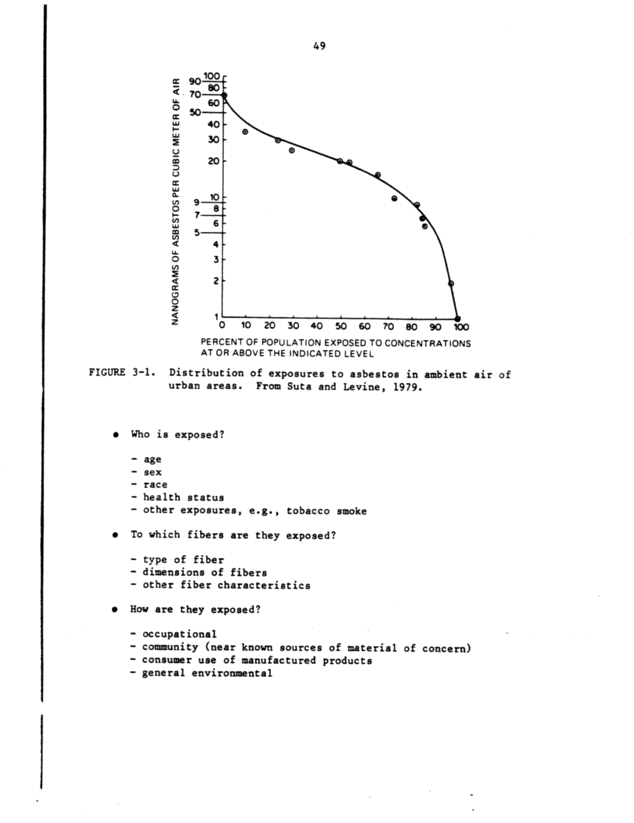
,-. Assessing Nonoccupational Exposures to Asbestiform Fibers Lack of information about exposure is often the major impediment to assessing health risks associated with environmental substances. In this chapter, the committee defines exposure and explores the sources of asbestiform fibers, both naturally occurring and man-made. It also describes the gene rat movement of fibers in commerce and in the nonoccupational environment, notes the difficulties in determining amounts of fibers and in defining exposure, presents descriptive estimates of exposure levels and of the numbers of people exposed to various fiber types, and discusses the magnitude and significance of uncertainties about exposures to asbestiform fibers. In discussing the various types of fibers, asbestos is described first to provide perspective for the discussion of the other fibers. DEFINITIONS OF EXPOSURE To understand the extent of current and future health risks from exposures to substances of concern, it is necessary to characterize past, current, and projected future exposures. Information on past exposures serves as a guide for interpreting observed health impacts in epidemiological research and as a basis for estimating cumulative exposures. Information on current and projected future exposures provides information useful in making decisions about regulating exposure levels. The goal of exposure assessment is to estimate the distribution of various levels of exposure over a population or subpopulation so that the information can be integrated with data on the substance's toxicity. Figure 3-1 provides one example of a distribution of asbestos exposure for Some urban populations (Suta and Levine, 1979~. In that example , exposure is expressed as units of mass per unit volume of air. Exposure information on asbestos is also often expressed by using the fiber con- centration in air or water (fibers/cm3 or fibere/liter, respectively) -and the duration and pattern of exposure (e.g., 40 hours/week, 48 weeks/year, for 23 years). Attempts at exposure assessment involve many assumptions, complica- tions, and difficulties. To characterize exposures completely, one would like to know: 48
49 so loo 70_ 60 SO ~0 30 - ~. o UJ m Cot tr: in 9 1° 0 8 ~7- UJ m 5 U' ~4 20 2 _~ O\ 1 · 1 · I ~ 0 10 20 30 40 50 60 70 so 90 loo PE RCENT OF POPU LATION EXPOSED TO CONCENTRATIONS AT OR ABOVE THE INDICATED LEVEL FIGURE 3-1. Distribut ion of exposures to asbestos in ambient air of urban areas. From Buts and Levine, 1979. Who is exposed ? age sex race health status other exposures , e. g., tobacco smoke · To which fibers are they exposed? - type of fiber - dimensions of fibers - other fiber characteristics · How are they exposed? Occupat tonal community (near known sources of material of concern) consumer use of manufactured product general environmental .
50 · By what routes? - respiratory - oral - other · What pattern? daily peak intake annual fiber intake cumulative fiber intake cumulative exposure, e.g., fibers/cm3 times number of years concentration of exposure, e.g., fibers/cm3 or fibers/liter · How frequently, and how long? - continuously regular, periodic, e.g., ~ hours/workday; once per month irregular, but repeated single incidents age during exposure · Through what chain of events? natural weathering mining and mi 11 ing manufacturing processes transportation storage use industrial discharges waste disposal - environmental transport · How many people are exposed by various routes and under various conditions? - single routes of exposure - multiple routes and types of exposure, e.g., oral and respiratory, occupational and consumer In general, these questions are not easily answered, and fibrous materials such as asbestos pose some special difficulties. For example, fibers remain in the lungs after external exposure has ceased. In addition, there is no consensus on the best way to measure and express toxicologically significant doses, e.g., whether to use mass, fiber counts or fibers with particular characteristics. Measures of total mass are possibly not related to toxicity as reliably as appropriate fiber counts. Moreover, the various methods of collecting and counting fibers often do not correlate well with one another. However, to compare
51 dose-response relationships among studies and to predict health effects from exposure or dose measurements, data concerning exposure and dose must be expressed in the same unite, even though there in uncertainty about the appropriate conversion factors (see Chapter 4~. Two major approaches are used for exposure assessment: one is based on measurements of exposure data and the other on calculations from more indirect indicators of exposure. In the first approach, exposure data are gathered as directly as possible. For example, a portable sampler worn by a person may provide good measurements of exposure. Most measurements are less direct, however, and the assessor must relate measured concentrations in air, water, or food to absorbed dose through some model of the exposure, absorption, and elimination processes. The amount of material present in the body of the exposed person provides an additional way of assessing exposure. The measurement approach is founded on real exposure data rather than on a framework of assumptions; however, measurement procedures are expensive and many measurements are usually required if generalizations are to be made for a variety of situations. By contrast, calculation-based approaches begin with less direct measurements of exposure, e.g., measurements of production volumes or chemical and physical properties. Then, ultimate distributions of exposures are estimated through a series of calculations or mathematical models that attempt to represent the behavior of the substance. Although this second approach obviates the need for multiple measurements of fiber concentrations, it must depend on a series of assumptions and mathematical respresentations that may be exceedingly poor descriptions of real phenomena but that must be kept relatively simple to avoid excessive computational costs. The validity of the input data--whether measured or simply estimated--may also be questionable. A conceptual model for determining fiber exposures is discussed in Appendix D. This model is useful for making rough exposure estimates when few or no measurements exist. It incorporates a scheme representing commercial and environmental flows of fibers, including such factors as natural occurrence, imports and exports, disposal, ambient concentrations, and biodisposition. The positive features of both approaches described above could be combined by calibrating the calculations against exposure measurements in known situations and then using the models to extrapolate or interpolate to unknown situations. Ideally, the actual amount of materials entering the human body would be measured for the most common conditions of exposure encountered by humans, taking into account differences in expo- sure both over time and by location. 1
52 IR SOURCES The major properties of the asbestifonm fibers of concern to this committee are described in Chapter 2. Figure 3-2 shows a simple classification system for fibers with those properties. This classification is based on commercial use rather than on other distinctions among the fibers. Thus, commercially used asbestos and natural nonasbestos fibrous materials such as attapulgite are shown in the figure, whereas fibrous erionite, which is not used in commerce, is not specifically noted. Rather, such fibers are included in the general category "noncommercial natural mineral fibers." Aabeatiform fibers probably account for the vast majority of the msas of moat of these materials. Hugging et al. (1962) indicate that virtually all attapulgate conaiata of asbestiform fibers, even though the fibers are short. The committee was unable to determine whether or not the material commercially exploited as attapulgite is all fibrous. By contrast, the fibrous form of erionite is rarer (T. Zoltai, University of Minnesota, personal communication, 1983~. There are many sources of exposure to asbestiform fibers. In addition to exposures from natural sources, humans are exposed during such activities as mining, milling, manufacturing, use, and disposal of fiber-containing products. Because the committee was asked to study nonoccupational exposures, this report is focussed on environmental discharges or releases, rather than on exposures in the workplace. Naturally occurring mineral fibers are a source of exposure through natural weathering or human disturbance of mineral deposits. Fibers measured in air far removed from known asbestos sources (Thompson and Morgan, 1971) or in drinking water are probably derived largely from such source s . Similarly, mining and milling of asbestos are direct sources of fiber release into air and, occasionally, into water. Manufacturing of synthetic fibers may be considered a process that is parallel to the milling of asbestos. However, the fibers discharged during manufacturing probably represent a substantially smaller portion of the production output than would result from asbestos milling, because of differences in the processes and because cost considerations probably encourage greater efforts to minimize los see through discharge in the production of synthetic fibers. Manufactured fiber products can be divided into two major classes: primary products and Secondary products. Primary products are those made directly from asbestiform fibers (see Table 3-1). The different fibers and their respective primary uses are not completely interchangeable. Secondary products are made from primary products. For example, asbestos paper and cord (primary products) may be used for making electric and
53 · - ~e ~ C a. :^ D ~ · - V 0 O D · - U C o U) _ D o~ E a 1 o D . - o ~d · - Q) . o tJ C ~ ~ · - __ - O ~ 00 · - s: U C) E ~ - ~ .o ~ · - C~ - o, v · - o ~ ~ 0 _= ~ · - _ o - 0 o D D . - ac E _ ~C - L ~ - ~-~ ~l C Z (L ~: ~ · - "o U. _ ~ · - - _ >` O O 5: ~ ~ D L o : - - - 0 o v _ < C o . - v C tlO · - . - - . - ~ ~ C V O ~ · - V · - 00 O C ~ -~ · - C ~ e~ E Ll 2 so C) - c 0 ~ ~ . - C) ~ o o~ _ _ co _ C o~ . - 0 _ x: ~0 0 I ~ u o - .- I-- O ~ ~ L' C ~ C D C ~ . - . - z c e ~ (V ~ · - 0 00 _ 0 CL - ~ 0 - : _ V ~ . - ~ a, _ ~ 0 , 0 _ ~ C o 0 . - ~ ~ v ~ D o V V . - ~ _ ~ · - O ~ O ·- ~ ~ D D 0~ - ~ ~, -, ·- O_ · - o · - 0 o o . - · - · - 0 C~ -
- 54 o V V D e ~ Cal 0 ~. - E" _ D U. · - girl _ · - . - ~ 0 3 to ·,1 O ~ C) . - . O _ 1 P. ~e - : ·~4 E" 0 ~ .~' .-, Cal · - ~ e' :~: v - . - x E" Io Cal . D · - ~ · - O ~ V · - ~ :~: X X ~0 ~0 So ~ o D X X X X X X O O ~ ~1 O O Sit ~ ~c ~ 3 I 0 3 ~ - 0- - X X X ·,1 ~ O X X 0 O ~ ~ O S~ O c_ · - e a! o = ~ _ ~· - · - 0 ~ F _ X K X X X O ~ O- - ~ee O ~^ .,. E _ ~ v ^ E `: X X X X X X X X K X ~ ~ o ~ ~- - ~ 3 v ~ O a, 0 D =: 1g O 3 D _ ~S ~. ~ ~e ~ s"= ~ ~v 0. ~- t ~1 ~ O _ 0 ·r' ·~- · ~so ~ ~0 0 ~ ~0-- 0 ~- ~ ~0 ~ ~·- ~ ~ o ~ ~· - ~ o.- · - e >~ 0 ~ v ~- ~: ~00 ~D ~ ·r O O ~.~: ~l.e 6 ~,C t ~ 0 0 v ·- O _d eJ ~1 <: O ~U
55 thermal insulation (secondary products). The major secondary uses of these fibers, based on total consumption, are shows in Tables 3-2 and 3-3. The & ited States imports approximately 90% of the asbestos it uses, principally from Canada. 0~ the other hand, it produces essentially all the attapulgite it uses and exports approximately 15% of its total production (U.S. Bureau of Mines, 1982~. The products that yield the greatest potential for exposure are not necessarily those produced in the greatest amounts. Conditions of use also influence exposure potential. For example, because the asbestos fibers in asbestos-cement pipe are relatively tightly bound in their cement matrix (as compared to other uses, such as in insulation), they may present less potential for exposure than some other uses. These different exposure potentials are discussed in the fo1 lowing sections for the various classes of fibers: asbestos, attapulgite and other natural fibers, man-made mineral fibers, and other synthetic fibers. EXPOSE POTTY FOR ASBESTOS Types of Exposure Exposures to asbestos fall in the following four categories · occupational · community (near known sources) · consumer (use of manufactured products) · general environmental Occupation&] Exposure. Because the heaviest exposures to asbestos occur in the workplace, they have received the most attention. There has been particular interest in exposures associated with the following activities: · asbestos mining and milling · asbestos product manufacturing · shipyard activities · installation and removal of insulation in buildings · brake lining manufacturing and replacement However, these occupational exposures are not of concern in this study except as they provide reference points and influence total exposure in conjunction with nonoccupational exposures. Communit Es osures. Closely related to occupational exposures are Y ~ community exposures, which encompass exposures of residents in communities where there are significant industrial sources of asbestos or other fibers. Such sources include mills, asbestos product manufacturing facilities, and brake manufacturing plants. These exposures can occur in
56 TABLE 3-2. U. S. Consumption of Asbestos Fibers in Secondary Produc t ~ during 1982a Consumpt ion Chrysot i le Secondary Product (thousand of metric tons) (I) . Asbestos-cement pipe37.6 57 Asbestos-cement sheet10.8 100 Flooring products49.0 99 Roofing products7.0 100 Packing and gaskets13.6 99 Thermal insulation0.2 0 Electrical insulation0.7 100 Friction products52.9 - 100 Coatings and compounds25.0 100 All other4_ 9 Total246.5 93 l aAdapted from U. S. Bureau of Mines, 1983. r
. 57 TABLE 3-3. Estimated U. S. Consumption and Production of Se lee ted Nonasbe ~ too Fibe r Produc t ~ 1981 Consumpt ion ~ thousands of Fiber and Use metric tons) References Attapulgite Drilling mud Pert ilizers Filtering (oil + grease) Oil and grease absorbents Pesticides and related produc t ~ Pet waste absorbent Medical, pharmaceutical, cosmetic ingredient All other use Total 113.5 50.2 18.7 178.2 106.5 105.8 0.06 79.5 l 712.46 197 7 Produc t ion ( thousands of metric tons) l U. S. Bureau of Mines, 1982 Fibrous glass Wool 1,100 Kirk-Othmer, 1980 Text i le 340 Kirk~thmer, 1980 Fine fiber 5 J. Leineweber, Manville Total 1,445 Corp., personal co~nmunicat ion, 1983 Estimated Annual Produc t ion ~ thousands of metric tons ~ Mineral wool 200 J. D. Cornell, U. S. Gypsum Co., personal communi cation, 1983 Ceramic fiber ("current") W.J. Breitsman, Carborundum High temperature insulat ion 20 Corp ., pe rsonal .commur~i Al1 others ~cat ion, 1983 Total 21 Carbon fiber ( inc. luding uses U. S. Bureau of Mines, 1982 In aerospace struc ture s, automotive structures, and sporting goods) 0.56
58 a variety of ways. Fibers may be transported near the source via air and water or liberated from the clothes of a household member who works with the fibrous material. Community exposures are sometimes grouped with general environmental exposures. Suta and Leslie (1979) have identified eight types of facilities that lead to community exposures to asbestos: mines and mills · friction product plants · gasket, packing, or insulation plants · asbestos-testi~e plants · asbestos-cement plants · asbestos vinyl flooring plans n · roofing products plants 0 asbestos paper plants Mines and mills are usually situated close to one another in rural communities. In the United States, all the mills are located within lOO km of the mine. According to the U.S. Bureau of Mines (1983), four active asbestos mining and milling operations existed in the United States in 1980, and there were three in 1982. The other facilities listed above can be located in either urban or rural settings. Those situated in or near urban areas have the greatest potential for exposing large numbers of people. Coons Or BIONIC. These exposures result from the use of specific products outside the workplace. For example, the wear of vinyl asbestos floor tile can liberate detectable levels of asbestos into room air, as can disturbance of old installed asbestos insulation (Sebastian et al., 1982~. Other sources have included hair dryers and other electrothermal appliances, which have been known to release asbestos in breathable form (Organization for Economic Cooperation and Development, 1982~. Rice coated with talc has been reported to contain fibers that were apparently asbestos (BleJer and Arlon, 1973), presttmably because the talc contained such fibers. Asbestos fibers have also been reported in beer and wine (Cunningham and Pontefract, 1973) as well as in drinking water as a result of migration from asbestos-cement pipe (American Water Works Association, 1974~. Because both natural and waste asbestos can also reach drinking water through contamination of its source, drinking water is usually classified as an exposure from the general environment. The Asbestos Information Association (1975) has reported more than 3,000 uses for asbestos. Many of these are probably hypothetical, many others entail very amal1 quantities of asbestos and negligible potential for exposure, and yet other uses have disappeared over time. Nevertheless, there are scores and possibly hundreds of significant uses, most of which relate to the properties listed below:
1 1 59 thermal inoulat ion e lectrical insulation chemical inertness tensile strength ability to act as a filter As shown in Table 3-2, the largest quantities of asbestos are used in the f al lowing produc t s: asbestos-cement sheet and pipe flooring products, e.g., vinyl asbestos tile friction products, e.g., brake ant clutch linings pack ing and gaske t a coatings, e.g., patching compounds roof ing produc ts These products accounted for almost 90% of U. S. consumption of asbestos in 1982. Some applications may have led to substantial earlier exposures through uses in filtration of parenteral drugs, filters for cigarettes, and insulation for home appliances such as hair dryers. Large amounts of asbestos were also formerly used in spray insulation for structural steel, especially in commercial and industrial buildings and in ships. Nonoccupational exposures attributable to the use of manufactured products have often been assumed to be relatively low, because almost all these products contain asbestos in a binding matrix, such as cement, plastic, rubber, or resin. However, exposures can occur if fibers are liberated from these matrices through such occurrences as traffic on asbestos flooring, wear of brake finings, 1 and abrasion or leaching from pipe or paper. The Consumer Product Safety Commission is undertaking studies to determine the amounts of asbestos that might be released during typical consumer use of some products (P. White ~ Consumer Product Safety Commission, personal communication, 1983~. In addition, fibers are often released during the disposal of asbestos products. For example , demolition and renovation of asbestos-insulated buildings may result in elevated transient concentrations of fibers if proper precau- tione are not taken. Exposures to asbestos may also result from the use of products made from asbestos-contaminated substances. One example is talc, widely used as a pigment, extender, or processing aid in ceramic tile, paint, paper, plastics, and, in smaller quantities, as a component of cosmetic powders, foods, drugs, pesticides, and many other products. Although talcs can be virtually free of fibrous materials, they have also been reported to The material released from brake linings is in large part thermally altered (Harben, 1980~.
60 contain asbestos fibers2 in quantities sometimes constituting almost one-half the total product weight (Dement and Zu~waide, 1979) . Talcum powders have also been reported to contain measurable amounts of asbestos (Rohl et al., 1976~. Because more than 800 metric tons of talc are consumed annually in the United States (U.S. Bureau of Mines, 1982), exposures to asbestos may occur through these various uses. Another commercially important natural substance that could be contaminated with asbestos is vermiculite (Bank, 1980~. General Environmental Exposures. These exposures are usually attributable to fibers in ambient air and drinking water. To a lesser extent, they have resulted from ingestion of food and beverages. Asbestos fibers in air may result from human activities and from natural weathering of asbestos deposits. Drinking water may be contaminated by leaching from rocks, by deposition of airborne asbestos, or by runoff from dumps or ore deposits. Unlike community exposures, exposures to asbestos in the general environment cannot be clearly identified with a causative human activity. However, general environmental concentrations may come from natural sources or from the transport of fibers from human sources many kilometers away. The two principal routes of exposure to asbestos in the general environment are inhalation of ambient air and, in some areas, ingestion of drinking water. (After clearance from the lung, Rome of the inhaled asbestos is also swallowed with mucous secretions from the respiratory tract.) Exposures through the skin and possible ingestion of asbestos in foods are presumed to be much less important. Only the finer fibers remain suspended in ambient air for long times. Therefore, general environmental exposures to asbestos entail a larger proportion of fine fibers than do occupational or community exposures. Such exposures also occur 24 hours per day throughout the year--a total of 8, 760 hours per year--in contract to about 1,800 hours per year for occupational exposures and short, intermittent exposures from produc t use . The asbestos content of drinking water in heavily influenced by the character of the rocks and soils present in the water supply basin. Another source is asbestos-cement water pipe. The re lease of fibers from that source appears to be relatively slow under some conditions (Hallenbeck, 1978), but may be considerable if the water is aggressive to asbestos-cement pipe (Buelow et al., 1980; Millette et al., 1979a). Discharge of asbestos-containing wastes into water supplies could lead to 2Samples of talc mines in New York State contained tremolite and other particles with aspect ratios greater than 3: le It is possible that most of these are not asbest if arm f ibers, as de fined by this committee (T. Zoltai, University of Minnesota; R. Clifton, Bureau of Mines, personal communication, 1983~. 1
61 high local concentrations, but such incidents have been infrequent ly reported. Croft (1982) has suggested that asbestos fibers in tap water may enter ambient air in residences as the water is sprayed or evaporates from the faucet. Asbestos appears to degrade in the environment exceedingly slowly. However, mechanical forces may break the fibers into successively smaller particles. Attack by acidic waters in the environment is possible, and come thermal decomposition may take place. Decomposition is likely when asbestos-containing wastes are incinerated (Cogley et al., 1982~. The deposition and eventual burial of fibers in soils and sediments are probably the major natural processes by which asbestos leaves the ambient environment. Quantitative Exposure Estimates It is difficult to make quantitative estimates of exposure to asbestos. A common unit of cumulative done for occupational exposures is obtained by multiplying the average concentration of fibers in workplace air by the number of years that an individual worked there (full-time equivalent). The concentration of fibers in workplace air is expressed as fibers >5 Am long/cm3, as counted by the light microscope (LM) under specified conditions (U.S. National Institute for Occupational Safety and Health, 1977~. A convenient way of abbreviating this expression of exposure is (fibers/cm3)yr. However, as discussed more extensively in Chapter 5, cumulative exposure measures do not take into account dose rate per unit time, duration of exposure, and ages at exposure. These three factors, particularly the third one, could be very important in determining effects on health. Another measure of exposure that allows comparison of different exposure situations is expressed as "lifetime fibers.'' This quantity is derived by integrating over time the product of fiber concentrations in media such as air and water (which are the sources o f exposure) and the intake rates of those sources . Some of the f ibers inhaled are soon exhaled and, thus, are not available for retention in the body. Because the exhaled portion has not been specifically determined and because that portion is presumed to be reasonably uniform over all inhalation exposure situat ions, the committee did not apply any ad justment factors in calculating lifetime fibers. Similarly, the majority of fibers in ingested water probably pass through the digestive tract without penetrating its lining . me corresponding ad justment factor for determining lifetime fibers from this source also is not known, but would probably be different from that for inhalation. This difference should be remembered when interpreting the following calculations. When interpreting health effects information obtained from occupa- ~cional studies, it may be necessary to convert nonoccupational exposures to equivalent occupational dose expressed in (fibers/cm3~yr. To do so, the number of lifetime fibers is divided by the volume of air inhaled at
62 work in ~ year. If one were to assume an inhalation rate of approxi- mately 10 ma air per 8-hour workday (International Commission on Radiological Protection, 1975) and 200 workdays per year, the amount of air inhales each work year would be approximately 2,000 ma, or 2 x 109 cm3. Therefore, approximately 2 x 10⁹ lifetime fibers would be inhaled during an occupat tonal exposure of 1 f iber/cm3 for 1 year. To extend this calculation, an many as 4 x 10⁹ fibers would be inhaled annually by a worker exposed to air containing the U. S. Occupational Safety and Health Administration (OSHA) standard of two IT fibers/cm3--a count based on fibers >5 Am long counted with a light microscope.3 A working lifetime exposure to 2 fibers/cm3 could conceivably result in inhalation of 2 x 10¹¹ fibers ; however, the number of people recently being exposed to such quantities is probably quite small--perhaps a few thousand. Occupational exposures of 1010 to 1011 lifetime fibers may accrue to a few hundred thousand people, and pe rhaps a mi 1 1 ion or so others may be exported to 109 li fe ~ ime f ibe rs through peripheral sources (Daley et al., 1976~. At the other end of the spectrum, Suta and Levine (1979), who summarized a great deal of data related to asbestos exposure have estimated that the rural U.S. population (60 million people) might be exposed to concentrations ranging from 0.01 to 0.1 ng/m3. They estimate further that the urban U.S. population--perhaps 170 million people--is exposed to asbestos concentrations higher than 1 ng/m3 in ambient air. Spurny et al. (1979) also presented data showing fiber concentrations of approximately ~ ng/m3. If we choose a nominal conversion of 30 LM fibers per nanogram, 4 an annual inhaled air volume of 7, 300 m3 (20 m3/day x 365 days) , and a 70-year lifespan, a lifetime exposure could reach 105 to 106 fibers for rural dwellers and 107 fibers for the less exposed urban dwellers. Virtually none of the population would experience lifetime exposures as high as 109 fibers. Most community exposures might average about 108 LM lifetime fibers for perhaps 15 million people, a figure consistent with the distribut ion of ambient air exposures (Suta and Levine, 1979~. For example, people living near metal mines that contain asbestos-contaminated ores might experience such levels (Bank, 1980; Kury~ial et al. , 1975), whereas people living very near asbestos mines and mills would probably experience considerably higher levels. Exposures in asbestos-inoulated school buildings have caused considerable concern. Asbestos concentrations in schoolroom air have been estimated to range from approximately 10 to more than 1,000 ng/m3 3In early November 1983, OSHA issued an emergency temporary standard (ETS) for workplace asbestos that lowered the permissible exposure to 0.5 fibere/cm3 (U.S. Occupational Safety and Health Administration, 1983), but later in the month a stay was issued on the ETS. 4The committee used this conversion factor while recognizing its variability (Schneiderman et al., 1981~.
63 (Nicholson et al., 1978; U.S. Environmental Protection Agency, 1980~. Assuming that ~ ng/m3 contains 30 IM fibers, that exposure occurs during I, 000 hours of school yearly for 12 years of school, and that the breathing rate is approximately 0. 75 m3/hr, one would estimate ache exposures to range from approximately 3 x lo6 to 3 x 10⁸ lifetime fibers for the 2 to 6 million students attending such schools. The 100, 000 to 300,000 teachers in those schools court accrue higher lifetime toses from these concentrations (U. S. Environmental Protection Agency, 1980) . There are few measurements or calculations for estimating exposures from the use of manufactured products. In one study, Sebastien et-al. ( 1982 ~ reported concentrat ions of approximate ly 30 ng/m3 in the indoor air of buildings with vinyl asbestos flooring. This concentration is converted to a lifetime exposure of approximately 5 x 10⁷ fibers, assuming 2,000 hours of exposure annually over 40 years. In another report, Le Guen and Burdett ( 1981) recorded concentrat ions as high as 10 ng/m3 in public buildings with asbestos insulation. Most other product exposures would be much less frequent or prolonged, although possibly of higher intensity. Thus, although some uses of manufactured products may result in people being exposed to relatively high fiber concentrations, use of manufactured products probably does not contribute greatly to the lifetime exposure of the average urban dweller. Exposures to asbestos in drinking water may have an impact on human health. A committee of the National Research Council ~1983) has summarized several studies on this sub ject. In Connecticut, exposures ranged from 104 to 7 x 10⁵ electron-microscope fibers per liter, or approximately 170 to 12,000 IN fibers per liter. In San Francisco, concentrations as high as 3 x 10⁶ IM fibers/liter have been reported, and in the Puget Sound area, levels ranging from about 105 to 3 x 10⁶ LM fibers/liter were found. At an annual water con~umpt ion rate of 500 liters for 70 years, lifetime exposures could run from 6 x 10⁶ to loll fibers. Suta and Levine (1979) reported that asbestos mass concentrations in drinking water ranged from a high of about 100 ~g/liter to less than 0.01 ~g/liter. Some of the data from which this distribution was calculated are suspect. If taken at face value, however, these data suggest a lifetime ingestion of 4 x 10⁷ to 4 x 10¹¹ LM fibers, assuming 30 fibers/ng and an annual water consumpt ion of about 500 liters. Approximately 10: of the population (23 million people) would receive lifetime exposures greater than 109 fibers, and not much more than 1: (2 million) would receive lifetime exposures greater than 101° fiber.. Nevertheless, these exposures--in terms of fibers ingested--are greater than the lifetime exposures from inhalation of ambient air. As noted in Chapters 5 and 6, however, it has been difficult to document adverse health effects of ingested asbestos.
64 Ingestion of asbestos in food a probably does not constitute a large portion of total exposure. For example, Cunningham and Pontefract (1973) found ~ to 10 million electron microscope fibers per liter of various beverages. This is approximately 0.02 to 0.2 million DM fibera/liter, a range similar to that for drinking water. However, some of the fibers found in beve rage a probably originated from fitters uset in processing. Relative Contributions of Various Sourcea. Meylan et al. (1979) presented data suggesting that asbestos production, use, and disposal could result in annual emissions of 100 to 300 metric tons into the air and 50 to 100 metric tons to surface water. The upper figures reported by these investigators are based on the assumption that the incineration of asbestos-containing wastes is a major source of emissions--an assumption that is probably not justified because some of the asbestos is likely to undergo thermal breakdown, which occurs as a function of temperature and type of fiber. Cogley et al. (1982) estimated that manufac Luring processes discharge approximate ly 100 metric tons of asbestos into the air each year and about the same amount into water. They believe that emissions into air from disposal activities are minor. Hey also estimated that air emissions from mining and milling could reach 1,400 metric tons per year. Al though none of the se es t imate ~ have been reported to be ve ry accurate, they can be used to check the reasonableness of ambient measured concentrations. A 1-km-thick layer of air over the 48 contiguous United States contains about lol6 ma of air, and all the rivers in the country discharge about 2 x 10¹⁵ liters of water per year (Brown et ale, 1976). Assuming that the air mass moves across the United States in about 5 or 6 days (1.5% of a year), then about 1.5Z of the annual asbestos discharges from manufacturing and use would yield concentrations in this air layer of about 0.2 to 0.5 ng/m3 and mining and milling would yield up to 2 ng/m3. Assuming that wet and dry deposition would remove most of the asbestos on the rest of its way around the world in approximately 1 month, the measured variation from 0.01 ng/m3 to 1.0 ng/md in air far from industrial sources could well be explained by the discharges estimated . Discharger from manufacture and use primarily involve paper or friction products such as brake linings. Additional discharges would result from the natural weathering of deposits or incidental uses of asbestos such as in road surfacing (Sepia and Connor, 1981~. me discharges from mines and mills, which consist of fibers and bundles larger than those from other sources, are presumably deposited relatively close to their sources and do not contribute as much to general ambient concentrat ions. If all discharges into water were confined to rivers, the average concentration would simply be the quotient of the discharge rate and the aggregate river flow rate, or approximately 0.02 to 0.05 ~Ig/lieer. The latter figure is close to the median value estimated by Suta and Levine
65 (1979). However, sedimentation as well as discharges into lakes would reduce the average concentration, suggesting that natural sources of fibers such as serpentine deposits may be responsible for a significant amount of the waterborne asbestos. Of the sources attributable to human activity, asbestos paper manufacturing appears to account for the largest amount (Meylan et al., 1918~. Asbestos-cement is also a large contributor (Cogley et al., 1982~. Accuracy, Uncertainty, and Reliability of Estimates. The estimates of asbestos exposures discusses above are baset on a series of data inputs, assumptions, models, and calculations that are individually and collectively rather tenuous. As noted in Chapter 4, many difficulties accompany attempts to measure levels of asbestos and to convert various measurements to comparable units. One analytical chemist (D. M. Coulson, personal communication, 1982) has stated that a given laboratory report is at best a ballpark estimate and that interlaboratory variations of several hundred pe rcent are not unusual. A particularly critical assumption is that dose measured in either fibers/cm3 multiplied by years of exposure or in total lifetime fibers is the biologically significant exposure variable. Thus, the committee did not attempt to estimate details of the exposure pattern over time. In Chapter 7, it is shown that this assumption provides a reasonably good fit to the data when assessing lung cancer risks, but that age at first exposure and duration of exposure may be more important for mesothelioma risks. The estimates are also based on the assumption that exposures are constant over periods as long as 20 to 70 years. Given the rise and fall of the asbestos industry, such an assumption is unlikely to be generally true. If most of the measurements were taken at times of high production and use rates, the lifetime exposure estimates could be grossly exaggerated. The estimates of populations at rink are also crude. For example, no details of living, ~hopping, and working patterns were inc luded in estimates of exposures to airborne concentrations and no firm relationships were established between the content of water supplies, the content of delivered tap water, and the actual populations consuming them. The inevitable conclusion is that errors in estimating the lifetime fiber exposures for the various exposed populations could be very large. Differences between the least exposed and most exposed persons in a given population could easily be several orders of magnitude, and even the average exposure of the population could be considerably in error. Although the size of a specific population with known exposure conditions can be estimated with more certainty, it too can be substantially in error. The diversity of uncertainty factors and the lack of measurement of their variability make quantitative uncertainty estimates untenable, except in a very sub jective way. Thus, the numbers cited in the previous
1 . 66 sections can be used only to suggest where attention should be focussed, not to guide firm decisions. They are useful, however, in indicating the current best estimates of the relative levels of exposure in different situations. Note that the deficiencies in estimating past exposures lead to uncertainties regarding the doe-response relationships for health effects. Trends. Little can be said about trends in exposures to asbestos. Occupational and related exposures increased rapidly after about 1940 and then decreased in the 1960s after risk factors associated with such exposures became known. Regulatory standards and a dec tine in the demand for asbestos products have led to lower occupational exposures and possibly to a reduction in community and general environmental exposures. (See Figure 1-1; U.S. Environmental Protection Agency, 1982.) For manufactured products, the trends may be mixed. Spray asbestos insulation is no longer being installed, and many of the filtration and appliance insulation uses have diminished or stopped (Consumer Product Safety Commission, 1983~. Some uses have continued, partly because of assumed low emission potentials or lack of adequate substitute materials for example, in vinyl tiles, brake linings, and asbestos-cement water pope. After disposal of asbestos-containing products, especially old insulation and building materials, fibers formerly bound in a matrix may be liberated. This disposal-re lated exposure could continue to increase for many years if secure burial or decomposition techniques are not used. Overall, the distribution of lifetime exposures will probably shift toward lower levels, although the growth of the population will increase the number of people at risk for each class of exposure. Population Exposures. Societal risk depends both on the levels of risk corresponding to the individual exposure levels and on the number of people so exposed. If risks are proportional to lifetime fiber exposures, as the linear dose-response models assume, then relative societal risk can be modeled by multiplying the various exposure levels by the number of exposed persons. The same result can be obtained by adding the logarithms of the two variables--a natural procedure for numbers that range over many orde re of magnitude . If the exposure leve 1 s and popuistion exposed to each level are plotted on log-log graph paper (as in Figure 3-3), then the diagonal lines are isopleths of equivalent total population exposure, measured as lifetime fibers for the particular population. The isopleths would also delimit regions of equivalent societal risk, with points near the vertical axis representing low exposures of large numbers of people and points near the horizontal axis indicating high exposures to few people. In general, the further away from the lower left-hand corner, the higher the societal risk. The horizontal axis indicates individual exposure.
67 108 o Q - o DE 107 - y to = ~ 106 J Or i ~105 o it o ~10 o Cal ~103 - UJ Typical range of uncertain" ~ Rural sir ~ ~st I \ _ \ \ Schools hi' Urban air (low range) ~~ Drinking water \ ~ ~ flow range} Off foe \ _ _ - workers orbed air \ \ Other community ad pOSUrff \ Drinking water\ (high renge} \ Reheal teachers 4 ~ ~ d \ ~ Non~xtile primary ~ Boom workers \ Mining and \ milling \ \communities , ~ \ 'textile \ workers ~ 1~ 1\1 ~ ~0 1011 10 12 1021 35 106 107 1o8 \ INDIVIDUAL ASBESTOS EXPOSURE (lifetime fibers) FIGURE 3-3. Estimated lifetime exposures and numbers of people in various groups potentially exposed to asbestos. The points represent approximate estimates, and the lines indicate the ranges of uncertainty. As constructed, the uncertainty is about an order of magnitude for the population estimates and about two orders of magnitude for the exposure estimates. me committee was unable to make explicit estimates of the uncertainty limits, which would vary among the different populations. The points were derived from measurements or models for the groups represented; many of the points (e.g. , the schoolchildren point) can be traced back to data provided in the section in this chapter entitled Quant itat ive Exposure Estimates.
68 Figure 3-3 also shows selected exposures5 estimated by the committee as described in the section entitled "Quantitation Exposure Estimates." Each source is represented by a point, and the horizontal and vertical lines extending from those points indicate the uncertainties in the variables. The population estimates are generally more accurate than the exposure estimates. If one accepts the estimates, the following conclusion can be drawn from this chart: assuming total population exposures and risks are the criteria governing the level of concern, then some of the nonoccupational exposure classes may rival some occupational exposures in overall population risk. For most of the populations noted in the figure, however, it would be very difficult to detect health effects attributable to ambient concentrations of asbestos because of the small relative excesses expected (Marsh, 1983; National Research Council, 1983 ) . _XPOSURE TO OTHER NATURAL MINERAL FIBERS Some natural fibrous materials other than asbestos have the properties of asbestifono materials described in Chapter 2, but the only asbestiform variety of mineral with commercial importance comparable to that of asbestos is attapulgite. Although the common acicular crystals of wollastonite resemble fibers, none is known to possess the properties of asbestiform fibers as defined by the committee in Chapter 2. Of the remaining mineral fibers listed in Appendix B as possibly asbestifon~, only meerschaum, a block fibrous sepiolite, is of some commercial importance. A few metric tons of meerschaum are imported each year, and essentially al 1 of it is carved into smoking pipes (U. S. Bureau of Mines, 1982~. The committee did not consider meerschaum further because this material is used in such small amounts and because it remains intact in its natural form and does not readily release fibers. The exposure of humans to other known natural asbestiform fibers is associated with natural weathering, the incidental use of fibrous materials in road-surfacing operations and in similar applications, or the occurrence of fibers as impurities in other minerals of commercial importance. For example, asbestos may be found in deposits of talc and a few other materials. Of the natural asbestiform minerals not commercially exploited, the committee reviewed only ache fibrous zeolite called erionite, primarily because of its possible association with cancers in Turkish villages (Artvinli and Baris, 1982; Lilis, 1981~. Figure 3-4 shows areas of the United States believed to be possible "incidental" sources of asbestiform fibers. These areas contain mineral deposits that could be, but are not necessarily, asbestiform (Kuryvial et al., 1974)e . . 5Estimatet number of people in a group are shown versus the estimated exposure per individual. Individual exposures within the group can easily span four or five orders of magnitude, and even the best representative value can be in error by an order of magnitude.
69 . , ~- ", ~ ~ 1 · - Areas where asbestiform ) minerals may be present ! so ~ ~ \~ FIGURE 3-4. Areas containing possible asbestiform phases of minerals From Kuryvial et al., 1974. At tapulgi te Attapulgite belongs to a group of commercially defined clays known as fuller's earths. It is a nonplastic clay, usually with a high magnesium content and with decolonizing and purifying properties. The United States is a leading producer of attapulgite, essentially all of which is mined in the vicinity of Attapulgus, Georgia, and Quincy, Florida. Domestic consumption is currently greater than 700 thousand metric tons--almost triple that of asbestos. An additional 100 thousand metric tone is exported (U.S. Bureau of Mines, 1982~. Attapulgite consists principally of short asbestiform fibers of the mineral palygorskite (Hugging et al., 1962; Zoltai and Stout, 1984~. As with ocher minerals, some material will exhibit ashestiform properties to a greater degree than will other material. Of the uses listed in Table 3-3, some are more likely to involve higher quality fibers (S. Ampien, U.S. Bureau of Mines, personal communication, 1983~. Material of lower quality, that is, having the characteristics of asbestiform
1 70 fibers to a lesser extent, is acceptable for use in oil and grease absorbents, pesticide fillers, and pet waste absorbents. In France, attapulgite is used in bugs for the treatment of gastrointestinal diseases (Bignon et al., 1930~; in the United States, it is a component of nonprescription antidiarrheal drugs (Physicians' Desk Reference, 1983~. Bignon _ al. (1980) reported that the French drugs contain fibers as long as 3.6 Am (median length, approximately 1 Um) with typical diameters of approximately 0.03 ~ me Lengths of 0.5 Am to 1 Am appear to be typical in attapulgite from the United States (Hugging et al., 1962)e The committee was unable to find data on airborne concentrations of attapulgite fibers. Because attapulgite is mined and processed in a region of relatively low population density, population exposures from these operations should be relatively low. Some uses, such as in pet waste absorbents, fertilizers, and pesticides, could release substantial amounts of attapulgite into the air. Attapulgite has also been found in water supplies (Millette et al., 1979b). m e levels of exposure to attapulgite and the numbers of people exposed could rival shone for asbestos, even when measured as mans rather than as number of fibers. Because of the smaller size of attapulgite fibers, both in length and diameter, the numbers of fibers and their respirability would probably exceed those for asbestos. Clearance mechanisms, such as phagocytosis, would probably also be more effective. Bignon et al. (1980) reported two case studies in which attapulgite fibers were found in human lungs ant urine. Erionite Unlike the population in parts of Turkey, no one in the United States is likely to live in dwellings constructed of erionite-containing materials. However, there are several deposits of zeolites in Arizona, California, Nevada, and Oregon, and some of them have been reported to contain fibrous erionite (Rom et al., 1983; Wright et al., 1983~. Some of this material has been mined, possibly for use in ion-exchange processes, for retention of nitrogen in fertilizers, and for use in concrete aggregate or road surfacing. Some of these applications could lead to significant local air concentrations, as would natural weathering. me natural processes could also be sources of concentrations in drinking water. However, because ambient erionite concentrations have not been reported ant because the population density in the intermountain western states is generally low, the committee believes there are few significant exposures to this substance. Erionite fibers are similar to asbestos fibers, although they are probably, on average, shorter. Weir maximum length is about 50 Am. Widthe have been reported to range from 0.01 to 5.0 Em, averaging 0.1 Am in same samples (Suzuki, 1982) but most commonly ranging from 0.25 to 1.5 Am in others (Wright et al., 1983~.
71 EXPOSURE TO MAN-MADE FIBERS - Man-Made Mine ral Fibe rs _ . , Man-made mineral fibers (+MFs)--sometimes called man-made vitreous fibers--are glassy and amorphous rather than crystalline. me MMMEs inc. lude fibrous glass , mineral wool ~ i . e ., rock wool and ~ lag wool), and ceramic fibers. ~ MFs compete with asbestos; in some markets and have replaced it in others. Because they are amorphous, Ml1MFs do not split longitudinally; they do sometimes break transversely, yielding shorter, but not thinner, part ic les . Fibrous Glass. Fibrous glass consists of monofilaments of silicate or borosilicate glass usually produced by melting amorphous silicates and forcing the melt through an orifice, followed by air, steam, or flame at tenuat ion. The current proce ~ se s al low produc t ion of re let ive ly narrow ranges of fiber size., depending on the commercial need. The three main classes are textile fiber, woo! fiber, and fine fiber, and there are many subclassifications within these broad classes. Textile fiber is the coarsest, typically 10 to 15 Am in diameter,6 but may range from 6 to 20 Am (JRB Associates, Inc. , 1981~. Wool fiber usually ranges from about 3 to 10 Am in diameter (Konzen, 1982), but can be ~ to 25 Am (JRB Associates, Inc. , 1981). Fine fiber is usually considered to be ~ Am nominal diameter or less.6 Fibrous glass accounts for approximately 80Z of all ~ Fs. At least 90: of the fibrous glass is produced as wool fibers, which are used primarily for thermal or acoustical insulation and for filtration. The largest category by far is thermal insulation, most of which is used to insulate buildings. These fibers are also used as duct linings, as insulation for pipes and appliances, and in ceiling tiles for acoustical insular ion. 6 Textile grades of fibers are used extensively in reinforcing resinous materials, e.g., in "fiber glass" automobile bodies or boat hulls (Watts, 1980~. They are also used in various cloths (especially for draperies), papers, electrical insulation, and cording. Textile grades account for 5: to 10% of all fibrous glasa.6 Approximately 0. 5Z by weight of fibrous glass produced falls within fine fiber size ranges. Because these fibers are expensive to produce, they are found only in specialized markets. Their two major uses are thermal insulation for aerospace vehicles and filtration, mostly to reduce the particulate content of air going to sensit ive areas , such as the clean rooms of semiconductor plants.6 The aerospace insulation is usually made as a fiber blanket sandwiched between metal or woven fiber cloth (Health and Safety Commission, 1979) and is installed between the inner and outer shells of the vehicle. The filter material is usually incorporated into a paperlike matrix with a small amount of binder. 6 6J. Leineweber. Manville Corp., personal communication, 1983.
72 Lesa than lob of all glass fibers are smaller than 3 Pm in diameter. Fine fiber diameters are generally smaller than 3 um (Konzen, 1982) and cluster around 1 ~m, but may range from 0.2 Em to 5 Em, with typical airborne fiber lengths ranging from 5 to 20 lam (Esmen, 1982~. Less than 2: of all other fibrous glass categories are smaller than 3 Am in diameter. Very fine or superfine grades of fibrous glass have diameters predominantly less than ~ Em. bus the majority of the respirable fibers produced are probably in fine fiber grades; however, the uses for fine fibers to not appear to offer great opportunities for exposure. For example, the few measurements that have been made indicate that few fibers escape into the air during air filtration applications; otherwise, the utility of the filters would be compromised. 7 Occupational exposures to fibrous glass have tended to be considerably lower than those to asbestos, mainly because of innate processing differences (JRB Associates, Inc., 1981) and the higher cost of producing fibrous glass. Typical levels in workplaces have been approximately 0.1 fiber/cm3 as measured with a light microscope (Balser, 1976; Corn, 1976; Esmen, 1982; Health and Safety Commission, 1979; Johnson_ al., 1969; Shannon et al., 1982), although__ concentrat ions may exceed 10 fibers/cm3 in areas where f ine f ibers predominate (JRB Assoc late ~ , Inc ., 198 1 ~ . Concent rat ions were probate ly higher before the use of oils and binders to suppress dust (Hartung, 1982), which were used relatively early in the industry. The fact that atmospheric concentrat ions of fibrous glass in the workplace are lower than those for asbestos by about an order of magnitude suggests that plant emissions might be lower by about the same factor on a pound-for-pound production basis. Although total production is currently greater for fibrous glass than for asbestos products, the portion of fibers in the respirable range is lower. Thus, total emis- sions of fine glass fibers are probably considerably lower than asbestos emissions. Balzer (1976) reported that ambient concentrations of fibrous glass in California air were approximately 0.002 fibers/cm3 and that the average diameter of the fibers was 4 Am; 2/3 of the fibers were detectable by optical microscopy. Although the significance of this isolated report is uncertain, the reported concentration, which amounts to 2,000 fibers/m3, is much higher than any reported for asbestos in ambient air, even in urban areas. If manufacturing emissions are lower for fibrous glass than for asbestos, as suggested earlier, some other explanation would be needed if the Balser counts prove to be accurate and representat ive . For example, a point source might have been nearby. One possible nonmanufacturing source for glass fibers is in-place building insulation, which contains the fibrous material in relatively loose form (albeit with binders) . In addition to being exposed from outside air, a majority of the U.S. population is probably exposed to some extent by living or working in 7J. Leineweber, Manville Corp. ~ personal communication, 1983 e
73 buildings with fibrous glass insulation. The exposures would probably be highest shortly after installation or disturbance of the insulation. The committee was unable to locate reports of measured concentrat ions of glass fibers in buildings. Many products contain fibrous glass. Smith ( 1976) has reported 35,000 individual product applications. Even if the east majority of them are hypothetical or trivial, many possible sources of nonoccupational exposure still exist. However, fibrous glass production and its use in building insulation are likely to be the major sources. Mineral Wool. Two types of fibers fall under the general rubric of mineral wool. Rock wool is the term for glass fibers made by melting natural igneous rocks ant then drawing, blowing, or centrifuging the melt into fibers. Slag wool is made by similar processes, except that the feedstock is the aiready~melted slag from iron blast furnaces or other metal-slagging processes. Total mineral wool production in the United States is estimated to be approximately 200, 000 metric tons. ~ Because of the generally less elaborate processes for manufacturing these two types of mineral wool, their diameter distribution tends to be broader than that of fibrous glass, and the product contains relatively large amounts of "shot" or residual unfiberized droplets of the molten material (Pundsack, 1976~. Rock wool and s lag wool can serve many of the same purposes as fibrous glass. Most of it is used for either building insulation or specialty "technical" insulation for industrial processes. It is applied primarily as thermal insulation, but some is used for sound tampering. 8 Applications include power plants, chemical processes, and other heavy industrial manufacturing. Much smaller amounts are used in commercial buildings and even less in residence. In current practice, binders are added to the mineral wool so that it can be supplied in the form of blankets or other shaped forms, rather than as loose fiber. The reported measurements of slag and rock wool fiber concentrations in the workplace fall between those found for asbestos and those for fibrous glass, as one might expect from the processes involved and the re let ive cos to of produc t ion. Most of the reported fiber concentrations range from 0.2 to 0.5 fibers/cm3, but concentrations as high as 2 fibers/cm3 have been observed (Esmen, 1982; Health and Safety Commission, 1979; Ottery et al., 1982~ . Per pound of throughput, fiber emissions could be expected to be intermediate between fibrous glass and asbestos. Because the production is lower than that for fibrous glass and the user are somewhat more likely to be industrial than residential, it is likely that population I. D. Cornell, U.S. Gypsum Corp., personal communication, 1983.
TV exposures to mineral wools are generally tower than those for fibrous glass, although the proportion of fine fibers may be greater. me nominal diameter for mineral wools appears to be similar to that for glass woole--approximately 6 to ~ Am. However, there is a greater tendency for these wools to contain fine fibers. In the United seater, as much as two-thirds of the fiber count may be less than 3 Am in diameter (Eamen, 1982~. In some European rock woo! plants, however, the portion of respirable fibers may be considerably lower (Ottery et al., 1982). Ceramic Fiber. Ceramic fibers are produced by melting kaolin clay or a combination of alumina ant silica to form aluminosilicate glasses and then blowing the melt to form the fibers. Most of these fibers are used for high temperature insulation. Some alumina and zirconia fibers are produced for even higher temperature applications; these are the fibers most often referred to as refractory (Health and Safety Commission, 1979~. Total annual production is approximately 20,000 metric tons, but there is a capacity deco manufacture at least double that figure.9 Ceramic fibers are used mostly for high temperature insulation. Smaller quantities are used for expansion joint stuffing. Approximately 85X of the fibers produced are sold in the form of blankets or modular building blocks. Bulk fiber, paper, and textile forms are also marketed. The principal industrial purchasers of ceramic fibers are manufacturers of steel and other metals, ceramics, petrochemicals, and catalytic converters for automotive vehicles. Typical uses include insulation for kilns, furnaces, ovens, other types of heaters, and, to a lesser extent, consumer appliances. Virtually all the fibers produced are encapsulated or incorporated into structures. The target range of diameters is 2 to 3.5 ~m, but the diameters can range from less than 1 Am to 12 ~m. Fiber lengths are often several centimeters, but many fibers a few micrometers in length are also produced (JRB Associates, Inc., 1981~.10 In general, occupational exposures to ceramic fibers seem to fall within the same range as those for mineral wools, i.e., usually well under ~ fiber/cm3, but they occasionally exceed that figure (Esmen et al., 1979; Fowler, 1980; Health and Safety Commission, 1979~. Airborne fibers have a median diameter of about 1 pm and a median length of about 10 ~m. Thus, many of the airborne fibers appear to be respirable (Esmen, 1978~. Given the relatively low production volume, the moderate workplace concentrations, and the specialized applications, however, ceramic fibers are probably responsible for rather low general populat ion exposures. 9~. J. Breitsman, Carborundum Corp., personal communication, 1983. OInformation also received from W. J. Breitsman, Carborundum Corp., personal communication, 1983.
75 Exposure to Other Man-made Fibers In comparison to the MIMFs, other fibers that might be considered asbestiform are produced in relatively small quantities. Among these are fibers of carbon, graphite, alumina, boron, potassium titanate, silicon carbide, and a variety of organic fibers such as Aramid or PTFE (polytetrafluoroethylene, or Teflon) . The organic f ibers usually enter ache same genera ~ markets as the textile grade glass f ibers and are correspondingly thick in diameter. Because these f ibers are not of respirable size, exposures to them are not examined in this report. Even if they were despicable, it would be difficult to classify them an asbestiform under this committee's definition. Most of the inorganic man-made fibers are marketed principally as reinforcement for various kinds of composite materials used in fabricating structures or equipment that must be strong but lightweight. For example, alumina fibers can be incorporated in an aluminum melt to produce f iber-reinforced metal (Chemical and Engineering News, 1980~. Potassium titanate was marketed for reinforcing plastic friction materials in brakes, f ilters, and high temperature insulation, but was withdrawn from the market in the mid-1970s (C. F. Reinhardt, E. I. duPont, personal communication, 1918~. Such fibers are also generally too large in diameter to be respirable, and they are presumed to have a very low exposure potential because they are sealed rather permanently in their matrix. Except for the carbon fibers, inorganic fibers are not discussed further in this report. Ad present, their production is limited, and their uses would not be expected to lead to substantial exposure. In this document, the term carbon f iber is used to describe both the carbon and graphite fiber classes, although such fibers may be manufactured by different processes (Beardmore et al., 1980; Zumwalde and Harmison, 1980~. These fibers are typically of the same general sizes as man-made wools, i.e., approximately 7 Am nominal diameter, and at least in normal use, they fall mostly within a guise narrow range of diameters (Johnson, 1982~. They may exceed 2 or 3 mm in length. Less than 25: of them are shorter than 30 Am and have diameters less than 3 Am (Delmonte, 1981; Zumwalde and Hdrmison, 1980~. Mere is some evidence of longitudins 1 c lesvage after these f ibers have been burned or worked (e.g., after sawing a composite that contains them) (Wagman et al., 1979) Like the other mineral fibers mentioned in this section, most carbon f ibers enter the reinforced materials market, e.g., in aerospace, automotive, and sports products such as golf club shafts. The matrices for the fibers are typically epoxy or polyimite resins (Kear and Thompson, 1980~. The fibers are often treated first with another plastic product such as tetrafluoroethylene to make them less brittle (Harben, 1980~. The U.S. Bureau of Mines (1982) reported that only about 250 metric tons of high-modulus (i.e., with the high-strength properties most like an asbestiform f iber) carbon fibers were produced in the limited
76 States in 1980, but the rate of production growth is high, having doubled almost every year for the past 5 years (U. S. Bureau of Mines, 1982 ~ . One unusual new use of these fibers is in surgical implants that are reported to improve the healing of torn ligaments and tendons (Arehart-Treichel, 1982). me committee found little information on exposures to carbon fibers. Both the small quantities produced and their applications primarily in composites suggest that little exposure occurs. The greatest opportunity for human exposure probably arises when the composite is accidentally or intentionally burned. Although the matrix is often decomposed under those conditions, the fibers remain relatively intact (Wagman_ al., 1979~. In fact, the first concerns about carbon fibers involved their potential effects on electronic systems after a fire had released them as conducting "wires" in semiconductor circuits. Overall, nonoccupational exposures to carbon fibers are probably extremely low in comparison with those to most of the other asbestiform fibers discussed in previous sections. The potential for such exposures could change, however, if the use of carbon fibers continues to grow and diversify. SUMMARY AND RECOMMENDATIONS . In assessing exposures to asbestiform fibers that could cause adverse health effects, the committee considered ~ I) synthetic and natural f ibers that are used extensively in commerce and (2) natural fibers that are widely distributed by natural processes. As examples of commercial fibers, the committee assessed exposure to chrysotile, crocidolite, and other asbestos fibers; attapulgite; fibrous glass, mineral wool, and ceramic fibers; and carbon fibers. Fibrous erionite was chosen as an example of a noncommercial, naturally produced ant distributed asbestiform fiber. Asbestos and attapulgite fibers are also released by natural processes, as are other natural fibers found in ambient air. Many types of information would be helpful in assessing population exposures to various materials. However, because the most readily available information usually pertains to production or consumption levels, use patterns, fiber dimensions, and populations exposed, this type of information was used for the exposure assessment described in this chapter. Current chrysotile consumption in the United States is approximately 230,000 metric tons per year. Attapulgite production is greater, ant fibrous glass production apparently greater still. Mineral wool, crocidolite , ceramic fibers, other types of asbestos , and carbon fibers are produced or used in smaller quantities, approximately in that descending order.
77 Al1 types of asbestos have fibers within the respirable range, i.e., leas than approximately 3 Am in diameter, as do attapulgite and erionite. However, the nominal dla~etera of Boat of the synthetic fibers exceed the reapirable range. Exceptions are some types of ceramic fibers, Which are near the upper limit of the Despicable range, and the fine grades of fibrous glass. With the possible exception of carbon fibers, most synthetic fiber products include some fibers of respirable size. Carbon fibers may split to finer, Despicable fibers upon mechanical or thermal stress. Asbestos fibers can be hundreds of micrometers long, although most of them detected in the ambient environment far from production sources are lesa than 3 Am long. Attapulgite fibers are generally lesa than 20 Am long. Target lengths for synthetic fibers are often measured in centimeters rather than in micrometers, but many shorter fibers are also produced. Many of the commercial fibers are used only in binding matrices such as in reinforced plastics or paper products. Fibrous glass, mineral wool, attapulgite, and to some extent ceramic fibers are sometimes used unbound as relatively loose fibers. Because of their limited applications and present low production volumes, ceramic and carbon fibers probably have a relatively low exposure potential. Because of its limited natural occurrence, the same iB true of fibrous erionite. Increased production and diversification of use is likely to be a significant factor for future exposures to carbon and ceramic fibers. The use of asbestos in the United States has declined in recent years. As with most materials, lack of information on exposures to the various fibers limits the ability of investigators to identify the adverse health effects resulting from such exposure. Thus, there is a need to improve this information base and to establish correlations between exposures and health effects. REFERENCES American Water Works Association. 1974. A Study of the problem of asbestos in water. J. Am. Water Works Assoc. 66:~-22. Arehart-Treichel, J. 1982. A healing scaffold. Sci. News 122: - 219. Artvlr,1i, M., and T. I. Baris. 1982. Environmental fiber-induced pleuro-pu~onary diseases in an Anatolian ~riliage: An epidemio- logic study. Arch. Environ. Health 37:177-~81. Asbestos Informatlon Association. 1975. Asbestos~General Informa- tion. Asbestos Information Association of North America, Washington, D.C. Balzer, J. L. 1976. Environmental data; airborne concentrations found in various operations. Pp. 76-151 in Occupational Exposure to Fibrous Glass. Proceedings of a Symposium. Pub. No. 76-151. National Institute for Occupational Safety and Health, Cincinnati.
t 78 Rank, W. 1980. "bestiforo~ and/or Fibrous Minerals in =nes, I, and Quarries. Infoneational Report hR 1,11. U.S. Mine Safety and Health bird Stratton, Washington, D . C. Beardmore, P., J. J. Harwood, R. R. ~naman, and R. E. Robertson. 1980. Fiber-reinforced composites: Engineered structural materials. Science 206: 833~40. Bignon, J., P. Sebastien, A. Gaudichet, and M. C. Jaurand. 1980. Bio- logical effects of attapulgite. Pp. 163-181 in J. C. Wagner, ed. Biological Effects of Mineral Fibres. Vol. I. LARC Scientific Pub. No. 30. international Agency for Research on Cancer, Lyon. BleJer, H. P., and R. Arlon. 1973. Talc: A possible occupational and environmental carcinogen. J. Occup. Med. 15:92-97. Brown, S. L., B. R. Holt, and R. E. McCaleb. 1976.- Systems for Rapid Ranking of Environmental Pollutants. CRESS Report No. 2. Stanford Research Ir`atitute, Menlo Park, Calif . Buelow, R. W., J. R. Millette, E. F. McFarren, and J. M. Symons. 1980. The behavior of asbestos-cement pipe under various water quality conditions: A progress report. J. Am. Water Works Assoc. 72:91-102. Chemical and Engineering News. 1980. Alla fibers used to strengthen metals . Ghem. Eng . News 58: 24, June 30. Cogley, D., N. Krusell, R. McInnes, P. Anderson, and R. Bell. 1982. Life Cycle of Asbestos in Commercial and Industrial Use Including Estimates of Releases to Air, Water, and Land. Final in house report. Report lo. GGA-TR-79-73~G. GCA Corporation, Bedford, Mass. 265 pp. Corn, M. 1976. Sampling strategy, air sampling methods, analysis, and airborne concentrations of fibrous glass in selected manufacturing plants. Pp. 93-96 in Occupational Exposure to Fibrous Glass. Pro- ceedings of a Symposium. Pub. No. 76-15Io National Institute for Occupational Safety and Health, Cincinnati. Croft, W. 1982. Detection of high levels of asbestos fibers in the air of residential homes using asbestos-contaminated water. Proc. Am. Assoc. Can. Res . 23:72 (Abstract #281) . Delmonte, J. 1981. Technology of Carbon and Graphite Fiber Composites. Van Nostrand-Reinhold, New York. Dement, J. M., and R. D. Zumwalde. 1979. Occupational exposures to talcs containing asbestlform minerals. Pp. 287-305 in R. Lemen and J. M. Dement, eds. Dusts and Disease. Proceedings of the Conference on Occupational Exposures to Fibrous and Particulate Dust and Their Extension into the Environment. Pathotox Publishers, Irtc., Park Forest South, Ill. Eemen, N. A. 1982. Short-term survey of airborne fibres in U.S. manufacturing plants. Presented at the Biological Effects of Man-Made Mineral Fibres, Occupational Health Conference, Copenhagen, April 20- 22. World Health Organization. Eamen, N. A., M. CorD , Y. Y. HAmmad , ~ . Whittier, N . Kotako , M. Hailer, and R. A. Kahn. 1979. Exposure of employees to manmade mineral fibers: Ceramic fiber production. Environ. Res. 19:265-278. Fowler, D. P. 1980. Industrial Hygiene Survey of Occupational Exposures to Mineral Wool. Contract No. 210-76-0120. Natio=} Institute for Occupational Safety and Health, Cincinnati.
1 79 Hallenbeck, W. H., E. H. Chen, C. E. Hesse, K. K. Patel-Mandlik, and A. H. Wolff. 1978. Is chrysotile asbestos released from asbestos- cement pipe into drinking water? J. Am. Water Works Asaoc. 70:97-102. Harben, P. 1980. What's new after asbestos? 1~. Miner.:51-57, September. HartuDg, W. J. A. 1982. Technical history of MMMF. Presented at the Biological Effects of Man-Made Mineral Fibres, Occupational Health CbDference, Copenhagen, April 20-22. World Health Organization. Health and Safety Commission. 1979. Han-Made Mineral Fibres: Report of a Working Party to the Advisory Committee on Toxic Substances. Her Majesty's Stationery Office, London. 36 pp. Huggins, C. W., M. V. Denny, and H. R. Shell. 1962. Properties of Palygorakite, an Asbestiform Mineral. Report of Investigation 6071 e UeSe Bureau of Mines, Department of the Interior, Washington, D.C. International Commission on Radiological Protection. 1975. Report of the Task Group on Reference Man. Prepared by a Task Group of Com mittee 2 of the ICRP. ICRP Report No. 23. Pergamon Press, New York. 480 pp. Johnson, D. J. 1982. Structure and physical properties of carbon fibers. Chem. Ind.:847-856, September 18. Johnson, D. J., J. S. Healey, H. E. Ayer, and J. R. Lynch. 1969. Expo- sure to fibers in the manufacture of fibrous glass. Ind. Hyg. Assoc. J. 30:545-550. JRB Associates, Inc. 1981. Technical Support in the Classification of Toxic Substances Fibrous Glass Industry. Vol. 1. Final report to U.S. Occupational Safety and Health Administration. JRB Associates, Toe., McLean, Va. 184 pp. Kcar, B. H., and E. R. Thompson. 1980. Aircraft gas turbine materials and processes. Science 208: 847-856. Rirk-Othmer. 1980. P. 877 in Encyclopedia of Chemical Technology. Vol. 11. bird Edition. John Wiley & Sons, New York. Konzen, J. L. 1982. Production trends in fiber sizes of man-made mineral fiber (MMMF) insulation. Presented at the Biological Effects of Man-Made Mineral Fibres, Occupational Health Conference, Copenhagen, April 20-22. Worth Health ()rganization. Kury~rial, R. J., R. A. Wood, and R. E. Barrett. 1974. Identification and Assessment of Asbentos Emissions from Incidential Sources of Asbestos. EPA-650/2-7407. Report prepared by Battelle Columbus Laboratories for the Office of Research and Development, En~riron- mental Protection Agency, Washington, D.C. Le Guen, J. M., and G. Burdett. 1981. Asbestos public bulldinga--a preliminary report. Ann concentrations in Occup. Hyg. 24:185-189. Lilis, R. 1981. Fibrous zeolites ant endemic mesothelioma in Cappatocia, Turkey. J. Occup. Med. 23:548-550. Marsh, G. M. 1983. Review of epidemiologic studies related to ingested asbestos. Environ. Health Perspect. 53:49-56. FIeylan, W. M., P. H. Howard, S. S. Lande, and Ae Hanchett. 1978. Chemi- cal Market Input/Output Analysis of Selected Chemical Substances to Assess Sources of Ea~rtronmental Contamination: Task III. Asbestos. EPA 560 6-78-005. Environmental Protection Agency, Washington, D.C.
t 80 Millette, J. R., P. J. Clark, and M. F. Pansing. 1979a. Exposure to A85eBto8 from Drinking Water in the United States. ORD~EPA Ea~rtro~enta] Health Effects Research Report EPA~600/~-79~028. En~riro~ntal Protection Agency, Washington, D.C. Millette, J. R., J. D. Layman, E. C. Hansen, P. J. Clark, and M. F. Pansing. 1979b. Chrysotile, palygorskite, and halloysite irk drinking water. Scanning Electron. Iticroac. I:579~586. National Research Council. 1983. Drinking Water and Health, Vol. 5. A report of the Safe Drinking Water Committee, Commission on Life Sciences. National Academy Press, Washington, D.C. Nicholson, W. J. 1978. Control of Sprayed Asbestos Surfaces in School Buildings: A Feasibility Study. Final report. Contract I-ES-2113 National [~stltute of Environmental Health Sciences, Betheada, Md. Organization for Economic Cooperation and Development. 1982. Control of Toxic Substances in the Atmosphere: Asbestos (Preliminary draft). Air Management Policy Group of the Environment Committee, Organization for Economic Cooperation and Development, Paris. Ottery, J., J. Cherrie, J. Dodgaon, and G. Harrison. 1982. A Spry Report on F~,rironmental Conditions at 13 European Man Made Mineral Fibre Plants. Report No. TW/82/Draft. Institute for Occupational Medicine, Edinburgh. Physicians' Desk Reference. 1983. Physicians' Desk Reference for Nonprescription Drugs, Fourth Edition. Medical Economics Co., Inc., Oradell, N. J. 804 pp . Pundsack, F. L. 1976. Fibrous glass- manufacture, use, and physical properties. Pp. Il-18 in Occupational Exposure to Fibrous Glass. Proceedings of a Symposium. Pub. No. 76-151. National Institute for Occupational Safety and Health, Cincinnati. RohI, A. N., A. M. Langer, I. J. Selikoff, A. Tordini, and R. Klimentidis. 1976. Consumer talcums and powders: Mineral and chemical characteri- zation. J. Toxicol. Environ. Health 2:255-284. Rom, W. N., K. R. Casey, W. T. Parry, H. M. Corey, and F . Moatamed. 1983. Health implications of natural fibrous zeolites for the inter- mountain west. Environ. Res. 30:~-~. S~hr~elderman, M. A., I. C. Niabet, and S. M. Brett. 1981. Assessment of risks posed by exposure to low levels of asbestos in the general environment. Prepared for In~titut fur Wasser, Boden, und Lufthygiene des Bundeagesundheiteamtes. No. 4. Dietrich Reimer Veriag, Berlin. Sebastien, P., J. Bignon, and M. Martin. 1982. Indoor airborne asbestos pollution: Prom the ceiling and the floor. Science 216:1410-1413. Serra, R. R., and M. A. Condor, Jr. 1981. Assesament and Control of Chrysotile Asbestos Emissions from Unpaved Roads. EPA-450/3-81-006. Environmental Protection Agency, Washington, D.C. Shannon, H. S., M. V. Hayes, J. A. Julian, and D. C. F. Muir. 1982. . Mortality experience of glass-fibre workers. Presented at the Bin logical Effects of Man-Hade Mineral Fibres, Occupational Health Conference, Copenhagen, April 20-22. World Health Organization. Smith, H. V. 1976. History, processes, and operations in the manufac- turin8 and uses of fibrous glass--one company's experience. Pp. 19-26 in Occupational Exposure to Fibrous Glass. Proceedings of a Symposium. Pub. No. 76-151. National Institute for Occupational Safety and Health, Cincinnati.
81 Spurny, K. R., W. Stoeber, H. Opiela, and G. Weiss. 1979. On the evaluation of fibrous particles in remote ambient air. Pp. 1-40 in The Science of the Total Environment. Elsevier, Amsterdam. Suta, B. E., and R. J. Levine. 1979. Nonoccupational asbestos emissions and exposures. Pp. 171-205 in L. Michaels and S. S. Chissick, eds. Asbestos: Properties, Applications, and Hazards. John Wiley & Sons, New York. Suzuki, Y. 1982. Care inogenic and fibrogenic effects of zeolites: Pre- liminary observations. Environ. Res. 27:433-445. Thompson, R. J. 1978. Ambient air monitoring for chrysotile in the United States. Pp. 355-363 in Proceedings of the Workshop on Asbestos: Definitions and Measurement Methods. Gaithersburg, July 18-20, 1977. NBS Spec. Pub. 506. National Bureau of Standards, Gaithersburg, Md. Thompson, R. J., and G. B. Morgan. 1971. Determination of asbestos in ambient air. Pp. 154-157 in Proceedings of the Symposium on Ident i- fication and Measurement of Environmental Pollutants, June 14-17, Ottawa, Ontario, Canada. U. S. Bureau of Mines. 1982. Minerals Yearbook 1981. Volume I. Depart- ment of the Interior, Washington, D. C. U.S. Bureau of Mines. 1983. Asbestos. Preprint from the 1982 Minerals Yearbook. Department of the Interior, Washington, D.C. U.S. Environmental Protection Agency. 1980. Asbestos-Containing Materials in Schools. Health Effects and Magnitude of Exposure. Support document for proposed rule on friable asbestos-containing materials in school buildings. Office of Pesticides and Toxic Substances, Environmental Protection Agency, Washington, D.C. U.S. Environmental Protection Agency. 1982. National Emission Standards for Asbestos. Section B. Code of Federal Regulations. Title 40, Part 61.20-61.25. U.S. Occupational Safety and Health Administration, 1983. Occupational exposure to asbestos: Emergency temporary standard. Fed. Regist. 48:51086-51140. Wagman, J., H. R. Berger, J. L. Miller, and W. D. Conner. 1979. Dusts and Residues from Machining and Incinerating Graphite/Epoxy Composites: A Preliminary Study. Environmental Sciences Research Laboratory, Report No. EPA-600/2-79-196, Environmental Protection Agency, Research Triangle Park, N.C. 24 pp. Watts, A. A., ed. 1980. Commercial Opportunities for Advanced Compo- sites. ASTM Special Technical Publication 704. American Society for Testing and Materials, Philadelphia. Wright, W. W., W. N. Ram, and F. Moatmed. 1983. Characterization of zeolite fiber sizes using scanning electron microscopy. Arch. Environ. Health 38:9g-103. Zoltai, T. 1979. Asbentiform and acicular mineral fragments. Ann. ~ N.Y. Acad. Sci. 330:621-643. Zoltai, T., and J. H. Stout. 1984. Mineralogy: Concepts and Principles. Burgess Publishers, Minneapolis. Zumwalde, R. D., and L. T. Harrison. 1980. Carbon/Graphite Fibers: Environmental Exposures and Potential Health Implications. National Institute for Occupational Safety and Health, Cincinnati.
