
2
Elements of a Research Program for Aerosol Forcing of Climate
The scientific problems that need to be addressed to narrow uncertainties in aerosol radiative forcing of climate require a highly coordinated observational, laboratory, and modeling program. Figure 2.1 shows a heuristic diagram of the general components of an integrated aerosol-climate research program. The required research is composed of (1) observations, both short-term intensive observational campaigns and long-term systematic monitoring (both satellite and in situ); (2) process studies, both theoretical and laboratory-based; and (3) model development and evaluation, ranging from process models directed at a single phenomenon to global climate models. The arrows connecting the boxes in Figure 2.1 indicate how results from each component influence other components (i.e., the needed integration).
The ultimate goal of the program is to provide quantitatively accurate calculations of direct and indirect anthropogenic aerosol radiative forcings, as indicated in Chapter 1. Knowledge of these aerosol forcings is necessary both to understand past trends in climate (such as surface temperature records) and to permit accurate projections of future climate change for climate assessments. To accomplish this goal requires improved methods of representing aerosol radiative forcing in global climate models. The purpose of this chapter is to recommend the components of an aerosol research program required to achieve that goal.
The ultimate integrator of our understanding of the effect of aerosols on climate is the global climate model. For this reason, we begin the chapter with a discussion of research needs in global climate modeling for aerosols.
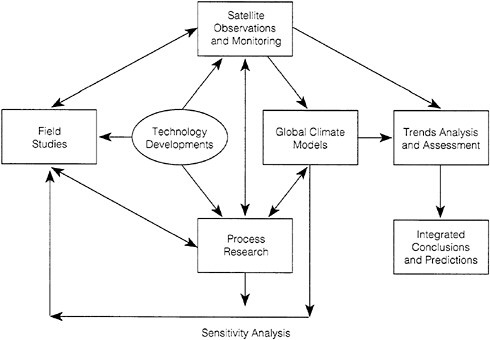
FIGURE 2.1 General components of an integrated aerosol-climate research program.
Aerosol processes that determine radiative forcing (direct and indirect) must be parameterized by way of process models that describe such phenomena as cloud formation and aerosol and cloud optical properties. Process models emerge from process research. Long-term systematic monitoring of aerosol properties can provide data to test not only process models but also global climate models. Intensive field campaigns provide an opportunity to measure a comprehensive set of chemical and physical parameters that govern features of aerosol forcing.
A method is required for determining both the individual phenomena that most influence climate forcing by aerosols and those that contribute the most uncertainty. As discussed in more detail in Chapter 3, sensitivity analysis (determining the change in model output resulting from change in each input parameter) is the traditional method. Figure 2.1 indicates that sensitivity analysis should ultimately be performed using both global climate and process models, since the magnitude of the sensitivity may depend on the scale of the phenomenon. These sensitivities are then used in principle to define future research directions to narrow the uncertainties associated with specific processes.
Since we are seeking to understand the impact of anthropogenic aerosols on climate, we should explain why we include research in the cleanest
parts of the remote marine atmosphere. There are several reasons for this. First, in polluted air masses, the natural and man-made aerosols are so intimately mixed that the exact nature of the anthropogenic contribution becomes blurred. We cannot quantify man's contribution without thoroughly understanding the background aerosol. Second, in many cases, pollution aerosols blow offshore, mingle with marine aerosols, and are removed to the oceans. Yet we have an inadequate understanding of those marine loss processes to achieve the needed accuracy in our models. Finally, the simplicity of remote aerosol systems makes it possible to perform much more rigorous closure and process experiments than are possible in complex, spatially heterogeneous polluted air masses. Since the same basic principles will govern aerosol behavior in both environments, process studies in the simplest remote environments are likely to be more cost-efficient and productive than working in air masses where a wide range of sources might be responsible for observed changes over time and space. We must learn to walk before we can hope to run.
Ultimate success of the research plan advanced in this report rests on integration of the various components shown in Figure 2.1. The nature of this program as an integrated plan requires strong coordination. A structure to ensure this coordination is provided in Chapter 4. First, though, detailed information is given about the components shown in Figure 2.1.
GLOBAL CLIMATE MODELS
The geographic extremes in aerosol forcing are important to the response of the climate system to such forcing. Although globally averaged estimates of aerosol forcing may be reported, to properly construct a global average forcing requires a global-scale model.
A global climate model is the most comprehensive tool available for studying the importance of any forcing on the climate system, including aerosol. Such a model consists of a number of components: an atmospheric general circulation model (AGCM), some form of an ocean model, a sea ice model, and a land surface model. An atmospheric chemical transport model (ACTM) is used to simulate the distribution of aerosol. These models continue to grow in complexity as more detailed chemistry and removal processes are added. The AGCM uses information on aerosols to calculate radiative forcing and supplies information (e.g., winds) to the chemical model to determine aerosol distribution.
Calculation of direct radiative forcing may not necessarily require all processes described in an AGCM. Indeed, by its very definition, radiative forcing means that no atmospheric process has altered the climate state used to calculate the change in radiative flux caused by aerosol. Aerosol forcing calculations are typically performed in an AGCM, but employ only the
radiative transfer part of the AGCM. There are now a number of global model studies of direct aerosol forcing for sulfate aerosols (Charlson et al., 1991; Kiehl and Briegleb, 1993; Taylor and Penner, 1994; Boucher and Anderson, 1995). Kiehl and Rodhe (1995) have reviewed several of these calculations and find roughly a factor of 2 difference in forcing, caused by chemical modeling differences. Calculations of the indirect effect (Chuang et al., 1994; Jones et al., 1994; Boucher and Lohmann, 1995) indicate a forcing magnitude similar to that of the direct effect.
Atmospheric General Circulation Models
Atmospheric general circulation models are numerical representations of the equations of motion and physical processes that define the workings of the atmosphere. These models are global in spatial extent and represent the equations of motion in either a physical grid space or spectral space (i.e., the dynamical fields are represented by a series of spherical harmonics). Climate models, by their very nature, require time integrations from one season to multiple decades. The horizontal resolution of the AGCMs is usually determined by computational resources. During the past decade there has been increased emphasis on higher spatial resolution. Current AGCMs employ resolutions from 8° X 10° down to 1° X 1°. The number of vertical levels in these models ranges from around 10 to 20.
Physical processes included in the AGCMs are radiation, convection, and processes in the boundary layer and the surface layer. Cloud processes related to cloud amount and optical properties are typically included as a part of the radiation calculations. All of these physical processes operate on scales smaller than those resolvable in the AGCM and hence require parameterization. Much of AGCM development over the past 30 years has focused on improving these physical parameterizations, with much of the focus on clouds and convection. At present, there is a diverse range of approaches to the parameterization of these processes, which no doubt reflects limitations in understanding. A list, by no means complete, of some global models currently being used to study aerosol forcing is given in Table 2.1, where the atmospheric general circulation and chemical models are listed separately. The chemical transport models listed in Table 2.1B cover hemispheric to global scales and are suitable for coupling to AGCMs.
Atmospheric Chemical Transport Models
Predictions of aerosol distributions by an ACTM require information on magnitudes and geographic distributions of emissions of precursor gases and sources of primary particles, chemical reaction rates in the atmosphere, transport of these gases and aerosols by large-scale advection and subgrid-scale
TABLE 2.1 Global Models Currently Used to Study Aerosol Forcing
|
Modela |
Horizontal Resolution |
Number of Vertical Levels |
Temporal Resolution (minutes) |
|
A. Atmospheric General Circulation Models for Aerosol Forcing Calculations |
|||
|
GISS |
4° × 5° |
9 |
7.5 |
|
LMD |
|
11 |
6 |
|
MPIb |
2.9° × 2.9° |
19 |
24 |
|
NCARb |
2.9° × 2.9° |
18 |
20 |
|
UKMO |
2.5° × 3.75° |
19 |
30 |
|
LLNL-CCM1 |
4.5° × 7.5° |
12 |
30 |
|
B. Global and Synoptic Models for Chemical Transport of Aerosols |
|||
|
LLNL Grantour |
4.5° × 7.5° |
12 |
6 |
|
Stockholm/Mainz Moguntia |
10° × 10° |
10 |
Monthly mean |
|
NCAR IMAGES |
2.5° × 2.5° |
25 |
Monthly mean |
|
GChM |
1.0° × 1.0° |
15 |
6 |
|
GISS |
8.0° × 10° |
9 |
6 |
|
MPI |
2.9° × 2.9° |
19 |
24 |
|
a GISS (Goddard Institute for Space Studies), LMD (Laboratoires de Météorologie Dynamique), MPI (Max Planck Institut für Meteorology), NCAR (National Center for Atmospheric Research), UKMO (United Kingdom Meteorological Office), LLNL (Lawrence Livermore National Laboratory), Stockholm (Langner and Rodhe, 1991), IMAGES (Intermediate Model for the Annual and Global Evolution of Species), GChM (Global Chemistry Model; Pacific Northwest Laboratory). b The MPI and NCAR models are spectral; the horizontal resolution listed is an equivalent Gaussian grid. |
|||
convection, and removal mechanisms (both wet and dry). Links to an AGCM are contained in large-scale advection of gases and aerosols, which employs atmospheric winds, and in convection parameterization, which supplies convective fluxes for subgrid vertical transport. Links are also associated with the land and surface modules in climate models through the representation of dry deposition processes. Wet removal processes in the ACTM require precipitation information from the AGCM. Finally, aqueous-phase reactions require information on cloud water. AGCMs are just beginning to prognostically calculate amounts and distribution of cloud water.
The development of many of the current ACTMs began with models that were not coupled to AGCMs. This uncoupling was necessary for accurate testing of transport and chemistry algorithms. These ''off-line" ACTMs employ either AGCM atmospheric state information (e.g., winds, precipitation, cloud variables) or meteorological or climatological state information.
A number of the off-line models used for predicting sulfate aerosol distributions employ climatological data. Some questions remain about how accurate aerosol distributions are when calculated by using climatological data, since temporal changes in aerosol distribution occur on shorter scales than climatological and the resulting average aerosol distribution may not be well represented from climatological data.
To date, much of the global ACTM modeling has focused on sulfate aerosols (Langner and Rodhe, 1991; Chuang et al., 1994; Pham, 1994). These models have treated the aqueous and gas-phase production rates of sulfate in a highly simplified manner, for example, by assuming that the rate of aqueous formation of sulfate is proportional to cloud amount and cloud lifetime. This assumption does not properly represent the rate of formation of  in clouds when H2O2 is the limiting species (nor are the roles of trace metals and other oxidizing agents accounted for) and therefore does not represent the expected seasonal variation of sulfate aerosol. Other models that attempt to account for oxidant limitation in simplified ways predict the seasonal cycle of better in source areas over North America than in Europe (Penner et al., 1994a). Reasons for lack of observed seasonal variation in sulfate over Europe are not understood. Oxidation of SO2 on sea salt particles is another process not presently represented in ACTMs. This process operates mainly in the marine boundary layer, and the amount of sulfate produced in this manner is, as yet, poorly quantified. Yet it may be important to represent this process in global aerosol models, to obtain a more complete understanding of the atmospheric sulfur cycle.
Only a few model calculations are available of global-scale distributions and climate forcing by components of the aerosol other than sulfate, and these have been limited to smoke aerosols from biomass burning and/or black carbon from fossil fuel combustion (Penner et al., 1993; Cooke and Wilson, 1995; Liousse et al., 1995). This latter component is especially important for determining the light absorption coefficient and single-scatter albedo (a measure of the relative magnitudes of aerosol scattering and absorption) of anthropogenic aerosols. As yet, no global-scale model calculation of the combined effects of all anthropogenic aerosol components (sulfate, nitrate, ammonium, organic carbon, black carbon, anthropogenic dust aerosol) and their climate forcing is available, although one-box model-based analysis of all these components has been carried out (Pilinis et al., 1995).
Additionally, to test model predictions against measurements (thereby performing a "closure" experiment), it is necessary that natural components as well as anthropogenic components be represented. Major uncertainties surround the prediction of aerosol components other than sulfate, with the primary uncertainty related to inadequate specification of source rates. In the case of carbonaceous aerosols (organic and black carbon), little infor-
mation regarding natural and anthropogenic source strengths is currently available (Penner, 1995).
Existing models for aerosol forcing calculations do not explicitly carry detailed information on particle size; the approach is to predict aerosol mass. It is well established, however, that both direct and indirect radiative effects of aerosols can depend strongly on the size distribution of the aerosol (Boucher and Anderson, 1995; Nemesure et al., 1995; Pilinis et al., 1995). Thus, global aerosol models will eventually need to include explicit aerosol size information.
Attempts to calculate indirect climate forcing by anthropogenic aerosols have all been based on predicted geographical distributions of anthropogenic sulfate aerosol (Boucher and Rodhe, 1994; Chuang et al., 1994; Jones et al., 1994; Boucher and Lohmann, 1995). These approaches empirically relate cloud drop number concentrations, and thus cloud optical properties, to sulfate aerosol mass concentration derived from a chemical transport model. Whereas this approach is arguably the best starting point to evaluate the indirect effect, the underlying assumptions do not address physical cause-and-effect relationships in a fundamental manner. For example, emissions of aerosol precursors and primary emissions are known to vary by region. Such variations will alter the ratio of to other aerosol components by region. Also, the functional relationship between cloud condensation nuclei (CCN) concentration and sulfate mass is expected to be nonlinear. For example, if most anthropogenic sulfate is formed via aqueous processes in clouds, then adding more SO2 will mainly form larger particles rather than additional CCN, and only a small fraction of anthropogenic sulfur emissions would form new CCN (e.g., see Leaitch et al., 1992), although the climate forcing might still be significant (Chuang and Penner, 1995). Most of these models have further assumed that observed relationships between either cloud water sulfate and cloud droplet concentrations or between cloud base aerosol concentrations and cloud droplet number concentrations could be used to represent the response of cloud droplets to new aerosol particles or sulfate mass. It is not clear that these relationships can be used to analyze the response of climate forcing to either increases or decreases in anthropogenic aerosol emissions, because such changes may involve a change in aerosol size distribution. However, one attempt to account for the effects of changes in size distributions, which notes the importance of the aqueous pathway, still finds significant forcing (Chuang et al., 1994). Data relating sulfate and/or other aerosols to cloud droplet concentrations are sparse to nonexistent for remote marine clouds and can give conflicting low susceptibility when account is taken of the type of mixing processes within the clouds (Novakov et al., 1994). These processes have not been accounted for in any model estimates of indirect climate forcing.
Because prediction of both homogeneous and heterogeneous rates of formation of sulfate depends on understanding and predicting the photochemistry of ozone and other oxidants, especially H2O2, understanding sources of discrepancy between modeled abundances and observations may well require development of coupled global aerosol-photochemical models. Photochemical models of the global troposphere are just now becoming available (Crutzen and Zimmerman, 1991; Atherton, 1994; Müller and Brasseur, 1995), and none has been self-consistently integrated with an aerosol model, even in simplified form.
Finally, the coupling of the atmospheric and chemical components into a complete system model will no doubt introduce new nonlinear interactions within the coupled model. For example, addition of aerosols to the system will have a tendency to lower surface temperatures. This reduction in surface temperature can, in turn, lead to changes in evaporative fluxes, which can alter the hydrologic cycle (e.g., reduction in precipitation). Changes in the hydrologic cycle will then modify chemical production and removal of aerosols. Each link in this feedback loop is highly nonlinear and can alter the sensitivity of the overall climate system. The addition of feedback processes involving atmospheric aerosols is imperative for a credible climate system modeling program and represents a major challenge for atmospheric science in the twenty-first century.
Recommended Research on Global Climate Modeling of Aerosol Radiative Forcing
Global climate modeling of aerosol radiative forcing requires the following:
-
major advances in the representation of indirect climatic effects of aerosols in global climate models by treating in a fundamental manner the relationship between aerosol mass and aerosol number, aerosol number and CCN number, CCN number and cloud drop number concentration (CDNC), and CDNC and cloud optical properties;
-
development and evaluation of coupled global aerosol-photochemical models;
-
coupling of atmospheric chemical transport and aerosol models into a global climate model system;
-
improvements in models of the sulfur cycle and development of models for other aerosol types and for mixtures—it is particularly necessary to develop models with a time resolution that is short compared to those of the relevant meteorological processes (e.g., synoptic time scale); and
-
evaluation and representation of aerosol sources and precursor gases for aerosol chemical models.
PROCESS RESEARCH
Process studies are an essential part of the overall program design, because they provide the means to identify, understand, and quantitatively describe the processes controlling aerosol forcing of climate, as well as to develop and test parameterizations used in models, and because existing knowledge of the pertinent processes is inadequate to the required level of certainty. Evaluation of the sensitivity of process model results to uncertainties in model formulation and input parameters is necessary for guiding observational programs. Some process studies are appropriately conducted in the laboratory, and some require small-scale field experiments, whereas others involve major, multi-investigator, and multiplatform field campaigns. Because of the significant costs associated with large field campaigns, such studies are treated separately from smaller-scale process research.
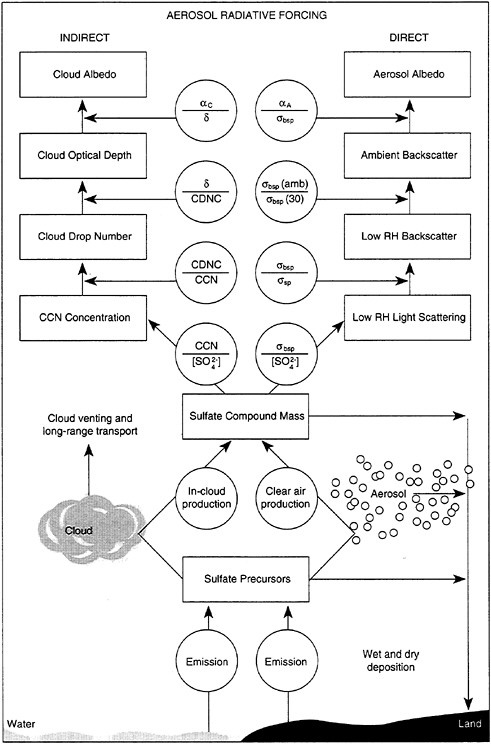
For both direct and indirect forcing of climate by aerosols, the connection between properties such as aerosol mass and the actual radiative forcing is mediated by a series of intervening linkages, some of which are poorly characterized. For one family of important species, sulfates, these linkages are shown schematically in Figure 2.2. Process studies seek to elucidate the individual linkages, some of which are very complex and nonlinear, such as that between sulfate aerosol mass and CCN concentration, as noted earlier. Although process studies are generally focused on a single linkage or process, they often benefit from the context provided by conducting them alongside related observations in an integrated field program.
As noted earlier, many of the properties, both physical and chemical, that determine aerosol forcing result from processes that occur on scales unresolved by general circulation models (GCMs). These processes therefore need to be parameterized in terms of prognosticated large-scale variables (e.g., temperature, specific humidity, cloud water). A complicating factor in these parameterizations is that many of the processes are highly nonlinear, for example, the relationship between changes in SO2 emissions and CDNCs. To develop and test these parameterizations requires process models. For example, fine-scale cloud models (two or three dimensional) that explicitly resolve scales of motion down to 500 to 1000 m, with explicit treatment of cloud microphysics, have been used to study the effect of increased CCN on cloud droplet number (Flossmann and Pruppacher, 1988).
We begin this section with a summary of optical properties, then proceed to aerosol formation, transformation, and removal processes, and finally consider aerosol process models that integrate all of these features.
Optical Properties
The basic quantities needed to describe the direct interaction of aerosol particles with solar radiation are the aerosol optical depth δ(λ), single scattering
albedo ω(λ), and angular scattering function β*(φ). The aerosol optical depth is the vertical integral of the aerosol extinction coefficient σe(λ) = σsp(λ) + σap(λ). The single scattering albedo, a measure of the relative magnitudes of aerosol scattering and absorption, is defined as ω = σsp/σe. It can be measured directly in situ by separate measurement of σsp (with an integrating nephelometer) and σe (with a long-path extinction cell or atmospheric path) or from separate determinations of σsp and σap. The angular scattering function describes the angular distribution of the intensity of light scattered by particles. Parameterizations in radiative transfer models use an integral property of the angular scattering function, either the asymmetry factor g, defined as
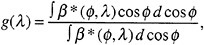
or the upscatter fraction β(μ), defined as the fraction of solar radiation scattered in the upward direction (back to space), where μ is the cosine of the solar zenith angle (Wiscombe and Grams, 1976). The angular scattering function β*(φ) can be determined with a polar nephelometer (Hayaska et al., 1992; Jones et al., 1994), but commercial versions of this instrument are not available. No instruments exist that directly determine g or β(μ). However, an integrating nephelometer with a special backscatter shutter can determine the hemispheric backscattering fraction b =β(1), which can be used to estimate the value of the asymmetry factor.
The notion of describing sulfate forcing separately results in a negative forcing term (δF/δ), whereas δF/δ soot is positive (see Table 1.3). Absorbing aerosols can have either a positive or a negative radiative forcing (i.e., produce either a heating or a cooling effect), depending on the surface albedo and the ratio of aerosol light absorption to hemispheric backscattering coefficients (1-ω)/b (Chylek and Coakley, 1974; Haywood and Shine, 1995). For a given surface albedo, there exists a critical value of (1-ω)/b below which the aerosol leads to cooling, and above which to heating. The few measurements that are available (Waggoner et al., 1981) yielded values of (1-ω)/b in the range 1-3 in rural areas and 3-9 in urban areas. For the radiative transfer model used by Chylek and Coakley (1974), these results would imply a positive forcing in rural areas with surface albedos larger than 0.13-0.27. This range of surface albedos includes values expected for rural areas and points out the need for systematic, combined measurements of aerosol single scattering albedo and hemispheric backscatter fraction in order to represent properly the radiative effects of absorbing aerosols. Liousse et al. (1995) deduce global maps of ω that show, in general, a cooling effect of aerosols.
Given particle size distribution and chemical composition, Mie theory
permits calculations of aerosol optical properties (Bohren and Huffman, 1983), but a number of key assumptions are required. Calculation of optical properties usually assumes that particles are spherical. This assumption is likely to be acceptable for hygroscopic particles, but may be poor for hydrophobic aerosols (e.g., elemental carbon and dust aerosols). Also, the state of mixture of different chemical species must be known. For internally mixed particles, which contain two or more chemical species, "mixing rules" for calculating the mixture's refractive index exist but must be evaluated, particularly for the case where insoluble, light-absorbing material is mixed with soluble, nonabsorbing species. In all cases, the wavelength-dependent refractive index of the major chemical species must be known. From a three-dimensional modeling perspective the important questions are how to combine (or mix) various aerosol optical properties on a GCM grid (around 300 km) and the degree of variability of these optical properties in both space and time, which is linked mainly to variabilities in aerosol properties, especially size distribution.
There is a clear need for laboratory determinations of the refractive index and density of pure and mixed-composition aerosol particles as a function of relative humidity. Models that relate the size and optical properties of particles to their chemical composition rely heavily on thermodynamic data for extremely concentrated solutions. Such data are lacking for certain components of sea salt and most organic species, even though excellent electrodynamic balance methods now exist for conducting such studies. In addition, there is a clear need to understand the relationship between various measurements of black carbon and the absorbing component of aerosols, which vary depending on the measurement methods being used and the source of black carbon in the aerosol sample (Novakov and Corrigan, 1995).
Two types of closure experiments of aerosol optical properties are needed (see discussion of closure experiments below). Local closure experiments test the suitability of Mie theory for predicting aerosol light scattering and absorption coefficients from measured size distributions and chemical composition. Such experiments are particularly important for aerosols that do not adhere to the assumptions of sphericity or homogeneity used in Mie calculations. Column closure experiments are also needed to test the consistency of radiative perturbation calculations using measured aerosol optical properties with their measured perturbation of radiative fluxes.
Relationships between cloud drop size distribution and cloud optical depth, on the one hand, and optical depth and cloud albedo, on the other, have been formulated based on approximate models whose validity is not well characterized. Comparison between measurements of cloud drop size distribution as a function of altitude within clouds and directly measured cloud optical depth are necessary to test various parameterizations currently
used in models. Similarly, relationships between optical depth and cloud albedo should be tested, particularly as a function of spatial scale. Even if the extant parameterizations hold at particular points, it is unclear that this implies agreement on larger scales. Such problems as cloud edge effects, fractional cloudiness, and general inhomogeneity could invalidate larger-scale satellite retrieval without the employment of sophisticated algorithms that have yet to be formulated. In general, more comparisons of remotely retrieved cloud albedos with in situ measurement are in order.
Comparison of remotely retrieved and locally measured cloud albedos involves a difficult scaling issue. Cloud optical depths derived from in situ measurements are generally at a finer resolution than for remotely retrieved albedo (at least for currently available sensors). The issues of fractional cloudiness, edge effects, and cloud inhomogeneity complicate comparison between scales. Airborne sensors at various altitudes above cloud top would provide a useful link between in situ measurements and satellite observations, for which atmospheric corrections will complicate the scale problem.
Recommended Process Research on Aerosol and Cloud Optical Properties
The following research on aerosol and cloud optical properties is needed:
-
laboratory and theoretical determinations of the refractive indices of pure and mixed-composition aerosol particles, compared with bulk (e.g., filter samples) and in situ measurements of size-resolved composition and refractive index of atmospheric aerosols, to determine the accuracy of current theoretical treatments of refractive index of mixed-composition aerosols for use in radiative forcing calculations;
-
local closure experiments to evaluate Mie theory predictions of extinction with those measured;
-
comparison of theoretically calculated cloud optical depth and cloud albedo as a function of cloud drop size distribution with those measured as a function of cloud spatial scale; and
-
elucidation of theoretical issues relating remotely sensed albedo to that calculated based on in situ measurements of cloud drop size distribution.
Aerosol Dynamics
The size distribution and chemical composition of the atmospheric aerosol are determined by a number of physicochemical processes, including formation of condensable vapors, nucleation of aerosol particle embryos from these vapors, condensational and/or coagulation growth of the aerosol, and
cloud processing. Elements necessary to understanding these processes are listed below.
-
Identification of Aerosol Molecular Composition and Gaseous Precursors: Much of the anthropogenic aerosol is secondary in nature, being derived through gas-to-particle conversion processes. Whereas the sulfate component of the tropospheric aerosol is well recognized, much less is known about the abundance and, in the case of organics, molecular composition of the other components of ambient aerosol. Accurate calculation of radiative and cloud nucleating properties requires knowledge of aerosol molecular composition, and aerosol molecular composition needs to be related to its gaseous precursors to be able to assess the affect of anthropogenic emission changes on aerosol climate effects. Little information on molecular speciation of the organic portion of ambient aerosols is currently available, precluding a proper linkage between organic gaseous precursors and organic aerosol components. Once identified, the optical properties of these components can be addressed (see previous section).
-
Mechanism for Gas-to-Particle Conversion: After low-volatility gases are generated by gas-phase chemical reaction, they may homogeneously nucleate or condense on existing particles. The dominating route determines the resulting aerosol number concentration and size distribution (Warren and Seinfeld, 1985). The rate and location of new particle formation by nucleation in the atmosphere are subjects of intense current debate (Clarke, 1993; Weber et al., 1995b; Raes and Van Dingenen, 1995; Russell et al., 1994). It is important to understand the competition that exists for gas-to-particle conversion in shaping the atmospheric aerosol size distribution since the aerosol number concentration depends crucially on this competition. Parameters that determine whether a gaseous species nucleates to form new particles or condense onto existing particles include the saturation vapor pressure of the condensing species [e.g., H2SO4, methanesulfonic acid (MSA), various organics, and NH3], its accommodation coefficient for incorporation into existing particles, relative humidity, temperature, and the existing particle number size distribution.
Process studies that identify atmospheric conditions favorable for nucleation are crucial, since the generation of new particles is, at the same time, one of the most important processes controlling aerosol number concentrations and one of the most difficult processes to model. Short time-resolved measurements (order of a few seconds) of particle size distributions between 3- and 10-nm diameter can be used to identify events of new particle production in both the marine boundary layer and the free troposphere. These measurements, along with data for gas-phase aerosol precursors, permit computations of aerosol nucleation and growth rates. The actual nucleation of aerosol from precursor gases must be understood, theoretically, in laboratory
-
studies and in the atmosphere. This understanding should be gained not just for single-component systems but also for multicomponent systems (i.e., more than one condensing species), such as those that actually exist in the atmosphere (e.g., H2SO4-H2O-NH3 and organics). Once again, much work is needed on organics. Theoretical formulations in process models need to be compared with laboratory and field results.
-
Particle Growth Rates: Particle growth occurs by condensation of vapors and coagulation of particles; as noted above, the available condensable vapors will be partitioned between the formation of new embryos and condensation onto preexisting aerosol. Understanding the rate of growth of particles is important in determining the factors that control particle size in regimes of effective light scattering and CCN activation. The time for growth of condensation nuclei to sizes where they may serve as CCN is important to particle residence time in the atmosphere. Competition between coagulation and condensation (for gas-phase production of condensable vapors) versus aqueous production of aerosol species determines the nature of the growing size distribution. Growth rates estimated theoretically and simulated in laboratory chamber experiments can be compared with measurements of the evolution of the atmospheric size distribution. Field experiments at several scales can also address this question. In a Lagrangian parcel experiment, an airborne platform (e.g., blimp or aircraft) follows an air parcel and periodically measures the aerosol size distribution. Another option is to sample at various points in a well-defined and steady-state circulation such as, for example, a land sea breeze circulation or, on a much larger scale, the Hadley cell circulation. The latter circulation has in fact been proposed as an incubator for the formation of CCN (Clarke, 1993).
-
Hygroscopic Growth: Optical and cloud nucleating properties of aerosol particles depend critically on their hygroscopic properties (Kim et al., 1993a,b; Tang and Munkelwitz, 1993, 1994a,b). Direct aerosol forcing sensitivity studies show that, of the variables on which aerosol forcing depends, relative humidity is the most influential (Boucher and Anderson, 1995; Nemesure et al., 1995; Pilinis et al., 1995). Although hygroscopic growth is involved in growth processes discussed in the previous section, the ubiquity of water in the atmosphere, its tremendous variability, and the existence of phenomena such as deliquescence and crystallization that have peculiar and large impacts on aerosol size all recommend treating, in a fundamental manner, the response of aerosol to change in atmospheric water vapor. Hygroscopic growth and shrinkage can be broken down into three facets. The first is a change in the physical size of aerosol particles as relative humidity changes, the second involves a change in aerosol index of refraction as water content of the aerosol changes, and the third is associated with a shift in particle size relative to the Mie scattering efficiency curve. All three effects combine to produce a change in radiative forcing of a given aerosol as a function of relative humidity. The
-
effects can be studied either individually (e.g., changes in aerosol size distributions with increasing relative humidity) or together. The latter type of study has been carried out, for example, by using two nephelometers sampling in parallel, the first at a reference relative humidity (e.g., 30 percent) at which the aerosol is essentially dry and the second with a variable humidifier to permit scanning the relative humidity from the reference humidity to 80 or 90 percent (Charlson, 1974). Hence, normalized scattering as a function of relative humidity is measured directly.
Deliquescence properties of ambient aerosols need to be measured and compared with those both measured in the laboratory for well-defined test aerosols and predicted based on thermodynamic theory. The extent to which ambient aerosols consist of ''hygroscopic" and "nonhygroscopic" fractions in different regions, such as marine and continental, needs to be evaluated, and the dependence of these hygroscopic properties on chemical composition needs to be determined. Ultimately this information will serve as input to global aerosol models that have prescribed relative humidity fields and to GCMs that predict relative humidity fields.
-
In-Cloud Processing: Aerosol particles at a certain supersaturation of water can be activated to form cloud drops. Such drops can act as microscopic aqueous-phase reactors to produce sulfate from gaseous precursors and, as a result, yield still larger particles upon evaporation. By this route, CCN active only at relatively high supersaturations, such as those characteristic of cumulus clouds, can be transformed into CCN active at the lower supersaturations characteristic of climatologically important stratiform clouds. Furthermore, particles that are commonly too small to be optically active can be grown by this in-cloud mechanism into the optically active size range. Cloud processing of aerosol particles has been suggested to play an influential role in the marine boundary layer (Hoppel et al., 1994; Russell et al., 1995) and in the urban and regional atmosphere (Pandis et al., 1990; Meng and Seinfeld, 1994).
An important process study would involve simultaneous measurement of aerosol size distribution, CCN spectra, and chemical composition of the aerosol as a function of size. By using Köhler theory (Pruppacher and Klett, 1978), it should be possible to derive the CCN activation spectrum from size and composition data. A comparison between derived and measured spectra would constitute a needed closure experiment on Köhler theory. The comparison would also provide needed information on the fraction of CCN composed of particular chemical species (although some assumptions will be necessary) and, thus, on the sources of CCN. This study should address the impact of surface-active or sparingly soluble organic compounds on the activation of soluble particles: It has long been speculated that hydrophobic organic films on particles could inhibit their ability to nucleate cloud drops. The proposed comparative analysis could test this speculation,
and if discrepancies between calculated and directly measured CCN activation spectra arise, laboratory studies should investigate plausible atmospheric surfactants that could be producing attenuation of CCN activity.
CCN activation spectra and cloud drop number concentrations are linked by supersaturation fields, which in turn are influenced by CCN spectra themselves as well as cloud dynamics. For an adiabatic cloud, the relationship is fairly straightforward, but most atmospheric clouds are not adiabatic, and therefore the functional dependence of the CDNC on the CCN activation spectrum is unclear, particularly near cloud top. A number of studies over the years have provided some support for a linear relationship, but the data are far from extensive. For clouds that undergo substantial entrainment, cloud dynamics could strongly modulate CDNC, thereby weakening the relationship between CCN and CDNC established at cloud base (Novakov et al., 1994). Measurements are needed of CDNC and interstitial CCN spectra as a function of altitude within clouds, coupled with CCN spectral measurements in entrained air.
Recommended Process Research on Aerosol Dynamics
The following research on aerosol dynamics is needed:
-
Determine the molecular composition, particularly of the organic fraction, of ambient aerosols and the relation of that organic fraction to gaseous precursors.
-
Develop an understanding of the atmospheric conditions that favor homogeneous nucleation of vapors to form particles for single and multicomponent systems, especially for sulfates, ammonia, and organics. Develop instrumentation for rapid measurement of ultrafine particles (≤10-nm diameter), and deploy this instrumentation in regions likely to be sites of new particle formation such as the marine boundary layer and the free troposphere. Compare observed rates of new particle formation with those predicted by theory, where theory is available. Where it is not available, develop an appropriate theoretical framework for atmospheric nucleation.
-
Measure evolution of the atmospheric aerosol size distribution under well-defined conditions that allow one to assess the extent to which theoretical growth rate predictions conform with observations. Couple gas-phase and aerosol composition measurements to growth rate measurements.
-
Measure deliquescence properties of ambient aerosols and compare them with those both measured in the laboratory for well-defined test aerosols and predicted based on thermodynamic theory. The extent to which ambient aerosols consist of hygroscopic and non-hygroscopic fractions in different regions, such as marine and continental, needs to be evaluated, and
-
the dependence of these hygroscopic properties on chemical composition needs to be determined.
-
Perform simultaneous measurements of aerosol size distributions, CCN spectra, and aerosol composition as a function of size both in the laboratory for well-defined aerosols and in ambient air, and evaluate the extent of agreement with Köhler theory. Especially measure the organic fraction of the aerosol and its effect on activation.
-
Link subcloud CCN/CDNC/cloud albedo.
-
Develop and evaluate parameterizations to characterize and determine the importance of aqueous production of aerosol components in global models.
Aerosol Sinks
In dealing with atmospheric chemical transport models above, we noted that a primary uncertainty is related to the inadequate specification of source rates. Table 1.2 provided a qualitative estimate of these uncertainties, showing that many source terms are currently only "order-of-magnitude" estimates. In the immediately preceding section dealing with aerosol process models, specific questions have been raised about parameterizations for wet and dry removal processes. The goal of the present section is to outline research on sources and sinks needed to improve models of both direct and indirect radiative forcing by particles.
A central point in this section and in our recommendations for future research is the following: In essentially all previous research on aerosol sources and sinks, whether dealing with specific biogeochemical cycles or with specific applied problems (e.g., associated with atmospheric releases of radioactivity), the primary focus has been on aerosol (or chemical or radioactive) mass, which for spherical particles is proportional to the third moment of the particle size distribution. As a result, large particles were of dominant concern, and measurements and theory emphasized these large particles. As examples, substantial research has investigated the dependence on wind speed of airborne sea salt mass; many "acid rain" monitoring networks have provided data on sulfate (and nitrate) mass scavenged by precipitation; and most available data for dry deposition rates are heavily skewed by the deposition of the most massive particles. In contrast, for aerosol radiative forcing, lower moments of the particle size distribution are of dominant importance.
Thus, for the direct radiative forcing problem, of prime interest (to first order) is aerosol surface area, which for spherical particles is proportional to the second moment of the particle size distribution. Consequently, available data for both sources and sinks are, in many cases, of limited value to the direct radiative forcing problem, because previous data and analysis
were "skewed" by previous emphasis on aerosol mass—current parameterizations of aerosol optical properties in terms of aerosol mass notwithstanding. Moreover, this limitation of previous data is even more apparent for the indirect forcing problem. In this case, the number of particles capable of acting as cloud condensation nuclei (at a specific supersaturation) or ice-freezing nuclei (IFN, at a specific temperature) is of prime interest; that is, of primary interest is the zeroth moment of the particle size distribution (with the integration starting from some minimum size for activating cloud particles under specific conditions).
Some limitations of information on particle mass alone can be illustrated with recently reported data obtained from sampling air near the Azores Islands. Garrett and Hobbs (1995) report that the number concentration of condensation nuclei (CN) increased by a factor of about 5 from a case of "clean maritime air" to one of "continentally influenced air," while the mass concentration of sulfate particles increased by a factor of about 100. In addition, for a different case study in the same region, Hudson and Li (1995) report that the concentration of CN (a measure of the total number of particles present) also increased by a factor of about 5 for "clean" versus "polluted" air, while the number of CCN active at 0.1 percent (largest particles) increased by a factor of about 50. Given these order-of-magnitude differences in results for ''number" versus "mass," the emphasis of future research (for both sources and sinks) must be on particle size distributions, namely, the number of particles of each size class (and chemical, supersaturation, or temperature class, as appropriate), in contrast to the emphasis of previous research on particle mass.
Besides illustrating the importance of focusing on aerosol number rather than merely on mass, the data outlined in the previous paragraph can also illustrate types of research on aerosol sources and sinks that must be pursued to elucidate aerosol radiative forcing. In particular, if one tries to understand these data, layers of research questions about both aerosol sources and sinks appear. Thus, a first layer is revealed if one asks if these results mean that CN concentrations differ little in continental versus marine air (or polluted versus clean air) because the major difference in the aerosol content of these air masses is in mass loadings as a result of relatively rapid removal of CN (e.g., by coagulation); at this level of inquiry, a host of related questions can occur (e.g., dealing with coagulation rates, rates of removal of larger particles). A second layer is revealed if one asks if the results mean that our concepts of continental/polluted versus marine/clean are inadequate (e.g., because all marine air has been influenced earlier by continents) and that the governing feature is the time since the air mass experienced significant cleansing (e.g., by passing through a storm), significantly reducing aerosol mass but not CN; at this level, other related research questions arise (e.g., relative scavenging rates for larger sulfate particles
versus CN). Still another layer is revealed if one asks if the dominant distinction in aerosol loading arises from natural production of CN (e.g., from natural sulfur sources) and if results such as these reveal mostly that air masses typically quite rapidly attain an "equilibrium" CN concentration, dictated by natural sources; again, a host of obvious research questions appear at this level (e.g., dealing with gas-to-particle conversion). Currently, such questions as these have not been answered adequately; it is therefore clear both that such questions must be addressed if aerosol radiative forcing uncertainties are to be reduced and that to answer such questions it is essential not only to obtain particle size information but also to examine sources and sinks simultaneously.
As already emphasized, reliable descriptions of aerosol radiative forcing require reliable numerical models of spatial distributions of size-and chemical-specific concentrations of aerosols. In turn, reliable models of these concentrations require reliable descriptions of wet and dry deposition. For the development of these descriptions, two concepts are critically important.
One of these concepts is that both the interactions of aerosols with radiation and aerosol removal processes are strongly dependent on particle size, especially in the particle-diameter range from about 0.1 to 10 µm. Over this range, wet and dry removal rates can vary by two to three orders of magnitude. Consequently, even if computational economy restricts radiative flux calculations in climate models to only a few bands of radiation, corresponding spectral average influences of aerosols require estimates of particle size-dependent aerosol concentrations, which in turn require estimates of particle size-dependent removal rates.
Another critically important concept is that macroscale consequences follow from microscale causes. Thus, atmospheric removal rates and therefore global-scale spatial distributions of aerosols depend on the abilities of submicrometer aerosol particles to act as CCN or IFN, the efficiencies with which particles are collected by vegetation elements such as pine needles and leaf hairs, dissolution in the sea of microscopic bubbles of air containing particles, etc. Consequently, for applications at macroscales, understanding at microscales is required.
If these two concepts are used to filter current knowledge about wet and dry removal processes, distressingly little of value for the radiative forcing problem is retained. It is true that, as a result of decades of international research on bomb debris fallout and acid rain, much is already known about wet and dry removal of aerosol particles. Illustrations of progress can be found in the three-volume proceedings of the Fifth International Conference on Precipitation Scavenging and Atmosphere-Surface Exchange Processes (Schwartz and Slinn, 1992), as well as in the proceedings of the four previous conferences in the same series; in acid deposition progress reports (e.g., from the U.S. National Acid Precipitation Assessment Program); and
in the open literature. Essentially all of this information, however, has (appropriately) emphasized the deposition of particle mass, and therefore, most of the data are of little value for defining and helping to understand particle deposition as a function of particle size.
For example, throughout the world, many networks were established to monitor acid deposition, providing data on major ions in precipitation and some measures of dry deposition. Most of these data sets, however, are of little value for radiative forcing problems because of the data's (desired) emphasis on deposited mass. In this regard, notice that the mass of a single 1-µm (spherical) particle scavenged by precipitation is the same as the total mass of a thousand 0.1-µm particles (that might act as CCN), and that the mass of a single 10-µm particle (e.g., locally resuspended and then dry deposited) is the same as the total mass of a million 0.1-µm particles. Essentially all data for deposited radioactivity (e.g., Chamberlain, 1991) are of similarly restricted value for radiative forcing problems (direct and indirect) because, for bomb debris and nuclear accidents such as Chernobyl (e.g., Cambray et al., 1987), the radioactivity of each particle was proportional primarily to particle mass [although there were exceptions in which the radioactivity of each particle was proportional to its surface area (e.g., for radioactive species such as iodine that condensed on ambient particles)]. Consequently, there are few to no network data available to define wet and dry deposition of particles as a function of their size, which is critical for the radiative forcing problems.
Correspondingly, most of the available theoretical, semiempirical, and statistical models for wet and dry deposition of particles as a function of their size (and of a host of other variables, depending on the type of collector—from raindrops and ice crystals to forests and lakes)—have not been adequately tested against field data because such data are unavailable. In the few exceptional cases available, order-of-magnitude discrepancies exist, both between theory and data (e.g., for an important case in rain scavenging of particles; see Radke et al., 1992) and between data sets obtained by different experimental techniques (e.g., for an important case in dry deposition of particles to grass; see Garland and Cox, 1982). Consequently, additional field data to test and, as appropriate, revise available models of wet and dry deposition are essential to remove existing order-of-magnitude uncertainties in wet and dry removal rates, especially for particles in the size range 0.1-1.0 µm.
For the dry deposition of 0.1- to 1.0-µm particles, there are uncertainties of at least an order of magnitude even for their deposition to simple vegetative canopies (e.g., see Allen et al., 1991); greater uncertainties exist for forest canopies (e.g., see Peters and Eiden, 1992). For 0.1- to 1.0-µm particles depositing at sea, no particle size-dependent data appear to be available (e.g., see Rojas et al., 1993). Numerical studies have examined problems with modifying available dry deposition formulations for use in
global models (e.g., Giorgi, 1988). In reality, the lack of mesoscale, particle size-specific field studies for dry deposition to inhomogeneous vegetation and to the ocean results in, at best, only order-of-magnitude estimates of dry deposition of particles at the global scale.
To obtain field data to test and improve models of dry deposition of particles, improved techniques and new instrumentation appear to be critical (Nicholson, 1988). Particle size-specific, eddy-flux measurements of ambient particles appear promising (e.g., Neumann and den Hartog, 1985) but to date have suffered from poor statistics associated with few particles in specific size classes. Further, similar studies at sea would have to account for sea salt particle production and for shifts in particle sizes from water vapor condensation. Also, preliminary measurements of size distributions of ambient particles within forest canopies have been valuable for estimating dry deposition to forests, but complications from emissions within the forest and mixing from above the canopy have not been adequately addressed. For size-specific dry deposition of particles in the radiatively important range of about 0.1 to 1.0 µm, further investigations should be undertaken of releasing essentially monodisperse particles that are tagged and then collecting and counting the number of tagged particles actually deposited. Such studies may be useful even at sea if the released particles can be, at once, hygroscopic or at least wettable, insoluble, and buoyant (e.g., monodisperse polystyrene microspheres coated with ammonium sulfate).
Turning now to wet deposition or precipitation scavenging, at the outset we want to emphasize two critically important and relatively new concepts dealing with vertical diffusion (and therefore long-range transport) of all chemicals (e.g., sulfur dioxide) that are important for modeling aerosol radiative forcing. In earlier studies, many predictions suggested that concentrations of relatively short-lived species such as SO2 (typically oxidized in the atmosphere within a few days) would decrease relatively rapidly with height because, on average, vertical mixing in the troposphere proceeds with an average time scale of about a week. This average, however, is a spatial average and mostly reflects the relatively sparse spatial distribution of clouds and storms that have substantial updrafts. One important concept that apparently was not appreciated earlier was that, within these updrafts, vertical transport of even short-lived species could be substantial (Gidel, 1983). As a result, earlier estimates of concentrations in the upper troposphere of short-lived species were typically underestimated substantially, sometimes by many orders of magnitude.
The second, related and important concept is that these underestimates depend on the chemical species because vertical "diffusion" (or transport) in the atmosphere is species dependent. This dependence is a function not only of the lifetime of the species against oxidation (or other destruction), with mature convective storms able to transport species to the upper troposphere
even if their lifetimes are only about 103 seconds, but also of the efficiency with which each species is scavenged by each storm. For example, a greater fraction of sulfur dioxide than sulfate mass entering a storm will usually be vented by it, because particles are scavenged by precipitation typically much more efficiently than SO2 (unless the H2O2 molar concentration in the entering air is comparable to that of SO2).
Currently, essentially all global-scale atmospheric chemistry numerical models contain parameterizations for this "sub-grid scale vertical transport" (e.g., Müller and Brasseur, 1995), but it is clear that much additional work is needed to improve these parameterizations (e.g., Lin et al., 1994). Some progress has been made in developing a "venting climatology" for different storms (e.g., Thompson et al., 1994) and, in testing venting parameterizations against predictions of cloud models (e.g., Pickering et al., 1995), but not only is there need to substantially increase the data base for transport by storms, there is also extremely limited information on the scavenging of different species, especially particles, by these same storms.
Very few studies of this type have been performed. In fact, the results outlined below are from the only two studies of storm venting of particles of which we are aware. By yielding conflicting results, these two studies illustrate the crude state of current knowledge about these critically important topics.
From upper-tropospheric measurements in cloud-free air recently mixed by convective storms in the midwestern United States, Kleinman and Daum (1991) deduced that only a few percent of the 0.1- to 1.0-µm particles in boundary-layer air ingested by storms survived transport of the air (and its insoluble constituents) to the upper troposphere. There are, however, several difficulties in interpreting the results of such clear air studies (e.g., accounting for other sources of insoluble gases such as CO, O3, and NOx; identifying regions of cloud outflow; and accounting for subsidence of outflow ice crystals and their particle loads, which would be expected to be different from the trajectory of insoluble gases). Nonetheless, additional field studies of this type would be useful.
A more focused study by Knollenberg et al. (1993) used the National Aeronautics and Space Administration's (NASA's) ER-2 aircraft to sample aerosols in anvils of convective storms at altitudes of about 15 km. Their results demonstrate that, with the associated cold temperatures, mature cyclones in tropical regions fully involve most condensation nuclei (CN, not just CCN) in ice nucleation processes. In contrast, for isolated anvils in the tropics and for anvil cirrus in continental regions, only a small fraction of total CN was found to be involved in ice nucleation: in the anvil of a continental cumulonimbus (over Arizona), CN concentrations continued to be in excess of 104 cm-3. Additional studies, in which inert tracer gases and complete particle size distributions (and CCN and IFN spectra) are measured
in both inflow and outflow regions of a variety of storms, would be extremely useful, especially if water fluxes were also defined so that scavenging efficiencies (or inefficiencies) could be related to precipitation efficiencies of the storms.
Also, we should mention other field studies, some supporting and some conflicting with earlier results, that have investigated a potentially important nonlinearity in scavenging of particles. Thus, Leaitch et al. (1992) report data confirming observations by Squires during the 1950s of cloud droplet concentrations increasing with CCN concentrations (see Twomey, 1977) and supporting Twomey's suggestion that increased concentrations of anthropogenic aerosols ingested by clouds could lead to increased cloud albedo (and increased cloud lifetimes). For warm stratiform clouds, Gillani et al. (1995) confirmed the findings of Leaitch et al. (1986) that the number of cloud droplets fails to increase linearly with the number of approximately 0.1- to 1.0-µm aerosol particles: cloud drop concentrations begin to saturate at about 500 cm-3. However, other data (e.g., see Twomey, 1977, p. 177) fail to display this nonlinearity, even for droplet concentrations greater than about 1200 cm-3. Additional studies are clearly needed, in which measurements should be made of not only particle size distributions but also of CCN spectra.
Finally, we want to emphasize the concept that understanding at the microscale is needed for applications at macroscales. For example, from measurements in both large and small capping cumulus clouds that ingest smoke plumes from biomass burns, Radke et al. (1992) not only found the expected rapid incorporation in cloud water of particles greater than about 0.4 µm in diameter (large enough to act as CCN in the smoke plume) but, for fires with large capping cumuli, found efficient removal of approximately 0.1-µm particles (with a minimum in the removal of particles in the intermediate size range from about 0.1 to 0.3 µm). Unfortunately, speculations about possible causes of this rapid scavenging of particles of approximately 0.1 µm are currently unconstrained by relevant data (e.g., for electrical charges in the more intense updrafts).
Recommended Process Research on Aerosol Sinks
To improve modeling of aerosol radiative forcing, additional and more complete wet and dry deposition field studies are especially required. For the needed dry deposition studies, which must focus on particle size-specific data, developments in technology (e.g., for eddy-flux measurements) and techniques (e.g., for measuring monodisperse particles actually deposited) appear to be necessary. The needed precipitation scavenging field studies should include tests of mesoscale models of precipitation formation, efficiencies, and scavenging. Especially necessary are aerosol particle size
measurements of storm venting for a greater variety of pollution loadings and of cloud and storm types. Also, for both wet and dry deposition, measurements are needed of microscale quantities (e.g., electrical charges on cloud particles and pine needles, characteristics of dendrites on ice crystals and hairs on leaves) because only by understanding and accounting for the microscale processes that govern scavenging can we confidently develop reliable parameterizations for applications at larger scales.
The prime goal of the dry deposition studies is to obtain reliable, particle size-specific data in the field (i.e., not just from wind tunnels) for dry deposition to "real-world" collectors, from forests in inhomogeneous terrain to the oceans under a variety of conditions. To achieve the essential goal of obtaining particle size-specific dry deposition velocities, developments in technology (e.g., for eddy-flux measurements) and techniques (e.g., for measuring monodisperse particles actually deposited) almost certainly will be necessary. The prime emphasis of the precipitation scavenging field studies will be to develop parameterizations for storm venting for use in global-scale models for all relevant species (especially for particles as a function of their sizes), for all climatologically important cloud and storm types, and for representative ranges of pollution loadings and storm microphysical and dynamical variables. Analysis of field data must be performed with appropriate mesoscale models of precipitation formation, efficiencies, and scavenging.
Aerosols and Ice Formation in Clouds
Formation of the ice phase in atmospheric clouds is a strong modulator of the impact of clouds on global climate. This modulation arises principally in two fashions. First, cirrus clouds play an important role in the Earth's radiation balance, and the radiative properties of these clouds depend largely on the sizes, shapes, concentration; and phase of the cloud hydrometers (cf. Stephens et al., 1990). Second, the glaciation of lower-level clouds plays a major role in precipitation formation and hence modulates both the global hydrologic cycle and the duration and extent of global cloud cover (e.g., Wallace and Hobbs, 1977).
The role of aerosol particles in the formation of the ice phase in clouds is complex, much more so than that of CCN in forming cloud drops. This complexity arises partly because of the multiplicity of methods by which appropriate ice-forming aerosol particles (called ice nuclei) can produce ice, and partly because the formation of ice in clouds can proceed not only from primary nucleation but also from secondary processes associated with interactions of ice particles with preexisting liquid hydrometers (e.g, Mossop, 1978). In certain cloud types (marine cumulus), such secondary production
dominates ice formation. Nevertheless, in a wide variety of cloud types the development of ice can be attributed to ice nuclei (Vali, 1985).
The methods by which ice nuclei can nucleate the ice phase serve as a means of dividing ice nuclei into subgroups (usually referred to as modes of ice nucleation): sublimation nuclei, immersion-freezing nuclei, contact nuclei, and condensation-freezing nuclei. Each of these modes of action requires different physical and chemical aerosol properties and hence different types of aerosol particles. This variety in mode of action is no doubt a major source of the inconsistency in ice nuclei concentration observed with different techniques (Vali, 1975). Furthermore, ice nuclei (similar to CCN) activity for each nucleation method can be expressed as a function of supersaturation or supercooling. The functional relationships can be approximated with power laws and measured exponents ranging from 4 to 12, thus suggesting very sharp decreases in activity at small supercoolings. The implied extreme rarity of ice nuclei at warm temperatures (about one particle in 107 at -5°C) is an additional hurdle to observations.
Indeed, ice nucleus measurements are far from reliable, and any discussions of geographic distributions of ice nuclei are quite tentative. Altitude dependence is not known, and few data from remote marine environments exist, although there are suggestions of an oceanic ice nucleus source in several data sets (e.g., Bigg, 1973; Schnell and Vali, 1976). For terrestrial locales, the situation is somewhat better in that there is considerable evidence that mineral particles act as ice nuclei (e.g., Kumai, 1951; Hobbs et al., 1971; Parungo et al., 1979). Biogenic sources of ice nuclei have also been suggested (cf. Schnell and Vali, 1972; Arny et al., 1976) and could be of importance for biosphere-atmosphere feedbacks. The global significance of anthropogenic sources of ice nuclei is unclear, but specific industrial sources have been documented (Braham and Spyers-Duran, 1974).
Another important aspect of the ice nucleus activity issue has recently arisen from consideration of the glaciation temperatures of high cirrus. Several investigators have presented arguments that the ice phase in cirrus commonly arises from the homogeneous freezing (i.e., no preexisting solid phase is present) of sulfate haze droplets (e.g., Sassen and Dodd, 1988; Heymsfield and Sabin, 1989). Indeed, Sassen (1992) has presented evidence for liquid-phase cirrus formation from volcanic aerosols. Knollenberg et al. (1993) have presented evidence that glaciation at the tops of tropical cumulonimbus clouds may also arise from homogeneous freezing of sulfate haze particles. If so, an interesting linkage between ice formation and CCN arises. The freezing temperatures of the haze droplets will depend on the solute concentrations, which in turn will be strongly modulated by the CCN and size composition. This linkage could be of considerable importance. Theoretical studies (cf. DeMott et al., 1994) suggest that cirrus formation through homogeneous freezing could produce a significantly different cloud microphysics
than heterogeneous nucleation with ice nuclei. The degree of homogeneous nucleation will depend on the haze particle composition and thus on CCN, as well as the vertical distribution of ice nuclei. The climate implications of this impact of differing ice nucleation modes and hence different aerosol types on cirrus microstructure are obvious.
Recommended Process Research on Aerosols and Ice Formation in Clouds
Current understanding of the relationship between aerosols and ice formation in clouds is sufficiently incomplete to preclude the formulation of a definitive research program. Nevertheless, it is clear that the issue is sufficiently important to warrant considerable effort. The following recommendations are therefore made with the object of providing a secure foundation on which future, more comprehensive programs can be built.
-
It has not yet been well established that any of the ice nuclei measurement techniques currently employed have quantitative predictive value for ice formation in clouds. Field programs should be undertaken in which current or prospective ice nucleus measurement techniques are tested against field observations to determine if they provide correct predictions of initial ice concentrations in clouds. Implicit in this is an investigation of which mode or modes of action of ice nuclei dominate ice initiation (quite possibly, no single mode dominates under all conditions). This, in turn, will require concurrent laboratory studies to establish that the measurement techniques employed in the field measure the mode of ice initiation they are thought to measure and that this mode is relevant to atmospheric conditions. Clearly, the laboratory and field studies must be conducted concurrently and interactively.
-
Related to the above recommendation, laboratory studies of the ice nucleating activity of various well-characterized, anthropogenic aerosols should be undertaken. The same technique used to determine ice nucleating activity should then be applied to field measurements to characterize the source strengths of anthropogenic sources of a similar nature to the test aerosols. The technique(s) to be utilized for ice nucleus measurement should be based on results from the program recommended in item 1 (i.e., relevant to ice initiation in real clouds).
-
The vertical distribution of ice nuclei should be measured at various locales and under various meteorological conditions. The impact of cloud scavenging on the vertical ice nuclei distribution should be investigated for various cloud types.
-
A particular type of particle that can act as an ice nucleus through several modes is mineral dust. Indeed, dust storms have been suggested to be prolific sources of ice nuclei, and the impact of such storms (e.g.,
-
Saharan dust storms) can be on regional to hemispheric scales. Hence, studies of the geographic distribution of dust from these storms and their associated ice nucleating activity would be a very useful step in elucidating the geographic distribution of ice nuclei.
-
Sufficient data on homogeneous nucleation of ice in cirrus clouds should be acquired to permit some assessment of its frequency to be made and whether it is truly homogeneous (i.e., the nucleation process is not being initiated by insoluble inclusions). Further, laboratory and theoretical studies of homogeneous nucleation of ice, particularly in concentrated haze particles of the same composition as those in the upper troposphere, should be undertaken. The long-utilized standard theory has been shown to be incorrect (Pruppacher, 1995), but it is not yet clear that a satisfactory substitute is in hand.
Aerosol Process Models
Currently, the aerosol component of global climate models involves a prespecified aerosol size distribution that generally is allowed to vary only with relative humidity. Aerosol size is an important determinant of optical properties, cloud nucleating properties, and wet and dry removal rates, and a more fundamentally based treatment of aerosol size is a long-term goal in global climate models. The processes determining particle size distribution include (1) direct injection of primary particles, (2) nucleation of new particles, (3) condensation, (4) coagulation, (5) hygroscopic growth, (6) heterogeneous production in clouds, and (7) mixing of different air masses. The relative role of these processes will vary with location and other factors (season, time of day, etc.). At present, it is not even clear how the level of description of the dynamics of aerosol size distribution in a global climate model is related to the required accuracy of a radiative forcing calculation. Thus, the first need in developing aerosol process models for eventual inclusion in global climate models is to determine the sensitivity of forcing to details of the size distribution. Few direct forcing calculations of this type exist (see, for example, Pilinis et al., 1995); for indirect forcing there are no models that rely on aerosol size distribution. The parameterization developed by Ghan et al. (1993) and Chuang and Penner (1995) is used in the calculation of indirect forcing by Chuang et al. (1994) and does rely on an aerosol size distribution.
Tropospheric aerosol mass size distributions typically are observed to be dominated by two modes, with a minimum separating the two modes at around 1- to 2-µm diameter (Pandis et al., 1995). Particles in the submicrometer mode ("fine particles") have different sources, much lower rates of removal by dry deposition, much higher mass scattering and absorption efficiencies, and much higher number concentrations than the "coarse" particles of the
supermicrometer mode. Consequently, the first step toward including the effects of aerosol size distribution in global models should be to capture the essential differences between these two modes.
Representation of aerosol size distribution is also important for quantifying the indirect effect of anthropogenic aerosols on cloud droplet number and reflectivity, but in this case the key separation between particle sizes occurs at a smaller diameter (by a factor of 10). If aerosol mass is mainly added to particles larger than about 0.1 µm, the number of particles that activate cloud droplets at supersaturations typical of stratocumulus clouds may not increase substantially. On the other hand, if smaller aerosol particles are formed and then grow by coagulation and condensation to sizes of about 0.1 µm, CCN concentrations will increase, with an expected corresponding increase in cloud droplet number concentrations. These processes must be represented realistically in aerosol models to predict forcing by anthropogenic aerosols. In short, direct aerosol forcing requires accurate specification of particle mass distribution, whereas indirect aerosol forcing requires accurate knowledge of particle number distribution.
Removal rates are as influential as formation rates in governing aerosol concentrations. Although wet removal in rain is expected to be the principal sink for submicrometer particles, dry deposition can be an important loss process for those substances whose mass is largely in supermicrometer particles. The episodic nature of wet removal processes makes these particularly difficult to represent in models. The development of methods that could characterize the time since the last rainfall event in an air mass would aid tremendously in interpretation of aerosol observations. Obviously, an accurate representation of the amount and nature of precipitation from general circulation models is needed to represent this process in aerosol models driven accurately by such GCMs. Beyond that, however, it is important to represent the efficiency of scavenging of particles as a function of size or chemical composition. For example, more hygroscopic aerosols would be expected to be more easily scavenged than less hygroscopic ones. A process representation of aerosol removal processes will allow one to address questions such as the following: How important is it to specifically represent the less efficient scavenging of less hygroscopic aerosols in global models? If populations of different aerosols with different scavenging characteristics are necessary, how does one represent the processes leading to internal mixtures of these different aerosol types? These processes and differences in aerosols are not presently represented in aerosol models but may be needed to properly represent the response of the aerosol system to decreased or increased emission of anthropogenic aerosols.
Representation of aerosol mass distributions in current climate models has shown that direct radiative forcing is not overly sensitive (i.e., order of 20 percent) to the details of size distribution as long as the aerosol is in the
efficient scattering regime (Boucher and Anderson, 1995; Pilinis et al., 1995). No current model is capable of predicting aerosol number or CCN distribution, aside from using empirical curve fits; therefore, indirect forcing cannot be handled in a fundamental manner in any model.
At present, the only available atmospheric aerosol models that explicitly include both size and chemical composition resolution have been developed in the context of urban and regional air pollution (Pilinis and Seinfeld, 1988; Wexler and Seinfeld, 1991; Pandis et al., 1993; Wexler et al., 1994). Aerosol process model development and evaluation against ambient data are, in any event, needed to test the understanding of microscale chemistry and physics relevant to radiative forcing at the global scale.
Recommended Process Research on Aerosol Models
Whereas progress has been made on three-dimensional modeling of the dynamics of urban and regional aerosols, the representation of aerosol processes in global climate models is currently nonexistent. Models for aerosol mass distributions, needed for assessment of direct climatic effects, can be developed first, drawing on the experience gained at the urban and regional scale. Models for aerosol number distribution, needed to assess indirect effects, are considerably more difficult to test, and such models do not yet exist even for the urban/regional scale.
We recommend the following:
-
The level of resolution of aerosol size and composition distributions required in global climate models of the direct effect to achieve given levels of accuracy should be assessed through comprehensive sensitivity analysis.
-
Fundamental aerosol process models aimed at aerosol number distributions should be developed for eventual use in modeling indirect effects. Such models can be evaluated initially at the urban/regional scale where sufficient data exist.
FIELD STUDIES
The ambient atmosphere is of course much more complex than the representations we can include in practical models. Concentrations vary throughout regions that the models assume to be homogeneous. Layering of air with different histories is common. Coagulation and cloud processing produce a wide variety of mixing states, so that some chemicals may exist largely as external mixtures, with a fraction internally mixed with other species. Temperature differences within a real air mass may vary much more widely than in the corresponding computational box, leading to more
variable reaction rates and relative humidities. How well do models really represent the chemical and optical properties of the ambient atmosphere under a variety of conditions?
The only way to answer this question is to test models ranging in complexity from fine-scale process models to global chemical models against observations. Field measurements can be aimed at determining the adequacy with which process models embody (1) mechanisms and rates of production of aerosols from gases (relevant to both direct and indirect forcing); (2) processes controlling the evolution of aerosols, including growth, activation to cloud drops, and wet and dry removal; (3) relation(s) between aerosol optical depths and aerosol properties; (4) role(s) of specific chemical classes of aerosols, such as organics, in direct and indirect forcing; and (5) cloud-activating properties of different classes of ambient aerosols.
Closure Experiments
The ultimate goal of many experiments is to determine the precision with which models can predict certain properties of the atmosphere, This quantitative comparison requires a special kind of process study called a closure experiment. In such an experiment, an overdetermined set of observations is obtained, where the measured value of a dependent variable is compared with the value that is calculated from measured values of the independent variables, by using an appropriate process model. The model need not be a complex numerical model. It could be merely conceptual or a single theoretical relationship between two variables. The important point is that an appropriate closed set of measurement variables be selected a priori to permit a model assessment.
The outcome of a closure experiment provides a direct evaluation of the combined uncertainty of the model and measurements. Close agreement between measured and calculated results demonstrates that the model may be a suitable representation of the observed system and is appropriate for further study and testing prior to use as a component of climate forcing calculations. Conversely, poor agreement is a valuable indicator of deficiencies in the model or measurements that must be corrected before proceeding further. It is necessary to test rigorously the reliability of model output because, for example, policy implications will differ dramatically if the uncertainty in a 1.0 W m-2 forcing prediction is 10 percent or a factor of 2.
Closure experiments can be defined and conducted over several dimensions in space and time. Zero-dimensional (point) measurements of aerosol number concentration and chemical composition (both as a function of particle size) can be used to calculate simultaneously measured dependent variables, such as aerosol light scattering and absorption coefficients and number concentration of CCN as a function of peak supersaturation (CCN supersaturation
spectrum). One-dimensional (vertical column) measurements of the vertical profile of aerosol light scattering and absorption coefficients, plus radiative fluxes, can be compared with measurements of aerosol optical thickness of the entire column and aerosol optical properties and with radiative fluxes at the top of the atmosphere. Similarly, vertical profiles through clouds of radiative fluxes and cloud droplet size distributions can be compared with measured CCN spectra below the cloud and radiative fluxes above the cloud.
Another type of one-dimensional closure study is a so-called Lagrangian process study, in which the evolution of an aerosol moving with an air mass tagged with inert chemical tracers or appropriate balloons is studied. In such studies, independent variables include initial conditions, boundary conditions (e.g., the source strength of additional material introduced into the parcel), and reaction rates, and the dependent variables are the time-dependent chemical and microphysical properties of the aerosol particles.
In vertical column closure experiments for aerosol optical depth, radiative forcing by aerosol is calculated (with suitable assumptions) for comparison with directly measured forcings. The intention of the clear-sky radiation closure experiment is to compare satellite radiation measurements and surface-based column-integrated radiation measurements with in situ (aircraft) aerosol chemical, physical, and optical measurements. An airborne aerosol lidar can be used to scale the in situ observations over appropriate altitude intervals and to identify aerosol layers that might have been missed by in situ measurements. Critical aerosol measurements in the column closure experiment include size distributions, size-resolved chemical composition, light scattering (total and hemispheric backscatter), light absorption, spectral optical depth, and vertical distributions of aerosol backscattering. Solar and infrared, upwelling and downwelling radiation, as well as meteorological/state parameters, are also needed as a function of altitude; flight profiles can be designed to observe changes in radiation levels between altitudes and relate them to size, concentration, composition, and optical thickness spectra of particles in each altitude interval. Note that some instruments determine optical depths by looking upward at the Sun, whereas other approaches permit calculation of optical depths by looking downward at the surface. It is possible, then, to seek closure among all these methods, as well as between them and in situ observations of aerosol optical properties (Russell et al., 1994).
A number of issues arise when considering optimum protocol for a column closure experiment. One fundamental issue is an appropriate horizontal scale for measurements. The importance of scale arises from disparate time constants for the various processes. Consider, for example, the linkages in Figure 2.2, all of which may be subsumed into a column closure experiment. The extreme example of scale is the closure between dimethyl sulfide (DMS) emissions and aerosol optical depth. Because DMS mixing
and oxidation time scales are of the order of days, a horizontal scale of the order of 1000 km would be needed to encompass the radiative effects of those emissions. The requirement on a spatial scale is much less severe if the closure experiment were to aim only to relate existing aerosol column concentrations to aerosol optical depth.
A related scale issue in the column closure experiment concerns the altitude range of measurements. In most areas the boundary layer will contain the highest concentrations of aerosols and should therefore be sampled most intensively. The potential for layering within the boundary layer, however, and particularly within a few tens of meters of the surface in marine areas, suggests that vertical profiles of concentrations and thermodynamic and dynamic variables in marine regions need to be measured carefully. It is necessary to characterize relative humidity as a function of altitude very accurately. A maximum in relative humidity can occur at the top of the boundary layer, with concomitant effect on aerosol size. Higher concentrations of sea salt and proximity to surface sources and sinks can affect the ability of surface and shipboard samplers to represent even the lower hundred meters of the atmosphere. Because most aircraft cannot safely sample in this region, balloon-borne instruments may be required.
Similarly, the stratosphere and subsiding regions of the upper troposphere can contain significant layers of particles, thereby thwarting attempts to obtain closure between integrated in situ observations and optical depth. Mineral aerosol (dust) plumes are often visible in satellite imagery, which suggests that they have a significant radiative impact. However, their transitory nature, layered structure, and preponderance of supermicron particles make them difficult to sample from aircraft. The local nature of in situ measurements requires that serious consideration be given to the issue of representative sampling in many of the likely study regions.
Another major issue in designing closure experiments is the climatology and source distribution of proposed study areas. Process and closure experiments need to be conducted in air masses exhibiting the influence of anthropogenic emissions and in those without such influence, in both marine and continental regions. If there are gradients in sources within the study area, the experiment's design must show whether these can be exploited (e.g., by looking for gradients in optical depth with distance from a coastline) or whether they may introduce so much spatial variability that it becomes impossible for in situ measurements to represent average conditions within parts of the satellite scene.
As with direct forcing, indirect forcing is amenable to column closure experiments. In this instance, the closure variable is cloud albedo. In situ measurements of CCN, CDNC, and sulfate mass would permit the assessment of several of the linkages in Figure 2.2. These linkages, once quantified,
could then be combined to derive a cloud albedo for comparison with remotely retrieved cloud albedo.
Multiplatform Field Campaigns
In many cases, a single observing platform is inadequate to test a model or determine the relative rates of competing processes. Simultaneous observations at the surface, within clouds, and from above may be required to test models of the radiative impact of clouds, for instance. This implies a need for at least three separate measuring systems. Lagrangian observations within an air mass may require measurements both at the surface and from a relay of aircraft. In each of these situations, the presence of observing systems at multiple locations allows conclusions that no single platform could provide
To evaluate our understanding of aerosol forcing of climate, both direct and indirect, multiplatform field programs will be required in which a comprehensive suite of species is measured simultaneously. 1 Various observational platforms have unique capabilities: Vertical profiles from aircraft or balloons can quantify column budgets, as well as the vertical gradients from which entrainment and deposition fluxes can be computed. Surface stations and ships are best suited to generating continuous time series of species concentrations and intensive properties, to identify the dependence on changing solar intensity levels and other environmental variables. Satellite platforms are able to measure aerosol properties over larger spatial scales than surface and airborne platforms. Satellites can therefore help define the region and global context of in situ measurements. Multiplatform experiments make it possible to employ observational strategies that supply vastly more information than each of the platforms operating independently. It is essential that such large field studies be designed for intercomparisons, so that closure between calculated and observed variables can be tested.
Surface observations of time-varying properties contain information about formation, processing, and removal rates, but are usually confounded by the effects of entrainment of air with different properties from higher altitudes or advection of new air masses to the measurement site. In situ measurements of vertical profiles from balloons or aircraft are required to factor out dynamic effects and derive processing rates.
Likewise, airborne measurements suffer from short durations of observations. Simultaneous time-series data from ships, surface sites, or coordinated
aircraft can supply essential temporal information. Multiple aircraft can measure spatial gradients and follow the evolution of a study air mass in a Lagrangian reference frame. Although Lagrangian observations do not eliminate dynamic effects from entrainment or dispersion, they vastly improve the chances of factoring out these effects from the aerosol processing itself. In studies of aerosol processing in marine regions, it is frequently necessary to use simultaneous aircraft and ship observations. Whereas the aircraft can assess vertical profiles and rates of entrainment of free tropospheric air, the ship is able to make time-series measurements as well as study seawater concentrations and factors driving the exchange.
Both Lagrangian (moving air parcel) and Eulerian (fixed monitoring station) approaches can be used to address questions of aerosol formation, transformation, and removal within the framework of the large field study. Lagrangian experiments offer the potential to study oxidation processes and chemical budgets in an evolving air mass. Quasi-Lagrangian observations during ASTEX/MAGE (Atlantic Stratocumulus Transition Experiment/Marine Aerosol and Gas Exchange), NARE (North Atlantic Regional Experiment), and PEM–West (Pacific Exploratory Mission—West) suggest that this approach can yield process information while reducing confounding effects of air mass changes. An Eulerian process study can be useful at a single location, if the source field is horizontally homogeneous over sufficiently large distances that diurnal changes at one site can be assumed to represent the region. Some remote island sites may satisfy this criterion. Eulerian measurements can also be used with multiple stations, because the utility of Eulerian data depends on a trade-off between spatial homogeneity and station density.
Regardless of locations selected for large-scale studies on radiative forcing by aerosols, questions of global representativeness must be addressed. Field studies should be undertaken in regions where the fundamental controlling factors are significantly different from those of other regions. Global surveys, satellite data, and long-term monitoring can then be used to extrapolate from these representative studies to the global scale.
Two examples of multiplatform field campaigns would be those addressing the linkages between sources of anthropogenic SO2 and sulfate aerosol, and between organic aerosols and soot from biomass burning and radiative forcing. The oxidation rates and conversion efficiencies of SO2 by homogeneous and heterogeneous mechanisms are critical input parameters for calculating sulfate aerosol column burdens in aerosol-climate models. How much SO2 is oxidized in the gas phase by OH, relative to oxidation incloud and on the surfaces of aerosols? What fraction of SO2 is removed through deposition to surfaces before it can be oxidized to submicron sulfate aerosol? How does the presence of ammonia vapor, soot, trace metals, and condensable organics affect aerosol nucleation and growth?
One approach to answering these questions is repeated observations by multiple platforms of an air mass as it moves, for example, off the northeast
coast of the United States over the North Atlantic Ocean.2 A variety of measurements is needed to clarify the oxidation and removal pathways of this anthropogenic material. The necessary measurements include
-
SO2 and H2SO4, soot, organics, and trace metal concentrations;
-
photochemically active trace species concentrations;
-
short time-scale measurements of both sub-and supermicrometer nss (non-sea salt)-sulfate and organics;
-
mass size distributions of aerosol chemical species;
-
number size distributions from 3-nm to 10-µm diameter; and
-
dynamical factors such as entrainment rates, turbulent transport to and from the surface, and mixing depths.
The partitioning of SO2 oxidation products and organics between new particle production and particle growth affects the submicron aerosol size distribution and, in turn, the impact of these particles on forcing. Parameters that determine whether gaseous species nucleate to form new particles or condense onto existing particles include the saturation vapor pressure of the condensing species (H2SO4, NH 3, organics), relative humidity, temperature, and the existing particle number size distribution. Measurements of the size distribution between 3- and 10-nm diameter should be used to identify events of new particle production. By combining these measurements with observations of gas-phase aerosol precursors, it is possible to directly compute aerosol nucleation and growth rates. Chemical mass size distributions, the ammonium to nss-sulfate molar ratio as a function of size, and single particle analyses can help determine the role of specific chemical species in new particle production. These same measurements can define the conditions that inhibit new particle production.
The first major, multiplatform field campaign aimed at aerosol forcing of climate was ACE-1 (IGAC, 1995a). The Southern Hemisphere Marine Aerosol Characterization Experiment (ACE-1) attempted to quantify the combined chemical and physical processes controlling the evolution and properties of the atmospheric aerosol relevant to radiative forcing and climate. The goal of ACE-1 was to document the chemical, physical, and optical characteristics and determine the controlling processes of the aerosol in the remote marine atmosphere. ACE-1 was conducted from November 15 to December 14, 1995, over the southwest Pacific Ocean,
south of Australia, and involved the joint efforts of the International Global Atmospheric Chemistry (IGAC) Project's Multiphase Atmospheric Chemistry (MAC) Activity and Marine Aerosol and Gas Exchange (MAGE) Activity. The Tropospheric Aerosol Radiative Forcing Observation Experiment (TARFOX) (June 1996) will focus specifically on the column-integrated direct radiative forcing by anthropogenic aerosols on the east coast of the United States. ACE-2, the North Atlantic Regional Aerosol Characterization Experiment, scheduled for 1997, is the third experiment coordinated by IGAC that addresses the properties of the atmospheric aerosol relevant to radiative forcing and climate. ACE-2 will extend these characterization and process studies to the North Atlantic Ocean with an emphasis on the anthropogenic perturbation of the background aerosol. A major focus of ACE-2 will be the characterization and evolution of anthropogenic aerosols from the European continent and desert dust from the African continent, as they move out over the North Atlantic Ocean.
Recommended Field Studies
This panel expects that a multiplatform field campaign of the scope of ACE-1 and ACE-2 will be needed approximately every two years over the next decade. These campaigns will be directed at understanding processes and testing models in the clean marine atmosphere, over continents, in a polluted marine region, and in the presence of biomass burning products. It is important that detailed observations be made in each region where differences in either aerosol composition or atmospheric dynamics are likely to cause models to misrepresent the aerosol radiative forcing.
SATELLITE OBSERVATIONS AND CONTINUOUS IN SITU MONITORING
Aerosols have been monitored for decades for a multitude of purposes relating to their effects on health, visibility, acidification, corrosion, and climate. Unfortunately, each effect relates to different properties of the aerosol, and the monitoring strategies used to study various effects are often incompatible. Aerosol monitoring programs to date have focused almost exclusively on extensive aerosol properties, and systematic observations of intensive aerosol properties are sorely lacking. Consequently, despite the enormous effort that has gone into studying aerosols, much remains to be learned about the spatial distributions, seasonal variability, and long-term trends of the radiative, microphysical, and chemical properties of atmospheric aerosols that determine their effects on climate. For example, the values of aerosol single scattering albedo and asymmetry factor (see discussion of optical properties above) used in radiative transfer models, both for
climate forcing calculations and for satellite data retrieval algorithms, are very poorly constrained by observations.
No single approach to observing atmospheric aerosols will provide the data necessary for monitoring all important variables at all relevant spatial/temporal scales. In situ (ground-based, shipborne, and airborne) observations can provide detailed aerosol characterizations but only for limited spatial scales. Remote sensing (from satellites, aircraft, and the surface) can provide a limited set of aerosol properties up to global spatial scales but cannot provide the chemical information needed for closure with global chemical models. Fixed ground stations are suitable for continuous observations over extended time periods but lack vertical resolution, although lidars can provide useful, continuous information on the vertical distribution of aerosols. Aircraft and balloons can provide comprehensive aerosol characterizations through the vertical column, but not continuously. Only when systematically combined can these various types of observations produce a data set from which point measurements can be extrapolated with models to large geographical scales, satellite measurements can be compared with results from large-scale models, and process studies can permit general conclusions from experiments conducted under specific conditions.
Evaluation of model predictions and remote-sensing algorithms is based on spatial and temporal distributions of aerosol properties; these properties are also used directly to evaluate trends, effects, and responses to changes in emissions. With explicit recognition of the different uses of extensive and intensive aerosol properties, specific objectives of the aerosol monitoring component are (1) to determine spatial distributions of relevant extensive aerosol properties on a global scale, along with their temporal trends and seasonal cycles; and (2) to determine means, variabilities, and trends of relevant intensive aerosol properties for key aerosol types.
The monitoring data can be used in two ways to evaluate the model predictions. In the first method, the observed concentrations and deposition from in situ measurements (means and variances) and/or satellite-derived aerosol optical depth are compared with results from a model whose wind and precipitation fields are derived from a climate model. In this case, data from several years are desirable, because even monthly averaged concentrations can vary by a factor of 2 from one year to the next (e.g., Galloway et al., 1992). The value of this method lies in the ability to evaluate all aspects of a model that will be ultimately used to derive the climate response to aerosol forcing. In the second method, the observations for specific days are compared to results from a model whose winds and precipitation fields are derived from either analyzed fields or predicted fields from a weather prediction model (e.g., Benkovitz et al., 1994). This technique is especially useful for evaluating predictions of the chemical transport, transformation, and deposition characteristics of a model, although it is subject
to uncertainties because precipitation is often poorly characterized by weather prediction models.
The need to integrate measurements from a variety of observational platforms with the results of process studies and numerical models dictates that standardized sampling protocols be employed. Aerosol optical properties are strongly dependent on particle size, which in turn is strongly dependent on relative humidity. For certain types of climatological observations, both relative humidity and the size range of particles sampled must be controlled if reproducible and provable comparable results are to be obtained. Currently, no generally accepted standards exist for aerosol measurements directed toward climate forcing questions. As a consequence, the available data from different studies often cannot be compared directly. Standard methods have been developed for use in health effects research and have been used for other atmospheric aerosol research topics as well, but the sampling criteria for health effects studies (primarily penetration into the lungs) are very different from criteria appropriate for climate studies (efficiency for light scattering, cloud nucleating properties). One of the first tasks should be to develop standard sampling protocols to be used in monitoring programs, particularly for relative humidity and particle size ranges.
Satellite Remote Sensing of Aerosols
The primary objective of satellite-based observations of aerosols is to provide a global, vertically resolved climatology of aerosol extinction throughout the troposphere and stratosphere. Also, where possible, these observations will be used to characterize additional aerosol properties such as composition, mass and surface area density, and effective radius.
Satellite-based observations of atmospheric aerosols commenced in 1978 with the Stratospheric Aerosol Measurement (SAM II) and have come to include a variety of instruments that use almost exclusively passive techniques to measure one or more properties of aerosols. A passive technique uses solar radiation that has been scattered or absorbed by aerosols, or infrared radiation emitted by aerosols, as a basis to deduce aerosol properties. SAM II, the Stratospheric Aerosol and Gas Experiment (SAGE II), and the Halogen Occultation Experiment (HALOE) comprise one set of these instruments that measure the transmission of solar radiation through the limb of the atmosphere. Since these instruments are calibrated by measuring the unattenuated Sun during each measurement event, this approach is well suited to long-term trend measurements with high vertical resolution. At the same time, spatial and temporal coverage is determined and limited by spacecraft orbital characteristics. Another limb viewing instrument, the Cryogenic Limb Array Etalon Spectrometer (CLAES), used aerosol
infrared emission to infer aerosol extinction profiles. Infrared emission of aerosol is dependent on the composition and mass of aerosol but only weakly dependent on aerosol size distribution. Usually, measurements in the infrared are limited to cases of enhanced aerosol loading such as in the presence of polar stratospheric clouds (PSCs) or in the aftermath of a major volcanic eruption such as Mt. Pinatubo, and cannot provide aerosol information at lesser values of aerosol loading. Tropospheric measurements using limb techniques are complicated, but not necessarily prohibited, by the presence of horizontally inhomogeneous clouds. For instance, the SAM II/SAGE series of instruments have provided a good climatology of tropospheric aerosol extinction above 6 km, especially poleward of the tropics. In contrast, nadir-viewing passive instruments such as the Advanced Very High Resolution Radiometer (AVHRR) provide high horizontal and temporal resolution, but the measurements are limited to columnar measurements of aerosol optical depth over ocean where the surface albedo is relatively constant and well known. In addition, the retrieval process for this technique requires substantial modeling of the surface optical properties and the aerosols themselves. In September 1994, the first lidar flown in space for atmospheric studies, the Lidar In-Space Technology Experiment (LITE), demonstrated the utility of active measurements of aerosols (Figure 2.3). During a 10-day shuttle mission, high-resolution vertical and horizontal profiles of tropospheric aerosol backscatter were obtained, often in the presence of overlying high clouds.
Currently, long-term, satellite-based aerosol data sets are limited to the 17-year climatology of stratospheric and upper tropospheric aerosol properties based on SAM II (1978-1994) and on SAGE and SAGE II (1979-1981 and 1984-present, respectively). Aerosol optical depth and aerosol characteristics such as surface area and density derived from this data set have already provided significant insight into volcanic effects [including aerosol forcing (McCormick et al., 1995)] and the long-term stratospheric ozone trend (Solomon et al., 1995). Unfortunately, there is no tropospheric data set that is comparable for duration and accuracy—requirements for aerosol forcing studies.
Future spaceborne sensors must face the reality that the derivation of aerosol properties is mathematically underdetermined such that it is impossible to unambiguously derive a complete description of atmospheric aerosols from satellite-based measurements. The type and quality of aerosol information that can be derived are dependent on the technique and instrument. For example, SAGE II multiwavelength extinction data can be used to derive profiles of aerosol surface area and density and effective radius but not total particle number (Thomason and Poole, 1993). Similarly, AVHRR data can be used to derive column optical depth in the midvisible but only over ocean and for somewhat enhanced aerosol levels (Ignatov et al., 1995).
FIGURE 2.3 Observations of continental haze by LITE (Lidar In-Space Technology Experiment). The dashed line extending from central Michigan to the north of Cape Hatteras shows the path of the satellite from which the observations were made.
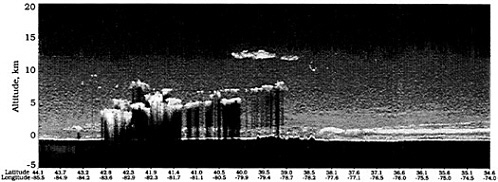
Accurate in situ observations of aerosol provide essential constraint to satellite retrievals and result in the best depiction of aerosol properties. In fact, it is obvious that both in situ and satellite observations by several instruments are required to adequately address the aerosol climate issue.
Table 2.2 displays currently planned and proposed satellite instruments that have the potential to yield information on tropospheric and stratospheric aerosols. These systems are clearly limited in regard to their application to understanding the climate forcing problem. The techniques employed by the nadir-viewing passive systems are expected to work only over ocean, or to experience significant degradation over land, and to provide no data on stratospheric aerosol or in the presence of cloud. In addition, retrieval schemes for passive nadir instruments almost always require extensive a priori modeling of surface properties and the aerosols themselves. Finally, inasmuch as optical depths of the order of 0.05 must be measured to an accuracy of 10 to 20 percent, only SAGE III in the stratosphere and spaceborne lidar (SPARCLE, the Spaceborne Aerosols and Cloud Lidar Earthprobe) in
TABLE 2.2 Satellite Instruments
|
Instrument and Mission |
Launch Date |
Measurement Technique |
Spectral Bands |
Primary Aerosol Products |
Probable Resolution in Optical Depth |
|
LITE/Shuttle (Lidar In-Space Technology Experiment) |
1994 |
Active lidar |
1064, 532, 355 nm |
Backscatter profile 15-m vertical resolution |
20% of value |
|
GOME/ERS-2 (Global Ozone Monitoring Experiment) |
1995 |
Passive, nadir viewing |
240-790 nm |
Optical depth |
0.05 |
|
SeaWIFS (Sea-Viewing Wide Field of View Sensor) |
1995 |
Passive, nadir viewing |
412, 443, 490, 510, 555, 670, 765, 865 nm |
Optical depth, over ocean |
0.03 |
|
AVHRR/NOAA-K (Advanced Very High Resolution Radiometer) |
1995 |
Passive, nadir viewing |
630, 900, 1590-1780 nm |
Optical depth, over ocean |
0.05 |
|
POLDER/ADEOS (Polarization and Directionality of the Earth's Reflectances) |
1996 |
Passive, nadir viewing with polarization measurement |
443, 490, 565, 665, 762, 765, 865, 910 nm |
Optical depth, over ocean, possibly over land |
|
|
ILAS/ADEOS (Improved Limb Atmospheric Spectrometer) |
1996 |
Passive, solar occultation |
1024 channels, 753-784 nm; 44 channels, 6-12 µm |
Extinction profile, above polar regions, 2 km vertical resolution above 15 km |
|
the troposphere, given supporting in situ measurements, can meet the required accuracy demands. Nonetheless, the diversity of current and future spaceborne instruments, such as MODIS (the Moderate-Resolution Imaging Spectroradiometer) and MISR (the Multiangle Imaging Spectroradiometer), is expected to enhance overall understanding of tropospheric aerosol characteristics throughout the atmosphere. Undoubtedly, the most significant shortcoming in the current and planned suite of instruments is the lack of any instrument designed specifically to profile tropospheric aerosols. This task requires new and innovative techniques such as a spaceborne lidar system or some as yet unspecified approach.
In order to fulfill the need for a global data set of aerosol measurements, we believe that a limb instrument operating in visible and near-infrared wavelengths, such as SAGE III, in an inclined orbit will provide the stratospheric data required. However, the next flight of SAGE III in this type of orbit does not occur until 2001 or later. This virtually ensures a substantial break in the stratosphere aerosol climatology initiated by SAM II in 1978. We strongly support a flight of opportunity for SAGE III at the earliest possible date in an inclined orbit (like SAGE II's). In addition, we believe that spaceborne lidar offers the greatest likelihood of producing the data set required to understand the impact of tropospheric (and anthropogenic) aerosols on climate. The strengths of such a system relative to other nadir-viewing instruments include high vertical and horizontal resolution; an indifference to land/ocean effects; only a second-order model influence in the retrieval of the backscatter profile (estimation of the extinction-to-backscatter ratio); and the ability to measure between, and often through, clouds. Since it is unlikely that cross-track scanning will be a part of any first-generation spaceborne lidar, the cross-track horizontal resolution is reduced relative to nadir imagers such as AVHRR and MODIS. The combination of a carefully planned in situ measurement network, and a satellite platform with a cross-track scanning imager sensitive to aerosols and a spaceborne lidar, such as SPARCLE, would be the required approach for depicting global tropospheric aerosols.
In Situ Monitoring of Aerosols
Satellite measurements are appealing because of their global coverage. However, satellites alone cannot yield the necessary chemical or microphysical data. The strength of surface-based, in situ observations is in providing temporally continuous and detailed information on chemical and microphysical properties; their weakness is limited spatial coverage: in situ measurements at fixed sites can cover only a limited geographical area and only at the surface. Surface-based remote sensing techniques permit measurements of aerosol optical depths and vertical profiles of aerosol backscattering.
Adding these measurements to in situ surface measurements allows ground-level results to be placed in context with vertical variations.
In situ observations provide mean values and temporal variability of key parameters required by global-scale models. Measurements of intensive aerosol properties at a number of sites, carefully stratified according to aerosol type (by using air mass trajectories and aerosol chemical composition, as well as gas-phase tracers of anthropogenic sources), can guide choices for numerical values of key parameters for models. Additionally, spatial distributions determined from a network of ground-based measurements, supplemented by regular horizontal transects obtained from aircraft and by regular vertical profiles obtained from aircraft and balloons, allow large-scale closure experiments on three-dimensional distributions of chemical species calculated from models. Such a set of observations is also needed to develop and validate the algorithms that are used to derive aerosol properties from satellite remote sensing data, as well as the algorithms that are used to remove the confounding effects of aerosols from other remotely sensed properties (e.g., sea surface temperature).
Two different strategies for in situ observations are required to address different uses of intensive and extensive aerosol properties. Measurements of a few extensive aerosol properties, with aerosol optical depth having the highest priority, are needed at a sufficient number of locations to provide the geographical variability suitable for evaluating predictions of chemical transport and radiative transport models. Additional extensive properties (such as size-resolved mass concentrations for dominant chemical species) are highly desirable, but the cost and complexity of the measurements limit the number of sites at which these could be made. Instead, efforts should be made to use data from existing networks to validate model predictions of the spatial and temporal distribution of the mass concentrations of important chemical species. In a similar vein, existing networks that monitor aerosol wet deposition could provide data for validating model predictions of removal fluxes.
Much more complex instrumentation is required for measuring intensive aerosol properties, requiring a different monitoring strategy. Table 2.3 lists aerosol parameters that we recommend be monitored continuously to determine the most important intensive aerosol properties. Table 2.4 lists the categories of sites that are needed. The recommended measurements can provide a continuous time series of all intensive aerosol properties needed for calculating aerosol radiative forcing, except angular scattering function (or asymmetry parameter) and humidity dependence of aerosol light absorption. Methods for direct determination of the latter two do not presently exist, and instruments to determine the angular scattering function are not commercially available for routine monitoring applications. Inclusion of the backward hemispheric component of aerosol light scattering will
TABLE 2.3 Aerosol Properties Needed at Continuous Monitoring Sites
|
Description |
Recommended Approach |
|
Mass concentration of important chemical species including major ions, organic carbon, elemental carbon, and trace elements; the total mass concentration should also be determined |
Impactor/filter sampler; ion chromatography, combustion, PIXE.a Measurements should be obtained in two size fractions (sub-and supermicrometer) |
|
Scattering, hemispheric backscattering, and absorption components of the aerosol light extinction coefficient, in the range 0.35-0.90 µm |
Integrating nephelometer, continuous light absorption photometer |
|
Total number concentration |
Condensation particle counter |
|
Vertical profile of aerosol backscatter |
Lidar |
|
Aerosol optical depth at ∼5 wavelengths in the range 0.35-0.90 µm |
Tracking sun photometer or shadowband radiometer |
|
Surface radiation budget |
Pyranometer, pyrgeometer, pyrheliometer |
|
Hygroscopic growth factor for scattering and hemispheric backscattering components of the aerosol light extinction coefficient |
Humidity-controlled integrating nephelometer |
|
Number size distribution, 0.05-5 µm diameter |
Differential mobility analyzer, optical particle counter, aerodynamic particle spectrometer |
|
NOTE: Measurements of hygroscopic growth factor and number size distribution are not required continuously. These can be surveyed intermittently with a sampling package that circulates among the sites. a PIXE = proton-induced x-ray emission analysis. |
|
at least provide a substantial constraint on the range of possible values for the asymmetry parameter. It may become appropriate to add measurements of CCN spectra at a later date, but considerable process research and instrument development are necessary before a suitable sampling strategy can be devised.
These different strategies for continuous measurements of intensive versus extensive aerosol properties dictate different station densities. A high-density network is needed for aerosol optical depth, whereas a limited number of sites, each located in an area dominated by a different aerosol type, is appropriate for monitoring intensive aerosol properties. Model results of
TABLE 2.4 Categories of Sites to Monitor Intensive Properties
|
Category |
Aerosol and Sampling Characteristics |
|
Polluted continental |
Industrial and other anthropogenic aerosols |
|
Polluted marine |
Anthropogenic aerosols, sampled after one or more days of transport and transformation after leaving the source regions |
|
Clean continental |
Characterize continental aerosols under conditions of minimal anthropogenic influence, for comparison with polluted conditions; given the wide variety of continental conditions (forest, desert, plains), it will be necessary to sample at a number of sites, although perhaps not simultaneously |
|
Clean marine |
Characterize marine aerosols under conditions of minimal anthropogenic influence, for comparison with polluted conditions |
|
Biomass combustion |
Aerosols formed by combustion of biomass |
|
Mineral dust |
Windblown dust, sampled after one or more days of transport and transformation after leaving the source regions |
|
Free troposphere |
Characterize aerosols above the boundary layer under conditions of minimal anthropogenic influence, for comparison with polluted conditions |
|
Stratosphere |
Surface-based monitoring impossible; primary in situ monitoring effort should be balloon-based measurements of the vertical profile of aerosol size distribution |
Benkovitz et al. (1994) yielded a characteristic autocorrelation distance for sulfate column burden over the Atlantic Ocean of around 1000 km. To characterize aerosol optical depth distributions over North America, where even shorter characteristic autocorrelation distances are expected because of the proximity to anthropogenic sources, would require a network of at least 30 stations. The now-defunct aerosol optical depth network operated by the National Oceanic and Atmospheric Administration (NOAA) in the 1960s and 1970s (Flowers et al., 1969) had about 40 stations spanning the United States. A similar estimate of the number of stations needed to characterize the aerosol intensive properties cannot be made, because of the lack of data or model results on the expected variability. Instead, the recommended strategy is to begin with one station in each category and use the results from the initial stations and the airborne survey flights (see discussion of mobile platforms below) to decide whether additional stations are needed.
Although many local, state, national, and international monitoring networks include aerosol measurements, many of the available data are of limited utility for climate forcing calculations because particle sampling
lacks an appropriate upper size limit. Measurements of total suspended particulate mass and measurements made according to the U.S. PM-10 standard (particulate matter of diameter less than 10 µm) are largely unsuitable because they include particles that often dominate total mass but contribute little to optical or cloud-nucleating properties. Furthermore, production mechanisms for submicrometer and supermicrometer particles are very different, and a total sample will contain contributions from both types of sources. Such uncontrolled measurements may be useful in some cases for comparing measured mass concentrations of specific chemical species with model predictions, but extreme care must be taken to ensure that all sources contributing to the total sample are modeled.
This problem is somewhat reduced, but not eliminated, with measurements made according to the U.S. PM-2.5 standard, which excludes particles larger than 2.5 µm in diameter. Extensive aerosol properties determined with this size cut are suitable for comparisons with model predictions of aerosol mass concentrations. These data are also useful for determining aerosol mass balance by chemical species, which can be used to estimate relative contributions of different species to light extinction. Measurements of mass scattering or absorption efficiencies made with a size cut larger than about 1-µm diameter, however, are very sensitive to local variations of supermicrometer particles.
Measurements of the surface radiation budget (upward and downward, solar and terrestrial radiation) are recommended at sites where the full complement of aerosol properties is measured. Aerosol changes have been indicted as major contributors to changes in the radiation budget, and dedicated networks exist for monitoring changes in solar radiation reaching the surface (WCRP, 1991). These networks, however, are not measuring aerosol properties; thus, interpretation of the effects of aerosols on results from these networks is severely limited. By complementing fully instrumented aerosol monitoring sites with radiation budget measurements or by co-locating new aerosol monitoring sites at existing radiation budget [e.g., Atmospheric Radiation Measurement (ARM) Program] sites, it will be possible to evaluate the effects of aerosol on the surface radiation budget at least at a few locations.
Measuring the surface radiation budget together with aerosol properties is needed, also, to evaluate effects of changes in aerosol on cloud optical properties. Satellite observations of cloud albedo and the radiation budget at the top of the atmosphere, plus surface-based observations of aerosols and the radiation budget, are expected to permit initial estimates of the sensitivity of cloud optical properties to below-cloud aerosol.
In addition to obtaining long-term measurements, the continuous monitoring program must also include a research component into the way monitoring is conducted. Use of standardized sampling protocols is essential for
obtaining comparable results, but no single protocol is optimal for all conditions and chemical species. For example, humidity-controlled sampling is necessary to ensure that the results are not controlled by variations in atmospheric relative humidity. However, the process of lowering the relative humidity also can affect the chemical composition of the particles, possibly introducing systematic biases into the measurements. The magnitude of such effects must be evaluated over the broad range of conditions encountered at the sampling sites, and revised or supplemental sampling protocols must be developed to remove any such biases.
The measurement strategy also needs a periodic evaluation of the results of the monitoring program, to address the questions of the duration of measurements and necessary changes in network density or experimental approach. Meteorological variability from year to year suggests that an initial observational period of 5-10 years is needed, and may have to continue even longer if significant trends or large variability in the results is observed.
Recommended Surface-Based Monitoring Programs
We recommend establishing a dual-density network of surface-based stations for continuous aerosol monitoring, consisting of a high-density network of ca. 30 stations for aerosol optical depth and a low-density network of 7 stations (Table 2.4) to provide detailed information on means, variability, and trends of key aerosol radiative, chemical, and microphysical properties (Table 2.3) for different aerosol types.
Mobile Platforms
The notion of regularly using a single aircraft to support surface observations in a nearly continuous circuit of geographically distributed sites is both novel and very attractive. Such an airplane could operate essentially continually, shuttling to sites across the United States with a roughly weekly schedule. Instrumentation on the aircraft should be kept fairly simple: a suite of spectral radiometers; in situ measurements of aerosol scattering, hemispheric backscattering, and absorption coefficients; and size-resolved chemical samplers. This suite of measurements covers the most important extensive and intensive aerosol properties. By shuttling between surface monitoring sites (where cooperative vertical soundings would be made), not only would the surface program be routinely augmented with soundings, but observation over a unique geographical-scale component could be added to the program.
Similarly, a routine monitoring program from ships would add a valuable component to model validation studies (Figure 2.4). This approach is
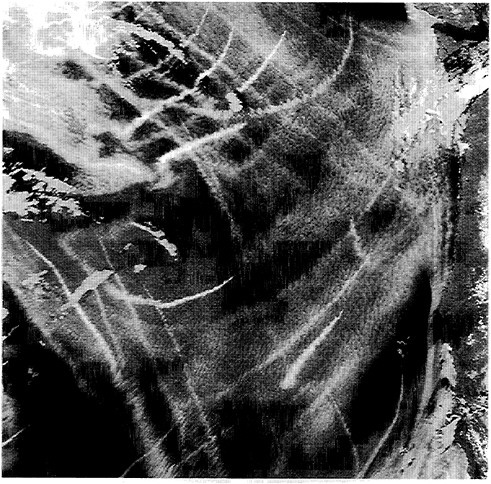
FIGURE 2.4 Ship tracks off the coast of Northern California.
an integral part of flask-sampling networks for monitoring atmospheric greenhouse gases from ships carrying freight along regular routes. For logistical reasons, the suite of measurements would have to be quite limited. As a minimum, size-resolved samples and scattering coefficients of the aerosol should be collected in fixed, predetermined regions along the track, with subsequent analyses for total mass, major ions, and light absorption. If logistical constraints allow, measurements of aerosol optical depth and aerosol light scattering and absorption coefficients should also be obtained.
The recommended approach for routine monitoring of the stratospheric aerosol is via satellite. However, satellite observations must be complemented with a regular program of balloon-borne observations to provide ground-truth information. The 20-year record of vertical profiles of aerosol size distribution at Laramie, Wyoming, should be continued to satisfy this need.
Recommended Mobile Monitoring Programs
We recommend a systematic, limited-duration (three-to five-year) program of ship-and airborne surveys to characterize the horizontal and vertical distributions, over the global oceans and North America, of the same aerosol properties studied in the low-density, surface-based network. In addition, we recommend continuing the long-term record of vertical profiles of aerosol size distribution at Laramie, Wyoming.
We recommend that a minimum of one aircraft make weekly flights to systematically make vertical profile measurements of a subset of aerosol properties.
We also recommend that a least two ships each in the Atlantic, Pacific, and Indian Oceans be outfitted with continuous and flask-monitoring systems.
RECOMMENDED TECHNOLOGY DEVELOPMENTS
The proposed systematic program of closure studies (aimed at testing the internal consistency of measurements and models) will undoubtedly reveal situations in which current measurement technology is inadequate. Furthermore, there are areas in which development efforts are needed immediately to provide instrumentation that is suitable for continuous monitoring and process/closure studies. Also, the integrated program proposed herein will require continued advances in modeling capability in both computational hardware and software.
-
Parallel Architectures: One of the most computer-intensive calculations with regard to modeling aerosol behavior is prediction of aerosol size evolution. At present, it is not feasible to include aerosol size resolution in global-scale models; however, massively parallel computers have the potential to greatly speed calculations and perhaps eventually allow size and composition resolution in global aerosol models. Research should be initiated on the use of parallel computers for coupled atmospheric chemistry-aerosol models. Coupled with the use of massively parallel computers, numerical methods for solving the basic equations of the models should be reassessed.
-
In Situ Measurement of Aerosol Light Absorption: Suitable methods exist for determining the dependence of aerosol light scattering on humidity. For aerosol light absorption, however, humidity dependence has not been measured and suitable methods are unavailable. Existing methods for determining absorption in all but the most polluted situations require particle concentration on filters to produce a measurable change in transmitted light. Unfortunately, the humidity dependence of light absorption will likely be different for deposited versus airborne particles because of the optical and physical effects of contact with a filter substrate. We recommend
-
that research be initiated on the development of in situ techniques for measuring aerosol light absorption.
-
Angular Scattering Function and Asymmetry Factor: A few polar nephelometers, which measure the angular scattering function β(φ,λ), are in existence (Hayasaka et al., 1992; Jones et al., 1994), but none is being used for continuous monitoring or closure studies. These instruments are needed for determining the asymmetry parameter g(λ), for which no method of direct determination exists. Size distribution measurements and numerical inversion measurements of other aerosol optical properties can be used to estimate the asymmetry factor, but thorough closure experiments for these approaches require a direct measurement of either β(φ,λ) or g(λ).
-
Systematic Vertical Profiling: Interpretations of observations from surface-based facilities require assumptions about representativeness of the observations to conditions throughout the vertical column. Systematic profiles obtained from the proposed airborne observational program will allow these assumptions to be tested, but more frequent observations at surface stations will be needed to allow evaluations of the importance of vertical inhomogeneities to measured aerosol properties. Tropospheric aerosol lidars measure vertical profiles of the volume aerosol backscatter cross section βπ (Hoff, 1988; Radke et al., 1989b; Ansmann et al., 1990). Relatively constant values of βπ in the boundary layer, with lower values aloft, would support the assumption that surface-based measurements represent optical properties of the part of the vertical column that dominates the direct aerosol radiative forcing; conversely, layers aloft with higher values of βπ would indicate that surface observations may be unrepresentative. Although methods exist for estimating aerosol extinction profiles from lidar measurements of βπ (Kovalev, 1993), the relationship is ambiguous and additional measurements (e.g., from the airborne observational program) are needed to resolve the ambiguity. However, for the purpose of identifying cases in which the surface measurements may be nonrepresentative, this ambiguity is acceptable. Analysis of tropospheric data from existing operational lidars would be a logical first step.
-
Refractive Index: Most methods for determining the real part of refractive indices of aerosol particles require particle collection on filters for subsequent chemical or optical analysis. For some closure studies, these methods provide insufficient time and/or size resolution for adequate inference of the refractive index. New instruments for this measurement have the potential to surpass these limitations, but they cannot yet be used routinely for process/closure studies or continuous monitoring programs.
-
Cloud Nucleating Particles: Several different types of CCN counters are in use today. Most have their roots in diffusion cloud chambers. In the thermal gradient cloud chamber, the aerosol is processed through a channel in which wetted parallel walls are maintained at slightly different temperatures.
-
Each wall is coated with a water-absorbing material, so that saturated conditions are maintained at each surface. Because of the temperature gradient between the two walls and the nonlinear dependence of the equilibrium vapor pressure on temperature, the saturation ratio increases from unity at the walls to a maximum in the middle of the channel. To obtain a distribution of supersaturations, a sequence of supersaturations is produced for successive measurements.
The limited time and supersaturation resolution of such measurements motivated Fukuta and Saxena (1979a,b) to develop a transverse thermal gradient CCN spectrometer capable of producing a range of supersaturations typical of those encountered in natural clouds and-yielding near real-time measurements of the CCN spectrum. The range of supersaturations achievable with this instrument is about 0.1 to 2 percent (i.e., the high end of those encountered in cloud environments).
Hudson (1989) developed an instrument that both increased the time resolution beyond that achievable with the transverse gradient CCN counter and extended the range of supersaturations to values as low as 0.02 percent. The instrument does not provide an absolute measurement of critical supersaturation. Instead, it must be calibrated by using particles of known critical supersaturation (i.e., known composition and size). Moreover, the use of the final size to infer critical supersaturation makes the longitudinal gradient CCN counter sensitive to anything that might cause variations in growth rates. Experimental evidence that the condensation coefficient decreases with time following the onset of cloud formation (Hagen et al., 1989) suggests that the response of the instrument might vary with cloud age.
None of the research-grade instruments that exist for determining number concentration of CCN as a function of supersaturation Nccn(S) is suitable for routine operation in a monitoring network or for unattended operation in an aircraft. There is a critical need for a compact, robust instrument to measure CCN spectra in a monitoring network or in airborne mode.
-
Lightweight Samplers: Several new sampling platforms are being developed to reduce the cost of obtaining vertical profile information. Remotely piloted aircraft, balloons, and kites are (or will soon be) used to make measurements above the surface. Unfortunately, many of the sampling devices now in use on other platforms are unsuited to these low-power environments. It is particularly difficult to collect samples for chemical analysis since the large weight and power requirements of typical filter samplers cannot be flown by these systems. An aerosol collection device optimized for low weight and power would make it possible to sample aerosols above the boundary layer from an inexpensive kite or balloon at a much lower cost than flying a research aircraft. In view of the need for data on concentrations above the surface, the development of lightweight particle samplers needs to be pursued.
-
Buoy-Mounted Instrumentation: Over most of the Earth (the oceans), it is impossible to make long-term in situ observations of aerosol properties. The oceanographic and meteorological community has addressed similar sampling problems by investing in the engineering necessary to make some instrumentation compatible with long-term operation of buoys. Traditionally touchy devices, such as sonic anemometers and instruments that measure salinity and some chemical species, are now routinely operating in the middle of the oceans on buoys that are visited only annually. If one were to engineer a seawater DMS probe, an optical particle counter, or related aerosol-measuring devices to work unattended for months at a time on buoys, one could vastly improve the climatology of aerosol concentrations in remote regions. The engineering capability already exists and simply needs to be applied to the most important sensors.
SUMMARY OF A RESEARCH PROGRAM ON AEROSOL FORCING OF CLIMATE
We recommend an integrated program of research on aerosol forcing of climate that includes
-
advances in the representation of aerosols in global climate models, particularly with respect to indirect climatic effects;
-
laboratory, theoretical, and field research on aerosol optical properties;
-
identification of aerosol molecular composition, particularly the organic fraction;
-
development of an understanding of aerosol formation and growth in the atmosphere;
-
elucidation, through laboratory, theoretical, and field studies, of the aerosol-CCN-cloud droplet-albedo relationship;
-
execution of atmospheric closure experiments to test theoretical understanding;
-
development of a new satellite system for remote sensing of tropospheric aerosols;
-
establishment of in situ aerosol research measurement stations to provide continuous data on aerosol amounts and properties in key global areas;
-
advancement of instrumentation technology for measuring aerosol properties in situ; and
-
system integration and assessment.
Addressing these needs will require a systematic and patient approach. A crash program is not called for; rather, a systematic development of capabilities should be pursued over a period of the order of a decade.


