
2
How Can You Meet Your Career Goals?
This guide offers advice that might be useful to people at every stage along their career path—from undergraduates wondering "what they would like to be when they grow up" to established professionals pondering a career change. Younger students might not yet confront the challenges of seeking jobs and changing careers, but even undergraduates are well advised to consider a career in science or engineering in its entirety. To emphasize this point, this chapter on defining your career goals comes before the ones on skill attainment (Chapter 3) and education (Chapter 4). This gives you an opportunity to focus on your career goals first—and then on what you need to attain those goals.
Envisioning a Career
If you're considering a career in science or engineering, step back and imagine the shape of that career. Do you want to focus on "doing" science or engineering? Or a career that is not necessarily categorized as doing science or engineer-
ing but instead uses your science or engineering background to make your contribution to society in a different way? Where would you like to be in 5 years? In 20 years? Can you imagine getting there from where you are today?
If you are like most students, it is highly unlikely that you will find specific answers to career questions before graduating. But it is never too soon to find out as much as you can about yourself and the career you envision, alternatives to that career, and how best to match your own personality and desires with the shape of possible careers in science and engineering.
Planning a Career
Of course, there is a limit to how carefully students can—or should—try to plan for an unknowable future. You might have gained the impression that careers proceed in a more or less straight line that begins with an undergraduate degree and leads directly to the position you anticipated. But most career paths are neither straight nor predictable—nor, in the end, would people want them to be. Careers can have as many sudden turns and new directions as life itself. Even your earliest steps along this path will probably be guided by accidents of timing and opportunity as much as by intention. You will go to a particular school or take a particular position because of a conversation with a friend or adviser or a random bit of news. Or someone on a university admissions committee is attracted by a particular detail in your application. Or a postdoctoral position opens on the same day that you happen to call a friend in the same department. The more you have thought about your career, the better able you will be to take advantage of such unplanned events.
As Louis Pasteur observed, "Chance favors the prepared mind."
That is the nature of careers in science and engineering—as it is of careers in general (Tobias et al. 1995). The profiles that appear throughout this book demonstrate how fluid the course of American education and employment can be when you are sufficiently qualified, motivated, and open-minded to accept a new opportunity when it comes.
How Careers in Science and Engineering Are Changing
Most scientists and engineers find careers in three general sectors of society: colleges and universities, industries, and federal and state agencies. Their work includes an array of activities, from the conduct of basic and applied research to the design and application of new commercial products to the operation and maintenance of large engineering systems.
You can make your planning more effective by appreciating the direction in which professional careers are shifting within that larger picture. For example, for many students, a PhD will mean a career as an academic researcher. But more than half the students who receive PhDs in science and engineering obtain work outside academe—a proportion that has increased steadily for 2 decades. And full-time academic positions in general are more difficult to find than they were during the 1960s and 1970s, when the research enterprise was expanding more rapidly.
As our society changes, so too do the opportunities for careers in science and engineering. The end of the Cold War has removed some incentive for the federal government to fund defense-oriented basic research. Increased national and
global competition has forced many industries to reduce expenses and staff. That means that there are fewer research and development positions in universities, industries, and government laboratories than there are qualified scientists and engineers looking for them.
Powerful changes have swept through the universities. For example, there are strong public pressures for universities to shift their emphasis toward teaching and toward undergraduate education; the number of positions for permanent faculty has decreased; professors are no longer required to retire at a particular age; and more part-time and temporary faculty are being employed. All those trends affect the universities' ability to hire scientists and engineers.
At the same time, small and medium-sized companies in some fields are increasing their research and development activity as they develop new technologies. The natural advance of technology is creating new opportunities in information science, software design, biotechnology, data processing, environmental engineering, electronic networking, manufacturing and computational simulation, and forensic science. Government agencies are converting some of their defense-oriented efforts to research in environmental work, communication, information, and other fields. Recent graduates with skills in more than a single discipline are attractive to businesses in these and other multi-disciplinary fields, especially if they have dual master's degrees or strong minors (see Chapter 4).
Scientists and engineers are learning to apply their expertise more broadly. Professionals in the physical sciences find employment not only in the discipline of their degree but also in a wide variety of related careers where their analytic and reasoning abilities are valued.
For example, increasing numbers of physicists, mathematicians, and engineers find their skills valued in the financial arena. More than 14% of the firms recruiting at the Massachusetts Institute of Technology in 1995 were financial companies, nearly 3 times as many as in 1983. Graduates are being put to work writing software, using computers to capitalize on market inefficiencies, constructing financial models that predict fluctuations in securities prices, and designing complex mathematical tools to assess portfolio risk.
In engineering, careers are being transformed by several intersecting trends. International companies now draw employees from many nations, seeking out valued experts from a global pool of labor to work project by project. Companies value multilingual workers with a breadth of competencies—managerial as well as technical—and the ability to access and apply new scientific and technologic knowledge. The more flexible and mobile you can be, the more opportunities you will have and the greater will be your control over the shape of your career (IEEE video 1995; University of Texas at Dallas 1995).
The Case of the PhD
Although most people believe that PhDs work primarily as tenured research professors in academe, long-term trends show otherwise. Fewer than half are in tenure-track positions and almost half are in nonresearch positions.
For example, a graduate-student packet from the American Institute of Physics describes PhD physicists working in diverse positions: physical oceanographer, air-pollution expert, science education-consultant, computer-software de-
|
The Importance of Knowing Your Facts and Figures As a scientist or engineer, you know the importance of not just making assumptions or listening to anecdotes when you're analyzing a situation in the laboratory or the field. The same is true when you are trying to understand graduate education or the job market. For example, how many science and engineering PhDs do you think obtain employment in the academic employment market? 90%? 75%? The real answer, as shown in the graph on page 15 is less than 50% in 1991, and it is an illustration of a steadily declining trend. On the other hand, employment of science and engineering PhDs by business and industry is increasing in that same period. If you look at how many science and engineering PhDs are in tenure-track positions 5–8 years after receiving the PhD, you will find that it is less than one-third. What is the employment marketplace like this year for those with bachelor's vs. master's vs. PhDs in different disciplines? How many people in different disciplines get master's vs. PhDs? How many years does it take to get a PhD in different disciplines? Is postdoctoral work in your discipline customary? How long does it usually take? What are the most common mechanisms being used for financial support of graduate students? There is no way of knowing the latest statistic in the ever-changing academic and employment market without taking some time to review the available information. To find out information like this, make a stop at the National Research Council's Career Planning Center For |
veloper, professor of history of physics, science journalist, partner in a venture-capital firm, astrophysicist, founder of a small corporation, staff scientist in an instrument firm, industrial ecologist, quantitative analyst with an international bank, educational-software consultant, developer of speech-recognition systems, and radiologic physicist (APS 1994).
|
Beginning Scientists and Engineers on the Internet (http://www2.nas.edu/cpc). One section of the center titled ''Trends and Changes in the Job Market" analyzes such data from a student perspective. Another good source of information is your scientific or engineering disciplinary society. Many societies produce an annual employment guide that discusses the employment market for their discipline—especially for recent graduates. In addition, the National Science Foundation issues each year a report titled Science and Engineering Indicators that also discusses these statistics. So take the time to look at the available facts and figures about the job market and graduate education before taking that next big step. 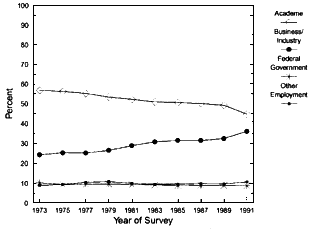 |
Similarly, PhD chemists have success in moving beyond the laboratory bench to a wide range of careers. Within companies, they might move into marketing, production, manufacturing, sales, or management. Or they can move into such related fields as environmental chemistry, public policy, education, journalism, scientific translation, law, banking,
medicine, patent law, public service, and regulation. PhD biologists might move to those and other careers, such as biotechnology, pharmaceuticals, biochemical processing, ecology-policy analysis, and patent law.
Engineers, of course, have long moved transparently between academe, industry, and business. All scientists and engineers potentially have the opportunity to use nonresearch skills within science- and engineering-oriented organizations by managing other scientists, developing budgets, and producing plans for new R&D activities (Kirschner 1995).
Such examples reflect a fundamental shift in the conduct of research. Increasingly, the most interesting work is being done at the interfaces between chemistry, biology, physics, engineering, geology, and other disciplines. That has the effect of blurring the boundaries between traditional disciplines, so the range of activities in science and engineering is beginning to look more like a continuum than a set of discrete disciplines. The complex challenges of interdisciplinary research demand a broader preparation than does a more traditional disciplinary focus (Tobias et al. 1995).
Evaluating Possible Careers
Even if your career might change direction as you advance, your first steps are important ones. How do you know where to begin?
Do not ignore what is right under your nose: your own faculty adviser and, if you are a graduate student, your research or laboratory group. By watching the people around you, you can learn a great deal about the roles that a faculty member plays. Your adviser could be, at various times, a
teacher, a business manager, a mentor, an author, a committee member, a boss. Which of those roles is appealing to you?
If you are an undergraduate or beginning graduate student, you are probably not ready to choose a career. But you can start asking questions and watching people in their work. If you learn early what your options can be, you will be ready to ask the right questions when your time comes to find a position.
Evaluating jobs also means dealing with attitudes. Some faculty members and students assign a lower status to nonresearch jobs for people who have PhDs. As a result, PhD students who plan for such jobs might be told that they are wasting their education or letting their advisers down. That attitude is less prevalent in some professions, notably engineering and some biology-related fields, where nonacademic employment is the norm. Also, negative attitudes toward nonacademic employment are often less evident during times of job scarcity. But if you do encounter such an attitude remember that a wide variety of positions can be as challenging and gratifying for PhD scientists and engineers as traditional research positions. Back up your assertion with facts and figures, including the profiles presented in this guide and facts about the employment situation from the Academy's Internet career-planning center.
Tempo and Environment
Consider the tempo and environment of various careers. Are you attracted to the pursuit of knowledge, the search for something new, the freedom to follow your curiosity? If so, you might be best suited for a career as a basic researcher, even if it means spending long hours in the laboratory or library. Or do you work best with other people and perhaps
dream of the excitement of running a large operation, making executive decisions, and bringing new scientific ideas to the marketplace? Many basic researchers eventually do those things—if they have strong team and leadership skills.
Think about the day-by-day activities of a career. Will they provide challenges that stimulate you? Do you like the depth of a single project or the variety of a changing scene? Do you prefer a more-formal or a less-formal atmosphere? How will your work mesh with family life and other obligations? How much will a job pay—not just when you start, but as you advance?
For example, PhD physicists who work in industry were asked, What aspects of your work are rewarding? First on their list was the challenge of solving interesting and complex problems. Second was the satisfaction of working with people. Third was seeing a project yield a successful and useful product. Last on the list was basic research. If that order of priorities appeals to you, you might be suited to a career in industry (AIP 1994).
Relating Your Education to Your Occupation
It is possible that you will begin as a laboratory scientist or engineer and move on to a management or other leadership position. If you recognize such possibilities, you can design your graduate education so that you are equipped for many kinds of nonresearch activities.
Remember, also, that even graduate-level scientists and engineers in "traditional" academic careers need a broad range of skills. The most successful of them might spend 70–80 hours a week at their jobs, a large proportion of which is spent in writing, lecturing, and discussing matters far removed from research.
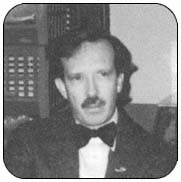 It might seem strange to some people that Steve M. Hays, who was trained at Vanderbilt University as a chemical engineer, is now a partner in an architectural firm. But it is not strange to Mr. Hays.
|
A big step in changing careers, Mr. Hays admits, was simply "summoning up the courage to make the switch." Once he did, the transition went smoothly, for several reasons. One was that he and his architect partner, Ron Gobbell, were willing and able to exchange expertise. Equally important was Mr. Hays' conviction that he had something to offer. "A chemical engineer in the building industry doesn't seem so far-fetched when you consider that the chemical engineering curriculum provides a base in all the engineering disciplines. I can meet with consulting engineers of other disciplines on an equal footing when discussing building projects. A positive approach turns out to be essential—an attitude of 'I have things to contribute here.' It's been my experience that professionals in building design are very receptive to the expertise of a chemical engineer." |
Personal Values and Your Occupation
Think about possible careers from many angles: Is the atmosphere intellectually challenging enough for you? Do you hope to teach a lot or a little? Are you more comfortable in a campus environment or in the world of business (Kennedy 1995)? How important is the prestige of your position? Are you planning to do what your parents always wanted you to do or what you want to do?
Think as deeply as you can about your personal values. Do you have a need to help others or to protect the environment? Will you be doing those things in your work? Visit as many workplaces as you can to gain valuable clues about settings where you believe that you would be comfortable.
Consider also your present family situation. If you are married, do you expect your spouse to move to a new location? Do you have or plan to have children? Can you support them? If you have had to borrow money, how much debt will you carry beyond your school years?
Evaluating an Occupation
To make such evaluations, you need to learn the characteristics of different occupations. Talk with faculty, friends, or acquaintances who have jobs that appeal to you; accompany them to work and ask about their careers. Even people who do not know you personally are often willing to tell you about their jobs. "Shadowing" someone for even a single workday can give you the flavor of a job and its routines. Do this early—as an undergraduate, if possible—before you get too busy to take time from your work. Such information-gathering can build networks that serve you well in the future.
|
Evaluating Yourself Frank is happy majoring in chemistry, but when friends ask him what kind of career he is planning, he has no answer. He is not even sure whether he fits in academe, in industry, or in government.
See appendix for a discussion of this scenario. |
Pursue every opportunity (during a summer, for example) to gain practical experience. Seek out cooperative education programs, which are explicitly designed for this purpose. Try to experience first-hand the conditions of the working environment that you contemplate. You might learn a lot about yourself and about different careers by doing volunteer work in a hospital, classroom, or laboratory. Internships can reveal the feeling or atmosphere of a particular discipline and introduce you to the kinds of people who work in that field.
You might think that you know exactly what you want to do, or you might have already begun to work. Even so, it pays to investigate adjacent areas in case opportunities in your chosen field are limited or the field has matured beyond its phase of rapid growth (Peters 1992). For example, suppose that microbiology is your choice, but you seem to be stalled at the postdoctoral level. A degree in microbiology might allow you to find gratifying work in a biotechnology firm. Suppose that you studied electrical engineering to work in the space program, but jobs are scarce; a double degree with environmental engineering might give you
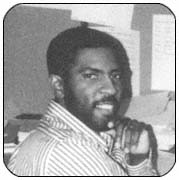 Russell Greig excelled in mathematics as an undergraduate at Florida A&M University. His goals were to use mathematics in a practical way, to work in the "real world," and to earn a good income. He was planning a career in civil engineering when his calculus professor took him aside.
|
market. At the same time, he is approaching the end of his studies. "Since I graduated, I've been spending close to 400 hours every 4 months studying for the exams," he says. "The company gives me 120 hours, the rest I do at night and on weekends. The competition is pretty steep, so you have to do well. If you do, job prospects are excellent and you gain high respect in the profession. At the fellowship level you're at the top and you can pretty much decide where you want to work. I'll probably stay in the South; I'm from the Virgin Islands and I can't take the cold." Mr. Greig encourages students who enjoy applied mathematics to look into the field. "I recommend it to those who enjoy number-crunching, who want to see immediate, practical results from what they're doing. You have to be prepared to pay your dues, but there's plenty of opportunity. There are only about 2,500 casualty actuaries in the world, and the field is still growing. "Math majors have other good choices in applied fields. One is the financial area, where there is demand for people who can quantify financial risk models and also can present what they're doing clearly to others who are not sophisticated in math. In fact, when I'm done with these exams I'm going to take the Chartered Financial Analyst exams, which are like a shortcut to an MBA in finance. This allows you to do more asset-related work. "Another growth area is computer science and programming. I often work with programmers who don't understand the math involved. If you know the math to begin with, you'll be able to write your own ticket. The math is where it begins." |
more options. For ideas, check university placement offices, professional employment companies, professional societies, and the want ads in major newspapers and journals, which can tell you which fields are searching for people. Use referrals from faculty, students, and your disciplinary society to find and talk with people in fields that might be new to you.
Many scientists and engineers flourish as self-employed consultants. Independent, self-reliant people might find diverse possibilities in doing contract work for businesses, industries, or government agencies. But people who have taken such steps caution against taking them prematurely. To raise your chances of success, develop your contacts, try working in a field that you have already mastered, and be sure that you have the financial resources to get through periods of low income. Part-time self-employment can be a source of income—and contacts—while you are looking for a position.
If after considerable investigation you still do not see your career on the horizon, do not assume that it doesn't exist. If you know what you like to do and become good at it, your interest might evolve naturally into a job that is an extension of your own special interests and activities. One of the benefits of an innovative, fast-changing society like ours is that people are able and even encouraged to create their own niches.
Evaluating Your Own Strengths and Weaknesses
While you are evaluating possible careers, take a close look at yourself as a person. Are you innovative or conventional? Timid or bold? Do you thrive on constant challenge? How important is your career, compared with family and
other activities? Some positions in science and engineering involve long hours and a high degree of dedication.
For a fulfilling career, there must be a good match between your natural abilities and what is expected in various professional positions. A useful exercise is to ask yourself what you have enjoyed most in your life and where you think that you have been most useful. Then ask what you have enjoyed least or have found most frustrating. Compare the two lists. Why did you enjoy or dislike each activity? Do you think that your attitude would change if you had more education or training? Would it make a difference if you did it in a different setting or with different people? By examining apparent mismatches, you can learn to evaluate your own strengths and weaknesses in the context of possible jobs.
Take advantage of computer aids and self-assessments; talk to students, teachers, friends outside school, and a guidance counselor. Planning and placement offices provide testing and counseling for students and alumni. Such tests as the Myers-Briggs Type Indicator (a personality inventory) and the Strong Interest Inventory (which compares a person's interests with those of people employed in particular occupations) might help in finding the career best suited to your temperament.
Because it is difficult to see yourself objectively, seek out other people who might have a different picture of you. A friend or colleague might see strengths invisible to you or advise you against a career that seems wrong for you. An undergraduate adviser can be especially useful—especially if he or she knows you personally as well as academically.
Many publications offer inexpensive, do-it-yourself ways to assess your skills. Check your library, bookstore,
and career center for guides that help you take inventory of your skills and preferences and match the results with the characteristics of different fields. The most popular is What Color Is Your Parachute?, by Richard Bolles, a new revision of which appears each November. Bolles studied chemical engineering at the Massachusetts Institute of Technology and earned a degree in physics from Harvard. He offers many aids to help you to determine which skills you most enjoy using, the context in which you want to use them, and careers in which you can apply them (Jensen 1995). Other tools are now available online and can be reached via the National Research Council (NRC) Career Planning Center For Beginning Scientists and Engineers (http://www2.nas.edu/cpc).
Assessment of your skills, of your preferences, and of the careers that might be available to you continues as you complete each degree and gain work experience. The time to begin is now, and you should renew this assessment annually throughout your career.
|
Action Points
|


