
3
What Survival Skills and Personal Attributes Do You Need to Succeed?
In the last chapter, we discussed matching your personality and natural abilities with the kind of performance required in various careers. Some of those skills are technical, such as the ability to operate or design complex equipment. Others allow you to apply your technical skills: the ability to reason, to spot interesting problems, to formulate hypotheses, to test those hypotheses. These allied skills acquired in graduate school are more powerful than many students recognize and can be applied to many other kinds of jobs and careers.
What Are Skills and Attributes?
A potential employer will assume that as a scientist or engineer, you have advanced technical skills. But some of them, including the analytic and problem-solving abilities that are central to what you do as a researcher, might remain invisible unless you are able to display them. That is, unless you also have such survival skills as communication,
teaching, mentoring, teamwork, and leadership, your total effectiveness might be difficult to see.
Basic among survival skills are social skills, which are increasingly important in all kinds of jobs, including research positions. They are used when you participate in a seminar, lead a team effort to solve a research problem, or give a public presentation. They should not be considered optional or extra. Scientists and engineers doing research are working more and more directly with nonscientists, members of the public, and clients to solve problems. All technical abilities being equal, the candidate who has strong social skills will be hired.
In many jobs, you will spend a large part of your time in practicing nontechnical skills. In 1994, the American Institute of Physics asked several thousand PhD physicists working in industry, government, and academe which skills they used most frequently in their jobs. The skills that they ranked highest were problem-solving, interpersonal skills, and technical writing. All those apply to fields throughout science and engineering and can be sharpened, as suggested in this chapter.
Skills are developed as we mature, and your years in school are a good time to make sure that you have the ones you need. Students who emerge as young scientists with a deficit of social and communication skills might be severely handicapped in pursuing a satisfying career. As the range of employment for scientists and engineers expands, especially in the nonacademic world, it is vital to gain as many skills as possible before leaving the university setting.
Attributes are aspects of your nature (although they can be developed). Unlike skills, which enable you to do something, attributes enable you to be someone. Sometimes they
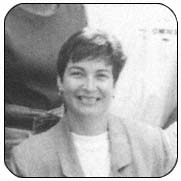 Janice Hicks's father, who worked for a pharmaceutical company, was a major influence on her choice of career. She paid attention as he described the excitement of chemistry and his reverence for scientific research. By the time she was a first-year student at Bryn Mawr College, she knew that she wanted to be an academic researcher.
|
mer in an industrial laboratory taught her that she did not want to work in industry. And a stint in a biophysics laboratory at the University of Pennsylvania taught her that she preferred the precision and molecular scale of physical chemistry to larger-scale biologic work. When the time came to choose a graduate school, she was not particularly methodical. She selected Columbia University because she had enjoyed a visit to a friend at Barnard and because she wanted to live in New York. But it turned out to be a good match; she verified her passion for chemistry and built expertise in using ultrafast lasers to study chemical processes in liquids. And whenever the laser broke down, she and her friends could take the subway downtown to the Metropolitan Opera. But it was not until she went back to Penn for postdoctoral work that she really knew that she could be a professor. "I had heard you have to be the best to go into academe, and I was still questioning my ability. Then I had a mentor who changed all that. He gave me the push I needed, and once it came, my confidence grew. "This is an issue for many women, in particular. Women don't apply for academe positions in the proportion to the number graduating, and I think confidence is the issue. They tend to hold back, to wait for a signal from mentors. Many mentors don't think to give this signal, without realizing how important it is. "A lot of young women have heard that you've got to be the best to go into academe, and when you do, you have to go to a top-10 university. If they only realized how many hundreds of universities there are out there that need good professors!" |
|
Her desire to help students with such issues is an important feature of her life at Georgetown, where about 50% of her time is spent in teaching. "I went to a small college where undergraduates got a lot of attention. I wanted to be at a place where the undergrads are very good, which they are here, and where I could give some of that attention back." Her advice to students applying to graduate school: "Be very good writers and speakers. That's key to getting a job and getting grants. And as you begin, get a good mentor, or preferably more than one, who are younger profs who have just gone through this process. There's a lot of 'oral tradition' about getting through graduate school—things that you need to know but won't find written down." Two issues that present challenges to new assistant professors are tenure and research funding. "The tenure process at Georgetown was not too bad," said Hicks. The initial job interviews are conducted with much rigor, and the faculty claims to 'make the tenure decision,' at that point. There are no quotas here for number of publications or grants." In the area of research funding, the federal, academic and industrial sources are undergoing a major shift. "Everyone is having trouble getting grants, not just new faculty. Promotion decision will have to take today's funding climate into account." |
are inherent; at other times these attributes are learned from the example of parents, friends, teachers, and other mentors, as well as through personal experience.
For example, how well do you interact with others? Do you accept responsibility for your failures or do you blame them on someone else? Are you enthusiastic, alert, thorough, imaginative, self-reliant?
A crucial attribute is the ability to perform your work ethically. Because this ability does not appear to be a "skill" in the sense of communication or teamwork, for example, it might be easy to neglect. However, responsible conduct is an underpinning of any successful career. Another student guide from COSEPUP, On Being a Scientist: Responsible Conduct in Research, discusses ethical issues. Although written for researchers, it addresses many issues, such as sharing credit for work performed, that apply in any field. In all activities, it is important to keep in mind that scientists and engineers have the same human frailties as other people.
If you choose experimental science, check your degree of perseverance. It is in the nature of research that most experiments fail and many ideas turn out to be wrong. Scientific knowledge progresses in fits and starts and is marked by gradual community acceptance of results that stand up over time.
Attributes change over time; you can allow them to languish or you can develop them through practice and attention. Have frank discussions with friends, teachers, mentors, and colleagues. Through effort and practice, you can learn to be more attentive, flexible, or decisive.
The purpose of understanding and working on your attributes—as well as your skills—is to make your working life more successful and rewarding. Although you can
sharpen your skills and strengthen your attributes throughout your career, graduate school might constitute the last opportunity to take advantage of the courses, tutors, and informal learning environment found in institutions of higher learning.
Appendix B provides a list of skills and attributes. Ranking yourself from 1 to 5 for each skill and attribute is a worthwhile exercise to do before you read the remainder of this chapter.
Communication Skills
Scientists and engineers in all positions have to be able to communicate the purpose and relevance of their work, both orally and in writing. If you are a teacher, you must communicate with your students. If you work in industry, you must communicate with managers and co-workers (many of whom will not be scientists or engineers) and perhaps with customers. If you are responsible for raising funds for your research, you must market your ideas effectively, write proposals, and generate enthusiasm for your research. If you work in public policy or government, you might have to communicate with the press and other members of the public.
Good communication skills are often needed to get a good job in the first place. If you are clear in expressing your thoughts and articulating your accomplishments and attributes, an interviewer is more likely to form a favorable impression of you and gain an understanding of your skills.
If you are a student, a forthright and outgoing communication style can help to build a better relationship with your adviser. If you can describe your work and your goals
|
Communication Skills As she begins graduate school in electrical engineering, Lee decides to attend a career-counseling session on campus. She is fairly sure that she will end up working for industry, so she wants to improve her communication skills and knowledge of corporate culture. But her curriculum is already full, and she is reluctant to add extra courses.
See Appendix A for a discussion of this scenario. |
clearly, you are likely to get better advice in return. When it comes time for you to be a mentor to younger students, the value of your guidance will depend on your ability to express yourself.
You need to communicate with colleagues to keep up with trends, to collaborate on projects, and to find a new position. This kind of communication requires clarity of expression, ability to organize thoughts, ability to be a good listener, and empathy for the lives and interests of others. Those skills might not come easy to one who is shy or prefers to work alone. But with practice and the help of friends, they can be improved.
In many environments, particularly as your career advances, you will want to explain your work to nonscientists or scientists trained in other fields who make decisions about funding, facilities, or distribution of capital (human and financial). You should practice by describing your work in simple terms to friends and family at every opportunity.
Give special attention to your writing ability. As an undergraduate, you might do a senior project; as a master's student, you will probably write a thesis; as a doctoral student, you will write a dissertation. As a graduate student, you will also be expected to write papers for publication in journals. All these writing projects must be done to high standards and become evidence of your ability when the time comes to seek employment.
If you think that you need help, take a class in scientific writing or ask a journalism professor to arrange a seminar on the topic. Solicit and learn from responses to papers and proposals when you write them. Take a speech class, join a Toastmaster's Club,1 or volunteer to talk about your specialty to a local civic group or high school class. Graduate students should form a cooperative group in which students make presentations to each other and agree to provide (and accept) honest responses. Communicate with others via Internet, trying to express your ideas clearly.
If English is not your native language, you must develop English-language skills. Writing exercises will pay off when it comes time to write a thesis, job application, study plan, or grant proposal; speaking exercises will help you to ask questions, communicate with professors, and participate in interviews. It is comforting to spend time with compatriots, but it is easiest to learn the local language (and culture) by mingling with those who speak English. Good language skills will make it easier to find employment, to teach, and to learn from your professors.
Teaching Skills
Teaching skills are important for finding a job in academe and elsewhere. You might find yourself doing considerable teaching, in its broader sense, in business and industry, as well as in the classroom.
For example, if you want an entrepreneur or venture-capital company to support your work in a new technical field, you will have to communicate the special potential of your project. An investor in a biotechnology company will need to understand what biotechnology is and how it works. Or, you might be called on to explain technical subjects to members of a marketing or sales department.
Teaching as you remember being taught in school might not lead to success. Increasingly, the successful teacher is a coach more than a lecturer and is able to use different styles for students with different learning patterns. Most campuses have courses or centers to improve teaching. Centers often provide guidance to teaching assistants and are developing teaching methods that are more ''student-friendly" for diverse populations.
You can experiment with improvement techniques on your own. Have one of your classes videotaped—always an eye-opening experience. Become familiar with one of the guides to college teaching; Teaching Tips, by Wilbert McKeachie and others, now in its ninth edition, is comprehensive and useful. Pick up new ideas from journals and lectures by renowned educators. Attend presentations and pay attention to both content and teaching techniques, good and bad. Seek out opportunities to practice what you learn in a variety of settings. Ask for responses from peers and from your audience.
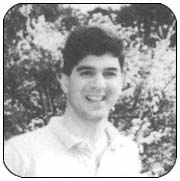 Mark Ferrari was in graduate school, doing research at Berkeley on magnetic structures in superconductors, when he began to doubt his passion for experimental physics. His suspicion was confirmed after he was hired by Bell Labs, where he found physics to be "a pretty lonely enterprise."
|
widely, figure out what the possibilities are. If you like studying science and think it will be your career, that's great; you should do it. But don't treat grad school as a trade school. When you're interested in a subject, take a course in it, even if you have to fight with your adviser to do it. Talk with people who work in that field. What you can do with your education is limited only when you don't know what's out there." |
Mentoring Skills
Mentoring is related to teaching and is just as amenable to improvement. If teaching is primarily the imparting of facts, mentoring is imparting procedures: ways of thinking, doing research, and approaching new problems. The best faculty advisers are mentors. They teach not only by instruction and participation, but also by example and they have an interest not only in your performance, but also in your progress as a person. A good mentor relationship is personal: a mentor should have opportunities to discuss issues of ethical, ideologic, and philosophic concern, as well as more practical matters.
There are many ways to begin developing your mentoring skills even as an undergraduate. Take advantage of informal opportunities to advise others in the laboratory setting. If your university does not offer training in formal advising, try to start new programs via student associations or other means. Organize panel discussions on advising. Volunteer to advise or tutor high-school students or undergraduates; sometimes, student advisers are paid for their work. If you would like to break in gradually, try collective mentoring, as when a group of older students in a laboratory help to acclimate a group of newcomers. The more you learn about mentoring others, the more you can understand what you can learn from your own advisers, and they from you.
Such experience prepares you for a role in business and industry, where you might be a mentor and teacher of younger workers and fellow staff members. It also prepares you to become a manager; managers often act as mentors for junior colleagues.
Your efforts to sharpen your mentoring skills can be rewarded many times over as you move into your career. Few pleasures are greater than that of inspiring and guiding enthusiastic younger scientists and engineers as they prepare to launch their own careers.
Team Skills
Research has become a more collective enterprise in academe, government, and industry than in the past. One result of that trend is that graduate students in science and engineering are more likely to work as members of a research team. This can already be seen in the ever-increasing number of multiple-author papers in the scholarly literature.
Beyond the conduct of research, however, you will need good team skills because science and engineering are becoming more integrated into other activities. In any career, you are likely to find yourself working with managers, administrators, committee members, and planners. If you work in a college or university, you might serve on various committees, many of which are composed of nonscientists and nonacademic people. If you work in industry, you might serve on a team that includes people in management, marketing, accounting, and sales.
There are many ways to strengthen team skills. Practice brainstorming with other students, enjoying the synergy of multiple minds. Take part in active team learning exercises in a classroom setting, where the group extends the knowledge of all participants through sharing and mutual interest. Join disciplinary societies, campus-based gatherings, regional or national conferences, and discussions on the Internet to meet new people and exchange information. You
|
Team skills During his senior year as a mathematics major, Howard was required to work on a team project where he managed several other students. He did not enjoy this role, and he ran into conflicts with his team members. He learned from this experience that he needed to develop his collaborative and team skills.
See Appendix A for a discussion of this scenario. |
also can help to set up activities like career days or resume workshops, which often arise from the initiative of students. Each of these steps can strengthen team skills, increase the size of your network, and prepare you to function more effectively in your professional career.
None of this is said to diminish the importance of individual scholarship. Learn what you can from others—but there must also be times to be alone, to ponder, to find out what you think and who you are.
Leadership Skills
Leadership is a quality that must be communicated to others, through both actions and words. There are many opportunities early in your career to develop this quality and to observe it in others. Volunteer to organize a group discussion or project; help a group of undergraduates to learn about research and be responsible in planning meet-
ings with your committee and in reminding members to attend.
Look around you for role models and mentors. A leader in science and engineering might take on various responsibilities: supervising a laboratory, heading a research team, managing a department, or planning new projects. Who among the people you know does a good job as a leader, and what qualities make this possible?
Leadership is a rare quality because it has two facets: a leader must know the goal of an activity and must be able to organize and motivate others to reach the goal. That requires some understanding of the skills and personality of everyone in the group. To develop your capacity for empathy, talk with others about their projects and challenges.
The most-effective leaders are not dictators. Exercise leadership by doing or illustrating rather than by ordering. Others will be more willing to follow a leader who is a servant first; your own activity as an honest, conscientious, and helpful teammate will inspire the same activity in others.
|
Action Points
|
| This page in the original is blank. |


