
4
What Education Do You Need To Reach Your Career Goals?
As mentioned in the preface, this chapter discusses a wide range of educational questions, beginning with those of interest primarily to undergraduates and ending with the transition to full-time employment. For quick reading, you can use the headings to pick out particular topics. However, we feel that most of the themes discussed in this chapter will be of interest to students at all levels, as well as to faculty advisers and administrators.
The Undergraduate Years
Many students start thinking about the possibility of a career when their interest is ignited by a high-school or undergraduate teacher or some other role model. This is the time to start meeting and talking with scientists and engineers in fields that interest you. These early contacts can be crucial in helping you to navigate the terrain of science and engineering as you move through your career.
The undergraduate years are probably your best chance
to take a broad variety of classes outside your primary discipline that might be useful later. For example, a mathematics major who takes accounting is better equipped to do actuarial work. An ecology major would gain perspective from classes in environmental engineering or environmental policy that can have lifelong benefits.
Classes in economics, sociology, history, philosophy, English (with emphasis on composition), foreign language, and psychology, spread through the undergraduate years, are immensely useful in helping you to acquire understanding, different experiences, and maturity. As science and technology become more central in our society, scientists and engineers become more involved with other, nonresearch domains of human experience.
An effective way for students to learn about graduate education is to join (or form) a study group to discuss homework and share concerns. In a university setting, you can meet with graduate students and postdoctoral researchers and gain insights about specific graduate programs, possible careers, and the current job market. You can join student chapters of scientific and engineering disciplinary societies, both general (such as the Society of Women Engineers) and specific (such as the American Chemical Society). These can help you gain leadership and communication skills and can often assist in networking with senior members who can provide advice and possibly employment opportunities once you graduate.
Work with your undergraduate adviser not only to plan the science or engineering courses you will need, but also to ensure a well-rounded experience in this, your last general educational experience. Ask your adviser to provide guid-
ance in thinking about what knowledge you will need as you move through your studies and into your career.
Remember that you are partly responsible for building a helpful relationship with your undergraduate adviser. Prepare for meetings with your adviser by thinking about where your interests and talents lie; think of four or five points you will make. The more you take the initiative and pose carefully thought-out questions, the more likely it is that your adviser, a busy faculty or staff member with a heavy workload, will take the time and effort necessary to be an effective mentor. He or she cannot divine your concerns; you must express them.
If you are considering graduate school, take the Graduate Record Examination (GRE) during your junior or senior year. This is a test required for admission to most graduate schools. Discuss with your adviser your potential for advanced study. The results of the GRE, your grade point average, and your adviser's opinion will help you to decide whether you have the potential for graduate school.
Decisions About Graduate School
As an undergraduate, you might find it hard to get a clear picture of the graduate environment. This is where an effective faculty adviser, as someone who has ''been there," can provide invaluable help. Seek out your adviser (or another mentor) and learn what you can as early as possible.
Deciding Whether to Attend Graduate School
You do not necessarily need a graduate degree to have a career in science or engineering. For example, engineers with a bachelor's degree can often move upward quickly in
|
Deciding Whether to Attend Graduate School Chris is a biology major in her junior year. Her faculty adviser thinks that she is capable of doing well in graduate school and urges her to try for a PhD at the university he attended. At the same time, a pharmaceutical firm near her home has offered her a well-paying technician's job. Chris's dilemma: she is interested in going on to graduate school, but she would like to remain near her family. She is also reluctant to lose several years' salary.
See Appendix A for a discussion of this scenario. |
their profession and, with luck and hard work, can even break into top management. However, if your goal is to direct research or to teach at the college or university level, you will probably want a PhD (Bailey and Leavitt 1982). In undergraduate school, you learn what is already known; in a master's program, you build your knowledge to a higher technical level; in a doctoral program, you learn to add to the body of scientific and technical knowledge.
At all levels, graduate education is both rigorous and focused. It is not simply a bigger and more-advanced version of undergraduate schooling, where you meet a wide range of subjects and acquire general skills. As a graduate student, you pursue at much greater depth knowledge that
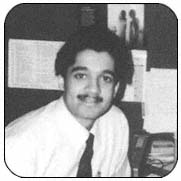 Four years ago, Shankar Vedantam had mapped out a career in management. He was about to take his final examinations in electronic engineering at Bangalore University, in India, and then enter an MBA program. But at that moment the country's prime minister was assassinated, his examinations were postponed, and he was prevented from entering the management school for another year.
|
that knowledge very well. I feel that spreading it may be as important as generating it or acquiring it. "It's hard to find good jobs in journalism. As with science and research, the market is competitive and may even be shrinking. Still, there will always be a demand for people who have technical skills and who can write about science clearly. Many people feel intimidated by science; they will always welcome someone who can explain it to them. "My training in engineering is an excellent background for science writing. By that I don't mean so much the specific information I learned in school; that's changing all the time. What counts more is familiarity with the language of science. People who are not familiar with that language tend to pull away from something they don't understand. When I find something I don't understand, I just go out there and ask some questions. The same pattern of questions and answers tends to repeat, whether the subject is computers or medicine. Mr. Vedantam advises that the best way to get into science writing is "just to do it. Write stories for a university newspaper, take a course in writing. Like most skills, it's learned by practice. Even if you don't become a science writer, you'll always benefit from having stronger writing skills." |
is concentrated in a single field. It requires a love of your subject and a new depth of commitment.
Obtaining an advanced degree, especially a PhD, entails sacrifice. It requires delaying your entry, by many years, into a "real" job. Starting a family might also be difficult, and graduate students will probably be unable to buy a house or perhaps even a car. You might at times envy colleagues who went straight from a bachelor's degree into the job market and are already well advanced in their careers. Your love for your subject might be your best guide in deciding whether to go on to graduate school.
There is no simple formula to use to decide whether you should attend graduate school; your love for your subject may be your best guide. For a discussion of more of the issues involved, see the scenario "Deciding Whether to Attend Graduate School," and the related discussion in Appendix A.
In general, if you are excited by studying, problem-solving, discovering new facts, and exploring new ideas, you are likely to find graduate school a rewarding experience. Or you might have more practical goals: to enhance your job satisfaction, level of responsibility, earning power, and freedom to make your own decisions (CGS 1989). If you feel at home in mathematics and science and want to dig deeper, graduate experience can provide a powerful introduction to a professional life in science or engineering.
Deciding When to Attend Graduate School
Some students choose to work full-time for a while after receiving a bachelor's or master's degree and then return to school. That might be a good strategy if you are "burned out" by courses and examinations and need a break from
school. You might also learn a great deal and see your field from a new perspective.
In some fields, such as engineering, it is common to begin work immediately after college. Later, students might take graduate courses while working; many employers financially support continuing education. That approach can increase your skills and job opportunities and allow you to work at the same time.
Moving directly into employment might not suit everyone. But it can be difficult to give up a full salary later to return to school, and it can be a struggle to regain the momentum and intensity of full-time study. Similarly, attending school part-time or at night does not provide the same intense learning experience as joining a group of your peers for concentrated, full-time work in an academic setting (Bailey and Leavitt 1982).
Some students might consider part-time graduate study because of family or financial obligations. But graduate work can be very demanding, especially at the doctoral level, where few programs accept part-time students. For a PhD program, it might make better sense to borrow money for living expenses and pay it back later from your increased earnings. Seek guidance from your faculty adviser or another knowledgeable person about how much debt it is reasonable to assume.
Remember that the apparent costs of graduate education are usually larger than you have to pay. Few doctoral students have to pay tuition. Instead, programs offer financial assistance in the form of tuition scholarships and stipends in return for teaching assistance or research assistance.
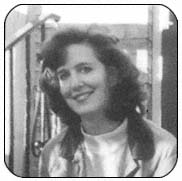 Early in her career, Patricia Hoben had no doubt that she wanted to be a scientist, but she also wanted to make her work broadly useful. Except for brief stints teaching in a college and a high school, her early trajectory pointed toward a traditional (and distinguished) academic position: a BA in molecular, cellular, and developmental biology at the University of Colorado followed by a PhD in molecular biophysics and biochemistry at Yale and postdoctoral training at the University of California, San Francisco.
|
lation, and make other decisions about biotechnology and health issues. "In both these positions I needed the analytical skills I learned from my PhD work, but I also needed a variety of people skills I didn't learn in school. In policy work, I bring in experts who know all the details, but often they don't know how to present themselves to the nontechnical people who will make the political decisions. There's just a tremendous need for people who can bridge these two cultures. "My PhD was absolutely necessary to my career. There's no other way to get that intensity of training, and no one would take me seriously if I didn't have one. But I equally needed the people skills and patience. In the 'real' world, outside academe, you may be working with people who don't know as much as you do, but they have something to contribute that is needed by the project, and you have to value them for their contribution. You can't be arrogant and expect to bring about change." The hectic pace of work ("seven days and seven nights a week") and the arrival of children eventually led to a change. After several years of pursuing a long-held interest in public science education as a grant-program director at the Howard Hughes Medical Institute, Dr. Hoben and her family moved to Minneapolis, where she now holds two half-time positions. In one, funded partly by Hughes, she is working with the National Research Council's RISE (Regional Initiatives in Science Education) project to stimulate reform in science education. In the other, she directs a research program for the Minnesota Public Utilities Commission to in |
|
vestigate claims by farmers that electromagnetic radiation affects the milk production and health of dairy cows. "Public-policy work isn't for everyone, and it isn't easy to find. A more important question for students is, 'Are you preparing to make yourself useful?' For example, on the dairy-cow project, I have a physicist, an electrical engineer, an epidemiologist, an animal physiologist, and a veterinarian all looking at the possibility that electricity affects dairy cows. This is the kind of thing students could be doing to explore career options and serve their community—find an interesting problem, team up with students from other disciplines that bear on the problem, and go out and solve it. We're moving into a time when scientists need to be more collaborative and responsive to public interests. I can tell you that the people on this dairy team have never had more fun in their lives than working together and studying this problem." |
Deciding Where to Attend Graduate School
Once you feel strongly that a career in science or engineering is for you, it is time to start thinking about where to apply for graduate school. You commonly apply to a specific department or program rather than to the institution as a whole, so you need to pay more attention to the strength of individual departments than to the overall strength of the university.
If you think you want a PhD, the department where you get your degree makes a great deal of difference to your career opportunities. Recent PhDs often receive jobs largely on the basis of where and under whom they earned their degrees. The source of a master's degree can also be important, especially in opening career opportunities. Master's programs with strong thesis or internship possibilities can sometimes lead directly to employers or careers. And just as an alumni network can be an important source of career and job-hunting advice, so can the reputation of the school that those alumni represent influence their ability to find you a job. Through a disciplinary society, library, or guidance office, you can find sources that describe the programs of various universities, such as the American Chemical Society's Directory of Graduate Research (ACS 1994).
The prominence of a department depends largely on the quality of its faculty. Find out as much as you can about specific faculty members; arrange a personal meeting if possible. Do any faculty work on problems that interest or excite you? Do you feel comfortable with those faculty members? If you do not want to work with the faculty in your primary field of interest, you should probably avoid that school. A good source of information is the National Re-
search Council report Research-Doctorate Programs in the United States: Continuity and Change (OSEP 1995), which provides national ratings of the quality of program faculty and other information about the characteristics of research-doctorate programs.
Every graduate program has a different educational focus; try to find the one that matches your interests. If you are planning a PhD, select an environment where you think you will be happy for 5 years or even longer. If you are interested in a career outside academe, you might want to go to a graduate school that is ranked lower in research but has internship opportunities and a high rate of success in placing its graduates in industry. Another option is to work for a complementary degree in education, law, or business after your science or engineering degree. Because science is becoming more and more interdisciplinary, programs known for their educational breadth might provide excellent preparation, especially if your goals are unclear. When you join a broad-based program, such as environmental engineering, you might have more potential advisers from whom to choose. Note that some degrees, such as a business master's, can be obtained via distance learning or through ''executive degrees" that are offered on weekends. Therefore, the location of a desirable university might not be as important as it was in the past.
You can learn more about a department from a personal visit than from reading or second-hand inquiry. You will probably have to limit visits to your top choices or even wait until you are admitted. But weigh the trouble involved against the magnitude of the investment in time and money that you are about to make. Find out as much as you can before you go, especially about faculty who might be poten-
tial advisers. Clarify the requirements for a degree, which vary among schools. When you are there, talk to as many students and professors as possible, in both formal and informal settings. Some universities will help to finance such a visit.
Start investigating potential schools at least a year before you plan to start graduate school. That is when a good relationship with undergraduate advisers can pay off. They can help you to decide on desirable departments and to craft application letters and essays. Ideally, your adviser will know the reputations of faculty at several departments and can make phone calls or other contacts on your behalf. If your adviser does not help, work with your college counselors, seek out graduates and current students of the program, and try to make a personal visit yourself.
Here are some questions that you might want to consider:
- What are your career goals, and what school fits them best?
- Does that school offer an opportunity to obtain a broad education, including the acquisition of career skills outside your primary field (e.g., a mathematics major might want to take some engineering or physics classes).
- Are you comfortable with the size of the program?
- Is the department oriented to the needs of its graduate students?
- Are you likely to be accepted?
- What types of financial support are available?
- If you intend a master's degree, is the program endorsed by likely employers?
- Does the program have internships or other options
- to introduce you to a range of job possibilities?
- Are all students required to be teaching assistants? If so, for how long?
- What proportion of students who begin the program complete it?
- How long does it take most students to obtain a degree?
- Are there openings in research groups you would like to join? (These might be competitive in prestigious institutions; an external fellowship provides you with an advantage in entering in such a group: your research is already funded.)
- How many women or minority-group students are in the program? What percentage graduate? Where do they go? It helps, especially if you are a woman or minority-group student, to consult the appropriate grapevine for up-to-date advice from peers.
You should also find out what you can about how well a department advises students about their careers. Does it track the careers of former students and make the information available? Does it help their graduates to find positions? Be aware that some graduate programs prepare their students only for academic careers, some direct their students primarily toward industry, and others value academe and industry equally. And some institutions provide good career services, whereas others expect candidates to search out opportunities on their own. Even if you will not be in the job market for several years, you need to investigate such questions before selecting your graduate school.
Applying to graduate school is much more interactive than applying to an undergraduate program. The number
of applicants will be much lower, and you will have more opportunities to meet with potential faculty and otherwise influence the application process.
Incorporate samples of your work into your application, including examples of research experience. Evidence of independent study shows the kind of initiative valued by graduate faculty. Solicit as many letters of recommendation as you can (three or four is usually the minimum), and educate the letter-writers about your character and motivation. If possible, visit the program; this allows you to see its facilities and sample the community of people with whom you will be spending the next few years of your life.
Graduate School
Many scientists and engineers say that their time in graduate school was the best experience of their life; others say that it was the worst. The difference often has to do with how much and how early they learned to gain control over their progress. Can you see where you are headed? Can you visualize (and describe) how your research topic or goal fits within the broader themes of your field and society as a whole? Will it lead to further work of importance? Planning, sound guidance, and a focus on setting and achieving goals can make your work meaningful and your life easier.
This section offers advice on survival skills and on ways to enjoy graduate school. If you are struggling, remember that you do not have to struggle alone. Make contacts everywhere. Join and be active in professional associations. Ask for and listen to advice. You will find that many others have also struggled and are pleased to share the lessons they have learned. Look at other people's work, and invite them to
 The path of Carol Balfe's career illustrates that it is sometimes not very useful to stick to a blueprint. After a series of very substantial—and unplanned—changes, her present occupation makes use of virtually all her experiences and allows her to do work that she values highly: trying to reform science education on a national scale.
|
Berkeley. "By then I had a little more 'street smarts' and world wisdom. My future husband worked for the Department of Employment, so I was very aware of labor market issues. I got fired up to do the research I hadn't finished at Wisconsin, but I was keeping the education issues in the back of my mind." After earning her PhD, she spent two years at Sandia National Laboratories, where she was one of only two chemists on a team of materials scientists. "This was an opportunity for cross-disciplinary learning you seldom find in academe." Then she returned to the Bay Area, where she was offered a job by Raychem, a materials-science company. "I had wanted to work in industry to learn as much as I could. In graduate school I was told that industry is where the second-rate people go, but that's not true. You can go as deeply as you want in research. But beyond that, industry has different intellectual challenges, personal challenges, the opportunity to exploit a wider variety of your talents." She continued her interest in education by doing volunteer work. Raychem was helping the schools of East Palo Alto by donating computers, but the equipment was unfamiliar to the teachers. "This was too early in computers. Instead of trying to teach the classes ourselves, we should have been listening to the teachers, finding out what they needed so that we could be a resource for them." In 1993, her husband died; after a leave from Raychem, her mentor there suggested that it was time for her to tackle the educational mission that she had been contemplating for so long. |
|
"He just stopped me in my tracks; he saw it more clearly than I did. He offered me 3 months' company time to figure it out. I talked and listened and networked with people everywhere. Now I'm out on my own. What I want to do is to leverage my talent and background to make a significant difference in precollege education, especially for children of color and girls. In particular, I want to help industries and professional societies have more effective and strategic roles in public science education. "This may sound like a 'grand plan,' that I knew all along how I'd bring all my careers together. But the truth is that I have always taken one little step at a time, according to what felt right. "The most important message I have for graduate students is that you don't have to make all your career decisions now. First, get a solid background and learn to pay attention to what feels right. When you are ready, doors will open. The world needs people who can translate from one highly specialized world to another. Careers that combine interests and expertise are the careers of the 21st century." |
look at yours. The more you interact with others, the more you will learn.
Choosing a Degree
How does a master's degree differ from a PhD? Jules LaPidus, president of the Council of Graduate Schools, offers a comparison: "A student must be able to understand and use knowledge at the master's level and make significant contributions to it at the doctoral level" (Peters 1992).
At the master's level, you will gain knowledge on subjects not usually covered in undergraduate programs. Students are generally required to take courses for 1 or 2 years and sometimes required to write a thesis and take departmental examinations. After successfully completing the examinations, you can take a master's degree and enter the workplace or proceed into a PhD program.
Knowledge at the master's level is intended to prepare you to practice a profession (such as engineering, environmental studies, business, information science, or biotechnology) or to continue on to more advanced study. A PhD program might be necessary if you want to do research and teach at the university level (CGS 1989).
In many disciplines, especially in the physical sciences, master's degrees are earned on the way to the PhD. Some students who do not complete the PhD settle for a master's, (Peters 1992; Tobias et al. 1995). But most master's degrees are considered professional degrees—sometimes called the professional master's—and are highly valued in traditional fields, such as engineering and nursing, as well as in newer fields, such as microbiology, bioengineering, computer science, and environmental studies (Tobias et al. 1995). A professional master's might teach such specific skills as instru-
|
Choosing a Degree Wesley has just passed his departmental examinations in chemistry. He enjoys classwork and laboratory work equally. His grades are average, but he has excellent "people skills," which make him a popular student teacher and mentor of local high-school science students. He has difficulty in envisioning a career beyond graduate school, and he prefers not to spend all his time in the laboratory. A friend suggests that he might want to reconsider his goal of a PhD in favor of a master's. His faculty adviser shows no enthusiasm for any option but the PhD.
See Appendix A for a discussion of this scenario. |
mentation design, project management, systems integration, counseling, solving of complex problems, and risk analysis. Those skills are often enhanced by internships or field work. The MS degree involves less commitment and time than a PhD, but it can lead to careers with greater responsibility and higher pay than a BS alone (CGS 1989). It is also useful for those who want to teach in high schools and community colleges. The granting of master's degrees in many fields of science and engineering is increasing rapidly (although entry-level MS programs might not be available in many sciences) (Bloom 1995).
Beyond the master's level, the most-common profes-
sional science-oriented degree is the MD (CGS 1989). Students might decide to enter medicine from the bachelor's level or after a master's in a related field, such as bioengineering or nursing. Other professional degrees that might be relevant to science are the doctor of law (JD), doctor of public health (DPH), doctor of education (EdD), and doctor of library science (DLS) (Peters 1992). A popular hybrid degree is the MD/PhD, which takes about 3 more years than an MD and provides training in research not offered in most MD programs.
In science and engineering, however, a research PhD is the norm at the doctoral level. A doctoral program is usually an apprenticeship consisting of lecture or laboratory courses, seminars, examinations, discussions, independent study, research, and teaching. After passing departmental examinations, the student enters candidacy under the supervision of a faculty adviser and a dissertation committee. Candidacy is a period for performing original research, writing a dissertation describing that research, and orally defending the dissertation before the faculty committee. Candidacy normally lasts 2–4 years; this period has increased in recent decades (Peters 1992). The traditional goal of a PhD scientist or engineer is research or teaching at a university, industrial laboratory, or government agency, although it is common to progress to other positions and even careers.
The PhD might not be the end of your study. In some fields, most academic jobs (even in 4-year institutions) now require a year or more of postdoctoral experience (see later section on "Postdoctoral Study").
To help you to think through degree options, gather written descriptions of various programs and, when possible, talk with students, faculty, and graduates of the ones
that appeal to you. Sometimes, there are excellent opportunities abroad, especially postdoctoral appointments. In addition, distance learning programs—in which courses are taken via satellite, videotape, television, or computer—are increasingly popular and provide an additional option. Because fields differ so widely, there is no substitute for firsthand information from people in your own discipline.
Choosing an Adviser
Finding a faculty adviser (or major professor) is often the most important step in your graduate career. There is no substitute for guidance from someone who has already survived what you are attempting and who can offer wise perspective on how best to match your talents with an appropriate career. What kind of adviser should you look for? The ideal person can not only guide your career, support your research, and help to find you a job, but can also serve as a close and caring mentor—a ''research uncle," as one author puts it. Obviously, this is a rare combination, but one worth searching for. Discovering such a person while you are still an undergraduate might be reason enough to select the university where he or she works.
If you arrive at graduate school without having chosen an adviser, which is commonly the case, start looking right away. Look up publications of faculty in your department; talk with support staff and professors. If possible, track down past and present students who have worked with a particular adviser. Some programs have laboratory rotation courses that will allow you to work part-time and try out several different professors.
Do you need a prominent scientist as an adviser? Prestige is important, because you will want expert guidance on
your research and help in finding a job when you are finished. But you need a person who is available, who values interacting with you and other students, and who is willing to teach necessary survival skills.
Ask about the laboratory group that your potential adviser has assembled. Has the adviser secured adequate funding for the group? Does the group have off-campus, collaborative interactions with other academic or industrial groups? Look for postdoctoral researchers and advanced graduate students in the group who can help you when the adviser is busy. See whether nearby laboratory groups share research seminars with yours and will extend the breadth of your experience.
When you choose an adviser, discuss important issues early. Be frank about your plans, your strengths, and your weak points. Where do you need help? What abilities can you offer? What commitments will be expected of you? If you will work as part of a research team, how will your role be defined and how will you gain credit for your own contribution to the team's work? Will your advisor support a nonresearch or nonacademic career choice? Raise such questions before they grow into problems.
It is very important to remember that the education of a graduate student is the responsibility of an entire department, not just of a single adviser. Take the initiative early to form a thesis committee. Discuss your project and your status with committee members and other faculty as you go along. Consider asking two people to be your advisers, perhaps as co-chairs of your dissertation committee: one might have a high level of expertise, and the other might have more time to meet with you. This is particularly important if your topic is interdisciplinary. Every professional contact that you
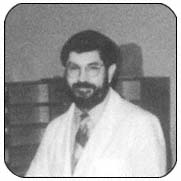 In 1976, Bill Edge had earned an MS in nuclear engineering at the Georgia Institute of Technology and was working on his doctorate when a friend called to offer him a position at a hospital. A hospital?
|
sional planning system that uses data from computed tomography to plan patient treatments with 3-D graphics presentation of patient anatomy and treatment beams. Mr. Edge is technically a therapeutic radiation physicist, which represents a combination of radiation physics and medical therapy. This is distinct from a radiation therapist, who administers treatment to patients, and a radiation oncologist, who is an MD who has overall responsibility for patients' treatment. He does not feel that a PhD is necessary for his work; instead, the essential degree is a master's in physics, ideally accompanied by one of the programs accredited by the American Association of Physicists in Medicine (AAPM). These programs, most of them offered at large teaching hospitals, combine classroom and clinical work. "You can get into this field the way I did: Work under someone who is already certified as a therapeutic radiation physicist and gain your experience on the job. But one way or another you need the right medical background. And that's where the AAPM programs are just right." "I have also found that certification is an asset in this field. After working for 3 years, a medical physicist is eligible to stand for boards in his area, such as therapy physics, diagnostic physics, or nuclear medicine physics. I am presently board certified by the American Board of Radiology (ABR), the American Board of Medical Physics (ABMP), and the American Board of Science in Nuclear Medicine (ABSNM). Most of the job listings today are requesting board certification, and some fields, such as mammography, are requiring certification in order to do equipment calibrations." |
make strengthens your standing and raises your chances of building a rewarding career.
The Adviser-Student Relationship
In many fields of science and engineering, especially in a PhD program, you might be invited to work as a research assistant in your adviser's research program. An aspect of this research might become your own research topic. Usually such an arrangement benefits both parties: you, as a "scholar's apprentice," gain original research experience, and the professor gains much-needed assistance.
If you are invited to work on such a program, find out as much as you can about it in advance. Try to get a feel for whether you will be encouraged to educate yourself broadly enough. Many students focus their energies so narrowly on a specific aspect of research that they neglect to understand the context of their work or to develop the skills that make an interdisciplinary career possible.
Make a special effort to understand how your adviser will award credit for the work you do. For example, will your name be listed first on any publications resulting from your own work? That is especially important on a joint project, where your own contributions might be hard to distinguish from those of others. You do not want to end up without a portfolio that you can use to start a new career or laboratory of your own. Review another document from COSEPUP (On Being a Scientist: Responsible Conduct in Research) that provides guidance on research ethics (COSEPUP 1995). Read this booklet over before you begin research activities; encourage a panel discussion on the topic via one of the mechanisms discussed here.
What kind of relationship will you have with your ad-
|
The Adviser-Student Relationship Fernando is a third-year graduate student who has passed his departmental examinations in physics. He has begun work on his adviser's specialized research project in theoretical solid-state physics and should be shaping his own dissertation research. However, his adviser never seems to have time to talk; in addition, during meetings of his thesis committee, his adviser feuds with another member. The result is that Fernando receives conflicting advice about his work plans.
See Appendix A for a discussion of this scenario. |
viser: teacher-student? employer-employee? Will you be colleagues or adversaries—in school and beyond? It is primarily a professional relationship, but it is also a personal one. It will succeed only if both sides are willing to work at it. It is most likely to succeed if your major professor is someone whose standards and goals appeal to you and who has a special interest in you as a person. The best outcome is that your adviser turns out to be a true mentor—a wise and trusted counselor.
There is often an implicit contract between adviser and student: the adviser devotes time, guidance, and personal energy in the expectation that the student-apprentice will some day do research that will make the mentor proud. Does your adviser have this expectation? Do you? Can the two of you discuss other career possibilities as well?
What can you do if the relationship with your adviser is a poor one? If the two of you cannot work it out, you should try to find another professor who is qualified and willing to take you on. In general, it is best to make a change as soon as you see that the situation is unworkable. Will changing advisers slow your progress? Will you have to alter the direction of your research? Only if it is late in your student career should you endure a difficult situation rather than try for a better one. The head of the graduate program or the department chair might be able to help you to decide what to do and who might help you.
You might decide to seek several advisers to broaden the range of counsel available to you. That is particularly important for women and minority-group students, who might wish to have a woman or member of their minority group as a mentor.
Choosing a Research Topic
Along with choosing an adviser, the most important decision you will make in graduate school is choosing a research topic. You will likely spend a number of years, and possibly the rest of your career, working in the general field that you select now.
You might be tempted to tackle something ambitious that will win a big prize. Resist that temptation. This is the beginning of your career. The point of graduate school is to learn to do research. Be aware that your original topic, especially in the life sciences, might not work out. A good thesis adviser will have backup plans in case your original project fails to yield results.
Your topic should be original, and it should advance what is known about your field. But it should be something
|
Choosing a Research Topic Henry was fortunate in finding a respected faculty adviser in his field of psychology. He was so interested in his thesis research that after about a year he decided to broaden his topic. After another year, he adjusted it slightly to include another aspect of work suggested by his adviser. After 5 years, he saw that he had lost his focus; he could no longer describe the hypothesis that he was trying to test.
See Appendix A for a discussion of this scenario. |
that you and your adviser believe you can complete and write up in about 2 years, for an MS, or 3 years, for a PhD. When you enter the next stage of your career, you can advance to another aspect of the topic if it still interests you.
When thinking about your topic, imagine how to describe it with the perspective required of a dissertation. Think of a title, a summary, the kinds of conclusions that you might reach. A dissertation should not only describe your work, but also explain its relevance to previous research and its importance in extending the general understanding of the topic.
Ask yourself the toughest questions you can think of: Will this research get your career off to a strong start? Is the subject vitally interesting to you? Is this field becoming more active? Will you have financial support, whether from a professor's research grant or from some other source? Will
you learn important methods that you will be able to apply to other problems of interest? Can you complete your work in a reasonable amount of time?
Those are indeed tough questions, and it is unrealistic to expect a yes on all of them. The point is to gain a realistic picture of your research environment. Remember also that your overall field of research is more important than the specific subfield that you might explore in school. The techniques and principles learned in graduate school will serve you well even as you move to new subfields or specialties.
Think of your work also as a contribution to the community. Will your work stimulate that of your colleagues? How can you apply their results to your own? Can you imagine how to collaborate with them on a larger project? Your research topic should make sense in the context of a journey that you will undertake in the company of others.
Achieving Breadth
Your main focus in graduate school is to learn the fundamentals of your discipline, but you also want to broaden your competence and acquire other career skills that can enhance your value to employers. Breadth can be described under two categories—academic and career.
For academic breadth, both master's-degree and doctoral-degree recipients should have some familiarity with one or more subfields. For example, a chemist might benefit from courses in biology or computer science or from an internship with industry. Such breadth might allow you to see your own work in a fuller context and understand interdisciplinary questions.
We have discussed how easy it is to overspecialize in pursuing a research topic. An overnarrow "field of view"
might slow your recognition of emerging fields of research, limit your later research contributions, or restrict your career options. A strong argument can be made for taking nonscience courses that enhance your competences, such as courses in business or management. That is most easily done in your undergraduate years, but even if done in graduate school the extra effort will pay off later in qualifying you to manage or lead. For example, it might be important to achieve a thorough grounding in statistics and experimental design, especially if you contemplate a career in industry, where controlled experiments are often not possible and experiments are very expensive because they are commonly done on production-scale equipment.
You can achieve breadth through dual degrees or "strong" minors. For example, you might obtain a degree in mechanical engineering at the bachelor's level but decide to focus on aerospace engineering at the master's level. Employers often support such study financially because it brings them needed expertise; with such support, you might be able to study part-time, in the evening, or by distance learning.
Some engineering students pursue a degree in another field in combination with the master's in engineering. A master's in management of technology, taught by engineering schools, can be valuable for those who aspire to management positions in a technical company. A master's in business administration (MBA) teaches the basics of management, finance, human resources, and accounting—valuable skills that can help you to advance both inside and outside your company.
Career breadth is attained through such activities as internships and on-campus research centers that work in col-
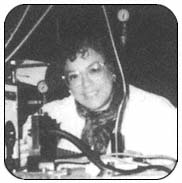 As a young single mother of two, Diana Garcia-Prichard worked as a nurse to support her family. But she signed up for chemistry courses at California State University at Hayward, and she felt her life shift. ''Physical science was perfectly suited to my thought processes," she says. "It was the first time in my life that I found something I really wanted to do."
|
Dr. Garcia-Prichard has worked hard to reform science policy and education, serving on the Clinton-Gore transition team, the National Science Foundation Education and Human Resources Directorate, an American Chemical Society editorial board, and the board of a local community college. "I want students today to be better informed than I was about careers. For example, they need to know what kinds of grants there are, and who can get them. Also, there's a huge gap between what students learn in universities and what's needed in an industry workplace. Here I work in physical chemistry, but I also have to be able to collaborate with materials scientists, engineers, and chemists. "And they should know that the corporate environment is changing today. Shareholders are forcing corporations to downsize staff, but the work still has to get done. "Choosing the right adviser can help—someone who not only is a good scientist, but is savvy about careers and understands what you need. If you pick a famous scientist who is not a good caregiver, you end up staying in school too long and doing a lot of their work. I was done in 4.5 years, and part of the reason was that I stood up to my adviser. I told him, if you want someone to do your lab work, you'll have to find someone else. I'm here for a chemistry degree, not a degree in plumbing." That bold approach will not always be successful. The best advice in dealing with an adviser is to be honest, persistent, and communicative. Because your goals and those of your faculty adviser are not usually the same, a good relationship requires continued effort, good judgment, and good will—on both sides. |
laboration with industry. Internships with industry or government laboratories take time away from campus-based research or classes. But they can lead to broader perspectives, new contacts, and better jobs. They can also help you to mature and develop confidence in your ability to succeed in the nonacademic world. Taken together, these effects might paradoxically shorten the total time spent in school.
You can also benefit from extending your breadth of career skills, such as those discussed in Chapter 3. For example, students with good communication ability—who can describe their work to nonspecialists—might prove adept at working in teams of people from industry or other disciplines.
Ensuring Steady Progress
How long does it take to finish graduate school? A nonthesis master's degree usually requires 1–2 years, a thesis master's 2–3 years (it is common to take extra time if you also hold a job). The time between receipt of the bachelors' degree and receipt of the PhD varies widely according to field. Check the latest date at the NRC's Career Planning Center For Beginning Scientists and Engineers and ask recent graduates at your institution how long it has taken them.
For a PhD candidate, working expeditiously is important. Increases in degree times are generally undesirable and often imply that students are not making the best use of their time. Slow progress might mean that someone has become too comfortable in the educational environment, isn't properly motivated to find answers, or has bogged down in techniques. Some corporations, postdoctoral-fellowship boards, and university faculty-search committees use time to degree as an indicator of a student's initiative and drive, and it in-
fluences their decision about whether to invite a student for interviews.
Check the average time to degree at the program you are considering. Try to choose an adviser with a reputation for moving students along. Set a schedule to meet regularly with your adviser and dissertation committee. Even if your finish date is hard for you to predict, keep your committee up to date and solicit its advice.
If your thesis work does not involve you with others, join or form a dissertation support group. Giving talks and exchanging critiques with trusted peers—say, once a week or once a month—can help to keep you moving, extend your contacts, and moderate the intensity of solitary scholarship. Reach out to other students, postdoctoral researchers, and faculty. The presence and empathy of others can make your graduate years both more gratifying and more productive.
Also, do not forget that most universities have counseling centers that can offer a sympathetic ear. They can work with you and perhaps your adviser to develop a less-stressful environment for you.
Postdoctoral Study
In some fields, such as biology and chemistry, postdoctoral appointments are virtually required for an academic career. In other fields, such as engineering, they are uncommon. Postdoctoral appointments are short-term appointments (usually 1 or more years) with universities, research institutions, government, or industry in which you have the opportunity to gain in-depth research skills. They are more commonly used to prepare for a career in academe than for a career in industry, although the latter is becoming
more common. When you take a postdoctoral appointment in a field different from that of your dissertation, it can provide increased breadth and improve employment prospects.
Many postdoctoral openings are advertised in the scientific journals, but many are not. As soon as you know that you want to try for one, put out feelers among your contacts and alert your faculty allies that you need help in finding the right position. Remember that although many positions are in academe, you can also find them in national laboratories, in industry, in research laboratories, in the federal government, and elsewhere.
For example, a government agency might have a major postdoctoral-fellowship program that can constitute a good mechanism for you to move from a general background in chemistry to one in environmental chemistry. If you are interested in nonacademic employment, such a position can broaden your possibilities and ease your transition into a nonacademic culture. There are also nonresearch postdoctoral positions, offered primarily by disciplinary societies, in which you can gain experience in public policy and other fields.
When academic jobs are scarce, students might find themselves taking successive postdoctoral positions—as many as three or four—while they wait for a permanent position. The danger of extending postdoctoral study is that you might become stuck in a series of temporary appointments. Getting yet another postdoctoral appointment at an institution does not mean that that institution will offer you a job. It might be better to accept a job with less prestige than you had hoped for so that your "real" career can begin. If there is no job offer, you might be able to use—or decide to add—new skills to find a position in a related field.
Before accepting a postdoctoral appointment, ask your contacts how effective the supervisors at the postdoctoral site are in developing the skills and promoting the careers of its scientists. Ask former postdoctoral researchers of that site what ideas they were allowed to take with them to use in starting their own independent research projects.
For postdoctoral fellows, career guidance is a pressing issue. Too often they exist in a state of "peerlessness," sometimes not even knowing whether there are other postdoctoral appointees in their program. When possible, seek out and interact with other postdoctoral appointees and establish a committee of several faculty members or other established scientists who are willing to play a role in your training.
The issue of guidance becomes critical when the time comes to search for a permanent position. Many postdoctoral researchers describe a dismaying inability to locate job openings and connect with potential employers. Because so many jobs at the postdoctoral level are arranged by word of mouth, the network of contacts that you have built through your school years becomes more important than ever.
If you are fortunate enough to have to choose between a postdoctoral appointment and a job, ask yourself several questions. Will the appointment allow you to complete important research that you probably would not have time to do on the job? Can you take the postdoctoral appointment before moving to the job, or is the job likely to disappear before you finish it? Learn as much as you can about your prospects of securing other available positions in light of anticipated market conditions.
Some Tips for Foreign Students
If you are coming to a graduate school in the United States from another country, careful planning can help you to avoid some common frustrations.
For example, living expenses are almost always higher than you expect. No matter how your fellowship is described, expect it not to cover all your expenses.
Understand the conditions of your visa. Whether or not you decide to stay in the United States after your studies, find out how long you would be allowed to stay for practical training. If you are here for a PhD, you might want to complete the master's, take a year off for practical training in industry, and then return to complete the PhD.
Find out beforehand how much credit you will receive for courses already taken. Misunderstandings are common, so get agreements in writing. For example, will the master's degree from your home-country university be recognized, or will you have to do it over? Each university has its own standards.
Select your research topic, and especially your adviser, with care. This is the person who will have the biggest direct influence on your life as a graduate student. Check out the reputation of potential advisers with fellow students. If you need special coursework or assistance in adjusting to a different culture, does the adviser seem ready to help?
Network early and continually. It is easy to become isolated in a single department, especially if you are a foreign student with perhaps limited communication skills. Make an effort to integrate with American students. Whether or not you decide to stay in the United States after your studies, participate in professional organizations and make con-
nections that will be beneficial to you here or at home. Join other university or community activities, such as foreign-student associations.
Be aware that your choice of courses is probably greater than you think. It is easy to become buried in your specialty and lose out on a wide selection of topics—such as management, law, business, and music—that might help you to understand the context of your work or simply enrich you as a person.
Learn to use the library and other research aids as early as possible. You can work much more efficiently when you know where and how to get quickly to sources of good information.
After School, What Next?
Don't wait until the last minute to start making final decisions about your future. These might include choosing a postdoctoral position, seeking yet more education, or looking for employment in either academic or nonacademic sectors. A good rule of thumb is to start thinking and searching in earnest about a year before your likely graduation date.
A good deal of time might have passed since you began graduate school. Think again about some of the items discussed in Chapter 2. You are more mature now, and you certainly know a great deal more about what it would be like to be a professor. Look honestly at the employment market for different fields, using information provided by the NRC in its Internet Career Planning Center For Beginning Scientists and Engineers, your disciplinary society, and government agencies, such as the National Science Foundation and the National Institutes of Health. Reflect on what you
want in your work life and your personal life. Will you need additional education (such as an MBA, MD, or JD) to be successful in a given occupation? Are you willing to spend still more time in school? Are you willing to take a low-paying postdoctoral position if that is the norm for your field? Talk to other recent graduates and postdoctoral appointees to learn about their experience in the job market. Do not hesitate to let everyone know that you are looking for work. Fruitful connections are often made where least expected.
|
Action Points
|
|
| This page in the original is blank. |


