
5
How Do You Get the Job that is Right for You?
Finding a job takes work; finding the job that you want takes hard work. Many recent science and engineering graduates are lucky enough to move into desirable employment immediately. But it's common to spend months or even more than a year in the job search.
Finding a Job
When looking for a position, do not simply rely on the want ads in the scientific journals—although this is definitely the place to begin. Think more broadly. Meetings and conferences are a good way to explore your discipline and to meet numerous people in your field and talk to them about employment—either for a postdoctoral position or a longer-term, ''real" job. You might also have the opportunity to demonstrate your research and communication skills (an excellent way is to present a poster or paper) and even to interview for positions.
Be prepared for intense competition for the most-desir-
|
Finding a Job Carol has earned a PhD in biology and completed 2 years of postdoctoral work in molecular genetics. She has heard that academic positions are hard to find, so before her postdoc concludes, she applies to several biotechnology firms doing work in her field. She is surprised to be turned down by all of them; several suggest that she seemed somewhat uncommunicative and unfamiliar with "corporate culture."
See Appendix A for a discussion of this scenario. |
able positions at leading universities, firms, and government laboratories. As the academic and research job markets have tightened, employers have learned that they can pick from a larger pool of applicants. Will an institution hire a PhD fresh off the campus when it can hire a PhD with 1–4 years of postdoctoral experience?
However, knowing who you are and knowing what a position requires can be more helpful in finding a position than a long list of credentials. Says Richard Bolles, "the people who get hired are not necessarily those who will do the job best, but those who know the most about how to get hired." Finding a job is a learnable skill (Jensen 1995).
Consider everyone you meet along the way as a potential helper. A network of contacts among students, faculty, and friends is the springboard for your job search. Plug in to the alumni networks of your school, college, and even
graduate school. You are more likely to hear helpful news about an opening from someone who knows you and likes you than from someone who only sees your name printed on a piece of paper.
The favorite job-hunting tools in this country—resumes, agencies, and advertisements—are seldom effective by themselves. One study found that among companies that received resumes, one job was offered and accepted for every 1,470 resumes that were received (Jensen 1995). Many of the people hiring for these companies are overwhelmed by mass-produced resumes and computer-generated cover letters, all of which make a strong case for their applicant (Tobias et al. 1995).
The Internet is rapidly becoming more interactive and helpful: you can join a newsgroup, trade advice on bulletin boards and make contacts worldwide. You will find many first-person anecdotes about how the job market works—and does not work—as well as tips, queries, complaints, anecdotes, statistics, and advice about such topics as the job search, getting along with your adviser, and forming dissertation support groups. The National Research Council's online Career Planning Center For Beginning Scientists and Engineers centralizes job openings, career information, guidance, and links to other forms and sources of information. It also provides a location for you to post your resume online.
Bolles recommends what he calls the "creative" job search. Start, he says, by figuring out your best skills and favorite subjects. Then learn all you can about any employers that interest you. Finally, use your contacts to seek out people who have the power to hire you and arrange to talk with them. He claims that this technique, if used diligently, is the most successful in finding the right job for you. The next best
technique is to apply directly to an employer without doing explicit research on the organization—but you should apply in person. This, however, works says Bolles, "only if pursued faithfully over a number of weeks or months." The third-best method, he says, is simply to ask friends for job leads and follow them up diligently (Peters 1992).
There are other ways to increase your chances of making a good match. Do not wait for employers to come knocking: they probably won't. Do what you can to make personal contacts and locate job openings (Tobias et al. 1995). Show creativity in finding opportunities; this alone might impress potential employers.
Your faculty advisers can be enormously helpful in the job search by opening doors, praising your abilities, and suggesting new approaches. They can also help employers to appreciate the qualities of students and how well they might fit particular positions. Familiarize yourself with employment niches revealed by your advisers' contacts and collaborations.
Attend as many job fairs and conventions as you can. There you will find abundant trade literature and a social environment that makes it easier to meet people in your field. National meetings of science and engineering disciplinary societies are where job-seekers can contact employers who have advertised jobs or postdoctoral positions. Even for meetings, prepare to meet with specific people or organizations.
A good starting point is the advertisements in disciplinary-society magazines or professional or general publications, such as the Chronicle of Higher Education, Technology Review, or Science, and newspapers in major science and engineering employment centers, such as Washington, D.C.,
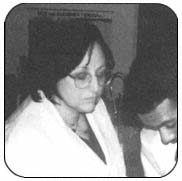 "I knew very early I wanted to be a teacher," says Toby M. Horn, PhD. "I just forgot for a while."
|
I give a lecture called 'You haven't failed if you become a high-school teacher.' But it was a hard decision to leave lab life, especially as a woman, because of the stereotype: 'she can't do science so she will teach.' "The truth is I can do research, and I love it. If I had to do it over, I would definitely get my PhD again. It was a real empowerment for me. Doing scientific research with a goal of a thesis develops a habit of mind. But I realized I had no interest in the standard university path. As I say, I always knew deep down I'd be a teacher." |
New York, Boston, Los Angeles, and the Silicon Valley area. Those advertisements not only show you what is available, but also offer a realistic picture of the qualifications that employers expect. These publications and many others can be found via the Internet (and are directly accessible via the National Research Council's online Career Planning Center For Beginning Scientists and Engineers).
Interviewing for a Job
You will be doing interviews during this year; take them seriously. You want to impress the people whom you meet that you are the person for the position. That means giving a presentation that is not only substantive but also interesting. You are essentially giving a one-person show to busy and knowledgeable people. You might not be able to surprise them, but demonstrate your own grasp of what you have done and your interest in your field. Do not just recite data; tell a story. Be enthusiastic. Be clear. Be brief. Rehearse beforehand with friends and colleagues and listen to their suggestions. Do not be afraid to describe the context of your research: How does it fit into your field, and into society as a whole? Those in your audience who are experts will enjoy hearing your version, and those who are not will be grateful for the perspective.
Another important feature of an interview is the often-asked question: What are your plans? For nonresearch positions, this is often asked as: Where do you want to be 5 years from now? For research positions, you will be expected to describe your plans for research and the contributions that you plan to make to the field. Regardless of what type of position you are looking for, the key to your search is to
make the right match: to find your own niche within an organization.
Give special attention to features that can distinguish you from other applicants. Interview dynamics vary greatly between research and nonresearch positions, but in both cases, be specific: How can you make a contribution to the organization?
For research positions, familiarize yourself beforehand with the research interests of the faculty member or the industrial group that you will meet. They will be interested in your research plans. Rehearse your presentation with mentors, laboratory colleagues, fellow students, and anyone else whose opinion you value, and take the time to polish it at meetings and poster sessions during disciplinary-society meetings. Be responsive; ask pertinent questions; answer questions confidently and difficult questions honestly. Do not be afraid to say, "That's a very good question. The experiment hasn't been done, but thank you for the idea. I'll let you know what happens." Postinterview thanks and followups are critical.
For nonresearch positions, a formal research presentation probably will not be required. Instead, you will probably be invited to an all-day interview in which you will speak with potential supervisors and fellow employees. Those you speak with will be looking for a match between you and the organization: What skills, knowledge, and experience can you contribute that are not already present?
At the same time, remember that this is your interview. Ask the people you speak with what their workday is like; try to imagine yourself working there. This is your chance to find out whether the organization and the type of work that they do constitute a good match for you as well.
How you handle an interview tells potential employers not only what you know, but also how well you communicate and present yourself. They are seeing you as a potential employee dealing with the same kinds of stressful situations that you might be expected to handle on the job (Tobias et al. 1995). Use informational interviews to find out about particular universities or industries.
In the case of doctoral or postdoctoral candidates, learn the considerable differences between interviewing for industry and for academe. For a research position, both will scrutinize the depth of your research presentation, your teaching experience and skills, how well you work with others, your research plans, and your list of publications. But an industrial interviewer will pay close attention to how you will fit as a member of a team in the corporate culture. Any employer will want you to explain how valuable you can be as a scientist or engineer in a variety of positions.
Some foreign students seeking employment face the added difficulty of applying and interviewing in a second language. A mastery of the language becomes doubly important when teaching, networking, and communicating your work to nonexperts are components of employment. In most cases, there is no substitute for mastering English to demonstrate your knowledge of your subject.
If you are already in a university that does not offer formal instruction in how to prepare for a job interview, you can take constructive steps on your own. Use the many books available, including those listed in the bibliography in this guide. Prepare a list of questions that your prospective employer might ask you, and then prepare answers and rehearse them aloud. Seek out fellow students who have been through the interviewing process or supportive faculty
and ask them to conduct a mock interview with you and give you comments.
Finding a Job Is Hard Work
Prepare for possible disappointment before it comes. Many bright young job-seekers have never failed or been rejected in an academic setting. You might have been a star in high school and college and made it to the graduate school of your choice. But the harsh realities of a job search can deal severe blows to self-esteem (Tobias et al. 1995).
Robert L. Peters, in Getting What You Came For (1992), offers a helpful summary of guidelines:
- Start thinking as early as you can about where you might work. Once you have your degree, start looking immediately; it might take several months to a year to secure a position.
- Make, use, and keep as many contacts as possible. You will need them for the next position, too.
- Take charge. Although you seek help from your school's counseling center and from friends, your job search is in your hands.
- Show what you can do. Potential employers can judge your worth better through internships than through interviews and better through interviews than through resumes.
- Plan alternative careers. At a minimum, if you are a doctoral student, plan routes leading to both academic and nonacademic careers.
- Do not pass up an entry-level position. It might be the right place to begin, and it is easier to get a job when you already have one.
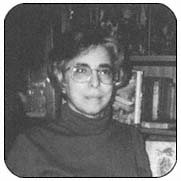 After beginning her career as a physics major at Smith College, Resha Putzrath today is a self-employed consultant in toxicology and risk assessment. She reached her present position not by turning her back on physics, but by paying careful attention to her skills and preferences.
|
appointment in toxicology and regulatory policy, where she discovered her current field. Dr. Putzrath suggests to students that where they begin their career is not crucial—as long as they begin in earnest. "You must get very good training in something, or no one's interested in employing you for anything. But stay open to new opportunities. Today, it's very unlikely that you will have just one career." She does caution against moving into self-employment too early. This is a step most easily taken when you have not only solid experience but also financial stability. One way to broaden your abilities, increase your contacts, and reduce the isolation of working on your own is to form a cooperative association with other consultants. That allows you to share both work and information resources, which can be exchanged electronically even if your group members do not live in the same area. |
- Do not lose heart. Although a lucky few might land positions before leaving school, finding a good job normally takes time and hard work.
Good career-planning centers are available at most universities for undergraduates, but not all departments and universities take seriously the challenge of helping graduate students to find employment.
Remember that the ultimate responsibility for finding a position must be yours. Even if your first position is not what you had imagined, it is a starting point. If you like what you are doing, there is nothing to stop you from finding—or creating—job that is right for you.
Career Changes
It is important to recognize that a successful career in science or engineering requires continuous, life-long learning—not only in your own specialty, but also in adjacent fields. Your first permanent job will seldom be your last. In today's economy, workers in all fields should expect to change positions and even careers several times. The more skills you have picked up along the way, the more career opportunities you will have.
Career counselors often speak of career management. In part, this means knowing how to be prepared for change. It might be useful to ask yourself: What would I do if this field came to an end or I could no longer work in it? What do I want to do later in life?
A common obstacle to a successful career is to remain in an unproductive or unfulfilling job too long. Once you have decided that a position or even a career is not for you, find
|
Career Changes Kim has worked hard to develop her career in environmental engineering. She completed a master's in geology, took a job, and managed to add an engineering degree by taking classes in the evenings. She has gained a position with a large consulting firm, where she links her expertise in groundwater movement with a good knowledge of regulatory policy. However, after 5 years with the firm, she finds that she is more interested in the scientific aspects of her job than in the regulatory work. A friend suggests that she strike out on her own as a self-employed consultant.
See Appendix A for a discussion of this scenario. |
another—even if it seems far from your original education or specialty. For example, many members of the prestigious National Academy of Engineering do not have engineering degrees; they began in other disciplines and responded to their own desire for change by moving into engineering. Career changes constitute tremendous opportunities. The sooner you make a constructive move, the better you will feel about yourself and the better you will look to the next employer.
Before attempting a career change, give careful thought to how you will present yourself. In an interview, describe what you can do not by categories—for example, most applicants in an academic position will be able to say that they can teach or conduct research—but by what you in particu-
 Mary Carol Day's career began with a bachelor's in library science, which allowed her some financial flexibility, and a near-bachelor's in her real love, experimental psychology. By following her interests, she finds herself—several degrees and career changes later—happily (and unexpectedly) employed as technical manager of a Human Factors and User Interface Design group at AT&T Bell Laboratories. Her group designs human-computer interfaces, interactive voice response systems, and work processes and support systems that incorporate new technologies—making them as "user-friendly" as possible.
|
After earning her MA in experimental psychology at Florida State University and working in research at Yale and the City University of New York, she earned an EdD degree from the Human Development Program at Harvard. This was followed by a postdoctorate at the University of Pittsburgh and an assistant professorship in the psychology department of the University of Houston. There she conducted research on cognitive development from both Piagetian and information-processing perspectives. "The decision to leave academe," she recalls, "was a difficult one, but it's one I don't regret. My work days are packed with varied and often unpredictable activities. We provide expertise on human capabilities and limitations, just as other project team members provide expertise on hardware and software. We conduct user needs and task analyses; we create and test user interfaces of new products. "A major challenge is to determine how much we can do, within demanding cost and time constraints, to ensure that the product meets users' needs and is easy to learn and use. This requires a broad understanding of human capabilities and a large toolbox of diverse methodologies for collecting valid and reliable data. In addition, we have to communicate well with people who may have very different perspectives from our own and to learn constantly about new technologies." |
lar have done for your institution or group. For example, has management, teaching, or other experience led to excellent presentation skills? Have you led a task force or other group that accomplished its goals? Have you learned to help people to reach their goals? For further ideas, see sources in the bibliography, such as those published by the American Chemical Society and the Federation of American Societies of Experimental Biology (Kennedy 1995).
The best way to sustain a satisfying and productive career is to maintain your curiosity, openness, and yearning to know more. As long as you stay at the cutting edge of your field, your work will be meaningful and you will at least be considered for advancement. Industries have found that the most-efficient way to maintain a company's technical strength is not to hire replacements, but to support the continuing education of its experienced scientists and engineers. New techniques—including multimedia tools, distance learning, and computer-based learning—are making continuing education feasible and more effective (IEEE 1995).
A career change should never be made lightly, but with a sense that it builds on previous accomplishments and moves in a direction that you understand. How will the change benefit your career? You might find that most of your career changes occur fairly early; large directional changes become more difficult as you advance (Beynon 1993). In addition, it might be difficult to switch back to an academic career after time spent in industry, and vice versa. Ask others who have made similar switches in your field how difficult it was for them before switching rather than after. But the more knowledge and skills you accumulate, the more likely it is that your next move will be one that you—not someone else—have planned.
|
Action Points
|


