
3
Teaching
This chapter begins with brief summaries of the continuing strong national interest in educating students in food and agricultural sciences and the committee's vision of the federal role in advancing that interest. Some factors involving students and faculty that the committee believes are pertinent to the future of LGCAs—such as diversity and academic preparedness—are discussed in terms of their importance to broadening the client base and enlarging the knowledge base. Also addressed are the challenges that test the strengths and weaknesses of academic programs. The strong interest in developing a collaborative and comprehensive food and agricultural science knowledge base for a diversified clientele—the nation as a whole—presents a unique opportunity for LGCAs. Because LGCAs have a history of success in location- and community-based programs specifically concerned with advancing the knowledge needed to produce the nation's food supply, LGCAs can play a distinctive role in academic programs involving the environmental sciences and systems-based approaches, and that underscore the practical applications of science to modern life.
The National Interest In Food And Agricultural System Education
The original land grant mandates were intended to provide access to higher education for U.S. citizens of ordinary means and to teach subjects that could help people solve real-world problems and advance economically (Schuh, 1986). In 1862 many of the practical problems to be solved were on farms and in farm households, and a national college system that focused on agriculture and home economics was in keeping with those needs. As land grant colleges expanded into full-fledged universities, they provided access to higher education for people of all income classes and ways of life. The land grant universities generally, and their colleges of agriculture specifically, have raised the level of education of the U.S. citizenry and its agriculturalists. They have contributed importantly to the fact that 18 percent of the total U.S. population 25 years old or older and 17 percent of U.S. farm residents 25 years old or older have completed some college education (Dacquel and Dahmann, 1993).
Access to higher education remains firmly in the national interest, and LGCAs have an important niche to fill in maintaining and expanding access. The national network of
|
The Land Grant Colleges' Early Years In 1862 when the first Morrill Act became law, public institutions of higher education were still relatively few and concentrated east of the Mississippi River. Just beginning, however, was another great westward migration that would create settler communities and farms from Kansas City to San Francisco. Federal support for public colleges of agriculture, originally in the form of land grants and later in the form of cash grants, helped assure the westward movement of higher education as well. In 1862 higher education was largely a privilege of the wealthy. College programs emphasized philosophy, theology, law, medicine, and the classics. Meanwhile, one-half of the country's population lived on farms and more than one-half the labor force worked on them (National Research Council, 1995a). Fortunately, there were those who understood that the nation's economic development would be enhanced by educating farmers and bringing scientific principles to the business of farming. There were also those who saw widespread public access to higher education as essential to a strong democracy. Some scientific schools, industrial schools, and technical agriculture schools had begun to appear by 1862, particularly where agricultural societies were active in pushing for their establishment (Cochrane, 1978). Prior to the Morrill Act, agricultural colleges were established in Michigan, Connecticut (the Yale Scientific School), and Pennsylvania, for example. But a federal role in supporting the development of land grant colleges across the country, on both new and existing campuses, made a major difference in assuring that higher education would be broadly available and would address the practical needs of the nation's food and fiber production system and industrial base. Establishment of the land grant colleges was not without controversy. Prior to passage of the 1862 Morrill Act, legislators actively debated the federal government's role in public and especially higher education. After the colleges were established, there was the question of their proper teaching mission. There were those who advocated combining the traditional course work with the new—that is, scholarly course work with practical course work (Cochrane, 1979). Within the education community, those who most vigorously fought for federal support of industrial education wanted the colleges to focus on elevating agriculture and mechanical arts to the prestige of the learned professions. Leaders of institutions of higher education, on the other hand, who were mostly classical scholars and preachers, had no interest in such educational goals. Legislators also debated the need for federal funding to achieve the academic program goals. With continued debate about funding came the realization that a significant segment of U.S. workers, particularly African-Americans, remained underrepresented in the recently created colleges. In 1890 Congress enacted the second Morrill Act, which provided federal funding for 1862 institutions on the condition that access be offered to or, alternatively, that separate institutions be created for African-Americans. Seventeen southern and border states took the latter option and in 1890 authorized the creation of colleges designated for African-Americans. According to Cochrane (1979:p. 243), it took time for colleges of agriculture to fully develop; however, [b]y 1900 some of the better agricultural colleges had become effective instruments of agricultural education; they had a specialized faculty, a respectable number of students, and some course content in the agricultural disciplines to teach those students. For these colleges the rough, rocky period was past. |
public 2- and 4-year colleges, combined with scholarships, grants, student loan, and work-study programs offered by public and private colleges alike, supports access to higher education for most U.S. citizens. Barriers to access are rising, however, despite the fact that returns on higher education for the nation as a whole remain high (U.S. Department of Education, 1995). Tuition increases, entrance requirement modifications, and changes in affirmative action programs all have the potential to affect access for those of limited financial means (Tables 3-1 and 3-2). In this environment and especially because of their unique history, LGCAs have a special commitment to ensuring access. The need for and relevance of the 1890 and, now, the 1994 land grant institutions, along with the bridging programs among 1994, 1890, and 1862 institutions, may well be critical. Without them a significant segment of U.S. society may not receive the education necessary to create maximally productive citizens capable of fully realizing their potential and goals.
It is also profoundly in the national interest to maintain high-quality undergraduate and graduate teaching programs in food and agricultural fields and to draw the best and brightest students into these programs. Today there are relatively few generalist farmers for the colleges to train; however, there are millions of managers, technicians, and consultants, scientists, community leaders, and public servants who on a daily basis confront issues and problems related to the food and agricultural system, which encompasses food and fiber production, processing, marketing, and retailing and the interaction of these activities with the natural environment, human communities, and consumer demands, ethics, health, and safety.
The food and agricultural system needs a highly educated work force that includes scientists, engineers, and technicians. If the world's expanding population is to be fed and clothed at a reasonable cost and without further degradation of the natural resource base or environmental quality, then new and more sustainable ways to produce food and fiber, improve the food distribution system, and enhance food access must continually be sought. Finding new ways to enhance the health and safety of food products also requires educating the next generation of food and agricultural scientists, engineers, and technicians.
The U.S. food and agribusiness sector needs a cadre of top-notch professionals who understand not only science and engineering, but also business, finance, marketing, law and regulation, international markets, and other cultures. Although the colleges' graduate students will continue to find jobs in academia and government, they will increasingly move into private industry (see Table 3-11, p. 54 in the Profile report, National Research Council, 1995a; Goeker et al., 1995). These graduates will be tomorrow's internal and external technical consultants in production agriculture, providing technical expertise for vertically integrated food and production systems. This expertise will be the basis of the firm's programs that address environmental issues, food safety, health, value-added technology, efficiency, and marketing. Private actors, such as vertical integrators, will capture this knowledge as part of the value of the corporate entity. Public institutions will also increasingly rely on this knowledge to find ways to manage the interface of production agriculture and a predominately urban and suburban population.
The LGCA system's role in educating graduate students from other countries is also in the national interest. The Profile report (Table 3-5, pp. 44–45) notes that foreign students composed more than one-quarter of all graduate students at LGCAs in 1993. These students—in addition to being important customers of the U.S. university system—have the potential to make important contributions during their careers to the continuing ability of the global food and agricultural system to meet the needs and demands of a still rapidly expanding global population. The U.S. food and agricultural system cannot be insulated from developments at the international level. Inadequacies of the global food and agricultural system will be reflected in higher U.S. food prices, lower real income for U.S. consumers, and more severe pressures on the nation's natural resource base.
Finally, food and agricultural systems education that is accessible and relevant to the university students generally is important to building a solid base of public understanding
TABLE 3-1 Tuition and Fees at 1862 Institutions, 1992–1994
|
Institution |
Tuition and Fees |
|
Added Out-of-State Tuition, |
|
|
1992–1993 |
1993–1994 |
1993–1994 |
|
Auburn University |
1,755 |
1,950 |
3,900 |
|
University of Alaska, Fairbanks |
1,870 |
2,214 |
3,328 |
|
University of Arizona |
1,590 |
1,844 |
5,506 |
|
University of Arkansas, Fayetteville |
1,838 |
2,036 |
3,024 |
|
University of California, Berkeley |
2,919 |
3,968 |
7,699 |
|
University of California, Davis |
2,980 |
3,712 |
7,699 |
|
University of California, Riverside |
2,923 |
3,750 |
7,701 |
|
Colorado State University |
2,510 |
2,566 |
5,626 |
|
University of Connecticut |
3,902 |
4,290 |
7,120 |
|
University of Delaware |
3,721 |
3,948 |
6,100 |
|
University of the District of Columbia |
800 |
974 |
2,592 |
|
University of Florida |
1,649 |
1,697 |
4,902 |
|
University of Georgia |
2,175 |
2,250 |
1,845 |
|
University of Hawaii, Manoa |
1,437 |
1,868 |
3,570 |
|
University of Idaho |
1,296 |
1,426 |
3,900 |
|
Univ. of Illinois, Urbana-Champaign |
3,328 |
3,388 |
4,252 |
|
Purdue University |
2,144 |
2,310 |
3,294 |
|
Iowa State University |
2,228 |
2,352 |
5,030 |
|
Kansas State University |
1,841 |
1,960 |
4,618 |
|
University of Kentucky |
1,904 |
2,278 |
3,920 |
|
Louisiana State University |
2,170 |
2,628 |
3,300 |
|
University of Maine |
3,086 |
3,406 |
5,400 |
|
University of Maryland, College Park |
2,778 |
3,179 |
5,604 |
|
University of Massachusetts, Amherst |
4,799 |
5,467 |
6,346 |
|
Michigan State University |
4,277 |
4,277 |
6,360 |
|
University of Minnesota |
3,158 |
3,266 |
5,588 |
|
Mississippi State University |
2,473 |
2,473 |
2,460 |
|
University of Missouri, Columbia |
2,812 |
3,125 |
5,076 |
|
Montana State University |
1,839 |
2,002 |
3,892 |
|
University of Nebraska, Lincoln |
2,188 |
2,462 |
3,360 |
|
University of Nevada, Reno |
1,650 |
1,665 |
4,300 |
|
University of New Hampshire |
3,941 |
4,096 |
7,630 |
|
Rutgers University, Cook College |
4,375 |
4,743 |
3,943 |
|
New Mexico State University |
1,756 |
1,872 |
4,200 |
|
Cornell University |
7,000 |
7,370 |
6,680 |
|
North Carolina State University |
1,302 |
1,389 |
7,042 |
|
North Dakota State University |
2,033 |
2,219 |
3,314 |
|
Ohio State University, Columbus |
2,799 |
2,940 |
5,931 |
|
Oklahoma State University |
1,802 |
1,800 |
3,204 |
|
Oregon State University |
2,691 |
2,877 |
5,097 |
|
Pennsylvania State University |
4,618 |
4,822 |
5,348 |
|
University of Rhode Island |
3,540 |
3,882 |
6,724 |
|
Clemson University |
2,762 |
2,954 |
4,942 |
|
South Dakota State University |
2,030 |
2,130 |
1,839 |
|
University of Tennessee Knoxville |
1,898 |
1,982 |
3,780 |
|
Texas A&M University |
1,465 |
1,526 |
4,080 |
|
Utah State University |
1,776 |
1,878 |
3,645 |
|
University of Vermont |
6,150 |
6,380 |
8,944 |
|
Virginia Polytechnic Institute and State University |
3,538 |
3,812 |
5,868 |
|
Washington State University |
2,274 |
2,532 |
4,602 |
|
West Virginia University |
1,928 |
2,026 |
3,844 |
|
University of Wisconsin, Madison |
2,344 |
2,538 |
5,863 |
|
University of Wyoming |
1,430 |
1,698 |
3,534 |
|
University of Puerto Rico, Mayaguez |
970 |
970 |
0 |
|
SOURCE: Food and Agricultural Education Information System (FAEIS). |
|||
TABLE 3-2 Tuition and Fees at 1890 Institutions, 1992–1994
|
Institution |
Tuition and Fees |
|
Added Out-of-State Tuition, |
|
|
1992–1993 |
1993–1994 |
1993–1994 |
|
Alabama A&M University |
1,550 |
1,550 |
1,600 |
|
Tuskegee University |
6,535 |
6,735 |
0 |
|
University of Arkansas, Pine Bluff |
1,594 |
1,624 |
1,920 |
|
Delaware State College |
1,788 |
1,966 |
3,032 |
|
Florida A&M University |
1,751 |
1,829 |
4,902 |
|
Fort Valley State College |
1,722 |
1,779 |
1,380 |
|
Southern University A&M College |
1,588 |
2,028 |
1,922 |
|
University of Maryland, Eastern Shore |
2,450 |
2,674 |
4,727 |
|
Alcorn State University |
2,376 |
2,376 |
2,142 |
|
Lincoln University |
1,498 |
1,820 |
1,800 |
|
North Carolina A&T State University |
1,270 |
1,367 |
6,066 |
|
Langston University |
1,419 |
1,505 |
2,070 |
|
South Carolina State University |
2,200 |
2,500 |
2,480 |
|
Tennessee State University |
1,632 |
1,706 |
3,782 |
|
Prairie View A&M University |
1,535 |
1,568 |
4,080 |
|
Virginia State University |
2,913 |
3,050 |
3,674 |
|
SOURCE: Food and Agricultural Education Information System (FAEIS). |
|||
regarding food and agricultural system issues. The issues surrounding food and agriculture epitomize the complex and challenging choices that modern society must make. They involve all citizens of all income classes, ethnicities, and cultural backgrounds in all parts of the country. Thus, there is a national interest in education that produces well-informed, effective, and diverse citizen participation in public policy related to food and agriculture.
In sum, the teaching component of the LGCA's mission is like the base of the pyramid: without it the sides are not supported. Academic programs train the system's scientists, extension specialists and agents, its users and clientele, and its teachers.
The Federal Role
The original impetus for land grant legislation was the need for higher education for the majority of U.S. citizens; however, financial support for the teaching component of land grant education has since been largely delegated to states. The federal government has placed its priority on the advancement of science and agriculture through the funding of research and the dissemination of research-based knowledge through extension programs. In 1995 USDA allocated $406 million to universities and colleges for research and development (R&D), $439 million for extension programs, and $18 million for higher education grants (of which more than one-half were for institution capacity building in both teaching and research at the 1890s). The difference between $845 million for research and extension and $18 million for higher education suggests that federal support for food and agricultural systems may be relatively research intensive. In 1991 USDA contributed 4.1 percent of all federal R&D to universities and colleges, whereas it contributed only 2.3 percent of all federal grants for higher education fellowships and traineeships. Furthermore, the federal government no longer allocates grants to states specifically for teaching programs at the 1862 land grant colleges, although it continues to fund block grants to states for their state agricultural experiment stations and cooperative extension programs (programs based at land grant colleges of agriculture and employing college faculty). Morrill-Nelson grants were provided to states ($50,000 per state) until recently to support land grant teaching programs; however, these monies were merged in recent years with institution "challenge grants." Challenge grants, which are broadly
|
The Demand for College Graduates in Food and Agriculture-Related Fields A recent study supported by USDA and published by Purdue University (Goeker et al., 1995) projects average annual employment opportunities of 47,918 positions during 1995–2000 for college graduates with expertise in food and agriculture-related fields. A comparison with estimates for available graduates in food and agricultural sciences (25,287) and in allied fields (20,388) reveals a projected shortfall of 3.7 percent each year. Despite the shortfall, the report notes that the job market is more competitive than in the early 1990s. Higher enrollments at colleges of agriculture is one reason. Another is the increased competition from graduates in allied fields who are capable of competing with food and agricultural science graduates for the same positions. Nearly three-quarters of the total projected shortage is in the marketing, merchandising, and sales employment cluster. Strong opportunities are forecast for graduates having scientific and technical expertise in developing new consumer products from raw agricultural and forest materials; in food quality control and food safety operations; and for those with expertise in managing water, land, and other natural resources used in the food and agricultural system. In contrast, the report projects declining opportunities for farm and ranch owner-operators, and a surplus of qualified graduates. Production management opportunities continue to expand, but graduates must have increasingly specialized skills and experiences with a particular species or a distinct phase of the production process. |
available to academic institutions, support food and agricultural sciences teaching programs through curricula enrichment, faculty development, expansion of experiential learning opportunities, and the promotion of new technologies for instruction delivery systems (National Association of State Universities and Land Grant Colleges, 1995).
The strong national interest in a diverse and well-trained food and agricultural work force implies that the federal government should have a continuing and strong role in enhancing access to and participation in food and agricultural systems education, and in recognizing and stimulating innovation in curricula that orients higher education toward the needs of the modern food and agricultural system. The federal government's role in funding the teaching programs at LGCAs and their students is limited, however, by budget realities. It is therefore even more important for the federal government to be an effective and important catalyst because it cannot be a checkbook. The Federal Coordinating Council for Science, Engineering, and Technology (FCCSET), the precursor to the current National Science and Technology Council, has described the role for the federal government in higher education as one that highlights national challenges, mobilizes national support, and funds programs that offer unique solutions.
Although the federal government's role in higher education grants for food and agricultural education may be limited, the federal contribution to higher education can be enhanced by stressing and encouraging the teaching opportunities inherent in research and extension programs. Research grants programs should encourage the participation of undergraduates on research teams, and extension grants programs should encourage the participation of both graduate and undergraduate students in public service and other extension activities.
|
USDA-Administered Higher Education Grants The President's request for FY 96 reduces funding for institutional challenge grants and requests $1.5 million for Hispanic Education partnership Grants and $4.6 Million for the Native American Endowment Fund. The FY 95 appropriations are as follows:
SOURCE: National Association of State Universities and Land Grant Colleges. 1995. The Unique Land Grant System Working for People, Food, Agriculture, Environment through Teaching, Research, and Extension, March 1995. |
Characteristics Of Students, Faculty, And Academic Programs
Students
LGCAs must continue to seek creative ways to capture the interest and imagination of talented students who have little or no connection to farming. Many students simply have no idea that agricultural practice and agricultural science still contain the excitement of continuous discovery as well as the fascination of state-of-the-art technological applications. The development of the transgenic animal, the testing and marketing of genetically engineered plants, and the use of remote sensing and tractor-mounted computers to guide farmers' applications of nutrients and pesticides are all part of today's agriculture. However, as Handelsman (1992: p. 199) writes,
… agriculture as a field of study is dogged by conservative, dusty, and dull images. It is regarded as a field of old-fashioned science and traditional technology practiced with wanton disregard for the environment. Sadly, students in our universities are more likely to associate agriculture with pictures of dark-suited, austere, nineteenth-century professors and one-horse plows than with casually dressed, twentieth century molecular biologists and computer terminals.
Although this image is changing, it still lags too far behind modern realities and undermines attempts to attract students to majors in agriculture and non-LGCA students to the general studies courses in food and agricultural systems. At the LGCAs, those who are responsible for developing public perceptions must strive to understand the factors that have shaped student perceptions and continue to narrow the gap between image and reality.
It will be necessary to improve the image of LGCAs to attract top students at both the undergraduate and graduate levels. In recent years, on average, standardized test scores for students intending to enroll in agricultural programs have been relatively low. (Data are not available to analyze average standardized test scores of students already enrolled at LGCAs; and these average scores likely differ significantly among individual colleges.) Although tremendous care must be taken in interpreting scores, colleges and their federal partners in higher education should closely monitor and assess such indicators as signs of academic preparedness, and more effort should be made to understand why potential agriculture majors score relatively low. In 1994 the combined verbal and quantitative Standard Achievement Test (SAT) scores of college-bound seniors intending to major in agriculture and natural resources were approximately 5 percent lower than the average combined score for all students. Among average scores for 23 disciplines, students intending to major in agriculture or natural resource disciplines ranked 16th in verbal scores and 19th in mathematics. Students planning to major in physical sciences and language and literature had combined verbal and mathematics average scores 19 percent and 18 percent, respectively, higher than those of prospective agriculture and natural resource majors. Students intending to major in social sciences and history had combined average scores more than 9 percent higher than those students intending to study agriculture and natural resources (U.S. Department of Education, 1995).
A similar picture emerges from average Graduate Record Examination (GRE) scores. Students intending to go to graduate school in biological sciences, computer sciences, physical sciences, economics, engineering, mathematics, physics, and astronomy had higher scores on average on verbal, quantitative, and analytical sections than did students intending to go to graduate school in agricultural fields—that is, agricultural economics, agricultural production, agricultural sciences, agronomy, animal sciences, fishery sciences, food sciences, forestry and related sciences, horticulture, parks and recreation management, plant sciences except agronomy, renewable natural resources, resource management, soil sciences, wildlife management, and agriculture—other (Educational Testing Service, 1995) (Table 3-3). Because the food and agricultural industry increasingly draws its employees from the allied or related fields, such as business, engineering, chemistry, biology, and health sciences, it is especially important that students with a special interest in food and agriculture—an interest strong enough to declare majors in food and agricultural fields specifically—can indeed compete.
TABLE 3-3 Graduate Record Examination: Average of Verbal, Quantitative, and Analytical Scores, 1991–1994
Accessibility and Relevance to Precollege Students
Land grant colleges have had a close connection traditionally to the nation's rural youth. Many college of agriculture undergraduates have been recruited through 4-H and high school vocational agriculture classes, programs traditionally more prominent in rural areas. In some parts of the country, rural high schools are less well-equipped to prepare students to meet college entrance requirements, such as in foreign languages. Data also suggest that rural high school students may be generally less-oriented toward college and advanced degrees than nonrural students (Stern, 1994). The committee believes LGCAs should use and further develop their connections with the precollege public school systems to ensure that rural high school teachers, student advisers, and students know about college and university entrance requirements and that young people understand the benefits of a college degree and are aware of their college opportunities.
Urban and suburban settings, however, are where most of the country's youth now are located, and they are less well connected to agriculture-oriented youth programs such as 4-H Clubs. Colleges of agriculture must refocus their mentorship and recruitment efforts to include traditional youth organizations in urban and suburban settings such as the Boys and Girls Clubs and Girls, Inc. A stronger presence on the part of appropriate land grant college faculty in K-12 classrooms in urban and suburban as well as rural areas could be of significant benefit to students, faculty, and the college. Using food, fiber, and environmental resources, and agriculture's connection to them, offers an excellent way to introduce scientific concepts and principles and to make them relevant to the daily lives of students. An introduction to food and agricultural systems and issues in K-12 classrooms can be an important way to attract urban and suburban students to study in food and agricultural disciplines. Also, devoting time to precollege education helps enhance the preparedness of potential students, while providing a meaningful service contribution by LGCA faculty.
|
GIS Training at Lincoln University Geographic information systems (GISs)—computer-based technology used to layer and integrate spatial data from many sources—have important and growing applications in the food and agricultural sciences. For example, information from a GIS that integrates data such as soil type, moisture level, slope, and temperature at each field site allows farmers to make more precise management decisions—for example, optimal concentrations and amounts of pesticide and fertilizer applications (hence, ''precision farming"). GISs have many applications in natural resource management, and some land grant schools are taking the lead in developing programs and careers in this technology. For example, Lincoln University in Jefferson City, Missouri, has a Center of Excellence for Leadership in GIS and Wildlife Management. The center offers students course work and laboratory exercises in GIS and remote sensing, particularly oriented toward wildlife management; it offers regional training short courses for government agencies and private industry; and it has undertaken projects for USDA, the Missouri Department of Conservation, and the U.S. Fish and Wildlife Service, such as an assessment of landscape changes along the Missouri River resulting from the 1993 flood. The Center of Excellence Initiative is a partnership between Lincoln University and the U.S. Department of Agriculture. |
Accessibility and Relevance to a Diverse Set of Students
The colleges of agriculture are finding it difficult to recruit and retain significant numbers of students from racial and ethnic minority groups. The nation will be ever more culturally diverse in the years ahead. In fact, people of color, women, and immigrants will account for more than five-sixths of net additions to the work force by the year 2000 (Johnston and Packer, 1987), and agricultural industries need and desire a diverse work force that reflects the international scope of their business (Wall Street Journal, 1995). This constitutes a major challenge since students from ethnic minority groups represented only 10 percent of LGCA enrollment in 1993, up from 5 percent in 1984. As a point of contrast, these students represented 20 percent of all higher education enrollment (U.S. Department of Education, 1993).
In 1993 women composed 39 percent of undergraduate enrollment and 35 percent of graduate student enrollment at LGCAs; this contrasted with 36 percent and 28 percent, respectively, in 1984. However, as reported in the Profile report, women are significantly better represented in "other" degree programs—including any nonagricultural program offered by the college—than they are in the traditional "agricultural" fields (National Research Council, 1995a). It is also the case that the percentages of women in life and natural sciences and other university programs is higher than in agriculture. At all U.S. institutions of higher education (surveyed) more than one-half of both graduate and undergraduate students are women (U.S. Department of Education, 1993).
The 1890 institutions—the traditionally Black LGCAs—have played a significant role in training students from various ethnic minorities in agricultural and food sciences, engineering, mathematics, and other disciplines. In 1993 about 20 percent of minority students pursuing bachelors' degrees in agriculture and natural resource specializations were enrolled at 1890s colleges (National Research Council, 1995a). Students will continue to access these institutions, attracted by the nurturing environment, the presence of
minority faculty in leadership positions who can serve as role models, and the quality of the academic programs (LeBlanc, 1996).1 However, the second Morrill Act did not endow the 1890 institutions with the resources appropriated for 1862s, and they were not compensated in subsequent legislation. For example, the Morrill-Nelson grants, which provided $50,000 annually to each state for land grant academic programs, were not accessible to the 1890s for many years (and even then some received only minimal amounts). Compensatory efforts have been made through capacity building programs (initiated in 1988), designed to enable these institutions to meet the needs of expanding student populations.
Twenty-nine Native American tribal colleges have recently achieved land grant status as a provision of the 1994 Elementary and Secondary Reauthorization Act. Located in 12 states, most of these institutions are 2-year and technical schools, but three are 4-year institutions and one offers a master's degree. The schools have been quite successful at providing educational opportunities to Native American and other students as well as providing important services to Native American communities, in keeping with the land grant tradition and philosophy of providing educational access and opportunity where it is needed (Campbell, 1995).
The LGCAs have a unique opportunity to assure access through the institutional linkages among the 1862, 1890, and now, the 1994 land grant institutions. The committee believes that because of their shared legacy, LGCAs should (and many do) have a commitment to facilitating access to 1862s by students at 1890 and 1994 land grants. This can be done by brokering articulation agreements between the sets of institutions that facilitate student and faculty exchanges, such as the Academic Common Market of the Southern Regional Education Board; and by establishing "2+2+2" programs to assist students in moving from the last 2 years of high school into a 2-year college program and then on to a 4-year school.
RECOMMENDATION 6. The bridging programs among 1862s, 1890s, and 1994s deserve special emphasis from federal funding programs, such as federal challenge grants, including evaluation of their effectiveness as models for expanding access and diversity in the food and agricultural sciences. The federal government should also become an active promoter of the use of articulation agreements among institutions within and across states to facilitate student exchanges and transfers, and encourage collaborative internship programs among institutions in the LGCA system. (Also see Recommendation 3.)
There are also unexploited possibilities for integrating the institutions' teaching programs. Many 1862 and 1890 land grants are not far from each other geographically; yet their students and faculty interact relatively little. There are numerous possibilities for designing courses jointly taught by 1862 and 1890 faculty, thereby enriching the diversity of backgrounds and views in the classroom as well as enhancing access.
Faculty
The characteristics of the faculty of land grant colleges can be extremely important to the colleges' ability to attract students. Data about demographic characteristics of agricultural scientists holding doctorate degrees suggest they are slightly older on average than their peers in life and natural sciences, which is because the ranks of agricultural scientists are being replenished at a slower rate (National Research Council, 1995a). Women, although increasingly well represented, are still, substantially, a minority on the faculties of many agricultural colleges; and members of ethnic minorities are uncommon
|
South Dakota State University's "2+2+2" Program with Reservation High Schools and Tribal Colleges The highest incidence of poverty, unemployment, and fetal alcohol syndrome in the United States is on Native American reservations in South Dakota. In addition, average education levels attained among Native Americans in South Dakota are very low. Despite composing approximately 10 percent of the state's population, Native American enrollment in postsecondary institutions is less than 1 percent. To address this problem, South Dakota State University (SDSU) has developed a collaborative system whereby the SDSU's colleges of Agriculture and Biological Sciences as well as Home Economics will increase their collaborative efforts with reservation high schools and members of the American Indian Higher Education Consortium (AIHEC). Interaction and collaboration among institutional academic programs will facilitate Native Americans' progression from high school to completion of baccalaureate degrees through integration into the work force. Cohesive transition through each step of the process is supported by partnerships between institutions, and efforts are focused on curricula during the last 2 years of reservation high school, followed by 2 years in AIHEC schools, and a final 2 years at SDSU. The objectives of this "2+2+2" system include developing course-by-course articulation between all participating institutions; refining current SDSU courses and degree options in agriculture and home economics to better meet the needs of Native Americans; securing and using technology as a means for expanding SDSU's ability to reach Native Americans with programs in agriculture, natural resources and family and consumer sciences; supporting experiential learning opportunities for Native Americans; and building a support system that motivates, supports, and empowers students through completion of their degrees. Faculty development to meet the needs of the students is designed to ensure that 2-year curricula from all schools complement the others. Although expanding access to higher education is the primary goal, graduates of the program will be prepared to return to their reservations and address some of the key issues facing their communities. With more Native American professionals in agriculture and natural resources, management of land and natural resources will improve, which in turn will improve reservation economic viability. As more Native Americans enter family and consumer sciences, the result will be an enrichment of the quality of family and community well-being. Greater trust and better working relationships between Native Americans and non-Native Americans will ultimately occur as a result of collaborative endeavors among educational establishments. |
on the faculties of 1862 LGCAs. An increasingly diverse student body is, of course, the most important means toward a more diverse faculty. Expanding and diversifying enrollments in colleges of agriculture is the most important means of regenerating and diversifying the faculty ranks, so that the colleges can meet the teaching and research challenges of today and tomorrow.
Faculty-Student Contact and Teaching Incentives
The public is particularly concerned about the university's commitment to teaching (Greenwood, 1995). The Center for Instructional Development at Syracuse University conducted a study and found that university faculty and university administrators share the view that their institution favors research over teaching. However, each of these groups thinks that members of the other group also favor research over teaching. As regards the general public, the results of a 1995 survey of adults in the 48 contiguous states finds that a majority of respondents think undergraduate teaching, graduate teaching, off-campus extension, continuing education, and research are all "very important" responsibilities of their states' land grant universities. However, a significantly higher percentage of respondents ranked teaching "very important" (in relation to the percent of respondents that ranked the other activities "very important"). Also, when told to imagine that they had $100 of taxpayer money to spend, respondents allocated $45 to teaching students on campus, $30 to off-campus education and technical help, and $25 to doing research (Dillman et al., 1995).
Most land grant colleges of agriculture have a unique advantage vis-à-vis other colleges and units of the university with respect to their ability to devote faculty resources to students. Formula funding has allowed many colleges of agriculture to maintain a relatively high faculty-student ratio. In fact, in the Profile report [see Tables 3-1 (p. 38) and 4-3 (p. 61)] it is noted that USDA-administered grants account for slightly less than 5 percent of all federal R&D dollars allocated to extramural research at universities and colleges; at the same time that LGCAs—the main recipients of those grants—enroll approximately 1 to 2 percent of all undergraduate and graduate students nationwide (National Research Council, 1995a). This suggests that on average there are more faculty in relation to students, although not all faculty have explicit responsibilities for student advising or teaching. Thus, colleges of agriculture are in a particularly strong position to commit to students. In some parts of the country, students continue to be drawn to colleges of agriculture through their contacts with cooperative extension agents in their communities, which means that the colleges' ties to their students (especially those from farm and rural backgrounds) and their families may be particularly strong, which creates a nurturing environment for this group of students. Today, however, LGCAs must connect with communities in rural, urban, and suburban settings to recruit students and diversify their student bodies. Participating in K-12 science education projects and involving more college faculty in urban-based extension programs are suggested ways to build the needed bridges.
Although colleges of agriculture may have opportunities to devote relatively more faculty resources to each student, college of agriculture faculty, like their counterparts in other colleges, perceive that the rewards are in research, which, as was noted in Chapter 2, is where federal funding is concentrated. Some college of agriculture faculty feel disadvantaged in the tenure and reward process at the university level because of their explicit responsibilities for extension as well as teaching and research. The tenure and reward system is an issue that transcends colleges of agriculture and land grant universities; indeed, this issue has captured the attention of all higher education nationally. Colleges of agriculture have a special interest in and the potential to shape the outcome. For example, in 1995 Oregon State University adopted revised guidelines for promotion and tenure that drew from concepts developed initially by the university's College of Agricultural Sciences. The guidelines rest on a more broadly defined concept of scholarship as creative intellectual work that is validated by peers and communicated. The
guidelines recognize, among other things, teaching, research, and extended education as vital university missions and faculty activities that are not scholarship in themselves but that can each involve creative, communicated, peer-validated intellectual work (scholarship) in any of its several forms (discovery, development, integration, artistry) (Weiser, 1996) (see Figure 3-1).
Academic Programs
Resources and data necessary to thoroughly and adequately assess changes in curricula content and design across the LGCA system were not available to the committee; however, creating more innovative academic program content and teaching methods recently has been of interest and a focus of colleges of agriculture (Kunkel et al., 1996). Greater diversity among college curricula and their goals is replacing the widely standardized curriculum of earlier decades, which emphasized development of the specialist in production agriculture. Students in many contemporary colleges of agriculture have shifted to biochemistry and genetics, agricultural business and management, nutrition, or natural resources. There is greater appreciation of the need for economics, management, and preparation for the international workplace. Colleges are responding to critics and developing courses that address issues of sustainability and stewardship of the environment; and ethics and social policy are increasingly elements of the colleges' courses (Townsend and Kunkel, 1996). Some examples of efforts to innovate curricula are reported by Kunkel and Thompson (1996), who discuss specific developments at Rutger University's Cook College, Cornell University, Texas A&M University, the University of California at Berkeley, the University of Illinois, and the Ohio State University.
There are major trends and forces reshaping the educational needs of the food and agricultural system. One is the increasing sophistication of farming and ranching as managerial activities requiring large amounts of increasingly technical information. Agriculture
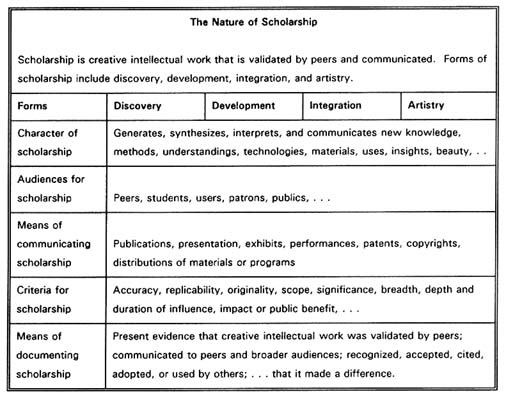
FIGURE 3-1 Forms of scholarship. Source: Reprinted courtesy of Conrad J. Weiser and Oregon State University.
production is becoming much more precision oriented and biologically and managerially intensive, requiring an understanding of physical and biological processes and their site-specific interactions. This places significant demands on the science curricula in colleges of agriculture and on the way science is taught. The colleges of agriculture have the potential to be leaders in developing and teaching multidisciplinary systems-based approaches that can greatly enhance student understanding of the practical applications of the disciplinary sciences and their preparedness for food and agricultural careers.
A second major trend is consumer concern about the safety of foods coupled with a better understanding of the link between food characteristics, nutrition, and health. Agricultural education must put an increasing emphasis on food and nutritional sciences and produce graduates who not only understand but can also enhance the linkages among crop and livestock genotypes, production practices, food processing, and consumer health.
A third trend is globalization of the agricultural industry. For decades large grain companies have operated from a U.S. base in the global marketplace. Increasingly, U.S.-based companies must also be competitive in global markets for consumer and value-added products based on agricultural ingredients. This requires an advanced level of cultural, social, and political knowledge that has relatively recently begun to characterize U.S. agribusiness and also has significant implications for education of agricultural professionals (Goodman, 1992). The committee believes many colleges of agriculture have recognized the need to offer their students a global perspective and a good grasp of international markets and cultures. Many colleges have made significant strides in curriculum development in international agricultural markets and trade and in offering students international work-study opportunities. Some continue, however, to grapple with international studies issues as fundamental as foreign language requirements.
A fourth trend is industrialization of the food and agricultural system. Although the range of skills and expertise needed in the vertically integrated firm is extreme, individual managers and technicians must have highly specialized skills that relate to a particular phase of the production, processing, and marketing continuum. Colleges of agriculture need continuing input from industry to ensure that their curricula provide the knowledge base for these specialized skills and positions.
Problem-Solving Orientation
Over the decades, as the agricultural disciplines matured, the colleges organized their programs around disciplinary departments and strengthened the theoretical and basic science content of their courses. Reflecting this trend, many colleges changed their names from "college of agriculture" to "college of agricultural sciences." This trend was probably reinforced by criticisms of the colleges' programs by the science community. In 1972 and again in 1982, two reports by independent scientific committees (National Research Council, 1972; Rockefeller Foundation, 1982) faulted the land grants for placing too much emphasis on applied research on local problems and not enough on basic biological research.
Today the system's historical commitment to practical education may be best seen in the emphasis on student internships in industry. The 1995 forums the committee conducted at selected land grant colleges revealed both student and industry satisfaction with the colleges' emphases on internships and with the link between education and the real world that internships provide. However, the colleges' commitments to (or resources for) internships with organizations less closely associated traditionally with the colleges of agriculture, such as food banks, community service organizations, nutrition programs, public interest and nonprofit entities, or public agencies with natural resource or environmental responsibilities, are less developed and should be expanded. Graduate students need this kind of experiential opportunity and exposure as much as undergraduates.
|
Curriculum Revitalization Projects In the late 1980s the W. K. Kellogg Foundation funded an initiative, Project Sunrise, to revitalize curricula at land grant colleges of agriculture on the campuses of University of Minnesota, University of Nebraska, and University of Wisconsin. At each of the colleges, innovations led to both new methods of teaching and learning and new curriculum content. At the University of Minnesota the project resulted in intensive faculty development in alternative learning strategies, such as cooperative learning, for teaching critical thinking, problems solving, and decision making. Ten new college and intercollegiate majors—including agribusiness management, agricultural education, agricultural industries and marketing, animal and plant systems, applied economics, food science, natural resources and environmental studies, nutrition, science in agriculture, and scientific and technical communications—reduced the number of majors and were designed to give focus to undergraduate education across departments. The University of Nebraska project led to changing the College of Agriculture's name to the College of Agricultural Sciences and Natural Resources. New general education requirements were developed that emphasized writing and communication and that met the test of new university-wide requirements. Case studies and computer simulations, as well as other new teaching and learning methods were introduced. New courses were established, including ethics in agriculture and natural resources, science of food, biological systems engineering, and quality of the environment. New programs of study included environmental studies, natural resources majors, and landscape architecture. The University of Wisconsin's assessment of its curriculum led to, among other things, mini-grants to fund revitalization of courses and introduce new teaching strategies. Among the curriculum innovations was the development of an agriculture, technology, and society program that included 11 new courses and 2 existing courses and the development of a an interdisciplinary course for incoming students called "An Orientation to the College of Agricultural and Life Sciences." The faculty improved their computer skills, audiotapes were developed and distributed to introduce faculty to the learning styles of "nontraditional" students, and videotapes were developed on how to cope with academic stress. Among the lessons learned through Project Sunrise were the need for involving faculty in, and building faculty commitment to, change; the need for faculty development; the need for openness and communication regarding outcomes; and the need for flexibility in curricular designs and methods of operation so that adjustments can be made and tested easily. Source: Povlacs Lunde, J., M. Baker, F. H. Buelow, L. Schultz Hayes. 1996. Reshaping Curricula: Revitalization Programs at Three Land Grant Universities. Bolton, Mass.: Anker Publishing. |
RECOMMENDATION 7. The colleges of agriculture should require students to take at least one internship from a wide range of creative, mentored internship opportunities representing the diverse career settings for which graduates in food and agricultural sciences are prepared.
Broader use of extension internships as credited programs could be an avenue to accessing these opportunities. The colleges should work with their cooperative education programs to diversify internships for agriculture majors and to open traditional agricultural internships to students not majoring in agriculture. It is hoped that state and federal agencies and private enterprises directly or indirectly engaged in the food and agricultural system will initiate and welcome partnerships with LGCAs to provide meaningful internships for students and financial support for these programs.
"Hands-on" experience in class is another way that innovative colleges link theory and practice and thereby offer problem-solving skills to their students. Many examples drawn from traditional production courses may be found, but most important is the evidence that the "hands-on" concept has begun to be incorporated into newer courses. For example, the University of Florida offers a hands-on course in wildlife field techniques. The course includes exercises with birds, mammals, reptiles, amphibians, and vegetation. In one exercise the students set up trapping grids for small mammals; they set the traps and check, identify, weigh, and detail what is caught. The students practice working with the animals in labs, including learning the soundest procedures for administering anesthesia and injections; and they also practice handling and radio-tracking techniques (Mastron, 1995).
The LGCAs' emphasis on experiential learning must be appropriately balanced with liberal arts and general education requirements. As Allen (1992:p. 190) writes,
… certain concepts and principles must be taught as part of an appropriate foundation for present and future learning that is a part of how we define an "educated person." Among these "musts" are … communication skills, problem solving, cross-cultural understanding, important disciplinary concepts, and sufficient grounding in liberal arts and interdisciplinary courses to serve as foundation for further personal or professional growth by the individual.
As the earlier discussion of student test scores and employer needs suggests, LGCAs must expect their students to meet minimum standards in these concepts and principles before they can be considered adequately prepared for graduate programs and the contemporary work place.
Opportunities For Distinction
Land grant colleges still have the major role in agricultural education, particularly at the graduate level, but they also have considerable competition. Many colleges and universities that are not part of the land grant system educate undergraduates in general agriculture and agricultural business and management, in particular. As noted in the Profile report, in 1992, non-land grant colleges and universities conferred approximately 20 percent of the undergraduate degrees in agriculture, food, and natural resources generally and about 30 percent of the undergraduate degrees in agribusiness (National Research Council, 1995a). Many of the non-land grant colleges and universities, including community and other 2-year colleges, have excellent programs and reputations in community service, as well.
Additionally, non-land grant universities—both public and private—are responding to student interests in natural resources and the environment, and some of the most innovative programs are at these institutions. The Profile report also notes that in 1992 non-land grant institutions conferred approximately 25 percent of the baccalaureate degrees in natural resources and approximately 33 percent of the master's degrees (National Research Council, 1995a).
In addition to its unique opportunity to enrich the academic experience through linkages among research, extension, and teaching, the committee believes the LGCA
|
"Transdisciplinary" Teaching at the University of Maryland The Institute for Ecological Economics (IEE), established in 1991 by the Center for Environmental and Estuarine Studies of the University of Maryland system, became a joint venture with the College of Life Sciences and is also now associated with the School of Public Affairs at the College Park campus. IEE is the first American institute in an emerging global network of such research centers using the transdisciplinary approach to teaching. Ecological economics, a transdisciplinary program, draws from ecology and economics and the subdisciplines of environmental and resource economics so as not to be bound by them but rather to create an effective and essential synthesis of information. The IEE curriculum provides theoretical and problem-oriented training. Contrary to interdisciplinary teaching, where students take a group of standard courses from different disciplines, new methods of teaching are employed in the IEE curriculum. The new teaching concept focuses on providing guidance to the students on how to tie together information from different disciplines. This scientific "atelier" (artisan's workshop) method of teaching combines an interdisciplinary workshop, case study, design studio, and guest lecture system that can be focused on a specific research topic. The concept of ecological-economic simulation modeling of ecosystems is an important component of the graduate-level curriculum at IEE. The modeling is used to assess the potential values of ecosystem services, given ecosystem controls, management options, and feedbacks within and between the ecosystem and human sectors. Hardware and software tools are available that allow nontechnical computer users to create, implement, and test spatio-temporal ecosystem models on a wide range of platforms. The output of the models can be viewed by the user, providing practical information for valuing natural resources and setting public policies. There are options for altering the model dynamics to create certain scenarios. Statistical models and landscape pattern indices can be used in conjunction with ecosystem models to quantify risks to ecosystems. Dynamic spatial models are also developed with the goal of providing a realistic description of past environmental situations and human behavior, while predicting the impacts of alternative policies on the environment and future human behavior. Dynamic modeling can be used, for example, to answer the question of how the services provided by a vegetative ecosystem at both a local and international scale are influenced by alien plant invasion and different management strategies. The benefits and costs of management scenarios can be addressed using information from a broad range of disciplines to estimate the value of harvested products, tourism, associated product yields, and biodiversity. In this instance, an interactive model will allow the user to set features such as level of harvest, extent of alien plant clearing, fire management strategy, and park visitation rates. The model output often proves to be a valuable tool in outlining the benefits of immediate investment to address current problems and the potential cost implications, if any, of delayed action. |
system has opportunities for distinction in several important areas of its academic programs: environmental sciences and systems approaches, teaching science through food and agricultural systems, and creating a "marketplace for ideas."
Environmental Science and Systems Approaches: Programs Built on a "Sense of Place"
Land grant universities were founded on a sense of place: an integrated landscape containing people who needed help. They were directed at altering the environment for the better, with better farmers and mechanics as tools. They realized that people were at once the primary problem and the principal resource (Gordon, 1992: p. 51).
LGCA's have been concerned with the interactions of farmers and the land and the elements, and they have focused on those interactions in specific locations. Education in agricultural specializations, particularly at land grant colleges, has been unique in part because of its connection to the site-specific research of the state experiment stations. Although certain principles are generalizable, crop yield depends on the adaptability of crop varieties to specific soil, water, and climatic conditions or on the development of new varieties better suited to local growing conditions. Thus, "sense of place" has a general meaning (linking people to their environment) and a specific meaning (serving the place-specific needs of people whose livelihoods depend on a productive agricultural enterprise).
Given their roots in a "sense of place," LGCAs are potentially well situated to lead the way in education that focuses on understanding the natural environment and how human cultures both affect it and adapt to its changes. Some colleges are moving in this direction by expanding their agricultural science curricula, in response to national needs and student interests, to include environmental sciences.
Some make the point that agricultural sciences are environmental sciences. In his remarks in 1968 regarding his vision for the college of agriculture at the University of California at Davis, James H. Meyer said,
Its title, "College of Agricultural and Environmental Sciences," reflects the name change made in 1968 when we knew we had responsibilities for both agricultural and environmental sciences. My first recommendation is to change that title by deleting the "s" from Sciences. We should be the College of Agricultural and Environmental Science. The two adjectives must be said together to define the unique science for which we strive. Agricultural science alone or environmental science alone no longer exists nor was it ever possible.
The colleges' scientists and extension specialists are, more than ever, researching ways to facilitate the adoption of sustainable farming practices that are, for example, less chemical intensive and more in touch with both on- and off-farm environmental impacts. They are thus beginning to replace, for example, the vision of soil as a growth medium for corn with a regard for soil as an integral part of a delicate landscape, an ecosystem, a global marketplace, and necessary for sustainable human development. The colleges could also be building on the close proximity of their agricultural and forestry programs—at times in the same college, at times in separate administrative units (National Research Council, 1995a)—to develop a more integrated approach to landscape management that takes into account both crop and forest production systems and their interactions.
As they build their environmental science programs, land grant colleges could be at the forefront of the development and teaching of a "systems approach" to the conduct of science. A systems approach takes a broad rather than reductionist view of how things work, and thus describes how a set of elements or components are related and how those relationships are relevant to problematic situations (Checkland, 1981). Many believe a systems approach adds relevance to the reasons why things are learned and helps to define science in a broader perspective.
The resolution of many agricultural and environmental problems requires an approach that accounts for complex physical, biological, and behavioral relationships and thereby integrates contributions from multiple disciplines (Corson, 1995). For example, developing sustainable animal agricultural systems requires the integration of research in agronomy and soil science, ecology and ecosystems analyses, engineering, animal nutrition, population and community biology, and economics (National Research Council, 1994a).
Agricultural scientists have made significant progress in the modeling and simulation of agricultural processes over the last 25 years. For example, applied systems models are available to simulate processes such as weather, hydrology, nutrient cycling, tillage, soil erosion, soil temperature, crop growth and development, animal production functions and systems, and agricultural markets (Vietor and Moore, 1992). These models enable instruction to rise above the qualitative sphere—encompassing factors that influence the system—to the dynamic and quantitative domains, that is, how fast and how much.
RECOMMENDATION 8. The federal government should expand competitive challenge grants to creative teachers and teaching teams to develop innovative multidisciplinary and systems-based course material and curricula.
Agricultural scientists are well positioned to apply these systems concepts and approaches to a broader array of problems—including those relevant to urban environmental systems—and to introduce them effectively in the classroom to both agricultural and nonagricultural science majors. Nonetheless, Bradshaw and Marquart (1990), as observers of today's land grant education, argue that,
In agriculture, there are many varieties of well-trained specialists: entomologists, plant pathologists, crop and soil scientists and others. Despite this high degree of specialization, or perhaps due to it, the delivery network for independent, multidisciplinary agricultural systems expertise is not in place. … Agricultural education and research respond to the needs of scientists and their disciplines, but less so to the needs of the production system and its practitioners—needs which extend beyond any single discipline.
Service to the University
In addition to the opportunities for leadership in applying and teaching multidisciplinary science and systems-based methodologies, LGCA faculty can use food and agricultural systems applications to teach science, providing core courses that enable students to meet university-wide requirements or requirements of science departments not located in the college of agriculture. Taking this approach not only helps students understand how basic science is relevant and useful to real problems, but also places agriculture more squarely within the scientific context (Handelsman, 1992) and opens LGCAs to a wider spectrum of students. For example, in the plant pathology department at the University of Wisconsin, a traditional course in micropathogens of plants was replaced with a course dealing with the basic principles of host-parasite interactions and critical analysis of scientific papers using examples from the plant pathology literature (Handelsman, 1992).
A Marketplace for Ideas
Every citizen participates in the formulation of public policies that impact on agriculture. Thus, every citizen affects agriculture, just as every citizen is affected by agriculture through the quality and value of its products and by the effects agriculture has on natural resources and the environment. [from University of California course material]
|
Teaching Science Through Agriculture A salad, mashed potatoes, a rice and bean dish, or a package of brown sugar can link the science of botany to everyday reality for college students. Because plants have innumerable functions, from their use as foods to their application in clothing, shelter, and medicines, they are uniquely suited for use in teaching science and integrating it with historical, sociological, and economic issues. ''Seeds of Change: The Uses of Plants" is a course developed at Pennsylvania State University as part of a new initiative in undergraduate education that uses a creative approach to training young scientists. Traditional botany curricula stress biological principles but may not establish the connection between the chemical and biological features of plants and their importance in the health and welfare of animals and humans, the environment, and the economy. Investigating structural, nutritional, and chemical characteristics of plants can provide the basis for why different plants have specific uses, methods of cultivation, and are distributed in particular geographical areas. Dramatic changes in civilization brought about by plants, such as alterations in diet and increase in population catalyzed by the spread of western hemisphere crops to Europe—the Columbian Exchange—illustrate their worldwide social and economic significance. Through photosynthesis and oxygen production, plants are the major producers of biomass and consumers of the greenhouse gas carbon dioxide—a concept students relate to as a way of understanding global warming. Plants have evolved to an astounding diversity of forms, sizes, shapes, colors, and smells, and as a result of their many unique features they are essential to a wide array of animals and humans, from hunter-gatherers searching for food to scientists searching for a cure for cancer and AIDS. Going beyond the conventional lecture format, "Seeds of Change" offers students an opportunity to explore plant science through in-class demonstrations and field assignments. Demonstrating the extraction of oils from various plant sources gives students first-hand experience with the methods used to manufacture perfume. Examining the components of a salad prompts students to discover that the "crunchiness" of lettuce is a result of its cellulose content and the orange color of carrots is a result of the vitamin, beta-carotene. Field trips to observe wild flowers in designated sanctuaries and to the National Arboretum in Washington, D.C., emphasize the role of plants in the origins of agriculture and medicine. Testing their knowledge, students are asked to develop questions for a game of trivia in which questions are organized into categories including history, economics, foods, and medicinals. The source for questions must be documented, which requires students to search the scientific literature and complete reading assignments. Students can also participate in a potluck dinner designed to reflect the widest possible diversity of plant uses for food. |
The issues surrounding agriculture epitomize the complex and challenging choices that society and citizens must make. Colleges of agriculture can play an important role in teaching students how to engage constructively and collaboratively in resolving "real life" issues. The major components of collaborative problem solving are (a) developing a philosophy of co-learning in which everyone participates; (b) treating all ideas with
respect; (c) team facilitation; (d) goal and boundary setting; and (e) separating the creative process from the decision making process. Interactive learning, listening carefully to all viewpoints, and learning how to effectively influence the thinking and action of others are the key to collaborative problem solving. Classes that encourage creativity and stimulate synergism in a team approach to problem solving provide students a foundation for working successfully with their future professional peers and in their communities.
The colleges of agriculture should lead the way in producing graduates well prepared to engage in collaborative problem solving in the food and agricultural system. However, to take this leadership role, many colleges must continue to make progress in overcoming the perception that they serve a narrow segment of society.
Agriculture represents the confluence of many different interests, groups, and sectors of society. Consequently, the colleges of agriculture potentially have a considerably larger role in providing training and course work in the social and behavioral sciences than many now play. Some colleges of agriculture have taken on this role. As an example, the College of Agricultural and Environmental Sciences at the University of California at Davis administers an interdepartmental undergraduate teaching program in science and society. Students are offered courses that integrate the physical, biological, and social sciences and simultaneously introduce the basic subject matter of the college. General education courses highlight the food and fiber systems and their connections to environmental resources and the health, safety, and well-being of workers and consumers. Upper-division courses emphasize integrative and synthetic intellectual skills, coupled with an emphasis on creative problem solving and service to society. Courses often involve more than one professor and draw on team or panel teaching approaches. A class in agricultural biotechnology, for instance, looks at the potential societal impact of various technologies, factors shaping public opinion, and ethical and moral questions being raised about the application of new biotechnologies (University of California, Davis, 1993).
Summary And Recommendations
Land grant precepts for access and education for the citizenry remain in the national interest despite the fact that most U.S. citizens have attained a relatively high level of education. There are, nonetheless, some growing challenges to these historical goals, including increases in tuition and declines in student aid—developments that fall most heavily on poor and lower-middle class families. The colleges of agriculture have unique opportunities to contribute as leaders to the ongoing realization of the land grant vision, but they also face extra challenges that they must overcome.
Agricultural and food systems education remains vitally important to the nation and the world (and the agricultural interests of the nation and world are interdependent), particularly as world population expands, natural resource constraints tighten, and human health care costs stress economies. Indeed, the demands of agricultural education have expanded as the business of agriculture has become increasingly industrialized and global; as knowledge of plant and animal genetics and ability to control genetic characteristics has grown; and as the complex interactions between agricultural production and the environment and between genotypes or production methods and food attributes and human health have become better recognized and of increasing concern to society.
Inasmuch as agriculture is an advanced science- and technology-based industry that has everyday relevance to peoples' lives, food and agricultural systems courses are a vehicle for teaching life, physical, and social sciences to both science and nonscience majors and for underscoring the practical applications of science to modern life. The linkages between the college of agriculture and the university can and should be enhanced through this strong connection between agriculture and science.
Agricultural and food systems education should maintain the disciplinary strength it developed as the agricultural disciplines matured, while also offering its graduates
interdisciplinary perspectives, the ability to work in multidisciplinary teams, and the tools to analyze systems comprised of interacting biological, physical, and economic processes. Such tools and perspectives are needed by both modern-day farmers, who must be sophisticated managers of biological and natural resource systems, and by public and private entities attempting to understand and manage interactions among production agriculture, natural resources and the environment, human health and the well-being of human communities.
Because of their historical role in developing a science base for understanding human interactions with our natural environment, the land grant colleges are natural leaders in developing and teaching modern environmental sciences. Environmental sciences are of great interest to students and society today. The land grants can take the lead in viewing agricultural resources as part of a larger ecology; they can thereby expand the relevance of their programs to a wider set of students and societal issues; and they can take a more constructive role in bridging and integrating the interests of farm and nonfarm clientele by providing students with the tools for undertaking systematic and quantitative analyses of opportunities and challenges in the food and agricultural system.
In sum, the committee believes there is significant potential for enhancing the quality, breadth, accessibility, and relevance of LGCA teaching programs. Given the relatively modest federal funding available to stimulate innovations in food and agricultural system teaching programs, the federal role is limited to providing incentives for state and institutional initiatives. To successfully stimulate innovations, the committee recommends the federal government target its resources to initiatives such as
- supporting the bridging programs and articulation agreements among institutions (Recommendation 6);
- supporting mentored internship opportunities that reflect the diversity of contemporary career settings for graduates in the food and agricultural sciences (Recommendation 7); and
- stimulating and rewarding the development of innovative multidisciplinary and systems-based courses and curricula for food and agricultural systems education (Recommendation 8).
The committee also believes that internally generated and state supported changes in LGCA teaching programs are needed to better prepare students for the challenges of a dynamic, complex, and consumer-driven 21st-century food and agricultural system and to strengthen the future of the LGCAs. Examples of needed structural changes that are discussed and recommended in this chapter, and in Chapter 2, and that require significant institutional leadership, are the following:
- Integrate teaching and learning opportunities more fully with research and extension through, for example, involving undergraduates in research, and enhancing the role and status of extension in academic programs.
- Reduce barriers to multidisciplinary and interdepartmental approaches to teaching and learning through, for example, rewards for and recognition of team scholarship.
- Develop long-term, comprehensive regional consortia to reduce duplication, differentiate course offerings, create inter-institutional faculty teams, capitalize on distance learning technologies, and broaden experiential learning opportunities.
- Strengthen relationships with and build bridges to other units of the university by, for example, developing courses that fill general education requirements in the sciences and humanities and that place food and agricultural issues squarely in the scientific context.


