
3
Education
As discussed in Chapter 2, the educational realm of comprehensive school health programs (CSHPs) includes two curricular components with a health focus: physical education and health education. These should be perceived as distinct courses or programs within the school curriculum. Although physical education and health education may have differences in their conceptual basis and approach, they share the common goal of enabling students to take personal control of factors that affect their health. Both fields are currently undergoing change, with new developments informed by research. This chapter will review the state of physical education and health education, and examine how these two curricular areas can contribute to a comprehensive school health program.
THE ROLE OF PHYSICAL EDUCATION IN COMPREHENSIVE SCHOOL HEALTH PROGRAMS
Introduction
The physical education instructional program is an integral part of a comprehensive school health program, because it teaches the knowledge and skills that lead to a physically active life-style and reinforces positive health behaviors (McGinnis et al., 1991). Research has confirmed a direct relationship between a physically active life-style and the long-term health status of individuals. A sedentary life-style as an adult leads to premature mortality and morbidity. The sedentary are more likely to experience
coronary heart disease (Berlin and Colditz, 1990; Powell et al., 1987), hypertension (Paffenbarger et al., 1986; Blair et al., 1988), certain cancers (Kohl et al., 1988; Lee et al., 1992), osteoporosis (Cummings et al., 1985), and obesity (King and Tribble, 1991). The ultimate consequence of increased numbers of sedentary adults is an increase in the number of premature deaths. A study released in 1986 estimated that approximately 257,000 deaths in the nation could be attributed to a sedentary life-style, making this a risk factor equal to or greater than that attributed to obesity, elevated cholesterol, or hypertension (Hahn et al., 1986). Epidemiologic studies estimate that all-cause mortality rates are at least two to three times greater for sedentary persons than for those who are active (Centers for Disease Control and Prevention, 1997).
Light to moderate physical activity for adults can have significant health benefits and reduce the chronic diseases associated with a sedentary life-style (Leon, 1989; Leon et al., 1987; Sallis et al., 1986). Since regular exercise increases functional capacity and reduces many risk factors for chronic disease (McGinnis, 1992; Pate et al., 1995; Powell et al., 1989), it is prudent to provide children with the information and skills necessary to maintain a physically active life-style. Physical education programs in schools should prepare children for a lifetime of physical activity (Sallis and McKenzie, 1991).
Recognition of the link between physical education and public health is not a recent phenomenon. Lemuel Shattuck's pioneering 1850 Report to the Sanitary Commission of Massachusetts, described in Chapter 2, included physical training as part of the plan for improving public health (Means, 1975; Pate et al., 1995). Physical education has long been justified on the basis of broad physical, social, and moral developmental goals, although to date the major focus has often been on team and competitive sports. Even large-scale fitness testing programs in the recent past assessed sport-related skills rather than health-related fitness (Ross and Gilbert, 1985; Ross and Pate, 1987; Sallis and McKenzie, 1991). In a review of physical education's role in public health, Sallis and McKenzie noted:
In a society in which adult sedentary behavior contributes substantially to the epidemic of cardiovascular and other chronic diseases, there is a rationale for shifting the orientation of physical education to a health focus. … Health-related physical education programs should focus on maximizing the participation of all children, whether they are athletically gifted, clumsy, disinterested, or obese. Physical education in schools is the only preparation most children will have in how to develop an active life-style. …
Quality Physical Education
The physical education instructional program makes a unique contribution to the health and education of students by promoting the development of a physically educated person who has skills necessary to perform a variety of physical activities, is physically fit, participates regularly in physical activity, knows the implications of and benefits from involvement in physical activities, and values physical activity and its contributions to a healthful life-style (National Association for Sport and Physical Education, 1992).
The goals of the physical education program are the attainment of appropriate levels of physical fitness and the development and refinement of motor skills that support a physically active life-style and safe, efficient movement. Skillful movement is a fundamental part of everyday life. It is a prerequisite for health-related physical activities and supports safety and self-confidence in work-related performance and recreational pursuits.
The recently released National Standards for Physical Education identify the psychomotor, cognitive, and affective aspects of physical education that all students should know and be able to do as a result of a quality physical education program (National Association for Sport and Physical Education, 1995). According to these standards, the physically educated person does the following:
-
Demonstrates competency in many movement forms and proficiency in a few movement forms.
-
Applies movement concepts and principles to the learning and development of motor skills.
-
Exhibits a physically active life-style.
-
Achieves and maintains a health-enhancing level of physical fitness.
-
Demonstrates responsible personal and social behavior in physical activity settings.
-
Demonstrates understanding and respect for differences among people in physical activity settings.
-
Understands that physical activity provides opportunities for enjoyment, challenge, self-expression, and social interaction.
The relationship between quality school physical education and health status was also recognized by the developers of Healthy People 2000 , the national decade-long public—private initiative to improve the health of the nation (U.S. Department of Health and Human Services, 1991). Two of the Healthy People 2000 national health objectives focused on physical activity in schools:
-
Increase to at least 50 percent the proportion of children and adolescents in Grades 1 through 12 who participate daily in school physical education,
-
Increase to at least 50 percent the proportion of school physical education class time that students spend being physically active, preferably engaged in lifetime physical activities.
Quality physical education programs should be taught by qualified physical educators and include a planned, sequential curriculum that incorporates the seven national standards for physical education into a program of developmentally appropriate movement experiences for all students.
Health-Related Physical Fitness
Health-related physical fitness refers to performance levels in one or more of these fitness components: muscular strength and endurance, cardiovascular endurance, flexibility, and body composition. Health-related physical fitness is the aspect of a quality physical education program most readily identified as physical education's contribution to public health. However, the use of fitness scores to measure the impact of the physical education experience on public health is shortsighted. Physical fitness scores are a time-bound measure. They are important in describing current health status but not future health status. The importance of motor skill development must also be emphasized. A child who does not develop a level of confidence and competence as a skillful mover will probably choose not to pursue a lifetime of physical activity and may incur unnecessary injuries through poor, inefficient movement patterns.
Research
Participation in moderate to vigorous physical activity provides considerable health benefits for children and youth (Blair et al., 1989; Cale and Harris, 1993; McKenzie et al., 1992; Simons-Morton et al., 1988), as well as for adults. Relationships have been established between children's physical activity and obesity (Berkowitz et al., 1985; Saris et al., 1980; Sasaki et al., 1987), high-density lipoprotein (HDL) cholesterol (Durant et al., 1983), blood pressure (Hofman et al., 1987; Panico et al., 1987), and cardiovascular fitness (Duncan et al., 1983; Dwyer et al., 1983; Maynard et al., 1987; Siegel and Manfrede, 1984). Exercise training produces improved physical fitness in students (Mahon and Vaccaro, 1989; Pate and Ward, 1990; Pate et al., 1995). More than 100 large population-based studies on the relation of physical activity or fitness to health have been published in the peer-reviewed literature, most during the past 20 years; examples are
summarized in Table 3-1. Youth physical activity has also been linked to improved mental health, cognitive functioning, and academic performance; and involvement in physical activity and sports has been associated with a decrease in smoking, alcohol consumption, and drug use and abuse (CDC, 1997; Shephard et al., 1984).
It is well accepted that physical activity has significant health benefits, but the levels of activity required in childhood to achieve those benefits are not fully understood (Sallis and McKenzie, 1991). Furthermore, there is currently little research to directly link students' current or future physical fitness levels to the physical activity that occurs in physical education classes. Although the relationship between school physical education and active adult life-styles is not fully understood, many believe that increasing a person's ability to move competently and confidently may increase their willingness to become more physically active.
Current Practice
A nationwide assessment of physical education programs at the state, district, and school levels was recently completed by the Centers for Disease Control and Prevention (CDC) as part of the School Health Policies and Programs Study (SHPPS)1 (Pate et al., 1995). This assessment shows that current instructional practices in physical education do not meet the standards identified by the national health objectives Healthy People 2000 nor the National Standards for Physical Education. According to SHPPS data, most states (94 percent) and school districts (95 percent) require physical education. Yet 80 percent of states and 83 percent of all districts allow students to be excused from physical education classes for reasons such as parents' requests (65 percent of middle schools, 42 percent of secondary schools), physical disability (58 percent of middle schools, 59 percent of secondary schools), and participation in other activities such as band, chorus, or cheerleading (30 percent of middle schools, 23 percent of secondary schools). Even if no exemptions were approved, the number of students participating in daily physical education remains less than optimal. In middle school, less than one-half of the students (47 percent) are required to attend physical education each year (Table 3-2). Of those who
TABLE 3-1A Illustrative Studies Regarding Physical Activity and Physical Education
|
Study |
|
Cohen, C.H. 1995. The effect of a three-year physical fitness program on the body composition and lifestyle behaviors of middle school students. RQES Supplement, March. |
|
Ignico, A.A. 1994. A longitudinal study of the fitness levels of children enrolled in daily versus twice weekly physical education. RQES Supplement, March. |
|
Sallis, J.F., Simons-Morton, B.G., Stone, E.J., Corbin, C.B., Epstein, L.H., Faucette, N., Ianotti, J.D., Killen, R.C., Klesges, Petray, C.K., Rowland, T.W., and Taylor, W. 1992. Determinants of physical activity and interventions in youth. Med. Sci. Sports Exerc. 24:S248–S257. |
|
Taylor, W., and Baranowski, T. 1991. Physical activity, cardiovascular fitness, and adiposity in children. RQES 62:157–163. |
|
Pate, R.R., Dowda, M., and Ross, J.G. 1990. Associations between physical activity and physical fitness in American children. AJDC 144:1123–1129. |
|
Dennison, B.A., Straus, E.D., Mellits, E.D., and Charney, E. 1987. Childhood physical fitness tests: Predictor of adult physical activity? Pediatrics 82:324–330. |
|
Gruber, J.J. 1986. Physical activity and self-esteem development in children, A meta-analysis. Pp. 30–48 in Effects of Physical Activity on Children (The American Academy of Physical Education Papers, No. 19), G.A. Stull an H.M. Eckert, eds. Champaign, Ill.: Human Kinetics. |
|
Iverson, D.C., Fielding, J.E., Crow, R.S., and Christenson, G.M. 1985. The promotion of physical activity in the United States population: The status of program in medical, worksite, community, and school settings. Public Health Reports 100:212–224. |
|
Caspersen, C.J., Powell, K.E., and Christenson, G.M. 1985. Physical activity, exercise, and physical fitness: Definitions and distinctions for health-related research. Public Health Reports 100:126–131. |
|
Corbin, C.B., and Pangrazi, R.P. 1991. Are American children and youth fit? RQES 63(2):96–106. |
|
Principal Findings |
|
The study supports the position that life-style behaviors are established very early in life; therefore intervention programs |
|
must be implemented early on in elementary school in order to have a significant effect. |
|
The findings suggest that school physical education program can make a significant contribution to children's fitness levels, particularly in the area of cardiovascular endurance. |
|
This study reports that directed interventions increased physical activity in 4th-grade children. Interventions included teacher training, family support, incentives and focus on enjoyment. |
|
Obese children are less active than non-obese children. Results indicate that physical activity is positively related to cardiovascular fitness in more obese children. |
|
Physical activity and fitness are positively associated but directionally is not clear. |
|
Childhood fitness results did not predict levels of adult physical activity consistently. |
|
Positive fitness and regular physical activity participation are associated with positive self-concepts in children. |
|
The Statement on Exercise by the American Heart Association references this study under the area of implementation of exercise programs—schools as a study that demonstrates that organized school programs not only are feasible but can also be successful. |
|
This article provides working definitions of and distinctions among physical activity, exercise, and physical fitness. |
|
This article reviews several large-scale studies from perspective of accepted standards that have evolved since 1985. Most children meet some fitness criteria; many do not meet recommended standards in all fitness components (muscular strength and endurance, cardiovascular endurance, flexibility and body composition). Authors conclude that children have more health-related fitness than earlier studies indicated. |
|
Study |
|
Sallis, J.F., ed. 1994. Special Issue Pediatric Exercise Science 6(4), November. |
|
Kuntzleman, C.T., and Reiff, G.G. 1992. The decline in American children's fitness levels. RQES 63(2):107-111. |
|
Oded, B. 1990. Disease specific benefits of training in the child with a chronic disease: What is the evidence? Pediatric Exercise Science 2:384-394. |
|
Updyke, W.F., and Willet, M.S., eds. 1989. Physical Fitness Trends in American Youth. Washington, DC: Chrysler-AAU Physical Fitness Program. |
|
Ross, J.G., and Pate, R.R. 1987. The National Children and Youth Fitness Study II. A summary of findings. JOPERD 58:51-56. |
are required to take physical education each year, less than one-half (45 percent) are required to take physical education daily (Table 3-3). At the high school level, few schools require four years of physical education (Table 3-2). One-quarter of schools (26 percent) require three years; 25 percent require two years; 37 percent require one year; and 9 percent require less than one year. Only 67 percent of the classes at the secondary level are five days per week (Table 3-2) (Pate et al., 1995).
Not only do most schools provide students with less daily exposure to physical education than the national health objectives have set as appropriate, but the instructional activities most commonly included in physical education classes are not the recommended lifetime physical activities or activities ensuring moderate aerobic exercise for all participants; but rather they are competitive sport activities (Table 3-4). Basketball, volleyball, baseball, and football were the top four activities presented in class (Pate et al., 1995). Another way to assess the quality of physical education classes is to identify the time that students are actively
|
Principal Findings |
|
This issue devoted to review of literature relating to physical activity and adolescence and consensus statement on guidelines for adolescent activity. Includes two recommendations: (1) all adolescents should be physically active daily or nearly every day as part of play, games, sports and transportation, recreation, physical education, or planned exercise in context of family, school and community activities; (2) adolescents should engage in three or more sessions per week of activities that last 20 minutes or more at a time and that require moderate to vigorous levels of exertion. |
|
As fitness levels increase, positive changes in risk factors (HDL, triglycerides, body composition, blood pressure) also occur. |
|
There appear to be some benefits of physical activity and improved physical fitness for children with certain specific chronic diseases, but insufficient data and uncontrolled studies limit conclusive results. |
|
Results of this study indicate decline in some fitness measures for school-age youth. |
|
Children receive more of their physical education time from a specialist, are more likely to attend schools that conduct fitness tests, are less likely to take physical education outdoors, and spend less time at recess. School factors tend to be unrelated to body composition. Other factors related to student fitness include the child's activity level, as rated by the teacher, television watching time, receipt of physical activity through community organizations, and parental exercise habits. |
engaged in moderate to heavy physical activity. Parcel et al. (1987) and Faucette et al. (1990) observed and coded activity levels during physical education sessions in elementary classes. The average child was vigorously active for only two minutes (Parcel et al., 1987). Children were usually engaged in game play that required only a few to be active while the majority awaited their turn (Faucette et al., 1990). Recently, however, the Child and Adolescent Trial for Cardiovascular Health (CATCH) has shown that it is possible to increase significantly the intensity of physical activity in physical education classes; in CATCH intervention schools, students spent 40 percent of class time in moderate to vigorous physical activity (Luepker et al., 1996).
Scheduling and environmental factors may make physical education less appealing for students. For example, students may not look forward to physical education class early in the day, especially in hot humid weather, if there is no opportunity to shower and change their clothes. The status of physical education in the curriculum may also be ques-
TABLE 3-1B Studies Supporting the Contribution of Physical Activity to Academic Achievement
|
Study |
|
Kirkendall, D.R. 1986. Effects of physical activity on intellectual development and academic performance. Pp. 49–63, in: Effects of Physical Activity on Children (The American Academy of Physical Education Papers, No. 19), G.A. Stull and H.M. Eckert eds. Champaign, Illinois: Human Kinetics. |
|
Shephard, R.J., Volel, M., Lavallee, H., LaBarre, R., Jequier, J.C., and Rajic, M. 1984. Required physical activity and academic grades: A controlled study. Pp. 58–63 in J. Ilmarinen and I. Vaelimaeki eds., Children and sport: Paediatric work physiology. Berlin, Germany: Springer-Verlag. |
|
Moore, J.B., Guy, L.M., and Reeve, T.G. 1984. Effects of the capon perceptual-motor program on motor ability, self-concept, and academic readiness. Perceptual and Motor Skills 58:71–74. |
|
Thomas, J.R., Chissom, B.S., Steward, C., and Shelly, F. 1975. Effects of perceptual motor training on preschool children: A multivariate approach. RQES 46:505–513. |
|
Lipton, E.D. 1970. A perceptual-motor development program's effect on visual perception and reading readiness of first grade children. RQES 41:402–405. |
|
Kuntzleman, C.T., and Reiff, G. 1992. American Children's Fitness Levels. RQES 63:107–111. |
|
Rowland, T.W. 1990. Exercise and Children's Health. Champaign, IL: Human Kinetics: Chapter 8. |
|
American Academy of Pediatrics. 1987. Physical Fitness and the Schools. Pediatrics 80(3). |
|
McKenzie, T.L., Faucette, F.N., Sallis, J.F., Roby, J.J. and Kilody, B. 1993. Effects of curriculum and inservice program on the quantity and quality of elementary physical education classes. RQES 64:178–187. |
tioned because physical education is not mentioned in the National Education Goals as one of the core subjects in which students should demonstrate competence (although one of the expanded objectives of Goal 3 states that ''all students will have access to physical education and health education to ensure they are healthy and fit") (National Education Goals Panel, 1994). Thus, in this era of increased emphasis on academic rigor and standards, students, parents, and other educators may perceive that
|
Principal Findings |
|
This article reviews literature relating to cognitive development and physical activity. Indicates that while not conclusive, consistent and positive correlations are found between physical activity and academic achievement. |
|
The Trois Riveres study in Canada demonstrated significant gains in academic performance during a six-year elementary program as a result of increased time for physical education and concomitant 13% decrease in time for academic instruction. |
|
The results of this study supported increase in self-concept and reading readiness based on participation in perceptual-motor program. |
|
A perceptual motor training program appeared to facilitate limited, positive short term gains in academic ability. |
|
Physical education programs that focused on directionality of movement increased reading readiness in selected full class groups. |
|
Fitness levels of children are not increasing. Many children do not have fitness levels high enough to sustain good health. |
|
Suggests positive benefits of physical activity to various psychological factors which may influence success in academic settings (these include depression, anxiety, self-esteem). There is no evidence to suggest that physical activity reduces academic achievement. |
|
This is a position statement advocating daily physical education and physical activity in the schools. |
|
Targeted health-related objectives and teacher training increased student activity and lesson quality for 4th grade students when compared to control classes. Classes taught by specialist physical educators further improved lesson quality. |
physical education is less important than other "academic" subjects. The committee does not wish to engage in a debate over such artificial issues as whether physical education is an "academic" subject or its relative importance compared to other subjects. The point is that physical education and physical activity are very important to students' current and future health, and a choice should not have to be made between physical education and other "academic" subjects. Room should be made in the
TABLE 3-1C Articles Defining the Role of Physical Education in Public Health
|
Article |
|
Sallis, J.F., and McKenzie, T.L. 1991. Physical education's role in public health. RQES 62:124–137, June. |
|
McGinnis, J.M., Kanner, L., and DeGraw, C. 1991. Physical education's role in achieving national health objectives. RQESs 62:138–142, June. |
|
Nelson, M.A. 1991. The role of physical education children's activity in the public health. RQESs 62:148–150, June. |
|
Haywood, K.M. 1991. The role of physical education in the development of active lifestyles. RQES 62:1515–1516, June. |
|
Pate, R.R., Corbin, C.B., Simons-Morton, B.G., and Ross, J.G. 1987. Physical education and its role in school health promotion. Journal of School Health 57(10). |
|
Simons-Morton, B.G., O'Hara, D.G., Simons-Morton, D.G., and Parcel, G.S. 1987. Children and fitness: A public health perspective. RQES 58:295–303. |
|
NOTE: CDC = Centers for Disease Control and Prevention. EDC = Education Development Center. RQES = Research Quarterly on Exercise and Sport. |
schedule for physical education and physical activity, and additional opportunities for physical activity outside the regular school schedule should be provided and encouraged.
Personnel Providing Physical Education
The SHPPS study (Pate et al., 1995) found that one-half of all physical education classroom teachers at the middle and secondary levels majored in physical education. Approximately another 25 percent majored in health and physical education, which means that one-fourth of the classroom teachers of physical education do not have the specialized training necessary to be quality physical educators. This gap in training is verified by the fact that 25 percent of physical education teachers were not certi-
|
Purpose/Scope/Content |
|
This article identifies physical education as an important vehicle to support increased physical activity to support positive health. Physical education should have objective of increasing life-long physical activity. Authors advocate strong public health focus for school physical education and shift from sport focus. |
|
This article addresses the physical activity and fitness goals of HP2000 and the role of physical education programs in attaining the objectives. |
|
The article urges additional research about amount and intensity of exercise needed to support health of children and cooperation of medical and physical education community to increase health-related benefits of physical education classes. |
|
This reviews the developmental perspective in relation to a health-related physical education program. Suggests alternative perspective to Sallis and McKenzie for increasing health-related activity in the comprehensive physical education program. |
|
In this article, the authors promote the concept of health-oriented physical education, discuss professional standards, examine the current status of physical education programs, and discuss trends affecting physical education. Recommendations to make physical education more effective are provided. |
|
Documents level of physical activity in selected physical education classes as less than moderately vigorous and urges that structured physical activity and physical education programs be enjoyable and moderately vigorous. |
|
SOURCE: Adapted from information provided by the National Association for Sport and Physical Education, Reston, Virginia. |
fied by the state agency in either physical education or health and physical education. SHPPS did not examine the certification status of elementary physical education teachers, but it is likely no better than that of middle and secondary teachers. The physical education profession has taken the position that elementary physical education should be taught by teachers certified in physical education (National Association for Sport and Physical Education, 1994). A rationale for this position is that inappropriate or improperly taught physical education for young children could possibly cause harm and lead to permanent injury. The actual qualifications of those who teach elementary physical education no doubt vary considerably from state to state, for each state has its own laws and certification standards.
SHPPS reported that during the past two years, six in ten classroom
TABLE 3-2 Requirements for Physical Education Classes—by Number of Years for Middle and Secondary Schools
|
|
Districts Requiring Physical Education (%) |
|
|
Number of Years |
Middle School (92%) |
Secondary School (93%) |
|
Less than 1 year |
5 |
9 |
|
1 year |
20 |
37 |
|
2 years |
24 |
25 |
|
3 years |
47 |
26 |
|
Other not determined |
5 |
4 |
|
SOURCE: Pate et al., 1995. |
||
physical education teachers attended staff development programs. The most common topic was "teaching sports or activities" (Table 3-5). When asked which topics they would like as staff development programs, the teachers identified developing individualized fitness programs (45 percent), increasing student's physical activity in physical education class (41 percent), increasing students' physical activity outside physical education class (35 percent), and involving families in physical activity (32 percent). Only 27 percent identified teaching sports or activities as a desired staff development program. The desire for less training on teaching sports and more training on teaching fitness and promoting physical activity within and without the classroom may indicate a recognition by the teaching staff of changing priorities and a desire to use physical education as a public health strategy (Pate et al., 1995).
Most (95 percent) junior and senior high schools employed a variety of strategies to promote physical activity at school. Approximately three-fourths of the schools provided intramural and interscholastic sports and 30 percent implemented fitness activities such as Jump Rope for Heart (Pate et al., 1995). Many (77 percent) physical education classroom teachers conducted fitness testing that included tests of abdominal strength (98 percent), upper body strength (97 percent), flexibility (85 percent), and body composition or lean body mass (49 percent).
Findings Regarding Physical Education
Physical education's unique contribution to students—and to
TABLE 3-3 Percentage of All Required Physical Education Courses, by Days per Week and Minutes per Class Perioda
TABLE 3-4 Percentage of all Physical Education Courses in Which More Than One Class Period Was Devoted to Each Activity—by Activity a
TABLE 3-5 Percentage of Lead Physical Education Teachers and Physical Education Classroom Teachers Who Received Training During the Past Two Years or Wanted In–Service Training—by Topica
CSHPs—is to impart the knowledge, skills, and values necessary to be physically competent in many situations over the course of a lifetime. The skills and attitudes acquired in a quality physical education program reinforce the messages promoted in other parts of a CSHP—the importance of physical fitness, self-discipline, good nutrition, respect for self and others, avoiding health-threatening behavior, and adopting health-promoting behavior.
The committee believes that the recommendations found in the National Standards for Physical Education (National Association for Sport and Physical Education, 1995) provide a sound framework to ensure that these goals are attained. In addition, the committee supports the following recommendations for physical education developed through the SHPPS analysis (Pate et al., 1995):
-
Provide more emphasis on lifetime physical activities.
-
Increase inservice training opportunities for physical education staff.
-
Promote collaboration between physical education staff and staff from other CSHP program components.
-
Increase the number of schools that require daily physical education.
-
Increase the number of schools requiring physical education in each grade.
Finally, the committee believes that physical activity must not be limited to a formal class in the curriculum; physical activity must be a family and community priority and extend beyond the school walls and the school day. Thus, the committee welcomes the following recommendations from the CDC Guidelines for School and Community Health Programs to Promote Physical Activity Among Youth (CDC, 1997), which emphasize the following ideas:
-
Policy: Implement policies to promote enjoyable, lifelong physical activity through physical activity instruction and physical and social environments that encourage physically active life-styles. [The guidelines include such wide-ranging policies as providing physical activity instruction and programs that meet the needs and interests of all students, regardless of gender, culture, physical competence, physical disability, cognitive disability, and chronic health conditions; employing properly prepared physical education teachers, coaches, and physical activity program directors, and preparing volunteer coaches to have appropriate qualifications for sports and recreation programs; establishing discipline policies that do not include the use of physical activity as a
-
form of punishment; and promoting effective relationships between school and community recreation and sports programs.]
-
Curriculum: Implement coordinated physical activity curricula through pre-K to grade 12 school physical education programs and health education programs that are consistent with national education standards.
-
Physical Education Instruction: Implement school physical education programs that emphasize enjoyable participation in physical activity and promote the acquisition of the knowledge, attitudes, behavioral skills, and participation competencies needed for adoption of physically active life-styles.
-
Health Education Instruction: Implement school health education programs that provide students with knowledge, attitudes, and behavioral skills needed for adoption of physically active life-styles.
-
School-Based Programs and Facilities: Provide extracurricular physical activity programs that meet the needs and interests of all students, and assure access to spaces and facilities that promote safe, enjoyable physical activity. [The guidelines state that these extracurricular activities should include noncompetitive activities that meet the needs and interests of the largest possible percentage of students and that community resources should be used to deliver school-based physical activity programs, school facilities should be made available for community-based physical activity programs, and students should actively be connected to community-based physical activity programs.]
-
Community-Based Programs and Facilities: Provide developmentally appropriate recreation and youth sport programs that are attractive to all youth, and assure easy public access to spaces and facilities that promote safe, enjoyable physical activity.
-
Parental Involvement: Parents and other guardians should be involved in physical activity instruction and physical activity programs, and should ensure that their children regularly participate in physical activities in which they experience enjoyment and success. [The guidelines stress that parents should serve as role models for physical activity and plan family activities that include physical activity.]
-
School and Community Health Services: Physicians, school nurses, and others who provide health services to children and youth should assess physical activity habits and promote physical activity participation in their patients.
-
Training: Provide education, recreation, and health care professionals and volunteer coaches with training programs that emphasize the development of the knowledge and skills they need to effectively promote enjoyable, lifelong physical activity among youth.
-
Evaluation: Evaluate school physical education programs, health education programs, and school and community physical activity programs and facilities at regular intervals.
THE ROLE OF HEALTH EDUCATION IN COMPREHENSIVE SCHOOL HEALTH PROGRAMS
Introduction
No knowledge is more crucial than knowledge about health. Without it, no other life goal can be successfully achieved. (Boyer, 1983)
This concept is the driving force for the development and implementation of sound school health education programs throughout the United States. School health education is an integral component of a comprehensive school health program and is defined as "the development, delivery, and evaluation of a planned instructional program and other activities for students preschool through grade 12, for parents and for school staff, and is designed to positively influence the health knowledge, attitudes, and skills of individuals" (Joint Committee on Health Education Terminology, 1991). In 1990, the Centers for Disease Control and Prevention prepared an interim operational definition of health education that identified its instructional elements as the following (Collins et al., 1995):
-
A documented, planned, and sequential program of health education for students in grades K through 12.
-
A curriculum that addresses and integrates education about a range of categorical health problems and issues.
-
Activities to help young people develop the skills they will need to avoid behaviors that result in unintentional and intentional injuries; alcohol and other drug use; tobacco use; sexual behaviors that result in human immunodeficiency virus (HIV) infection, other sexually transmitted diseases (STDs), and unintended pregnancies; imprudent dietary patterns; and inadequate physical activity.
-
Instruction provided for a prescribed amount of time at each grade level.
-
Management and coordination in each school by an education professional trained to implement the program.
-
Instruction from teachers who have been trained to teach the subject.
-
Involvement of parents, health professionals, and other concerned community members.
-
Periodic evaluation, updating, and improvement.
The value of health education in promoting the health of young people and contributing to the overall public health mission is articulated in Healthy People 2000, which identified nine national health education objectives to be attained by the year 2000 (U.S. Department of Health and Human Services, 1991). Eight of the nine objectives refer to specific topics to be covered in the health education curriculum. The remaining objective
(8.4) is an overarching objective that calls for increasing to at least 75 percent the proportion of the nation's elementary and secondary schools that provide planned and sequential health instruction from kindergarten through grade 12. The other eight objectives are as follows:
|
2.19 |
Increase to at least 75 percent the proportion of the nation's schools that provide nutrition education from preschool through grade 12, preferably as part of quality school health education. |
|
3.10 |
Establish tobacco-free environments and include tobacco use prevention in the curricula of all elementary, middle, and secondary schools, preferably as part of quality school health education. |
|
4.13 |
Provide to children in all school districts and private schools primary and secondary school education programs on alcohol and other drugs, preferably as part of quality school health education. |
|
5.8 |
Increase to at least 85 percent the proportion of people aged 10 through 18 who have discussed human sexuality, including values surrounding sexuality, with their parents and/or have received information through another parentally endorsed source, such as youth, school, or religious programs. |
|
7.16 |
Increase to at least 50 percent the proportion of elementary and secondary schools that teach nonviolent conflict resolution skills, preferably as a part of quality school health education. |
|
9.18 |
Provide academic instruction on injury prevention and control, preferably as part of quality school health education, in at least 50 percent of public school systems (grades K through 12). |
|
18.10 |
Increase to at least 95 percent the proportion of schools that have age-appropriate HIV education curricula for students in grades 4 through 12, preferably as part of quality school health education. |
|
19.12 |
Include instruction in sexually transmitted disease transmission prevention in the curricula of all middle and secondary schools, preferably as part of quality school health education. |
Instructional Focus
Although formal health education programs were often present in schools prior to the 1960s, it was not until the School Health Education Study (SHES), conducted from 1964 to 1972, that the concept of a ''comprehensive" health education instructional program was defined and put into action (Sliepcevich, 1964). The SHES initiative developed 10 conceptual areas that represented the broad spectrum of learning necessary to develop and preserve individual, family, and community health. The 10 conceptual areas were adopted readily by both health educators and general educators, and the SHES outcomes became the basis of nearly all health education curricula and legislation in the United States during the
1970s and 1980s. Often, the 10 conceptual areas were translated into 10 content areas when discussed in legislation and curriculum frameworks at the state and local education agency levels. These 10 areas became known as the "traditional" 10 content areas of health education. Although there is some variation from state to state, the major content areas usually include (Joint Committee on Health Education Terminology, 1991) community health, consumer health, environmental health, family life, mental and emotional health, injury prevention and safety, nutrition, personal health, prevention and control of disease, and substance use and abuse.
Recently, CDC has identified six factors that are the major contributors to morbidity and mortality among school-aged children and adolescents (Kann et al., 1995). The CDC recommends that these be the priority areas for health education instruction: sexual behaviors that result in HIV infection, other STDs, and unintended pregnancy; alcohol and other drug use; behaviors that result in unintentional and intentional injuries; tobacco use; dietary patterns that result in disease; and sedentary life-style.
Desired Practice in Health Education
National Standards for Health Education
As is the case with physical education, the status of health education in the curriculum is sometimes questioned by school policy makers because health was not originally mentioned in the National Education Goals as one of the core subjects in which students should demonstrate competence. However, with each updated report of the National Education Goals Panel, language has been added emphasizing the importance of health education and other essential components of a CSHP (National Education Goals Panel, 1994). In particular, two of the objectives under Goal 3, Student Achievement and Citizenship, are (1) all students will be involved in activities that promote and demonstrate good citizenship, good health, community service, and personal responsibility; and (2) all students will have access to physical education and health education to ensure that they are healthy and fit. In addition, the National Education Goals call for students to start school with the healthy minds, bodies, and mental alertness necessary for learning; safe, disciplined, and healthful environments that are free of alcohol, drugs, crime, and violence; the development of a comprehensive K–12 drug and alcohol prevention education program in every school district; a drug and alcohol curriculum, which should be taught as an integral part of sequential, comprehensive health education; and increased parental partnerships with schools in order to promote the social, emotional, and academic growth of children.
In the spring of 1995, the Joint Committee on National Health Educa-
tion Standards released the National Health Education Standards, which are designed to help students achieve the National Education Goals and the national health goals set forth in Healthy People 2000: National Health Promotion and Disease Prevention Objectives. The overarching goal of the National Health Education Standards is the development of health literacy. Health literacy is "the capacity of individuals to obtain, interpret, and understand basic health information and services and the competence to use such information and services in ways which enhance health" (Joint Committee on National Health Education Standards, 1995). Four characteristics were identified as being essential to healthy literacy. The health-literate person is (1) a critical thinker; (2) a responsible, productive citizen; (3) a self-directed learner; and (4) an effective communicator.
The document presents seven standards and a series of performance indicators that are recommended to be assessed at grades 4, 8, and 11. Once curricula have been redesigned to attain the performance indicators for each standards, it is anticipated that students will be able to do the following (Joint Committee on National Health Education Standards, 1995):
-
Comprehend concepts related to health promotion and disease prevention.
-
Demonstrate the ability to access valid health information and health promoting products and services.
-
Demonstrate the ability to practice health-enhancing behaviors and reduce health risks.
-
Analyze the influence of culture, media, technology, and other factors on health.
-
Demonstrate the ability to use interpersonal communication skills to enhance health.
-
Demonstrate the ability to use goal setting and decision-making skills to enhance health.
-
Demonstrate the ability to advocate for personal, family, and community health.
Since the National Health Education Standards have recently been released at the time of writing this report, only a few curricula have been redesigned or developed based on the standards. Such redesign is one of the intended outcomes of the standards development and the concurrent health education assessment initiative. Probably the outcome that has been most often assessed in the past is the ability of a curriculum to increase knowledge about concepts related to health promotion and disease prevention. However, the new health education standards focus on the development of skills to enhance healthy choices, not just the acquisition of knowledge. Of increasing importance is the ability of a health education curriculum to achieve the standard to "demonstrate the ability
to practice health-enhancing behaviors and reduce health risks." Although behavior change as an outcome for health education can be found in textbooks written at midcentury as one of the three desirable outcomes in health education (changes in knowledge, attitudes, and behavior), not until 1979 when the Surgeon General's report Healthy People (U.S. Department of Health and Human Services, 1979) revealed that 50 percent of premature death and illness was caused by life-style choices, did a focus on behavior became prepotent. Health educators and public health officials began to shift their emphasis to behavioral outcomes, once it was established that knowledge alone does not change behavior.2
Effective Curricula
Desired practice in health education requires that effective curricula be selected and implemented by well-prepared teachers. There have been a number of studies demonstrating the effectiveness of health education curricula that target a single specific behavior (Glynn, 1989; Stone et al., 1989), as well as studies of programs that use a comprehensive health education curriculum to prevent or reduce certain debilitating behaviors such as tobacco, alcohol, and drug use; imprudent dietary behaviors; physical inactivity; and inappropriate sexual behaviors (Botvin and Eng, 1982; Connell et al., 1985; Ross et al., 1989; Williams et al., 1983). Table 3-6 identifies some illustrative studies of the outcomes of various health education curricula. Two large-scale evaluations have found that (1) students' knowledge of health behaviors increases after instruction; (2) students' behaviors, especially those related to substance abuse, become more health enhancing; (3) "booster sessions" are required up to two or three years after the initial program to maintain the desired effect; (4) greater changes in behavior occur after 50 hours of instruction; and (5) teachers who received training implement the curriculum with more fidelity and achieve more positive effects than teachers who do not receive training (Connell et al., 1985; Ross et al., 1991).
Two systems are currently in place for curriculum developers to disseminate exemplary evaluated curricula. One method is to apply to the U.S. Department of Education National Diffusion Network. If the developer can demonstrate strong evaluation data that establish the impact of the curriculum, it may be "accepted" into the National Diffusion Network and dissemination funding can be obtained. Another means is to submit detailed evaluation results to the Division of Adolescent and School
|
2 |
Chapter 6 further examines the issue of behavior change as a feasible and realistic outcome of health education. |
TABLE 3-6 Illustrative Prevention Programs in Health Education
|
Name |
Targeted Population Group or Sample Size When Project Began |
Grade Levels |
|
Growing Healthy |
N = 30,000 |
4–7 |
|
Know Your Body |
N = 2,283; 1,105 |
K–6 |
|
Teenage Health Teaching Modules |
Unknown |
7–12 |
|
Go for Health |
Unknown |
3–4 |
|
Cardiovascular Heart Healthy Eating and Exercise |
Unknown |
4–5 |
|
Hearty Heart |
Unknown |
3 |
|
Risk Factors Addressed |
Outcomes for Total Intervention |
References |
|
Unhealthy behaviors |
Increased health knowledge, attitudes, and behaviors; reduction in smoking; improved reading scores; positive changes in health practices among parents |
Connell et al., 1985; Owen et al., 1985 |
|
Substance abuse, nutrition, safety, physical activity, dental health, environmental health |
Lower cigarette smoking onset, reduced saturated fat consumption, increased carbohydrate consumption; reduction in total cholesterol and blood pressure |
Bush et al., 1989a, 1989b; Walter, 1989; Walter and Wynder, 1989; Walter et al., 1989; Resnicow et al., 1989; Taggart et al., 1990; Resnicow et al., 1991; Resnicow et al., 1992; Resnicow et al., 1993a, b |
|
Substance abuse, nutrition, safety |
Increases in health knowledge; health attitudes were unchanged among THTM schools but deteriorated among control schools; increased abstinence from cigarette and smokeless tobacco use, illegal drugs and alcoholic drinks in past 30 days |
Nelson et al., 1991; Ross et al., 1991; Errecart et al., 1991; Gold et al., 1991 |
|
Cardiovascular risk factors |
Moderate to vigorous physical activity increased, self-reported salt use declined, selections of fresh fruits and vegetables increased significantly |
Parcel et al., 1989; Simons-Morton et al., 1991 |
|
Decrease consumption of saturated fats, cholesterol, sodium, and sugar; increase consumption of complex carbohydrates; increase physical activity |
38% increase in heart healthy foods found in student lunches, observed changes in physical activity minimal |
Coates et al., 1981 |
|
Lack of nutrition knowledge, poor eating habits by students and parents |
Reduction in total fat, Reduction in total fat, monosaturated fat; increased intake of complex carbohydrates; parents had more healthy foods on shelves. |
Crockett et al., 1989; Perry et al., 1989 |
|
Risk Factors Addressed |
Outcomes for Total Intervention |
References |
|
Cardiovascular disease |
Reduced blood cholesterol. |
Gans et al., 1990 |
|
Cardiovascular disease, smoking, physical activity, nutrition, stress |
Increased knowledge, increased physical activity, better resting heart rates, enhanced body mass index and triceps skin fold thickness, increased nutritional choices |
Killen et al., 1988; 1989 |
|
Nutrition |
Increased nutrition knowledge, improvement in eating behaviors |
Shannon and Chen, 1988 |
|
Nutrition |
Improvements in nutrition knowledge behavior and attitude scores |
Devine et al., 1992 |
|
Premature sexual activity and pregnancy, STDs |
|
Howard and McCabe, 1990 |
|
Premature sexual activity, school dropout |
Rates of sexual abstinence doubled, improved school attendance, reading and math ability more likely to remain at or above grade level than for controls |
Ounce of Prevention Fund, 1990 |
|
Sexual behavior |
Delays in sexual involvement, increase in knowledge, increase in discussion of abstinence with parents |
Kirby et al., 1991 |
|
Sexual knowledge |
Increased knowledge about AIDS transmission, increased acceptance of persons who have AIDS |
DiClemente et al., 1989 |
|
SOURCE: Adapted from U.S. DHHS, 1993. |
||
Health (DASH) at CDC for inclusion in the "Programs That Work" project. Through these mechanisms, state and local school agencies can identify health education curricula they may wish to adopt and/or adapt for their needs.
Assessment
Special attention tends to be given to those school subjects that are tested in major local, state, and national assessments. Teachers and schools are pressured to increase student performance in reading, mathematics, or whatever other subject needs improving, and considerable class time and teacher preparation is often devoted to the effort. Unfortunately, health education is not typically tested in major assessment programs, and the lack of this driving force may contribute to indifference about health education on the part of school administrators, teachers, parents, and students.
The situation may be changing, however, as a result of collaborative efforts between the Council of Chief State School Officers (CCSSO) and participating states (Council of Chief State School Officers, 1994). The CCSSO began the State Collaborative on Assessment and Student Standards (SCASS) project in 1991 to identify and develop assessment measures in the area of science. In 1992, SCASS was extended to the field of health education, and many states have joined the effort. The project is using the new National Health Education Standards and emerging state frameworks to develop materials, resources, and strategies for meaningful assessment of what students should know and be able to do as a result of state-of-the-art health education. The project will develop assessment strategies for both classroom and large-scale assessment. The vision of many health educators is that performance assessment of student health knowledge and skills will become an expectation in state and national testing programs, just as assessment in reading or mathematics is expected, resulting in increased implementation of health education at the local level as an integral part of the total instructional program.
Well-Prepared Health Education Teachers
The Association for the Advancement of Health Education (AAHE), in collaboration with the National Council for Accreditation of Teacher Education (NCATE), has developed standards for preservice preparation of health education teachers (American Alliance for Health, Physical Education, Recreation, and Dance, 1995). Unfortunately, less than one-half of middle and secondary health education teachers are state certified (Collins et al., 1995), and few elementary teachers have had any preservice prepa-
ration in health education teaching methodology. Even certified teachers may not have had the benefit of a preservice program that meets the AAHE-NCATE standards. Further, health education is undergoing important changes as curricula, pedagogy, and assessment are becoming aligned with the National Health Education Standards and as new research on effective approaches is published. Consequently, professional development programs (also called staff development or inservice programs) are crucial to enable current teachers to implement state-of-the-art health education. Teachers of health education must be given opportunities and should be expected to participate in ongoing, discipline-specific inservice programs in order to stay abreast of new developments in their field.
The literature on professional development confirms that even among enthusiastic teachers, successful implementation and maintenance of new curricula and teaching practices do not always follow successful initial training (Gingiss, 1992). Transfer of training—the critical link between learning in the staff development and application in the work setting—depends on whether teachers are able and motivated to apply the skills and strategies learned in the program. Follow-up is critical to assist teachers as they confront the reality of working with colleagues who did not attend the staff development program. The more complex the required outcomes, the greater are the need for and benefits of follow-up programs (Gingiss et al., 1991). Follow-up should provide opportunities for teacher collaboration since peer coaching is an effective strategy for maintaining and improving effective practice (Bennett, 1987; Sparks, 1986). Computer network discussion groups can also provide support, especially for isolated health education teachers, and can serve as a forum for exchanging new ideas and approaches.
Although the above could be considered general issues in professional staff development regardless of the field, these issues are particularly important for health education teachers as they attempt to implement new curricula and assessment strategies. Like teachers in other disciplines, health education teachers are expected to impart knowledge; however, probably more so than in other disciplines, health education teachers are also expected to influence present and future behavior, in and out of school—a competence not easily acquired and put into practice.
Time
Studies have shown that a considerable number of hours of health education are required for behavior change to occur. In 1991, the National School Boards Association reported on research pertaining to the time
necessary for effective health education. One study showed that 1.8 hours of health instruction per week over the school year produces measurable increases in student knowledge and improved attitudes about health, as well as some behavior change. Another study demonstrated that health knowledge beings to increase after 15 hours, particularly in grades 4 to 7; 45 to 50 hours were needed to begin to affect attitudes and practices, with maximal learning and attitude or behavior changes occurring after about 60 hours of instruction in a given year (National School Boards Association, 1991). The issue of required ''dosage" to produce behavioral change is further examined in Chapter 6, which notes that while there may be uncertainties with regard to the specific number of hours of "clock time" needed, a brief exposure to individual health topics is not likely to be effective. More intensive exposure and follow-up "booster sessions" in subsequent years are often necessary to produce sustained effects.
Unfortunately, the time spent in health education falls far short of what is necessary. Typically, at the elementary level, health topics are woven into the general curriculum as time and teacher interest dictate; at each of the middle and secondary levels, often only a single semester of health education is required.
Current Practice in Health Education
As described earlier, in 1994 the CDC commissioned a nationwide survey, the SHPPS, that examined school health at the state, district, and school levels. This section reviews and analyzes some of the SHPPS findings about health education curricula and teachers (Collins et al., 1995) and offers some comparisons with the Healthy People 2000 goals (U.S. Department of Health and Human Services, 1991).
Curriculum
SHPPS found that 90 percent of states and school districts required or mandated health education programs at some level. At the elementary level, only 10 percent of states require a separate course; at the middle or junior high level the number rises to 28 percent; and at the secondary level, 55 percent require a separate class for health education (Table 3-7). Among school districts, 19 percent require a separate health education course at the elementary level; 44 percent require a separate course at the middle school level; and 66 percent require a separate course at the secondary level. Typically at the secondary level, health education classes last only a semester (44 percent of all schools). However, approximately 20 percent of the schools require a year's course work at the secondary
TABLE 3-7 Percentage of All States and Districts Specifying How Health Education Must Be Offered—by Type of Delivery and Grade Level a
level. An additional course beyond the semester is required by 13 percent of schools. Unfortunately, three-fourths of schools allow students to be exempted from all or part of required health education courses. Although 90 percent of schools require health education at some level, there is no state that requires health education at every grade level. The goal in Healthy People 2000 states that 75 percent of the nation's elementary and secondary schools should provide planned, sequential health instruction in grades K-12. This goal remains elusive.
The three specific content areas that are required most often by the state educational agency are HIV-AIDS prevention education (79 percent), prevention of drug and alcohol abuse (75 percent), and tobacco use
TABLE 3-8 Percentage of States and Districts Requiring That Each Health Education Topic Be Taught and Percentage of All Schools Including Each Topic in a Required Course—by Topica
prevention (72 percent). These are also the topics most often required at the district and school levels (Table 3-8). A variety of content areas are required through state legislation and/or school district codes. As a general rule, districts require more topics than do the state, although this requirement is not always fulfilled at the school level (Table 3-8). Two-thirds of the districts required that instruction be offered on 19 of the 22 topics listed on the SHPPS questionnaire (Table 3-8). At the school level, 86 percent required the topic of HIV prevention, close to the Healthy People 2000 goal of 95 percent. Additionally, 84 percent of schools required instruction in STD prevention. Among school districts, 90 percent required alcohol and other drug prevention education, which approaches the Healthy People 2000 goal of 100 percent; 86 percent of schools required tobacco use prevention, compared to the Healthy People 2000 goal of 100 percent, and 80 percent of schools required course work on human sexuality, close to the Healthy People 2000 goal of 85 percent. Injury prevention education was required by 60 percent of the schools, which actually exceeded the Healthy People 2000 goal of 50 percent. Although these topics were required by the school's curricular document, teachers at the classroom level did not always comply and teach that which was required (Table 3-9).
The SHPPS study interviewed classroom health teachers at the middle or junior high and senior high school level to assess the actual practice of health education at the classroom level. Approximately one-half of the teachers (46.9 percent) taught a course that focused exclusively on health education. The remaining (53.1 percent) infused health education content into a course that focused primarily on another subject. Both types of health education teachers were asked to identify the topics that were addressed in their classes that focused on the priority health issues—unintentional and intentional injury, tobacco use, alcohol and other drug use, sexual behaviors, HIV infection and AIDS, dietary behaviors, and physical activity (Table 3-9). Those teachers who infused health education into other subjects covered numerous topics, but the teachers who taught a separate and distinct course provided much more health content to their students.
The SHPPS survey of the required course work at the state, district, and school levels reveals that at least on paper, schools have come very close to achieving some of the course work identified as essential by Healthy People 2000 in certain areas (Table 3-8). A better assessment of actual progress, however, would be to review the amount of instruction on each topic by "infusion" teachers, since this approach was used by more than 50 percent of the schools. Table 3-9 lists the percentage of infused and classroom health teachers who spent more than one class period on particular health topics. One limitation to the data is that the
TABLE 3-9 Percentage of All Health Education Classroom Teachers and Infused Classroom Teachers Who Taught and Spent More Than One Class Period on Health Education Topics—by Topica
SHPPS study did not assess the actual time that each topic received, only the number of classroom periods in which the topic was discussed.
Other goals outlined in Healthy People 2000 were not close to being achieved, by either infused or regular health education teachers. In infused classrooms, 63 percent taught the topic of HIV prevention, which
falls short of the Healthy People 2000 goal of 95 percent, 63 percent taught alcohol and other drug prevention, far short of the Healthy People 2000 goal of 100 percent. In infused classrooms, only 45 percent taught tobacco use prevention, compared to the Healthy People 2000 goal of 100 percent, 51 percent taught human sexuality compared to the Healthy People 2000 goal of 85 percent, and 31 percent taught injury prevention compared to the Healthy People 2000 goal of 50 percent. While 84 percent of schools reported including dietary behaviors and nutrition among health education topics, only 46 percent of infused classroom teachers reported spending more than one class period on the topic, in contrast to the Healthy People 2000 goal that 75 percent of schools provide nutrition education from preschool through grade 12. In general, examination of the number of infusion teachers who spent more than one class period on important topics—which is critical for behavior change—shows that the gap between goals and infusion practice is considerable; even though they fell short of the Healthy People 2000 goals, teachers assigned to a dedicated health education course provided significantly more instructional time on these priority areas than did the infused health teachers (Table 3-9).
Qualifications of Health Teachers
In many states, specific certification to teach health education is available, but separate certification is more common at the secondary (grades 6–12) level than at the elementary level. According to the SHPPS study (Collins et al., 1995), 67 percent of states required certification for secondary health teachers and only three states required certification for elementary health education teachers. Nationwide, only 5 percent of all health teachers and 1 percent of teachers who infuse health content into another subject majored in health education as part of their college preservice teacher training. An additional 28 percent of classroom teachers had a joint major in health and physical education, and another 14 percent had a minor in health education. Teachers who infused health education in their classroom most often majored in biology or another science field.
The infusion approach is an area of concern, particularly since it is the predominant mode of health instruction. While connecting health to other curricular areas can increase relevance for students, infusion courses are taught primarily by teachers not trained in health, and health messages may be buried among other topics. Further, these teachers are likely to teach only what they know about health education, and this knowledge may be superficial or even incorrect.
Although health education teachers may have had limited preservice preparation in the field, 48 percent of classroom health teachers had accumulated enough credits to be certified, although only 9 percent of the
infused health teachers were certified in health or a combination of health and physical education. Despite the inadequacies in preparation, there is not an overwhelming demand for staff development (Table 3-10). Given that most teachers of health education did not major in this field during their college preservice experience, it might be concluded that the lack of interest results from a naivete of the potential and complexities of health education or possibly from the fact that current health teachers would rather teach other courses and can see no value in improving their skills in this area. Hamburg (1994) notes lack of teacher training as a significant obstacle to the implementation of quality health education programs. The results of the SHPPS study underscore this observation and reinforce the need for more inservice programming in the short run and the hiring of appropriately prepared professionals in health education in the long run.
Research on Effectiveness of Health Education
Health education approaches are based on various models of behavior change, some of which have proved more effective than others, and our understanding of this theoretical base is still evolving. Social learning theory, which addresses the behavior of social groups and the dynamic interaction of the individual within the larger social context, is emerging as a dominant theoretical framework for health education. An extensive discussion of social learning theory and other models of health behavior change is found in Appendix C.
Lessons Learned
Health education is a relatively young discipline, and its practice is only beginning to have a rich tradition upon which to build (Gold, 1994). Prior to 1970, there were no rigorous studies that examined the effectiveness of school health curricula (Cortese, 1993). Since 1970, there have been hundreds of effectiveness studies, many under well-controlled conditions.
Gold (1994) has reviewed the science base for health education and identified some of the major studies that document effectiveness; Table 3-11 provides a listing of some of these major studies. In writing a commissioned textbook article on school health education, Gold (1994) proposed the following lessons learned, gleaned from a review of the scientific literature on health education:
-
Significant improvements in outcomes are achieved with attention to multiple-risk behaviors, rather than focusing on separate categorical behaviors.
-
Although most health education programs and interventions are
-
based on several behavior theory constructs, it is not yet possible to identify which are most important.
-
School health instruction based on skills training, peer involvement, social learning theory, and community involvement has the greatest impact.
-
Environmental variables influence the prevalence and consequences of behavior choices.
-
Social support affects all phases of behavior change.
-
Significant benefits can come from the active and appropriate engagement of parents and families in prevention programs.
-
It is important to focus on comprehensive efforts in schools, including teaching reform, cooperative learning strategies, policy issues, and interpersonal relationships.
-
Appropriate attention must be paid to literacy and to social, cultural, gender, and ethnic diversity in program planning.
-
Teacher training is required for effective educational programs.
-
The characteristics of the individual influence the success of potential interventions.
-
Relapse prevention efforts are necessary to sustain behavior changes.
The U.S. Department of Education's Comprehensive School Health Education Program commissioned three papers to identify the research base for school health education; the papers were published by the department and later by the Journal of School Health (Allensworth, 1994; DeGraw, 1994; English, 1994). An analysis of the common themes of these papers suggests that a new paradigm of school health education is emerging, which moves away from an exclusive focus on the traditional ten content areas that have been in place since the SHES initiative of the 1960s (Jackson, 1994). According to the analysis, school health education is moving as follows:
-
from school-based to school-wide and community-wide programs (Allensworth, DeGraw),
-
from an instructional focus on the traditional 10 content areas to a focus on needs-driven and health-enhancing behaviors and skills that influence life-style changes (Allensworth, DeGraw, English),
-
from a focus on providing health information to a focus on changing health-related behavior in priority areas of vulnerability (Allensworth, DeGraw),
-
from a health content instruction model in the classroom to a health
TABLE 3-10 Percentage of Lead Health Education Teachers, Health Education Classroom Teachers, and Infused Classroom Teachers Who Received Training During the Past Two Years or Wanted Training—by Topica
|
|
Lead Health Education Teachers (%) |
Health Education Classroom Teachers (%) |
Infused Classroom Teachers (%) |
|||
|
Topic |
Who Received Training |
Who Wanted Training |
Who Received Training |
Who Wanted Training |
Who Received Training |
Who Wanted Training |
|
Alcohol and other drug use prevention |
33.4 |
23.2 |
29.6 |
23.0 |
17.0 |
25.0 |
|
Community health |
6.8 |
5.7 |
4.1 |
6.7 |
3.1 |
7.3 |
|
Conflict resolution, violence prevention |
18.0 |
25.1 |
13.3 |
21.3 |
14.5 |
24.6 |
|
Consumer health |
4.4 |
7.2 |
2.9 |
6.6 |
0.9 |
6.4 |
|
Cardiopulmonary resuscitation |
43.8 |
18.6 |
36.7 |
19.1 |
27.8 |
21.0 |
|
Death and dying |
7.2 |
11.9 |
2.8 |
12.2 |
4.4 |
13.6 |
|
Dental and oral health |
0.7 |
3.3 |
1.6 |
3.0 |
0.6 |
2.9 |
TABLE 3-11 Selected Summary of Pertinent Research Literature
|
Selected Lessons Learned |
Citations |
|
Significant improvements in outcomes are achieved with attention to multiple-risk behaviors |
Dwyer et al., 1991; Johnson, 1992; Kottke et al., 1985; Lorion and Ross, 1992; Puska et al., 1981; Shane and Kaplan, 1988; Wynne, 1989 |
|
The reasons people make changes in health-related behaviors are varied and individualized |
Davis et al., 1987; Iverson et al., 1989; Wynne, 1989 |
|
Although most health education programs and interventions are based on several behavior theory constructs, it is not yet possible to identify which are most important |
Elders et al., 1993, Hansen and Graham, 1991; Lefebvre et al., 1987; McCaul and Glasgow, 1985; Pentz et al., 1989; Puska et al., 1988; Resnicow and Botvin, 1993; Resnicow et al., 1993c; Sussman et al., 1993 |
|
School health instruction based on skills training, peer involvement, social learning theory, and community involvement has the greatest impact |
Botvin and Eng, 1982; Flay, 1985; Glider et al., 1992; Hansen et al., 1988; Johnson et al., 1986; Johnson, 1992; Murray et al., 1987; Schinke et al., 1985; Thomas et al., 1992 |
|
Self-monitoring may enhance behavior change efforts |
Bertera and Cuthie, 1984; King et al., 1988; Koegel et al., 1986 |
|
Environmental variables influence the prevalence and consequences of behavior choices |
Decker et al., 1988; Hoadley et al., 1984; Marburger and Friedel, 1987; Mayer et al., 1986; Pentz et al., 1989; Seekins et al., 1988; Simons-Morton et al., 1991; Taggart et al., 1990; Wagner and Winnett, 1988 |
|
Relapse prevention efforts are necessary to sustain behavior changes; however, little is known about factors influencing relapse for specific behaviors |
Vaillant, 1988 |
|
Social support affects all phases of behavior change |
Lewis et al., 1990; Broadhead et al., 1989; Morisky et al., 1985 |
|
The characteristics of the individual influence the success of potential interventions |
Holloway et al., 1988; Jarvik and Schneider, 1984; Klesges et al., 1988 |
|
Significant benefits can come from the active and appropriate engagement of parents and families in prevention programs |
Bruce and Emshoff, 1992; DeMarsh and Kumpfer, 1986; Freedman, 1988; Johnson, 1992; Kumpfer, 1987; Perry et al., 1989; Resnicow et al., 1993c; Ruch-Ross, 1992; Springer et al., 1992 |
|
Selected Lessons Learned |
Citations |
|
After-school programs have substantial potential to contribute to the health of youth |
Ross et al., 1991 |
|
It is important to focus on comprehensive efforts in schools, including teaching reform, cooperative learning strategies, policy issues, and interpersonal relationships |
Collins, 1991; Hawkins et al., 1986; Johnson, 1992; Knight, 1991; Lewis et al., 1990; Nader, 1990; Pentz et al., 1989; Simons-Morton et al., 1991 |
|
Appropriate attention must be paid to literacy, and to social cultural, gender, and ethnic diversity in program planning |
Advertising Age, 1990; Conner and Conner, 1992; Hall and Reyes, 1992; Ireland, 1990; Isikoff, 1989; Jones et al., 1992; Marin and Marin, 1991; Oyemade and Brandon-Monye, 1990; Rana et al., 1992; Shane and Kaplan, 1988; Smith, 1992; Terry et al., 1992 |
|
Teacher training is required for effective educational programs |
Gingiss, 1992; Koenig, 1992; McKenzie et al., 1993; Perry et al., 1990; Rohrbach et al., 1993; Ross et al., 1991; Taggart et al., 1990; Tortu and Botvin, 1989 |
|
Early detection and prevention of risk are necessary |
Starfield, 1989 |
|
The potential exists for creative school-community linkages |
Kelder et al., 1993; Murray et al., 1987; Pentz et al., 1989; Perry et al., 1992; Shane and Kaplan, 1988 |
|
SOURCE: Adapted from Gold, 1994. |
|
-
promotion model that involves a variety of strategies by an interdisciplinary team (Allensworth, DeGraw, English),
-
from a school health program that ignores media and its influence to a health promotion program that designs strategies to negate directly the negative messages of media and that develops media campaigns to promote positive health-enhancing messages (Allensworth),
-
from a school health classroom approach to an interdisciplinary—interagency team approach within the community (Allensworth, DeGraw, English),
-
from an approach based on curriculum and program decisions derived from professional and personal preferences to curricula and pro-
-
gram decisions based on sound education theory, research-mediated standards for student outcomes, effective health education programs, and behavioral change theories and knowledge (Allensworth, DeGraw, English), and
-
from a focus on teaching skills in isolation through categorical areas to a focus on teaching generic skills identified as promoting adoption of health-enhancing behaviors. Generic personal and social skills that should be taught include refusal skills, problem-solving, decisionmaking, media analysis, assertiveness skills, communication, coping strategies for stress, and behavioral contracting (Allensworth, Degraw, English).
Cost-Effectiveness
Rigorous experimental studies have not been undertaken to establish the cost-effectiveness of school health education. However, Rothman and coworkers (1993) have developed mathematical models to predict what benefit-cost ratio might possibly be achieved from exemplary state-of-the-art health education programs dealing with smoking, other substance abuse, and sexual behavior leading to unplanned pregnancy and STDs, including HIV or AIDS. For their analysis, the authors examined studies of selected exemplary programs that had been reported in the literature to produce positive behavior change among adolescents. Criteria for program selection in this analysis included the following: outcomes were measured longitudinally (12 or more months of behavioral data); the program was classroom based and offered during school hours; results had been reported since 1982; and a control or comparison group was used. Program costs included such variables as instructor salary and benefits, teaching and training time, and curriculum materials. Program effectiveness included both the initial effectiveness rates and the decay effects found in the actual studies. Direct and indirect benefits involved estimates of avoided morbidity and mortality. Highlights of their calculations are described below.
Substance Abuse: Substance abuse in the Rothman et al. (1993) study refers primarily to alcohol abuse. Benefits were defined as averted costs associated with adolescent avoidance of substance abuse. Direct benefits were those associated with avoidance of hospitalizations for which the primary or secondary diagnoses were related to substance abuse, and indirect benefits included the avoidance of such events as motor vehicle injuries and crime-related loss of productivity and social expenditures. The benefit-to-cost ratio was 5.69 for substance abuse education.
Smoking: Benefits involved averted costs associated with the lifelong treatment of smoking-related diseases. The benefits of tobacco avoid-
ance education far exceeded that for other areas, even with high program costs, with a benefit-to-cost ratio of 18.86.
Sexual Behavior: The benefits included averted medical costs due to avoiding STDs and postponing pregnancy, as well as averted indirect costs associated with public support, food stamps, and Medicaid. The resulting benefit-to-cost ratio was 5.10.
Overall Program: The overall benefit-to-cost ratio of exemplary school health education is estimated to be 13.84, indicating that the value of the benefits accrued (i.e., costs avoided) is almost 14 times the cost of the program. The authors conclude the following:
The potential benefits of an exemplary integrated school health education program, relative to the costs on implementing it, are very high, even under conservative assumptions, such as lower program effects, higher teacher salaries, and a big decay of program effects. These results compare favorably with other benefits cost studies of social and health programs, such as the measles, mumps and rubella vaccination program which shows a benefit cost ratio of 14.0; a pertussis vaccination program with a ratio of 11.1; a work site blood pressure control program with a ratio of 1.89 to 2.72; and a work site health promotion program with a ratio of 3.4.
Public Perceptions of Health Education
In the past decade, two major studies have described how parents, students, and teachers perceive health education. The first study was conducted in 1988 by Louis Harris and Associates, Inc. and sponsored by the Metropolitan Life Foundation. The results appear in Health: You've Got to be Taught (Harris, 1988). In this poll, 82 percent of the students indicated that they had experienced health education as a separate subject in school, 32 percent thought that their health classes were ''more interesting than other classes;" and another 45 percent felt they were at the same interest level as other classes. Ninety-one percent of the students believed their health classes to be "useful." Among parents surveyed, 78 percent believed that comprehensive health education3 is "very important;" another 20 percent believed such class work to be "somewhat important;" 84 percent also believed it was important for their child's school to get involved in teaching about good health habits. However, only 36 percent of the teachers interviewed through the Harris survey believed that their schools supported the health education program "very strongly."
In 1994, the American Cancer Society (ACS) commissioned a survey by the Gallup Organization entitled Values and Opinions of Comprehensive School Health Education in U.S. Public Schools: Adolescents, Parents, and School District Administrators (American Cancer Society, 1994). Its results proved very similar to the Harris survey. The ACS report states that "parents of adolescents clearly see comprehensive school health education as a very important part of their children's education. More than four in five parents (82 percent) feel comprehensive school health education is either more important than (40 percent) or as important as (42 percent) other things taught in school." The survey indicated that 55 percent of adolescents would like the amount of time devoted to health education increased, and an additional 25 percent think the time devoted to health education should be at least equal the time devoted to other subjects. Of particular interest in this survey was the administrators' belief that the same amount of time (41 percent) or more time (27 percent) should be devoted to health education compared to other subjects.
The ACS survey provided perceptions of both students and administrators regarding the teaching of health. The majority of administrators (56 percent) did not believe that teachers are adequately prepared to teach a comprehensive health education program. Adolescents were ambivalent about the quality of the health teaching they had experienced. Sixty-five percent valued their instruction as either good (41 percent) or excellent (24 percent), but that implies that slightly more than one-third of the students felt the quality of their health instruction to be only fair or poor. Of particular interest in the ACS survey is that adolescents, parents, and administrators all ranked problem-solving and decisionmaking skills related to health as an especially important area. These skills were ranked as "very important" by 60 percent of the adolescents, 65 percent of the parents, and 69 percent of the administrators.
The executive vice-president of the American Cancer Society concluded, "The results of this Gallup Poll should render moot any protestations that we don't have the time or support to teach comprehensive school health education. The change in public attitude tells us the time is right to push ahead in this area, to take up leadership that is necessary to bring better health to all Americans" (Joint Committee on National Health Education Standards, 1995).
In summary, these surveys provide a profile of support for school health education instructional programs. Health education is valued, and parents and students would like to see it placed on an equal basis with other school subjects. Both students and administrators indicate a need for teachers to have more knowledge and skills in delivering health education programs, a feeling that probably results from the large numbers of teachers assigned to teach health education with insufficient preparation in the field.
The Integration4 of Health Across the Curriculum
The historical separation of health education from other aspects of the curriculum is the result of factors that were largely logistical and political—the compartmentalization of the curriculum and restrictive requirements for teacher certification, to name a few—not of conceptual differences between health and other subjects. This gulf should be bridged because students now must understand the scientific, social, political, and economic dimensions of modern morbidity and mortality.
Given that most major health problems facing students have a multifactorial etiology, it seems reasonable to assume that health messages delivered by a single teacher—perhaps for one semester sometime in middle school and again in secondary school—are not as effective as multiple messages delivered more frequently from different perspectives. Consistent and repeated messages delivered by many teachers, school staff, peers, and parents may be more likely to be effective in promoting changes in expectations, norms, and behavior.5
An integrated curriculum is one approach to linking the variety of messages delivered to students in segmented, 45-minute sessions throughout the academic day. An integrated, interdisciplinary curriculum is one in which teachers of various subjects build coherent cross-cutting themes. As an example, the "planning wheel" shown in Figure 3-1, illustrates how teachers developed an integrated curriculum on smoking that made learning more meaningful for students (Palmer, 1991). In this approach, faculty met in cross-disciplinary groups and developed a strategy that allowed for each discipline's core instruction to remain central, while the integration of the health topic flowed logically across disciplines.
Health Information in Other Disciplines
The following discussion reviews further the possibilities for curricular integration and connections between health and other subjects.
Health-related information is an integral part of a wide variety of disciplines, including biology and other sciences, physical education, home economics, psychology, and even social studies and language arts. Given the interdisciplinary nature of contemporary health problems, it can be asserted that health issues should have a place in virtually all other
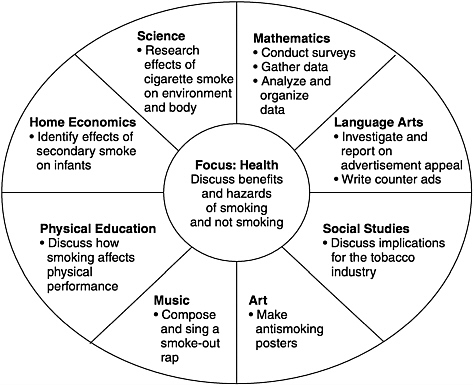
FIGURE 3-1 Planning wheel. SOURCE: Adapted from Palmer, J.M. 1991. Planning wheels turn curriculum around. Educational Leadership 49(2):58.
school subjects. However, health issues are sometimes addressed only indirectly or superficially in other subjects, which means that an opportunity to increase student awareness is lost. In other cases, didactic instruction may impart factual knowledge—for example, information about the structure and functioning of the human reproductive system—but such knowledge does not necessarily translate into desired behaviors in reproductive matters. If a CSHP can attune all curricular areas to providing consistent and relevant health messages at all possible opportunities, the resulting impact on students is likely to be intensified. However, the inclusion of health topics in other courses is not a substitute for a dedicated health education course; the integrated approach should augment, not replace, a stand-alone curriculum in health education.
Two levels of interaction between health issues and other subjects are immediately obvious. The first concerns those disciplines where there is a direct connection to health: science, physical education, and home economics. The second level of interaction—in courses such as social studies,
mathematics, or language arts—is somewhat more diffuse, although progress in integration has been made in this area.
Subjects with Direct Connections to Health
Science. Science and health overlap most directly in the life sciences or biology curriculum, where there are obvious connections in traditional topics such as immunology, anatomy and physiology, genetics, and ecology. Although these topics embrace issues of personal and community health, the health-related treatment is often cursory. Most high school biology textbooks, for example, include information about genetic disorders and might even discuss the mechanisms for prenatal detection of selected genetic disorders. The primary focus, however, is on the mechanisms of inheritance and on the basic science of DNA, not on the evergrowing understanding of genotype-environment interaction in helping to explain the leading causes of mortality and morbidity in developed countries. Similarly, instruction about immunology details the components of the immune system and the steps in the immune response, but generally provides only superficial treatment of the importance of immunization in the control of communicable disease.
Although a focus on basic science is appropriate in a biology course, the basic science can provide an opportunity to consider the roles of biology, life-style, and personal decisions in the development of chronic, multifactorial disorders. As long ago as 1974, geneticist Barton Childs (Childs, 1974) highlighted the natural relationship between genetics and heath education, explaining that the objectives of health promotion and disease prevention are congruent with a genetic view of human disease, which holds that much morbidity results from genetic factors expressed in environments that precipitate disease. For example, susceptibility to certain types of cancer has been shown to be genetic; environmental and behavioral factors can influence how and when this susceptibility is expressed. This view has grown in power in the past two decades and, in fact, is at the heart of the assumptions that drive the Human Genome Project, which has as its goal the mapping of all human genes—the complete set of chemical instructions used by cells to make a human being.
Increasingly, health education and science education converge in terms of content and pedagogical approaches—for example, a focus on inquiry, decisionmaking, and problem-solving. They diverge to some extent in their treatments of the affective dimensions of health, although this distinction is receding. For example, issues related to health care now are finding their way into the biology curriculum in the form of ethical, legal, and social issues related to progress in biomedicine. These issues provide opportunities for health educators and biology educators to work together
to provide a broad picture of the nature of health problems worldwide—their biological bases and their social and political dimensions.
Health also has direct connections in the physical sciences. Chemistry, for example, addresses a host of environmental issues, such as water quality and air pollution; the basic science of chemistry can be made more relevant in discussing the molecular basis for nutrition, disease, and substance addiction. Physics instruction introduces students to the science that underlies the many powerful imaging technologies that are used in health care, and basic laws of physics are important in understanding safety measures—for example, the optimal design of a bicycle helmet or why doubling the speed of a car quadruples the braking distance. The study of earth science and space science can introduce such issues as the public health effects of global warming and ozone depletion, air and water pollution, and natural disasters such as earthquakes and tornadoes.
Physical Education. As discussed earlier in this chapter, physical education is an integral curricular component of a CSHP, connecting directly to health education (and also to biology) by serving as a laboratory for demonstrating the relationship between physical fitness and health and between human biology and physical performance. The physical education curriculum should support classroom health education instruction by emphasizing lifelong physical fitness, proper nutrition, good health habits, and self-discipline and respect.
Home Economics. Courses previously known as "home economics" are expanding their emphasis and frequently acquiring new titles such as "family and consumer studies" or "work and family management." Whatever the nomenclature, these kinds of courses can reinforce health education through such topics as parenting, human development, infant and child care, nutrition and meal planning, household safety and environmental quality, and insurance and related financial matters. Through such courses, students can learn to become responsible and informed consumers of health products and health systems and can acquire critical thinking and decisionmaking skills in gathering and using health-related information.
Connections Between Health Education and Other Subjects
The connections between health education and disciplines, such as social studies, literature, or mathematics are not as remote as might be imagined. Disease and medicine, for example, have helped to influence the course of human history and have shaped the human population itself, and debates about the equitable provision of health care now domi-
nate the political landscape in America. Health and disease also have figured prominently in great literature throughout the ages, and mathematics—particularly in statistical analysis and epidemiology—has been indispensable to humanity's progress against morbidity and early death.
Models and approaches for connecting health with supposedly unrelated disciplines have been developed. Several authors have identified how literature may be used in language arts classes to provide health content (Manna and Wolford, 1992; Rubin, 1993; Rubin and Brodie, 1992), and the State of Texas has developed a K-12 curriculum guide to infuse health education content in substance abuse prevention, nutrition promotion, and STD prevention into language arts, science, mathematics, social studies, and home economics (Texas Education Agency, 1992). Substantive integration of health education into some of these other disciplines will call for creative thinking and interdisciplinary collaboration, but many more connections will undoubtedly surface as teachers examine their own subjects for connections to health.
Connections Between National Standards in Science Education and the National Health Education Standards
The recent development of national standards in both science and health education provides excellent conceptual and practical guidance for the mutual reinforcement of health and scientific understanding across the two disciplines. Standards and recommendations from the National Research Council (1996), the American Association for the Advancement of Science (1989, 1993), and the Joint Committee on National Health Education Standards (1995) all provide support for the type of integrated education to promote health that should be found in a comprehensive school health program. The following excerpts from documents published by each of these groups, illustrate areas in common and possibilities of integration between science and health.
-
National Science Education Standards (National Research Council, 1996):
Hazards and the potential for accidents exist. Regardless of the environment, the possibility of injury, illness, disability, or death may be present. Humans have a variety of mechanisms—sensory, motor, emotional, social and technological—that can reduce and modify hazards.
The severity of disease symptoms is dependent on many factors, such as human resistance and the virulence of the disease-producing organism. Many diseases can be prevented, controlled, or cured. Some diseases, such as cancer, result from specific body dysfunctions and cannot be transmitted.
-
Personal choice concerning fitness and health involves multiple factors. Personal goals, peer and social pressures, ethnic and religious beliefs, and understanding of biological consequences, can all influence decisions about health practices.
An individual's mood and behavior may be modified by substances. Students should understand that drug use can result in physical dependence and can increase the risk of injury, accidents, and death.
Selection of foods and eating patterns determine nutritional balance. Nutritional balance has a direct effect on growth and development and personal well-being. Personal and social factors—such as habits, family income, ethnic heritage, body size, advertising, and peer pressure—influence nutritional choices.
Family systems serve basic health needs, especially for young children. Regardless of the family structure, individuals have a variety of physical, mental, and social relationships that influence the maintenance and improvement of health.
Sexuality is basic to the physical, mental, and social development of humans. Students should understand that human sexuality involves biological functions, psychological motives, and cultural, ethnic, religious, and technological influences. Sex is a basic and powerful force that has consequences to individuals' health and to society. Students should understand various methods of controlling the reproduction process and that each method has a different type of effectiveness and different health and social consequences.
-
Science for All Americans (American Association for the Advancement of Science, 1989):
To stay in good operating condition, the human body requires a variety of foods and experiences.
Regular exercise is important for maintaining a healthy heart/lung system, muscle tone, and for keeping bones from becoming brittle.
Good health depends on the avoidance of excessive exposure to substances that interfere with the body's operation. Chief among those that each individual can control are tobacco, addictive drugs, and excessive amounts of alcohol.
Biological abnormalities, such as brain injuries or chemical imbalances, can cause or increase susceptibility to psychological disturbances. Conversely, intense emotional states have some distinct biochemical effects.
Ideas about what constitutes good mental health and proper treatment for abnormal mental states vary from one culture to another and from one time period to another.
Individuals differ greatly in their ability to cope with stressful environments. Stresses are especially difficult for children to deal with and may have long-lasting effects.
-
Prolonged disturbance of behavior may result in strong reactions from families, work supervisors, and civic authorities that add to the stress on the individual.
-
National Health Education Standards (Joint Committee on National Health Education Standards, 1995):
Standard 1: Students will comprehend concepts related to health promotion and disease prevention. Rationale: Basic to health education is a foundation of knowledge about the interrelationship of behavior and health, interactions within the human body, and the prevention of diseases and other health problems. Comprehension of health promotion strategies and disease prevention concepts enables students to become health-literate, self-directed, learners which establishes a foundation for leading healthy and productive lives.
Standard 3: Students will demonstrate the ability to practice health-enhancing behaviors and reduce health risks. Rationale: Research confirms that many diseases and injuries can be prevented by reducing harmful and risk-taking behaviors. By accepting responsibility for personal health, students will have a foundation for living a healthy, productive life.
Standard 5: Students will demonstrate the ability to use interpersonal communication skills to enhance health. Rationale: Personal, family, and community health are enhanced through effective communication. A responsible individual will use verbal and nonverbal skills in developing and maintaining healthy personal relationships. Ability to organize and to convey information, beliefs, opinions, and feelings are skills which strengthen interactions and can reduce or avoid conflict. When communicating, individuals who are health-literate demonstrate care, consideration, and respect of self and others.
Although health education depends heavily on knowledge about and understanding of the basic science related to the functioning of the human body, it should be emphasized that such studies in science should not substitute for health education. Health education goes beyond the mere acquisition of knowledge in linking such areas as biology and chemistry with the psychosocial domain, as students learn how their bodies function and then how they personally can and should behave in relationship to themselves, their friends, family, and community.
Needs in Health Education
Implementation of Effective Curricula
Curricular decisions represent local options that must follow broad state guidelines. These decisions may follow a local assessment to determine community-wide health and health education needs or may be based only on the perceptions of the curriculum committee. Communities may use commercially available materials in their curriculum or may develop their own. Many health education curricula exist, but most have not been evaluated as to their effectiveness. Curricula evaluated as effective are the most likely to assist in the attainment of the third National Health Education Standard, which calls for the demonstration of health-enhancing behaviors to reduce health risks. The number of schools using evaluated, effective curricula is unknown. Further, the efficacy of some evaluated curricula in naturalistic settings has not been established. Although it is known that numerous schools have adopted such research-based curricula as Know Your Body, Growing Healthy, and Teenage Health Teaching Modules, it is not known if these schools have achieved the same results in day-to-day implementation as were achieved in the experimental trials.
For health education to achieve the public health goals of influencing the adoption of health-enhancing behaviors, not only should schools adopt or adapt curricula shown to be effective, but the curriculum must also allot sufficient time to the priority health areas identified by the CDC—sexual behaviors that result in HIV infection, other STDs, and unintended pregnancy; alcohol and other drug use; behaviors that result in unintentional and intentional injuries; tobacco use; dietary patterns that result in disease; and sedentary life-style. For example, the leading cause of premature adult mortality and morbidity is cigarette smoking. Yet, according to SHPPS, only 53 percent of health education teachers spent more than one class period discussing the topic, and only 29 percent of infused classroom teachers allotted more than one class period to this topic (Table 3-9). Whether this is the fault of the curriculum or teachers' implementation of the curriculum is not clear.
In addition to health content, it has been recognized that quality of instruction and practice in social skills are important elements in health curricula if the goal is to affect health behaviors. Although a majority of regular and infused class health teachers say they have taught risk reduction skills (see Table 3-12), the figures no doubt overstate the proportion of teachers providing high-quality, effective instruction. Students cannot learn and become proficient in behavioral skills without practice, and an indicator of instructional quality is whether teachers provide opportunities for students to practice skills. Such opportunities were provided by a
TABLE 3-12 Percentage of Health Education Classroom Teachers and Infused Classroom Teachers Teaching Risk Reduction Skills and Having Students Practice Skills—by Skilla
smaller proportion of regular and infused teachers, perhaps due to lack of emphasis on skills practice in curricular packages or teachers' lack of comfort with skills practice.
Improved Professional Preparation
Although behavioral scientists from various disciplines are beginning to reach a consensus about what works to prevent high-risk behaviors (Allensworth and Wolford, 1989; American Public Health Association, 1975; Benard, 1986; Elders, 1991; Perry, 1991; Tobler, 1986), most schools have not adopted these concepts (Bartlett, 1981; Bremberg, 1991; National Commission on the Role of the School and the Community in Improving Adolescent Health, 1989; Seffrin, 1990). Policymakers, administrators, health professionals, and educators are asking for ''a new kind of health education—a sophisticated, multifaceted program that goes light years beyond present lectures about personal hygiene or the four basic food groups" (National Commission on the Role of the School and the Community in Improving Adolescent Health, 1989). These new approaches require the leadership and skills of a new type of health educator, but inadequate teacher preparation is a major obstacle to the implementation of today's new programs.
As mentioned earlier in this chapter, only 5 percent of health teachers in the secondary classroom majored in health education. Whether the topic is HIV or AIDS, pregnancy prevention, tobacco avoidance, substance abuse, or violence prevention, the majority of students receive instruction from teachers who did not have formal training in teaching these areas during their college preservice program (English, 1994). Both preservice and inservice preparation of health education teachers has not utilized to maximum advantage the most effective means of preventing youth from engaging in high-risk activity (Gingiss, 1992; Gingiss et al., 1991; Holtzman et al., 1992; National Commission on AIDS, 1993). More emphasis should be placed on hiring new health education teachers who have had the proper preservice preparation, and improved professional development for current staff should be the norm. There is a need for inservice programs that assist health education teachers to understand the problems facing students, the principles of prevention, and the key concepts for implementing primary health care and health promotion programs that are effective (Tobler, 1986). Confronted with the risks and dangers of modern society, young people need access to properly prepared teachers who can implement state-of-the-art curricula and address student health needs and concerns.
In some school districts, it is traditional for physical education teachers to teach health education. Because physical education teachers have extensive health science training (biology, anatomy, physiology, and so forth), they are well grounded in health facts. Many science teachers also are called upon to teach health education, for they may have training and sensitivity in and about health facts. However, health education today is a discipline that goes far beyond health facts. Teachers who specialize in health education have additional training in health pedagogy and behavioral psychology, which are critical to the understanding of factors that influence or change health behaviors. While it is important for physical education and science teachers to provide knowledge that impacts health and to encourage or reinforce healthful behaviors, it is equally important that a separate health class be taught by teachers specifically prepared to teach today's health education.
Beyond providing continuing staff development to health educators, there is a need to provide all teachers, regardless of subject area, with expert information on how they can participate in promoting the health and well-being of students, especially students at risk. Staff development can occur in a variety of ways—course work for college credit, local or regional seminars and workshops, continuing education via correspondence courses, technical assistance, and computer networking. Community health and medical professionals can play an active role in the process.
Improved Environment
An improved environment is needed that supports and affirms the value of the new generation of health education. Administrators, other educators, parents, and students should understand the relevance and potential of health education and consider it an integral part of the curriculum. Policies regarding teacher qualifications, available resources, and required courses and assessment in health education should reflect the importance placed on this essential subject.
Further Research
Although much has been learned over the past several decades about the development and delivery of health education, many research questions remain unresolved. For example, research is needed to determine the optimal content, approach, frequency, and timing of the health education curriculum. Because health education is expected to justify its position in the curriculum, a better understanding of what outcomes can reasonably be expected and measured is essential. Since categorical programs that address a single problem, such as tobacco avoidance, require a considerable amount of instructional time to effect behavior change, questions arise about how schools can find time to address the entire spectrum of health-threatening behaviors. Identifying effective approaches for integrating health education with other school- and community-based health and social programs is also important. Chapter 6 further examines some of these priority research areas.
Recent Recommendations of Other Groups to Strengthen Health Education
During recent years, several highly visible national initiatives have developed recommendations for health education that cover the essential issues discussed in this chapter. The most notable of these initiatives include the National Action Plan for Comprehensive School Health Education, the National Health Education Standards, and recommendations emanating from the SHPPS analysis of health education. There is considerable commonality and synergism among these sets of recommendations, and the committee believes that these collective recommendations provide a strong foundation and direction for health education in the future. The highlights of these three sets of recommendations are described below.
The National Action Plan for Comprehensive School Health Education
In 1992, the American Cancer Society organized a consensus conference of almost 40 national health and education organizations to develop a national agenda for school health education (ACS, 1993). Representatives developed a practical collaborative plan to institutionalize comprehensive school health education that presented action steps to overcome barriers and meet identified needs. The plan is divided into six areas: (1) policy; (2) public awareness; (3) professional preparation and practice; (4) parent, family, and community involvement; (5) educational outcomes and standards; and (6) resources. For each area, the plan describes the scope and definition of the issues, the needs and the justification of these needs, research that should be conducted, desired outcomes, and specific actions to achieve the desired outcomes. The following policy needs identified by the plan serve as overarching recommendations:
-
Foster leadership that will articulate, at all levels of government, the needs of children and the rights of children to lead healthy and productive lives.
-
Build a broad consensus about the effectiveness of health education as a strategy to improve the health and education of the nation's children.
-
Establish goals for health education that guide and direct program development and the standards-setting process and that serve as a means of assessment.
National Health Education Standards
As described earlier, the National Health Education Standards describe what students should know and be able to do and provide indicators to measure student performance (Joint Committee on National Health Education Standards, 1995). The developers of these standards realized that health education is sometimes criticized because health problems among children and youth are not changed or eliminated after health instruction occurs, but that the effectiveness of health education is often compromised by deficiencies in the delivery system. To address this problem, the National Health Education Standards include a section on Opportunity-to-Learn Standards for local and state education agencies, communities, state health agencies, institutions of higher education, and national organizations. These standards address the conditions that need to be developed and/or organized and supported for successful health education program delivery. According to these Opportunity-to-Learn Standards the following measures are necessary.
Local Education Agency. The local education agency needs to
-
implement collaborative planning among school personnel, students, families, related community agencies, and business organizations to design and assess health instruction,
-
employ elementary and secondary teachers professionally prepared to teach health education,
-
implement school policies that create a climate which promotes health literacy, and
-
coordinate the comprehensive health education curriculum, including assessment, materials, and professional development.
Community. The community needs to
-
create community awareness and support for school health instruction,
-
provide learning opportunities at home and in the community that enhance and reinforce student achievement of the National Health Education Standards,
-
participate in planning with school personnel, students, governmental units, and business organizations to design, implement, and assess health instruction, and
-
foster community programs that create a climate to promote child and adolescent health and health literacy.
State Education and Health Agencies. These agencies need to
-
support planning and policies at the state and local levels to achieve quality health instruction in schools,
-
establish health education as a core academic subject with a state plan, budget, and specified instructional time,
-
provide technical assistance by professional health educators to local education agencies and communities,
-
require adequate preservice preparation of elementary and middle school teachers to prepare them to deliver quality health education instruction,
-
require that secondary health instruction be taught by professionally prepared school health educators, and
-
adopt public policies and social marketing programs advocating health literacy.
Institutions for Higher Education. These institutions need to
-
prepare future school health educators in a manner consistent with the National Commission on Health Education Credentialing, Inc.,
-
provide health instruction preservice programs taught by qualified and experienced school health education faculty,
-
prepare future teachers to make health education connections across the curriculum,
-
prepare future teachers to be able to assess student achievement of the National Health Education Standards,
-
prepare future teachers to deal effectively with the health needs, interests, and strengths of culturally diverse populations, and
-
prepare administrators and other key school personnel to implement health education within schools.
National Organizations. These organizations need to
-
support implementation of the National Health Education Standards and health education as a core subject,
-
foster public policies advocating health literacy for all children and youth, and
-
support research in health education.
School Health Policies and Programs Study Recommendations
As a result of its analysis of the current condition of health education in this country, the School Health Policies and Programs Study developed the following recommendations (Collins et al., 1995):
-
Increase the number of states that include health education content as part of their state assessment requirements.
-
Increase the number of districts that appoint an individual responsible for coordinating health education.
-
Increase the number of health education teachers who major in health education.
-
Increase the number of schools that require more than one course devoted primarily to health education issues.
-
Increase coverage of priority health issues for youth including pregnancy prevention, STD prevention, violence prevention, and injury prevention.
-
Use infused classes as an adjunct to, instead of a substitute for, a planned course of study in health education.
-
Increase the number of schools and districts with school health
-
advisory councils that involve key constituents in planning and implementing school health education.
SUMMARY OF FINDINGS AND CONCLUSIONS
As mentioned earlier in this chapter, the status of the two curricular components of a comprehensive school health program—physical education and health education—is sometimes questioned because they were not originally mentioned in the National Education Goals as "core subjects" in which students should demonstrate competence. However, with each update report, the National Education Goals Panel has added language emphasizing the importance of physical education and health education, affirming that these two subjects should be an integral part of the school curriculum.
Physical Education: Research has confirmed a direct relationship between a physically active life-style and improved long-term health status, and the new generation of physical education programs is shifting emphasis from competitive sports to physical activity and fitness. Three recent documents—the National Standards for Physical Education, the School Health Programs and Policies Study,6 and the CDC Guidelines for School and Community Health Programs to Promote Physical Activity Among Youth—emphasize the new priorities and recommendations in physical education and collectively provide a sound basis for quality physical education programs in the future. The committee supports these recommendations.
Health Education: The traditional health education curriculum has been based on 10 conceptual areas identified by the School Health Education Study of the 1960s: community health, consumer health, environmental health, family life, mental and emotional health, injury prevention and safety, nutrition, personal health, prevention and control of disease, and substance use and abuse. Recently, the CDC has recommended that the six major contributors to adolescent mortality and morbidity, mentioned earlier, be priority areas of emphasis for health education, since these problems are based in behaviors that can be prevented or changed. The overarching goal of the recently-released National Health Education Standards is the development of health literacy—the capacity to obtain,
interpret, and understand basic health information and services, and the competence to use such information and services to enhance health.
Research has shown that specific health education curricula are effective, for example, those focused on specific categorical problems such as tobacco avoidance. Studies have shown that in order for health education to produce behavior change, effective strategies, considerable instructional time, and well-prepared teachers are required. Students' behavioral decisions are also heavily influenced by environmental variables—peers, family, schools, community, and the media. A recent cost-benefit analysis shows that school health education is cost-effective, and several recent national surveys indicate that parents and students overwhelmingly consider health education to be very important and useful.
In spite of the potential effectiveness and favorable perception of health education, SHPPS found a considerable gap between desired practice and actual current practice. Typically, only one semester of health education is required at the middle or junior high level and one semester at the high school level, and the attention given to certain priority topics falls considerably short of recommended goals. Although most teachers of health education have not majored in the field, there is not an overwhelming demand for staff development, perhaps due to a lack of awareness on the part of teachers and administrators of the potential and complexities of health education or the fact that teachers with majors in other fields prefer to teach in those fields and see no value in improving their skills in health education.
RECOMMENDATIONS
The committee believes that three recently released documents—the National Action Plan for Comprehensive School Health Education, the National Health Education Standards, and the SHPPS report—collectively provide comprehensive recommendations and a strong framework to move health education forward in the future. Several areas merit further emphasis and discussion.
The committee believes that the period prior to high school is the most crucial for shaping attitudes and behaviors. By the time students reach high school, many are already engaging in risky behaviors or at least have formed accepting attitudes toward these behaviors.
The committee recommends that all students receive sequential, age-appropriate health education every year during the elementary and middle or junior high grades.
At all grade levels, instruction should focus on achieving the performance indicators outlined in the National Health Education Standards. Early years might focus on such topics as nutrition and safety, but beginning at the late elementary or early middle school grades, instruction should shift focus to an intensive, age-appropriate emphasis on the CDC priority behaviors and be provided by teachers who understand early adolescents and are especially prepared to deal with these sensitive and difficult topics.
The committee recommends that a one-semester health education course at the secondary level immediately become a minimum requirement for high school graduation. Instruction should follow the National Health Education Standards, use effective up-to-date curricula, be provided by qualified health education teachers interested in teaching the subject, and emphasize the six priority behavioral areas identified by the CDC.
According to SHPPS, 83.9 percent of all senior high schools already require at least one semester of health education, and the CDC topics are emphasized in a large majority of schools. Thus, such an immediate requirement is not unrealistic. Additional courses or electives in health education at the high school level would be preferable to a single semester.
The committee debated how to reconcile the call for students to receive health education every year, K-12, with the reality of the crowded curriculum at the secondary level and decided that the critical issue should be whether high school students achieve the performance indicators described in the National Health Education Standards, not the amount of "seat time." Thus, the committee recommends that the seat time be a minimum of at least one semester but that student health knowledge and understanding be assessed at the end of this course. If a community finds its young people falling short on this assessment, then the existing course must be improved or additional courses instituted. The committee believes that some form of health education must occur every year at the secondary level but that some of this education can take place through alternative approaches, such as "booster" sessions, health modules in other courses, field trips, assemblies, school-wide campaigns, after-school peer discussion groups, and one-on-one or small group counseling for students with identified needs.
Effective elementary health education is the foundation for the future critical middle school years, and well-prepared elementary teachers are the key for providing this education.
The committee recommends that all elementary teachers receive substantive preparation in health education content and methodology during their preservice college training. This preparation should give elementary generalist teachers strategies for infusing health instruction into the curriculum and prepare upper elementary teachers to lay the groundwork for the intensive middle or junior high health education program.
REFERENCES
Advertising Age. 1990. Special supplement: Marketing to Hispanics.
Allensworth, D.D. 1994. The research base for innovative practices in school health education at the secondary level. Journal of School Health 64(5):80–186.
Allensworth, D.D., and Wolford, C. 1989. A theoretical approach to HIV prevention. Journal of School Health 59(2):56-65.
American Alliance for Health, Physical Education, Recreation, and Dance. 1995. AAHE/NCATE Guidelines Review Book. Reston, Va.: Association for the Advancement of Health Education.
American Association for the Advancement of Science. 1989. Project 2061: Science for All Americans. Washington, D.C.: American Association for the Advancement of Science.
American Association for the Advancement of Science. 1993. Benchmarks for Science Literacy. New York: Oxford University Press.
American Cancer Society. 1993. National action plan for comprehensive school health education. Journal of School Health 63(1):46–66.
American Cancer Society. 1994. Values and Opinions of Comprehensive School Health Education in U.S. Public Schools: Adolescents, Parents, and School District Administrators. Atlanta, Ga.: American Cancer Society.
American Public Health Association. 1975. Resolutions and position papers: Education for health in the community setting. American Journal of Public Health 65(2):201–202.
Bartlett, E. 1981. The contribution of school health education to community health promotion: What can we reasonably expect? American Journal of Public Health 71:1384–1391.
Benard, B. 1986. Characteristics of effective prevention programs. Network 3:6–8.
Bennett, B.B. 1987. The Effectiveness of Staff Development Training Practices: A Meta-Analysis. Ann Arbor, Mich.: Doctoral Dissertation No. 8721226.
Berkowitz, R.I., Agras, W.S., Korner, A.F., Kraement, H.C., and Zeanah, C.H. 1985. Physical activity and adiposity: A longitudinal study from birth to childhood. Journal of Pediatrics 106:734–738.
Berlin, J.A., and Colditz, G.A. 1990. A meta-analysis of physical activity in the prevention of coronary heart disease. American Journal of Epidemiology 132:253–287.
Bertera, R.L., and Cuthie, J.C. 1984. Blood pressure self-monitoring in the workplace. Journal of Occupational Medicine 26:183–188.
Blair, S.N., Kohl, H.W. III, Paffenbarger, R.S., Clark, D.G., Cooper, K.H., and Gibbons, L.W. 1989. Physical fitness and all-cause mortality. Journal of the American Medical Association 262:2395–2401.
Botvin, G.J., and Eng, A. 1982. The efficacy of a multicomponent approach to the prevention of cigarette smoking. Preventive Medicine 11:199–211.
Boyer, E.L. 1983. High School: A Report on Secondary Education in America. New York: Carnegie Foundation for the Advancement of Teaching.
Bremberg, S. 1991. Does school health education affect the health of students? Pp. 89–107. In Youth Health Promotion: From Theory to Practice in School and Community, D. Nutbeam, B. Haglund, P. Farley, and P. Tillgren, eds. London: Forbes Publications.
Broadhead, W.E., Gehlcah, S.H., DeGruy, F.V., and Kaplan, B.H. 1989. Functional versus structural social support and health care utilization in a family medicine outpatient practice. Medical Care 27:221–233.
Bruce, C., and Emshoff, J. 1992. The SUPER II Program: An early intervention program. Journal of Community Psychology (OSAP Special Issue):310–321.
Bush, P.J., Zuckerman, A.E., Taggert, V.S., Theiss, P.K., Peleg, E.O., and Smith, S.A. 1989a. Cardiovascular risk factor prevention in black school children: The ''Know Your Body" evaluation project. Health Education Quarterly 16(2):215–227.
Bush, P.J., Zuckerman, A.E., Theiss, P.K., Taggert, V.S., Horowitz, C., Sheridan, M.J., and Walter, H.J. 1989b. Cardiovascular risk factor prevention in black school children: Two-year results of the "Know Your Body" program. American Journal of Epidemiology 129(3):466–482.
Cale, L., and Harris, J. 1993. Exercise recommendations for children and young people. Physical Education Review 16:89–98.
Centers for Disease Control and Prevention. 1997. Guidelines for school and community health programs to promote physical activity among youth. Morbidity and Mortality Weekly Report 46(Rr-6):1–36.
Childs, B. 1974. A place for genetics in health education, and vice versa. American Journal of Human Genetics 26:120–134.
Coates, T.J., Jeffery, R.W., and Slinkard, L.A. 1981. Heart healthy eating and exercise: Introducing and maintaining changes in health behaviors. American Journal of Public Health 71(1):15–23.
Collins, J.L., Small, M.G., Kann, L., Pateman, B.C., Gold, R.S., and Kolbe, L.J. 1995. School health education. Journal of School Health 65(8):302–311.
Collins, M. 1991. Promoting healthy body image through the comprehensive school health program. Journal of Health Education 22(5):297–302.
Connell, D.P., Turner, R.R., and Mason, E.F. 1985. Summary of findings of the school health education evaluation: Health promotion effectiveness, implementation, and costs. Journal of School Health 55(8):316–334.
Conner, J.L., and Conner, C.N. 1992. Effects of primary prevention on attitudes and alcohol and other drug use with at-risk American-Indian youth. In Working with Youth in High-Risk Environments: Experience in Prevention, C.E. Marcus and J.D. Swisher, eds. OSAP Prevention Monograph 12. DHHS Publication No. (ADM)92–1815. Rockville, Md.: U.S. Department of Health and Human Services.
Cortese, P.A. 1993. Accomplishments in comprehensive school health education. Journal of School Health 63(1):21–23.
Council of Chief State School Officers. 1994. SCASS Health Education Project. Washington, D.C.: Council of Chief State School Officers.
Crockett, S., Mullis, R., Perry, C.L., and Luepker, R.V. 1989. Parent education in youth-directed nutrition interventions. Preventive Medicine 18(4):475–491.
Cummings, S.R., Kelsey, J.L., Nevitt, M.C., and Dowd, K.J. 1985. Epidemiology of osteoporosis and osteoporotic fractures. Epidemiology Review 7:178–207.
Davis, K.E., Jackson, K.L., Dronenfeld, J.J., and Blair, S.N. 1987. Determinants of participation in worksite health promotion activities. Health Education Quarterly 17:18–22.
Decker, M.D., Graitcer, P.L., and Schaffner, W. 1988. Reduction in motor vehicle fatalities associated with an increase in the minimum drinking age. Journal of the American Medical Association 260:3604–3610.
DeGraw, C. 1994. A community-based school health system: Parameters for developing a comprehensive student health promotion program. Journal of School Health 64(5):192–195.
DeMarsh, J., and Kumpfer, K.L. 1986. Family-oriented interventions for prevention of chemical dependency in children and adolescents. In Childhood and Chemical Abuse: Prevention and Intervention, S. Griswold-Ezekoye, K. Kumpfer, and W. Bukoski, eds. New York: Haworth Press.
Devine, C.M., Olson, D.M., and Frongillo, E.A. 1992. Impact of the "Nutrition for Life" program on junior high students in New York State. Journal of School Health 62(8):381–385.
DiClemente, R.J., Pies, C.A., Stoller, E.J., Straits, C., Olivia, G.E., Haskin, J., and Rutherford, G.W. 1989. Evaluation of school-based AIDS education curricula in San Francisco. Journal of Sex Research 26(2):188–198.
Duncan, B., Burris, W.T., Itami, R. and Puffenbarger, N. 1983. A controlled trial of a physical fitness program for fifth grade students. Journal of School Health 53:467–471.
Durant, R.J., Linder, D., and Mahoney, O. 1983. Relationship between habitual physical activity and serum lipoprotein levels in white male adolescents. Journal of Adolescent Health Care 4(4):235–239.
Dwyer, T., Coonan, W.E., Leitch, D.R., Hetzel, B.S., and Baghurst, R.A. 1983. An investigation of the effects of daily physical activity on the health of primary school students in South Australia. International Journal of Epidemiology 12:308–312.
Dwyer, T., Viney, R., and Jones, M. 1991. Assessing school health education programs. International Journal of Technology Assessment and Health Care 7(3):286–295.
Elders, J.P. 1991. From experimentation to dissemination: Strategies for maximizing the impact and spread of school health education. In Youth Health Promotion: From Theory to Practice in School and Community, D. Nutbeam, B. Haglund, P. Farley, and P. Tillgren, eds. London: Forbes Publications.
Elders, J.P., Sallis, J.F., Woodruff, S.I., and Wildey, M.B. 1993. Tobacco-refusal skills and tobacco use among high-risk adolescents. Journal of Behavioral Medicine 16:629–642.
English, J. 1994. Innovative practices in comprehensive health education programs for elementary schools. Journal of School Health 64(5):188–191.
Errecart, M.T., Walberg, H.J., Ross, J.G., Gold, R.S., Fiedler, J.L., and Kolbe, L.J. 1991. Effectiveness of teenage health teaching modules. Journal of School Health 61(1):26–30.
Faucette, N., McKenzie, T.L., and Patterson, P. 1990. Descriptive analysis of nonspecialist elementary physical education teachers' curricular choices and class organization. Journal of Teaching in Physical Education 9:284–298.
Flay, B.R. 1985. What we know about the social influences to smoking prevention: Review and recommendations. In Prevention Research: Deterring Drug Abuse Among Children and Adolescents, C. Bell and R. Battjes, eds. NIDA Research Monograph 63, DHHS Publication No. (ADM) 87–1334. Rockville, Md.: National Institute on Drug Abuse.
Freedman, M. 1988. Partners in Growth: Elder Mentors and At-Risk Youth. Philadelphia: Public/Private Ventures.
Gans, K.M., Levin, S., Lasater, T.M., Sennett, L.L., Maroni, A., Ronan, A., and Carleton, R.A. 1990. Heart healthy cook-offs in home economics classes: An evaluation with junior high school students. Journal of School Health 60(3):99–102.
Gingiss, P.L. 1992. Enhancing program implementation and maintenance through a multiphase approach to peer-based staff development. Journal of School Health 62(5):161–166.
Gingiss, P.L., Smith, D.W., and Buckner, W.P. 1991. After the conference is over: Future directions for school health programs . Journal of Health Education 22(5):325–327.
Glider, P., Kressler, H., and McGrew, G. 1992. Prevention and early intervention through peer support retreats. In Working with Youth in High-Risk Environments: Experiences in Prevention, C.E. Marcus and J.D. Swisher, eds. OSAP Prevention Monograph 12. DHHS
Publication No. (ADM) 92–1815. Rockville, Md.: U.S. Department of Health and Human Services.
Glynn, T.J. 1989. Essential elements of school-based smoking prevention programs. Journal of School Health 59(5):181–188.
Gold, R.S. 1994. The science base for comprehensive health education. In The Comprehensive School Health Challenge: Promoting Health Through Education, P. Cortese and K. Middleton, eds. Santa Cruz, Calif.: Education, Training, and Research Associates.
Gold, R.S., Parcel, G.S., Walberg, H.J., Luepker, R.V., Portnoy, B., and Stone, E.J. 1991. Summary and conclusions of the Teenage Health Teaching Modules evaluation: The expert work group perspective. Journal of School Health 61(1):39–42.
Hahn, R.A., Teutsch, S.M., Rothenberg, R.B., and Marks, J.S. 1986. Excess deaths from nine chronic diseases in the United States. Journal of the American Medical Association 264:2654–2659.
Hall, P.A., and Reyes, M.B. 1992. Evaluation of alcohol and other drug use prevention programs with Mexican-American youth. In Working with Youth in High-Risk Environments: Experiences in Prevention, C.E. Marcus and J.D. Swisher, eds. OSAP Prevention Monograph 12. DHHS Publication No. (ADM) 92–1815. Rockville, Md.: U.S. Department of Health and Human Services.
Hamburg, M.V. 1994. School health education: What are the possibilities? In The Comprehensive School Health Challenge, P. Cortese, and K. Middleton, eds. Santa Cruz, Calif.: Education, Training, and Research Associates.
Hansen, W.B., and Graham, J.W. 1991. Preventing alcohol, marijuana, and cigarette use among adolescents: Peer pressure resistance training versus establishing conservative norms. Preventive Medicine 20:414–430.
Hansen, W.B., Johnson, C.A., Flay, B.R., Graham, J.W., et al. 1988. Affective and social influences approaches to the prevention of multiple substance abuse among seventh grade students. Results from Project SMART. Preventive Medicine 17:135–154.
Harris, L. 1988. Health: You've Got to Be Taught: An Evaluation of Comprehensive Health Education in American Public Schools. New York: Metropolitan Life Foundation.
Hawkins, J., Lishner, R., Catalano, R., and Howard, M. 1986. Childhood predictors of adolescent substance abuse: Toward an empirically grounded theory, pp. 11–48. In Childhood and Chemical Abuse: Prevention and Intervention, S. Griswold-Ezekoye, K. Kumpfer, and W. Bukoski, eds. New York: Haworth Press.
Hoadley, J.F., Fuchs, B.C., and Holder, H.D. 1984. The effect of alcohol beverage restrictions on consumption: A 25-year longitudinal analysis. American Journal of Drug and Alcohol Abuse 10:375–401.
Hofman, A., Walter, H.J., Connelly, P.A., and Vaughan, R.D. 1987. Blood pressure and physical fitness in children. Hypertension 9:188–191.
Holloway, R.L., Spivey, R.N., Zismer, D., and Withington, A.M. 1988. Aptitude x treatment interaction: Implications for patient education research. Health Education Quarterly 15:241–259.
Holtzman, D., Green, B., Ingraham, G., Daily, L., and Kolbe, L. 1992. HIV education and health education in the United States: A national survey of local school district policies and practices. Journal of School Health 62(9):421–427.
Howard, M., and McCabe, J.B. 1990. Helping teenagers postpone sexual involvement. Family Planning Perspectives 22(1):21–26.
Ireland, D.F. 1990. New attitude/new look: An African-American adolescent health education program. Pediatric Nursing 16(2):175–178, 205.
Isikoff, M. 1989. Anti-drug ad campaign directed at blacks. Washington Post, November.
Iverson, D.C., Colonge, B.N., Main, D., and Holcomb, S. 1989. BP American fitness center evaluation: Final report. Denver: University of Colorado Health Sciences Center, Department of Family Medicine.
Jackson, S.A. 1994. Comprehensive school health education programs: Innovative practices and issues in standard setting. Journal of School Health 64(5):177–179.
Jarvik, M.E., and Schneider, N.G. 1984. Degree of addiction and effectiveness of nicotine gum therapy for smoking. American Journal of Psychiatry 141:790–791.
Johnson, C.A., Hansen, W.B., Collins, L.M., and Graham, J.W. 1986. High school smoking prevention: Results of a three-year longitudinal study. Journal of Behavioral Medicine 9:439–452.
Johnson, E.M. 1992. Signs of Effectiveness. The High-Risk Youth Demonstration Grants . Rockville, Md.: U.S. Department of Health and Human Services, Office of Substance Abuse Prevention.
Joint Committee on Health Education Terminology. 1991. Report of the 1990 Joint Committee on Health Education Terminology. Journal of Health Education 22(2):97–108.
Joint Committee on National Health Education Standards. 1995. National Health Education Standards: Achieving Health Literacy. Atlanta, Ga.: American Cancer Society.
Jones, R., McCullough, L., and Dewoody, M. 1992. The child welfare challenge in meeting developmental needs. In Identifying the Needs of Drug-Affected Children: Public Policy Issues. OSAP Prevention Monograph 11. DHHS Publication No. (ADM)92–1814. Rockville, Md.: U.S. Department of Health and Human Services.
Kann, L., Collins, J.L., Pateman, B.C., Small, M.L., Russ, J.G., and Kolbe, L.J. 1995. The School Health Policies and Programs Study (SHPPS): Rationale for a nationwide status report on school health programs. Journal of School Health 65(8):291–294.
Kelder, S.H., Perry, C.L., and Klepp, K.I. 1993. Community-wide youth exercise promotion: Long-term outcomes of the Minnesota Heart Health Program of the Class of 1989 study. Journal of School Health 63:218–223.
Killen, J.D., Telch, M.J., Robinson, T.N., Macoby, N., Taylor, B., and Farquhar, J.W. 1988. Cardiovascular disease risk reduction for tenth graders. Journal of the American Medical Association 260(23):1728–1733.
Killen, J.D., Robinson, T.N., Telch, M.J., Saylor, K.E., Maron, D.J., Rich, T., and Bryson, S. 1989. The Stanford Adolescent Heart Health Program. Health Education Quarterly 16(2):263–283.
King, A.C., and Tribble, D.L. 1991. The role of exercise in weight regulation in non-athletes. Sports Medicine 11(5):331–349.
King, A.C., Taylor, C.B., Haskell, W.L., and Debusk, R.R. 1988. Strategies for increasing early adherence to and long-term maintenance of home-based exercise training in health of middle-aged men and women. American Journal of Cardiology 61:628–632.
Kirby, D., Barth, R.P., Leland, N., and Fetro, J.V. 1991. Reducing the risk: Impact of a new curriculum on sexual risk taking. Family Planning Perspectives 23(6):253–262.
Klesges, R.C., Brown, K., Pascale, R.W., Murphy, M., et al. 1988. Factors associated with participation, attrition, and outcome in a smoking cessation program at the workplace. Health Psychology 7(6):575-589.
Knight, C.M. 1991. Educational policy issues in serving infants and toddlers born toxicpositive to drugs. In Identifying the Needs of Drug-Affected Children: Public Policy Issues. OSAP Prevention Monograph 11. DHHS Publication No. (ADM)92–1814. Rockville, Md.: U.S. Department of Health and Human Services.
Koegel, L.K., Koegel, R.L., and Ingham, J.C. 1986. Programming rapid generalization of correct articulation through self-monitoring procedures. Journal of Speech and Hearing Disorders 51:24–32.
Koenig, L. 1992. Training teachers to integrate prevention concepts into the primary curriculum. In Working with Youth in High-Risk Environments: Experiences in Prevention. C.E. Marcus and J.D. Swisher, eds. OSAP Prevention Monograph 12. DHHS Publication No. (ADM) 92–1815. Rockville, Md.: U.S. Department of Health and Human Services.
Kohl, H.W., LaPorte, R.E., and Blair, S.N. 1988. Physical activity and cancer: An epidemiological perspective. Sports Medicine 6:222-237.
Kottke, T.E., Puska, P., Salonen, J.T., Tuomilehto, J., et al. 1985. Projected effects of a high-risk vs. population-based prevention strategies in coronary heart disease. American Journal of Epidemiology 121:697-704.
Kumpfer, K.L. 1987. Etiology and prevention of vulnerability to chemical dependency in children of substance abusers. In Youth at High Risk for Substance Abuse. B.S. Brown and A.R. Mills, eds. Rockville, Md.: National Institute on Drug Abuse.
Lee, I., Paffenbarger, R.S., and Hsieh, C. 1992. Physical activity and risk of prostatic cancer among college alumni. American Journal of Epidemiology 135:169-179.
Lefbvre, R.C., Lasater, T.M., Carleton, R.A., and Peterson, G. 1987. Theory and delivery of health programming in the community: The Pawtucket heart health program. Preventive Medicine 16:80-95.
Leon, A.S. 1989. Effects of Physical Fitness and Physical Activity in Population-Based Surveys. DHHS Publication No. (PHS) 89-1253. Hyattsville, Md.: U.S. Department of Healt hand Human Services.
Leon, A.S., Connett, J., Jacobs, D.R., and Raurama, R. 1987. Leisure-time physical activity levels and risk of coronary heart disease and death: The multiple risk factor intervention trial. Journal of the American Medical Association 258(17):2388-2395.
Lewis, C., Battistich, V., and Schaps, E. 1990. School-based primary prevention: What is an effective program? New Directions in Child Development 50:35-59.
Lorion, R.P., and Ross, J.G., 1992. Programs for changes: A realistic look at the nation's potential for preventing substance involvement among high-risk youth. Journal of Community Psychology (OSAP Special Issue):3-9.
Luepker, R.V., Perry, C.L., McKinlay, S.M., Nader, P.R., Parcel, G.S., Stone, E.J., Webber, L.S., Elder, J.P., Feldman, H.A., Johnson, C.C., Kelder, S.H., and Wu, M. 1996. Outcomes of a field trial to improve children's dietary patterns and physical activity: The Child and Adolescent Trial for Cardiovascular Health (CATCH). Journal of the American Medical Association 275(10):768-776.
Mahon, A.D., and Vaccaro, P. 1989. Ventilatory threshold and VO2 max changes in children following endurance training. Medicine and Science in Sports 21:425-431.
Manna, T., and Wolford, C. 1992. Children's Literature for Health Awareness. Metuchen, N.J.: Scarecrow Press.
Marburger, E.A., and Friedel, B. 1987. Seat belt legislation and seat belt effectiveness in the Federal Republic of Germany. Journal of Trauma 27:703-705.
Marin, G., and Marin, B.V. 1991. Research with Hispanic populations. Applied Social Research Methods Series, Volume 23, Beverly Hills, Calif.: Sage Publications.
Mayer, J.A., Heins, J.M., Vogel, J.M., Morrison, D.C., et al. 1986. Promoting low-fat entree choices in a public cafeteria. Journal of Applied Behavioral Analysis 19:397-402.
Maynard, E.J., Coonan, W.E., Worsley, A., Dwyer, T., and Baghurst, P.A. 1987. The development of the life-style education program in Australia. In Cardiovascular Risk Factors in Children: Epidemiology and Prevention, B.S. Hetzel and G.S. Berenson, eds. Amsterdam: Elsevier.
McCaul, K.D., and Glasgow, R.E. 1985. Preventing adolescent smoking: What have we learned about treatment construct validity? Health Psychology 4:361-387.
McGinnis, J.M. 1992. The public health burden of a sedentary life-style. Medical Science Sports Exercise 24 (Suppl.):S196-S200.
McGinnis, J.M., Kanner, L., and DeGraw, C. 1991. Physical education's role in achieving national health objectives. Research Quarterly for Exercise and Sport 62(2):138-142.
McKenzie, T.L., Sallis, J.F., and Nader, P.R. 1992. SOFIT: System for observing fitness instruction time. Journal of Teaching in Physical Education 11:18-22.
McKenzie, T.L., Sallis, J.F., Faucette, N., Roby, J.J., and Kolody, B. 1993. Effects of a curriculum and inservice program on the quantity and quality of elementary physical education classes. Research Quarterly for Exercise and Sport 64(2):178-187.
Means, R.K. 1975. Historical Perspectives on School Health. Thorofare, N.J.: Charles B. Slack.
Morisky, D.E., DeMuth, N.M., Field-Fass, M., Green, L.W., et al. 1985. Evaluation of family health education to build social support for long-term control of high blood pressure. Health Education Quarterly 12:35-50.
Murray, D.M., Richards, P.S., Luepker, R.V., and Johnson, C.A. 1987. The prevention of cigarette smoking in children: Two- and three-year follow-up comparisons for four prevention strategies. Journal of Behavioral Medicine 10:595-611.
Nader, P.R. 1990. The concept of "comprehensiveness" in the design and implementation of school health programs. Journal of School Health 60(4):133-138.
National Association for Sport and Physical Education. 1992. Outcomes of Quality Physical Education Programs. Reston, Va.: National Association for Sport and Physical Education.
National Association for Sport and Physical Education. 1994. Guidelines for Elementary School Physical Education. Reston, Va.: National Association for Sport and Physical Education.
National Association for Sport and Physical Education. 1995. Moving into the Future: National Standards for Physical Education: A Guide to Content and Assessment. St. Louis, Mo.: Mosby.
National Commission on AIDS. 1993. Preventing HIV/AIDS in Adolescents . Washington, D.C.: National Commission on AIDS.
National Commission on the Role of the School and the Community in Improving Adolescent Health. 1989. Code Blue: Uniting for Healthier Youth. Alexandria, Va.: National Association of State Boards of Education.
National Education Goals Panel. 1994. The National Education Goals Report: Building a Nation of Learners. Washington, D.C.: U.S. Government Printing Office.
National Research Council. 1996. National Science Education Standards . Washington, D.C.: National Academy Press.
National School Boards Association. 1991. School Health: Helping Children Learn. Alexandria, Va.: National School Boards Association.
Nelson, G.D., Cross, F.S. and Kolbe, L.J. 1991. Introduction: Teenage Health Teaching Modules evaluation. Journal of School Health 61(1):20.
Ounce of Prevention Fund. 1990. Success for Every Teen: Programs That Help Adolescents Avoid Pregnancy, Gangs, Drug Abuse, and School Drop-Out. Chicago, Ill.: Ounce of Prevention Fund.
Owen, S.L., Kirkpatrick, M.A., Lavery, S.W., Gosner, H.L., Nelson, S.R., Kavis, R.L., Mason, E.R., and Connell, D.B. 1985. Selecting and recruiting health programs for the school health education evaluation. Journal of School Health 55(8):305-308.
Oyemade, U.J., and Brandon-Monye, D.B. 1990. Ecology of Alcohol and Other Drug Use: Helping Black High-Risk Youth. OSAP Prevention Monograph 7. DHHS Publication No. (ADM) 90-1672. Rockville, Md.: U.S. Department of Health and Human Services.
Paffenbarger, R.S., Hyde, R.T., Wing, A.L., and Hsieh, C. 1986. Physical activity, all-cause mortality, and longevity of college alumni. New England Journal of Medicine 314:605-613.
Palmer, J.M. 1991. Planning wheels turn curriculum around. Education Leadership 42(2):57-60.
Panico, S., Celentano, E., Krogh, V., Jossa, F., Farinaro, I., Trevisan, M., and Mancini, M. 1987. Physical activity and its relationship to blood pressure in school children. Journal of Chronic Diseases 40 (10):925-930.
Parcel, G.S., Simons-Morton, B.G., O'Hara, N.M., Baranowsky, T., Kolbe, L.J., and Bee, D.E. 1987. School promotion of healthful diet and exercise behavior: An integration of organizational change and social learning theory interventions. Journal of School Health 57:150-156.
Parcel, G.S., Simons-Morton, B., O'Hara, N.M., Baranowski, T., and Wilson, B. 1989. School promotion of healthful diet and physical activity: Impact on learning outcomes and self-reported behavior. Health Education Quarterly 16(2):181-199.
Pate, R.R., and Ward, D.S. 1990. Endurance exercise trainability in children and youth. In Advances in Sports Medicine and Fitness, Volume 3, W.A. Grana, ed. Chicago, Ill.: Year Book Medical Publishers.
Pate, R.R., Small, M.L., Ross, J.G., Young, J.C., Flint, K.H., and Warren, C.W. 1995. School physical education. Journal of School Health 65(8):312-318.
Pentz, M.A., Dwyer, J.D., MacKinnon, D.P., Flay, B.R., Hansen, W.B., Wang, E.Y., and Johnson, C.S. 1989. A multicommunity trial for primary prevention of adolescent drug abuse: Effects on drug use prevalence. Journal of the American Medical Association 261:3259-3266.
Perry, C.L. 1991. Conceptualizing community-wide youth health promotion programs. In Youth Health Promotion: From Theory to Practice in School and Community, D. Nutbeam, B. Haglund, P. Farley, and P. Tillgren, eds. London: Forbes Publications.
Perry, C.L., Luepker, R.V., Murray, D.M., Hearn, M.D., Halper, A., Dudovitz, B., Maile, M.C., and Smyth, M. 1989. Parent involvement with children's health promotion: A one-year follow-up of the Minnesota home team. Health Education Quarterly 16(2):171-180.
Perry, C.L., Murray, D.M., and Griffin, G. 1990. Evaluating the statewide dissemination of smoking prevention curricula: Factors in teacher compliance. Journal of School Health 60:(10):501-504.
Perry, C.L., Kelder, S.H., Murray, D.M., and Klepp, K. 1992. Community-wide smoking prevention: Long-term outcomes of the Minnesota Heart Health Program of the Class of 1989 study. American Journal of Public Health 82:1210-1216.
Powell, K.E., Thompson, P.D., Caspersen, C.J., and Kendrick, J.S. 1987. Physical activity and the incidence of coronary heart disease. Annual Review of Public Health 8:253-287.
Powell, K.E., Caspersen, C.J., Koplan, J.P., and Ford, E.S. 1989. Physical activity and chronic disease. American Health and Clinical Nutrition 49:999-1006.
Puska, P.A., McAllister, A., Pekkola, J., and Koskela, K. 1981. Television in health promotion: Evaluation of a national programme in Finland. International Journal of Health Education 24:2-14.
Puska, P.A., Nissinen, J. Tuomilehto, J., Salonen, T., et al. 1988. The community-based strategy to prevent coronary heart disease: Conclusion from the ten years of the North Karelia project. Annual Review of Public Health 6:147-193.
Rana, S.R., Knasel, A.L., and Haddy, T.B. 1992. Cancer knowledge and attitudes of African-American and white adolescents: A comparison of two secondary schools. Journal of the Association of the Academy of Minority Physicians 3(1):13-16.
Resnicow, K., and Botvin, G. 1993. On the effects of school health education programs: Why do they decay? Preventive Medicine 22:484-490.
Resnicow, K., Orlandi, M.A., Vaccaro, D., and Wynder, E.L. 1989. Implementation of a pilot school-site cholesterol reduction intervention. Journal of School Health 29(2):74-78.
Resnicow, K., Ross, D., and Wynder, E.L. 1991. The role of comprehensive school-based interventions: The results of four "Know Your Body" studies. Annals of the New York Academy of Sciences (April 12):285-298.
Resnicow, K., Cohn, L., Reinhardt, J., Cross, D., Futterman, R., Kirschner, E., Wynder, E.L., and Allegrante, J. 1992. A three-year evaluation of the "Know Your Body" program in minority school children. Health Education Quarterly 19:463-480.
Resnicow, K., Cherry, J., and Cross, D. 1993a. Ten unanswered questions regarding comprehensive school health promotion. Journal of School Health 63(4):171-175.
Resnicow, K., Cross, D., Lacosse, J., and Nichols, P. 1993b. Evaluation of a school-site cardiovascular risk factor screening program. Preventive Medicine 22:838-856.
Resnicow, K., Cross, D., and Wynder, E.L. 1993c. The "Know Your Body" program: A review of evaluation studies. Bulletin of the New York Academy of Medicine 70(3):188-207.
Rohrbach, L.A., Graham, J.W., and Hansen, W.B. 1993. Diffusion of a school-based substance abuse prevention program: Predictors of program implementation. Preventive Medicine 22(2):237-260.
Ross, J.G., and Gilbert, G.G. 1985. National Children and Youth Fitness Study: A summary of findings. Journal of Physical Education, Recreation, and Dance 56(1):45-50.
Ross, J.G., and Pate, R.R. 1987. National Children and Youth Fitness Study II: A summary of findings. Journal of Physical Education, Recreation, and Dance 58(1):50-96.
Ross, J.G., Errecart, M.T., Fieldler, J.A., and Lavin, A.T. 1989. Draft final report: Teenage Health Teaching Modules Evaluation. CDC Contract No. 200-86-3932. Silver Spring, Md.: Macro International.
Ross, J.G., Nelson, G.D., and Kolbe, L.J., eds. 1991. A special insert. Teenage Health Teaching Modules evaluation. Journal of School Health 61(1):19-20.
Ross, J.G., Saavedra, P.J., Shur, G.H., Winters, F., and Felner, R.D. 1992. The effectiveness of an after-school program for primary grade latchkey students on precursors of substance abuse. Journal of Community Psychology (OSAP Special Issue):22-38.
Rothman, M.L., Ehreth, J.L., Palmer, C.S., Collins, J., Reblando, J.A., and Luce, B.R. 1993. The potential benefits and costs of a comprehensive school health education program. Paper presented at the Annual Meeting of the American Public Health Association, San Francisco, Calif., October 24-28.
Rubin, M.A. 1993. Promoting books and media: Healthy attitudes. School Library Media Activities Monthly 10(11):65-66.
Rubin, M.A., and Brodie, C.S. 1992. Promoting books and media: Healthy picture books. School Library Media Activities Monthly 9(9):43-44.
Ruch-Ross, H.S. 1992. The child and family options program: Primary drug and alcohol prevention for young children. Journal of Community Psychology (OSAP Special Issue):39-54.
Sallis, J.F., and McKenzie, T.L. 1991. Physical education's role in public health. Research Quarterly for Exercise and Sport 62(2):124-137.
Sallis, J.F., Haskell, W.L., Fortmann, S.P., Wood, P.D., and Uranizan, K.M. 1986. Moderate-intensity physical activity and cardiovascular risk factors: The Stanford five-city project. Preventive Medicine 15:561-568.
Saris, W.H., Binkhorst, R., Cramwinckel, A., van Waesberghe, F., and van der Veen-Hezemans, A. 1980. The relationship between working performance, daily physical activity, fatness, blood lipids, and nutrition in school children. In Children and Exercise IX, K. Berg and B. Erikssen, eds. Baltimore: University Park Press.
Sasaki, J., Shindo, M., Tanaka, H., Ando, M., and Arakawa, K. 1987. A long-term aerobic exercise program decreases the obesity index and increases the high density lipoprotein cholesterol concentration in obese children. International Journal of Obesity 11:339-345.
Schinke, S.P., Gilchrist, L.D., and Snow, W.H. 1985. Skills intervention to prevent cigarette smoking among adolescents. American Journal of Public Health 75:665-667.
Seekins, T.S., Fawcett, B., Choen, S.H., Elder, J.P., et al. 1988. Experimental evaluation of public policy: The case of state legislation for child passenger safety. Journal of Applied Behavioral Analysis 21:233–243.
Seffrin, J.R. 1990. The comprehensive school health curriculum: Closing the gaps between the state-of-the-art and the state-of-the-practice. Journal of School Health 60(4):151–156.
Shane, V.T., and Kaplan, B.J. 1988. AIDS education for adolescents. Youth and Society 20(2):180–208.
Shannon, B., and Chen, A.N. 1988. A three-year school-based nutrition education study. Journal of Nutrition Education 20(3):114–124.
Shephard, R.J., Volle, M., Lavallee, H., LaBarre, R., Jequier, J.C., and Rajic, M. 1984. Required physical activity and academic grades: A controlled study. In Children and Sport: Pediatric Work Physiology , J. Ilmarinen and I. Vaelimaeki, eds. Berlin, Germany: Springer-Verlag.
Siegel, K.A., and Manfrede, T.G. 1984. Effects of a ten-month fitness program on children. The Physician and Sports Medicine 12:91–97.
Simons-Morton, B.G., Parcel, G.S., O'Hara, N.M., Blair, S.N., and Pate, R.R. 1988. Health-related physical fitness in childhood: Status and recommendations. Annual Review of Public Health 9:403–425.
Simons-Morton, B.G., Parcel, G.S., Baronowski, T., Forthofer, L., and O'Hara, N.M. 1991. Promoting healthful diet and physical activity among children: Results of a school-based intervention study. American Journal of Public Health 81(8):886–991.
Sliepcevich, E. 1964. School Health Education Study: A Summary Report . Washington, D.C.: School Health Education Study.
Smith, I.E. 1992. An ecological perspective: The impact of culture and social environment on drug-exposed children. In Identifying the Needs of Drug-Affected Children: Public Policy Issues. OSAP Prevention Monograph 11. DHHS Publication No. (ADM) 92–1814. Rockville, Md.: U.S. Department of Health and Human Services.
Sparks, G. 1986. The effectiveness of alternative training activities in changing teaching practices. American Education Research Journal 23(2):217–225.
Springer, J.F., Phillips, J.L., Phillips, L., Cannady, P., and Kerst-Harris, E. 1992. CODA: A creative therapy program for children in families affected by abuse of alcohol and other drugs. Journal of Community Psychology (OSAP Special Issue):55–74.
Starfield, B. 1989. Preventive interventions in the health and health-related sections with potential relevance for youth suicide. In ADAMHA: Report of the Secretary's Task Force on Youth Suicide, Volume 4: Strategies for the Prevention of Youth Suicide. DHHS Publication No. (ADM) 89–1624. Washington, D.C.: U.S. Government Printing Office.
Stone, E.J., Perry, C.L., and Luepker, R.V. 1989. Synthesis of cardiovascular behavioral research for youth health promotion. Health Education Quarterly 16(2):155–169.
Sussman, S., Dent, C.W., Stacy, A.W., Sun, P., Craig, S., Simon, T.R., Burton, D., and Flay, B.R. 1993. Project towards no tobacco use, one-year behavior outcomes. American Journal of Public Health 83(9):1245–1250.
Taggart, V.S., Bush, P.J., Zuckerman, A.E., and Theiss, P.K. 1990. A process of evaluation of the District of Columbia "Know Your Body" project . Journal of School Health 60:60–66.
Terry, J.P., Silka, L., and Terry, L. 1992. Designing evaluation models to assess primary prevention and cultural changes: An evaluation report of the Leadership Project. In Working with Youth In High-Risk Environments: Experiences in Prevention. C.E. Marcus, and J.D. Swisher, eds. OSAP Prevention Monograph 12. DHHS Publication No. (ADM) 92–1815. Rockville, Md.: U.S. Department of Health and Human Services.
Texas Education Agency. 1992. Prevention of HIV/AIDS and other communicable diseases; Prevention of drug use; Nutrition education. Education for Self Responsibility (ESR). Austin: Texas Education Agency.
Thomas, S.M., Fick, A.C., and Henderson, J.A. 1992. Meeting the needs of special populations: A formative evaluation of a school-based smoking prevention program. Journal of the Louisiana State Medical Society 144(4):157–161.
Tobler, N. 1986. Meta-analysis of 143 adolescent drug prevention programs: Quantitative outcome results of program participants compared to a control or comparison group. Journal of Drug Issues 16:537–567.
Tortu, S., and Botvin, G.J. 1989. School-based smoking prevention: The teacher training process. Preventive Medicine 18(2):280–289.
U.S. Department of Health and Human Services, Public Health Service. 1979. Healthy People: Surgeon General's Report on Health Promotion and Disease Prevention . Washington, D.C.: U.S. Government Printing Office.
U.S. Department of Health and Human Services, Public Health Service. 1991. Healthy People 2000: National Health Promotion and Disease Prevention Objectives. DHHS Publication No. (PHS) 91-50213 Washington, D.C.: U.S. Government Printing Office.
U.S. Department of Health and Human Services, Public Health Service. 1993. School Health: Findings from Evaluated Programs. Washington, D.C.: U.S. Government Printing Office.
Vaillant, G.E. 1988. What can long-term follow-up teach us about relapse and prevention of relapse in addiction? British Journal of Addiction 83:1147–1157.
Wagner, J.L., and Winnett, R.A. 1988. Prompting one low-fat, high-fiber selection in a fastfood restaurant. Journal of Applied Behavioral Analysis 21:179–185.
Walter, H.J. 1989. Primary prevention of chronic disease among children: The school-based "Know Your Body" intervention trials. Health Education Quarterly 16(2):201–214.
Walter, H.J., and Wynder, E.L. 1989. The development, implementation, evaluation, and future directions of a chronic disease prevention program for children: The "Know Your Body" studies. Preventive Medicine 18(1):59–71.
Walter, H.J., Vaughan, R.D., and Wynder, E.L. 1989. Primary prevention of cancer among children: Changes in cigarette smoking and diet after six years of intervention. Journal of the National Cancer Institute 31(13):995–999.
Williams, C., Carter, B., and Wynder, E. 1983. Prevalence of selected cardiovascular and cancer risk factors in a pediatric population: The "Know Your Body" project. Preventive Medicine 10:235–50.
Wynne, E.A. 1989. Preventing youth suicide through education. In ADAMHA: Report of the Secretary's Task Force on Youth Suicide, Volume 4, Strategies for the Prevention of Youth Suicide. DHHS Publication No. (ADM) 89–1624. Washington, D.C.: U.S. Government Printing Office.


