
5
Epidemiology
SUMMARY AND CONCLUSIONS
The potential association between childhood leukemia and the presence of power lines reported in epidemiologic studies has raised public concern, particularly among parents. In this chapter, over 15 years of epidemiologic research is reviewed, and the key methods used in epidemiology that affect the interpretation of research are considered.
Based on an analysis of the epidemiologic literature, the committee makes the following general conclusions:
-
Wire codes1 are associated with an approximate 1.5-fold excess of childhood leukemia, which is statistically significant. Although the literature is not entirely consistent, the combined results from the array of studies that have examined wire codes and related markers of exposure, such as proximity to power lines and calculated magnetic fields from power lines, indicate that an association is present. Biased selection of controls and confounders might have influenced some of the studies, but they are unlikely to account for the overall pattern of association that is identified.
-
Average magnetic fields measured in the homes of children have not been found to be associated with an excess of childhood leukemia or other cancers.
|
1 |
Used in the context of epidemiology, a wire code is a carefully documented aid to the epidemiologist to classify homes by their presumed correlation with magnetic fields; this use of the term is not similar to that in standard home construction. A detailed description of the term, as used in epidemiology, is given in Appendix B of this report. |
-
Studies that have examined average magnetic fields measured in homes after a diagnosis has been made have all been severely limited by missing data, and no firm conclusions can be drawn from them. The data that have been generated do not support an association between childhood leukemia and magnetic fields, in contrast to the data generated from wire codes.
-
The factors that explain the association between wire codes and childhood leukemia have not been identified. The original and continued interest in wire codes is their presumed correlation with long-term average magnetic fields in homes. However, epidemiologic studies have generated little evidence that average magnetic fields account for the observed association between wire codes and childhood leukemia. Wire codes are not strong predictors of magnetic-field strengths in homes, although they do distinguish very high fields from outdoor wiring from lesser fields reasonably well. Other explanatory factors, such as neighborhood characteristics, other measurements of exposure to electric and magnetic fields, or air pollution, have received even less support, leaving open the question of what accounts for the observed association.
-
Epidemiologic evidence of an association between magnetic fields and childhood cancers (other than leukemia), adult cancers, pregnancy outcome, and neurobehavioral disorders is not, in the aggregate, supported.
A number of studies examined health outcomes other than childhood leukemia, and some of them reported positive associations. However, the number of well-designed studies supportive of such an association is not sufficient to conclude that any of the associations are actually present.
INTERPRETATION OF EPIDEMIOLOGIC EVIDENCE
Epidemiology can be defined as the study of patterns of health and disease in human populations to understand causes and identify methods of prevention. Interpretation of epidemiologic evidence regarding potential causal relations between exposures and health outcomes is a complex process and relies on a wide range of supporting data. No simple checklist can be used to make judgments about the quality of research and the certainty of the results, although a number of considerations might bear favorably or unfavorably on a causal interpretation. As a prelude to the review of epidemiologic studies addressing possible health effects of electric and magnetic fields, some of the key methods used to interpret epidemiologic data are reviewed. For more thorough consideration of these and related principles, see work by Rothman (1986) and Kelsey et al. (1986).
Compared with laboratory approaches to the study of health and disease (e.g., toxicology), observational epidemiology has a number of strengths and weaknesses. The principal deficiency of an observational approach is the inability to assign exposure randomly. This inability introduces the possibility of confounding the effect of the exposure of interest by other disease determinants. Because exposures
are observed rather than controlled by the investigator, accurate determination of the exposure is more challenging in observational epidemiologic studies than in experimental studies. However, epidemiology has an advantage in addressing the species of ultimate interest, humans, in their natural environment. In addition, environmental exposure conditions that are difficult to duplicate precisely in the laboratory can be studied directly, at least in general terms, through epidemiology. Epidemiology can include studies of exposures that only produce health effects many years later. The complex array of disease cofactors, genetic heterogeneity, and diversity in human populations is virtually impossible to simulate in the laboratory, yet it is an inherent part of epidemiologic inquiry. Given the strengths and weaknesses of epidemiology relative to other approaches, consistent information from various approaches is desirable to enhance confidence that inferences are valid.
The notion of assigning causality from an observed association is, in a philosophical sense, complex, and the application of epidemiologic data to determination of causality is particularly problematic. Without randomly assigning the potential causes of interest (e.g., magnetic-field exposure) and observing the resulting health event (e.g., a change in cancer incidence), a mistaken inference that a given exposure causes a specific disease can result from a number of potential errors or misinterpretations. Conversely, even when a true causal relationship is present, it will not always be discerned easily. Ultimately, causal inference is enhanced when a number of noncausal explanations have been carefully postulated, tested, and refuted (U.S. Surgeon-General 1964). No universally accepted threshold exists for determining when the process of establishing causality has ended, as indicated by the few remaining skeptics who assert that the causal effect of tobacco smoking on lung cancer is unproved. In fact, rather than asking the broad unanswerable question "When has a causal inference been established?", a somewhat more practical question can be asked: "When is evidence of a causal association sufficient to take a specific action that presumes such a causal relationship?"
In this chapter, published epidemiologic data are reviewed that bear upon the potential association between exposure to low-frequency 60-Hz residential magnetic fields and disease, the potential sources of random and systematic errors common to epidemiologic studies are explored, the possible confounding factors and their potential effects on the findings of the studies are examined, and the effect of these various factors on the conclusions derived from the epidemiologic work is evaluated. The consistency of the results are explored using methods of data pooling, and the criteria for causality will be discussed as they apply to the problem at hand.
Potential Sources of Error in Epidemiologic Studies
Random Error
Random error is perhaps the most easily addressed source of error in scientific studies: results of a given study are subject to variability due solely to random
(i.e., statistical) processes, in addition to other sources of error (i.e., bias). An observed risk of 1.0 or 2.0 relating high wire codes to childhood leukemia might be indicative of a ''true" risk in the neighborhood of 1.0 or 2.0, in the absence of other sources of error attributable to random processes. The impact of random processes decreases as the number of study subjects increases, resulting in narrower confidence intervals for larger studies. Tests of statistical significance address the probability that, conditional on the observed data, the "true" relative risk2 is inconsistent with the relative risks under the null hypothesis. Note that even if the null hypothesis is rejected, the statistical test relates to the association between the variables being tested (i.e., high wire code and leukemia) and not causality. In the light of statistically significant findings, causality in observational epidemiology studies can be inferred only on the basis of design and weight of evidence criteria (see discussion of Hill's criteria below).
Many criticize epidemiology as a nonfalsifiable discipline. Although it is true that epidemiologists cannot prove the absence of an effect, they can identify the smallest detectable effect for a given study, and if this smallest detectable effect is sufficiently small, it is tantamount to the absence of an effect. For example, in a study of high wire codes and leukemia in which an odds ratio of 1.01 is obtained, a possible association might not be ruled out, but with appropriate data, the true relative risk could be stated with a certain probability to lie between 0.95 and 1.05. Thus, one can show that if the effect existed, it would be remarkably small and of little significance to the individual or to the public health.
In regard to observational epidemiology, it should be remembered that the formal methods of statistical significance testing and construction of confidence intervals attempt to address one and only one question: How likely is it that a valid method of randomly assigning exposures to individuals led to results as extreme or more extreme than those that were obtained, assuming that the null hypothesis is correct? Because random assignment is not a feature of epidemiologic studies, interpretation of statistical significance and confidence-interval boundaries have less of a theoretic foundation (Greenland 1994), and therefore less meaning, than they have in results of randomized experiments. In addition, the relative importance of nonrandom error (bias) is generally much greater than random error as a potential source of erroneous results. Therefore, judgments of evidence and causality take into account all available evidence, the level of statistical significance being only one of many considerations.
Information Bias: Misclassification of Disease or Exposure
In assigning exposure and disease status to individuals in epidemiologic studies, error, referred to as information bias or misclassification, can arise. Such error has an effect on the measures of association produced by an epidemiologic
study. Diseases like leukemia are subject to relatively little misclassification because false negatives are unlikely given the severity of the disease (although misclassification might depend on the stage of the disease at diagnosis), and false positives are unlikely given the medical scrutiny of suspected cases. For prostate cancer, however, false negatives (failure to diagnose disease that is present) are common, as are false positives (misdiagnosing disease when it is not present), and for health events like miscarriage, false positives (e.g., a late menstrual period that is misinterpreted as an early pregnancy loss), and false negatives (e.g., an early pregnancy loss not recognized by the woman) are also quite common.
Exposure misclassification is a pervasive concern in epidemiologic studies on the effects of exposure to electric and magnetic fields. Errors can occur on several levels. In a study of occupational exposures and leukemia, simple errors might occur in assigning the job title. For example, an error in the assignment of "electrical worker" might occur because of erroneous job-title information provided by the coroner or funeral director who fills out a death certificate. When the investigator interprets electrical-worker job titles as "exposed worker" and nonelectrical-worker job titles as "unexposed worker" when examining possible health effects of exposures to electric and magnetic fields, additional error is introduced. If the true historical exposures were known, some of the workers labeled "exposed" based on their job title would not be exposed (e.g., the electrical engineer who almost never works near electric equipment), and some of those labeled "unexposed'' would be exposed (e.g., the janitor who routinely uses equipment with electric motors, such as floor polishers or vacuum cleaners).
Any resulting misclassification can produce distortion in the measured association between exposure and disease. If dichotomous exposure comparisons are made, such as for electrical workers versus nonelectrical workers, and if the amount of error in exposure assignment is unrelated to the disease of interest (or vice versa), the direction of the error is predictable: a bias will be evident toward the null value, or an underestimation of any association (Rothman 1986). When exposure is classified into three or more categories, that general principle cannot be assumed to apply, particularly when there is misclassification into nonadjacent categories (Dosemeci et al. 1990). If the errors in exposure assignment described above applied equally to workers who died of leukemia as to workers who died of other causes, the tendency would be to produce measures of association that are closer to the null value (relative risks closer to 1.0) compared with the "true" relative risk. Likewise, because job title is an inherently imperfect marker of exposure and as likely to be similarly imperfect for workers who get leukemia as for other workers, then a bias will be toward the null value when making inferences from job title as a marker of exposure. If, in coding death certificates for leukemia, errors of a similar type and magnitude occur for electrical workers as for nonelectrical workers, the bias will be toward finding no association.
When the error is differential (i.e., the quality of exposure assignment differs
for diseased and nondiseased persons, or disease assignment differs for exposed and unexposed persons), the error in the association can go in either direction. The direction and magnitude of error in the association depends on the degree of misclassification of exposure or disease. For example, if funeral directors have heard of the hypothesis linking magnetic-field exposure to leukemia, and they preferentially assign the job of "electrician" to persons who died of leukemia, the bias would be toward a spuriously large association.
Selection Bias
Another potential source of error arises from the constitution of the groups to be compared: those composed of exposed and unexposed subjects in a cohort study or cases and controls in a case-control study. In a cohort study, the primary concern is retaining subjects under observation throughout the study period, because the pattern of losses potentially distorts the comparison of disease rates among exposed versus unexposed subjects. If disease-prone persons were preferentially lost from the exposed group, its disease rate would be biased downward and the relative risk would also be biased downward.
Concern with selection bias is much greater in case-control studies, specifically in regard to control selection. In a case-control study, the goal of control selection is to sample from the study base or the population experience that produced the cases (Rothman 1986). If sampling is done successfully, the results will be identical, on average, to those obtained in a cohort study of the same population.
In studies of residential magnetic-field exposure and childhood cancer, cases have typically constituted a complete roster of all diagnosed children in a specified geographic area and time period. The goal of control selection in such studies is to identify an unbiased sample from the population in that area for the corresponding time period to provide a baseline of exposure prevalence (e.g., prevalence of high-wire-code homes). Any process of control selection that does not yield an accurate indication of the prevalence of high-wire-code homes will yield a biased odds ratio. If high-wire-code homes are underrepresented among controls, then the odds ratio will be biased upward (away from 1.0), and if high-wire-code homes are overrepresented, then the odds ratio will be biased downward. Evaluation of control selection addresses such issues as whether all persons eligible to be cases (i.e., people who, if they became ill, would have been cases) were included in the sampling frame and whether refusal to participate among eligible controls might have altered the prevalence of exposure as compared with controls who were included in the sample.
Confounding and Effect Modification
Confounding, a mixing of effects between the exposure of interest and extraneous risk factors, is not a product of the design or conduct of the study,
but results from a natural association among risk factors. For example, assume that children who use electric blankets are more likely to be ill and, because of that pattern of illness, receive medical X-rays more often than children who do not use electric blankets. If medical X-ray exposures caused an increased risk of childhood leukemia and the exposures were not accounted for in the analysis, electric-blanket use would be falsely implicated as being responsible for an increase in risk that actually would be due to X-ray exposure.
The control of confounding is, in principle, easily achieved through statistical methods. For example, measuring X-ray use directly would allow assessment of the association between electric blankets and leukemia among those who did and did not receive X-rays. The results across those strata would be pooled. The potential confounder, X-ray use, could not affect the association of interest within those strata, and therefore the pooled or adjusted result is free of confounding. Obviously, such a solution requires awareness of the potential confounder, accurate assessment of it in the study, and control for it in the analysis. It should be noted that confounding can produce bias in either direction, spuriously increasing or decreasing relative risk, depending on the direction of the association between the exposure, the disease, and the confounder.
A different concept, sometimes confused with confounding, is effect modification in which the association between a given exposure and disease is affected by a third variable. For example, if magnetic fields acted as a late-stage carcinogen or promoter of childhood leukemia and parental tobacco smoking acted as an initiator, parental tobacco smoking can be hypothesized to act as an effect modifier of magnetic-field exposure. The relation between magnetic fields and leukemia would be stronger among those children whose parents smoked than among children whose parents did not smoke. In contrast to confounding, this phenomenon is not a source of distortion or bias, and thus not something to be controlled, but rather it is an observation of interest to be described. Although effect modification is reflective of biologic interdependence, it is commonly treated statistically when the association between two variables (exposure and disease) is determined for subgroups defined by a third variable (effect modifier) and is found to differ.
Criteria for Causality in Epidemiologic Studies
Criteria to assist in the evaluation of whether an association observed in an epidemiologic study is likely to reflect a causal rather than a noncausal association were delineated by Hill (1961) and have been used widely for that purpose, most notably in the U.S. Surgeon-General's report on smoking and health (1964). In his original presentation, Hill carefully stated that his criteria were only general considerations and not, individually or collectively, a checklist or scoring system. As noted above, judgments of causality are not strictly a scientific process but are a subjective interpretation of the accumulation of evidence. At some point, a consensus is reached that sufficient evidence has been accumulated to make
some corrective action preferable to no action, indicating an implicit acceptance of a causal association. Nonetheless, the criteria presented by Hill provide useful reminders of issues that are worthy of consideration. Most of the criteria relate to an assessment of the degree to which the data are free from bias of the types described above, as noted by Rothman (1986).
Starting with a reported association between exposure and disease, Hill (1961) suggested several criteria to consider in addressing causality. These criteria are discussed below along with caveats regarding their interpretation:
-
Strength of association: If a given exposure and disease are strongly associated (i.e., a large relative risk), then unrecognized confounders are less likely to be responsible for the association. For large relative risks, confounders are presumed to be apparent and already identified as important risk factors. This criterion will not be met if a true cause exists that actually has a very small effect. For example, true causes that only affect persons who are more susceptible because of relatively rare genetic or environmental cofactors would appear as weak associations in an epidemiologic study of a general population.
-
Consistency: If the association is observed in different populations under different circumstances, it is more likely to be a causal relationship and not a product of some methodologic artifact in the study. However, the same error can be made consistently in studies to produce consistent but erroneous results, associations can truly be present under some circumstances but not under others, or inconsistent results can reflect a combination of good and bad studies yielding a mixture of valid and invalid results.
-
Specificity: A cause should lead to a single effect rather than multiple effects; if multiple diseases are associated with a suspected agent, the associations are more likely to be spurious. Hill acknowledges that this criterion is particularly questionable, and an example of an exposure causing only one disease probably does not exist; examples of exposures with multiple effects are tobacco smoke, ionizing radiation, and asbestos fibers.
-
Temporality: The exposure must logically precede the disease in time if the association is causal. This criterion is the only one that must be met. In some instances, the possibility of biologic markers being the consequence rather than the cause of the disease should be considered. For example, biologic markers of exposure, such as serum pesticide concentrations, might be disturbed by the occurrence of the disease itself, thus distorting comparisons of cases and controls.
-
Biologic gradient: A dose-response gradient, in which risk of disease rises with increasing exposure level, is generally more likely to indicate causality than some other pattern of association between exposure and disease. Such an assessment, however, assumes the measurement of a relevant dose indicator. Weiss (1981) discussed in some detail why the presence of such a gradient is supportive of a causal inference, whereas the absence of such a gradient is not sufficient reason for ruling out a causal association. Confounding factors can
-
also follow a dose-response gradient, or the underlying biologic processes might have a threshold or a maximum in their response that obscures the observation of a gradient in risk. Also, the range of exposure under study might be insufficiently broad to cause a dose-response gradient.
-
Plausibility: Plausibility refers to whether the association is supported by scientific studies or information from disciplines other than epidemiology. The assessment of plausibility is a function of current scientific knowledge, which changes as natural processes are more fully understood. Lack of scientific evidence from other disciplines or conflicting information from other disciplines of course does not confirm that the epidemiologic studies are in error; the nonepidemiologic research, in itself, might be absent or flawed. Nonetheless, the interpretations of the data obtained in epidemiologic studies should be based in part on the agreement or disagreement of findings from other disciplines.
-
Coherence: A causal interpretation should not be in conflict with current knowledge about the natural history of the disease. This criterion is virtually the same as plausibility, and the same caveats apply.
-
Experimental evidence: When possible, experimental evidence in the form of randomized trials with prescribed exposures is highly desirable; however, practical considerations can preclude this approach. For example, hazardous exposures that might result in serious adverse health outcomes cannot ethically be tested in this way, although sometimes the removal of an exposure can be randomized to assess possible benefits.
-
Analogy: If other known and accepted causal agents have been found that are similar to the one under evaluation in their manner of action on the biologic system, then the one under evaluation is more likely to be causal. The ability to identify relevant analogies also depends on the imagination of the investigator, but a documented analogy between a known and a hypothesized causal association is useful in drawing a conclusion of causality.
There are several arguments that should be considered when placing reliance on such criteria. First, these criteria do not provide a substitute for the careful and independent scrutiny of specific studies and their methods, but unfortunately they might provide a seductive shortcut that can make it tempting to do so. For example, absence of a dose-response gradient can reflect a poorly measured dose, saturation of the dose-response curve, or absence of any causal process. Merely to report that no dose-response relation was found as a means of dismissing an association requires much less effort than trying to distinguish among the possible reasons for the absence of a dose-response gradient and adds little to an understanding of the literature or the underlying phenomenon of interest. In spite of carefully stated caveats (Hill 1961; U.S. Surgeon-General 1964), such lists suggesting criteria for causality encourage a checklist approach to interpreting evidence.
Second, most of the criteria indirectly address questions of confounding and
bias. It seems preferable to tackle those questions directly by asking whether a given association suffers from distortion due to the study biases.
Third, epidemiologic results should be first evaluated on terms inherent within the discipline, referring to qualities of study design, execution, and analysis. After that, insights and knowledge derived from other scientific disciplines relevant to the association in question can most effectively contribute to judgments about causality.
CANCER EPIDEMIOLOGY-RESIDENTIAL EXPOSURES
Summary of Evidence
The studies that have provided empirical evidence relating residential magnetic-field exposure to cancer are summarized in a series of tables in Appendix A (Tables A5-1, A5-2, and A5-3) that address the study methods. Later in this chapter the methodologic issues are critically evaluated, but this section is intended to provide a summary of the study structure (Table A5-1), of the methods used in control selection in case-control studies (Table A5-2), and of the approaches to exposure assessment (Table A5-3). Although the results are divided into studies of childhood and adult cancers, the summaries of the methods used include both types of studies because the study designs are similar.
At the time these tables were constructed, 12 studies provided relevant data on childhood leukemia and five provided data on adult cancers. Eleven were conducted in the United States or western Europe, and the majority were published between 1986 and 1993 (Table A5-1). All but two of the reports concerned case-control studies, most of which were based on a comprehensive case ascertainment in a geographically defined population. Exposure assessment was based on some form of coding derived from the physical characteristics and distances of nearby power lines and other electric constructions, with varying sophistication in the classification methods, and a number of studies included measurements of magnetic-field strengths in homes (Table A5-3).
Results of the epidemiologic studies are organized into tables that focus on childhood leukemia (Table A5-4), childhood brain tumors (Table A5-5), childhood lymphoma (Table A5-6), other childhood cancers (Table A5-7), childhood cancer in the aggregate (Table A5-8), cohort studies of residential exposure and cancer including all ages (Table A5-9), adult leukemia (Table A5-10), and adult cancers generally (Table A5-11). In each table, the numbers of cases and controls in each group are provided along with the crude and adjusted odds ratios (or other measures of relative risk) with 95% confidence intervals, and the confounders that were considered are noted. The goal in presenting the tables was to provide sufficient information to help readers understand the rationale behind the committee's interpretation and to allow readers to draw their own conclusions.
A decision was made early in the committee's deliberations that the body
of studies concerning residential exposure to magnetic fields and occurrence of cancer, particularly childhood leukemia, deserve especially detailed scrutiny. Other exposure sources (e.g., appliances or occupation) and other health outcomes (e.g., reproductive or neurobehavioral efforts) are also considered, but not with the same amount of detail. Residential exposures related to power lines and occurrence of childhood cancer have been and continue to be the principal public concern that drives the broader concern for extremely-low-frequency (ELF) electric-and magnetic-field exposure. As the committee recognized early in its review, an association between proximity to certain types of power lines and childhood leukemia has been replicated with increasingly sophisticated study designs and warrants close examination on that basis alone. Finally, the charge to the committee from the U.S. Department of Energy is, "The committee will concentrate on the electric-and magnetic-field frequencies and exposure modalities found in residential settings." Although the exposures found in residential settings share some features with those in occupational environments and those related to electric appliances, warranting some discussion of nonresidential studies, the most relevant literature is that from exposure in residential settings as outlined in the committee's charge.
Framework for the Interpretation of Evidence Linking Magnetic Fields to Childhood Cancer
In this section, the framework is established for evaluating each of the key linkages pertaining to an association between living in proximity to certain types of electric power lines and childhood cancer; Figure 5-1 is a diagram of the relationships to be discussed; the arrows indicate associations, not causality. If an association between some characteristic of the power lines (as captured by the "wire codes" defined for use in epidemiologic studies) and cancer exists, several factors might be responsible. The association might be explained by magnetic fields produced by power lines, as a number of authors have suggested (Wertheimer and Leeper 1979; Savitz et al. 1988); that factor is designated
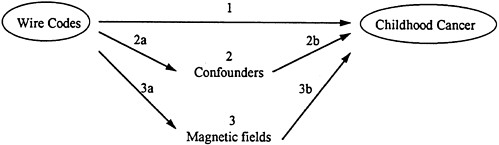
FIGURE 5-1 Conceptual framework for evaluation of evidence on wire codes, magnetic fields, and childhood cancer.
schematically as path 3 in Figure 5-1. Under this scenario, the wire codes are hypothesized to serve as a marker of magnetic-field exposure to the occupants of the home, and it is the magnetic-field exposure that confers an increased risk of cancer. Alternatively, some other agent associated with the wire codes, designated as path 2 in Figure 5-1, might be responsible for the association between wire codes and cancer—thus confounding the magnetic-field and cancer association. Under this scenario, wire codes might reflect the presence of some other agent or attribute (such as socioeconomic status or age of home) associated with the wire codes that is the true determinant of childhood cancer. Path 1 of Figure 5-1 simply refers to whether a link between the wire codes and cancer has been clearly established.
The evaluation of competing hypotheses requires careful consideration of the evidence bearing on each of the paths suggested in Figure 5-1. Besides an evaluation of the evidence supporting or refuting the associations, missing information must be identified that would be helpful in the evaluation. In the next section, the strength of the evidence is considered in the following areas: The evidence linking wire codes to childhood cancer (path 1); the evidence linking wire codes to potential confounders (path 2a); the evidence linking potential confounders to cancer (path 2b); the evidence linking wire codes to magnetic fields (path 3a); and the evidence linking magnetic fields to cancer (path 3b).
Are Wire Codes Associated with Cancer?
Assessing the Association Between Residential Magnetic Fields and Childhood Leukemia Using Techniques of Meta-Analysis to Assess the Role of Random Error
Since the publication of a seminal study by Wertheimer and Leeper (1979), scientists, policy makers, and the public have attempted to make sense of provocative and conflicting studies about the possible association between exposure to electric and magnetic fields and the incidence of disease. As this controversy continues, organizing and reviewing the existing data can provide important insights into the reasons for inconsistent results, gaps in investigative strategies, and limitations in understanding. Toward that end, a meta-analysis is undertaken of the most compelling subset of these data: residential exposure to magnetic fields or their surrogates and the incidence of childhood leukemia. This analysis is an attempt to gain an understanding of the importance of individual studies in prompting the overall conclusions of a possible link between exposure to electric and magnetic fields and cancer and the importance of the constraints needed in any successive study to assure that it would have sufficient statistical power to influence the present conclusions.
Meta-analysis is a statistical method used to provide a single risk estimate that summarizes the results of a set of similar studies (Dickersin and Berlin 1992;
Petitti 1994). In epidemiology, meta-analysis is applied most often to clinical trial data in which the major differences among studies are the differences in specific populations examined rather than in characteristics of the study designs. The validity of broadening the application of this method to environmental epidemiology is controversial because of the differences among studies that might include different methods of exposure assessment, different techniques for identification of controls, and different ways of accounting for such factors as confounders and manner of subject selection. These differences might result in substantial heterogeneity, calling into question the logic of a single summary statistic (see Blair et al. 1995) particularly for case-control studies. However, meta-analysis methods also can be used as an aid to evaluate the strength and consistency of an exposure-disease relationship, to look for design factors that might explain the heterogeneity, to conduct sensitivity and influence analyses, and to evaluate the robustness of the summary of additional studies of similar design.
The characteristics of 19 studies that have examined the possible association between residential exposure to magnetic fields and leukemia are shown in Table A5-1 (Appendix A). Of these, 12 studies have addressed childhood leukemia. Some studies report positive results, and others report no association (see details on the childhood leukemia studies in Table 5-1 below). Scientists disagree about the quality, bias, accuracy, and uncertainties in these studies, resulting in differing interpretations of the likelihood of a possible association overall. Some who examine the evidence find that the positive results are sufficiently compelling to conclude that an overall association exists (e.g., Ahlbom et al. 1993). Others argue that individual study results are artifacts due to systematic or random bias and that proper adjustment has not been made for multiple comparisons. Most conclude that the results, although interesting, do not show a consistent pattern of association (e.g., ORAU 1992; Peach et al. 1992; NRPB 1992). Recognizing the great cost of additional studies, government agencies are grappling with the development of policies in light of uncertainties and controversies.
In this meta-analysis, the results of a number of studies are compared using a variety of different assumptions about the comparability and appropriateness of such combinations of results. The goal is three-fold: (1) to examine quantitatively the consistency of the existing epidemiologic studies; (2) to analyze the influence of any single study on the combined effect measures; and (3) to estimate the sample size or number of studies needed to balance the combined results of previous studies. In short, the purpose of this meta-analysis is to consider the possible role of bias due to random error as an explanation for the observed results in a set of such studies.
Three sets of investigators have previously conducted meta-analyses of childhood cancer and residential exposure to magnetic fields. A report by Great Britain's Advisory Group on Non-ionizing Radiation of the National Radiation Protection Board summarized results of the childhood residential studies, providing pooled odds-ratio estimates for each exposure metric (NRPB 1992). For wire
TABLE 5-1 Childhood Leukemia Case-Control Studies
|
Study |
Table |
Exposure Definition |
Exposed Cases |
Exposed Controls |
Unexposed Cases |
Unexposed Controls |
Expected Exposed Cases |
Relative Risk |
Standard Error of ln(RR) |
p Value |
Plot ID |
|
Wertheimer and Leeper 1979; pers. commun. |
|
Wire codes at birth, > end pole |
131 |
124 |
5 |
12 |
51.67 |
2.54 |
0.55 |
0.04 |
1 |
|
|
|
Wire codes at birth, > ordinary low |
52 |
29 |
84 |
107 |
22.77 |
2.28 |
0.27 |
<0.01 |
2 |
|
|
|
Wire codes at birth, > ordinary high |
6 |
5 |
130 |
131 |
4.96 |
1.21 |
0.62 |
0.38 |
3 |
|
|
|
Wire codes at death, > end pole |
152 |
138 |
3 |
17 |
24.35 |
6.24 |
0.64 |
0.01 |
4 |
|
|
|
Wire codes at death, > ordinary low |
63 |
29 |
92 |
126 |
21.17 |
2.98 |
0.26 |
<0.01 |
5 |
|
|
|
Wire codes at death, > ordinary high |
12 |
5 |
143 |
150 |
4.77 |
2.52 |
0.54 |
0.05 |
6 |
|
Fulton et al. 1980 |
1 |
Wire code, > very low |
131.48 |
168.75 |
41.52 |
56.25 |
124.56 |
1.06 |
0.24 |
0.41 |
7 |
|
|
1 |
Wire code, > low |
86.50 |
112.50 |
86.50 |
112.50 |
86.50 |
1.00 |
0.20 |
0.50 |
8 |
|
|
1 |
Wire code, > high |
41.52 |
56.25 |
131.48 |
168.75 |
43.83 |
0.95 |
0.24 |
0.59 |
9 |
|
Tomenius 1986 |
8 |
= 0.3 µT |
4 |
10 |
239 |
202 |
11.83 |
0.34 |
0.60 |
0.96 |
10 |
|
Savitz et al. 1988 |
7 |
Wire code, > buried |
69 |
171 |
28 |
88 |
54.41 |
1.27 |
0.26 |
0.18 |
11 |
|
|
7 |
Wire code, > low |
27 |
52 |
70 |
207 |
17.58 |
1.54 |
0.27 |
0.06 |
12 |
|
|
7 |
Wire code, > high |
7 |
8 |
90 |
251 |
2.87 |
2.44 |
0.53 |
0.05 |
13 |
|
|
3 |
=0.2 µT, low power |
5 |
16 |
31 |
191 |
2.60 |
1.93 |
0.55 |
0.12 |
14 |
|
|
3 |
=0.2 µT, high power |
7 |
29 |
30 |
175 |
4.97 |
1.41 |
0.47 |
0.23 |
15 |
|
Coleman et al. 1989 |
VIII |
<100 m |
36 |
63 |
48 |
78 |
38.77 |
0.93 |
0.28 |
0.61 |
16 |
|
|
VIII |
<0 m |
14 |
15 |
70 |
126 |
8.33 |
1.68 |
0.40 |
0.10 |
17 |
|
|
VIII |
<5 m |
3 |
3 |
81 |
138 |
1.76 |
1.70 |
0.83 |
0.26 |
18 |
|
London et al. 1991 |
7 |
Wire code, > underground |
200 |
194 |
11 |
11 |
194.00 |
1.03 |
0.44 |
0.47 |
19 |
|
|
7 |
Wire code, > very low |
180 |
167 |
31 |
38 |
136.24 |
1.32 |
0.26 |
0.15 |
20 |
|
|
7 |
Wire code, > low |
122 |
92 |
89 |
113 |
72.45 |
1.68 |
0.20 |
<0.01 |
21 |
|
|
7 |
Wire code, > high |
42 |
24 |
169 |
181 |
22.41 |
1.87 |
0.28 |
0.01 |
22 |
|
|
5 |
24-hr, >67 nT |
79 |
75 |
85 |
69 |
92.39 |
0.86 |
0.23 |
0.75 |
23 |
|
|
5 |
24-hr, >118 nT |
44 |
33 |
120 |
111 |
35.68 |
1.23 |
0.27 |
0.21 |
24 |
|
|
5 |
24-hr, >267 nT |
20 |
11 |
144 |
133 |
11.91 |
1.68 |
0.39 |
0.09 |
25 |
|
|
6 |
spot, >31 nT |
73 |
53 |
67 |
56 |
63.41 |
1.15 |
0.26 |
0.29 |
26 |
|
|
6 |
spot, >67 nT |
39 |
25 |
101 |
84 |
30.06 |
1.30 |
0.30 |
0.19 |
27 |
|
|
6 |
spot, >124 nT |
16 |
11 |
124 |
98 |
13.92 |
1.15 |
0.41 |
0.37 |
28 |
|
Study |
Table |
Exposure Definition |
Exposed Cases |
Exposed Controls |
Unexposed Cases |
Unexposed Controls |
Expected Exposed Cases |
Relative Risk |
Standard Error of ln(RR) |
p Value |
Plot ID |
|
Olsen et al. 1993 |
4 |
>0.1 µT |
4 |
8 |
829 |
1658 |
4.00 |
1.00 |
0.61 |
0.50 |
29 |
|
|
4 |
>0.25 µT |
3 |
4 |
830 |
1662 |
2.00 |
1.50 |
0.76 |
0.30 |
30 |
|
|
4 |
>0.4 µT |
3 |
1 |
830 |
1665 |
0.50 |
6.02 |
1.16 |
0.06 |
31 |
|
Feychting and Ahlbom 1993 |
5 |
Calculated, =0.1 µT |
11 |
79 |
27 |
475 |
4.49 |
2.45 |
0.38 |
0.01 |
32 |
|
|
5 |
Calculated, =0.2 µT |
7 |
46 |
31 |
508 |
2.81 |
2.49 |
0.45 |
<0.01 |
33 |
|
|
5 |
Calculated, =0.3 µT |
7 |
32 |
31 |
522 |
1.90 |
3.68 |
0.46 |
<0.00 |
34 |
|
|
9 |
Spot, =0.1 µT |
5 |
137 |
19 |
207 |
12.57 |
0.40 |
0.51 |
0.96 |
35 |
|
|
9 |
Spot, =0.2 µT |
4 |
70 |
20 |
274 |
5.11 |
0.78 |
0.56 |
0.67 |
36 |
|
|
8 |
Distance, =100 m |
12 |
123 |
26 |
431 |
7.42 |
1.62 |
0.36 |
0.09 |
37 |
|
|
8 |
Distance, =50 m |
6 |
34 |
32 |
520 |
2.09 |
2.87 |
0.48 |
0.01 |
38 |
|
Fajardo-Gutierrez et al. 1993 |
2 |
Distance, <20 m transformer |
22 |
18 |
59 |
59 |
18.00 |
1.22 |
0.37 |
0.29 |
39 |
|
|
2 |
Distance, <20 m distribution line |
16 |
8 |
65 |
69 |
7.54 |
2.12 |
0.47 |
0.05 |
40 |
|
|
2 |
Distance, <200 m substation |
5 |
3 |
76 |
74 |
3.08 |
1.62 |
0.75 |
0.26 |
41 |
|
|
2 |
Distance, <200 m transmission line |
11 |
7 |
70 |
70 |
7.00 |
1.57 |
0.51 |
0.19 |
42 |
|
|
4 |
Distance, <20 m transformer |
9 |
7 |
37 |
42 |
6.17 |
1.46 |
0.55 |
0.25 |
43 |
|
|
4 |
Distance, <20 m distribution line |
3 |
2 |
43 |
47 |
1.83 |
1.64 |
0.94 |
0.30 |
44 |
|
|
4 |
Distance, <200 m substation |
5 |
1 |
41 |
48 |
0.85 |
5.85 |
1.12 |
0.06 |
45 |
|
|
4 |
Distance, <200 m transmission line |
6 |
3 |
40 |
46 |
2.61 |
2.30 |
0.74 |
0.13 |
46 |
|
Petridou et al. 1993 |
1 |
Distance, <50 m |
96 |
132 |
40 |
55 |
96.00 |
1.00 |
0.25 |
0.50 |
47 |
|
|
1 |
Distance, <5 m |
27 |
33 |
109 |
154 |
23.36 |
1.16 |
0.29 |
0.31 |
48 |
|
Verkasalo et al. 1993 |
II |
Calculation, >0.01 µT |
35 |
— |
— |
— |
38.03 |
0.92 |
0.16 |
0.70 |
49 |
|
|
II |
Calculation, >0.2 µT |
3 |
— |
— |
— |
1.93 |
1.55 |
0.46 |
0.17 |
50 |
|
|
III |
Cumulative calculation, >0.01 µT |
35 |
— |
— |
— |
38.05 |
0.92 |
0.16 |
0.70 |
51 |
|
|
III |
Cumulative calculation, >0.4 µT |
3 |
— |
— |
— |
2.5 |
1.20 |
0.46 |
0.35 |
52 |
codes, excluding the Wertheimer and Leeper (1979) study, the board found a statistically significant increased odds ratio. For data based on the distance from the source of electromagnetic fields and for measured magnetic fields, the pooled odds ratios were found to be increased, but not statistically significant. They concluded that in spite of the increased odds ratios, the small sample sizes (three for each estimate) and methodologic problems in each of the studies precluded drawing definitive conclusions.
Ahlbom et al. (1993) combined the results from three recent studies conducted in the Nordic countries (Olsen et al. 1993; Verkasalo et al. 1993; Feychting and Ahlbom 1993) and argued that because they believed those studies were more similar to one another than to other studies (all used a population registry and estimates of historical exposure), they were appropriate for use in a meta-analysis. By combining the risk ratios of those studies and assigning them weighting factors proportional to the inverse of their variances, Ahlbom and colleagues (1993) found statistically significant increased risk ratios for childhood leukemia.
Washburn et al. (1994) conducted a set of meta-analyses for leukemia, lymphoma, and nervous-system cancers. For the combined results of 13 studies, they found increased risks for all three diseases; those for leukemia and nervous system tumors were statistically significant. Their sensitivity analyses showed that the inclusion or exclusion of data that overlap in the two Swedish studies and the choice of exposure metric had a limited effect on the results.
In contrast to the analysis of Washburn et al. (1994), which provided a single risk estimate for all studies, and the NRPB (1992) and Ahlbom et al. (1993) analyses, which limited their evaluations to three similar studies at a time, the analysis presented here seeks an explanation for the consistency or the heterogeneity of all the studies and estimates the influence of each study on the combined risk estimates. This analysis attempts to bridge the interpretation gap between previous meta-analyses.
Methods
There are three important methodologic components to conducting a meta-analysis: selecting the studies for inclusion, evaluating and weighting the quality of the individual studies, and adopting a method for summarizing results across different studies.
Selecting the Data To conduct this analysis, 16 studies of residential magnetic-field exposures and childhood cancer were reviewed; the 11 studies used in this analysis are presented in Table 5-1. Of the 16 studies considered, two were excluded from this analysis because the data presentation or the analyses were incomplete (Myers et al. 1990; Lowenthal et al. 1991), and two others were excluded because children were not analyzed independently of older subjects (McDowall 1986; Schreiber et al. 1993). Another study was excluded because
it was not published, and the data were inaccessible (Lin and Lu 1989). In the remaining 11 studies, methods vary according to the outcome studied (one mortality study, 10 incidence studies), source of data (hospital records, incidence registry, birth registry, death registry), maximum age of subjects (from 10 to 20), and exposure metric used (wire codes, distance from electric source, magnetic-field spot measurements, and historical reconstruction (calculation) of magnetic fields). Although some would argue that the original study that served as the motivation for the later investigations should be excluded from the meta-analysis (Wertheimer and Leeper 1979, in this case), the committee included this study in its analysis because, as discussed below, one of its primary goals is to assess consistency across studies.
In this investigation, the committee explored the consistency of results across the different types of exposure metrics that were used in the studies by conducting separate meta-analyses for different combinations of the metric and exposure cut points3 that were used in the studies. These include (1) studies using wire codes and two alternative exposure cut points; (2) studies using only distance from electric source as an exposure metric and applying two exposure cut points; (3) studies using wire codes or distance and considering three alternative exposure cut points; (4) studies using magnetic-field spot measurements for one exposure cut point; (5) studies using calculations of magnetic fields for one exposure cut point; and (6) all studies combined. In the last category, three analyses were conducted: (1) combining results for the exposure category that gave the odds ratios with the smallest probability value (p value) of the hypothesis of no effect; (2) combining results for the exposure category that gave the effect measurement with the largest p value; and (3) using the results for the highest exposure category in each study.
For assessments in which multiple exposure metrics were explicitly stipulated, the committee's preferences for the use of exposure metrics to combine studies were in the following order: wire codes, distance from electric source, calculated magnetic fields, and spot measurements of magnetic fields. This order was chosen because wire codes were used in the initial study that identified an association with childhood leukemia. Distance is one measurement contained within the wire-coding scheme, and calculations would, under some assumptions, represent a better assessment of lifetime exposure than spot measurements. The latter is reasoned because an average can be taken over the daily and seasonal variations (note that these assumptions are untested; see Chapter 2). In contrast, Washburn et al. (1994) used distance in preference to wire codes and wire codes
in preference to spot measurements or calculations. Based on their sensitivity analyses, Washburn and colleagues reported that the cut point chosen when more than one is reported has little impact on the results. In contrast, Wartenberg and Savitz (1993) showed that such choices can affect the results of individual studies substantially.
It should be noted that the data used by Feychting and Ahlbom (1993) included some, but very few, of the same data used by Tomenius (1986). Thus, the results of the two studies should not be considered strictly independent, although they are treated as such in the statistical analyses here.
Evaluating the Quality of Each Study In the meta-analysis presented here, the decision was made not to evaluate and weight the quality of each study. The intent of these analyses was primarily to evaluate the consistency of the studies and their relative influences on the combined results; it was not clear that an evaluation of the quality of the studies would assist in this assessment. In addition, it was not clear which criteria would be most appropriate to use in evaluating and weighting the quality of each study (Greenland 1994).
Selecting the Statistical Methods A variety of methods have been used to assess the results of combined studies, to identify heterogeneity, and to conduct influence analyses (Hedges and Olkin 1985; Wolf 1986; Fleiss and Gross 1991; Dickersin and Berlin 1992; Petitti 1994). The simplest method, called vote counting, relies on tallies of the number of studies with positive results, negative results, and null results. One can calculate expected values and statistical significance and draw a variety of inferences. Many scientists criticize this approach because it has low statistical power and because the summary measurement does not incorporate the observed size of the effect, sample size, or the statistical power (Hedges and Olkin 1985). However, when the null hypothesis is rejected, it is no longer a concern, and inferences are statistically valid. When the null hypothesis is not rejected, it is not known whether the results are due to the absence of an effect or to a limitation of the method. Given the uncertainties associated with this method, results should be used simply for guidance, not for hypothesis testing.
The combined probability test, which is nonparametric because it does not rely on an assumption about the probability distribution of the data, combines the logarithms of individual study p values into a chi-squared distributed statistic, P— the degrees of freedom being equal to twice the number of studies combined.
Similarly, one can combine the probability of rejecting the null hypothesis in individual studies to assess the sensitivity of the results to publication bias and determine the number of additional null studies needed to reduce a statistically significant combined effect to nonsignificance. This number is the so-called "fail-safe N."
Statistics that incorporate the individual study effect sizes use either of two statistical models: fixed effects or random effects. The fixed-effects model
assumes that a single true underlying effect exists and that the studies included are a sample that allows one to make an inference about the true effect. Intrastudy precision (i.e., an overall treatment effect) is assessed by weighting individual study results by the inverse of the variance. The random-effects model assumes that the true underlying effect varies and is normally distributed. The sample of studies allows one to make an inference about the distribution of true study effects, including interstudy variation (i.e., a sampling effect) and intrastudy precision (DerSimonian and Laird 1986). The choice of model may be based on results of the chi-squared test (or Q test) for heterogeneity. This test assesses constancy of treatment effects. Once heterogeneity is detected, identifying its sources can be one of the most informative aspects of meta-analysis, although some authors simply report the random-effects result (Greenland 1994).
Influence analysis is the recalculation of summary statistics for a set of studies by leaving out one study at a time and doing so for each study. This technique indicates the importance of each individual study in the combined summary statistic to determine whether any of the studies has a disproportionate effect (Olkin 1994).
Using the combined-effect measurement, one can assess how large a study should be to balance the average of reported results, if the variation between study results is due solely to random fluctuations. The size of a single study needed to give a null summary statistic (i.e., an odds ratio of 1.0) can be determined, assuming that the hypothetical study had equal numbers of cases and controls, had an exposure prevalence equal to that observed in reported studies, and had an odds ratio equal to the reciprocal of the reported average. Unlike the fail-safe N, this calculation uses the size of the effect measurement, weights each study result by the inverse of its variance, hypothesizes a study with a protective rather than a null effect, and seeks a null rather than a nonsignificant combined effect.
Results
The results for all the analyses described would constitute over a dozen separate tables. Rather than provide all these data, two tables are presented that describe the data used in the analysis, two tables provide a sample of the results, and a single table summarizes the results of all the selection and exposure definitions in the studies considered. The full set of 16 studies of residential exposure and childhood cancer was considered earlier and is shown in Table A5-1. From these studies, the actual data used in the meta-analyses are shown in Table 5-1. Results of two particular calculations are shown in Tables 5-2 and 5-3. Summaries of all the calculations are provided in Table 5-4, and particularly interesting aspects of the results are described below.
Results of analyses of data from individual studies and selected meta-analyses are shown in Figure 5-2. One striking observation is the preponderance of dots
TABLE 5-2 Wire Codes (Low-Current Configuration)
|
Study |
Exposure Definition |
Exposed Cases |
Expected Exposed Cases |
Drop 1 Combined p's |
Individual OR |
OR fixed effects |
Pr{Qhet} |
Or random effects |
|
All combined |
|
288 |
199.31 |
0.00 |
|
1.48 (1.18-1.85) |
0.08 |
1.52 (1.08-2.14) |
|
Wertheimer and Leeper 1979 |
LCC (birth) |
52 |
22.77 |
0.01 |
2.28 (1.34-3.91) |
1.35 (1.06-1.73) |
0.16 |
1.36 (0.97-1.91) |
|
Fulton et al. 1980 |
LCC |
87 |
86.50 |
0.00 |
1.00 (0.67-1.49) |
1.78 (1.36-2.33) |
0.55 |
1.78 (1.36-2.33) |
|
Savitz et al. 1988 |
LCC |
27 |
17.58 |
0.00 |
1.54 (0.90-2.63) |
1.47 (1.15-1.88) |
0.04 |
1.53 (0.97-2.42) |
|
London et al. 1991 |
LCC |
122 |
72.46 |
0.00 |
1.68 (1.14-2.48) |
1.39 (1.05-1.82) |
0.05 |
1.48 (0.91-2.42) |
|
OR = odds ratio. |
||||||||
TABLE 5-3 Wire Codes (Low-Current Configuration) and Distance (<100 m)
TABLE 5-4 Summary of Alternative Meta-Analyses
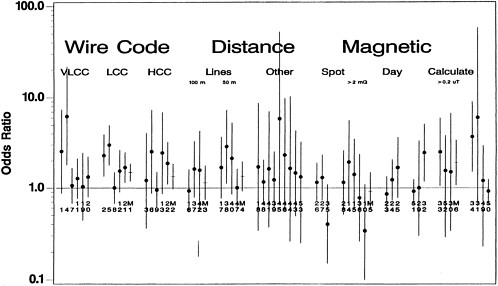
FIGURE 5-2 Odds ratios (dots) and 95% confidence intervals (vertical lines) for each of the dichotomous cut points of each exposure metric of each study as listed in Table 5-1.
(odds ratios) at or above the null-effect line. Only 8 of the 53 odds-ratio dots fall below the null effect; however, it is interesting to note that four of those that do so are for measured magnetic fields. This unweighted vote-counting assessment strongly suggests an association with some feature of the power transmission and distribution system because of a small but consistent positive odds ratio.
Wire Codes The four wire-code studies were placed in two categories: one using low-current configuration (LCC) as the dichotomous cut point (i.e., ≤ LCC versus > LCC) and the other using high-current configuration (HCC) as the dichotomous cut point (< HCC versus > HCC). The results for the LCC calculations are shown in Table 5-2. Some of the published studies presented more detailed categorization; however, those two categories were the only ones that could be determined for all the studies in which wire codes were assessed. Odds ratios based on the wire codes were fairly similar, although, surprisingly, stronger positive odds ratios were shown on average in the LCC analysis than in the HCC analysis.
Distance Measurements Five studies reported distance measurements as a metric of exposure. These studies, however, used different distance cut points and measured from different types of electric-power distribution sources. The most commonly reported distance cut points used in these studies were 50 m and 100 m. At each cut point, the proportion of exposed individuals within each of these studies was similar, but the similarity was largely due to inclusion of the study of Petridou et al. (1993) in the 50-m category. Exclusion of this single study brought the proportion exposed in the 50-m category down to 10%, substantially less than in the 100-m category in which 29% were exposed. Stronger positive associations were shown in the high-exposure category (i.e., 50 m) than in the low-exposure category, as would be expected if such an association exists.
Wire Codes and Distance Measurements Because distance is an important component of the wire-coding scheme, it seemed appropriate to consider both exposure metrics together. To explore this grouping, the LCC data were combined with the 100-m and 50-m cut-point studies, and the HCC data were combined with the 50-m cut point. Where data were available for both distance and wire codes, wire codes were used. Overall, seven studies were available; the results for the combination of LCC wire codes and 100-m distance cut points are shown in Table 5-3. All three combinations gave fairly similar results, showing statistically significantly increased odds ratios, moderate insensitivity to single-study deletions, and large fail-safe N's and sample sizes needed to balance the observed data, indicating substantial robustness of results from additional studies.
Spot Measurements Spot measurements were reported in four studies. When possible, a similar cut point of 0.2 µT (2.0 mG) was used across all studies for
the meta-analyses based on this metric. However, Tomenius (1986) reported the number of subjects above and below 0.3 µT (3.0 mG); therefore, this cut point was used for Tomenius's data. Savitz et al. (1988) reported the number of subjects above and below 0.2 µT with all the appliances turned on (high power) and with all the appliances turned off (low power). For this study, the low-power data were used. London et al. (1991) used exposure quartiles to determine cut points; this resulted in cut points at 0.031 µT, 0.067 µT, and 0.124 µT (0.31 mG, 0.67 mG, and 1.24 mG). For their data, the highest exposure cut point was used. Feychting and Ahlbom (1993) reported data for two exposure cut points—0.1 µT and 0.2 µT. The highest exposure cut point was used for this analysis.
Calculations Three Nordic studies (Olsen et al. 1993; Verkasalo et al. 1993; Feychting and Ahlbom 1993) reported calculations based on historical power use to estimate the magnetic fields in the nearby residences. Note that because proximity to power distribution lines is a key factor in the calculated historical magnetic fields, this method of estimating exposure shares features with wire codes and distance measurements. That is, distance from power lines is an explicit factor in calculating wire code, distance measurements, and historical exposure, but not in spot measurements. The committee's analysis of those studies mirrors that of Ahlbom et al. (1993), which shows an association between exposure and childhood leukemia; cut points of 0.2 µT or 0.25 µT were used.
Combining All Studies Combining all studies using the smallest p value, which biases the result toward the strongest positive association, showed statistically significant heterogeneity and a statistically significant increased odds ratio under the random-effects model. The single largest amount of heterogeneity is attributable to the study of Tomenius (1986). Combining all studies using the largest p value, which biases the result toward the strongest null association, showed homogeneity, and the effect was not statistically significant. The result is far less extreme than that found for the smallest p values. Combining the data using the cut point and metric resulting in the highest exposure showed heterogeneity and a statistically significant increased odds ratio.
Discussion
The purpose of this analysis has been to evaluate the role of random variation in explaining the results observed in the set of epidemiologic studies examining residential magnetic-field exposure and childhood leukemia. When looked at in a variety of analyses, the positive trend in the associations cannot be explained statistically on the basis of random fluctuations, and the results of the combined data show little sensitivity to how they were grouped. Whether the risk association is actually attributable to the magnetic-field exposure or some other factor is not clear. How large the risk might be, if it indeed exists, is also not clear. However,
the results of the residential exposure studies to date present a fairly uniform picture supporting an association of childhood leukemia with wire codes, distance from source, and for the three Nordic studies, calculated fields based on historical records of power consumption. Further, as evidenced by the results of the influence analyses, in most instances, deletion of a single study, such as the sentinel study, has little impact on the overall results. It would take a relatively large number of studies with largely negative results to balance this effect to the null. However, the inconsistency of results and the lack of a positive association when spot measurements of magnetic fields are used remain an enigma.
In the graph of the odds ratios (Figure 5-2), the preponderance of positive associations across exposure metrics (except for spot magnetic-field measurements) and exposure cut points speaks to the overall consistency of the data. Although there are issues of independence of results, weighting of multiple results from the same study, and possible biases in each study, the pattern is not random.
In all but 1 of the 12 ways in which the studies were grouped, at least half of them, and often substantially more than half, had increased odds ratios (Table 5-4). If chance alone accounted for the associations seen, one would expect a balance between those showing positive and inverse risks. In 9 of 12 vote-counting analyses, the number of statistically significant odds ratios exceeded the 5% expected by chance. Eight of these nine had at least 25% statistically significant results, and five had over 30% statistically significant results. The analyses that had no statistically significant results were one group of studies using distance from electric source, spot magnetic-field measurements, and one using the largest p values. The results of the combined p-value test are similar to those of the vote-counting analyses. That is, the same 9 of 12 groups of studies showed statistically significant results for each group as a whole. This suggests that the nine groups with statistically significant results, if not aggregated by a biased method, represent significant associations between the exposure characterizations and the incidence of childhood leukemia. These results, however, were quite sensitive to deletion of individual studies. That can be ascribed to sample size in part, but the data are strongly suggestive but not conclusive of an association.
The results of the combined odds-ratio assessments using the fixed-effects model also show a similar pattern. The risks in 10 of the 12 study groups showed increased odds ratios ranging from 1.14 to 1.90, with the 95% confidence intervals of 7 of the 12 studies excluding the null value of 1.0. These results were not sensitive to the deletion of a single study, as the odds ratio remained larger than 1.0 in each instance. The two groups of studies that did not show an increased risk were those using the spot magnetic-field measurements and those with the largest p values. Even so, both were sensitive to deletion of a single study, resulting in an odds ratio greater than 1.0 in some instances.
The random-effects model gave largely similar results. The combination of all studies using the smallest p values and the highest exposures showed statistically significant heterogeneity. This result is probably partly due to the different exposure
metrics used in studies that likely reflect different aspects of magnetic-field exposure. When separated by exposure metric, none of the combinations shows statistically significant heterogeneity. This finding suggests that statistics summarizing all studies might be misleading. The spot-measurement results are distinct from all other exposure metrics, as would be expected from the discussion above.
One additional way to assess the robustness of results is to determine how large a study must be so that the results of previous studies are fully balanced to yield a combined risk estimate of 1.0. The data for these evaluations show that it would require over 1,000 subjects (500 cases and 500 controls) to refute the analyses of any of the studies (except those that used spot measurements) and over 2,000 for many of the groups of studies evaluated. Some might view this assessment as artificial (i.e., why should the odds ratio be equal and opposite to that observed?), but the number needed is useful in assessing the likely impact of a future study on the combined results. Even a regional study would likely have fewer than 1,000 cases; therefore, another case-control study is unlikely to change the results of a meta-analysis. Unless a new study has a major design innovation or the odds ratio is markedly protective (or quite large), an additional study is unlikely to resolve this controversy.
The largest sample size required for a study that might have the power to refute the existing data is the size in the combined study using the highest exposure cut point in each study. This observation is particularly noteworthy because various researchers have reported anecdotally that the individuals with the highest exposure often seem to drive the study results. Typically, a single or a few subjects have notably higher exposures than others in the study, and an unexpectedly large proportion of these are in case-control studies. The inference from this observation is that if another study were to be conducted, it would be most informative to conduct a study focusing on individuals with high exposure.
Similarly, the fail-safe N's for the results suggest that if the observed excess was due to publication bias, at least a dozen unpublished studies with an inverse association would be required to refute the published data except for those groups with very few studies. In view of the strong interest in this topic among scientists, it seems unlikely that any investigator would have trouble getting even a negative study published. Indeed, 2 of the 12 published studies reported odds ratios less than 1.0, and 8 of 12 did not have p values less than or equal to 0.05 for any exposure cut points, suggesting that negative and nonsignificant results are readily publishable. Nonetheless, the predominance of positive results persists.
Two contradictions remain: (1) Why do spot measurements of magnetic-field strength not show an association with leukemia, even though all the other exposure metrics do? and (2) Why do the data not show a consistent dose-response relationship? With respect to the spot measurements, if the results of the other exposure metrics are not spurious, then at least two potential explanations are possible. First, the surrogate exposure metrics might be markers for the true risk factor and the true risk factor might not be related to magnetic-field strength.
A number of plausible risk factors have been investigated, but none can be used to explain the observed association. Second, the other surrogate exposure metrics might be more biologically relevant measurements of magnetic-field exposure than spot measurements. The surrogate metrics might be more representative of long-term integrated averages of magnetic-field strength or of some other aspect of magnetic-field exposure that is related to the cause of the disease (e.g., peak field strength, field variability, or time above a specific threshold value).
With respect to the inconsistent patterns of dose-response relationship, it might be that the surrogate metrics used are correlated but not perfectly (as certainly must be true) with the true risk factor, whether it be some risk related to the electric-power delivery system or not, and the resulting misclassification gives inconsistent results that on average are positive. Further, wire codes differ among study locations, as evidenced by different magnetic-field strengths reported for the same wire code in different locations (Savitz et al. 1988; London et al. 1991). Finally, the spot-measurement data have various methodologic limitations. For example, in the Savitz et al. (1988) study, the proportion of subjects for whom measurement data were available was only about one third of that for whom the wire-code data were obtained. For the Tomenius (1986) study, measurements were made at the door step rather than inside the house.
The data in hand are not sufficient for the committee to investigate all the alternative exposure metrics or explanations that might lead to understanding the associations observed. The explanations that have been posed generally are post hoc and, therefore, should be used as hypotheses for additional analyses rather than as a priori hypothesis tests. Thus, the finding remains that there are strong and consistent data suggesting a relatively weak increased risk of leukemia for children living in close proximity to power lines. Studies that would best advance understanding of this association would address the inconsistencies in studies and not duplicate studies with simply more precise measurements of exposure and outcome, as suggested by Washburn et al. (1994). The sample-size analyses show that little insight is likely to be provided unless a study of hundreds if not thousands of leukemia cases is undertaken.
Selection Bias and Control Selection in Residential Childhood Cancer Studies
In the absence of any true association between wire codes and cancer, faulty methods of case or control selection in case-control studies can yield spurious associations. If, for some reason, controls in studies of childhood cancer and wire codes were consistently selected in a manner that underrepresented high-wire-code residents, then those studies would consistently yield spuriously increased measurements of association.
In designing an epidemiologic study, the study groups to be compared (either cases and controls in a case-control study or exposed and unexposed in a cohort study) must accurately represent the population from which they are drawn
(exposure prevalence in a case-control study or disease risk in a cohort study). The criteria for defining the groups, the methods of evaluating their representativeness, and the assessment of bias in study results depend on the design of the study. In case-control studies, subjects are selected with respect to disease status. If the selection process generates an over-or under representation of exposed cases or exposed controls, a bias will be produced in the measurement of association between disease status and exposure status. In cohort studies, subjects are selected on the basis of exposure status at a time when all subjects are disease free; they are then followed over many years. If the completeness of follow-up differs depending on exposure and disease status, bias might result.
Specific aspects of the residential childhood cancer studies that might have led to bias (Tables 5-5 and 5-6) are considered here. The discussion provides an inventory of possible sources of bias but does not suggest that such bias actually exists, at least not of the magnitude to explain the previously reported associations or lack of associations. The focus is on four main issues: (1) representativeness of cases in case-control study, (2) representativeness of controls in case-control studies, (3) participation (nonresponse) rates, and (4) differential mobility of study subjects.
Representativeness of Cases Three epidemiologic designs have been used in the studies of residential exposure and childhood cancer. A standard case-control design was used in the first type of study (Wertheimer and Leeper 1979; Fulton et al. 1980; Tomenius 1986; Savitz et al. 1988; Coleman et al. 1989; Myers et al. 1990; London et al. 1991; Olsen et al. 1993). Children with cancer and children without cancer were identified, and their past exposures were estimated. Cases were selected from population-based or hospital-based registries (e.g., birth certificates), by a random-digit-dialing procedure, or from referrals to friends of the cases.
A nested case-control design was used in the second type of study (Feychting and Ahlbom 1993). A cohort of exposed and unexposed individuals was identified. From this cohort, cases and controls were chosen independent of their exposure status and then compared with respect to their exposure status, as in a traditional case-control study.
The third type of study was a historical cohort study (McDowall 1986; Schreiber et al. 1993; Verkasalo et al. 1993). In these studies, investigators identified all persons living near the electric transmission facilities as their cohort and compared their mortality experience to that of the national population.
The case-control studies used registry records to identify all cases diagnosed or dying during a certain time, living in a specified geographic region, and in a specified age range (Table 5-5). Three data sources were used in the studies. Wertheimer and Leeper (1979) and McDowall (1986) used death certificates. One concern with that source is that disease survival would affect identification (e.g., nonfatal leukemia would not be identified). Because diagnosis and treatment
TABLE 5-5 Subject Selection in Residential Childhood Cancer Studies
|
|
|
Source of Subjects |
Eligibility |
||||
|
Design |
Study |
Cases |
Controls |
Years |
Location |
Ages |
Matching Criteria |
|
Case control |
Wertheimer and Leeper 1979 |
Death certificates |
Next birth certificate unless a sibling |
1950-1973 |
Colorado birth and Greater Denver resident 1946-1973 |
<19 |
File 1: month and county of birth File 2: alphabetic, 5-20 yr range (not sibling) |
|
Case control |
Fulton et al. 1980 |
Rhode Island hospital incidence registry |
Birth certificate |
1964-1978 |
Rhode Island resident for 8 yr before diagnosis |
<21 |
Birth year |
|
Case control |
Tomenius 1986 |
Population-based cancer registry |
Nearest birth certificate in parish records |
1958-1973 |
Born and diagnosed in Stockholm County |
<19 |
Age, gender, church district of birth, and church district of diagnosis if same as birth for case |
|
Case control |
Savitz et al. 1988 |
Population-based cancer registry and hospital records |
Random digit dialing |
1976-1983 |
Denver SMSA |
<15 |
Age ± 3 yr, gender, telephone exchange at time of diagnosis of case |
|
Case control |
Coleman et al. 1989 |
Population-based cancer registry (leukemia only) |
(1) Solid tumors (not lymphoma); (2) random from Bromley Electoral Roll in 1975 |
1965-1980 |
Four London boroughs |
(1) All, (2) >17 |
Age, gender, year of diagnosis, residence |
|
Case control |
Myers et al. 1990 |
Population-based cancer registry and other sources |
Nearest birth certificate |
1970-1979 |
Yorkshire health region |
<15 |
Gender, birth in same local area or health district, year of diagnosis |
|
Case control |
London et al. 1991 |
Population-based cancer registry (leukemia) |
Friends (first 65) and random digit dialing |
1980-1987 |
Los Angeles County |
<11 |
For most, age ± 1-3 yr depending on age, gender, ethnicity |
|
Case control |
Olsen et al. 1993 |
Population-based cancer registry (leukemia, CNS tumor, lymphoma) |
Population registry |
1968-1986 |
Denmark |
<15 |
Gender, date of birth ± 1 yr |
|
Nested case control |
Feychting and Ahlbom 1993 |
Population-based cancer registry |
Population registry |
1960-1985 |
Residence within 300 m of any 220 kV of 400 kV power line in Sweden |
<16 |
For most, in registry during year of diagnosis, birth year, gender, residence in same parish in year of diagnosis or move, near same power line |
|
Historical cohort |
Verkasalo et al. 1993 |
National population registry |
National population registry |
1970-1989 |
Residence within 50 m of overhead power lines |
<20 |
5-yr age groups |
TABLE 5-6 Number of Subjects in Residential Childhood Cancer Studies
|
|
Number of Subjects |
Excluded |
Moved |
|
|||
|
Study |
Cases |
Controls |
Cases |
Controls |
Cases |
Controls |
Comments |
|
Wertheimer and Leeper 1979 |
344 |
344 |
16, no birth address; 72, no birth address |
|
147 |
128 |
% HCC of File 1 approximately equal % HCC of File 2 |
|
Fulton et al. 1980 |
119 |
240 |
9 |
15 |
53 |
|
|
|
Tomenius 1986 |
746 (56 benign) |
716 |
29, bad data; 1, not primary tumor; 43 of 1,172 dwellings |
46 of 1,015 dwelling |
316 |
|
|
|
Savitz et al. 1988 |
356 |
278 |
104 interviews; 228 measurements; 36 wire codes |
56 interviews; 71 measurements; 19 wire codes; (78.9% response rate in RDD) |
256 |
|
|
|
Coleman et al. 1989 |
811 (84 under age 18) |
1,614 (141 under age 18), 254 |
40 |
18, 223 |
|
|
|
|
Myers et al. 1990 |
419 |
656 |
45 |
68 |
|
|
|
|
London et al. 1991 |
331 |
257 |
99 interviews; 162 measurements; 112 wire codes |
24 interviews; 108 measurements; 50 wire codes (82% response rate for RDD) |
57% |
66% |
4,424 phone numbers resulted in 113 eligible controls |
can be related to socioeconomic status, which in turn can be related to proximity to power lines, a bias could have resulted. Fulton et al. (1980) used a hospital cancer registry. However, patients at a specific hospital might not accurately represent the total pool of cases in the general population.
The rest of the case-control studies used population-based registries to identify cancer cases (Tomenius 1986; Savitz et al. 1988; Coleman et al. 1989; Myers et al. 1990; London et al. 1991; Olsen et al. 1993; Feychting and Ahlbom 1993). Bias is unlikely to play a large role in these studies provided that ascertainment of cases in the registries is sufficiently high. Finally, two of the cohort studies used population registries to identify cases (Schreiber et al. 1993; Verkasalo et al. 1993). Provided ascertainment is complete, these registries are optimal data sources. Although the case-selection process had minor variations, the methods of most of the studies would be expected to generate reasonably representative study groups.
The age ranges varied among the studies; upper-age bounds for analyses of childhood cancers ranged from 10 to 20. Those ranges are all representative of children with cancer, with perhaps some dilution of cases at older ages. The variation is unlikely to have caused a substantial variation among the studies because of the large overlap of age ranges.
Representativeness of Controls In the case-control studies, controls were selected in a variety of ways. Some studies used regional birth-certificate files (Wertheimer and Leeper 1979; Fulton et al. 1980; Tomenius 1986; Myers et al. 1990), which limits subjects to those who were both born and diagnosed (or selected) in the same region. In the study of Fulton et al. (1980), however, cases were drawn from a hospital population, and controls were selected from the general population listed in the birth-certificate records, introducing a potential disparity between cases and controls. Further, Wertheimer and Leeper (1980) have argued that because cases were required to live in Rhode Island for 8 years before diagnosis and controls had only to be born in Rhode Island, the control selection might have introduced bias.
Other studies used random digit dialing to identify controls (Savitz et al. 1988; London et al. 1991). Random digit dialing is a method designed to identify a set of controls that comes from a defined geographic region (Waksberg 1978; Robison and Daigle 1984; Ward et al. 1984; Voigt et al. 1992). Although the exact methods vary, in general the procedure is for the investigator to take the case's phone number, discard the last two digits, and replace them with two randomly chosen digits. This number is called; if it is not a residence, another pair of random digits is used; if it is a residence, the resident is asked if a person meeting the matching criteria resides there. If so, that person is recruited as a control. If not, another pair of random digits is used. This process, applied to a childhood study matching gender, age, and ethnicity, typically requires between 25 and 75 phone calls per case to identify an eligible control.
One limitation of random digit dialing is that it samples only homes with telephones. It is important to determine what proportion of residences have telephones and, if possible, to compare those that have telephones with those that do not. Further, even if an individual has a telephone, they might not be easily accessible. Poole and Trichopoulos (1991) argue that people of very low socioeconomic status might be harder to reach by this method and thus might be underrepresented in the sample.
It should also be noted that the initial smapling unit with the random-digit-dialing method is the residence rather than the individual. Each residence is reached via telephone rather than each individual child, as is done in a registry-sampling procedure. If a residence does not have a telephone, none of the children in that residence can be selected. Controls should provide an estimate of the exposure distribution in the population from which the cases were drawn (Rothman 1986) or an estimate of the exposure rate that would have been observed in the cases if no association existed between the exposure under study and disease (Schlesselman 1982). Controls selected by random digit dialing are likely to achieve this goal to a substantial degree, but some potential limitations are apparent in that mode of sampling from the population.
One study combined random digit dialing with use of friends of cases as controls (London et al. 1991). A case was asked to name a close friend who could be recruited for inclusion in the study. Although the rationale of combining that method with random digit dialing was not provided by the study, it was partly due to logistic considerations in adding on to a previously conducted smaller case-control study. One of the problems in using friend controls is that they might be overmatched (Kelsey et al. 1986); that is, they might be similar to the cases solely because they are friends. Precision will therefore be reduced, because the exposures will tend to be very similar and fewer will be discordant pairs. It is also possible that the case exercised some type of selection bias, such as selecting the friend who is most talkative or outgoing.
One study used controls with cancers other than leukemia and lymphoma and controls from the local electoral roll (Coleman et al. 1989). Both of these sources of controls have potential problems. Other cancers might lead to a negative bias (reduction in the possible association) because cancers other than lymphatic and hematopoietic cancers (e.g., brain cancer) might be associated with exposure to magnetic fields. The electoral roll, which was not used for the childhood portion of the study, might not include all persons living in a specific region and might be an ethnically and socioeconomically biased sample from the population.
Finally, the nested case-control study and all cohort studies used a population registry to identify controls (McDowall 1986; Feychting and Ahlbom 1993; Olsen et al. 1993; Schreiber et al. 1993; Verkasalo et al. 1993). Again, if ascertainment of cases is complete and the population registry is complete, then these studies should be free of selection biases. Typically, at least in the United States, investigators
do not have access to such convenient data bases for sampling from the general population.
Participation Rates Another major concern in the case-control studies is the possible bias due to nonparticipation. If nonparticipation rates differ by exposure status only or by disease status only, no bias is produced in the odds ratio (Rothman 1986). However, if participation rates differ by both exposure and disease, a bias might be produced. The greater the magnitude of nonresponse, the more opportunity for differential nonresponse that would distort the measure of association. Although data on nonrespondents are insufficient, by definition, to determine directly whether bias is present, a sensitivity analysis can be conducted to determine the maximum amount of bias that could be present.
The potential for this problem can be examined (Table 5-6). Some of the studies show substantial numbers of exclusions or other losses from the original pool of eligible participants. Without characterizing these individuals, the degree of bias cannot be determined directly. However, a sensitivity analysis often is conducted to determine the size of an effect. In the worst case (e.g., all excluded controls were exposed), the resultant odds ratios would be substantially different from those reported. Lack of information on nonrespondents is not unusual in epidemiologic studies, and it could have a large effect on the results.
Mobility Differential mobility of cases and controls has been raised as another possible bias in these studies. Although the data needed to evaluate this possibility is generally not published, some of the studies presented information on how many residences were occupied by each study subject (Table 5-6). Jones et al. (1993) argue that the observed associations between wire codes and childhood cancers in one study by Savitz et al. (1988) might have been due to bias induced by differential mobility (controls were required to be residentially stable but cases were not). In a study to investigate that phenomenon, Jones et al. (1993) found 31% more high wire codes in nonstable populations than in stable populations in Columbus, Ohio. Although that is a plausible source of bias, the quantitative impact even in the worst case would have been small.
Conclusions Issues of selection bias have been raised in various reviews of these residential childhood cancer studies. In one review, the National Radiological Protection Board (NRPB 1992) raised issues of bias in the use of random digit dialing in both the Savitz et al. (1988) and the London et al. (1991) studies and suggested that random digit dialing resulted in an undersampling of controls with low income and in differential mobility between cases and controls in both studies.
In its report, the Oak Ridge Associated Universities (ORAU 1992) reviewed control-selection bias in studies it considered most important (Wertheimer and Leeper 1979; Savitz et al. 1988; London et al. 1991) and then reviewed bias in other studies (Tomenius 1986; Fulton et al. 1980; Coleman et al. 1989; Myers
et al. 1990). The ORAU in its report argued that the control-selection procedure used by Wertheimer and Leeper (1979) was not defined with sufficient clarity for critical evaluation, although it acknowledged that the procedure contained no obvious bias. The ORAU report also noted that control-selection bias would be introduced in the study of Savitz et al. (1988) if exposure was related to residential mobility or the chance of being sampled as a control. The question of under representation of those of lower socioeconomic status in random digit dialing was raised with reference to the Savitz et al. (1988) and London et al. (1991) studies. The ORAU report also questioned the representativeness of using friends as controls in the London et al. (1991) study.
For the other studies, the ORAU report identified issues of control-selection bias. For Fulton et al. (1980), it pointed out that cases had to remain near a specific hospital up to the time of diagnosis, but controls did not (residences anywhere in Rhode Island). Coleman et al. (1989) used cancer controls in their study, which might have biased the result downward because children with brain cancer, which is the second most common childhood cancer, were acceptable controls, and brain cancer might be associated with exposure to magnetic fields.
As with any epidemiologic study, the studies of residential magnetic-field exposure and childhood cancer have many possible sources of bias. Each of these possible errors could influence the size of the reported odds ratios, but none is likely to be present or sufficiently large across all the studies to explain the results. Rather, each possible bias might contribute in a small way to the odds ratio in each study, some tending to increase and some tending to decrease the value of the odds ratio determined. Because the study designs and methods are diverse and because no pervasive flaw is found in all of them, the committee believes that any particular selection bias is unlikely to completely explain the reported associations between exposure to magnetic fields, as reflected by the wire codes, and childhood cancer incidence.
Information Bias in Residential Childhood Cancer Studies
Another possible artifactual basis for the reported association between indicators of magnetic-field exposure and cancer is information bias, or misclassification. For example, if homes of children with cancer tended to be erroneously categorized high wire code or homes of control children tended to be erroneously categorized low wire code, then an association would be found in the study even if no association were truly present. This concern is distinct from that of whether the operational definition of exposure is valid (e.g., whether wire codes approximate individual magnetic-field exposure); rather, the concern is whether the wire code per se has been assessed accurately.
Case-control studies that rely on interviews to classify exposure are vulnerable to bias owing to differential recall of cases compared with controls (Rothman 1986). In comparison, exposure measurements used in studies of magnetic fields
and cancer have been more objective and, therefore, less vulnerable to such errors. Except for the first study (Wertheimer and Leeper 1979), wire codes were ascertained blindly (i.e., without knowledge of whether the home had been occupied by a case or a control) (Savitz et al. 1988; London et al. 1991; Feychting and Ahlbom 1993). Legitimate concerns were raised in the study by Wertheimer and Leeper (1979) because the investigators did their own wire coding, yet they reported the process to be reliable when a technician reanalyzed the data blinded as to whether the homes were those of cases or controls.
In later studies, a member of the study team made the necessary judgments about such study parameters as the types of electric wiring and distance to electric-power-distribution components without having any other information about the occupant of that residence. Thus, any errors that might be introduced would be similar for cases and controls, and any resulting misclassification would very likely dilute rather than exaggerate the reported associations. The evidence that wire coding can be done quite reliably is good (Savitz et al. 1988; Dovan et al. 1993), so few errors are expected overall, and the opportunity for the errors to be differential is small.
Measurements of magnetic fields are typically not done blindly because contact with the occupants of the home is required. Nonetheless, the protocols for obtaining magnetic-field measurements leave little latitude for the data collector to deviate and intentionally or unintentionally bias the results. Thus, subject to the inherent uncertainties in the instrumentation and the ability to read it accurately, modest errors are expected at most.
Conclusions on an Association Between Electric Wiring Near Residences and Childhood Cancer
Given the preceding discussion, the following question must be considered: How likely is it that some indicators of potential exposure, such as proximity of wiring to residences or current carried in nearby transmission lines, are associated with a higher risk of childhood leukemia or other cancers? Note that the phrasing of this question intentionally ignores, for the moment, what agents, if any, might explain such an association but rather asks whether a study free of all methodologic error would find a statistical association between proximity to certain types of power lines and childhood cancer. The Wertheimer and Leeper (1979) wire code is the most common such measurement of the proximity of power lines, but other measures have also been used (Feychting and Ahlbom 1993; Kaune and Savitz 1994).
Rather than addressing individual studies, the body of research must be considered and a judgment made on whether an error-free design would be likely to yield a positive association. As usual, in epidemiology, one must ask what factors might have accounted for spurious associations in previous studies. A judgment that no association is actually present represents a judgment that some
alternative explanation is more plausible. Thus, the assessment must include a careful and explicit consideration of the plausibility of alternative explanations for the evidence obtained to date.
Random Error The possibility that random error has been misinterpreted as a positive association was explored through a meta-analysis of the epidemiologic data and found to be unlikely. Another mechanism to account for the results would be selective presentation or interpretation of results by investigators, highlighting only those that fit with the hypothesis of an increased risk. It is difficult to place much credence in the hypothesis that the array of reported positive associations are a product of random processes or a product of conscious investigator manipulation. Although the studies are not unanimous in identifying positive associations, most of the methodologically strongest studies do, so the overall weight of evidence supports a modest association.
Selection Bias There are a number of important concerns about the manner in which controls were selected. These concerns have direct implications for the measurements of association, some being likely to produce bias toward spurious positive associations, such as selection of residentially stable controls who might tend to have lower wire codes (e.g., Savitz et al. 1988), and others being likely to produce bias toward spurious negative associations, such as selection of controls of a period that is earlier for controls than for cases, when high wire codes were more prevalent (e.g., Fulton et al. 1980). Each case-control study is vulnerable to selection bias, although the different approaches in the major studies would require that each study producing positive results would have the postulated bias that artificially increased the relative risk. The shared approach of random digit dialing (Savitz et al. 1988; London et al. 1991) makes the postulation of a common bias more plausible, but two other major studies (Wertheimer and Leeper 1979; Feychting and Ahlbom 1993) did not use that approach. Empirical efforts to characterize the potential bias yielded plausible and testable hypotheses regarding social class, nonresponse, and residential stability, but little direct support that the bias actually occurred.
Information Bias The assignment of exposure has some element of subjectivity and, therefore, has the potential for bias. In the extreme case, the investigators might assemble all the data and also judge wiring configuration codes (Wertheimer and Leeper 1979) or read the field instrument to record the estimated magneticfield exposure (Savitz et al. 1988). That procedure was a key concern for Wertheimer and Leeper (1979) in their first study, but in subsequent studies they made serious efforts to collect as much of the exposure data as possible while being unaware of the case-control status of the residences. That procedure does not ensure the absence of errors but makes it highly probable that such errors
would be independent of case or control status. Thus, the results would likely be biased toward the null (Rothman 1986).
Summary Overall, the body of research linking various aspects of wiring near residences to childhood cancer falls short of providing definitive evidence that an association exists, and even if such an association were proved, the causal agent has not been identified. Several specific biases have been postulated, particularly control selection and nonparticipation, and research is insufficient to discount them fully. Nonetheless, the study methods complement one another in that different designs have been used with divergent strengths and weaknesses. Control-selection bias is a major concern in some studies (e.g., Savitz et al. 1988; London et al. 1991) but not in others (e.g., Wertheimer and Leeper 1979; Feychting and Ahlbom 1993). Imprecision due to small numbers of subjects is particularly a problem in some studies (e.g., Feychting and Ahlbom 1993) but not in others (e.g., London et al. 1991). This pattern of results and the committee's analysis of these data suggest that an association is likely to be present and if a flawlessly designed and executed study could be conducted it would identify a positive association between indicators of exposure, such as the proximity of power lines to residences, and childhood cancer.
Is the Association of Cancer with Electric Wiring Near Residences Accounted for by Factors Other Than Magnetic Fields?
Wire Codes and Potential Confounders
Studies have found that wire codes are correlated with factors other than magnetic fields. Various attributes of the neighborhood, such as population density, the home, and its occupants, might well be associated with wire codes.
Socioeconomic Status (SES) A widely held perception is that homes with higher wire codes are typically less desirable and therefore more likely to have occupants of lower income and social class. However, empirical evidence regarding social class in relation to wire configuration code is sparse. In the study by Savitz et al. (1988), education and income of residents served by underground wiring are clearly distinct (higher SES) from those of residents served by above-ground wiring, but little or no distinction was found among residents served by above-ground wiring.
Distance from wiring related to power distribution depends, in part, on lot size, and high density development is likely to produce higher wire-code categories for pole-mounted distribution wiring. These factors produce a likely connection between income level and socioeconomic status that could confound the effect of wire codes. Multifamily residences often have internal power-distribution wiring that can give rise to magnetic fields that cannot be captured conveniently
by wire codes but might be associated with lower socioeconomic status and higher exposure.
Residential Mobility High wire codes in Columbus, Ohio (Jones et al. 1993) have also been associated with homes in which residents are more mobile. In Columbus, the inner city, the oldest region, had the highest proportion of high wire codes, and the suburbs, the newest region, had the lowest proportion of high wire codes. Low electric-energy consumption was also associated with high wire codes (Jones et al. 1993).
Age of Home Older homes tend to have higher wire codes, higher power-line fields, and higher total fields than new homes (EPRI 1993a; Bracken et al. 1992). This information is counter to the argument that average residential exposures have increased over time because of increased use of electricity (Jackson 1992; ORAU 1992). Also, within each wire-code category, the homes with the lowest magnetic fields tend to be the newest homes (less than 30 years old), and except for the very-high-current-configuration (VHCC) category, homes with the highest magnetic fields tend to be the oldest homes (more than 30 years old). Homes with VHCC, regardless of age, are likely to have fields above 0.1 µT (1 mG) (EPRI 1993a). Jones et al. (1993) reported that the inner city of Columbus, Ohio, has the highest proportion of high wire codes, and the suburbs have the highest proportion of low wire codes.
A possible reason for the trend of increasing exposure with increasing age of home could be a greater prevalence of knob and tube wiring in older homes, a practice that can cause higher magnetic fields in homes. Homes newer than 30 years old had no such wiring, but 28.8% of homes over 50 years old and 7.1% of those 30-50 year old did (EPRI 1993a). Homes might also accumulate a larger number of wiring errors as they age, and wiring practices in older homes might have permitted more wiring irregularities. Power lines might be more fully loaded in older neighborhoods. The lines are designed to accommodate the maximum capacity needed, and that might be reached more often in older neighborhoods than newer neighborhoods. Finally, the population movement out of central cities, with small yards and greater housing density, to suburban areas with greater average distance from power lines to residences, might result in reduced wire codes and reduced in-home exposures.
Because older homes tend to fall into the high-wire-code category more often than new homes, confounding might be introduced if a real or imposed disparity exists between the ages of homes of cases and controls. Wertheimer and Leeper (1980) noted that the Fulton et al. (1980) study design, which included dates of birth and diagnosis, generated more recent average occupancy dates for cases than for controls.4 More recently constructed and occupied homes will
have, on average, low wire codes; therefore, the odds ratios in that study would be expected to be biased downward.
Cancer and Potential Confounders
In epidemiologic studies of the association between exposure to power-frequency magnetic fields and cancer, the possibility of confounding by risk factors associated with magnetic-field-exposure indicators must be considered. To control for such confounding, the confounder must be identified, measured as one of the variables in the study, and accounted for in the statistical analysis.
Candidate confounders should be a known or suspected risk factor for childhood leukemia, but the causes of childhood leukemia are generally not known. Although a number of risk factors have been proposed, no consensus has been reached on which ones are sufficiently plausible to be worthy of consideration.
Several demographic markers of risk have been established. Acute lymphocytic leukemia is characterized by a marked age dependence: the incidence is low in the first year of life, increases to a maximum at age 2-3, and decreases down to near baseline by age 7-8 (see Figure 5-3) (Rubin 1983). This marked age dependence has been interpreted as indicative of an infectious origin to leukemia (MacMahon 1992), either due to a specific but unknown infectious agent or the combined effect of all infections since birth (Morris 1991). Studies
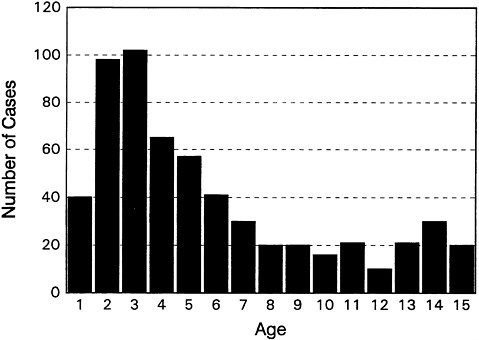
FIGURE 5-3 Age at incidence of childhood leukemia.
in Connecticut and Massachusetts showed that the incidence of acute lymphocytic leukemia varies markedly by year and location (Figure 5-4). An association of childhood leukemia with birth order was noted by MacMahon and Newell (1962), in which the firstborn has about double the risk of a fifthborn child. Studies in Massachusetts also suggested that the incidence of acute lymphocytic leukemia in children differs according to the mother's age at the birth of the child, so the excess risk is about 25% for a child born to a mother older than 35 years of age compared with a mother less than 20 years of age. In addition, several studies suggest increasing risk with increased socioeconomic status (Robison et al. 1991). All the observed variations in the incidence rates make it difficult to interpret small risk ratios in epidemiologic studies.
A number of exposures incurred in utero and postnatally have been implicated but not well established as causal factors, including maternal marijuana use (Robison et al. 1991), maternal tobacco use (John et al. 1991), and consumption of nitrites in processed meats (Peters et al. 1994). Among environmental agents, exposure to ionizing radiation is known to produce excess risk of leukemia in
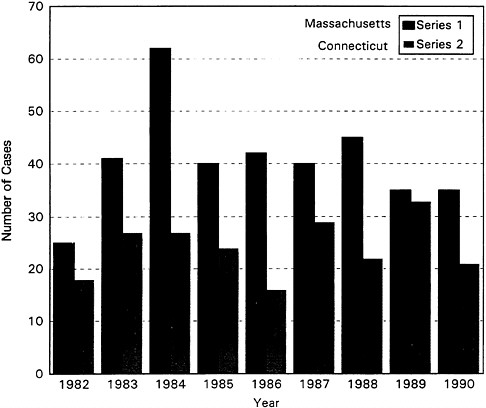
FIGURE 5-4 Incidence of acute lymphocytic leukemia in children in Massachusetts and Connecticut.
adults as well as children (Robison et al. 1991), but no other environmental determinants have been identified with certainty. Suspected causes include a wide range of occupational exposures to the father (Savitz and Chen 1990), including ionizing radiation, heavy metals, and solvents. Benzene, a known cause of leukemia in adults (usually acute myeloid leukemia), has not been directly examined as a potential cause of childhood leukemia (usually acute lymphocytic leukemia); the indirect evidence is based on an association of traffic density (an indicator of air quality) with childhood leukemia (Savitz and Feingold 1989). Traffic density at the location of a residence would have an effect on local air quality; such lowered air quality could be a risk factor for childhood leukemia and could be related to wire codes.
Evidence of Confounding in Previous Studies
If confounding is suspected or anticipated and if the confounding variable is measured in some way in the study, it is possible to control for confounding. If income or socioeconomic status is suspected to be a confounder in a study of the association of wire codes and childhood leukemia, the study subjects can be stratified by income, and the association between wire code and risk of childhood leukemia can then be evaluated separately for each income group. If several potential confounders need to be evaluated, the more usual method of controlling for confounders is to apply regression procedures.
In general, attempts to adjust for those confounders measured in studies of magnetic-field exposure and childhood leukemia appear to have produced evidence against the presence of substantial confounding. Savitz et al. (1988) carried out stratified analyses and found that differences in the crude and adjusted odds ratios were not large enough to include them in the published results. The factors they evaluated for confounding included income and education. London et al. (1991) found that adjustment for potential confounders reduced but did not eliminate the association they found between wire code and childhood leukemia. Feychting and Ahlbom (1993) adjusted their odds ratios of leukemia risk for various demographic variables, socioeconomic status, and concentrations of nitrogen dioxide in the outdoor atmosphere and found that the adjusted results were virtually identical to the unadjusted results.
Conclusions About Confounding
In observational studies that lack randomization, confounding by some as yet unknown risk factor can never be fully disproved as a spurious source of results. Imaginative critics can suggest possible but currently unestablished causes of childhood leukemia and other cancers that are closely associated with wire codes. Those causes that can be postulated and deserve serious attention should be incorporated into future studies to evaluate their impact on the wire-code and
cancer association. This search is severely hampered by the scarcity of established or even strongly suspected causes of childhood leukemia. This ignorance should not be misinterpreted as evidence against confounding, which can only be produced by identification, measurement, and adjustment for such causes.
Among the sociodemographic and environmental factors considered previously, none has been identified as a strong confounder on empirical or theoretic grounds. A leading contender is socioeconomic status (SES) or some correlated characteristic, yet neither the association between SES and childhood cancer nor the association between SES and wire code is very strong. Air pollution related to traffic density remains a candidate (Savitz and Feingold 1989), yet empirical evaluation has not shown this to be a source of confounding in one study (Savitz et al. 1988), and at present, little evidence exists to establish air pollution as a risk factor for childhood cancer. Nevertheless, a more accurate indicator of air pollution from motor-vehicle traffic might yield a different conclusion.
At present, confounding remains a possible explanation for the wire code and cancer association. However, past efforts to identify such confounders have failed, and few strong candidates can be postulated at present. Either the evidence of an association of possible confounders with cancer is weak, as in the case of age of home, or evidence against an association is fairly good, as in the case of parental smoking.
Is the Association with Cancer Accounted for by Magnetic Fields?
Review of Exposure-Assessment Methods in Residential Studies
A variety of approaches were used in past epidemiologic studies to assess potential magnetic-field exposure; the approaches were largely based on the description of nearby power lines or on spot measurements of fields in and around the home. To interpret past studies, it is useful to identify what causative factors might be represented by the exposure indicators used in the studies. To the extent that associations are found between possible indicators of exposure and cancer, the challenge is to determine the actual exposure responsible for the association. Most epidemiologic studies examine several exposure metrics, and some studies have been reanalyzed with several metrics, so some inferences concerning the appropriateness of the different indicators might be possible. All indicators used, including wire codes and field measurements, are surrogates for some unknown ''causal exposure" (if one is indeed present) and must be considered with regard to their effectiveness as substitute measurements for that unknown exposure. In all instances, the exposures of interest took place in the past, so the relationship between contemporary and historical indicators of exposures is of interest. Thus, all other things being equal, the more applicable an exposure indicator is to historical periods, the more useful it is.
To evaluate the hypothesis that the causal exposure is some aspect of power-frequency
magnetic fields, several steps should be taken in analyzing the exposure-assessment methods. First, the exposure indicators can be examined to determine what aspects of the magnetic field they might represent. A comprehensive analysis of that sort is impossible because of the virtually infinite number of field descriptors that could be considered. For power-frequency magnetic fields alone, descriptors include annual average field, annual peak field, time above some field-strength value, cumulative dose, and field variability. Largely because of unavailable instrumentation, most researchers to date have considered only the average magnetic field over some period as the exposure of interest, although some work has been done with other field metrics, and other research is under way to examine additional electric-and magnetic-field descriptors. As noted by Bracken et al. (1993), "Without a clear understanding of the mechanism of interaction relevant to health consequences, selection of an exposure metric for assessment purposes is arbitrary." Some research has shown that many of the possible descriptors are correlated with each other, suggesting that whatever descriptor is used, it may be considered a surrogate for the "true metric" (Theriault et al. 1994). Many descriptors may be correlated, but some will capture a unique aspect of the field that might not be present in other descriptors. So a particular metric (such as mean or cumulative exposure) might not be a viable surrogate for the true metric or causal exposure.
After identifying the exposure of ultimate interest, research needs to examine the accuracy and specificity with which the available exposure indicator approximates the candidate exposure. Accuracy and the potential for bias can be influenced by whether the methods of calculation or scoring are objective, capable of reflecting the measurements of ultimate interest, and consistent across studies, and whether the exposure assessment was done blindly. For example, a method of calculation that arithmetically adds the contributions of the several transmission wires (Fulton et al. 1980) is likely to overestimate the field to an extent that depends strongly on transmission-line configuration. Using different methods to estimate transmission-line load for different time periods (Verkasalo et al. 1993) might result in inconsistencies. If total accumulated exposure is of interest, a deficiency common to all the studies is the failure of the exposure metrics to incorporate away-from-home exposures, although some studies suggest that away-from-home exposure might not contribute much to total exposure (Kaune et al. 1994).
To the extent that the exposure indicator imperfectly reflects the relevant exposure and assuming that the imperfection is similar for cancer cases and controls, the measurement of any real association obtained from a dichotomous exposure comparison will be diluted (Rothman 1986). For example, including in the exposed group all dwellings within 150 m of substations, transformers, and electric railroads and subways (Tomenius 1986) or including twisted first-span secondaries (Wertheimer and Leeper 1979) would likely cause the exposed group to include dwellings without increased magnetic fields. On the other hand,
most dwellings within 40 m of 200-kV transmission lines, or near open first-span secondaries, would be likely to have increased magnetic fields. Because power-line fields vary greatly as a function of time, spot measurements, or short-term averages, are also imprecise measurements of the long-term average field. When the quality of these exposure indicators can be ranked, there is an opportunity to examine whether better indicators are more closely associated with cancer risk than poorer indicators, as would be expected if better indicators are subject to less misclassification and a true causal association is present. Table 5-7 summarizes the exposure metrics used in each of the childhood-cancer studies with regard to accuracy, blindedness, and specificity. Because wire coding and contemporary spot measurements are used so often in the studies, the logic and evidence of adequacy for these two metrics warrants a detailed examination. This examination is given in Appendix B.
Evidence Linking Magnetic Fields to Cancer
Epidemiologic research on indicators of magnetic-field exposure other than wire codes is needed to help assess how likely it is that associations between wire codes and cancer are due to the fields rather than to some other correlate of wire codes. Several areas of evidence are relevant, most notably the studies of measured fields and cancer. Studies that address divergent magnetic-field sources, such as appliances or workplace exposures, provide useful information in that confounders are likely to be different, if not absent, for those field sources. Convergent information would suggest that the common component of magnetic fields might be the underlying cause.
Measured Magnetic Fields and Childhood Cancer The key issue that puzzles many who conduct and follow epidemiologic research is the so-called "wire-code paradox": If wire codes operate through magnetic fields, why are measured magnetic fields less strongly associated with cancer risk than the wire codes themselves? In other words, if wire codes are functioning as an indirect indicator of exposure, then why is the more direct indicator (measured magnetic fields) not more strongly associated with cancer risk? To examine this issue, both the underlying premises and empirical evidence bearing on the argument need to be evaluated. The premise is that in studies of residential exposure and childhood cancer, present-day magnetic fields (those being the only fields that can be measured) are superior to wire codes as a surrogate for the historical exposures of interest. As discussed in Appendix B, the evidence regarding which is the better indicator of long-term past exposure is inconclusive.
Measurements have the potential to integrate a wide range of sources, including grounding currents, outdoor power lines, and indoor wiring, many of which would remain stable over extended periods. To the extent that those measurements capture multiple stable sources, they should be superior to wire configuration
TABLE 5-7 Evaluation of How Well the Exposure Assessment Represents Average In-home Magnetic-Field Exposure
|
Study |
Exposure Assessment |
Blind |
Accuracy |
Specificity |
|
Wertheimer and Leeper 1979 |
Wire code: LCC and HCC; power lines within 40 m |
No |
Fair, except wire size ambiguous |
Good, problem with twisted secondary |
|
Fulton et al. 1980 |
Quartile relative exposure; power lines within 50 m |
Unknown |
Very crude model |
Crude model |
|
Tomenius 1986 |
Visible electric structures within 150 m |
Unknown |
Fair |
Many sources are insignificant |
|
|
200-kV power lines less than 150 m |
Unknown |
Fair |
Fields beyond 50 m insignificant |
|
|
Front-door spot measurements of magnetic field; 0.3-µT cut point |
Yes |
Good |
Field varies over time |
|
McDowall 1986 |
Substations and power lines within 15, 35, or 50 m |
Yes |
Fair |
Poor, most were substations which have low fields |
|
Savitz et al. 1988; Severson et al. 1988 |
Wire code: 5-level and 2-level |
Yes |
Fair, wire size ambiguous |
Good, problem with twisted secondary |
|
|
Spot measurements of magnetic field: 0.2, or 0.3 µT; cut points of 0.065, 0.1, and 0.25 µT |
No |
Good |
Field varies over time |
|
Myers et al. 1990; Youngson et al. 1991 |
Calculated annual maximum magnetic field (poor estimate of average field); cut points of 0.01, 0.03, and 0.1 µT |
Yes |
Poor, used system maximum for some, line maximum for others |
Poor, only five homes had fields over 0.1 µT |
|
|
Distance from power line; cut points of 25, 50, 75, and 100 m. |
Yes |
Fair |
Probably small beyond 50-m fields |
|
London et al. 1991 |
Wire code: 5-level |
Yes |
Fair, wire size ambiguous |
Good, problem with twisted secondary |
|
Coleman et al. 1989 |
Substations and power lines; cut points of 25, 50, and 100 m |
Yes |
Fair |
Poor, most were substations |
|
|
Magnetic-field measurements in the bedroom and other locations; various cut points |
Yes |
Excellent, some 24-hr measurements |
Good |
|
Feychting and Ahlbom 1993 |
Calculated annual average magnetic field; cut points of 0.1, 0.2, and 0.3 µT |
Yes |
Excellent, transmission line models good |
Excellent |
|
|
Spot measurements of magnetic field; cut points of 0.1, 0.2, and 0.3 µT |
Yes |
Good |
Field changes over time |
|
|
Distance from 220 and 400 kV lines; cut points of 50 and 100 m |
Yes |
Fair |
Good |
|
Olsen et al. 1993 |
Calculated average annual magnetic field; cut points of 0.1, 0.25, and 0.4 µT |
Yes |
Fair, loads were estimated |
Good |
|
Verkasalo et al., 1993 |
Calculated average annual magnetic field; cut points of 0.05, 0.1, and 0.2 µT |
Unknown |
Fair, three methods of estimating load |
Good |
|
|
Cumulative exposure of 0.05, 0.1, 0.2, 0.4, 1.0, and 2.0 µT-yr |
Unknown |
Fair, based on calculated field |
Good |
|
Schreiber et al., 1993 |
Distance from 150-kV line or substation; cut point of 100 m |
Unknown |
Fair |
Poor, exposed group over inclusive |
codes as an indicator because wire codes address only one source. Conducting measurements under conditions of low power use in the home is intended to eliminate historically unstable sources, such as appliance placement and use, ostensibly providing a measurement that reflects outdoor power lines and grounding currents in plumbing. Nonetheless, measurements represent arbitrary samples in both time and space. Wire codes consider structural characteristics of the power-distribution system that are quite stable, but at best wire codes constitute an indirect indicator of only one source of exposure. It is not known whether wire codes might be a better indicator than spot measurements of the average magnetic field over the space and time of interest in relationship to the development of childhood leukemia.
Perhaps the most tenuous part of the paradox is the assumption that epidemiologic studies have obtained valid estimates of the association between measured fields and childhood cancer. The studies that have examined that association either found a weaker association than the wire-code and cancer association or have found an absence of association.
There can be no doubt that the use of measured magnetic fields rather than wire codes has not yielded stronger associations of magnetic-field exposure with childhood cancer as one might expect if the measurements were notably superior to wire codes as indicators of the magnetic-field exposure and if the magneticfield exposures were the cause of the disease. Isolated from wire codes, however, the data on measurements and cancer are surprisingly weak and inconclusive. The basis for asserting that measured magnetic fields are not strongly associated with childhood cancer comes from three studies (Savitz et al. 1988; London et al. 1991; Feychting and Ahlbom 1993). These three case-control studies were summarized in a previous section but need to be reexamined to evaluate their effectiveness in measuring the association between measured magnetic fields and cancer.
Savitz et al. (1988) were able to obtain measurements in only 36% of case homes, in contrast to 75% of control homes. The low coverage of cases was due to the large number who had moved out of the homes they occupied before diagnosis. Given this grossly incomplete coverage of the cases, it is difficult to draw any meaningful conclusions about measured fields per se or the contrast of results from magnetic-field measurements and wire codes (obtained in 90% of case and 93% of control homes). The direction of bias resulting from such incomplete coverage is not easily predicted. A modest gradient in risk was found with increased measured low-power magnetic fields, resulting in an odds ratio of 1.49 with a 95% confidence interval (CI) of 0.62-3.60, contrasting measured fields of greater than 0.25 µT with fields of less than 0.065 µT. For leukemia alone, a cut point of 0.20 µT yielded an odds ratio of 1.93 (95% CI = 0.67-5.56). These results are not definitive due to incomplete coverage, nor are they incompatible with the results from wire codes.
London et al. (1991) were not notably more successful in obtaining measurements
of the magnetic fields on a high proportion of their cases and controls. Starting with 331 eligible cases, 50% had 24-hr measurements and 42% had spot measurements in the bedroom in at least one residence. Among 257 eligible controls, 56% had 24-hr measurements and 42% had spot measurements in the bedroom. Regardless of the pattern of results, this magnitude of nonresponse makes the results questionable. Mean 24-hr measurements were identical in case and control homes, with slight increases in the proportion of time above 0.25 µT among cases in the spot measurements. Both 24-hr and spot measurements showed very weak associations with leukemia risk, and the highest odds ratios tended to appear in the highest exposure intervals, but no dose-response gradients were found, and no relative-risk estimates were above 1.5. One unexplained result of their study is the grossly different magnitudes of magnetic field found using 24-hr versus spot measurements; spot measurements were approximately half the strength of 24-hr measurements. One would expect that those deficiencies that might exist in the spot measurements would be ameliorated somewhat by integrating for 24 hr. The failure of 24-hr magnetic-field measurements to produce clearer associations with cancer than the spot measurements constitutes evidence against an association between magnetic fields and cancer.
A significant anomaly in comparing the studies in Denver and Los Angeles is the notably consistent magnitude of relative risks for childhood leukemia based on wire codes in spite of what would appear to be different field strengths that correspond to those codes. For ordinary and very high current configurations, the mean values were 0.122 and 0.212 µT in Denver, 0.072 and 0.115 µT in the Los Angeles 24-hr measurements, and 0.033 and 0.061 µT in the Los Angeles spot measurements. If the measurements are correct, the fact that the two studies yielded very similar relative-risk estimates for the wire code and cancer association is evidence that some aspect of wire code other than the magnetic field as determined by average or spot measurements is operative.
Feychting and Ahlbom (1993) examined present-day spot measurements in a subset of the homes that their cases and controls had occupied before diagnosis, up to 25 years in the past. Among 142 cases, 63% had measured fields, and among 558 controls, 62% had measured fields. These figures are only slightly better than those for the studies in the United States. The results relating measured fields to cancer are highly unstable due to small numbers, and they show no association for total cancers, a modest inverse gradient for leukemia, and a modest positive association for brain cancer. Even without knowledge of the absolute validity of measured magnetic fields as an indicator of historical exposure, Feychting and Ahlbom (1993) had the ability to construct an exposure index that was better than spot measurements. Their key contribution to exposure assessment was the development of a predictive model to estimate historical field strengths by using power-line load data from the relevant time in the past. Absence of such a model assumes historical loads were identical to present-day loads, an assumption known to be erroneous. In this study, the improved estimate of
magnetic fields using wiring plus load information yielded notably stronger associations with childhood cancer, arguing in favor of magnetic fields as the causal agent.
Cumulatively, these three studies provide a very weak test of the hypothesis that measured residential magnetic fields are associated with childhood cancer. In each study, coverage of wire codes (or calculated fields in Feychting and Ahlbom's (1993) study) was more complete, and results were more strongly positive. Nonetheless, the contrast between the measured fields and wire-code results is clouded by the differences in completeness of response. In absolute terms, very little information in these studies indicates whether measured magnetic fields constitute a risk factor for childhood cancer. This situation calls for refined study of the issue.
Wire-Code Categories in Relation to Magnetic Fields and Cancer In examining the pattern of cancer risk in relation to the Wertheimer and Leeper (1979) wire codes, consideration should be given to whether the uneven relationship in field strength (see Appendix B) is similarly uneven with respect to cancer incidence. As noted above, several studies showed that the Wertheimer and Leeper codes are predictive of higher-strength fields in very-high-current-configuration (VHCC) and ordinary-high-current-configuration (OHCC) homes, but there is little or no difference in measured magnetic fields below those categories. The pattern of risk related to wire code in the two studies that considered multiple categories (Savitz et al. 1988; London et al. 1991) is consistent with the pattern of magnetic fields: little or no fluctuation in the odds ratios was observed across categories of buried lines, very-low-current-configuration (VLCC) lines, and ordinary-low-current-configuration (OLCC) lines, and a rising risk was observed for OHCC and VHCC. Although not entirely consistent or clear, the tendency for excess risk to be concentrated in the same categories as the higher-strength magnetic fields appears to support a link between magnetic-field exposure and cancer.
Several refinements have been made to the Wertheimer and Leeper wire code to make it a more accurate indicator of magnetic-field exposure. It is logical to ask whether such refinements are accompanied by corresponding increases in the strength of association with cancer. Under the assumption that misclassification of magnetic-field exposure is reduced by the refinements and the hypothesis that magnetic fields are the mediating agent, increased odds ratios would be expected.
Leeper et al. (1991) reported that spun (wrapped) secondaries are not good predictors of increased field strengths but that open first-span secondaries are. Using this information for the Savitz et al (1988) Denver study increases the odds ratio from 1.5 to 1.8, a modest increase because spun secondaries were rare in the area (Leeper et al. 1991). A three-level wire code was used in the study
of Severson et al. (1988) of adult leukemia, and no association with the disease was found.
A second refinement in the wire codes was made by Kaune and Savitz (1994) that resulted in a smaller number of categories, a larger proportion in the highest interval, and a similar predictiveness for magnetic fields. The risk estimates produced by using this modified (three-category) code are larger than those based on the dichotomized results (HCC and LCC) and more precise than those from the five-level wire code used in the 1988 study (Savitz and Kaune 1993). These increases in relative risks combined with improvements in accuracy of the modified wire codes as an indicator of residential magnetic-field strength lend some support to the hypothesis that magnetic fields might be associated with cancer.
Magnetic-Field Exposures from Appliances and Cancer Some appliances, such as electric blankets, constitute another exposure source that is entirely distinct from outside power lines or grounding currents. Little research has been done to address potential adverse health effects related to these devices; weakly positive results for different appliances have been reported in two studies (Savitz et al. 1990; London et al. 1991). At present, the state of knowledge on this topic can only be described as uncertain. More definitive research on this potential association would be useful given the clear documentation that exposures are incurred from at least some appliances, given the amenability of appliance use to historical recall without extensive effort on the part of the investigators, and given the independent test it provides of an effect of the magnetic fields per se.
Magnetic-Field Exposures in Schools and Other Settings Although exposures to magnetic fields outside the home, particularly in schools, have received substantial public attention, no data are available whatsoever on an association between exposures in other settings and childhood cancer. Any setting in which substantial time is spent, most notably, day-care and school, would make an important contribution to total exposure. In contrast to the potential socioeconomic confounders associated with home selection and thus with home wire codes, exposure in school is likely to be largely independent of such potential biases. Logistic challenges would be present, particularly in identifying exactly which classroom was occupied, because the fields are not likely to be homogeneous throughout a school. In addition, daytime and nighttime exposures could have different biologic effects. Nonetheless, this research gap could be addressed as another source of information to help evaluate whether magnetic fields cause cancer.
Occupational Exposures to Magnetic Fields and Adult Cancer The research exploring a link between electrical occupations and cancer, particularly leukemia and brain cancer, is extensive. (This research is discussed in detail later in the section Cancer Epidemiology—Occupational Exposures.) This research suggests a relatively small increase in risk for those workers in the aggregate, and fails
to show that the most highly exposed workers are at greatest risk. The relevance of this literature to an evaluation of residential exposures and childhood exposures is limited for several reasons: (1) the age groups differ and presumably the time course of cancer development differs in adults and children; (2) workplace exposures occur during the day and residential exposures during the day and night; (3) the pattern of exposure might differ, workplaces having irregular patterns of high and low exposure compared with a more steady exposure in homes; and (4) the histologic types of cancer, particularly leukemia, differ in children and adults, further challenging the ability to extrapolate. Nonetheless, the suggestion of similar cancers associated with similar agents should not be ignored. The sources of bias are largely distinct for the studies of residential exposure and childhood cancer versus occupational exposure and adult cancer, so that if both research avenues have been misleading, they have been so in different ways. If occupational studies are pursued to clarify the issue and if they provide more conclusive evidence that magnetic fields can cause brain cancer and leukemia in adults, they will add more substantial indirect support to the proposition that magnetic fields can cause cancer in children. Conversely, if additional study should find no evidence for an association of cancer in adults occupationally exposed to higher than average magnetic fields, it would tend to support a proposition that there is no association between exposure to residential magnetic fields and childhood leukemia.
Integrated Personal Exposures to Magnetic Fields Improved efforts at comprehensively assessing magnetic-field exposure in children are being developed. Time-integrated exposure to magnetic fields for periods of a week or two can be fully addressed, but applying this knowledge to epidemiologic studies has not been straightforward. Residential average fields are known to be important contributors to total exposure (Kaune and Zaffanella 1994), but appliances and sources outside the home can also make substantial contributions to exposure in some instances. Explicit efforts to integrate magnetic fields across multiple sources in a manner that can be extrapolated to the historical time periods of interest is essential to judge whether magnetic fields per se account for previously observed associations. If those refinements yield stronger associations with cancer, then the likelihood that magnetic fields account for the wire-code associations would be markedly strengthened. On the other hand, if validated indicators of exposure that are superior to residential wire codes do not yield stronger associations with childhood cancer, then the likelihood that magnetic fields per se cause cancer would be diminished. Improvements in assessments of magnetic-field exposure of children is under way, but close collaboration of engineers, biostatisticians, and epidemiologists is needed to ensure that the refinements are technically valid and applicable in field settings.
Evaluation of Epidemiologic Evidence
If a true association is present between power lines near residences and childhood cancer, how likely is it that such an association reflects a causal link between magnetic fields and cancer?
Putting aside those issues raised above that diminish certainty of a link even existing, we must contend with interpretation of such a link, should it exist. A positive association must be subject to one of two categories of explanation: either the wire codes are related to childhood cancer through magnetic-field exposures or they are serving as an indicator of some other agent or process. To make this evaluation, both the evidence that the association results from magnetic fields and the evidence implicating something else must be considered. Strong evidence supportive of some other explanation for an association would diminish the plausibility of magnetic fields accounting for the association.
Quality of Magnetic-Field Indicators and Strength of Association
In evaluating the studies addressing residential magnetic-field exposure and childhood cancer, a number of indicators of exposure have been applied in and across studies. Features of the power lines have been more closely associated with childhood-cancer risk than present-day magnetic-field measurements, but uncertainty about which indicator is the more useful one makes such a pattern largely uninformative. The one study that included 24-hr measurements as well as spot measurements found little difference, in spite of the advantages of a longer measurement period. Recently, an improved wire code (one that explains more of the magnetic-field variance) was shown to yield stronger associations with cancer risk (Savitz and Kaune 1993), but it has not been tested elsewhere. Although a gradient of risk corresponding to a gradient in the quality of measurement could be an informative criterion for judging the likelihood that wiring associations reflect magnetic-field effects, at present very little information supports or refutes that contention.
Dose-Response Gradients
Evaluation of the entire spectrum of wire codes and cancer risk rather than dichotomized exposure classification consistently shows a pattern in which the increased risk is most pronounced or even restricted to the highest wire-code levels (Savitz et al. 1988; London et al. 1991; Feychting and Ahlbom 1993). The absence of a monotonic relation across the full range of wire codes might be argued to be counter to a dose-response gradient, but measurements suggest that the only clear distinctions of exposure are at the high end of the wire-code spectrum. Thus, the pattern of risk in relation to wire codes corresponds rather closely to the likely gradient in magnetic-field exposure. When measurement
data (Wartenberg and Savitz 1993) or estimated field strengths (Feychting and Ahlbom 1993) have been examined in detail, higher cut-point scores tend to show the largest relative risks. Overall, the data from published studies support an argument for an increased risk with higher exposure level; however, the anomaly between measured magnetic fields and wire codes in different cities severely weakens this interpretation.
Confounding
There is little evidence that known or suspected childhood-cancer risk factors introduced confounding into earlier studies. Efforts to adjust for those risk factors have had little impact on the results, which is not surprising in light of their having no strong association with childhood cancer or with wire codes. Approaching the question of confounders from both ends—risk factors for childhood cancer or correlates with wire codes—few contenders, other than magnetic fields, explain the association. Childhood-cancer correlates that remain under contention are viral exposure or some other phenomenon associated with housing density, which, in turn, is associated with wire codes. There is, for example, epidemiologic evidence from British experience during wartime evacuation of children to rural areas that the development of childhood leukemia has an infective component (Kinlen and John 1994). The British experience was that a higher incidence of childhood leukemia was associated with children living in densely populated cities relative to those living in the countryside. In addition, introducing children from the city to the country tended to lead to an increase in leukemia in the region where they were relocated.
We might also ask what exposures, other than magnetic-field exposures, might be indicated by the wire code that are the true causes of childhood cancer? An intriguing suggestion that currents on plumbing lines result in exposure to copper ions was offered (Kavet 1991) but was not supported. Application of herbicides near power-line poles or leakage of polychlorinated biphenyls (PCB) from transformers near homes in the high-exposure group might be a candidate for an increased risk. Again, a chain of tenuous assumptions is required: high wire code corresponds to overall closer proximity to poles and transformers, herbicides are commonly sprayed and transformers commonly leak, children spend time in the vicinity of the herbicides and PCB, and herbicides and PCB cause cancer in children. Each link in these various assumptions has questionable credibility, and cumulatively the proposition has so little support that it is of limited interest. Air pollutants associated with living on busy streets (where major power lines are often placed) constitute a more credible candidate, yet the studies that have evaluated that exposure have not found it to explain the association (Wertheimer and Leeper 1979; Savitz et al. 1988; London et al. 1991), and there is very little independent evidence that air pollutants cause childhood cancer.
Whatever other exposures or characteristics might be associated with wire
codes, average residential magnetic-field strengths are predicted, albeit imperfectly, by wire codes. Putting aside questions of the biologic consequences of such exposure, children who live in homes with the highest wire codes have an average ambient exposure in their homes that is higher than children who live in homes with the lowest wire codes. Although other factors are also likely to be associated with wire code to some extent (yard size, housing density, and family income), none constitutes exposures in the biologic sense, and they have only indirect value as indicators of such exposures.
Clearly, more work is needed in assessing the implications of wire code on magnetic-field exposures and on other exposures.
Consistency with Secular Trend Data
The argument has been made that magnetic fields could not be a causative factor in childhood cancer because substantial increases in residential consumption of electricity (assumed to be linked to increases in personal magnetic-field exposures) have occurred over a period of many years, but there have not been corresponding increases in cancer rates during the same period (Jackson 1992; ORAU 1992). More specifically, per capita residential electricity consumption rose by a factor of 20 from 1940 to 1990, whereas mortality from all cancers (except respiratory cancer) did not increase. Instead, cancer mortality slowly declined during this period, falling from 1.12 deaths per 1,000 persons per year in 1940 to 0.93 deaths per 1,000 persons per year in 1987 (Jackson 1992). On the surface, this argument would seem quite persuasive; however, it is weakened considerably because of the use of cancer mortality data. Variations in cancer mortality over long periods of time can be attributed to a number of determinants, such as improvements in treatment and reliability of diagnosis, which make it difficult to draw inferences about the relationship of this variation (or lack thereof) to any one determinant. It might be more meaningful to examine the relationship between cancer incidence data and increases in the use of electricity over time. When that is done for the period in which reliable incidence data are available (1969-1986), the incidence is essentially unchanged, particularly for childhood leukemia, whereas the rate of residential electricity usage increases by a factor of 2 (Jackson 1992). Thus, it would seem quite clear that increased electricity consumption, as well as all other potential determinants in the environment, has not produced an increase in the incidence of childhood leukemia. Only the strength of the link between magnetic-field exposure and electricity consumption needs to be tested to complete the argument that magnetic-field exposures are not related to childhood leukemia incidence. However, major difficulties are found in assessing the strength of this link. First, it is extremely difficult to assess the actual changes in residential magnetic-field exposures to individuals that have occurred during 1969-1986. Measurements do not exist. With the increased use of electricity came many improvements in the technology for the distribution
and use of electricity that might, by themselves (ignoring for a moment the trends in electricity usage), decrease individual exposure. The more extensive use over the past 20-30 years of three-phase transmission and distribution lines, double-circuit lines, and underground lines substantially reduces electric and magnetic fields in comparison to earlier use of single-phase and single-circuit overhead lines. In addition, the more spacious layout of suburban (in comparison to urban) house lots has moved residents farther from power lines. The change to Romex cable for wiring houses (instead of knob and tube wiring) also substantially reduces exposure of residents. The practice of making things smaller and more energy efficient (e.g., home radios and televisions) further reduces exposure. Even the recent proliferation in the use of remote control devices tends to reduce individual exposures by making it unnecessary for individuals to move near the appliances.
On the other hand, power lines, houses, and appliances are more numerous today. The residential use of electricity has certainly increased over the years, as documented above. Because of the developments in technology, it would not be surprising if there were periods (perhaps 5, 10, or 20 years long) when exposures tended to increase and other periods when average exposures actually decreased.
In summary, large increases in the residential use of electricity clearly have not been accompanied by comparable increases in the incidence of childhood leukemia. The apparent persuasiveness of the argument based on the observation that magnetic-field exposures are not related to the incidence of childhood leukemia is diminished, however, by the large and indeterminate uncertainties in the implicit assumption that population exposures to magnetic fields increase proportionately to residential energy use.
CANCER EPIDEMIOLOGY-APPLIANCE EXPOSURES
The determination of an effective exposure of a population to power-frequency electric and magnetic fields is an extremely difficult task because such fields are ubiquitous and exhibit considerable variation with time and place. At the same time, there are no clear or agreed upon indications of which metric or field characteristics might be most closely associated with biologic effects.
A number of epidemiologic studies of the possible association between magnetic-field exposures and various disease outcomes have explored exposures ascribed to the use of various electric appliances. If such associations are to be explored successfully, it is desirable to consider electric appliances that are capable of producing substantial exposures, that are not in universal use, and can be assessed for exposure on the basis of subject recall of use. Mader and Peralta (1992) evaluated the reconstruction of such exposures due to appliances and compared those exposures with residential exposures due to other sources. They concluded that the time-weighted contribution to whole-body exposure
made by normal assortments of household electric appliances is small compared with the usual background exposures, but that appliances might be the dominant source of exposure to the body's extremities. They estimated the time-weighted whole-body exposure to be of the order of 0.016 µT. That estimate is consistent with the estimate of 0.02 µT reported in the recent 1,000-homes study 1993a). Mader and Peralta (1992) also pointed out that extremity exposure due to appliances can be estimated as 0.97 µT. That estimate can be compared with an average of the order of 0.1 µT whole-body (and extremity) exposure due to all other sources (including power lines and grounding systems).
Electric blankets can make substantial contributions to whole-body exposure to magnetic fields. Electric-heated water beds have also been included in some studies, but some doubt is cast on the significance of their exposures by studies of Delpizzo (1990) showing that mattress heating pads contribute insignificantly to the overall exposure. Preston-Martin et al. (1988) evaluated the effect of electric-blanket use on the incidence of myelogenous leukemia in adults in a case-control study. In 224 pairs of cases and controls, the regular use of electric blankets produced odds ratios of 0.9 (95% confidence interval (CI) of 0.5-1.6) for acute myelogenous leukemia and 0.8 (CI = 0.4-1.6) for chronic myelogenous leukemia. Cases did not differ from controls in duration of use, period of use, or socioeconomic status. These authors estimated that use of electric blankets increased the exposure of a subject to magnetic fields by no less than 31% and no more than 35% of the total estimated exposure without the electric blanket. They concluded that no major leukemogenic risk is associated with electric-blanket use in the population studied.
Verreault et al. (1990) conducted a case-control study of testicular cancer in which the cases and controls were asked about their use of electric blankets. The investigators did not report any attempt to estimate actual exposure other than through recall of frequency and length of use during the 10-year period before diagnosis. The number of cases and controls reporting electric-blanket use was almost identical, as was the duration of use. The age-adjusted odds ratio of the use of electric blankets was reported as 1.0 (CI = 0.7-1.4); the authors concluded that increased exposure to electric and magnetic fields from electric-blanket use contributes little, if at all, to the risk of testicular cancer in adult white men.
Savitz et al. (1990) evaluated the association of electric-appliance use with childhood cancer in a case-control study in Denver. Exposure estimates were based on parental recall of the use of a number of appliances by the mother during pregnancy and of exposures of the child after birth. Associations were tested for all childhood cancer, leukemia, and brain cancer. For some of the appliances (e.g., electric blankets), recall of settings that might influence exposures was sought. After testing for a number of appliances, prenatal exposures to electric blankets were reported to be associated with increased risk of brain cancer (odds ratio (OR) = 1.8, CI = 0.9-4.0). Adjustment for confounding by
income level resulted in an odds ratio for electric-blanket use of 1.3 (CI = 0.7-2.2) for total childhood cancer, 1.7 (CI = 0.8-3.6) for leukemia, and 2.5 (CI = 1.1-5.5) for brain cancer. The authors concluded that this study ''provides some indication that pre-and post-natal exposure to electric blankets may increase the risk of developing childhood cancer." The size of the study population, however, produced too low a power to detect anything but strong associations. In addition, the nature of the exposure assessment is insufficiently precise, which could introduce substantial but presumably random misclassification. That plus the possibility of recall bias could easily lead to inaccurate estimates of the association.
The study of childhood leukemia by London et al. (1991) had larger numbers of subjects with leukemia than did the study by Savitz et al. (1988). The London et al. study also evaluated the effects of electric-appliance use. Self-reported use of electric appliances did not produce strong associations with precise estimates. Only 2 out of 20 tested associations were statistically significant (use of electric hair dryers on the child produced an odds ratio of 2.82 (CI = 1.42-6.32), and use of a black and white television produced an odds ratio of 1.49 (CI = 1.01-2.23)). In this study, as in the Savitz et al. study, recall of use of appliances was relied on for exposure assessment, a method that inevitably introduces misclassification of actual exposures. In addition, when only a small fraction of the study population uses a given appliance, the precision of risk estimates suffers.
Vena et al. (1991) studied the relationship between electric-blanket use and risk of postmenopausal breast cancer in 382 cases and 439 community controls in western New York State. Exposure to extremely-low-frequency magnetic fields, through a suppression of normal nocturnal rise in melatonin release, was hypothesized to produce an increased risk of breast cancer (Stevens 1987a,b). Vena et al. (1991) found point estimates of a slightly increased risk (OR = 1.31, CI = 0.88-1.95) in persons who reported continuous use of electric blankets in season for 10 years or more. Subjects reporting less use had lower point estimates, and none of the findings reached statistical significance. The hypothesis being tested might respond only to fields imposed on the pineal region, and electric blankets would probably deliver a lower dose to that region than to the rest of the body. The study had a minimum detectable odds ratio of 2.1, and the power to detect an odds ratio of 1.5 was only 0.28. A relatively high nonresponse rate of 44% among cases and 54% among controls makes interpretation of the study more difficult also. The authors concluded, "Generally the findings of this study do not support the hypothesis that electric-blanket use is associated with an increased risk of breast cancer."
Studies in which particular electric appliances were evaluated in terms of their association with adverse health outcomes are no more persuasive than other forms of assessments of exposure to electric and magnetic fields. In part, this conclusion might be due to inadequate statistical power in the studies that were published or to the rarity of the outcomes reported. The most important general
conclusion that can be drawn is that assessment of the effect of use of different appliances associated with increased exposure to magnetic fields does not provide insight that can be applied across different studies.
CANCER EPIDEMIOLOGY-OCCUPATIONAL EXPOSURES
Extensive literature has been accrued on the pattern of cancer among workers in electrical occupations, primarily men, who are presumed to encounter increased exposures to electric and magnetic fields in their jobs. Initial suggestions by Wertheimer and Leeper (1979) and Milham (1982) have been followed by dozens of surveys of workers in electrical occupations. The focus has been on leukemia and brain cancer, but studies of lymphoma, malignant melanoma, and breast cancer (among both men and women) have also been conducted. Detailed reviews have been published (Theriault 1990; Savitz and Ahlbom 1994) and will not be repeated here. Following a brief summary of the earlier literature, research of current interest—the impact of refined exposure measurements on study results and breast cancer as an outcome of particular interest—will be reviewed.
Across a wide range of geographic settings (mostly in North America and Europe) and diverse study designs (proportionate incidence or mortality, case-control, or cohort), workers engaged in electrical occupations have often been found to have slightly increased risks of leukemia and brain cancer (Savitz and Ahlbom 1994). The general structure of these studies is to identify one or more groups of electrical occupations, such as linemen, electricians, electric-equipment assemblers, and electrical engineers, and compare their cancer incidence or mortality rates to that of nonelectrical occupations. The guiding assumption in these studies is that the job title provides an indication of encountering increased exposure to electric and magnetic fields on a regular basis during the workday. A related assumption is that characteristics of the job other than exposure to electric and magnetic fields that are related to cancer risk can be identified and controlled as needed in the analysis.
Averaged across these studies, a modest increase in leukemia, particularly acute myeloid leukemia, and brain cancer is found. Although formal meta-analyses have not been reported, relative risks on the order of 1.2-1.5 would be expected (Savitz and Calle 1987; Theriault 1990). It is reasonable to ask whether, among electrical occupations, those who are more likely to have increased exposure to electric and magnetic fields (e.g., linemen) have greater increases in cancer risk than those less likely to have increased exposure (e.g., electrical engineers), but the diversity of workers represented by these broad administrative categories that include clerical workers, technical staff, professionals, and management offers little promise of refinement. Nonetheless, on the basis of recently published data on typical exposures across a range of electrical and nonelectrical occupations (London et al. 1994), no obvious association was found between increased exposure to magnetic fields and cancer among electrical workers. In addition to having
a greater potential for increased exposure to electric and magnetic fields, some electrical workers might encounter hazardous chemicals, such as solvents, in their jobs and might be prone to higher rates of leukemia or brain cancer for reasons other than workplace exposures. The obvious test of the hypothesis that exposures to electric and magnetic fields account for the reported increases in risk is to refine the measurement of these fields and assess whether the associations become more pronounced.
Over the past several years, a series of publications have examined more refined measurements of exposures to electric and magnetic fields in relation to cancer. Matanoski et al. (1993) studied leukemia other than chronic lymphocytic leukemia among telephone workers in relation to magnetic-field exposures estimated through job titles and a series of measurements. They found little support for increased risk due to increased average fields, but increasing field levels at peak exposure were associated with increased leukemia risk.
Floderus et al. (1993) conducted a community-based study of leukemia and brain cancer in Sweden. They evaluated exposure by taking workplace measurements in the employment locations of cases and controls to classify exposure more accurately. On the basis of a quantitative index of magnetic-field exposure, the most highly exposed workers were estimated to have a 3-fold increased risk of chronic lymphocytic leukemia and a 1.6-fold increased risk of total leukemia. Brain-tumor risk was increased by a factor of 1.5 in the highest category.
Three studies of electric-utility workers have yielded inconsistent results. A study at Southern California Edison (Sahl et al. 1993) yielded no associations between exposure and leukemia, lymphoma, or brain cancer; all relative risks were less than 1.4. In contrast, a large, well-designed study of utility workers in Canada and France provided evidence for a 2- to 3-fold increased risk of acute myeloid leukemia among men with increased magnetic-field exposure (Theriault et al. 1994). Brain cancer showed much more modest increases (relative risks of 1.5-2.8) with increased magnetic-field exposure. The most recent study (Savitz and Loomis 1995) examined cancer mortality in a large cohort of U.S. electrical workers. Leukemia mortality was not found to be associated with indices of magnetic-field exposure, whereas brain-cancer mortality was associated. Brain-cancer mortality generally was found to increase in relation to accumulative exposure, reaching a relative risk of 2.3-2.5 in the most highly exposed workers. All three studies found no evidence of confounding by the presence of workplace chemicals. A smaller study of Norwegian hydroelectric-power-company workers did not find increased risk associated with estimated magnetic-field exposure, but did report an increased rate of melanoma (Tynes et al. 1994a).
Recently, two studies examined cancer among electric-railways workers in Sweden (Floderus et al. 1994) and Norway (Tynes et al. 1994b). Select groups of workers in this industry are believed to have chronic exposure to fields at 16.66 Hz. Tynes et al. (1994b) found no indication of increased leukemia or brain-cancer incidence for any historical period, whereas Floderus et al. (1994)
found men who were employed in exposed occupations during the 1960s (but not the 1970s) to have increased leukemia. They suggested that exposure was decreased due to changing work practices in the later time period.
Methodologically, these more recent studies are clear improvements on the earlier studies that relied on job titles alone. The investigators developed rather elaborate approaches for classifying exposures more accurately and taking potential confounders into account. In spite of those refinements, the patterns of association have not become more consistent and pronounced, nor have they gone away. The relative risks in the upper categories of 2-3 reported in the high-quality studies of Floderus et al. (1993) and Theriault et al. (1994) cannot be ignored. However, the inconsistency in which cancer types show increased risks, the presence of contradictory studies (e.g., Sahl et al. 1993), and the irregular dose-response gradients make the interpretation problematic. Overall, the most recent studies have increased rather than diminished the likelihood of an association between occupational exposure to electric and magnetic fields and cancer, but they have failed to establish an association with a high degree of certainty.
Another avenue of research to be noted is the concern with occupational exposure to electric and magnetic fields and breast cancer. A series of three studies reported an association between electrical occupations and male breast cancer (Tynes and Andersen 1990; Matanoski et al. 1991; Demers et al. 1991), which were similar in character to the initial studies of leukemia and brain cancer. More recently, a report of no association was published (Rosenbaum et al. 1994). Female breast cancer in relation to electrical occupations was evaluated by Loomis et al. (1994) among a large number of decedents in the United States. A modest increase in risk was found for women in electrical occupations, particularly telephone workers, encouraging further evaluation of a potential link between exposure and this common cancer.
REPRODUCTION AND DEVELOPMENT
Epidemiologic studies of potential adverse reproductive effects of exposure to electric and magnetic fields are limited in quantity and, to some extent, in quality. There are a multiplicity of exposure sources of potential interest (including residential exposures from power lines, occupational exposures from video-display terminals (VDTs), and other exposures from electric appliances, such as electric blankets) as well as a diversity of reproductive health end points (including infertility, miscarriage, congenital defects, growth retardation, and preterm delivery). Most of those areas have been addressed in fewer than three studies, the exception being VDTs in relation to spontaneous abortions. Although grouping data for exposures from all types of sources with the relevant outcomes is tempting for review purposes, comparing studies of similar types of exposures and outcomes without the assumptions required for aggregation is more constructive. The absence of efforts to replicate these studies is the predominant source
of uncertainty in this literature. Some excellent reviews of the topic are available (Hatch 1992; Shaw and Croen 1993; Delpizzo 1994).
Video-Display Terminals
The epidemiologic literature on VDTs was most recently covered in a review by Delpizzo (1994). In the VDT literature, which is large and of reasonably high quality, the evidence is clear that VDT use per se is not associated with increased risk of adverse reproductive outcomes, such as spontaneous abortion, congenital defects, or intrauterine growth retardation. However, the use of VDTs is not synonymous with exposure to extremely-low-frequency electric and magnetic fields. In fact, VDT use is a complex mixture of some increase in exposure primarily to very-low-frequency fields (3-30 kHz), potential psychological stress associated with repetitive tasks, physical inactivity associated with a sedentary job, and a modest increase in exposure to extremely-low-frequency fields (30-300 Hz). Depending on the particular machine, the location of the operator relative to the VDT in use, and the number and location of VDTs surrounding the operator, field exposures are typically in the range of 0.1 to 0.3 µT (Delpizzo 1993). Thus, the sizable literature on VDTs and reproductive outcomes has little value in addressing questions concerning prolonged exposure to increased power-frequency electric and magnetic fields. Only one study (Lindbohm et al. 1992) carefully related the VDT use to electric-and magnetic-field exposure (described below in Workplaces).
Residences
In contrast to the large number of cancer studies, only two published studies to date address a possible link between residential sources of exposure to electric and magnetic fields and adverse reproductive outcomes. Juutilainen et al. (1993) evaluated the residential magnetic-field exposures of 89 women who had suffered early pregnancy loss (as diagnosed by assays of human chorionic gonadotropin in urine) compared with the exposures of 102 women who had not. Magnetic fields were measured at several locations in the home to classify subjects. After adjustment for cigarette smoking, risk of early pregnancy loss was increased among women who resided in residences with measured fields above around 0.25 µT, particularly above 0.63 µT. On the basis of 6-8 cases of exposure in the highest exposure strata and 2-3 controls, the odds ratios were found to be substantially increased (in the range of 3 to 5) but highly imprecise. As the authors recognized, these results are imprecise and subject to uncertainty related to possible confounding or response bias. Robert (1993) recently evaluated the risk of birth defects in relation to residence in municipalities with and without high-tension power lines. An inverse association was found; the communities without power lines were at higher risk. However, because the estimation of
exposure was based on the condition that a power line was anywhere in the community, as opposed to the Wertheimer and Leeper wire codes in which power lines within 150 feet of the home are considered, the assignment at the community level is unlikely to reflect any information about individual exposure. Thus, the study does not contribute to the question of reproductive health effects of exposure to electric and magnetic fields.
Electric Appliances
Wertheimer and Leeper (1986, 1989) evaluated fetal loss in relation to electric-blanket use in Colorado and ceiling cable-radiant heat in Oregon. Those seasonal field sources were considered particularly useful for study, given that risk could be compared among users of those devices across seasons. Data from the Colorado study were based on birth announcements and a telephone survey, and the data from Oregon were derived from birth certificates. The methodologic details, particularly of the Colorado study (Wertheimer and Leeper 1986), are difficult to interpret, but the authors' conclusion from both studies was that spontaneous abortion risk was greatest in seasons in which uses of the heating devices was increasing. The unconventional design of the study and the pattern in which risk was not highest when exposure was highest diminish the credibility of the overall results, although no clear bias was evident that would have produced the reported pattern. It should also be noted that the Colorado study reported that birth weights were lower among those who used electric blankets, whereas gestational duration was not shortened; this finding was interpreted by the authors as an indication of fetal growth retardation.
Another major study of home electric-appliance use addressed congenital defects, specifically oral clefts and neural tube defects, in New York State (Dlugosz et al. 1992). In this well-designed study, the New York State Congenital Malformations Registry served to identify 121 cases with isolated cleft palate, 197 cases with cleft lip with or without cleft palate, and 224 cases with anencephalus or spina bifida. Controls were selected from birth-certificate files. Mailed questionnaires elicited information on electric-blanket and heated-water-bed use along with an array of potential confounding factors. Relative-risk estimates suggested no increase in risk, the odds ratios being 0.8, 0.7, and 0.9 for cleft palate, cleft lip, and neural tube defects, respectively, for electric-blanket use. Uncertainty arises from the reliance on self-reported electric-appliance use several years in the past and the potential bias from nonresponse. For the specific question of electric-blanket and heated-water-bed use in relation to the specific congenital defects studied, the data provided some assurance of no association.
The most recent and detailed study of reproductive health consequences of magnetic fields focused on electric-blanket use in relation to fetal growth (Bracken et al. 1995). Women were interviewed and enrolled in this prospective study by 16 weeks of gestation, and subsets of women were assigned to variably detailed
magnetic-field-assessment protocols. Multiple exposure sources were considered, including ambient residential fields, electrically heated beds, and wire codes. Among the 2,709 women enrolled, approximately 4% delivered low-birth-weight infants and approximately 7% delivered infants below the tenth percentile of weight for gestational age (labeled as small-for-gestational age). Electrically heated bed use on a daily basis was associated with relative risks on the order of 1.1-1.3 for the two outcomes; the association was not stronger with longer use. No clear associations were seen with the other sources of magnetic fields that were considered, leading the authors to conclude that "risk of low birth weight and intrauterine growth retardation is not increased after electrically heated bed use during pregnancy." For the field types and outcomes examined, the data suggest little or no association.
Workplaces
The earliest study of exposure to electric and magnetic fields and reproductive health concerned males exposed at high-voltage substations (Nordstrom et al. 1983). Assessment of exposure was based on working in a high-as opposed to low-voltage switchyard. A larger proportion of high-voltage switchyard workers reported having had children with malformations (8%) as compared with other workers (1-3%). The usual proportion is typically about 5%, depending on how narrowly or broadly malformation is defined. Given the poor quality of reporting of malformations, particularly by fathers, and the minimal evidence of electric-and magnetic-field-exposure gradients, this study adds little information.
Magnetic-field exposure from VDTs was examined in relation to spontaneous abortion by Lindbohm et al. (1992). Spontaneous abortion cases (191 cases) and live-birth controls (394 controls) were identified among Finnish clerical workers. Exposure to extremely-low-frequency magnetic-fields from VDTs was identified by combining self-reports with measurements of specific VDT units used by the women in the study. Work with VDTs in general showed no association with spontaneous abortion (OR = 1.1), whereas among women who worked with VDTs emitting the highest magnetic-field strength, the odds ratio rose to 3.4. Combining the number of hours of use with the estimated field strength produced by the unit yielded increased risks in relation to exposure to extremely-low-frequency and very-low-frequency magnetic fields. Risk increased steadily from women who used low-field-strength units for brief periods to women who used higher-field-strength units for longer periods; the odds ratios were 1.7 (95% CI = 0.8-3.6) for medium and 3.8 (95% CI = 1.6-8.8) for high relative to low-estimated extremely-low-frequency exposures.
Methodologic Issues
The methodologic issues for reproductive studies are largely the same as those for childhood cancer studies. The greatest limitation for reproductive studies
and cancer studies concerns exposure assessment. The evolution of cancer epidemiology studies has progressed far more, however, than reproductive studies because refinements are being made successively in the studies. At least one major reproductive study is in progress at the California Department of Health Services directed by Dr. Shanna Swan. The study in progress and recently completed ones use the most sophisticated exposure assessment methods available to investigate spontaneous abortion, late fetal loss, fetal-growth retardation, and preterm delivery. Given the relatively short time course of pregnancy and the relatively high frequency of some adverse outcomes, the opportunity to monitor exposure prospectively or at least closer in time to the development of reproductive effects is much greater than that for cancer. The newer studies include home measurements as well as reports of appliance use and measurements. Given how limited previous studies of reproductive effects have been, these new results could completely change the picture in ways that cannot be predicted.
Confounding is a somewhat greater concern for reproductive health outcomes than for childhood cancer, largely because so much more is known about risk factors. Across many reproductive outcomes (with the exception of many congenital malformations), there are strong associations with social class, mother's age, tobacco use, and, to a lesser extent, alcohol and illicit drug use. The more sophisticated studies take such factors into account, and failure to do so could easily lead to confounding of such sources of electric-and magnetic-field exposures as electric blankets or residence in high-exposure homes.
Selection bias is a concern here as well, but the source population can be defined unambiguously with greater ease from birth records or prenatal care records. Potential for recall bias and response bias are also relevant to interpreting reproductive studies, particularly because such exposures as electric blankets are increasingly perceived by the public as potentially harmful. These perceptions could affect reporting by women who have had an adverse outcome (recall bias) or affect their willingness to participate in the study at all (response bias).
LEARNING AND BEHAVIOR
The scientific literature on the association between exposure to power-frequency electric and magnetic fields and behavior includes a series of studies that relate exposure to a wide range of outcomes, including suicides, depressive symptoms, headaches, and neuropsychologic performance. In general, the studies of behavioral outcomes used potentially biased designs and obtained results that are inconsistent and of poor quality. Few studies used a validated measurement instrument to assess subjective symptoms, opportunity for misclassification of exposure and outcome was ample, most did not adjust adequately for confounding (especially demographics), and few used expsoure measurements with adequate temporal and spatial resolution. Nonetheless, the consistent lack of association seen in this set of studies is notable. The committee reviewed the details of these
studies, as has Paneth (1993). Note that this section does not consider studies of acute effects (e.g., see Stollery 1986; Gamberale et al. 1989; Cook et al. 1992) nor reports of hypersensitivity to electric or magnetic fields because they are beyond the committee's charge.
Suicide
Suicide was the first outcome evaluated in modern studies of exposure to electric and magnetic fields and behavioral response. It is listed on death certificates and medical records and thus particularly amenable to evaluation. One set of studies conducted in England compared exposures to high-voltage electric-power transmission lines (equal to or greater than 32 kV) among 598 suicides and 598 randomly selected electoral-register controls (Reichmanis et al. 1979; Perry et al. 1981). The first study used magnetic-field exposures calculated from transmission-line configurations to compare subjects, and the second used measured magnetic fields as well as a variety of other metrics.
In the study by Reichmanis et al. (1979), exposures to electric and magnetic fields were calculated at all residences of subjects. Values for case and control residences then were compared among three categories of increasing exposure. The overall results showed statistically significant differences among the suicide cases and the controls, although no exposure-effect trend was observed. Next, cases and controls were ranked individually by exposure, and a paired comparison was conducted. The control exposure values were statistically significantly higher than the cases' exposure, suggesting that suicide subjects were more likely to live in lower-level electric-and magnetic-field environments than controls. The authors were equivocal in their interpretation of those results, but noted that the data are consistent with the notion that exposure to electric and magnetic fields does not induce suicide.
In the study by Perry et al. (1981), the same data were compared on the basis of additional exposure metrics: (1) type of residence, (2) distance from school, major road, church, or open water, and (3) doorstep measured magnetic field. No significant differences were found for metrics 1 or 2. However, a statistically significant number of cases compared with controls were found to be at or above the median doorstep-exposure value of 0.04 µT (0.4 mG) (52% vs. 43%), and, overall, case homes had statistically significantly higher measured magnetic-field exposures than control homes. As noted by the authors, the median magnetic field was measured at 0.04 µT, whereas that calculated in the study of Reichmanis et al. (1979) was 0.005 µT, suggesting that transmission lines might not have been the main source of exposure. That discrepancy also provides a possible explanation for the disparate results of the two studies.
Commenting on those studies, Bonnell et al. (1983) pointed out that suicide rates vary several-fold by gender, age, socioeconomic status, and urban or rural character, but none of these potential confounding variables was adjusted for. In
addition, measurements were made only once, measurements were taken on the doorstep rather than in the living space, measurement takers were not blinded to the house status, and measurements were taken many years after the occurrence of the event. Further, Bonnell et al. (1983) questioned the potential biases in the control-selection procedure (e.g., mobility). Smith (1983) noted an additional potential problem of confounding in that the correlation between the number of suicides and the average exposure in the homes of the suicide cases was negative, a condition that might indicate an association between lower socioeconomic status of suicide cases and the tendency of persons of lower socioeconomic status to use less electricity because of its cost.
Suicide cases were also assessed as part of a cohort mortality follow-up study conducted by McDowall (1986). McDowall reported no evidence of an increased rate of suicide among those living within 50 m of a substation or 30 m of an overhead line.
Baris and Armstrong (1990) reviewed British occupational mortality data on the proportion of deaths from suicide among electrical workers. They found that the category composed of all electrical occupations did not show excess suicides, but the categories of radio, radar, and television technicians showed excess proportion of death from suicide in 1970-1972 and 1979-1983. The categories of telegraph and radio operators showed excess suicides in 1970-1972 but a deficit proportion of suicides in 1979-1983. Baris and Armstrong (1990) noted the imperfections in their exposure data and, because only age was adjusted for, the possibility of uncontrolled confounding. Overall, they concluded that their results were negative. Nondifferential misclassification of both exposure and outcome might have introduced bias.
Depression
The first reported studies of the association between residential proximity to power lines and depression were by Dowson et al. (1988) and Perry and colleagues (Perry and Pearl 1988; Perry et al. 1989). Dowson et al. (1988) conducted a study in England among people living near 132-kV overhead power lines. They compared that population with a population living away from overhead lines and closely matched in house type. The study was designed to assess recurrent diseases, health decline during the previous year, and work-time lost due to illness; adjustments were made for age, sex, social status, and duration of residence. The residents near power lines were younger, they reported more days off from work, had more headaches or migraines, and suffered more depression. Adjusting for sex and years of residence did not alter the results.
Perry and Pearl (1988) studied hospital admissions among residents of multistory buildings and found no statistically significant differences in overall incidence of heart disease, drug overdoses, and psychiatric problems among those living near and those living away from electric cables, but a statistically significant
increase in depression and personality defects was found among those living near the cables. Gender and age were similarly distributed in each case and control group and could not have introduced confounding. Banks (1988) criticized the exposure characterization and argued that the proximity method used was likely to have misclassified many subjects.
Perry et al. (1989), responding to critics, conducted a larger case-control study of discharge diagnosis or cause of death of patients in local hospitals with spot measurements of magnetic fields. They again found a statistically significant association between depressive illness and high magnetic-field exposures. The myocardial infarction results were null, in agreement with the earlier study, which showed a statistically nonsignificant increase in myocardial infarction. Issues of possible confounding and selection bias still were not addressed adequately.
Two recent studies incorporated a validated measurement of depression (e.g., the CES-D scale) in their study designs. Poole and Kavet (1993) conducted a telephone interview survey of 382 persons to assess the prevalence of depressive symptoms and headache in relation to visual proximity of residence to overhead power lines. They found a statistically significant positive association for depressive symptoms but not for headaches or migraines. Adjustment for demographic factors did not account for the observed effects. As noted by the authors, the assessment of exposure was crude. The overall participation rate was 69%.
McMahan et al. (1994) studied depression in women living adjacent to and one block away from overhead transmission lines in Orange County, California. Field measurements of magnetic fields were used to confirm exposure classifications. Confounders considered were age, income, education, and length of residence. Personal interviews of 152 women (61%) were conducted on the subject of depression. Questions were also asked about general health, life events, family history, health habits, occupation, and home life. Depression (CES-D score above median) was positively associated with shorter tenure at residence, less education, younger age, nonwhite ethnicity, and higher income and negatively associated with living near a power transmission line, although none of the reported associations was statistically significant.
Two other studies investigated the association between occupational exposures to electric fields and depressive symptoms. Broadbent et al. (1985) interviewed 390 electric-power transmission and distribution workers. Electric fields were measured for 287 subjects. No significant associations were found between electric-field exposure and headaches, depression, or related conditions. Savitz et al. (1994) analyzed data from the Vietnam Experience Study. Using the Diagnostic Inventory Survey and the Minnesota Multiphasic Personality Inventory, they compared results for 183 electrical workers and 3,861 nonelectrical workers. Electrical workers did not show increased depression or depressive symptoms overall, although electricians were approximately twice as likely to be depressed, but this association was not statistically significant.
Headaches
Headache frequency was reported mainly in conjunction with other symptoms. Dowson et al. (1988) reported more headaches and migraines among people living near 132-kV overhead power lines than among those in a comparison population living away from overhead lines. Poole and Kavet (1993) did not find an association between reported headache frequency and living within sight of an overhead line. Broadbent et al. (1985) found no association between headache frequency and electric-field exposure.
In a study designed to follow up results from Dowson et al. (1988), Haysom et al. (1990) used a standardized questionnaire to investigate the incidence of self-reported headaches and migraines. Subjects lived on large estates adjacent to overhead power lines in Southampton, England, Large estates were used in the study to control for age and social status and to allow for a wide range of exposures by including houses close to (less than 100 m) and far from (greater than 100 m) the power lines. The study group comprised 592 adults classified as exposed and 592 classified as unexposed. Of those subjects determined to be eligible, response rates were similar among exposed (63.5%) and unexposed (66.2%). A lower rate of headache was reported by subjects living 100 m or more from the power lines, although a chi-squared analysis showed the results were not statistically significant. The highest rate of headache was reported by the group living 50-100 m from the power lines. Reported migraines showed a similar pattern and were statistically significant, both for indices of severity and frequency. Finally, the incidence of headaches was more pronounced near a 400-kV power line than a 132-kV power line, although this difference also was not statistically significant. No explanation or postulated physiologic mechanism is given for the findings.
Neuropsychologic Performance
Two studies of occupational exposures to electric and magnetic fields and neuropsychologic effects were conducted. Knave et al. (1979) conducted a matched (age, location, and length of employment) cross-sectional study of exposed and unexposed workers. Exposed workers performed better on memory tests, one-hand manual dexterity tests, reaction-time tests, and perceptual speed tests. However, these subjects also were more educated, and the authors speculated that the educational difference could be responsible for the performance difference.
Baroncelli et al. (1986) conducted a cross-sectional study of railroad workers. They compared results of a variety of laboratory and performance tests among those exposed to electric and magnetic fields. Reaction times and anxiety tests showed no statistically significant differences among four exposure categories.
Summary
The results of studies of neurobehavioral responses to exposure to electric and magnetic fields are inconsistent and of mixed quality. The exposure measurements used—job titles, calculated fields, spot measurements and visual proximity—all have known limitations and are likely to result in substantial misclassification. A range of symptoms for clinically relevant outcomes were reported in the studies, and only some of the studies used standardized instruments to assess their occurrence. Hospital and medical records are likely to result in incomplete ascertainment and are likely biased by educational level and socioeconomic status of the subject.


