
9
Cardiovascular Disease Among Elderly Asian Americans
Dwayne Reed and Katsukiko Yano
Introduction
Migration of people from one environment to another provides an unusual opportunity to observe a natural experiment, for while the genetic characteristics of the people remain relatively unchanged, the new place is different from the place of origin in many physical, biological, and social ways. Such contrasts are important to our interest in ethnic differences in chronic disease in the elderly as they allow for the examination of the risk of disease among migrants and nonmigrants in both places, and between migrants and their offspring at the place of destination.
The migration of Japanese to Hawaii and California between 1885 and 1923 provided the basis for one of the most extensively studied examples of this kind of process. Stimulated by the heavy demand for agricultural labor, many Japanese men from the southern prefectures of Honshu, the main island of Japan, responded to advertisements for work in the United States. Most of them prospered, sent for wives, and established permanent residences. The importance of this situation became apparent in the late 1950s when international comparisons of mortality rates from coronary heart disease showed that Japanese in Japan had among the lowest rates in the world and that Japanese in Hawaii and California had rates that were two and three times higher (Gordon, 1957) (Figure 9-1).
In order to examine the validity of these data, a collaborative epidemiological investigation using the acronym Ni-Hon-San was initiated in Japan, Hawaii, and California in 1965; a standardized protocol was used to minimize methodological differences. After a baseline study, follow-up examinations and surveillance of the incidence of coronary heart disease and all causes of death have been
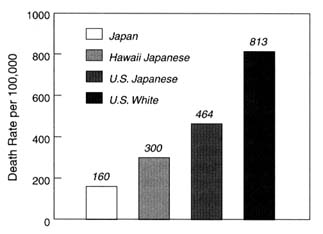
FIGURE 9-1 Atherosclerotic heart disease mortality rates for Japanese men aged 55-64 by geographic area, 1950. SOURCE: Gordon, 1957.
maintained to date in japan and Hawaii but not in California. The main objectives of this prospective study were (1) to verify the reported differences among Japanese men in the three geographic locations by comparing prevalence of, incidence of, and mortality from coronary heart disease measured the same way, and (2) to search for the factors that could explain the observed differences. In this report, we review the findings concerning the cultural, lifestyle, and biological differences among the different population and nativity groups, and provide data on the effect of these characteristics on the incidence of cardiovascular disease. We will place special emphasis on the generational subgroups within the Honolulu Heart Program cohort, which has been followed for more than 25 years.
Methods
Study Population
Details of the recruiting methods, population characteristics, and examination procedures for the cohorts have been published elsewhere (Kato et al., 1973; Kagan et al., 1974; Nichaman et al., 1975; Marmot et al., 1975; Worth et al., 1975). A brief summary follows (Table 9-1). In Japan, the target population included approximately 2,400 Japanese men who were born between January 1, 1900, and December 31, 1919, selected from the Adult Health Study population of the Radiation Effects Research Foundation in Hiroshima and Nagasaki. These men have been examined biennially since 1958 to study the late effects of indirect exposure to atomic bomb radiation. Among these men, 2,141 participated in the initial examination of the Ni-Hon-San Study in 1965-1966.
TABLE 9-1 The Ni-Hon-San Study Design
|
Characteristic |
Japan |
Hawaii |
California |
|
Residence |
Hiroshima, Nagasaki |
Honolulu |
San Francisco |
|
Initial exam date |
1965-1966 |
1965-1968 |
1969-1970 |
|
Number examined |
2,141 |
8,006 |
1,844 |
|
Response rate (%) |
80 |
72 |
68 |
|
Mean age (years) |
56.2 |
54.4 |
52.8 |
In Hawaii, over 11,000 men of Japanese ancestry who were born between 1900 and 1919 and were residing on Oahu Island as of January 1, 1965, were identified and located through an updated record of the World War II Selective Service registration. Among these men, 8,006 participated in the initial examination from 1965 to 1968.
In California, a special census was conducted in 1967 to locate Japanese Americans living in the eight counties of the San Francisco Bay area. Of more than 2,700 men born between 1900 and 1919, 1,844 were examined in 1969 and 1970.
In all geographic areas, all four grandparents had to be Japanese for a participant to be included in the study.
Baseline Examination
All participants were interviewed to obtain information on sociodemographic variables, past medical history, family medical history, smoking habits, alcohol consumption, and dietary intake. Anthropometric measurements, three blood pressure determinations, tests of lung function, a resting 12-lead electrocardiogram, and measurements of hematocrit, serum cholesterol, triglycerides, uric acid, and glucose were performed 1 hour after ingestion of 50 grams of glucose on nonfasting blood specimens. Physical examinations focusing on the cardiovascular system were also performed. The values recorded at this baseline examination were used as risk factor levels throughout the present report unless otherwise noted.
Measures of Acculturation for the Hawaii Cohort
The variables used in this study as measures of the degree of exposure to Japanese culture include birthplace (mainly Japan or Hawaii), total number of
years lived in Japan, ability to read and write Japanese, ability to speak Japanese, and an index of preference for a Japanese over a Western diet. This information was obtained from each subject at the baseline examination.
Those men who were born in Japan and migrated to the United States are called Issei (first generation), and those born in other areas are called Nisei (second generation). About 10 percent of the Hawaiian Nisei went to Japan for education and returned after living in Japan 10 years or longer. These men were called Kibei (literally, ''returned to America"). For all of these men, most of the time spent in Japan was during childhood and early adult life. About three-fourths of the Issei migrated to Hawaii after age 12, and most of the Kibei went to Japan before age 10.
Special skill in the use of the Japanese language was acquired during childhood either by formal education in Japan or by attending special language schools run by Japanese communities in Hawaii. These language schools were attended by most Nisei after regular school hours, but the duration and frequency of attendance varied. Evaluation of the language skill was made on the basis of self-assessment.
The Japanese diet score (Japanese foods/sum of Japanese and American foods) was calculated, by asking each subject the frequency of eating typical Japanese and typical American food items during the previous day. A higher score indicates preference for a more traditional Japanese diet.
Additional cultural information was available for a subset of 4,653 men in the Hawaii cohort who completed a sociocultural questionnaire in 1971. The questionnaire contained a variety of questions relating to acculturation, theoretically stressful life situations, and social networks that are thought to be protective against the stressful aspects of cultural changes.
Follow-up Examinations and Surveillance
In Japan, follow-up information was obtained by reexamination every 2 years and by surveillance of death certificates. In Hawaii, follow-up examinations were done 2 and 6 years after the baseline examination, and routine surveillance of hospital discharge records and death certificates has been maintained to date. In California, surveillance of death certificates was maintained for 2 years.
Definition of Cases
The prevalence of coronary heart disease at the initial Ni-Hon-San examination included definite and probable myocardial infarction diagnosed by electrocardiogram findings and angina pectoris diagnosed by the World Health Organization standard questionnaire. The incidence of cases among men without any clinical coronary heart disease at baseline was classified by the worst level of disease. Fatal cases of coronary heart disease were defined as deaths due to acute
coronary heart disease (including myocardial infarction, coronary insufficiency, and sudden death with coronary-type chest pain) or to chronic coronary heart disease (including congestive heart failure and severe arrhythmia with a prior history of coronary heart disease).
Sudden deaths within 1 hour after the onset of symptoms without clear evidence of coronary heart disease (by electrocardiogram, cardiac enzyme, or chest pain), and in the absence of other attributable causes, are usually regarded in the United States as fatal coronary heart disease and were included in studies of the Hawaii cohort. Because of inconsistencies, however, it was decided to exclude this category for comparisons of U.S. and Japanese cases. Old myocardial infarctions found incidentally at autopsy without a clinical history of coronary heart disease were also excluded because it was difficult to determine whether the myocardial infarction occurred before or after the baseline examination. Another category of exclusion was coronary heart disease death diagnosed only by death certificate without supportive evidence from either clinical or autopsy findings. In the original study protocol, a comparison of the incidence of nonfatal myocardial infarction was also planned. However, different methods of case ascertainment made a valid comparison difficult.
In order to ensure the comparability of case ascertainment, one of the staff physicians from each study group visited the other study site and independently reviewed all potential cases in each cohort. Only those cases with a diagnosis agreed upon by physicians of both groups were accepted for the study.
For analyses of the association of risk factors upon the incidence of coronary heart disease within the Hawaii cohort, total coronary heart disease, subgroups of fatal coronary heart disease, nonfatal myocardial infarction, and angina pectoris were used. Ascertainment was based on both temporal changes of electrocardiograms at follow-up examinations and hospital surveillance records of diagnostic electrocardiograms and cardiac enzyme values.
Comparison data on incidence cases were available for a 2-year follow-up period in Hawaii and California and for a 12-year period in Hawaii and Japan. Incidence case data for risk factor analyses were available for a 23-year follow-up period in Hawaii.
Age Categories
The men in the Ni-Hon-San baseline examination were born between 1900 and 1919 and ranged from 45 to 70 years of age at that examination. The statistical models used follow-up duration and person-years at risk during 5-year age intervals. Thus, for the Hawaii-Japan 12-year follow-up comparisons, it was possible to examine rates from ages 45 to 79.
Within the Hawaii cohort, special attention has been given to comparison of coronary heart disease risk factors in elderly and middle-aged men. Data for these studies used the measurements of risk factors made in the third follow-up
exam for 1,419 elderly men aged 65 to 74 and 3,440 middle-aged men aged 51 to 59. Among the generational subgroups in Hawaii, nearly all of the Issei were 55 or older at the baseline examination, so comparisons of risk factors were made only for men aged 55 to 68 at baseline.
Results
Ni-Hon-San Comparisons
Table 9-2 presents age-adjusted mens and percentages of selected variables measured at the initial examination for the three study cohorts. Both the Hawaii and the California cohorts were more obese (greater body mass index) and had higher mean values of serum cholesterol and glucose 1 hour after ingestion of 50 grams of glucose than the members of the Japan cohort. Systolic blood pressure was highest in California and similar in both Japan and Hawaii. Diastolic blood pressures were highest in California, intermediate in Japan, and lowest in Hawaii. The percentage of men currently smoking cigarettes was highest in Japan, intermediate in Hawaii, and lowest in California. Most of these differences between the Japan cohort and the two migrant cohorts were statistically significant.
Table 9-3 shows age-adjusted means of nutrient intake for the three cohorts. The assessment of dietary intake was carried out using the 24-hour recall method in all study sites (Kato et al., 1973). Both the Hawaii and the California cohorts had substantially higher percentages of total calories derived from animal protein and fat, as well as a higher intake of dietary cholesterol than the Japan cohort. Animal protein accounted for 50 percent of total protein in Japan and 75 percent in both Hawaii and California. Similarly, saturated fat accounted for only 40 percent of total fat in Japan and 70 percent in both Hawaii and California. In contrast, percentages of total calories derived from carbohydrates, especially complex carbohydrates, and alcohol were significantly greater in Japan than in Hawaii and California.
Table 9-4 shows age-adjusted prevalence rates per 1,000 men of definite or
TABLE 9-2 Age-Adjusted Means and Percentages of Selected Variables at Baseline Examination for the Ni-Hon-San Study
|
Variable |
Japan |
Hawaii |
California |
|
Body mass index (kg/m2) |
21 |
24a |
24a |
|
Systolic blood pressure (mm Hg) |
134 |
134 |
138a |
|
Diastolic blood pressure (mm Hg) |
84 |
82 |
88a |
|
Serum cholesterol (mg/dL) |
186 |
218a |
225a |
|
Serum glucose (mg/dL) |
145 |
162a |
160a |
|
Current smokers (%) |
76 |
44a |
35a |
|
a Significantly different from Japan (p < .05). |
|||
TABLE 9-3 Age-Adjusted Mean Intake of Nutrients at Baseline Examination for the Ni-Hon-San Study
|
Variable |
Japan |
Hawaii |
California |
|
Total calories |
2,190 |
2,267 |
2,262 |
|
Total protein (% of calories) |
14 |
17 |
16 |
|
Animal protein (% of calories) |
7 |
12 |
12 |
|
Total fat (% of calories) |
15 |
33 |
38 |
|
Total carbohydrate (% of calories) |
63 |
46 |
44 |
|
Complex carbohydrate (% of calories) |
51 |
30 |
27 |
|
Alcohol (% of calories) |
9 |
4 |
3 |
|
Cholesterol (mg) |
468 |
544 |
533 |
possible myocardial infarction diagnosed at the baseline exam, 2-year incidence rates of definite coronary heart disease (nonfatal myocardial infarction and fatal coronary heart disease), and 12-year incidence rates of fatal coronary heart disease per 1,000 person-years by place. These rates follow the same stepwise increase from Japan to Hawaii to California as was shown in the earlier reported mortality rates and indicate that this pattern was not due to statistical or diagnostic differences in the three areas.
Studies comparing the incidence of coronary heart disease among the Ni-Hon-San Study cohorts found that the major risk factors predicted the risk of coronary heart disease in a generally consistent way in all cohorts, and that the differences in the incidence of or mortality from coronary heart disease could be largely explained by the differences in the levels of known risk factors among indigenous Japanese men and among men of Japanese ancestry living in the United States (Robertson et al., 1977; Yano et al., 1988). For example, in regression of the incidence of coronary heart disease, the effects on baseline serum cholesterol were the same in Japan and Hawaii, but the distribution of serum cholesterol was much higher in Hawaii. Thus, we can infer that there can be a twofold to threefold difference in the risk of coronary heart disease among men of the same Japanese ancestry living in difference places and that the increased risks
TABLE 9-4 Age-Adjusted Prevalence and Incidence of Coronary Heart Disease Among Japanese Men by Place
were due to social and behavioral influences of the place, which are manifested in differences in blood pressure, serum cholesterol, cigarette smoking, and obesity.
Cultural Pathways to Coronary Heart Disease in the Elderly
The first stage of understanding how the social and cultural environment of the United States affected the risk of coronary heart disease among the different generational subgroups was to verify whether the known biological risk factors were the major predictors of the incidence of the disease among the elderly men of Japanese ancestry in the Hawaii cohort.
At the third examination of the Hawaii cohort (1971-1973), 1,419 men were between ages 65 and 74 and were free of cardiovascular disease. Risk factor measures made at that time were used to predict the incidence of coronary heart disease during a 12-year follow-up period. Figure 9-2 shows the age-adjusted relative risks for developing coronary heart disease from Cox regression models with all variables included simultaneously. All of these risk factors were statistically significant for these older men, and the strength of the associations were similar to those found for middle-aged men (Benfante et al., 1989; Benfante and Reed, 1990; Reed and Benfante, 1992).
Having verified the importance of the biological risk factors for coronary heart disease among these Japanese men, we proceeded to examine the cultural experiences that might further our understanding of the international differences.
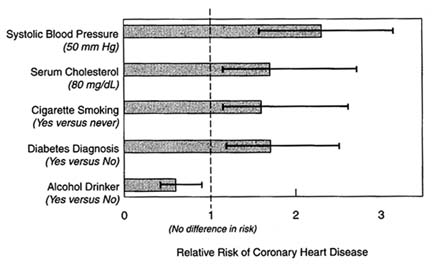
FIGURE 9-2 Age-adjusted multivariate relative risks (with 95% confidence limits) for developing coronary heart disease among elderly Japanese-American males during a 12-year follow-up period. Note: BP = blood pressure; Hx = diagnosis.
TABLE 9-5 Age-Adjusted 6-Year Incidence Rates of Total CHD/1,000 by Birthplace and Years in Japan for Men Aged 60 to 68 at Baselinea
One of our first efforts was to focus on childhood experiences in terms of birthplace and the number of years spent in Japan.
Table 9-5 shows age-adjusted 6-year incidence rates of total coronary heart disease for men aged 60 to 68 at the initial examination, by place of birth and number of years in Japan. The rates were lowest for Issei men born in Japan and for the Nisei who were sent to Japan for 10 or more years of schooling. The rates were over 60 percent higher for Nisei who never went to Japan, and for those who spent less than 10 years in Japan. These differences were statistically significant in logistic regression models that included age (Yano et al., 1979).
Another approach was to analyze the baseline risk factor levels for the two groups. Risk factor levels were compared for 823 Issei and 2,070 Nisei (with less than 10 years in Japan), all aged 55 to 68 at the initial examination. As Table 9-6 shows, the Issei men born in Japan had significantly lower levels of all major risk factors for coronary heart disease except for serum glucose and cigarette-pack years. Additional analyses indicated that the Issei usually ate a more tradi
TABLE 9-6 Age-Adjusted Levels of Selected CHD Risk Factors at Baseline Exam by Generation Subgroup for Men Aged 55 to 68
|
Variable |
Issei (N = 823) |
Nisei (N = 2,070) |
|
Systolic blood pressure (mm Hg) |
136 |
138a |
|
Diastolic blood pressure (mm Hg) |
81 |
83a |
|
Serum cholesterol (mg/dL) |
214 |
218a |
|
Serum triglyceride (mg/dL) |
193 |
229a |
|
Serum glucose (mg/dL) |
171 |
170 |
|
Physical activity index |
34 |
32a |
|
Body mass index (kg/m2) |
23.2 |
23.6a |
|
Cigarette-pack years |
26 |
24 |
|
a p < .05 for age-adjusted group mean differences. Note: CHD = coronary heart disease. |
||
Japanese diet, with significantly lower levels of total fat and saturated fatty acids. When incidence rates of definite coronary heart disease over a 23-year follow-up period were adjusted for the major risk factors, there were no statistically significant differences between the generational subgroups. This finding indicates that the difference in risk for coronary heart disease can be accounted for by the differences in known risk factors.
More detailed studies of acculturation, that is, cultural change from Japanese to Western lifestyle, were made on a subset of 4,653 men in the Hawaii cohort who completed a sociocultural questionnaire in 1971 and were followed for the incidence of definite coronary heart disease for 7 years (Reed et al., 1982, 1983, 1984). Acculturation items were grouped as follows:
- Culture of upbringing: these items measured exposure to Japanese influences during childhood, including years of Japanese language school, years in Japan, childhood religion, and ethnicity of childhood friends.
- Cultural assimilation: these items measured the degree to which an individual maintained Japanese cultural forms during adult life, including language use and religion.
- Social assimilation: these items measured the degree to which an individual had maintained contact with Japanese ethnic groups and customs in the community.
- Total acculturation: this was a summary score of all items.
When the men were grouped into quartiles of acculturation scores, there was a statistically significant inverse association between the total acculturation score and the incidence of coronary heart disease of all kinds as shown in Table 9-7.
Age-adjusted baseline risk factor levels were then calculated for men in quartiles of the total acculturation score. Table 9-8 shows that men in the most Western groups consistently had levels indicating higher risk. They were more obese, were less physically active, smoked more cigarettes, had higher serum cholesterol levels, ate less complex carbohydrate, and drank less alcohol than men in the more traditional Japanese groups. There were no differences in socioeconomic status among these groups.
When each acculturation score was included in multiple logistic models that also included the major biological risk factors, none of the acculturation scores were associated with any clinical measure of coronary heart disease (Reed et al., 1982). In separate analyses, we also looked at individual questions used in the scores. The frequency of speaking or reading Japanese was the only item that was significantly inversely associated with the incidence of coronary heart disease of all kinds in the presence of the other risk factors.
Rates of coronary heart disease have been linked to a variety of theoretically stressful psychosocial factors, including rapid culture change, social alienation, and value conflicts. Social support networks theoretically provide protection
TABLE 9-7 Age-Adjusted 7-year CHD Incidence Rates/1,000 by Quartiles of Total Acculturation Scores
|
Quartiles |
Total CHDa |
Fatal Myocardia1 Infarction |
Nonfatal Myocardia1 Infarctionb |
Angina |
|
1, most Western |
62 |
15 |
32 |
15 |
|
2 |
43 |
16 |
19 |
8 |
|
3 |
50 |
21 |
15 |
14 |
|
4, most Japanese |
35 |
16 |
14 |
5 |
|
a p = .02. b p = .06. Note: CHD = coronary heart disease. The probability level was obtained from bivariate logistic regression of acculturation score and age on CHD incidence. |
||||
against such forms of social stress. We were able to examine these hypotheses within the Hawaii cohort, using the 4,653 men who completed the detailed questionnaire in 1971 and who were followed for 7-year incidence of coronary heart disease (Reed et al., 1983, 1984).
The general pattern of results indicated that such psychosocial processes as geographic mobility, generational mobility, sociocultural inconsistency, and occupational stress were not associated with the incidence of coronary heart disease or with other chronic diseases of the elderly men in this cohort. Measures of social support networks were inversely associated in bivariate analyses with age, but in multivariate models that included the main risk factors, the associations were not statistically significant (Reed et al., 1983). Furthermore, there were no
TABLE 9-8 Age-Adjusted Mean Values of Selected Risk Factors by Quartiles of the Total Acculturation Score
|
|
Quartilesa |
|
|
|
|
Risk Factors |
1 |
2 |
3 |
4 |
|
Systolic blood pressure (mm Hg) |
133 |
134 |
134 |
134 |
|
Serum cholesterol (mg/dL) |
221 |
220 |
218 |
215b |
|
Serum glucose (mg/dL) |
160 |
161 |
159 |
157 |
|
Body mass index (kg/m2) |
26 |
24 |
24 |
23b |
|
Physical activity index |
31 |
33 |
34 |
35b |
|
Cigarettes/day |
11 |
9 |
9 |
7b |
|
Alcohol (ounces/month) |
10 |
12 |
13 |
15b |
|
Complex carbohydrate (grams/24 hr.) |
161 |
167 |
171 |
176b |
|
Socioeconomic status |
2.0 |
1.9 |
2.1 |
2.0 |
|
a Quartiles reflect a scale based on the most Western or non-Japanese response quartile to the most traditional Japanese response quartile. b p < .05 from bivariate multiple regression of risk factor and age on acculturation score. |
||||
significant interactions indicating that social support networks were especially protective for men in stressful social or occupational situations.
Discussion
The major inferences from the Ni-Hon-San studies can be summarized as follows: (1) there is a twofold to threefold higher risk of coronary heart disease among Japanese men in the United States compared with Japanese men in Japan, and (2) this difference can be accounted for largely by differences in the major risk factors, especially serum cholesterol, serum glucose, blood pressure, smoking, and alcohol intake. Thus, while we know of genetic determinants of some of these risk factors, the behavioral influences appear to play an overwhelming role. These behavioral influences can affect all groups migrating from low-risk to high-risk areas; our recognition of the significance of these influences points out the importance of prevention efforts to lower the risk of coronary heart disease. The path, however, is two way; we can predict that the rapid westernization taking place in Japan will result in an appreciable increase in the occurrence of coronary heart disease within the next few decades unless preventive measures are taken.
The studies of groups by birthplace and acculturation within the Hawaii cohort confirmed that the major risk factors for coronary heart disease in middle-aged U.S. males also predicted the incidence of coronary heart disease in elderly Japanese Americans in Hawaii. In addition, it was clear that the experiences of early life, in terms of exposure to traditional Japanese culture and lifestyle, profoundly influence the risk of coronary heart disease in late life by affecting the known biological and behavioral risk factors. The most common pattern was a change from a traditional Japanese lifestyle involving high physical activity to a sedentary lifestyle along with a change from an Asian diet low in animal fat and protein to a high-calorie, high-fat Western diet; these changes lead to obesity, hypertension, diabetes, and high serum cholesterol.
We found no independent association between sociocultural measures and the risk of coronary heart disease, with the single exception of Japanese language ability, which could also be an indirect measure of exposure to Japanese diet during childhood. This does not mean that cultural influences are unimportant. On the contrary, they are among the most important determinants of health behavior. Our goal should be to understand which cultural characteristics, such as a Japanese diet, are healthy and to support their continuation while at the same time focusing on decreasing such unhealthy characteristics as cigarette smoking. We should also be aware that some risk factors may help protect against developing one disease and increase the likelihood of developing another. It is therefore important to concentrate on risk factors that are common denominators for numerous diseases. Cigarette smoking, a high-fat diet, obesity, and hypertension are good examples.
There was no evidence from these studies that psychosocial measures of theoretically stressful life situations were predictive of the incidence of coronary heart disease. Since this field of study is complicated and the Japanese Americans under study were unique in many characteristics, it would be a mistake to extrapolate these findings to other cultures. We would, however, put a low priority on this type of research.
We had no information on access to and use of health care for the Hawaii cohort. Socioeconomic status as measured by education, type of housing, and occupation had no independent association with the risk of coronary heart disease in this cohort, but it should be noted that the range was narrow and that health care in Hawaii has been available to nearly everyone.
To our knowledge, there are no other prospective studies of cardiovascular disease among Asians living in the United States. There are, however, several cross-sectional surveys of risk factors for cardiovascular disease that provide some interesting comparisons. A study of risk factors among 346 elderly Chinese immigrants in Boston showed that they had lower levels of obesity, blood pressure, and serum cholesterol and that they ate less fat and more carbohydrate than elderly whites (Choi et al., 1990).
A 1979 study of hypertension among four Asian and Pacific Island groups in California showed great variation among the different Asian ethnic groups (Stavig et al., 1984). Filipinos had the highest rates of hypertension and Japanese the lowest. The authors implied that change in dietary patterns involving adoption of American foods resulted in increased obesity and hypertension.
A more recent study of risk factors for cardiovascular disease among over 13,000 Asian Americans in California confirmed the existence of important differences among the different Asian subgroups (Klatsky and Armstrong, 1991). Of interest was the finding that obesity was higher among U.S.-born Asian-American men than among men born in Asia. Cigarette smoking, however, was higher among U.S.-born women than among their Asian-born counterparts. These findings indicated that cultural influences differ by sex.
Future Research
The findings from the Ni-Hon-San studies are consistent with those of studies of other populations that have migrated from areas of low to high risk of coronary heart disease. All support the concept that differences in the occurrence of coronary heart disease are due mainly to specific behavioral and lifestyle characteristics that are influenced by social and cultural standards. Modification of high-risk behavior offers the clearest and most effective way to prevent cardiovascular disease and the resulting physical disability in the elderly. Because it is also well established that the underlying disease process of atherosclerosis begins in childhood and progresses through adult life (Wissler, 1991), major efforts need to be directed towards children and young adults.
We would therefore suggest two levels of activities for future research. The first would focus on children and young adults. There is a need to determine current levels of the risk factors that are common denominators for the major chronic diseases of late life among different ethnic subgroups. As noted earlier, cigarette smoking, obesity, physical inactivity, and a high-fat diet are open to modification. Once highand low-risk groups are identified, there is a need to determine which cultural characteristics promote healthy and unhealthy behaviors, and which are open to influence.
The second focus would be on communities. What elements within a community promote healthy and unhealthy behaviors? A growing body of literature indicates that it is possible to alter risk factor levels through intervention at the community rather than the individual level (Farquhar et al., 1990). Food preparation in school lunch programs and community efforts to reduce cigarette smoking are examples of this kind of intervention.
In summary, we believe that a major part of the differences in the risk of coronary heart disease among ethnic groups can be accounted for by a small number of known biological and behavioral factors. Studies of migrants and native-born groups show that these risk factors can be modified by cultural influences. These findings also provide us with a realistic goal. If we cannot completely prevent a disease, we can attempt to reduce its occurrence to the level experienced by the group with the lowest risk.
References
Benfante, R., and D. Reed 1990 Is elevated serum cholesterol level a risk factor for coronary heart disease in the elderly? Journal of the American Medical Association 263:393-396.
Benfante, R.J., D.M. Reed, C.J. MacLean, and K. Yano 1989 Risk factors in middle age that predict early and late onset of coronary heart disease. Journal of Clinical Epidemiology 42:95-104.
Choi, E.S., R.B. McGandy, G.E. Dallal, M.D. Russell, R.A. Jacob, E.J. Schaefer, and J.A. Sadowski 1990 The prevalence of cardiovascular risk factors among elderly Chinese Americans. Archives of Internal Medicine 150:413-418.
Farquhar, J.W., S.P. Fortmann, J.A. Flora, C.B. Taylor, W.L. Haskell, P.T. Williams, N. Maccoby, and P.D. Wood 1990 Effects of community wide education on cardiovascular disease risk factors. The Stanford Five-City Project. Journal of the American Medical Association 264:359-365.
Gordon, T. 1957 Mortality experience among the Japanese in the United States, Hawaii, and California. Public Health Reports 72:543-553.
Kagan, A., B.R. Harris, W. Winkelstein Jr., K.G. Johnson, H. Kato, S.L. Syme, G.G. Rhoads, M.L. Gay, M.Z. Nichaman, and H.B. Hamilton 1974 Epidemiologic studies of coronary heart disease and stroke in Japanese men living in Japan, Hawaii, and California: Demographic, physical, dietary, and biochemical characteristics. Journal of Chronic Disease 27:345-364.
Kato, H., J. Tillotson, M.Z. Nichaman, G.G. Rhoads, and H.B. Hamilton 1973 Epidemiologic studies of coronary heart disease and stroke in Japanese men living in Japan, Hawaii, and California: Serum lipids and diet. American Journal of Epidemiology 97:372-385.
Klatsky, A.L., and M.A. Armstrong 1991 Cardiovascular risk factors among Asian Americans living in northern California. American Journal of Public Health 81:1423-1428.
Marmot, M.G., S.L. Syme, A. Kagan, H. Kato, J.B. Cohen, and J. Belsky 1975 Epidemiologic studies of coronary heart disease and stroke inJapanese men living in Japan, Hawaii, and California: Prevalence of coronary and hypertensive heart disease and associated risk factors . American Journal of Epidemiology 102:514-525.
Nichaman, M.Z., H.B. Hamilton, A. Kagan, T. Grier, S.T. Sacks, and S.L. Syme 1975 Epidemiologic studies of coronary heart disease and stroke in Japanese men living in Japan, Hawaii, and California: Distribution of biochemical risk factors. American Journal of Epidemiology 102:491-501.
Reed, D., and R. Benfante 1992 Lipid and lipoprotein predictors of coronary heart disease in elderly men in the Honolulu Heart Program. Annals of Epidemiology 2:29-34.
Reed, D., D. McGee, J. Cohen, K. Yano, S. Syme, and M. Feinleib 1982 Acculturation and coronary heart disease among Japanese men in Hawaii. American Journal of Epidemiology 115:894-905.
Reed, D., D. McGee, and K. Yano 1984 Psychosocial processes and general susceptibility to chronic disease. American Journal of Epidemiology 119:356-370.
Reed, D., D. McGee, K. Yano, and M. Feinleib 1983 Social networks and coronary heart disease among Japanese menin Hawaii . American Journal of Epidemiology 117:384-396.
Robertson, T.L., H. Kato, G.G. Rhoads, A. Kagan, M.G. Marmot, S.L. Syme, T. Gordon, R.M. Worth, J.L. Belsky, D.S. Dock, M. Miyanishi, and S. Kawamoto 1977 Epidemiologic studies of coronary heart disease and stroke in Japanese men living in Japan, Hawaii, and California. Incidence of myocardial infarction and death from coronary heart disease. American Journal of Cardiology 39:239-243.
Stavig, G.R., A. Igda, and A.R. Leonard 1984 Hypertension among Asian and Pacific Islanders in California. American Journal of Epidemiology 119:677-691.
Wissler, R.W. 1991 USA multicenter study of the pathobiology of atherosclerosis in youth. Annals of the New York Academy of Science 623:26-39.
Worth, R.M., H. Kato, C.G. Rhoads, A. Kagan, and S.L. Syme 1975 Epidemiologic studies of coronary heart disease and stroke in Japanese men living in Japan, Hawaii, and California: Mortality. American Journal of Epidemiology 102:481-490.
Yano, K., W.C. Blackwelder, A. Kagan, G.G. Rhoads, J.B. Cohen, and M.G. Marmot 1979 Childhood cultural experience and the incidence of coronary heart disease in Hawaii Japanese men. American Journal of Epidemiology 109:440-450.
Yano, K., C.J. MacLean, D.M. Reed, Y. Shimizu, H. Sasaki, K. Kodama, H. Kato, and A. Kagan 1988 A comparison of the 12-year mortality and predictive factors of coronary heart disease among Japanese men in Japan and Hawaii. American Journal of Epidemiology 127:476-487.


