




Below is the uncorrected machine-read text of this chapter, intended to provide our own search engines and external engines with highly rich, chapter-representative searchable text of each book. Because it is UNCORRECTED material, please consider the following text as a useful but insufficient proxy for the authoritative book pages.
TECHNOLOGY TRANSFER IN THE UNITED STATES 91 study of U.S. industrial innovation by the NSF and the U.S. Bureau of the Census found that the three most important sources of information leading to the devel- opment and commercial introduction of new products (according to the âinnovat- ing firmsâ 31 that responded to the survey) were internal sources, clients and cus- tomers, and suppliers of materials and components (National Science Board, 1996). This study found that the least important sources of such information were government laboratories, technical institutes, and consulting firms. The NSF/Census study also revealed that the channels used most frequently by innovating firms to access new technology were hiring skilled employees, purchasing equipment, and using consultants. Likewise, the channels used most often by innovating firms to transfer new technologies to other organizations included communication with other companies, mobility of skilled employees, and R&D performed for others (National Science Board, 1996). The following sections explore in greater detail the organization and dy- namic of technology transfer to U.S. industry within the three major sectors of the nationâs nonindustrial R&D enterprise: research universities and colleges, fed- eral government laboratories, and the diverse population of privately held, non- academic, mostly nonprofit organizations (e.g., independent and affiliated R&D institutes, consortia, incubators and research parks, and technical and professional associations). TECHNOLOGY TRANSFER FROM HIGHER EDUCATION TO INDUSTRY There are over 3,600 publicly and privately funded colleges and universities as well as 6,900 vocational and technical institutions offering post-secondary edu- cation in the United States. Only about 875 public and private universities and colleges conduct science and/or engineering research, and of these, the 100 larg- est account for 80 percent of all academic R&D (National Science Board, 1996). It is this latter, highly diverse subset of 100 public and private institutions that constitute the heart of the U.S. basic research enterprise and the main object of analysis in this chapter. To understand the structure and dynamic of technology transfer from these institutions of higher education to industry, it is useful to review briefly several major distinguishing characteristics of the U.S. academic research enterprise as well as an overview and the history of university-industry technology transfer in the United States. Distinguishing Characteristics of the Enterprise SCALE One major distinguishing feature of the U.S. academic research enterprise is its size. In 1995, U.S. universities and colleges performed $21.6 billion worth of
92 TECHNOLOGY TRANSFER SYSTEMS IN THE UNITED STATES AND GERMANY research and development,32 or 12.6 percent of all R&D conducted in the United States that year. This expenditure was roughly the same as that by all federal laboratories and FFRDCs ($25 billion in 1995) and was nearly half of total Ger- man R&D spending in 1994. Academic institutions performed 49 percent of all basic research, 14 percent of all applied research, and less than 2 percent of all development work performed in the United States in 1995. In 1993, U.S. univer- sities and colleges employed over 149,800 doctoral scientists and engineers (S&E), 10,500 individuals with professional degrees, and 5,500 S&Es with S&E degrees at the masters and bachelors levels in R&D activities. In addition, nearly 90,000 full-time graduate students (27 percent of total full-time enrollment) re- lied on research assistantships as their primary source of support (National Sci- ence Board, 1996). U.S. universities and colleges graduate roughly 24,000 Ph.D. scientists and engineers each year. In 1993, these institutions received nearly 6,600 invention disclosures and applied for over 3,000 patents (including roughly 2,000 new pat- ents). In 1993, U.S. academic researchers authored nearly 100,000 articles in professional journals, representing 25 percent of the worldâs scientific and tech- nical literature.33 DIVERSITY A second distinguishing feature of U.S. research colleges and universities is their diversity. There is no U.S. university âsystemâ in the formal sense of the term. Rather, the academic research enterprise is a heterogeneous, highly au- tonomous population of research colleges and universities, each of which was established and has evolved in response to a unique combination of local, re- gional (state), and national needs. Some are public, state-owned institutions; others are privately owned. Although all institutions that receive federal funding must comply with common federal rules and regulations, each institution, or state- run system of institutions, has a distinct governing body, administration, account- ing practices, and mission statement. U.S. academic research institutions differ greatly in size and research focus. Some institutions perform significant amounts of industry-sponsored research, while others do very little (Table 2.8). The distribution of R&D spending by science and engineering field of the top 20 research universities illustrates how diverse their research portfolios are (Table 2.9). (These 20 institutions conducted roughly a third of all U.S. academic research in 1993.) Some universities main- tain research portfolios that are more national or international in scope and repu- tation. Others conduct research that is more heavily weighted to the needs of local industries or their regionâs or stateâs economy. Some remain focused al- most exclusively on their traditional missions of education and research, while others have become deeply involved in a broad spectrum of technology transfer and outreach activities.
TECHNOLOGY TRANSFER IN THE UNITED STATES 93 TABLE 2.8 Industry-Sponsored Research as a Share of Total Academic Research Expenditures at the Top 20 Research Universities, Fiscal Year 1994 Industry Industry Sponsored as Total Research Sponsored Percentage of Expenditures Research Total Research Institution and Ranking (thousands of $) (thousands of $) Expenditures Johns Hopkins University 784,043 10,418 1.33 University of Michigan 430,778 26,732 6.21 University of Wisconsin-Madison 392,718 13,729 3.50 Massachusetts Institute of Technology 363,918 55,500 15.25 Texas A&M University 355,750 28,576 8.03 University of Washington 343,910 33,199 9.65 University of California-San Diego 331,901 9,764 2.94 Stanford University 318,561 14,714 4.62 University of Minnesota 317,865 23,726 7.46 Cornell University 312,683 17,199 5.50 University of California-San Francisco 312,393 10,977 3.51 Pennsylvania State University 302,997 45,408 14.99 University of California-Berkeley 289,632 12,547 4.33 University of California-Los Angeles 279,869 13,394 4.79 Harvard University 289,459a 10,228 3.53 University of Arizona 269,939 15,053 5.58 University of Texas-Austin 260,602 4,268 1.64 University of Pennsylvania 251,461 12,107 4.81 University of Illinois-Urbana 245,407 13,527 5.51 Columbia University 236,417 1,632 0.69 TOTAL 6,679,303 372,698 5.58 NOTE: Because of rounding, figures may not add to the totals shown. aEstimated SOURCE: National Science Foundation (1996a). SPONSORED RESEARCH A third distinguishing feature of U.S. academic research is the way in which it is funded. The vast majority of U.S. academic research in science and engi- neering is sponsored directly via grants or contracts from federal mission agen- cies. In other words, it is not supported by public âgeneral universityâ or âbase institutionalâ funds as is the case in Germany, Japan, and other advanced indus- trialized countries. In 1995, federal government agencies funded 60.2 percent of
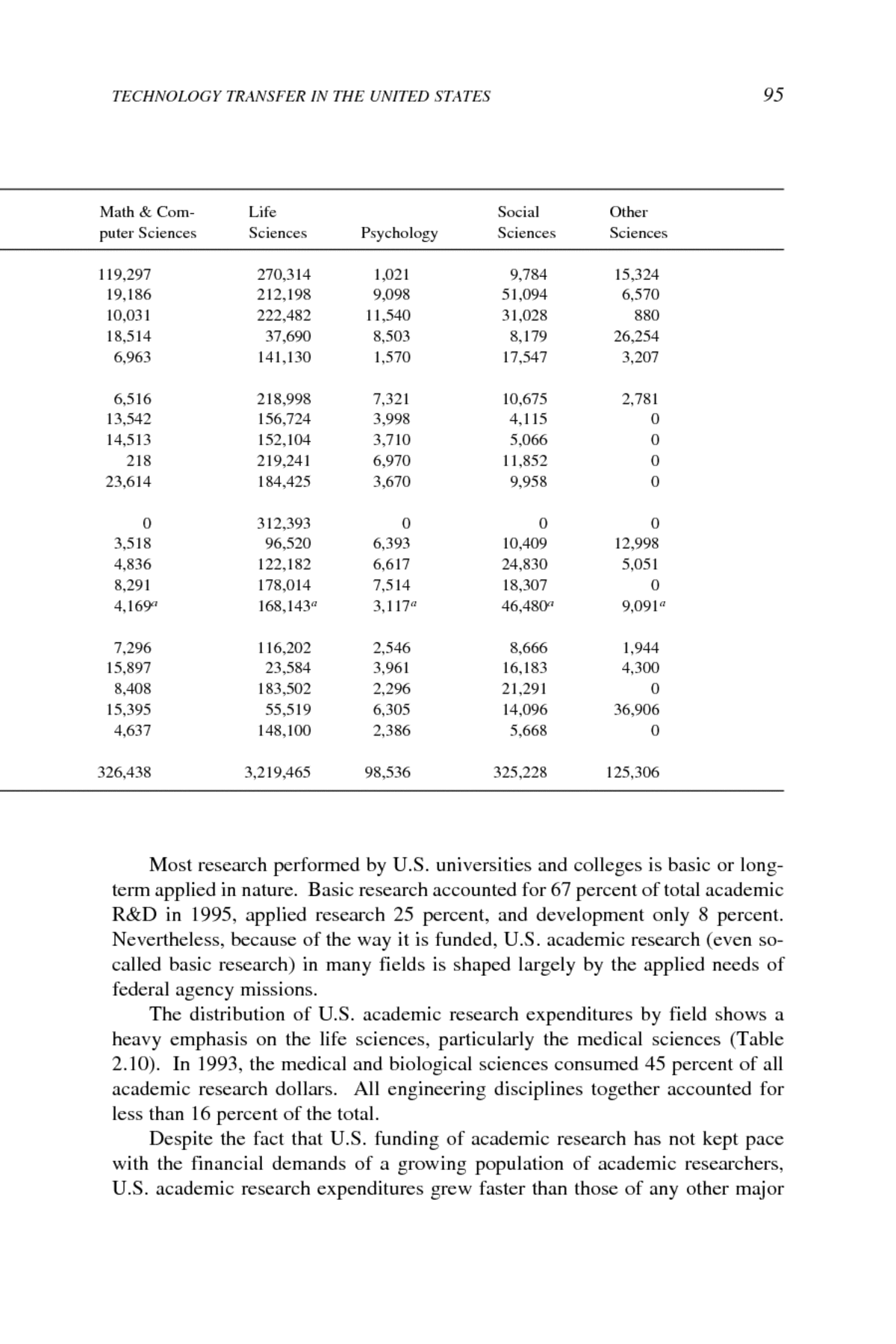
94 TECHNOLOGY TRANSFER SYSTEMS IN THE UNITED STATES AND GERMANY TABLE 2.9 R&D Expenditures at Universities and Colleges, by Science and Engineering Field, Fiscal Year 1994 (dollars in thousands) Physical Environmental Institution and Ranking Total Engineering Sciences Sciences Johns Hopkins University 784,043 210,522 117,188 40,593 University of Michigan 430,778 88,837 22,972 20,823 University of Wisconsin-Madison 392,718 55,021 39,838 21,898 Massachusetts Institute of Technology 363,918 153,530 95,154 16,094 Texas A&M University 355,750 82,565 21,890 80,878 University of Washington 343,910 20,332 19,375 57,912 University of California-San Diego 331,901 15,806 35,450 102,266 Stanford University 318,561 92,946 44,030 6,192 University of Minnesota 317,865 30,625 15,802 11,560 Cornell University 312,683 41,416 45,211 4,389 University of California-San Francisco 312,393 0 0 0 Pennsylvania State University 302,997 129,313 22,486 21,360 University of California-Berkeley 289,632 61,654 59,996 4,466 University of California-Los Angeles 279,869 29,544 24,069 14,130 Harvard University 278,459a 6,027a 31,718a 9,714a University of Arizona 269,939 20,659 91,765 20,861 University of Texas-Austin 260,602 106,743 64,108 25,826 University of Pennsylvania 251,461 11,918 23,245 801 University of Illinois-Urbana 245,407 51,634 38,500 27,052 Columbia University 236,417 14,407 21,433 39,786 TOTAL 6,679,303 1,223,499 834,230 526,601 NOTE: Because of rounding, figures may not add to the totals shown. aEstimated SOURCE: National Science Foundation (1996a). U.S. academic R&D, state and local governments 7.4 percent, industry 6.9 per- cent, individuals and nonprofit institutions 7.4 percent, with the remaining 18.1 percent coming directly from academic institutions themselves.34 Most federal funds for academic research are awarded on a competitive basis to individual investigators or to research teams. Researchers submit project proposals that are then peer reviewed according to âbest-scienceâ principles. This approach de- mands that principal investigators invest a great deal of time in grant manage- ment (i.e., non-research-related) activities, both as grant applicants and âvolun- teerâ reviewers of the grant proposals of other researchers. However, it also fosters intensive and valuable competition among ideas and rapid exploitation of new research directions and concepts within the academic research community.
TECHNOLOGY TRANSFER IN THE UNITED STATES 95 Math & Com- Life Social Other puter Sciences Sciences Psychology Sciences Sciences 119,297 270,314 1,021 9,784 15,324 19,186 212,198 9,098 51,094 6,570 10,031 222,482 11,540 31,028 880 18,514 37,690 8,503 8,179 26,254 6,963 141,130 1,570 17,547 3,207 6,516 218,998 7,321 10,675 2,781 13,542 156,724 3,998 4,115 0 14,513 152,104 3,710 5,066 0 218 219,241 6,970 11,852 0 23,614 184,425 3,670 9,958 0 0 312,393 0 0 0 3,518 96,520 6,393 10,409 12,998 4,836 122,182 6,617 24,830 5,051 8,291 178,014 7,514 18,307 0 4,169a 168,143a 3,117a 46,480a 9,091a 7,296 116,202 2,546 8,666 1,944 15,897 23,584 3,961 16,183 4,300 8,408 183,502 2,296 21,291 0 15,395 55,519 6,305 14,096 36,906 4,637 148,100 2,386 5,668 0 326,438 3,219,465 98,536 325,228 125,306 Most research performed by U.S. universities and colleges is basic or long- term applied in nature. Basic research accounted for 67 percent of total academic R&D in 1995, applied research 25 percent, and development only 8 percent. Nevertheless, because of the way it is funded, U.S. academic research (even so- called basic research) in many fields is shaped largely by the applied needs of federal agency missions. The distribution of U.S. academic research expenditures by field shows a heavy emphasis on the life sciences, particularly the medical sciences (Table 2.10). In 1993, the medical and biological sciences consumed 45 percent of all academic research dollars. All engineering disciplines together accounted for less than 16 percent of the total. Despite the fact that U.S. funding of academic research has not kept pace with the financial demands of a growing population of academic researchers, U.S. academic research expenditures grew faster than those of any other major
96 TECHNOLOGY TRANSFER SYSTEMS IN THE UNITED STATES AND GERMANY TABLE 2.10 R&D Expenditures at Universities and Colleges, Percent Share by Major Science and Engineering Field, Fiscal Year 1994 Source and Field 1994 Engineering, total 15.77 Aeronautical and Astronautical 1.03 Chemical 1.31 Civil 1.86 Electrical 3.44 Mechanical 2.34 Metallurgical and materials 1.51 Other, n.e.c. 4.27 All sciences, total 84.23 Physical sciences 10.30 Environmental sciences 6.76 Mathematical sciences 1.32 Computer sciences 3.13 Life sciences 54.65 Psychology 1.70 Social sciences 4.51 Other sciences, n.e.c. 1.86 NOTE: Because of rounding, figures may not add to the totals shown. n.e.c. = not elsewhere classified. SOURCE: National Science Foundation (1996a). R&D performing sector during the 1984â1994 period. During this period, aca- demic research grew at an average annual rate of 5.8 percent, compared with 2.8 percent for FFRDCs and other nonprofit laboratories, 1.4 percent for industrial laboratories, and 0.7 percent for all federal laboratories (National Science Board, 1996). History of University-Industry Relations The history of U.S. university-industry interaction with respect to research and development and technology transfer can be divided roughly into three peri- ods: from the mid-1800s to the eve of World War II; from the early 1940s through the mid-1970s; and from the late-1970s to the present. During the first of these periods, the development of U.S. higher education and research was influenced heavily by the more immediate, practice-oriented training and technical problem-solving needs of U.S. agriculture and industry. Although this era witnessed the emergence of a small number of elite research universities whose faculties engaged in basic research, it was during this period
TECHNOLOGY TRANSFER IN THE UNITED STATES 97 that U.S. colleges and universities made their greatest strides in the applied sci- ences and engineering disciplines, largely in response to the demands of local or regional industries. Government at both the state and federal levels had a strong hand in shaping the practical, regional economic orientation of higher education and research dur- ing the period. Indeed, many public universities were founded by state govern- ments with an explicit mandate to support the technical needs of the regional economy. In 1936, state governments funded 14 percent of all U.S. academic research. Throughout this time, federal government support of academic research, education, and extension activities was concentrated in areas critical to the tech- nological development of large sectors of the U.S. economy that lacked a pri- vately funded R&D base, in particular agriculture, forestry, and mining.35 Uni- versity-based agricultural research and extension activity alone claimed about 40 percent of federal research funds during the mid-1930s (Matkin, 1990; Mowery and Rosenberg, 1993). By the eve of World War II, the federal government accounted for no more than one-quarter of total academic research funding. Private foundations funded the majority of academic R&D during this second period. The R&D-intensive industries of the day, such as electrical manufacturing and chemicals, helped to develop the research and training capabilities of select U.S. universities, but mainly as a complement to the extensive in-house R&D efforts of the companies themselves (Matkin, 1990). World War II represented a watershed in the relationship between U.S. re- search universities and the federal government. Academic research was enlisted very effectively in service of the war effort and was instrumental in the develop- ment of new technologies such as atomic energy and radar, and new fields like aeronautics. This greatly enhanced the public reputation of academic research institutions and engendered a new appreciation for the importance of basic and long-term applied research for U.S. military security and economic prosperity, as well as other national interests. Accordingly, academic research assumed a cen- tral role in the new federal science policy articulated during the mid-1940sâa policy based on a new âsocial contractâ that explicitly harnessed the academic science community in service of national objectives through greatly increased federal support for academic research and its associated infrastructure (Bush, 1945). By the early 1950s, agencies of the federal government, led by the Depart- ment of Defense, had become the principal patrons of U.S. academic research, sponsoring 60 percent of all academic R&D in 1955. In the decades to follow, the academic research community would be enlisted in support of a broad range of federal agency missions, including national defense, energy independence, the cure of disease, space exploration, as well as the broader goal of achieving U.S. preeminence in virtually all fields of science and engineering. With the shift in the funding base of U.S. academic research came a corre-
98 TECHNOLOGY TRANSFER SYSTEMS IN THE UNITED STATES AND GERMANY sponding shift in the orientation of much academic research and graduate educa- tion in science and engineering. Rather than focusing on the more immediate practical and applied R&D needs of private industry, academic research became more concerned with the basic and long-term applied research agendas of the federal agencies.36 A majority of academic research funds were now allocated by federal agencies through a system of peer-review evaluation, which was guided by âbest-scienceâ principles. This new funding environment fostered a more pronounced division of labor between universities and industry with re- gard to basic and applied research, and reinforced differences between the two sectorsâ research cultures.37 Academia rewarded research faculty primarily for the originality of their research; the quality, number, and timeliness of their re- search publications; and their success in competing for research funding from government agencies and nonprofit foundations. Accordingly, the academic re- search community placed a premium on the openness, free exchange, and rapid dissemination of new knowledge and ideas. By contrast, industry-based re- searchers continued to be rewarded according to the standards of the market- place (e.g., the number and value of patents received, the successful commer- cialization of technologies). In short, private industry concerned itself with capturing and protecting the economic value embodied in new ideas through intellectual property and trade secrets. Throughout this second period, the transfer of technology from academic research institutions to industry was treated generally as an ancillary activity by most major research universities. These institutions considered their primary contributions to the technological capabilities of American industry to be well- trained graduates, published research results, and faculty consultants. The third and current phase of university-industry interaction dates from the late 1970s and is characterized by a renewed interest in collaborative research and technology transfer between the two sectors. This changing dynamic is the result of several factors. First, the 1970s heralded the commercial take-off of industries with strong technological roots in academic research, including micro- electronics, software, and biotechnology. These successes generated a new wave of industrial interest in particular areas of academic research and expertise. Sec- ond, the emergence of major new challenges to the competitiveness of many U.S. technology-intensive industries during the 1970s prompted federal and state ef- forts to harness the capabilities and outputs of the U.S. academic research enter- prise to serve the R&D and technology needs of American industry more effec- tively. Finally, although federal funding of academic research has grown rapidly in absolute terms throughout the period, the increased cost of research and an expanding population of academic researchers have made competition for federal support tighter than ever. These trends have encouraged university-based re- searchers to look increasingly to the private sector for sources of research support. At the federal level, two changes in policy fostered the shift to a more col- laborative era in U.S. university-industry relations. First, in 1980, Congress
TECHNOLOGY TRANSFER IN THE UNITED STATES 99 passed the Bayh-Dole Act, which made it possible for universities, other nonprofit organizations, and small businesses to retain rights to most of their federally funded inventions. Under the terms of the act, academic research institutions are granted considerable autonomy in licensing or otherwise com- mercializing intellectual property they develop with public funds, as long as they (a) give preference to businesses located in the United States, particularly small companies, when licensing such intellectual property; and (b) grant exclu- sive rights or sell this intellectual property to companies willing and able to manufacture substantially in the United States products embodying the inven- tion or produced through application of the invention (U.S. General Accounting Office, 1992).38 The federal government has also sought to promote greater university-indus- try collaboration by funding university-based research centers that engage aca- demic and industrial researchers in collaborative, often multidisciplinary, re- search. Most prominent among these are the National Science Foundationâs Industry-University Cooperative Research Centers (begun in 1973), Science and Technology Centers (1987), Engineering Research Centers (1985), and Materials Research Science and Engineering Centers (1993).39 Recent federal industrial technology initiatives such as the Advanced Technology Program of the National Institute of Standards and Technology or the multiagency Technology Reinvest- ment Project have also included provisions supportive of university-industry col- laborative research.40 State governments, too, have tried to promote closer ties between public uni- versities and their host regionâs economies and industrial base. The 1980s wit- nessed a shift to increasingly science-and-technology-driven economic develop- ment strategies among most of the 50 states. Public universities stand at the center of many of these new initiatives, as state governments seek to recreate the success of Route 128, the high-tech corridor around Boston said to have been spawned and nurtured by the technical capabilities of MIT (Etzkowitz, 1988; Feller, 1990). Technology Transfer by Research Universities and Colleges Recent surveys of R&D-performing companies attest to the fact that the most valued output of U.S. research universities from the perspective of corporate America is the human capital they generate in the form of well-trained scientists and engineers.41 For the most part, the value of science and engineering gradu- ates to a firm (or the economy at large) is defined by the research and learning skills these individuals have acquired through their academic training, rather than by the volume of specific (and often rapidly outdated) knowledge they have amassed during their course of studies. Researchers based at universities and colleges account for over 70 percent of all U.S. scientific and technical articles (see Figure 2.10). In certain fields the
100 TECHNOLOGY TRANSFER SYSTEMS IN THE UNITED STATES AND GERMANY Other 2% Nonprofit 7% FFRDCs 3% Federal government 8% Industry 8% Academia 71% FIGURE 2.10 Distribution of U.S. scientific and technical articles, by sector, 1993. FFRDC = federally funded research and development center. SOURCE: National Science Board (1996). research literature represents an important source of highly specialized knowl- edge of direct relevance and value to the technology strategies of companies in some industries. In recent years, citations of research literature on the first page of U.S. patent applications (an indication of the potential contribution of pub- lished research to patentable inventions) have risen rapidly. About half of all publications cited were papers from academic institutions (National Science Board, 1996). In most industry sectors, the most valuable contribution of funda- mental academic research is its role in helping companies understand existing technologies better and in exposing promising paths for and enhancing the pro- ductivity of industrial applied research and development (David et al., 1992; Pavitt, 1991). Indeed, university research is usually more useful for improving on inventions already made than for making them (i.e., one has to thoroughly understand how and why an invention works before one can have a strategy, other than pure trial and error, for improving on it). The U.S. panel accepts that the production of graduates and new knowledge remain the primary contribution of American higher education to the technical needs of U.S. industry. It also acknowledges the important role academic re- search publications play in the transfer of highly specialized knowledge in a num- ber of industries. However, in this report, the panel focuses primarily on those
TECHNOLOGY TRANSFER IN THE UNITED STATES 101 activities that, though related to the missions of education and research, involve the intentional or âdirectedâ transfer of intellectual property or specific knowl- edge (i.e., âproto-technologyâ) from universities and colleges to industry. Even within this narrower definition, university technology transfer encom- passes a wide range of transfer mechanisms. Some can be defined and measured relatively easily (e.g., the transfer of codified technology or proto-technology via patents, copyrights, and research publications). Others are little more than prox- ies for actual technology transfer and are very difficult, if not impossible, to quan- tify. These mechanisms include faculty consulting; the movement of graduates and faculty from academia to industry; university investments in the transfer and commercialization of technology; industry-sponsored or collaborative academic- industrial R&D; and a range of other market-making activities by industry and academia directed at the commercially valuable outputs of academic research. TECHNOLOGY TRANSFER MECHANISMS There are three types of mechanisms for technology transfer from academia to industry in the United States.42 The first includes such things as faculty con- sulting and the transfer of university intellectual property and proto-technology embodied in graduates and faculty who are hired by private companies. These mechanisms, closely related to the education and research missions of universi- ties and colleges, were the predominant modes of technology transfer prior to the mid-to-late 1970s. The second type, also linked to the traditional missions of universities, has only seen extensive use or significant growth in use since the late 1970s (the third phase of university-industry relations). These mechanisms in- clude patent licensing, university acquisition of private-sector licensees, and vari- ous approaches for enhancing industry access to and sponsorship of university- based research. The third type includes activities, such as technical assistance programs and technology business incubators, associated with commercializing research or improving university-industry relations more generally. These mecha- nisms, which have also seen significant growth since the late 1970s, are more ancillary to the traditional missions of the research university. The following sections review each of these mechanisms separately. It is well to remember, however, that universities and individual academic researchers employ many of these mechanisms in concert in order to take advantage of the synergies and complementarities among them. Faculty Consulting No aggregate data exist on the number of U.S. academic research faculty involved in consulting with private industry or the number of scientist or engineer man-hours academic researchers devote to consulting with industry each year. Nevertheless, panel members estimate that more than half of the academic engi- neering faculty at the top 20 U.S. research universities spend 10 to 15 percent of
102 TECHNOLOGY TRANSFER SYSTEMS IN THE UNITED STATES AND GERMANY their time consulting with industry.43 Each consultant might work for 1 to 10 clients; the type of work relationship varies widely. Academic consultants are generally paid hourly or daily fees for their services. Annual retainer fees are uncommon. Perhaps the best measure of the effectiveness of a consultancy ar- rangement is whether it is terminated or continued by the client firm. Academic researchers and industry are attracted to consultancy for different reasons. For university faculty, consultancies offer important learning opportuni- ties, additional sources of support for their research (both material and intellec- tual), as well as opportunities for placing their students with client organizations. This latter benefit enables faculty to attract the best students and ensure ongoing bi-directional technology transfer with the client firms. Industry, in turn, receives solutions to specific technical problems and enhanced access to academic re- search results and highly trained graduates. The fact that U.S. university faculty are salaried for only 9 months out of the year and rely heavily on external sources of funding for their research also provides a strong incentive for them to engage in consultant work. Movement of University-Based Researchers to Industry The movement of academic researchersâgraduates, postdoctoral fellows, and facultyâto private industry is an important transfer mechanism for technol- ogy, proto-technology, and highly specialized knowledge and skills. It is ex- tremely difficult, however, to come up with useful measures of this type of tech- nology transfer. Proxies such as the number of newly minted science and engineering Ph.D.âs that are hired by private companies each year (roughly two-thirds of the total) or the number of Ph.D. scientists and engineers that move from academic to indus- trial employment (more than 12,000 between 1988 and 1993) shed some light on the importance of this mechanism (National Research Council, 1993b). More- over, leading U.S. research universities often temporarily exchange research per- sonnel with private industry in the context of collaborative research projects. Data on the number of start-up companies founded by university graduates or research staff do not exist.44 However, it is fair to assume that a respectable share of many high-tech start-ups in science-based industries, such as biotechnol- ogy, have been built directly on the intellectual capital of university-based research- ers.45 Numerous case studies, including several prepared by the panel, demonstrate the many ways in which university graduates and research staff have brought technology or proto-technology to new or established companies (Box 2). Patent Licensing Prior to the early 1970s, patent licensing was a fairly limited tool of technol- ogy transfer for American universities. In 1965, only 96 U.S. patents were granted to 28 U.S. universities or related institutions. However, the commercial success
TECHNOLOGY TRANSFER IN THE UNITED STATES 103 of new science-based industries in the fields of microelectronics, information technology, biotechnology, and advanced materials, along with passage of the Bayh-Dole Act in 1980, fueled rapid growth of university patenting during the following 2 decades. By 1995, more than 127 U.S. universities had patent portfolios and were aggressively involved in the business of technology licensing, according to a sur- vey by the Association of University Technology Managers (1996). These 127 institutions collectively employed 618 full-time equivalent (FTE) professional staff in licensing university intellectual property and in technology transfer ac- tivities. This represented roughly a 27 percent increase in professional FTEs over 1992. In 1995, these institutions received nearly 7,427 invention disclosures, applied for 5,100 patents (including 2,373 new patents), and executed 2,142 li- cense options. Gross annual royalty receipts for the 127 universities were roughly $274 million in 1995, over ten times those of federal laboratories but only one- hundredth those of industry.46 Many universities have established in-house offices of technology transfer or technology licensing, whose primary activities focus on locating, patenting, and licensing university-developed intellectual property and less frequently on spin- ning off inventions to start-up companies. Other universities have established semiautonomous technology transfer organizations to pursue some or all of the universityâs patenting, licensing, and technology transfer functions. These orga- nizations are usually established in the nonprofit sector, although some are profit making. Some examples are ARCH (for Argonne-Chicago) which manages in- ventions from the University of Chicago and the Argonne National Laboratory, which Chicago manages for the Department of Energy, and WARF (Wisconsin Alumni Research Foundation). Along with establishing technology transfer offices, many universities have developed financial incentive programs to encourage their research faculty to innovate. At Stanford, for example, 15 percent of license revenues goes to sup- port the technology licensing office. (Revenues in excess of the officeâs expenses go into a research incentive fund to assist researchers without sponsorship.) The remaining 85 percent or royalties are then divided among the inventors, their department, and the school of medicine.47 A similar policy is in effect at MIT and the University of California at Berkeley. There is great diversity among U.S. research universities with respect to their approach to patenting and technology licensing. Some universities, public insti- tutions in particular, lay claim to all research output generated in their labs; others are more flexible in negotiating the disposition of intellectual property resulting from research on their campuses. Likewise, some institutions look to their tech- nology licensing offices to generate revenue, and others see these units as instru- ments for building long-term relationships with private companies as research patrons or partners (Box 3). To date, however, only a small number of institu- tions can claim success meeting any of these objectives. Many research universi-
104 TECHNOLOGY TRANSFER SYSTEMS IN THE UNITED STATES AND GERMANY BOX 2 Cree Research, Inc.: From a Ph.D. Thesis to a World-Class Company in 10 Years Until relatively recently, scientists and electrical engineers could not create silicon electronic devices that operated at elevated temperatures or, if used as light emitting diodes (LEDs), that produced blue light. Cal- culations showed that if semiconductor-grade silicon carbide (SiC) were available, it would overcome these limitations and open up additional opportunities in power and high-frequency electronics. Companies like Bell Labs, Hewlett-Packard, IBM, GE, or Motorola and universities such as Harvard and Stanford might be expected to discover the secret of how to make SiC devices, but that was not the case. Rather, a team at North Carolina State University headed by Profes- sor Bob Davis in the Materials and Science Engineering Department began solving some of the tough problems associated with growing per- fect crystals of SiC. In the early 1980s, Eric Hunter participated in this research program as a student. His brother Neal was also acquainted with the project, although he was studying mechanical engineering. On graduation, they both found jobs in conventional industries and forgot that SiC even existed. After a few years, however, they realized that their real desire was to start their own company. Meanwhile, Eric reestablished contact with the SiC program at NCSU, and when John Edmond, one of the stars of this program, announced that if no one was going to make a business out of SiC, he would take his Ph.D. and go elsewhere, the Hunter brothers, along with two other star members of the project, Calvin Carter and John Palmour, decided that the best new business opportunity was to use SiC to produce blue diodes. One would think venture capital firms found this opportunity attractive. None did. So, Neal and Eric pooled their own funds and, by selling stock at $0.18 a share, raised $20,000 from family members and friends. They ties are still searching for effective ways to manage and grow their R&D and technology transfer activities with industry. As of the late 1980s, drug and medical device patents accounted for about 35 percent of all university patents among five broad classes of technologies defined by Henderson et al. (1995) (Figure 2.11). Chemical patents accounted for 25 to 30 percent, electronic and related patents for 20 to 25 percent, mechanical patents for 10 to 15 percent, and all other patents for 5 percent. Since the early 1970s, university-based inventors have been much more focused on drugs and medical technologies and much less focused on mechanical technologies than their coun-
TECHNOLOGY TRANSFER IN THE UNITED STATES 105 BOX 2âContinued promised John Edmond at least 4 months of work if he would refrain from joining an established company. In September 1987, they successfully negotiated with the University Research Office of North Carolina State for the one SiC patent the university was planning to file as well as for all other SiC technology that the newly formed company, Cree Research, felt more excited about patenting than did the university. In exchange, the university received $10,000 plus repayment of their patent expenses and 5 percent of the stock of the new company. Benefiting from the entrepreneurial spirit invading the North Carolina Research Triangle, the company was able to raise $400,000 from four private investors, after having been turned down by professional venture capital groups. By this time, the firm had an after-market value of $6 million even though it had not yet made its first blue diode. Over the next 6 months, with help from Professor Davis, the young research team achieved a very faint blue diode. In March 1988, with this proof that the technology worked, private investors put in $3 million. A year later, Gen- eral Instrument and Polaroid agreed to purchase $1 million worth of the diodes. By the summer of 1990, the company had raised another $3 million and, when that ran out, it raised another $5 million. Then, in February 1993, the company went public and raised $11,000,000 at $4.12 a share, giving the business a market value of $45,000,000. In recent years, the company has established partnerships with major companies around the world that are excited about working with Creeâs SiC wafers in a wide range of electronic applications. Government agen- cies have contracted for over $20 million worth of research. In the last 5 years, annual sales of SiC wafers and blue diodes have grown to $6 million. Meanwhile, the stock has gone as high as $31.00 a share, giving the company a price-to-earnings ratio of infinity, and a price-to-sales ratio of over 50 to 1. SOURCE: Walter Robb, Vantage Management Services. terparts from other sectors of the U.S. R&D enterprise (compare Figure 2.11 to Figure 2.12). Despite rapid growth over the past 20 years in the number of universities involved in patenting, university patent activities remain highly concentrated. Although patents were awarded to over 150 universities and related institutions in 1991, the top 20 institutions accounted for about 70 percent of all patents granted, with MIT alone receiving 8 percent of the total (Henderson et al., 1995). University royalty income is distributed very unevenly. In fiscal 1995, only six institutions received more that $10 million in gross royaltiesâthe University
106 TECHNOLOGY TRANSFER SYSTEMS IN THE UNITED STATES AND GERMANY BOX 3 Computer-Aided Design for Microelectronics Well into the 1970s, designers created the complex geometric pat- terns needed to manufacture microelectronic chips using manual or com- puter-based drafting tools. As chip complexity increased, it became nearly impossible to complete error-free designs in one attempt. Design- ers sought computer aids to enforce rules linking the functional and elec- trical specifications required for a chip, and the geometric mask patterns used for its manufacture. Engineers at many semiconductor manufactur- ers, and researchers at a few universities, understood this problem. Better computer-aided design (CAD) tools for microelectronics became a necessity. Incremental improvements in existing computer-based drafting tools proved to be an inadequate approach. Several firms developed propri- etary software for chip design and verification based on mainframe com- puters. These individual efforts were costly, however, and each propri- etary CAD package had its particular strengths and weaknesses. A critical problem was adapting the design tools rapidly enough to match the rapid advances in semiconductor technology. To meet needs for research and instruction at the University of Cali- fornia at Berkeley, faculty members and graduate students developed several generations of software for design tasks including circuit analy- sis, chip layout, design-rule verification, and pattern generation. Stu- dents were the âguinea pigsâ who used the prototype software as a part of class assignments. A vision gradually emerged of modular design software. The university team adopted the UNIX software-development environment because it enabled rapid iterative refinements in the design software. During the 1970s, progress in CAD software development acceler- ated due to close working relations between faculty members and CAD engineers at several leading electronics companies, many of whom were graduates of the Berkeley program. After several stages of software refinement by university scientists, colleagues in industry agreed to evalu- ate the software. The university received valuable feedback from several industrial laboratories. In the early stages of these collaborations, disagreements arose often concerning intellectual property rights. Faculty members believed that restrictions on intellectual property would inhibit the open exchange of ideas and prototype software. The university team adopted a policy of making source code available to others and of placing its work in the
TECHNOLOGY TRANSFER IN THE UNITED STATES 107 BOX 3âContinued public domain. Experiences like this indicate that, apart from copyrights, protections on intellectual property rarely are important to successful software development. Leading firms in the U.S. semiconductor industry established the Semiconductor Research Corp. (SRC) in 1982. Soon thereafter, the fed- eral government became an SRC sponsor. The goal of SRC is to foster graduate education and research in fields relevant to the semiconductor industry. The UC Berkeley CAD program received one of the first major SRC grants. Additional research support came from the Advanced Re- search Projects Agency. With these new resources, research and proto- typing of new, improved CAD tools accelerated. A parallel industry initiative, the Computer Aided Design/Computer Aided Manufacturing Consortium, provided $18 million in cash and computers to construct and equip a large new research facility on the UC Berkeley campus. Direct design synthesis of chips from formal specifications became an additional goal. Berkeley continued to distribute software, including source code, to sponsoring firms. Feedback from many users contrib- uted importantly to the evolution of improved tools. No one expected that the university could be the long-term provider of support, documentation, training, and service for industrial software. Semiconductor manufacturers recognized it would be wasteful for every user of CAD software to create their own software development and sup- port capability. Vendors of earlier computer-based drafting software did not aggressively pursue the new generation of design software. So, about 1985, entrepreneurs including several graduates of the Berkeley CAD program established a successful new business supplying CAD soft- ware and support. Several other similar firms subsequently entered the market. Even today, many of the commercial CAD software modules have roots in the early Berkeley prototypes. Berkeleyâs research and graduate program in electronic CAD contin- ues. Technical goals have evolved to include process and device mod- eling, multichip assemblies, boards, and miniaturized interconnection technologies. Other focus areas are performance-driven design and very-low-power design for portable equipment. The patterns of sponsor- ship and interaction with industry continue much as they have in the past. The graduates of this program are leaders and major technical contribu- tors to the worldâs top CAD vendors. SOURCE: David Hodges and Donald Pederson, University of California at Berkeley.
108 TECHNOLOGY TRANSFER SYSTEMS IN THE UNITED STATES AND GERMANY 1,200 1,000 Number of patents 800 600 All other Mechanical 400 Electronic, etc. Chemical 200 Drug/medical 0 65 66 67 68 69 70 71 72 73 74 75 76 77 78 79 80 81 82 83 84 85 86 87 88 Application year FIGURE 2.11 University patents by broad fields. SOURCE: Henderson et al. (1995). of California system ($57 million), Stanford University ($39 million), Columbia University ($34 million), Michigan State University ($15 million), and Univer- sity of Wisconsin-Madison/Wisconsin Alumni Research Foundation ([WARF] $12 million). Yet these six institutions accounted for over 56 percent of total gross royalties received by U.S. universities. Only 25 of the 117 universities that reported gross royalty receipts to AUTM in 1995 received more than $2 million in royalties, whereas 82 institutions reported less than $1 million in royalties. Universities with âhome-runâ inventions often have order-of-magnitude higher royalty income streams than universities that lack such blockbusters. For ex- ample, as of 1993, WARF received $99 million in license royalties for vitamin D and related technologies; the University of California system and Stanford shared $97 million in royalties on the Cohen-Boyer gene splicing technique;48 Michigan State earned $86 million in royalties on cisplatin; the University of Florida brought in $33 million in royalties related to Gatorade; and Iowa State received $27 million in licensing fees for fax technology. Some universities that encourage the formation of new companies and spin-offs often take equity in these new ventures in lieu of some or all of the royalties to which they would be entitled from license fees for a patented process or product. When these equities are eventually sold, universi- ties receive additional income, sometimes years after the original invention. Equity Ownership in Start-Up Companies It is estimated that academic licensing has contributed to the establishment of 1,633 new companies since 1980, 464 (or 28 percent) of these were established
TECHNOLOGY TRANSFER IN THE UNITED STATES 109 90,000 80,000 70,000 All other Number of patents 60,000 50,000 Mechanical 40,000 30,000 Electronic, etc. 20,000 10,000 Drug/medical Chemical 0 65 66 67 68 69 70 71 72 73 74 75 76 77 78 79 80 81 82 83 84 85 86 87 88 Application year FIGURE 2.12 All U.S. patents by broad fields. SOURCE: Henderson et al. (1995). in 1994 and 1995. Although a small number of universities have a long history of taking equity positions in companies engaged in the commercialization of new technology, it is only recently that significant numbers of universities have en- gaged in this type of technology transfer activity. As of 1995, over 50 universi- ties had reported negotiating more that 560 licenses with equity, 99 of these in 1995 alone (Association of University Technology Managers, 1996). There are many reasons why universities have chosen in recent years to enter into the venture capital business.49 First, although not without substantial risks, acquiring equity in start-up companies founded to exploit university-generated intellectual property holds the promise of a much larger financial return than could be earned from licensing alone. Second, acquiring equity in companies can be a way to hedge against the risk of having university-owned patents infringed upon or rendered obsolete. Third, by accepting stock in licensee companies in lieu of royalties, universities are able to negotiate mutually beneficial deals with cash-strapped start-ups. Fourth, some universities view their venture fund activi- ties as a way to attract and retain high-powered faculty (this is said to be particu- larly important for medical schools). Fifth, taking equity in companies often provides universities with increased opportunity for sharing research instruments and facilities. And last, but by no means least, by acquiring equity stakes in local start-up companies, universities are able to make a highly visible commitment to the local or regional economy, thereby generating good will with current or po- tential future patrons within state administrations or legislatures. There are two main avenues by which universities invest in start-up compa- nies: through portfolio investment of the universityâs endowment and through
110 TECHNOLOGY TRANSFER SYSTEMS IN THE UNITED STATES AND GERMANY administratively separate or independent organizations established specifically for this purpose. The first route, wherein a universityâs treasurer makes invest- ments solely according to standard investment criteria, is fairly âarms lengthâ in nature. MIT, for example, is said to invest roughly 10 percent of its endowment in venture capital projects. The second route, the establishment of administra- tively separate or independent organizations, provides a mechanism that (a) al- lows the university to bring in outside venture-capital expertise unfettered by university policies, (b) offers an effective structure within which participants in new business ventures can communicate and negotiate, and (c) helps shield the university from commercial concerns (financial risks, perceived conflicts of in- terest , etc.). Examples of successful university ventures of this type include the University of Rochesterâs nonprofit University Ventures, and Johns Hopkins Universityâs for-profit Triad Investors Corporation (Matkin, 1990).50 Industry-Sponsored Research Between 1980 and 1995, private industryâs share of funding for research at American universities and colleges increased from 3.9 percent to 6.9 percent. As of 1994, of the 200-plus universities and colleges that reported conducting some amount of industry-sponsored research and development, 39 institutions received $10 million or more of industry support. As noted in Table 2.8, there is signifi- cant variation in the extent of industry-sponsored research among different uni- versities. While the average industry share of total sponsored academic research was 6.9 percent, MIT and Pennsylvania State University both received roughly 15 percent of their total research budgets from private industry in 1994. Mean- while, total research funding at other top-20 research universities, including the University of Wisconsin at Madison, the University of California at San Fran- cisco, the University of California at San Diego, and the University of Texas at Austin, averaged industry shares of less than 4 percent. Company-sponsored research at U.S. universities frequently is carried out via contracts or grants. The distinction between the two instruments is subtle and varies among institutions. In general, research contracts, more than research grants, obligate university-based researchers to provide their corporate sponsor with more-frequent and more-formal reports on their progress. Contracts also usually specify particular deliverables, whereas grants are generally more open ended. National statistics on the sponsorship of academic research do not distin- guish between contracts and grants because of the definitional vagaries and re- porting inconsistencies among institutions. However, at several top-ranked insti- tutions, including MIT and the University of California at Berkeley, the vast majority of industry-sponsored research is in the form of grants (National Acad- emy of Engineering, 1996b). Research grants may demand more of a quid pro quo from university-based researchers than the term âgrantâ implies. For example, companies providing research grants to university-based researchers may receive favorable consider-
TECHNOLOGY TRANSFER IN THE UNITED STATES 111 ation in licensing negotiations, even though they do not receive royaltyfree or exclusive rights. For example, at the University of California at Berkeley and MIT, some engineering departments have agreed to accept visiting fellows from major industrial donors (National Academy of Engineering, 1996b). In addition to contracts or grants with individual academic researchers or research teams, industry sponsorship of university research can involve the estab- lishment of formal university-industry research centers; research consortia in- volving other universities/departments, multiple firms, government laboratories, and other nonprofit research organizations; and âsupport-for-research-accessâ initiatives such as industrial liaison or affiliate programs. Each of these is dis- cussed below. Formal University-Industry Research Centers51 A 1994 study by Cohen et al. defined university-industry research centers (UIRCs) as university-affiliated research centers, institutes, laboratories, facili- ties, stations, or other organizations that conducted research and development in science and engineering fields with a total budget (1990 dollars) of at least $100,000 and with part of that budget consisting of industry-sponsored funds. More than 1,000 centers located at more than 200 universities and colleges throughout the United States are thought to have met those criteria in 1990. More than half of these centers had been established since 1980 (Figure 2.13). In 1990, UIRCs spent $2.53 billion on R&D involving approximately 12,000 faculty, 22,300 Ph.D.-level researchers, and 16,000 graduate students. That same year, 284 300 (57.7%) Number of UIRC Foundings 250 200 150 72 100 61 (14.6%) (12.4%) 50 11 12 19 16 5 2 3 7 (3.9%) (3.2%) (2.2%) (1%) (0.4%) (0.6%) (1.4%) (2.4%) 0 1880â89 1890â99 1900â09 1910â19 1920â29 1930â39 1940â49 1950â59 1960â69 1970â79 1980â89 FIGURE 2.13 UIRC foundings by decade, 1880â1989, for UIRCs existing in 1990. SOURCE: Cohen et al. (1994).
112 TECHNOLOGY TRANSFER SYSTEMS IN THE UNITED STATES AND GERMANY BOX 4 The Engineering Research Center in Data Storage Systems at Carnegie Mellon University The Data Storage Systems Center (DSSC) traces its beginnings to a 1982 workshop organized by Carnegie Mellon University (CMU) profes- sor Mark Kryder. Attending the workshop were a dozen key technical managers from various firms in the U.S. data storage industry and a similar number of faculty from CMU who had experience in magnetics technologies. At the time, outside of CMU, there were only a few aca- demic researchers in the United States who worked in magneticsâeven though the magnetic recording industry, which relied heavily upon ad- vances in magnetic materials and devices, was comparable in size to the semiconductor industry. The goal of the workshop was to identify topics suitable for Ph.D. thesis research. Based upon the list of suggested topics, Professor Kryder wrote a proposal for a university-based Magnetics Technology Center, which would conduct research on magnetic storage technologies, including magnetic recording, magneto-optic recording and magnetic bubble memories. The privileges of membership in the center would vary ac- cording to the amount a firm contributed. Intellectual property was to be owned by the center and provided royalty free to associate members paying $250,000 per year, while affiliate members paying $50,000 per year were to be given the right to license intellectual property for a reason- able fee. This arrangement would make it possible for the center to pursue patents and copyright protection for intellectual property, and provide that benefit to its industrial sponsors, without requiring the segregation of the research projects for individual sponsors. Thus, all sponsors would gain access to the research in the center in proportion to their contributions. The CMU administration was highly supportive of the effort and com- mitted to build a clean room for the center. Throughout the remainder of the average number of companies participating in each center was 17.6; the me- dian number was 6. UIRCs vary significantly in size, whether measured in terms of overall re- search budget or the number of academic researchers or industrial partners in- volved. Large centers, such as the Engineering Research Center for Data Storage Systems at Carnegie Mellon University (Box 4) and Stanford Universityâs Center for Integrated Systems, involve dozens of firms as sponsors, operate with budgets in excess of $10 million per year, and support 50 or more faculty researchers across multiple departments. Nearly 23 percent of all centers, however, had bud-
TECHNOLOGY TRANSFER IN THE UNITED STATES 113 BOX 4âContinued 1982 and into 1983, Professor Kryder, Angel Jordan (then dean of engi- neering at CMU), and Richard Cyert (then president of CMU) worked together to solicit industry support. In May 1993, IBM and 3M joined at the associate member level, committing to provide $750,000 each over a 3-year time frame. A number of other corporations joined at the affiliate and associate member levels. By April 1984, the Center had over $3 million per year in funding, most of it coming from industry and most committed for 3 years. Professor Kryder used this funding to seed research efforts by CMU faculty who had expertise relevant to magnetic data storage technolo- gies. Some of the faculty had a background in magnetics research, but the majority had never worked on magnetic-storage technologies before. Most learned the requirements of magnetic storage technologies very quickly and have since become experts in the field. By 1988, the center had an annual budget of over $5 million, most of it from U.S. industry. In 1990, CMU obtained funding from the NSF for an Engineering Research Center (ERC) in data storage systems. The NSF award has amounted to between $2 million and $3 million per year. Following the initial NSF award, the industrial sponsors of the center formed the National Storage Industry Consortium (NSIC), with the goal of providing leveraged funding for research on data storage technologies. Professor Kryder worked with NSIC to obtain several Advanced Technol- ogy Program awards and an ARPA grant for work on advanced data storage technologies (magnetic disk, magnetic tape, and optical disk). As a result of the collaboration with NSIC, funding for the center has risen to over $10 million per year, with over 40 percent of this coming from industry. SOURCE: Mark H. Kryder, Carnegie Mellon University. gets of less than $500,000 in 1990, and roughly 45 percent of all centers involved less than 6 companies as participants (Cohen et al., 1994). Forty percent of the research conducted by UIRCs is basic research, 40 per- cent is applied research, and 20 percent is development work. In other words, UIRCs perform a significantly higher proportion of applied research and devel- opment than do universities. On average, UIRCs devoted two-thirds of their effort to R&D and one-fifth to education and training. As a group, UIRCs receive 46 percent of their funding from public sources (34 percent from federal government and 12 percent from state governments), 31
114 TECHNOLOGY TRANSFER SYSTEMS IN THE UNITED STATES AND GERMANY TABLE 2.11 UIRC Research by Discipline, 1990 Discipline Number of UIRCs Percent of UIRCs Basic science: Chemistry 192 38.6 Biology 169 34.0 Physics 120 24.1 Geology and earth sciences 98 19.7 Mathematics 54 10.7 Engineering: Materials 171 34.4 Electrical 159 32.0 Mechanical 155 31.2 Chemical 137 27.6 Civil 103 20.7 Industrial 87 17.5 Aeronautical and astronautical 58 11.7 Applied science: Materials 145 29.2 Computer science 130 26.2 Agricultural 106 21.3 Medical sciences 93 18.7 Applied math and operations research 57 11.5 Atmospheric 45 9.1 Oceanography 27 5.4 Astronomy 6 1.2 NOTE: Total number of UIRCs reporting was 497. Many of the centers had more than one disciplin- ary focus. SOURCE: Cohen et al. (1994). percent from private industry, and 18 percent from universities themselves. Some 70 percent of all industry support for academic R&D was channeled through UIRCs in 1990. The vast majority of public and private support for research at UIRCs comes in the form of grants. Most industrial support of UIRCs appears to be directed at more basic and long-term applied research. In addition to direct funding, industry contributions to individual centers also include equipment, in- strumentation, and internship opportunities for students. The goals and missions of individual centers vary considerably, as do their disciplines (Table 2.11), technology (Table 2.12), and industry orientation, and their organizational form. Collectively, these centers engage a broad range of traditional and high-technology industries in their research (Table 2.13). Some centers are more focused on industryâs immediate needs, for example product and process improvements. Other centers are focused on more traditional aca- demic objectives, such as education and the advancement of knowledge (Table 2.14).
TECHNOLOGY TRANSFER IN THE UNITED STATES 115 TABLE 2.12 UIRC Research by Technology Area, 1990 Number Percent Technology Area of UIRCs of UIRCs Environmental technology and waste management 147 29.8 Advanced materials 135 27.3 Computer software 129 26.1 Biotechnology 109 22.0 Biomedical 108 21.9 Energy 100 20.2 Manufacturing (industrial, automotive, and robotics) 98 19.8 Agriculture and food 89 18.0 Chemicals 77 15.6 Scientific instruments 67 13.6 Semiconductor electronics 64 13.0 Aerospace 61 12.3 Pharmaceuticals 61 12.3 Computer hardware 50 10.1 Telecommunications 48 9.7 Transportation 37 7.5 NOTE: Total number of UIRCs reporting was 494. Many of the centers had more than one technol- ogy focus. SOURCE: Cohen et al. (1994). The primary impetus for establishing nearly three-quarters of all UIRCs in existence in 1990 came from university-based researchers themselves. Govern- ment and industry each took the initiative in 11 percent of all centers established. The most aggressive federal sponsor of UIRCs during the 1980s was the NSF, which helped establish a raft of university-based centers, including Engineering Research Centers, Science and Technology Centers, Industry-University Coop- erative Research Centers, Materials Research Centers, and Supercomputer Cen- ters. NSF provided seed money for these centers with the expectation that the host institutions would raise matching funds from industry, state and local gov- ernments, and internally. While the objectives of these centersâ programs vary in many respects (research focus, relative emphasis on research, education, and tech- nology transfer, etc.), all share a commitment to facilitate industry access to uni- versity research results, engage industry in the definition of a research portfolio, and otherwise promote technology transfer to participating firms. Recent assessments of the NSF centers indicate that, on the whole, they are effective mechanisms for forging university-industry research partnerships.52 In aggregate, UIRCs graduated an average of four to five Ph.D.âs and seven to eight masterâs recipients per year (Table 2.15). On average, roughly 6 students from each UIRC found permanent employment with a participating company during the 2-year period 1989â1990. UIRCs accounted for 211, or about 20 percent, of
116 TECHNOLOGY TRANSFER SYSTEMS IN THE UNITED STATES AND GERMANY TABLE 2.13 UIRC Research by Industry, 1990 Number of Percent Industry UIRCs of UIRCs Chemical/Pharmaceutical 213 41.7 Computer 179 35.0 Electronic equipment 148 29.0 Petroleum and coal 144 28.2 Software and computer services 133 26.0 Food products 110 21.5 Fabricated metals 107 20.9 Agriculture 102 20.0 Utilities 100 19.6 Rubber and plastics 88 17.2 Transportation 86 16.8 Transportation equipment 79 15.5 Mining 78 15.3 Communications 78 15.3 Industrial/Commercial machinery 78 15.3 Lumber and wood 77 15.0 Primary metals 76 14.9 Paper and allied products 75 14.7 NOTE: Total number of UIRCs reporting was 511. Many of the centers engaged more than one industry in cooperative research. SOURCE: Cohen et al. (1994). the 1,174 patents granted to universities in 1990. The nature and level of UIRC performance varies by technical field and funding source and is heavily influ- enced by the mission orientation of the particular center. Moreover, the scope and type of UIRC outputs is influenced heavily by the area of technology special- ization (Cohen et al., 1995). For example, UIRCs focused in the fields of bio- technology and advanced materials lead in the production of patents. UIRCs emphasizing biotechnology develop the most new products, whereas those spe- cializing in software lead in the development of new processes. Nevertheless, some observers have expressed concern that the benefits resulting from deepening academic ties with industry through UIRCs and other mecha- nisms may come at a cost to core comparative strengths of the U.S. academic research enterpriseâin particular, its capacity for basic research and its relative opennessâthat is unacceptable (Dasgupta and David, 1994; Rosenberg and Nelson, 1994) In fact, recent empirical studies indicate that university faculty receiving support from industry tend to conduct research that is more applied on average and to accept restrictions on the dissemination of their research findings (Blumenthal et al., 1986a,b; Cohen et al., 1994; Morgan et al., 1994a,b). While these documented changes appear to offer benefits to firms directly involved in UIRC
TABLE 2.14 Distribution of UIRCs by Importance of Selected Goals Number and Percentage [in brackets] of UIRCs Scoring Goals as: Not Somewhat Very Mean Important Important Important Important Scorea To advance technological or 5 20 88 384 3.71 scientific knowledge (N=497) [1.0] [4.0] [17.7] [77.3] Education and training (N=499) 14 56 149 281 3.40 [2.8] [11.0] [29.9] [56.3] To demonstrate the feasibility of 44 118 160 164 2.91 new technology (N=486) [9.1] [24.3] [32.9] [33.7] To transfer technology to industry 55 127 185 129 2.78 (N=496) [11.1] [25.6] [37.3] [26.0] TECHNOLOGY TRANSFER IN THE UNITED STATES To improve industryâs products or 68 133 164 126 2.71 processes (N=491) [13.8] [27.1] [33.4] [25.7] To create new business (N=483) 203 163 76 41 1.91 [42.0] [33.7] [15.7] [8.5] To create new jobs (N=481) 199 157 76 49 1.95 [41.4] [32.6] [15.8] [10.2] To attract new industry to the local 201 144 85 44 1.94 area or state (N=474) [42.4] [30.4] [17.9] [9.3] aMean computed where 1 = not important; 2 = somewhat important; 3 = important; and 4 = very important. SOURCE: Cohen et al. (1994). 117
118 TECHNOLOGY TRANSFER SYSTEMS IN THE UNITED STATES AND GERMANY TABLE 2.15 Output per UIRC, 1990 Meana (N=425) Meanb (N) Mediana Medianb Research papers 42.47 43.60 (414) 20 20 Invention disclosures 1.60 2.11 (321) 0 1 Copyrights 1.09 1.73 (268) 0 0 Prototypes 1.00 1.49 (286) 0 1 New products invented 0.69 1.06 (277) 0 0 New processes invented 0.92 1.39 (281) 0 0 Patent applications 1.08 1.39 (330) 0 0 Patents issued 0.50 0.68 (311) 0 0 Licenses 0.38 0.53 (301) 0 0 Ph.D.âs 4.38c 4.60 (410) 2 2 Masterâs degrees 7.03c 7.53 (402) 3 3 aComputed assuming blank responses signify zero, as long as there is a response to at least one of the category items. bComposed assuming blank responses are missing values. cN = 431 SOURCE: Cohen et al. (1994). collaborative research, they may weaken channels of communication and redirect resources away from areas of basic research that benefit firms more broadly. Industrial Liaison Programs Industrial liaison programs (ILPs) charge membership fees to companies in return for providing them with facilitated access to the results of university re- search, to researchers, and to laboratories in specified fields. ILP members are generally entitled to receive research publications (some prepublications) from university-based researchers; to attend workshops, lectures, and conferences on research topics of interest; and to participate in an annual conference at which faculty and student research is formally presented and summarized. Some ILPs are universitywide in scope (i.e., a corporate member receives facilitated access to a broad range of university research for a fee that is added to the universityâs unrestricted funds). Most ILPs, however, are focused on a narrowly defined re- search area involving individual academic departments or research clusters, or, in some cases, individual UIRCs.53 These more typical ILPs involve closer interac- tion between academic researchers and technical staff from industry and a higher level of faculty engagement overall in their management. Accordingly, corporate membership fees go to the sponsoring academic department or UIRC. As part of its 1992 survey of 35 leading U.S. research universities, the U.S. General Accounting Office (GAO) (1992) gathered information on the growth of industrial liaison programs. Thirty of these institutions had at least one ILP.
TECHNOLOGY TRANSFER IN THE UNITED STATES 119 Carnegie Mellon University alone accounted for 59 of 278 such programs that were identified. Eighteen of the universities surveyed provide liaison program members, domestic or foreign, with access to the results of federally funded re- search before those results are made generally available, while the other 12 insti- tutions do not. Research Consortia Research consortia involve a university, academic research department, or UIRC with multiple corporate sponsors, and often state and federal government funding agencies, in the sponsorship of a specific field of academic research. Examples of such consortia include the Biotechnology Process Engineering Cen- ter Consortium at MIT (Box 5) and the Computer Aided Design/Computer Aided Manufacturing Consortium at the University of California at Berkeley. (See Box 3, pp. 106â107.) As in the case of formal UIRCs, consortia partners from indus- try and government are involved directly in helping define the research agenda of the academic research performer. Moreover, research consortia, like UIRCs, may also encompass targeted industrial liaison programs. Technical Assistance Programs Technical assistance programs are designed to serve small and medium-sized enterprises (SMEs) within a defined geographic region by providing them with technical advice and problem-solving capabilities usually related to manufactur- ing and production issues. Technical assistance programs may have a permanent staff of assistance providers or merely serve a broker function by putting compa- nies in contact with expert consultants, including university faculty. Most technical assistance programs are associated with universities. As of 1992, all but 8 of 75 members of the National Association of Management and Techni- cal Assistance Centers were associated with college or universities. Included among the population of university-affiliated programs are the several hundred small-business development centers in community colleges established by the U.S. Small Business Association, the various technical and management assis- tance centers in universities funded by the Department of Commerce (such as the Manufacturing Extension Partnership and the Manufacturing Technology Cen- ters), as well as many of the 42 centers funded by the U.S. Department of Trans- portation that provide technical advice to state departments of transportation. As one observer has noted, these technical assistance programs âare public service activities and rarely have strong alliances with teaching or fundamental research. They require heavy subsidies and therefore must be attentive to the purposes and requirements of funding agencies. . . .[and they] exist on the periph- ery of the university, uncertain of their place and often unsupported by the admin- istrationâ (Matkin, 1990). Whether such activities are worth the diversion of effort from the core missions of the university is an open question. Nevertheless, as in the case of equity investments in start-up companies, these activities may
120 TECHNOLOGY TRANSFER SYSTEMS IN THE UNITED STATES AND GERMANY BOX 5 The MIT Biotechnology Process Engineering Center The Biotechnology Process Engineering Center (BPEC) at MIT is a pioneering program in education and research for the biotechnology in- dustry (Biotechnology Process Engineering Center, 1995). BPEC takes an innovative, cross-disciplinary approach to biotechnology, integrating life sciences and bioprocess engineering with the goal of producing ad- vanced manufacturing technologies. Established at MIT in 1985 by the National Science Foundation, the BPEC maintains active collaborative ties with the biotechnology industry. A team of 14 faculty members with complementary areas of expertise lead the research and educational programs of BPEC. The faculty are from the MIT departments of chemical engineering, biology, chemistry, electrical engineering and computer science, and the Harvard University department of chemistry. Undergraduate and graduate students, post- doctoral fellows, visiting scientists, and industrial associates are integral participants in the centerâs activities. The centerâs vision is to establish, through research and education, the advanced manufacturing concepts and processes that will ensure the competitiveness of the U.S. biotech- nology industry. The research thrust of BPEC is the production of complex therapeutic proteins, specifically in areas of generic needs expressed by the indus- trial manufacturing sectors. One particular goal is to develop proteins in high concentration (quantity) and with high productivity (rate). A second major goal is to ensure the stability, formulation, and delivery of the thera- peutic protein during processing and delivery. The Biotechnology Process Engineering Center Consortium offers in- dustry the opportunity to exchange information and personnel, share equipment and facilities, and perform collaborative research with the BPEC or with other consortium members. Consortium members keep in contact with BPEC faculty and students and receive advance notice of new technologies developed in the centerâs laboratories. Presently, nearly 60 companies from the chemical, pharmaceutical, and biotechnol- ogy industries are members of the consortium. The Consortium program puts on workshops for the purposes of information and technology ex- change. Technology and information transfer also are accomplished via an annual symposium, publications, seminars, theses from center stu- dents, and consortium workshops. Direct industrial collaborations be- tween industry and the centerâs students, research staff, and faculty have also been quite active. SOURCE: Arthur Humphrey, Pennsylvania State University.
TECHNOLOGY TRANSFER IN THE UNITED STATES 121 help buy sponsoring universities continued political/financial support within state legislatures. More importantly, as underscored by Armstrong (1997), such pro- grams have the potential for exposing basic researchers in academia to other in- stitutional cultures in the technological innovation system, to the benefit of all parties involved. TECHNOLOGY BUSINESS INCUBATORS The purpose of university-based technology business incubators is the care and feeding of start-up ventures through their early phases of development. Gen- erally, incubators provide laboratory or building space at below-market rental rates, as well as a variety of technical and general business services. The incuba- torsâ principal service is to provide clients with access to academic researchers, including faculty, postdocs, and graduate students. In early 1997, there were more than 100 technology business incubators operating in the United States. Roughly half of these were affiliated with research universities (Association of University-Related Research Parks, 1997; National Business Incubators Associa- tion, 1997).54 ASSESSING TECHNOLOGY TRANSFER FROM UNIVERSITIES AND COLLEGES The preceding review of the major technology transfer mechanisms of U.S. universities and colleges testifies to the dynamism, flexibility, and innovativeness of the nationâs academic research enterprise in this area. Since the early 1980s there have been strong fiscal and public-policy-related incentives for academia to engage industry more intensively as a research partner and client. In this context, the highly diverse and autonomous population of U.S. research colleges and uni- versities and their research faculties have had great latitude to experiment with new institutional arrangements to this end. Responding to the economic develop- ment challenge, academic research institutions have expanded their portfolio of technology transfer activities to encompass collaborative research centers, con- sortia, proactive technology licensing offices, venture capital funds, and techni- cal extension programs. While it is difficult to assess the aggregate impact of or attribute specific causality to these experiments, the past 10 to 15 years have witnessed a number of significant readily documented changes in university-industry research inter- action that are at least consistent with the logic of these initiatives. Industrial support for academic research has grown more rapidly than funding by any other sector since 1980. The number of academic research publications cited in U.S. patent applications has increased markedly in the last 5 years. University licens- ing revenues have grown rapidly in the past decade, albeit from a small base. Although most academic researchers involved in collaborative work with indus-
122 TECHNOLOGY TRANSFER SYSTEMS IN THE UNITED STATES AND GERMANY try still view the advancement of knowledge as their primary research objective, the more entrepreneurial among them are now faced with greater opportunities (and incentives) to become involved directly in the commercialization of tech- nologies developed or seeded within the academy through start-up companies or other mechanisms. Through more intense research collaboration, firms in a num- ber of industries have gained enhanced access to academic researchersâfaculty, postdocs, and graduate studentsâwith highly specialized knowledge. With respect to the impact of academic research and technology transfer on industrial performance there are clearly significant inter-industry variations in experience. As the survey of UIRCs suggests, the relative importance of differ- ent technology transfer mechanisms varies widely according to the nature of the technology being transferred and the industry being served. The extent and nature of a given research universityâs contribution to the technology needs of a particular industry or company depends largely on the specific characteristics of that industryâs key technologies (e.g., whether they are highly science-based or not, whether they are relatively new and dynamic or more mature and stable, whether intellectual property rights are central or tangential to their successful commercialization, etc.). For example, patent licensing is a critical instrument of technology transfer in biotechnology, where control of intellectual property rights is essential for the long and expensive development/commercialization cycle of human therapeutic compounds. Yet patents are much less important in software or microelectronics, where the pace of technology life cycles is much shorter. Research universities, which constitute the locus of most basic research in molecular biology and computer sciences in the United States, are considered the most important nonindustrial source of external technology for the relatively new, highly science-based biotechnology and software industries (see Annex II). Yet aside from their critical contribution of well-trained, learning-equipped science and engineering graduates, U.S. research universities have not figured promi- nently as a source of new technology or proto-technology for more technologi- cally mature or established industries (e.g., automobiles, machine tools). Surveys of industrial researchers by Nelson and Levin (1986) and related research by Mansfield (1995) have shown that there are only a few industries where technology transfer from universities in the form of codified intellectual property, or the direct contribution of academic research to the commercializable products and processes are perceived to be important. Here again, software and biotechnology (i.e., new technologies where the step from basic research to appli- cation is direct) are the only two areas where corporate managers see universities as major sources of âinvention.â From the perspective of most other technology- intensive industries, academic research mainly stimulates and enhances the power of R&D performed by private companies. Those who produce nonbiotech phar- maceuticals assert that they look to academic research primarily to improve their understanding of technologies, particularly new technologies, yet only rarely
TECHNOLOGY TRANSFER IN THE UNITED STATES 123 for new products. Likewise, electronics manufacturers view academic research as an important source of radically new designs and concepts, but as a relatively insignificant contributor to incremental technological advance in their industry (Rosenberg and Nelson, 1994). Yet even in less âscience-basedâ industries, bet- ter understanding of technologies, illuminated by academic research, may enable industrial researchers to search more efficiently for incremental changes. In other words, academic research helps identify a much wider range and variety of op- tions for incremental improvement, but the selection among these options for further pursuit can be better done by industrial researchers more intimately famil- iar with all the surrounding constraints and requirements (many of them non- technical). Our understanding (both quantitative and qualitative) of the current nature and dynamics of university-industry partnerships in individual industries and re- search fields remains very limited. However, the large degree of variation in com- pany practices, in the demands of technology in different industries, and in the nature and practices of universities documented in these and other case histories makes it clear that no single set of approaches will fit all situations. From a U.S. perspective, an effective system of collaboration among uni- versities and industry is a keystone of technology policy for economic growth. It is clear that companies and universities are good at different aspects of re- search, development, demonstration, and commercial innovation and that the process of allocation of effort and resources should reflect those differing capa- bilities. It is not clear, however, that either companies or universities know how to be good partners. In many partnerships, the missions, cultures, norms, and concerns of the two organizations could not be farther apart. Corporate technol- ogy strategies call for justifiable R&D expenditures and focus on speeding the contribution of new technology to commercial success. University mission state- ments and culture value contributions to education, learning, and long-horizon fundamental research. Because of these differences, partnerships can be strained, with neither party being particularly satisfied. Indeed, increased emphasis on applied research at universities and growing limitations on the disclosure of aca- demic research results, both fueled by deepening university-industry research ties, may be undermining core strengths of the academic research enterprise and its capacity for serving the less proprietary, more long-term knowledge/research needs of industry. Amidst rising public enthusiasm for and expectations of university-industry partnerships, companies, universities, and public policymakers are faced with a number of critical questions. For companies, there are a host of operational ques- tions as to what can and cannot be accomplished working with universities and which practices work best. For universities, there is an equally complex set of operational questionsâabout how best to serve companies as clientsâmade even more difficult by the educational mission of universities and a long-standing his- torical remove of many universities from commercial concerns. For example,
