
2
Evolution and Current Applications of Telemedicine
Evolution Of Distance Communication
People have been communicating over considerable distances by sounds or visible signals for centuries. Drums, horns, and other instruments have been used—and are still used in some places—to send messages using certain sound patterns that correspond to prearranged codes. In one of the greatest of the Greek tragedies, Agamemnon, Aeschylus begins his drama with word of beacon fires carrying news of the fall of Troy and the return of the king—news that set in motion Clytemnestra's plan to kill her husband in long-delayed revenge for his slaying of their daughter. These signal fires would have required a series of line-of-site beacons stretching 500 miles across the Aegean Sea (Encyclopedia Britannica, 1989). Today, some 2,500 years after Aeschylus and 3,000 years after the events of the legend, line-of-sight transmission remains important as a critical element of modern microwave relay systems.
Not until the 1700s and 1800s, however, did a series of electrical inventions make possible a subsequent, dramatic expansion in the availability of near-instantaneous communication across long distances. This expansion began in the United States with the inauguration
of intercity public telegraph services between Washington and Baltimore in 1844. During the Civil War, the military ordered medical supplies and transmitted casualty lists by telegraph, and it seems probable that some uses of the telegraph in its early decades involved medical consultations (Zundel, 1996).
In 1876, Alexander Graham Bell patented the telephone, a device for electronic speech transmission. Bell's investigations arose, in part, from experiments to develop multiplex telegraphy that would allow several telegraph messages to be sent simultaneously over the same wire.
Commercial applications quickly followed Bell's patent, and long-distance telephone links began to appear in the 1880s. Since then, a continuing stream of technological innovations has improved the usefulness of telephone communication. These innovations include manual switchboards to connect multiple telephone lines, loaded circuits to reduce distortion over long distances, vacuum tube amplifiers to boost signals, and automatic switching systems, to name just a few. Telephone circuits can also carry still and video images as well as audio signals and data, and radio signals have been used to extend the reach of telephone communication.
These technical advances significantly extended the foundation on which telemedicine could build. Furthermore, at least five generations of users have created and passed on a legacy of technologies, behaviors, and expectations that make telephone communication commonplace. Parents give children telephone toys and let them answer real telephones at an early age; adults who find a child answering their calls generally tolerate and even enjoy participating in this early education in telephone technology. The other technologies on which telemedicine relies, such as the personal computer work station, are at varying stages of integration into everyday personal life or health care delivery.
As context for the committee's evaluation framework, this chapter briefly reviews the development of telemedicine and provides examples of current clinical applications. Chapter 3 provides more background on the technical and human infrastructure that supports telemedicine.
Development Of Telemedicine
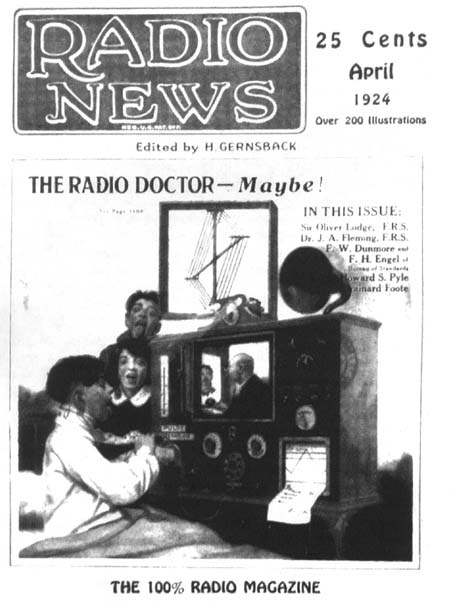
In April 1924, an imaginative cover for the magazine Radio
News foreshadowed telemedicine in its depiction of a "radio doctor" linked to a patient not only by sound but also by a live picture (Figure 2.1). At the time, radio had just begun to reach into American homes, and the first experimental television transmission did not actually occur until 1927. (See Figure 2.3 for a 1990s image of telemedicine.)
The magazine cover also illustrates the attention-getting character of interactive video applications in telemedicine. Ordinary telephone calls to the doctor's office and even 911 calls are so commonplace today that they are often overlooked and rarely evaluated as telemedicine applications. Nonetheless, in many situations, they are the alternative to which more complex clinical uses of telemedicine should be compared. Similarly, when visual information is an essential part of a consultation, the relevant options include still as well as moving images, and both kinds of images can be sent and received on a delayed rather than real-time base. With the telephone, such delay is common and accepted, for example, when a nurse says "I'll give this information to the doctor and we'll get back to you later today" or when a physician promises to call about test results.
According to one review, the first reference to telemedicine in the medical literature appeared in 1950 (Zundel, 1996). The article described the transmission, beginning in 1948, of radiologic images by telephone between West Chester and Philadelphia, Pennsylvania, a distance of 24 miles (Gershon-Cohen and Cooley, 1950). Building on this early work, Canadian radiologists at Montreal's Jean-Talon Hospital created a teleradiology system in the 1950s (Allen, 1996; Allen and Allen, 1994b).
Medical uses of video communications in the United States are commonly dated to 1959 (see, e.g., Bashshur et al., 1975; Perednia and Allen, 1995). In that year, clinicians at the University of Nebraska used two-way interactive television to transmit neurological examinations and other information across campus to medical students (Benschoter et al., 1967; Wittson and Benschoter, 1972). They next explored its use for group therapy consultations, and in 1964 they established a telemedicine link with the Norfolk State Hospital (112 miles away) to provide speech therapy, neurological examinations, diagnosis of difficult psychiatric cases, case consultations, research seminars, and education and training.
Also in 1959, a Canadian radiologist reported diagnostic consultations
based on fluoroscopy images transmitted by coaxial cable (Jutra, 1959). In 1961, the journal Anesthesiology reported on radiotelemetry for patient monitoring (Davis et al., 1961). Ship-to-shore transmission of electrocardiograms (ECGs) and x-rays was reported in 1965 (Monnier et al., 1965),1 and transoceanic transmission was reported soon thereafter (Hirschman et al., 1967).
Although the Nebraska program and many of the other early telemedicine applications arose out of concerns about the limited access of remote populations to a variety of health services, urban uses also appeared fairly early. In 1967, physicians at the University of Miami School of Medicine and the City of Miami Fire Department reported their pioneering use of existing voice radio channels to transmit electrocardiographic rhythms from fire-rescue units to Jackson Memorial Hospital (Nagel et al., 1968). Today, it is commonplace for paramedics to transmit cardiac rhythms and 12-lead ECGs to hospital emergency departments. These and certain other kinds of emergency telemetry are now so routine and so much a part of mainstream health care that they are often not mentioned as telemedicine applications.
In another early use of telecommunications technologies to assist in urban emergency and urgent situations, Massachusetts General Hospital (MGH) established in 1963 a telecommunications link with a medical station staffed by nurse clinicians at Boston's Logan Airport (Bird, 1972). In 1968, MGH added an interactive television microwave link that provided electrocardiograph, stethoscope, microscopy, voice, and other capabilities. During the same period, MGH also established a telepsychiatry link with the Veterans Administration Hospital in Bedford, Massachusetts, that continued to operate until the mid-1980s (Crump and Pfeil, 1995).
A report from the National Academy of Engineering (NAE) on communications technologies in urban areas suggested other uses of telemedicine that would be applicable in urban as well as rural areas (NAE, 1971). One such use involved physician services for nursing home patients; another use involved the supervision of nonphysician providers in ambulatory care clinics. The Mt. Sinai School of Medicine in New York City tested the latter application when it established in 1972 a black-and-white cable television link to support
nurse practitioners providing pediatric primary care at a clinic in an Hispanic area of the city (Muller et al., 1977).
In the 1960s and 1970s, various other telemedicine applications were initiated, several of which were supported by federal agencies including the U.S. Department of Health, Education and Welfare (what is now the Department of Health and Human Services, DHHS) and the National Aeronautics and Space Administration (NASA). An unusual set of partners—the U.S. Indian Health Service, NASA, and the Lockheed Company—joined in sponsoring STARPAHC (Space Technology Applied to Rural Papago2 Advanced Health Care), which tested satellite-based communications to provide medical services to astronauts and to residents of an isolated reservation. The STARPAHC project lasted for about 20 years with most of its elements being phased out in the late 1970s.
In addition, the U.S. Public Health Service and the Department of Defense sponsored a series of teleradiology projects in the 1970s and 1980s (Gayler et al., 1979; Gitlin, 1986). These projects led to the collaborative Digital Imaging Network Project to promote the development and implementation of civilian and military teleradiology (Greberman et al., 1988; Mun et al., 1989). In the 1980s, some radiologists began to use inexpensive systems for "on-call" screening of images (Gitlin, 1994).
According to Perednia and Allen (1995), only one of the formal telemedicine programs that was started before 1986 survived into the mid-1990s. That program, established by the Memorial University of Newfoundland, began in 1977 with a three-month demonstration project involving one-way television and two-way audio. The test was "successful" in demonstrating the value of television, but the project team concluded that much of the educational material and data could be provided efficiently and less expensively by telephone, videotape, audio teleconferencing, and print materials (House, 1993).3 The university is still using telemedicine to support
a range of clinical, educational, and research activities, most of which are not video based.
Also illustrating the fluctuating interest in telemedicine in the past, a 1992 literature review found that the National Library of Medicine information system included 127 articles on health care uses of telemedicine and 55 articles on educational uses for the period 1975–1982 whereas the 1983–1990 period showed only 75 articles in the former area and 117 in the latter (Crump and Pfeil, 1995). The authors of this review cite high transmission costs as a major reason for the waning of interest in telemedicine in the early and mid-1980s. They note that improved technologies and lower costs began to revive interest in telemedicine toward the end of the 1980s. More recent literature searches reflect this renewed interest (Scannell et al., 1995).
Current Applications Of Telemedicine
Growth and Diversity
The number of telemedicine users is now expanding rapidly enough that no complete inventory of applications is available, especially for projects involving private nonprofit and commercial sponsorship or funding. To fill that information gap, a federal working group on telemedicine (discussed further in Chapters 4 and 5) is developing an inventory that will initially include government projects and then expand to include state and private projects (Puskin et al., 1995). Part of that effort has included a survey to identify rural hospitals using telemedicine in one form or another. The Department of Defense and the Department of Veterans Affairs are likewise working to document more fully telemedicine activities at their facilities. Private organizations have also been tracking and reporting public and private telemedicine programs (Telemedicine Monitor, 1995). For example, the state health policy program of George Washington University surveyed and analyzed state government initiatives to support telemedicine as discussed further in Chapter 4 (Lipson and Henderson, 1995).
Most tracking efforts focus on programs transmitting still images (e.g., radiologic images) or using interactive television. One recent overview estimated that the number of programs using the latter technology has reached 50, with growth doubling each year
between 1990 and 1995 (Allen and Perednia, 1996). The review also suggested that teleradiology installations were growing at a similar pace, although getting accurate data on these programs has not been easy, in part because vendors have been reluctant to release sales information (Franken, 1996).
Newspapers, medical newsletters, and other sources document the development of the Internet as a vehicle for the formal and informal provision of medical advice. An increasing number of health-related organizations are establishing World Wide Web pages (including a number of programs described in this report),4 and a variety of individuals and groups have created less formal "chat groups" and other links that respond to many consumers for greater self-determination in medical care.5
The diversity of telemedicine demonstration projects is suggested by the 19 projects funded by the Office of Rural Health Policy (see Appendix A). The discussion below, which includes some of these projects, further illustrates the range of clinical applications of telemedicine. It includes both common and relatively uncommon applications. Some examples focus on clinical specialties (e.g., radiology) whereas others focus on populations or sites of care (e.g., prisons). Most programs have received governmental grants or other public subsidies, but some are essentially self-sustaining. This diversity underscores the challenge of designing evaluation strategies, measures, and data collection methods to fit different settings, populations, clinical conditions, and objectives.
Teleradiology
As indicated earlier, the most common current applications of telemedicine (other than general telephone and fax communications) appear to involve radiologic image transmission within and among
|
4 |
Health information sources on the World Wide Web can be searched using a variety of "search engines" such as Yahoo (http://www.yahoo.com/Health/) and EINet (http://einet.net/galaxy/Medicine.html) and other sources such as the Telemedicine Information Exchange (http://tie.telemed.org) and Medical Matrix (http://www.slackinc.com/matrix). The latter site is sponsored by the American Medical Informatics Association's Internet Working Group. |
|
5 |
One committee member cited a chat-group participant from Taiwan who described a relative with an illness the local doctors had not diagnosed; suggestions made by other participants assisted the subsequent local diagnosis (John Scott, personal communication, February 6, 1995). |
health care organizations. Several steps are typically involved in teleradiology including digitizing film images or directly producing digital images, incorporating demographic and other patient information, compressing images (data) in various ways to allow them to be sent more quickly and inexpensively, transmitting images from one site to another, and reconstructing images for viewing and interpretation (Forsberg, 1995). Additional steps are required for storing and retrieving images electronically.
The growth of teleradiology applications reflects several characteristics of radiology: (a) its well-established consulting infrastructure based on mail and courier services; (b) its early use of digital imaging technologies; and (c) the availability of Medicare payment for teleradiology consultations. Radiology centers have long used mailed or courier-delivered films to provide, as described by one organization, "consultation, second opinions, and primary interpretations; image over-read [and other educational and supportive services] for individuals getting started in MR [magnetic resonance imaging] or other difficult modalities; quality control of image interpretation; vacation coverage; and additional coverage for groups with an increasing case volume as yet insufficient to justify hiring an additional radiologist" (UCSF, 1995). In many situations, teleradiology can make such distance services much quicker and more convenient, and the electronic storage of images minimizes problems with mislaid or lost films as images move between or within organizations. Radiologists can also have images transmitted to home or office work stations so they may not have to go to the hospital to see films when they are on call.
A second base for teleradiology is the relatively early experience in radiology with the advantages and complexities of computer-based digital technologies such as computed axial tomography and magnetic resonance imaging. These were followed by other technologies such as picture archiving and communication systems and advanced digital switching, which provided the option of high-quality electronic transmission of images. These developments made institutional adoption of digital radiology feasible and facilitated the development of multi-institutional teleradiology networks. Several sites on the World Wide Web provide radiology and pathology images for educational purposes, and some programs are testing or
using pathology and radiology transmission for clinical purposes (Hancock, 1995; Allen and Perednia, 1996).
Particularly critical for teleradiology is a third element: Medicare and other coverage policies that have allowed payment for radiology consultations without the face-to-face interaction required for most other consultations. This requirement is a major source of frustration for many advocates of other telemedicine applications.6 (See Chapter 4 for further discussion of payment issues.)
Most teleradiology applications have built on conventional film-based radiology programs. To cite one example, the University of Iowa began in 1987 to add teleradiology to an established film-based radiology program (Franken, 1996). The university now provides a variety of teleradiology services to rural sites within the state. In one experimental program, the university uses teleradiology to provide 80 percent of the coverage to a 30-bed rural hospital.
For the Veterans Affairs (VA) Medical Center in Baltimore, Maryland, teleradiology was an outgrowth of a more fundamental decision to adopt (except for mammography) a filmless or digital radiology technology throughout the new facility being built in the early 1990s (Siegel, 1996). The center has both a commercial picture archiving and communication system (PACS) and a system that is part of the VA's Decentralized Hospital Computer Program, which acquires, stores, and displays images and other information from other departments. From this base, the Baltimore center has begun providing teleradiology services to four smaller VA facilities in the region. Other VA facilities are developing teleradiology based on conventional and filmless systems.
In general, the wider use of digital radiology within health care centers can be expected to provide an additional impetus for teleradiology
to expand beyond institutional boundaries. Multi-institutional teleradiology networks are emerging. Telequest, for example, is a teleradiology venture recently created by five academic medical centers (Bowman Gray, the Brigham and Women's Hospital, Emory University, the University of California at San Francisco, and the University of Pennsylvania) (Gore, 1996). Some of the individual and multi-institutional teleradiology ventures are probably outgrowths, in part, of excess medical center capacity in the United States (see Pew Health Professions Commission, 1995; IOM, 1996). They illustrate how academic medical centers may look to telemedicine as a way to expand markets nationally and internationally and to offset revenue losses in a changing health care and government environment. As two experienced academic teleradiology experts have described it, "to be digitally aware is to realize the new era of competition" in a cost-constrained environment (Mun and Freedman, 1996).
One additional argument for teleradiology is that it has the potential to improve the quality and reduce the variability of image interpretation. This long-standing concern in the field arises because general radiologists may spend only a small portion of their time on certain tasks such as mammogram interpretation and may lack the knowledge and volume of experience of subspecialists (Beam et al., 1996). On the other hand, debate continues about the diagnostic accuracy of teleradiology, quality assurance requirements, and the appropriate trade-offs between accuracy and more timely consultation in some areas (Forsberg, 1995; Franken, 1996). A number of studies have compared digital or digitized images and film (see Chapter 5), but the broader quality implications of teleradiology have yet to be evaluated.
Care in the Home and Other Nonclinical Sites
The use of telemedicine in home and other nonclinical settings illustrates the significance of nonvideo means for providing information and advice and for monitoring patient status. The most familiar nonvideo telemedicine option is the use of the telephone. Physicians, nurses, and other personnel routinely talk with patients and families—providing information, checking their status, and offering reassurance—without the expense or inconvenience of an office visit for the patient or a home visit for the clinician. To reduce avoidable
office visits, many health plans have established telephone advisory programs, staffed primarily by nurses, to provide patients with information, assessments, and recommendations for routine medical problems. For medical and other emergencies, the 911 system works from any telephone to put people in touch with dispatchers who assess the nature of the emergency, send medical or other assistance as indicated, and provide medical instructions (e.g., for cardiopulmonary resuscitation) when necessary.
In addition to person-to-person communications, automated telephone services are used in various ways. For example, interactive voice response systems allow individuals to initiate calls and respond to recorded questions using a touch-tone telephone. Such systems have been used to test automated telephone screening for depression, with questionnaire score provided to callers along with toll-free follow-up telephone numbers (Baer et al., 1995). A different kind of automated arrangement provides for scheduled, automatic calls to patients. Patients can then respond by using a touch-tone telephone to enter basic medical information or by using a special device attached to the telephone to transmit physiological measurements. Evaluations of these kinds of program are discussed in Chapter 5.
One of the oldest telephone-based monitoring programs has been operated by Veterans Affairs Medical Centers in San Francisco and Washington, D.C. They have acted as pacemaker surveillance centers since 1982, and these centers now monitor over 11,000 patients both at home and away from home (VA, 1996). (Because pacemakers are programmed to change their normal operating frequency when batteries run low and because an electrocardiogram can detect this problem, a device attached to a telephone can transfer an ECG reading to the centers, which can thus identify this problem long distance.) Other monitoring systems rely on radio-based technologies to raise an alarm if a patient does not check in on a regular basis or if a patient triggers the alarm following an emergency such as a fall. Patients with heart disease can carry beepers that allow them—if they experience symptoms—to transmit a 12-lead electrocardiogram using ordinary phone lines. A commercial service in Israel claims 30,000 subscribers for such a system (Carthy, 1995).
Video-based home health options are also varied but less common. Many are still in the testing stage. Patients may sit before video cameras at scheduled times to talk with clinicians and, perhaps,
display skin conditions, demonstrate their range of motion, show thermometer readings, or otherwise offer visual information about their condition. A variety of instruments may also be attached to home video units to transmit heart sounds, blood pressure measurements, and other patient data. The term "electronic housecall" is an attention-getting description often applied to such combinations of video and other technologies for home monitoring and consultation (Jones, 1993).
Finally, no discussion of home-based telemedicine can ignore the growth of Internet services, which offer a wide range of general information and other services that can be used in many settings (Johannes, 1996; Lamberg, 1996; Borzo, 1996b). A quick search of the World Wide Web will turn up a myriad of general and specialized information sites on dozens of health issues, some aimed at patients, others at clinicians (see footnote 3 above). In addition, groups of people with common health problems ranging from minor to severe can share information and concerns through a variety of Internet services. Electronic mail also provides an alternative to telephone conversations between clinician and patient, clinician and clinician, and patient and patient. The extent to which the Internet may overtake other telemedicine transmission arrangements for a variety of hospital and clinic settings is a subject of considerable debate.
Telemedicine for Prison Populations
State officials are showing increasing interest in the potential of telemedicine to provide better access for prisoners to timely generalist and specialist consultations and to reduce the costs and inconvenience associated with current on-site and off-site arrangements (Allen, 1995a,b; Braly, 1995; Lipson and Henderson, 1995; Brecht et al., 1996; Chinnock, 1996). Colorado, North Carolina, and Texas are among the states with operational programs, and other states are considering or testing programs. A major objective of prison telemedicine is to avoid the high costs of either bringing medical specialists to prison (the costs of which are high partially owing to adverse working conditions) or transporting the patient (the costs of which are high because at least two guards and a state vehicle are required for security). In North Carolina, it is estimated that the average prisoner transport cost for medical services is over $700 (Kesler and
Balch, 1995). In addition, prisoner programs also are expected to reduce public concern about prisoner escapes, provide earlier access to care and better access to subspecialty care, and supply videotaped documentation of services that may be useful in lawsuits. Because prison telemedicine programs are generating relatively large number of cases, they offer considerable potential for systematic evaluation such as those undertaken and planned by Texas Tech and the University of Texas Medical Branch at Galveston.
One early program has been operated by the East Carolina University (ECU) School of Medicine, which is also involved in other telemedicine projects that are linked to a statewide distance learning network established in 1989 (Kesler and Balch, 1995; OTA, 1995; Keppler, 1996; Tichenor et al., 1996). ECU provides telemedicine services to the maximum security Central Prison, which has two physicians working at the facility 100 miles distant in Raleigh, North Carolina. The program began in 1992, prompted by a combination of an increasing prison population and legal challenges focused on prisoners' right to health care. The initial focus was emergency consultations between the prison health unit and the emergency department at the University Medical Center. The program now includes 31 ECU physicians from 15 medical disciplines.7 A financial audit of the North Carolina Department of Corrections in March 1994 found evidence of cost savings by the Central Prison Telemedicine Project, but this analysis has not been published. The audit did, however, lead to a formal recommendation that the program be extended to more prison facilities around the state. The quality of care has not been formally evaluated.
Rural Telepsychiatry
One of the nonradiology programs that has moved beyond demonstration status is RODEO NET (Rural Options for Development and Educational Opportunities). It began in 1988 when community mental health programs in 13 eastern Oregon counties organized the Eastern Oregon Human Services Consortium (EOHSC). In 1991,
|
7 |
At the time of last checking (June 1996) on the Web page for the entire ECU program (http://150.216.193.51/r-folder/consult.html), 890 consultations had been performed, over half (495) of which involved dermatology. Other frequently consulted specialties include neurology (85) and gastroenterology (94). |
EOHSC was awarded a three-year ($700,000) grant from the Office of Rural Health Policy (ORHP) to demonstrate the use of telecommunications in delivering mental health care in eastern Oregon, a large rural area remote from many secondary and tertiary medical resources (ORHP, 1993b; Allen and Allen, 1994a). Operations began in 1992 and the project has since become independent of federal grant funding (Britain, 1995; OTA, 1995).
On the clinical side, the telepsychiatry program is used for case consultation (both one-time and ongoing), patient evaluation, medication management, and crisis response through a 24-hour psychiatric emergency service. Administrative, educational, and other uses include preadmission, predischarge, and transfer reviews; precommitment and recommitment hearings; continuing health professions education; technology training for both consumers and providers; peer networking; and management video conferencing. Available interactive services include a one-way video, a two-way audio, and a two-way compressed video/audio/data link.
Current funding sources include service contracts with EOHSC, Greater Oregon Behavioral Health, Inc. (a nonprofit managed behavioral health care organization responsible for delivering public behavioral health care services to consumers in eastern Oregon under the Oregon Health Plan demonstration), and Oregon's Mental Health and Developmental Disability Services Division. A public-private partnership consisting of Greater Oregon Behavioral Health, Inc., Oregon ED-NET (a public telecommunication service providing satellite video conferencing), and Eastern Oregon State College helped fund some of the program's technical infrastructure. Rural sites lease equipment from Oregon ED-NET and pay a $5,000 yearly membership fee in addition to a charge for air time. The network also receives fees for training offered over the system.
In discussing the program's ability to become self-sustaining, the program director cited several factors during video-conference comments to committee members visiting Oregon Health Sciences University (Catherine Britain, November 1995). First, the program arose as a cooperative, grass-roots initiative to solve the clearly recognized problem of limited availability of mental health services for a sparsely populated area. It was viewed as a means of meeting health needs, not as an end in itself. Second, the creation of a public-private partnership increased the base across which telecommunications infrastructure
costs could be spread. Third, the program had some key champions who remained committed to the effort in the face of continuing technical, political, administrative, and other problems. Fourth, training and support for users focused on establishing comfort with technologies at a level equivalent to that for the telephone.
Postsurgical Monitoring in an Urban Nursing Home
The postsurgical monitoring program developed by Stanford University Medical Center and nearby Lytton Gardens Health Care Center offers an example of a telemedicine application prompted by local initiative without federal grant funding.8 This program grew out of discussions initiated by Lytton Gardens, a skilled nursing and residential facility that provides a continuum of services and living arrangements for low-income senior citizens. The Center's Chief Executive Officer (CEO) proposed that telemedicine could be used to assist in the earlier discharge of complicated surgical cases from the medical center to the nursing facility. The first test involved liver transplant patients, followed by reconstructive plastic and vascular surgery patients. The surgeons receive progress notes from the physician and nurses at the nursing facility, and they can examine patients who are brought to a room equipped with a special video camera (operated by a licensed practical nurse) and an audio link that allow both visual inspection of surgical wounds and conversation with the patient. Using the interactive video link, the nursing home has also initiated some psychiatric and dermatology consultations and is considering their use in home care.
Stanford's telemedicine program has received funding for transmission costs from Pacific Bell (a regional Bell operating company recently slated for merger with another regional company) and equipment and software on loan from Hewlett-Packard and md/tv (a medical software company) that will have to be purchased after two years. (Figure 2.2 shows a consultant's telemedicine work station, similar to that used at Stanford. Figure 2.3 shows what a patient might see at a remote site, in this case, a dialysis center.) The postsurgical monitoring program began in June 1995 without immediate
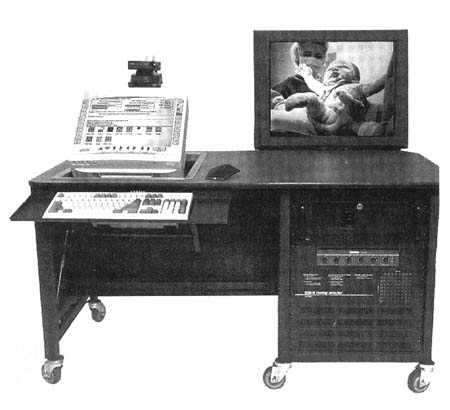
FIGURE 2.2 Telemedicine work station—an example as it might be configured with hardware and software for a consulting clinician to conduct live video conferencing, capture and transmit images and other data on a store-and-forward basis, share information from the patient record, and perform on-line medical literature searches. The unit includes a personal computer, robotic (pan-tilt-zoom) video camera (mounted above the computer monitor), large video display monitor, microphone, speakers, CODEC (an electronic COder/DECoder device), and software for a variety of purposes including control of some peripheral devices at the remote site. At the remote site, the installation would include a similar set up plus the peripheral devices (e.g., Doppler stethoscope, high-resolution digital still-image camera, full-motion video camera), document scanners, and other equipment appropriate for the patients to be evaluated. Photo used with permission of md/tv, inc., a subsidiary of Multimedia Medical Systems.
prospects for insurer payments to either Stanford or Lytton Gardens for the tele-medicine consultations. For Stanford, however, the arrangement provides the benefit of reduced hospital stays, which is financially advantageous since the medical center receives a fixed per-case payment for many of its surgical cases. The CEO of Lytton Gardens sees the benefit of the program in increased referrals from
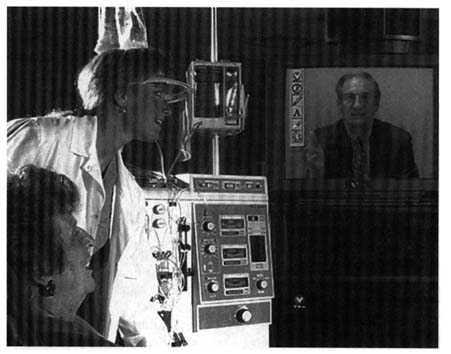
FIGURE 2.3 Telemedicine consultation from the patient's perspective—what a patient (in this case, a patient at a dialysis center) might see during a real-time video consultation with a distant specialist. The patient sees the consultant on one monitor and herself on another (not shown). A robotic video camera is mounted above one of the monitors. Photo used with permission of VTEL.
Stanford, reimbursement at higher levels for more complex patients, and increased satisfaction and retention of nursing staff.
More generally, telemedicine has been factored into strategic business planning for the Stanford University Medical Center, which has made clear that it expects the program to be self-supporting within a few years. One objective is contractual arrangements with HMOs and similar organizations, which are vital in California, a state that is dominated by managed care plans. Stanford already has one such contract with the San Jose Medical Group for dermatology services, and it also is linked to the Drew Health Foundation (a community health center) for telecardiology services, with other services to be added in the future.
Telemedicine in a Managed Care System
As indicated in Chapter 1, the committee found managed care decisionmakers preoccupied with other priorities in health care markets that have become fiercely competitive and increasingly complex politically. Telemedicine did not appear to be a priority, although a few managed care plans are testing clinical and administrative roles for telemedicine. Convincing reports of feasible urban and suburban applications (e.g., for specialist consultations) and cost savings (e.g., from further concentrating specialist services) could spur much greater interest. The expansion of managed care into more rural areas may also spark increased attention.
One integrated health system that is testing telemedicine is Allina, a relatively new, not-for-profit system in Minnesota that resulted from the merger of an insurance company (Medica) and a large health care delivery system (Healthspan) that included a number of rural sites.9 The organization's telemedicine system has administrative, educational, and community service as well as clinical uses. It is being constructed with a mix of funds including internal resources, a grant from the ORHP, contracts and other arrangements with a consortium of rural hospitals (the Rural Health Alliance), technical assistance from several vendors, and an arrangement with U.S. West (the regional Bell operating company) that lets the system avoid long distance charges for its rural links. The insurance component of Allina pays for telemedicine consultations just as it would pay for any other accepted specialty consultation. The network began operating May 1, 1995, and now serves approximately two dozen urban and rural sites, including the corporate office in Minneapolis. Clinical consultations were initially limited (about 150 from May 1995 to February 1996) but are reported to be growing.
Allina is also testing a link with three very small emergency departments (including two that are not part of the Allina system) located in communities with fewer than 4,000 residents. They are linked with one of Allina's larger rural hospitals, which is staffed 24
hours a day with certified emergency or family medicine physicians. The central and remote sites can be linked within five minutes. For minor problems, the consulting physician examines the patient through a video/audio link and an on-site nurse carries out orders as appropriate. For more serious cases, additional patient data (e.g., laboratory results, ultrasound, radiographs) may be transmitted so that a decision can be made whether to treat locally or transfer the patient to the larger facility.
The business analysis and strategy behind this arrangement has several elements. The remote sites have been spending up to $70,000 for backup emergency services of uneven quality. Allina could offer them the telemedicine link and transfer arrangement for $40,000 to $50,000 on a contractual basis and could sometimes successfully bill patients' insurers for services. Allina's rural hospital would be expected to increase its emergency care volume and revenues (from both transferred patients and consultations) enough to justify round-the-clock operation. The smaller satellite hospitals would increase their stability and save on the costs of backup emergency care and would likely keep some patients who would otherwise be sent elsewhere.
Conclusion
This chapter has briefly reviewed the history of telemedicine and illustrated a range of current applications. The historical review shows an initial emphasis on access objectives for rural areas, with recently increasing interest in urban and suburban uses. Although much attention is paid to interactive video applications, the committee was impressed by the continuing importance of telephone-based and other communications of many kinds.
During its deliberations, the committee heard considerable concern that many current demonstration and other pilot projects would share the fate of most of the 1960s and 1970s projects by not surviving the end of federal grant funding or other subsidies (Cunningham, 1995). Failure to link projects to major organizational plans and business objectives and poor planning were cited as problems. High transmission costs, awkward and quickly outdated technologies, low patient volume, lack of physician interest, and limited insurance coverage also contribute to concerns about program survival.
Chapters 3 and 4 discuss further some of the technical, human, and policy factors that may support or impede the successful introduction and widespread adoption of telemedicine applications such as those described here. If those planning for the implementation and evaluation of telemedicine programs are sensitive to these factors, they may be able to minimize certain problems at the outset as well as identify sources of problems that arise when the program becomes operational. The evaluation framework presented later in this report reflects this conclusion.


