
2
Understanding Health and Its Determinants
What is health? Multiple definitions of health exist, ranging from a precise biomedical or physical definition such as the absence of negative biologic circumstances (altered DNA, abnormal physiologic states, abnormal anatomy, disease, disability, or death) to the broad definition of the World Health Organization: "Health is a state of complete physical, mental and social well-being and not merely the absence of disease or infirmity" (WHO, 1994). The former definition offers the advantages of easy measurement and relatively clarity of the causal connections between the medical and public health care systems and the measured outcomes. The latter definition views health more broadly but risks assigning to the "health" system full responsibility for the economic and social welfare of members of society. Neither definition explicitly takes account of how individuals experience disease. Individuals can feel ill in the absence of disease and vary dramatically in their responses to a disease. Indeed, what matters to individuals is not simply the absence of disease, disability, or death, but also their responses to symptoms or diagnoses; their capacity to participate in work, family, and community; and their sense of well-being in many spheres (e.g., physical, psychosocial, spiritual).
A BROADER DEFINITION OF HEALTH
The successful implementation of initiatives to improve community health requires an understanding of the complex and diverse processes that produce health in communities. For both individuals and populations, health can be seen to depend not only on medical care, but also on other factors including individual behavior and genetic makeup, and social and economic conditions. The committee has adopted a broad definition of health, echoing a WHO (1986) health promotion perspective, that acknowledges multiple possible goals for the health system and underscores the important contributions to health that occur outside the formal medical care and public health systems. The committee definition allows improvement efforts to target not only the reduction of disease, disability, or death, but also an improvement in individuals' response to and perceptions of their illnesses; their functional capacity both now and in the future; and their overall sense of physical, emotional, and social well-being. The value of a broad measure thus rests in part upon the value attached to it by the population. Working within a definition of health that explicitly relies, in some measure, on community values is particularly important in a context of decision making for the allocation of limited resources.
Committee definition of health:
Health is a state of well-being and the capability to function in the face of changing circumstances.
Health is, therefore, a positive concept emphasizing social and personal resources as well as physical capabilities. Improving health is a shared responsibility of health care providers, public health officials, and a variety of other actors in the community who can contribute to the well-being of individuals and populations.
As Syme (1996) notes, viewing health as a biomedical construct has limited our ability to integrate processes that produce health and to address the underlying causes of disease. Death, disability, and disease incidence—ascertained by using traditional biologic or epidemiologic measures—are all important and valid
indicators of the health of a population. A broader definition, however, allows efforts to measure community health to go beyond traditional public health measures, incorporating measures of functional status and general health perceptions. Communities embarking on health improvement initiatives should consider carefully their definition of health and ground their work in an evidence-based conceptual model of the determinants of health. Three arguments supporting such action are discussed below.
-
The origins of good health are multiple and cross-sectorial. Origins of good health include factors such as genetic makeup, environmental conditions, nutrition and exercise, access to health care, social support systems, and many others. Some of the factors, such as genetic makeup, are nearly impossible to alter whereas others are amenable to change. In addition, some of the factors influence a variety of health outcomes (e.g., on a population basis, dietary habits and education are known to influence multiple health outcomes). Careful consideration of what is known about the determinants of health highlights the tension between factors that are easily measurable now (e.g., hospitalization rates) and factors that may be equally or more important in the long run (e.g., teenagers' perception of their future) but are much more difficult to measure and monitor. Grounding community health improvement in a broad model of the determinants of health can remind communities to consider multiple and cross-sectorial influences when selecting health issues to target and when designing possible interventions.
-
A focus on the origins of health emphasizes the need for cross-sectorial assumptions of responsibilities. For various stakeholders to be accountable, the roles of those stakeholders in producing illness or health must be defined. A broad conceptual model of the determinants of health includes the full spectrum of possible influences on health. Such a model provides a valuable framework for communities to use as they consider the roles (and potential contributions) of the various stakeholders and thus each stakeholder's responsibility for health improvement in the community.
-
A focus on the origins of health creates multiple options for intervention. A conceptual model of the determinants of health can serve as the starting point for communities to identify what is known about issues they wish to address. Options for intervening can reflect the unique characteristics of the community vis-à-vis available resources, cultural norms, and target populations. Per
-
formance measures can then be developed as the basis for strategic actions.
The rationale for adopting a broad definition of health lies not only in its value to the population served by the health system and its usefulness in identifying measures of the origins of health. A broad definition of health also is appropriate for the changing nature of the "health care system," reflects the interconnectedness of health and social systems, and is consistent with current scientific evidence about how health is produced in communities (Aguirre-Molina, 1996; Warden, 1996).
Changing Nature of the "Health Care System"
Many Americans view health as a simple biomedical construct in which health is determined by the provision of health care (Lamarche, 1995). This perspective on health developed during this century, beginning in the 1930s with well-baby clinics and services for "crippled children" and expanding in the 1950s with national investments in biomedical research facilities such as the National Institutes of Health and construction and funding of hospitals through the Hill-Burton program (Guyer, 1990). With advances in medical science and increases in the number of hospitals, policymakers and health care providers became concerned about differential access to health care resources, especially for underserved and hard-to-reach populations. Poverty and geography were viewed as barriers to health care and thus to good health.
Beginning in the 1960s, programs designed to improve access to health services were created, including Medicare and Medicaid. These programs markedly reduced financial barriers for the poor and elderly, and they also ensured a supply of well-trained physicians by providing funds for medical school and residency training programs.
The biomedical model of health has fostered the development of a personal health care system centered around technologically advanced hospitals and highly trained medical specialists. However, the high cost of maintaining these resources is the subject of current public debate. In addition, questions have been raised about the overall contribution of the biomedical model to improvements in health status. Although important, health care has probably been overemphasized as a determinant of health. Of the 30-year increase in the life expectancy achieved this century, only 5 years can be attributed to health care services (Bunker et al., 1995).
The roles of the public sector in managing the health care system and in providing clinical and personal preventive care services as well as public health services are undergoing dramatic changes. Historically, public health departments have provided population-based services and, together with public hospitals and community health centers, have delivered clinical and personal preventive services to poor and uninsured populations. For many public health departments located in the South and in large metropolitan areas, the delivery of clinical and personal preventive services is a primary focus. In the late 1980s, however, the activities of public health departments were reexamined, and the Institute of Medicine (IOM, 1988) recommended a focus on three core functions—assessment, policy development, and assurance. In this framework, the direct provision of clinical and personal preventive services is only a small portion of the assurance function of public health departments. In many states, this transition is in progress. Public hospitals and community health clinics, however, remain important providers of these services.
Currently, most local public health departments do not play a significant role in assuring the quality of personal health care services that they do not purchase or provide. the quality assurance roles of state agencies have also been limited. Private-sector organizations, however, have developed complex and sophisticated quality assurance systems, often more in response to market forces than to demands of the public sector. As more public health departments become involved in quality assurance activities, providers and health plans can be expected to experience the influence of more public-sector demands via standard setting and licensure requirements as well as market forces.
The recent surge in the growth of managed care organizations has taken place in an environment that seeks to continue the delivery of high-quality clinical and personal preventive health services while constraining the costs of care. Managed care organizations are viewed as more capable of responding to the demands of third-party payers for performance and accountability than are clinicians practicing independently. Market forces, which spurred the recent growth of managed care organizations, have influenced the structure of the health care system (Rodwin, 1996). The experience of the Pacific Business Group on Health illustrates the changing relationships in the health system vis-à-vis new roles for purchasers and providers (see Box 2-1).
|
BOX 2-1 THE PACIFIC BUSINESS GROUP ON HEALTH The experience of the Pacific Business Group on Health, a private-sector employer purchasing coalition based in the San Francisco Bay Area, demonstrates how "purchasers can shift the focus of the health care system from managing the delivery of medical services to improving health" (Schauffler and Rodriguez, 1996). This alliance is using financial and market share incentives to influence health plans to provide access to high-quality health promotion and disease prevention services. By defining health improvement as the goal, purchasers hope to encourage health plans to look beyond clinical encounters and beyond patient-provider contacts to identify partners who can help improve the lifestyles of individuals and the health of communities (Schauffler and Rodriguez, 1996). |
Interconnectedness of Health and Social Systems
It has long been recognized that the health of a community has a tremendous impact on the function of its social systems and that the condition of the social and economic systems has a significant impact on the health of all who live in a community (Patrick and Wickizer, 1995). For example, a healthy workforce is more productive, a healthy student body can master lessons more readily, and a healthy population is better able to make progress toward societal goals. Working conditions, economic well-being, school environments, the safety of neighborhoods, the educational level of residents, and a variety of other social conditions have a profound impact on health. Only recently, however, has substantial attention been devoted to understanding and acting upon the interdependence of health and social systems (Ashton and Seymour, 1988).
Health is a growing concern of employers, community-based organizations, schools, faith organizations, the media, local governmental bodies, and community residents, even though their roles are not viewed as part of the traditional domain of "health activities." As communities try to address their health issues in a comprehensive manner, all parties will have to sort out their roles and responsibilities. By reaching out to new partners in the community, traditional partners in health can ensure that all relevant sectors are engaged in efforts to improve health. A recent IOM report on primary care (IOM, 1996) also emphasizes the need for
|
BOX 2-2 ESCONDIDO HEALTH CARE AND COMMUNITY SERVICES PROJECT The Escondido Health Care and Community Services Project aims to reduce the harmful effects of alcohol and other drug use in the community of Escondido, California (population, 120,000; county population, 2.6 million). The project coordinates a cross section of community services, including law enforcement, hospital emergency rooms, and community agencies. Integration of data systems, administrative coordination, financing, and training are other integral elements. The municipal government functions as a facilitator for the community collaboration but does not provide services directly. Its interest is to reduce the cost of alcohol and drug use to the city and to improve the city's health. Unlike many related programs, which target individuals who are already dependent on alcohol or drugs, the Escondido project seeks to identify users who are at high risk of becoming dependent in the future. The objective is to influence drinking behavior before it reaches a critically destructive level, not to identify those already in need of specialized services (although such referrals are made when necessary). The program involves routine screening for alcohol or drug use in high-volume, high-risk situations. It includes a three- to five-minute screening interview and brief intervention, which is administered to all adults in hospital emergency rooms, health centers, and law enforcement settings. A new component of the program is the ''Sobering Service," which assists individuals who would otherwise be sent to the police or to the emergency room for alcohol- or drug-related care. Three important lessons have been learned. First, the ability to cross sectors and create an integrated program has made it possible to capture savings in one sector and make those resources available to the program. For example, the city is investing in the project the money that would normally be spent on booking people for alcohol-related offenses. The project may become self-sustaining because local private funds may soon be raised from managed care firms and combined with ongoing public funding for uninsured participants. (Initial funding for the project came from local city general funds, county government funds, and a matching grant from The Robert Wood Johnson Foundation.) Second, the availability of data has helped to identify stakeholders for the project and to create a collaborative value system, based on community participation. Third, development of a data system will be important in monitoring and maintaining the integration of screening and brief intervention services within multiple collaborating agencies. SOURCE: D. Kelso, workshop presentation (1995); see Appendix D. |
better collaboration among the diverse groups that can influence health. The Health Care and Community Services Project in Escondido, California, illustrates this kind of collaboration among diverse groups and the interconnectedness of health and social systems (see Box 2-2).
A MODEL OF THE DETERMINANTS OF HEALTH
A resurgence of interest in broader definitions of health and its determinants is, in part, a response to the growing realization that investments in clinical care and personal preventive health services were not leading to commensurate gains in the health of populations (Evans and Stoddart, 1994). In the early 1970s, an ecologic or systems theory approach to understanding health and its determinants generated a multidimensional perspective. Some grouped the factors influencing health into four principal forces: (1) environment, (2) heredity, (3) lifestyles, and (4) health care services (Blum, 1981). A Canadian government white paper, often referred to as the Lalonde Report (Lalonde, 1974), brought wider attention to this "force-field" paradigm.
Initial responses tended to focus on individual behavior as the target of both responsibility and clinical and policy interventions. In the United States as well, the broadened emphasis on health promotion was aimed primarily at modifications of individual behavior that could be, and often were, undertaken as clinical and community interventions (USDHHS, 1991).
Responding, in part, to this focus on individuals largely to the exclusion of the communities in which they live. Evans and Stoddart (1994) proposed an expanded version of this model, illustrated in Figure 2-1, that identifies both the major influences on health and well-being and the dynamic relationships among them. In developing a model that is consistent with current knowledge about the determinants of health, they identified nine components of interest:
-
social environment,
-
physical environment,
-
genetic endowment,
-
individual response (behavior and biology),
-
health care,
-
disease,
-
health and function,
-
well-being, and
-
prosperity.
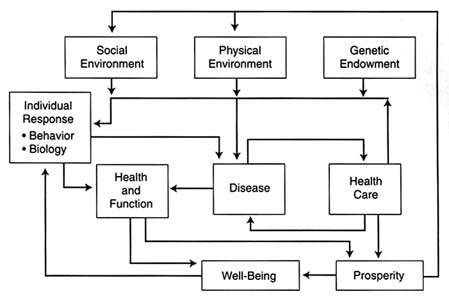
FIGURE 2-1 A model of the determinants of health. Source: Reprinted from R.G. Evans and G.L. Stoddart, 1990, Producing Health, Consuming Health Care, Social Science and Medicine 31:1347–1363, with permission from Elsevier Science Ltd, Kidlington, UK.
Unlike a biomedical model that views health as the absence of disease, this dynamic framework includes functional capacity and well-being as health outcomes of interest. It also presents the behavioral and biologic responses of individuals as factors that influence health but are themselves influenced by social, physical, and genetic factors that are beyond the control of the individual. The model emphasizes general factors that affect many diseases or the health of large segments of the population, rather than specific factors accounting for small changes in health at the individual level. It takes a multidisciplinary approach, uniting biomedical sciences, public health, psychology, statistics and epidemiology, economics, sociology, education, and other disciplines. Social, environmental, economic, and genetic factors are seen as contributing to differences in health status and, therefore, as presenting opportunities to intervene. It is important to note, as Evans and Stoddart (1994) have done, that each component of the model represents complex sets of factors that can be examined in greater detail (see Evans et al., 1994).
The committee found the model proposed by Evans and
Stoddart—which is referred to in this report as the field model—broad enough to encompass its vision. Although not yet widely tested, the model has been adapted for health policy and community planning in several Canadian provinces (Roos et al., 1995). Several features of the model were important to the committee. The model
-
emphasizes the importance of considering the origins of health and the underlying causes of disease in individuals and populations;
-
encourages explicit hypothesizing about the production of health in the community;
-
underscores the interdisciplinary and multisectorial efforts often required to achieve health improvement in communities;
-
makes explicit the possible trade-offs and benefits that occur across sectors; and
-
encourages communities to identify possible performance and outcome measures from all of the categories.
In selecting indicators for performance monitoring, the determinants of health approach is useful in expanding the potential universe of indicators that should be considered. In addition to these practical reasons for adopting a model of the determinants of health such as that proposed by Evans and Stoddart, the field model provides an accurate representation of the complex contributions of physical environment, social environment, individual behavior, genetics, and health services to the well-being of communities.
Components of the Field Model: Some Examples
The components of the field model were discussed at the committee's second workshop.1 the material below has been drawn from the summary of that workshop (see Appendix D).
Social Environment and Prosperity
Among the elements of the social environment that have been linked to health are family structure, the educational system, social networks, social class, work setting, and level of prosperity.
Family structure, for example, is known to affect children's physical and mental health. On average, children in single-parent families do not do as well on measures of development, performance, and mental health as children in two-parent families. Children's relationships with their parents, social support, nurturance, and sense of self-efficacy have been shown to be related to their mental and physical health and even to their future economic productivity (Schor and Menaghan, 1995).
Education has an effect on health status separate from its influence on income. Years of formal education are strongly related to age-adjusted mortality in countries as disparate as Hungary, Norway, and England and Wales (Valkonen, 1989). Although most research is based on years of formal schooling, evidence suggests a broader relationship that includes the preschool period. An assessment at age 19 of participants in the Perry Pre-school Study, which randomized children into a Head Start-like program, showed that participation in the preschool program was correlated with better school performance, attending college, and avoiding involvement with the criminal justice system (Weikart, 1989). Critical periods for education, particularly at young ages, may prove to be important in determining health. In addition, studies show that maternal educational attainment is a key determinant of child welfare and survival (Zill and Brim, 1983).
"Social networks" is a term that refers to an individual's integration into a self-defined community and the degree of connectedness to other individuals and to institutions. There is a strong inverse correlation between the number and frequency of close contacts and mortality from all causes, with odds ratios of 2:1 or higher and a clear "dose-response" relationship (Berkman and Syme, 1979). Other aspects of physical and mental functioning also appear to be influenced by the quantity and quality of social connections (Seaman, 1996). Although it is possible to see the impact of social networks on health, the pathways responsible for those effects are not yet known.
Social class is another well-described determinant of health, independent of income. Major studies have been done in Britain, where social class is defined more explicitly than in the United States. In the Whitehall study of British civil servants, Marmot and colleagues (1987) demonstrated a clear relationship between social class (based on job classification) and mortality. The relationship persists throughout the social hierarchy and is unchanged after adjusting for income and smoking. The effect of social class may raise uncomfortable issues in the United States
but is important to consider in dealing with issues of health and equity.
The health effects of work-related factors are seen in studies of job decision latitude, autonomy, and cardiovascular mortality (Karasek and Theorell, 1990). Involuntary unemployment negatively affects both mental and physical health. Economic prosperity is also correlated with better health. Throughout history, the poor have, on average, died at younger ages than the rich. The relationship between prosperity and health holds across the economic spectrum. For every decile, quintile, or quartile of income, from lowest to highest, there is a decline in overall age-adjusted mortality. In international comparisons by the Organization for Economic Cooperation and Development, the difference in income between the highest and lowest deciles of income shows a stronger relationship with overall mortality rates than does median income (Wilkinson, 1992, 1994).
Physical Environment
The physical environment has long been recognized as an important determinant of health. The public health movement of 1840–1870 emphasized environmental changes as a successful strategy for reducing the epidemic rates of infectious diseases, which flourished in the overcrowded housing with poor sanitation in industrial cities in Europe and North America (Ashton and Seymour, 1988).
The physical environment affects health and disease in diverse ways. Examples include exposures to toxic substances, which can produce disorders such as lung disease or cancers; safety at home and work, which influences injury rates; the design of vehicles and roadways, which can alter crash survival rates; poor housing conditions and overcrowding, which can increase the likelihood of violence, transmission of infectious diseases, and mental health problems; and urban-rural differences in cancer rates.
Genetic Endowment
The contribution of genetic makeup to the health of an individual is a new and emerging area of scientific inquiry. As scientific knowledge about genetics increases, this component of the field model is likely to become increasingly important.
For the most part, genetic factors are currently understood as contributing to a greater or lesser risk for health outcomes, rather
than determining them with certainty. One area of particular interest is the link seen between genetics and behavior. Studies of twins separated at birth demonstrate a high concordance rate in alcoholism, schizophrenia, and affective disorders (Baird, 1994). Even so-called voluntary behaviors such as smoking and eating habits may be subject to genetic predispositions (e.g., Carmelli et al., 1992; de Castro, 1993; Falciglia and Norton, 1994). Health behaviors are complex, and the influences that determine them are likely to be extremely complex.
Genetic factors also interact with social and environmental factors to influence health and disease. It will be important to understand these interactions to learn why certain individuals with similar environmental exposures develop diseases whereas others do not (e.g., why most smokers do not develop lung cancer).
Behavior
In the field model framework, behavior is seen as a response to other factors and can be treated as an intermediate determinant of health. Rather than a voluntary act only amenable to direct intervention, behavior is shaped by multiple forces, particularly the social and physical environments and genetic endowment. At the same time, behavior change remains a goal. Behaviors related to health care, such as adherence to treatment regimens, are influenced by these forces as are behaviors directly influencing health, such as smoking.
Health Care
Health care is an essential determinant of health. In the United States, however, its contribution has probably been over-emphasized. As noted above, about 5 years of the 30-year increase in life expectancy achieved in this century can be attributed to health care (Bunker et al., 1995). The greatest share of this gain can be attributed to diagnosis and treatment of coronary heart disease, which contributes 1 to 2 of these additional years of life.
Linking the Determinants
The committee was impressed by several implications of the field model's theoretical perspective. First, the model clearly rein-
forces the interrelatedness of many factors. Health outcomes are the product of complex interactions of factors rather than of individual factors operating in isolation. Indeed, these interactions are probably as important as the actions of any single factor. Currently incomplete, however, are descriptions of mechanisms underlying the linkages among the various determinants and full characterizations of the interactions among factors. The committee encourages the continued research needed to gain a better understanding of these mechanisms.
Second, not all of the determinants, viewed as causes, act simultaneously. The effects of some determinants, in fact, may be necessary antecedents to others, and some may have their primary influence by modifying the effects of others. Some may also differ in their relationship to health according to when they are present in the life cycle. Evidence suggests that there are certain times in the human life cycle that are critical for future health and well-being. During infancy and early childhood, crucial neurologic, cognitive, and psychosocial patterns are established (Carnegie Task Force on Meeting the Needs of Young Children, 1994; Entwisle, 1995). Experiences in childhood and adolescence may also have a critical influence on adult health risk factors such as weight and smoking (Dietz, 1994; IOM, 1994).
Another Perspective
Patrick and Wickizer (1995) have extended the field model framework by focusing on factors in the social and physical environments that operate at the community rather than the individual level. These two components are seen as affected by cultural, political, policy, and economic systems. In turn, they influence elements such as community response, activation, and social support, and ultimately community outcomes including social behaviors, community health, and quality of life. For example, establishing a smoke-free workplace policy exerts an influence on exposure to tobacco smoke separate from the smoking practices of individuals. This perspective points both to the influence of community-level factors and to the opportunities for community-level interventions.
INTERVENTIONS TO IMPROVE HEALTH
Many factors can influence the impact of interventions to improve health. It is possible to target various determinants of health
to produce change at an individual level, a community level, or both. All aspects of each broad determinant of health are not equally amenable to intervention, however. For example, the social environment of isolated senior citizens can be improved by increasing contact with others, but their genetic makeup is not amenable to change.
Time frames for measuring health changes vary widely, from days to decades. Some successful interventions will produce observable results within a year or two, but others may be followed by long latency periods before significant changes in health status can be observed. The impact of an intervention may also be influenced by when it reaches an individual because, as noted above, there appear to be "critical periods" in human development. Certain interventions in childhood may have long-delayed yet long-lasting results. In addition, the population effects of interventions are also important to consider. Small changes at the individual level may have important ramifications when applied to a whole community (Rose, 1992).
The traditional targets for intervention have been specific diseases or behaviors, and categorical funding streams for both research and the delivery of services encourage this approach. The field model of the determinants of health encourages consideration of a wider array of targets. For example, if adolescents' sense of well-being can be improved by reducing their feelings of alienation and hopelessness, can unintended pregnancies, alcohol and other drug use, crime, and the school dropout rate all be reduced? A multidimensional approach would be required, focusing on education, social and community involvement, family preservation, and improved social networks for teens and their parents. Community-level interventions might include after-school programs, athletics (e.g., midnight basketball), and church-based programs.
Whether focused on individuals or the community as a whole, health improvement efforts should be targeted at specific causal pathways or should employ interventions that have been proven effective. There is an obvious tension between what is now known and what we need to know to improve health. For example, the biologic pathways through which poverty or low social class influence health have not been adequately elucidated. A tension also exists between what is now measurable with valid and reliable indicators and what is not measurable, but may be important.
The multidimensional approach may be unfamiliar to health professionals because it is new and relies on partnerships with
people from fields beyond those traditionally encompassed by a medical model. It is, however, consistent with the field model and may provide expanded opportunities for performance monitoring and improving the community's health.
IMPLICATIONS FOR COMMUNITIES
An examination of the field model points to the importance of considering both individual- and community-level data. Performance monitoring should include measures of inputs, process, and outcomes for health and health improvement activities. It may prove useful to monitor some key determinants, regardless of whether they are amenable to change at the local level, so that communities can understand the range of important factors. In addition, qualitative data may contribute important information about community needs. For example, information on social support, perceived barriers to service utilization, and attitudes toward the community and its resources are all relevant to performance monitoring and can be obtained from community surveys.
Performance monitoring provides an opportunity for a community to define and articulate expectations for organizations' contributions to the population's health. Although organizations might disagree with the appropriateness of the expectations, a useful dialogue may ensue. Communities may want to focus special attention on expectations regarding managed care organizations (MCOs) and the business sector. MCOs, for example, have generally defined "community" as their enrollees and not considered the entire community or public health as their area of concern. A community expectation that the health of the entire local population is part of an MCO's corporate and social responsibility could lead to their broader involvement in public health activities. Businesses, including MCOs, that have strong ties with a city or region may have a history of interest in local health issues. As corporations expand to multiple regions, however, they may require added encouragement to become involved and accountable in the local communities where they have a presence.
CONCLUSIONS
Contributing to the interest in health improvement and performance monitoring is a wider recognition that health embraces well-being as well as the absence of illness. For both individuals and populations, health can be seen to depend not only on medi-
cal care but also on other factors, including individual behavior and genetic makeup, and social and economic conditions for individuals and communities. The field model, as described by Evans and Stoddart (1994), presents these multiple determinants of health in a dynamic relationship. The model's feedback loops link social environment, physical environment, genetic endowment, an individual's behavioral and biologic responses, health care, disease, health and function, well-being, and prosperity. The committee found this model to be an effective basis for its work.
This multidimensional perspective reinforces the value of public health's traditional emphasis on a population-based approach to health issues. It also provides a basis for looking to segments of the community beyond those traditionally associated with health to address factors affecting health and well-being. Some of the additional parties who can be brought to the table as interested stakeholders and accountable partners include, among many others, schools, employers, community-based organizations, the media, foundations, and public safety agencies. A performance monitoring program can promote the articulation of roles and responsibilities among these participants.
The committee has concluded that entities engaged in performance monitoring for community health improvement should
-
adopt a broad definition of health;
-
adopt a comprehensive and conceptual model of the way in which health is produced within the community; the field model, as elaborated by Evans and Stoddart, is a good starting point; and
-
develop a concrete and specific hypothesis of how the multiple sectors of the community and individual stakeholders in each sector can contribute to the solution of a health problem.
In addition, federal agencies and foundations should provide support for further research on the determinants of health to clarify pathways, to develop reliable and valid measures useful for performance monitoring related to these pathways, and to identify community programs and clinical and public health interventions that are successful in addressing the underlying causes of ill health in communities.
REFERENCES
Aguirre-Molina, M. 1996. Community-Based Approaches for the Prevention of Alcohol, Tobacco, and Other Drug Use. Annual Review of Public Health 17:337–358.
Ashton, J., and Seymour, H. 1988. The New Public Health: The Liverpool Experience. Philadelphia: Open University Press.
Baird, P.A. 1994. The Role of Genetics in Population Health. In Why Are Some People Healthy and Others Not? The Determinants of Health of Populations. R.G. Evans, M.L. Barer, and T.R. Marmor, eds. New York: Aldine de Gruyter.
Berkman, L.F., and Syme, S.L. 1979. Social Networks, Host Resistance, and Mortality: A Nine Year Follow-up Study of Alameda County Residents. American Journal of Epidemiology 109:186–204.
Blum, H. 1981. Planning for Health: Generics for the Eighties. 2nd ed. New York: Human Sciences Press.
Bunker, J.P., Frazier, H.S., and Mosteller, F. 1995. The Role of Medical Care in Determining Health: Creating an Inventory of Benefits. In Society and Health. B.C. Amick., S. Levine, A.R. Tarlov, and D.C. Walsh, eds. New York: Oxford University Press.
Carmelli, D., Swan, G.E., Robinette, D., and Fabsitz, R. 1992. Genetic Influence on Smoking: A Study of Male Twins . New England Journal of Medicine 327:829–833.
Carnegie Task Force on Meeting the Needs of Young Children. 1994. Starting Points: Meeting the Needs of Our Youngest Children. New York: Carnegie Corporation.
de Castro, J.M. 1993. Genetic Influences on Daily Intake and Meal Patterns of Humans. Physiology and Behavior 53:777–782.
Dietz, W.H. 1994. Critical Periods in Childhood for the Development of Obesity. American Journal of Clinical Nutrition 59:955–959.
Entwisle, D.R. 1995. The Role of Schools in Sustaining Early Childhood Program Benefits. The Future of Children 5(3):133–144.
Evans, R.G., and Stoddart, G.L. 1994. Producing Health, Consuming Health Care. In Why Are Some People Healthy and Others Not? The Determinants of Health of Populations. R.G. Evans, M.L. Barer, and T.R. Marmor, eds. New York: Aldine De Gruyter.
Evans, R.G., Barer, M.L., and Marmor, T.R., eds. 1994. Why Are Some People Healthy and Others Not? The Determinants of Health of Populations . New York: Aldine De Gruyter.
Falciglia, G.A., and Norton, P.A. 1994. Evidence for a Genetic Influence on Preference for Some Foods. Journal of the American Dietetic Association 94(2):154–158.
Guyer, B. 1990. The Evolution and Future Role of Title V. In Children in a Changing Health System: Assessments and Proposals for Reform . M. Schlesinger and L. Eisenberg, eds. Baltimore: Johns Hopkins University Press.
IOM (Institute of Medicine). 1988. The Future of Public Health. Washington, D.C.: National Academy Press.
IOM. 1994. Growing Up Tobacco Free: Preventing Nicotine Addiction in Children and Youths. B.S. Lynch and R.J. Bonnie, eds. Washington, D.C.: National Academy Press.
IOM. 1996. Primary Care: America's Health in a New Era. M.S. Donaldson, K.D. Yordy, K.N. Lohr, and N.A. Vanselow, eds. Washington, D.C.: National Academy Press.
Karasek, R.A., and Theorell, T. 1990. Healthy Work: Stress, Productivity and the Reconstruction of Working Life. New York: Basic Books.
Lalonde, M. 1974. A New Perspective on the Health of Canadians. Ottawa: Health and Welfare, Canada.
Lamarche, P.A. 1995. Our Health Paradigm in Peril. Public Health Reports 110:556–560.
Marmot, M.G., Kogevinas, M., and Elston, M.A. 1987. Social/Economic Status and Disease. Annual Review of Public Health 8:111–135.
Patrick, D.L., and Wickizer, T.M. 1995. Community and Health. In Society and Health. B.C. Amick., S. Levine, A.R. Tarlov, and D.C. Walsh, eds. New York: Oxford University Press.
Rodwin, M.A. 1996. Managed Care and the Elusive Quest for Accountable Health Care. Widener Law Symposium Journal 1(1):65–87.
Roos, N.P., Black, C.D., Frohlich, N., et al. 1995. A Population-Based Health Information System. Medical Care 33(12):DS13–20.
Rose, G. 1992. The Strategy of Preventive Medicine. New York: Oxford University Press.
Schauffler, H.H., and Rodriguez, T. 1996. Exercising Purchasing Power for Preventive Care. Health Affairs 15(1):73–85.
Schor, E.L., and Menaghan, E. 1995. Family Pathways to Child Health. In Society and Health. B.C. Amick, S. Levine, A.L. Tarlov, and D.C. Walsh, eds. New York: Oxford University Press.
Seeman, T.E. 1996. Social Ties and Health: The Benefits of Social Integration. Annals of Epidemiology 6:442–451.
Syme, S.L. 1996. Rethinking Disease: Where Do We Go from Here? Annals of Epidemiology 6:463–468.
USDHHS (U.S. Department of Health and Human Services). 1991. Healthy People 2000: National Health Promotion and Disease Prevention Objectives . DHHS Pub. No. (PHS) 91-50212. Washington, D.C.: Office of the Assistant Secretary for Health.
Valkonen, T. 1989. Adult Mortality and Level of Education: A Comparison of Six Countries. In Health Inequalities in European Countries. J. Fox, ed. Aldershot, England: Gower.
Warden, G. 1996. Key Factors in the Transition to IHCOs (Integrated Health Care Organizations). Frontiers of Health Services Management 12(4)53–56.
Weikart, D.P. 1989. Early Childhood Education and Primary Prevention. Prevention in Human Services 6(2):285–306.
WHO (World Health Organization). 1986. A Discussion Document on the Concept and Principles of Health Promotion. Health Promotion 1(1):73–78.
WHO. 1994. Constitution of the World Health Organization. Basic Documents, 40th ed. Geneva: WHO.
Wilkinson, R.G. 1992. Income Distribution and Life Expectancy. British Medical Journal 304(6820):165–168.
Wilkinson, R.G. 1994. The Epidemiological Transition: From Material Scarcity to Social Disadvantage? Daedalus 123(4):61–77.
Zill, N. II, and Brim, O.G., Jr. 1983. Development of Childhood Social Indicators. In Children, Families, and Government: Perspectives on American Social Policy. E.F. Zigler, S.L. Kagan, and E. Klugman, eds. New York: Cambridge University Press.


