
ROBERT PAUL HANSON
May 14, 1918-July 27, 1987
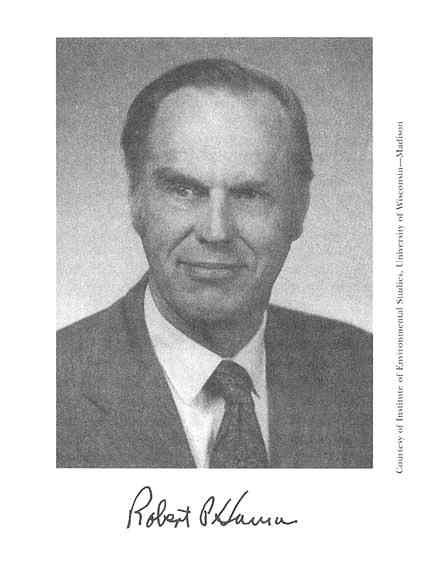
BY THOMAS M. YUILL AND B. C. EASTERDAY1
THE PUBLIC, AS WELL AS the scientific community, is surprised and concerned about the periodic emergence of new infectious diseases. This concern has been fueled by recent outbreaks of Ebola virus disease in people in Zaire, Venezuelan equine encephalitis and fowl plague in Mexico, "mad cow disease" (bovine spongiform encephalopathy) in Europe, and the spread of avian cholera in wild waterfowl in North America. Bob Hanson would not have been surprised at all by these disease trends. He was familiar with "surprise" disease outbreaks. His career was built on determining where these surprise diseases came from, how they spread, and how they might be controlled.
Bob Hanson insisted that we should expect to see the emergence of new diseases as ecological and environmental conditions and host populations change. He operated on the basic premise that infectious agents must be viewed and attacked holistically because they are components of the ecosystems in which their hosts live. He recognized that no one person had all the expertise required to understand the natural history of diseases, and he was a champion of interdisciplinary team approaches. The problems on which he focused were always real ones that originated in nature.
He recognized the need for close laboratory and field interaction. He was a master at getting people to work together on a common, often "new," problem. For example, he was the glue that united laboratory virologists, wildlife ecologists, medical entomologists, veterinarians, and public health physicians in their successful efforts to discover the mechanisms for maintenance and spread of La Crosse virus, a cause of encephalitis in children mainly in the upper midwest. He countered the decline in the preparedness of the scientific community to deal with disease recognition and control by continuing to train students to look beyond their subspecialties and see the bigger picture of which their narrow areas were a part.
Bob recognized that not all viruses are created equal, even though they appear to be quite similar. His focused curiosity led to the recognition that, although Newcastle disease virus strains from the field were antigenically identical, they produced a range of disease severity in poultry from mild to highly fatal. He spent much of his career answering the questions: Why does a given virus produce different disease states in the same host or in different hosts? Why are lethal virus strains favored in some situations and mild ones in other circumstances? How do environmental factors affect the host-virus relationship and resulting disease? How do viruses move within and between populations of animals?
He recognized the growing need to unite molecular and epidemiological concepts and techniques as a seamless continuum in the study of the host-virus-environment interaction. His students and postdoctoral fellows worked at this interface. Were he with us today, he would still be arguing for more support for research and training in "landscape" epidemiology, pointing out that if we are willing to spend tens of millions of dollars on the control of disease in an
emergency situation, it would be wise to spend consistently a reasonable fraction of that on understanding how the agents of those diseases are maintained and spread in nature, to prevent the surprises that will surely come again in the absence of adequate knowledge.
PERSONAL HISTORY
Robert Hanson was born on May 14, 1918, in Sarona, Wisconsin. He was the first of five children born to Fred and Marion (Bergquist) Hanson. His Scandinavian roots were deep, his father's family having left Norway to settle in Illinois in 1839 and his mother's family from Sweden to Minnesota in 1888. His youth was spent on a small northern Wisconsin family farm, and he graduated from Ashland High School in 1936. His rural early environment in Wisconsin's North Woods kindled a lifelong interest in nature that provided the ecological vantage point for his later microbiological research and teaching. From his youth onward Bob Hanson was fundamentally a naturalist. His parents encouraged Bob and all the children to pursue their own interests. His brother Elmer recalled that ". . .Bob was inherently a scientist from the very beginning, empirically investigating everything from bugs to flowers as a child. When he was in high school he transformed Mother's flower beds into an elaborate arboretum, building a rock garden, an ornamental fish pond and replanting wild flowers."2 He earned his B.S. degree at Northland College in Ashland, majoring in biology and writing a popular local newspaper column entitled "In Bloom this Weekend" in which he described the flowers that would be seen during the coming weekend. The Second World War introduced him to research on exotic foreign animal diseases. He was stationed at the joint U.S. and Canadian Army Gross Isle Biological Research Station from 1943 to 1945. This experience and
the contacts he made there would shape his subsequent career. He married Martha Goddert following the war, and they had two children, Allen Neil and Diane Gail. Martha Hanson shared her husband's interest in natural history, and in the last decade of his career they became partners in science, publishing and teaching together on the ecology and control of animal diseases.
Bob's wartime animal disease contacts with Richard Shope, James Baker, and Fred Maurer led to graduate training at the University of Wisconsin, Madison, and then a faculty position there in the departments of veterinary science and bacteriology. His unfailingly friendly, unassuming personality coupled with keen scientific insight and imagination attracted students and fellow faculty members and scientific colleagues from around the world. Early in his career his mentors Carl Brandly and Sam McNutt sparked his interest in poultry diseases and viral pathogenesis. His interactions with colleagues from many disciplines were essential for the development of a career that was a remarkable combination of depth and breadth. His collaborators were as varied as they were numerous, and included David Berman and J. B. Wilson (bacteriology and epidemiology), Elizabeth McCoy (virology), William Hinshaw (vesicular diseases and Latin American contacts), Jacob Traum (foot-and-mouth disease epidemiology and virology), Duard Walker (slow virus diseases, medical virology), Gabriele ZuRhein (neuropathology, slow virus pathogenesis), and Robert McCabe (wildlife ecology), to mention a few. He was part of the faculty team that offered the first virology course on the Madison campus, with colleagues Dennis Watson and Elizabeth McCoy. Many of his scores of graduate students went on to become active colleagues and collaborators later on, and their names appear with his in the many jointly authored research papers and reports published over the years.
His achievements and contributions garnered considerable recognition. He found particular satisfaction in three honors. On the university level he was selected for a coveted named professorship in 1975, which he chose to designate the S. H. McNutt Professorship in honor of his highly respected mentor and colleague. Nationally, in 1975 he was granted honorary membership as a non-veterinarian in the American Veterinary Medical Association for his contributions both to animal health and to the veterinary medical profession. His greatest recognition was election to the National Academy of Sciences in 1979.
Even though he was a resident of the city of Madison throughout his career, the pull of rural Wisconsin was ever present. He and his wife purchased a small farm in the hilly country 25 miles southwest of Madison, selected because of its woods, natural beauty, and the presence of a log cabin constructed by Norwegian settlers a century before. Later the adjoining farm was purchased, too. The farm became Bob's and his family's weekend escape from the city and a place to return to nature throughout the year. It became the site of important field work that led to an understanding of the natural history of La Crosse virus. It was also the place where he died unexpectedly in his sleep the night of July 27, 1987. He had never complained, but a few of us realized that he had a heart problem—just an odd comment a few months before that he would not join a group from the university going to The Gambia for an animal health and production workshop because ''his doctor wouldn't let him go." He was full of life right up to the end, and was planning an active retirement project to establish an inter-university group for international animal health and disease control. That idea lives on.
PROFESSIONAL HISTORY
Although Newcastle disease was the major theme that ran throughout his career, there were interesting and productive "side trips" that came along and were fruitfully pursued. When these side efforts grew too extensive or complex for him to continue he cheerfully and selflessly passed them along to others. If Bob had a standard modus operandi it was to recognize a new disease problem in the field, find out what was causing the disease and contributing to its transmission with carefully conducted laboratory studies, and then validate the experimental results and put them in their proper biological perspective with additional field observations. Graduate students were given a remarkably free rein to follow their interests and intuitions in the laboratory or field. His guidance and stimulation were more subtle than overt. Often, the student did not recognize that a key concept or experiment that arose from a discussion was more Bob's than the student's. Ownership or origin of the idea was not important to Bob—the idea itself was. Students were allowed (often encouraged) to set out on an interesting scientific side trip, and the journey was usually followed with encouragement. As one of his former students has written, "Bob Hanson had a way of making scientific inquiry exciting. He accomplished that by his words of advice and guidance, but more importantly, by his example. Bob wasn't one to say, 'that approach won't really get you anywhere' or 'that direction will be a dead end.' He would listen to you and respond by pulling from his vast memory the work of others that was relevant to your idea, but I never heard him put an idea down as not being appropriate or not being likely to provide useful information."3 Which was a good thing, or he might have told one of the students that it was a waste of time to look for La Crosse virus in
mosquito larvae (per the conventional wisdom of the day), and the discovery of transovarial transmission of the bunyaviruses would have come along much later, and from another institution. The virus-containing mosquito larvae came from tree hole water from the woods on Bob's farm. Of course, some of the side trips did turn out to be dead ends. Bob recognized that those dead-end trips were the price of encouraging imagination and also taught very important lessons about taking risks, dealing with failure, and cutting losses.
Bob Hanson's career does not fall into neat periods. His career was a combination of specific focus—mainly on Newcastle disease—and taking advantage of unexpected targets of opportunity as they arose. His career can be summarized in approximately five year periods.
1946-49: THE FORMATIVE YEARS
His graduate training in the departments of bacteriology and veterinary science at the University of Wisconsin, Madison, began his career-long exploration of Newcastle disease virus (NDV). He developed laboratory diagnostic procedures, including virus cultivation in embryonated chicken eggs.
1950-55: CONTINUED LINES OF RESEARCH PUNCTUATED BY SOME SURPRISES
Work continued on NDV diagnostic test development. Studies were begun on NDV pathogenicity in chickens and susceptibility of other avian hosts as well as a mouse model. Vaccine development continued, various virus strains and isolates were compared, and a world repository of these strains and isolates was begun. Two surprises occurred in Wisconsin—vesicular stomatitis (VS) and eastern equine encephalitis (EEE) appeared for the first time, and studies on their epidemiologies were done utilizing both field ob-
servation and laboratory experiments to determine the roles of domestic and wild vertebrate hosts and arthropod vectors. His field investigations of VS and EEE virus epidemiology kindled his interest in wildlife diseases, as he and his research teams looked for the virus in the Wisconsin River bottoms.
1956-60: ONGOING DIRECTIONS MIXED WITH NEW OPPORTUNITIES
Research on Newcastle disease, vesicular stomatitis and eastern equine encephalitis viruses and their structures, pathogenesis, epidemiologies and possible control continued. His interest in host-virus relationships prompted him to organize a highly successful symposium on virus latency. The VS and EEE field studies were extended to Georgia through collaboration with the health department of that state. Swine influenza appeared in Wisconsin and its occurrence and transmission were studied, and reconnected him with his Gross Isle mentor Richard Shope. A new target of opportunity appeared through collaboration with the Wisconsin Department of Natural Resources on an evaluation of the role of white tail deer in the maintenance and spread of leptospirosis. Fibroma virus was found fortuitously in local cottontail rabbit populations, and its transmission and host-virus relationships were studied.
1961-65: HOST-VIRUS-ENVIRONMENT INTERACTIONS AND VIRUSES IN NEW PLACES
The effects of air pollution and environment on host susceptibility and pathogenesis of NDV were studied. VSV cattle vaccine development progressed to tests in endemic areas in Georgia and Panama. Additional EEE virus vector and avian host studies in Wisconsin were completed. New diseases appeared in Wisconsin and other places and were
studied to determine their patterns of transmission and disease. The epidemiology of California and western equine encephalitis viruses were studied in wildlife in Alberta, Canada, as part of collaborative studies to determine factors that regulate wildlife populations there. Avian botulism appeared in Wisconsin waterfowl and laboratory investigation of toxin transmission was done. Mink enteritis (ME) was recognized as an increasingly important disease in Wisconsin (and other fur-producing states), and Bob responded to a request for help from the fur breeders with studies to determine ME epizootiology and host-virus relationships.
1966-70: OLD DISEASES, MORE NEW DISEASES
Investigation of NDV transmission and air pollution effects continued, a new line of research on nutritional status and NDV susceptibility was begun, and the world NDV repository expanded with the addition of new isolates. VSV immunity in cattle and laboratory animals challenged conventional wisdom about lifelong immunity following infection. The geography and epidemiology of California (La Crosse virus) and other bunyaviruses in Wisconsin were expanded to include an assessment of the effects of infection by these viruses on their wildlife hosts in Alberta. Arthropod-borne virus (arbovirus) research was expanded to include laboratory studies on St. Louis encephalitis virus in a mouse model. Another new disease appeared in the Wisconsin fur industry—transmissible mink encephalopathy (TME)—and the host range, neuropathology, and physiochemical properties of this scrapie-like, slow, and unconventional presumed viral agent were begun. Avian mycoplasmas were recognized as important pathogens in commercial midwestern poultry operations, and diagnostic systems, including isolation and characterization of these agents, were developed. An unexpected finding of a chlamy-
dial agent in wildlife in western Canada led to its isolation and characterization.
1971-75: ENDEMIC VIRAL DISEASE PROBLEMS AT HOME, EPIDEMIC EMERGENCIES AWAY
Bob Hanson and his laboratory were called on to support the U.S. Department of Agriculture's emergency program to combat an extensive, costly outbreak of highly virulent Newcastle disease in southern California. His contributions were recognized in a citation awarded by the Secretary of the U.S. Department of Agriculture. More routine NDV work continued on nutrition, environmental factors and host susceptibility, virus strain differences and mutability, and host immunoresponsiveness to vaccination. Further work was done on TME neuropathogenesis, host range, characterization of the agent and its comparison with the scrapie agent, and mechanisms of transmission. Significant progress was made on the development of laboratory diagnostic tests and structural study of avian mycoplasmosis. Work on La Crosse virus by the interdisciplinary team provided new insights into its epidemiology in Wisconsin (wildlife hosts and mosquito vectors); transovarial transmission in mosquitoes was discovered and its role in overwintering was described. The close collaboration developed with the Colombian animal health agency and with the USDA Plum Island Laboratory led to collaborative work on foot-and-mouth disease antigenic analysis. He concluded a nine-year stint as chair of the NAS-NRC Subcommittee on Poultry Diseases (1963-72).
1976-80: A TIME OF CONSOLIDATION OF RESEARCH PROGRAMS
Steady progress continued with NDV, including factors affecting transmission, continued strain characterization, additional pathogenesis studies, and antigenicity and vac-
cine effectiveness. Important advances were made in the understanding of TME pathogenesis, comparative studies with the scrapie agent, and the development of the hamster model. Experimental studies of infection of rabbits with chlamydia were completed. Bovine immune responsiveness to Colombian isolates of foot-and-mouth disease was assessed. He completed a four-year term as a member of the NASNRC Board on Agriculture and Renewable Resources (1973-77).
1981-87: REFLECTIONS OF THE "BIG PICTURE"
Bob Hanson's career concluded on a reflective note of holistic approaches to animal health. He blended his years of field and laboratory investigations and participation in significant disease control programs—especially Newcastle disease in California and foot-and-mouth disease in South America—into insightful writing, speaking, and teaching about biological, social, and economic elements essential to deal effectively with diseases in animal populations. He and his group recognized early on the power and utility that new molecular tools emerging from basic virology brought to epidemiology, pathogenesis, and control or prevention of the economically important diseases that he had been studying over the years. Although his sudden and unexpected death cut off his research contributions, in this last stage of his career he particularly addressed the need to apply his and others' research results to what ultimately matters—a reduction of disease impacts in the real world.
CONCLUSION
Many mentors admonish their graduate students to "focus, focus, focus!" Bob never did that. Rather, he urged his students to go where the interesting ideas led. He recognized that specialty was necessary to achieve essential basic
competence, but that a high degree of specialization could limit the pursuit of a problem to its final conclusion. The solution to dealing with the risk of getting out of one's depth in a new area was to enlist the collaboration of a congenial colleague who could bring the needed expertise to the enterprise. It was natural for him and his students to work with others as teams. The arbovirus group (to evolve into the La Crosse virus group), the slow virus (transmissible mink encephalopathy/scrapie) group, the wildlife diseases group, and the animal disease control group all came together around Bob. His quiet demeanor and total lack of egocentricity made it natural for him to establish the trust needed for an open and collaborative environment for these groups to come together and generate a high level of enthusiasm about the problems they were involved in solving. It was his personality and operational style, in addition to his keen intelligence and holistic vision, that made it possible to contribute to so many areas in the infectious disease arena.
These contributions made him a superb trainer of young scientists, advisor to governments and international agencies on animal health problems and policies, and a stimulating teacher. In speaking of Bob Hanson, colleagues would comment on what an insightful scientific thinker he was and then invariably add, "and such a fine human being."
NOTES
SELECTED BIBLIOGRAPHY
1955 With C. A. Brandly. Identification of vaccine strains of Newcastle disease virus. Science 122(3160):156-57.
1957 With C. A. Brandly. Epizootiology of vesicular stomatitis. Am. J. Publ. Health 47(2):205-09.
1960 Epizootiology, the basis for rational disease control programs. JAVMA 136(3) :97-103.
1961 With J. R. Anderson, V. H. Lee, S. Vadlamudi, and G. R. Defoliart. Isolation of eastern encephalitis virus from diptera in Wisconsin. Mosq. News 21(3) :244-48.
With D. O. Trainer and L. Karstad. Experimental leptospirosis in white-tailed deer. J. Infect. Dis. 108:278-86.
1962 With V. H. Lee and S. Vadlamudi. Blow fly larvae as a source of botulinum toxin for game farm pheasants. J. Wildl. Manage. 26(4):41113.
1965 With D. P. Anderson. Influence of environment on virus diseases of poultry. Avian Dis. 9(1):171-82.
With A. Bouillant. Epizootiology of mink enteritis. I. Stability of the virus in feces exposed to natural environmental factors. II. Musca domestica I as a possible vector of virus. III. Carrier state in mink. Canad. J. Comp. Med. Vet. Sci. 29:125-28, 148-52, 183-89.
1968 With M. Frey and D. P. Anderson. A medium for the isolation of avian mycoplasmas. Am. J. Vet. Res. 29(11):2163-71.
The possible role of infectious agents in the extinctions of species.
In Peregrine Falcon Populations: Their Biology and Decline, ed. J. J. Hickey, pp. 439-44. Madison: University of Wisconsin Press. With R. F. Marsh. Physical and chemical properties of the transmissible mink encephalopathy agent. J. Virol. 3(2):176-80.
1971 With others. Susceptibility of mink to sheep scrapie. Science 172:85961.
With S. Pantuwatana, W. H. Thompson, and D. M. Watts. Experimental infection of chipmunks and squirrels with La Crosse and trivittatus viruses and biological transmission of La Crosse virus by Aedes triseriatus. Am. J. Trop. Med. Hyg. 21 (4):477-81.
1973 With J. Spalatin and G. S. Jacobson. The viscerotropic pathotype of Newcastle disease virus. Avian Dis. 17(2):354-61.
With F. Green, III. Ultrastructure and capsule of Mycoplasma meleagridis. J. Bact. 116(2):1011-18.
1974 With A. A. Andersen. Influence of sex and age on natural resistance to St. Louis encephalitis infection in mice. Infect. Immun. 9(6):112325.
The re-emergence of Newcastle disease. Adv. Vet. Sci. Comp. Med. 18:213-29.
1975 With R. F. Marsh. Transmissible mink encephalopathy: infectivity of corneal epithelium. Science 87:656.
With G. Schloer and J. Spalatin. Newcastle disease virus antigens and strain variations. Am. J. Vet. Res. 36(4):505-508.
With others. Transovarial transmission of La Crosse virus in Aedes triseriatus. Ann. N. Y. Acad. Sci. 226:135-43.
1976 With J. Spalatin and A. J. Turner. Observations on the transmissibility of lentogenic strains of Newcastle disease virus: significance of variables. Avian Dis. 20(2):361-68.
1977 With C. A. Lobo and A. G. de Geradino. Antibody response of tropical range cattle to foot-and-mouth disease virus. I. Comparison of these tests. Dev. Biol. Stand. 35:343-54.
1979 With R. F. Marsh. On the origin of transmissible mink encephalopathy. In Slow Transmissible Diseases of the Nervous System, vol. 1, eds. S. B. Prusiner and W. J. Hadlow, pp. 451-60. New York: Academic Press.
1983 With M. G. Hanson. Animal Disease Control—Regional Programs. Ames: Iowa State University Press.
1988 Heterogeneity within strains of Newcastle disease virus: key to survival. In Newcastle Disease, ed. D.J. Alexander, pp. 113-30. Dordrecht, Netherlands: Kluwer Academic publishers.


