
6—
Case Studies
This report has emphasized the importance of valuing ground water resources and suggested a framework and valuation methods that could be used to quantify the economic values associated with a suite of ground water services. This chapter provides brief descriptions of seven existing situations that highlight the importance of valuing ground water resources. These case studies also include some information on applicable valuation methods. The chapter offers some insight into the difficulties that water managers (and policy-makers in general) face in attempting to translate recommendations regarding valuation methods into usable estimates of ground water values. Such difficulties can derive from institutional constraints or conflicts in specific locales; political considerations; terminology and conceptual problems related to communicating information; and uncertainties associated with technical analyses, determination of effects, and economic assumptions.
These site-specific studies are brief and are not intended to offer solutions for any other case. Instead, these examples demonstrate that valuing ground water resources is not a recipe that can simply be followed at any site. The planning and implementation of economic valuation studies requires the interdisciplinary efforts of economists, engineers, scientists, and policy-makers. These studies show that although a complete accounting for all components of the TEV of ground water is often impossible to obtain, quantifying some components can provide information to improve decision-making and increase the efficiency of the use of scarce ground water resources. Table 6.1 summarizes the theme of each case study.
The first case study illustrates the link between surface water use and the
TABLE 6.1 Comparative Information on Seven Case Studies
|
Case Study |
Theme |
Comments |
|
Treasure Valley, oregon |
Linkage between surface water usage for agriculture and the value of ground water services whose quantity and quality may be influenced by agricultural practices. |
Illustrates importance of ground water valuation in designing allocative and management policies for the conjunctive use of surface and ground water. |
|
Laurel Ridge, Pennsylvania |
Use conflicts that may arise among local governmental agencies coordinating various combined uses of surface and ground water. |
Illustrates need for systems approach in defining hydrogeology, surface and ground water resources, and competing uses within a multi-institutional framework in a local geographical area. |
|
Albuquerque, New Mexico |
Development of long-term water use strategy for a city that relies on ground water for its water supply; also includes buffer value of ground water. |
Includes information on both use and nonuse value of ground water and how this can be incorporated in long-term water supply planning in an area where ground water mining occurs. |
|
Arvin-Edison, California |
Buffer value of ground water in an area subject to periodic droughts. |
Demonstrates buffer benefits of a ground water resource in an agricultural area. |
|
Orange County, California |
Use of ground water recharge in a coastal area to avert sea water intrusion in a viable ground water basin. |
Addresses the value of ground water in storage as a deterrent to sea water intrusion. |
|
Woburn, Massachusetts |
Incorporation of the value of ground water in deciding on remediation for a Superfund site. |
Illustrates numerous uncertainties associated with local hydrogeological conditions, pollutant transport, the effectiveness of remediation strategies, and direct and perceived health consequences of drinking contaminated ground water. |
|
Tucson, Arizona |
Planning for application of valuation framework to decisions for meeting water demand; options addressed are ground water recharge and/or surface water treatment. |
Illustrates the variety of considerations associated with a ground water valuation study, including the need to incorporate engineering estimates along with valuation methods; also focuses attention on the importance of substitute water supplies. |
quantity and quality of ground water in the Treasure Valley area of eastern Oregon and southwestern Idaho. In this setting, which is typical of many areas in the West, agriculture relies primarily on surface water supplies, and ground water is used mainly for human and industrial consumption. The presence of pollutants from agriculture in an aquifer reduces the value of the ground water for human consumption and poses challenges for water resource managers. Without estimates of the value of the services associated with unpolluted ground water, managers may design allocation and management policies that could lead to suboptimal use of both the scarce ground water and the surface water supplies.
The Laurel Ridge, Pennsylvania, case study is an example of competing uses of an aquifer and the interplay between ground water and surface water supplies. In this area the user conflicts are between development (mining) and tourism and among the many fragmented local governments whose jurisdictions overlay the watershed. Economic valuation is a crucial component to achieving a more systematic approach to planning in this watershed.
The next two case studies deal with the buffer value of ground water. In Albuquerque, New Mexico, ground water is the primary source for municipal water supply, although the city also has rights to surface water from nearby rivers. Recent concerns with both the size of the aquifer and increased population growth along with ground water mining have initiated a series of engineering and economic studies to assess the long-term strategies for water use. This example provides concrete evidence of the role that economic values can play in formulating policy alternatives for water use management.
The Arvin-Edison Water Storage District in southern California is another example of a buffer value success story, where the surplus water from wet years is being used to recharge the aquifer. This water management system in the Bakersfield area has been in place for nearly 30 years and by some estimates has generated millions of dollars in net returns to agricultural interests that would have been foregone during critically dry years.
The second California example deals with the issue of irreversibilities associated with the intrusion of sea water in the ground water basin underlying Orange County, in southern California. Loss of the basin to sea water intrusion would require the Orange County Water District to rely more heavily on imported water and would preclude the use of the aquifer for water storage. Knowing the value of the ground water was clearly an important component in the decision to construct and operate Water Factory 21 (an advanced wastewater treatment plant) and two water injection projects. Combinations of imported water and highly treated municipal wastewater are recharged as a barrier to sea water intrusion.
The sixth case study, a Superfund example, illustrates the importance of ground water valuation to federal regulations regarding remediation of contaminated aquifers. Policy decisions on the extent to which ground water remediation should be pursued need to be based on a careful assessment of the costs and benefits of proposed actions. The benefits of restoring the quality of a contami-
nated aquifer will be reflected in the potential gains or value of improvements to the ground water resource and will be site-specific.
The empirical findings of this Woburn, Massachusetts, case study refute conventional wisdom concerning the economic efficiency of ground water remediation at Superfund sites for the sole purpose of restoring drinking water supplies (i.e., that the costs of remediation far outweigh the benefits). In some cases ground water remediation can be the efficient alternative; it should not be dismissed without conducting a cost-benefit analysis. This case study also highlights the complexities involved in conducting an empirical analysis of the value of restoring ground water resources and the impacts of uncertainties in the economic and physical dimensions, and in potential health consequences, and the public response to ground water usage.
The final case study concerns the potential application of the valuation framework described in Chapter 3 and some valuation methods described in Chapter 4. Options in this Tucson, Arizona, case include ground water recharge using Central Arizona Project (CAP) water or treatment of CAP water prior to usage. This study provides information on the types of methods that could be used to value a complete suite of ground water services for both options.
CHALLENGES IN WATER QUALITY MANAGEMENT Treasure Valley, Oregon
Background
The Treasure Valley of eastern Oregon and southwestern Idaho is high desert (10 inches of precipitation on average per year) that is intensively irrigated using surface water from the Owyhee, Malheur, and Snake Rivers. All the water of the Owyhee and Malheur Rivers (tributaries of the Snake River) is diverted to irrigation. Stream flow below the diversions is maintained by irrigation return flows and recharge from a shallow aquifer supported in part by irrigation recharge (Gannett, 1990).
Crop agriculture in the area is characterized by a range of high valued crops including potatoes, sugar beets, and onions, as well as cereal grains and hay. In the Oregon portion of the valley, approximately 180,000 acres are in irrigated crop production (Schneider, 1992). The primary source of water irrigation is from federal (U.S. Bureau of Reclamation) reservoirs and distribution systems. In terms of total agricultural sales, animal agriculture (cattle and dairy) accounts for 36 percent of sales, onions 25 percent, potatoes 11 percent, sugar beets 9 percent, cereal grains 9 percent, and the remaining crops 10 percent.
Ground water is used largely for industrial or human consumption. Between 1983 and 1986, the Oregon Department of Environmental Quality (ODEQ) tested water wells in the study area. Elevated nitrate levels were found in 67 percent of the wells tested; 35 percent of the wells exceeded the federal drinking water
standard for public water supplies of 10 mg/l. In 1989 ODEQ declared Malheur County a ground water management area and ordered that ground water nitrate levels be 7 mg/l or less by the year 2000. The ODEQ and local water quality management groups have identified agriculture as the primary contributor to ground water nitrates. Pesticides (dacthal) associated with onion production have also been found in test wells.
Valuation/Management Issues
The geohydrological link between surface water applications and ground water quality and quantity found in Treasure Valley is typical of many ground water situations in the West. Specifically, percolation of irrigation water serves to recharge the ground water aquifer (and in this case surface water percolation augments the natural flow in the aquifer). This ground water recharge/augmentation process serves a number of beneficial purposes. For example, recharge increases seepage from the aquifer into lowlan ds, creating wetlands for wildlife. Irrigation returns, whether through surface runoff or through eventual seepage of ground water to the Snake River and its tributaries, helps to stabilize stream flows. However, unwelcome consequences may accompany this recharge, including the elevated levels of agricultural pollutants of concern to the ODEQ.
Ground water is the primary source of water for household and industrial uses around Ontario, Oregon, located near the center of the valley (Gannett, 1990). The presence of pollutants from agriculture, with associated health concerns, reduces the value of water for human consumption. Pollutants in ground water also degrade water quality in streams, with possible adverse consequences for fish and wildlife. Given present concerns about endangered salmon fisheries in the Snake River (the U.S. Fish and Wildlife Service have listed Snake River sockeye and chinook salmon as endangered), water quality has assumed increased importance.
A number of strategies to reduce the amount of agricultural effluents reaching the aquifer have been proposed. A feature common to most strategies is ''better" irrigation water management, which implies less total water application per acre and hence less deep percolation. Such practices, however, also reduce the volume of water moving into the aquifer. This in turn affects the volume of seepage into wetlands and return flows to rivers. Further, if irrigation water "saved" by improved irrigation management is used to expand irrigated acreage, the total return flow and hence stream flow may be markedly reduced. Reduction in stream flow and wetlands will exacerbate some wildlife problems.
Assessment of the Value of Ground Water
The interplay of surface water use, ground water quality, and, ultimately, stream flow, creates challenges for public water resource managers as they try to
achieve multiple objectives. Institutional constraints, including the nature of water rights (prior appropriation doctrine) and below-cost pricing of water in public supply projects, further complicates water management. A plan that achieved optimal use across all water resources in the basin would likely vary dramatically from the use pattern typically observed in such settings. Assessment of the values from one type of water resource, such as ground water, in isolation will lead to suboptimal resource use.
To date, the benefits of ground water quality or ground water services in general have not been estimated for this area because of the focus on human health issues. Specifically, federal and state regulations require that water quality in the aquifer be brought into compliance with state water-quality standards. Economic analysis has been limited to assessment of the consequences to farmers of meeting the standards (Fleming et al., 1995; Connor et al., 1995). An understanding of the values of ground water could aid in comprehensive management of water.
Against this backdrop of complex geohydrologic linkages, institutional constrains, and a regulatory mandate to improve water quality, it is instructive to consider whether the valuation techniques discussed in Chapter 3 can be used to estimate the value (benefits) of the ground water services provided here. The answer is a qualified yes. For example, the value of unpolluted ground water for household uses can be estimated through expenditures on averting behavior, such as purchase of bottled water or purification systems. Values of stream flow for recreational fishing can be estimated through travel cost procedures. Direct elicitation of nonuse values to maintain or enhance a species (e.g., existence values) could be estimated by the contingent valuation method, although the costs of performing defensible CVM surveys are quite high. Similarly, TCM or CVM can be used to determine the value of ground water recharge of wetlands for both use and nonuse services the wetlands provide. A compilation of these use and nonuse values would supply information on the trade-offs between management goals across water users, including protection of ground water services.
References
Connor, J. D., G. M. Perry, and R. M. Adams. 1995. Cost-effective abatement of multiple production externalities . Water Resources Research 31:1789-1796.
Fleming, R. A., R. M. Adams, and C. S. Kim. 1995. Regulating groundwater pollution: Effects of geophysical response assumptions on economic efficiency. Water Resources Research 31:1069-1076.
Gannett, M. W. 1990. Hydrogeology of the Ontario Area, Malheur County, Oregon. Ground water Report 34. Salem: Oregon Department of Water Resources.
Scneider, G. 1992. Malheur County Agriculture. Ontario: Oregon State University Extension Service.
COMPETING USES OF AN AQUIFER Laurel Ridge, Pennsylvania*
Background
Laurel Ridge covers 330 square miles in southwestern Pennsylvania. The generally forested, mountainous topography forms a distinct break with the surrounding plateau lowlands. An estimated 15 million tourists visit Laurel Ridge each year. Recreational activities such as hunting, fishing, boating, and skiing are supported by abundant, clean water and large holdings of public land (41 percent of the area). The dominant land uses of Laurel Ridge, such as recreation, water supply, wildlife habitat, and forestry, contrast with those of the peripheral lowlands, which are largely devoted to agricultural pursuits and coal mining. While tourism is an invaluable resource to communities within the area, high rates of unemployment and slow growth in other economic sectors persist. This area also has the highest acidic deposition in Pennsylvania. The Allegheny and Pottsville rock units are influenced by acid deposition and yield ground water high in hydrogen ion concentration and dissolved aluminum. Buffering from the Mauch Chunk/Burgoon aquifer and its discharges into area streams help support aquatic life (Beck et al., 1975).
Pennsylvania government is fragmented. With over 2,500 minor civil divisions, the state ranks second in the nation in terms of the number of local government divisions. The Laurel Ridge region reflects this fragmentation: parts of four counties (Somerset, Cambria, Fayette, and Westmoreland) come together along the historic ridge-line boundary; within these counties, 22 townships and two boroughs form an intricate web of administrative jurisdictions. Thus the natural resources of the Laurel Ridge are not managed as a cohesive region.
Ecosystem Characteristics
The Mauch Chunk/Burgoon aquifer is the only source of high-quality ground water in the Laurel Ridge. It supplies most of the total public and domestic water supply and provides base flow to many of the region's exceptional surface waters. Compliance with the 1986 amendments to the federal Safe Drinking Water Act requires that all surface water used as drinking water for public water systems be filtered. From 1990 to 1995, some 30 high-yield municipal water wells were drilled in the area. The aquifer supplies high-quality upland streams through
artesian head-water springs. The effect of this development on streams has raised concerns about both the quantity of water withdrawn and the impact on water quality. Specifically, changes in withdrawal patterns have threatened aquatic environments that support fish and other organisms. Water quality is further affected by a combination of geographic and geologic factors that create in one of the highest rain acidities in the country.
Water Users and Use Conflicts
The rapid development of the aquifer, the lack of rules to allocate ground water among competing uses, and, in most cases, the absence of local water management and planning has led to a situation where it seems the person with the biggest pump or deepest well wins. Currently, there is little economic incentive for users to conserve. Since regulation is likely to occur in the future, users who establish an early claim to the resource stand to win by drilling before regulations are developed and carried out.
There are several conflicting interests. The legacy of coal mines is prevalent throughout Pennsylvania. On both sides of the ridge in the lowlands there is degradation from coal mining; the aquifer is thus threatened on its boundaries. Assigning responsibility for past damage from coal mining is problematic from both a political and economic standpoint.
The region is home to two destination resorts whose ground water withdrawals are generally substantial from late November to early April. The resorts have recently established golf courses that have increased off season withdrawals. A rise in the number of second homes on the ridge ("suburbanization") has multiplied water demand. The impacts of the resorts' usage are not well understood. Some parties argue that efforts to recycle runoff and sewage serve to increase or maintain ground water levels by replacing water on the ridge, in effect performing an environmental service. Others deny this claim and fear that the resorts' usage threatens water quality down slope. Furthermore, the ground water pumping may move waters out of areas favorable toward fish stocks and recharges areas unfavorable to fish stocks, compromising wildlife habitat.
The resorts have a significant economic impact in providing employment as well as an influx of tourist dollars. Are the benefits of development greater than the costs in terms of resource degradation and other foregone opportunities? If, on the other hand, development inspires resource decisions that have high costs or are irreversible, such as ground water contamination by toxics, the sustainability of the local economy and its ecological systems is called into doubt. If, on the other hand, restrictive regulations or the absence of a plan to provide for long-term water and sewer requirements inhibits development, then attempts to attract new industry and lower the unemployment rate will be stymied.
Issues Related to Economic Valuation
Efforts to understand the physical systems of the watershed must be combined with equal efforts to measure how people value these systems. Policy-makers must address four issues:
-
How much water is safely available from this aquifer system, and are there areas where the aquifer is potentially overdeveloped?
-
What is the impact of ground water withdrawals on the quality and base flow of the upland surface water systems fed by Laurel Hill Spring?
-
How can economic values for different uses be measured so that decision-makers may adequately take into account competing uses?
-
Can effective watershed management increase the potential for optimizing the different uses? What is the best way to develop institutions to help carry out comprehensive planning?
Economic Values and Decision-Making
Regional watershed organizations have stepped up to meet these challenges, but their efforts may be insufficient to educate the public and measure and map resources. Even armed with accurate knowledge of ground water functions, policy-makers face complex decisions. The fragmented nature of municipal government in Pennsylvania poses serious challenges to intercommunity communication and cooperation, challenges that may be overcome only by a more systematic watershed approach to planning and policy implementation.
In April 1992, the Laurel Ridge Forum was created in recognition of the region's vast public holdings, outstanding natural resources, and recreational opportunities. Composed of members from state and local government, business, and water suppliers, the forum focuses on future development in the area. Water rights conflicts between residents and second-home owners are at the center of the development debate. Research is beginning to define the physical impact of recreational uses and the extent of past degradation from coal and limestone mining, brine disposal, and road salting. Economic valuation is necessary to interpret how different members of the community value these environmental changes. New or different institutional arrangements among the layers of government could facilitate the comprehensive and systematic management of natural resources. The Laurel Ridge Forum's Coordinated Resource Management Plan (CRMP) attempts to deal with governmental fragmentation.
Decision-makers must identify and study alternative policies for effectively managing these water resources. It might make sense, for example, to manage the watershed as well as the basin as a whole. As research defines the aquifer's physical limits and capabilities, stakeholders and decision-makers must continue to ask questions about the economic value of ground water. Specifically, they
need to better understand and quantify the economic benefits of protecting the aquifer from depletion or degradation.
The Laurel Ridge area offers a unique and challenging context for ground water valuation. Rapid development and competing interests have brought the water issue to the forefront, forcing increased efforts to understand and measure water resources and begin constructive public debate. Economic values will allow local officials to make more informed decisions relative to resource use by helping them gauge the community's values regarding water resources and the trade-offs between protecting these resources and economic development. Economic valuation coupled with a comprehensive systems approach to the watershed should guide decision-makers toward effective water resource management choices.
Reference
Beck, M, G. Cannelos, J. Clark, W. Curry, and C. Loehr. 1975. The Laural Hill Study: An Application of the Public Trust Doctrine to Pennsylvania Land Use Planning in an Area of Critical State and Local Concern. Department of Landscape Architecture and Regional Planning. Philadelphia: University of Pennsylvania.
THE BUFFER VALUE OF GROUND WATER Albuquerque, New Mexico
Background
The city of Albuquerque, New Mexico, like many other rapidly growing metropolitan areas in the arid Southwest, draws much of its municipal water supply from ground water. Unlike most other cities, however, Albuquerque does have rights to surface water supplies from the nearby middle Rio Grande and to waters from the Colorado River basin (San Juan and Chamba Rivers) that are diverted to the Rio Grande basin. The city's historical reliance on pumping ground water in lieu of accessing available surface water reflects a mix of geohydrological, institutional, and cultural forces. These forces are changing and call into question the economic and physical sustainability of Albuquerque's water use patterns.
In response to concerns over the long-term viability of ground water pumping, the city commissioned a series of engineering and economic valuation studies to assist managers in developing sustainable management strategies (CH2M-Hill, 1995; Boyle Engineering, 1995; Brown et al., 1995). In addition, other agencies involved in water issues in the area have issued or commissioned studies pertaining to water (Middle Rio Grande Conservancy District, 1993; EcoNorthwest, 1996). Albuquerque's strategies for water use, as described in
these studies, provide examples of the role economic values can play in assisting policy formation.
The middle Rio Grande valley has been inhabited and intensively farmed by Native Americans for at least 500 years. In addition to providing a stable water supply for irrigation, the riparian, tree-lined areas, or bosque, along the River were important to Native Americans for wood for fuel and shelter as well as cultural and spiritual purposes. Hence, communities (pueblos) sprang up at points on or near the River and its tributaries. Europeans were also attracted to the riverine environment of the Rio Grande valley and established settlements on the sites of present-day cities such as Albuquerque.
As settlement progressed and the region grew, residents encountered new water issues. Competition among states (Colorado, New Mexico, and Texas) and between the United States and Mexico for the scarce surface water supplies of the basin resulted in a series of compacts and agreements allocating water among the parties. Albuquerque was given rights to 48,000 acre-feet of water from the Rio Grande and 22,000 acre-feet of imported water from the Colorado River basin. Total surface allocations in the middle Rio Grande basin exceed 350,000 acre-feet; they are used primarily for irrigated agriculture.
While agriculture relies heavily on surface water, the settlements in the valley, including Albuquerque, have relied heavily on ground water to meet the needs of the increasing population. Albuquerque sank deep wells as early as 1910 to secure municipal water. This use of ground water was motivated in part by the high quality of ground water, the steady supply (even in years of drought) and the belief that the aquifer supply was large and recharge rapid. Rapid recharge of the aquifer from the River led city water managers to believe that they were simply pumping their surface water allocation, albeit with a slight lag time.
Present Situation
Recent geohydrological information that challenges past assumptions, increased competition for water, continuing population pressures, and concerns over the environmental health of riverine habitat in the middle Rio Grande valley cast doubt on the wisdom of Albuquerque's reliance on ground water. Perhaps the most important development was a 1993 U.S. Geological Survey study that revealed that the aquifer was not as large as originally believed nor is recharge (from surface flows) as rapid as assumed. This meant that Albuquerque was not using its surface water supplies but was instead mining or overdrafting its ground water. Inventory information also suggested that if Albuquerque continued to rely on the aquifer to meet its urban needs, the aquifer would be economically exhausted by 2060. During this same time period, the U.S. Fish and Wildlife Service (USFWS) listed the Rio Grande silvery minnow, found in the middle Rio Grande, as an endangered species. To ensure survival, the USFWS proposed
increases in instream flows and protection of riparian habitat. Meeting these instream and other habitat needs implies changes in water use patterns.
Once city water managers understood that Albuquerque was mining ground water and not using its surface water supplies, they reexamined the long-term water management strategy. The city's failure to use its surface water supplies meant that someone else had been using those supplies. The significance of the use issue is contained in western water law; specifically, western water law requires that users demonstrate a beneficial use of water within a specific time period. While cities may be treated differently from other (private) users of water, increased competition for this water places pressure on the city to begin actively using its allocation. However, the total water allocation (of 70,000 acre-feet) is not adequate to meet future needs. Thus some combination of policy options, including securing alternative surface water supplies, most likely from agriculture, and increases in urban rates to reduce consumption, will be needed if the city wishes to develop a sustainable aquifer management policy.
Valuation Issues
The situation in Albuquerque is similar to that in many other cities in arid regions of the West. Historical preference for use of ground water in meeting urban needs reflects some of the advantages ground water provides, including stability of supply, high water quality (no treatment of ground water is required in Albuquerque), and ease of access (no collection and transport system is required, as in the case of most surface water supplies). The value of these advantages is typically not reflected in the "price" of ground water (the "price" that cities charge consumers is usually set at the cost of pumping and distributing the water). A low price for ground water encourages higher use of the resource.
If ground water were not scarce (i.e., were available in unlimited quantities), then its price would simply be the cost of extraction. However, ground water, like surface water, is scarce; and when water is used in one setting, such as urban use, it is not available for another purpose, such as in riparian habitat enhancement. Ground water price should thus reflect not only extraction costs but also foregone benefits from its use in some other setting or in the same use but at some future time (its opportunity cost). Until recently, most cities did not include such values in the price of water.
In the presence of mining, as is occurring in Albuquerque, potential long term adverse effects jeopardize the flow of future services. The lost benefits (costs) from the reduced flow of these services should be reflected in water pricing. One of these effects is land subsidence (due to compaction of the pore spaces in the aquifer). Subsidence may lead to damages to buildings, roads, and other structures. Mining also affects water quality; water quality in aquifers tends to decline as pumping depth increases. Falling water levels in the aquifer also reduce the ability of the aquifer to maintain or support stream flows and maintain
riparian zone health. Such drawdowns of water levels also increase pumping costs to all users. Eventually, mining eliminates the potential use of an aquifer as a buffer against drought. In arid regions, which are typically characterized by high annual variation in precipitation and surface water supplies, the use of ground water to meet needs during drought may be one of the most valuable ground water services.
Brown et al. (1995) examine a series of options or scenarios for the city to reduce aquifer use to a long-term, sustainable level by limiting use to periods of extended drought. Sustainability (to build up the aquifer to a level sufficient to provide a buffer against an extended drought) requires that the city live within its annual water budget as defined by renewable surface water supplies (again, except for periods of drought). The implications of ongoing use of the aquifer are short-term gains, accruing primarily to present users, with costs (of overdrafting) delayed to some future period (future generations), when the adverse effects described above would begin. Alternative strategies imply costs to present users but with potential long-term benefits. To weigh the benefits and costs of alternative actions requires the measurement of economic values, over time, for the array of services under the range of options available to the city.
In planning conjunctive management of the water resources of this region, policy-makers can benefit from an understanding of the value of water in its various uses. As they consider alternative water strategies, they should, as is practical, look at the full range of economic consequences associated with each alternative. The range of services affected by each option includes the potential for changes in both use and nonuse values. Use values in this case are as input in production (e.g., agriculture, manufacturing) and recreation; nonuse values are associated with the Rio Grande bosque, such as riparian habitat, endangered species, and aesthetic or visual services. Estimates of some use values in the region are discussed in Brown et al. (1995). Researchers have also measured nonuse (existence) values for provision of instream flows for preservation of the silvery minnow (Berrens et al., 1996). Thus information is available to assess some economic trade-offs involved in moving to a sustainable aquifer management policy.
The choice among alternative policies for ground water management should reflect, at a minimum, the opportunity costs of that decision (what is given up in selecting that option, or the benefits foregone from some other use of the water). A full accounting would include the willingness to pay for changes in services associated with each option (the maximum benefit or value associated with those services). The costs (lost benefits) are not likely to be spread uniformly or equally across affected parties. The political and judicial process can address some equity issues but typically does not reflect the interests of future generations. Only by achieving sustainability (by establishing a safe minimum reserve capacity in the aquifer) can the interests of future generations be guaranteed.
References
Berrens, R. P., P. Ganderton, and C. Silva. 1996. Valuing the protection of minimum instream flows in New Mexico. Journal of Agricultural and Resource Economics. In press.
Boyle Engineering. 1995. Water Conservation Rates and Strategies. Report prepared for Albuquerque, New Mexico.
Brown, F. L., S. C. Nunn, J. W. Shomaker, and G. Woodard. 1995. The Value of Water: A report submitted to the city of Albuquerque, New Mexico. Albuquerque, N.M.: City of Albuquerque.
CH2M-Hill. 1995. Albuquerque Water Resources Management Strategy: San Juan-Chama Options. Report prepared for the city of Albuquerque, New Mexico.
EcoNorthwest. 1996. The Potential Economic Consequences of Designating Critical Habitat for the Rio Grande Silver Minnow. Draft report prepared for the U.S. Fish and Wildlife Service, New Mexico field office.
Middle Rio Grande Conservancy District. 1993. Water Policy Plan; Working Document.
THE BUFFER VALUE OF GROUND WATER Arvin-Edison Water Storage District, Southern California
The Arvin-Edison Water Storage District is located at the southern end of California's Central Valley, about 20 miles south of the community of Bakers-field. The district contains approximately 132,000 acres of highly productive agricultural land. The economy of the area is almost wholly dependent on agriculture, as there is little other industry. The value of agriculture in the district approaches $300 million annually, and land values range from $1,600 to $2,300 per acre. The principal crops include grapes, potatoes, truck crops, cotton, citrus, and deciduous fruit. Seventy-five percent of California's carrot acreage is found here. The climate is hot and arid, with average annual precipitation totaling only 8.2 inches. Almost all precipitation occurs between October and April. The sparseness and seasonality of precipitation means that irrigation is essential. On average growers apply 3 acre-feet of water per acre (Arvin-Edison Water Storage District, 1996).
Development of the area began after the turn of the century, and growers relied primarily on ground water supplemented by small and erratic flows from minor local streams. Most growers had their own wells and were responsible for providing their own supplies of irrigation water. As agriculture in the region grew, ground water extractions began to exceed rates of recharge and growers experienced declining ground water tables. Between 1950 and 1965, for example, water tables fell from an average depth of 250 feet to 450 feet. In 1965, average annual overdraft in the district totaled 200,000 acre-feet, which accounted for almost half the water applied districtwide. Continued overdrafting threatened the area's economic base.
Some years earlier local growers anticipated this situation and organized the Arvin-Edison Water Storage District to bring supplemental surface water sup-
plies to the area to offset the overdraft. Beginning in 1966, Arvin-Edison received imported surface water from the Friant-Kern Canal, the southernmost component of California's Central Valley Project (CVP). The advent of significant surface water deliveries did not fully solve the area's water supply problems, however.
The district's water service contract called for annual importation of 40,000 acre-feet of firm (guaranteed) supply and up to 311,675 acre-feet of interruptible or nonfirm supply on an as-available basis. Although the district was subsequently able to increase the quantity of firm supply through an exchange arrangement, actual deliveries from 1966 to 1994 ranged from 30,000 acre-feet to almost 270,000 acre-feet. The problem lies with the significant portion of supply that is interruptible and therefore not available in years when precipitation is below average. This problem was resolved by percolating surplus supplies in wet years to recharge the underlying aquifer through the district's water-spreading facilities. Dry-year deficiencies were then offset by pumping previously percolated waters from the aquifer and delivering them to growers through the district's canal system (Vaux, 1986).
Over the period 1966-1994, more than 4 million acre-feet were imported to the district, 1 million of which were percolated to the underlying aquifer. Despite significant withdrawals to meet demands in the dry years of 1976-1977, 1982, and 1986-1992, net aquifer recharge has totaled 372,000 acre-feet and water table levels have stabilized. This has provided direct use benefits in the form of reduced pumping costs to approximately 20 percent of the growers in the district who are not connected to the distribution system and must continue to rely on direct ground water pumping. Perhaps more significant, the operation of Arvin-Edison's water supply system provides a clear illustration of the buffer value of ground water (Arvin-Edison Water Storage District, 1994).
In California less-than-average precipitation occurs with a frequency of about four years out of seven. To the extent that precipitation shortfalls are reflected in reductions in deliveries of surface water, ground water buffering values will be realized in each year that precipitation is less than average. The magnitude of the value will depend upon the degree to which surface water deliveries are deficient. In the critically dry years of 1977 and 1991, the surface water imports available to Arvin-Edison were 22 and 26 percent of average, respectively. Yet the district was able to make deliveries to water users that amounted to 85 and 90 percent of average annual deliveries, respectively. Rough calculations suggest that in 1991 more than 26,000 acres would have been fallowed had water stored in the aquifer not been available. Assuming typical cropping patterns and typical prices (in 1991 dollars) the gross value of production on this acreage exceeded $38 million. The returns to growers net of fixed and operating costs were almost $6 million (Arvin-Edison Water Storage District, 1994).
The use of ground water and aquifer storage capacity by the Arvin-Edison Water Storage District has yielded both direct use benefits and buffering benefits.
However, there are a number of issues that await resolution. The Metropolitan Water District of Southern California (MWD) is considering a long-term contract that would allow MWD to store water in the Arvin-Edison aquifer in wet years and withdraw it in drier years to meet urban and industrial demands in the Los Angeles area. Such a contract would increase the buffering value of the aquifer. Growers in the district face the issue of whether to renew contracts with the federal government for surface water supplies at prices reflecting full cost. These increased costs of surface water imports will need to be weighed against the present and future costs of pumping ground water as the sole source of irrigation water. it is clear that the availability of low-cost surface water that could be used for aquifer replenishment has sustained the agricultural economy of the Arvin-Edison District on a larger scale than would have been possible if ground water were the sole source of supply. The issue of whether the buffering value of imported supplies will be sufficient to offset potential increases in the cost of imported surface water remains to be resolved.
References
Arvin-Edison Water Storage District. 1994. The Arvin-Edison Water Storage District, Water Resources Management Program. Arvin, California.
Arvin-Edison Water Storage District. 1996. The Arvin-Edison Water Storage District, Water Resources Management Program. Arvin, California.
Vaux, H. J., Jr. 1986. Water scarcity and gains from trade in Kern County, California. Pp. 67-101 in Scare Water and Institutional Change, K. D. Frederick, ed. Washington D.C.: Resources for the Future.
THE VALUE OF AVERTING SEA WATER INTRUSION Orange County, California
Background
The Orange County Water District (OCWD) operates and maintains a 15-million-gallon-per-day (mgd) reclamation sea water barrier project that protects a 350-square-mile ground water basin. OCWD constructed Water Factory 21 in 1973 for the purpose of protecting the quality of the county's extensive ground water resources by preventing sea water intrusion.
Loss of the basin beyond any possible use would require the district to rely on imported water for its entire water supply. However, this is not the only value of a ground water basin: the basin also provides storage and distribution, supplying water for peak and emergency use.
Sea Water Intrusion
Sea water intrusion occurs in ground water basins located along the coast. As overdrafting of a basin continues, the sea water front is drawn inland, threatening the ground water basin. Two fundamental conditions must exist before a ground water basin can be intruded by sea water. First, the water-bearing materials comprising the basin must be in hydraulic continuity with the ocean; second, the normal seaward ground water gradient must be reversed or at least too flat to counteract the greater density of sea water.
Sea Water Intrusion in Orange County
The largest body of ground water in Orange County is the coastal basin of the Santa Ana River, which yields most of the ground water produced in Orange County. The Santa Ana Gap is a coastal lowland lying between the Huntington Beach and Newport Mesas. This gap was formed by the Santa Ana River, which begins high in the San Bernardino Mountains and flows over 100 miles south-westerly to discharge into the Pacific Ocean at Huntington Beach.
The gap is an alluvial valley about 2.5 miles in width and extends about 4.5 miles inland. Its surface elevations range from sea level at the coast to about 25 feet at its inland portions, while the adjoining mesa surfaces have elevations ranging from 50 to 110 feet above sea level.
During the 1890s, agricultural interests were attracted to the flat fertile surface of the Santa Ana Gap, where artesian wells yielded water of excellent mineral quality. Until about 1920, water flowed freely from these wells. By the mid-1920s the increased production of ground water had led to the lowering of pressure levels in the shallow water-bearing zone to elevations below sea level. Consequently, encroachment of water from the ocean began to occur in the shallow zone, called the Talbert aquifer.
A wet period from 1936 to 1945 replenished the ground water basin and partially restored historic high water levels. During the period immediately following 1945, ground water was extracted in quantities that exceeded natural annual fresh water recharge, and a rapid decline in ground water levels ensued. In addition, upstream diversions from the Santa Ana River were reducing the flows to Orange County, resulting in less recharge to the basin. As the saline waters intruded from 1930 to 1960, a number of wells tapping the zones below the Talbert aquifer also began to experience intrusion.
The Orange County Water District
The Orange County Water District was formed in 1933 by a special act of the California legislature. The district has a broad authorization to protect and man-
age the ground water basin in Orange County. OCWD functions as a manager of the basin for those agencies that provide retail water service to consumers.
The district initially covered 163,000 acres inhabited by 60,000 people. Total water use in 1933 was 150,000 acre-feet, of which 86 percent was used for irrigation of agricultural land. Today the district covers nearly 220,000 acres and has a population of more than 2 million. Water usage has completely reversed since 1933, and urban use constitutes 94 percent of the district's total water demand. The basin supplies approximately 75 percent of northern Orange County's annual water demand, averaging 300,000 acre-feet. Although the basin contains between 10 million and 40 million acre-feet of water, its usable storage is limited by sea water intrusion and possible subsidence to approximately 1 million acre-feet.
Innovations to Prevent Seawater Intrusion
Recharging the Basin
With the importation of Colorado River water in 1940-1941 the district's water demands on the ground water basin were reduced. However, ground water levels continued to drop until 1954, when imported water was used to supplement the district's ground water replenishment program.
In 1956, with an accumulated overdraft of 705,000 acre-feet, water levels were at an historic low. The purchase of imported replenishment water escalated dramatically from approximately 80,000 acre-feet in 1957 to 235,000 acre-feet in 1963. More than 1.165 million acre-feet of imported water from the Colorado River was purchased for replenishment of the ground water basin during the period 1956 to 1965. After 1956, water levels began to recover and rose through 1964, despite the continuing drought.
The replenishment program was a success, reducing the accumulated overdraft to approximately 15,000 acre-feet. By 1964, average water levels in the basin were 24 feet above sea level, up from 20 feet below sea level in 1956 and equal to the average water level in the landmark year of 1944. Because of changes in the distribution of water in the aquifers, however, the average water levels inland were far above 1944 levels while those along the coast were far below what they were in 1944. Despite replenishment efforts, sea water intrusion continued along two areas of the coast, at the Alamitos Gap and the Talbert Gap.
Intrusion Barrier Projects
Together with the Los Angeles County Flood Control District, OCWD constructed the Alamitos Barrier Project located near the mouth of the San Gabriel River. By 1950 the ground water level in the Alamitos Gap, which straddles the boundary between Los Angeles and Orange Counties, was 30 feet below sea
level. By the spring of 1962, sea water intrusion had proceeded more than 3 miles up Alamitos Gap. Barrier operation began in 1965 with 14 injection wells and has expanded to 26 wells.
An average of 5,000 acre-feet of imported water purchased from MWD is injected at the Alamitos Barrier Project each year. The barrier has halted salt water intrusion in the Central Basin located in Los Angeles County and the Orange County basin, protecting them from further degradation. Operation of the barrier continues to be a joint project of the Los Angeles County Department of Public Works and OCWD.
By the late 1960s, district officials recognized that sea water intrusion of the Talbert Gap could not be averted solely by replenishment of the basin through its recharge operations and began construction of the Talbert Barrier Project. To provide a supply source for the Talbert Barrier, an advanced wastewater treatment plant, Water Factory 21, was built in 1973. The project includes a 15 mgd advanced wastewater treatment plant and a hydraulic barrier system consisting of 23 multipoint injection wells with 81 injection points. At present, injection water for Water Factory 21 is a blend of 14 mgd reclaimed wastewater and 9 mgd of ground water pumped from a deep aquifer zone that is not subject to sea water intrusion.
Water Factory 21 treats secondary effluent using lime recalcination, multimedia filtration, carbon adsorption, disinfection, and reverse osmosis. All components of the reclamation system and hydraulic barrier facilities have functioned well since operations began in 1976. The quality of the injected water has consistently met or exceeded all health regulatory agency requirements.
With the completion of the two sea water intrusion injection barriers, the ground water levels in the two basins now can be safely kept below sea level, which allows for a more efficient ground water management plan. The Alamitos Barrier and the Talbert Barrier have effectively halted sea water intrusion in the basin so that it can be used as a ground water storage reservoir, providing more access to available local supplies.
The Value of Averting Sea Water Intrusion
The principal economic effects on an area where the ground water basin is subjected to seawater intrusion are the impairment of the basin as a storage reservoir, the degradation and loss of the potable water supply stored in the basin, and the loss of the basin's value as a fresh water distribution system. Each of these functions, which can be impaired or completely destroyed by sea water intrusion, has tremendous economic value in a large basin area such as Orange County. If protected from intrusion, this water supply would continue to be fully available for use.
The Value of the Basin as a Storage Reservoir
The absence of precipitation during summer months reinforces the seasonal variation in the demand for water in southern California. Furthermore, average annual precipitation is not only modest but also highly variable. Dry years often come in succession for a decade or more. Thus ground water basins have functioned as natural regulators of runoff and as storage reservoirs for daily, cyclical, and seasonal peaking requirements. These requirements must be met either from surface storage facilities or from ground water basins.
In southern California standby pump and well capacity is much more economical to develop and maintain than surface storage and distribution facilities. When the additional sizing costs necessary to meet peaking requirements in surface distribution facilities are considered, the critical economic importance of ground water basins for peaking purposes in southern California becomes apparent. If ground water storage is not continuously available for peaking purposes, alternative surface facilities would be required. Based on the present value and scarcity of land and construction costs, these facilities would represent a cost of hundreds of millions of dollars.
Underground storage is also preferable in several respects to storage in surface reservoirs. Water stored underground does not evaporate, as it does in surface storage and aqueducts. If the water needs to be stored for long periods, evaporation losses can be a serious concern, especially in arid regions where evaporation rates are high.
In addition, natural runoff that percolates into a ground water basin loses economic value if it flows into a basin degraded by sea water. This fresh water supply of approximately 270,000 acre-feet per year in Orange County would become unusable as a potable source.
Value of the Fresh Water Distribution System
The ground water basin acts as a distribution system because water may be extracted in a wide area overlying the basin. If the basin is lost, then a distribution system to deliver the alternative surface supply to the consumers must be constructed. In addition, the abandonment of the capital investment in wells and pumping facilities would represent a substantial economic loss.
Value of Potable Water Supply in Basin
The dependency on imported sources is becoming less desirable for southern California. The Metropolitan Water District provides the region with two sources of imported water. One is from northern California through the State Water Project and the other is from the Colorado River. Environmental concerns over the San Joaquin/Delta River system have had an impact on State Water Project
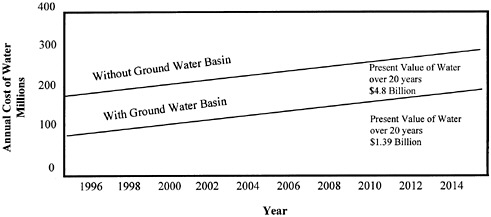
FIGURE 6.1 Estimated annual cost of water to retail producers: With or without ground water basin.
resources, and Arizona and Nevada are looking to increase their allotment of Colorado River water. Access to Orange County's valuable local ground water resource decreases the district's dependence on this more costly, less reliable imported water supply.
Ground water is generally less expensive than imported water, primarily because of the development and transmission costs of the imported supplies. As seen in Figure 6.1, it is projected that the value of Orange County's ground water over a 20-year period will be approximately $1.39 billion, and the value of imported water will be as high as $4.80 billion. Figure 6.1 shows the annual cost of water for the district with and without a ground water basin and indicates that the present value difference of the two scenarios is approximately $3.41 billion; this is one measure of the value of the ground water basin although it presumably represents a lower bound estimate of the true value.
Under current conditions with the ground water basin, retail producers within the district are able to meet approximately 75 percent of their demands by pumping from the ground water basin. The price of this water is estimated at $138 per acre-foot. Which includes a pumping assessment of $85 per acre-foot and an energy cost of $53 per acre-foot.
In 1995 approximately 300,000 acre-foot of water was pumped from the ground water basin. Approximately 130,000 acre-foot of imported water was purchased from MWD. Of the water purchased from MWD, approximately 100,000 acre-foot was noninterruptible treated water at a price of $426 per acre-foot. The remaining 30,000 was purchased as seasonal shift water at a price of $286 per acre-foot. By having access to a ground water basin, retail producers are able to participate in the MWD seasonal shift program, which allows them to purchase imported water at a discount during the winter months.
The total cost of purchasing these three types of water (ground water, imported, and imported ''seasonal shift") by the retail producers to serve their customers was approximately $92.6 million in 1995. Alternatively, if the ground water basin were not available, the entire 430,000 acre-foot of necessary supplies would have to be purchased from the MWD at the rate of $426 per acre-foot. The total cost of this water is approximately $183 million, which is roughly twice the water supply cost when the ground water basin is available.
In addition, the savings derived from the use of the ground water basin, compared to the cost of sea water intrusion facilities, offsets the cost of constructing and operating a barrier. For instance, capital and construction costs for Water Factory 21 were approximately $57 million (in 1995 dollars), with an average operation cost of $6 million per year.
Although a dollar value cannot readily be assigned to it, the value of the ground water basin for an emergency water supply and distribution system constitutes an important justification for protection. If the surface distribution system should become unusable because of a natural or human-made emergency or the imported supply were interrupted, reduced, or contaminated, ground water could eliminate tremendous economic loss or even assure survival. The value of an emergency supply would also be enormous during a period of extended drought. The value of the basin would increase with the severity and duration of the emergency.
Conclusion
Ground water and ground water basins are valuable resources because of the quantity of supply and the possibility for storage and distribution. William Blomquist stated in "dividing the Waters," "When a ground water basin is destroyed, water users not only lose the comparative advantages of underground water storage and distribution, but they also suffer enormous financial costs. Replacement of ground water storage and distribution capacity, even if feasible, would be an economic disaster" (Blomquist, 1992).
Communities in Orange County would be forced to turn to more costly imported water to meet their water supply needs if the ground water basin were lost to sea water intrusion. To replace local ground water supplies in Orange County with enough imported water from the MWD of southern California to maintain current levels of use for a 20-year period would cost water users at least $4.8 billion dollars
Reference
Blomquist, W. A. 1992. Dividing the Waters: Governing Ground Water in Southern California. San Francisco: ICS Press.
INCORPORATING THE VALUE OF GROUND WATER IN SUPERFUND DECISION-MAKING Woburn, Massachusetts
Background
Knowing the value of ground water is important in evaluating remediation alternatives for Superfund sites involving ground water resources. Unlike other case studies where the primary concerns are maintaining the quantity and/or quality of the ground water, in the Superfund setting the ground water resource has been contaminated and the issue is primarily one of restoring quality. Thus the value of the ground water will be reflected in the values associated with moving from a situation where the aquifer is not usable to situations where some uses can be made of the aquifer.
In this section a brief overview is provided of a study on the costs and benefits of ground water remediation for a Superfund site located in Woburn, Massachusetts (Spofford et al., 1989). This study, conducted by Resources for the Future (RFF), illustrates the importance of valuing ground water as a component in a cost-benefit analysis of ground water remediation decisions and the complexities that such an assessment involves.
In 1980 the Comprehensive Environmental Response, Compensation, and Liability Act (CERCLA) was enacted to facilitate cleanup of the nation's worst hazardous waste sites. CERCLA and the subsequent 1986 Superfund Amendments and Reauthorization Act (SARA) created a fund, the Superfund, to pay for site cleanup when parties who caused the contamination could not be found or could not pay for the cleanup themselves.
Many of the Superfund sites involve contamination of ground water resources or are listed as potential threats to local public water supply wells (Canter and Sabatini, 1994). Contaminants found in public ground water supplies are mainly volatile organic contaminants (VOCs) such as TCE (trichloroethylene), PCE (tetrachloroethylene), 1,2-DCE (dichloroethylene), vinyl chloride, and benzene; other contaminants commonly present in various combinations included heavy metals (chromium, lead, and arsenic) and polynuclear aromatic hydrocarbons (PAHs).
Economic considerations should play a key role in determining the extent to which ground water remediation is pursued at these sites. If the expected costs of cleanup exceed the expected benefits of improving the quality of the ground water, then the economically rational alternative is not to remediate the ground water. This might be the case if the contaminated ground water resource is not used and is perceived to have a low potential for future use or if there are relatively low-cost substitutes. Alternatively, there may be different levels of remediation depending upon the future uses and expected costs of the ground water resources. Thus, in the context of Superfund remediation, the value of
ground water is reflected in the benefits associated with improvements in the quality of the contaminated aquifer, and the value will depend upon the level of remediation. In addition, the benefits of remediation cannot exceed the total economic value of the ground water for that level of remediation.
Analysis of the Woburn Superfund Site
The Superfund site in east Woburn, Massachusetts, included two municipal water supply wells, which had been found to be contaminated with chlorinated solvents in 1979. Prior to contamination, the local aquifer segment had served as a drinking water supply for the city of Woburn and as a water source for several industrial users. Possible levels of remediation included restoring the aquifer to drinking water quality as well as maintaining the aquifer for nonconsumptive purposes only.
Because of measured contaminant concentrations and related health concerns, TCE had been identified as the key contaminant for remediation planning. The costs of remediation that were analyzed in the RFF study were based on withdrawal of the contaminated ground water from the aquifer using extraction wells, treatment using aeration towers, and return of the treated water to the aquifer using injection wells.
In estimating the benefits of remediation, the RFF study considered only those benefits that were associated with direct use of the aquifer. The benefits that were not measured in the RFF study but that should be considered in a study designed to measure the TEV of the contaminated aquifer include reductions in losses of recreational opportunities; reductions in ecological damages; reductions in losses of intrinsic value, including bequest and existence values; reductions in health damages due to morbidity as opposed to losses due to mortality (these were included in the assessment of health damages in the RFF study); and reductions in fear and anxiety associated with switching from a water supply that is perceived to be safe (bottled water or a municipal water source) to a water supply that may be perceived as unsafe (the remediated ground water). As the authors indicate, estimates of these benefits were not included in the report since the primary purpose of the research was to illustrate the impact of uncertainties on measures of net benefits as opposed to replicating the true benefits and costs for a specific site, and study funds were limited (Spofford et al., 1989).
To estimate the benefits of remediation, the researchers hypothesized two management contexts. The first is fairly simple and basically involved using an alternative water supply for the entire city of Woburn. The contaminated ground water supply was assumed to be replaced with water purchased from the Massachusetts Water Resources Authority (MWRA), which was the least expensive alternative available to the city. The additional cost per gallon of using MWRA water as opposed to pumping the aquifer multiplied by the total use of water in the city provides a lower bound on the value of the aquifer in a given year. (The
study estimated this cost to be approximately $0.32 per 1,000 gallons in 1986.) This method of valuing the ground water resource is basically a replacement cost approach, which does not reflect the values people may attach to clean ground water or the disutility attached to knowing that the aquifer is contaminated.
The second management context developed in the study was more complex and was based on the underlying assumption that all the households that had previously relied on private wells as opposed to a municipal water supply system would continue to use "contaminated" water, although the extent of uses by these households could vary. The study hypothesized a range of situations from ones in which consumers avoided using the water for drinking, food preparation, and personal hygiene, in which case the direct use value of the ground water would be reflected in the costs of purchasing alternative drinking water supplies, to situations where individuals continued to consume the contaminated ground water. In the latter situation, the direct use value of the ground water would be reflected in the health costs, or damages, associated with the consumption of contaminated water.
To implement this second management context, a model of consumer decision-making under uncertainty that incorporated perceived health risks associated with consumption of contaminated water and the costs of alternative drinking supplies (such as bottled water) serves as the basis for determining how individuals made their consumption choices and for constructing a demand curve for ground water. The value of ground water can then be measured as the area under the demand curve. The consumers' demand for ground water depends upon many factors, including the normal demand determinants (income, price of substitutes, etc.) as well as attitudes toward perceived health risks and the levels of TCE in the water. Over time, the demand for ground water may shift as these underlying factors change, and thus the value of the ground water will change.
The direct use value of the ground water in this second management context will depend upon the extent to which the contaminated ground water is consumed as a source of drinking water. For example, if the water is not consumed as a source of drinking water, then the direct use value of the ground water would be reflected primarily in the costs of bottled water, which substitutes for the human consumption component of per capita water consumption. RFF estimated this level of use to be approximately 3.65 gallons per person per day out of a total use level of 130 gallons per person per day. In this context the direct use value of ground water can be estimated using the estimates of avoidance costs, but as in the first management context, this value does not reflect any of the indirect or nonuse values of the aquifer.
If consumers continue to drink the contaminated water from the private wells, there are no avoidance costs per se, and the value of the ground water is reflected in the health costs associated with its consumption as drinking water plus the indirect or option value. These two extremes provide some bounds on the direct use value of ground water or, alternatively, provide bounds on the
average benefits of ground water remediation for the management context where households in the area still continue to use private wells.
As the RFF study noted, estimates of the benefits of ground water remediation depend on many assumptions. For example, in specifying the model of consumer behavior, assumptions are needed regarding the level of the potential health damages, discount rates, concentrations of TCE over time in the aquifer, and future costs of alternative drinking water supplies. These assumptions affect decisions on avoidance costs and measures of health damages and thus the direct use value attached to ground water by individuals who have private water supply wells.
An additional source of uncertainty relates to the behavior of individuals confronted with different levels of TCE in drinking water that exceed the standard. The extent to which individuals will avoid contaminated well water and their willingness to pay for such avoidance varies with perceived risks to health of different levels of TCE in the drinking water. The authors cite the lack of an adequate methodology for measuring perceived health risks as a major limitation in using this approach to quantify the value of ground water or using this management context as a basis for remediation decisions (Spofford et al., 1989).
The general findings of the RFF report indicate that for the first management context the net benefits of remediation were positive, indicating that from an economic perspective it is more efficient to remediate the aquifer than to continue using an alternative water supply. This finding also held true for the second management context, where it was assumed that all the households affected by the contaminated aquifer had previously relied on private wells: it is more efficient to remediate the ground water than it is to permit the exposed population to continue to use contaminated well water. Comparisons among the net benefits for alternative remediation designs would shed some light on the relative efficiency of alternative cleanup options.
Conclusions
Several conclusions pertaining to the value of ground water can be drawn from the Woburn case study:
-
Economic valuation of ground water for the specific hazardous waste site is crucial to making informed decisions regarding the status of remedial action. The conclusions reached will be site specific, depending on the nature of the contaminant and the current uses of the aquifer.
-
Determining the full economic value of the aquifer will often be difficult because of the indirect nature of many of the benefits. However, assessing the direct use benefits poses a much simpler task and may serve as a lower bound on the benefit estimates.
-
Technical and economic uncertainties must be recognized in quantifying
-
the value of the ground water resource. While the RFF study noted many uncertainties, those that pertain to the benefit side of the equation are substantial enough to warrant further research.
References
Canter, L. W., and D. A. Sabatini. 1994. Contamination of public ground water supplies by Superfund sites. International Journal of Environmental Studies, Part B 46:35-57.
Spofford, W. O., A. J. Krupnick, and E. F. Wood. 1989. Uncertainties in estimates of the costs and benefits of ground water remediation: Results of a cost-benefit analysis. Discussion Paper QE 89-15. Washington, D.C.: Resources for the Future.
APPLYING GROUND WATER VALUATION TECHNIQUES Tucson, Arizona
Background
The objective of this case study is to illustrate how incorporating the economic concepts and techniques developed in Chapters 1 through 4 of this report can assist in management of ground water resources over the long term. Unlike the previous case studies, which are limited to reviews of existing work and demonstrations of value of ground water in various contexts, the Tucson case study illustrates the application of the conceptual valuation framework described in Chapter 3.
The Tucson case study is notable both for the diversity of ground water services it illustrates as well as for the urgency of policy attention the area's water management system requires. The intent is not to calculate the incremental change in value of services provided by ground water in the "with treatment" and "without treatment" condition but to identify the steps required to implement the valuation process in a real-world context. This case study simplifies and abstracts information from the actual Tucson situation in order to better illustrate the role of economic valuation in improving management of ground water resources.
Ground water provides numerous extractive services in Tucson, including residential, commercial, agricultural, and industrial water uses. The region's ground water resources also provide a range of in situ services, such as prevention of land subsidence, reservoir functions that will buffer future drought associated with shortages in surface water supplies, bequest value, and ecological services such as maintenance of riparian habitat. Policy-makers in Arizona have struggled to reduce the extent to which ground water supplies in the region are mined. Ground water policies have been put in place as a mechanism to ration and conserve supplies for future use. Alternative renewable surface water sup-
plies to augment and substitute for ground water have been developed at great cost in anticipation of future demands.
As is the common practice, the price of ground water in Tucson does not reflect any of the commodity values, including the extractive and in situ service flow values. It is based on the cost of distribution, including capital, operations and maintenance, and administrative costs. Ground water is thus the least expensive and highest-quality water supply available. In a dynamic pricing environment, water would be priced to incorporate marginal extraction cost and user cost and would reflect the values of all use and nonuse service flows.
Instead of relying on price to ration scarce ground water supplies, Arizona water managers have focused on regulations and other nonprice policies to reduce water use. The total economic value of ground water supplies in any location is affected by the institutional, policy, and hydrological constraints that shape current and future use and define management options. Policy-makers must recognize this institutional and political context in order to make an accurate assessment of the services ground water provides.
Tucson's Water Resources
Tucson has relied on a high-quality ground water supply to meet all of its demands for water. Ground water use has exceeded natural recharge (precipitation and return flows) annually since 1940, leading to a situation in which over half of annual use is from mined ground water. In Tucson's desert climate, there are no viable local renewable surface supplies (other than municipal effluent) to substitute for ground water resources.
Although there is a substantial amount of ground water in the aquifer, dependence on mined ground water has a number of negative consequences. Falling ground water levels have eliminated many of the free-flowing rivers, streams, and associated riparian habitat in most of southern Arizona. The risk of subsidence with continued depletion of ground water is quite severe in the central Tucson wellfield that underlies the city of Tucson; a worst-case estimate is that the ground level will drop by 12 feet by 2024 (Hanson and Benedict, 1994). In addition, the most productive parts of the aquifer are nearly exhausted, which can be expected to lead to substantial increases in pumping costs. As a consequence of municipal pumping in the central Tucson wellfield, ground water levels have fallen as much as 170 feet.
Legal and Institutional Constraints
Legal and institutional constraints on ground water use frame the valuation context. The Tucson Active Management Area (AMA) is one of five AMAs in the state established pursuant to the 1980 Groundwater Management Code. The Tucson AMA has a statutory goal of safe yield by 2025. The safe yield goal
requires that the amount of ground water used on an average annual basis must not exceed the amount that is naturally or artificially recharged.
The code established stringent limitations on ground water use within AMAs. Farmers receive an allocation based on historic cropping patterns assuming maximum irrigation efficiency. No irrigation of new agricultural land is allowed. Allocations to municipal water providers are on the basis of their average historical use in gallons per capita per day. A "reasonable" reduction is required within each water company, based on an evaluation of conservation potential. All large industries are directly regulated, using an approach based on either allotment (for golf courses) or best management practices (for copper mines, sand and gravel, electric power, etc.).
In addition to demand management policies, there are economic incentives to discourage development of new ground water uses and encourage use of renewable supplies, primarily imported surface supplies (from the Central Arizona Project, or CAP) and wastewater effluent. One of the primary tools for moving from the current state of overdraft to the safe-yield condition is the 100-Year Assured Water Supply (AWS) Program. This program, administered by the Arizona Department of Water Resources, severely limits the amount of ground water that can be used for municipal purposes. The cumulative amount of ground water that the city of Tucson can legally withdraw as part of its AWS is approximately 3.5 million acre-feet. If the city were to rely solely on ground water for its supply, its cumulative ground water withdrawals would exceed this amount before 2030. Without utilization of Tucson's CAP allocation, Tucson would not qualify for a designation of AWS.
Demand for Water
The population of the Tucson AMA is estimated at 750,000 for 1995 and is projected to reach 1.3 million by 2025. The majority (78 percent) of the population in the Tucson AMA is served by Tucson Water, the water utility operated by the city of Tucson.
Total water use in the AMA is currently close to 300,000 acre-feet per year (see Table 6.2); more than half of the total water supply is mined ground water.
TABLE 6.2 Tucson AMA Water Demand
|
Sector |
1994 USE (in acre-feet) |
Percent |
|
Agricultural |
97,900 |
31 |
|
Municipal |
148,500 |
47 |
|
Industrial |
18,600 |
6 |
|
Mining |
45,000 |
14 |
|
SOURCE: Arizona Department of Water Resources, 1996. |
||
Under current population projections, total demand for water in the Tucson AMA is expected to be approximately 427,000 acre-feet per year by 2025 (Arizona Department of Water Resources, 1995 and 1996), increasing by 50 percent from the 1995 levels.
Development of Alternative Renewable Water Supplies: The Central Arizona Project
The Central Arizona Project is a 330-mile canal built by the U.S. Bureau of Reclamation, with pumping stations and associated distribution and flood control facilities. It extends from Lake Havasu to Tucson; the total cost, including federal, local, and private investment, exceeds $4 billion. A major feature that has not been constructed is a reliability feature for Tucson, a terminal storage reservoir. Tucson has the largest municipal allocation of Colorado River water—148,200 acre-feet.
Applying the Economic Valuation Framework in Tucson
Policy Constraints on Use of Renewable Supplies
At the end of 1992, nearly half of Tucson Water's customers (84,000 metered connections) began receiving CAP water. After unanticipated water-quality problems arose (rusty water, turbidity, taste and odor problems, and bursting pipes), 37,000 metered connections in the older parts of town were returned to ground water in October 1993. Water-quality problems were attributed to old cast iron and galvanized steel water mains and household plumbing, combined with pH and other chemical attributes of the imported surface water that encouraged corrosion.
In January 1995, the Tucson City Council voted not to directly deliver CAP water to customers until the water-quality problems were fixed. On November 7, 1995, the citizens of Tucson approved a citizen's initiative (Proposition 200; the Water Consumer Protection Act) prohibiting direct delivery of CAP water to customers unless it is treated to the same quality as ground water for hardness, salinity, and dissolved organic material. This can be accomplished only through advanced treatment, probably reverse osmosis or nanofiltration.
Defining the Management Options Within Current Constraints
Under the existing constraints, Tucson's water planners must define feasible options for meeting Tucson's present and future water needs. These options are constrained by the above policies and laws.
In this application of the conceptual framework, recharging the untreated CAP water supplies into overdrafted aquifers is the base or "without-treatment"
case. Water to meet all demands would continue to be pumped from ground water supplies in a conjunctive management scheme. Treating surface water with advanced membrane filtration to remove salinity and organic material prior to direct delivery to customers is the "with-treatment" option. It is important to note that in this example the valuation techniques are not used to calculate the TEV for ground water. Rather, they are used to evaluate the change in ground water value that results from a particular policy decision.
Identifying Changes in the Quantity and Quality of Ground Water
Initially, hydrologists must establish the quantity and quality of Tucson's ground water resources. Policy-makers need to assess how the "with-treatment" management option would change this baseline quantity and quality. Since the recharge option is considered the baseline, an accurate assessment of the impacts of artificial recharge potential is also needed.
The quality of the water that is pumped depends on where the CAP water is recharged relative to the location of recovery, the nature of the aquifer materials, the degree of blending with local ground water, the distance the water travels in the subsurface, and the presence of any source of contamination. The Groundwater Management Code allows an entity to recharge in one location and recover at a distant location within the same AMA, provided certain criteria are met.
Identifying Changes in Service Flows
The next step is to link the management decision with the changes that result in the time path of services that the ground water will provide under the alternative. This is where the critical input from scientists and hydrologists is required. The "without" scenario describes the services provided in the base case and the incremental changes that result from substituting treated surface water supplies.
Incremental Changes in Extractive Service Flows
Although Colorado River water is viewed as a high-quality water source for millions of people in the Southwest, there are several ways in which recharge using CAP water can reduce the quality of the water available for extractive uses. CAP water as treated with conventional surface water treatment methods meets all of the EPA maximum contaminant levels (MCLs), but the aesthetics, taste, and hardness of CAP water were a major issue for Tucson Water when the supply was directly delivered to customers from 1992 to 1994. Any use of CAP water in the basin, whether through direct delivery or recharge, will increase the salinity level of the aquifers within the Tucson AMA. The only way to avoid the increase in salinity is to utilize an advanced treatment approach (probably using membrane technology) to remove the salts. This technology is expensive; it is there-
fore important to identify the value of the changes in service flows that would be provided to decide whether the additional expense is justified. Unlike native ground water, surface water tends to contain pathogens, some of which are difficult to remove.
CAP water has roughly twice the total dissolved solids (TDS) and salinity of the local ground water, and it contains organic precursors that can, in combination with chlorine, cause formation of trihalomethanes, a group of chemicals known as carcinogens. Depending on the contact time and travel through aquifer materials, the recharge process may reduce the organics and disease-causing organisms (bacteria and viruses), but it does not affect the salinity and hardness of the water. Therefore, recharge of untreated CAP water is likely to influence the quality of the water in the aquifer. To the degree that this same water is recovered for delivery to municipal customers, costs for end users will increase, because higher salinity and hardness translate into the need to replace appliances more frequently and increase the maintenance of irrigation and cooling systems.
Depending on the location of the recharge, impact on water quality may not be substantial. For example, there are areas in the AMA where the end users may not experience negative effects from the higher salinity (agriculture usually has few problems with 700 mg/l TDS). However, it is important to note that the salt load brought in with the CAP water will be distributed in the vicinity of the recharge facilities and could migrate over time to surrounding aquifer materials unless the withdrawal facilities are in the same location.
Recharge will have a positive effect on extractive values if the water is recharged in the vicinity of wells supporting extractive uses. However, several of the prime recharge locations are not near the central Tucson wellfield.
The treatment option requires the development of an advanced water treatment facility, probably nanofiltration or reverse osmosis, to remove the salts, organics and solids as required by Proposition 200. Aside from the capital cost of the facility, which is several hundred million dollars, a major concern is disposal of the brine stream. Depending on how this salt-laden wastewater is directed, the effect on ground water service flows varies. The brine stream from such plants is normally discharged into surface water or injected into deep wells. Neither of these options is available in Tucson. The most likely disposal alternative is evaporation ponds, with the sludge deposited in lined landfills.
The advanced treatment option provides the highest-quality water for municipal uses. It would not affect the quality or quantity of water for agriculture or mining. Direct delivery has many benefits, since it leaves the ground water in place and should allow for at least partial recovery of all of Tucson's wellfields. Advanced treatment will limit the avoidance costs of many municipal end users, who would otherwise buy bottled water, resort to point-of-use treatment devices, or replace their appliances more frequently as a result of using CAP water either directly or after recharge. Membrane treatment will also eliminate the possibility of Cryptosporidium or Giardia outbreaks, if the treated water is blended with
ground water rather than surface water before delivery to customers. Blending of membrane-treated water is generally recommended to improve the taste, reduce corrosiveness, and reduce costs.
Depending on the brine stream disposal method (most likely through evaporation ponds), there could be localized impacts on water quality in the aquifer. Another option is to deliver the brine to existing wastewater treatment plants, to be blended with less salty effluent before discharge. This would result in high salinity downstream from the wastewater facilities. The ground water quality in these areas could be degraded, affecting service flows.
Incremental Changes in In Situ Service Flows
In situ service flows can be categorized as use and nonuse. For Tucson, in situ uses include use of the stock to: (1) assimilate contaminated runoff from extractive uses and attenuate existing areas of ground water contamination; (2) buffer future drought on the Colorado River system in a conjunctive use scheme; and (3) support the soil structure in the aquifer and prevent subsidence. Additional in situ services include: existence value (based on a desire to protect the aquifer as part of the natural system); bequest value (the intent to protect water for future generations); and ecological services in which ground water supports surface water flows and riparian habitat.
Recharge Effects
If recharge is used to limit water-level declines in areas that are prone to compaction, it will help support in situ uses. There are two ways to limit the subsidence potential in the central Tucson wellfield: reduce the amount of future pumping there by withdrawing ground water elsewhere and recharging within the central wellfield. The former is easier in this case, since Proposition 200 precludes an effective way to recharge in the central basin (injection recharge). Surface recharge in areas of subsidence can actually accelerate subsidence, since its weight adds stress to the aquifer materials.
Recharge results in the storage of water for future use, which increases the buffer value of the aquifer. If the water is available for future generations, then it supports the bequest value as well. Those who stress the existence value of the aquifer would likely prefer that higher-quality ground water be maintained rather than degraded by CAP water through recharge. However, it is not clear what the quantity/quality trade-off is for existence value.
If recharge occurs in the vicinity of streambeds, it is likely to support riparian habitat or provide for an expansion of habitat values. Recharge facilities can easily be designed with a habitat/recreation component, guaranteeing a positive impact on ecological values. However, there are costs associated with increasing habitat values, particularly if threatened or endangered species become a compo-
nent of the new habitat. The costs are associated with endangered species regulations, which could require permanent maintenance of the artificially created habitat to protect a particular species. This introduces a cost associated with irreversibility—the decision to recharge could be legally required to continue even if another water use option were more desirable from other perspectives.
Advanced Treatment Effects
Substitution of treated surface supplies for pumped ground water means that most of the wellfields in the vicinity of key riparian areas would not be used often. In addition, the regional water tables should rise in the wellfields because of natural recharge. Both of these occurrences should increase the quantity of water available for ecological service flows.
The direct delivery option with advanced treatment protects both the quality (depending on the disposal of the brine stream) and the quantity of water in the aquifer. The buffer value of ground water would be the highest in this option, since there will definitely be future supply shortages, during which consumers will rely on ground water. By ending the current pumping in the central wellfield, additional subsidence is likely to be avoided. Ground water will be available for future generations, and those who value existence of the aquifer would have the quality as well as the quantity protected (at least in theory).
Valuing Changes in Extractive Service Flows
Incremental Extraction Costs (Marginal Benefits of Quality Changes) . In the Tucson example, the difference in the extractive service flows between the two options is related primarily to the reduced pumping costs and the reduced number of wells required to serve the community, as well as the water-quality issues caused by recharge of untreated CAP water that occurs in the one option. If the recharge does not occur in the vicinity of existing wellfields, water levels will continue to decline in those areas. Lowering the water level has two economic effects: it increases the amount of energy required to pump each acre-foot of water, and it results in the need to drill more wells since the most productive part of the aquifer may be exhausted. Direct delivery after treatment eliminates these costs because there would be little dependence on ground water as a supply except during infrequent CAP shortages and canal shutdowns.
The only methods identified for evaluating the change in services related to pumping costs for extractive purposes were standard engineering analysis techniques—increased energy costs associated with increased head and well drilling and system extension costs. The major issues associated with this type of analysis are uncertainty and discounting. It is unclear how productive deeper parts of the aquifer will be and how many wells will be required to replace the capacity of the existing high-capacity wells. The time element is also uncertain; it is not
known how many years will pass before expanded infrastructure is required to maintain current production levels. Since the growth rate on the city's system is 1-2 percent per year and long-term outages may occur on the CAP canal, pumping capacity must be expanded to meet the increased demand as well.
Incremental Quality Costs (Marginal Benefits of Quality Changes). There is an additional reduction in service flows as the water level drops (assuming that recharge does not occur in the vicinity of production wells). The water that is withdrawn at greater depth in the Tucson basin is higher in salinity and TDS. This lower quality, like that of CAP water, will increase costs for end users in the residential, commercial, and industrial sectors. Households and firms may buy bottled water or in-home treatment devices (avoidance costs) or replace appliances more frequently. Industries and individuals with private wells will be similarly affected. These costs do not occur in the case of the direct delivery with advanced treatment option.
Possible techniques to evaluate the costs associated with reduced water quality include the averting behavior method and the contingent valuation method. To the extent that wellhead treatment or well replacement is required, standard engineering techniques must be used.
Opportunity Costs (Marginal User Costs). Ground water in the Tucson area is essentially a stock resource, since it is not naturally replenished at a high rate. Using a unit of ground water today means that it will not be available for future use. Methods that can be used to measure this ''dynamic" opportunity cost include dynamic programming and intertemporal (optimal) control techniques. Although these methods are limited to measuring use values, they may be valuable in evaluating alternative options.
Valuing Changes in In Situ Service Flows
Subsidence Avoidance. The risk of subsidence is high in the central Tucson basin, where 60 percent of the city's water supply is currently pumped. In the recharge option, some pumping in the central wellfield would continue without replenishment in the same location. Subsidence costs include disruption of all utilities (sewer, water, electric, gas, etc.); damage to roads and buildings; and a possible permanent reduction in storage capacity of the aquifer. The direct delivery with treatment option eliminates the pumpage in the central wellfield, thereby essentially eliminating the possibility of increasing the rate of subsidence.
There are two techniques that can be used to measure the benefits associated with subsidence reduction. To the extent that utilities must be repaired or rerouted and roads and buildings must be repaired, standard production cost estimates can be prepared. The other method is the hedonic price (property value) method, since some areas are at considerable risk of subsidence and others are
unlikely to experience any damage. Differences in market prices across these zones may begin to reflect these costs.
The degree of uncertainty associated with predicting substidence damage is high. It is unclear how long it will take after an aquifer is dewatered for the compaction to occur. It is also unclear whether the whole basin will settle as a unit or whether it will settle differentially, causing subsidence cracks and substantially more damage. The normal pattern is that the cracking occurs near the edge of the basin, and downtown Tucson is near the base of the Tucson mountains. A risk/probability assessment may be required.
Reservoir Function. In some aquifers subsidence causes irreversible damage to the water-holding capacity because rewetting these areas fails to have any rebound effect. The irreversible aspects of subsidence need to be taken into account, at least from a qualitative perspective. Engineering analyses can be used to compare lost storage capacity to the costs of alternative storage facilities, such as reservoirs.
Buffer Value. A ground water value that is lost under the recharge option is the ability to buffer the effect of drought on the CAP system. This value is not as high in the recharge option, since all customers are receiving pumped ground water and continuous delivery is not critical. If a direct delivery option were selected in the future, however, the buffer value of the aquifer would have been lost if most of the ground water supply in the vicinity of the wells had been removed.
Methods associated with estimating buffer value, such as intertemporal optimization, may be applied (Tsur and Graham-Tomasi, 1991).
Existence Value. Certain values associated with maintaining the ground water aquifer intact are unrelated to any function or service the aquifer provides. This value is difficult to describe, so methods of estimating it are limited. The most likely technique to establish this value is the contingent valuation method.
Habitat Values Related to Water Quantity. Higher water levels in the vicinity of some proposed recharge sites are likely to enhance habitat values. In addition, recharge sites can be designed with habitat enhancement as a component. However, in comparing the two options, it should be noted that it may be possible to create habitat using the brine stream from the advanced treatment facility. The options for improving local habitat due to recharge are offset by the probability that existing mature riparian habitat (such as the Tanque Verde Creek area) in the Tuscon basin could be destroyed by continued pumping of the ground water.
Because impacts on habitat are visible only in limited areas, the hedonic price method (based on differences in property values) may be useful. Other
methods that can be employed for evaluating the recreational/aesthetic values of habitat include contingent valuation and travel cost. Sources of uncertainty include lack of definitive information about the relationship of ground water level and habitat quality, the length of time it will take for dewatering to occur, and the limited number of remaining high-quality habitats to evaluate.
Habitat Values Related to Water Quality. The recharge of untreated CAP water will increase the aquifer salinity in the vicinity of the recharge site and in areas that are down-gradient from the recharge site. It is unclear whether the increased salt levels will have any negative effect on the development or maintenance of high-quality ecosystems. However, it is unlikely that salinity and TDS concentrations in the CAP will have a measurable effect on mature vegetation. If it can be demonstrated that mature riparian vegetation or mammals and birds are affected, it is possible that salt-avoidance ecological values can be measured using the contingent valuation or travel cost method.
Conclusions
Based on this descriptive approach for applying the valuation framework presented in Chapter 3, the following conclusions can be drawn:
-
The treatment option is likely to have a higher benefit/cost ratio when the TEV of ground water is considered.
-
Engineering analyses (changes in production costs) may continue to be used to establish costs where extractive services are a large component of cost, so long as costs are assessed at both the household level and the utility level.
-
Quality issues may represent a more crucial impact on service flows than do quantity issues.
-
There are any number of scientific and economic uncertainties associated with the use of ground water valuation methods.
References
Arizona Department of Water Resources. 1995. Proposal to Increase the Use of Colorado River Water in the State of Arizona. Arizona Department of Water Resources, Tucson, Arizona.
Arizona Department of Water Resources. 1996. State of the AMA: Tucson Active Management Area. Arizona Department of Water Resources, Tucson, Arizona.
Hanson, R. T., and J. F. Benedict. 1994. Simulation of ground water flow and potential land subsidence, Upper Santa Cruz Basin, Arizona. U.S. Geological Survey Water Resources Investigations Report 93-4196.
Tsur, Y., and T. Graham-Tomasi. 1991. The buffer value of ground water with stochastic surface water supplies. Journal of Environmental Economics and Management (21):201-224.
LESSONS LEARNED
Even though the case studies presented in this chapter are diverse, they share themes that provide the basis for observations and lessons.
-
Each study involves unique hydrogeological features, ground water quality, uses of the resource, institutional requirements and constraints, and political contexts. Although the principles of the valuation framework described in Chapter 3 can be transferred, then, limited opportunities exist for transfer of benefits in subsequent studies.
-
The case studies clearly demonstrate a range of ground water services even if comprehensive valuation studies have not yet been accomplished. Trade-offs in decision-making can be made based on descriptive (qualitative) information about this range. Clearly, quantification of the values of such services would provide more complete information for decision-making.
-
These case studies highlighted the extractive value (service) of ground water. Several studies, however, recognized other services and TEV, and some focused on changes in value at the margin. Accordingly, ground water valuation studies should consider all components of TEV even though not all can currently be quantified. This approach would provide more complete information for subsequent decisions.
-
Several cases illustrate the classic natural resource scarcity phenomenon where market indicators have been given only limited consideration relative to depletion. A price regime that more nearly mimics the market appears to be at least one of the ingredients of more rational water management. If that course is to prove fruitful for the long run, we probably must find a way to unbundle water demand and supply among such major extractive uses as drinking, bathing, laundry, lawn watering, and car washing—the variety of water uses likely to be valued very differently. Unbundling could involve dual water systems, or a single system with special treatment measures for drinking water, or creative water use accounting schemes.
-
Some of the case studies identified concerns associated with human health risks from extractive uses of contaminated ground water. These concerns underscore the importance of carefully designed epidemiological studies, though even these are scarcely conclusive by themselves. Further, in the absence of epidemiological studies or information, debate will continue regarding actual and perceived health risks associated with degraded ground water.
-
Ecological services provided by ground water are recognized in several cases; however, there appears to be a dearth of information on how to quantify and value ecological benefits. This need can be further emphasized by considering the contributions of ground water to the base flow of streams, maintenance of wetlands and their associated hydrological and biological functions, and the provision of riparian habitat.
-
Technical and economic uncertainties must be recognized in efforts to develop site-specific ground water valuation information. Each of the case studies provides illustrations of such uncertainties. For example, in ground water valuation studies for Superfund sites, stochastic modeling of the contamination problem and potential effectiveness of cleanup measures should be used to develop ranges of resultant information that can be viewed as a type of "sensitivity analysis." Decision-makers should also consider the possible influences of uncertainties and nondelineated costs and benefits (of ground water services) as they interpret information.
-
Ground water valuation studies must recognize the importance and limitations of the institutional and political context, which can lead to conflicts in conducting valuation studies and interpreting their results and influence on subsequent policies and decisions.
-
Planning and implementation of valuation studies require the interdisciplinary efforts of hydrogeologists, engineers, environmental scientists, and economists, who must be able to interact with and learn from related disciplines.


