
2
Recent Trends in Life Expectancy and Causes of Death in Russia, 1970-1993
Vladimir M. Shkolnikov, France Meslé, and Jacques Vallin
Introduction
Until World War II, expectation of life at birth in Russia remained much below the levels achieved by Western countries. At the end of the last century (1896-1897), life expectancy in Russia was only 32 years as compared with 47 years in France and the United States. During the first part of the twentieth century, in spite of important improvements, the gap with France remained unchanged, and that with the United States, which had experienced exceptional gains just after World War I, became even wider. In 1938-1939, life expectancy reached 43 years in Russia. But at the same time, it reached 59 years in France and more than 63 in the United States.
After World War II, life expectancy in France and in the United States grew at approximately the same rate as before the war. In Russia, it rose so rapidly that the gap was dramatically reduced. In 1965, male life expectancy reached 64.3 years in Russia, compared with 67.5 in France and 66.8 in the United States; that of women reached 73.4 years, compared with 74.7 and 73.7, respectively. The gap with France, then, had been reduced to 3.2 years for males and 1.3 years for females. The gap with the United States, where improvement seems to have stopped since the end of the 1950s, had narrowed even more, to 2.5 years for men and 0.3 year for women.
During the latter 1960s, progress in life expectancy slowed in Russia and France as it had already done in the United States. The fight against infectious diseases had produced its maximum returns, particularly as a result of the spread of antibiotics. The impact of these diseases, particularly during infancy, had been
diminished such that their continuing decline would no longer result in important gains in life expectancy. Now, cardiovascular diseases and cancer ranked highest among all causes of death, much above infectious diseases. At the same time, economic and social changes resulted in an increase in such mortality-related factors as alcoholism, smoking, and traffic accidents. (See also the discussion of the epidemiological transition in the chapters by Kingkade and Arriaga and by Murray and Bobadilla in this volume.) A return to favorable life expectancy trends required both an end to the increase in these ''civilization ills" and success in a new fight against cardiovascular diseases and cancer. That was accomplished in France (Meslé and Vallin, 1993c), as well as in the United States, but not in Russia. This is why life expectancy changes within these countries since the late 1960s have again moved in opposite directions: steady improvement resumed in France and in the United States, while stagnation, or even deterioration for males, prevailed in Russia. These contrasting trends, which were pointed out by Jean Bourgeois-Pichat (1985) early in the 1980s, are still being confirmed.
Comparison with Japan is yet more illustrative, as shown in Figure 2-1. Until the 1960s, the Russian and Japanese situations were quite similar. Like Russia, Japan was far behind Western countries until World War II, but in the 1960s, thanks to very rapid progress, it reached the level achieved by France and the United States. The increasing disadvantage of Russia since 1965 is much more obvious by comparison with Japan than with France or the United States. The spectacular success of Japan in the transition from the victory over infectious diseases to the control of cardiovascular diseases contrasts dramatically with the failure of Russia.
The unexpected deterioration in life expectancy experienced by Russia since the mid-1960s has already been subject to much discussion in the literature. Taking into account some peculiarities of the age structure of mortality of the total Soviet Union, Anderson and Silver (1990) have proposed that at least a part of this deterioration is a statistical artifact due to improved data collection. Before discussing the trends themselves, it is necessary to look at these possible distortions due to the inaccuracy of the available data, and to examine ways of at least partially overcoming these deficiencies to draw meaningful conclusions; the first section of this chapter addresses these issues. Even if partially overestimated, no one contests the reality of the Soviet health crisis; the second section of the chapter attempts to derive some explanation for the crisis from analysis of the age and cause-of-death patterns of mortality in Russia. The third section examines comparative international trends in some specific causes of death. The chapter ends with a summary and conclusion.
Data Quality Issues
In examining trends in life expectancy and causes of death in Russia, one
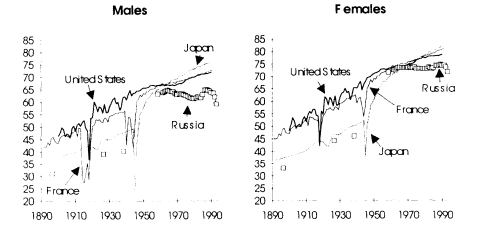
Figure 2-1
Comparative trends in life expectancy in Russia, Japan. France, and the United States since the beginning of the twentieth century.
encounters issues of data quality with regard to the age structure of Russian mortality and the registration, codification, and classification of cause of death.
Age Structure of Russian Mortality
The age patterns of mortality for Russia and for the entire Soviet Union over the last three decades have consistently shown a great excess of mortality for males at young and middle adult ages. This is clear from a comparison of Russian age-specific mortality rates with the age patterns of each family of the model life tables of Coale and Demeny (1966; Coale et al., 1983) for the same level of life expectancy. These differences in age patterns of mortality between Russia and each of the models make it difficult to choose an appropriate model life table for evaluating the quality of Russian data on mortality at very young and very old ages, for which the Russian data are particularly questionable (see also Anderson and Silver, in this volume). The problems with the data, and suggested corrections, are discussed below.
Problems Around Infant Mortality
Several problems related to infant mortality data for Russia and for all the former Soviet republics have been noted. Anderson and Silver (1986) suggest that a change in the registration system starting in 1974 resulted in an increase in the number of registered infant deaths. It is true that for some Soviet republics, we can observe a jump in the series of infant deaths somewhere around this year. Examples include infant mortality rate increases of 20 percent between 1973 and
1974 in Latvia, 15 percent in Estonia, and 10 percent in Lithuania, and an increase of 50 percent in Moldova for the previous year. However, for the total Soviet Union and especially for Russia, there is no jump at any one time, just a regular increase during the years 1971-1976. We could argue that in so large a country, new registration procedures would spread slowly, eventually resulting in a general improvement in registration. However, we do not have enough evidence to undertake any correction on this basis.
A second problem consists of age misreporting: infants who die at less than 1 year of age are reported as being older than 1; thus the infant mortality rate is underestimated, while the rate for ages 1-4 is overestimated (Ksenofontova, 1990, quoted by Anderson and Silver, 1990). This problem results in an obvious distortion of the mortality rates at these ages in several Central Asian republics, but it does not apply to the case of Russia.
A third problem with infant mortality data in the region is related to the definition of a live birth. Until very recently, the Russian definition was more restrictive than the World Health Organization (WHO) definition, and this probably resulted in an underregistration of births and early neonatal deaths (see also Kingkade and Arriaga, in this volume). Under the more restrictive Russian definition, children born before 28 weeks of gestation, or weighing less than 1,000 grams or being less than 35 centimeters long, were not supposed to be counted as either live births or infant deaths if they died before the end of their first 7 days of life.
The WHO definition was introduced only in January 1993 in Russia, but it has been applied since 1991 in Latvia and Lithuania and since 1992 in Estonia. We cannot yet verify the impact of this change on Russian statistics, but it is true that it changed the Baltic data rather dramatically. Following the change, infant mortality rates jumped from 13.7 to 17.4 per 1,000 in Latvia and from 10.3 to 16.5 in Lithuania. However, the increase observed for total infant mortality is not due entirely to the rise in mortality within the first week of life, which grew during these years from 6.2 to 9.0 per 1,000 in Latvia, and from 4.8 to 9.4 in Lithuania (Estonian Medical Statistics Bureau, Latvian Medical Statistics Bureau, and Lithuanian Statistics Bureau, 1993). The mean increase in total infant mortality for the two countries is 5.0 points, of which only 3.7 points is associated with deaths during the first week of life, representing the maximum amount of change due to the new rules of registration of early neonatal mortality; the remaining difference is probably attributable to some other problem recently experienced by these countries. Let us say that the real correction due to the new definition is about 3.0 points, which represents an increase of about 50 percent.
Assuming that the impact of the adoption of the WHO definition would be the same for Russia, we can assume a similar increase of about 50 percent. In the 1990s, with mortality during the first week of life accounting for about 50 percent of total Russian infant mortality, the latter would then increase by 25 percent.
This is just a bit higher than the figure proposed by Anderson and Silver before they knew these recent figures for the Baltic states (23.5 percent).
At the same time, this result is closely related to the proportion of early neonatal mortality, which is itself related to the level of infant mortality. Taking into account the available distributions of infant deaths by age since the early 1960s, we have evaluated the impact of a 50 percent increase in early neonatal mortality on infant mortality. It varies from 8 percent in 1958, to 13 percent in 1965, to 15 percent in 1975, to 20 percent in 1985, and finally to 25 percent in 1990.
Besides the above specific problems, there is also general agreement in the literature about a more general improvement in the registration of infant deaths during the 1960s and 1970s. We do not have the information required to calculate any precise correction coefficients. Considering all of the above problems together, it seems reasonable to adopt a solution very similar to that of Anderson and Silver by applying a constant correction of 25 percent to the total infant mortality rate over the period 1958-1993. The impact on life expectancy of such a correction would be 0.8 year for males and 0.6 year for females in 1958-1959, but only 0.3 year for both sexes in 1992.
The Question of Mortality at Old Ages
Mortality at old ages represents another set of data quality issues. To correct life tables, Anderson and Silver took middle ages as a reference for estimating mortality at ages over 60 (Anderson and Silver, 1989, 1990). It seems to us that such a choice would result in overestimation of mortality at these ages because Russian adult mortality is obviously much higher than could be expected from any model life table at the same level of life expectancy. Despite the underregistration of infant mortality and the very approximate correction coefficients we used, it is probably better to use estimated levels of infant mortality to enter the model life table networks in order to appreciate the quality of the data at old ages.
In the analysis, we compared the observed expectation of life at age 70 to the expectation of life at age 70 found in each of the four models of Coale and Demeny (1966; Coale et al., 1983) life tables. The life tables are related to the estimated level of infant mortality for different years between 1958 and 1992. Observed values of life expectancy at age 70 are almost always below the model averages, except for males in 1958-1959 and females in 1958-1959 and 1965. Hence, it would appear useful to make a slight correction to the life tables of the 1950s and 1960s and probably not to the more recent ones. This is fairly different from Anderson and Silver's proposal to inflate the probabilities of death over age 60 for recent life tables as well as earlier ones.
Resulting Estimates of Life Expectancy at Birth
Table 2-1 gives the estimates of expectation of life at birth resulting from the above-described corrections to infant and old-age mortality for the years 1958-1959 and 1965. For older-age mortality, the largest correction is applied based on life expectancy at age 70 from model West. With both corrections, the maximum change is 1.1 years for males and 2.1 years for females in the late 1950s. Therefore, even after such corrections, the general trends of life expectancy remain almost unchanged. The progress of life expectancy is a bit more rapid from 1958-1959 to 1965 and nearly unchanged between 1965 and 1980. Thus, the deterioration in mortality for males and the stagnation for females are not adequately explained by improved data collection alone, and it remains necessary to analyze the situation further. We shall attempt to do this by looking at cause-of-death data over time.
Registration, Codification, and Classification of Cause of Death
This section examines registration, codification, and classification of cause of death in the former Soviet Union, including the system in use today.
Description of the System in Use
A complete system for the registration of causes of death has been in operation in the Soviet Union since 1958. As in other countries, three levels of causes of death are registered on the death certificate: immediate, associated, and underlying. Statistical tables of cause of death are based on the underlying cause. The tables are first established at the level of each regional statistics office, then aggregated at the republic level, by the State Committee on Statistics (Goskomstat). In the former Soviet Union, the final aggregation was at the USSR
TABLE 2-1 Cumulative Results on Life Expectancy at Birth of Corrections on Infant Mortality and Expectation of Life at Age 70
|
|
Males |
Females |
||
|
|
1958-1959 |
1965 |
1958-1959 |
1965 |
|
Observed |
63.0 |
64.3 |
71.3 |
73.4 |
|
After Correction of IMR |
62.2 |
64.0 |
70.7 |
73.2 |
|
After Correction of IMR and e70 |
61.9 |
64.0 |
69.2 |
72.1 |
|
IMR = infant mortality rate. |
||||
level. These tables are the main source of mortality statistics used in the present study.
This system has been in effect with little change since the late 1950s under the control of the Health Care Ministry and the State Committee on Statistics (Goskomstat). During this period, four Soviet classifications were used in succession (Meslé et al., 1992). The oldest of these, in use from 1955 to 1964, was rather different from the International Classification of Diseases (ICD), but the other three, used in 1965-1969, 1970-1980, and since 1981, are more closely related to ICD-7, ICD-8, and ICD-9, respectively.
For further analysis, it is important to point out three peculiarities of the Soviet certification and registration system.
First, although the Soviet classification has become more closely related to the ICD definitions since 1965, important differences remain. The nosological categories are much more aggregated than those of the ICD (210 items instead of more than 2,000 in 1965-1969, and since 1970, 185 instead of almost 3,000 in ICD-8 and about 5,000 in ICD-9) (see also Kingkade and Arriaga, in this volume). Correspondences between items in the Soviet and ICD classifications are described in special Goskomstat documents (Goskomstat, 1981).
Second, until 1988, certain cause-of-death items in the Soviet classification were not used in the regular statistical tables; these causes (cholera, plague, suicide, homicide, and accidents at work) were hidden for political reasons. To maintain correct totals for all causes combined, the hidden causes were mixed with ill-defined ones. However, the hidden causes were tabulated separately in a top secret special table, which we finally were allowed to access for the years 1963 to 1987. The analysis of these data provided below helps clarify the reasons why these causes were kept so secret. In 1970, for instance, the standardized death rate by homicide was about eight times as high as the European average rate.
Finally, the system for coding of causes of death is decentralized, which means some regional differences in coding practice exist in spite of uniform instructions from the Health Care Ministry and Goskomstat. Goskomstat makes no attempt to verify or revise cause-of-death codification provided by regional statistical offices. When analyzing data by republics, it is obvious that the varying rules applied can produce different effects or introduce changes at different times. We can, however, hope for less heterogeneity within the republics.
Availability of Data on Causes of Death
Very few data on causes of death were published in the former Soviet Union. In the 1960s and early 1970s, only some aggregated data on cardiovascular and cancer mortality were published. The situation became even worse during the years 1974-1987, when the Soviet government decided to forbid any publication
on mortality and causes of death, the unfavorable trends of which had become a taboo subject.
It was necessary to wait until 1988, when the new Gorbachev policies of perestroyka and glasnost began to affect the field of statistics, for the availability of systematic data on causes of deaths. But even in this new statistical era, the published data consisted only of age-specific death rates for very large groups of causes (infectious diseases, neoplasms, cardiovascular diseases, respiratory diseases, external causes of death). These data were published for the years 19861990, for each republic and the total Soviet Union.
In this context, to analyze long-term trends in detailed cause-of-death mortality, we had to gather the original statistical tables produced by Goskomstat, which was made possible by the removal of interdictions in 1988. For the years 1971, 1976, and the period 1980-1992, we obtained copies of the computerized Goskomstat files giving death numbers by sex, age, cause of death, and republic, now kept in different institutions. For the other years (1959-1970, 1972-1975, and 1977-1979), we were allowed to access the original tables kept at the Russian State Archive of Economics. It was a huge task to identify the existence of some of these data (especially those related to hidden causes), to locate them, to photograph thousands of original manuscript sheets, and finally to computerize the data.
Quality of Cause-of-Death Reporting
Problems with the quality and comparability of cause-of-death registration are present and serious in all developed countries. Quality and comparability depend on a number of factors, including the quality of diagnoses; the organization of cause-of-death registration and coding; training in medical schools; and the traditions, habits, and priorities of medical practitioners.
Three main surveys have been devoted to checking on the quality of cause-of-death registration in the Soviet Union: the first, based on Central Russian (Tula, Novomovskosk, Tambov, Michurinsk) death certificates of the early 1960s, was headed by Dr. V.A. Bystrova (1965); the second, carried out by a team headed by Professor M.S. Bedniy, dealt with a sample of 1979 certificates from some other places in Russia (Bedniy et al., 1980, 1981); the last, carried out by Dr. V.K. Ovcharov and Dr. Bystrova (1982:136-144), was based on 1981-1982 Belarusian (Minsk) and Turkmen (Ashgabat) certificates. The three surveys were conducted in similar ways. A number of medical death certificates were collected from selected "typical" regions. Then a group of qualified and empirically experienced medical doctors verified the quality of medical diagnoses, answering two main questions: (1) whether the underlying cause of death, written by the physician on the death certificate, agreed with the real diagnosis; and (2) whether the coded cause of death agreed with the cause of death noted by the physician on the death certificate. To answer the first question, additional medi-
cal documents for each case of death were used (medical files from hospitals and ambulatories and the reports from autopsy experts).
The results of these surveys form a valuable database. Unfortunately, the materials used are very poorly described. Not even the total numbers of deaths in each survey sample are available. For Bedniy's study, we do not know from what region of Russia the certificates were collected. There is no information about age or sex.
In spite of these deficiencies, one can make some important observations based on these surveys. Generally, two types of results are available-the percentage of errors in medical diagnoses and the percentage of errors in coding. The survey findings indicated that the total percentage of diagnosis errors ranged from 6.6 percent (Minsk, 1981-1982) to 12.7 percent (unknown places in Russia, 1979), and the percentage of coding errors varied from 4.1 percent (Minsk, 1981-1982) to 17.7 percent (Tula and other sites, 1960). For a majority of causes of death, the proportion of coding errors was larger than the proportion of diagnosis errors. The percentage of errors was lower for neoplasms and for accidents and violence, and was much higher for hypertensive diseases, cerebrovascular disorders, ischemic heart disease, and respiratory and digestive diseases.
Table 2-2 shows the differences between real and registered causes of death resulting from the combination of the above two types of error. In many cases, diagnosis and coding errors compensate each other. The table shows that there are tendencies toward overregistration of deaths from cerebrovascular disorders, atherosclerotic heart diseases, and respiratory diseases, and of underregistration of deaths from cancer, hypertensive diseases, and myocardial infarction. Yet without knowing the absolute numbers, we cannot evaluate the extent to which these opposite tendencies balance each other.
To check the coherence of the set of ratios shown in Table 2-2, we applied these ratios to the cause-specific death figures for Russia (1960 and 1979), Belarus (1981-1982), and Turkmenistan (1981-1982). We found no conflicts between the total number of deaths from all causes before and after correction, which gives a good indication of the reliability of the results of these surveys.
One of the most interesting features of the results is that they do not support the widespread opinion about overregistration of cardiovascular mortality. Indeed, rather large errors observed for different circulatory diseases compensate each other, and the percentage of error in the total of circulatory diseases is rather small. Only in the Bystrova study was a small overregistration of total cardiovascular mortality observed, while the other two studies indicated underregistration of 2 to 3 percent. This fact contradicts, among others, the point of view expressed by Belenkov et al. (1987), who state that there is a substantial overregistration of cardiovascular deaths, especially among the elderly. The results of the surveys do not allow us to analyze differences by age more precisely. But looking at the estimation of global coverage of cardiovascular diseases (Table 2-2), we can
TABLE 2-2 Percentage of Over- or Underestimation of Causes of Death, According to Three Soviet Sample Surveys
|
|
Tula, Novomoskovsk, Tambov, Michurinska |
Unknown Places in Russiab |
Minsk (Belarus)c |
Ashgabat (Turkmenistan)c |
|
Cause of Death |
||||
|
Infectious diseases |
— |
— |
96.3 |
84.4 |
|
Tuberculosis |
100.0 |
— |
— |
— |
|
Neoplasms |
96.3 |
— |
95.5 |
96.4 |
|
Stomach |
96.8 |
— |
— |
— |
|
Esophagus |
100.0 |
— |
— |
— |
|
Respiratory organs |
99.2 |
— |
— |
— |
|
Female genital organs |
94.3 |
— |
— |
— |
|
Breast |
75.0 |
— |
— |
— |
|
Cardiovascular diseases |
102.3 |
97.2 |
98.8 |
96.9 |
|
Rheumatism |
96.1 |
95.8 |
— |
— |
|
Hypertension |
71.2 |
60.0 |
— |
— |
|
Ischemic heart disease |
— |
96.0 |
— |
— |
|
Atherosclerotic heart diseases |
106.6 |
103.8 |
— |
— |
|
Myocardial infarction |
86.5 |
92.2 |
— |
— |
|
Cardiosclerosis |
133.5 |
— |
— |
— |
|
Cerebrovascular disease |
135.3 |
114.9 |
— |
— |
|
Respiratory diseases |
111.3 |
— |
117.2 |
111.7 |
|
Digestive diseases |
88.5 |
— |
95.4 |
114.7 |
|
Genito-urinary diseases |
100.0 |
— |
101.2 |
88.0 |
|
Congenital abnormalities |
100.0 |
— |
100.0 |
66.7 |
|
Injury and poisoning |
99.5 |
— |
98.6 |
94.2 |
|
a Bystrova (1965) b Bedniy et al. (1980. 1981). c Ovcharov and Bystrova (1982). |
||||
conclude that any real overreporting of cardiovascular conditions at older ages should be compensated by a more pronounced underestimation at younger ages.
If a certain redistribution of registered deaths among the different cardiovascular conditions (for example, from overestimated cerebrovascular disorders toward underregistered hypertensive disease) could be useful, it is obvious from the survey results that no redistribution at all from the cardiovascular toward the other large nosological groups is needed. It is clear that observed unfavorable trends in Russian cardiovascular mortality reflect more a real deterioration than any increasing overestimation.
The Problem of Changing Classification
The study of long-term mortality trends by causes of death is always complicated by the periodic disruption in statistical series resulting from revisions to the cause-of-death classification. In the very rare cases where the office responsible for cause-of-death statistics has produced a double classification of the deaths for one or two transition years (as in England when ICD-8 was replaced with ICD-9), it is possible to use empirically observed transition coefficients to redistribute the deaths previously classified according to the former classification within the new one. Unfortunately, in most cases no such cross-classification is available, and it is necessary to find a method of a posterior estimation of transition coefficients.
In previous work, we found and applied such a method for France, for the Soviet Union, and for its 15 republics. For France (Vallin and Meslé, 1988; Meslé and Vallin, 1993b), we conceived a method for reconstructing continuous series of deaths by cause according to the detailed list of ICD-9 for the whole period 1925-1991, during which seven revisions of the ICD (from ICD-3 to ICD-9) were successively applied. Adapting this method to the Soviet context, we also reconstructed series for the whole Soviet Union, for the years 1970-1987 (Meslé et al., 1992). And finally, the same work is now in progress for each republic for the period 1959-1993. In each case, we must take into account many geographic and historical specifics, but the general scheme is the same.
For each pair of two successive classifications there are three stages. At the first stage, we construct correspondence tables between the items in the old and new classifications. At the second stage, we use the correspondence tables to define fundamental associations of items. The internal coherence in these associations is verified, so any disruption in the series is solved inside the fundamental association. At the third stage, these associations serve as frameworks for estimating, item by item, transition coefficients that allow us to redistribute the deaths classified according to the old classification among the items of the new one. This method is applied successively over each set of classifications until the series for the entire period under study is reclassified according to the last classification. For the analysis presented in this chapter, however, only two Soviet
classifications are relevant (that of 1970 and that of 1981). (A more complete description is available from the authors.)
A Recent Major Change in Coding Practices
In the spring of 1989, the Health Care Ministry of the Soviet Union issued a new directive that sharply changed diagnoses of cardiovascular death at ages over 80 and diagnoses of sudden cardiovascular death at younger ages, and had a large impact on the number of deaths attributed to senility. To account for these changes, deaths coded as due to an ill-defined cause or senility had to be redistributed among all other causes. Fortunately, the impact of these new practices has had little effect on the analysis of mortality patterns and trends by causes in the region.
Summary
The above discussion illustrates the fact that to identify trends in life expectancy and causes of death in Russia, one must address a number of data quality issues. We believe that measures such as those described in this section can be used to address the limitations of the available data and permit the use of those data to draw meaningful observations and conclusions, to which we now turn.
Trends in the Structure of Mortality by Causes
For the years during 1970-1993 for which data by cause of death are available, the problems of underregistration of deaths are rather negligible, and we can use the data without correction for the number of deaths. The results thus derived with regard to mortality by large groups of causes and the cause components of changes in life expectancy are reported in this section.
Trends in Mortality by Large Groups of Causes
To begin an overview of the trends in causes of death, we grouped the 185 items of the Soviet classification into the seven following large groups: infectious diseases, neoplasms, cardiovascular diseases, respiratory diseases, digestive diseases, other diseases, and injury and poisoning.1
Figure 2-2 shows the change in age-standardized mortality rates for large groups of causes over the period 1970-1993 by sex, on a logarithm scale to keep the slopes of the changes comparable. For both sexes, cardiovascular diseases are the leading cause of death, far ahead of every other group. For males this group of causes accounts for more than 50 percent of the total standardized mortality rate; for females the proportion is even larger, reaching about 65 percent, because of the lesser importance of the other causes. The standardized
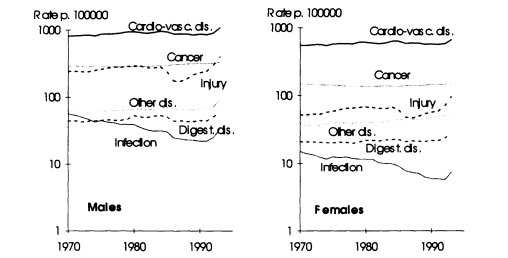
Figure 2-2
Trends in age-standardized mortality rates for seven large groups of causes, by sex: cardiovascular and digestive diseases, cancer, injury, infection, and other diseases.
mortality rate for this group of causes increased from 1970 until 1984. For males it grew from 8.1 per 1,000 in 1970 to 9.8 in 1984; for females it grew from 5.5 to 6.4. The years 1985 and 1986 were marked by a reduction of about 10 percent, but mortality remained almost constant thereafter until 1992-1993, when the level of 1984 was again reached. The reduction observed in 1985-1986 is related to the effects of the anti-alcohol campaign and does not represent the beginning of any long-term progress. Rather, the benefits gained were subsequently lost.
For both sexes, neoplasms are the second leading cause of death. For females, this group is much more influential than the remaining groups, representing about 15 percent of the total standardized mortality rate. For males, the influence of this group, representing about 16 to 18 percent of the total standardized mortality rate, is not very different from that of injury and poisoning until 1985, when the latter decreased dramatically. From 1970 to 1980, the standardized mortality rate for neoplasms is very stable for men (around 2.8 per 1,000) and decreases slowly for women (from 1.5 to 1.4). However, it increases regularly for both sexes during the most recent years, reaching 3.4 per 1,000 for males and 1.5 for females in 1993.
The third leading group of causes varies according to sex and time period. Early in the 1970s, it is injury and poisoning for men and respiratory diseases (not shown) for females. In the 1990s, it is clearly injury and poisoning for both sexes.
For both sexes, the standardized mortality rate for respiratory diseases de-
creases very much over the period (from 2.0 per 1,000 in 1970 to 1.2 in 1992 for men, and from 0.9 to 0.4 for women). The decrease is particularly sharp in the year 1985-1986, in conjunction with the anti-alcohol campaign; in contrast with cardiovascular diseases, however, the general trends are clearly downward, until 1993.
The changes in injury and poisoning are much more complex. For both sexes the standardized mortality rate rises in the 1970s, stays constant in the early 1980s, falls dramatically in 1985-1986, and grows rapidly thereafter, with an acceleration in 1992-1993. The difference in level between the sexes is much higher than for other causes. The standardized mortality rate for males for injury and poisoning is about four times that for females over the period (1.8 compared with 0.5 in 1986; 4.0 compared with 1.0 in 1993).
Digestive and infectious diseases have much less influence on total mortality. The standardized mortality rate for digestive diseases is rather constant over the period (around 0.5 per 1,000 for men and 0.2 for women). Starting from very similar levels, the standardized mortality rate for infectious diseases decreases rapidly, especially in the 1980s, reaching 0.25 per 1,000 for men and 0.06 for women in 1992, before increasing in 1993.
The group ''other causes" contains various specific causes of less importance, but it is of interest that mortality for this group increases regularly for both sexes over the period. This is a consequence of improvements in the accuracy of the registration system, in that specific items included in the "other causes" category (diabetes, for instance) are increasingly used.
Cause Components of Changes in Life Expectancy
To measure more precisely the impact of causes of death on changes in life expectancy, we used a method proposed by Andreev2 to break down any difference between two life tables into its components by age and cause of death. Table 2-3 gives the cause-of-death components, for males and females, of the changes observed in life expectancy during six relevant periods:
- 1970-1975 and 1975-1980, two quinquennial periods in which expectation of life declined
- 1980-1984 and 1984-1987, two specific periods in which expectation of life increased
- 1987-1992, in which life expectancy was again decreasing
- 1992-1993, to point out the very specific case of the last year
The following subsections examine the cause components of changes in life expectancy by sex and by age.
TABLE 2-3 Cause-of-Death Components of Changes in Life Expectancy During Six Relevant Periods
|
|
1970-1975 |
1975-1980 |
1980-1984 |
1984-1987 |
1987-1992 |
1992-1993 |
|
Cause of Death |
||||||
|
Males |
||||||
|
Infection |
0.07 |
-0.02 |
0.08 |
0.15 |
0.02 |
-0.12 |
|
Cancer |
0.04 |
-0.01 |
-0.08 |
-0.05 |
-0.09 |
-0.04 |
|
Cardiovascular diseases |
-0.45 |
-0.52 |
-0.13 |
0.68 |
-0.52 |
-1.09 |
|
Respiratory diseases |
0.04 |
0.01 |
0.27 |
0.49 |
0.06 |
-0.28 |
|
Digestive diseases |
-0.02 |
-0.04 |
0.01 |
0.14 |
-0.08 |
-0.10 |
|
Other |
0.02 |
-0.03 |
-0.05 |
-0.03 |
0.04 |
-0.15 |
|
Injury and poisoning |
-0.26 |
-0.45 |
0.23 |
1.78 |
-2.24 |
-1.28 |
|
Total |
-0.55 |
-1.08 |
0.34 |
3.16 |
-2.80 |
-3.06 |
|
Females |
||||||
|
Infection |
0.02 |
-0.02 |
0.05 |
0.09 |
0.06 |
-0.05 |
|
Cancer |
0.08 |
0.09 |
-0.02 |
-0.03 |
-0.07 |
-0.00 |
|
Cardiovascular diseases |
-0.30 |
-0.37 |
-0.21 |
0.50 |
0.01 |
-0.94 |
|
Respiratory diseases |
0.08 |
0.17 |
0.26 |
0.30 |
0.14 |
-0.13 |
|
Digestive diseases |
0.02 |
-0.01 |
0.00 |
0.04 |
-0.04 |
-0.06 |
|
Other |
0.00 |
0.02 |
-0.07 |
-0.03 |
-0.03 |
-0.14 |
|
Injury and poisoning |
-0.11 |
-0.19 |
0.04 |
0.45 |
-0.59 |
-0.49 |
|
Total |
-0.22 |
-0.31 |
0.04 |
1.34 |
-0.52 |
-1.81 |
Cause Components by Sex
Male life expectancy decreases by 0.6 year from 1970 to 1975 and by another 1.1 year from 1975 to 1980 (Table 2-3). In both cases, most of these losses are due to an increase in cardiovascular mortality (-0.4 and -0.5 year, respectively) and secondarily in deaths due to injury and poisoning (-0.3 and -0.4 year, respectively). In the period 1970-1975, some causes of death (infection, respiratory diseases, cancer) show a continuing decline, offsetting these losses. In the period 1975-1980, nearly all causes increase. During these two half-decades, the components of the deterioration are rather different for females: the main cause is still cardiovascular diseases, but injury and poisoning has much less impact. Overall, other causes change even more favorably in the second period than the first.
Life expectancy improves rather slowly in 1980-1984, then dramatically in 1984-1987. During the early 1980s, improvement in certain causes (mainly respiratory diseases for both sexes and injury and poisoning for men) is largely balanced by continuing increases in cardiovascular diseases and some other causes. For females, the changes result in stagnation instead of real improve-
ment. During 1984-1987, almost all causes contribute to the large improvement in both male and female life expectancy. For males, this improvement is spectacular, its largest component being a decrease in mortality from injury and poisoning (+1.8 year). Secondary roles are played by cardiovascular diseases (+0.7 year) and respiratory diseases (+0.5 year). Changes in infectious and digestive diseases are favorable, but with much less impact. Only cancer has a negative impact, but almost negligible. If the progress observed among females is less significant, this is due mainly to a lesser impact of the decline in mortality from injury and poisoning. The decline in mortality from cardiovascular, respiratory, and infectious diseases results in rather similar gains for both sexes (0.9 year for women and 1.3 for men), while the decline in injury and poisoning results in a gain of only 0.4 year for women, as opposed to 1.8 for men.
The role of injury and poisoning is prominent in the deterioration of the years 1987-1992. It is again much more important among men (-2.2 years) than among women (-0.6), but for women it is almost the only cause of deterioration, while for men cardiovascular mortality again plays a rather important role (-0.5 year).
The sudden deterioration observed in 1993 is fundamentally different: injury and poisoning still play an important role, but the impact of increasing mortality from cardiovascular diseases is as important for men and even more so for women. Furthermore, while in 1987-1992 the trends in some causes (infectious and digestive diseases) are still favorable, in 1992-1993 all causes contribute to the decline in life expectancy.
In brief, we could say that until 1984, trends in cardiovascular diseases were the most important cause of negative changes in life expectancy, while more recently, injury and poisoning is the main causal category responsible for both the spectacular improvement of 1984-1987 and the dramatic deterioration of 19871992. However, the role of cardiovascular diseases once more assumes prominence in the 1993 decline.
Cause Components by Age
1970-1992
Figures 2-3 and 2-4 divide into age groups the cause components of changes in life expectancy during four main periods (1970-1980, 1980-1987, 1987-1992, and 1992-1993) for males and females, respectively. During the first three periods, infant mortality is associated with an increase in life expectancy, even though overall life expectancy is declining because of the contributions of other age categories. The two main causes of change are infectious and respiratory diseases. During 1970-1980, the role of infectious diseases has a negative impact on life expectancy, but this is balanced by the positive impacts of respiratory diseases and other causes. In the following periods, both infectious and respiratory diseases change favorably. In 1980-1987, these changes result in a non-negligible proportion of the total increase in life expectancy (0.2 year of the
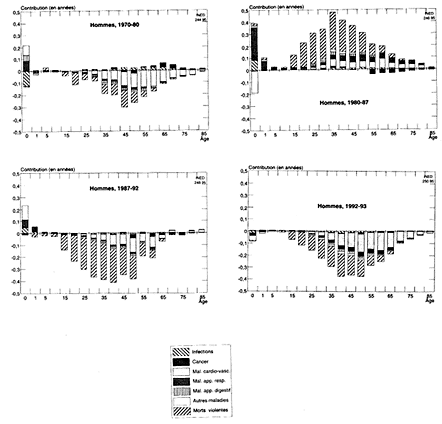
Figure 2-3
Cause components of changes in male life expectancy during tour periods, by age.
1.4 year increase for females and 0.2 year of the 3.5 year increase for males). In 1987-1992, these changes moderate the decline (by 0.2 year for each sex).
Looking at other ages, it is clear that both the decline in life expectancy in 1970-1980 and then in 1987-1992 and its increase in 1980-1987 are due mainly to changes in adult mortality. However, the 1970-1980 decline is associated with later adult ages than that of 1987-1992. This distinction is very pronounced among men, for whom ages 30 to 55 account for the greatest portion of the recent decline, as opposed to ages 45 to 65 for the earlier one.
Furthermore, although the impact of mortality at the oldest ages is small, it is interesting to observe that the impact is positive for the more recent period, while it is negative for 1970-1980. The latter point is even more obvious among women, for whom a rather important positive role of oldest ages in 1987-1992
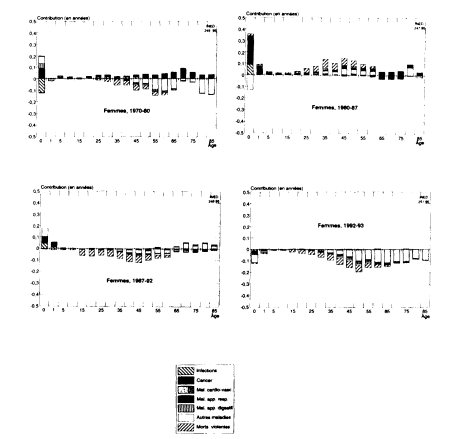
Figure 2-4
Cause components of changes in female life expectancy during four periods, by age.
replaces the very strong negative role observed in 1970-1980. However, this former negative role of ages 80+ among women is not absolutely reliable; it could be due partly to some improvement in registration of oldest female deaths.
In any case, this important change in the age components of mortality trends is closely related to the change in cause components. As the leading group of causes shifts from cardiovascular diseases to injury and poisoning, the impact shifts automatically from older to younger ages. For the same reason, the main part of the increase in life expectancy between 1980 and 1987 is among young adults.
1992-1993
Cardiovascular diseases and older ages are again important in the sudden worsening of life expectancy during 1993 (Figures 2-3 and 2-4). For
men, we return to a pattern very similar to that of 1970-1980. For women, the pattern is also almost the same, except for ages 70-79, which in the 1970s are characterized by favorable trends in respiratory diseases and cancer.
Sex Differences
The excess mortality among Russian males is probably the highest in the world. From 1958 to 1992, the difference in life expectancy between males and females in Russia grew from 7.3 to 11.8 years, reaching 13 years in 1993.
To identify the contribution of each group of causes to the differences between male and female life expectancies, we again used the method of decomposition of differences in life expectancy proposed by Andreev (1982). The results for six years (1970, 1975, 1980, 1984, 1987, and 1992) (excluding 1993) are given in Table 2-4.
More than 60 percent of the difference between male and female life expectancy is due to two causes of death: injury and poisoning, and cardiovascular diseases. Throughout the period, except for the special year 1987, the former group of causes explains around 35 percent of the difference. The influence of the latter group increases in the 1970s from 26 percent in 1970 to 30 percent in 1980 and remains around this level in the 1980s. At a lower level, the role played by respiratory and infectious diseases decreases (from 5 to 2 percent and from 12 to 7 percent, respectively), while that of cancer increases slightly (from 14 to 16 percent).
The widening of the gap between the sexes is due mainly to an increase in the differences in mortality from cardiovascular diseases and cancer, as well as from injury and poisoning. The notable reduction in the differences between male and female life expectancy in 1987 is closely related to a decrease in the differences between the sexes with regard to mortality from injury and poisoning. The recent increase in the gap between 1987 and 1992 is due to a new deterioration of the male situation as regards injury and poisoning and cardiovascular diseases.
TABLE 2-4 Decomposition by Causes of the Differences in Life Expectancy Between Males and Females
|
Cause |
1970 |
1975 |
1980 |
1984 |
1987 |
1992 |
|
Infection |
0.53 |
0.43 |
0.39 |
0.33 |
0.27 |
0.29 |
|
Cancer |
1.51 |
1.47 |
1.51 |
1.62 |
1.83 |
1.86 |
|
Cardiovascular diseases |
2.76 |
3.12 |
3.47 |
3.50 |
3.23 |
3.69 |
|
Respiratory diseases |
1.23 |
1.19 |
1.24 |
1.10 |
0.84 |
0.87 |
|
Digestive diseases |
0.31 |
0.34 |
0.39 |
0.38 |
0.28 |
0.34 |
|
Other |
0.50 |
0.48 |
0.53 |
0.53 |
0.56 |
0.50 |
|
Injury and poisoning |
3.68 |
3.83 |
4.09 |
3.88 |
2.50 |
4.26 |
|
Total |
10.53 |
10.86 |
11.63 |
11.33 |
9.51 |
11.80 |
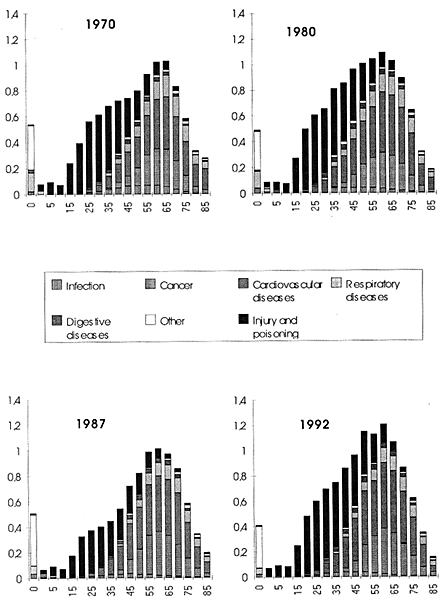
The weight of the different causes of death is evidently very different according to the age. Figure 2-5 presents, by age, the distribution of the contribution of each group of causes to life expectancy differences between the sexes. In 1970, the most important factor in the difference between the sexes before age 45 is mortality from injury and poisoning, while mortality from cardiovascular diseases is dominant after this age. In 1980, the pattern remains about the same, but the importance of cardiovascular diseases becomes more apparent at younger ages. The year 1987 appears again here as exceptional. It is clear that the reduction in excess male mortality concerns almost exclusively ages before 55 and is related primarily to the reduction in the differences for injury and poisoning. Finally, in 1992, injury and poisoning again becomes very important at younger ages, while the impact of cardiovascular diseases shows an increase at all ages.
Comparative International Trends in Some Specific Causes of Death
As was noted earlier, trends in Russian mortality appear all the more negative in comparison with favorable trends in most Western countries, especially during the last two decades. To illuminate trends in the most important causes of death, we compare Russian trends in mortality by cause with French and English trends.3 Until now, we have dealt with very large groups of causes of death. The reconstruction of a continuous series of deaths by cause allows us to look at trends for more detailed causes, giving a better understanding of the reasons for the Russian deterioration in life expectancy. We focus our comparative analysis in this section on continuing improvement in infectious and respiratory diseases, the loss of former advantages in Russian mortality, the leading role of cardiovascular diseases in long-term trends, and the effects of alcohol and violence on short-term fluctuations in mortality.
Continuing Improvement in Infectious and Respiratory Diseases
In spite of previously rapid progress, mortality from infectious diseases was still much higher in Russia than in France and England in the 1970s. Subsequently, mortality from these causes continued to decline in Russia, even accelerating for females in the 1980s. In France, the role of these causes grew, especially for males, following the mid-1980s. In recent years, these causes reached a lower level in Russia than in France for both sexes. England, which started in the 1970s with a much lower level for these causes, remained in a better position than Russia, but the gap between these two countries was narrowing.
Examination of specific causes reveals that tuberculosis is not responsible for this convergence among the three countries. In fact, in recent years the previous decline in tuberculosis shifted to a slight increase in Russia. Trends in
intestinal infectious diseases are partially responsible for the convergence. These diseases started to decline in Russia in 1985, while in France they increased. The most decisive difference between France and Russia is in "other infectious diseases" which increased in France, especially starting in 1980s, while they declined in Russia after 1980. The increase in France was first associated with side effects of cancer treatment (Vallin and Meslé, 1988) and then in more recent years was reinforced with the emergence of AIDS. These two deteriorating factors do not seem to have affected Russia until recently, although registration of AIDS in Russia has perhaps resulted in an underestimation of the true level of this disease.
For respiratory diseases, the differences among Russia, England, and France are smaller than for infectious diseases. Mortality from respiratory diseases was lower in England than in Russia during the 1970s and the early 1980s (although reported statistics show the reverse since English statistics did not follow the WHO rules for the selection of underlying cause until 19844). Thus the position of Russia relative to respiratory diseases improved during the period, as compared with worsening trends in France and especially England, where mortality from these causes is now the highest of the three countries.
Loss of Former Advantages in Russian Mortality
The two primary factors involved in the loss of mortality advantages in Russia are increases in traditionally low levels of cancer and in mortality from diabetes and cirrhosis.
Increases in Traditionally Low Levels of Cancer
It is often said that cancer is underestimated by Russian statistics. Such a statement is probably much exaggerated. In 1970, the Russian level of cancer was exactly the same as the English and French levels among men. During the 1970s, this level stayed fairly constant in England and Russia, but increased in France. After 1980, cancer mortality increased in Russia, while it stayed constant in England and began to decrease in France. In 1992, male cancer mortality in Russia reached the same level as in France, which was much higher than that in England.
The Russian advantage is much clearer for women during the period. This advantage could be due to an underestimation of cancer at the oldest ages, when cardiovascular symptoms could be registered instead of cancer. But this advantage could also be explained by the peculiar pattern of female cancer in Russia: breast cancer was still very low in Russia in the 1970s, as in Western countries some decades ago, while uterine cancer was at the same level (or even higher) as in France or England. Among females, mortality from cancer grew in Russia during the 1980s while decreasing in France. Today the difference between
Russia and France is very small. The difference with England is due to very high lung cancer rates among English women.
Two other peculiarities of the Russian pattern of cancer can also explain the relatively low levels of mortality from this group of causes observed around 1980. First, for males, prostate cancer remained very low until 1980, but subsequently began to increase, while the increase ceased in France and England. Second, intestinal cancer was at a very low level in Russia among both sexes in the 1970s, while stomach cancer was at a much higher level than in England and France. After 1970, intestinal cancer grew very rapidly, reaching the levels of England and France in the 1990s, while stomach cancer stayed much higher in Russia than in the other two countries.
In summary, these results reveal a general trend for these cancers to begin to increase at a later date in Russia—in the 1980s—than in France or England, where increases occurred earlier and had leveled off by the 1980s. It appears that Russia has been late in repeating Western patterns. If this is a better explanation of the rather low cancer mortality in Russia than the assumption of underregistration, we can shift our concern to future developments in cancer mortality in Russia.
Increasing Mortality from Diabetes and Cirrhosis
In the early 1970s, mortality from certain diseases was much lower in Russia than in France, but that difference subsequently declined substantially because of opposite trends—rapid increase in Russia and moderate decline in France. For example, mortality from diabetes tripled in Russia, while it decreased 30 percent in France. This unfavorable trend in Russia is probably due partially to improved registration in that diabetes is now more often registered, compared with a previous tendency to register diabetes under its effects, such as arteritis. But some real increase may have occurred in Russia, where adequate treatment for the disease is lacking. In France, diabetes has declined since the 1970s as a result of therapeutic improvements.
Divergent trends have also occurred for cirrhosis. The importance of alcohol abuse for this disease is well known. In France, alcohol consumption has been decreasing regularly since the 1960s, and mortality from cirrhosis has followed this favorable trend. In Russia, mortality from this disease increased until the mid-1980s, before the turning point of 1985-1986 and the anti-alcohol campaign (see the chapters by Treml and by Shkolnikov and Nemtsov in this volume).
The Leading Role of Cardiovascular Diseases in Long-Term Trends
Cardiovascular diseases play an overwhelming role in explaining differences in expectation of life at birth when Russia is compared with France and England. Figure 2-6 illustrates the gap between Russia and the other two countries in this
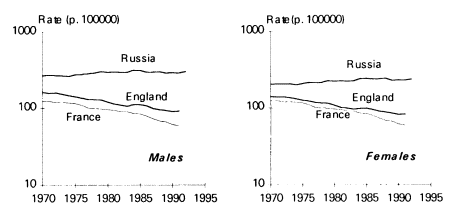
Figure 2-6
Annual trends in standardized death rates by cardiovascular diseases in Russia, France, and England.
regard. Not only has the level of mortality been higher in Russia than in the other two countries throughout the period, but trends have also been much less favorable. Indeed, the peculiarly low level observed for this group of causes in France is well known (Meslé and Vallin, 1992), but what is more striking here is the strict parallelism of the French and English downward curves in contrast with the Russian upward one. Consequently, the small difference of the early 1970s between Russian and English cardiovascular mortality levels has become quite large, and the gap between England and France has become much smaller than that between England and Russia.
All of the specific cardiovascular conditions contribute to this pattern, but the most important role is played by cerebrovascular diseases. Trends in ischemic heart disease are quite similar for Russia and for England and France. These diseases increased in the three countries at the beginning of the period and then apparently decreased in Russia, as well as in England and France, starting in the 1980s. During the 1980s, England and France made important progress in the prevention and treatment of ischemic heart disease. In Russia some of this improvement was probably due to the results of the anti-alcohol campaign, while some is overestimated as a result of changes in coding practices. Improved diagnosis led to dramatic increases in the category ''other heart diseases," artificially reducing the role of ischemic heart disease.
The main factor in the divergence between Russian and English and French cardiovascular mortality trends is cerebrovascular diseases. Levels and trends for these diseases are very similar in England and in France, and diverging trends have greatly widened the gap between Russia and the other two countries. The Russian negative trend in cerebrovascular mortality has been observed for several Eastern European countries and probably is associated with inadequate health
care for the elderly, among whom this pathology is especially common (Meslé, 1991a).
Overwhelming Effects of Alcohol and Violence on Short-Term Fluctuations
While cardiovascular diseases are the main determinants of long-term mortality trends in Russia, injury and poisoning are clearly responsible for the main short-term fluctuations, which are particularly sharp among men. This fact is shown clearly in Figure 2-7 which compares annual changes in life expectancy against those of the standardized mortality rate by injury and poisoning. Any change in the first curve corresponds to a symmetric variation in the second. Not only is the correlation dramatic with regard to the sharpest jumps and falls of 1985-1987 and 1991-1993, but it is clear for the minor changes as well, as in 1977-1978 or 1983-1984. Among women, injury and poisoning has a much less severe impact on mortality and less effect on life expectancy fluctuations, but the correlation remains rather strong.
The Peculiar Case of Russia
The strong impact of injury and poisoning on Russian male mortality is obviously due to the exceptional level of this group of causes in Russia, far above
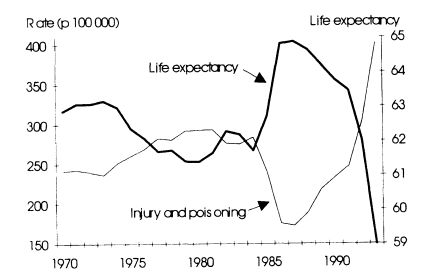
Figure 2-7
Annual changes in life expectancy of Russian males compared with changes in the standardized mortality rate from injury and poisoning.
any value observed elsewhere. In the early 1970s, male mortality from injury and poisoning was much higher in Russia than in other European countries. Violent deaths have diminished almost everywhere, except in Russia. The particularly sharp jump of the most recent years has widened the gap between Russia and other countries. Male mortality from violence is more than twice as high in Russia as in Hungary (where it is the highest in Central Europe), but four times as high as in France and ten times as high as in England.
It is necessary to note here, however, that coding practices introduce some biases in comparing Russia with Western countries. In Russia, deaths due to acute alcoholism are coded as "accidental poisoning by alcohol," while in Western countries this item is devoted exclusively to true accidental poisoning resulting, for example, from the use of alcohol for industrial purposes (Blum and Monnier, 1989a). That is the reason why, despite Russia's high levels of alcohol consumption, few deaths are registered as "alcoholic psychosis" or "alcohol dependence syndrome." While total mortality for alcohol-related causes was similar in France and Russia in 1991 (42 per 100,000 in Russia and 37 per 100,000 in France), one-half of this total was registered as accidental poisoning in Russia, while nearly all of it was classified as digestive diseases (cirrhosis) or mental disease (psychoses or acute alcoholism) in France. Therefore, to compare violent deaths in France and Russia more precisely, we should reduce the Russian standardized mortality rate by about 20 points. However, even after this correction, the rate in Russia would be more than twice that in France in 1991 (230 per 100,000 against 100) and would probably remain approximately four times higher in 1993, as mentioned above.
Conversely, the French/Russian comparison for another component of violent deaths, accidental falls, is biased by a Russian underestimation. In France, this component includes broken hips; in Russia, these cases are often classified with cardiovascular or respiratory diseases, which often follow this type of injury, and cases classified as accidental falls are those related to alcohol or work. Correcting for this difference, for 1991 we would compare an adjusted Russian rate of 230 per 100,000 with a French rate of about 90 per 100,000. The ratio of Russia to France would then reach 2.5, just as before. These two successive corrections compensate each other.
The Russian Components of Injury and Poisoning
Figure 2-8 divides Russian violent deaths into their four main components: traffic accidents, poisoning, suicide, and homicide. In 1985-1986, after Gorbachev's anti-alcohol campaign, these four components sharply declined, although to a lesser extent for traffic accidents.
The upward trends observed before and after this period are more specific to the four components. The rise of the 1970s is associated with only three causes
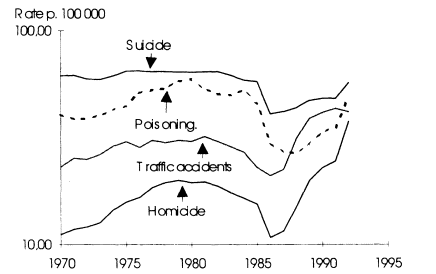
FIGURE 2-8
Annual trends in male standardized death rates from main causes of violence: suicide, poisoning, traffic accidents, and homicide.
(traffic accidents, poisoning, and homicide). Suicide remained at a very high but stable level during the entire period of 1970-1984.
The rise of 1988-1992 is even more associated with specific components. For 1988-1989 it depends almost exclusively on traffic accidents and homicide, which increased much more drastically than poisoning. More recently, it is associated with the rise of suicide, homicide, and poisoning. The contrast is particularly acute between traffic accidents (which plateaued in 1990-1991 and even fell in 1992) and homicide and poisoning (whose increase was dramatic in 1992 after a slight decrease in 1990-1991).
In summary, alcoholism (which, as mentioned above, dominates poisoning in Russian statistics) and homicide are involved in every violent mortality fluctuation in Russia; suicide is never marked by sharp variation, except during the general decline of 1986; and traffic accidents have a greater influence on the rise of 1988-1989 than on the fall of 1986 and have no impact on the most recent increase.
Thus, the reversal due to the Gorbachev anti-alcohol campaign involved all types of violent deaths, but the subsequent negative changes were induced by different dynamics according to specific causes. Alcohol consumption is no longer the main explanation of Russian mortality from violence. Traffic accidents rose suddenly in 1988-1989 when the use of individual cars grew, and the safety of roads diminished. But rather quickly in the 1990s, the phenomenon ended as a result of the increasing difficulties with energy supplies.
The homicide increase observed in 1988-1989 perhaps resulted from the shock of economic reforms and the decline in the standard of living, which, reinforced by the declining authoritative and police system, increased the opportunities for crime. However, such a hypothesis does not explain the slowdown observed in 1990-1991, when such difficulties had become even more intense. In fact, for 1988 to 1991, trends in homicide look very much like those in traffic accidents. It is not impossible that some victims of traffic accidents may have been registered as homicides, even if unintentionally. In contrast, the sudden increase in homicides in 1992 is completely counter to the decrease in traffic accidents and would better be compared with the increase in poisoning observed during the same year. The homicide increase could also be associated with the rise in political and ethnic violence. For example, in North Ossetia, the mortality rate from homicide tripled from 1991 to 1992; it also increased by 80 percent in Tataria and by 75 percent in Chechnya-Ingushia. However, these small autonomous republics represent only a very small part of the total population of the Russian Federation. The rise in homicide depends much more on the societal deterioration in the large cities: up by 70 percent in St. Petersburg and by 100 percent in Moscow.
Compared with the rather chaotic changes in the other three causes, the recent evolution of suicide looks moderate and regular. While the 1992 rates for homicide and traffic accidents are much higher than the previous maximum observed in the early 1980s, the rate of suicide remains, after a rather slow increase, below the levels reached before. Thus, the impact of the anti-alcohol campaign is apparent for all types of violent death, even suicide, which has been least sensitive to social change in other time periods.
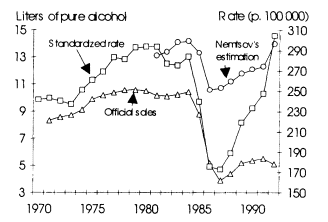
Figure 2-9
Trends in standardized death rates by injury and poisoning compared with alcohol consumption in Russia, 1970-1992.
These recent divergences among the main causes of violent death show that not all variations in violent mortality can be explained by levels of alcohol consumption. The trend in violent mortality was clearly related to alcohol consumption until 1986, but the association is now much weaker, as shown in Figure 2-9.
It is necessary, however, to interpret cautiously the observed recent trends in officially recorded alcohol consumption. On the one hand, there has been a shift from the communist distribution system to the free market, and sales statistics are much more difficult to keep for the latter. On the other hand, the restrictive rules against alcohol consumption of 1985-1987 induced substitutive practices that probably are not included in any statistics (see Treml in this volume). The indirect evaluations of the true level of alcohol consumption in Russia provided by Nemtsov (1993) confirm that since 1987, the underreporting of alcohol use has been increasing.
Summary and Conclusion
While many data quality issues hamper the analysis of recent trends in life expectancy and causes of death in Russia, it is nevertheless possible to overcome those limitations sufficiently to draw meaningful conclusions. This paper has presented an analysis of the trends in Russian mortality during 1970-1993 by specific causes and the effects on life expectancy, differentiated by both age and sex. It has also focused on trends in certain specific causes, including cancer, cardiovascular diseases, and alcohol and violence. The findings presented help elucidate the cause components and patterns that contribute to the distinctive picture of Russian mortality during this period.
References
Anderson, B., and B. Silver 1986 Infant mortality in the Soviet Union: Regional differences and measurement issues . Population and Development Review 12(December):705-738.
1989 The changing shape of Soviet mortality, 1958-1985: An evaluation of old and new evidence. Population Studies 43(July):243-265.
1990 Trends in mortality of the Soviet population, Soviet Economy 6(3):191-251. Andreev, E.
1982 Metod komponent v analize prodolzhitelnosti zhizni [Method of the components in the life expectancy analysis]. Vestnik statistiki 3 (March):42-47.
Bedniy, M.S., V.N. Ivakina, V.I. Dmitriev, and A.V. Nikolski 1980 Analizmediko-demograficheskih pokazatelei [The analysis of medico-demographic indicators]. Moscow: Respublicanskaya NIL meditsinskoy demografii.
1981 Analiz stepeni tochnosti diagnostiki zabolevanii i prichin smerti [The analysis of degree of accuracy of diagnostics of the diseases and causes of death]. In Informational Letter of Health Care Ministry of the Russian Federation.
Belenkov, Yu., V. Jdanov, V. Pichugin, O. Marchenko, I. Yurova, and B. Sidorenko 1987 Soverrshenstvovanie diagnostiki prichin smerti ot osnovnih boleznei systemi krovoobrasheniya [The improvement of diagnosis of causes of death from leading diseases
of the circulatory system]. Pp. 12-15 in E.I. Chazov et al., eds., Bolezni serdtsa: medikodemograficheskiye issledovaniya [Heart Diseases: Medico-Demographic Studies]. Moscow: Soviet Scientific Cardiologic Center, Academy of Medical Sciences of the USSR.
Blum, A., and A. Monnier 1989a La mortalité selon la cause en Union Soviétique. Population 44(6): 1053-1100
1989b Recent mortality trends in the USSR: New evidence. Population Studies 43(2):211-241.
Bourgeois-Pichat, J. 1985 Recent changes in mortality in industrialized countries. Pp. 507-539 in J. Vallin and A. Lopez, eds., Health Policy, Social Policy and Mortality Prospects. Liège: International Union for the Scientific Study of Population, Ordina Editions.
Bystrova, V.A. 1965 Stepen tochnosti vrachebnui registratsii prichin smerti [The Degree of Accuracy of the Medical Registration of Causes of Death] Pp. 60-80 in Metodologichesive voprosi sanitarnoi i meditsinsoi statistiki. Moscow: Nauka.
Coale, A.J., and P. Demeny 1966 Regional Model Life Tables and Stable Populations. Princeton, NJ: Princeton University Press.
Coale, A.J., P. Demeny, and B. Vaughan 1983 Regional Model Life Tables and Stable Populations, second ed. New York: Academic Press.
Estonian Medical Statistics Bureau, Latvian Medical Statistics Bureau, and Lithuanian Statistics Bureau 1993 Health in the Baltic Countries, 1st edition. Tallin, Riga. Vilnius. Goskomstat
1981 Kratkaya nomenklatura prichin smerti 1981 goda, osnovann aya na Mezhdunarodnoy Statisticheskoi Klassifikacii bolezneyi travm i prichin smerti IX peresmotra (1975 god) [Abbreviated classification of causes of death of 1981, based on the International Classification of Diseases, IXth revision]. Moscow: Goskomstat USSR.
1988 Naselenie SSSR 1987 [Population of the USSR 1987]. Moscow: Finansi i statistika.
Meslé, F. 1991a La mortalité dans les pays d'Europe de l'Est. Population 46(3):599-650.
1991b L 'enregistrement des causes de décès en Europe. Paris: INED. (Communication à la Chaire Quételet "Collecte et comparabilité des données démographiques et sociales en Europe" Gembloux (Belgique), 17-20 Septembre 1991).
Meslé, F., and J. Vallin 1992 Évolution de la mortalité par cancer et par maladies cardio-vasculaires en Europe depuis 1950. Dossiers et Recherches No. 34. Paris: Institut National d'Etudes Démographique.
1993a Causes de décès : de la 8e à la 9e révision, deux cas différents, la France et l'Angleterre. Pp. 421-445 in A. Blum and J.L. Rallu, eds., Démographie européenne: II dynamiques démographiques. Paris: INED.
1993b Reconstructing Long-Term Series of Causes of Death: The Case of France. Paper prepared for Conference on the History of Registration of Causes of Death: Population Institute for Research and Training. Bloomington, Indiana: Indiana University.
1993c Développement économique and espérance de vie: La transition sanitaire au tournant des années soixante. Pp. 365-382 in Congrès international de la population, Montréal, août-septembre 1993, vol. 2, Liège: International Union for the Scientific Study of Population.
Meslé, F., V.M. Shkolnikov, and J. Vallin 1992
Mortality by cause in the USSR in 1970-1987: The reconstruction of time series. Revue européenne de démographie (8):281-308.
Nemtsov, A.V. 1992 Uroven realnovo potriebleniya alkogolya v Rossiyskoi Federatsii (1981-1990 gg.) [The level of real alcohol consumption in the Russian Federation (1981-1990)]. Sotsialnaya i klinicheskaya psychiatriya 4:46-53.
1993 Data quoted by Rossiyskiye vesti 255 (December 31). Novoselski. S.A., and V.V. Paeyski
1930 Tablitsi smertnosti naseleniya SSSR v 1926-1927 godu [Life tables for the population of the USSR in 1926-1927]. Leningrad.
Ovcharov, V.K., and V.A. Bystrova 1982 Mediko-sotsialnaya harakteristika vosproizvodstva naselenia SSSR i soyuznih respublik. [Medico-social characteristics of the population reproduction in the USSR and Union Republics]. Scientific Report No. 78032560. Moscow: Institute of Social Hygiene and Organisation.
Pollard. J. 1982 The expectation of life and its relationship to mortality. Journal of the Institute of Actuaries (109):225-240.
1990 Cause of death and expectation of life: Some international comparisons. Pp. 291-313 in J. Vallin, S. D'Souza. and A. Palloni, eds., Measurement and Analysis of Mortality: New Approaches. Oxford: International Union for the Scientific Study of Population, Oxford University Press.
Pressat, R. 1985 Contribution des écarts de mortalité par âge à la différence des vies moyennes. Population 40 (4-5):766-770.
Riley, J.C. 1981 The prevalence of chronic diseases during mortality increase: Hungary in the 1980's. Population Studies 45:489-496.
Sadokvasova, E.A. 1956 Lektia X. Pp. 83-93 in Statistika zdoroviya naseleniya [Statistics of health of the population]. Moscow: Medgiz.
Shkolnikov. V.M. 1994 Levels and Trends of Life Expectancy and Mortality in Russia: Analytic Report. Moscow: Institute for Economic Forecasting, Center of Demography and Human Ecology.
Tsentralnoye Statisticheskoye Upravleniye 1975 Naselenie SSSR 1973 [chislennost, sostav i dvijenie]. Moscow: Statistika. Tulchinsky, T., D. Chernichovsky, and D.L.A. De Leeuw
1993 The Health of the Russian Population. Washington, DC: World Bank.
Valkovics, E. 1984 L'évolution récente de la mortalité dans les pays de l'Est: essai d'explication à partir de l'exemple hongrois . Espace, Populations, Sociétés III:141-168.
Vallin, J. 1992 Causes de mortalité adulte dans les pays à faible mortalité: Comparaison entre quelques pays industriels et quelques pays en développement. Population 3:555-582.
Vallin, J., and F. Meslé 1988 Les causes de décès en France de 1925 à 1978. Paris: Institut National d'Etudes Démographique. (Travaux et Documents, Cahier n°115).
Notes
-
1.
The correspondence between Soviet items and ICD-9 basic tabulation list items is as follows:
Group of Causes
Soviet Items
ICD-9 Items
-
Infectious diseases
1-44
1-7
-
Neoplasms
45-67
8-17
-
Cardiovascular diseases
84-102
25-30
-
Respiratory diseases
103-114
31-32
-
Digestive diseases
33-34
115-127
-
Other diseases
160-185
68-83 and 128-157
-
Injury and poisoning
18-24 and 35-45
47-56


