


Below is the uncorrected machine-read text of this chapter, intended to provide our own search engines and external engines with highly rich, chapter-representative searchable text of each book. Because it is UNCORRECTED material, please consider the following text as a useful but insufficient proxy for the authoritative book pages.
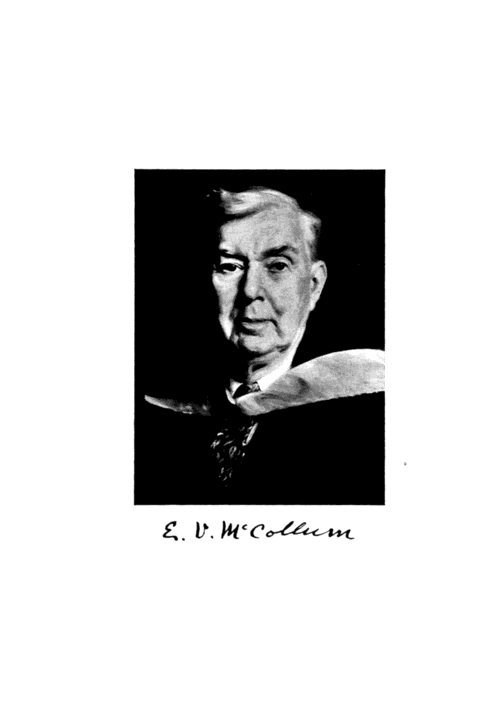
ELMER VERNER McCOLLUM March 3 . 1 879_Novem her 15 7 967 , By HARRY G. DAY THE FORMATIVE YEARS EEMER VERNER MCCOLLUM was the child of a pioneer family. Pioneering was also the hallmark of his scientific achieve- ments and humanitarian contributions. He was the first son and fourth child of Cornelius Armstrong McCollum and Martha Catherine Kidwell McCollum who sixteen years before had become homesteaders on one hundred sixty acres ten miles west and one mile north of Fort Scott, Kansas. His only brother, Burton, was sixteen months younger. The two were inseparable companions throughout their youth, and each influenced the other as long as they both lived. Each of the three sisters grad- uated from Lombard University, a Universalist Divinity School with a preparatory division, and each married a Universalist minister. Since the brother as well as Dr. McCollum graduated from the University of Kansas, all five of the McCollum children attained a much higher level of formal education than the parents. Dr. McCollum developed in humble circumstances. But in spite of the stark realities of frontier life, with parents who had received scarcely any formal schooling, he showed unusual capacity to learn and reflect on much that he observed. The parents and the other children also had high regard for learning. 263
264 BIOGRAPHICAL MEMOIRS The mother had attended a backwoods school only two winters. She could scarcely read when the first child was born. But in spite of all the burdens of farm chores, raising and preserving food for the family, and innumerable household duties, she learned to read well, and she devoted time to the education of all the children. As Dr. McCollum wrote of her, "She valued education for its own sake and for its influence on human dignity and refinement, because it enabled people to escape drudgery, increased their earning power, and won the esteem of people who cared for culture." Her determination, high ethical values, and respect for culture and her thrifty management of the family and its meager income and expendi- tures evidently were continuously felt in the family circle. The father read every moment that he had opportunity, but the supply of books and magazines was markedly limited and there were scarcely any well-informed and scholarly persons around him. As Dr. McCollum described him, "He was con- tinually thinking inquiringly," but the unevenness of his knowledge and the driving necessity of devoting nearly all his time to manual work kept him imprisoned by some remarkably naive beliefs. The parents were innovative and strongly motivated to at- tain economic security and were in fact leaders in their com- munity. The mother frequently assisted the neighbors in sick- ness and bereavement. Her resourcefulness proved highly essential to the family at the beginning of her elder son's tenth year. The father became chronically ill, possibly due to tuberculosis of the bones. With the onset of this family crisis, it became necessary for the young McCollum to assume some of the responsibilities of an adult. In spite of the father's illness, it was economically necessary to continue operation of the farm until the year that the boy became seventeen. For the entire family these years were marked by never-ending toil and anxiety.
ELMER VERNER McCOLLUM 265 Elmer McCollum, with his younger brother, attended a one-room school which at best provided limited educational experiences. The pressure of duties on the farm caused him to miss school many days in autumn and spring. In his auto- biography, produced sixty-eight years later, Dr. McCollum wrote of these early years: "While I lived on the farm I did not come into contact with a single individual who was both well informed and well endowed intellectually in any branch of learning, or who was motivated to inquire into the phenomena of nature. My environment was without stimulation of mental activity." In 1893, when Elmer was fourteen years old, Mrs. McCollum took the two boys to the World's Columbian Exposition in Chicago. This experience broadened his horizons even though it also was devoid of much intellectual stimulation. Probably one of the most significant actions for Dr. McCol- ~um, and ultimately for advances in nutritional sciences, was the brave decision by the mother in 1896 to move the family to the vicinity of Lawrence, Kansas. The purpose was to pro- vide opportunity for her two sons to attend high school and then the University of Kansas. In this decision she was sup- ported by her invalid husband, but at that time neither son had a strong desire for much formal education. The McCollum family's strategy was similar to that of many other rural families in that era in the Middle West. They secured as much cash as possible by selling nearly all the live- stock and farm implements. The farm was rented as a source of income, and with the cash they purchased a fifteen-acre tract almost adjacent to the campus of the University of Kansas. This was converted to a fruit farm on which they hoped to produce enough income, along with the farm rental income, to meet the essential needs of the parents as well as the sons. Because the income was never enough, it became necessary for the boys to obtain employment in Lawrence.
266 BIOGRAPHICAL MEMOIRS When the family arrived at Lawrence, Elmer was already seventeen years old, and he had not yet received any formal education beyond that afforded by the district school. He had suffered the humiliation of failing the general certification ex- aminations held that spring. Because he lacked the certificate of graduation, the high school principal, Mr. Frank A. Olney, inquired concerning his preparation. On the strength that he had read many books and that he had memorized many poems, such as Lowell's "Vision of Sir Launfal," Mr. Olney admitted him provisionally. This was a great relief to the new student. In later years Dr. McCollum often recalled with appreciation this understanding action. The intellectual competence and interests of the youth were quickly and unmistakably revealed in the high school record. His studies included Latin, history, mathematics, chemistry, and physics. He learned in such depth that when he entered the university, advanced credits were awarded in English com- position, chemistry, and physics. Owing to the excessive hours of employment and his responsibilities on the family acreage, there was little time for social contacts. Nevertheless, he was elected class president in both his junior and senior years. In this role he delivered an oration at the graduation exercises. The subject was "The Puerto Rican Tariff," a lively topic at that time. Dr. McCollum's wide interests and knowledge were greatly influenced by his discovery and instant love of the Encyclopaedia Britannica, which was kept in the assembly room of the high school. He was so strongly impressed that he arranged for a book dealer in Lawrence to obtain for him a good used set. This cost him $25, an amount representing about two months of his earnings at that time. He retained the set and used it assiduously for about twenty-five years, when he purchased a new edition.
ELMER VERNER McCOLLUM 267 Throughout his adult life Dr. McCollum liked to recount some of his vivid memories of these high school years. They were largely concerned with his grinding preoccupation with physical labor through which he earned the money needed for his education and to supplement the meager resources of his family. His main job was lighting and extinguishing the gas lamps on the streets of one half of Lawrence. This job was continued throughout high school and his first two years in the university. Since this did not provide enough money to meet all his needs, he also obtained employment in the office of the Lawrence Daily World. Each day a little before sunset he reported at the gasworks. If it was cloudy or if the moon was not shining brightly, he would start his lamplighting rounds; but if the manager decided that the moon would shine brightly, he did not work. For such nights he did not receive wages, since he was paid only when he tended the lamps. Moonshine was literally for him an occu- pational handicap. After finishing the lighting he slept in a hammock in an attic above the retorts until midnight, when he would begin his rounds extinguishing the lamps. This required about one and one-half hours. Following this he would walk about one-half mile to his home and, after eating, he would sleep the rest of the night. The work at the newspaper office was largely in the after- noons following school. Frequently on Saturdays he collected for advertising by the merchants of Lawrence. Thus it is doubtful that any other boy in high school during that period had so little free time as the young McCollum. On many occasions Dr. McCollum expressed his gratitude for the influence of several of the high school teachers on his development. For example, he wrote, "Listening to them talk, individually or in classes, and observing their ways of doing things opened my eyes to new and creditable standards of
268 BIOGRAPHICAL MEMOIRS thought and conduct. Four of them greatly influenced my thinking and standards, although they were doubtless quite unaware of what they were doing for me." About the time the young McCollum entered high school he joined the Unitarian church. Throughout his life he had a broad and active interest in the religions and philosophies of all ages, but he did not attend church services or participate in any kind of church programs. After entering the University of Kansas, in September 1900, he continued to light lamps and work at the newspaper office until he received an appointment as a student instructor in his third year. The latter provided more income and an opportunity for adequate sleep. Owing to his initial interest in preparing for medicine, dur- ing his first college year he devoted much time to the study of human anatomy. He also gave time to bacteriology and to courses in qualitative and quantitative chemical analysis. At the begining of the second year he studied organic chemistry under Dr. Edward Bartow. He became so fascinated with the subject that he abandoned all thought of becoming a physician. There were few limiting regulations of the university on the distribution of study time or in the choice of courses. Thus the young McCollum devoted nearly all his attention to courses in chemistry and to special work on the preparation of many compounds described in Gatterman's textbook, Organic Chem- istry. Toward the end of his second year he began the analysis of samples of petroleum sent to Dr. Bartow by crude oil producers in the Oklahoma Territory and in southern Kansas. Thus a new and valuable source of income was established. Through academic work during the summers and the op- portunity to receive credits through special examinations, Mc- Collum earned his A.B. degree in three years. He was immediately admitted for work leading to an M.S.
ELMER VERNER McCOLLUM 269 degree in chemistry. This included an appointment as teach- ing assistant in chemistry with a stipend of $300 for the year. His courses included a series of lectures in physiological chem- istry. The master's thesis was based on a study of the composi- tion of the gas in the hollow stems of the giant water lily, Nelumbo lutes (American lotusy, when the plant was exposed to sunlight and during the hours of darkness. This thesis was accepted, but the work was never published. Dr. Arthur Harris, who was highly respected by the young McCollum, directed the work. A few years earlier Harris had served with him in light- ing the gas lamps of Lawrence. Other influential teachers respected by the young McCollum included Professor E. C. Franklin and Dr. H. P. Cady. The latter was especially helpful in guiding him toward a superior graduate school for further training in organic chemistry. Through his study of current chemical journals he decided that the work of Dr. H. L. Wheeler and Dr. T. B. Johnson at Yale University was the most promising for him. In 1904 the young man applied to Yale for admission and a fellowship. He was promptly admitted, but he was given only a scholarship exempting him from paying tuition. Un- daunted, he accepted the offer in the belief that some way would be found to earn the money needed for his maintenance. On his way by train to New Haven, McCollum stopped in St. Louis for one day to visit the Lewis and Clark Exposition and to attend briefly the International Congress of Chemists that was in session. There he introduced himself to Professor Russell Chittenden, with whom he had been in correspondence concerning his admission to Yale. This began a lasting and fruitful friendship. Assured that every effort would be made to assist him, he resumed his journey to New Haven. He arrived there with $82 in his pocket and with no firm prospects of securing more. The tall, extremely thin young man had come into a new
270 world. With hard work, foresight, and desire to accommodate to that world, the two years he spent in earning the Ph.D. degree proved to be extraordinarily fruitful and pleasing. The system for the conduct of graduate study that he experienced and the patterns of work and self-development that he pursued were followed throughout his life. When he arrived in New Haven he had rarely been away from home more than a few hours at a time. Most of the students he had known in high school and in undergraduate school were similar to him in background and experience. Scarcely any came from families of wealth and position. But at Yale he met every variety of person. He tried to learn from all, and he cultivated the qualities of their lives that seemed to be important in making the most of his own life. During the first year he found it possible to live in the home of one of his former high school teachers, Arthur L. Corbin, who had studied law and was at the time a faculty member in the Yale law school. After this transition period in the Corbin family he was invited by Professor Chittenden to live in one of the two suites of living rooms on the top floor of the chemistry building. This was home for him during the remaining two years at Yale. His roommate was Phillip Mitchell, who was a student of Professor Lafayette B. Mendel and later became Professor of Physiology at Brown University. Immediately after entering the Sheffield Scientific School at Yale, McCollum became associated with Professor Treat B. Johnson, who directed his doctoral research. The research was concerned with the preparation and study of pyrimidines. Students closely associated with him included Stanley R. Bene- dict, Stanley Bristol, Samuel H. Clapp, William B. Cramer, Samuel Dudley, George S. ~amieson, Eli M. K. Ryder, Carl O. Johns, and Johannes G. Statiropulous. The young McCollum appreciated Dr. Johnson's method of providing guidance. To suggest steps that might be taken to BIOGRAPHICAL MEMOIRS
ELMER VERNER McCOLLUM 271 prepare the desired compounds, Dr. Johnson used large sheets of newsprint, drew the formulas of known starting compounds, and indicated reagents and conditions to be used. Together they would discuss the procedures and the conditions that seemed to be most promising. During his second year McCollum contracted pneumonia. The enforced absences from classes and his debilitated health for some time thereafter seriously interfered with his progress. For a time it appeared that this might delay the completion of his degree. The illness and his intense preoccupation with re- search in organic chemistry had caused him to get seriously behind in crystallography, his second minor. When the teacher, Professor Samuel L. Penfield, learned about the situation he decided that the young man needed to improve his health more than he needed to spend time drawing crystals. He promised that if the student would spend time canoeing on the river three times a week the rest of the semester, he would re- ceive credit for the course! This unorthodox but extraordinary act of kindness was a significant influence throughout Dr. McCollum's long life with students. He never ceased to be grateful to Professor Penfield. The intensive reading habits cultivated during his graduate years were followed throughout Dr. McCollum's life. On his first visit to the laboratory Professor Horace L. Wells gave him a key to the large library provided by Professor Wheeler. There- after young McCollum spent many evenings in the library. This significant pattern is aptly described in his autobiography: "I took down in succession the volumes of a series of journals and turned every page, leisurely scanning them, until I came upon a title which interested me. Then I read carefully the introduction.... Next I examined the experimental observa- tions and studied the conclusions which the author drew from them. Before proceeding further I reflected on what I might do in order to shed more light on the program."
272 BIOGRAPHICAL MEMOIRS Earning money to pay expenses was still essential. McCol- lum was soon employed to give instruction in elementary chem- istry three evenings per week at the YMCA. This paid $10.00 per week, and it required only a small expenditure of time and labor. Another source of income was in tutoring students. After a few months, a number of students with money began to come to him for assistance. The tutors to whom students were attracted charged a minimum of $3.00 per hour. At such rates the young McCollum developed for the first time in his life a sense of financial security. Even while a full time and pro- ductive graduate student he began to earn enough money to accumulate savings. Another financial and scholastic advantage was gained by the young Kansan when he competed with six other students in a comprehensive chemistry examination at the end of the first year and earned the coveted Loomis Prize of $400. Through the help of his closest friend, Bill Cramer, he obtained work one summer as a clerk at a hotel on Block Island, Rhode Island. This added more to his financial resources and to his experience. He always cherished the warm friendship and great help of this thoughtful man. The doctoral research progressed so rapidly and well that two months before the degree was granted, in June 1906, Dr. McCollum began work in Dr. T. B. Osborne's laboratory. The work continued six months. During that time he used the Fischer ester method for the analysis of protein hydrolysates. Working with Samuel Clapp he learned about Osborne's puri- fied proteins from different seed grains and the general status ~ . . . . at protein Investigations. THE UNIVERSITY OF WISCONSIN: TEN PIONEERING YEARS Because there was no desirable academic position available at the end of the summer of 1906, McCollum went to Professor
ELMER VERNER McCOLLUM 273 L. B. Mendel's laboratory to learn more about biochemistry. This proved to be an eventful decision. During the year he attended the lectures of Mendel, F. P. Underhill, and R. H. Chittenden, and he worked in the laboratory gaining familiarity with the analytical methods applicable to biochemistry. In the following spring, through Dr. Mendel, a promising position was obtained at the University of Wisconsin. On July 1, 1907, he began investigational work in Madison as an instructor in agricultural chemistry. The beginning annual salary was $1200. This undertaking proved to be a most significant event in the advancement of nutrition, even though at the time McCollum would have preferred an academic position in organic chem- istry. Having been appointed to a promising position, McCollum in 1907 married Constance Carruth, whom he had known at Lawrence, Kansas. The children were Donald C., who became a physician, and four daughters, Jean Westwick, Margaret Sprague, Kathleen Albright, and Elsbeth Fox. Many years dater the marriage ended in divorce. Under the direction of Professor E. B. Hart, McCollum became a part of the laboratory team assigned to the famous experiment with heifers restricted to rations derived from single-plant sources. These sources were wheat, corn, and oat plants. The experiment had been planned by Professor S. M. Babcock, who had preceded Dr. Hart as head of agricultural chemistry. The purpose was to determine whether the accepted methods of food analysis actually gave results on which nutritive values could be judged. Dr. Babcock was skeptical. The rations were intended to include all parts of the plant except the roots. The parts were furnished in such proportions that the entire ration for each of the three experimental groups of animals had the same composition as shown by the official accepted methods of chemical analysis. A fourth group received
274 BIOGRAPHICAL MEMOIRS a ration derived from all three plants. This was to determine whether variety in source of nutrients was of nutritional im- portance. To the enthusiastic but inexperienced McCollum, the ex- periment was already yielding impressive if not meaningful results. By the time he first saw the heifers, after several months on the rations, the groups had differentiated greatly. The re- markable differences in appearance and physiological status stimulated him to kind the correct explanation. He decided that "something fundamental remained to be discovered." It is notable that the plan of study included a searching chemical examination of the rations and the determination of their digestibilities. Enormous numbers of analytical deter- minations were carried out on blood, urine, feces, and tissues of the cows. After four years of work it was finally concluded that satisfying explanations for the nutritional shortcomings of the single-plant rations could not be achieved through this kind of design and analysis. Trying to gain a breakthrough in understanding the nu- tritional requirements of man and animals, McCollum read extensively in the literature. Of greatest interest to him was Maly's lahresbericht uber die Fortschritte der Tier-Chemie. He became so impressed with the importance of many abstracts and articles in the yearbook that he purchased an entire set (thirty- seven volumes at that time) so that he could study at home. He learned about a number of investigations conducted between 1873 and 1906 in which small animals, mostly mice, had been restricted to diets composed of isolated and somewhat purified proteins, carbohydrates, fats, and inorganic salts. Concerning this, he Garrote, "I was struck by the fact that in every instance in which small animals had been restricted to such 'purified' diets they promptly failed in health, rapidly deteriorated physically, and lived only a few weeks." From these literature studies and his initial experiences
ELMER VERNER MCCOLLUM 275 with the heifers on restricted rations McCollum concluded that "the most important problem in nutrition was to discover what was lacking in such diets." He decided that it was essential to experiment with small animals with a short life span. He reasoned that if they were fed simplified diets composed of purified nutrients it should be possible to determine the specific chemical substances necessary in nutrition. This was the turn- ing point in his career. He decided to begin experiments using rats, since they seemed to satisfy all the criteria for the initial studies. This fertile concept was explained to his superiors at the university, but only Dr. Babcock understood its import. The Dean of the College of Agriculture refused to support any ex- periments with rats. Dr. Babcock said to Dr. McCollum, "I think the Dean is wrong in his pronouncement on your new project. I think we should go ahead and do it anyway." Being confident that Dr. Babcock, although retired, had sufficient standing to give him any needed backing, McCollum did go ahead without the official support or endorsement from his dean. The first animals for his colony were wild rats he captured one Saturday afternoon in the old horse barn on the Station farm. He soon found that they were too wild to be satisfactory. They were replaced with twelve young albino rats he obtained from a dealer in Chicago. The wire screen used to make the cages cost $2.00, and the rats cost $6.00. These expenses were borne by McCollum, since the project was tolerated rather than approved, except by Dr. Babcock. Later, Professor Hart author- ized the expenditure of $50 of university funds for the con- struction of two animal units, each with twelve compartments. The carpenter, being sympathetic, made three units for the money provided. Dr. McCollum's rat colony was the first in the United States maintained for nutritional investigations. It was started in January 1908.
276 BIOGRAPHICAL MEMOIRS The first experiments were designed to test his idea that the nutritive failure already reported in mice on rations of puri- fied components was due to lack of palatability. The experi- ments involved the determination of the effect on growth and apparent well-being when the source and nature of the seem- ingly purified components of the rations were varied. At first, McCollum believed he had demonstrated that if the "purified food mixtures" were made palatable, through variation in com- position and flavor, the animals would eat enough to satisfy their nutritional requirements. Although his findings were inconclusive, it was not until 1911 that his hypothesis became seriously in doubt. In that year Osborne and Mendel reported that the demon- stration of nutritional differences between proteins required the use of a supplement of "protein-free milk." This enabled the rats to grow well on a diet of purified components, even though the diet was not supplemented with flavors. In reporting some of their work, Osborne and Mendel im- plied that McCollum had been careless in his experiments. This embarrassing experience led him to discover that milk sugar used in his diets failed to promote growth after it had been subjected to greater purification. In addition to the cor- rection of this error, he pointed out that the "protein-free milk" used by Osborne and Mendel in their rations supplied nine percent of the total nitrogen of the diets. Thus it might have furnished a variety of unknown substances. This was soon proved to be true. But the confrontation involved in this en- counter had an even more far-reaching result because it stimu- lated the young scientist's development in nutritional experi- mentation and in the analysis of problems. The new research based on the use of a rat colony absorbed much of his time, but he continued to perform his duties in the feeding experiment with the heifers until 1911. The care
ELMER VERNER McCOLLUM 277 of the laboratory rats and the detailed management of many of the feeding experiments required much more time than he could provide in order to make the research progress at the desired rate. Fortunately, about eighteen months after the colony had been started, Marguerite Davis, a university grad- uate who was keeping house for her retired father in Madison, was referred to McCollum to study biochemistry. After learn- ing about the objectives of the experiments with the small rat colony, Miss Davis volunteered to care for the animals. Except Saturdays and Sundays, she worked every day without pay for five years. Finally, Dr. McCollum managed to have her paid $600 for her sixth and last year. The generous and competent collaboration of Miss Davis in these fertile years was an important factor in McCollum's dis- covery of the first known fat-soluble vitamin, later designated vitamin A. Also, she was involved in the development of what McCollum designated "the biological method for the analysis of a food." This resulted in the publication of many papers with Miss Davis, and later with others, concerning the supplementary relations among the common foodstuffs. Pursuing the idea of observing the consequences of feeding diets of the simplest composition, McCollum and Davis re- stricted weanling rats to single kinds of seeds, such as maize, wheat, oats, rye, and beans. To McCollum's surprise, the animals grew only slightly, if at all, when limited to seed rations, whether alone or in combination with other seeds. He considered that one or more of several factors might account for this low "biological value" of the seeds. Published analyses showed that seeds in general had low amounts of cal- cium. He believed it might be important that his recently discovered fat-soluble dietary essential was absent from oils obtained from seeds. Also, new information being published on the pronounced differences in the content of some amino
278 BIOGRAPHICAL MEMOIRS acids in proteins suggested that the apparent nutritional in- feriority of the seeds might be attributable to some inadequacy of their proteins. Through experiments with various supplements, McCollum found that to obtain good growth, reproduction, and a long life span on a wheat ration, it was necessary to provide additional (supplemental) protein, a source of calcium, and the "growth- promoting fat" (source of vitamin A) . Further feeding experiments made it clear that all the com- mon seeds tested had the same qualitative deficiencies as wheat. By 1915 McCollum and Davis had found that when water or alcohol extractions of wheat germ or rice polishings were added, polished rice was greatly improved in nutritional quality. These experiments constituted the basis for their discovery that the antiberiberi factor, necessary to relieve polyneuritis in pigeons, was necessary for rats and that there were apparently only two unidentified nutrients necessary for such animals. Concerned with developing problems of nomenclature, in 1916, McCollum and C. Kennedy suggested the provisional use of alphabetical terms, using a prefix designating characteristic solubility. They proposed the term fat-soluble A and water- soluble B. respectively, to designate the two unidentified nu- trients. These terms found widespread acceptance. The system was expanded as other essential factors were discovered. The experiments with rats were extended to comparable studies with pigs kept on board floors. The results with rats and pigs confirmed the impressions gained by farmers that corn alone results in poor growth in swine. Further advances in the newer knowledge of nutrition were made when McCollum with Nina Simmonds and W. Pitz, reported in 1917 that leaf material added to diets of one or more kinds of seeds greatly improved the growth rate and general well-being of the animals. While McCollum was deeply immersed in these simple but impressive experiments during the first part of the germinal
ELMER VERNER McCOLLUM 279 decade of 1907-1917, he continued his pattern of reading in the literature, but some highly relevant papers escaped his attention and lack of the information contained therein handicapped his progress. In particular, these included the notable observations and conclusions of C. Eijkman and of G. Grijns on chickens fed a diet of polished rice in Java. McCollum did not become acquainted with this work until 1913. However, early in his work at Madison he learned about the findings of N. Lunin in 1881, of E. G. Willcock and F. G. Hopkins in 1906, and of various other pioneers at the turn of the century. He was greatly impressed and stimulated by the books of E. B. Vedder in 1913 and C. Funk in 1914. In retrospect, McCollum's inadvertent use of only partially purified milk sugar in some of the early feeding trials, and the earlier caging procedure that allowed the young rats access to their feces, probably were decisive in bringing about the dis- covery of vitamin A as early as 1912 by McCollum and Davis. The rats grew fairly well and seemed to be in good nutritional condition when butterfat or egg-yolk fat was included in the diet. They failed rapidly when lard or olive oil was the source of fat. This evidence that certain fats contain a hitherto un- identified nutrient was rigorously confirmed when McCollum and Davis saponified the butterfat, suspended the nonsaponifi- able fraction in olive oil, and fed this to the rats. A prompt growth response made it clear that they were dealing with a new and essential nutrient. They soon found that an ether extract of leaves of plants contained a nutrient with the same effect. Until this time the maintenance of the rat colony at Wis- consin was tolerated only because the elderly and respected Dr. Babcock insisted to the authorities that this kind of research was important. But in December 1912, when Dean H. L. Russell learned that the comparative study of fats was showing that butterfat was superior to olive oil and lard, he delightedly in- sisted that the findings should be published right away. Clearly,
280 BIOGRAPHICAL MEMOIRS this would be good news to the farmers of Wisconsin and others with major agricultural interests. However, the first manu- script was not submitted for publication until April 1913. It was sent to Professor Mendel, since he was one of the four editors of the [ournal of Biological Chemistry, where it was published. Five months following the publication, Osborne and Mendel reported findings in the same journal that con- firmed the existence of the factor in butterfat now known to be vitamin A. Although for a time there was a counterclaim concerning credit for the discovery of vitamin A, within a few years it became quite clear that the credit belonged to McCollum alone. All of McCollum's published experimental work had the help of Davis from 1909 to 1916 and of Nina Simmonds from 1916 to 1929. The work of these three caused many scientists and members of the public to regard food, nutrition, and health in a new light and to look forward to further developments. It is now apparent that the period from 1909 to 1916 was one of the most rewarding and productive in all the years of McCollum's life, at least as measured by the energy and orig- inality of his effort and the influence of his contributions in shaping the thinking and practices of others in nutrition. His achievements and promise were promptly recognized by his institution, even though it had required several years for the importance of his rat colony to become recognized. He was promoted in academic rank beyond his expectations, passing from instructor, to assistant professor, to associate professor, and to full professor in six years. His first distinctly national recognition came in 1916 when he received an invitation to lecture before the Harvey Society in New York. Later he wrote: "I was overjoyed by the invita- tion. Here was evidence that my observations on nutrition in relation to foods had gained recognition by discriminating men. It had high spiritual value for me. I accepted and chose
ELMER VERNER McCOLLUM 281 the title 'The Supplementary Relations among Our Common Foodstuffs.' " The increasing recognition of McCollum for his originality and significant achievements in experimental nutrition stimu- lated him to reflect intensively on the quality of human and animal dietaries throughout the world. He considered prac- tical ways through which inferior diets could be improved. His developing involvement in such significant matters, be- ginning in 1917, is aptly stated in his article, "My Early Experi- ences in the Study of Foods and Nutrition," published in the Annual Review of Biochemistry in 1953. He wrote: "The new knowledge of the dietary properties of seed, leaf, milk (which we found to be an excellent supplement to seeds), and some observations of the dietary deficiencies of muscle meat, together with the new information about polished rice and the superiority of the germ as a source of nutrients, led me to make some important generalizations on human dietaries. I criticized the typical American's diet of that period as being of poor quality because it was derived too largely from white flour or cornmeal, muscle meats, potatoes, and sugar. Sugar, I asserted, when eaten to the extent of an average of more than 100 pounds per capita per annum, crowded out from the diet significant amounts of better constituted foods. The foods listed, I declared, were not constituted to supplement each other by making good their deficiencies. I recommended a diet containing more milk and leafy vegetables, arid extolled the glandular organs of animals as superior to the muscle meats as sources of nutrients. Milk and leafy vegetables I distinguished as 'protective foods' because they were so constituted as to make good the deficiencies of whatever else we liked to eat." THE MOVE TO JOHNS HOPKINS The Harvey Lecture, in January 1917, brought with it a gratifying surprise. It was an invitation, received a few hours
282 BIOGRAPHICAL MEMOIRS prior to the lecture, to visit Professor William H. Howell at The Johns Hopkins University before returning to the Uni- versity of Wisconsin. When McCollum arrived in Baltimore, he learned that the Rockefeller Foundation had offered to finance and eventually to endow the establishment of a School of Hygiene and Public Health at Johns Hopkins and that Dr. William H. Welch was to be the director of the new school. Professor Howell was to be assistant director and professor of physiology. These two were to select the faculty. They invited Dr. McCollum to become professor and head of the department of chemical hygiene (later changed to biochemistry). Dr. McCollum promptly accepted, but he was asked not to mention the decision until the trustees had confirmed it. He returned to Madison and resumed his research and teaching. Although week after week passed without further information about the appointment, he painfully refrained from informing any of the officials at Wisconsin concerning his new plans. Adding to his distress, early in April, just as the United States entered World War I, he received a letter from Mr. Herbert Hoover asking him to become a member of his Advisory Com- mittee on Nutrition and to attend a meeting of this committee in Washington. Requesting authorization to attend the highly important meeting without divulging his plans to resign from his appointment was, indeed, embarrassing. After the two-day session in Washington, Mr. Hoover asked him to remain about two weeks to help prepare some bulletins for the guidance of homemakers on the use of substitute foods during the war. This he did, but with added reluctance, since he felt a special obliga- tion to be in the laboratory at Madison. To his great relief upon his return he found the long-expected letter from President Goodnow informing him that the Board of Trustees of Johns Hopkins had endorsed his appointment. In referring to this significant event Dr. McCollum wrote in his autobiography: ". . . I made a number of important discoveries fat the
ELMER VERNER McCOLLUM 283 University of Wisconsin] which had great influence on arousing interest in others in studies in nutrition. The breeding stock of the rat colony which I left behind was continued and used by Professors Hart and Steenbock in making contributions to nutritional science which brought fame to them. Collectively our studies with the colony inaugurated a new era in scientific work at the University of Wisconsin." In the new position there was essentially unlimited freedom in research and opportunity to meet distinguished specialists in public health and the supporting sciences. McCollum quickly resumed nutritional investigations based largely on use of his transplanted rat colony. The new life was dominated by his driving desire to understand the chemical basis of nutrition and his goal to render a high level of public service in teaching and promoting the newer knowledge of nutrition. He knew that he was the first faculty appointment to the new school, but he could not know that his years of service there would extend beyond those of all the other original faculty members. The pattern of his life for all of his years on the Hopkins faculty became singularly fixed in a routine that maximized efficiency. There was always some time allowed to be at home with his family. But virtually every working week included all day Saturday and frequently some time on Sundays when he worked in his office. For many years, to save time and to keep in good touch with the work of his department, he joined his staff daily at lunch, which was prepared and served in a room near his office. He read extensively and widely in the journals and other scientific literature both during the day and at home during the evenings. However, when he reached the age of fifty he gave up the reading of scientific literature at home. Thereafter he generally devoted evenings to nonscience, largely the classics, poetry, history, geography, and biography. Owing to the grossly oversimplified and erroneous concepts of foods and nutrition about 1920, it was assumed by medical
284 men and public health specialists that the important advances would be made in other areas of science and medicine. Thus most of McCollum's colleagues at Johns Hopkins had little real interest in what he was doing. But gradually they began to find stimulation and promise in the work and in the expanding newer knowledge of nutrition. Among those impressed were Dr. Florence Sabin, Dr. and Mrs. Warren Lewis, Dr. Walter tones, Dr. and Mrs. John J. Abel, and Dr. L. F. Barker. The latter asked McCollum to contribute two chapters on nutrition to his comprehensive treatise on endocrinology. BIOGRAPHICAL MEMOIRS MAKING KNOWN THE NEWER KNOWLEDGE OF NUTRITION In the spring of 1918 McCollum accepted Dr. Milton J. Rosenau's invitation to give the three Cutter Lectures on Hy- g~ene and Preventive Medicine at Harvard University. The lectures were received so favorably that Dr. Rosenau later re- ferred to them as the high-water mark of all the Cutter Lectures. At his suggestion, that same year McCollum had the lectures published as a book, The Newer Knowledge of Nutrition. Within three years 14,000 copies were sold. This turned out to be his principal contribution in the area of educational writing. In 1922 the second edition appeared. The fifth and last edition appeared in 1939. Nina Simmonds was co-author of the fourth edition. E. Orent-Keiles and Harry G. Day were the co-authors of the last edition. This book was unique in that it focused attention on cur- rent findings in animal and human nutrition, and it presented many examples of malnutrition owing to inadequate diets. It was primarily addressed to students of nutrition, physicians, public health workers, and others concerned with health. Clearly, the different editions showed that there were many unsolved problems in nutrition and that the experimental ap- proach that had been pioneered by McCollum held promise for further invaluable advances.
ELMER VERNER McCOLLUM 285 The beginnings of this country's participation in World War I had much to do with McCollum's involvement in making known the newer knowledge of nutrition. From the beginning of the war he participated as a member of Mr. Herbert Hoover's Advisory Committee on Nutrition. Several members were frankly doubtful that his laboratory findings and views should be taken seriously. The committee, including McCollum, first prepared a few small bulletins designed to aid housewives in conserving wheat, fat, and sugar through use of "food sub- stitutes." In 1918 Dr. McCollum was asked to speak at a meeting on the conservation of foods that was attended by Mr. Hoover. The response was so favorable that Mr. Hoover promptly ar- ranged for him to give talks on the same subject in many of the major cities. The talks discussed the poor quality of the typical diet in the United States, and they showed how menus could be constructed with combinations of foods that tended to correct the deficiencies of each. This was generally a revelation to the audiences that heard him. The teachers and students of dietetics and home economics began at once to show interest and to adopt the newer knowledge. On this extensive tour McCollum used the term "protective foods" in lecturing. He had used it in his book The Newer Knowledge of Nutrition. He emphasized the effects of several kinds of diets on growth, fertility, success in rearing young, and life span of experimental animals. There was emphasis on planning the diet around a foundation of about a quart of milk and two servings of leafy vegetables per day. The virtues were extolled of frequent in- clusion in the menus of eggs and the glandular organs, such as liver. He emphasized the value of cereal germs in contrast to the starchy portions of the food grains. It is difficult to assess the degree to which McCollum's pro- nouncements on the newer knowledge accounted for the changes in~the consumption of different foods in the several
286 BIOGRAPHICAL MEMOIRS years that followed. Rapid changes occurred at about that time in food refrigeration, transportation, and marketing. However, his lecturing and writing must be reckoned a potent influence that keyed rapid and far-reaching changes in food patterns. For example, between 1919 and 1926 the national production of milk products increased by one third. "Milk Weeks" were en- dorsed by city officials, and boxing bouts were held for the benefit of milk funds as early as 1921. Some evidence shows that typically middle-class families in 1926-1927 spent about four times as much of their food money for milk, fruit, and vegetables as did middle-class families a century earlier. Surely, in the years of World War I and the decade that followed, Mc- Collum contributed to these invaluable changes more than any other individual. There were various other ways through which McCollum strongly influenced human dietary practices and animal feed- ing. In 1915 he was asked to write a series of articles for Hoard's Dairyman. The articles succinctly presented the newer knowl- edge concerning quality in foods and good and poor combina- tions. For almost twenty-five years, beginning in 1922, he regularly wrote articles on nutrition and foods for McCall's Magazine. Eventually these were prepared with the assistance of trained staff writers. A number of newspapers began to re- print excerpts from the articles. The great breadth of his public visibility created by this service, and the professional eminence he was attaining in sciencehe was elected to the National Academy of Sciences in 1920led to other exposures of his views on the nature and importance of foods and nutrition in health. This included special articles based on interviews with McCollum that appeared in such publications as The New York Times and The Saturday Evening Post. Another avenue of major influence was through summer courses in nutrition that he gave for several years at universities in California, Colorado,
ELMER VERNER McCOLLUM 287 Missouri, Ohio, and Utah. Home economists, medical and dental societies, and various other professional groups invited him to address their meetings. His personal acceptability was high, and his speaking was persuasive. Another avenue through which McCollum moved many people to better understanding was the little book Food, Nu- trition, and Health, which he wrote and published privately, in the first editions (1925-1933) with Nina Simmonds and in the following editions with Ernestine Becker. The latter was as- sociated with him in research and teaching throughout nearly all his years at The Johns Hopkins University. She became his wife in 1945. THE DISCOVERY OF VITAMIN D The extraordinary variety of experimental diets system- atically employed by McCollum in studying the nutritional inadequacies of plants led him to the chance observation in 1918 that young rats develop a ricketic condition when re- stricted to diets composed principally of cereal grains and pro- viding disproportionate calcium-to-phosphorus ratios. The harmful effect of unfavorable ratios of calcium to phosphorus in the diet was largely alleviated by the provision of small amounts of cod liver oil. Fortunately, the right combination of motivated specialists was at hand at Johns Hopkins to help exploit these basic ob- servations for the good of humanity. They were Dr. John Howland and two members of his staff in pediatrics, Dr. Edwards A. Park and Dr. Paul G. Shipley. Participating with McCollum were Nina Simmonds, Ernestine Becker, and H. T. Parsons. At the first meeting of Howland and McCollum, in 1918, it was decided by the two that the latter had most probably discovered the correct approach to the elucidation of the origin
288 BIOGRAPHICAL MEMOIRS and treatment of rickets. Before they separated that day, they agreed to undertake a cooperative study of the abnormalities of bone growth produced by designed dietary defects. During the following three years the McCollum <group tested the effects of more than three hundred experts rental rations. The Howland group made histological studies of bone sections taken from five or six rats of each experimental group. They laboriously sifted through a huge mass of data. It was soon recognized that the source and the amount of fat, regardless of whether it contained vitamin A and the ratios between cal- cium and phosphorus, were the major factors in the growth and soundness of bones. Because only a small amount of cod liver oil was as effective as a much greater amount of butterfat in the improvement of faulty bone structures, they assumed that the difference was due to variation in the content of a specific nutrient required by the rats. Of course, they knew that cod liver oil had been employed therapeutically for a long time, but the basis for its somewhat-questioned usefulness was entirely a mystery. To determine whether or not the nutrient might be vitamin A, which could be readily destroyed by oxidation, in 1922 the McCollum group passed air through heated cod liver oil and butterfat. Although the treated materials had lost all vitamin A potency, each retained its antiricketic activity. Thus they concluded that the antiricketic substance was distinct from vitamin A, and that the experiments showed "the existence of a fourth vitamin whose specific property . . . is to regulate the metabolism of bones." Among the many diets the McCollum workers had studied, the one designated 3143 caused acute and severe rickets in weanling rats. With major contributions from Park, as well as from McCollum, the Johns Hopkins group developed an assay method for vitamin D that was based on the use of this diet. The assay end-point became known as the "line test." The
ELMER VERNER McCOLLUM 289 administration of test substances containing vitamin D resulted in the prompt formation of a line of calcification that could be clearly delineated upon examination of a section of the isolated bone. With subsequent refinement and suitable ap- plication, this biological test became one of the most dependable and widely used methods for the analysis of foods and other materials for vitamin D activity and the extension of knowledge concerning vitamin D. With this test the McCollum group showed in 1921 that sunshine protects against rickets. In so doing they partially explained the basis for K. Huldschinsky's finding in 1919 that ultraviolet light exerts a curative effect on rickets. Other in- vestigators in other laboratories gradually elucidated the rela- tionships among ultraviolet light, precursors of vitamin D, and rickets. Credit for the myriad developments involving vitamin D is owed to a host of investigators, but much of the groundwork was done by McCollum and his associates. INVESTIGATIONS ON OTHER NUTRIENTS In other studies concerning lipids and fat-soluble vitamins many of McCollum's students and other associates were in- volved. Among these, some recognition needs to be given to the exciting work with his student Cosmo Mackenzie on vitamin E and muscular dystrophy. They showed that the muscular dystrophy occurring in rats and rabbits on vitamin E-free diets can be completely cured by the provision of alpha-tocopherol, the first chemically defined substance with vitamin E activity. However, their hopes that muscular dystrophy occurring spon- taneously in human beings might be successfully treated with this vitamin were soon dashed. It didn't work. Various students and others worked on problems concerned with B vitamins and with several other nutritional subjects. One of the stimulating results came from the work of H. I.
290 BIOGRAPHICAL MEMOIRS Prebluda that, through the finding of a reagent with high specificity for the thiazole portion of thiamine, provided the essential basis for the development of a method for the quantita- tive determination of thiamine in biological materials. McCollum's contributions to the understanding of inorganic elements in nutrition spanned almost his entire life as an ex- perimental investigator. In 1909, in work with laying hens, he proved that the phosphorus requirement could be satisfied from orthophosphate in the feed. Twenty-two years later, with his student Elsa Orent, he discovered the spectacular effects of extreme magnesium deficiency in young rats. This was fol- lowed in the Johns Hopkins laboratory by a number of studies that led to a much better understanding of the essential role of magnesium in nutrition. About the same time, McCollum and Orent established the essentiality of manganese and showed that extreme deficiency results in loss of the "maternal instinct" in postparturient rats. At that time the newspapers referred to manganese as the nutrient necessary for "maternal instinct." Also, male rats suffered testicular degeneration that led to com- plete sterility. This general area of research was significantly furthered by a long-term grant from the Rockefeller Foundation that became effective in 1936. With the contributions of several younger associates, studies were concentrated on the effects in the rat of dietary deficiencies and imbalances of many inorganic ele- ments, including sodium, potassium, phosphorus, iron, zinc, magnesium, calcium and boron. Dr. Richard Follis joined the McCollum group in 1938. This resulted in the detailed histo- logical study of many tissues from rats deficient in potassium, in phosphorus, in sodium, and in zinc. THE PUBLIC GOOD: CONSULTING AND MEMBERSHIP ON PUBLIC COMMISSIONS AND BOARDS No other nutritional scientist probably rendered greater service in influencing the dietary practices of the people and the
ELMER VERNER MCCOLLUM 291 thinking of scientific bodies and public officials in matters con- cerning human nutrition than did McCollum. Such influence began to be significant before he left the University of Wis- consin. It continued in many ways through his years on the faculty at The Johns Hopkins University and for all of his retirement years. Probably his most cherished service was to the Merrill- Palmer Institute of Detroit. He consulted with its director at its founding, in 1919, and he continued as a regular consultant through twelve years. Shortly after his eightieth birthday he was called back to the Institute to receive a citation for his "outstanding contribution to science and education in the area where the Institute's objectives are directed." Through the years 1928-1937 McCollum was a consultant to the Bureau of Animal Industry of the United States Depart- ment of Agriculture at the Beltsville research center. From 1932 to 1949 he was a member of the U.S. Pharmacopeial Re- vision Board. In this role he made various contributions con- cerning vitamins and other nutrients. From 1933 to 1937 he was a member of the National Advisory Health Council. In 1941 he chaired the Section on Research of the National Con- ference on Nutrition and Defense and the U.S. Advisory Com- mittee of the Coordinator of Information on Food and Nu- trition. Also, in that year he became a member of the Food and Nutrition Board of the National Research Council. In addi- tion, he became a member of the Scientific Advisory Committee of the newly formed N utrition Foundation, Inc., on which he continued to serve until 1953. The great demands of World War II caused Dr. McCollum in 1942 to become a member of the subcommittee, Emergency Research Committee on Food and Nutrition of the National Research Council. The next year involved him as consultant to the U.S. Lend-Lease Administration. Also, in 1943 he was consultant to the Industrial Hygiene Section of the U.S. Army. These responsibilities were taken seriously by McCollum.
292 They occasioned many times the thoughtful preparation of comprehensive memoranda in which the essential facts and the pros and cons of different problems were weighed. He al- ways did his homework in consulting and serving on commis- sions and boards. At different times he was on the editorial boards of the Journal of Biological Chemistry, Journal of Nutrition, and Nutrition Reviews. He was the president of the American Society of Biological Chemists in 1927 and 1928 and of the American Institute of Nutrition in 1938. The first of many international and national responsibilities on public commissions and councils started for McCollum in 1931 when he became a member of the first International Con- BIOGRAPHICAL MEMOIRS ference on Vitamin Standards. It met in London both in 1931 and in 1934. In 1931 he was also the United States delegate to the International Dairy Congress at Copenhagen. His inter- national contributions were extended in 1935 when he became a member of the Permanent Commission on Nutrition of the League of Nations. During 1936-1937 he served on the Mixed Committee on Nutrition of the Health Section of the League. Also, in 1937 he was a member of the Technical Experts Com- mission of the League. One year later he was the chairman of the Nutrition Section of the Tenth Pan American Sanitary Conference, held in Bogota, Colombia. In 1939 he was the chairman of the Nutrition Section of the Pan American Bureau. It may be added that until these international responsibili- ties were assumed, Dr. McCollum had never owned a wardrobe containing anything more dressy than an ordinary tuxedo. In preparation for the duties abroad he arranged for a haberdasher near the Johns Hopkins medical school to provide all that he might need. The commission was carried out with such thoroughness that he could have served at a high level in the diplomatic service. In later years McCollum smilingly looked back on it as the big fashion splurge of his life. It represented, indeed, a giant step from the Kansas farm.
ELMER VERNER MCCOLLUM 293 CONTRIBUTIONS TO THE FOOD INDUSTRY Throughout his professional life McCollum's interests and time remained broadly focused on nutritional research and the promotion of sound nutritional practices. This naturally in- cluded some associations with various food industries. The closest was with the dairy industry. The degree to which his influence accounted for the extraordinary development of dairy products in nutrition cannot be assessed, but surely it was not exceeded by that of any other person. The clearest beginning probably was in April 1918, when he suggested at a meeting of the Associated Dairy Associations in Chicago that consideration be given to what might be done to increase the consumption of dairy products in the interest of better health. This was in connection with his speaking tour of the country on behalf of the policies of the Hoover Food Administration. These words from that Chicago address made a profound impression on this key group: "I have been traveling almost continuously for the past two months, telling the people of this country to patronize the dairy industry. I have formed certain conclusions as the result of ten years of experimental study of nutrition, which it will be to your profit to hear and I want your support and assistance in my attempt to spread information concerning the paramount im- portance of dairy products in the nutrition of man." Through regular contributions from various branches of the industry, the newly formed National Dairy Council began an extensive program of responsible education of health leaders and the public. This has continued over the years. McCollum maintained an active interest in the Council throughout his life. He never carried an official title, but staff members and others connected with the industry sought his advice. For many years he maintained some professional connection with the Certified Milk Association. In the 1930's and 1940's he had much to do with the plan- ~.
294 Ding, staffing, and supervising of the research work of the Na- tional Dairy Products Corporation. During this period the research laboratories were in Baltimore. His general practice was to stop at the laboratories early in the morning for an hour or two on the way to his office at the university. To increase his contacts with the laboratory, he also held a weekly dinner meeting at his home with the key personnel. This enterprise became one of the world's great food industry laboratories. It was characteristic of McCollum that a considerable part of the income from this arrangement was invested in an insurance policy on his life, with The Johns Hopkins University as the beneficiary. As he wrote in a letter to the author in 1956, "The University has afforded me wonderful opportunities, and I wanted to return as much as possible of what was given me as salary." BIOGRAPHICAL MEMOIRS THE BREAD ENRICHMENT DEBATE Owing to the widely recognized nutritional deficiencies of white bread, which over the years McCollum demonstrated and publicized, it was inevitable that the developments in pro- ducing certain synthetic vitamins should lead to proposals for their use in programs for the fortification of bread and flour. Thus in 1941, with all the enthusiasm and urgency that war- borne causes and new converts can command, the national cam- paign to enrich bread and flour with thiamine, niacin, and iron was powerfully launched. The addition of riboflavin and cal- cium was not stressed as vigorously. The principal source of authority for the action was the Food and Nutrition Board of the National Research Council. In the same year McCollum became a member of the Board. But contrary to the action of the other members, he was strongly critical of this apparent means of improving the national health, since in his judgment such nutrients alone failed to make up all the losses incurred in milling wheat. This led to an extended period of controversy
ELMER VERNER McCOLLUM 295 which included a change in his status from Board member to "panel member." Following this change he was not invited to attend any other meetings of the Board. In retrospect, the bases for his apprehension and objection were logical, but the relatively simple actions needed to assure the controlled addition of selected vitamins and iron to bread and flour were more inviting to the industry and many of the authorities in nutrition than was the implementation of Mc- Collum's plan. His enrichment proposals included the addi- tion of nonfat milk solids, brewer's yeast, and wheat and corn germs to flour and bread. Experimental evidence showed that such supplements improved most diets more than the adopted vitamin-iron enrichment plan. Also, tests of the consumer acceptability suggested that the McCollum plan could be made to work. - During the next quarter of a century that he lived McCollum continued to study and think about the supplementation of bread and related foods. He always felt that his plan was superior to the program that was adopted. Notably, continuing developments in nutrition supported his position that the adopted program did nothing to meet the needs for better protein. His foresight and his unequivocal stand on scientific evidence as the basis for public policy remains a monument to his wisdom and determination. NUTRITION AND DENTAL HEALTH Early in his nutritional studies McCollum began to con- sider the possible relations of diet to dental caries and some other dental problems. About 1920, dental societies began to invite him to address their meetings. During approximately the next twenty years his involvement in this manner and as a consultant occupied a substantial proportion of his time and thought. His droll wit and the exceptional breadth of his knowledge and perceptive exploration of new developments
296 made him widely appreciated. This is evidenced by his receiv- ing the Newell Sill Jenkin Medal of the Connecticut Dental Society, the Callahan Medal of the Ohio Dental Society, and the designation of nonresident Fellow of the New York Academy of Dentistry and honorary member of the American Academy of Dental Medicine. In his own laboratory, both at Madison and later at Balti- more, McCollum and his associates pioneered in producing and describing dental and skeletal defects in experimental animals given faulty diets. In 1925 they were the first to note that a large excess of fluoride in the diet is dramatically harmful to the incisors. Much attention was given to dietary calcium and phosphorus as possible factors in the occurrence of dental caries. Hypoplastic enamel was produced in young animals given cer- tain faulty diets. In 1922 they were the first to describe the gross appearance of caries in experimental rats and to publish photographs of some of the lesions they observed. Their find- ings and interpretations greatly stimulated experimental de- velopments and serious study of the etiology and prevention of dental caries. One of the signal measures of the esteem in which Dr. McCollum was held is evidenced by his selection to moderate a major conference on "The Cause and Prevention of Dental Caries" sponsored by the Good Teeth Council for Children, Inc., held in early July 1938, at Chicago. Probably it was the most comprehensive conference of this kind ever held. Seem- ingly every serious hypothesis and every important collection of evidence up to that time were considered. Characteristically, in beginning the conference, he said: "I hope that we can melt down here the experimental work of recent years and come to an agreement, at least on some points, as to what is estab- lished. And in the case of subjects on which we are not in agreement, I hope we may be able to see where the trouble lies and determine what to do next in dental research." BIOGRAPHICAL MEMOIRS
ELMER VERNER McCOLLUM 297 By coincidence, almost at the very time this notable as- semblage of scientists was groping for understanding and a basis for hope that caries might be prevented, Time magazine reported that on the basis of statistical studies of the U.S. Public Health Service, fluoride in the drinking water reduces the in- cidence of dental caries. If the conference had been held a few months later, this epochal discovery surely would have domi- nated much of the searching discussion. From the beginning of recorded evidence that controlled fluoridation of drinking water is beneficial, McCollum was a believer in this means of promoting dental health. This was typical of his keen awareness of new developments and his wisdom in their assessment. In a letter to the writer ten months before his death he wrote, "Fluoridation has tremendous health importance, and has only merit, not as so many contributions of science to public health, substituting morbidity for mortality by prolonging life in decrepitude." RETIREMENT Dr. McCollum lived twenty-three years following his retire- ment from the faculty of The Johns Hopkins University. This long span surely was rich in his continuing contributions to nutritional science, particularly in the production of his out- standing book A History of Nutrition, his autobiography From Kansas Farm Boy to Scientist, and a large series of reflective articles, including some research papers and patents. Moreover, until the last few months of his fife his wish was fulfilled, "that in my old age I want to keep my mind in a state of continual adventure." Retirement included much general and special reading, a practice he had cultivated from youth. In an inventory of the personal library in his home at the time of his death there were more than 1400 volumes, all of which he had used. They covered virtually every area of man's higher concerns, including:
298 Agriculture 33 Art and anthropology 33 Biochemistry and biology 71 Biography 245 Cartoons and humor 13 Chemistry 91 Dictionaries and encyclopedias 53 Economics 19 Education 14 Fiction 33 Geography and travel 33 BIOGRAPHICAL MEMOIRS History 179 Literature and languages 201 Medicine 32 Nature 21 Nutrition 113 Philosophy 42 Physics 12 Poetry 46 Religion 16 Royal Society 29 Science, general 37 Miscellaneous 40 The inventory does not include the many hundreds of scientific books and periodicals he gave to the department of biochemistry at Hopkins' School of Hygiene and Public Health at the time of his retirement. They are in the McCollum Reading Room in that department. Also, he had contributed several hundred books to the Welch Medical Library at Hop- kins. There is no complete record of the hundreds of volumes he gave to a host of friends, family members, and former stu- dents. Surely great books were his constant companions, and he delighted in knowing and understanding their content. Even in retirement, Dr. McCollum's never-ceasing concern for man's welfare many generations ahead was manifested in several ways. He gave much thought and effort to the arousal of interest in finding ways to minimize the loss of essential mineral nutrients, especially potassium and phosphorus, in our sewage disposal systems. He personally wrote to many scores of his friends and others concerned with public policy. The letters asked for action and suggestions on what should be done. In commenting on his concern he stated, "It is my belief that scientific investigations on how best to prevent this gigantic waste of our natural resources should be given high priority, and that at whatever cost, plant nutrients now wasted should
ELMER VERNER McCOLLUM 299 be recovered before disposal of sewage effluent in the interest of the future of mankind." During the years at Yale, McCollum gave some time to the use of the Fischer ester method for the analysis of two of Os- borne's proteins. His interest in proteins and amino acids never waned. Ten years before he retired, with Olaf S. Rask, he began to search for chemical methods for separating specific amino acids from protein hydrolysates. In his retirement this became his exclusive laboratory interest. A special but modest labora- tory was set up for him on the Homewood Campus of the uni- versity. Mrs. Agatha Ann Rider, who had worked with him at the School of Hygiene and Public Health, became his prin- cipal assistant. Six papers and three patents resulted from this effort. The last experimental contribution was a patent issued March 15, 1960 on the purification of glutamine. At this time Dr. McCollum was eighty-one years old. Since his first contri- bution was in 1903, his total span of scientific productivity was fifty-seven years. There were many remembrances and glad periods of re- union with friends, students, and colleagues of earlier years. McCollum had an extraordinary gift for making devoted friends. Simply to visit with him was an elevating experience. Innumerable persons came to his office at "Homewood" or his spacious and comfortable home on Talbot Road simply to pay their respects, to enjoy his gracious hospitality, or to seek his counsel or assistance with a project. And there were a number of delightful periods when special recognitions were bestowed on him or worthy undertakings were established in his name. In 1947, three years after McCollum's retirement, John Lee Pratt gave $500,000 to The Johns Hopkins University to support a research program on the biological significance of trace in- organic elements. This led immediately to the establishment of the McCollum-Pratt Institute. After its successful beginning, Pratt made another gift that was two times the original. Mc-
300 BIOGRAPHICAL MEMOIRS Collum's participation in the Institute was somewhat limited, but he did propose the first director, Dr. William McElroy, and he took an active interest in several of its programs. Occasion- ally he gave lectures, and he attended many of the seminars. As he later wrote, "Association with the Institute has been a constant delight as well as of great educational value to me." Seven years after his retirement, in 1951, the university honored him through a two-day symposium on "The Physio- logical Role of Certain Vitamins and Trace Elements." Fifteen distinguished scientists presented papers. This was followed by an impressive banquet. Many of his former students and associates returned to Hopkins for this appropriate tribute. More than two hundred admirers of Dr. McCollum con- tributed several thousand dollars for an oil portrait. Most of the contributions were accompanied by warm tributes of affec- tion and appreciation for his personal qualities and pioneering contributions. More than one hundred persons were present for the unveiling at the great Welch Medical Library in 1955. Characteristically, he wrote to the author, "It was a great party, and made me somewhat emotional, but I am recovering." In Dr. McCollum's reflections on the presentation of the portrait, his emotion-laden words portrayed more succinctly than he must have realized the depth of his feeling in being a pioneer in nutritional science. He stated: ". . . that much of whatever credit has been given me for investigations which have contributed to better understanding of the relation of food to health, must be shared with those who worked with me, and with those who provided for us almost unparalleled opportunity in the form of housing, equipment, salaries, and all other financial resources. Very few have ever been so fortunate as I, in being able, over so long an uninter- rupted period, to do what he wanted to do, and with so few interfering obligations." In 1965, twenty-one years after his retirement, probably the
ELMER VERNER McCOLLUM 301 greatest honor of all was paid to Dr. McCollum when the Uni- versity of Kansas dedicated McCollum Hall in his honor and that of his late brother Burton. (The brother had distinguished himself and became wealthy through his inventions and busi- ness operations in the discovery of oil deposits.) The magnificent ten-story dormitory houses more than 1000 students. A portrait of Dr. McCollum and one of his brother hang side by side in the entrance foyer. In writing to the author concerning the dedication, he stated, "For me it was an occasion for deep emo- tionhaving my name associated with my distinguished brother in the naming of so fine a monument to the two of us. Many fine words were said." Such recognition of this loyal son of the University of Kansas was surely merited. One little-known fact is that over the years Dr. McCollum always contributed his honoraria for public lectures to a student loan fund at the University of Kansas. This amounted to more than $40,000. Also in 1965, three other sentimental events gave much satis- faction to Mr. and Mrs. McCollum. As he expressed it in a letter, "This has been a great year for us." It began with his attendance in Chicago as an honored guest at the fiftieth anni- versary celebration of the founding of the National Dairy Council, organized at his suggestion in 1915. Three months later he was escorted to Atlantic City to at- tend a dinner given by the American Society for Clinical Nutri- tion, where he was privileged to witness the bestowal of the first annual McCollum Award, which is administered by that Society. The Award is sponsored by the National Dairy Coun- cil. One month later, again with Mrs. McCollum, he was in California as an honored speaker at the fiftieth anniversary of the appointment of his good friend, Agnes Fay Morgan, to the faculty of the University of California at Berkeley. This was his crowning year.
302 BIOGRAPHICAL MEMOIRS The next year, twenty-two years after McCollum's retire- ment, the glow of his sunset was still bright. His eighty-seventh birthday brought greeting cards, letters, and telegrams from friends and well wishers from all over the world. He wrote, "I do not like to realize how many yesterdays and how few to- morrows there are, but scarcely anyone I know has been more fortunate in life than have I.... I never felt better in my life." Three months later, with Mrs. McCollum, he was invited to be an honored guest at the one-hundredth anniversary of the founding of his beloved University of Kansas. Physical disability at the time prevented him from attending. The next birthday, in 1967, and his last, was equally pleasant for him, and he wrote, "I have had an exceptionally pleasant life, and am thankful." He continued to read widely and, as he wrote, "to keep in touch with the best that has been thought and said." Five months after that eighty-eighth birthday, his health failed precipitously, and after three months his physical life ended. Sixteen years before, in commenting on his life, Time magazine recognized the measure of McCollum's lasting con- tributions by stating: "He has done more than any other man to put vitamins back in the nation's bread and milk, to put fruit on American breakfast tables, fresh vegetables and salad greens in the daily diet." And as concluded by his long-time friend and distinguished colleague, Dr. Edwards Park, three years before McCollum's death: "McCollum's vision at the very start of his career of the necessity for an entirely new kind of attack and the revolu- tionary method to be employed in studies of nutrition was a scintillation of genius. It is no exaggeration to say that it started a new era in nutritional research." He was a gifted scientist and effective humanitarian who, in his own words, had ". . . participated in a great drama of human endeavor which has demonstrated the new truth that the pro-
ELMER VERNER McCOLLUM 303 vision of a specific nutrient lacking in the diet of people in great numbers in many parts of the world will do more than argu- ment, law, and sermons to create comfort, courage, optimism, and purpose." And so Dr. McCollum is remembered. WISH to express my appreciation to many persons for information and suggestions. I am especially indebted to Mrs. McCollum, to each of Dr. McCollum's children, and to George V. Mann, Olaf Mickelsen, Harry J. Prebluda, Agatha A. Rider, and Samuel Weis- berg; but none is responsible for any omissions or errors in judgment that may have occurred in preparing the memoir. For any short- comings I alone am responsible.
304 BIOGRAPHICAL MEMOIRS CHRONOLOGY 1879 Born March 3 near Fort Scott, Kansas 1896 Family moved to Lawrence, Kansas, for educational ad- vantages 1900 As class president, delivered an oration at high school graduation exercises Enrolled at University of Kansas with advanced credits in chemistry, physics, and English composition 1903 Membership in Sigma Xi, Kansas Chapter, although this was generally reserved for graduate students A.B. in chemistry, University of Kansas 1904 M.A. in chemistry, University of Kansas Began graduate work in organic chemistry, Yale Uni- versity 1906 Ph.D. in organic chemistry, Yale University 1906-1907 Postdoctoral student under L. B. Mendel, Yale Uni- vers~ty 1907 Married Constance Carruth, Lawrence, Kansas As instructor, became part of a team to conduct the famous nutritional experiments with heifers, University of Wisconsin 1908 Started his first experiments using rats "to study the nutritional requirements of animals," University of Wisconsin 1913 1909 Proved that animals (chickens) utilize inorganic phos- phorus for the phosphorylation of proteins, fats, and nucleic acids and that they synthesize purines and . . ~ . pyr~m~cl~nes Published first proof for the existence of a fat-soluble nutrient (vitamin A) 1915 Wrote a series of articles for Hoard's Dairyman to ac- quaint the public with new viewpoints in animal feed- ~ng Harvey Society lecturer on "The Supplementary Re- lations among Our Common Foodstuffs" Used for the first time the term "protective foods," which soon gained common usage in practical nutrition 1917
ELMER VERNER McCOLLUM 305 Moved to The Johns Hopkins University as head of Department of Chemical Hygiene (later Biochemistry) in the School of Hygiene and Public Health 1917-1919 Member, Advisory Committee of the U.S. Food Admin- . . Stratton 1918 Delivered the Cutter Lectures on Hygiene and Preven- tive Medicine at Harvard The first edition of The Newer Knowledge of Nutrition was published National lecturer for the U.S. Food Administration on improvements of diets and making better use of avail- able foods 1919 Honorary member, The American Dietetic Association 1919-1931 Consultant, the Merrill-Palmer Institute, Detroit, Michigan 1920 Member, National Academy of Sciences Honorary Sc.D. degree, University of Cincinnati 1921 Howard N. Potts Gold Medal of the Franklin Institute "for Distinguished Scientific Work" 1922 The second edition of The New Knowledge of Nutri- tion was published 1923 Became a regular feature writer on nutrition for Mc- Call's Magazine Began successfully to encourage the use of skim milk in breadmaking 1924 The John Scott Medal and cash award, City of Phila- delphia 1925 Foreign member, Deutsche Akademie der Naturforscher Leopoldina Foreign member, The Royal Academy of Medicine of Belgium 1927-1929 President, American Society of Biological Chemists 1927 Newell Sill Jenkin Medal, Connecticut Dental Society 1928-1937 Consultant, Bureau of Animal Industry, U.S. Depart- ment of Agriculture 1929 Founded the central research laboratories of the Na- tional Dairy Products Corporation 1931 Member, First International Conference on Vitamin
306 1932 1932-1949 1933-1937 1934 lg35 1937 BIOGRAPHICAL MEMOIRS Standards (London) of the League of Nations U.S. delegate to the Eighth International Dairy Con- gress, at Copenhagen, Denmark Nonresident Fellow, the New York Academy of Den- tistry Member, U.S. Pharmacopeial Vitamin Advisory Council Member, U.S. National Advisory Health Council Gold Medal, American Institute of New York The Callahan Medal, Ohio State Dental Association Member, Permanent Commission on Nutrition of the League of Nations Honorary LL.D. degree, University of Manitoba, Canada 1936-1937 Member, Mixed Committee on Nutrition, Health Sec- tion, League of Nations (Geneva) Collaborator, Bureau of Animal Industry, U.S. Depart- 1938 1940 1941 1941 ment of Agriculture Citation by the University of Kansas for conferring honor on the state and its university Member, Conference of Technical Experts, League of Nations (London) Consultant, National Institute of Health Chairman, Nutrition Section of the Tenth Pan Amer- ican Sanitary Conference (Bogota) Award, Associated Grocery Manufacturers of America President, American Institute of Nutrition Chairman, Nutrition Section of the Pan American Sani- tary Bureau The Mead Johnson Award, American Institute of Nu- trition Modern Pioneers Award, National Association of Manu- facturers Chairman, Section on Research of the National Confer- ence on Nutrition in Defense Chairman, U.S. Advisory Committee of the Coordinator of Information on Food and Nutrition Member, Food and Nutrition Board of the National Research Council 1941-1953 Member, Scientific Advisory Committee, Nutrition Foundation, Inc. Sculptured portrait of Dr. McCollum included in a
ELMER VERNER McCOLLUM 307 frieze around the Hall of Fame, Museum of the Roches- ter Academy of Medicine. Frieze presents portraits of the twenty-four persons who in North America were judged to have made the most important discoveries in medical sciences in the previous one hundred-fifty years 1942 Member, Subcommittee on Emergency Research of the Committee on Foods and Nutrition of the National Re- search Council 1943 Consultant, Industrial Hygiene Section of the U.S. Army Consultant, U.S. Lend-Lease Administration Foreign member, Royal Swedish Academy of Sciences 1944 The Borden Award, American Institute of Nutrition 1944-1946 Retired from the faculty of The Johns Hopkins Uni- versity and became emeritus professor, but continued to serve on a half-time basis until his successor was ap- pointed in 1946 1945 Married T. Ernestine Becker, Baltimore, Maryland Member, American Philosophical Society 1947 Chairman, Advisory Committee of the Robert Gould Foundation 1948 Beginning of the McCollum-Pratt Institute for research on "trace elements" at The Johns Hopkins University Member, Advisory Committee of the McCollum-Pratt Institute 1951 Honorary LL.D. degree, The Johns Hopkins University Honoring Dr. McCollum, Symposium of the Robert Gould Research Foundation on "The Physiological Role of Certain Vitamins and Trace Elements" Foreign member, The Royal Society of Arts (London) 1952 Honorary member, The British Nutrition Society Honorary member, International Association for Dental Research Samuel l. Crumbine Award, Kansas Public Health Association 1953 Honorary member, American Academy of Dental Medi- c~ne 1955 The Osborne and Mendel Award, American Institute of Nutrition Presentation of commissioned portrait of Dr. McCollum
308 1957 1958 1959 1960 1961 1966 1971 1971 BIOGRAPHICAL MEMOIRS to The Johns Hopkins University, by many friends and former students The Borden Centennial Award for Pre-eminent and Pioneering Achievement in Nutrition, The Borden Company The Charles F. Spencer Award, American Chemical Society Citation by the Merrill-Palmer Institute for services as consultant at the founding and development of the In- stitute Honorary Doctor of Humane Letters degree, Brandeis University Honorary President, International Union of Nutri- tional Sciences Honorary President, International Congress on Nutri- tion, Washington, D.C. Modern Medicine Award for Distinguished Achieve- ment in Furthering the Progress of Medicine through Scientific Research Medal and citation of the New York Academy of Medi- cine Foreign member, Royal Society of London McCollum Hall, dedicated in honor of E. V. McCollum and his brother, Burton McCollum, at the University of Kansas McCollum Annual Award in Nutrition established by the National Dairy Council and to be administered by the American Society for Clinical Nutrition Citation by the Maryland Section of the University of Wisconsin Alumni Association for the initiation of research based on the use of laboratory rats to determine the chemical components of diet needed in nutrition Died, November IS, at Baltimore, Maryland Elmer Verner McCollum Chair in Biochemistry, estab- lished in the School of Hygiene and Public Health at The Johns Hopkins University
ELMER VERNER McCOLLUM 309 BIBLIO G R AP H Y KEY TO ABBREVIA TIONS Am. Chem. i. American Chemical Journal Am. Food J. _ American Food Journal Am. I. Diseases ChildrenAmerican journal of Diseases of Children Am. J. Hyg. _ American Journal of Hygiene Am. J. Physiol. - American Journal of Physiology Am. i. Public Health_.\merican Journal of Public Health Ann. Am. Acad. Political Social Sci. Annals of the American Academy of Political and Social Science Ann. Rev. Biochem. Annual Review of Biochemistry Arch. Biochem. Biophys.Archives of Biochemistry and Biophysics Arch. Therap. Archives of Therapeutics Boll Ofic. Sanit. Panam. _ Bole tin de la Oficina Sanitaria Panamericana Bull. Johns Hopkins Hosp.Bulletin of the Johns Hopkins Hospital Dent. Cosmos Dental Cosmos Exp. Sta. Rec. = Experiment Station Record I. Am. Dent. Assoc. journal of the American Dental Association I- Am. Dietet. Assoc. Journal of the American Dietetic Association T. Am. Med. Assoc. Journal of the American Medical Association I. Biol. Chem. journal of Biological Chemistry I. Chem. Soc. _ journal of the Chemical Society I. Dental Res. Journal of Dental Research I. Home Econ. Journal of Home Economics ]. Md. Acad. Sci. Journal of the Maryland Academy of Science I. Nutr. = Journal of Nutrition T. Roy. Inst. Public Health Hyg. Journal of the Royal Institute of Public Health and Hygiene Nutr. Rev. Nutrition Reviews Proc. Soc. Exp. Biol. Med. Proceedings of the Society for Experimental Biology and Medicine Public Health Rept. Public Health Reports U.S. Dept. Comm. Burl Fish. Invest. Rept. - U.S. Department of Commerce Bureau of Fisheries, Investigational Report Wis. Agr. Exp. Sta. Res. Bull. Wisconsin Agricultural Experiment Station Research Bulletin 1903 With E. Bartow. Some Kansas petroleum. Read before the Kansas Academy of Science. 1 January 1903. 1906 With T. B. Johnson. Some derivatives of benzenesulphonylamino- acetonitrile. Am. Chem. J., 35:54-67.
310 BIOGRAPHICAL MEMOIRS With T. B. Johnson. Research on pyrimidines: On methods of syn- thesizing isobarbituric acid, and 5-oxy-cytosin. l. Biol. Chem., 1 :437~9. With T. B. Johnson. Research on pyrimidines: The action of po- tassium thiocyanate upon imide chlorides. Am. Chem. l., 36: 136~8. With T. B. Johnson. Research on pyrimidines: On the formation of purines from ureapyrimidines. Am. Chem. l., 36:149-59. 1908 With E. B. Hart. On the occurrence of a phytin-splitting enzyme in animal tissues. i. Biol. Chem., 4:497-500. 1909 With E. B. Hart and l. G. Fuller. The role of inorganic phos- phorus in the nutrition of animals. Am. l. Physiol., 23:246-77; also in Wis. Agric. Exp. Sta. Bull. No. 1. With E. B. Hart and G. C. Humphrey. The role of ash constituents of wheat bran in the metabolism of herbivore. Am. l. Physiol., 24:86-103; also in Wis. Agric. Exp. Sta. Res. Bull. No. 5. With W. A. Brannon. The disappearance of pentosans from the digestive tract of the cow. Journal of the American Chemical Society, 31: 1252-60. 1910 Nuclein synthesis in the animal body. Am. J. Physiol., 25:120~1; also in Wis. Agric. Exp. Sta. Res. Bull. No. 8. 1911 With E. B. Hart, H. Steenbock and G. C. Humphrey. Physiological effects on growth and reproduction of rations balanced from restricted sources. Wis. Agric. Exp. Sta. Res. Bull. No. 17; also in J. Biol. Chem., 11:xii-xiii (1912), and J. Chem. Soc., 102, II, 364 (1912). Notes on the creatinine excretion of the pig. Am. J. Physiol., 29:210-14; also in Wis. Agric. Exp. Sta. Res. Bull. No. 21 (1912) The nature of the repair processes in protein metabolism. Am. ~ Physiol., 29:215-37; also in Wis. Agric. Exp. Sta. Res. Bull. No 21 (Lilly.
ELMER VERNER McCOLLUM 311 1912 With l. G. Halpin. Synthesis of lecithins in the hen. I. Biol. Chem., ll:xiii-xiv; also in I. Chem. Soc., 102, II, 368. A comparison of the nutritive value of the nitrogen of the oat and wheat grains for the growing pig. J. Biol. Chem., ll:xv. The relation between nitrogen retention and rise of creatinine ex- creted during growth in the pig. J. Biol. Chem., ll:xv-xvi. With E. B. Hart. Experiments in feeding "dissected" milk. l. Biol. Chem., 11:xvi-xvii; also in I. Chem. Soc., 102,II, 365. With H. Steenbock. On the creatine metabolism of the growing pig. J. Biol. Chem., 1 3:209-18. With I. G. Halpin and A. H. Drescher. hen and the character of the lecithins produced. 13:219-24. Synthesis of lecithin in the J. Biol. Chem. Some important considerations in the feeding of young children. J. Home Econ., 4:133-39. 1913 Influence of the plane of protein intake on nitrogen retention in the pig. I. Biol. Chem., 14: xxxiii-xxxiv. With M. Davis. The influence of the composition and amount of the mineral content of the ration on growth. J. Biol. Chem., 14:xl. With H. Steenbock. The metabolic end-products of the lipoid nitrogen of egg yolk. i. Biol. Chem., 14:xliv-xlv. With M. Davis. The necessity of certain lipins in the diet during growth. J. Biol. Chem., 15:167-75. With D. R. Hoagland. Studies on the endogenous metabolism of the pig as modified by various factors. I. The effects of acid and basic salts, and of free mineral acids on the endogenous nitrogen metabolism. J. Biol. Chem., 16: 299-3 1 5. With D. R. Hoagland. Studies on the endogenous metabolism of the pig as modified by various factors. II. The influence of fat feeding on endogenous nitrogen metabolism. i. Biol. Chem., 16:317-20. With D. R. Hoagland. Studies on the endogenous metabolism of the pig as modified by various factors. III. The influence of
312 BIOGRAPHICAL MEMOIRS benzoic acid on the endogenous nitrogen metabolism. I. Biol. Chem., 16: 321-25. 1914 With M. Davis. Further observations on the physiological proper- ties of the lipins of the egg yolk. Proc. Soc. Exp. Biol. Med., 11:101-2. With E. B. Hart. The influence of restricted rations on growth. J. Biol. Chem., 17:xliv-xlv; also in l. Chem. Soc., 106, I, 620. With E. B. Hart and H. Steenbock. The influence of restricted rations on reproduction. i. Biol. Chem. 17:xlvii. With M. Davis. Observations on the isolation of the substance in butter fat which exerts a stimulating influence on growth. I. Biol. Chem., 19:245-50. The value of the proteins of the cereal grains and of milk for growth in the pig, and the influence of the plane of protein intake on growth. J. Biol. Chem., 19:323-33. With E. B. Hart. Influence on growth of rations restricted to the corn or wheat grain. i. Biol. Chem., 19:373-95. 1915 With M. Davis. The influence of the plane of protein intake on growth. i. Biol. Chem., 20:415-28. With M. Davis. Nutrition with purified food substances. I. Biol. Chem., 20:641-58. With M. Davis. The influence of certain vegetable fats on growth. I. Biol. Chem., 21:179-82. With M. Davis. The influence of the composition and amount of the mineral content of the ration on growth and reproduction. J. Biol. Chem., 21 :615-43. With M. Davis. The nature of the dietary deficiencies of rice. i. Biol. Chem., 23: 181-230. With M. Davis. The essential factors in the diet during growth. J. Biol. Chem., 23:231-46. With NI. Davis. The cause of the loss of nutritive efficiency of heated milk. I. Biol. Chem., 23:247-54. 1916 With N. Simmonds and W. Pitz. The distribution of the fat soluble
ELMER VERNER McCOLLUM 313 A, the growth-promoting substance of butter fat, in naturally occurring foodstuffs. Proc. Soc. Exp. Biol. Med., 13:129-30. With C. Kennedy. The dietary factors operating in the production of polyneuritis. i. Biol. Chem., 24:491-502. With N. Simmonds and W. Pitz. The nature of the dietary de- ficiencies of the wheat embryo. With E. B. Hart and W. S. Miller. I. Biol. Chem., 25:105-31. Further studies on the nutritive deficiencies of wheat and grain mixtures and the pathological conditions produced in swine by their use. l. Biol. Chem., 25 :239-59. With N. Simmonds and W. Pitz. The vegetarian diet in the light J. Physiol., O of our present knowledge of nutrition. Am. 41: 333-60. Malnutrition through errors in the combination of foods. Am. Food I., 1 1:404-7. '4 Textbook of Organic Chemistry for Students of Medicine and Biology. New York, Macmillan Co., 426 pp. With N. Simmonds and W. Pitz. The distribution in plants of the fat soluble A, the dietary essential of butter fat. Am. I. Physiol., 41 :361-75. With N. Simmonds and W. Pitz. The relation of the unidentified dietary factors, the fat-soluble A, and the water-soluble B. of the diet to the growth promoting properties of milk. i. Biol. Chem., 27: 33-43. With N. Simmonds and W. Pitz. Dietary deficiencies of the maize kernel. I. Biol. Chem., 28:1-53-65. With N. Simmonds and W. Pitz. The effects of feeding the pro- teins of the wheat kernel at different planes of intake. J. Biol. Chem., 28:211-29. 1917 The supplementary dietary relationships among our natural food- stuffs. Harvey Society Lecture Series, 12:151-80; also in l. Am. Med. Assoc., 68: 1379-86. With N. Simmonds and W. Pitz. Is lysine the limiting amino acid in the proteins of wheat, maize, or oats? l. Biol. Chem., 28:483-99. With N. Simmonds and H. Steenbock. A method for the separation
314 BIOGRAPHICAL MEMOIRS of the dietary essential, "fat-soluble A" from butter fat. i. Biol. Chem., 29:xxvi. With E. B. Hart and I. G. Halpin. The behavior of chickens fed rations restricted to the cereal grains. l. Biol. Chem., 29:57-67. With N. Simmonds and W. Pitz. The nature of the dietary de- ficiencies of the oat kernel. i. Biol. Chem., 29:341-54. With N. Simmonds and W. Pitz. The dietary deficiencies of the white bean, Phaseolus vulgaris. J. Biol. Chem., 29:521-36. With N. Simmonds and W. Pitz. The supplementary dietary rela- tionship between leaf and seed as contrasted with combinations of seed with seed. T. Biol. Chem., 30:13-32. With W. Pitz. The "vitamine" hypothesis and deficiency diseases. A study of experimental scurvy. J. Biol. Chem., 31:229-53. Some essentials to a safe diet. Ann. Am. Acad. Political Social Sci., 74:95-102. With N. Simmonds. . . , . , J. Biol. Chem. 31: 229-53. . . ~ . . . A biological analysis of pellagra-producing diets. I. The dietary properties of mixtures of maize kernel and bean. l. Biol. Chem., 32:29-61. With N. Simmonds. A biological analysis of pellagra-producing diets. II. The minimum requirements of the two unidentified dietary factors for maintenance as contrasted with growth. l. Biol. Chem., 32:181-94. 1918 With N. Simmonds. A biological analysis of pellagra-producing diets. III. The values of some seed proteins for maintenance. i. Biol. Chem., 32:347-68. With E. B. Hart, H. Steenbock and G. C. Humphrey. Physiological effect on growth and reproduction of rations balanced from re- stricted sources. Proceedings of the National Academy of Sci- ences, 3:374; also in Journal of Agricultural Research, 10:175-98. With N. Simmonds. A study of the dietary essential, water-soluble B. in relation to its solubility and stability towards reagents. J. Biol. Chem., 33:55-89. With N. Simmonds. A biological analysis of pellagra-producing diets. IV. The causes of failure of mixtures of seeds to promote growth in young animals. l. Biol. Chem. 33:303-11. With N. Simmonds and H. T. Parsons. A biological analysis of pellagra-producing diets. V. The nature of the dietary deficien-
ELMER VERNER McCOLLUM 315 cies of a diet derived from peas, wheat flour, and cotton seed oil. I. Biol. Chem., 33:411-23. With N. Simmonds. The nursing mother as a factor of safety in the nutrition of the young. Am. i. Physiol., 46: 275-313. Some essentials to a safe diet. l. Home Econ., 10:49-56. What to teach the public regarding food values. l. Home Econ. 10: 195-206. With N. Simmonds and H. T. Parsons. The dietary properties of the potato. l. Biol. Chem., 36:197-210. A letter to the editor on professional ethics. Science, 47:536-38. Influence of heat on growth-promoting properties of food. Am. l. Public Health, 8: 191-94. The Newer Knowledge of Nutrition: The Use of Foods for the Preservation of Health and Vitality. New York, Macmillan Co., 199 pp. This was based on the Cutter Lectures given in 1918. "Vitamin" hypothesis and the diseases referable to faulty diet. l. Am. Med. Assoc., 71: 937~ 1. Conservation of Fat and Sugar. In: The Day's Food in War and Peace, pp. 42-53. Washington, D.C., United States Food Ad- ministration, U.S. Department of Agriculture. The paramount importance of dairy products in the nutrition of man. Chicago, National Dairy Council. 23 pp. This is an ad- dress given before the National Dairy Conference on 13 April 1918. 1919 With N. Simmonds and H. T. Parsons. Supplementary relation ships between the proteins of certain seeds. l. Biol. Chem. 37: 155-78. Am. Food J., Food control from the standpoint of nutrition. 14:27-28, 30. With N. Simmonds and H. T. Parsons. the pea ~ Vicia saliva j. J. Biol. Chem., 37: 287-301 The relation of the diet to pellagra. Philosophical Society, 58:41-54. Newer aspects of nutrition. cine (Chicago>, 3:13-38. The dietary properties of Proceedings of the American Proceedings of the Institute of Medi- With N. Simmonds and H. T. Parsons. A biological analysis of pellagra-producing diets. VI. Observations on the faults of cer-
316 BIOGRAPHICAL MEMOIRS tain diets comparable to those employed by man in pellagrous districts. i. Biol. Chem., 38: 113-46. 1920 With i. Ruhrah. Scurvy. In: Nelson Loose-Leaf Medicine, Vol. 3, pp. 141-60. London and New York, Thomas Nelson & Sons. Nutrition and physical efficiency. journal of the Franklin Institute, 189:421-40. Edith N. Simmonds. The American Home Diet: An Answer to the Ever Present Question, What Shall We Have for Dinner? Detroit, Frederick C. Mathews Co., 237 pp. With G. de Paula Souza. A study of the factors which interfere with the use of yeast as a test organism for the antineuritic sub- stance. I. Biol. Chem., 44:113-29. With H. T. Parsons. The antiscorbutic requirement of the prairie dog. J. Biol. Chem., 44:603-7. A Text-Book of Organic Chemistry for Students of Medicine and Biology. Ed ed. revised. New York, Macmillan Co., 466 pp. 1921 With N. Simmonds. The place of nutrition in bringing the under- nourished child up to normal. Mother and Child, 2:344-48. With M. ]3. MacDonald. The cultivation of yeast in solutions of purified nutrients. I. Biol. Chem., 45:307-11. TVith N. Simmonds, H. T. Parsons, P. G. Shipley, and E. A. Park. Studies on experimental rickets. I. The production of rachitis and similar diseases in the rat by deficient diets. I. Biol. Chem., 45:333-41. With P. G. Shipley, E. A. Park, N. Simmonds, and H. T. Parsons. Studies on experimental rickets. II. The effect of cod liver oil administered to rats with experimental rickets. I. Biol. Chem., 45: 343-48. With P. G. Shipley, E. A. Park, and N. Simmonds. Studies on ex- perimental rickets. III. A pathological condition bearing funda- mental resemblances to rickets of the human being resulting from diets low in phosphorus and fat-soluble A: The phosphate ion in its prevention. Bull. Johns Hopkins Hosp., 32:160-66. With N. Simmonds, P. G. Shipley, and E. A. Park. Studies on ex- perimental rickets. IV. Cod liver oil as contrasted with butter fat
ELMER VERNER McCOLLUM 317 In the protection against the effects of insufficient calcium in the diet. Proc. Soc. Exp. Biol. Med., 18:275-77. With M. B. MacDonald. The "Bios" of Wildiers and the cultiva- tion of yeast. I. Biol. Chem., 46:525-27. With P. G. Shipley, E. A. Park, and N. Simmonds. Studies on ex- perimental rickets. V. The production of rickets by means of a diet faulty in only two respects. Proc. Soc. Exp. Biol. Med., 18:277-80. With N. Simmonds, P. G. Shipley, and E. A. Park. Studies on ex- perimental rickets. VI. The effects on growing rats of diets deficient in calcium. Am. l. Hyg., 1:492-511. With E. A. Park, P. G. Shipley, and N. Simmonds Studies on ex- perimental rickets. VII. The relative effectiveness of cod liver oil as contrasted with butter fat for protecting the body against insufficient calcium in the presence of a normal phosphorus supply. Am. J. Hyg., 1:512-25. With N. Simmonds and H. T. Parsons. Supplementary protein values in foods. I. The nutritive properties of animal tissues. I. Biol. Chem., 47:111-37. With N. Simmonds and H. T. Parsons. Supplementary protein values in foods. II. Supplementary dietary relations between animal tissues and cereal and legume seeds. 47: 139-73. J. Biol. Chem., With N. Simmonds and H. T. Parsons. Supplementary protein values in foods. III. The supplementary dietary relations be- tween the proteins of the cereal grains and the potato. i. Biol. Chem., 47: 175-206. With N. Simmonds and H. T. Parsons. Supplementary protein values in foods. IV. The supplementary relations of cereal grain with cereal grains, legume seed with legume seed; and cereal grain with legume seed; with respect to improvement in the quality of their proteins. l. Biol. Chem., 47:207-34. With N. Simmonds and H. T. Parsons. Supplementary protein values in foods. V. Supplementary relations of the proteins of milk for those of cereals and of milk for those of legume seeds. I. Biol. Chem., 47: 235-47. With N. Simmonds, P. G. Shipley, and E. A. Park. Studies on ex- perimental rickets. VIII. The production of rickets by diets low in phosphorus and fat-soluble A. I. Viol. Chem., 47:507-27.
318 BIOGRAPHICAL MEMOIRS With P. G. Shipley and N. Simmonds. Studies on experimental rickets. IX. Lesions in the bones of rats suffering from uncom- plicated beri-beri. I. Biol. Chem., 49:399-410. With P. G. Shipley, E. A. Park, G. F. Powers, and N. Simmonds. II. The prevention of the development of rickets in rats by sun- light. Proc. Soc. Exp. Biol. Med., 19:43-7. With P. G. Shipley, E. A. Park, and N. Simmonds. Studies on ex- perimental rickets. XIII. The function of the organic factor as exemplified by cod liver oil. Transactions of the American Pediatric Society, 33: 131-35. Deficiencies in diet as related to nutrition and growth. Cosmos, 63: 596-99. Nutrition and physical efficiency. British Food.Journal (London), 22:43, 51, 61. With N. Simmonds, P. G. Shipley, and E. A. Park. logical test for calcium-depositing substances. Biol. Med., 19: 123-25. A delicate bio- Proc. Soc. Exp. With E. A. Park, P. G. Shipley, and N. Simmonds. Is there more than one kind of rickets? Proc. Soc. Exp. Biol. Med., 19:149-54. Nutrition as a factor in physical development. Political Social Sci., 98:34. Physical development as modified by diet. 7:3-6. Ann. Am. Acad. Iowa Dental Bulletin. 1922 With P. G. Shipley, E. A. Park, and N. Simmonds. Studies on ex- perimental rickets. X. Rickets and ricket-like disease produced in rats by deficient diets. Dent. Cosmos, 64:265-73. With N. Simmonds, P. G. Shipley, and E. A. Park. Studies on ex- perimental rickets. XII. Is there a substance other than fat- soluble A associated with certain fats which plays an important role in bone development? I. Biol. Chem., 50:5-30. With G. F. Powers, E. A. Park, P. G. Shipley, and N. Simmonds. Studies on experimental rickets. XIV. The prevention of the development of rickets in rats by sunlight. I. Am. Med. Assoc., 78: 159-65. With N. Simmonds, P. G. Shipley, and E. A. Park. Studies on ex- perimental rickets. X\l. The effect of starvation on the healing of rickets. Bull. Johns Hopkins Hosp., 33:31-33. ~ . . Hi. A ~
ELMER VERNER McCOLLUM 319 With N. Simmonds, P. G. Shipley, and E. A. Park. Studies on ex- perimental rickets. XVI. A delicate biological test for calcium- depositing substances. i. Biol. Chem., 51:41~9. With N. Simmonds and M. Kinney. Studies on experimental rick- ets. XVII. The effects of diets deficient in calcium and fat-soluble A in modifying the histological structure of the bones. Am. l. Hyg., 2:97-106. With P. G. Shipley, E. A. Park, and N. Simmonds. Studies on ex- perimental rickets. XVIII. Is there more than one kind of rick- ets? Am. i. Diseases Children, 23:91-106. With G. F. Powers, E. A. Park, P. G. Shipley, and N. Simmonds. Studies on experimental rickets. XIX. The prevention of rickets in the rat by means of radiation with the mercury vapor quartz lamp. Bull. Johns Hopkins Hosp., 33:125-27. With P. G. Shipley, E. A. Park, N. Simmonds, and E. M. Kinney. Studies on experimental rickets. XX. The effects of strontium administration on the histological structure of the growing bones. Bull. Johns Hopkins Hosp., 33:216-20. With C. R. Orton and N. Simmonds. Observations on the presence of the antineuritic substance, water-soluble B. in chlorophyll- free plants. I. Biol. Chem., 53:1-6. With V. E. Levine and N. Simmonds. Glacial acetic acid as a sol- vent for the antineuritic substance, water-soluble B. I. Biol. Chem., 53:7-11. With N. Simmonds, l. E. Becker, and P. G. Shipley. Studies on experimental rickets. XXI. An experimental demonstration of the existence of a vitamin which promotes calcium deposition. J. Biol. Chem., 53:293-312; also in Bull. Johns Hopkins Hosp., 33:229. With N. Simmonds, E. M. Kinney, and C. J. Grieves. The relation of nutrition to tooth development and tooth preservation. I. A preliminary study of gross maxillary and dental defects in 220 rats on defective and deficient diets. Bull. Johns Hopkins Hosp., 33:202-15. With N. Simmonds and J. E. Becker. On a type of opthalmia caused by unsatisfactory relations in the inorganic portion of the diet. An opthalmia not due to starvation for fat-soluble A, and not curable by its administration. J. Biol. Chem., 53:313-21.
320 BIOGRAPEIICAL MEMOIRS With N. Simmonds, P. G. Shipley, and E. A. Park. Studies on ex- perimental rickets. XXII. Conditions which must be fulfilled in preparing animals for testing the anti-rachitic effect of individual foodstuffs. Bull. Johns Hopkins Hosp., 33:296-301. With N. Simmonds, I. E. Becker, and P. G. Shipley. Studies on ex- perimental rickets. XXIII. The production of rickets in the rat by diets consisting essentially of purified food substances. I. Biol. Chem., 54:249-52. The place of the laboratory man in the world of food economics. Am. Food l., 17~12~:17-18. With N. Simmonds. The potency of commercial vitamin prepara- tions. I. Am. Med. Assoc., 78: 1953-57. The Newer Knowledge of Nutrition. 2d ed. revised. New York, Macmillan Co. 449 pp. 1923 Pathological effects of lack of vitamin A and of anti-rachitic vita- min. l. Am. Med. Assoc., 81: 894-97. Disturbances of Growth. In: Endocrinology and Metabolism, ed. by L. F. Barker, Vol. 4, pp. 239-51. New York, D. Appleton & Company. Relation of Diet to the Cause and Cure of Pellagra. In: Endo- crinology and Metabolism, ed. by L. F. Barker, Vol. 4, pp. 911-16. New York, D. Appleton & Company. With E. M. Kinney. A study of the rate of deposition and paths of absorption of strontium in the rat. journal of Pharmacology and Experimental Therapeutics, 21:165-76. With L. M. Polvogt and N. Simmonds. The production of kidney lesions in rats by diets defective only in that they contained ex- cessive amounts of proteins. Bull. Johns Hopkins Hosp., 34: 168-72. With H. T. Parsons and E. Kalmbach. The nutritional value of milk. U.S. Department of Agriculture Dairy Division, World's Dairy Congress Proceedings, 1:421-37; also in Exp. Sta. Rec., 52:562-63. 1924 With P. G. Shipley and E. M. Kinney. Studies on experimental
ELMER VERNER McCOLLUM 321 rickets. XXIV. The effect of certain extracts of plant tissues on florid rickets. i. Biol. Chem., 59:165-75. With P. G. Shipley and E. M. Kinney. Studies on experimental rickets. XXV. A study of the antirachitic effect of certain oils. I. Biol. Chem., 59:177-82. The significance of colloids in the dietary. , In: The Theory and A pplication of Colloidal Behavior, ed. by R. H. Bogue, pp. 683-99. New York, McGraw-Hill Book Co., Inc. 1925 With N. Simmonds and l. E. Becker. the rat for vitamin B studies. i. Biol. Chem., 63:547-51. With N. Simmonds, R. W. Bunting, and J. Becker. The effect of additions of fluorine to the diet of the rat on the quality of the teeth. i. Biol. Chem., 63:553-62. With N. Simmonds and l. E. Becker. Further studies on the cause of ophthalmia in rats produced with diets containing vitamin A. I. Biol. Chem., 64:161-79. With N. Simmonds, l. E. Becker, and P. G. Shipley. Studies on experimental rickets. XXVI. A diet composed principally of purified foodstuffs for use with the "line test" for vitamin D studies. l. Biol. Chem., 65: 97-100. Scientific nutrition and the farm output. Ann. Am. Acad. Political Social Sci., 117: 258-64. With N. Simmonds. Food, Nutrition, and Health. Baltimore, pub- lished by authors. 143 pp. With N. Simmonds. The Newer Knowledge of Nutrition. 3d ed. revised. New York, Macmillan Co. 675 PP. Our present knowledge of the vitamins. Technique in the use of 1 1 1 ~ In: Lectures on Nutrition. PA series of lectures given at the Mayo Foundation and the Uni- versities of Wisconsin, Minnesota, Nebraska, Iowa, and Wash- ington (St. Louis) 1924-1925], ed. by L. B. Wilson, pp. 137-207. Philadelphia, W. B. Saunders Company. 1926 With N. Simmonds, i. E. Becker, and P. G. Shipley. Studies on experimental rickets. XXVII. Variation of vitamin D content of butter fat as a factor in the development of rickets induced by
322 BIOGRAPHICAL MEMOIRS diets suitable for preparing rats for the line test. l. Biol. Chem., 70:437-38. With H. D. Kruse. Some observations on the extraction of the vitamin B from wheat germ. Am. l. Hyg., 6:197-200; also in Exp. Sta. Rec., 56:11. The dietetic management of non-union fractures. Arch. Therap. 5:41~3. Nutritive value of fish and shell fish. U.S. Department of Com- merce Bureau of Fisheries, Document 1000: 501-52. 1927 With N. Simmonds, l. E. Becker, and P. G. Shipley. Studies on experimental rickets. XXVIII. Does vitamin D pass into the milk? Am. I. Diseases Children, 33: 230~3; also in Exp. Sta. Rec., 56:796-97. With N. Simmonds and l. E. Becker. The relation of vitamin E to iron assimilation. i. Am. Med. Assoc., 88:1047-50. With H. W. Estill. The separation of a substance from oils which inhibits the destruction of vitamin A by ferrous sulfate. l. Biol. Chem., 75: 157-62. How modern nutritional research touches dentistry. l. Am. Dent. Assoc., 14:2110-19. With N. Simmonds and l. E. Becker. Studies on "salt ophthalmia." III. Proc. Soc. Exp. Biol. Med., 24:952. 1928 With N. Simmonds and {. E. Becker. The distribution of vitamin E. J. Nutr., 1: 39~7. With U. Tange. The allophanates of certain sterols. J. Biol. Chem., 76:445-56. With O. S. Rask and J. E. Becker. A study of the possible role of aluminum compounds in animal and plant physiology. J. Biol. Chem., 77: 753-68. With G. Adams. A method for the biological assay of cod liver oil. I. Biol. Chem., 78:495-524. With M. C. Kik. The nutritive value of haddock and herring (CIupea harengus). Am. J. Hyg., 8:671-93. With N. Simmonds. The story of the discovery of the vitamins. In: Chemistry in Medicine, ed. by I. Stieglitz, pp. 112-44. New York, The Chemical Foundation, Inc.
ELMER VERNER McCOLLUM 323 1929 With H. D. Kruse. Biochemical investigation of vitamin B. Physi- ological Reviews, 9:126-239. With F. C. Blanck and D. B. ~ones. Am. l. Public Health, 19:410-13. With N. Simmonds. The Newer Knowledge of Nutrition. 4th ed. revised. New York, Macmillan Co. 594 pp. With O. S. Rask and l. E. Becker. La toxicite des composes d'alu- minum dans l'alimentation. Bulletin de la Societe scientifique d'hygiene alimentaire et d'alimentation rationelle de lthomme, 17:65-73. Cereals and their products. 1930 With H. Klein, S. S. Buckley, and P. E. Howe. Relation of diet to the skeletal development of swine, including the develop- ment of teeth. l. Am. Dent. Assoc., 17:782-804. With O. S. Rask. The biological significance of aluminum. l. Md. Acad. Sci., 1:38-42. With O. S. Rask and l. E. Becker. Do the spectrograms of Kahlen- berg and Closs demonstrate the presence of aluminum in bio- logical matter? i. Biol. Chem., 85:779-81. Decade of progress in nutrition. Ann. Am. Acad. Political Social Sci., 151 :82-91. With I. E. Becker. The nature of dietary deficiencies of milk. Am. J. Hyg., 12:503-10. With H. Klein and l. E. Becker. The effects of strontium admin- istration on the histological structure of the teeth of rats. J. Dental Res., 10: 733-38. With W. H. Lapp. Hygiene, Feeding and Management of Baby Chicks. Baltimore, published by the authors. 138 pp. With O. S. Rask. Composition of lactic acid and gelatinized starch suitable for use as the acid component in baking powder. U.S. Patent 1,771,342. Science of nutrition and dietetics. Hospital Progress, 11:498-500. Reaction to food. In: Human Biology and Racial Welfare, ed. by E. V. Cowdry, pp. 331-47. New York, Paul B. Hoeber, Inc. tThis was republished in: New Worlds in Medicine (1946~. New York, Robert M. McBride 8< Company.]
324 BIOGRAPHICAL MEMOIRS 1931 With E. P. Daniel. Studies on the nutritive value of fish meals. U.S. Dept. Comm. Burl Fish. Invest. Rept. No. 2, 19 pp. With E. Orent. The physiological significance of some inorganic elements. i. Md. Acad. Sci., 2:33-36. With I. M. Newell. Spectrographic analysis of marine products. U.S. Dept. Comm. Burl Fish. Invest. Rept. No. 5:1-9. With E. R. Orent. Effects of deprivation of manganese in the rat. I. Biol. Chem., 92:651-78; abstract in Science, 73:507-8. With F. W. Schultz and l. A. Tobey. On the nutritional aspects of milk. In: Preliminary Report of Committee on Milk Produc- tion and Control. White House Conference on child health pro- tection, Section II: Public Health Service and Administration. Subsection C: Committee on Milk Production and Control. Public Health Rept., 46:794-800. Relationship between diet and dental caries. l. Dental Res., 11:553-71. With H. Klein. Age as a factor in the calculation of the relative percentage incidence of dental caries in rats on stock and de- ficient diets. I. Dental Res., 11: 745-46. New developments in nutrition How they affect the dairy indus- try. Concentrated Milk Industries, 1 (9~: 24-27. With H. Klein. A preliminary note on the significance of the phosphorus intake in the diet and blood phosphorus concentra- tion, in the experimental production of caries-immunity and caries-susceptibility in the rat. Science, 74:662-64. Diet and nutrition. In: Biology in Human Affairs, ed. by E. M. East, pp. 364-83. New York, McGraw-Hill Book Co., Inc. 1932 With H. Klein. The significance of phosphorus and the Ca: P . . . .~ ... . . . . . ratio In caries susceptlulllty anc Immunity In experlmenta anl- mals. J. Dental Res., 12: 524-28. With H. Klein. Further studies on the histopathology of dental caries in the molars of rats: Caries in the enamel in rats on stock diets. I. Dental Res., 12:528-30. The chemistry of growth. In: Our Children, A Hand book for Parents, ed. by D. C. Fisher and S. M. Gruenberg, pp. 49-59. New York, Viking Press, Inc.
ELMER VERNER MCCOLLUM 325 Title H. D. Kruse. Review of recent studies on the antineuritic vitamin; its chemical and physiological properties, and the ef- fects of its deprivation on the animal body. I. Am. Med. Assoc., 98:2201-08; also in The Vitamins tA Symposium on the Present Status of the Knowledge of Vitamins], pp. 38-60. Chicago, Am. Medical Assoc. \Vith R. E. Gardner, E. R. Orent, and R. R. Hyde. No inhibition of a transplantable sarcoma and carcinoma of the rat after de- pletion of magnesium by diet. Am. J. Hyg., 16: 323-24. won lo. A. Ruse anct A. Brent. Stuccoes on magnesium deficiency in animals. I. Symptomatology resulting from magnesium de- privation. T Biol. Chem., 96: ~ 19-39. With E. R. Orent. The estrual cycle in rats on a manganese-free diet. i. Biol. Chem., 98: 101-02. The physiology of radiation and vitamins. In: Principles and Prac- tices of Physical Therapy, ed. by H. E. Mock, R. Pemberton, and I. S. Coulter. Vol. 1, Chap. 10, 17 pp. Maryland, W. F. Prior Co., Inc. With E. R. Orent and H. D. Kruse. Studies on magnesium de- ficiency in animals. II. Species variation in symptomatology of magnesium deprivation. Am. I. Physiol., 101:454-61. Where we stand in our knowledge of nutrition. Bulletin of the School of Medicine of the University of Maryland, 16:173-84. Fundamentals of nutrition. International Clinic, 2:1-17. 1933 With H. Klein. The significance of food-particle size in the etiology of macroscopic dental decay in rats. i. Dental Res., 13:69-71. With H. D. Kruse and E. Orent. Studies on magnesium deficiency in animals. III. Chemical changes in the blood following mag- nesium deprivation. l. Biol. Chem., 100:603-43. With H. D. Kruse and M. M. Schmidt. Studies on magnesium de- ficiency in animals. IV. Reaction to galvanic stimuli following magnesium deprivation. Am. l. Physiol., 105:635-42. With S. M. Weisberg and A. H. Johnson. the chemistry of soft curd milk. Journal of Dairy Science, Laboratory studies on 16: 225-47. With G. R. Sharpless. Is fluorine an indispensable element in the diet? i. Nutr., 6:163-78.
326 BIOGRAPHICAL MEMOIRS With i. M. Newell. Studies on the role of zinc in nutrition. l. Nutr., 6: 289-302. With l. E. Becker. Food, Nutrition, and Health. 3d ed. Balti- more, Lord Baltimore Press. 146 an. The business value of research. Institute of American Poultry Industries, Chicago, 16 January. 14 pages. This was an address at the Sixth Annual Fact Finding Conference. A copy is in the Bitting Collection at the U.S. Congressional Library. 1934 With H. D. Kruse and M. M. Schmidt. Studies on magnesium deficiency in animals. V. Changes in the mineral metabolism of animals following magnesium deprivation. J. Biol. Chem., 106:553-72. With E. R. Orent and H. D. Kruse. Studies on magnesium de- ficiency in animals. VI. Chemical changes in the bone, with associated blood changes resulting from magnesium deprivation. I. Biol. Chem., 106:573-93. With H. D. Kruse and H. G. Day. The nutritive deficiencies of gelatin. Am. J. Hyg., 19:260-69. With N. D. Kehar. ventricular fibrillation. Bound water in cardiac muscle in relation to Am. l. Physiol., 110: 485-87. Nutritional aspects of milk pasteurization. Am. J. Public Health, 24: 956-58. The relation of the diet to mouth conditions. Proceedings of the First District Dental Society, New York. journal of Dentistry, 4:9-14. The contribution of business to the consumer through research. T. Home Econ., 26:510-11. 1935 With S. Itter and E. Orent. An effective method of extracting vita- min B. J. Biol. Chem., 108:571-77. With S. Itter and E. Orent. A simplified method for preparing lactoflavin and a study of its growth effect. J. Biol. Chem., 108: 579-83. With S. Itter and E. Orent. The possible role of the sulfhydryl group in vitamin B2 deficiency. J. Biol. Chem., 108:585-94.
ELMER VERNER McCOLLUM 327 With H. Klein and E. Orent. The effects of magnesium deficiency on the teeth and their supporting structures in rats. Am. I. Physiol., 112: 256-62. With H. G. Day and H. D. Kruse. Studies on magnesium deficiency in animals. VII. The effects of magnesium deprivation, with superimposed calcium deficiency, on the animal body, as revealed by symptomatology and blood changes. J. Biol. Chem., 112:337-59. Standardization of vitamin D milk. Milk Dealer, 24~4~:32-33. Nutritional aspects of milk pasteurization. Public Health News, New jersey Department of Health, 19:387-89. Recent advances in nutrition. The Pennsylvania Medical Journal, . . 39:61-66. Food, nutrition, and health. journal of Health and Physical Edu- cation, 6: 6-8. Nutrition. In: A Textbook of Biochemistry, ed. by B. Harrow and C. P. Sherwin, pp. 255-62. Philadelphia, W. B. Saunders Company. 1936 The fat-soluble vitamins. Ann. Rev. Biochem., 5:379~02. With H. J. Prebluda. A chemical reagent for the detection and estimation of vitamin Be. Science, 84:488. 1937 With C. G. Mackenzie. Am. J. Hyg., 25:1-10. With S. W. Hoobler and H. D. Kruse. Studies on magnesium de- ficiency in animals. VIII. The effects of magnesium deprivation on the total and ultrafilterable calcium and magnesium of tl~e serum. Am. J. Hyg., 25: 86-106. With l. E. Becker. Some effects of dietary oxalate on the ~at. Food, Nutrition, and Health. 4th ed. revised. Baltimore, published by authors. 154 pp. With E. Orent-Keiles and A. Robinson. The effects of sodium deprivation on the animal organism. Am. J. Physiol., 119:651-61. Recent advances in nutritional research. I. The vitamins. Tour- nal of the Michigan State Medical Society, 36:211-20. II. The mineral elements. Ibid., 220-27.
328 BIOGRAPHICAL MEMOIRS With l. E. Becker. The inorganic elements in the nutrition of the rat. Science, 86:477. Diet in resistance to disease. Illinois Health Messenger, 9: 25-30. 1938 With l. E. Becker. Toxicity of MnCl2 · 4H2O when fed to rats. Proc. Soc. Exp. Biol. Med., 38:740-42. Present status of vitamin milks. Am. l. Public Health, 28:1069-71. With C. G. Mackenzie and I. B. Mackenzie. A simple method of concentrating vitamin E. Public Health Rept., 53:1779-82. The diet of the pregnant woman. American Journal of Obstetrics and Gynecology, 36:586-93. Recent advances in nutritional research. I. Am. Dietet. Assoc., 14:8-24. Moderator and summarizer. A Research Conference on the Cause and Prevention of Dental Caries. Sponsored by the Good Teeth Council for Children, Inc., Chicago. 178 pp. 1939 With H. G. Day and I. E. Becker. Effect of ether peroxides in wheat germ oil on production of tumors in rats. Proc. Soc. Exp. Biol. Med., 40:21-22. With B. Ahmad. The cobalt content of some food materials from different parts of the United States. Am. J. Hyg., 29A:24-26. With H. J. Prebluda. A chemical reagent for thiamine. J. Biol. Chem., 127:495-503. With C. G. Mackenzie. Vitamin E and nutritional muscular dys- trophy. Science, 89: 370-71. With C. G. Mackenzie and I. B. Mackenzie. Growth and repro- duction on a low fat diet. Biochemical journal, 33:935-43. With H. G. Day. Mineral metabolism, growth, and symptoma- tology of rats on a diet extremely deficient in phosphorus. Biol. Chem., 130:269-83. With E. Orent-Keiles and H. G. Day. The Newer Knowledge of Nutrition. bth ed. revised. New York, Macmillan Co. 701 pp. 1940 With E. Orent-Keiles. Mineral metabolism of rats on an extremely sodium-deficient diet. i. Biol. Chem., 133:75-81.
ELMER VERNER MCCOLLUM 329 With C. G. Mackenzie. The cure of nutritional muscular dystrophy in the rabbit by alpha-tocopherol and its effect on creatine me- tabolism. J. Nutr., 19: 345-62. With M. Shils and H. G. Day. Bisulfite binding substances (B.B.S.) and thiamin deficiency. Science, 91:341. With C. G. Mackenzie and l. B. Mackenzie. Occurrence of tremors and incoordination in vitamin E-deficient adult rats. Proc. Soc. Exp. Biol. Med., 44:95-8. With R. H. Follis and H. G. Day. Histological studies of the tissues of rats fed a diet extremely low in phosphorus. }. Nutr., 20: 181-95. With C. G. Mackenzie and M. D. Levine. The prevention and cure of nutritional muscular dystrophy in the rabbit by alpha- tocopherol in the absence of a water-soluble factor. I. Nutr., 20:399-412. With H. G. Day. Effects of acute dietary zinc deficiency in the rat. Proc. Soc. Exp. Biol. Med., 45:282-84. With i. E. Becker. Food, Nutrition, and Health. 5th ed. Balti- more, published by the authors. 127 pp. Some contributions of nutritional research to clinical medicine. (The Jerome Cochran Lecture) Journal of the Medical Associa- tion of the State of Alabama, 9:365-70. 1941 The inorganic elements in nutrition. In: Nutrition, by C. A. Elvehjem, C. N. H. Long, and E. V. \IcCollum, pp. 35-46. Philadelphia, University of Pennsylvania Press. With C. G. Mackenzie and J. B. Mackenzie. Uncomplicated vita- min E deficiency in the rabbit and its relation to the toxicity of cod liver oil. I. Nutr., 21: 225-34. With M. E. Shils and H. G. Day. The urinary excretion of bisul- fite binding substances by human adults on thiamin-low diets. American Journal of the Medical Sciences, 201:561-69. With C. G. Mackenzie. Muscular dystrophy in the absence of testicular degeneration in vitamin E deficiency. Proc. Soc. Exp. Biol. Med., 47:148-52. With H. Blumberg. The prevention by choline of liver cirrhosis in rats on high fat, low protein diets. Science, 93:598-99. With C. G. Mackenzie and l. B. Mackenzie. The prevention by
330 alpha-tocopherol of "cod liver oil muscular dystrophy" in the rabbit. Science, 94:216-17. With M. E. Sails and H. G. Day. The effect of thiamine deficiency in rats on the excretion of pyruvic acid and bisulfite-binding substances in the urine. I. Biol. Chem., 139:145-61. With E. Orent-Keiles. Potassium in animal nutrition. I. Biol. Chem., 140: 337-52. With R. H. Follis, in and H. G. Day. Histological studies of the tissues of rats fed a diet extremely low in zinc. i. Nutr., 22: 223-37. With I. B. Mackenzie and C. G. Mackenzie. The effect of sulfanilyl- guanidine on the thyroid of the rat. Science, 94:518-19. With C. G. Mackenzie. Effect of oral and parenteral administra- tion of vitamin E on creatinuria and symptoms of dystrophic rabbits. Proc. Soc. Exp. Biol. Med., 48:642-46. The diet in relation to dental caries. In: Dental Caries, by Henry Klein, Carroll E. Palmer, Basil G. Bibby, and Elmer V. Mc- Collum, pp. 45-53. Philadelphia, University of Pennsylvania Press. Diet in relation to dental caries. BIOGRAPHICAL MEMOIRS Nature, 147: 104-08. 1942 Is there need for the fortification of milk? Journal of the American Public Health Association, 32:80~. With R. H. Follis, fir. and E. Orent-Keiles. Histologic studies of the tissues of rats fed a diet extremely low in sodium. Archives of Pathology, 33:504-12. With M. E. Shils. The trace elements in nutrition. J. Am. Med. Assoc., 120:609-19; also in Handbook of Nutrition. Chicago, Am. Med. Assoc., 1943. The protein element in nutrition. Proceedings of the 8th Scientific Congress. Public Health and Medicine, 6:57-61. With R. H. Follis, in and E. Orent-Keiles. The production of cardiac and renal lesions in rats by a diet extremely deficient in potassium. American journal of Pathology, 18:29-39. What is the right diet? (Vitamin enrichment of foods) New York Times Magazine, 13 Sept.; also reprinted in Baltimore Health News, 19:85.
ELMER VERNER McCOLLUM 331 Nutritional science and public health; Harben Lecture, 1941. Inorganic elements which present nutrition problems of prac- tical importance. l. Roy. Inst. Public Health Hyg., 5:165-73. Nutritional science and public health; Harben Lecture, 1941. Problems presented by availability of low-cost synthetic vitamins. I. Roy. Inst. Public Health Hyg., 5:187-93. Nutritional science and public health; Harben Lecture, 1941. Nutritional problems presented by low-income families. l. Roy. Inst. Public Health Hyg., 5:194-98. 1943 With l. B. Mackenzie. Production of pulmonary edema by thiourea in the rat, and its relation to age. Proc. Soc. Exp. Biol. Med., 54: 34-37. With M. E. Shils. Further studies on the symptoms of manganese deficiency in the rat and mouse. l. Nutr., 26:1-19. 1944 With H. Blumberg. Effect of protein quality in production of dietary cirrhosis of the liver in rats. Federation Proceedings, 2:70-1. With W. Grubb. A completely supplemented evaporated milk and its use as a food for infants. Am. i. Diseases Children, 68:231-35. With I. B. Mackenzie. Effect of prolonged and intermittent sul- fonamide feeding on the basal metabolic rate, thyroid and pituitary. Bull. Johns Hopkins Hosp., 74: 85-97. Informe de la Comision panamericana de alimentacion. Boll Ofic. Sanit. Panam., 23:507-13. Nutrition and human welfare. Report of Pan American Com- mittee on Nutrition. Boll Ofic. Sanit. Panam., 23:796-801. The future of nutritional research. Nutr. Rev., 2:321-22. Our national diet and future health. In: Implications of Nutrition and Public Health in the Postwar Period, pp. 159-71 (Proceed- ings of a Conference). Published by the Children's Fund of Michigan. Hess, Alfred Fabian (Oct. 19, 1875-Dec. 5, 1933~. In: Dictionary of American Biography, ed. by H. E. Starr, Vol. 32, pp. 397-98. New York, Charles Scribner's Sons.
332 BIOGRAPHICAL MEMOIRS 1945 Bread "enrichment." Maryland Health Bulletin, 17:2-7; reply to Williams, Science, 102: 181-82. With R. M. Wilder, A. F. Morgan, and H. S. Mitchell. To enrich or not to enrich: A symposium. l. Home Econ., 37:397-402. 1946 With E. I. Parsons and M. Frobisher, in Effect of immunization against lactobacilli and acidogenic cocci on tooth flora of rat. Am. J. Hyg.,43:41-48. With E. I. Parsons and M. Frobisher, in Effect of dietary carbo- hydrates on dental flora of rat. Am. i. Hyg., 44:249-56. 1948 With A. A. Rider. Fractionation of the amino acids from hydroly- sates in nonaqueous systems. Science, 108: 111-12. Historical aspects of protein nutrition. Nutr. Rev., 6: 225-28. 1949 With A. A. Rider and H. Suss. Fractionation of amino acid mix- tures in acetone by means of alkyl acid phosphates. Proc. Soc. Exp. Biol. Med., 72:709-11. 1950 Fifty years of progress in nutritional research. 71: 376-79. 1951 Scientific Monthly, With A. A. Rider. The preparation of lysine from protein hydroly- sates. I. Biol. Chem., 190:451-53. Early speculations on significance of phosphorus in nutrition. l. Am. Dietet. Assoc., 27:650-53. Nutrition. In: Chemical progress during the 75 years of the Amer- ican Chemical Society; a series of historical papers. Industrial and Engineering Chemistry, 43:567-69. 1952 With A. A. Rider. Separation of amino acids from inorganic con-
ELMER VERNER McCOLLUM taminants. Arch. Biochem. Biophys., 40:20-1. Early experiences with vitamin A A retrospect. Nutr. Rev., 10: 161-63. Cooperative research experiences with Dr. Park. atrics, 41: 646-50. Stanley Rossiter Benedict, 1884- 1936. National Academy of Sci- ences, B iograph ical Memoirs, 27: 155-77. Journal of Pedi- 1953 Who discovered vitamins? Science, 118:632. My early experiences in the study of foods and nutrition. Ann. Rev. Biochem., 22:1-16. 1954 With A. A. Siegenthaler. 2,681,927. Separation of amino acids. U.S. Patent, 1955 With A. A. Rider. The extraction of amino acid-containing sub- stances from urine. Journal of Laboratory and Clinical Medi- cine, 45:215-18. - 1956 C. i. M. Mehu, A forgotten man of science. Education, 33:507. Journal of Chemical The beginnings of essential nutrition. Nutr. Rev., 14: 257-61. 1957 With A. A. Rider. The preparation of glutamine from beet juice. Arch. Biochem. Biophys., 68: 39-41. History of Nutrition. The Sequence of Ideas in Nutrition In- vestigations. Boston, Houghton Mifflin Company. 451 pp. Purification of glutamic acid. U.S. Patent, 2,815,374. 1958 Vitamin "A" in human nutrition. This is the commentary for a documentary film which is one of a series on problems of pedi- atrics. Produced by Mead Johnson & Co., Evansville, Indiana. 15 pp.
334 BIOGRAPHICAL MEMOIRS 1959 With E. B. McCollum. Vitamins A, D, E, K. In: Food, The Year- book of Agriculture, pp. 130-38. U.S. Department of Agricul- ture. Washington, U.S. Govt. Print. Off. History of Nutrition. World Review of Nutrition and Dietetics, 1:1-27. With A. A. Rider. 2,928,869. 1960 Purification of glutamine. U.S. Patent, 1964 From Kansas Farm Boy to Scientist. The Autobiography of Elmer Verner McCollum. Lawrence, University of Kansas Press, 253 pp. 1967 The paths to the discovery of vitamins A and D. l. Nutr., 91 (Suppl. l): ll-16. 1970 Cereals in the diet. In: Encyclopaedia Britannica, Copyright 1970, Vol. 5, pp. 204-5. Chicago, Encyclopaedia Britannica, Inc. The article was first prepared and submitted in 1945. It has appeared in subsequent revisions of the encyclopaedia since that time. BIOGRAPHICAL NOTICES Adams, Georgian, 1968. Elmer Verner McCollum, 1879-1967. In: Year Book of the American Philosophical Society, pp. 152-156. Anonymous, 1968. Dr. Elmer Verner McCollum. Annals of Den- tistry, 27:60. Holt, L. E., ir., 1968. A Tribute to Elmer V. McCollum. In: The American journal of Clinical Nutrition, 21:1136-37. The tribute was made by Dr. Holt on the occasion of his receiving the McCollum Award from the American Society for Clinical Nutrition. Kassel, V., 1968. Elmer Verner McCollum. Einiges zur Geschichte einiger Vitamine. Anlasslich des kurzlich erfolgten Todes dreier Vitaminforscher. Zahnaerztliche Rundschau, 77:204-5.
ELMER VERNER McCOLLUM 335 Mickelsen, Olaf, 1968. Elmer Werner McCollum. In: Nutrition Notes, 4:8. Snyder, Eleanor McKnight, and ~ones, Edith A., 1968. Elmer Verner McCollum, March 3, 1879-November 15, 1967. Journal of the American Dietetic Association, 52:49. Chick, Harriette, and Peters, R. A., 1969. Elmer Verner McCollum, 1879-1967. In: Biographical Memoirs of the Fellows of the Royal Society, Vol. 15, pp. 159-71. Rider, Agatha Ann, 1970. Elmer Verner McCollum A Biograph- ical Sketch (1879-1967) . In: The Journal of Nutrition, 100: 1-10.
