


Below is the uncorrected machine-read text of this chapter, intended to provide our own search engines and external engines with highly rich, chapter-representative searchable text of each book. Because it is UNCORRECTED material, please consider the following text as a useful but insufficient proxy for the authoritative book pages.
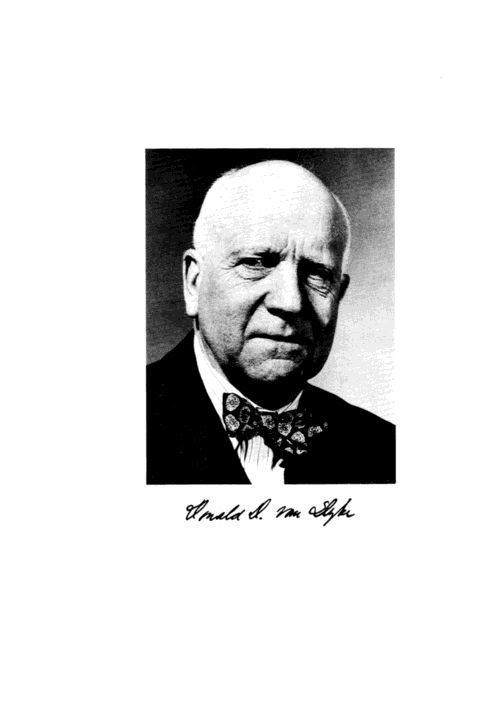
DONALD DEXTER VAN SLYKE March 29.1883May 4,1971 BY A. B AIR D H ASTIN GS DONALD DEXTER VAN SLYKE died on May 4, 1971, after a long and productive career that spanned three generations of biochemists and physicians. He left behind not only a bibliog- raphy of 317 journal publications and ~ books, but also more than 100 persons who had worked with him and distinguished themselves in biochemistry and academic medicine. To all who knew him, he was affectionately known as Van, and as Van I shall refer to him in this synoptic account of his life. Van was born in Pike, New York, a small rural community, and he received his early education in the elementary schools and high school of Geneva, New York. His father was the dis- tinguished chemist Lucius L. Van Slyke, who received his Ph.D. at the University of Michigan in 1882 and was on its staff at the time Van was born, on March 29, 1883. His mother, Lucy Dexter Van Slyke, died two years later. In 1890, L. L. Van Slyke became Chief Agricultural Chemist of the New York Agricul- tural Experiment Station, a post that he held until his retire- ment, in 1929. Van and his father and his father's profession were closely intertwined as Van was growing up, which doubt- less made chemistry a natural choice of study for him, though for a time he leaned toward architecture. Van had no chemistry courses in high school, but he used to credit his English teacher, Miss Florence Parker, with the lucidity that later characterized all his scientific publications. 309
310 BIOGRAPHICAL MEMOIRS Van spent his first college year at Hobart College in Geneva, where he took his first course in chemistry. Since the college had but one chemistry course, he transferred to the University of Michigan, from which he received a B.A. degree in 1905 and a Ph.D. in chemistry in 1907. He once stated: "The chief reason I went there was that Moses Gomberg was there. If there was any outstanding American organic chemist, it was he." In addi- tion to courses in organic, physical, and analytical chemistry, Van also took bacteriology and plant physiology as minor sub- jects. His doctoral thesis, published with Gomberg in the Journal of the American Chemical Society in 1907, was entitled: "The Action of Molecular Silver, of Silver Sulfate and Chloride, and of Sulfuric Acid upon Halogenated Derivatives of Tri- phenyl-Carbinol Chloride." This occurred shortly after Gom- berg's exciting discovery in 1900 of the free radical triphenyl- methyl. Van has delightfully reminisced about his days when he was working in Gomberg's laboratory. One day he needed a two-liter bottle that had once contained metallic sodium under anhydrous ether. Thinking the pieces of sodium in the bottom had long since reacted, he dumped them in the sink with running water. "Flashes went off like cannon firecrackers, and when it stopped, Gomberg looked in through his door and said: 'Now, Van Slyke, you know what metallic sodium and water makes'.... Those were days when your professor was not at a distance." After receiving his Ph.D. and marrying Rena Mosher in the same year, Van became an assistant to Phoebus A. Levene at the newly established Rockefeller Institute for Medical Re- search in New York City. Since this came about somewhat by accident, the circumstances are worth recording. Van had expected to follow in his father's footsteps and become an agricultural chemist. To this end he had taken and passed a civil service examination for a position in the Bureau of Chem- istry. He was scheduled to report right after getting his doctor-
DONALD DEXTER VAN SLYKE 311 ate. But fate took a hand, and at the spring meeting in 1907 of the American Chemical Society, Van's father chanced to sit next to Levene, who was recruiting for his department at the Institute. Luckily for Van and for the Institute, L. L. Van Slyke mentioned the approaching graduation of his son Donald. The upshot was that Van received an invitation from Dr. Simon Flexner, Director of the Rockefeller Institute, to come to New York for an interview. (In those daysand for many years after Simon Flexner personally interviewed all staff members, no matter how low their rank, before offering them an appoint- ment.) After consultation with his father, Van accepted the offer and thereby began his Rockefeller Institute career as bio- chemist and clinical chemist that was to last forty-one years from 1907 to 1948. THE ROCKEFELLER INSTITUTE, LEVENE PERIOD The first seven years were spent with Levene, which Van has described as a "wonderful time" working on proteins and amino acids. In 1911, Levene arranged for Van to spend a year in Berlin with Emil Fischer, who was then the leading chemist of the scientific world. He even had the privilege of working with Fischer in his private laboratory. Van was particularly impressed by Fischer's performing all laboratory operations quantitatively a procedure Van followed throughout his life. Prior to going to Berlin, Van had published eight papers with Levene and two by himselfone of which concerned his classic nitrous acid method for the quantitative determination of primary aliphatic amino groups. This method, which was in widespread use by chemists and biochemists for many years, depended upon the measurement of the gaseous nitrogen (N~) evolved by the reaction between alpha amino groups and ni- trous acid. It was the first of the many gasometric procedures devised by Van, and made possible the determination of amino acids in small amounts of blood and other biological materials.
312 BIOGRAPHICAL MEMOIRS Until the development of microbiological and chromatographic procedures, it was the primary method used to study amino acid . . ~ . composltlon ot proteins. Following his return from Berlin, Van continued his study of amino acid composition of proteins with Levene, and began his studies of protein digestion and metabolism. With his col- league G. M. Meyer, he first demonstrated that amino acids, liberated during digestion in the intestine, are absorbed into the bloodstream, that they are removed by the tissues, and that the liver alone possesses the ability to convert the amino acid . nitrogen Into urea. This work led to a study with his assistant, G. E. Cullen, of the enzyme, urease, which decomposes urea to ammonia and carbon dioxide. The quantitative determination of both end products was subsequently the basis of gasometric procedures for measuring urea concentration in blood and urine. From the study of the kinetics of urease action, Van Slyke and Cullen developed equations that depended upon two re- actions: (1) the combination of enzyme and substrate in stoichio- metric proportions and (2) the reaction of the combination into the end products. Publisher! in 1914, this formulation, involving two velocity constants, was similar to that arrived at contempo- raneously by Michaelis and Menten in Germany in 1913. Thus were Van Slyke's activities during his first seven post- doctoral years. They centered around the development of better methodology for protein composition and amino acid metabo- lism. Van was remarkably productive and happy in his work with Levene. As he has stated, work on proteins and amino acids was "his first and enduring love." HOSPITAL OF THE ROCKEFELLER INSTITUTE PERIOD Then in 1914 came an opportunity to become the chief chemist of the newly opened Hospital of the Rockefeller Insti- tute, at the invitation of Dr. Rufus Cole, Director of the
DONALD DEXTER VAN SLAKE 313 Hospital. Van did not decide to make this change lightly. Years later, he recalled, "I was so distrustful of my ability to develop a department of chemistry in the hospital and so reluctant at leaving Levene, that I made Flexner write me a letter saying that if I didn't like it in the hospital I could go back to Levene." But, he continued, "I began to pick up medicine pretty fast and found it fascinating. So I stayed in the Hospital the rest of the time I was at the Rockefeller." That amounted to thirty-four years. Van once told me that he studied textbooks of physiology and medicine diligently in preparation for his new responsibil- ity. He was fortunate in being able to take Dr. Glenn E. Cullen, his assistant in Levene's laboratory, with him. Cullen, a chemi- cal engineering graduate from the University of Michigan, was mechanically minded, resourceful, and had an outgoing person- ality. He and Van were a harmonious and effective team that developed the chemical laboratory of the hospital into a facility notable for its contributions to the budding science of bio- chemistry and to the yet-to-be-born science of clinical chemistry. Van Slyke also had the good fortune at this time to obtain the services of John Plazin, a young emigre from Latvia, as his personal laboratory assistant. John's ambition was to be the best assistant conceivable for Donald Dexter Van Slyke. This he achieved and maintained until he died forty-seven years later. They worked as one through all those years and their loyalty to and admiration of each other is a tribute to the faithful charac- ter of each man. To John, Van was always "Dr. Van Slyke." Though Van at age thirty entered upon his new responsibili- ties at the Hospital with some trepidation, he found the clinical staff so helpful and friendly that he experienced little difficulty in making the transition from Levene's laboratory to the clin- ically oriented environment. After all, under the directorship of Dr. Rufus Cole, the entire Hospital staff was embarking upon a new undertaking in medical researchthe intensive study of
314 BIOGRAPHICAL MEMOIRS disease as a scholarly pursuitin patients, in animals, and in the laboratory. "Men who were studying disease clinically had the right to go as deeply into its fundamental nature as their training allowed, and in the Rockefeller Institute's Hospital every man who was caring for patients should also be engaged in more fundamental study," wrote Dr. Cole in 1911. Though commonplace today, this was a revolutionary idea at the time. Van Slyke and Cullen lost no time in applying their sound organic and physical chemical knowledge and technology to the clinical problems under study at the Hospital. The study of diabetes was already under way by Dr. F. M. Allen, the advocate of the "starvation treatment" of diabetics. Though this worked temporarily in some cases, eventual death from acidosis con- tinued to occur. Since acidosis manifested itself in several dif- ferent chemical ways, and no easy, reliable method for its early detection existed, Van Slyke turned his attention to this prob- lem. Characteristically, he went to the heart of the matter directly. He reasoned that if incomplete oxidation of fatty acids in the body led to the accumulation of acetoacetic and ,8-hydroxy- butyric acids in the blood, then a reaction would result between these acids and the bicarbonate ions that would lead to a lower- than-normal bicarbonate concentration in blood plasma. The problem thus became one of devising an analytical method that would permit the quantitative determination of bicarbonate concentration in small amounts of blood plasma. Again Van turned to a gasometric procedure. He ingeniously devised a volumetric glass apparatus that was easy to use and required less than ten minutes for the determination of the total carbon dioxide in one cubic centimeter of plasma and other aqueous solutions. His original method had an accuracy of about 1 percent. After the demonstration of the value of using this procedure in the diagnosis and therapy of patients with diabetes and some other disease states, the method was widely adopted in hospital
DONALD DEXTER VAN SLYKE 315 and research laboratories. It also was soon found to be an excel- lent apparatus by which to determine blood oxygen concentra- tions, thus leading to measurements of the percentage saturation of blood hemoglobin with oxygen. This found extensive appli- cation in the study of respiratory diseases, such as pneumonia and tuberculosis. It also led to the quantitative study of cyano- sis and a monograph on the subject by C. Lundsgaard and Van Slyke. In all, Van Slyke and his colleagues published twenty-one papers under the general title "Studies of Acidosis," beginning in 1917 and ending in 1934. They included not only chemical manifestations of acidosis, but Van Slyke, in No. 17 of the series (1921), elaborated and expanded the subject to describe in chemical terms the normal and abnormal variations in the acid-base balance of the blood. This was a landmark in under- standing acid-base balance pathology and has not been mate- rially improved for fifty years. Van Slyke and his colleagues, both clinical and chemical, did not confine their interests solely to diabetes and acid-base abnormalities. Van kept work going on proteins and their prod- ucts of hydrolysis and on better methods for blood chlorides, urea, and ketone bodies in blood and urine. Within seven years after Van moved to the Hospital, he had published a total of fifty-three papers, thirty-three of them coauthored with clinical colleagues. Quantitative clinical chemistry was well on its way at the Hospital, and Van Slyke's contribution to it was well established. In 1920, Van Slyke and his colleagues undertook a compre- hensive investigation of gas and electrolyte equilibria in blood. This was not only a logical outgrowth of the ongoing study of the acid-base balance of the blood, but was also encouraged by Franklin C. McLean at the behest of Prof. L. J. Henderson. McLean and Henderson at Harvard had made preliminary studies of blood as a physico-chemical system, but realized that
316 BIOGRAPHICAL MEMOIRS Van Slyke and his colleagues at the Rockefeller Hospital had superior techniques and the facilities necessary for such an undertaking. A collaboration thereupon began between the two laboratories, which resulted in rapid progress toward an exact physico-chemical description of the role of hemoglobin in the transport of oxygen and carbon dioxide, of the distribution of diffusible ions and water between erythrocytes and plasma, and of factors such as degree of oxygenation of hemoglobin and hydrogen ion concentration that modified these distributions. Publications from the two laboratories were independent and complementary. It was a happy intellectual collaboration. A key development in the progress made was Nlan Slyke's revision of his volumetric gas analysis apparatus into a mano- metric apparatus. Briefly, this amounted to liberating and iso- lating the desired gas contained in a known volume of solution, and recording in millimeters of mercury the pressure of that gas at a known fixed volume. The manometric apparatus proved to give results that were from five to ten times more accurate than the volumetric apparatus, and, in addition, made possible the determination of very small concentrations of gas in solu- tion. A series of papers on the CO2 titration curves of oxy- and deoxyhemoglobin, of oxygenated and reduced whole blood, and of blood subjected to different degrees of oxygenation and on the distribution of diffusible ions in blood resulted. One of these papers was especially notable. In it were developed equations that predicted the change in distribution of water and diffusible ions between blood plasma and blood cells when there was a change in pH of the oxygenated blood. (This work was done in 1923 at the Peking Union Medical Col- lege with F. C. McLean and Hsien Wu.) In a later paper, this was extended to reduced blood as well. A significant contribu- tion of Van Slyke and his colleagues was the application of the Gibbs-Donnan Law to the bloodregarded as a two-phase sys- tem, in which one phase (the erythrocytes) contained a high
DONALD DEXTER VAN SLYKE 317 concentration of nondiffusible negative ions, i.e., those associ- ated with hemoglobin, and cations, which were not freely ex- changeable between cells and plasma. By changing the pH through varying the CO2 tension, the concentration of negative hemoglobin charges changed in a predictable amount. This, in turn, changed the distribution of diffusible anions such as C1- and HCO3- in order to restore the GibbsDonnan equilibrium. Redistribution of water occurred to restore osmotic equilib- rium. The experimental results confirmed the predictions of the equations. A total of fifteen papers, under the general title "Studies of Gas and Electrolyte Equilibria in Blood," were published between 1922 and 1928. Van regarded this work as among the best of his scientific output. As a spin-off from the physico-chemical study of the blood, Van undertook, in 1922, to put the concept of buffer value of weak electrolytes on a mathematically exact basis. By differen- tiating the mass law equation for weak acids with respect to pH, he arrived at the generalization ~ `1 H 2 3 SKY ~ H+1~2 + tH+] + [OH-~, where ,8 buffer value. This proved to be useful in determin- ing buffer values of mixed, polyvalent, and amphoteric electro- lytes, and put the understanding of buffering on a quantitative basis. It was applied in Van's laboratory to the determination of dissociation constants of polyvalent weak acids such as citric acid, whose three acid groups have overlapping dissociation constants. While this work on blood was going on, Van was preparing to make a detailed and comprehensive study of nephritis and its varied manifestations. In this he had a number of clinical asso- ciates, including Dr. Alma Hiller, who was in charge of his clinical chemical laboratory (1918-1948~. (After Cullen left in
318 BIOGRAPHICAL MEMOIRS 1921, the basic chemical work of Van's laboratory was succes- sively supervised by A. B. Hastings, 1921-1926 J. Sendroy, Jr., 1926-1937; D. A. MacFadyen, 1937-1940; and R. M. Archibald, 1940-1946.) Van always had a number of problems under investigation at the same time at the Institute, but he never hurried to pub- lish the results. It was customary for him to put each paper through several drafts and revisions. Van had a great capacity to concentrate intensely and effec- tively on the problem at hand, and at the same time keep track of several research problems going on in the laboratory. This is why the publications in any one year often covered a wide range of subjects. For example, during 1928 Van and eight of his associates published twelve papers: one on a gasometric method for sugar determination in blood and urine, another on a new method for hemoglobin determination, three on factors affecting urea excretion in health and disease, and seven additional entries in the series "Studies of Gas and Electrolyte Equilibria in Blood." One of these, "The Solubility of Carbon Dioxide at 38 ° in Water, Salt Solution, Serum, and Blood Cells," was notable in that the first measurements on the subject were made in 1922, six years prior to publication. Each year the results would be written up for publication and each year Van would say: "We'll take another look at this in the fall, to make sure we can't improve on the accuracy." This was repeated annually until it met Van's standards. It was typical of his publications that one could count on their data and results . . . without question. The period of preoccupation with the study of blood as a physico-chemical system was followed by intensive study of nephritis, undertaken with a number of clinical colleagues. They followed and minutely documented the life history of the disease through its various stages in patients. This resulted in 1930 in a detailed publication by Van Slyke and nine colleagues
DONALD DEXTER VAN SLYKE 319 of a monograph in Med icine entitled "Observation on the Courses of Different Types of Bright's Disease, and on the Resultant Changes in Renal Anatomy." It was a landmark in that it related the changes occurring at different stages of renal deterioration to the quantitative changes taking place in kidney ~ . tunctlon. ~ . - . ~ ~ . ~ ~ With hIS laboratory associates, he continued for many years to study the kidney in health and disease, with particular atten- tion to its metabolism and its ability to excrete waste products, particularly urea. Though in subsequent years, improved tech- niques for evaluating kidney function have appeared, the work of the Van Slyke laboratory stands as a pioneering model for the clinical study of this excretory organ. During this period, Van Slyke and R. M. Archibald identi- fied glutamine as the source of urinary ammonia. During World War II, Van and his colleagues documented the effect of shock on renal function and, with R. A. Phillips, developed a simple method, based on specific gravity, suitable for use in the field, for determining red blood cell concentration in whole blood and protein concentration in blood plasma. In postwar years, this method, in Phillips's hands, proved of incalculable value in detecting the severity of, and in following the results of therapy in, cholera. Also, it was during this period of the 1940s that Jordi Folch joined Van Slyke's laboratory and the manometric apparatus was adapted for the determination of carbon in organic com- pounds. This led to the detailed study of plasma lipids and in 1948 to the identification by Folch of the important phospho- lipid, phosphatidyl serine. Over 100 of Van's 300 publications were devoted to meth- odology. Most were new methods; some were devoted to im- provements he had made in earlier descriptions either to increase accuracy or to reduce the size of the sample of blood or other material required for analysis. The importance of Van
320 BIOGRAPHICAL MEMOIRS Slyke's contribution to clinical chemical methodology cannot be overestimated. His gasometric procedures alone accounted for about two dozen of the methods that were applicable to compounds of biological and clinical significance, but they were always devised to answer a physiological or clinical question. These included the blood organic constituents (carbohydrates, fats, proteins, amino acids, urea, nonprotein nitrogen, and phospholipids) and the inorganic constituents (total cations, calcium, chlorides, phosphate, and the gases carbon dioxide, carbon monoxide, and nitrogen). It was said that a Van Slyke manometric apparatus was almost all the special equipment needed to perform most of the clinical chemical analyses cus- tomarily performed prior to the introduction of photocolorim- eters and spectrophotometers for such determinations. Though calorimetric procedures were available, they re- quired the development of a color that was often not specific for the substances being measured. Hence, the chemical reaction quantitatively yielding a gas from the specific substance that could be isolated and measured had certain advantages. VAN SLYKE AND QUANTITATIVE CLINICAL CHEMISTRY The progress made in the medical sciences in genetics, im- munology, endocrinology, and antibiotics during the second half of the twentieth century obscures at times the progress that was made in basic and necessary biochemical knowledge during the first half. Methods capable of giving accurate quantitative chemical information on biological material had to be pains- takingly devised; basic questions on chemical behavior and metabolism had to be answered; and, finally, those factors that adversely modified the normal chemical reactions in the body so that abnormal conditions arise that we characterize as disease states had to be identified. At the beginning of the century, biochemistry was in its infancy, and quantitative clinical chemistry did not exist as
DONALD DEXTER VAN SLYKE 321 such. It was given to a few individuals professionally trained as chemists, who found themselves engaged in the study of disease in association with clinicians to change the course of the prac- tice of medicine. Donald Van Slyke was one of these chemists. In 1901, the year before Van Slyke received his Ph.D. from the University of Michigan, the new medical buildings of Harvard University were dedicated. President Charles Eliot, originally a chemist, stated at the dedication, "There is an increasing need of men who have a working knowledge of sev- eral sciences which were formerly treated as distinct and whose latest representatives in medical schools labored apart, each in his own field. The most promising medical research of our day makes use of biological, chemical and physical science com- bined. Physiology advances by making applications of the principles, the methods and the implements of all three sciences. Bacteriology and biological chemistry go hand in hand in serv- ing pathology and the public health." Beginning in 1906 and for the next sixty-five years, it almost seemed as if Donald Van Slyke planned and conducted his activities with these goals in mind. Viewed in retrospect, he combined in one scientific lifetime (1) basic contributions to the chemistry of bonily constituents and their chemical behavior in the body, (2) a chemical understanding of physiological func- tions of certain organ systems (notably the respiratory and renal), and (3) how such information could be exploited in the understanding and treatment of disease. That outstanding addi- tions to knowledge in all three categories were possible was in large measure due to his sound and broadly based chemical preparation, his ingenuity in devising means of accurate mea- surements of chemical constituents, and the opportunity given him at the Hospital of the Rockefeller Institute to study disease . . . · . In company Wit ~ physicians. Since Van Slyke's scientific life was spent at the Rockefeller Institute for Medical Research from 1907 through 1948 (thirty-
322 BIOGRAPHICAL MEMOIRS five of the years at the Hospital of the Rockefeller Institute), followed by twenty-two years in the Medical Department of the Brookhaven National Laboratory, it covers rather uniquely the evolution of biochemistry and notably quantitative clinical chemistry. During the period 1921-1926, while I was his assis- tant, the problems under investigation in his laboratory included the development of methods; the study of blood as a physico- chemical system and its relation to respiratory diseases; the study of proteins and amino acids and their metabolism; his early world with Dr. Alma Hiller on what ultimately proved to be the new amino acid hydroxylysine; and, finally, in collabora- tion with clinical colleagues, a definitive study of various types of nephritis. Meantime, while all these different problems were under way, he found time to work collaboratively with Dr. John P. Peters of Yale on the classic, two-volume Quantitative Clini- cal Chemistry. At the time it was published in 1931, it contained practically all that could be stated with confidence about those aspects of disease that could be and had been studied by chemi- cal means. It was widely accepted throughout the medical world as the "Bible" of quantitative clinical chemistry, and to this day some of the chapters have not become outdated. It is of interest to recall how this collaboration came about. In 1922, John P. Peters, who had just gone to Yale from Van Slyke's laboratory as an Associate Professor of Medicine, was asked by a publisher to write a modest handbook for clinicians describing useful chemical methods and discussing their appli- cation to clinical problems. It was originally to be called "Quan- titative Chemistry in Clinical Medicine." He soon found that it was going to be a bigger job than he could handle alone and asked Van Slyke to join him in writing it. Van agreed, and the two men proceeded to draw up an outline and divide up the writing of the first drafts of the chapters between them. They also agreed to exchange each chapter until it met the satisfaction of both. This may have improved the accuracy and
DONALD DEXTER VAN SLYKE 323 completeness of the chapters, but it delayed publication of the book until 1931. Each chapter turned out to be a monograph, and the book had grown to two volumes. One volume, Interpre- tations, dealing only with the physiological and clinical signifi- cance of those substances for which quantitative methods were available, contained 1,200 pages and twenty-one chapters. The second, entitled Methods, consisted of about 1,000 pages de- scribing in detail those methods that had been proven accurate and useful. Somewhere along the line, the title was shortened to Quantitative Clinical Chemistry. It must have met a need, because the first edition sold out rather quickly here and abroad and the publishers soon asked the authors to prepare a second edition. Though they tried, medical research was pro- gressing faster than they could keep upat least to both their satisfactions. The upshot was that a second edition was never completed. Though their collaboration was a fortunate one, it was difficult because Van was accustomed, as a chemist, to be con- tent with nothing less than proven accuracy, whereas Peters was used to being confronted constantly with disease rnanifesta- tions in patientsno two of which were the same. This made it difficult to satisfy both of them at the same time on any one subject. However, the first edition was well worth doing and remains a classic in the subject. BROOKHAVEN PERIOD ~ 19481 9 7 1 ) The year 1948 proved to be a fateful one for Donald Van Slyke. Rena, his wife for forty years and mother of his daughter, Elsa, and son, Karl Keller, had died the year before, and he had reached the Rockefeller retirement age of sixty-five. Though vigorous physically, he was lonely and depressed mentally. At this juncture, he accepted the position of Deputy Director of Biology and Medicine at the newly formed Brookhaven National Laboratory and met Else von Bardenfleth Brock,
324 BIOGRAPHICAL MEMOIRS whom he married. The challenge of his new responsibilities cured his depression, and the understanding companionship of Else banished his loneliness. Van thereby entered upon the sec- ond position he was to hold in his lifetime with the vigor and enthusiasm that had characterized his forty-one years at the Rockefeller Institute. Van retained the title of Deputy Director only long enough to ensure the appointment of able chairmen in the departments of biology and of medicine and then re- newed his life in the laboratory with John Plazin, his lifetime assistant, who had accompanied him from the Institute. Though previously inexperienced with the use of isotopes, he and John were soon at home with them and in 1951, with Robert Steele, published a much-improved method for the determination of i4C. During the course of the next few years, Van devised a micro version of the manornetric apparatus and adapted his various gasometric procedures to it. As a result, determinations that had previously required one milliliter samples now re- quired samples only one-tenth as large, with no loss in accuracy. These micro methods were published as a monograph by Van Slyke and Plazin in 1961, with typical Van Slyke attention to accuracy, clarity, and essential detail. With his Brookhaven colleagues, Nlan continued his study of nephritis and nephrosis, of metabolism, and of improved methodology in evaluating acid-base balance clinically. Among his last papers published from the Hospital of the Rockefeller Institute in 1949 were two on pH determination, with J. R. Weisiger and his son, K. K. Van Slyke, as coauthors. Since his first paper, in 1906, had been with his father, Lucius L. Van Slyke, this must have given him special satisfaction. From 1951 to 1956, Van served part-time as counselor to Eli Lilly Research Grants. In this capacity, he had the responsi- bility of identifying promising investigators and making recom- mendations for their support in the basic medical sciences. He
DONALD DEXTER VAN SLYKE 325 carried out this responsibility with his customary conscientious and deliberate care. He would visit the laboratories of the investigators here and abroad and keep meticulous notes of his observations, following which he reported his recommendation to the Lilly Research Grants office. In all, his recommenda- tions resulted in the distribution of about $400,000 over the five-year period, which aided many young investigators to get on with their research at a time when seed money was in short supply. At the end of this venture, he again took up his full-time laboratory life as a Research Biochemist in the Department of Medicine of the Brookhaven National Laboratory, a position he held for the rest of his life. H YD R O X Y L Y S I N E In the course of his analysis of proteins at the Rockefeller Institute, Van encountered a discrepancy between the amount of calorimetrically determined histidine in a gelatin hydroly- sate and that calculated from arginine and nonamino-nitrogen determinations. This observation led in 1921, after Van had attempted to isolate the substance, to publication in the Pro- ceedings of the National Academy of Sciences of a paper en- titled "An Unidentified Base among the Hydrolytic Products of Gelatin." Finally, in 1938, Van Slyke, Hiller, Dillon, and MacFadyen announced that the "unidentified base" was the new amino acid, hydroxylysine. Its synthesis had to wait another twelve years, being simultaneously achieved by Weisiger in Van Slyke's laboratory and by Sheehan and Bolholfer at MIT. Thus, the requirements for acceptance of a new amino acid were met at last. Van continued to study its biosynthesis and its role in collagen throughout his Brookhaven period. It would have given him great satisfaction had he lived to see the importance it plays today in providing linkage with mucopoly- saccharides in plasma membranes.
326 BIOGRAPHICAL MEMOIRS Thus, Van takes his place with his early teacher, Emil Fischer, as one who discovered a highly important amino acid. VAN SLYKE AND CHINA Shortly following the dedication in 1921 of the Peking Union Medical College (P.U.M.C.), Van Slyke spent several months in 1922-1923 in Peking as a Visiting Professor of Bio- chemistry. Although he became deeply engaged in the labora- tory with professors F. C. McLean and Hsien Wu in studies of blood equilibria he found time to learn much about Chinese , history, culture, and people and returned a profound admirer of China and the Chinese. From these early impressions he never deviated. As early as 1937, he joined with other former P.U.M.C. faculty to provide medical aid to the Chinese people. In 1938, when the American Bureau for Medical Aid to China was formed, Van Slyke was elected a Director; and, in 1941, he became its President, a post he held throughout World War II. He became Honorary President in 1947, and continued to serve actively on the Board of Directors until a few months before his death. In 1961, he spent two months at Taipei, Taiwan, as a visit- ing investigator at the Navy's Cholera Research Laboratory, known as NAMRU-2. He was thus able to renew his friend- ship with former P.U.M.C. faculty who had migrated with Chiang Kai-Shek to Taiwan. They had formed the National Defense Medical College (N.D.M.C.), which Van assisted in various ways while he was there. In appreciation of his services to the Chinese people, Van received two decorations from the Republic of China: in 1939, the Order of the Jade, and in 1947, the Order of the Brilliant Star. These were among the most treasured of his possessions, and he never relinquished his faith that the Chinese people
DONALD DEXTER VAN SLYKE 327 will eventually triumph with a national life worthy of their culture, ability, and aspirations. VAN SLYKE, THE PERSON Van Slyke served as Managing Editor of the Journal of Bio- logical Chemistry from 1914 to 1925, an activity to which he devoted many hours of close personal attention. During his editorship, the Journal flourished, and the high standards for clarity of presentation, convincing data, and justifiable conclu- sions were set that continue to characterize this publication. He worked and reworked each publication from his labora- tory until he could think of no way to improve it, either through experiment or through rewriting. His papers describ- ing new methods were models of clarity and exactness. Nothing was left to the imagination, so that it was said, "If you follow Van Slyke's directions to the letter, your results will have the accuracy he predicts." As far as I am aware, he never had to correct the data or retract the conclusions contained in his publications. Subse- quent advances in technique and knowledge have in some instances led to his work being superseded, but it was neverthe- less correct for the time it was published. Van's usual unadorned use of the English language could be felicitous when he thought it appropriate. As an example, I quote from his Harvey Lecture of 1916, "The Present Signifi- cance of the Amino Acids in Physiology and Pathology": "It is a pleasure, as well as a duty, to acknowledge my indebtedness to Dr. Levene, for six years my chief at the Rocke- feller Institute. The work detailed this evening is a direct out- growth of Levene's own researches on the proteins, was carried out with the constant inspiration of his enthusiasm, and help of his counsel, and of his generosity in making available every facility which the laboratory afforded, even at times to the
328 BIOGRAPHICAL MEMOIRS delay of his own immediate work, the ultimate sacrifice that can be taken from a spirit such as his." Van presented at all times a serious mien to the world of science. Only his family and close friends were aware that he was an irresistible punster. As far as I know this frivolous indulgence never fount] its way into print. Once, however, he allowed expression to his subsurface humor in a footnote to be found on page 276 of Quantitative Clinical Chemistry, Volume 2, Methods. It is in the chapter describing the manometric gas apparatus. It reads: "The closed manometer really owes its origin to our labora- tory comrade of many years, Glenn E. Cullen. The numerous genuflexions required during a day's work in reading the low lying zero points of the open tube told heavily on Cullen's jovial proportions, and the laboratory felt so much the loss of his usual contagious spirits, that the more humane closed tube had to be clevised." Van loved to play tennis, which he did up to within a few months of his final illness. Not that he was a master of sparkling strokes, but rather that he accurately and persistently returned almost any ball with which his opponent challenged him. He won points, games, and sets by untiring consistency and pre- cision. He played tennis in much the same way as he attacked and conquered laboratory problems. As was said on the occasion of his 80th birthday celebration, "Van plays science the way he plays tennis: he senses where the ball (or the problem) is going to be before it gets there, he gets to the ball directly with no lost motion, he never takes both feet off the ground, and when he hits the ball, it is with a firm, straight, and accurately aimed blow. Most exasperating of all, he uses no fancy strokesbut just keeps putting it back until he wins the point. He wins lots of sets, and he solves lots of problems." In the course of preparing to write this memoir, I encoun-
DONALD DEXTER VAN SLYKE 329 tered in my files a handwritten memorandum written during the summer of 1926. My five years with Van at the Rockefeller Institute were over, and my new life at the University of Chi- cago had not yet started. I include it here to help recapture the appearance and personality of the then forty-three-year-old Donald Van Slyke at the height of his scientific productivity. A Retrospective Log Augustl3, 1926 From October first nineteen hundred and twenty-one until June twentieth nineteen hundred and twenty-six I was engaged as one of the staff of the Hospital of the Rockefeller Institute for Medical Research. The man responsible for my initial appointment, for my mental and scientific growth while there, and my advancement to an opportunity of greater responsibility, was Donald Dexter Van Slyke. His is such an extraordinary scientific personality that I feel impelled to chronicle my impressions of him. Physically, he immediately attracts your attention and ad- miration. Short, stocky but well proportioned, his well-formed head, now sparsely covered with graying hair, sits solidly upon square shoulders. In his profile you see expressed his decisive- ness. A strong mouth and chin with straight high forehead denote the man. He speaks with crispness and decision yet un- kind words never pass his lips. I've never interviewed him I could not. But suppose I had --what would the result be like? Were I to be announced to him on the phone, he would be waiting for me in front of the elevator on the seventh floor of the hospital. Of what other man of equal prominence could that be said? Yet I have seen him do it many, many times during these precious five years with him. Nor does he limit this courtesy to his peers. It is always so, even for the youngest tyro.
330 BIOGRAPHICAL MEMOIRS Through a little vestibule, I should enter his office, a small room, about 12' X 12', and be seated in a straight chair beside his desk. The office appearance merits a few words. A flat top desk sets in the center at an angle so that light falls over his left shoulder as he writes. Along one wall is an open bookcase with volumes he is using now for reference, his own collected reprints and many folders of work in various stages of comple- tion for publication. On top of the bookcase are framed photo- graphs, perhaps twenty. They are some of the men who have worked with him. To catalogue them would take me far afield but a cursory glance shows strong, clean-visaged, intelligent men and today they fill chairs of medicine, of chemistry, of physiology, or are in successful practice. They are all successes. Nor are they confined to America. Danes and Englishmen are among them. The wall back of methe one Dr. Van Slyke faceshas a group of older faces. There is Emil Fischer with whom Van worked in Berlin, Moses Gomberg of the University of Michigan under whom he took his doctorate degree, P. A. Levene with whom he first worked when he came to the Rocke- feller Institute in 1908. Below these are Lawrence J. Henderson of Harvard, who together with Van Slyke has advanced physi- ology most in this decade, and William Mansfield Clark of the Hygienic Laboratory in Washington (later to head physiological chemistry at Hopkins from 1927 to 1952) whose career had paralleled Van's in success if not in clinical relevance and international recognition. These then are the faces which Van sees when he lifts those steady and penetrating eyes of his from the work on his desk. In the forty-five years that followed the writing of the above, Van did not change in any important way. It might be said that he did not age significantly until after his terminal disease was discovered. Even then, he retained a scientific interest in the course of
DONALD DEXTER VAN SLYKE 331 his condition as late as March 28, 1971, the day before his 88th birthday. As I sat chatting with him, he quoted to me the course that his plasma proteins were taking, as if he were discussing one of his Institute patients under investigation. Though fully aware of the ultimate outcome, there was no evidence that he had any changes to make in the present or past. Van is survived by a daughter, Elsa Van Slyke, born in 1912, a son, Karl Keller Van Slyke, M.D., born in 1915, and by his second wife, Else Bardenfleth Van Slyke. In spite of Nlan's life- long preoccupation with his laboratory research, he was an attentive and companionable father and a thoughtful and affec- tionate husband. His home was a happy and hospitable haven to his friends and colleagues throughout his life. Van's contributions to science and to medicine were na- tionally and internationally recognized and honored by medals, awards, honorary degrees, and memberships in professional societies here and abroad. He accepted them all humbly and gratefully as tributes to his colleagues quite as much as to himself. These honors are itemized at the end of this memoir. VAN SLYKE S LEGACY Donald Van Slyke will long be remembered for his legacy to the following: To Biochemistry and Physiology: Exact and accurate methods for the determination of con- stituents of biological material. Sound physico-chemical interpretations of the role of hemo- globin in the transport of 0~ and CON by the blood and of the distribution of water and anions between plasma and erythro- cytes. The role of the liver in amino acid metabolism. The role of the kidney in urea excretion and ammonia ~ . tormatlon.
332 BIOGRAPHICAL MEMOIRS The mathematical definition of buffer value in terms of hydrogen ion concentration, dissociation constants, and buffer concentrations. A new and important amino acid, hydroxylysine. To Medicine: His development to useful maturity of quantitative clinical chemistry through identifying clinical questions capable of chemical attack and devising the methods necessary to answer the questions. Publication in 1931 with the late John P. Peters of the classic two-volume collection of existing chemical knowledge relevant to disease, entitled Quantitative Clinical Chemistry. The clarification of the subject "acidosis" and the meaning of other acid-base balance abnormalities. A thoroughly documented description of nephritis as it progresses through its various stages. A large number of Doctors of Medicine, trained in the chemical approach to clinical investigation, who became leaders . . . . . In academic medicine. To his friends and colleagues Van has left the memories of his kindness and evenness of temper, his directness of approach to problems, his ability to avoid distractions that were irrelevant to his objective, his economy of words in speech and publica- tions, his penchant for exactness, clarity, and completeness, and his thoughtfulness in his relations with others. Altogether, Donald Van Slyke was a prolific scientist, a pioneer in bringing quantitative clinical chemistry to the service of medicine, humble, unselfish, considerate, magnanimous, and rigid only in his adherence to the truth. Those of us who worked with him loved him, and those who knew him only through his works admired and respected him. Though the light that was Donald Dexter Van Slyke in life
DONALD DEXTER VAN SLYKE 333 has gone out, the glow that has illumined so much of chem- istry and medicine and so many of those who worked with him shines on. IN PREPARING this memoir, the author has consulted most of Van Slyke's publications, the transcript of an Oral History prepared by Dr. Peter D. Olch in 1969 and on file at the National Library of Medicine, and correspondence between Van Slyke and the author extending over a fifty-year period.
334 BIOGRAPHICAL MEMOIRS HONORS AND DISTINCTIONS HONORARY DOCTOR OF SCIENCE DEGREES Yale University, 1925 University of Michigan, 1935 Northwestern University, 1940 University of Chicago, 1941 University of London, 1951 Rockefeller University, 1966 HONORARY DOCTOR OF MEDICINE DEGREES University of Oslo, 1938 University of Amsterdam, 1962 University of Ulm, 1970 MEDALS AND AWARDS Charles Mickle Fellowship, University of Toronto, "to the member of the medical profession who has done most during the pre- ceding ten years to advance sound knowledge of a practical kind in medical art or science," 1936 Phillip A. Conne Medal, Chemists' Club of New York, for contribu- tions to clinical chemistry, 1936 Willard Gibbs Medal, Chicago Section of the American Chemical Society, for contributions to chemistry, 1939 Order of the Jade, Republic of China, 1939 Kober Medal, Association of American Physicians, for "distin- guished research in preventive medicine," 1942 Order of the Brilliant Star, Republic of China, for "meritorious service to the Chinese people," 1947 Fisher Award in Analytical Chemistry, American Chemical Society, 1953 John Phillips Memorial Award, American College of Physicians, for "achievement in internal medicine," 1954 First Van Slyke Award in Clinical Chemistry, American Association of Clinical Chemists, 1957 First Scientific Achievement Award, American Medical Association, 1962 Ames Award, American Association of Clinical Chemistry, 1964 National Medal of Science, USA, 1965
DONALD DEXTER VAN SLYKE Elliott Cresson Award, Franklin Society of Philadelphia, 1965 Medal of the New York Academy of Medicine, 1966 AMERICAN MEMBERSHIPS 335 National Academy of Sciences, 1921 American Philosophical Society, 1938 American Society of Biological Chemists (President, 1920-1922) Harvey Society (President, 1927-1928) American Bureau for Medical Aid to China (President, 1940-1947) American Academy of Arts and Sciences Rudolf Virchow Medical Society in the City of New York American College of Cardiology (Honorary Member) American Chemical Society New York Academy of Medicine Association of American Physicians American Association of Clinical Chemistry Society of Experimental Biology and Medicine FOREIGN MEMBERSHIPS (HONORARY) Societa di Biologia Chimica, 1928 Deutsche Akademie der Naturforscher, 1932 Societa Lombarda di Medicina, 1935 Academy of Science of India, 1935 Society of Biological Chemists of India, 1936 Royal Society of Sciences of Upsala, 1942 Danish Society for Internal Medicine, 1952 Societe de Pathologie Renale, 1952 Societa Italiana di Biologia Sperimentale, 1953 Association of Clinical Biochemists, Britain, 1953 Royal Society of Medicine, Britain, 1958 Academia Nazionale dei Lincei, Italy, 1962 Danish Academy, 1956
336 KEY TO ABBREVIATIONS BIOGRAPHICAL MEMOIRS BIBLIOGRAPHY Abderhalden Hanb. biol. Arbeitsmethod. Abt. Tell = Abderhalden Handbuch der biologischen Arbeitsmethoden Abteilung Tell Am. .T- Dis. Child. = American Journal of Diseases of Children Am. .T- Physiol. = American journal of Physiology Ann. N.Y. Acad. Sci. = Annals of the New York Academy of Sciences Arch. Intern. Med. = Archives of Internal Medicine Ber. Dtsch. Chem. Ges. = Berichte der Deutschen Chemischen Gesellschaft Biochem. Z. = Biochemische Zeitschrift Biomed. Newsl. = Biomedical Newsletter Clin. Chem. = Clinical Chemistry Clin. Chim. Acta. = Clinica Chimica Acta Fed. Proc. = Federation Proceedings .T- Am. Chem. Soc. = Journal of the American Chemical Society J. Am. Med. Assoc. = Journal of the American Medical Association J. Biol. Chem. = {ournal of Biological Chemistry .T- Clin. Invest. = ~ournal of Clinical Investigation .T- Exp. Med. = journal of Experimental Medicine Mod. Med. = Modern Medicine Proc. Natl. Acad. Sci. USA = Proceedings of the National Academy of Sci- ences of the United States of America Proc. Soc. Exp. Biol. Med. = Proceedings of the Society for Experimental Biology and Medicine Trans. Assoc. Am. Physicians = Transactions of the Association of Ameri- can Physicians 1906 With L. L. Van Slyke. The action of dilute acids upon casein when no soluble compounds are formed. New York Agricultural Ex- periment Station, 3: 79; also in American Chemical .iournal, 38:383 (1907). 1907 With M. Gomberg. The action of molecular silver, of silver sulfate and chloride, and of sulfuric acid upon halogenated derivatives of triphenylcarbinol-chloride. J. Am. Chem. Soc., 33:531. 1908 With L. L. Van Slyke. Absorption of acids by casein. [. Biol. Chem. 4:259.
DONALD DEXTER VAN SLYKE 337 With P. A. Levene. Zur Methodik der Destillation der Amino- saurenester mittles der Geryk-pumpe. Biochem. Z., 10:214. With P. A. Levene. Hydrolyse van Wittepepton. Biochem. Z., 13: 440. With P. A. Levene. Uber Plastein. Biochem. Z., 13:458. 1909 With P. A. Levene. Ober Plastein. II. Biochem. Z., 14:203. Clavin, Vahlen's active constituent of ergot. Journal of Pharma- cology and Experimental Therapeutics, 1:265. With P. A. Levene. The leucin fraction of proteins. i. Biol. Chem., 6:391. With P. A. Levene. The leucin fraction in casein and edestin. l. Biol. Chem., 6:419. 1910 With P. A. Levene and P. l. Birchard. The partial hydrolysis of pro- teins. II. On fibrin-heteroalbumose. I. Biol. Chem., 8:269. Fine Methode zur quantitativen Bestimmung der aliphatischen Aminogruppen; einige Anwenungen derselben in der Chemi der Proteine, des Harns und der Enzyme. Ber. Dtsch. Chem. Ges., 43:3170. With P. A. Levene. Note on insoluble lead salts of amino acids. J. Biol. Chem., 8:285. 1911 With E. Fischer. Cber einige Verwandlung der a-pyrrol-carbon saure. Ber. Dtsch. Chem. Ges., 44:3166. A method for quantitative determination of aliphatic amino groups. Applications to the study of proteolysis and proteolytic products. i. Biol. Chem., 9:185. With G. F. White. Digestion of protein in the stomach and intestine of the dogfish. J. Biol. Chem., 9: 209. With G. F. White. The relation between the digestibility and the retention of ingested proteins. J. Biol. Chem., 9:219. The analysis of proteins by determination of the chemical groups characteristic of the different amino acids. J. Biol. Chem., 10:15. With E. Abderhalden. Die Bestimmung des Aminostickstoffs in einigen Polypeptiden, nach der Methode von Van Slyke. Zeit- schrift fur Physiologische Chemie, 74:505.
338 BIOGRAPHICAL MEMOIRS 1912 With P. A. Levene. Picrolonates of the monoamine acids. J. Biol. Chem., 12:127. The quantitative determination of aliphatic amino groups. II. l. Biol. Chem., 12:275. With P. A. Levene. The composition and properties of glycocoll picrate and the separation of glycocoll from alanine. l. Biol. Chem., 12:285. With P. A. Levene. Gasometric determination of free and conju- gated amino acids in the urine. l. Biol. Chem., 12:301. Die Analyse van Eiweisskorpern durch Bestimmung der chemisch charakteristischen Gruppen der verschiedenen Aminosauren. Ab- derhalden Handb. biol. Arbeitsmethod, Abt. I, Tell 7:53. Die gasometrische Bestimmung von primarem aliphatischen Amino- stickstoff und ihre Andewendung auf physiologischchemischen Gebeiete. Abderhalden Handb. biol. Arbeitsmethod, Abt. I, Tell 7:263. With G. M. Meyer. The amino-acid nitrogen of the blood. Prelimi- nary experiments on protein assimilation. l. Biol. Chem., 12:399. 1913 With P. A. Levene. The separation of d-alanine and d-valine. i. Biol. Chem., 16: 103. The gasometric determination of aliphatic amino nitrogen in mi- nute quantities. J. Biol. Chem., 16: 121. Improved methods in the gasometric determination of free and con- jugated amino-acid nitrogen in the urine. l. Biol. Chem., 16:125. The fate of protein digestion products in the body. II. Determina- tion of amino nitrogen in the tissues. i. Biol. Chem., 16: 187. With G. M. Meyer. The fate of protein digestion products in the body. III. The absorption of amino acids from the blood by the tissues. l. Biol. Chem., 16: 197. With G. M. Meyer. The fate of protein digestion products in the body. IV. The locus of chemical transformation of absorbed amino acids. J. Biol. Chem., 16:213. With G. M. Meyer. The fate of protein digestion products in the body. V. The effects of feeding and fasting on the amino-acid content of the tissues. J. Biol. Chem., 16:231.
DONALD DEXTER VAN SLYKE 339 With l. Auer. A contribution to the relation between protein cleav- age products and anaphylaxis. J. Exp. Med., 18:210. 1914 With G. E. Cullen. The mode of action of urease and of enzymes in general. I. Biol. Chem., 19: 141. With G. Zacharias. The effect of hydrogen-ion concentration and of inhibiting substances on urease. l. Biol. Chem., 19:181. With G. E. Cullen. A permanent preparation of urease and its use in the determination of urea. i. Biol. Chem., 19:211. 1915 With A. Bilis and G. E. Cullen. The amino acid content of the blood and spinal fluid of syphilitic and nonsyphilitic individuals. i. Am. Med. Assoc., 64:126. With F. C. McLean. A method for the determination of chlorides in small amounts of body fluids. l. Biol. Chem., 21:361. With F. C. McLean. A method for the titration of small amounts of halides. i. Am. Chem. Soc., 37: 1 128. With A. M. Courtney and H. L. Fales. Forms of nitrogen in the stools of infants. Am. l. Dis. Child., 9:533. With T. Levin. Results of applying a quantitative method to the Abderhalden serum test for cancer. l. Am. Med. Assoc., 65:945. With T. B. Osborne, D. S. Leavenworth, and M. Vinograd-Villchur. Some products of the hydrolysis of gliadin, lact-albumin, and the protein of the rice kernel. l. Biol. Chem., 22:259. Improvements in the method for analysis of proteins by determina- tion of the chemical groups characteristic of the different amino acids. l. Biol. Chem., 22:281. With M. Vinograd-Villchur and l. R. Losee. The Abderhalden re- action. l. Biol. Chem., 23: 377. Note on the micro method for gasometric determination of aliphatic amino nitrogen. I. Biol. Chem., 23:407. Analysis of proteins by determination of the chemical group charac- teristic of the different amino acids. l. Biol. Chem., 23:411. With E. Stillman and G. E. Cullen. The nature and detection of diabetic acidosis. Proc. Soc. Exp. Biol. Med., 12:165.
340 BIOGRAPHICAL MEMOIRS 1916 With G. E Cullen. The determination of urea by the urease method. I. Biol. Chem., 24:117. With I. R. Losee and M. Vinograd-Villchur. A quantitative test of the Abderhalden reaction. American Journal of Obstetrics and Diseases of Women and Children, 73: 1. 1917 The present significance of the amino acids in physiology and pa- thology. Arch. Intern. Med., 19:56. The.determination of oxygen in blood. Proc. Soc. Exp. Biol. Med., 14:84. With l. R. Losee. The toxemias of pregnancy. American Journal of the Medical Sciences, 153:94. With G. E. Cullen. The mode of action of urease and of enzymes in general. l. Biol. Chem., 28:391. With C. Lundsgaard. Studies of lung volume. Trans. Assoc. Am. Physicians, 32:404. With G. E. Cullen. Studies of acidosis. I. The bicarbonate concen- tration of the blood plasma; its significance and its determina- tion as a measure of acidosis. l. Biol. Chem., 30:289. Studies of acidosis. II. A method for the determination of carbon dioxide and carbonates in solution. J. Biol. Chem., 30:347. With G. E. Cullen. Studies of acidosis. III. The electrometric titra- tion of plasma as a measure of its alkaline reserve. I. Biol. Chem., 30:369. With R. :Fitz. Studies of acidosis. IV. The relationship between alkaline reserve and acid excretion. J. Biol. Chem., 30:389. With E. Stillman and G. E. Cullen. Studies of acidosis. V. Alveolar carbon dioxide and plasma bicarbonate in normal men during digestive rest and activity. J. Biol. Chem., 30:401. With E. Stillman, G. E. Cullen, and R. Fitz. Studies of acidosis. VI. The blood, urine, and alveolar air in diabetic acidosis. J. Biol. Chem., 30:405. Studies of acidosis. VII. The determination of ,8-hydroxybutyric acid, acetoacetic acid, and acetone in urine. J. Biol. Chem., 32: 455.
DONALD DEXTER VAN SLYKE 341 With R. Fitz. Studies of acidosis. VIII. The determination of ,B- hydroxybutyric acid, acetoacetic acid, and acetone in blood. i. Biol. Chem., 32:495. With W. W. Palmer. Studies of acidosis. IX. Relationship between alkali retention and alkali reserve in normal and pathological individuals. l. Biol. Chem., 32:499. 1918 With C. Lundsgaard. Studies of lung volume. I. Relation between thorax size and lung volume in normal adults. I. Exp. Med., 27:65. With A. Garvin and C. Lundsgaard. Studies of lung volume. II. Tuberculous men. l. Exp. Med., 27:87. With A. Garvin and C. Lundsgaard. Studies of lung volume. III. Tuberculous women. l. Exp. Med., 27: 129. Gasometric determination of the oxygen and hemoglobin of blood. I. Biol. Chem., 33:127. Studies of acidosis. X. l. Biol. Chem., 33:271. With G. H. Whipple. Proteose intoxications and injury of body protein. I. Exp. Med., 28: 213. Studies of acidosis. XI. The determination of carbon dioxide in carbonates. i. Biol. Chem., 36:351. 1919 With W. Palmer. Titration of organic acid in urine. Proc. Soc. Exp. Biol. Med., 16:140. With E. Stillman. Excretion of urea. Proc. Soc. Exp. Biol. Med., 17:59. Laboratory Methods of the U.S. Array. Chemical Methods in Medi- cal War Manual no. 6. Washington, D.C.: U.S. Govt. Print. Off. With J. Donleavy. A simplification of the McLean-llan Slyke method for determination of plasma chlorides. I. Biol. Chem., 37:551. With E. Stillman and G. E. Cullen. Studies of acidosis. XIII. A method for titrating the bicarbonate content of the plasma. l. Biol. Chem., 38:167. With R. Fitz. The determination of ,8-hydroxybutyric acid, aceto- acetic acid, and acetone in blood. l. Biol. Chem., 39:23.
342 BIOGRAPHICAL MEMOIRS With A. Hiller. Direct determination of non-amino nitrogen in the products of protein hydrolysis. l. Biol. Chem., 39:470. With H. A. Salvesen. The determination of carbon monoxide in blood. I. Biol. Chem., 40: 103. 1920 With W. C. Stadie. Studies of acidosis. XV. Carbon dioxide content and capacity in arterial and venous blood plasma. J. Biol. Chem., 41:191. With J. E. Austin. Determination of chlorides in whole blood. l. Biol. Chem., 41:345. Chemistry of proteins. Chap. 5 in: Oxford Medicine, ed. by Henry A. Christian and Sir James Mackenzie. Fair Lawn, N.T.: Oxford University Press, Inc. With W. W. Palmer. Studies of acidosis. XVI. The titration of organic acids in urine. J. Biol. Chem., 41:567. With G. E. Cullen. Determination of the fibrin, globulin, and albu- min nitrogen of blood plasma. I. Biol. Chem., 41 :587. With W. C. Stadie. The effect of acute yellow atrophy on metabo- lism and on the composition of the liver. Arch. Intern. Med., 25:693. 1921 The carbon dioxide carriers of the blood. Physiological Reviews, 1:141. With l. H. Austin. The determination of chlorides in blood plasma. J. Biol. Chem., 45:461. With J. H. Austin and E. Stillman. Factors governing the excretion rate of urea. J. Biol. Chem., 46:91. With C. A. L. ginger. The determination of lung volume without forced breathing. Proc. Soc. Exp. Biol. Med., 18:141. Studies of acidosis. XVII. The normal and abnormal variations in the acid-base balance of the blood. i. Biol. Chem., 48:153. With W. C. Stadie. The determination of the gases of the blood. J. Biol. Chem., 49: 1. With A. Hiller. An unidentified base among the hydrolytic products of gelatin. Proc. Natl. Acad. Sci. USA, 7: 185. An apparatus for determination of the gases in blood and other solutions. Proc. Natl. Acad. Sci. USA, 7:299.
DONALD DEXTER VAN SLYKE 1922 343 Studies of acidosis. XVIII. Determination of the bicarbonate con- centration of the blood and plasma. J. Biol. Chem., 52:495. On the measurement of buffer values and on the relationship of buffer value to the dissociation constant of the buffer and the concentration and reaction of the buffer solution. l. Biol. Chem., 52:525. Acidosis. In: Endocrinology and Metabolism, ed. by L. F. Barker, pp. 51-93. New York: D. Appleton & Company. 1923 With C. A. L. ginger. The determination of lung volume without forced breathing. I. Exp. Med., 37 :457. With G. C. Linder, C. Lundsgaard, and E. Stillman. The cause of low plasma protein concentration in nephritis. Proc. Soc. Exp. Biol. Med., 20:319. With G. C. Linder and C. Lundsgaard. The globulin and albumin content of the plasma in nephritis. Proc. Soc. Exp. Biol. Med., 20:320. With H. Wu and F. C. McLean. Studies of gas and electrolyte equi- libria in the blood. V. Factors controlling the electrolyte and water distribution in the blood. J. Biol. Chem., 56:765. With C. Lundsgaard. Cyanosis. Baltimore: Williams & Wilkins Co. The determination of chlorides in blood and tissues. l. Biol. Chem., 58:523. 1924 With G. C. Linder and C. Lundsgaard. The concentration of the plasma proteins in nephritis. l. Exp. Med., 39:887. With G. C. Linder, C. Lundsgaard, and E. Stillman. Changes in the volume of plasma and absolute amount of plasma proteins in nephritis. l. Exp. Med., 39:921. With A. Hiller. A study of certain protein precipitants. I. Biol. Chem., 53:253. With A. B. Hastings. The determination of the three dissociation constants of citric acid. J. Biol. Chem., 53: 269. With J. H. Austin and G. E. Cullen. The effect of ether anesthesia on the acid-base balance of the blood. l. Biol. Chem., 53:277.
344 BIOGRAPHICAL MEMOIRS With i. E. Austin, G. E. Cullen, A. B. Hastings, F. C. McLean, and I. P. Peters. Studies of gas and electrolyte equilibria in blood. I. Technique for collection and analysis of blood, and for its satu- ration with gas mixtures of known composition. {. Biol. Chem., 54:121. With C. Lundsgaard. The quantitative influences of certain factors involved in the production of cyanosis. Proc. Natl. Acad. Sci. USA, 8:280. With A. B. Hastings, M. Heidelberger, and J. M. Neill. Studies of gas and electrolyte equilibria in blood. III. The alkali-binding and buffer values of oxyhemoglobin and reduced hemoglobin. I. Biol. Chem., 54:481. With A. B. Hastings and i. Al. Neill. Studies of gas and electrolyte equilibria in blood. IV. The effect of oxygenation and reduction on the bicarbonate content and buffer value of blood. i. Biol. Chem., 54:507. With A. Hiller, G. C. Linder, and C. Lundsgaard. Fat metabolism in nephritis. i. Exp. Med., 39:931. With A. B. Hastings, ~ M. Neill, M. Heidelberger, and C. R. Har- ington. Studies of gas and electrolyte equilibria in blood. VI. The acid properties of reduced and oxygenated hemoglobin. l. Biol. Chem., 60:89. With A. B. Hastings, C. D. Murray, and H. W. Davies. Blood re- - action and respiration. Proc. Soc. Exp. Biol. Med., 22:82. With i. M. Neill. The determination of gases in blood and other solutions by vacuum extraction and manometric measurement. I. l. Biol. Chem., 61:523. With C. R. Harington. On the determination of gases in blood and other solutions by vacuum extraction and manometric measure- ment. II. J. Biol. Chem., 61:575. 1925 With G. C. Linder and A. Hiller. Carbohydrate metabolism in nephritis. J. Clin. Invest., 1: 247. Gasometric determination of urea with urease. Proc. Soc. Exp. Biol. Med., 22:486. With A. Hiller and G. C. Linder. The reducing substances of the blood. I. Biol. Chem., 64:625. With W. Robson. Unknown hydrolysis product of gelatin. Proc. Soc. Exp. Biol. Med., 23:23.
DONALD DEXTER VAN SLAKE 345 With A. B. Hastings, C. D. Murray, and J. Sendroy, Jr. Studies of gas and electrolyte equilibria in blood. VIII. The distribution of hydrogen, chloride, and bicarbonate ions in oxygenated and reduced blood. J. Biol. Chem., 65:701. The determination of gases in blood and other solutions by vacuum extraction and manometric measurement. III. Gasometric deter- mination of me/hemoglobin. J. Biol. Chem., 66:409. With E. Vollmund. Studies of methemoglobin formation. l. Biol. Chem., 66:415. 1926 With G. C. Linder, A. Miller, L. Leiter, and l. P. McIntosh. The excretion of ammonia and titratable acid in nephritis. l. Clin. Invest., 2:235. Bestimmung der Alkalireserve des Blutes. Abderhalden Handb. biol. Arbeitsmethod. Abt. IV, Tell 4:1245. With A. Hiller. The residual reduction of blood. l. Biol. Chem., 68:323. Factors A ffecting the Distribution of Electrolytes, Water, and Gases in the Animal Body. Philadelphia: l. B. Lippincott Co. With l. Sendroy, in Gasometric determination of blood calcium. Proc. Soc. Exp. Biol. Med., 24:167. With J. A. Hawkins. Gasometric determination of blood sugar. Proc. Soc. Exp. Biol. Med., 24:168. 1927 Gasometric micro-Kjeldahl determination of nitrogen. J. Biol. Chem., 71:235. La Formule ureo-secretoire d'Ambard et les resultats de Austin, Stillman et Van Slyke. La Presse Medicale, 35:214. With A. B. Hastings, H. A. Salvesen, and J. Sendroy, Jr. Studies of gas and electrolyte equilibria in the blood. IX. The distribution of electrolytes between transudates and serum. ~ournal of Gen- eral Physiology, 8:701. With F. S. Robscheit-Robbins. The gasometric determination of small amounts of carbon monoxide in blood, and its application to blood volume studies. [. Biol. Chem., 72:39. Note on portable form of the manometric gas apparatus, and on certain points in the technique of its use. l. Biol. Chem., 73:121.
346 BIOGRAPHICAL MEMOIRS With l. Sendroy, in Carbon dioxide factors for the manometric blood gas apparatus. l. Biol. Chem., 73: 127. Determination of urea by gasometric measurement of the carbon dioxide formed by the action of urease. l. Biol. Chem., 73:695. With A. Hiller and l. F. McIntosh. The excretion of albumin and globulin in nephritis. I. Clin. Invest., 4:235. Certain aspects of the physical chemistry of the blood. (Pasteur Lecture) Proceedings of the Institute of Medicine of Chicago, 6:173. With A. Hiller and Knud Berthelsen. A gasometric micro-method for determination of iodates and sulfates, and its application to the estimation of total base in blood serum. J. Biol. Chem., 74:659. 1928 With J. Sendroy, Jr., A. B. Hastings, and J. M. Neill. Studies of gas and electrolyte equilibria in blood. X. The solubility of carbon dioxide at 38° in water, salt solution, serum, and blood cells. J. Biol. Chem., 78:765. With l. Sendroy, fir. Studies of gas and electrolyte equilibria in blood. XI. The solubility of hydrogen at 38° in blood serum and cells. J. Biol. Chem., 78:801. With A. Hiller. Gasometric determination of hemoglobin by the carbon monoxide capacity method. J. Biol. Chem., 78:807. Edith A. B. Hastings and J. Sendroy, Jr. Studies of gas and electro- lyte equilibria in blood. XII. The value of pK in the Hender- son-Hasselbalch equation for blood serum. J. Biol. Chem., 79: 183. With A. B. Hastings, J. Sendroy, Jr., and J. F. McIntosh. Studies of gas and electrolyte equilibria in blood. XIII. The distribution of chloride and bicarbonate in the blood of normal and patho- logical human subjects. I. Biol. Chem., 79: 193. With I. Sendroy, Jr. Studies of gas and electrolyte equilibria in blood. XV. Line charts for graphic calculations by the Hender- son-Hasselbalch equation, and for calculating plasma carbon dioxide content from whole blood content. i. Biol. Chem., 79: 731. With J. A. Hawkins. A gasometric method for determination of reducing sugars, and its application to analysis of blood and urine. l. Biol. Chem., 79:739.
DONALD DEXTER VAN SLYKE 347 With A. B. Hastings, A. Hiller, and l. Sendroy, in Studies of gas and electrolyte equilibria in blood. XIV. The amounts of alkali bound by serum albumin and globulin. l. Biol. Chem., 79:769. With R. V. Christie and J. Sendroy, Jr. The distribution of electro- lytes in haemophilic blood. Quarterly Journal of Medicine, 22:65. With E. M¢ller and l. F. McIntosh. Studies of urea excretion. II. Relationship between urine volume and the rate of urea excre- tion by normal adults. l. Clin. Invest., 6:427. With i. F. McIntosh and E. M011er. Studies of urea excretion. III. The influence of body size on urea output. l. Clin. Invest., 6:467. With E. M011er and l. F. McIntosh. Studies of urea excretion. IV. Relationship between urine volume and rate of urea excretion by patients with Bright's disease. l. Clin. Invest., 6:485. 1929 With l. A. Hawkins. A time method for determination of reducing sugars, and its application to analysis of blood and urine. I. Biol. Chem., 81:459. Discussion. The 1928 Silliman Lectures. Science, 69:163. With l. Hawkins. Gasometric determination of fermentable sugar in blood and urine. l. Biol. Chem., 83:51. Determination of acetone bodies in blood and urine. I. Biol. Chem., 83:415. Manometric determination of primary amino nitrogen and its ap- plication to blood analysis. l. Biol. Chem., 83:425. Manometric determination of urea in blood and urine by the hypobromite reaction. J. Biol. Chem., 83:449. With A. Hiller. Gasometric determination of me/hemoglobin. J. Biol. Chem., 84:205. With A. Hiller. Gasometric control of standard solutions for the Palmer hemoglobin method. l. Biol. Chem., 84:211. With l. Sendroy, fir. Gasometric determination of oxalic acid and calcium, and its application to serum analysis. l. Biol. Chem., 84:217. With l. A. Hawkins. Comparison of rates of sugar disappearance and carbon dioxide formation during fermentation of glucose. I. Biol. Hem., 84: 243. With i. A. Hawkins and B. MacKay. Glucose excretion in Bright's disease. l. Clin. Invest., 8: 107.
348 BIOGRAPHICAL MEMOIRS With l. Sendroy, fir., and S. H. Liu. The gasometric estimation of the relative affinity constant for carbon monoxide and oxygen in whole blood at 38°. Am. l. Physiol., 90:511. 1 930 Bestimmung van Harnstoff durch gasometrische Messung des durch die Einwirkung van Urease gebildeten Kohlendioxydes. Abder- halden Handb. biol. Arbeitsmethod., Abt. IV, Tell 1:749. Gasometrische Mikro-Kjeldahl-Stickstoffbestimmung. Abderhalden Handb. biol. Arbeitsmethod., Abt. IV, Tell 13:21. With N. S. Moore. The relationships between plasma specific grav- ity, plasma protein content and edema in nephritis. l. Clin. Invest., 8:337. With l. F. McIntosh, E. \1011er, R. R. Hannon, and C. Johnston. Studies of urea excretion. VI. Comparison of the blood urea clearance with certain other measures of renal function. l. Clin. Invest., 8:357. With l. Sendroy, fir., and S. H. Liu. Estimation gazometrique de la constante d'a~nite relative pour l'oxyde de carbone et l'oxygene dans le sang total a 38°. Bulletin de la Societe de Chimie Bio- logique, 12:532. With I. A. Hawkins. Studies of gas and electrolyte equilibria in blood. XVI. The evolution of carbon dioxide from blood and buffer solutions. J. Biol. Chem., 87:265. With E. Stillman, E. M011er, W. Ehricl~, l. F. McIntosh, L. Leiter, E. M. MacKay, R. R. Hannon, N. S. Moore, and C. Johnson. Observations on the courses of different types of Bright's dis- ease, and on the resultant changes in renal anatomy. Medicine, 9:257. 1931 With I. P. Peters. Quantitative Clinical Chemistry, vol. 1: Interpre- tations. Baltimore: Williams Sc Wilkins Co. (rev., 1946) With C. P. Rhoads, A. Hiller, and A. Alving. Studies of renal metabolism. Proc. Soc. Exp. Biol. Med., 23:776; Trans. Assoc. Am. Physicians, 46:301. 1 932 With J. Sendroy, Jr., and A. Hiller. Determination of lung volume by respiration of oxygen without forced breathing. J. Exp. Med., 55:361.
DONALD DEXTER VAN SLYKE 349 With l. Sendroy, in Manometric analysis of gas mixtures. I. The determination, by simple absorption, of carbon dioxide, oxygen and nitrogen in mixtures of these gases. l. Biol. Chem., 95:509. With i. Sendroy, fir., and S. H. Liu. Manometric analysis of gas mxitures. II. Carbon dioxide by the isolation method. I. Biol. Chem., 95:531. With l. Sendroy, fir., and S. H. Liu. Manometric analysis of gas mixtures. III. Manometric determination of carbon dioxide ten- sion and pH of blood. l. Biol. Chem., 95: 547. With M. E. Hanke. Manometric analysis of gas mixtures. IV. Hy- drogen and oxygen by combustion. J. Biol. Chem., 95:569. With M. E. Hanke. Manometric analysis of gas mixtures. V. Hydro- gen by absorption with Paal's picrate-pallidium solution. J. Biol. Chem., 95:587. With i. P. Peters. Quantitative Clinical Chemistry, vol. 2: Methods. Baltimore: Williams & Wilkins Co. (rev., 1943) With C. L. Cope. Simplified calorimetric determination of blood urea clearance. Proc. Soc. Exp. Biol. Med., 29:1169. With A. Alving and W. C. Rose. Studies of urea excretion. VII. The effects of posture and exercise on urea excretion. l. Clin. Invest., 11:1053. With I. H. Page. A simple test for plasma protein content below the edema-producing level. l. Am. Med. Assoc., 99:1344. 1933 With V. H. Kugel. Use of Somogyi's filtrate to increase the specificity of the gasometric blood sugar method. l. Biol. Chem., 102:51. With R. T. Dillon and A. Hiller. Crystallization of a compound of hemoglobin and carbon dioxide. Proc. Natl. Acad. Sci. USA, 19:828. With V. H. Kugel. Improvements in manometric micro-Kjeldahl and blood urea methods. I. Biol. Chem., 102:489. With A. Hiller. Determination of ammonia in blood. I. Biol. Chem., 102:499. With l. Sendroy, fir. Studies of gas and electrolyte equilibria in blood. XVII. The effect of oxygenation and reduction on the carbon dioxide absorption curve and the pK' of whole blood. I. Biol. Chem., 102: 505. With I. H. Page and E. Kirk. A manometric micro method for
350 BIOGRAPHICAL MEMOIRS determination of carbon in organic compounds. l. Biol. Chem., 102:635. With E. Kirk. Comparison of gasometric, calorimetric, and titri- metric determinations of amino nitrogen in blood and urine. i. Biol. Chem., 102:651. 1934 With i. P. Peters. Analysen van Gasgemischen. Abderhalden Handb. biol. Arbeitsmethod., Abt. V, Tell 10: 1 13. With I. P. Peters. Gasometrische Methoden zur Analyse van Blut und anderen Losungen. Abderhalden Handb. biol. Arbeits- method., Abt. V, Tell 10:203. Acidosis and alkalosis. Bulletin of the New York Academy of Medi- cine, 10:103. Tests of renal function in Bright's disease. Medical Clinics of North America, 17:1 179. With R. T. Dillon and R. Margaria. Studies of gas and electrolyt equilibria in blood. XVIII. Solubility and physical state of atmospheric nitrogen in blood cells and plasma. J. Biol. Chem., 105:571. With I. Sendroy, Jr., and R. T. Dillon. Studies of gas and electro- lyte equilibria in blood. XIX. Solubility and physical state of uncombined oxygen in blood. l. Biol. Chem., 105:597. With C. P. Rhoads, A. S. Alving, and A. Hiller. The functional effect of explanting one kidney and removing the other. Am. i. Physiol., 1 09:329. With C. P. Rhoads, A. Hiller, and A. S. Alving. Relationships be- tween urea excretion, renal blood flow, renal oxygen consume tion and diuresis. The mechanism of urea excretion. Am. l. Physiol., 109:336. With E. Kirk and I. H. Page. Gasometric microdetermination of lipids in plasma, blood cells, and tissues. l. Biol. Chem., 106: 203. With I. Sendroy, Jr., and S. Seelig. Studies of acidosis. XXII. Ap- plication of the Henderson-Hasselbalch equation to human urine. J. Biol. Chem., 106:463. With J. Sendroy, [r., and S. Seelig. Studies of acidosis. XXIII. The carbon dioxide tension and acid-base balance of human urine. J. Biol. Chem., 106:479.
DONALD DEXTER VAN SLYKE 351 With A. S. Alving. The significance of concentration and dilution tests in Bright's disease. l. Clin. Invest., 13:969. With C. P. Rhoads, A. Hiller, and A. S. Alving. The relationship of the urea clearance to the renal blood flow. Am. l. Physiol., 110:387. With C. P. Rhoads, A. Hiller, and A. S. Alving. The effects of novocainization and total section of the nerves of the renal pedicle on renal blood and function. Am. l. Physiol., 110:392. 1935 With I. H. Page, E. Kirk, and L. E. Farr. Nature of nitrogenous constituents in petroleum ether extract of plasma. Proc. Soc. Exp. Biol. Med., 32:837. With I. H. Page, A. Hiller, and E. Kirk. Studies of urea excretion. IX. Comparison of urea clearances calculated from the excre- tion of urea, of urea plus ammonia, and of nitrogen determin- able by hypobromite. J. Clin. Invest., 14:901. With A. Hiller and B. F. Miller. The clearance, extraction per- centage and estimated filtration of sodium ferrocyanide in the mammalian kidney. Comparison with inulin, creatinine and urea. Am. I. Physiol., 113:611. With A. EIiller and B. F. Miller. The distribution of ferrocyanide, inulin, creatinine and urea in the blood and its effect on the significance of their extraction percentages. Am. l. Physiol., 113: 629. With I. H. Page, E. Kirk, W. H. Lewis, fir., and W. R. Thompson. Plasma lipids of normal men at different ages. l. Biol. Chem., 111:613. 1936 The urea clearance as a measure of renal function. American Jour- nal of Medical Technology, 2:42. With R. T. Dillon. Gasometric determination of carboxyl groups in amino acids. Proc. Soc. Exp. Biol. Med., 34:362. With B. F. Miller. A direct microtitration method for blood sugar. J. Biol. Chem., 114: 583. 1937 With A. S. Alving. La cure dietetica del Morbo di Bright. Attualita di terapia medica, 15: 101.
352 BIOGRAPHICAL MEMOIRS 1938 With R. T. Dillon. Gasometric determination of carboxyl groups in amino acids. Comptes Rendus du Laboratoire, Carlsberg, 22:480. With A. Hiller, R. T. Dillon, and D. MacFadyen. The unidentified base in gelatin. Proc. Soc. Exp. Biol. Med., 38:548. The manometric determination of amino acids. Biochemical iour- nal, 32:1614. With L. E. Farr. Relation between plasma protein level and edema in nephrotic children. Am. l. Dis. Child., 57:306. 1939 With E. F. McCarthy. Diurnal variations of hemoglobin in the blood of normal men. l. Biol. Chem., 128: 567. The development of controlled oxygen therapy. (Willard Gibbs Medal) The Chemical Bulletin, 26: 176. With i. Folch. Preparation of blood lipid extracts free from non- lipid extractives. Proc. Soc. Exp. Biol. Med., 41:514. With i. Folch. Nitrogenous contaminants in petroleum ether ex- tracts of plasma lipids. i. Biol. Chem., 129:539. Determination of solubilities of gases in liquids with use of the Van Slyke-Neill manometric apparatus for both saturation and analysis. l. Biol. Chem., 130: 545. 1940 Renal mechanisms controlling composition of the body fluids. (Willard Gibbs Lecture) Chemical Reviews, 26: 105. With A. Hiller, D. A. MacFadyen, A. B. Hastings, and F. W Klemperer. On hydroxylysine. l. Biol. Chem., 133:xxxiii. With [. Folch. Manometric carbon determination. l. Biol. Chem., 136:509. 1941 . Renal function test. New York Journal of Medicine, 41:825. Renal function tests. Mod. Med., 9:28. Fisiologia de los aminoacidos. Medicas, 2:78. With R. T. Dillon, D. A. MacFadyen, and P. Hamilton. Gasometric
DONALD DEXTER VAN SLYKE 353 determination of carboxyl groups in free amino acids. J. Biol. Chem., 141:627. With D. A. MacFadyen and P. Hamilton. Determination of free amino acids by titration of the carbon dioxide formed in the reaction with ninhydrin. J. Biol. Chem., 141:671. With A. Hiller and D. A. MacFadyen. The determination of hy- droxylysine in proteins. l. Biol. Chem., 141: 681. 1942 With K. Emerson, in The nephrotic crisis. Journal of the Mount Sinai Hospital, New York, 8:495. With F. l. Kreysa. Microdetermination of calcium by precipitation as picrolonate and estimation of the precipitated carbon by manometric combustion. l. Biol. Chem., 142:765. Physiology of the amino acids. Centennial Address, Univ. of Chi- cago) Science, 95: 259; also in Nature, 149: 342. The kinetics of hydrolytic enzymes and their bearing on method for measuring enzyme activity. Advances in Enzymology, 2:33. With F. W. Klemperer and A. B. Hastings. The dissociation con- stants of hydroxylysine. l. Biol. Chem., 143:433. With R. A. Phillips, P. H. Futcher, P. B. Hamilton, R. M. Archi- bald, and A. Hiller. The source of the ammonia produced in the kidney in acidosis. Fed. Proc., 1:67. (A) With D. A. MacFadyen and P. B. Hamilton. Application of the gaso- metric ninhydrin-CO2 method to determination of amino acids in blood. Fed. Proc., 1:139. (A) With R. M. Archibald. Purification, kinetics and activity measure- ment of liver arginase. Fed. Proc., 1:139. (A) With A. Hiller and R. T. Dillon. Solubilities and compositions of the phospho-12-tungstates of the diamino acids and of praline, glycine and tryptophane. J. Biol. Chem., 146:137. 1943 With D. A. MacFadyen. Note on the use of the o-phenanthroline ferrous complex as an indicator in the ceric sulfate titration of blood sugar. J. Biol. Chem., 149:527. With R. A. Phillips, V. P. Dole, K. Emerson, fir., P. B. Hamilton, and R. M. Archibald, with technical assistance of E. G. Stanley and l. Plazin. The copper sulfate method for measuring specific
354 BIOGRAPHICAL MEMOIRS gravities of whole blood and plasma. Biomed. Newsl., 1:1; also in Bulletin of the U.S. Army Medical Department, 71:66. With P. B. Hamilton. The gasometric determination of free amino acids in blood filtrates by the ninhydrin-carbon dioxide method. J. Biol. Chem., 150:231. With I). A. MacFadyen and P. B. Hamilton. The gasometric deter- mination of amino acids in urine by the ninhydrin-carbon diox- ide method. l. Biol. Chem., 150:231. With P. B. Hamilton. The synthesis and properties of ninhydrin ureide. l. Biol. Chem., 150:471. With R. A. Phillips, P. B. Hamilton, R. M. Archibald, P. H. Putcher, and A. Hiller. Glutamine as source material of urinary ammonia. l. Biol. Chem., 150: 481. 1944 With R. M. Archibald. Manometric, titrimetric and calorimetric methods for measurement of urease activity. I. Biol. Chem., 154: 623. With W. K. Rieben. Microdetermination of potassium by precipita- tion and titration of the phospho-12-tungstate. i. Biol. Chem., 156:743. With R. A. Phillips, R. M. Archibald, V. P. Dole, and K. Emerson, [r. Effect of shock on the kidney. Trans. Assoc. Am. Physicians, 58:119. 1945 Renal function of dogs given oxyhemoglobin or methemoglobin solutions. Biomed. Newsl., 5:9. 1946 With R. A. Phillips, V. P. Dole, P. B. Hamilton, K. Emerson, [r., and R. M. Archibald. Effects of acute hemorrhagic and trau- matic shock on renal function of dogs. Am. i. Physiol., 145:314. With V. P. Dole, K. Emerson, Jr., R. A. Phillips, and P. B. Hamil- ton. The renal extraction of oxygen in experimental shock. Am. J. Physiol., 145:337. With R. A. Phillips, A. Yeomans, V. P. Dole, and L. E. Farr. Esti- mation of blood volume from change in blood specific gravity following a plasma infusion. J. Clin. Invest., 25:261.
DONALD DEXTER VAN SLYKE 355 With P. B. Hamilton. The effects of the volatile aldehydes formed on the accuracy of the manometric ninhydrin-carbon dioxide method in analysis of certain a-amino acids. I. Biol. Chem., 164:249. Laboratory Methods of the U.S. Army. Chemical Methods in Medi- cal War Manual TM8-227. Washington, D.C.: U.S. Govt. Print. 0~. Quantitative analysis in biochemistry. Chapter 8 in: Currents in Biochemical Research, ed. by D. E. Green. New York: Inter- science Publishers, Inc. With R. A. Phillips, A. Yeomans, V. P. Dole, and L. E. Farr. Spe- cific gravity estimation of blood volume. Mod. Med., 14:90. With R. M. Archibald. Gasometric and photometric measurement of arginase activity. I. Biol. Chem., 165: 293. With A. Hiller, I. R. Weiliger, and W. O. Cruz. Determination of carbon monoxide in blood and of total and active hemoglobin by carbon monoxide capacity. Inactive hemoglobin and methe- moglobin contents of normal human blood. I. Biol. Chem., 166: 121. 1947 With A. Hiller. Application of Sendroy's iodometric chloride titra- tion to protein-containing fluids. J. Biol. Chem., 167:107. With G. C. Cotzias and G. I. Lavin. Observations on normal and pathologic kidney tissue with ultraviolet photomicrography. Acta Medica Scandinavia, 196: 259. With F. P. Chinard. Comparison of a modified Folin photometric procedure and the ninhydrin manometric method for the deter- mination of amino acid nitrogen in plasma. I. Biol. Chem., 169:571. Studies of normal and pathological physiology of the kidney. (30th Mellon Lecture) Pittsburgh: Univ. of Pittsburgh School of Medicine. The effect of urine volume on urea excretion. l. Clin. Invest., 26: 1159. With P. B. Hamilton, L. E. Farr, and A. Hiller. Preparation of hemoglobin solutions for intravenous infusion. l. Exp. Med., 86:455. With L. E. Farr and A. Hiller. Preparation of dried hemoglobin without loss of activity. I. Exp. Med., 86:465.
356 BIOGRAPHICAL MEMOIRS With P. B. Hamilton and A. Hiller. Renal effects of hemoglobin infusions in dogs in hemorrhagic shock. I. Exp. Med., 86:477. Nomogram for correction of low urine chloride values determined by the silver iodate reaction. J. Biol. Chem., 171:467. 1948 The effects of shock on the kidney. Ann. Intern. Med., 28:701. Effects of hemorrhage on the kidney. Ann. N.Y. Acad. Sci., 49:593. With H. Eder, F. P. Chinard, R. L. Greif, G. C. Cotzias, A. Hiller, and H. D. Lauson. A study of the changes in plasma volume, renal function and water and salt balance induced by repeated administration of human plasma albumin to patients with the nephrotic syndrome. l. Clin. Invest., 27:532. With A. Hiller and J. Plazin. A study of conditions for Kjeldahl determination of nitrogen in proteins. Description of methods with mercury as catalyst, and titrimetric and gasometric mea- surements of the ammonia formed. i. Biol. Chem., 176:1401. With A. Hiller and l. Plazin. Substitutes for saponin in the deter- mination of oxygen and carbon monoxide of blood. l. Biol. Chem., 176: 1431. 1949 With l. R. Weisiger and K. K. Van Slyke. Photometric measurement of plasma pH. l. Biol. Chem., 179:743. With l. R. Weisiger and K. K. Van Slyke. Photometric measurement of urine pH. l. Biol. Chem., 179:757. With H. A. Eder, F. P. Chinard, H. D. Lauson, R. L. Greif, A. Hiller, and G. C. Cotzias. Studies on the pathogenesis of neph- rotic edema J. Clin. Invest., 28: 779. With V. P. Dole. The significance of the urea clearance. [ournal of Clinical Pathology, 2:273. 1950 With R. A. Phillips, P. B. Hamilton, V. P. Dole, K. Emerson, ir., and R. M. Archibald. Measurement of specific gravities of whole blood and plasma by standard copper sulfate solutions. J. Biol. Chem., 183:305. With A. Hiller. R. A. Phillips, P. B. Hamilton, V. P. Dole, R. M.
DONALD DEXTER VAN SLYKE 357 Archibald, and H. A. Eder. The estimation of plasma protein concentration from plasma specific gravity. l. Biol. Chem., 183: 331. With R. A. Phillips, N1. P. Dole, P. B. Hamilton, R. M. Archibald, and i. Plazin. Calculation of hemoglobin from blood specific gravities. l. Biol. Chem., 183: 349. 1951 With J. Plazin and J. R. Weisiger. Reagents for the Van Slyke- Folch wet carbon combustion. J. Biol. Chem., 191:299. With R. Steele and J. Plazin. Determination of total carbon and its radioactivity. J. Biol. Chem., 192:769. Studies of normal and pathological physiology of the kidney. Lec- tures on the Scientific Basis of Medicine, 1:143. 1952 With F. M. Sinex. Determination of polyglucose in blood and urine. Proc. Soc. Exp. Biol. Med., 79:163. With R. Steele and I. Plazin. Fate of intravenously administered polyvinylpyrrolidone. Ann. N.Y. Acad. Sci., 55:479. 1953 With l. Sacks. Preparation of serum lipid extracts free of inorganic phosphate. l. Biol. Chem., 200:525. 1954 With F. M. Sinex. Source of the hydroxylysine of collagen. Fed. Proc., 13:297. With H. A. Eder, H. D. Lauson, F. P. Chinard, R. L. Greif, and G. C. Cotzias. A study of the mechanisms of edema formation in patients with the nephrotic syndrome. i. Clin. Invest., 33:636. L'insu~cienza renale tubulare nello shock e Della nefrite. Minerva Medica, Anno 45-Vol. I-N 42. Renal tubular failure of shock and nephritis. (Tohn Phillips Lec- ture) Annals of Internal Medicine, 41:709. Wet carbon combustion and some of its applications. (Fisher Award Lecture) Analytical Chemistry, 26: 1706.
358 BIOGRAPHICAL MEMOIRS 1955 With F. M. Sinex, i. Plazin, D. Clareus, W. Bernstein, and R. Chase. Determination of total carbon and its radioactivity. II. Reduc- tion of required voltage and other modifications. I. Biol. Chem., 213:673. With F. M. Sinex. The source and state of the Hydroxylysine of collagen. I. Biol. Chem., 216:245. Hydroxylysine. Society of Biological Chemists, India, Souvenir, p. 138. 1957 Hydroxylysine. In: Festschrift Arthur Stoll, pp. 211-19. Basel: Birk- hauser. With F. M. Sinex. The role of Hydroxylysine in the synthesis of collagen. Fed. Proc., 16:~50. The role of oxygen and carbon dioxide in cardiovascular physiology and pathology. Bulletin of the St. Francis Hospital, 14:1. Oxygen physiology, normal and abnormal. (5th Edsel B. Ford Lec- ture) Henry Ford Hospital Medical Bulletin, 5:25. 1958 Alkaline incineration methods for determination of protein-bound iodine in serum. Scandinavian Journal of Clinical- and Labora- tory Investigation, 10(Suppl. 31~: 317. With F. M. Sinex. The course of hydroxylation of lysine to form Hydroxylysine in collagen. J. Biol. Chem., 232:797. Renal tubular function and failure. Proceedings of the Rudolf Vir- chow Medical Society, 17:59. With W. W. Shreeve, L. I. Gidez, H. A. Eder, and A. R. Hennes. Carbon-14 in the study of metabolic processes in man. Second International Conference on Peaceful Uses of Atomic Energy, vol. 25, pt. 2, p. 34. London: Pergamon Press, Ltd. 1959 With F. M. Sinex and D. R. Christman. The source and state of the Hydroxylysine of collagen. II. Failure of free Hydroxylysine to serve as a source of Hydroxylysine or lysine of collagen. J. Biol. Chem., 234:918.
DONALD DEXTER VAN SLYKE 359 General principles of oxygen transport and transfer. In: Oxygen Supply to the Human Fetus. A Symposium, ed. by J. Walker and A. C. Turnbull. Oxford: Blackwell Scientific Publications. 1960 With i. Plazin. Development of precise methods with a micro form of Van Slyke-Neill manometric apparatus. In: Proceedings of the 4th International Congress on Clinical Chemistry, Edin- burgh, Scotland. Baltimore: Williams & Wilkins Co. With O. P. Foss and L. V. Hankes. A study of the alkaline ashing method for determination of protein-bound iodine in serum. Clin. Chim. Acta, b:301. With I. Plazin. Determination of carbon and its radioactivity. III. Transfer of small samples of CO2 to counting tubes. l. Biol. Ghem., 235:2749. 1961 With i. Plazin. Micromanometric Analyses. Baltimore: Williams & Wilkins Co. 1962 Gasometric methods of analysis. In: International Symposium on Microchemical Techniques, ed. by Nicholas D. Cheronis. Univer- sity Park, Pa. New York: John Wiley & Sons, Inc. With i. Plazin. Determination of carbon and its radioactivity. IV. Transfer of CO2 to counting tubes without use of liquid nitro- gen. l. Biol. Chem., 247: 3296. With E. A. Popenoe. The formation of collagen hydroxylysine. I. Biol. Chem., 237:3491. 1963 With R. B. Aronson and E. A. Popenoe. The formation of collagen hydroxylysine studied with tritiated lysine. Fed. Proc., 22:229. 1964 With P. E. Carson. A simplified technique for determination of small amounts of calcium as oxalate. Clin. Chem., 10:352.
360 BIOGRAPHICAL MEMOIRS The gases of the blood. (Brookhaven Lecture Series, no. 41) Upton, N.Y.: Brookhaven National Laboratory. 1965 With E. A. Popenoe and R. B. Aronson. The formation of collagen hydroxylysine studied with tritiated lysine. l. Biol. Chem., 240: 3089. With [. Plazin. The preparation of extracts of plasma lipids free from water-soluble contaminants. Clin. Chim. Acta., 12:46. 1966 With E. A. Popenoe and R. B. Aronson. Hydroxylysine formation from lysine during collagen biosynthesis. Proc. Natl. Acad. Sci. USA, 55:393. Reminiscences of life and work with Hastings. Fed. Proc., 25:820. With L. V. Hankes and J. l. Vitols. Photometric determination of pH with a single standard and calculation by nomogram: appli- cation to human plasma pH. Clin. Chem., 12:849. Some points of acid-base history in physiology and medicine. Ann. N.Y. Acad. Sci., 133:~. 1967 With R. B. Aronson, F. M. Sinex, and C. Franzblau. The oxidation of protein-bound hydroxylysine by periodate. l. Biol. Chem., 242:809. 1969 With E. A. Popenoe and R. B. Aronson. The sulfhydryl nature of collagen praline hydroxylase. Archives of Biochemistry and Bio- physics, 133:286. With A. F. LoMonte. Manometric determination of nitrate and nitrite. Microchemical Journal, 14:608. 1971 With R. B. Aronson. Manometric determination of CO2 combined with scintillation counting of C-14. Analytical Biochemistry, 41:173.
