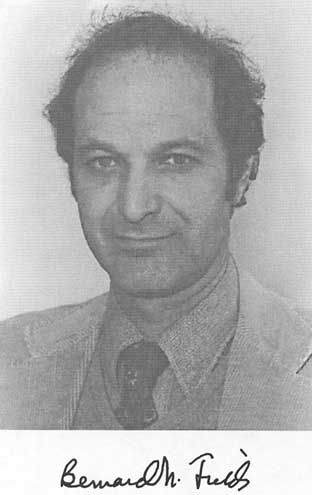
EDWARD SMITH DEEVEY, JR.
December 3, 1914-November 29, 1988
BY W. T. EDMONDSON
EDWARD S. DEEVEY, JR., converted the field of paleolimnology into a quantitative science that is a key to the immense treasure of information being cumulatively buried in the mud of lakes. The need for an absolute time scale put Deevey at the forefront of the use of 14C for dating lake sediments. Developing his central interest took him into related fields, each a major field in itself. He was a creative pioneer in several areas, including quantitative palynology, cycling of natural isotopes, biogeochemistry, population dynamics, systematics and ecology of freshwater zooplankton, and he promoted the use of life tables in ecology. In addition to research papers in professional journals and books, he published many reviews and commentaries in books and journals, and in various periodicals such as Scientific American (eight articles) and the New Yorker (one article).
Deevey was born in Albany, New York. He attended Albany High School and New York State College for Teachers before enrolling at Yale University, where he received a B.A. degree (summa cum laude) in botany in 1934. He then moved over to the zoology department where he found a congenial home. He finished a Ph.D. degree in 1938 at age twenty-three on “Typological Succession in Connecticut Lakes." He was the second student to do a Ph.D. with G.
Evelyn Hutchinson (NAS). He held a Sterling Postdoctoral Fellowship in 1938-39. In 1938 he married Georgiana Baxter, a fellow graduate student, with whom he published several papers and had three children, Ruth, Edward Brian, and David Kevin, and three grandchildren. Georgiana died in 1982. Ed then married Dian Hitchcock, a geochemist specializing in sulfur, an interest quite compatible with his own interest in sulfur isotopes in lakes (1963;1983,2).
During the summers of 1938 and 1939 Deevey was employed by the Connecticut State Board of Fisheries to make limnological surveys of lakes. His first academic job, at Rice Institute, was ended in 1943 by a three-year stint during World War II at Woods Hole Oceanographic Institution where, as a civilian, he did research in marine biology of interest to the U. S. Navy. Much of the work consisted of identifying and counting fouling organisms from buoys, data of considerable importance to mine warfare and ship operations. In 1946 he returned to Yale where he progressed from lecturer to full professor. In 1967 he took a one-year appointment at the National Science Foundation as both head of the Section on Environmental and Systematic Biology and acting director of Environmental Biology. At that time plans for the U.S. contribution to the International Biological Program were being completed. Deevey took particular pleasure in his association with the program, but did not regret the brevity of the appointment. He told me that it would be dangerous for him to stay, explaining that he had begun to feel like God, and he was afraid it would be addictive.
In 1968 he took on the Killam professorship at Dalhousie University. That was his shortest academic appointment. In 1971 he accepted a Distinguished Graduate Research Curatorship in Paleoecology and Professorship at the Florida State Museum of Natural History at the University of Florida
in Gainesville. He remained there, active until a heart attack following angioplasty ended his life at age seventy-five.
Through all these changes in venue Deevey's research followed a clear, continuous line of paleolimnology as a key to past global environmental conditions and human history. While he traveled widely from each of his home institutions he always took advantage of local conditions. At Rice and Woods Hole he collected information on hydroids that was useful later in his paleoecological interpretations (1950). His work in Florida and Guatemala was in karst regions heavily affected by human activity. In 1987 he went to the Peoples Republic of China to start similar work in the karst area of Yunnan Province with Chinese colleagues.
His publication record reflects more the development of his thinking, with side lines, than do his geographical movements. During his graduate work at Yale he made the first pollen stratigraphy for northeastern North America and made another for Tibet, using material collected by G. Evelyn Hutchinson on the Yale North India Expedition of 1932. They were the basis for his first two research papers, both aimed at climatic interpretation (1937;1939,1). These were soon followed in quick succession by a series of papers on modern conditions, neolimnology. One was a highly original multifactorial treatment of the regional limnology of Connecticut (1940). It used chemical and biological data gained in connection with his work for the Connecticut State Board of Fisheries and with existing geological information. Another was a major comparative study of the bottom fauna of thirty-six lakes, with ecological interpretation, equivalent in scope to a Ph.D. dissertation (1941). Still another, in collaboration with G. E. Hutchinson and A. Wollack, was a novel ecological interpretation of redox potentials at the mud-water interface suggesting that the species composition of the benthic insect population was af-
fected more by redox state of the trace metals in solution than by oxygen concentration (1939). All of these were relevant to the problems of paleological interpretation of sediment data that he was dealing with concurrently. In 1942 he published one of his major paleolimnological papers, perhaps the best both in breadth and depth, on the biostratonomy of Linsley Pond, based on his Ph.D. dissertation. The data consisted of chemical analyses of slices of several cores of lake mud and the results of intense visual examination and counting of pollen, diatoms, and of every fragment of invertebrate remains. The glory of the paper is in the richness of the data and the imaginative interpretation of changes in the lake and its surroundings. The most direct information about the ancient conditions within the lake was given by the remains of organisms, from organic molecules to visually recognizable fragments. The pollen content of the cores told about vegetation around the lake and led to interpretation of changes in climate, hydrology, and human influence. Remains of algae, crustaceans, and insects gave a species list of the community that he could interpret in terms of chemical and physical conditions in the lake. From all this he could read the 12,000-year history of changes of conditions and communities within the lake, changes in the climate above it, and some of the activities of human populations around it. The prevalence of Bosmina remains led him to study the systematics and biogeography of the genus.
Deevey became involved in population concepts while Georgiana was doing her Ph.D. study of the hematology of the black widow spider. Her records had data on the length of life of many individuals, males and females, giving a basis for a joint paper presenting a life table analysis, the first for an arachnid (1945). He is credited with introducing life table concepts into ecology with a paper that became a
citation classic (1947). He continued to publish on neolimnology, particularly after his move to Florida, but there were about twice as many papers on paleolimnology, paleontology, and paleoclimate. His remarkable 1949 review paper on Pleistocene biogeography was a major and influential synthesis of existing knowledge.
The time scale of the events recorded in the cores was only relative, which was strong motivation for him to seize on the work of Willard F. Libby (NAS) on the use of 14C for dating archaeological samples. With a grant from the Rockefeller Foundation he founded the Yale Geochronometric Laboratory in 1951 and was its director until 1962 (1984). The goal of a worldwide paleoclimatology dominated the approach of the laboratory. The first spectacular discoveries, beyond simply getting firm dates for various events that had been known only in a relative way, were coordinations of climatic changes on both sides of the Atlantic. This opened the way to getting a real global climatic history. Dating made possible the calculation of absolute rates of deposition of pollen, and Deevey helped Margaret B. Davis (NAS) with her development of the method.
During all his time at Yale Deevey was in close communication with G. Evelyn Hutchinson. Starting with the establishment of the Geochronometric Laboratory, Deevey worked and published increasingly with new collaborators. He was associated with Richard Foster Flint of the geology department, an authority on the Pleistocene in North America. Both were close to Libby and all four helped each other, making an "informal institute. . .really getting carbon 14 on its feet. Very largely, the extent and speed of the spread of its use was due to Ed Deevey" (Hutchinson, 1984). One of Deevey's most important contributions to the interpretation of carbon dates in lake sediments was the demonstration that the basis of a discrepancy in dates from some
lakes was a source of bicarbonate originating in ancient deposits of limestone (1954). He was assiduous in developing the laboratory (1984). He brought Minze Stuiver to it from Holland and Matsuo Tsukada from Japan. In 1969 the Laboratory closed, and both moved to the newly created Quaternary Research Center at the University of Washington in Seattle.
In 1964-65 Deevey spent a year in New Zealand. He took cores from several locations including Upper Pyramid Swamp, famous as a rich repository of bones of the extinct moa. He had already had vicarious experience with Pyramid Swamp paleolimnology nearly twenty years before when Robert Cushman Murphy provided him with cores taken in 1947. Deevey exploited them with a detailed analysis of the whole aquatic community as he had done in Linsley Pond many years earlier (1955,2). The sediments were highly unusual in the abundance of remains of ostracods. Two species coexisted for hundreds of years, varying reciprocally in abundance and population age structure. He was careful to point out that his studies had not explained the demise of the moa unless it was that the ostracods had nibbled them to death, an hypothesis he never published, although the moa was the basis of a Scientific American article in February 1954.
Deevey had a long-standing interest in the new world tropics, and made many trips to Mexico and Central America. His attention had spread from eastern North America to the Atlantic basin and then to the whole world. The climax of his research development was the project at Florida, Historical Ecology of the Maya, that melded paleolimnology, archaeology, and climatology to interpret the record of environmental consequences of prolonged human activity in a changing climate (1967;1979;1987,1).
It was characteristic of Deevey's way of thinking sometimes to compare the successional changes of a lake over
time with embryonic ontogeny, possibly an effect of his experience in a department headed by Ross Harrison (NAS). Deevey had a high respect for intellectual processes in the historical development of concepts. This occasionally led him to hang onto ideas past their time, most notably in a tendency to identify eutrophication with the resultant increase of production and population density in lakes. He was a bit too impressed by the beauty of the sigmoid curve and relied heavily on it in his 1942 paper on the development of Linsley Pond for an interpretation that was refuted by one of his students many years later (Livingstone, 1957).
Deevey participated responsibly in many professional activities. He was on five editorial boards and was a member of eleven diverse societies, serving various functions, including the presidency of two, the American Society of Limnology and Oceanography and the Ecological Society of America. While at Dalhousie he was a member of the Fisheries Research Board of Canada and the Canadian Committee on the International Biological Programme. He received much recognition. He held a Guggenheim Fellowship and a Fulbright Research Award in Denmark in 1953-54. In 196768 he had a National Science Foundation Senior Postdoctoral Fellowship and a Fulbright travel award to New Zealand. He was elected to the National Academy of Sciences in 1981. In 1982 he received the Eminent Ecologist Award from the Ecological Society of America. The Florida Board of Regents awarded him a commendation in 1983.
Deevey had considerable influence as a teacher through his graduate students. He had nine doctoral and seven masters students and more than twenty postdoctoral associates. Many of them have gone on to distinguished careers. Through his teaching and publications he developed a large, admiring following. A consistent theme in comments by students in recounting their experience with Deevey is his kindness.
Criticism was delivered gently and with respect (Livingstone, 1991). He taught by example. Some graduate students were surprised when they found that they were to work on their own research problem with his help, not on pieces of his problems. He was always accessible for questions, and sometimes the answer took hours, ". . . tucked in amongst related facts, personal anecdotes, and a joke now and then .... We often kidded that Ed had the uncanny ability to go right to the periphery of an issue," said one.
A measure of his appeal was given by a seventieth birthday symposium on "Topics in Historical Ecology" in 1984, which was attended by about 300 people, some crossing the Atlantic. G. Evelyn Hutchinson gave a laudatory review of his career (Hutchinson, 1984). He stressed Deevey's contribution to the use of radiocarbon for dating and characterized his speaking and writing style as "verbal play and deep understanding of highly important truths," referring to his 1970 presidential address to the Ecological Society of America, "In Defense of Mud" (1970). In it Deevey pointed out that while we can refer to "pure air" and "pure water” one never refers to "pure earth."
Indeed, Deevey had an admiration for words that expressed itself not only in the frequent use of unusual words, especially in his book reviews and popular writings, but also in puns and a seemingly limitless stock of limericks, some of his own composition. His pleasure in literature and the arts was expressed in his writings by an abundance of learned and obscure allusions. A combination of admiration for Thoreau and scientific interest took him on a pilgrimage to Walden Pond, where one day of sampling resulted in a scholarly paper on its present limnological condition, including a comparison with Thoreau's own observations of temperature and transparency (1942,2). The work was done on a holiday from his job with the Connecticut fisheries board.
His lecturing style was not his best feature. He had a quiet voice and hesitant manner, with a tendency to let sentences trail away. This was unfortunate, because he had many good things to say and some of his best humor was displayed in the dropped ends of sentences. His friends knew to sit in the front row at lectures. Deevey had a dry sense of humor, a capability of amusing and being amused, expressed in many ways. He appreciated similar traits in others. For instance, one of his colleagues at Yale established a principle that many of us recognize: Poulson's Principle states that "The day after you give a lecture on some topic an important publication on the same topic arrives in the mail." Deevey's corollary states "The next year when you try to get it from the library, it is at the bindery."
He also had a sense of value. Early one morning at a meeting, sitting on a stool in a restaurant to order breakfast, he noticed on the menu "One egg 50 cents. Second egg 25 cents". He asked for a second egg, and was served it, with a bill for 25 cents, accompanied by giggles from the waitress.
IN ADDITION TO PERSONAL knowledge from my many years of association with Ed Deevey, I received valuable information from Dian Hitchcock Deevey, Michael W. Binford, Mark Brenner, Margaret B. Davis, Daniel A. Livingstone, Minze Stuiver, and A. L. Washburn. Additional information came from tape-recorded remarks by Edward Deevey and G. Evelyn Hutchinson at the seventieth birthday celebration. The photograph was supplied by Brian Deevey.
REFERENCES
Davis, M. B. 1967. Pollen accumulation rates at Rogers Lake, Connecticut. Rev. Paleobot. Palynol. 2:210-30.
Deevey, E. S., Jr. 1984. "Festschrifts I have known, and other topics." Unpublished comments at the "Topics in Historical Ecology" symposium on December 7, 1984. Deevey's script and a tape of the talk are in the archives of the Academy.
Hutchinson, G. E. 1984. Unpublished comments about the career of Edward S. Deevey, Jr. at the "Topics in Historical Ecology" symposium on December 7, 1984. A tape is in the archives of the Academy.
Livingstone, D. A. 1957. On the sigmoid growth phase in the history of Linsley Pond. Am. J. Sci. 255:364-73.
Livingstone D. A. 1991. Edward Smith Deevey 1914-1988. Hydrobiologia 214:1-7.
SELECTED BIBLIOGRAPHY
1937
Pollen from interglacial beds in the Panggong Valley and its climatic interpretation. Am. J. Sci. 235:44-56.
1939
Studies of Connecticut lake sediments. I. A postglacial climatic chronology for southern New England. Am. J. Sci. 237:691-724.
With G. E. Hutchinson and A. Wollack. The oxidation-reduction potentials of lake waters and their ecological significance. Proc. Natl. Acad. Sci. U.S.A. 25:87-90.
1940
Limnological studies in Connecticut, V. A contribution to regional limnology. Am. J. Sci. 238:717-14.
1941
Limnological studies in Connecticut. VI. The quantity and composition of the bottom fauna of thirty-six Connecticut and New York lakes. Ecol. Monogr. 11:413-55.
1942
Studies on Connecticut lake sediments. III. The biostratonomy of Linsley Pond . Am. J. Sci. 240:233-64, 313-38.
A re-examination of Thoreau's "Walden." Q. Rev. Biol. 17:1-11.
1945
With G. B. Deevey. A life table for the black widow. Trans. Conn. Acad. Arts Sci. 36:115-34.
1947
Life tables for natural populations of animals. Q. Rev. Biol. 22:283-314. Reprinted in Readings in Population and Community Ecology, ed. W. E. Hazen. Philadelphia: Saunders.
1949
Biogeography of the Pleistocene. Part 1. Europe and North America. Bull. Geol. Soc. Am., 60:1315-1416.
1950
Hydroids from Louisiana and Texas, with remarks on the Pleistocene biogeography of the western Gulf of Mexico. Ecology 31:334-67.
1951
Late-glacial and postglacial pollen diagrams from Maine. Am. J. Sci. 249:117-207.
With R. F. Flint. Radiocarbon dating of late-Pleistocene events. Am. J. Sci. 249:257-300.
1952
Radiocarbon dating. Sci. Am. 186:24-28.
1954
With M. S. Gross, G. E. Hutchinson, and H. Kraybill. The natural C14 contents of materials from hard-water lakes. Proc. Natl. Acad. Sci. U.S.A. 40:285-88.
1955
The obliteration of the hypolimnion. Mem. Inst. Ital. Idrobiol. 8(Suppl.):938.
Paleolimnology of the Upper Swamp deposit, Pyramid Valley. Rec. Cant. Mus. 6:291-344.
1957
Limnologic studies in Middle America, with a chapter on Aztec limnology. Trans. Conn. Acad. Arts Sci. 39:213-328.
1960
With S. Oana. Carbon 13 in lake waters, and its possible bearing on paleolimnology. Am. J. Sci. 258-A:253-72.
1963
With N. Nakai and M. Stuiver. Fractionation of sulfur and carbon isotopes in a meromictic lake. Science 139:407-408.
1964
With M. Stuiver. Distribution of natural isotopes of carbon in Linsley Pond and other New England lakes. Limnol. Oceanogr. 9:1-11.
With M. B. Davis. Pollen accumulation rates: Estimates from lateglacial sediment of Rogers Lake. Science 145:1293-95.
1967
With M. Tsukada. Pollen analyses from four lakes in the southern Maya area of Guatemala and El Salvador. In Pleistocene Paleoecology, eds. E. Cushing and H. E. Wright, pp. 303-31. New Haven: Yale University Press.
1970
In defense of mud. Bull. Ecol. Soc. Am. 51:5-8.
1979
With D. S. Rice, P. M. Rice, H. H. Vaughan, M. Brenner, and M. S. Flannery. Mayan urbanism: Impact on a tropical karst environment. Science 206:298-306.
1983
With M. W. Binford and T. L. Crisman. Paleolimnology: A historical perspective on lacustrine ecosystems. Annu. Rev. Ecol. Syst. 14:255-86.
With D. R. Hitchcock. Coastal and inland natural H2S resources. In Acid Deposition, Causes and Effects: A State Assessment Model, ed. A. E. S. Green and W. H. Smith, pp 162-71. Gainesville: University of Florida Press.
1984
B. P. Zero plus 34:25 years of Radiocarbon. Radiocarbon 26:1-6.
1987
With M. W. Binford, M. Brenner, T. J. Whitmore, A. Huguera-Gundy, and B. Leyden. Ecosystems, paleoecology and human disturbance in tropical and subtropical America. Quat. Sci. Rev. 6(2):115-28.
Estimation of downward leakage from Florida lakes. Limnol. Oceanogr. 33:1308-20.