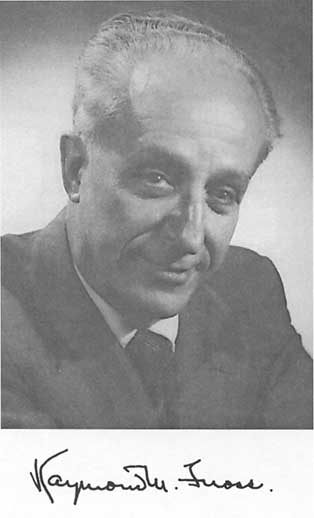
BERNARD N. FIELDS
March 24, 1938-January 31, 1995
BY SONDRA SCHLESINGER
BERNARD N. FIELDS was a recognized leader in the field of viral pathogenesis—an area of medicine that dates from the time of Jenner and his development of a vaccine against smallpox to the present day and the pandemic of HIV—and, as I'll mention, Bernie had something important to say about both of these viruses. Bernie was diagnosed with pancreatic cancer in the summer of 1992 and died of the disease on January 31, 1995, at the age of fifty-six. His illness and death were deeply felt not only by his family and friends but also by the many scientists who had been influenced by his contributions to the field of virology.
In particular, Bernie will be remembered for emphasizing the importance of basic research in the area of clinical medicine and in helping to define molecular parameters that affect disease. Bernie was known to have an optimistic view of life, and I don't want to dwell on the tragedy of his death but on the contributions he made during his life. Before I start with a brief history of Bernie's life and career I should tell my readers one of the reasons I am the writer of this memoir. In 1992, just a few months after Bernie had been diagnosed with pancreatic cancer, he agreed to my conducting an oral history with him. Much of what I have
written here comes from that source and permits me to quote him directly.
COLLEGE AND MEDICAL SCHOOL
It is interesting to reflect on the influences in one's life that directly or indirectly lead one to career choices and, for scientists, research directions. Some of these influences were very clear for Bernie, and some were more subtle. He recalled that he had always been interested in the nervous system and how things injure it and realized that this interest almost certainly derived from the knowledge that his younger brother developed epilepsy when he was very young. His brother is now fine and has been for many years, but those episodes of seizures left an indelible impression. Bernie felt that the connection between his research and his own history had a strong and important effect on him.
These interests in research and the nervous system were not apparent when Bernie was growing up in Brooklyn in the late 1940s and early 1950s. He was not a particularly good student, and, although his math scores on the standardized tests were high, his high school grades were not. He thought he was lucky to have been accepted at Brandeis University. The person who interviewed him said that, even though he didn't have the record to be accepted at Brandeis, something "felt right" and they would take a chance.
Bernie entered Brandeis University in 1954 at the age of sixteen. This was the time when Herbert Marcuse taught international Communism and the history of the Chinese Revolution, Irving Howe taught English, and Max Lerner taught American Civilization. Bernie described Brandeis as an extraordinarily interesting small school that was totally alive and spirited: "I had suddenly learned how to learn, and I began to trust myself and enjoy college." Although he loved biology and became a biology major and premedicine
concentrator, his reasons for choosing medicine as a career were rather vague. A major influence was the (Jewish) culture in which he grew up. His parents had lived through the insecurities of the Depression; their families were still in Europe during World War II and were killed in the Holocaust. A medical career track seemed to be a very secure future to choose.
Bernie attended NYU Medical School. He claimed that during the time he was in medical school he always planned to be a clinician and that he often felt cheated during the coursework because, as an example, instead of learning about infectious diseases in microbiology, he learned about bacteriophage. He did show some interest in research, however, as he spent the summers while in medical school doing research first at NYU and then at the Brookhaven National Laboratory.
After two years of intern and resident training at Beth Israel Hospital in Boston, Bernie took a fellowship in infectious diseases at Massachusetts General Hospital under the guidance of Mort Schwartz. That experience led him to seek further training in what he said was "the new discipline of molecular biology." He arranged to become a postdoctoral fellow with Bill Joklik at Albert Einstein College of Medicine in New York; but this was the 1960s, and before starting his training in molecular biology, Bernie had to do his military service, which he was able to do at the Communicable Disease Center (now the Centers for Disease Control and Prevention) in Atlanta.
It was during his stay in Atlanta that Bernie met his wife Ruth. Marriage to Ruth brought instant family: the three sons from Ruth's first marriage-John, Edward, and Michael-were adopted by Bernie. The family increased when Ruth and Bernie had two sons of their own-Daniel and Joshua.
RESEARCH CONTRIBUTIONS
Bernie's first publication came from his work at the CDC, but I suspect that if he were asked what his first scientific contributions were he would cite his work on reovirus and not those endeavors that included papers titled “The Isolation of Vesicular Stomatitis Virus from Mosquitoes in New Mexico" and "Pahayokee and Shark River, Two New Arboviruses Related to Patois and Zegla from the Florida Everglades."1 His two years of training at the CDC were important. That experience provided Bernie with a broad view of the biology of viruses, and this served him in good stead as his research began to explore pathogenesis at a molecular level.
In 1976 Bernie moved to the Albert Einstein College of Medicine, where he began postdoctoral training with Bill Joklik. Joklik was well known for his work on vaccinia virus (perhaps this is one reason for Bernie's later interest in the smallpox virus), but when Bernie came to the lab he chose to work on reovirus. Although reoviruses are found in humans, they are not associated with any human diseases, as one can understand from the name: reo = respiratory enteric orphan. This virus was considered an orphan because, although humans were often found to be infected with it, it did not cause disease. In spite of—or perhaps because of—this, reovirus was an attractive entity to study in the laboratory.
Reoviruses are relatively easy to grow in the laboratory, and it is important to remember that at this time working with cultured cells was just changing from something of an art form to a controlled and reproducible science. The tools of molecular biology were well enough advanced so that it was possible to study the structure and replication of viruses such as reovirus, and already there was important in-
formation available about this virus. The genome of reoviruses was known to be composed of RNA, but it was different from other RNA-containing viruses: it was double-stranded RNA. Furthermore, it appeared that the genome was not a single molecule of RNA, as, for example, is the genome of poliovirus. Instead, it was segmented-a characteristic that had previously been described only for the genome of influenza virus.
It is the segmented nature of the genome of reovirus that permitted Bernie to exploit reoviruses in his genetic studies and later in his work on pathogenesis. Originally he was interested in obtaining mutants of reovirus and attempting to correlate genetic mutations with specific phenotypes. In the present day of recombinant DNA technology, the ability to generate mutations and identify the specific changes in both the gene and protein of a particular virus doesn't represent quite the challenge it did in the late 1960s and early 1970s. Bernie first isolated and characterized mutants that were temperature sensitive (they could grow at a temperature of 31°C but not at 39°C). Cells infected with two different temperature-sensitive mutants of reovirus could recombine to produce viruses that were no longer temperature sensitive if the mutations were in different genes. This type of recombination represented a physical reassortment of the double-strand RNA segments. Reovirus particles contain ten different segments of RNA. Each segment codes for a particular reovirus protein. In the assembly of new virus, segments from two different reoviruses can reassort, so that in cells infected with two different reoviruses the newly synthesized particles will be genetic hybrids containing some combination of segments from each parent.
Bernie was aware that different strains of reovirus could be distinguished by differences in their ability to cause disease in mice. Reovirus type 3 will cause acute encephalitis
when injected directly into the brain of a newborn and is considerably more neurovirulent that reovirus types 1 and 2, which produce a clinically silent infection of ependyma in newborn mice.
Now directing his own lab, Bernie set out to determine whether these different phenotypes could be associated with a single gene and thus a single protein of reovirus. The tool that made this possible was gel electrophoresis: an RNA segment derived from one strain could be distinguished from its homologue in a different strain by differences in their mobilities. These first studies showed that when the gene coding for the virus protein sigma 1 came from the type 3 virus, the virus was neurovirulent. The sigma 1 protein is now known to be the protein responsible for attachment of the virus to the cell. Some of Bernie's more recent work focused on the structure of this protein.
Bernie and his colleagues, first at Albert Einstein and then at Harvard, continued to analyze the genetics of pathogenesis. Their work included identifying the gene responsible for the ability of the virus to grow well in the intestine and the gene most associated with the spread of the virus in the bloodstream. In addition to what were becoming almost classical pathogenic studies, Bernie's lab was exploring other directions. The role of the immune response is clearly a crucial factor in infection, and in the past few years work in the lab has included studies on the neutralization of reovirus by antibodies and T cell responses to the virus. At the same time, other members of the lab were beginning to look more closely at the structure of the virus and the viral proteins. These directions of research are continuing, and Bernie's contributions to the important initial work have provided a valuable framework for the future.
TEACHING AND OTHER SCIENTIFIC CONTRIBUTIONS
Bernie moved from the Albert Einstein College of Medicine to Harvard Medical School in 1975 and served as chairman of its Department of Microbiology and Molecular Genetics from 1982 until his death. His influence on the outstanding scientific reputation of that department is evident. An even more important contribution, however, was his concern for and training of young scientists. He summed his philosophy this way:
One of the first things that needs to be really emphasized is that students and postdocs have been absolutely central in the most exciting discoveries that I feel we've made. They are the people who have done the experiments. I have been extremely fortunate in having a large number of outstanding students and postdocs. What do I do with a student when they come to my lab? Here is where intuition is not just scientific; it's got to be personal because people don't realize that running a laboratory is a very interpersonal process. One of the things I try to learn from the student is what are they like. How can you encourage them to find their own internal scientific voice? Because it seems to me that the students, who at any level often make the most profound discoveries, are talking from a very unique perspective, which is often their own metaphors, their own insights. The first thing that I like to find out is who the student is, where are they coming from, what they are excited about. And if you get the student to really dig in, choose a project, understand it, and come to grips with it, then I think you have done the most important initial steps. Later, you want to help them over the times that experiments don't work and you want to make sure they understand that if an experiment doesn't work, it's an experiment, it's not them. Separating and personalizing a failure at the bench from personal failure is a critical later point. No experiment works all the time and students don't know that; they haven't had enough successes. This problem of personalizing is often true for postdocs, and it's even true for faculty. The role of teacher and mentor has probably been one of the most satisfying aspects of my scientific career.2
I mentioned earlier that Bernie had an interest in both the smallpox virus and HIV. One of the triumphs of modern medicine has been the elimination of smallpox as a
disease. For the past few years there has been a debate about whether the virus causing smallpox should be eradicated as well. The arguments over this issue have been more intense than most virologists might have expected. It is interesting to note that Bernie was against its loss to the world. He was very much influenced by the studies demonstrating how complex viruses are and how many of them have evolved mechanisms by which they can evade the immune system. One of the areas of pathogenesis that is just beginning to be explored is the realization that mutations in some genes of a virus may not have a phenotype in cultured cells, but that doesn't mean that the genes are nonessential in an organism. There are genes that produce a protein that can interact with a major histocompatibility protein and thereby affect the immune response. The complexity of the smallpox genome almost certainly means that there will be genes in this virus that have important—perhaps unique—functions in causing disease. This was Bernie's argument, which has many supporters, but there are also many scientists who strongly believe that it is better to rid the world of this hazard than to risk the possibility that it could somehow escape into the environment. Before leaving the subject of smallpox, it is worth mentioning that in 1721 smallpox wiped out half the population of Boston; this virus was truly devastating.
HIV illustrates how complicated viruses can be. It has humbled virologists who thought that they knew enough about viruses to keep them under control. In May 1994, just a few months before his disease again became apparent, Bernie wrote an editorial in Nature titled "AIDS: Time to Turn to Basic Science."3 He argued that it was essential that we reevaluate the approaches initially taken in the early years of AIDS research. He felt that there were still so many
gaps in our fundamental knowledge that it was critical to broaden the definition of AIDS-related research.
FAMILY
Family was very important to Bernie, and he was very proud of his family's accomplishments. When the family moved to Boston, Ruth began to pursue an interest in art, particularly painting. She is now a well-established artist and has had numerous exhibits. Her work can be seen in galleries in the Boston area as well as in the homes of some of their friends. Bernie and Ruth's interests and careers were complementary. Ruth sometimes accompanied Bernie to conferences, especially those held in interesting locations, and enjoyed the interactions with Bernie's colleagues and his former students and postdocs. Traveling also gave them time to look at art and for Bernie to learn more about Ruth's perspectives.
CODA
In ending this memoir I want to quote from Bernie's response when I asked him about his illness.
Sure, I'm happy to say a little about my illness. I developed some symptoms about nine months ago of malabsorption that eventually led to a diagnosis of cancer of the pancreas. That diagnosis was made in July of 1992 and was obviously upsetting. The word upsetting does not describe my feelings, which were very powerful. My diagnosis was made at the time that I was planning to go to ASV [American Society for Virology] to host two dinners, to give a talk, and be with friends. Thus, my scientific community knew about my illness rather earlier than they might have. It was a very difficult experience because suddenly whatever future we all think we have was removed from me since cancer of the pancreas has a rather grim prognosis. In my own personal case, I was fortunate to go to a physician at the Dana Farber—Bob Mayer—who immediately changed my perspective and pointed out that I was a statistic of one, and even though I know the statistics of cancer of the pancreas, he said let's see what happens with you.
I started chemotherapy in the summer of 1992 and started trying to deal with my feelings about the disease. It was a process that I had to go through that involved intense pain, anxiety, and the need to find comfort. My wife and the rest of my family were very important and critical in the process. I started to meditate, which was extremely helpful to me in finding comfort. The amazing thing is that I am still alive, and we are now talking eight, nine months after the onset of my illness. I can honestly say on December 8, 1992, that after a horrendous beginning of the summer, I've had a nice fall. For whatever multiplicity of reasons, the tumor has not progressed the way pancreatic cancer usually does. I've had chemotherapy. I may have been fortunate in having a brisk immune response at the outset of the disease—the pancreatitis it started with. And for those or whatever other reasons that I can't fully account for, the disease regressed. Even though surgery seemed not to be feasible in July, I will be undergoing surgery next week. I can only say that the mind is a rather extraordinary organ. I would never have thought five, six months ago that I would have had a productive and fun fall. I also wouldn't have thought that I would have been here and would have had a future. Now I am gently taking steps that involve projecting a little longer into the future since it seems that my tumor has been indolent enough to even regress. . . . We'll see what the next step is.
But regardless, there is an interesting literature about cancer that exists and is quite helpful. I think the most important thing is to say I have had a quite remarkably wonderful fall, in spite of knowing that I have this tumor. I guess I should thank the tumor and accept the fact that it's very important never to really give up hope when you have a disease like cancer because you don't really know the future. It's very easy to talk yourself into giving up. Also, be lucky in your doctor, be lucky in your friends and spouse, and hang in there because there are no absolute numbers that relate to you as an individual. These thoughts have been very helpful to me, and we'll see what happens. I think that's probably about all I can say, other than I wish myself luck next week as I have some pretty big surgery. I hope that I continue to be luckier than I thought I would be.
In many respects Bernie was lucky. He underwent surgery and chemotherapy in the winter of 1993 and after recovering was in relatively good health for more than a
year. Most importantly, there was enough time for his family, friends, and colleagues to show him how much they cared.
NOTES
-
1.
W. D. Sudia, B. N. Fields, and C. H. Calisher. Am. J. Epidemiol. 86(1965):398-602; also B. N. Fields, B. E. Henderson, P. H. Coleman, and T. H. Work. Am. J. Epidemiol. 89(1969):222-26.
-
2.
Bernard N. Fields, an oral history. This is an edited quote from the interview conducted by me on December 8, 1992.
-
3.
B. N. Fields. Nature 369(1994):95-96.
SELECTED BIBLIOGRAPHY
1969
With W. K. Joklik. Isolation and preliminary genetic and biochemical characterization of temperature-sensitive mutants of reovirus. Virology 37:335-42.
1971
Temperature-sensitive mutants of reovirus type 3-features of genetic recombination. Virology 46:142-48.
1976
With R. K. Cross. Use of an aberrant polypeptide as a marker in three-factor crosses: Further evidence for independent reassortment as the mechanism of recombination between temperature-sensitive mutants of reovirus type III. Virology 74:345-62.
1977
With R. F. Ramig and R. M. White. Suppression of temperature sensitive phenotype of a mutant of reovirus type 3. Science 195:406-407.
With H. L. Weiner. Neutralization of reovirus: The gene responsible for the neutralization antigen. J. Exp. Med. 146:1303-10.
With H. L. Weiner and others. Molecular basis of reovirus virulence: The role of the S1 gene. Proc. Natl. Acad. Sci. U.S.A. 74:5744-48.
1979
With R. F. Ramig. Revertants of temperature-sensitive mutants of reovirus: Evidence for frequent extragenic suppressions. Virology 82:155-67.
1980
With H. L. Weiner and M. L. Powers. Absolute linkage of virulence with central nervous system cell tropism of reoviruses to viral hemagglutinin . J. Infect. Dis. 141:609-16.
1981
With A. H. Sharpe. Reovirus inhibition of cellular DNA synthesis: The role of the S1 gene. J. Virol. 38:389-92.
With J. Wolf and others. Intestinal M cells: A pathway for entry of reovirus into the host. Science 212:471-72.
With R. Ahmed and others. Role of the host cell in persistent viral infection: Coevolution of L cells and reovirus during persistent infection. Cell 25:325-32.
1982
With R. Ahmed. Role of the S4 gene in the establishment of persistent reovirus in L cells. Cell 38:605-12.
With D. R. Spriggs. Attenuated reovirus type 3 strains generated by selection of hemagglutinin antigenic variants. Nature 297:68-70.
1983
With D. R. Spriggs and R. Bronson. Hemagglutinin variants of reovirus type 3 have altered central nervous system tropism. Science 220:505-507.
With W. M. Canning. Ammonium chloride prevents lytic growth of reovirus and helps to establish persistent infection in mouse L cells. Science 219:987-88.
1985
With R. Bassel-Duby and others. Sequence of reovirus haemagglutinin predicts a coiled-coil structure. Nature 315:421-23.
1986
With M. Keroack. Viral shedding and transmission between hosts determined by reovirus L2 gene. Science 232:1635-38.
With K. L. Tyler and D. A. McPhee. Distinct pathways of viral spread in the host determined by reovirus S1 gene segment. Science 233:770-74.
1989
With K. L. Tyler and others. Antibody inhibits defined stages in the pathogenesis of reovirus serotype 3 infection of the central nervous system. J. Exp. Med. 170:887-900.
With B. Sherry. The reovirus M1 gene, encoding a viral core pro-
tein, is associated with the novel myocarditic phenotype of a reovirus variant. J. Virol. 63:4850-56.
1991
With L. A. Morrison and R. L. Sidman. Direct spread of reovirus from the intestinal lumen to the CNS via vagal autonomic nerve fibers. Proc. Natl. Acad. Sci. U.S.A. 88:3852-56.
With M. L. Nibert and D. B. Furlong. Distinct forms of reoviruses and their roles during replication in cells and host. J. Clin. Invest. 88:727-34.
1993
With M. T. Tosteson and M. L. Nibert. Ion channels induced in lipid bylayers by subvirion particles of the nonenveloped mammalian reoviruses. Proc. Natl. Acad. Sci. U.S.A. 90:10549-52.
1994
With H. M. Amerongen and others. Proteolytic processing of reovirus is required for adherence to intestinal M cells. J. Virol. 68:8428-32.
| This page in the original is blank. |