
10 The Evolution of the Human Life Course
Hillard Kaplan
Introduction
This paper presents a theory of evolution of the human life course. Compared to other primates and mammals, there are at least three distinctive characteristics of human life histories: (1) an exceptionally long life span, (2) an extended period of juvenile dependence, and (3) support of reproduction by older postreproductive individuals. Because most hominid evolution occurred in the context of a hunting and gathering life style and because all well-studied hunting and gathering groups exhibit those three characteristics, the theory considers the aspects of the traditional human way of life that might account for their evolution. It proposes that those three features of the human life course are interrelated outcomes of a feeding strategy emphasizing nutrient-dense, difficult-to-acquire foods. The logic underlying this proposal is that effective adult foraging requires an extended developmental period during which production at young ages is sacrificed for increased productivity later in life. The returns to investment in development depend positively on adult survival rates, favoring increased investment in mortality reduction. An extended postreproductive, yet productive, period supports both earlier onset of reproduction by next-generation individuals and the ability to provision multiple dependent young at different stages of development. A postreproductive period depends upon menopause. Menopause may have evolved to facilitate postreproductive investment in offspring. Alternatively, it may be the result of other selective forces, such as the costs of maintaining viable oocytes for many decades. Even if menopause is the result of other selective forces, the theory may still account for the extension of life span beyond the reproductive period.
The paper begins with a basic description of available data on longevity in traditional hunting and gathering societies and the age profile of food production and consumption. These data are compared to information available on nonhuman primates with particular emphasis on chimpanzees, our closest living relatives.1 This discussion is followed by consideration of the comparative feeding and reproductive ecologies of humans and nonhuman primates. A model is then presented to outline the major tradeoffs involved in life-history evolution. The model shows that investments in foraging efficiency and mortality reduction coevolve and affect the age pattern of investments in reproduction. Several different approaches to the evolution of menopause are then considered. The paper concludes with a discussion of the implications of the theory for historical, current, and future trends in human development and longevity.
Human And Nonhuman Primate Life Histories: Fundamental Characteristics
Mortality and Longevity
Survival curves for four traditional groups and chimpanzees are presented in Figure 10-1. The Aché are a hunting and gathering group, living in the subtropical forests of eastern Paraguay, who made first peaceful contact with outsiders in the 1970s and now practice a mixed economy of hunting, gathering, horticulture, and wage labor (see Hill and Hurtado, 1996, for a detailed description of their way of life and demography as hunter-gatherers; for further information on diet and activities, see Hawkes et al., 1982; Hawkes et al., 1987; Hill and Kaplan, 1988a, b; Hill and Hawkes, 1983; Hill et al., 1985; Kaplan and Hill, 1985; Hurtado et al., 1985). The Hiwi live in the Venezuelan savanna and rely primarily on hunting and gathering roots for their subsistence (for ethnographic information on the Hiwi, see Hurtado and Hill, 1987, 1990, 1992; Hurtado et al., 1992). The !Kung were hunter-gatherers with various degrees of contact and economic relationships with other groups until the 1970s and now practice a mixed economy of hunting, gathering, farming, and wage labor (for ethnographic information on the !Kung, see Blurton Jones, 1986, 1987; Blurton Jones and Konner, 1976; Blurton Jones et al., 1994a, b; Blurton Jones et al., 1989; Draper, 1975, 1976; Draper and Cashdan, 1988; Harpending and Wandsnider, 1982; Howell, 1979; Konner and Shostak, 1987; Konner and Worthman, 1980; Lee, 1979, 1984, 1985; Lee and DeVore, 1976; Schrire, 1980; Wiessner, 1982a, b; Wilmsen, 1978, 1989; Yellen, 1976). The Yanomamo practice a mixed economy of hunting, gathering and horticulture; many Yanomamo groups have yet to make peaceful contact with outsiders (Chagnon, 1974, 1983, 1988; Hames, 1983, 1992;
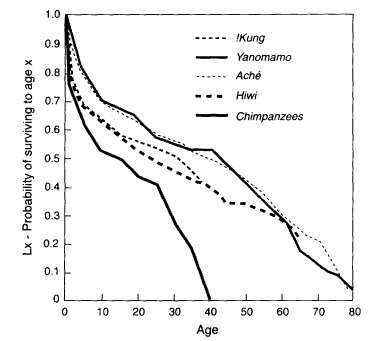
Figure 10-1
Age-specific probabilities of survival among human foragers and chimpanzees. SOURCE: !Kung (Howell, 1979); Yanomamo (Melancon. 1982); Aché (Hill and Hurtado, 1996); Hiwi (Hill and Hurtado, unpublished data from Kim Hill); chimpanzees (Goodall, 1986, and Courtenay and Santow, 1989).
Melancon, 1982). The chimpanzees are those living in the Gombe nature reserve (for dietary and life-historical information on chimpanzees at Gombe, see Courtenay and Santow, 1989; Goodall, 1986; Silk, 1978, 1979; Teleki, 1973; Wrangham, 1974, 1977; Wrangham and Smuts, 1980). Although sample size and methods of data collection vary among the four human groups, the survival curves show remarkable convergence, Although infant mortality rates vary, with Hiwi being the highest and Yanomamo the lowest, adult mortality rates between the ages of 20 and 45 are almost identical, about 1.5 percent per year. For that reason the survival curves are parallel to one another during the adult period. Chimpanzee survival curves, however, diverge dramatically from the human curves, due to a quite distinct adult mortality profile. For example, while both Hiwi and chimpanzees have about equal probability of reaching age 15, the conditional probability of reaching age 45, having reached age 15, is near zero for chimpanzees in the wild and about 75 percent among the Hiwi (see also Lancaster and King, 1992, for supporting data from other groups). Adult mortality rates among chimpanzees over age 25, living at the Gombe reserve, are about 7.9
percent per year (Goodall, 1986; Courtenay and Santow, 1989), about five times as high as among the four traditional human societies. Even gorillas, with much larger body sizes, do not live much longer than chimpanzees and have an adult mortality rate of about 5 percent per year (Harcourt and Fossey, 1981).
The most reliable estimates of adult mortality rates available for a pre-contact hunting and gathering group are derived from Aché research (Hill and Hurtado, 1996), because of the research focus on producing accurate measures of age and accounting for all adults that lived during the twentieth century. Figure 10-2 shows the age-specific mortality rate of Aché males and females. Adult mortality rates remain low and do not rise significantly until the seventh decade of life, where the rate climbs to 5 percent per year and reaches 15 percent per year by age 75. It should be mentioned that the data displayed in Figure 10-2 deviate somewhat from the age-specific mortality profile predicted by the Gompertz model (see Finch et al., 1990; Finch and Pike, 1996). According to that model, which is quite robust in predicting the mortality profiles of many animal populations (see references cited in Finch et al., 1990), human adult mortality rates are expected to double about every 8 years (ibid: 903). The slow rate of increase in mortality during early and middle adulthood estimated for the Aché may be due to small sample size. Alternatively, it may be that age-related increases in mor
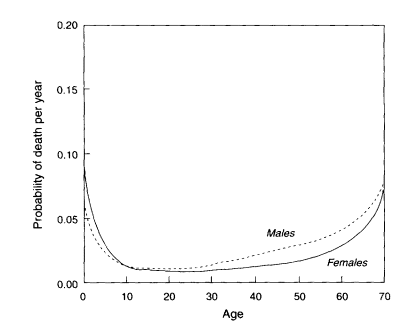
Figure 10-2
Aché age-specific probability of death, smoothed with logistic regression.
SOURCE: Hill and Hurtado (1996: Fig. 6.2). Copyright 1996 by Water de Gruyter, Inc., New York.
tality due to physical deterioration are swamped by causes of death due to accidents, snake bite, warfare, and predation by jaguars that impact on all adult age classes equally and may even occur more frequently in young adults (see Hill and Hurtado, 1996: table 5.1).
In any case, once a child reaches adult age, the prospect of surviving to a reasonably old age is high. For example, a woman who reaches the average age of first reproduction (age 19) has about a 50 percent chance of reaching age 65.2 This suggests that living well past the age of last reproduction is a common experience for human females. This survival probability distinguishes our species from almost all other mammals, with the notable exception of some whales (discussed by Austad, in this volume) and contrasts markedly with chimpanzees.
Feeding Ecology and the Life Cycle of Productivity
Although there is a great deal of variability in the diets of both hunting and gathering groups and nonhuman primate species, there appears to be a fundamental difference in the age schedules of production and consumption between humans and their primate relatives. Human children remain dependent on their parents until well into their teen years and sometimes until they are over 20 years old. Data collected with !Kung San also indicate that children under age 15 acquire very little food (Draper, 1976:209-213; Draper and Cashdan, 1988; Lee, 1979:236), spending less than 3 minutes per hour engaged in productive labor. Hill and Hurtado's data on Hiwi children (Kaplan, Hill, Hurtado, and Lancaster. unpublished work) show that boys do not produce as much food as they consume until about age 18 and girls do not do so until they are postreproductive.
Detailed information on the foraging behavior of children is also available for the Hadza, hunter-gatherers living in a mixed savanna woodland habitat in the Eastern Rift Valley of Tanzania (see Woodburn, 1968, 1972. 1979, for general ethnographic information; for data on food production by age, see Blurton Jones, 1993; Blurton Jones et al., in press; Blurton Jones et al., 1994a. b; Hawkes et al., 1989, 1991, 1995, 1996). In the above series of papers by Blurton Jones. Hawkes, and O'Connell, the authors report that Hadza children can be very productive, especially when compared to !Kung children. Nevertheless, Hadza girls do not produce as much as they consume until about 15 years of age. and boys produce about half as much as they consume through 18 years of age (Blurton Jones et al., in press: figure 5).
In contrast with the low productivity of children in hunter-gathering groups, postreproductive and middle-aged people, especially women, appear to work very hard and produce much food. Among the Hadza, postreproductive women
spend 22-52 percent more time in food acquisition than reproductive-age women (depending on the season), and 90-275 percent more time than unmarried girls (Hawkes et al., 1989: figure 2 and table 1). Among the !Kung, while work effort appears to decline with age during the adult years, people over 60 work almost as many hours as younger adults (Lee, 1979: table 9.5).
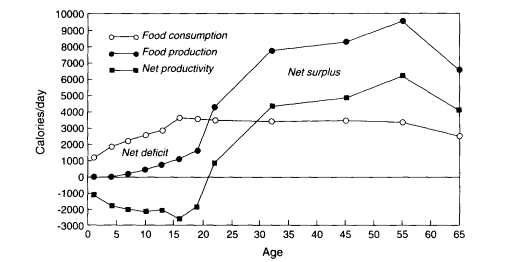
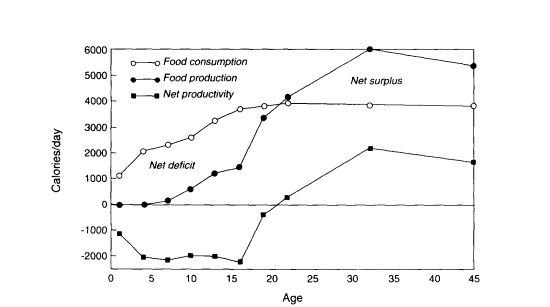
Quantitative data on food production and food consumption through the life course (measured in units of calories per day) are available for three different traditional groups: Piro, Machiguenga and Aché (see Figures 10-3a - 10-3c: and Kaplan. 1994, for details). The Piro and Machiguenga practice a mixed economy of swidden horticulture, hunting, fishing, and gathering. There is considerable similarity in the age profiles of the three groups. First, children produce much less than they consume, and production does not exceed consumption until 18-20 years of age. Childhood and even adolescence are characterized by very low rates of food production. Second, production exceeds consumption well past the reproductive period into old age. This is particularly evident among the Piro and Machiguenga. Unfortunately, sample sizes for older Aché men and women are extremely low, due to high rates of death associated with disease at first contact. However, data on Aché men show that they produce about twice as much as they consume in their fifties, but in their sixties they produce about a third of what they consume.
This pattern contrasts markedly with age profiles of production among non
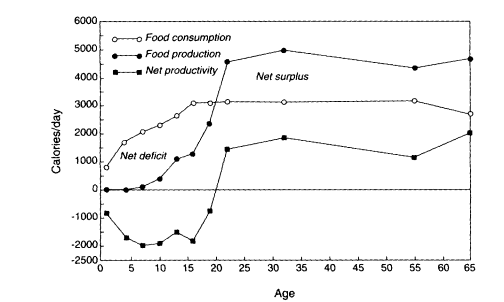
Figure 10-3a
Machiguenga food production and consumption by age: both sexes combined.
human primates. Virtually all nonhuman primates follow the standard mammalian pattern. The period of infancy is one of complete nutritional dependence on the mother. The second, juvenile period, from weaning to the onset of reproduction, is characterized by almost exclusive self-feeding. There is no significant period of nonlactational parental provisioning among nonhuman primates. The third, adult period begins with reproduction but includes no significant period of postreproductive productivity before ending in death. These differences between humans and nonhuman primates are summarized in Table 10-1.
My proposal is that these differences are linked to dietary differences. A close examination of the feeding ecology of human hunter-gatherers. when compared to that of nonhuman primates, yields some revealing patterns. The major difference between human and nonhuman primate diets is in the importance of nutrient-dense, difficult-to-acquire (i.e., skill- and/or strength-intensive) food resources (see Figure 10-4). While the diets of nonhuman primates vary considerably by species and by local ecology, most feed, to various degrees, on leaves, fruits, and insects, supplemented in some cases by small amounts of hunted meat and tree gums (Oates, 1987; Terborgh. 1983). Humans, in contrast, rarely feed on leaves. When people do consume leaves, it is as a low-calorie supplement to calorie-dense foods (David Tracer, personal communication) as a source of micronutrients. Humans also avoid most fruits consumed by primates living in the same area. When people eat fruits, these fruits tend to be large and ripe, whereas nonhuman primates feed on a much larger array of small and unripe fruits as well. The bulk of the food acquired by human foragers is derived from difficult-to-extract, nutrient-dense plant foods and hunted game.
Calorically, the most important plant foods for humans are roots, seeds, palm fiber, and nuts. Among the Hadza, roots are the most important plant food. The \\ekwa roots (Vigna frutescens), which provide the bulk of the carbohydrate calories in the diet, are found deep in rocky soil, from which ''extraction is a lengthy subterranean jigsaw puzzle, sometimes involving the removal of heavy boulders and encounters with scorpions" (Blurton Jones, 1993). Although Hadza researchers do not report actual amounts of roots acquired as a function of age, they do report return rates per hour of work for \\ekwa root digging. Until about age 10, children acquire less than 200 kcal/hr, and then returns increase steadily by about 125 kcal/hr/yr until the age of 18 when they acquire about 1 100 kcal/hr
TABLE 10-1 Life History Stages
|
Mammals/Primates |
Traditional Humans |
|
Infancy |
Infancy |
|
Independent prereproductive. juvenile |
Dependent, prereproductive juvenile |
|
Adult, reproductive |
Adult, reproductive Postreproductive, productive Frail elderly (very short until recently) |
|
Death |
Death |
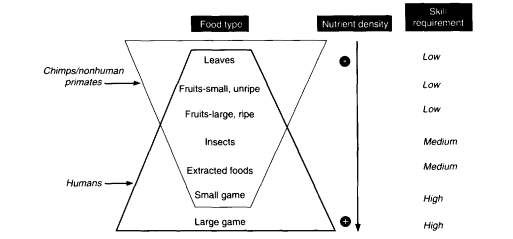
Figure 10-4
The feeding ecology of humans and other primates.
of work (Blurton Jones et al., in press: figure 2). Reproductive-aged and postreproductive women acquire 1500 and 1670 Kcal/hr, respectively. A similar pattern is found among Hiwi hunter-gatherers, for whom roots are also the most important plant food.
Among some !Kung groups, mongongo nuts are reported to be the plant food staple (Lee, 1979). While the nuts are easy to collect, several factors appear to limit the productivity of children (see Blurton Jones et al., 1989, 1994a,b for an in-depth analysis). First, mongongo nut groves are often found quite distant from water sources (about 10 km) where camps are located (Blurton Jones et al., 1994a,b). This requires a great deal of endurance and the ability to walk far without much water (ibid.). In addition, extraction of nut meat requires skill. According to experimental data on nut-cracking rates (Blurton Jones et al., 1994a), most children under the age of 9 are unable to crack the nuts safely. Children aged 9-13 cracked 120 nuts per hour, teens aged 14-17 cracked 241 nuts per hour. and adults cracked 314 nuts per hour. Bock, who worked with villagers in the Okavango delta who practiced a mixed economy of hunting, fishing, gathering, horticulture, and animal husbandry, found that mongongo cracking rates peak at age 35 for women (Bock, 1995).
The most important plant food among the Aché is palm starch. Extraction of palm starch requires felling the tree, cutting a vertical window down the length of the trunk to expose the pulp, and then pounding the pulp into mush. This is a difficult task involving both strength and skill, and women do not reach peak productivity at palm-fiber extraction until age 35 (A.M. Hurtado. unpublished data). Again, Aché girls less than 15 years of age rarely pound palm fiber.
Seeds, an important plant food staple in Australia and the North American
Great Basin (e.g., O'Connell and Hawkes, 1981; O'Connell et al., 1983; Steward, 1938), also require much processing to extract the nutrients (Simms, 1984).
Meat is also an important part of human diets. Whereas meat accounts for no more than 5 percent of total caloric consumption (and usually much less) in any nonhuman primate, hunted and fished foods account for between 15 and 100 percent of total calories consumed among human foragers (Kelly, 1995: table 103.1). Although there is no comparative, quantitative database on the factors affecting hunting ability in humans, my own observations hunting with four South American groups suggest that hunting, as practiced by those peoples, is a very skill-intensive activity. Because people are slow runners, they rely on knowledge of prey behavior to find and kill prey. Conversations with men among the Aché, Piro, Machiguenga, and Yora foragers suggest to me that they have detailed knowledge of the reproductive, parenting, grouping, predator avoidance, and communication patterns of each prey species, and this takes decades to learn. For example, in a test with wildlife biologists, an Aché man could identify the vocalizations of every bird species known to inhabit his region and claimed to know many more, which the biologists have yet to identify (Kim Hill, personal communication). After most hunts, details of the hunt and the prey's behavior are discussed and often recounted again in camp. Even the stomach and intestinal contents of the animal are examined to determine its recent diet for future reference. In addition, knowledge of predator behavior may also be very important. Villagers in Botswana reported to me that one reason why teens hunt little is because they are at risk of predation themselves. According to some informants, the ability to detect potential predators such as lions, hyenas, and leopards and then escape them requires years to learn. It should be mentioned, however, that available empirical data do not allow us to assess the relative impacts of skill, knowledge, strength, endurance, and ambition on hunting returns. Those impacts may vary across ecologies and individuals.
Nevertheless, the age patterning of hunting success is striking. Figure 10-5 shows the age distribution of hunted calories acquired per day among the Aché. Fifteen- to seventeen-year-old boys acquired 440 calories of meat per day, 18- to 20-year-olds acquired 1,530 calories, and 21- to 24-year-olds acquired 3,450 calories, whereas 25- to 50 year olds acquired about 7,000 calories of meat per day. The fourfold increase between 18 and 25 years of age exists in spite of the fact that by age 18, young men are hunting about as much as fully adult men. This pattern is not unique to the Aché. From independent samples acquired in different !Kung camps, both Lee (1979) and Draper (1976) report that men under age 25 acquired very little meat and were considered incompetent hunters. Among the Hadza, although boys spend much time pursuing game, their returns are quite low. Blurton Jones et al. (1989) report that during 31 observation days the total meat production for Hadza boys was about 2 kg, mostly composed of small-to-medium-sized birds. This is less than the daily production of a single adult Hadza man, who acquires a mean of 4.6 kg per day (Hawkes et al., 1991).
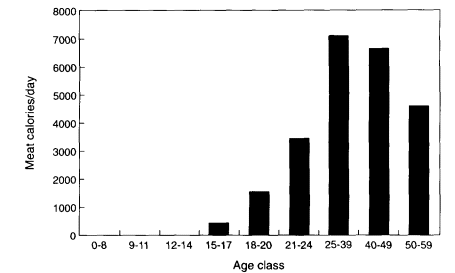
Figure 10-5
Aché male hunting acquisition.
Fruit collection, in contrast, is the least skill-intensive activity in human foraging. Fruits are also the most important food acquired by children. In fact, most variability in children's food acquisition, both within and among hunting and gathering societies, appears to be due to access to fruits. In an insightful series of papers comparing !Kung and Hadza foraging (Blurton Jones, 1993; Blurton Jones et al., 1989, 1994a, b, and in press), the authors show that foraging return rates and especially access to fruits close to camp sites are the critical determinant of the higher food acquisition by Hadza children. Not only are there more fruits close to Hadza camps than close to !Kung camps but also the environment near !Kung camps is more dangerous for children due to poor long-range visibility (ibid.). In addition, Hadza children acquire more food and spend more time foraging during seasons when fruits are abundant (Blurton Jones, 1993; Blurton Jones et al., in press; Hawkes et al., 1996). In fact, Hadza children can provide as much as 50 percent of their total calories when fruits are in season (Blurton Jones et al., 1989). Similarly, one area (Bate) where !Kung children were reported to forage more often did have fruit and nut trees nearby (Blurton Jones et al., 1994b:205). Fruits also explain dramatic variation in Aché children's foraging. When fruits are in season, food production increases more than fivefold for children under age 14 (Figure 10-6). For older teens who are stronger and more skilled, the effect is less dramatic.
The effects of ease of acquisition also apply to meat. When meat resources are collectable, children can also be very productive. For example, among the Machiguenga and Piro, streams are frequently dammed and poisoned with roots.
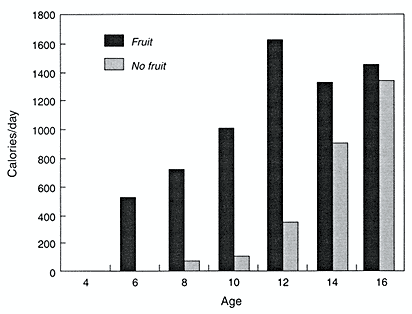
Figure 10-6
Ache children's food acquisition by age and the availability of fruits.
Fish float to the surface and can be collected easily by children. Even though these fish poisoning events occur less than twice a month, they account for almost half of all meat calories that girls under age 16 acquire and about 20 percent of meat acquired by boys.
A similar pattern of effects can be found among chimpanzees. The few. difficult-to-acquire foods consumed by chimpanzees are not acquired by young, weaned individuals and are shared by mothers with their offspring (Silk, 1978). These are termites and ants (which are "fished" with a stick) (ibid.), nuts that are cracked with stones, and game (Teleki, 1973). Thus, those foods that are easy to procure are acquired by human and chimpanzee young alike, and those foods difficult to extract or procure are not acquired by the young of either species and are provisioned by parents. The principal difference then is that human diets are composed primarily of large, nutrient-dense, low-fiber, difficult-to-acquire foods, whereas nonhuman primate diets are composed primarily of foods that are easily collected. As a result, human children are provisioned.
The Relationships Between Feeding Ecology, Reproductive Ecology and Life Span
Table 10-2 summarizes some major differences in the life-history characteristics of humans and chimpanzees interrelated by the theory. We begin with the
TABLE 10-2 Ape and Human Reproductive Ecology
|
Characteristic |
Apes |
Humans |
|
Feeding ecology |
Less skill-intensive, lower quality |
More skill-intensive higher quality |
|
Age of independence |
Weaning |
18 |
|
Number of dependent young |
Single |
Multiple |
|
Energy for lactation |
Supported by increased food consumption during lactation |
Fat storage supporting uninterrupted brain growth |
|
Work effort following birth |
Increased |
Decreased with support of others |
|
Adult life span |
Long for mammals of similar body size; No postreproductive period |
Exceptionally long: Potential postreproductive period about as long as reproductive period |
differences in feeding ecology and the juvenile period discussed above. Those features have important effects on reproductive ecology.
First, most primates have only one dependent young at a time. Humans have multiple dependent young due to the fact that the length of the dependency period is much greater than the interbirth interval. At some stage in the life course it is likely that a family will contain children of about 15, 11, 7, and 3 years of age.
A second important difference between humans and other primates, including the great apes, is the energetic support for lactation. Most primates support lactation through increased food acquisition during the entire lactation period, using a "pay-as-you-go" financing strategy. Humans, in contrast, store large quantities of energy during pregnancy to support lactation. Fat stored in the hips and buttocks during pregnancy is specifically designed to support lactation (Rebuffe-Scrive et al., 1985). That fat is accessed in response to prolactin, which. in turn, is produced in response to nipple stimulation and serves to "order the next meal" (Short, 1984). The storage of fat during pregnancy may be related to birth seasonality as well. Humans exhibit significant seasonality in births when there is regular fluctuation in the food supply (Ellison, 1990, 1995; Ellison et al., 1989; Huffman et al., 1978; Hurtado and Hill, 1990; Leslie and Fry, 1989; Lunn et al., 1984; Prentice and Whitehead, 1987). When net energy flow to women (energy consumed less energy expended) is low, women are much less likely to conceive. Perhaps food availability to support fat storage during pregnancy is more critical to human birth seasonality than is food availability after weaning (the latter appears the more critical among baboons (Altmann, 1980).
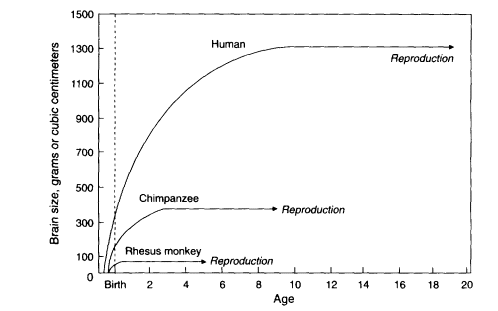
Figure 10-7
Brain growth in rhesus monkeys, chimpanzees, and humans. SOURCE: Lancaster (1986). Reprinted by permission
The storage of fat during pregnancy as a preparation for lactation may be a direct result of our feeding ecology. Human brains grow more than twice as fast and twice as long as chimpanzee brains (see Figure 10-7). In fact, during the first year of life, as much as 65 percent of all resting energetic expenditure is used to support the maintenance and growth of the brain (Holliday, 1978). It is highly likely that our large, flexible brain is a necessary component of the feeding strategy focusing on high-quality, difficult-to-acquire foods. It is also possible that the fat storage system for lactation evolved to produce a nonfluctuating, uninterrupted flow of energy to sensitive, fast-growing brains (this set of hypotheses is due to Jane Lancaster, personal communication; see also Lancaster, 1986).
The third important difference between apes and humans is that among humans, individuals other than the child's mother also provide the energy used to nurse and provision children. In fact, nursing women in the hunting and gathering groups for which the information is available work fewer hours than women who are not nursing an infant; this is true of the Aché (Hurtado, 1985), the Hiwi (Hurtado et al., 1992), the Efe (Peacock, 1985), and for women with young infants among the Hadza (Hawkes et al., 1996).
Support of reproduction in humans is derived from many sources. Most obvious is the provisioning of women and children by men, particularly the
child's father or the woman's husband. However, another important source of support is provided by postreproductive individuals, particularly the child's grandparents (see Hawkes et al., 1989, 1996; Kaplan, 1994). The data on age-specific food production and consumption presented in Figure 10-3 reveal some important trends. First reproduction occurs at an age when women and their husbands are just able to support themselves; the extra food and energy needed to support the offspring must come from elsewhere. During the peak period of child dependence, when there could be four or five dependent children, adults do not acquire enough food to support the net needs of their children (i.e., including the child's own food production). Postreproductive and nonreproductive individuals support the reproduction of young people and families with high-dependency ratios.
In addition to providing direct food assistance, older women often help their daughters and daughters-in-law in caring for young babies and even older children. Grandmothers can be particularly helpful with vulnerable first-born children whose mothers are inexperienced. 3 After infancy, children often sleep with their grandparents and sometimes live with them in separate residences from their parents. For example, among the Machiguenga 16 percent of all children were residing in their grandmother's hut.
Older men, as their physical strength begins to wane, still give advice in hunts and shift their work effort toward plant foods and tool making. They also provide political assistance in marriage, dispute resolution, and friendship formation.
In this sense the extended juvenile period, early reproduction relative to productivity, and high-dependency ratios depend on the existence of older, postreproductive and yet productive individuals. The exceptionally low adult mortality rates before age 60 appear an integral component of the skills-based food niche.
A General Model For The Evolution Of Life Histories
The above discussion presented a specific theory for the evolution of human life-history characteristics. In this section, I embed that theory in a more general analysis of the determinants of life histories. Figure 10-8 illustrates the basic model underlying the analysis. This model builds upon and integrates two distinct literatures: life-history theory in biology (particularly Blurton Jones, 1987, 1993; Charlesworth, 1994; Charnov, 1993; Gadgil and Bossert, 1970; Hamilton, 1966; Kirkwood, 1981; Kozlowski and Weigert, 1986; Pennington and Harpending, 1988; Rogers, 1990, 1994; Rogers and Blurton Jones, 1992; Smith and Fretwell, 1974; and Stearns, 1992) and human capital and fertility theory in economics (particularly Becker, 1975, 1991; Becker and Barro, 1988; Ben-Porath, 1967; Mincer, 1974; Willis, 1973, 1987).

Figure 10-8
Decision model for the life history of investments. The first part of the figure depicts the tradeoff between current and future reproductive effort. The second part represents the tradeoff between quantity and reproductive value (quality) of offspring. The solid arrows depict investment options, and the dashed arrows depict the impacts of investments.
The figure depicts two fundamental life-history tradeoffs. The first is the tradeoff between current and future reproduction; the second is the tradeoff between quantity and quality of offspring. Natural selection is expected to act on those tradeoffs so as to maximize the long-term representation of the genes underlying life-history traits. The traits associated with highest fitness are expected to vary with ecological factors affecting the shape of those tradeoffs.
The concept of embodied capital (Kaplan et al., 1995), borrowed from the concept of human capital developed in economics, can be useful in the analysis of the tradeoffs. Development can be seen as a process in which individuals and their parents invest in a stock of embodied capital. In a physical sense, embodied capital is organized somatic tissue. In a functional sense, embodied capital includes strength, immune function, coordination, skill, knowledge, all of which affect the profitability of allocating time and other resources to alternative activities such as resource acquisition, defense from predators and parasites, mating competition, parenting, and social dominance. Because such stocks tend to depreciate with time due to physical entropic forces and to direct assaults by parasites, predators, and conspecifics, allocations to maintenance such as feeding, cell repair, and vigilance, can also be seen as investments in embodied capital.
Figure 10-8 begins with lifetime income. By income, I mean the total value of time allocated to alternative activities, such as resource acquisition, child care, rest, etc. At each age, an individual's income will be a function of his or her embodied capital. Income can be invested directly in reproductive effort or in
embodied capital. Embodied capital, in turn, can be divided into stocks affecting the ability to acquire the resources for reproduction and stocks affecting the probability of survival.4
The solid arrows depict investment options. The dotted arrows depict the impacts of investments. Investments in income-related capital, such as in growth, physical coordination, skills and knowledge, affect lifetime income through the value or productivity of time in the future. Investments in survival-related capital, such as immune function, predator defense, and tissue repair, affect lifetime income through increasing the expected life span of earnings. However, an organism that does not reproduce leaves no descendants. Thus, the optimization problem acted upon by natural selection is to allocate lifetime income among investments in future income, survival, and reproductive effort at each age so as to maximize total allocations to reproduction.
The optimum strategy will be the one that maximizes resources for reproduction over the life course (see Charnov, 1993; Kirkwood, 1981; Kozlowski and Weigert, 1986; and Stearns, 1992, for theoretical treatments). The "decision rule" under selection involves allocating resources to be used for current reproductive effort and those that will be used to increase future reproductive effort. The tradeoff results from the fact that allocations to current reproductive effort utilize resources which could be allocated to increasing survival or to increasing productivity in the future. Within each broad area of allocations, there are subproblems that must be solved. For example, energy invested in the production of antibodies to infection cannot be invested in cell repair, growth, or even other antibodies. Similarly, time invested in learning one skill competes with time allocated to learning other skills.
The subproblem involving the allocation of reproductive effort is the quantity-quality tradeoff. Individuals can invest not only in capital embodied in their own soma but also in the capital embodied in offspring. However, such allocations decrease resources available for the production of other offspring and hence decrease the total quantity of offspring produced with a given amount of income. The second part of Figure 10-8 shows the relationships between investments and outcomes for two generations. Here, both the parent and the offspring can invest in the offspring's survival- and income-related capital. The optimization problem for the parent is then to allocate investments in fertility and in embodied capital of offspring so as to maximize the total lifetime allocations by offspring to their own reproductive effort (summed over all offspring). If individuals in each generation allocate investments in their own and offspring-embodied capital optimally, then the "dynastic" fitness of the lineage is maxi
mized (see Kaplan, 1996, for a theoretical treatment). The multigenerational decision path is illustrated in Figure 10-9.
In this model the diversity of life histories is due to the fact that the shape of the relationships between investments and outcomes varies ecologically. For each major class of mortality (predation, disease, intraspecific violence, accidents, starvation), there will be variable relationships between the probability of dying from it and investments by the organism. For example, the density and characteristics of predators, in interaction with the characteristics of the organism, determine the relationship between allocations and the probability of being eaten. Some organisms, such as bivalve mollusks, tortoises, and porcupines, apparently benefit significantly from allocations to predator defense and live long lives. Feeding niche appears to interact with the benefits to investments in mortality reduction. Birds, bats, and primates appear to lower predation rates by spending less time in terrestrial habitats and by being able to escape to aerial strata (Austad and Fischer, 1991).
There is also ecological variability in the benefits to investment in income-related capital. The relationships between body size and productivity depend on feeding niche. The value of knowledge, skill, and information-processing ability depends on the type of foods exploited. Grazing animals probably benefit much less from investments in learning than do species who eat more variable or difficult-to-capture foods.
In addition to factors affecting the shape of each relationship between investments and outcomes, the quantitative analysis of this model shows that optimal investment in each component depends, in part, on investments in other components and in the effects of those investments (Kaplan, 1996: see also Blurton
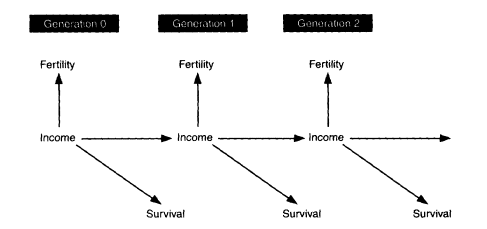
Figure 10-9
Multigenerational recursion for fitness effects of parental investment.
Jones, 1993, and Rogers and Blurton Jones, 1992). One result is that the value of investments in income-related capital depends on the probability of surviving to future ages (Kaplan et al., unpublished work; see also Ben-Porath, 1967).5 If the expected future life span is short, it pays little to invest in future earnings, favoring allocation of resources to current reproduction instead. The corollary is also true. The value of investments in survival depends on expected future income. If income is increasing through time, higher investments in survival are favored (for a related result, see Hamilton, 1966, and Charlesworth, 1994: chapter 5). Another result is that the value of allocations to each form of mortality reduction depends on the probability of dying from other causes. For example, if one is likely to die from predation, it pays less to invest in cell repair and immune function, which would affect future condition and the likelihood of dying from disease. Low probabilities of predation are probably an important determinant of why birds, bats, and primates allocate more resources to maintaining physical condition and senesce at late ages for their body size (Austad and Fischer, 1991, 1992; Kirkwood, 1981; Kirkwood and Rose, 1991), as do some animals living on islands with few predators (Austad, 1993). Lastly, the model also suggests that optimal investments in offspring survival and offspring income are complementary and positively associated (Kaplan, 1996).
These general results can be applied to the specific model of human life-history presented above. The nature of our feeding niche increases the value of both one's own and parental investment in income-related capital. Because many investments in income-related capital do not mature fully until after the age of 25. the value of investments in survival increases in order to realize the dividends from investments in income. The low productivity of hunter-gatherer children probably reflects both investment in skills and investments in survival. For example, boys in many hunting and gathering societies spend a great deal of time hunting very small animals. They achieve very low returns from those activities and could probably acquire more food by collecting. This is evidently an investment in future income. However, it also appears to be the case that adults restrict children to safe places (Draper, 1976; Blurton Jones et al., 1994b). When hunter-gatherers make camps in which they will reside for more than a few days, a great deal of effort is spent clearing the area of all underbrush. This is the safe zone, especially for very young children. Moreover, informants among both the !Kung (ibid.) and the Aché (Kim Hill, personal communication) report that they prefer to leave children in camp rather than to take them foraging. The food the children could collect on those foraging trips is apparently less valuable than the risks and costs associated with taking them along.6 Such effects appear to be ecologically variable, however. The comparative analysis of children's behavior and parental
protectiveness among the !Kung and Hadza (Blurton Jones et al., 1994a, b) shows that the danger in the environment predicts both children's behavior and parental concerns. Blurton Jones (1993) suggests that high fertility, high parental demands for children's labor, and lowered parental protectiveness among the Hadza are all correlated responses to an environment that poses less risks to children.
It is also possible that our feeding niche directly and indirectly contributes to high rates of return on investments in survival. First, modern hunter-gatherers present a formidable challenge to predators. People have been reported to take kills away from predators among the !Kung and Hadza (Blurton Jones and Konner, 1976; O'Connell et al., 1988). Second, the high-quality foods people consume (especially those rich in protein and fat) may facilitate more effective immune responses to disease and lower mortality. Third, the food-sharing pattern characteristic of the hunting and gathering way of life may allow sick and injured individuals to recover without suffering the downward spiral of decreased energy intake and increased illness experienced by many other animals [see Kaplan and Hill, 1985, theory and data about the relationship between hunter-gatherer diets and food sharing; Lawrence Sugiyama (visiting lecture, Department of Anthropology, University of New Mexico) has explicitly developed the theory regarding the role of food sharing in buffering the risks associated with physical injury]. The interaction of increased returns to income-related capital and greater resistance to predation and disease may be directly responsible for our long life span and delayed senescence.7
In the light of this model, we should not expect to see people living longer than they are productive under traditional conditions. Although data on old-age mortality among hunter-gatherers are few and based on small samples, it appears that many people reach age 60, but much fewer reach age 70. Although the evidence is anecdotal, my experience with traditional peoples suggests that death and decline of productivity occur about the same time in older people. The frail elderly period, as a life stage that endures for many years and is experienced by significant numbers of people, is probably a very recent occurrence and may even be rare in modern societies (Finch, 1996:498).
Menopause, Longevity, And The Postreproductive Period
The existence of a long postreproductive period in humans has attracted the attention of numerous biologists and anthropologists (e.g., Alexander, 1974;
Austad, in this volume; Gaulin, 1980; Hamilton, 1966: Hawkes et al., 1989; Hill and Hurtado, 1991; Lancaster and King, 1992; Rogers, 1993; Trivers, 1972; Williams, 1957). According to one view, this interest is misplaced. Some argue that the existence of a postreproductive period in humans is a novel effect due to very recent (within the past few hundred years), environmentally induced increases in the life span (Austad, in this volume; Washburn, 1981; Weiss. 1981). Under the traditional conditions in which humans evolved, people rarely lived longer than the reproductive period. However, that view is based upon the analysis of skeletal data and not on direct measurements of age-specific death rates with living humans. Although empirical data on adult mortality rates in traditional foraging groups are scarce, available data suggest that a significant proportion of females who reach adulthood will live to undergo menopause (see Figure 10-1 and Lancaster and King, 1992). Apparently a significant postreproductive period has existed under traditional conditions and requires explanation.
Those who assume the existence of a postreproductive period have addressed the problem from the perspective of the evolution of menopause. Taking the length of the human life span as a given, they have asked what kinds of selective forces could result in the evolution of menopause. Selection for cessation of reproduction has been seen as a solution to a tradeoff between investment in the reproductive value of existing kin and the production of additional descendants.
Both parts of the tradeoff have received some consideration. First, it may be the case that the offspring of older women will be of low reproductive value. This may be due to increased chances of producing an impaired offspring or to the high probability of parental death during the long juvenile period. If older mothers produce less viable offspring, either due to genetic abnormalities or to decreased survival after parental death, the costs of menopause could be low. Second, older people have many descendent kin, whose survival and reproduction may be improved from investment. By ceasing to reproduce, old people can use their time and resources to invest in the reproduction of kin. This second possibility has been labeled the grandmother hypothesis, because it has focused on assisting children in the production and raising of grandchildren. If costs are low and benefits are high, menopause could maximize biological fitness.
Attempts to test the grandmother hypothesis with empirical data (Hill and Hurtado, 1991; Rogers, 1993) have yielded largely negative results. However, problems with estimating the shape of the tradeoff between investment in descendants and the production of additional offspring render the rejection of the hypothesis premature (see Hill and Hurtado, 1996; Austad, in this volume; Hawkes et al., 1996, for useful discussions).
The grandmother hypothesis is consistent with the difficult-to-acquire-foods hypothesis for the evolution of the extended juvenile period and the long life span. It may be the feeding ecology of humans that favors reproductive cessation and investment in descendant kin. However, each hypothesis could be true while
the other is not. This can be seen by reframing the problem of the postreproductive life span. One could ask, ''Given that humans cease to reproduce in their early to late forties, why do they live so long?" This focuses the question on the evolution of the long life span and shows that both menopause and longevity require explanation (Hawkes et al., 1996, have independently come to a similar conclusion).
Several possible ancestral conditions may be considered. One possibility is that the ancestral condition is a somewhat longer reproductive period and a shorter life span. Selection, due to an increased value of grandparenting, could direct additional resources toward longevity and investment in descendant kin, at the expense of shortening the reproductive period. If this were true, the grandmother hypothesis could account for both menopause and the long life span.
Another possible ancestral condition is the same life span as is found currently but no cessation of reproduction. In that case, the tradeoff is solely between production of offspring and investment in existing kin. Selection due to increased benefits from grandparenting could produce menopause. The long life span of humans for their body size would then require another explanation.
A third possible ancestral condition is a short life span, ending at about the same time as, or before, menopause occurs today but with no menopause. In this case, selection could favor the increase in life span without a concomitant increase in the length of the reproductive period. One possible scenario for such a selection regime is that different tradeoffs are involved in the evolution of the reproductive period than in the life span.
With respect to the reproductive period, it appears that the physiological cause of menopause is the depletion of oocytes due to the process of follicle decay, known as atresia (vom Saal et al., 1994).8 Mammalian females begin life with their full complement of germ cells, and this process of follicle decay seems to be a very general feature of mammalian reproductive physiology (ibid., Finch, 1994). Follicle decay appears to exhibit a constant exponential decline through life, with an acceleration just before menopause—with menopausal women having essentially no viable oocytes left (Richardson et al., 1987: figure 3). The main difference between humans and other mammals, except for some whales, is that total loss of oocytes occurs in human females well before most have died and before other organs senesce (Austad, in this volume, and Hill, 1993).
It is possible that the main constraints on the reproductive life span are the number of germ cells at the outset and the rate of follicle decay. There is
evidence that rates of oocyte loss are under genotypic influence in different laboratory strains of mice (Finch and Nelson, 1994: figure 6). Perhaps the costs of increasing the length of the reproductive period are allocations to increasing follicle number or follicle viability. Those costs may decrease energy available for reproduction early in life. Thus the tradeoff may be between early reproduction and late reproduction rather than between late reproduction and investment in descendant kin.
If the optimal solution to that tradeoff is to only produce enough eggs and to maintain them at the observed rate so that reproduction is only possible to about age 45, we are then left with the problem of explaining the evolution of the life span after age 45. Perhaps, the tradeoff here is not between producing more offspring in old age and investing in descendants but between living longer to invest in descendant kin and early reproduction. In this case, selection might favor allocating more resources to survival and maintenance during the reproductive period at the expense of a lower reproduction rate. The benefit of the longer life would be gained through increased reproduction of descendant kin. This idea is displayed in Figure 10-10; the bold line depicts (in stylized form) the classic age-specific fertility pattern seen in noncontracepting populations without delayed marriage (for review, see Wood, 1994). The dashed line below the bold line represents the fertility rates that would be achieved without the help of older individuals, primarily parents. The difference in the heights of those two lines is the increased reproduction due to assistance. The solid line below the bold line represents the alternative fertility rate that would be achieved without the allocations necessary to survive past menopause and without assistance from kin.
Of course, the two effects are simultaneous: the effect of kin assistance requires the loss of peak reproduction in order to live longer. The costs and benefits are distributed across two generations. The younger generation receives the benefits of assistance from parents, and the older generation pays the costs of lower peak reproduction in order to live longer. The older generation received the benefits from their parents, in turn. If the benefits of kin assistance outweigh the reproductive costs of higher adult survival rates and greater expenditures on maintenance, such a system of intergenerational transfers could evolve. This system is consistent with the feeding ecology model discussed above. Thus, it is possible that a long life span evolved, even though an increase in the reproductive period did not, due to different costs and benefits.
Available data do not allow us to distinguish among these and possibly other evolutionary scenarios. Each of these possibilities requires investigation and test. For example, tests of the third scenario require that we understand the costs of maintaining a viable egg supply for more than 45-50 years and the costs of maintaining our bodies in better condition than our closest primate relatives. In any case, we must recognize that two explanations are required: one for long life span and another for menopause.
It is also important to ask why human males both live long and sometimes
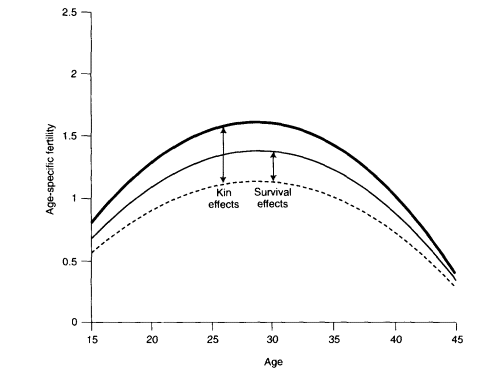
Figure 10-10
Hypothetical effects of investment in embodied capital and adult survival on fertility (with intergenerational assistance).
continue to reproduce in middle and old age. Aché data show that men evidence major declines in fertility after age 50 (Hill and Hurtado, 1996). However, we do not know the generality of this pattern across foraging groups, whether Aché men do not actively seek new reproductive opportunities in favor of grandparental investment, or whether they are simply not chosen as partners by women. It is possible that there is a great deal of variation in men's strategies both within and among societies. Greater focus on the mating and kin investment behavior of middle-aged and older men and on their impacts for survival and reproductive success of offspring and other kin in traditional societies is clearly necessary. An understanding of men's behavior may help solve the riddle of long life and menopause.
Historical, Current, And Future Trends In Morbidity And Mortality
The general life-history model presented above predicts that increased returns to investments in embodied capital affecting either income or survival will
be associated with greater longevity. This prediction has a number of implications for understanding recent changes in health-related investments, current variability in morbidity and mortality within populations, and future trends in expected life spans. However, before the discussion of those implications, it is important to consider the evolution of short- and long-term responses to ecological variation.
The traditional view of evolutionary processes underlying adaptation is that in a given environmental context, natural selection favors certain genetic variants over others, with each genetic variant corresponding to a phenotypic trait. Populations adapt and remain adapted to the environment through directional and stabilizing selection, respectively. Recently, the concepts of phenotypic plasticity and evolved norms of reaction have become increasingly important in biologists' understanding of adaptation. Under many conditions genotypes are thought to code for mechanisms that translate environmental inputs into phenotypic outputs rather than for an invariant response. For example, the reproductive rate of most plants and animals varies positively with energy availability (due to environmental conditions associated with temperature, rainfall, prey density, population density, etc.—for mammalian examples, see Wade and Schneider, 1992).
Norms of reaction to environmental and individual conditions evolve because the optimal phenotype varies with conditions and because genetic variants coding for the ability to modify phenotype adaptively sometimes can compete more effectively against variants that produce the same phenotype in all environments. However, such phenotypic plasticity is costly. Humans, whose behavioral phenotypes are at the extreme of plasticity, have a long developmental period of low productivity, precisely because it takes so long to "program" the brain with environmental information. Thus, each organism represents a compromise between the benefits and costs of phenotypic plasticity.
The nature of this compromise determines how organisms will respond to environmental variation. In general, it can be expected that organisms will respond flexibly and adaptively to environmental variation commonly experienced in the evolutionary history of the organism and respond less adaptively or even nonadaptively to environmental variation outside the range of common experience. The concepts of long- and short-run profit maximization/cost minimization in the economics of the firm are a convenient analogy. Some inputs in the production process, such as materials and labor, can be adjusted easily in the short run. Other inputs, such as plant size and other forms of physical capital, require longer periods for adjustment. Over the short run. a firm can adjust inputs to a given range of variation in the demand for products and still maximize profits. However, large increases or decreases in demand will probably reduce profits in the short run, until the fixed inputs can be adjusted in the long run.
Norms of reaction can be analyzed in a similar way. A norm of reaction can be optimal for a given range of environmental variation. Thus, many organisms can respond adaptively to seasonal and year-to-year variation in environmental
conditions. However, substantial changes in the environment may select for a new norm of reaction, and this will occur over the longer run because it requires change in the distribution of genotypes in the population.
The most basic features of the psychological and physiological mechanisms underlying our set of responses to environmental variation evolved in the context of a hunting and gathering ecology. Given that environmental dangers, disease threats, food supply, and the importance of skill in food acquisition are likely to have varied across hunter-gatherer ecologies, we can expect that optimal life-history allocations would have varied as well. For example, food-intake rates undoubtedly varied through time, across habitats, and as a function of population density. The ability to alter allocations to survival, maintenance, reproductive effort, fertility, and parental investment in response to changing net energy-intake rates must have been under selection.
Part of the response system is under physiological control. The probability of having a fecund menstrual cycle varies positively with seasonal variation in net food-intake rates in food-limited populations (Ellison, 1990, 1995; Ellison et al., 1989; Huffman et al., 1978; Hurtado and Hill, 1990; Leslie and Fry, 1989; Lunn et al., 1984). In children, disease rates decrease and growth rates increase with increased food and protein intake, indicating a distribution of the extra food to several functions (for review, see Hill and Hurtado, 1996: chapter 10 and table 10-1). Part of the response system is under behavioral control. Both parents and children exert control over the introduction of weaning foods. Age-specific exposure to environmental risks of accident, intraspecific aggression, and predation depends, in part, on activity regimes. Because the behavioral and physiological responses interact in determining the final outcome (e.g., rates of breast feeding and food intake interact in determining probability of an ovulatory menstrual cycle), it is likely that selection would have produced a coordinated physiological/psychological response system that yields adaptive life-history adjustment in relation to changing conditions characteristic of hunter-gatherer ecologies.
Most people today live under very different conditions. What kinds of responses do we expect in relation to modern environments and to variability within modern environments? Very little is known about the answer to this question. It is perhaps the most fundamental question facing the social, behavioral, and medical sciences today. One working assumption is that environmental variation in modern societies qualitatively similar to variation in hunter-gatherer societies should produce similar responses to what would be expected under traditional conditions. The response to the changing importance of skill and education in the last century may be one such example.
The central prediction of the life-history model presented above is that payoffs to investment in income-related capital interact positively with payoffs to investment in survival in determining allocations to reproductive effort and embodied capital. One theory of the demographic transition (the dramatic reduction in fertility that occurred in Europe and America about 100 years ago) is that it is
the result of the emergence of skills-based labor markets as the dominant economic institution (Kaplan, 1996; Kaplan et al., 1995). This theory proposes that payoffs to investment in education increased radically with the emergence of labor markets and technological growth spurred by the industrial revolution. As a result, parents lowered fertility to invest in more skilled children.
The theory can be extended to consider the relationship between investments in income-related educational capital and investments in mortality reduction. In modern labor markets, increased education is not only associated with increased income but also with higher rates of income growth through the life course (Mincer, 1974; see Figure 10-11). According to the life-history model, the increased value of investments in education and growth in income through the life course should favor increased investment in longevity. The increased investments in public and private health that we have witnessed in the past century may be explainable as direct outgrowths of increased payoffs to investment in skill. As a corollary, the improvements in health and survival also increased the value of investments in income growth, due to the increased duration of returns from those investments.
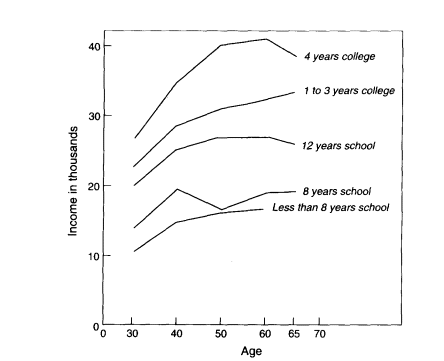
Figure 10-11
Median annual earnings of full-time, full-year male workers in 1985 as a function of education and age. SOURCE: U.S. Bureau of the Census (1985).
This view differs considerably from standard demographic transition theory, which explains fertility reduction as a result of reductions in infant and juvenile mortality. The standard theory sees fertility reduction as an equilibrating response to maintain population stability in the face of changing mortality regimes. The capital-investment theory explains lower fertility, increased survival rates, and increased investment in skills as coordinated responses to a changing economic system.
The same logic predicts the observed correlation between old-age survival and education found today. Health-promoting and health-reducing behaviors (exercise, diet, cigarette smoking, drug and alcohol use) are closely associated with education. Perhaps the reason for this association is not the increased information available to educated people but the increased value of longevity associated with an increase in income growth through the life course (of course, many other possible causal processes may be responsible for this association). Because morbidity associated with behavior represents a significant portion of resources spent in health care, an understanding of the factors determining the relative values of present consumption and future longevity is of great practical importance.
Finally, it is also the case that access to food resources is virtually unlimited for many people today. This food availability is outside the range of anything experienced by traditional peoples in the past. This availability may mean that our evolved allocation mechanisms are not designed to respond to unlimited food access. Perhaps the increases in longevity and the increased health of very old people that have occurred in the last several decades are at the bounds of our adaptive flexibility. Even though we have enough food energy to allocate additional resources to maintenance, we appear to store that energy as fat rather than to use it to prevent aging from occurring. Our evolutionary history probably did not design our allocation system to respond adaptively to the virtually unlimited food supply and ability to combat illness through medicine, characteristic of modern developed nations. It may be that large, future increases in the healthy human life span will require major manipulation of our evolved allocation system, either through genetic engineering or chemical interventions.
Summary And Conclusions
This paper has addressed the evolution of the human life course from the perspective of competing allocations to reproduction, growth, skill development, health, and maintenance. Compared to other primates and mammals, there arc three distinctive characteristics of human life histories: (1) an exceptionally long life span, (2) an extended period of juvenile dependence, and (3) support of reproduction by older postreproductive individuals. The theory presented here proposes that those three features of the human life course are interrelated outcomes of a feeding strategy emphasizing nutrient-dense, difficult-to-acquire
foods. The logic underlying this proposal is that for humans, effective adult foraging requires an extended developmental period during which production at young ages is sacrificed for increased productivity later in life. The returns to investment in development depend positively on adult survival rates, favoring increased investment in mortality reduction. An extended postreproductive, yet productive, period supports both earlier onset of reproduction by next-generation individuals and the ability to provision multiple dependent young at different stages of development.
Two distinct possibilities regarding the evolution of the postreproductive period were considered. One is that menopause evolved to facilitate postreproductive investment in offspring. The other is that reproductive senescence evolved due to the costs of maintaining viable oocytes and that increased longevity evolved, in spite of menopause, to support the reproduction of descendants.
This theory was developed as part of a more general theory of the evolution of life histories. Two major tradeoffs were considered. First, resources can be invested in either current or future reproductive effort. Investments in future reproductive effort include both those that enhance survival and increase future income (in a general sense). Age-specific allocations that maximize the lifetime allocation to reproductive effort will be favored by natural selection. Second, there is a tradeoff between quantity and quality of offspring. The specific model of human life-history evolution proposes that compared to other primates, traditional human ecology favored higher levels of investment in both future reproduction and quality of offspring.
It is useful to think of short- and long-term responses to various environments and, hence, various optimal allocation regimes. Natural selection can favor the evolution of physiological and psychological mechanisms that facilitate short-term adjustments to environmental variation. The degree of phenotypic plasticity that evolves will represent a compromise between the costs and benefits of flexible responses and also reflect the range of environmental variation experienced by the organism. Humans clearly demonstrate a high degree of adaptive flexibility, mediated through both physiology and behavior. Although the mechanisms underlying our response system evolved in the context of a hunting and gathering way of life, this evolved flexibility is apparent in our recent history as well. Changes in investments in income-related capital, mortality reduction, and maintenance associated with the demographic transition may reflect increased returns to those investments, stimulated by the increasing importance of skills-based competitive labor markets. Similarly, within developed countries, those that have more to gain from investments in education also invest more in longevity and health.
Long-term adjustments occur when one short-term response system is competitively more effective than another response system. In general, this would occur when environments change sufficiently so that the ancestral response system produces unfavorable outcomes. We cannot expect natural selection to have
altered our response system in relation to the contingencies of modern environments, given their very recent appearance. With respect to contemporary issues, such as aging, fertility, and development, the fundamental theoretical issue faced by the social, behavioral, and medical sciences is how to build models of an ancient, but flexible, response system in a very novel environment.
References
Alexander, R.D. 1974 The evolution of social behavior. Annual Review of Ecology and Systematics 5:325-383.
Altmann. J. 1980 Baboon Mothers and Infants. Cambridge, MA: Harvard University Press.
Austad, S.N., and K.E. Fischer 1991 Mammalian aging, metabolism, and ecology: Evidence from the bats and marsupials. Journal of Gerontology B47-B53.
1992 Primate longevity: Its place in the mammalian scheme. American Journal of Primatology 28:251-61.
1993 Retarded senescence in an insular population of Virginia opossums (Didelphis virginiana) . Journal of Zoology (London) 229:695-708.
Becker, G.S. 1975 Human Capital, 2nd ed. New York: Columbia University Press.
1991 A Treatise on the Family Enl. ed. Cambridge, MA: Harvard University Press.
Becker, G.S., and R.J. Barro 1988 A reformulation of the economic theory of fertility. Quarterly Journal of Economics 103(1):1-25.
Ben-Porath, Y. 1967 The production of human capital and the life cycle of earnings. Journal of Political Economy 75:352-365.
Blurton Jones, N. 1986 Bushman birth spacing: a test for optimal interbirth intervals. Ethology and Sociobiology 4:145-147.
1987 Bushman birth spacing: Direct tests of some simple predictions. Ethology and Sociobiology 8:183-203.
1993 The lives of hunter-gatherer children: Effects of parental behavior and parental reproductive strategy. Pp. 309-326 in M.E. Pereira and L.A. Fairbanks, eds., Juvenile Primates. Oxford: Oxford University Press.
Blurton Jones. N., K. Hawkes, and J. O'Connell 1989 Modeling and measuring the costs of children in two foraging societies. Pp. 367-390 in V. Standen and R.A. Foley, eds., Comparative Socioecology: The Behavioral Ecology of Humans and Other Mammals. London: Basil Blackwell.
In press Why do Hadza children forage? In N.L. Segal, G.E. Weisfeld, and C.C. Weisfeld, eds., Genetic. Ethological and Evolutionary Perspectives on Human Development. Essays in honor of Dr. Daniel G. Freedman. American Psychological Society.
Blurton Jones, N., K. Hawkes, and P. Draper 1994a Foraging returns of !Kung adults and children: Why didn't !Kung children forage? Journal of Anthropological Research 50(3):217-248.
1994b Differences between Hadza and !Kung children's work: Original affluence or practical reason? Pp. 189-215 in E.S. Burch, Jr. and L.J. Ellanna, eds., Key Issues in Hunter-Gatherer Research. Oxford: Berg.
Blurton Jones, N., and M. Konner 1976 !Kung knowledge of animal behavior. Pp. 325-348 in R.B. Lee and 1. DeVorc. eds., Kalahari Hunter-Gatherers. Cambridge, MA: Harvard University Press.
Bock, J. 1995 The Determinants of Variation in Children's Activities in a Southern African Community. Ph.D. dissertation. University of New Mexico.
Caro, T.M., D. Sellen, A. Parish. R. Frank, D. Brown, E. Voland. and M. Borgerhoff Mulder 1995 Termination of reproduction in nonhuman and human female primates. International Journal of Primatology 16:205-220.
Chagnon, N. 1974 Studying the Yanomamo. New York: Holt, Rinehart and Winston.
1983 Yanomamo: The Fierce People, 3rd ed. New York: Holt, Rinehart and Winston.
1988 Life histories, blood revenge, and warfare in a tribal population. Science 239:985-992.
Chagnon, N., and R. Hames 1979 Protein deficiency and tribal warfare in Amazonia: New data. Science 20(3):910-913.
Charlesworth, B. 1994 Evolution in Age-Structured Populations, 2nd ed. Cambridge: Cambridge University Press.
Chamov. E.L. 1993 Life History Invariants. Oxford: Oxford University Press.
Courtenay, J., and G. Santow 1989 Mortality of wild and captive chimpanzees. Folia Primatologica 52:167-177.
Divale, W.. and M. Harris 1976 Population, warfare and the male supremacist complex. American Anthropologist 78:521-538.
Draper, P. 1975 !Kung women: Contrasts in sexual egalitarianism in foraging and sedentary contexts. Pp. 77-109 in R. Reiter, ed., Toward an Anthropology of Women. New York: Monthly Review Press.
1976 Social and economic constraints on child life among the !Kung. Pp. 199-217 in R.B. Lee and 1. DeVore, eds., Kalahari Hunters and Gatherers. Cambridge, MA: Harvard University Press.
Draper, P., and E. Cashdan 1988 Technological change and child behavior among the !Kung. Ethnology 27:339-365,
Ellison, P. 1990 Human ovarian function and reproductive ecology: New hypotheses. American Anthropologist 92:933-954.
1995 Understanding natural variation in human ovarian function. In R.I.M. Dunbar, ed., Human Reproductive Decisions: Biological and Social Perspectives. London: MacMillan.
Ellison, P.T., N.R. Peacock, and C. Lager 1989 Ecology and ovarian function among Lese women of the Ituri forest. American Journal of Physical Anthropology 78:519-526.
Finch, C.E. 1994 The evolution of ovarian oocyte decline with aging and possible relationships to Down syndrome and Alzheimer disease. Experimental Gerontology 29:299-304.
1996 Biological bases for plasticity during aging of individual life histories. D. Magnusson. Pp. 488-512 in The Life span Development of Individuals: Biological and Psychosocial Perspectives, a Synthesis. Cambridge: Cambridge University Press.
Finch, C.E., and J.F. Nelson 1994 Genotypic influences on reproduction and reproductive aging in mice: Influences from alleles in the H-2 complex and other loci. Pp. 93-108 in D.K. Sarkar and C.D. Barnes,
eds., The Reproductive Neuroendocrinology of Aging and Drug Abuse. Boca Raton, FL: CRC Press.
Finch, C.E., and M.C. Pike 1996 Maximum life span predictions from the Gompertz mortality model. Journal of Gerontology 51A(3):B183-B194.
Finch, C.E., M.C. Pike, and M. Witten 1990 Slow mortality rate accelerations during aging in animals approximate that of humans. Science 249:902-905.
Gadgil, M., and W.H. Bossert 1970 Life historical consequences of natural selection. American Naturalist 104:1-24.
Gaulin. S. 1980 Sexual dimorphism in the human postreproductive life span: Possible causes. Human Evolution 9:227-232.
Goodall, J. 1986 Chimpanzees of Gombe: Patterns of Behavior. Cambridge, MA: Harvard University Press.
Gould, K.G. M. Flint. and C.E. Graham 1981 Chimpanzee reproductive senescence: A possible model for the evolution of menopause. Maturitus 3:157-166.
Hames, R. 1983 The settlement pattern of a Yanomamo population bloc: A behavioral ecological interpretation. Pp. 393-427 in R.B. Hames and W.T. Vickers, eds., Adaptive Responses of Native Amazonians. New York: Academic Press.
1992 Variation in paternal investment among the Yanomamo. Pp. 85-110 in B. Hewlett, ed., Father-Child Relations: Cultural and Biosocial Contexts. Chicago: Aldine de Gruyter.
Hamilton, W.D. 1966 The moulding of senescence by natural selection. Journal of Theoretical Biology 12:12-45.
Harcourt, A.H., and D. Fossey 1981 Demography of Gorilla gorilla. Journal of Zoology. (London) 195:215-233.
Harpending, H., and L. Wandsnider 1982 Population structure of Ghanzi and Ngamiland !Kung. Current Developments in Anthropological Genetics 2:29-50.
Harris, M. 1977 Cannibals and Kings, New York: Random House.
Hawkes, K., H. Kaplan, K. Hill, and A.M. Hurtado 1987 Aché at the settlement: Contrast between farming and foraging. Human Ecology 15(2): 133-161.
Hawkes, K., K. Hill. and J. O'Connell 1982 Why hunters gather: Optimal foraging and the Aché of eastern Paraguay. American Ethnologist 9:379-398.
Hawkes, K., J. O'Connell, and N. Blurton Jones 1989 Hardworking Hadza grandmothers. Pp. 341-366 in V. Standen and R.A. Foley, eds., Comparative Socioecology: The Behavioral Ecology of Humans and Other Mammals. London: Basil Blackwell.
1991 Hunting income patterns among the Hadza: Big game. common goods, foraging goals and the evolution of the human diet. Pp. 243-251 in A. Whiten and E. Widdowson. eds., Foraging Strategies and Natural Diet of Monkeys, Apes and Humans. Proceedings of the Royal Society of London 334. Oxford: Clarendon Press.
1995 Hadza children's foraging: Juvenile dependency, social arrangements and mobility among hunter-gatherers. Current Anthropology 36:688-700.
1996 Hadza Women's Time Allocation, Offspring Provisioning, and the Evolution of Long Post-Menopausal Life spans. Unpublished manuscript. Department of Anthropology, University of Utah, Salt Lake City, UT 84112.
Hill, K. 1993 Life history theory and evolutionary anthropology. Evolutionary Anthropology 2(3):78-88.
Hill, K., and K. Hawkes 1983 Neotropical hunting among the Aché of eastern Paraguay. Pp. 139-188 in R. Hames and W. Vickers, eds., Adaptive Responses of Native Amazonians. New York: Academic Press.
Hill, K.. and A.M. Hurtado 1991 The evolution of reproductive senescence and menopause in human females. Human Nature 2(4):315-350.
1996 Aché Life History: The Ecology and Demography of a Foraging People. New York: Aldine de Gruyter.
Hill, K., and H. Kaplan 1988a Tradeoffs in male and female reproductive strategies among the Ache. part 1. Pp. 277-290 in L. Betzig, P. Turke, and M. Borgerhoff Mulder, eds., Human Reproductive Behavior. Cambridge: Cambridge University Press.
Hill, K., and H. Kaplan 1988b Tradeoffs in male and female reproductive strategies among the Aché. part 2. Pp. 291-306, in. L. Betzig, P. Turke, and M. Borgerhoff Mulder, eds., Human Reproductive Behavior. Cambridge: Cambridge University Press.
Hill, K., H. Kaplan, K. Hawkes, and A.M. Hurtado 1985 Men's time allocation to subsistence work among the Aché of eastern Paraguay. Human Ecology 13:29-47.
Holliday, M.A. 1978. Body composition and energy needs during growth. Pp. 117-139 in F. Falker and J. M. Tanner, eds., Human Growth. Vol. 2. New York: Plenum.
Howell, N. 1979 Demography of the Dobe !Kung. New York: Academic Press.
Huffman, S. L., A.M.K. Chowdhury, J. Chakborty, and W.H. Mosley 1978 Nutrition and postpartum amenorrhea in rural Bangladesh. Population Studies 32:251-260.
Hurtado, A. M. 1985 Women's Subsistence Strategies among Aché Hunter-Gatherers of Eastern Paraguay. Ph.D. dissertation, University of Utah.
Hurtado, A.. K. Hawkes, K. Hill, and H. Kaplan 1985 Female subsistence strategies among Aché hunter-gatherers of eastern Paraguay. Human Ecology 13:1-28
Hurtado, A.. and K. Hill 1987 Early dry season subsistence ecology of the Cuiva foragers of Venezuela. Human Ecology 15:163-187.
1990 Seasonality in a foraging society: Variation in diet, work effort, fertility and the sexual division of labor among the Hiwi of Venezuela. Journal of Anthropological Research 46:293-345.
1992 Paternal effect on offspring survivorship among Aché and Hiwi hunter-gatherers: Implications for modeling pair-bong stability . Pp. 31-55 in B. Hewlett. ed., Father-Child Relations: Cultural and Biosocial Contexts. New York: Aldine de Gruyter.
Hurtado, A., K. Hill, H. Kaplan, and I. Hurtado 1992 Tradeoffs between female food acquisition and child care among Hiwi and Ache foragers. Human Nature 3(3): 185-216.
Kaplan, H. 1994 Evolutionary and wealth flows theories of fertility: Empirical tests and new models. Population and Development Review 20(4):753-791.
1996 A theory of fertility and parental investment in traditional and modern human societies. Yearbook of Physical Anthropology 39:91 - 135.
Kaplan, H., and K. Hill 1985 Food sharing among Aché foragers: Tests of explanatory hypotheses. Current Anthropology 26(2):223-245.
Kaplan, H., J.B. Lancaster, J.A. Bock, and S.E. Johnson 1995 Does observed fertility maximize fitness among New Mexican men? A test of an optimality model and a new theory of parental investment in the embodied capital of offspring. Human Nature 6:325-360.
Kelly. R.L. 1995 The Foraging Spectrum. Washington, DC: Smithsonian Institution Press.
Kirkwood, T.B.L. 1981 Repair and its evolution: Survival versus reproduction. Pp. 165-189 in C.R. Townsend and P. Calow, eds., Physiological Ecology: An Evolutionary Approach to Resource Use. Oxford: Blackwell.
Kirkwood, T.B.L., and M.R. Rose 1991 Evolution of senescence: Late survival sacrificed for reproduction. Pp. 15-24 in P.H. Harvey, L. Partridge, and T.R.E. Southwood, eds., The Evolution of Reproductive Strategies. Cambridge: Cambridge University Press.
Konner. M., and M. Shostak 1987 Timing and management of birth among the !Kung: Biocultural interaction in reproductive adaptation. Current Anthropology 2:11-28.
Konner, M., and C. Worthman 1980 Nursing frequency, gonadal function, and birth spacing among !Kung hunter-gatherers. Science 207:788-791.
Kozlowski, J., and R.G. Weigert 1986 Optimal allocation of energy to growth and reproduction. Theoretical Population Biology 29:16-37.
Lancaster, J.B. 1986 Human adolescence and reproduction: An evolutionary perspective. Pp. 17-38 in J.B. Lancaster and B.A. Hamburg, eds., School-Age Pregnancy and Parenthood. New York: Aldine de Gruyter.
Lancaster, J.B., and B. King 1992 An evolutionary perspective on menopause. Pp. 7-15 in V. Kerns and J. Brown, eds., In Her Prime: New Views of Middle-Aged Women. Chicago: University of Illinois Press.
Lee, R.B. 1979 The !Kung San: Men. Women and Work in a Foraging Society. Cambridge: Cambridge University Press.
1984 The Dobe !Kung. New York: Rinehart and Winston.
1985 Work, sexuality, and aging among !Kung women. Pp. 23-35 in J. Brown and V. Kerns, eds., In Her Prime: A New View of Middle-Aged Women. South Hadley, MA: Bergin and Garvey.
Lee, R.B., and I. DeVore, eds. 1976 Kalahari Hunter-Gatherers: Regional Studies of the !Kung San and Their Neighbors. Cambridge. MA: Harvard University Press.
Leslie, P.W., and P.H. Fry 1989 Extreme seasonality of births among nomadic Turkana pastoralists. American Journal of Physical Anthropology 79: 103-115.
Lunn, P.. S. Austin, A.M. Prentice, and R. Whitehead 1984 The effect of improved nutrition on plasma prolactin concentrations and postpartum infertility in lactating Gambian women. American Journal of Clinical Nutrition 39:227-235.
Melancon, T. 1982 Marriage and Reproduction among the Yanomamo Indians of Venezuela. Ph.D. dissertation, Pennsylvania State University.
Mincer, J. 1974 Schooling, Experience and Earnings. Chicago: National Bureau of Economic Research.
Oates, J.F. 1987 Food distribution and foraging behavior. Pp. 197-209 in B.B. Smuts, D.L. Cheney. R.M. Seyfarth, R.W. Wrangham, and T.T. Struhsaker, eds., Primate Societies. Chicago: University of Chicago Press.
O'Connell, J.F., and K. Hawkes 1981 Alyawara plant use and optimal foraging theory. Pp. 99-125 in E. Smith and B. Winterhalder, eds., Hunter-Gatherer Foraging Strategies. Chicago: Chicago University Press.
O'Connell, J.F., K. Hawkes, and N. Blurton Jones 1988 Hadza scavenging: Implications for Plio-Pleistocene hominid subsistence. Current Anthropology 29:356-363.
O'Connell, J., P. Latz, and P. Barnett 1983 Traditional and modern plant use among the Alyawara of central Australia. Economic Botany 37:80-109.
Peacock, N.R. 1985 Time Allocation, Work and Fertility Among Efe Pygmy Women in the Ituri Forest of Northeast Zaire. Ph.D. dissertation, Harvard University.
Pennington, R., and H. Harpending 1988 Fitness and fertility among Kalahari !Kung. American Journal of Physical Anthropology 77:303-319.
Pope, S.K., L. Whiteside, J. Brooks-Gunn, K. Kelleher, V. Rickert, R. Bradley, and P. Casey 1993 Low-birth-weight infants born to adolescent mothers. Journal of the American Medical Association 269:1396-1400.
Prentice, A., and R. Whitehead 1987 The energetics of human reproduction. Symposia Zoological Society of London 57:275-304.
Rebuffe-Scrive, M., L. Enk, N. Crona, P. Lonnroth, L. Abrahamsson, U. Smith, and P. Bjorntorp 1985 Fat cell metabolism in different regions in women-effect of menstrual cycle, pregnancy and lactation. Journal of Clinical Investigation 75:1973-1976.
Richardson, S.J., V. Senikas, and J.F. Nelson 1987 Follicular depletion during the menopausal transition: Evidence for accelerated loss and ultimate exhaustion. Journal of Clinical Endocrinology and Metabolism 65(6):1231-1237.
Rogers, A. 1990 The evolutionary economics of human reproduction. Ethology and Sociobiology 11:479-495.
1993 Why menopause? Evolutionary Ecology 7:406-4200.
1994 Evolution of time preference by natural selection. American Economic Review 84(3):460-481.
Rogers, A., and N. Blurton Jones 1992 Allocation of Parental Care. Unpublished manuscript. Department of Anthropology. University of Utah, Salt Lake City, UT 84112.
Schrire, C. 1980 An inquiry into the evolutionary status and apparent identity of San hunter-gatherers. Human Ecology 8:9-32.
Short, R.V. 1984 Breast feeding. Scientific American 250:35-41.
Silk, J.B. 1978 Patterns of food-sharing among mother and infant chimpanzees at Gombe National Park, Tanzania. Folia Primatologica 29:129-141.
1979 Feeding, foraging. and food sharing behavior in immature chimpanzees. Folia Primatologica 31:12-42.
Simms, S. 1984 Aboriginal Great Basin Foraging Strategies: An Evolutionary Approach. Ph.D. dissertation. University of Utah.
Smith, C.C., and S.D. Fretwell 1974 The optimal balance between size and number of offspring. American Naturalist 108:499-506.
Stearns, S. 1992 The Evolution of Life Histories. Oxford: Oxford University Press.
Steward. J.H. 1938 Basin Plateau Aboriginal Sociopolitical Groups. Bureau of American Ethnology Bulletin 120. Washington, DC.
Teleki. G. 1973 The Predatory Behavior of Wild Chimpanzees. Lewisburg, PA: Bucknell University Press.
Terborgh, J.W. 1983 Five New World Primates: A Study in Comparative Ecology, Princeton. NJ: Princeton University Press.
Trivers, R. L. 1972 Parental investment and sexual selection. Pp. 136-179 in B. Campbell, ed., Sexual Selection and the Descent of Man. Chicago: Aldine.
U.S. Bureau of the Census 1985 Money income of households, families and persons in the United States, 1985. Current Population Reports. Series P-60, No. 156, Table 35. Washington. DC: U.S. Department of Commerce.
vom Saal. F.S.. C.E. Finch, and J.F. Nelson 1994 Natural history and mechanisms of reproductive aging in humans, laboratory rodents, and other selected vertebrates. Pp. 1213-1314 in E. Knobil and J.D. Neill, eds., The Physiology of Reproduction, 2nd ed. New York: Raven Press.
Wade, G.. and J. Schneider 1992 Metabolic fuels and reproduction in female mammals. Neuroscience and Biobehavioral Reviews 16:235-272.
Washburn, S. L. 1981 Longevity in primates. Pp. 11-29 in J. March and J. McGaugh, eds., Aging. Biology and Behavior. New York: Academic Press.
Weiss, K. M. 1981 Evolutionary perspectives on human aging. Pp. 25-58 in P. Amoss and S. Harrell, eds., Other Ways of Growing Old. Stanford, CA: Stanford University Press.
Wiessner, P. 1982a Measuring the impact of social ties on nutritional status among the !Kung San. Social Science Information 20:641-678.
Wiessner, P. 1982b Risk, reciprocity, and social influences on !Kung San economics. Pp. 61-84 in E. Leacock and R.B. Lee, eds., Politics and History in Band Societies. Cambridge: Cambridge University Press.
Williams, G. C. 1957 Pleiotropy, natural selection and the evolution of senescence. Evolution 11:398-411.
Willis, R.J. 1973 A new approach to the economic theory of fertility behavior. Journal of Political Economy 81:S14-S64.
1987 Wage determinants: A survey and reinterpretation of human capital earnings functions. Pp. 525-602 in O. Ashenfelter and R. Layard, eds., Handbook of Labor Economics. Amsterdam: North Holland.
Wilmsen, E.N. 1978 Seasonal effects of dietary intake on Kalahari San. Federation of American Societies or Experimental Biology. Proceedings 37:65-72.
1989 Land Filled with Flies. Chicago: University of Chicago Press. Wood. J.
1994 Dynamics of Human Reproduction: Biology, Biometry, and Demography. New York: Aldine de Gruyter.
Woodburn, J.C. 1968 An introduction to Hadza ecology. Pp. 49-55 in R.B. Lee and I. DeVore, eds., Man the Hunter. Chicago: Aldine de Gruyter.
1972 Ecology, nomadic movement and the composition of the local group among hunters and gatherers: An east African example and its implications. Pp. 193-206 in P.J. Ucko, R. Tringham. and G.W. Dimbleby, eds., Man. Settlement and Urbanism. London: Duckworth.
1979 Minimal politics: The political organization of the Hadza of north Tanzania. Pp. 244-266 in W. Snack and P. Cohen, eds., Politics and Leadership: A Comparative Perspective. Oxford: Clarendon Press
Wrangham, R.W. 1974 Artificial feeding of chimpanzees and baboons in their natural habitat. Animal Behavior 22:83-94.
1977 Feeding behavior of chimpanzees in Gombe National Park. Tanzania. Pp. 504-537 in H. Clutton-Brock, ed., Primate Ecology. New York: Academic Press.
Wrangham, R.W.. and B.B. Smuts 1980 Sex differences in the behavioral ecology of chimpanzees in the Gombe National Park. Tanzania. Journal of Reproductive Fertility Supplement 28:13-31.
Yellen, J. 1976 Settlement pattern of the !Kung: An archaeological perspective. Pp. 48-72 in R.B. Lee and 1. DeVore, eds., Kalahari Hunter-Gatherers. Cambridge, MA: Harvard University Press.


