
2
Improving Our Understanding of Environmental Issues
IDENTIFYING CURRENT AND EMERGING PROBLEMS
As stated in Chapter 1, the charge for this study included the identification of significant emerging environmental issues and identification of research themes and projects most relevant to understanding and resolving these issues. In this report, environmental issues have been defined broadly to include those affecting human health, ecosystems, natural resources, or the global environment. Many individuals and expert committees over the years have addressed aspects of this charge. Thus, reviewing and summarizing their recommendations was an appropriate starting point for deliberations. Two dozen reports were reviewed and summarized, including many issued by the National Research Council and by EPA's Science Advisory Board, and others by technical societies and research institutes (see Appendix 2 for a list of these reports). Particular attention was paid to reports developed through the consensus of an expert committee. Each report was analyzed to reveal important current and emerging environmental concerns and associated research recommendations. The committee members also identified environmental issues that have stimulated their research interests and activities.
The resultant range of current and emerging environmental concerns identified in this manner is presented in Table 2-1, with the issues grouped into broad categories. This list is not intended to be comprehensive, nor are the elements entirely consistent with one another. The list is simply a summary of environmental issues indicated as being of concern by knowledgeable groups or individuals. The environmental concerns that are arrayed range from very tangible, narrowly focused, near-term environmental problems to broadly based environmental issues. It became apparent that recommendations from more recent reports tend to focus on "overarching" issues such as sustainability or risk/benefit
TABLE 2-1 Identified Environmental Issues
|
Clean Air Automotive emissions Industrial emissions Photochemical air pollution Acid deposition Airborne toxic substances Particulate matter Long-range pollutant transport Sudden, accidental releases of hazardous air pollutants Urban and regional-scale tropospheric ozone Clean Streams, Rivers, Lakes, and Estuaries Industrial discharges Municipal waste discharges Acid mine drainage Agricultural runoff Urban runoff Atmospheric deposition Oil spills Thermal pollution Eutrophication Human-accelerated erosion and turbidity Biochemical oxygen demand Alterations due to floods Storm overflows Stream channelization consequences Effects of dams Introduced species Competition for water resources Clean Coasts and Oceans Eutrophication Input from rivers and streams Chemical contamination of estuaries, coastal areas, and oceans Effects of recreational and commercial uses Changes in biodiversity Contaminated sediments Clean Aquifers and Soils Superfund and other industrial waste sites Leaking fuel tanks Diffuse-source contamination Salt and heavy metal contamination Salt water inflow Clean Drinking Water Drinking water pollutants Biological contamination Disinfection byproducts Inadequate water delivery systems Point-of-use treatment (home filters, etc.) Old lead and lead-soldered waterpipes Regional scarcity of potable water Clean Dwellings and Workplaces Indoor air contaminants (including radon) Old lead-based paint Asbestos Outgassing from construction and finishing materials Toxic substances used in homes and workplaces Safe Food Supply Pesticide residues Plant uptake of contaminants Effects of pollution on crops Safe Disposal of Human Wastes Effective waste isolation/collection Sanitary waste disinfection Sludge disposal Wastewater reuse Safe Disposal of Household and Industrial Waste Waste reduction and recycling Landfill technology and use Radioactive waste storage, treatment, and disposal Incineration emissions and ash Offshore disposal Industrial wastewater treatment Infrastructure needs Habitat and Species Conservation Riparian degradation Tropical ecosystem degradation Temperate ecosystem degradation Polar ecosystem degradation Marine ecosystem degradation Wetlands degradation Endangered species Species extinction Overfishing Pollutant bioaccumulation/bioconcentration Habitat alteration, fragmentation, and destruction |
assessment, rather than the narrower pollutant- or media-specific problems that historically have framed environmental agendas.
Recognizing the wide range of issues and the limitation of financial resources, EPA's new Strategic Plan for the Office of Research and Development (EPA, 1996) articulates the need for a disciplined system of prioritization to identify the most significant issues for attention. This is a step in the right direction—focused research efforts, motivated by specific high-priority issues, will continue to be required for valid scientific and public policy reasons. However, an appreciation of the complexity and unpredictability of environmental systems leads us to conclude that even this approach to environmental research is limited because it misses the opportunity to use research to create scientific and technological building blocks or core research (the focus of this chapter), which can enhance our future ability to address a wide range of environmental problems. There is no question that problem-specific research has helped to alleviate particular problems, but, as discussed in Chapter 1, the attempted solutions often underestimate the complexity of environmental systems and rarely result in systematic strategies for managing and avoiding broad classes of environmental threats.
A promising approach to identify and address the important current and emerging environmental issues in the long run is to seek to understand the key processes that drive and connect environmental systems. The insights gained from such efforts may then be applied to many categories of current and future environmental issues. A framework that would promote this goal is described in this chapter.
A Framework for Environmental Research
To build the scientific capacity needed to address the complex, multi-disciplinary problems facing us now and likely to emerge in the future, two complementary types of research are needed: "problem driven" and "core." This report defines these research categories and explains the benefits to be gained by establishing a balance between them.
As used in this report, the term problem-driven research refers to investigations that attempt to understand and solve an identified problem. Frequently these efforts are motivated by current or foreseen regulatory action. In contrast, the term core research is used here to describe investigations that seek to elucidate key physical, chemical, biological, geological, sociological, and economic processes that underlie environmental systems, thus providing the basis for responding to a wide range of environmental problems in a comprehensive way. This includes the biochemical and physiological processes in humans that can be affected by environmental agents. Two other important kinds of core research are the development of tools and collection of data required to detect and assess environmental threats, prevent or mitigate environmental harm, and determine whether environmental policies are effective.
Historically, much of the nation's environmental research, including research at EPA, has been directed at solving immediate problems. Over time, progress in solving fairly specific environmental problems will benefit enormously by recognizing that the enhancement of underlying knowledge, data, and research techniques will help to address many related problems. Many of the environmental problems included in Table 2-1 are merely symptoms of human-induced disruptions in underlying, highly complex environmental systems.
It is important to note that the concepts of problem-driven and core environmental research introduced above are not the same as the familiar categories of basic versus applied, fundamental versus directed, or short-term versus long-term research. It may be necessary to perform a great deal of what is usually called "basic" research in order to make progress in solving a particular problem. Similarly, certain technology development tasks—traditionally categorized as "applied" research—can have broad applicability and are therefore included in our definition of core research.
The distinction between core and problem-driven research is not always clear-cut; environmental research defies easy categorization. Research programs
have multiple goals and motivations. When all goes well there are interactions and feedback loops between different projects, even in seemingly unrelated fields. For instance, advances in measurement, computation, and communication technologies, some of them developed with very specific applications in mind, have had profound impacts on the conduct and outcome of virtually all scientific activities.
Stokes (1995) addressed the lack of a clear distinction between core and problem-driven research using the work of Pasteur to illustrate how the drive toward fundamental understanding is inextricably linked with the drive to use scientific knowledge to address societal concerns. Stokes suggests that research activities occupy many dimensions in "inspiration space." A particularly relevant component of this space exists where a strong drive for fundamental understanding intersects with a strong sense of the usefulness of the anticipated results. Environmental research exhibits these characteristics.
No, a thousand times no; there does not exist a category of science to which one can give the name applied science. There are science and the applications of science, bound together as the fruit to the tree which bears it. (Louis Pasteur, 1871)
Despite this absence of a firm demarcation between problem-driven and core research, experience, history, and political realities indicate that there is value in describing and re-emphasizing the critical role of core research in EPA's research portfolio. The remainder of this chapter expands on the definition and implementation of a strong core research program. The need for, and benefits of, problem-driven research are discussed in Chapter 3. That chapter also suggests ways to limit the number of specific issues that are pursued in order to use limited resources wisely and to ensure that the balance between problem-driven and core research can be maintained.
CORE RESEARCH
As defined above, core environmental research cuts across and helps to solve many related environmental problems. There are several components within this category: (1) the acquisition of systematic understanding of environmental processes, (2) the development of innovative research methods and tools, and (3) the collection, maintenance, and dissemination of accurate and comprehensive environmental data (see Box 2-1). All three components are necessary if environmental problem-solving is to be based on a foundation of sound science.
Understanding Underlying Processes
One component of a core research program is the systematic investigation of the physical, chemical, biological, geological, sociological, and economic processes
|
BOX 2-1 The Three Components of Core Environmental Research
|
that underlie environmental systems. Environmental systems include the atmosphere, hydrosphere, geosphere, and biosphere, and the interactions of all these with human populations. A representative list of these kinds of processes is shown in Table 2-2. This component includes studies of environmental impacts on biological systems and human health; clarification of the processes that underpin technological systems designed to prevent or mitigate environmental degradation; and sociological and economic processes that influence human behavior and thus environmental protection strategies. Such research must also examine the interactions and feedback among various physical, biological, and social processes.
We need to know a great deal more about these processes to understand how environmental problems are interrelated, how solutions for one problem may influence others, and whether proposed environmental management strategies are merely treating symptoms or are leading to sustainable solutions. For example, in order to better understand and predict the movement and fate of trace chemicals in the environment, we need to learn more about their concentrations, speciation, and reactivity in soil, water, and air (see Box 2-2). In order to protect human and ecosystem health, we need a more detailed understanding of molecular-level mechanisms, particularly with respect to chronic effects of chemicals present at low concentrations.
It is important to note that most of the processes listed in Table 2-2 do not map neatly to traditional disciplines such as chemistry, biology, or physics. The investigations needed to understand environmental processes are profoundly interdisciplinary. Developing fields such as ecotoxicology, biogeochemistry, and environmental microbiology will play important roles. Additional examples of the value of core research in understanding processes needed to solve environmental problems are given in Boxes 2-3 and 2-4.
TABLE 2-2 Key Processes Underlying Environmental Systems
|
Physical/Chemical Systems Transport and cycling of matter in solid, liquid, and gas phases Chemical and phase transformations Energy flow and transformation Interactions of physical/chemical processes with biological and social processes Biological Systems Biological production Origins, functions, and maintenance of biological diversity Reproduction and development Metabolism, growth, and death Cellular differentiation and proliferation Immune function Neurobiological function Incidence and mechanisms of pathology Growth and regulation of populations Interactions of biological processes with physical/chemical and social processes Social Systems Resource utilization Diffusion of science into policy Individual and collective decision making Economic, social, political, and legal structures Human settlement and land use Ethics and equity Technological innovation and diffusion Interactions of social processes with physical/chemical and biological processes. |
|
NOTE: This list follows from further consideration of Table 2-1. That table lists a myriad of environmental issues, all of which could be better understood and addressed through greater understanding of the underlying processes presented here. |
Development of Innovative Tools
To support improved efficiency and efficacy within the broad environmental science community, both inside and outside EPA, there must be a sustained investment in the development of innovative environmental research tools and techniques that capitalize on scientific and technological advances. Improved research tools are critical for reducing the large uncertainties in our understanding of environmental problems. Examples include pollutant concentration and flux measurement instrumentation (see Box 2-5), improved models of pollutant transport and transformation, methods to determine cellular and systematic responses to pollutants, more effective risk assessment methodology, ecosystem monitoring and modeling techniques, and environmental valuation techniques. Table 2-3 lists major categories of environmental research and management tools, including measurement and analytical techniques, environmental models, and research methods, that are central to the success of the environmental research effort.
|
Box 2-2 Soil and Ground Water Contamination: Limited Knowledge of Environmental Processes Slowed Progress Soil and ground water contamination is a highly complex environmental problem facing the nation today. Although the exact number is uncertain, estimates of sites with contaminated soil or ground water range from 300,000 to 400,000. Required by law to clean up these sites, government agencies and industries are spending billions of dollars annually in remediation efforts. In the next 30 years, cleanup costs are estimated to be as high as $ 1 trillion. Yet, increasing evidence indicates that current technologies are not capable of cleaning up many sites to current health-based standards, and there is growing concern that the results of some cleanup efforts are not worth the huge investment of resources needed (NCR, 1994a). The inability of conventional technologies, such as pump-and-treat systems, to clean up many contaminated sites reveals several areas where current knowledge of fundamental processes is limited. Contaminated sites are often extremely complex. Different soils and sediments have different chemical, physical, and microbial characteristics affecting treatment approaches. The site-specific differences and heterogeneity of each system further complicate site cleanup efforts. In addition to their physical complexities, many sites contain several types of contaminants. An improved understanding of basic processes is needed in order to prevent contamination and develop more effective cleanup technologies. The processes in need of elucidation include the chemical behavior of contaminants and contaminant mixtures in complex soil and sediment matrices; effects of surfactants, oxidants, and other chemicals on solubilities and sorption of various contaminant species; and the role of colloids in transport and fate of contaminants. Research is also needed to better understand the biological and other processes underlying technologies such as bioremediation and phytoremediation. To support this process research, new tools are also needed. These include methods to accurately and rapidly characterize subsurface physical, chemical, and microbial heterogeneity; methods to monitor bio-availability; better models of chemically reactive fluid flow; more sensitive and more accurate methods for measuring composition, molecular structure, surface structure and properties, and bulk physical properties, especially on microscopic and smaller scales; techniques for observing and modeling ground water flow patterns and rates of transport; detection and monitoring methods for subsurface contaminant plumes; and molecular modeling of particle surface structures and processes. |
|
BOX 2-3 Understanding Humic Substances: Core Research Can Be Used to Address a Variety of Environmental Problems A class of naturally occurring organic compounds called humic substances has long been known to be capable of reacting with some contaminants, such as trace metals and pesticides. The presence of these humic substances was often used to explain observations of greater than predicted mobility of pesticides in ground water and higher concentrations of trace metals than calculated from water-rock interactions. However, the rigorous study of such phenomena was limited by insufficient knowledge of the chemistry of humic substances and a lack of analytical methods to concentrate and separate them. Over a 20-year period, the U.S. Geological Survey (USGS) and others developed and tested techniques for the isolation and characterization of humic compounds. A major focus of the research was to find ways to sample, isolate, and characterize the complex organic substances that are created by the decay of plant materials. In the last 10 years the research has expanded to include the study of the effects and interactions of humic substances with trace metals, radionuclides, organic contaminants, carbon cycling in ecosystems, and formation of disinfection byproducts. The methods developed as a result of core research on these complex substances have had a major impact on contaminant transport research. For example, in a joint USGS-Department of Energy (DOE) study, methods for isolating colloidal material and humic substances have been combined to characterize the chemical speciation of radionuclides in ground water and surface water at Rocky Flats, a nuclear weapons factory in Colorado. The results of this study show that the plutonium is distributed among particulate, colloidal, and dissolved humic fractions, whereas the uranium is found predominantly in the dissolved humic fraction. The DOE will use these results to develop treatment strategies for these contaminated waters. This same body of core research is now being used to study the mercury cycle in South Florida. Mercury contamination is believed to be a cause of decline in the population of a number of endangered species in Florida. The mercury cycle, especially the methylation of mercury, is known to be highly related to the presence, type, and reactivity of organic matter present in the soil water. Experts in humic substances, mercury cycling, and microbiology are working to better understand the factors that lead to mercury's entry into the food chain. This knowledge will be used to evaluate various options for the restoration of the South Florida ecosystem. |
|
BOX 2-4 The Impact of Airborne Particulates on Human Health: Core Research Needed to Identify Cause-and-Effect Relationships The impact of airborne particulates on visibility and public health is a long recognized problem in the environment (e.g., NRC, 1993b; EPA, 1996). Significant human health risks can be associated with airborne particulates. A recent clinical study has demonstrated a link between the inhalation of airborne particulates and the development of asthma and recent careful analyses of health statistics, using novel epidemiological approaches, associate chronic exposures to fine particulates with significantly increased risks in premature deaths from cardiopulmonary disease and lung cancer. Yet there is very little basic understanding of the cause-and-effect relationships associated with fine aerosol particles and human health, including the effects of chemical composition and physical properties of particles and the mechanisms of interaction. We also need a better understanding of human exposure to particulates in order to support risk assessment and management efforts. Without this knowledge, it is very difficult to determine what aerosol properties are most important to monitor, what kinds of standards to set, and how to implement mitigation strategies. To adequately assess and mitigate the impact of airborne particulates on human health, additional knowledge of several underlying processes is needed. These processes include the formation, chemical transformation, and growth of fine particulates in the atmosphere; interactions between photochemical oxidant chemistry and the composition and concentration of airborne aerosols; the physical and chemical properties of fine aerosols that affect human health; the physiological and toxicological mechanisms that cause fine airborne particles to affect human health; and the variance in susceptibility to adverse effects of airborne fine particles by different population subgroups. Tools that must be improved to make further progress in understanding these underlying processes are (a) instrumentation technology needed for the measurement of the chemical composition and physical properties of primary and secondary atmospheric aerosols and associated precursors; (b) better mathematical modeling and diagnostic analysis techniques for integrating the chemical and physical processes affecting the formation, distribution, and disposition of aerosol particles in the environment; and (c) the development of long-term monitoring networks. It will also be necessary to develop animal models for cardiopulmonary responses to particulates, and exposure modeling practices that take into account the complex physical and chemical nature of airborne particulates. |
|
As with other environmental issues, the effects of fine particulates on air quality and the underlying processes leading to secondary aerosol formation are closely coupled with processes that lead to other air quality issues, such as photochemical oxidant/ozone formation. For this reason, it is important to address these issues as an integrated system when selecting appropriate research areas. |
New tools can enable breakthroughs in understanding and managing a broad range of environmental concerns. The development of computer technology is well recognized to have changed how information is developed, distributed, analyzed, displayed, and maintained. In the same way, ongoing advances in electronics, electrochemical and geophysical techniques, electro-optics, biotechnology, communications, remote sensing, aeronautics, and other technologies will allow environmental research to be performed in ways that represent quantum leaps over methods used now. Furthermore, the successful management of environmental issues will require the development of a wide range of new tools, techniques, and processes designed to mitigate and/or prevent environmental damage. Additional examples of environmental research tools are described in Boxes 2-6 and 2-7.
Although this report endorses risk assessment in Chapter 3 as a reasonable approach for allocating resources among identified problems, current risk assessment techniques are far from perfect. The risk assessment paradigm was formulated with risk to the health of individuals in mind. Although controversial, toxicologists have developed a fair amount of experience in estimating, for example, the excess cancer risk that results from exposure of one species to one chemical. But ecosystem risks, risks from multiple stressors, and risks from mixtures of substances have proven much more difficult to quantify. Because of the complexity and variability of ecosystems, critical effects may be at the level of the individual, population, or community. Identical health effects on two different individuals, species, or populations will not necessarily have identical consequences (see Box 2-8). The "risk" involved in eliminating a species from an ecosystem is difficult even to define, let alone measure. Where it has been attempted (e.g., Tilman and Downing, 1994), long-term, detailed examinations of entire ecosystems have been necessary. Risk assessment will be very difficult to apply to broad, global issues such as climate change or resource exploitation.
Thus, risk assessment methods also are key tools for EPA. Current risk assessment practices include large uncertainties and often depend on unvalidated assumptions. Areas for improvement include methods to extrapolate from animal
|
BOX 2-5 Measuring Large-Scale Air Pollution: Application of New Tools Atmospheric pollution problems, such as atmospheric acid generation and deposition, greenhouse gas buildup, and stratospheric ozone destruction, often occur over semi-continental to global scales. Observation of phenomena at these large spatial scales has confirmed the limitations of current air-quality monitoring efforts. Sparse distributions of fixed air-quality measurement sites under the control of either local or national governments are not sufficient to characterize air pollution problems on a global scale. In order to address these large-scale pollution issues, it has been necessary to develop mobile (usually airborne) platforms equipped with suites of automated analytical instruments capable of rapid, real-time measurements of gaseous and aerosol pollutant concentrations and fluxes (Albritton et al., 1990; Kolb, 1991). The ability to map pollutant concentration distributions in three spatial dimensions as well as to follow their temporal evolution has provided powerful insights into the chemical and dynamic processes of large-scale air pollution problems. Mapping can also illuminate the relationship between emission sources and subsequent secondary pollutant production and dispersion. These tools will also be of use in assessing to what degree atmospheric pollution contributes to other environmental concerns, such as nutrient contamination of rivers, lakes, and coastal waters and degradation of forest ecosystems. While most current platforms are piloted aircraft, it is anticipated that the extent of monitoring needed and the associated costs will require the use of unmanned air vehicles in the future. Requiring real-time, robotic operation, most instruments will employ physical (electro-optical, ion optical, etc.) rather than chemical measurement principles (Albritton et al., 1990; Kolb, 1991). To date, U.S. progress in developing and deploying pollution measurement instrument suites and associated mobile measurement platforms has been led by the National Aeronautics and Space Administration (NASA), the National Oceanic and Atmospheric Administration (NOAA), the National Science Foundation (NSF), and the Department of Energy (DOE). EPA now has an opportunity to build on the work of these agencies adapting these technological advances to its own needs. |
data to human risk; quantification of variability in human population responses; better exposure assessment for humans and ecosystems; and estimation of the level of risk at the reference, or "virtually safe," dose. These questions can be approached by better defining the underlying molecular, biochemical, and cellular changes that accumulate to produce a toxic response, and that should be
TABLE 2-3 Environmental Research and Management Tools
|
Measurement techniques for chemical species concentrations and fluxes Measurement techniques for biological species vitality and diversity Measurement techniques for physical environmental variables Biological markers of exposure and susceptibility Models of complex environmental systems Models of environmental-societal interactions Techniques for studying whole ecosystems Techniques for assessing public perceptions and values Techniques for assessing molecular and cellular toxicity Methods for predicting impacts of genetically altered organisms Methods for extrapolating molecular and cellular toxicity to higher levels of biological organization Methods of quantitative and comparative risk assessment Methods of evaluating natural resources and environmental services Methods for weighing environmental and personal risk factors |
Methods for exposure assessment measurable at or near the reference dose. Cancer and noncancer risk assessment approaches are vastly different, precluding any direct comparison of risks between carcinogenic and noncarcinogenic toxic responses. Methods for evaluating the cumulative risk of exposures to multiple chemicals are in need of refinement. Methods for communicating risks must also be improved (see Box 2-9).
Acquisition and Dissemination of Data
Another element of core research involves the development and maintenance of carefully selected, accurate, long-term environmental data sets to document environmental trends, set reference points for the success or failures of management strategies, and contribute to the continuous record of information about the status of the planet and its inhabitants. (Note that environmental monitoring in this context is different from compliance monitoring, which aims to discover specific violations and force corrective action.) The importance and scientific complexity of environmental monitoring has often been underestimated. The aim is not merely to assemble data but to design and carry out scientifically sound systems of environmental surveillance. The relatively recent development of global change science has underscored the critical importance of accurate, long-term data. For example, C. D. Keeling's measurements of carbon dioxide concentrations in the atmosphere (Figure 2-1) provided a foundation for subsequent studies of the ''greenhouse effect." In addition, the U.S. Geological Survey's vast hydrologic data collection network provides a basis for studying and managing the nation's water resources.
The development of new tools has enabled breakthroughs in our monitoring
|
BOX 2-6 Applying Biological Microchip Technology to Environmental Assessment, Analysis, and Remediation Problems Biological microchips, including DNA-and protein-containing microchips, constitute a promising new suite of tools for detecting environmentally relevant organisms and for identifying stresses on organisms or ecosystems. The basic principle underlying biological microchips is closely related to that of affinity chromatography. A chemical component specifically recognized by a certain protein or nucleic acid is attached to a solid matrix. This matrix is then used to purify the target molecules from a mixture. Microchips can contain many different molecules, ranging from small organic compounds to peptides and proteins, as well as oligonucleotides and nucleic acids, arranged in a high density two-dimensional array. The microchip arrays can be used to detect the presence of molecules that bind to the surface, be they proteins or nucleic acids (Ellington and Szostak, 1992; Giver et al., 1993; Symensma et al., 1996). Biological microchips have the potential for broad applications in the assessment of ecosystem dynamics and health. In particular, it may be possible to develop microchips that can be used to assess and quantify soil-and water-borne microorganisms. Such a tool will be highly useful in improving ground water and soil cleanup technologies such as bioremediation, where the biological microchip could be used to monitor the survival and persistence of decontaminating microorganisms introduced into a contaminated site, as well as identify microorganisms recovered from highly contaminated sites that might be useful in bioremediation. The rapid expansion of nucleic acid sequence databases, as well as increasing knowledge of stress physiology in both plants and animals, will make it possible to develop diagnostic microchips that can monitor the stress levels in representative species within unmanaged and lightly managed ecosystems, as well as agroecosystems and urban ecosystems. Since both plants and animals respond to environmental stresses by changing the expression levels of certain genes, identification of certain stress-sensitive genes will permit the design of simple methods of assessing stress in some species. Although much of microchip-based detection technology is in its infancy, it holds great promise for providing powerful and inexpensive tools both for the detection of undesirable organisms and for assessing biodiversity and detecting stress in diverse ecosystems. |
capability. Improvements in remote sensing technologies (ground-based, airborne, and satellite platforms) and development of more effective monitoring instruments (fixed-site and mobile monitors, coupled with modern communication and computer links) hold significant promise that more capable monitoring systems can be developed, deployed, and maintained. The data from these sys-
|
BOX 2-7 Sub-Microgram Analysis Techniques for Geochemical and Geophysical Characterization Environmental research increasingly requires the ability to detect and analyze extremely small quantities of pollutants in very dilute solutions and mixtures. Recent improvements in mass spectrometry, especially the use of particle accelerators as ion sources, have made possible the detection of some elements and isotopes at sensitivities as great as 1 part in 1015 (Elmore and Phillips, 1987). This capability has opened up many new opportunities for understanding environmental processes. For example, the "age" of ground water samples can now be measured by analyzing their contents for cosmic-ray-produced isotopes of chlorine or bomb-produced tritium (Liu et al., 1995). Hydrologic flow regimes can be mapped and sources of river water determined using either dilute natural water constituents or introduced substances as geochemical tracers (Andersson et al., 1994). Improved sensitivity and accuracy also permit analyses of very small water, soil, or sediment samples, thus greatly reducing sampling problems and expense. In addition to having the ability to measure the presence and amount of very small quantities of a substance, it is often important to know the physical distribution of the substance on a very small scale. Contaminants frequently attach themselves to the surfaces of soil or sediment particles, react with them, or diffuse into them. Strategies for removal or isolation of the contaminants may hinge on a detailed knowledge of this sorption behavior at a microscopic or even atomic level. A variety of instruments to obtain such information is now available to environmental scientists; new instruments include electron microprobes, scanning and transmission electron microscopes, atomic force microscopes, and sensitive, high-resolution ion microprobes. |
tems must be both accurate and of sufficient spatial and temporal extent to characterize large-scale and persistent environmental issues adequately. Complex environmental systems can be characterized based on either their structure or their function. Data related to both kinds of characteristics are needed to describe and understand ecosystems.
The collection of human health and socioeconomic data poses special challenges. Currently available data originate from many sources outside the environmental research community, and the data themselves are influenced by complex, interacting forces. Socioeconomic data often have been collected for purposes unrelated to the environment and are therefore not always suitable for EPA's purposes. Nevertheless, experience with the population surveys conducted by the National Center for Health Statistics shows that good coordination and
|
BOX 2-8 Human Variability in Toxic Response: Incomplete Understanding of Biological Processes Hinders Accurate Risk Assessments Human health risk assessment involves assumptions about the range of variability of response to toxic agents. Usually there are no data on human variability in toxic response to regulated chemicals, and a one-size-fits-all default value is used instead. Variability arises from genetics, sex, age, and health status. The range of susceptibility is one of the factors considered within the human population so that the most susceptible people will be protected. Although this consideration of variability is standard practice in risk assessment, there are virtually no data on the magnitude of that variability for any given toxicant. In the absence of information, the EPA uses a default value of 10; i.e., the range of variability between the most susceptible individual and the median is an order of magnitude. Given that the issue of variability is ubiquitous in human health risk assessment, it is of considerable public health importance that the magnitude of variability in toxic response be quantified. Addressing the uncertainties in estimates of human variability in toxic response would improve the accuracy of risk assessment and improve EPA's ability to protect public health. The types of information that should be obtained include
|
Finding answers to these questions will depend to some extent on expertise such as clinical medicine and epidemiology, that is not well represented within EPA. EPA may decide to strengthen these areas or to establish formal collaborations with other federal agencies such as the National Institute of Environmental Health Sciences (NIEHS), the National Cancer Institute (NCI), or the Center for Disease Control (CDC), which may be more capable of making immediate progress in these areas. |
EPA participation in the early planning stages of such data collection efforts affords optimal use of the resulting data sets by EPA. These surveys have proven to be valuable resources for studies on the health effects of lead, ozone, and particulates. (Schwartz, 1989; Schwartz and Otto, 1987).
Another source that has not been sufficiently well tapped for research purposes is the abundant data associated with regulatory compliance monitoring. Here again, the key to making these data more useful for a broad range of research endeavors is to have scientists who may use the data be involved in the planning and design of compliance monitoring programs. This dual use of data has received greater attention in other fields. For example, geophysicists have been intimately involved in the design of the global seismic network, whose primary function is to monitor compliance with the Comprehensive Test Ban Treaty.
Samples of water, soil, air, plants, and other biological materials also can be collected and archived. This would enable analyses to be conducted in the future when analytical techniques or process understanding have improved. The cost and difficulties involved in collecting and storing sufficient samples currently make this concept impractical except in specific cases. For example, taxonomists have traditionally preserved individual plant and animal specimens for the purpose of identification and classification (NRC, 1995d). To the degree this is done, it might be conducted in coordination with the U.S. Geological Survey's Biological Resources Division.
Of course, mere collection of environmental data or samples is not sufficient in itself. The information must be reduced, evaluated, and maintained in an accessible manner to achieve real and sustained utility. Improvements in communications
|
BOX 2-9 Risk Characterization and Communication: Developing Better Methods to Apply to Many Environmental Problems While it is well understood that risk assessments incorporate many sources of uncertainty, more needs to be done to ensure the accuracy and relevance of risk characterizations, including placing appropriate confidence limits on the estimates. It is also important to develop effective methods to convey variations and uncertainties in a way that the public can understand. The relationships between formal risk assessments and public perceptions of risks, the reliability of low-probability risk estimates, and modeling of human and organizational behavior in risk assessments are all poorly understood. Faulty perception of risks can be costly. If minimal risks are assessed as being of serious concern, large financial expenditures may be wasted; if serious risks are assessed as minimal, significant public health or environmental damage may result. Differences between the "experts" and the public's perception of risks have led to controversy and conflict. Improving skill in risk assessment, management, and communication is important to human health, environmental protection, and the U.S. economy, since EPA spends hundreds of millions of dollars a year on research, and its regulations affect billions of dollars in expenditures and profits. A number of significant factors must be better understood in order to develop better methods for characterizing and presenting risk estimates. These include the following:
|
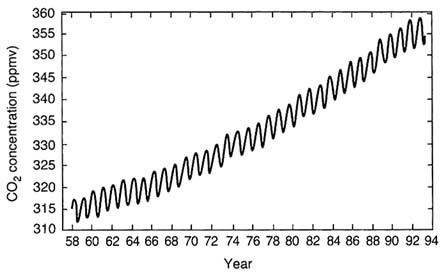
FIGURE 2-1 Accurate, sustained monitoring efforts at the Mauna Loa Observatory in Hawaii demonstrated rising levels of carbon dioxide in the atmosphere—an important piece of the climate change puzzle SOURCE: Schimel et al., 1995.
technology, such as the Internet and World Wide Web data sites, will facilitate the dissemination of data, although these new channels also raise concerns about data quality and reliability.
Figure 2-2 illustrates the activities that characterize a comprehensive environmental data acquisition and maintenance program. All of these activities are critical elements of the environmental research enterprise, requiring a high degree of scientific training and skill. They must be planned by people with the same capabilities and experience associated with the other core research components (process research and tool development). In particular, it is critical that both the scientists who will operate environmental monitoring networks and the scientists who plan to use the resulting data be involved in system design, system upgrade, data evaluation, and data dissemination (Box 2-10).
The call for better environmental monitoring has been heard in many quarters (e.g., EPA/SAB, 1988; NRC, 1995c). In addition, participants in a recent national forum whose aim was to identify environmental research priorities (summarized in Linking Science and Technology to Society's Environmental Goals, NRC, 1996a) identified environmental monitoring as one of six areas requiring increased attention in the future. The federal interagency Committee on Environmental and Natural Resources has also been taking action in this area. Despite the frequent calls for better environmental monitoring, current environmental
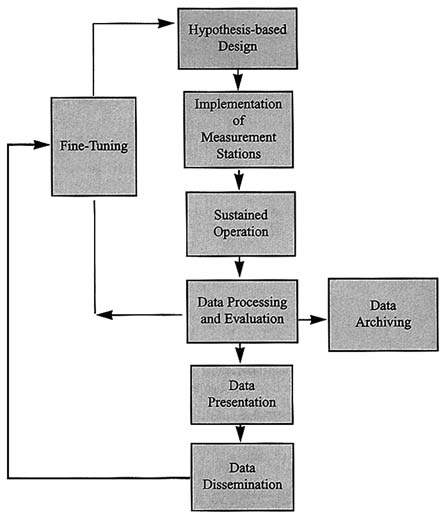
FIGURE 2-2 Elements of a successful environmental monitoring program.
monitoring programs are still inadequate for following environmental trends, evaluating management programs, and keeping records of global ecosystems.
IMPLEMENTING A CORE RESEARCH PROGRAM
The best way to deal successfully with the complexity of environmental issues and the rapid pace with which new issues can be expected to emerge is to direct a significant fraction of research funding into a core research program. It is
essential that EPA and the nation gain a deeper understanding of underlying processes relevant to current and future environmental problems. Also essential is the development of innovative environmental research tools to assess and manage environmental problems and the acquisition of high-quality, long-term environmental data required for accurate and insightful assessment of environmental trends. These enhanced capabilities and the new depth of understanding that results will establish a credible scientific basis for environmental policies and enable EPA and the nation to respond more quickly, effectively, and efficiently to environmental problems. Although predicting or avoiding all environmental surprises will never be possible, the findings from core research will help society recognize and be prepared to effectively and efficiently address these problems as they emerge.
One of the advantages of core research is its focus on relatively fewer topics with broader applicability. This can be seen by comparing Tables 2-1 and 2-2. Table 2-1 is a list of specific, observed problems while Table 2-2 is a list of the kinds of environmental processes that define and underlie all environmental systems. Nevertheless, in a climate of limited resources, choices will have to be made even among core topics. This chapter identified a range of current and emerging issues and described some broad core research program areas worth pursuing. Difficult choices will have to be made, and it is essential that EPA develop the in-house capability necessary to make these choices.
Emphasis should be placed on projects with direct relevance to EPA's mission: investigations of risk assessment methodology are likely to take precedence over studies of human population control, although the latter is far from irrelevant to EPA. Cross-cutting, interdisciplinary studies that draw on findings from different fields will be of particular value. After broad program areas are selected, a key criterion for selecting research projects is the quality of the proposed science and the demonstrated ability of the investigators, as determined by a peer-review process.
Of course, many organizations other than EPA also play a role in carrying out elements of a core environmental research agenda. Priority should be placed on work not already well covered by other agencies and organizations, as discussed in Chapter 4.
Once key processes, tools, and data needs are identified, a multi-year commitment is needed to make progress on those topics. Priorities within core research are unlikely to change much over time. To realize the benefits of core research, it is necessary to "stay the course," allowing the difficult and often unpredictable nature of scientific investigation to play out. To be useful, data collection must be an ongoing effort.
Questions have arisen about EPA's ability to conduct a successful core environmental research program. However, the committee feels that it is crucial for the agency to maintain and enhance this capability. Since EPA will, by statute, be compelled to continue to pursue problem-driven environmental research in a
|
BOX 2-10 The Challenges of Long-Term Ecosystem Monitoring A significant difficulty in studying the environment today is the lack of systematically collected historical information. An organized network of ecosystem monitoring systems is needed for several purposes including the following:
The task of designing an adequate ecosystems monitoring program is daunting. A host of chemicals found in the environment affect ecosystems and human health. In addition, information is needed for large numbers of organisms. The difficulty of developing an environmental monitoring program is in determining what to monitor, where, and for how long. While in the past the federal government has monitored human disease outbreaks and has collected data on the weather, stream flow, and tides as basic information needed for societal planning, no similar data collection effort has ever been implemented and funded to monitor the condition of the broader environment. Several federal agencies have established limited ecosystem monitoring programs in the past decade. The USGS's National Water Quality Assessment Program serves to assess the quality of the country's ground and surface waters, and EPA's Environmental Monitoring and Assessment Program monitors eight resource types. In addition, NOAA monitors trends in long-lived atmospheric trace gases, the Forest Service's Forest Health Monitoring Program and NASA conduct satellite-and ground-based monitoring for ozone and other stratospheric gases. However, none of these programs is adequately integrated to provide the data needed for thorough environmental assessments. Designing an effective environmental monitoring network requires substantial input from the scientists who will use the data. Environmental monitoring design should be hypothesis driven and linked to cutting edge |
|
research. The scientific community must also play key roles in implementation of the network and analysis of the results (NRC, 1995c). An effective monitoring network will require significant multidisciplinary and interagency cooperation. The sheer magnitude of the task and scarcity of resources call for agency programs to complement one another. Current cooperative efforts among federal agencies and the scientific community to integrate and coordinate monitoring activities, including work on compatibility of data from various activities, should be fostered. |
variety of areas, EPA will need to draw on the insights and capabilities that an effective core environmental research program will yield. In practice, success in both problem-driven and core environmental research is dependent on the cross-fertilization achieved when scientists in the same organization or even the same scientists are vigorously pursuing both types of research activity.
At the same time that a solid program of core research is being established, decisions must be made about specific problems to be tackled in the problem-driven portion of the research program. As discussed above, problem-driven and core research are not separated by clear intellectual distinctions but rather by impetus and motivation. The former seeks to understand a single issue in depth and propose remedies, while the latter pursues the broad process knowledge, tool development, and data acquisition required to obtain a systematic and general understanding of the environment, including our effects on it and its effects on us. Findings in one area spark advances in the other in a continuous, mutually beneficial cycle, with both together achieving far more than each alone.


