
4
Immigration's Effects on Jobs and Wages: First Principles
What impact does immigration have on the U.S. economy? Economic theory points to possible effects on the employment and wages of domestic workers, U.S. trade with other countries, the size and growth rate of the economy, and the prices that Americans pay for goods and services. Given the broad scope of these potential effects, this chapter and its companion, Chapter 5, necessarily cover wide ground. The evidence presented in Chapter 4 relies on theoretical insights of the likely effects, whereas Chapter 5 offers a comprehensive empirical documentation of the actual effects.
Our theoretical presentation in this chapter relies on a ''first principles" discussion of immigration's likely impact on domestic labor markets. This treatment highlights the main insights from economic analysis about the effects of immigration. While our primer is written principally for noneconomists, economists may also be interested in the panel's collective judgment (with which some may disagree) about what the essential truths are. In particular, the chapter is not offered as a technical contribution to an extremely rich and growing literature in economics, from which we have borrowed extensively. Moreover, the panel decided not to cover all possible theoretical scenarios, from which an array of alternative outcomes becomes possible. Rather, we believe our most important task is to provide its best professional judgment about which models accurately capture the most salient impacts of immigration on labor markets.
To highlight these essential insights, we start with a very simple model to demonstrate that, on balance, immigration benefits the American economy. This model is then extended to provide a richer set of implications about the distributional impacts of immigration on the wages of domestic workers, the adjustments in the location of domestic employment, and the effects on the prices of domesti-
cally produced goods and services. This extension also illustrates how trade with other countries modifies the economic impacts of immigration.
Our initial theoretical model is static—that is, it examines immigration's impact at a moment in time. This issue is addressed in the second half of this chapter, which discusses the channels through which immigration may affect economic growth.
Chapter 5 focuses on the empirical evidence concerning the role of immigrants in the labor market. The issues covered range over the changing relative economic status of immigrants, their ability to assimilate economically, the effects of immigration on the wages and employment of native-born workers, and the impact of immigration on the prices of goods and services.
First Principles: Labor Market Effects of Immigration
Whether native-born Americans gain or lose, immigration most directly affects the welfare of immigrants themselves. Immigrants come with the expectation that they will gain from immigration. If they had not felt that they would gain, they were free not to immigrate. Economic betterment is only one of many reasons why immigrants come here. Some may come expecting economic loss, but this must be offset by higher perceived gains in other things they value, like political freedom or reunion with their families. These gains are all before the fact. It may turn out that some immigrants are disappointed with life in their new country and some who fail to realize a gain return to their country of origin.1 Beyond the immigrants themselves, their immigration may have implications for the economic well-being of those who remain in the sending countries. Because immigration reduces labor supply in those countries, the income of other workers rises and the income of other factors of production falls there. But such effects are beyond the scope of the panel's work and are not dealt with in this report.
Baseline Analysis
The easiest way to see how immigration affects economic outcomes is to take a very simple and highly aggregate view of the economy as a system that combines two inputs—one for which immigrants are good substitutes, and the other for which immigrants are complements—to produce a single final good, which we can think of as gross domestic product (GDP).2 In the very simple
model, there is no trade between nations, so America consumes what it produces. Even this highly stylized model illustrates fundamental points about the effects of immigration on the domestic economy. Later, we relax some of these simple assumptions to obtain an even richer set of theoretical implications about the effect of immigration on the domestic economy.
This baseline analysis focuses first and foremost on immigration's direct effect on the economy through the addition of workers to the labor force. At the most basic level, immigration increases the supply of labor in the economy. More labor means more goods and services being produced, so that national output (GDP) rises.
Immigration also affects the prices of the inputs that are used to produce these goods and services. Those inputs for which immigrant labor substitutes will suffer as the prices of their services fall. Simply put, "substitutes" means two things that are very similar to one another. As a homely example, red apples and green apples are almost perfect substitutes, so that an increase in the number of red apples would not only reduce the price of red apples, but also simultaneously lower the price of green apples by about the same amount. In the context of immigration, whereas we shall see many immigrants are unskilled laborers, the strong presumption is that immigrants are substitutes for domestic unskilled labor.3 Therefore, an increase in the number of immigrants will generally decrease the wages of domestic unskilled workers.
Immigrants are not substitutes for all domestic workers. A disproportionate number of immigrants are low-skilled relative to native workers, and so tend to be poor substitutes for workers other than the low-skilled—that is, they do not do the same things at all. In the jargon of economics, two factors that are not substitutes are called "complements." For a simple example, think of supervisors and production workers. Suppose that, for every 50 production workers, we need one supervisor. If we increase the number of production workers, we will need more supervisors and their wages will rise. An increase in the number of immigrants, then, will raise the wages of those domestic workers who are their complements. The common presumption is that skilled domestic workers are complements for immigrants, so that an increase in the number of immigrants will raise the wages of domestic skilled labor. Capital may also be a complement to immigrant labor, although the evidence on the complementarity of unskilled labor and capital is more ambiguous than that of skilled and unskilled labor. In summary, an increase in immigration flows will lead to higher incomes for productive factors that are complementary with immigrants, but lower incomes for factors that compete with immigrants.
This very simple model implies that an increase in immigration will lead to an increase in national output, an increase in the income of complementary fac-
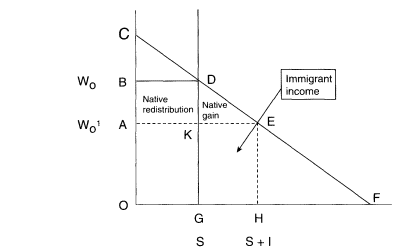
Figure 4.1
Effects of an influx of immigrants on a simple model of the labor market.
tors, and a reduction in the income of substitute factors. Since immigrants to the United States are disproportionately low-skilled workers, people usually think of the substitute input as unskilled labor and the complementary input as capital or skilled labor. But large influxes of immigration in some highly skilled workers, such as mathematicians and nurses, imply that some highly skilled natives will also see their wages or job opportunities worsen with immigration while capital or less skilled labor gains.
To sum up, immigration makes national output go up, some domestic workers suffer, and other workers benefit. Although it clearly begets winners and losers, can we make an overall statement that the winners win more than the losers lose, so that in the aggregate native-born Americans are better off? With plausible assumptions about factor supply and returns to scale, we show that immigration produces net economic gains for the native-born.
To understand this perhaps surprising result, we use a simple diagram (Figure 4.1). In the simple world portrayed by this diagram, we have two types of domestic workers: those who are perfect substitutes for immigrants (unskilled labor) and those who are complements (skilled labor).4 Only one good is produced (GDP), and the numbers of unskilled and skilled domestic workers are fixed. Figure 4.1 plots the demand curve (CF) for domestic unskilled workers.
Before immigration, there are S domestic unskilled workers, who are all paid
a wage W0 (the wage that equates demand and supply), so that the total amount that domestic unskilled workers are paid is S times W0, or the area OBDG. Although we deal explicitly only with unskilled workers in this diagram, we can also determine how much skilled domestic workers are paid. To see this, note that the height at each point along the demand curve is the value of the extra national output produced by another unskilled worker.5 Therefore, total national output (GDP) is the area underneath the demand curve up to S unskilled workers (OCDG) so that the remainder (BCD) is the amount paid to domestic skilled workers.
Now let new immigrants come into this country, increasing the supply of all unskilled labor in the work force to S + I. The new wage that equates the demand and supply of unskilled labor falls to W01; that is, the wage of substitute domestic unskilled workers falls to W01 . Unskilled domestic workers are clearly worse off. Since the total amount that all unskilled domestic workers are paid falls to OAKG, the domestic unskilled workers lose ABDK as a result of immigration. Unskilled immigrants are paid the same wage as domestic unskilled workers so, as a group, immigrants receive the area GKEH.
What about skilled domestic workers? Before immigration, they received the area BCD, but what do they get now? Once again, we can calculate their incomes as a residual. With these new immigrants added to the workforce, total national output (GDP) will rise, so that it now equals the area under the demand curve up to the total number of unskilled workers, S + I. Instead of their preimmigration incomes of BCD, domestic skilled labor now receives the area ACE (everything that isn't paid to either unskilled domestic workers or immigrants). Total GDP is now the area OCEH, so that the value of domestic output has increased by the area GDEH. But new immigrants get only the rectangle GKEH, so that, on net, domestic workers must gain by the size of the triangle KDE. Immigration thus raises national output and national output per domestic worker.
One way of seeing that the native-born must gain from immigration in this simple model is to recognize that new immigrants help produce new goods and services, but they are paid less than the total value of these new goods and services. The rest goes to domestic residents, who collectively are better off than before, by the triangle KDE. 6
Figure 4.1 also illustrates that, although the net gain is positive domestically, some workers may lose and others may gain. In fact, although domestic unskilled workers lose ABDK, domestic skilled workers gain ABDE. The area in common
is the rectangle ABDK, which is simultaneously (and equally) a loss to domestic unskilled workers and a gain to skilled domestic workers.
Therefore, although immigration yields a positive net gain to domestic workers, that gain is not spread equally: it harms workers who are substitutes for immigrants while benefiting workers who are complements to immigrants. Most economists believe that unskilled domestic workers are the substitutes, so their wages will fall, and skilled domestic workers are complements, so their wages will rise.
The potential size of this redistribution among the native-born compared with the size of the net national gain is one reason why our national political debate stirs such strong emotions. As Figure 4.1 indicates, at least in this simple economy, the magnitude of the redistribution rectangle is proportional to the number of unskilled domestic workers. In addition to being a triangle (which alone would make it half as large as the redistribution rectangle), the size of the net national gain is proportional to the immigrant flow (generally a much smaller base). Consequently, the redistribution among domestic workers could be large relative to the positive gain to the nation as a whole. There is a good argument that specific policies should be based only on whether a national gain or a national loss exists, and that we should use other policies to achieve our desired income distribution. However, the magnitude of redistribution relative to the aggregate national gain is clearly one important element in the national political debate.7
From the diagram, it is also clear that the magnitude of the net gain to the domestic economy may depend on the magnitude of the loss to substitute domestic labor. The area of the triangle in Figure 4.1 that represents the net gain to the domestic economy is equal to one-half multiplied by the number of new immigrants times the fall in the wages of domestic unskilled workers. Since the number of immigrants is fixed, the bigger the drop in the wages of domestic unskilled labor, (W0 - W01), the larger is the net rise in the incomes of domestic workers. If the wage of domestic unskilled workers did not fall, no domestic worker (unskilled or skilled) would gain or lose, and there would be no net domestic gain from immigration. In this case, the value of all the new domestic output immigrants produced would go to the immigrants themselves.
There is a direct correspondence between the fact that some domestic workers suffer wage reductions and the fact that we gain as a nation. This wage reduction is, in fact, the reason that the nation as a whole gains from immigration. This simple point is often lost in the voluminous empirical literature, which
searches long and hard to find those native-born Americans who experience wage reductions that are then labeled the "cost" of immigration. Although these wage declines are real losses to these affected workers, they are also the source of a national "gain" from immigration.
The gains and losses of immigration are therefore closely intertwined. As long as immigrants substitute for some natives, the larger the loss to those natives, the greater the benefits of immigration to the aggregate domestic economy. Similarly, if immigration has little effect on the aggregate economy, it must have little adverse effect on native workers for whom the immigrants are good substitutes.
This analysis focuses attention on the extent to which natives and immigrants are similar and whether they are substitutes or complements at workplaces. If immigrants have skills that substitute for those of some native workers, those native workers will lose from immigration. If immigrants have skills that complement those of other native workers, those native workers will gain from immigration. In the extreme, if natives and immigrants had utterly different distributions of skills—if, say, all immigrants had less than a grade school education and all natives were high school graduates or better—immigrants might be complements to all native labor. Then immigration would improve the economic position of all natives and harm none. Immigrants might also take jobs that no native would or could take. This would enable the economy to produce goods or services that it would otherwise not produce.
Finally, to close the logical possibilities, assume for a moment that the immigrants who arrive are exactly the same as the domestic workers who are already here. If immigrants have exactly the same skill distribution as domestic workers (the same fractions are unskilled and skilled workers) and if they have brought sufficient capital with them to maintain the U.S. capital/labor ratio, then natives will neither benefit nor lose from immigration. In this case, all inputs and national output will increase by the same amount and the wages of all workers will remain constant.8 It is only because immigrants and native workers differ from one another that immigration yields a net national gain. These differences between natives and immigrants, which may well be a legitimate source of concern about the ability of immigrants to assimilate socially and culturally, are the very reasons why the nation gains economically from immigration.
This analysis directs attention at differences between the skill distributions of natives and immigrants in analyzing the economic effects of immigration. Table 4.1 gives the distributions of natives and immigrants by educational attainment in the 1990 Census of Population. Columns 1 and 2 show the distributions for the two groups for the United States as a whole, and Columns 3 and 4 the
TABLE 4.1 Percentage Distribution of Immigrants and Natives by Educational Attainment, 1990, United States and California
|
|
United States |
California |
||
|
Years of Educational Attainment |
Native |
Immigrant |
Native |
Immigrant |
|
Less than 9 |
4.2 |
23.4 |
2.2 |
28.6 |
|
9-11 |
15.0 |
16.0 |
11.9 |
17.4 |
|
12 |
32.0 |
20.1 |
24.0 |
16.7 |
|
13-15 |
29.5 |
21.1 |
37.5 |
20.5 |
|
16 |
13.8 |
12.0 |
16.4 |
11.0 |
|
16+ |
6.6 |
8.4 |
7.9 |
5.8 |
|
Source: Calculated from U.S. Bureau of the Census (1993). |
||||
distributions for the two groups for California. The educational attainment of immigrants differs substantially from that of natives. Many among the immigrants have very low levels of education, particularly in California, and thus may be complementary with most American workers. Many among the immigrants have college degrees or better, and thus may compete with native college graduates and be complementary with less skilled Americans. Many also have 9 to 11 years of education and may compete with native high school dropouts and be complementary with more skilled Americans. But the salient finding in the table is the large proportion of immigrants with less than nine-years of schooling, 23.4 percent in the United States and 28.6 percent in California, who may be complementary with most native American workers.
New immigrants lower the wages of groups for which they are close substitutes. The closest substitutes for newly arriving immigrants may well be prior waves of immigrants, rather than native workers. We show in Chapter 5 that, in terms of the jobs they do, newly arriving immigrants most closely resemble their immediate predecessors. Therefore, the bulk of the wage reduction induced by new immigrants may be concentrated on prior immigrant waves.
In sum, the baseline analysis suggests that immigration raises national output and on net improves the economic well-being of the native-born. Immigration also redistributes income from workers who compete with immigrant labor to factors that complement immigrant labor. The analysis also implies that Americans benefit most from immigrants whose skills are very different from those of natives.
Model Extensions
This very simple model effectively highlights many of the fundamental implications about the economic effects of immigration, but other implications can be illustrated only by taking a broader perspective. These implications include
the effect of immigration on the prices of the goods we consume, the displacement of native workers (that is, the potential changes in where they are employed), and the relation between immigration and international trade.
As before, we initially assume that the United States is a closed economy—that is, it does not trade with other countries, and that total supplies of domestic factors (skilled and unskilled labor) are fixed. The United States then still must consume only what it produces. The fundamental extension is that we now let the U.S. economy produce two goods instead of only one. Although this change may sound trivial, it allows immigration to alter the relative prices of goods and services, so that domestic consumers can now gain or lose depending on which prices change the most. It also allows domestic labor to choose the sector of the economy in which they will work, so that sectorial displacement of domestic workers is possible. Because the analytics of the model can quickly become quite complicated, we present only a brief summary of results in the text. Appendix 4.A presents a detailed model on the analytics of the gains from immigration in this two-good, two-factor case.
In this simple economy, we now have two goods (call them X and Y) being produced efficiently with both unskilled and skilled labor. 9 Both goods need both types of labor, but they differ in the relative amounts of each factor they need. For convenience only, assume that good X needs a lot of unskilled labor relative to skilled labor, and good Y definitionally is the opposite. These factor proportions are crucial because they determine which sector immigration will affect more.
Without immigration, and with no international trade, our hypothetical economy efficiently produces and consumes a certain amount of good X and a certain amount of good Y.10
What happens to this economy if there is an inflow of immigrants? Once again, assume that these immigrants are unskilled compared with domestic workers. This relative increase in the supply of unskilled labor will, as in the very simple economy, lower the wage of unskilled labor relative to the wage of skilled labor. As before, unskilled domestic labor suffers a loss and skilled domestic labor a gain from immigration. Because good X uses more unskilled labor relative to skilled labor, this increase in immigration will also lower the price of good X relative to the price of good Y.
These changes in relative prices have a number of important consequences. Because the relative price of good X falls, domestic consumers will want to consume more X and less Y. Among native consumers, those who like good X the
|
9 |
As before, each good's production function is characterized by constant returns to scale. |
|
10 |
This situation is depicted graphically in Appendix 4.A: Figure 4.A3, which plots the maximum amounts of X and Y that can be produced efficiently domestically. This situation is depicted as point A on this graph. |
most—who consumed relatively more of it before immigration—will gain the most from its falling price, and those who like good Y the most will gain the least. The example is not fanciful. Immigrants are highly concentrated in certain sectors of the economy, so that relative price effects are possible. Many observers have argued that one of the primary effects of immigration is that it has reduced the cost of household service (cleaning house, caring for young children), a benefit that may be largely confined to the well-to-do. In Chapter 5, we go beyond mere speculation by providing solid empirical evidence on how widely concentrated or dispersed these price effects are across domestic consumers.
With this expanded model, immigration has distributional effects: skilled domestic labor and domestic consumers of immigration-intensive products gain, and domestic unskilled labor and domestic consumers of goods not produced by immigrants lose or gain the least. But can we go beyond simply distributional gainers and losers to whether these cumulative domestic gains or losses are positive or negative in the aggregate? It turns out that we can, and, on net, the native-born will still gain from immigration.11
Domestic workers will shift their production to good Y, the good that they are better at, to take advantage of its higher relative price. One source of the native gain from immigration is that it allows the nation to use domestic labor more productively, specializing in producing goods in which we are relatively more efficient. In short, if immigrant labor can produce something for $3.00, what do we gain from producing it ourselves for $3.50? We can let immigrants produce it and pocket the 50 cents we save.
Because of the shift in domestic production, some domestic workers, especially the less skilled ones, who had been working in industry X, may now have to move to industry Y. In addition to wage effects, immigration has "displacement" effects. Some domestic workers will be "displaced" by immigrants, in the sense that they will now have to work in a different industry.
In the simple model, we are assuming that the process of displacement is costless, in that displaced workers will eventually find employment in the other sector. This is a good characterization of the long run, but in the short run adjustment does have costs. It may take time to find this new job, with all the anxiety associated with that search. Changing jobs may mean moving out of one's neighborhood, city, or even region, with a loss of family, friends, and familiar schools and churches. Many Americans who perceive themselves to be displaced by immigrants resent having to make this adjustment. "Perceive" is an important word in this sentence because an attribution problem emerges when it comes to
|
11 |
To see this visually, return to Appendix 4.A: Figure 4.A3. Before immigration, the economy was producing and consuming at point A. Immigration lowers the price of good X relative to good Y. Let this new relative price be depicted by the slope of the line L0L0. After compensating immigrants for their contributions, the domestic budget corresponds to all points on the line L0L0. |
immigration. Some may associate their displacement with immigrants when the real causes lie elsewhere.
Whatever its costs, more efficient domestic production is not the only gain from immigration. There is also the gain associated with specialization in consumption. Just as the presence of immigrants allows natives to specialize in production, it allows them to consume something different from what they can produce themselves.12 As a nation, we may be very good at producing good Y, but we really like good X. Immigration is one way we can have the best of both worlds; making what we are good at and also consuming what we like. The welfare gain to natives from immigration thus can be decomposed into two parts: the gain from shifting production toward more valuable activities that use the relatively more skilled native labor, and the gain in consumption toward commodities whose cost has fallen.13
In sum, the net welfare gains from immigration stem from two sources. By having immigrants specialize in the production of goods requiring a lot of low-skilled labor, it allows us to shift our domestic production toward those goods (Y) in which natives are relatively efficient (those that need a lot of skilled labor) and away from those that can be produced more cheaply by immigrants. The second component is the gain in consumption. Before immigration (and with no international trade), we could consume only that which we could produce domestically. Immigration breaks this rigid link between domestic consumption and domestic production, allowing us to produce goods of which we are relatively efficient producers and to consume those goods that conform to our tastes.
The models thus far highlight the potential substitution of immigrant labor for some competing native workers and the possible redistribution among native workers. Such models may well exaggerate the harm and understate the economic benefits from immigration. Immigrants may not directly substitute for many domestic workers at all if immigrants produce goods and services that largely would not otherwise have been provided. For example, we might well not have any domestic textile industry (or any domestic workers, most of whom are unskilled, in it) if it were not for immigrants. In this case, the gains from immigration are not reflected in wages at all, but in the lower domestic prices of goods related to textiles. All domestic consumers gain in this case, including unskilled domestic labor.
These purely domestic gains from immigration do not involve only substitutes for imports. As we shall see in the next chapter, immigrants are extremely
|
12 |
In Appendix 4.A: Figure 4.A3, domestic factors alone would produce at point C, but domestic consumers will consume at point E. |
|
13 |
In Appendix 4.A: Figure 4.A3, the overall welfare gain to domestic workers is represented by the difference between U2 and U0. The movement from A to D represents the gain associated with shifting consumption, and the movement from D to E represents the gain associated with shifting production from A to C. |
specialized in the activities in which they work. Even though their numbers are small, immigrants numerically dominate some activities, especially in services that cannot be imported. Such activities include household and child care service in private homes and the ownership, cooking, and staffing of ethnic restaurants. Although one could speculate that a native-born cook is displaced by a foreign-born Chinese cook in a Chinese restaurant, many of us may no longer believe that the food we are eating is really Chinese if it is not prepared by a Chinese cook. The more realistic alternative, absent immigration, is not that native-born cooks will staff Chinese restaurants, but that there will be a lot fewer Chinese restaurants around. All domestic consumers, especially those who like Chinese food, would lose. Similarly, many Americans would have to do without household help entirely if not for immigrants, who almost completely dominate that field. In this case, once again, there would be few domestic losers and only domestic gainers from the lower price of household service.
To the extent that immigrants specialize in activities that would otherwise not have existed domestically at that scale, immigration benefits all the native-born. In this case, there is little substitution against domestic workers, and domestic consumers gain from the availability and lower prices of these new services.
Immigration and Trade
As the previous section strongly hinted, immigration is in many ways similar to international trade in products. Viewed through immigration lenses, trade is a form of immigration in which workers from foreign countries are embodied in traded goods rather than coming to the United States and producing those goods here. The primary effect of both immigration and international trade is to allow us to specialize in producing those things we are good at and to consume something other than what we can produce ourselves.
Exactly the same reasons that explain the net national gain from trading with other countries explains the net national gain from immigration. First, a gain arises from shifting productive resources toward more valuable activities. Another gain flows from shifting consumption toward commodities whose cost has fallen. Although some people in the trading countries may be harmed by this specialization, the important lesson, as we have seen, is that the gains from trade outweigh the losses. The winners can afford to compensate the losers and have something left over.
Broadly speaking, immigration and international trade are alternative ways to achieve the same goal. Through either mechanism, we can obtain inputs that are relatively more abundant overseas than they are in our own country. Given the high level of human capital (skill) in the United States, we can import low-skilled workers (through immigration), or we can import the goods such workers make.
That immigration and trade are substitute ways to obtain the same output suggests that changes in the number of immigrants will have less effect on native incomes in the presence of relatively free trade than they otherwise would. Trade with other nations will move us closer to our desired consumption of X and Y,14 so that the remaining gains achievable from immigration are lower.
For example, assume that the United States reduces the number of immigrants working in textiles, so that domestic prices for textiles rise. Domestic consumers might then buy foreign-produced textiles (now relatively cheaper), reducing the demand for native textile workers as much as immigration would have done. Commensurately, an increase in immigration could simply reduce textile imports, with no effect on the demand for native labor. In the limit, if trade and immigration were perfect substitutes, either would by itself produce the same outcome on native labor.15
But there are differences between immigration and trade that imply that these two paths for economic adjustment are not perfect substitutes in their effect on the labor market. One difference is that immigration reflects the movement of a stock of workers: an immigrant who comes permanently to the United States competes with natives for every year of his or her working life. Trade is a flow, dependent on exchange rates and trade policies: this year's trade deficit may turn into next year's trade surplus, and this year's import industry may turn into next year's export industry.
A second difference between the effects of immigration and trade is that natives can escape competition with imports by working exclusively in nontraded goods, such as government and retail trade, and various nontraded services. But they cannot escape competition with immigrants, who can substitute for them in both traded and nontraded goods and services.
Trade economists stress how trade affects the distribution of output and employment among industries, and the economic advantages that accrue from each country doing what it does relatively best—the concept of comparative advantage. If the United States has a comparative advantage in, say, goods that use highly skilled labor, we will export those goods and import goods that use less skilled labor, which raises U.S. and world income. As a result, the composition of our national output will shift toward sectors in which the United States is relatively more efficient and away from sectors in which it is relatively less efficient than other countries.
Immigration should also affect the industrial composition of output and employment and the exchange rate and terms of trade as well. When immigrants come into the United States and work in import-intensive activities, resources will shift toward those sectors. Absent immigration, the garment industry in the
|
14 |
Point E in Appendix 4.A: Figure 4.A3. |
|
15 |
Taking the argument a step further, in a world with highly mobile capital, absent trade and immigration, capital might move across countries, producing similar outcomes. |
United States might be much smaller or even not exist. The immigrant-induced increase in import-competing activities should reduce imports of textiles. If all else was the same, this would raise the value of the dollar on world markets, since we would demand less foreign currency to purchase imports. The terms of trade (the price at which we sell our exports compared with the price of imports) would thus shift in our favor. At the same time our comparative advantage would be smaller and we would be gaining less from trade. In the extreme, immigration could equalize the composition of labor skills and capital/labor ratios across countries, eliminating incentives for much of trade. In principle, so too might international flows of capital. That international trade has grown so rapidly implies that the world is very far from such a situation.
When immigrants come and work in nontraded sectors, such as restaurants, the nation's industrial composition and pattern of trade are also affected. An increase in the number of restaurants will shift resources to that sector and to food and beverages and related activities, drawing native complementary labor and capital from other industries, including the export and import-competing sectors. The traded goods sectors will decline, and so will the foreign exchange value of the dollar (for we will be producing fewer exports and importing more foreign goods) until the nation's balance of international trade reaches some sort of equilibrium.
By contrast, immigrants who come and work in export-intensive industries shift the industry mix toward those sectors, increasing the nation's comparative advantage in those goods. If more foreign engineers come to the United States, U.S. engineering firms will have a greater supply of labor and thus a competitive edge over companies in countries whose engineers came to the United States. Exports of U.S. engineering will expand, and, if we are a big producer of those goods, their prices could change as well.
All of these possibilities depend critically on the kind of immigrants the nation attracts and on the sectors in which they find employment. Although there are no firm estimates about the overall magnitude of the relation between immigration and trade (let alone about them and capital flows), the statistics in Table 4.2 suggest that, on average, immigrants are disproportionately employed in import-competing sectors and thus that they largely substitute for imports. Analyses that ignore this pattern may overstate the possible adverse effects of immigrants on low-skilled natives.
Looking at immigration in this way suggests that immigrants are more likely to work in import-intensive industries than in export-intensive industries. In fact, given the weighting calculation provided in the table, 12.8 percent of workers in import activities are immigrants, whereas only 10.1 percent of workers in export activities are immigrants (see Table 4.2). At the industry level too, immigrants are more involved in import activities than in export activities. In the top 10 percent of importing industries, immigrants make up 19.9 percent of the workforce, compared with 9.0 percent of workers in the top 10 percent of export-
TABLE 4.2 Percentage of Immigrants in Import-Intensive, Export-Intensive, and Other Industries, 1990
|
Industry |
Percentage of Immigrants |
|
Import-intensive manufacturing industries |
12.8 |
|
Top 10% of import-intensive |
19.9 |
|
Export-intensive manufacturing industries |
10.1 |
|
Top 10% of export-intensive |
9.0 |
|
Agriculture |
14.7 |
|
Service industries (nonmanufacturing; nonagricultural) |
8.7 |
|
Retail trade |
10.4 |
|
Personal services (nonhousehold) |
15.6 |
|
Household services |
31.4 |
|
Source: Calculated from U.S. Bureau of the Census (1993). Percentage of immigrants in import-intensive and export-intensive industries defined as a weighted average percentage of immigrants in an industry, where the weights are the industry share of imports or exports. See Borjas et al. (1997). |
|
ing industries.16 Finally, immigrants are more likely to work in manufacturing than in services (which are usually nontraded), but they are overrepresented in several service sector areas.
Returns to Scale, Bottlenecks, and Externalities
There are other channels by which immigration can affect the domestic economy and native workers. In addition to its direct effects through increasing the labor supply, immigration may have indirect effects on national output and the job market. It may create externalities of various forms, for instance, through economies of scale in production; or it may alter the demand for products, or change the composition of industrial output and the terms of trade (the price of exports relative to imports).
Assume that the U.S. economy is subject to increasing returns to scale, in the sense that having a larger economy raises the productivity of domestic labor and capital. Perhaps some industry needs a critical mass to take advantage of modern technology. If immigration gives the economy that mass, it can increase GDP by more than the triangle in Figure 4.1.
Alternatively, assume that the U.S. economy is subject to decreasing returns to scale, in the sense that having a larger economy reduces the productivity of domestic labor and capital. Perhaps the presence of more people worsens congestion in cities or pushes pollution above some critical value. In this case, immigration will increase GDP by less than the triangle in Figure 4.1 or may even reduce it.
Some economists believe that increasing returns—agglomeration effects—help explain the pattern of economic growth. Some industries claim that they need certain kinds of immigrant workers to survive. In the 1960s, Europe admitted many guest-workers to meet high demand for labor, presumably facilitating rapid economic growth. On the other side, some believe that decreasing returns—crowding effects—threaten economic growth.
No strong evidence suggests that any of these effects dominates the aggregate economy, although one can cite examples of each. Some claim, for instance, that the success of the Silicon Valley high-technology industry depends on the benefits of having lots of firms engaged in the same line of work, and that the availability of foreign engineers and computer experts helped create the critical mass. On the other side, lengthened commuting time reflects possible diseconomies of scale due to a larger population, to which immigrants contribute. Hard evidence on the magnitude of returns to scale could alter the baseline analysis, but at present we simply note the possibilities that immigration may have effects beyond raising the supply of labor.
In our baseline analysis, we assume that the U.S. economy is characterized by constant returns to scale—that is, growth in the size and scale of the economy neither reduces nor increases the productivity of labor and capital. Potentially, factors such as increases in congestion in cities and rising pollution levels could cause productivity to fall as the size of the population increases. Conversely, many theorists of economic growth and economic historians point to the possibility of increasing returns to scale, that is, economic output increasing more than proportionately to an increase in factor inputs like labor. Similarly, agglomeration effects may lead to cost decreases as the scale of economic activity expands. We believe that the assumption of constant returns to scale is the most reasonable starting point for the analysis of effects of immigration. Existing research has not convincingly demonstrated that, in the aggregate, either decreasing returns due to fixed factors or congestion effects, or increasing returns, are more compelling alternatives. We caution, however, that this assumption of constant returns to scale is intended for analysis of marginal changes from the existing situation. The empirical work on economic growth is based, of course, on historically ob-
served magnitudes of immigration and historically observed characteristics of immigrants and their children. We would not extrapolate far beyond current levels and say that immigration flows much larger than those considered in our demographic projections would always produce economic gains. With far larger flows, and over long periods of time, the uncertainty about increasing or decreasing returns to scale would have to be resolved with sound empirical evidence.
Plausible Magnitudes of Effects
In this section, we have argued that immigration has a direct effect on labor supply that should increase GDP, possibly at the cost of reduced wages for workers who compete with immigrants. The largest benefits accrue when immigrants are complementary with most U.S. workers, when trade and immigration are poor substitutes, and when immigrants specialize in products and services that otherwise would not have been produced domestically. The largest costs occur when immigrants substitute for most U.S. workers. When trade and immigration are good substitutes, neither benefits nor costs are large.
How large might the immigration-induced benefits and costs be from the past flows of immigrants into the United States? This is a difficult question, but under plausible assumptions, we can indicate the magnitudes of the effects, barring huge positive or negative externalities.17 Assume that the native labor force consists of workers with less than a high school education, for whom the majority of immigrants are a good substitute, and workers with high school or more education, who are complements with most immigrants. Suppose that immigration raised the ratio of workers with less than a high school education to other workers by about one-third. According to Table 4.1, nearly 20 percent of the native workforce would fit into the substitute group and 80 percent into the complementary group of workers. Further assume that changes in immigration do not spawn offsetting changes in trade patterns, which would reduce the effects of immigration.
Under these assumptions, the increase in the number of immigrants raises the nation's stock of less skilled workers relative to that of more-skilled workers, which should reduce the pay of the less skilled and raise the pay of the more skilled. The magnitude of the effect on labor incomes will depend on the responsiveness of wages to changes in relative inputs. The labor demand literature (reviewed in Hamermesh, 1993) suggests that a 10 percent increase in the relative supply would reduce wages by about 3 percent. Given such a relationship, the 33 percent increase in the relative supply of less skilled workers would have reduced the wages of native high school dropouts by about 10 percent.
|
17 |
A more detailed discussion of such calculations appears in Appendix 4.B. |
Assume for simplicity that the 20 percent of the workforce who are unskilled earn 10 percent of labor incomes (they earn less than their share of the workforce because they are less skilled). Then, their share of GDP fell by roughly 1 percentage point (= .10 loss of wages x 10 percentage share of labor income). This in turn implies a 1.2 percent gain in share of GDP going to complementary native inputs and, using the model in Figure 4.1, a gain in total GDP of about 0.2 percent.18 With a GDP of roughly $7 trillion, this percentage gain translates into a gain to the total economy on the order of about $14 billion.
This calculation is, we stress, simply an order-of-magnitude estimate. If the loss of wages to less skilled natives is larger than 10 percent, the gain to other inputs and the aggregate economy will be larger. If more natives are complements with immigrants, the losses will be concentrated on a smaller group of natives and the gains more widely distributed. If trade is a good substitute for immigration, the effects will be smaller. Most important, our measures do not take into account the domestic benefits received from the lower prices of newly available services that do not directly compete with domestic labor.
Is this $14 billion a large or small effect? If it is measured relative to the total size of the economy (GDP), it looks modest indeed. Even the swelling in immigrant flows in the 1980s was unlikely to move the U.S. economy very much. Indeed, in that massive economy, no single factor can have a huge effect on relative earnings or on GDP. Using GDP as the reference standard certainly cautions us against exaggerating the possible impacts of immigration. The other view is that $14 billion is a lot of money, and that it is a net economic gain domestically. Very few other public policies would meet the test of yielding that much gain. Many factors that have only modest or moderate effects on the economy can cumulate to economic success or failure.
Others have made somewhat more sophisticated calculations of the size of the gains from immigration. Although they have not arrived at exactly the same number, their estimates are of similar magnitude. Assuming no response of the supply of capital to immigrant-induced higher returns, Borjas (1995) estimates that the approximately 10 percent of the American workforce who are immigrants added roughly 0.1 percent (one-tenth of one percent) to the GDP accruing to other Americans—or about $7 billion in a $7 trillion economy. Under the same assumption, Johnson (1997) estimates that a hypothetical increase in unskilled immigrants by 10 million (roughly 8 percent of the U.S. workforce) would raise national output accruing to natives by just $2.5 billion—or about 0.036 percent of GDP. Borjas et al. (1997) estimate a gain to natives of $9.1 billion—
|
18 |
The gain in total GDP is the area labeled ''Native Gain" in Figure 4.1, which is 1.65 percent of the part of GDP going to unskilled labor (calculated as the 10 percent decrease in wages times the 33 percent increase in supply times one-half). Multiplying that figure by unskilled labor's share of GDP (10 percent) to express the gain in terms of GDP, one obtains 0.165 percent. The gain to complementary native inputs is just the sum of the loss to unskilled natives and the net gain. |
or about 0.13 percent of GDP. These are all small numbers relative to the size of the economy, so that such effects would be hard to detect in any aggregate data, given the many factors that influence GDP.19
All of these assessments place the economic gains to the country from immigration in the same rather modest range of magnitude: from $1.1 billion to $9.5 billion in a $7 trillion economy. This consensus reflects what economists view as plausible values of the relevant elasticities of factor prices to changes in labor supplies, or of the economic parameters that govern an aggregate production function. These empirical estimates suggest a net gain from immigration of from $1 to $10 billion dollars a year. While this is a small number relative to GNP, it is not a trivial number in absolute terms. Not many changes in policies would produce benefits as large as that number.
Overall, barring sizable immigration-induced economies or diseconomies of scale, the most plausible magnitudes of the impact of immigration on the economy are modest for those who benefit from immigration, for those who lose from immigration, and for total GDP. The domestic gain may run on the order of $1 to $10 billion a year. This gain may be modest relative to the size of the U.S. economy, but it remains a significant positive gain in absolute terms.
Growth And Immigration
To this point, our discussion about the effects of immigration on labor markets has been entirely static. That is, we have been asking what would happen to GDP or domestic wage levels at a moment in time. But immigration may also alter the rate at which economies or wages expand over long periods of time. In fact, some have argued that immigration has been a driving force in promoting the long periods of substantial economic growth of the U.S. economy.
The impact of immigration on growth is a more subtle and difficult topic than its effects on labor markets at a moment in time. On this topic, unfortunately, speculation and undocumented assertions often carry the day. Because it is necessary to know so many additional parameters, there is nowhere near the same body of solid scientific empirical evidence available on growth as exists for static labor market effects. Given the lack of such evidence, we again go back to a first-principles approach that first outlines how and through which pathways
immigration may affect economic growth rates. As in the static labor market approach, we then rely on a plausible set of parameters to assess how large or small the empirical effects may be. Our conclusions regarding immigration's effects on economic growth should be regarded as suggestive, until more solid scientific evidence becomes available.
Growth and Immigration in Historical Context
At least as far back as Adam Smith's Wealth of Nations (1776), the question of why and how the economies of nations grow, and why these growth rates are different in different nations over extended periods of time, has been a central concern of economists. When the perspective shifts from the static short-run model to long-run growth, the long run to which we refer is not simply a few years or decades. Rather, the perspective moves to generations and centuries, as we evaluate whether immigration can serve as a significant force (either positive or negative) in temporarily or permanently altering trajectories of native per capita incomes.
Our treatment of immigration must first be embedded in a plausible model that isolates the salient factors that influence the growth of economies. One of the earliest and still most widely read essays on the subject was that of Thomas Malthus (1798). Writing at the dawn of the Industrial Revolution, Malthus assumed that populations would grow exponentially with time but that food supply would grow at most linearly. The implications of those assumptions for income and wealth bequeathed both the adjective "Malthusian" to the English language and the moniker the "dismal science" to economics.
Today, the perspective is different. First and foremost, the developed nations have enjoyed a period of unprecedented prosperity and rising incomes far beyond the limits anticipated by Malthus. Consequently, the theory of economic growth has been reconsidered (more than once) in the interim. Second, the experience of nations is far from uniform. The richest, for the most part, have enjoyed increasing levels of per capita income for at least a half-dozen generations. Some have moved in only a generation or two from income levels associated with subsistence agriculture to the levels of the rich nations—notably, several East Asian economies in recent years. Still others appear to be stagnant, showing little or even negative growth rates over several decades. These widely different records are both a puzzle to be explained and a potential laboratory for understanding the factors that prevent growth and the attainment of prosperity as well as the environment that sustains steady growth.
The growth and prosperity of the Industrial Revolution were accompanied by unprecedented levels of voluntary migration. However, no obvious simple empirical relationship appears to link international migration and economic growth. Some countries that grew rapidly over the past six generations, most notably the United States and Canada, had high levels of immigration for some of
that period. Among countries with high levels of emigration, some, for example Germany and the Scandinavian countries, experienced similar growth rates and today have comparable levels of per capita income; others, for example Ireland and Mexico, have not had the same growth patterns.20
A Simple Framework for Economic Growth
Since the factors that sustain or prevent economic growth and the role of migration in this process (if any) are not obvious from history, a simple conceptual framework is necessary for interpreting the experience of nations. As before, such a framework reduces the economies of nations to a few essentials and then examines what happens to growth rates, per capita income, and wealth in the long run. In particular, this approach abstracts from the rich diversity of goods and services produced in a developed economy to a single good (GDP). A portion of the single good is consumed today, with the other portion devoted to investment, so that we can consume more in the future. In the model, the single good is produced using three inputs: physical capital (plant, equipment, and so on) and two types of labor—unskilled and skilled. Physical capital and skilled labor both depreciate (machines break down, skills become obsolete) and grow through additional investment (for example, new machines, schooling). Unskilled labor in this simple model requires no investment.
An important feature of this framework is the set of assumptions made about technology. Technology is the set of rules that determine the amount of the single good that can be produced with specified levels of inputs (capital, skilled labor, and unskilled labor, in the example). For a given technology, however, a common reference point of almost all analyses of economic growth is the same assumption of constant returns to scale that we made in the static model. If all inputs change in a certain proportion, then output changes in the same proportion.21 As before, this assumption implies that wages and returns to capital depend only on ratios of factors and not on the scale of the economy.
|
20 |
The pattern of migration from rich nations to poor nations is interesting. Large flows have been associated with colonization, for example, from Spain to Latin America and from England to the North American colonies and then Australia. This migration involved the imposition of the immigrants' culture and economy, and within a generation or two the income level of the country of origin was realized. There have been no significant migrations from established richer countries to established poorer ones. Looking more closely at the United States, rates of immigration have varied widely over time, peaking at nearly I percent of the population per year in the 1850s, 1880s, and 1900s (see Figure 2.2), and dropping to less than 0.1 percent. This historical experiment is not well suited to drawing conclusions about links between immigration and growth using simple empirical methods. |
|
21 |
The scale-free technology also implies that the ratio of output to any factor of production depends only on the relative amounts of the factors and not their absolute levels (Varian, 1984: Chapter 2). |
In the simplest variant of this model, population growth is taken as given: it can be either positive or negative, and it can be increased through fertility or immigration or decreased through mortality or emigration. A fixed fraction of output (GDP) is devoted to investment in physical capital used in production and to investment in the resources that produce skilled workers, with the allocation such that the returns to investment are the same in both forms of capital. New investment must be just great enough both to replace the capital and skilled labor lost through depreciation and to provide enough new capital and skilled labor to "scale up" these factors along with the increase in population.22 When this point is reached, all three factors continue to grow at the same rate, but all ratios—including the wages of skilled and unskilled workers and the rates of return to owners of capital—remain the same.
Immigration in the Simple Framework
This simple framework has several interesting implications for immigration. Suppose a base case in which there is never any immigration or emigration. Contrast this with a case in which there is migration, and migrants, as a group, carry with them the same mix of factors of production as natives. That is, the proportion of skilled workers is the same among migrants as among natives, and migrants bring in (or take out) the same amount of physical capital, on average, as natives.
In this case, immigration has no effect on the ratios of the factors of production in the economy, and consequently—because of the assumption of constant returns to scale—it has no effects on output per person or the distribution of income. Immigration will affect only the size of the economy: more GDP will be produced. The United States will be a bigger economy, but the average income of all of its inhabitants will remain unchanged. If immigration is confined to a limited period of time, it will change only the level, but not the growth rate, of GDP. That is, U.S. output will grow faster during the periods of immigration but will then revert back to its normal growth rate when immigration ceases.
If immigration is sustained permanently in relation to the size of the country, it will alter both the level and the growth rate of GDP but will leave income per capita unchanged. For example, if immigration is +0.5 percent of population
each year, then it will permanently affect the growth rate of total output (GDP), also by +0.5 percent. But it will not change the well-being of natives as measured by their per capita incomes because there is no long-run impact on the ratios of factors.
Therefore, given constant returns to scale, immigration will not affect long-run growth in per capita incomes of natives if immigrants are just like native-born workers. As in the static case, immigration can have permanent economic effects on native-born growth paths only if immigrants are different from the native-born.
Once again, for migration to have even temporary effects other than simply the scale of the economy, migrants must differ from natives with respect to the distribution of the factors of production they carry with them. For example, if capital and unskilled workers substitute well for each other in production, then a long-run increase in the number of unskilled workers in the economy can lower the returns to capital, as well as lowering unskilled wages and raising skilled wages.
The extent to which these factors substitute for or complement one another has been extensively studied; Hamermesh (1986) provides an extensive review. These studies find that unskilled workers and capital are weakly complementary. They also indicate that changes in factor supplies induce less than proportional changes in wages and the return to capital. If in the long run the fraction of unskilled workers in the labor force increases by 1 percent, then the ratio of unskilled workers' wages to skilled workers' wages will decline, by at most 0.5 percent. The effect on the return to capital is smaller; it is more likely to increase than decrease, but not by more than 0.2 percent. These studies also find that about half of income is returned to unskilled workers and the remainder is divided roughly evenly between capital and skilled workers. Thus, an increase in the number of unskilled workers equivalent to 1 percent of the labor force will have the effects on relative wages just described, with a 0.5 percent increase in output and little change in the return to capital.
Even if immigrants were disproportionately less skilled and owned proportionately less capital than natives, the permanent effects of immigration would be less than these demand effects alone suggest, however. The higher relative wages of skilled workers will make investment in skill acquisition more attractive to both natives and immigrants. Some natives who were unskilled before the immigration will remain unskilled and have lower wages, but some will move to skilled jobs at higher wages.23
Persistence of the Effects of Immigration on Growth
A critical feature in determining the impact of immigration on long-run economic growth is the factor mix that accompanies the immigration. A second critical feature is whether the change in the factor mix associated with immigration is temporary or permanent.
How long these effects on growth persist depends on the fertility rates of immigrants and their children and on the rate of generational assimilation of the new immigrants. High fertility of immigrants (and of their descendants) relative to that of the native-born increases the relative weight given to the characteristics of the immigrant population and perpetuates any differences between immigrants and the native-born. The available evidence suggests, however, that the fertility rates of immigrants and their descendants converge toward the national norm within two generations. Consequently, there is little reason to believe that differential rates of population growth will produce any long-term impact of immigration.
Similarly, if the children of immigrants born in the United States distribute themselves among the skilled and unskilled labor force and also save and invest in the same way as natives, the effects of an increase in immigration over one generation will be negligible one generation following that.24 The only long-run effect of a generation of increased immigration will be an economy that is somewhat larger; the growth rate and distribution of income will be unaffected. To put it simply, if the children of immigrants are just like the children of the native-born, we are back to the case in which all we are doing is scaling up the population and economy with no impact on per capita incomes. A generation of increased immigration then can alter long-run growth paths only if generational assimilation, both economic and demographic, is never complete.
If assimilation takes longer, impacts on wages will be more persistent, increasing incentives for natives to invest in better job skills. If descendants of immigrants never assimilate, this investment will maintain a ratio of unskilled to skilled workers higher than that for the descendants of those who were native at the time of the immigration. If the natural rates of increase of the two descendant groups are the same, the impacts on wages and returns will persist, and the proportion of natives in skilled jobs will rise.25
The rate of assimilation and the degree to which natives and immigrants invest in skills and capital in response to wage and factor price differentials are
the keys to predicting the long-run impacts of immigration. A historically based working assumption is that the grandchildren of immigrants have the same economic characteristics as all natives whose grandparents were natives, and that the characteristics of immigrants' children are somewhere in between those of their parents and those of their own children (Borjas, 1995).
We can illustrate these effects with a simple numerical example in a society that consists of three generations: immigrants, their children (the second generation), and their further descendants (third and later generations). Begin with a domestic labor force in which one-fifth of the labor force is skilled and four-fifths is unskilled. Further suppose that the skilled wage is twice the unskilled wage. A bit of arithmetic shows that under this scenario one-third of labor income goes to skilled workers and two-thirds to the unskilled.26 To capture the extremes, suppose that the characteristics of immigrants are quite different: they are all unskilled. The grandchildren of immigrants will look the same as the original native-born (one-fifth skilled), and the children of immigrants are in between (one-eleventh skilled). 27
The next set of assumptions refers to the steady-state population weights. Suppose that there is one immigrant for every two children born to natives, so that one-third of the population is immigrant in the steady state. With these assumptions, eventually 19.7 percent of labor returns will go to skilled workers (compared with one-third without immigration), and 10.9 percent of the labor force is skilled (compared with 20 percent without immigration).28 If a skilled worker owns three times as much capital as an unskilled worker, on average, then the demand elasticity estimates surveyed in Hamermesh (1986) imply a decrease in the unskilled wage of 10 to 15 percent, an increase in the skilled wage of 15 to 20 percent, and an increase in the return to capital of about 5 to 7 percent. (These results are not very sensitive to assumptions about capital ownership.)
Even a modest response in the supply of factors implies that these figures are well above the equilibrium levels, however. Suppose that in response to the increase of about 35 percent in the relative wage of skilled workers, 10 percent more of the native labor force were to acquire skills, and that immigrants' children continue to be about half as skilled as natives. Then making the same assumptions about capital ownership, nearly 17 percent of the labor force will be skilled and about 28 percent of labor income will go to the skilled.29 The unskilled wage will drop by 3 to 5 percent, the skilled wage will increase by 4 to 6 percent, and the return on capital will increase by about 2 percent. Thus, even after making strong assumptions about the number and composition of immigration and making conservative assumptions about the supply response, the effects on relative wages and factor prices are relatively small. Since the steady-state number of immigrants is more akin to 1 in 10 than to 1 in 3, as in this example, the effects are smaller still.
For a number of reasons, immigration will have a relatively small effect on growth rates of per capita incomes of natives. First, generational assimilation will tend to mitigate the initial static effects. This mitigation occurs in part because fertility rates of immigrants eventually converge to the native-born norm. In addition, the very success of immigrants in their assimilation across generations implies that they will eventually be like natives in terms of skill ratios, and that their long-run effect on rates of economic growth are nil. Finally, by increasing the returns to acquiring skill, immigration provides incentives for some domestic workers to acquire more skill.
Changes in Technology
Our simple framework indicates that the characteristics of immigration are one key to understanding its impact on the level and distribution of economic output in the long run. The assumption of constant returns to scale is also central. The only way this framework can generate steady growth in per capita income over a long period is through capital that grows at an accelerating rate. By all accounts, capital per worker has grown steadily, but without acceleration, in developed countries. Nor have returns to capital steadily fallen.
A changing technology—one that raises the productivity of the factors of production—can account for the observed sustained improvements in per capita income in developed countries. We can think of changing technology such that each year a worker (skilled or unskilled) is equivalent to slightly more than one
worker in the technology of the previous year. For example, take 100 workers in year 1 who become 10 percent more productive by year 2. By year 2, these same 100 workers are equivalent to 110 effective workers (doing the same work that it would take 110 workers in year 1). Even though the number of actual workers might be unchanging, the number of effective workers is growing steadily, just as if there were a positive rate of natural population increase in the simple framework.
Given this way of thinking about improved technology, our earlier results extend easily to the framework with a changing technology. In the long run, capital grows at the same rate as the number of effective workers. But the growth rate of effective workers exceeds the growth rate of actual workers by the rate of technical progress. Thus, capital grows at a steady rate. The ratio of capital to the actual number of workers is forever increasing, but it is constant relative to the effective number of workers. With this type of technical progress, there is no growth in wages relative to the number of effective workers, but wages per actual worker are growing. In this case, the return to capital remains constant rather than falling. These characterizations and conclusions agree, broadly, with what is observed in developed countries (Baumol et al., 1989).30
The limitation of this approach is that it doesn't explain why technical progress occurs.31 At its core, technical change represents the production of new knowledge or the productive application of old ideas. One line of attack in recent models is to investigate how inventions and new ideas find their way into an economy (Grossman and Helpman, 1994).32
Nations not at the frontier can achieve change by transferring technology from more developed nations, with appropriate modifications. Explaining why some nations do not grow, or explaining why certain nations have moved from stagnancy to approach the highest levels of per capita income, involves examination of the conditions for transfer.33
Immigration and Changes in Technology
Observed patterns of migration underscore the importance of endogenous growth (that is, growth that can be manipulated). In particular, the simple framework with exogenous growth (that is, growth over which people have no control) implies that returns to skilled labor should be high when the level of skilled labor is low, since returns to all factors are decreasing. Yet we do not observe migration of skilled labor from rich nations with high proportions of this factor to poor nations with low proportions. This fact has been cited as one of the most telling conflicts between the exogenous growth framework and observed behavior (Lucas, 1988; Romer, 1994). In the case of the most highly developed nations, endogenous growth models suggest an avenue of influence of immigration on growth beyond the mix of factors in the simple framework. These models highlight the role of research and development in sustaining economic growth.
Immigrants are important in many research and development sectors in the United States: they are disproportionately represented in many research laboratories, in the community of Nobel laureates recognized for work in the United States, in postgraduate programs in the sciences and engineering, and increasingly on the faculties of U.S. universities. The system of postgraduate education in the United States has long been central in this process. Widely recognized as the best in the world, this system brings in large numbers of graduate students from other countries, tries (usually successfully) to keep the best in the United States, and returns the others. Those who stay concentrate in research and development sectors important to sustaining economic growth, and those who return are among the most skilled in their countries of origin.
Another mechanism through which immigration may affect growth involves immigrants who exhibit extraordinary entrepreneurial ability. Entrepreneurs, especially the successful ones, create wealth and jobs well beyond their numbers. They often supply the energy, ingenuity, ideas, and capital that are the sinews of economic growth.
Although no direct systematic evidence exists on differences in entrepreneurship between natives and the foreign-born, some indirect evidence indicates the extent to which immigrants are self-employed. Table 4.3 lists rates of self-employment for the two groups in the 1990 census. It reveals essentially no difference in the probability of self-employment between immigrant and native-born workers. Self-employment varies considerably among source countries, running from a little less than 1 in 5 among European men to about 1 in 20 among Mexican women. With these data, however, it is difficult to argue that self-employment and any entrepreneurship associated with it mark a critical distinction between immigrants and the native-born.
In addition, immigration is a very unlikely vehicle for increasing total national savings. Because immigrants still represent only about 8 percent of the population, savings differences between immigrants and the native-born would
TABLE 4.3 Self-Employment Rates by Region of Birth and Education Level
|
|
Percent Self-Employed |
|
|
Group |
Men |
Women |
|
Natives |
13.1 |
7.2 |
|
All foreign-born |
13.1 |
8.3 |
|
Foreign-born, by region |
||
|
Europe |
18.4 |
10.2 |
|
Asia |
15.9 |
9.8 |
|
Mexico |
7.2 |
5.7 |
|
Other America |
11.1 |
6.5 |
|
Other |
11.2 |
7.1 |
|
Foreign-born, by education level |
||
|
8th grade or less |
9.6 |
6.8 |
|
Grades 9-12, no degree |
11.8 |
8.5 |
|
High school degree or certificate |
13.4 |
8.8 |
|
Some college |
14.1 |
8.4 |
|
Bachelor's degree or greater |
15.6 |
8.9 |
|
Source: Calculations based on reported class of worker at the time of the census, in sample of employed people ages 25-64 from the 1990 Census Public-Use Microdata Sample. |
||
have to be extremely large to alter aggregate savings.34 Although there exists little firm evidence about savings differences between immigrants and the native-born, it is more likely that immigrants actually save less than the native-born. Low-income families tend to save very little and the preponderance of immigrant families in the low-income deciles implies that their savings rate is likely to be low.
The Impact of Immigration on Income, Wealth, and Growth
The theory of economic growth identifies several features of the economy that are keys to determining the impact of immigration on income and wealth in the long run: the skill mix of the immigrant population, the ability to substitute
different labor skills and capital in production, the rate at which immigrants enter the economy, the rate of economic assimilation of immigrants, the response of investment in labor skills and physical capital to changes in factor returns, and the participation of immigrants in research and development. The evidence points to a substantial capacity of the economy to absorb immigrants. The rate of immigration can have important consequences for the absolute size of the economy (as documented elsewhere in this report), but it is not likely to have major long-run consequences for the distribution of income or the rate of capital formation. The very success of immigrants in assimilating economically across generations mitigates their potential to alter long-run growth rates.
Conclusions
To summarize the main findings of this chapter, as a nation, on net, we gain economically from immigration for several reasons. On the production side, immigration allows domestic labor to specialize in producing goods at which we are relatively more efficient. Specialization in consumption also yields a gain. Immigration thus breaks the rigid link between domestic consumption and domestic production. From this perspective, its effects are comparable to those of international trade. Because the two processes are so similar, when trade is relatively free, changes in the number of immigrants will affect the incomes of the native-born less than they would have without trade.
Even when the economy as a whole gains, though, there can be losers as well as gainers among different groups of U.S. natives. The gainers are the owners of productive factors that are complementary with immigrants—native higher-skilled workers, whose incomes will rise. Those who buy goods and services produced by immigrant labor benefit, too. But there may also be losers: the less skilled native workers who compete with immigrants and whose wages will fall. To the extent that immigrants specialize in activities that otherwise would not have existed domestically, immigration can be beneficial for all the native-born. In this case, there is little substitution against native workers, and native consumers gain from the lower prices of these services.
Overall, immigration is unlikely to have a huge effect on relative earnings or on gross domestic product per capita. Many other factors are far more critical to the U.S. economy than is immigration, including savings and investment and the human capital of U.S. workers.
In the long-run, assuming constant returns to scale, immigrants can affect rates of economic growth only to the extent that they differ from the native-born—if, for example, they arrive with a different mix of skills from those possessed by the native-born. To affect growth rates, this difference between immigrants and natives must persist over each new generation. If the grandchildren of immigrants come to be just like the native-born, all that immigration does is
augment the population and the scale of the economy; it scarcely changes per capita income in the long run.
References
Baumol, W.J., S.A.B. Blackman, and E.J. Wolff 1989 Productivity and American Leadership: The Long View. Cambridge:MIT Press.
Borjas, G.J. 1995 The economic benefits from immigration. Journal of Economic Perspectives 9:3-22.
Borjas, G.J., R.B. Freeman, and L.F. Katz 1997 How much have immigration and trade affected the U.S. job market? Brookings Papers, forthcoming.
Burnside, C.A., M. Eichenbaum, and F. Rebelo 1995 Capital utilization and returns to scale. NBER Macroeconomics Annual.
Fukuyama, F. 1995 Trust: The Social Virtues and the Creation of Prosperity. New York: The Free Press.
Grossman, G.M., and E. Helpman 1994 Endogenous innovation in the theory of growth. Journal of Economic Perspectives 8:2344.
Hall, R.E. 1988 The relationship between price and marginal cost in U.S. industry. Journal of Political Economy 96(5):921-947.
Hamermesh, D.S. 1986 The demand for labor in the long run. In O. Ashenfelter and R. Layard (editors), Handbook of Labor Economics. Amsterdam: Elsevier Science Publishers.
1993 Labor Demand. Princeton, NJ: Princeton University Press.
Johnson, G.E. 1997 Estimation of the Impact of Immigration on the Distribution of Income Among Minorities and Others. University of Michigan, mimeo, February.
Lucas, R.E., Jr. 1988 On the mechanics of economic development. Journal of Monetary Economics 22:3-42.
Malthus, T.R. 1798 An Essay on the Principle of Population. First edition published 1798. New York: Random House (1960).
Romer, P.M. 1994 The origins of endogenous growth. Journal of Economic Perspectives 8:3-22.
Smith, A. 1776 An Inquiry into the Nature and Causes of the Wealth of Nations. Dublin: Whitestone.
U.S. Bureau of the Census 1993 1990 Census of Population. Washington, D.C.: Department of Commerce.
Varian, H.R. 1984 Microeconomic Analysis. New York: W.W. Norton and Company.
Appendix 4.A
Immigration in the Two-Good, Two-Factor Model
Consider a simple closed economy that produces two goods, x and y, using two factors of production, labor and capital. Let x and y be produced by constant-returns-to-scale production functions, F and G, respectively. We can write the following equations:
x = F(LX, KX) = LX F(1, KX/LX) = LXf(kX) (1)
y = G(LY, KY) = LY G(1, KY/LY) = Lyg(kY) (2)
L = LX + LY (3)
K = KX + KY (4)
The Edgeworth box in Figure 4.A1 presents all feasible combinations of x and y that can be produced given this economy's endowments of labor and capital. Assume that good x is relatively intensive in its use of labor and that good y is intensive in its use of capital. The OXOY locus traces all the efficient combinations of production where the marginal rates of substitution between capital and labor are the same in the two sectors.
Suppose that production takes place at point A. The capital-labor ratio in sector x is then given by the slope of R0. Similarly, one can connect the Oy with
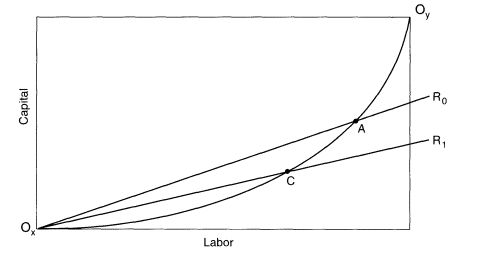
Figure 4.A1
Edgeworth box.
point A and take the slope of that radius to arrive at the capital-labor ratio in sector y. It is easy to see that, if we move production from A to, say, point C, the equilibrium capital-labor ratios will fall in both sectors. In fact, each point on the efficiency locus corresponds to different capital-labor ratios within each sector, with the range of possible capital-labor ratios being bounded by the available quantities of labor and capital.
From equations 1 and 2 it follows that the marginal physical products are functions of the capital-labor ratio only:
xL = f(kX) - kXf'(kX) and xK = f(kX) (5)
yL = g(kY) - kYg'(kY) and yK = g'(kY) (6)
By dividing the marginal physical product of labor by the marginal physical product of capital in both equations 5 and 6 and by taking the total differential, it follows that capital-labor ratios are strictly increasing in the marginal rate of substitution between capital and labor, independent of the endowments,
d(kX)/d(w)= f'(kX)/(f''kX) + w) (7)
and
d(kY)/d(w)=g'(kY)/(g''kY) + w) (8)
where ω = xL/xK = yL/yK
Preferences determine where production will take place. The Y0X0 locus in Figure 4.A2 traces efficient production in y - x space. One can imagine a set of social indifference curves such that the highest possible level of welfare, given the budget as represented by the production frontier Y0X0, is obtained at point A. Both production and consumption take place at point A.
What happens to this economy if we allow an inflow of immigrants? For simplicity, assume that the new immigrants bring no capital with them, so that they add only to the stock of labor in the economy. With x being relatively more labor intensive, immigration allows relatively more x to be produced, and the production frontier will expand to, say, Y1X1. If the price of x in terms of y, given by the tangency to the production frontier Y0X0 at point A, does not change, consumers (natives and immigrants) will have an excess demand for y and an excess supply of x. The relative price of x will have to fall to restore equilibrium. Preferences determine the size of that change. Thus, immigration has changed relative prices, lowering the price of the good that uses labor intensively in terms of the good that uses capital intensively.
Suppose the new production point is given by point B. The question that
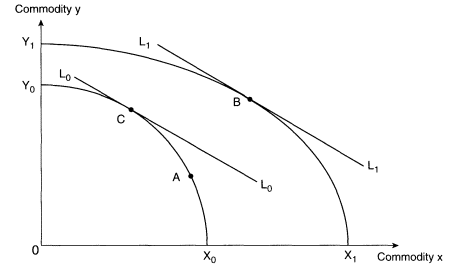
Figure 4.A2
Production possibilities with and without immigrants.
arises is whether domestic workers are better off because of the immigration. To see that they are, first realize that the domestic budget is given by the tangency of the new price line at the old production frontier. That is, the difference between the two frontiers is made up of payments to the new immigrants. Given constant returns to scale, national income, Y, in terms of y must add up the payment to the factors of production. That is,
Y = y + px = GL(Ly + IY) + GK K + p FL(LX + IX) + p FKKX (9)
which, with p = GL/FL = GK/FK, simplifies to
Y= GL(L + I) + GK K (10)
where I represents new immigrant labor. Similarly, at the old production frontier national income at point C is given by
Y*= G*L + G*K K (11)
The difference between Y and Y* is equal to the compensation of new immigrant labor if and only if GL = G*L and GK = G*K. Ruling out factor-price-intensity reversals, relative prices at B and C are the same and imply equal marginal rates of substitution between capital and labor. Since the marginal rate of substitution uniquely defines capital labor ratios, which in turn define the marginal physical
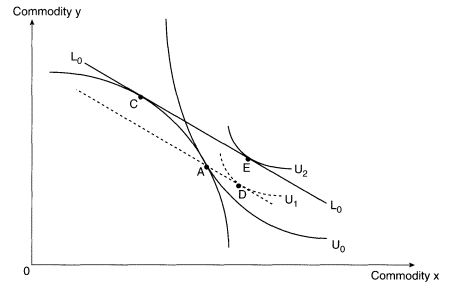
Figure 4.A3
The gain from immigration in a model with two factors and two goods.
products given in equations 5 and 6, it follows that the marginal physical products are equal at B and C and thus the difference between L0L0 and L1L1 gives the compensation to new immigrants.
L0L0 thus corresponds to the budget for domestic workers after immigration has taken place. Domestic workers have shifted their production from A to C to take advantage of the higher relative price of good y. The presence of new immigrants allows domestic workers to specialize in production and to consume outside the old production frontier. Consumption and production are no longer constrained to be the same. At the new relative price, a higher social indifference curve can be attained and domestic workers thus experience an overall welfare gain. This welfare gain can be decomposed into two parts: the gain from shifting production toward more valuable activities, and the gain from shifting consumption toward commodities whose cost has fallen. In Figure 4.A3 the overall welfare gain is represented by the difference between U2 and U0. The movement from A to D represents the gain associated with shifting consumption, while the movement from D to the new consumption equilibrium at E represents the gain associated with shifting production from A to C.
Appendix 4.B
Assessing the Labor Market Benefits and Costs of Immigration
In standard models of immigration and trade, the income losses of natives who compete with immigrants are more than matched by the income gains of natives whose skills or capital complement those of immigrants. How large might these gains and costs be?
To answer this question, economists use variants of the model shown in Figure 4.1. By aggregating groups of workers into a small number of complements or substitutes for immigrants; by assessing the extent to which these workers are complementary with or substitutes for capital or (what amounts to the same thing) of the responsiveness of factor prices to a change in immigrant labor supply; and by assessing the potential response of capital and labor supplies to immigration; one can put numbers to the labor market benefits and costs of alternative immigration flows.
The basic framework for estimates is a production function Q= f(K, S, L), where Q is output, K is capital, S is skilled labor, and L is unskilled labor. Under constant returns the income received by residents is
Q = FKK + FSS + FLL (1)
where FK, FS, FL are the marginal products of capital, skilled labor and labor, respectively. Output is divided between capital, skilled labor, and unskilled labor according to their marginal products and magnitudes.
If immigrants contribute more to the supply of unskilled than of skilled labor, as in the United States in the past three or so decades, then under virtually any plausible assessment of the effect of immigrants on the marginal productivity of skilled labor, unskilled labor, and capital, unskilled labor will lose and skilled labor and capital will gain. However, even the smaller number of immigrants who add to the nation's skilled labor can reduce the earnings of skilled labor as well, with the result that the sole beneficiary of immigration is capital. If increased labor supplies in the United States induce capital to move to the United States, however, U.S. capital will not gain at all: it will simply reallocate from other countries to the United States.
Formally, let I be the increase in immigrant labor to the United States. Assume for simplicity that this increase consists entirely of unskilled labor (what matters is whether the immigrant supply consists disproportionately of skilled or unskilled labor). With a constant returns to scale production function, the change in the national income, Δ, accruing to current U.S. residents depends on the amount of their factor resources and the effect of the immigrant supply on factor prices:
∆ = (∂fK/∂I)K + (∂fS/∂I)S + (∂fL/∂I)L (2)
The effect of unskilled immigrants on the factor prices of capital and skilled workers will be positive, but it will be negative on the wages of unskilled labor. The economic analysis in Chapter 4 explained why (barring external diseconomies of scale) Δ will be positive.
To turn this expression into a quantitative estimate of the effects of immigration on the income accruing to natives, we need estimates of the effects of immigrants on the factor prices, and/or on the marginal productivities of the factors.
Economists have some knowledge of the interrelations among factors, but this knowledge is not hard and firm. Different analysts have made somewhat different assumptions about the parameters governing the interrelations, which yield somewhat different estimates of the magnitude of effects. Still, a general consensus has emerged that, overall, the net gains to the United States of immigration are rather modest measured relative to gross domestic product (GDP).
Assuming no response of the supply of capital to immigrant-induced higher returns, Borjas (1995) estimates that the approximate 10 percent of the American workforce who are immigrants added roughly 0.1 percent (one-tenth of one percent) to the GDP accruing to other Americans—or about $7 billion in a $7 trillion economy. Under the same assumption, Johnson (1997) estimates that a hypothetical increase in unskilled immigrants by 10 million (roughly 8 percent of the U.S. workforce) would raise national output accruing to natives by just $2.5 billion-—or about 0.036 percent of GDP. Borjas et al. (1997) estimate a gain to natives of $9.1 billion, or about 0.13 percent of GDP. These are all small numbers, which would be hard to detect in any aggregate data, given the many factors that influence GDP.
When capital responds to immigrant-induced higher returns, the gains accruing to U.S. natives are even lower. In this case, the gain to capital—the major complement to immigrant labor—draws in additional capital, so that the return to native capital is ultimately driven down. In terms of our equation, ∂fK/∂I = 0 Johnson (1997) estimates that the gain to natives in this case is a bare $1.1 billion, all of which accrues to skilled labor, given his assumption that immigrants were entirely unskilled. Borjas et al. (1997) estimate that the gain to natives is $3.5 billion when capital is completely elastic in supply. The gains accrue to skilled labor because immigrants are disproportionately unskilled.
All of these assessments place the economic gains to the country from immigration in the same modest range of magnitude: from $1.1 billion to $9.5 billion in a $7 trillion economy. This consensus reflects what economists view as plausible values of the relevant elasticities of factor prices to changes in labor supplies, or of the economic parameters that govern an aggregate production function.
To see how virtually all such calculations yield relatively modest estimates of the gains to immigration, consider a simpler but extreme model with two fac-
tors, capital and skilled labor taken as one input, and unskilled labor (high school dropout workers) taken as a second factor. Assume that unskilled labor makes up 20 percent of the U.S. workforce and that unskilled labor earns 10 percent of U.S. GDP—all reasonable order of magnitudes for high school dropout labor. Now let immigration increase the supply of unskilled labor by 33 percent. The gain to natives in terms of additional GDP from this flow of immigrants would be the triangle in Figure 4.1, which is one-half the change in labor supply times the change in the wage of unskilled labor. The change in the supply of labor that substitutes for immigrants is 0.33. If the elasticity of the wage of unskilled labor to this change was, say, 0.3, the wage loss to these workers would be about 10 percent. The triangle would be 1/2 (.33) (.10) for a group whose earnings represent 10 percent of GDP. Thus, relative to GDP, the gain to all natives would be about 0.2 percent or $14 billion in a $7 trillion economy. Immigration in this case has reduced the pay of a relatively modest number of U.S. workers by 10 percent while increasing the total GDP accruing to natives by 0.2 percent.


