
8
Social Dimensions of Immigration
In addition to the demographic, labor market, and fiscal effects of immigration summarized in the previous chapters, how immigrants and their children will fit into American society now and in the future depends also on other aspects of immigration. In this chapter, we review research bearing on some key questions about the social dimensions of immigration. The first set of issues concerns the integration of immigrants and their children into American society: social and spatial mobility across generations, competence in the English language, naturalization, and intermarriage and ethnic identity. The next set of issues concerns the effects of immigration on American institutions, focusing on two extremes with side-effects for the rest of the population—excellence in science and the arts and participation in crime. The social consequences of immigration are not only the outcomes of immigrants' own values, skills, and motivations, but also reflect the reactions of the resident population. This chapter concludes with a discussion of interethnic relations and public opinion on immigration, especially regarding concerns about the economic effects.
These issues do not exhaust the ways in which immigration has shaped American society and how immigrants have responded to their new environment. 1 But they do serve both to illustrate the potential contribution that social
science research can make to policy debates and to identify gaps in current understanding.
Assessments of the social consequences of immigration often arouse strong reactions. Some critics of contemporary immigration policy conclude that the arrival of predominantly nonwhite immigrants displaces native workers, swells the largely minority ''underclass," and exacerbates racial and ethnic conflict (Brimelow, 1995; Bouvier, 1991; Lamm and Imhoff, 1985). Others conclude that the new immigrants strengthen and reinforce the best in American traditions, revitalize decaying neighborhoods and stagnant industries, and add new talents and energies to the U.S. civic culture (Binder and Reimers, 1995; Simon, 1989; Portes and Rumbaut, 1996).
Contemporary reactions have historical parallels. Before the enactment of restrictions on immigration in the 1920s, intense debates erupted over whether the new immigrants from Eastern and Southern Europe could ever be assimilated.2 Contemporary fears about the social consequences of immigration are typically expressed in less graphic language than those in the past, but the sentiments are not dissimilar.
Although it is not possible to resolve all controversies over the impact of immigration, enough is known to allay some of the widely held concerns that immigration has exacerbated the social problems that confront American society in the late twentieth century. Over time, many immigrants, and especially their children, have become integrated into the mainstream of American society (Alba, 1995; Hirschman, 1983; Lieberson, 1980; Portes and Rumbaut, 1996), and immigrants have made significant contributions to many American institutions. It is also true that some immigrants have participated in crime, and interethnic tensions and violence, sometimes directed at other immigrants, have surfaced. But the weight of both the historical and the current evidence is that immigrants are no more likely to participate in socially disapproved activities than are native-born Americans. Although there is no assurance that past trends will always continue, the new Americans who have arrived in recent decades are likely to also be absorbed into the primary institutions of American society. As with many past waves of immigrants, they will also redefine the character and content of American culture in the process.
Integration of Immigrants into American Society
An often-heard criticism is that immigrants do not adapt to American society and culture, thus balkanizing the American population. The idea of a common society in which all members are fully incorporated and socially equal has been more of an ideal than a reality in American history. America has always been characterized by variations in socioeconomic and cultural status associated with groups defined by national origin and color as well as by great variation even within national-origin groups. A more realistic concept, then, might be integration into the "normal" diversity of American society.
Issues of immigrant assimilation are important for several reasons in this report. Chapter 3 noted that some immigrants, particularly those from Latin America, have higher fertility. Our analysis suggests that the initial higher fertility among Hispanic immigrants will decline for their native-born descendants. These fertility declines possibly reflect the integration of Hispanic immigrants and their children into a society with lower childbearing norms. The assimilation of immigrants in the labor force may have repercussions for the pattern of geographic mobility as well as for their economic success. These, in turn, affect the labor market and the fiscal impacts discussed in previous chapters.
Social and Spatial Mobility
Immigrants tend to cluster in certain geographic areas and occupations. Since they usually depend on the assistance of kin and others in their primary networks, ethnic neighborhoods and enterprises are often essential stepping stones for their social and economic adaptation. Even when government policy tries to disperse new arrivals around the country, as with the case of Cuban refugees in the 1960s and Vietnamese refugees in the 1970s, secondary migration has led to a reconcentration of immigrants. Since ethnic areas often tend to look, sound, and smell different from other areas, some of the native-born population will see immigrant neighborhoods as evidence that new immigrants are not adapting to American society. The historical evidence makes clear, however, that ethnic residential concentrations and ethnic economies are initial efforts by the first generation to get a foothold in American society. Most historical and contemporary research shows that assimilation is a generational process (Lieberson, 1980, 1996). Immigrants who arrive as adults are sometimes slow to learn English, and many older immigrants continue to have close attachments to the countries of origin long after their arrival. In contrast, the second generation, including immigrants who arrive as children or adolescents, typically become "American" in language, behavior, and outlook.
Between the two world wars, the children of immigrants from Southern, Eastern, and Central Europe made significant socioeconomic gains, particularly in educational and occupational attainment (Lieberson, 1980; Perlmann, 1988;
Hirschman and Kraly, 1990). And by the 1960s, there were only modest differences in socioeconomic status and in intergenerational mobility among whites, whatever their national origins (Duncan and Duncan, 1968; Featherman and Hauser, 1978: Chapter 8). The upward movement of Asian immigrants and their descendants was slower but, by the 1960s, Asian Americans were at least at parity with whites in terms of education and occupational status, although an income gap remained (Nee and Sanders, 1985; Hirschman and Wong, 1984). Generationally, the major disadvantaged groups in American society are not immigrants and their children; they are African Americans, American Indians, and Puerto Ricans.
Considerable uncertainty still surrounds the social and economic fortunes of the waves of immigrants who arrived in recent decades. Although it is too early to draw definitive conclusions, most studies show that, with few exceptions, recent immigrants and their children (the second generation) are doing relatively well (Barringer et al., 1993; Jasso and Rosenzweig, 1990; Portes and Rumbaut, 1996). This does not mean that parity has been reached, nor even that all recent groups of immigrants have escaped poverty, but simply that most of the newcomers are not completely isolated from the mainstream of American society: they work, live in neighborhoods, and go to school in proximity to the native-born population.
One of the most important indicators of social adaptation is the level of integration (or segregation) in residential areas. Residential integration is considered the linchpin of interethnic relations, since it opens the door to informal association in schools, playgrounds, and other places where close personal bonds and friendships are formed. In the initial years after arrival, the massive waves of immigrants in the early twentieth century clustered tightly together, but rising income levels and the passage of generations blurred residential segregation within a few decades (Lieberson, 1980: Chapter 9). The rapid pace of immigration in the last three decades has also created many new ethnic areas in major cities around the country. These have been interpreted by some as a sign of balkanization and a harbinger of long-term trends. But empirical research suggests that this may be simply a short-term response.
Some evidence in favor of eventual assimilation is registered in the consistent association between social class (as measured by education, occupation, and income) and residential integration (including suburbanization) among Hispanic and Asian Americans (Frey, 1995). As the ability of immigrants and their children to afford better housing grows, they seem to choose neighborhoods with more amenities over areas with more neighbors with similar ethnicity. This association contrasts with the trend for blacks, who—even if they have higher economic status—have continued to live in segregated neighborhoods (Massey and Denton, 1993). If immigrants, including Hispanics and Asians, have also faced discrimination in the housing market, it has been much less than that experienced by blacks.
Evidence for residential segregation for Hispanics and Asians, taking immigrants and native-born persons together, has come from several recent censuses. Asians, as a group, display low to moderate levels of segregation from whites (Massey and Denton, 1992; Fong, 1994). Asians tend to be highly suburbanized and, because they have low levels of segregation within suburbs, their overall levels are reduced. Asian-white segregation is reduced as the socioeconomic status of Asians increases, with very low segregation levels for higher education and income levels. Taken as a whole, "Asians appear to experience few barriers to residential mobility and display remarkably low levels of segregation" (Massey and Denton, 1992:170).3
One difficulty with using the census is that the geographic areas identified are at a very high level of aggregation. Borjas (1995) used data from the National Longitudinal Survey of Youth to look at the probability that other survey respondents living in the same zip code area had the same ethnic background as the respondent.4 These segregation indices are shown in Table 8.1. Some ethnic groups display high levels of segregation. The average black respondent lived in a neighborhood that was 63 percent black, and the average Mexican respondent lived in a neighborhood that was 50 percent Mexican. The typical respondent lived in a neighborhood with a much lower index: only 30 percent of the respondents had a similar ethnicity. Many other immigrant groups, including Chinese, Filipinos, other Hispanics, Polish, and particularly the older immigrant groups (the Irish and the Italians) had much lower segregation indices. These indices imply that, except for Mexicans, geographic segregation for immigrant groups is not particularly great.
Moreover, segregation weakens as the generations succeed one another. Because the 1970 census included a question about the nativity of the parents of the respondent, it permits researchers to classify people as foreign-born, native-born of foreign-born parents, and native-born of native-born parents—providing information on the first, second, and third and later immigrant generations.5 In
TABLE 8.1 Residential Segregation Indices by Ethnicity, 1979
|
Ethnicity |
Percentage of Population in the Neighborhood with Same Ethnic Background |
|
Black |
63.4 |
|
Chinese |
3.5 |
|
Cuban |
33.3 |
|
English |
23.9 |
|
Filipino |
5.0 |
|
German |
25.7 |
|
Irish |
14.3 |
|
Italian |
16.3 |
|
Mexican |
50.3 |
|
Other Hispanic |
9.3 |
|
Polish |
12.8 |
|
Puerto Rican |
29.8 |
|
Alla |
30.4 |
|
a The total sample includes all reported ethnic groups. There are more groups than are shown in this table. Source: Analysis of National Longitudinal Survey of Youth data, for persons aged 14 to 22 years, in 1979; reported in Borjas (1995: Table 4). |
|
1970, the typical immigrant lived in a neighborhood that was 33 percent either first- or second-generation (Borjas, 1995). But members of the second generation lived in neighborhoods that were 28 percent first- or second-generation, and those in the third and later generations lived in neighborhoods that were only half as segregated, with 14 percent first- and second-generation.6
This generational desegregation did not proceed at the same pace for Hispanics, however.7 The typical third-generation Hispanic lives in a neighborhood that is 29 percent Hispanic (Borjas, 1995:367). With the notable exception of Mexican immigrants, the geographic concentration of most immigrant groups is not great, especially compared with geographic segregation among black Americans. The available evidence also indicates that geographic segregation weakens as later generations succeed the immigrant generation.
Once again, the notable exceptions to these trends are Mexican immigrants, who tend to live close to other Mexican Americans across each generation.
Intermarriage and Identity
There has always been variation in the experience of different ethnic groups with social mobility and ethnic or racial identification. East European Jews achieved a great deal of social mobility by the second generation, but Italian Americans took several generations to reach parity with native whites of native parentage (Lieberson, 1980; Alba, 1986). Overall, however, the remarkable progress of once-stigmatized groups like Greeks, Slavs, Irish, and Italians merits Andrew Greeley's description of it as an "ethnic miracle" (Greeley, 1976). Succeeding generations of some non-European groups have also experienced upward mobility. The increase in education and income across the generations of Japanese Americans has been so great that they have the highest income of any ethnic group in the United States (Waters and Eschbach, 1995).
In the nineteenth century, the Irish were seen as a "race" apart from other European groups. They were stereotyped for their criminality, lack of education, and poor family values and were often portrayed as apes in cartoons of the time. In the mid-nineteenth century, Negroes were referred to as "smoked Irish" (Ignatiev, 1995). If those debating immigration restriction in the early part of the twentieth century had done population projections to predict the ''race suicide" they believed new immigrants were causing, they would have projected the numbers of Southern and Central Europeans and Irish and shown how these growing groups would have made white Protestants a minority by some date in the far-off future. Yet we now know that such predictions would have been wrong for several reasons.
Most important, they would have failed to predict the decline in the relevance of the boundaries separating European groups from one another. The children and grandchildren of immigrants from Italy, Poland, and Greece—groups that were once seen as "unassimilable" and racially distinct—intermarry with others of different ethnic origins to such an extent that the descendants of most white European groups are virtually indistinguishable. Indeed, the descendants of all immigrant waves from Eastern and Southern Europe have reached equality with white Protestants in education, income, occupational specialization, and residential distributions (Lieberson and Waters, 1988).
At the turn of the century, marital "endogamy was castelike for new ethnics from eastern and southern Europe" (Paginini and Morgan, 1990). Within the space of two generations, social, economic, and cultural changes have led to levels of ethnic intermarriage that would have been unthinkable in the decades immediately following the major waves of immigration. As Alba (1995:13) reports, "in 1990 census data, more than half (56 percent) of whites have spouses
whose ethnic backgrounds do not overlap with their own at all. . . . Only one fifth have spouses with identical backgrounds."
Under such conditions of great intermarriage, ethnic identity is increasingly a matter of choice for whites in the United States. An American of Italian, Irish, and Scottish ancestry, for example, can "choose" to identify with one or more of his or her ethnic ancestries and discard or "forget" others (Waters, 1990; Alba, 1990). For example, over 40 million Americans reported Irish ancestry in the 1980 census, a figure far in excess of any reasonable rate of natural increase from the 4.5 million Irish who were immigrants to the United States. Hout and Goldstein (1994) show that the number of Americans who identify as Irish Americans is possible only because of the high rate of intermarriage of persons with Irish ancestry and a very selective identification of Irish identity among offspring with multiple ancestries.
This fluidity of white ethnic categories stands in contrast to the seeming essentiality of race. But this fluidity is partially the result of the primacy of racial issues in American history, which necessitated unambiguous classifications, first to identify discrimination and now to implement affirmative action. But the social and legal forces of racial identity in the United States are also idiosyncratic, the product of complex and contingent processes, and subject to change over the coming decades.
Rates of intermarriage have been growing since 1960 for all groups, even for those defined as "racial" groups (Sandefur and McKinnell, 1986; Kikumura and Kitano, 1973; Kitano et al., 1984; Gurak and Fitzpatrick, 1982; Lieberson and Waters, 1988). Although it is still the case that only a small proportion of marriages by whites are to nonwhites and Hispanics (2 percent), the rate of increase in recent decades has been dramatic: "In 1960 there were about 150,000 interracial couples in the United States. This number grew rapidly to more than 1.0 million in 1990. When marriages with Hispanics are added the intergroup marriages totaled about 1.6 million in 1990" (Harrison and Bennett, 1995:165).
As we noted in Chapter 3, although 97 percent of whites and 94 percent of blacks married within their own groups in 1990, 70 percent of Asians and 73 percent of Hispanics did so. The percentage of intermarriages increased between 1980 and 1990, as younger people married outside their group to a greater extent. Intermarriage rates were much higher for native-born Asians and Hispanics in 1990. Among younger married persons in 1990, aged 25 to 34 years, 65 percent of native-born Hispanics had a Hispanic spouse (see Table 8.2). Among younger Asians, 53 percent of men had an Asian wife and 46 percent of women had an Asian husband.
Intermarriage rates vary regionally, with lower intermarriage rates for Asians and Hispanics in areas where there is a heavier concentration of immigrants. Outside the South and the Southwest, younger native-born Hispanics had a non-Hispanic spouse more than half the time (Farley, 1996). Younger native-born Asians living outside California and the other Pacific states had a non-Asian
TABLE 8.2 Race/Ethnicity of Spouses, Aged 25 to 34 Years, 1990
|
|
Race/Ethnicity of Spouse |
|||
|
Race/Ethnicity |
White |
Asian |
Black |
Hispanic |
|
Husband |
||||
|
White |
96.3% |
0.9% |
0.2% |
2.2% |
|
Asiana |
36.0 |
52.6 |
0.6 |
8.4 |
|
Black |
5.6 |
0.8 |
91.5 |
1.7 |
|
Hispanica |
31.6 |
1.3 |
1.2 |
65.0 |
|
Wife |
||||
|
White |
96.7 |
0.4 |
0.4 |
2.1 |
|
Asiana |
45.2 |
45.6 |
2.2 |
6.7 |
|
Black |
2.2 |
0.2 |
96.3 |
1.1 |
|
Hispanica |
31.4 |
1.1 |
2.0 |
65.0 |
|
Note: The calculation of different race/ethnicity is based on five mutually exclusive groups: white non-Hispanic, American Indian, Asian, black, and Hispanic. American Indian estimates are not shown above but are included in the estimates for the total population. Intermarriage is defined as a married person in one of the five groups whose spouse is reported in another group. a Calculated for native-born individuals. Source: Farley (1996), based on analysis of 1990 census microdata. |
||||
spouse three-fourths of the time. Intermarriage rates are highest for younger married whites in California, where 10 percent of women and 12 percent of men had a nonwhite spouse in 1990. Younger black persons are more likely to have a nonblack spouse in the New England, Mountain, and Pacific states, with noticeably higher intermarriage rates in California: 14 percent of black women had a nonblack husband and 32 percent of black men had a nonblack wife.
Intermarriage figures represent the stock of all past marriages as of the census or survey year; data on the flow of new marriages would be a more sensitive indicator of current trends. As pointed out in Chapter 3, more than one-half of births to native-born Asian and Hispanic persons involve a spouse or partner of a different ethnic group. Because births are generally to younger couples (although not all are married), recent fertility data demonstrate increased intermarriage rates for younger persons.
Those who believe that current immigrants from Asia and Latin America and the Caribbean are less assimilable than those from European countries may be making two important errors. First, they may assume current racial categories to be fixed and essential—yet rising intermarriage means that the boundaries between groups may blur in the future. Our ideas of what constitutes a race or a racial difference are likely to be very different in a few decades, just as they are
now very different from what they were at the beginning of the twentieth century. Second, they may assume that the cultures of non-European groups will continue to be very different from what they think of as the core American culture. Yet that core American culture has absorbed a number of groups who were defined as racially different in the past, and it may do so again in the future
Both sides of the assimilation equation are in effect moving targets. Groups that seem racially different now may not always seem so, and the core American culture into which groups are assimilating is itself constantly changing and evolving as it absorbs new influences. Immigrants contribute customs of dress and cuisine, national celebrations, and cultural expressions to the mosaic of American society. Some immigrants even discover their ethnic heritage in America as part of their socialization into the American ethnic community of earlier immigrant waves. As time passes and the descendants of earlier immigrant waves mingle through intermarriage, ethnic cultures have become defined as part of general American culture. The Americanization of St. Patrick's Day as a day of public celebration and the marketing of pizza, bagels, tacos, and sushi as American fast food suggest that immigrant culture is quickly incorporated into the broader America cultural framework.
Assimilation and Education
Although the facts of how fast or how well immigrants and their children are being integrated into American society are subject to debate, the deeper questions revolve around the interpretation of the incomplete, and sometimes confusing, empirical record. Observers may agree that a glass is half-full, but then disagree over whether it will soon be filled or remain permanently half-full. Interpretations about the future are inevitably drawn from empirical generalizations about the past and the broader theories generated in light of this history.
On the basis of a close study of immigrants in Chicago during the early decades of immigration in this century as well as ethnic relations in other societies, Robert Park posited a sequential model of interethnic relations of four stages: contact, conflict, accommodation, and assimilation (Park, 1950; Park and Burgess, 1969). Park suggested that assimilation would come about eventually, not that it would be quick or painless. Indeed, the stages of conflict and accommodation (which included, for example, the institutionalized inequality of Jim Crow laws) could be long-term adjustments in many industrial societies.
More recent researchers have moved away from asserting one global dimension of assimilation to delineating specific spheres of assimilation (acculturation and structural, marital, identity, and other dimensions) that may move at different paces (Gordon, 1964). The logic of industrialism is the shift from local and kinship-based employing institutions to bureaucratic organizations, which recruit labor more on the basis of skills and potential productivity than on family background or national origins (Treiman, 1970). Representative political institutions
are assumed to empower all groups as potential members of the electorate, once voting rights are guaranteed. Even if these economic and political processes are imperfect and limited, they will act to erode the boundaries of separate and traditional ethnic groups, although the process may take several generations.
In recent years, considerable doubts have been expressed that the assimilation process will work for the post-1965 wave of immigrants and their children the way it did for the immigrant wave of the early twentieth century. One primary difference often noted is that of race. The earlier wave of immigration was primarily from Europe, and the model of assimilation was that of acculturation and socioeconomic mobility into the majority white Anglo-Saxon American society. Although the children of European immigrants often lost their ethnic roots and mother tongue, that was the price to be paid for the acquisition of American culture (defined as that of middle-class whites), which was considered part of upward social mobility. The "exchange" of culture for social mobility may be quite different for the new immigrants, in this view, because they share a racial (or ethnic) identity with minorities that may preclude easy access into the majority white world. If the loss of ethnic distinctiveness leads to their becoming indistinguishable from native-born blacks or Hispanics, then assimilation may mean joining the culture of the urban ghetto.
Immigrants are thought, in some models of assimilation, to have some advantages over native-born minorities in the labor market. Because immigrants evaluate jobs here relative to conditions in their country of origin rather than to an "American" standard, they may be more willing to accept low-paying, "dead-end" jobs than are many native-born Americans. Immigrants often find employment through social networks that reassure employers about their work habits. For immigrants who are nonwhite, employers may take their immigrant status to be more important than their ''racial" status.
Herbert Gans (1992) notes the strong possibility that the post-1965 second generation may face socioeconomic decline relative to their parents, if members of the second generation encounter few chances for upward mobility and refuse to accept the low-level and poorly paid jobs that their immigrants parents held. Negative attitudes toward school, opportunity, hard work, and the "American dream" are prevalent among poor American youth of all groups, but are considered most common in the ethnic ghettos with concentrated poverty. If available jobs do not offer wages that allow for upward mobility of the second generation, and minorities face discrimination in the workplace, then the second generation may face downward mobility into the underclass of American society.
Using material from ethnographic case studies and a survey of second-generation schoolchildren in Miami and San Diego, Portes and Zhou (1993) describe the various outcomes of different groups of second-generation youth as "segmented assimilation." Segmentation refers to the variations in opportunities and the range of cultural and social capital—in the form of ethnic jobs, networks, and values—offered to the second generation. Contemporary immigrants are hetero-
geneous, ranging from highly rewarded professionals who live in upper-middle-class suburbs far from ethnic residential areas to low-skilled workers who work and live at the margins of inner-city economies. Other immigrants come with strong ethnic networks and access to capital that leads to participation in ethnic businesses and residence in ethnic neighborhoods. These different streams of immigration (and many in between) create different "segments" of opportunities that are linked to the identities and allegiances formed as the children of immigrants reach adolescence.
Second-generation youth whose ties to American minorities are stronger, and whose parents lack the ability to provide jobs for and protect them, may develop an adversarial stance toward the dominant white society, similar to that of some members of native-born minorities. Portes and Zhou (1993) contrast Chinese and Korean immigrants with Haitians. Chinese and Korean immigrants are absorbed into ethnic communities with strong kinship (or religious) ties that link the first generation to rich ethnic networks of job opportunities and that reinforce loyalty and obedience in their children (see also Kim, 1981; Min, 1990; Sung, 1987). Haitians, who are often perceived as black Americans, face much greater discrimination from the dominant institutions. Haitian children must also face pressure from their black American peers to adapt to black culture in school. Portes and Zhou stress that this peer culture takes an adversarial view of upward mobility, school success, and the like. Like Gans, they conclude that members of the second generation who identify with America's minority groups are likely to experience downward social mobility (also see Ogbu, 1990).
Becoming an American includes learning about American race classification systems and about American racial attitudes and prejudices. Although first-generation immigrants from Latin America and the Caribbean may not see themselves in terms of American racial categories, the second generation may do so. For instance, a large proportion of Dominicans in New York are dark in color and would be classified as black by most Americans. These immigrants do not identify themselves as black, because in the Dominican Republic to be partly white means to be nonblack (Grasmuck and Pessar, 1995). Will the children of these immigrants adopt the American view and identify as black? What influence will the way others see them have on the way the children of the immigrants see themselves? Some researchers argue that whether immigrants see themselves as "ethnics" or "minorities" will influence political and social outcomes for the group (Skerry, 1993; Smith, 1994). Those in the second generation who have experienced racial discrimination and who identify racially as a minority may be more likely to adopt an oppositional stance. The social and occupational mobility and economic success of the children of immigrants will depend in large part on their educational attainment.
Empirical studies of the assimilation since 1965 are relatively few, and it would be premature to draw strong conclusions. Several studies conclude that second-generation children who maintain a strong attachment to their immigrant
identity do better in school (Suarez-Orozco, 1987; Gibson, 1989; Matute-Bianchi, 1991). Children from tight-knit immigrant families see success in school not primarily as an avenue for individual mobility or independence, but rather as a way to bring honor and success to their families. One of the key questions is the direction of causation. Does a strong sense of immigrant identity heighten motivations for success, or do those who are successful tend to identify more with families and immigrant heritage than with their native-born school peers? If the latter is true, then the segmented assimilation hypothesis may be a better account of variations in socioeconomic mobility within immigrant communities than between them.
In their study of the educational progress of the children of immigrants, Portes and MacLeod (1996) show that the children of Cuban and Vietnamese immigrants do much better than the children of Mexican and Haitian immigrants—independent of social class—because the collective identities of these groups have been shaped by the particular mode of their incorporation into American society.
Consistent with this interpretation are the results of studies by Waters and Eschbach (1995) of the types of identities developed by second-generation West Indian youth in New York City. Students from middle-class backgrounds were more likely to maintain ties to their parents' ethnic identities and to resist categorization as black Americans. Poor and working-class youth in segregated neighborhoods were far more likely to reject their parents' stress on West Indian identity and to develop a strong identity as black Americans. These identities were also closely related to perceptions of discrimination and racism in American society. Those who saw discrimination and blocked opportunity developed more oppositional theories of how to "make it" in American society and were more likely to identify with American black youth. The type of identification was highly correlated with levels of educational success and thus future prospects. Similarly, Foley (1991) finds strong differences among Mexican American youth in South Texas, with upwardly mobile Mexican American youth maintaining some aspects of an oppositional identity, yet succeeding academically and valuing academic success in a way that the values of working-class Mexican American youth did not allow.
Kao and Tienda (1995) examined the educational performance of immigrant youth using the National Educational Longitudinal Study of 1988. They found that "Hispanic, black and white students with immigrant parents performed as well as their native-born counterparts whose parents were US born, and that Asian students with foreign-born parents outperformed their counterparts whose parents were US born" (p. 13). They also found "little difference between the educational performance of first and second generation youth. Yet both groups tend to outperform their third generation or higher counterparts on various scholastic outcomes" (p. 16).
In a study of the second generation in San Diego, Rumbaut (1996:44) finds
that, over time and generations in the United States, reading achievement tests go up, but the number of hours spent on homework goes down, as do average grades. In a multivariate analysis of these data, he finds that time in the United States and second-generation status are connected to declining academic achievement and aspirations, net of other factors. Indeed, having one parent who was born in the United States, and having friends who are not also children of immigrants, were associated with lower grades. "Students whose parents are both immigrants outperform their counterparts whose mother or father is native-born" (Rumbaut, 1996:48).
Language
A very sensitive issue surrounding immigration is language. Although the United States does not have an official language, most public discourse is in English. Except for the very young, all immigrants arrive with language skills—in their own language. If that language is not English, or if they do not know English as a second language, the critical question is how quickly immigrants acquire English language facility. Of course, many immigrants have English skills even when they first arrive—some because English is the mother tongue in their home country, and others because, though raised in non-English-speaking countries, they have attended English language schools.
Nearly three-fifths of immigrants who arrived in the 1980s reported in the 1990 census that they spoke English well or very well (see Table 8.3). The groups with the greatest ability were immigrants from Canada, followed by those from South America, Europe, Asia, and the Caribbean. Indeed, almost all of those from countries where English is dominant reported that they speak English
TABLE 8.3 English Language Ability of Recent Immigrants, 1990 (percentage)
|
|
Speaks English |
||
|
Continent of Origin |
Well or Better |
Not Well |
Not at All |
|
Europe |
73.8 |
17.7 |
8.6 |
|
Asia |
63.1 |
27.2 |
9.7 |
|
Canada |
97.4 |
1.7 |
0.3 |
|
Mexico, Central America |
26.2 |
31.0 |
41.8 |
|
Caribbean |
61.1 |
18.2 |
20.6 |
|
South America |
85.8 |
10.7 |
3.2 |
|
Weighted Total |
57.5 |
26.3 |
16.2 |
|
Source: U.S. Bureau of the Census (1993). |
|||
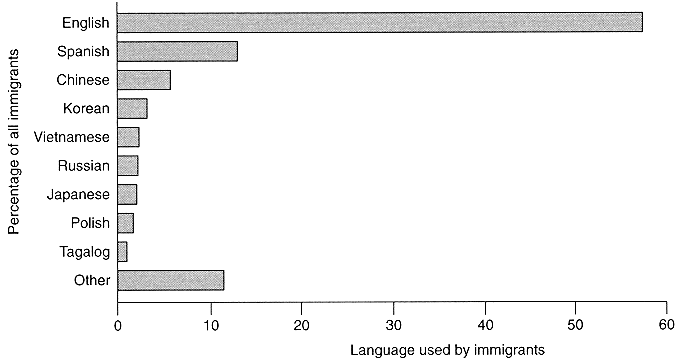
Figure 8.1
Language distribution for respondents in a new immigrant survey of the United States.
very well. Where English is an official but not dominant language—Hong Kong, India, and the Philippines—a relatively high proportion of immigrants report high proficiency. The lowest levels of proficiency were reported by those from poor non-English-speaking countries: three-fourths of immigrants from Spanish-speaking countries, and almost half of immigrants from other foreign-language-speaking countries reported that they speak English either not well or not at all. Among those groups, the most common languages spoken were, in rank order, Spanish, Chinese, Korean, and Vietnamese (see Figure 8.1).
Over time and with extended exposure to the new language, immigrants who have arrived without English skills tend to acquire them. As Figure 8.2 suggests, the longer an immigrant from a non-English-speaking country has been in this country, the more likely he or she is to be proficient in English. Among recent immigrants from non-English-speaking countries, 47 percent report that they speak English well or very well within about two-years after arrival. The percentage of those with high proficiency increases steadily with length of residence, reaching 88 percent for immigrants who have been here 30 years or more. Among immigrants with long-term residence, only 3 percent report speaking English not well or not at all.
One possibility is that this improvement in English skills over time may be not so much the product of simple everyday exposure or of formal instruction as an artifact of the return to their home countries of a sizable proportion of the immigrants from any entry cohort. Drawing firm conclusions about these notions of the relations between emigration and competence in English is difficult without longitudinal studies. Reviewing the evidence available from decennial
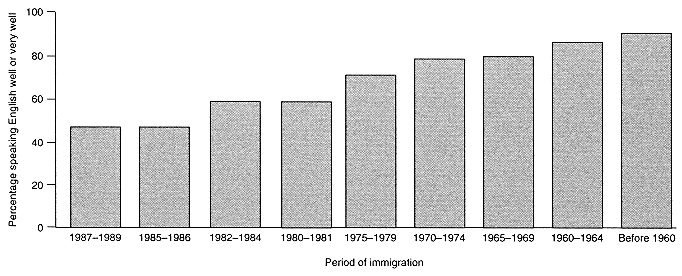
Figure 8.2
Percentage of immigrants from non-English-speaking countries who speak English well or very well, by period of immigration, 1990. Source: Stevens (1994).
censuses and from surveys, Stevens (1994) notes that immigrants from English-speaking countries emigrate at a higher rate, and immigrants from Spanish-speaking countries at a lower rate.
The other process affecting English language skills is the language of the children of immigrants. With rare exceptions, native-born persons have competence in English. Many children of immigrants have skills in two languages—English and the language of their parents' country of origin. And although some children of immigrants face special challenges in school because of the bilingual nature of their environment, English language proficiency is almost universal (Portes and Schauffler, 1996).
The data we have assembled suggest that, even though the United States does not explicitly require immigrants to speak English, in the nature of the selection process for immigration many already do when they arrive, and the majority learn it eventually. Virtually all secondand third-generation descendants have good English language skills.
Citizenship and Naturalization
Naturalization is a milepost along the path of many immigrants' adjustment to U.S. society. Although a significant fraction of immigrants remain permanent resident aliens all their lives, many others seek to become U.S. citizens through naturalization. Naturalization brings with it certain advantages. First, naturalized citizens may sponsor immediate family relatives (parents, spouses, and minor children) for immigration without numerical limit. Adult children of naturalized citizens move into a higher preference category, making it easier to bring them into the United States. Second, naturalization confers almost all the rights
of citizenship. Naturalized citizens may vote, and they gain broader access to public assistance programs.8
Across countries, the rights of citizenship by birth are typically based on two principles: on descent from a citizen of the country and on birthplace.9 Most countries base their requirements on a combination of the two, although they often give greater emphasis to one over the other. As Table 8.4 shows, for example, France places greater weight on descent from a French citizen, although a child born in France can claim French citizenship if one of the parents was born in France. The United States, like Australia and Canada, places primary weight on birthplace; however, children born outside the United States to a U.S. citizen can claim U.S. citizenship.10
There is more substantial variation in the procedures for acquiring citizenship through naturalization. The United States permits naturalization after five-years, about the middle of the 3 to 12 year span across countries. Fees for naturalization range from nothing in France to a high of about $56,000 for the Canton of Geneva, Switzerland (the U.S. fee of $95 is among the lowest); in several countries, including Germany and Switzerland, fees depend on the applicant's income.
The annual number of naturalizations in the United States has been increasing steadily since about 1965, reaching approximately 400,000 in recent years. The year 1996 saw a dramatic increase to 1.2 million—a record.11 Beyond the simple accumulation of the foreign-born with the requisite length of residence, several factors seem to contribute to this spurt: the large number—3.1 million—of previously illegal aliens who applied for amnesty in 1986, most of whom became eligible for naturalization starting in 1991; the recognition by some per-
TABLE 8.4.A Citizenship at Birth and Citizenship Acquisition Through Naturalization for Selected Countries
|
|
Citizenship Acquisition/Naturality at Birtha |
|||
|
|
Through Parental Descent: |
Through Birthplace: |
||
|
Country |
Both Father and Mother Are Citizens |
Either Father or Mother Is Citizen |
Mother Is Citizen |
Born in the Country |
|
Australia |
|
X |
|
X |
|
Canada |
|
X |
|
X |
|
United States |
|
Xb |
|
X |
|
Belgium |
X |
|
|
Xc |
|
France |
|
X |
|
Xc |
|
Germany |
|
|
X |
|
|
Netherlands |
|
|
X |
Xd |
|
Sweden |
|
|
X |
|
|
Switzerland |
|
|
X |
|
|
United Kingdom |
|
X |
|
|
|
a The criteria are for a legitimate birth. Some countries have different requirements for children of unknown parentage. Many countries have special rules for citizenship of adopted children. See Organization for Economic Cooperation and Development (1995:158-161) for more information. b Special U.S. residence requirements apply if only one parent is a U.S. citizen. c One of the parents must have been born in the country. d Both of the parents must reside in the Netherlands. Source: Interviews with consulate officials at the U.S. Immigration and Naturalization Service and embassies in Washington, D.C. |
||||
manent residents that citizenship would broaden their rights to "unlimited" sponsorship of immediate family relatives; and the possible perception by some immigrants that they could safeguard their eligibility for public assistance programs by becoming citizens.
To put naturalization into historical perspective, in 1890 and 1900 over 50 percent of the country's foreign-born residents were citizens. The proportion dropped below that in 1910 and 1920, in association with the large-scale immigration from Southern and Eastern Europe; it then climbed to over 70 percent in
TABLE 8.4.B Citizenship at Birth and Citizenship Acquisition Through Naturalization for Selected Countries
|
|
Acquired Naturality/Citizenshipa |
||||||
|
Country |
Minimum Age |
Years of Residence |
Good Character |
Never Convicted of a Crime |
Knowledge of the Language |
Renounce Former Citizenship |
Application Cost (U.S. Dollars) |
|
Australia |
18 |
3 |
X |
X |
X |
|
$67 |
|
Canada |
18 |
3 |
|
X |
X |
|
200b |
|
United States |
18 |
5 |
X |
X |
X |
|
95 |
|
Belgium |
18 |
5 |
|
X |
|
|
192c |
|
France |
18 |
5 |
X |
X |
X |
|
No fee |
|
Germany |
18 |
10 |
|
|
|
X |
3,000d |
|
Netherlands |
18 |
5 |
|
|
|
|
300 |
|
Sweden |
18 |
5 |
|
|
|
X |
100 |
|
Switzerland |
20 |
12 |
|
|
|
|
56,000e |
|
United Kingdom |
18 |
5 |
|
|
|
|
250 |
|
a In addition to minimum age and period of residence requirements, applicants for naturalization must also satisfy the requirements noted with an X. b There is an application fee of $100 plus a $100 Right of Citizenship fee for adults. Children under 18 years of age need not pay the latter fee. c The registration fee is $192 (Belgian francs 6,000) for applicants aged 22 years and older. For applicants aged 18 to 21 years, the fee is $128 (BF 4,000). There is no fee for children. d The maximum application cost is about $3,000 U.S. (5,000 German marks), or 75 percent of the applicant's monthly income. e The application cost for Swiss citizenship is high and varies by the applicant's income and among Swiss cantons. The highest cost is in the Canton of Geneva, where a high-income adult applicant is charged about $56,000 (75,000 Swiss francs). |
|||||||
1950 and remained relatively high until 1970, after which it declined, reaching about 40 percent in 1990, the lowest level in a century. 12 One reason for this decline is the preponderance among the foreign-born of those who have only recently arrived, and who therefore do not have the requisite years of residence. A second reason seems to lie in the historically low rate of naturalization of Mexican immigrants, who have dominated recent immigration but who have tended to be sojourners. A related factor is that the U.S. foreign-born population now includes a greater number of nonimmigrants who are not eligible to naturalize. As residence of the foreign-born in general lengthens and, as seems likely, more Mexican immigrants seek naturalization, the number of applications will rise and the proportion of the foreign-born who are naturalized citizens will expand.
Several factors may account for the propensity to naturalize. One study of immigrants from all countries who became permanent resident aliens in 1971 reveals that, by 10 years after immigration, 30 percent had naturalized (Jasso and Rosenzweig, 1990:109-115). Among immigrants from Asia, Europe, Africa, and Oceania, the proportion was much higher, at 45 percent, and it was much lower among immigrants from Canada, the Caribbean, and Latin America—only 20 percent of whom became citizens within 10 years. Canadian and Mexican immigrants had particularly low rates.
Gender also plays a role. Adult men, aged 21 to 55 years, are more likely to become citizens than are women, according to census data (Jasso and Rosenzweig, 1990:107-121). Inasmuch as men generally take the lead in sponsoring family members for immigration, this difference may reflect the incentive men have to improve their standing as sponsors of their immediate families. Immigrants from English-speaking countries (other than Canada) are more likely to naturalize than are those from other countries, suggesting that language facilitates integration into U.S. society. Citizenship is one marker of the eventual assimilation of an immigrant into American society. Although rates of naturalization are at an all-time low, mainly due to Mexican immigrants, the evidence is that propensities to naturalize are now increasing rapidly, in part due to the added benefits attached to citizenship. Citizenship is not an issue for the descendants of immigrants, all of whom are citizens at birth.
Effect of Immigrants on American Institutions
Questions about immigration often focus on the potential adverse consequences on American society because of their numbers, geographical concentra-
tion, and cultural attributes (Auster, 1992; Brimelow, 1995; Fukuyama, 1993). What is more rarely asked is the alternative question: What have immigrants contributed to American society? Even to pose to the question requires a shift of perspective.
It is not possible to provide a full accounting to this question, in large part because data on the participation and contributions of immigrants and their children in most spheres of American society are simply not available. Immigrants and their descendants may have effects on many institutions that are outside the scope of this report's inquiry. Immigrants affect the quality of American schools, the range and growth of churches in a community, and the interests and views in the local political arena. We limit our attention here, however, and do not examine these important possible repercussions of immigration. Rather, our approach is to present some illustrative information on the roles of immigrants in the development of science, art, and other valued fields in America. Pointing to celebrated cases does show that immigrants have added considerably to the vitality and the richness of our country, but other observers may point to some of the perceived social problems exacerbated by large numbers of immigrants. Therefore, in the next section of the chapter, we examine evidence on the effect of immigration on crime and interethnic tensions in America.
Immigrants in the Sciences and Arts
The United States is acknowledged as a world leader in an extraordinary range of fields of endeavor, from science to sports. The question is what part immigration has played and continues to play in this pursuit of excellence. Of course, since almost all Americans are the descendants of immigrants, the assessment of the contributions due to immigration requires some definition. Our method is to measure the representation of immigrants and the children of immigrants in the top ranks of Americans in diverse fields: American winners of Nobel prizes, recipients of Kennedy Center honors, Olympic medalists, and esteemed scientists and other professionals requiring great talent and dedication.
People with exceptional talent may find it easier to gain admission into the United States. So the overrepresentation of immigrants among the extremely talented is, in part, an indication that U.S. immigration admission permits their entry. But the presence of talented immigrants may indicate two other mechanisms. One is that the United States is an attractive place of settlement for world-class scientists, artists, and athletes. The second is the benefit that the United States gains by having this very talented group of individuals settle in this country.
Standard data sources, including most biographical references, rarely report all the information necessary to record the numbers of immigrants among prize-winners or selected professions. Place of birth (and sometimes citizenship) is usually available, but details about the person's naturalization and the nativity of
her or his parents are rarely available. This means that estimates of the numbers of the second generation are almost never available. Despite these problems of data, it is fairly clear that Americans with recent foreign roots are overrepresented in any classification of Americans who have brought honor and recognition to the United States.
Nobel prizes are awarded to the most distinguished contributions in the arts and sciences, including the Nobel prize for peace. Winners of prizes in the arts and sciences are named by various Swedish academies; the peace prize is awarded by the Norwegian Nobel Committee. Table 8.5 reports two measures of the proportion of immigrants among Nobel laureates in the five categories of chemistry, physics, physiology or medicine, economics, and literature, for the years through 1995. The base for the proportions is the number of winners (not the number of prizes). The first measure counts as a U.S. winner any person with a U.S. affiliation. The second measure is more stringent, counting as a U.S. winner only persons who both have a U.S. affiliation and are U.S. citizens. Both measures count as an immigrant anyone born outside the United States. Neither measure is fully satisfactory: not everyone with a U.S. affiliation is an immigrant (they could be part-year visitors to the United States); not all U.S. citizens have U.S. affiliations; not all immigrants are U.S. citizens, and not all persons born abroad are immigrants.
As shown in Table 8.5, the proportion of immigrants ranges from 26 to 32 percent by the first measure and from 22 to 27 percent by the second. If immigrants accounted for roughly these same proportions of the U.S. population, these proportions of immigrants among Nobel laureates would be nothing remarkable. But the proportion of foreign-born in the United States reached its peak, 15 percent, in 1910, declined to 5 percent in 1970, and climbed back to 8 percent in 1990. Moreover, the foreign-born population includes persons besides immi-
TABLE 8.5 Proportion Foreign-Born Among U.S. Nobel Laureates, to 1995 (percentage)
grants—foreign correspondents and representatives of foreign corporations, for example. If the comparison were made solely with immigrants in the overall population, the proportions of immigrants among American Nobel laureates would be even more striking.
Immigrants in the United States are represented in all of the fields for which Nobel prizes are awarded. The percentage of U.S. prizewinners who are immigrants includes 26 percent for chemistry, 32 percent for physics, 31 percent for physiology or medicine, 31 percent for economics, and, perhaps surprisingly, 27 percent for literature.13
In the United States, two of the highest honors for a scientist or engineer are election to the National Academy of Sciences and the National Academy of Engineering, in recognition of distinguished contributions. The procedures for election involve nomination by an Academy member, with supporting references from several other members, and election at an annual meeting.
The National Academy of Sciences currently has 1,838 members, who represent a wide variety of fields in the physical, biological, and social sciences.14 As of July 1996, 391, or 21 percent, of the members were foreign-born. The National Academy of Engineering currently has 1,953 members, of whom 245, or 14 percent, are foreign-born.15 Thus, immigrant scientists and engineers are represented in substantial numbers in both academies of science and engineering.
Kennedy Center honors are given annually to persons who throughout their lifetimes have made significant contributions to American culture through the performing arts. Recipients need not be U.S. citizens; information is available on place of birth but not on immigration status. Of the 90 recipients from 1978, when the award was first given, to 1994, 22—that is, almost one-fourth—are foreign-born. Those recognized have made contributions not only to universal culture, as in music, but also to something largely, often quintessentially, American. Winners include Gregory Peck and Aretha Franklin and, among the immigrants, Claudette Colbert from France, Cary Grant from England, and a true American icon, Bob Hope from England.16 Again, that immigrants account for 24 percent of the honorees indicates an overrepresentation of immigrants in the ranks of celebrated American achievers.
Immigrant participation in professional sports varies considerably. At one extreme, only 48 of 1,756 players in the 1996 season of the National Football
League, or 3 percent, were foreign-born. Of these 48, 11 were born in Canada, 8 in Germany, and 4 or fewer in other countries. At the other extreme, 355 of the 439 players in the 1995-96 season of the National Hockey League (NHL), or 81 percent, were born outside the United States. In one case, the Tampa Bay franchise, not a single player of the 24-player roster was U.S.-born.17 Over 60 percent of NHL players are from Canada, although there are now a large number of hockey players in the United States from Russia, Sweden, and the Czech Republic.
In between these extremes are immigrants in other professional sports. The National Basketball Association includes 30 foreign-born players of a total of 345 players, or 9 percent. Immigrant basketball players come from around the world, with players from such diverse countries as Lithuania, Yugoslavia, Croatia, Canada, the Netherlands, Italy, Romania, and Nigeria. There are 162 foreign-born baseball players, or 14 percent, of the 1,193 players on the nation's major league baseball teams. Most come from the Dominican Republic, Venezuela, Mexico, Panama, and Cuba.
Immigration and Crime
As Colorado Governor Richard D. Lamm and Gary Imhoff (1985) wrote, "No aspect of immigration is more sensitive, more liable to misinterpretation, and more problematic than the issue of immigration and crime." The fear that immigrants contribute to high levels of crime is a recurrent theme in U.S. history. In 1859, 55 percent of the persons arrested for crimes in New York City were Irish-born and an additional 22 percent were born in other foreign countries (Jones, 1992:114). Yet many of these allegedly criminal acts were for minor actions, including public drunkenness and disorderly conduct; the contribution to more serious crime was much smaller. The gap between popular perceptions about immigration and crime and reality are no narrower today.
Measuring the effect of immigration on crime is mired in a statistical maze. The major limitation from existing crime statistics is that immigrant status is often not known. We often do not know who commits a crime; we especially do not know from victim reports whether the person is an immigrant or a native. Victims are simply not able to tell if a person is an illegal or legal immigrant, or a naturalized or native-born citizen.
Almost all of what is know about immigration and crime is from information on those in prison. But not all crimes are detected, and many perpetrators are never apprehended. For many minor crimes, especially crimes involving juveniles, those who are apprehended are not arrested. Only a fraction of those who are arrested are ever brought to the courts for disposition, and only a minority of
those judged to be guilty are sentenced to jails or prisons. At each stage of the criminal justice process, the data record is incomplete, and there is rarely any information on immigrant status beyond a simple measure of foreign birth or citizenship. The short answer to the underlying question is that it is difficult to draw any strong conclusions on the association between immigration and crime.
Crime measurement is particularly troublesome for illegal immigrants. Immigrants may be apprehended by federal, state, or local authorities for criminal acts, but many illegal immigrants are apprehended by the Border Patrol and other enforcement officers of the Immigration and Naturalization Service (INS). Many illegal immigrants who are apprehended by Border Patrol agents are voluntarily returned to their home countries and are not ordinarily tabulated in national crime statistics. If immigrants, whether illegal or legal, are apprehended entering the United States while committing a crime, they are usually charged under federal statutes and, if convicted, are sent to federal prisons. Throughout this entire process, immigrants may have a chance of deportation, or of sentencing that is different from that for a native-born person.18
Nativity and immigrant status can be assessed for prison inmates, however; it is possible to ask inmates about their place of birth as well as to validate their responses by checking with administrative records. Such information is available for federal and state prison inmates in 1991, when prison records were compiled by prison officials for citizens and noncitizens by their current offense and such demographic data as age, sex, and race/ethnicity. We use these inmate data to calculate rates of crime per 1,000 males, aged 18 to 54 years, for citizens and noncitizens (see Table 8.6).
Table 8.6 displays five major categories of crime: violent offenses, property offenses, drug offenses, public order offenses, and other. The first two columns report crime rates for citizens and noncitizens. The third column shows the ratio of the noncitizen crime rate to the citizen rate; values greater than 1.0 indicate that noncitizens have higher crime rates than citizens and values less than 1.0 indicate lower rates.19
One finding that is clear from this table is that noncitizens are more likely to be in prison for drug offenses, especially possession of drugs. Almost one-fifth of prisoners serving sentences for drug offenses are noncitizens, even though
TABLE 8.6 Rate of Sentenced Federal and State Prison Inmates per 1,000 Number of Males, Age 18 to 54 Years, and Ratio of Noncitizen Crime Rate to Citizen Crime Rate, by Current Offense and Citizenship, 1991
|
Current Offense |
Citizen Inmate Rate |
Noncitizen Inmate Rate |
Ratio of Noncitizens to Citizen Rate |
|
Violent offenses |
5.3 |
2.5 |
.5 |
|
Homicide |
1.4 |
.9 |
.6 |
|
Sexual assault |
1.1 |
.4 |
.4 |
|
Robbery |
1.7 |
.6 |
.4 |
|
Assault |
.9 |
.5 |
.6 |
|
Other |
.2 |
.1 |
.5 |
|
Property offenses |
2.9 |
1.0 |
.3 |
|
Burglary |
1.4 |
.6 |
.4 |
|
Larceny/theft |
.6 |
.2 |
.3 |
|
Fraud |
.4 |
.1 |
.2 |
|
Other |
.5 |
.2 |
.4 |
|
Drug offenses |
2.6 |
5.1 |
2.0 |
|
Possession |
.8 |
2.0 |
2.5 |
|
Trafficking |
1.7 |
3.0 |
1.8 |
|
Other |
.1 |
.1 |
1.0 |
|
Public order offenses |
.8 |
.6 |
.7 |
|
Weapons |
.2 |
.2 |
1.0 |
|
Other |
.6 |
.5 |
.8 |
|
Other |
.1 |
.1 |
1.0 |
|
All offenses |
11.6 |
9.3 |
.8 |
|
Total number of federal and state inmates |
712,756 |
40,634 |
|
|
Sources: Number of prison inmates is from Harlow (1994:Table 5). Population data for the number of males, age 18 to 54, by citizenship is from tabulations of the microdata from the 1990 census. 1991 population estimates were calculated assuming a population increase of 1.04 percent annual growth rate, the rate of increase for the overall population of males, aged 18 to 54 years between 1990 and 1991. |
|||
noncitizens are less than 7 percent of the male population aged 18 to 54 years. For other categories of crime, however, noncitizens have lower rates than citizens. For violent offenses, noncitizens have rates of about one-half those of citizens. For property crimes, noncitizens have rates of about one-third those of citizens. And for public order offenses, noncitizens have rates at about the same rate or slightly lower than those of citizens.
Despite these data, there is, however, often a strong perception that high immigration levels and high crime rates are associated. Indeed, the recent high levels of immigration have coincided with the highest rates of incarceration in modern times. The correctional population—which includes persons in prisons and jails, on probation, and on payroll—was less than 1 million in the United States from 1925 until about 1970. It rose gradually from about 1 million to about 2.5 million in 1980, and more rapidly since then, reaching over 5.5 million in 1995.20
Several good reasons suggest, however, that the temporal association of high immigration and high crime rates is coincidental and not causal. Some, but not all, of the increase in overall crime rates is due to the increase in the number of young people in the population as the baby-boom cohorts entered their teenage and young adult years. Similarly, crime rates have leveled off, and they have actually begun to decline in the mid-1990s, although immigration remains at very high levels. The rise in the imprisoned population is partly due to changes in sentencing policies, resulting in longer prison sentences; most of the increase results from an increase in arrests, principally connected with drug crimes. Finally, using data from crime reports and Current Population Surveys, Butcher and Piehl (1996) concluded that an influx of recent immigrants into a community has no association with local crime rates.
Attitudes Toward Immigration and Interethnic Relations
Although U.S. history gives evidence of ambivalence toward immigration of long standing, polling data gathered in the decades since World War II provide more detailed evidence on how the American public regards immigrants and immigration. In recent decades, the overall trend has been toward more opposition to immigration, but with frequent oscillations, as illustrated in Figure 8.3. The fraction of Americans who say they think immigration should be decreased from the current level has risen from less than half of the population in polls taken up until the mid-1970s, to roughly two-thirds of the population in more recent polls.
To try to understand this shift, we analyzed a set of polling data from 1995 that included some questions on immigration. Our analysis focused on respondents' answers to the question, ''Should immigration be kept at its present level, increased, or decreased?" The multivariate analysis included variables to capture
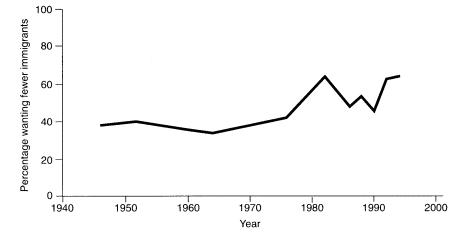
Figure 8.3
Trends in American attitudes toward immigration.
differences in attitudes associated with a respondent's age, education, income, race, ethnicity, gender, and region of residence. In addition, we included several variables that described economic conditions in the respondent's state of residence (such as unemployment rates and income levels), along with the fraction of that state's population that was foreign-born. This analysis is described in detail in Appendix 8.A and only the highlights are summarized here.
Why have feelings about immigration hardened? This shift may have arisen from concern about economic conditions: the fraction of Americans wanting less immigration has been positively correlated over time with the unemployment rate. Some evidence also suggests a relationship between economic concerns and attitudes toward immigration from cross-sectional comparisons: in our analysis of polling data, Americans living in states with relatively low rates of economic growth in recent years are more likely to want immigration to decrease.21 Economic changes are not the only developments whose timing parallels this change in attitudes. The change may be a response to the rise in illegal immigration or to
the shift in immigrants' countries of origin, although there is little hard evidence on this subject.
Although the majority of Americans now favor decreases in immigration, the strength of this sentiment varies substantially across groups. One might suppose that those who are most likely to face job market competition from immigrants (for example, those with job skills that are common among immigrants) would be most likely to want decreased immigration. This hypothesis, however, does not always fit very well with the observed differences across groups. For instance, residents of states with a high proportion of immigrants in the population do not differ systematically in their attitudes toward immigration from residents of other states (see Table 8.7). Neither did our multivariate analysis find any systematic relationship between attitudes and the fraction of a state's population that was foreign-born. Furthermore, there was no significant relationship between region of the country and attitudes toward immigration, despite the regional concentration of immigrants.
Given the large numbers of recent immigrants with less than a high school education, Americans with low levels of education appear to face the most job market competition from immigrants, and so might be expected to be most opposed to further immigration. Education does, in fact, have an important relationship with attitudes, but not the expected one. At the national level, those with less than a high school education do not stand out as having very different attitudes toward immigration (see Table 8.8). The group that does stand out is Americans
TABLE 8.7 American Attitudes Toward the Current Level of Immigration, 1995 Gallup Polls (percentage of respondents)
|
|
Level of Immigration Preferred |
||
|
State |
Decrease |
Present Level |
Increase |
|
States with large numbers of immigrants, combined |
64.8 |
26.3 |
8.9 |
|
California |
63.6 |
24.7 |
11.8 |
|
New York/New Jersey |
60.3 |
32.8 |
7.0 |
|
Texas |
80.2 |
11.9 |
7.9 |
|
Florida |
64.5 |
29.6 |
5.9 |
|
Illinois |
57.4 |
33.6 |
9.0 |
|
All other states combined |
66.9 |
26.3 |
6.8 |
|
Source: Pooled data from Gallup polls taken in June and July 1995. The question asked was "In your view, should immigration be kept at its present level, increased or decreased?" |
|||
TABLE 8.8 Attitudes Toward the Current Level of Immigration, by Education Level, 1995 Gallup Polls (percentage)
|
|
Level of Immigration Preferred |
||
|
Education Level |
Decrease |
Present Level |
Increase |
|
Less than high school |
70.1 |
22.0 |
8.0 |
|
High school graduate |
72.3 |
19.6 |
8.0 |
|
Some college |
64.9 |
27.6 |
7.5 |
|
College graduate |
67.7 |
27.0 |
5.3 |
|
Graduate school |
48.4 |
43.7 |
7.9 |
|
Source: Pooled data from Gallup polls taken in June and July 1995. The question asked was, "In your view, should immigration be kept at its present level, increased, or decreased?" |
|||
with graduate education, a majority of whom do not want to see immigration decreased.22
Blacks and Hispanics have more favorable attitudes toward immigration than do non-Hispanic whites: 68 percent of non-Hispanic whites favored decreasing immigration in the polls we analyzed, compared with 57 percent of blacks and 50 percent of Hispanics.23 These differences in attitudes on the part of Hispanics may be explained by their cultural ties to the large numbers of prospective immigrants from Latin America. 24 However, racial differences in attitudes are harder to explain. The data we presented earlier that indicate that blacks in general do not live near immigrants may be relevant.
Some immigrants appear to be more welcome than others. Americans generally indicate a preference for European immigrants, and immigrants from Asia in turn are generally rated more favorably than are those from Latin America (Espenshade and Belanger, 1996). At the same time, Americans also attributed positive characteristics to both Asian and Latin American immigrants: both groups were seen by a majority of Americans as hard-working and having strong family values (Espenshade and Belanger, 1996).
Americans are particularly concerned about illegal immigration, to the point that they greatly overestimate the proportion of immigrants who are in the United States illegally. In a June 1993 poll, over two-thirds of respondents believed that the majority of recent immigrants were in the country illegally (Espenshade and Belanger, 1996), whereas the U.S. Immigration and Naturalization Service estimates that net illegal immigration in fact accounts for about 20 to 30 percent of annual net immigrant arrivals (Washington Post, 1997). This disparity between perceptions and reality complicates the interpretation of Americans' attitudes toward immigration. Part of the recent hardening of attitudes may be due to the widespread media attention paid to the issue of illegal immigration.
To sum up, on the basis of polling data, Americans appear to be more opposed to immigration than they have been in the past. It is not possible to pin down the source of this change in attitudes, although concerns about economic conditions and about illegal immigration seem likely candidates. The majority of Americans now favor decreases in immigration, but there are significant differences across groups in the strength of this sentiment—blacks, Hispanics, and Asians generally have more positive attitudes than do non-Hispanic whites, and Americans with graduate education also have particularly favorable attitudes.
Immigration and Interethnic Tensions
Is immigration at high levels exacerbating ethnic and racial tensions in American society? Some authors have suggested that increasing competition between new immigrants and black Americans has led to urban unrest in recent years (Miles, 1992; Morrison, 1994). Portes and Stepick (1993) describe the riots in the Liberty City area of Miami as stemming in part from the frustrations of black Americans who see Cuban Americans and Haitian Americans leapfrogging ahead of them into better jobs and housing in the Miami area. Jack Miles (1992) wrote an influential piece in the Atlantic Monthly describing the Los Angeles riots of 1992 as reflecting tensions between Latino immigrants and black Americans entitled "Blacks vs. Browns." There have also been noted conflicts between black Americans and Korean immigrants, including a widely publicized boycott of a Korean grocery store in New York City in 1991 and a shooting of a black American teenager by a Korean immigrant shop owner in Los Angeles in the early 1990s. These incidents might lead people to conclude that there is growing ethnic tension in American cities, fueled by the ethnic and racial diversity and the absolute numbers of new immigrants currently being absorbed by gateway cities such as Miami, New York, and Los Angeles.
There is little systematic research into how the presence of new immigrants affects American racial and ethnic attitudes, and into the racial and ethnic attitudes of the new immigrants themselves. Researchers have only just begun to explore interminority racial and ethnic attitudes.
Bobo and Hutchings (1996:958) examined data from the Los Angeles por-
tion of the Multi-City Study of Urban Inequality. They found a complex web of interethnic attitudes with regard to threat and competition from other ethnic groups. More black respondents in Los Angeles perceived that competition with Asians was a zero-sum game than had that perception with respect to Hispanics. And more Hispanic respondents perceived that competition with Asians was a zero-sum game than had that perception with respect to blacks in the areas of housing and job competition. "A similar pattern emerges among Whites, who feel the least threat from blacks and the most from Asians, with reaction to Latinos typically falling in between the two." Asian Americans were found to perceive a greater threat from blacks than from Hispanics (these findings were not statistically significant). Bobo and Hutchings (1996:960) concluded that "Asian American and Latino respondents who are foreign born tend to perceive greater competition with blacks than do their native-born co-ethnics." Foreign-born Asian Americans were also more likely to perceive greater competition with Hispanics than were native-born Asian Americans.
Does nativity make a difference in perceptions of discrimination? Using the same data source, Bobo (1995) found that, among Asian Americans, the same proportion of foreign-born and native-born reported discrimination (22 percent). But among the other minority groups there were strong nativity differences, which went in opposite directions. Among Hispanics, the foreign-born were more likely to report discrimination (33 percent compared with 25 percent for the native-born). Among blacks, natives were more likely to report discrimination (62 percent for natives compared with 29 percent for the foreign-born). Waters (1994) also finds that foreign-born blacks are much less likely than American-born blacks to see themselves as victims of discrimination.
Using survey data collected by the Los Angeles Times, Oliver and Johnson (1984) found that Hispanics in that city are generally more antagonistic toward blacks than blacks are toward Hispanics. They concluded that the black antagonism arises almost exclusively from economic concerns. Hispanics were almost twice as likely as blacks to agree that the other group is more violent than the average group (39 versus 20 percent). The level of antagonism toward Hispanics was much higher among whites than among blacks. Several recent studies have attempted to measure discrimination against immigrants and minorities. In a survey of hiring practices among Chicago-area employers, Kirschenman and Neckerman (1991) found that employers strongly preferred to hire immigrants over inner-city blacks (see also Neckerman and Kirschenman, 1991; Wilson, 1987). Kasinitz and Rosenberg (1994) found the same preference among employers in the Red Hook section of New York City.
Our reading of these preliminary studies is that interethnic frictions and occasional violent outbreaks between minorities and immigrants are reflections of the conditions of inner-city life where rates of joblessness and poverty are high, and not signs of the inevitability of antagonism between immigrants and minorities. Despite employer preferences for immigrant workers over black
youth, national survey data show that black Americans are less hostile to immigrants than are white Americans (see the earlier section on attitudes toward immigration).
Conclusions
During the interval between the two world wars, the children of immigrants from Southern, Eastern and Central Europe made significant socioeconomic gains, in terms of both educational and occupational attainment. Few socioeconomic or cultural differences now separate the descendants of immigrants from Europe.
There are competing hypotheses about whether present-day immigrants and their children will make the same generational socioeconomic progress. Some scholars predict the possibility of second-generation decline for some national-origin groups in the post-1965 wave of immigrants, and others predict continuity of historical patterns of assimilation.
The future social and economic success of recent immigrants is subject to uncertainty, in part because it is still too early to draw conclusions about the mobility of their children. The early readings are that most immigrants and their children are doing comparatively well. Some descendants of immigrants, current Asian Americans, for example, clearly are at or above parity with whites in terms of education and occupation, although they have less income.
One of the more important indicators of social adaptation is residential integration. On initial arrival and in the early period of residence, past and recent immigrants have tended to settle in certain states and cities, and within particular neighborhoods, creating clusters of people of similar ethnicity. At the turn of the century, most major American cities had large neighborhoods of Italians, Germans, and Irish. Most of those neighborhoods have now changed, and the descendants of the original immigrants are widely dispersed. In recent years, Cuban and Vietnamese refugees have created similar ethnic neighborhoods. With the possible exception of Mexican immigrants, the available evidence suggests that current ethnic neighborhoods will change with time, as children and grandchildren of the immigrants disperse.
Except for young children, all immigrants arrive with language skills. Because public discourse is in English in the United States, the crucial question is how successful immigrants are in adapting to an English-speaking environment. Many immigrants come from countries where English was the dominant language or where they attended English-speaking schools. Almost three-fifths of immigrants who arrived in the 1980s reported in the 1990 census that they spoke English well or very well. Among those immigrants who spoke English with difficulty or not well, most came from non-English-speaking countries, usually Latin America. Although we lack cohort data on immigrants, the available evi-
dence suggests that most immigrants tend to acquire English language skills over time.
Today, after three or more generations of descendants of the original immigrants, offspring of European groups are virtually indistinguishable in terms of education, income, occupation, and residence. Because of extensive intermarriage and the changing patterns of ethnic identification among descendants of European immigrants, the boundaries between different national-origin and ethnic groups-Italians, Irish, Polish, and Jewish, for example-are increasingly blurred. If population projections had been done for groups of European origin at the beginning of the twentieth century, they would have failed to predict the voluntary choices of ethnic ancestries of the present U.S. population.
Under high rates of ethnic intermarriage, ethnic identity becomes quite varied and increasingly a matter of choice. In recent years, ethnic and racial intermarriage has been increasing in this country and is increasingly common among children and grandchildren of Asian and Hispanic immigrants. Current population projections of the future ethnic composition of the U.S. population are especially hazardous because future patterns of intermarriage and the meanings of race and ethnicity are uncertain.
American public attitudes about immigration have long been equivocal. The United States has had periods of large-scale immigration, with considerable public support and welcome, and periods of great distrust and antagonism toward immigrants. In the past 50 years, public opinion polls have allowed us to chart more clearly how the American public views immigration and regards immigrants. Americans have increased their opposition to immigration in recent decades, in part, it appears, because of economic concerns. These attitudes vary greatly, however. College graduates have more positive attitudes toward immigration. Black, Hispanic, and Asian Americans tend to have more favorable attitudes toward immigrants than do non-Hispanic whites.
Public concerns with immigration are centered on illegal immigration, although the average resident greatly overestimates the proportion of immigrants who are illegal. Over two-thirds of respondents believe that most recent immigrants are illegal, whereas the proportion of illegals among total immigrants is closer to 20 to 30 percent.
The scant available data on crime do not allow us to say much about its relationship to immigration. It is hard to draw firm conclusions from the currently scarce information. The crime rate increased from the 1960s until about 1990, then has declined noticeably for the past six-years. There is no apparent association in these temporal trends with immigration. From available studies, it appears that overall crime rates have been associated more with other factors, including the changing demographics of the country (with shifts in the number of young men), fluctuations in drug use, and changes in the effectiveness of the police and criminal justice system in reducing local crime. The problems of data of the criminal justice system make it very difficult to reach empirical conclu-
sions on immigration and crime. It appears, however, that the major trends in crime are not being driven by immigration.
References
Alba, R.D. 1986 The twilight of ethnicity among Americans of European ancestry: The case of Italians. Ethnic and Racial Studies 8(1): 134-158.
1990 Ethnic Identity: The Transformation of White America. New Haven: Yale University Press.
1995 Assimilation's quiet tide. The Public Interest 119(Spring): 3-18.
Auster, L. 1992 The forbidden topic: Some conservatives don't want to know about the link between multiculturalism and immigration. National Review 44(8):42-45.
Barringer, H., R.W. Gardner, and M. Levin 1993 Asians and Pacific Islanders in the United States. New York: Russell Sage.
Binder, F., and D. Reimers 1995 All the Nations Under Heaven. New York: Columbia University Press.
Bobo, L. 1995 Surveying Racial Discrimination: Analyses from a Multiethnic Labor Market. Russell Sage Foundation Working Paper #75. September.
Bobo, L., and V. Hutchings 1996 Perceptions of racial group competition: Extending Blumer's theory of group position to a multiracial social context. American Sociological Review 61(6):951-973.
Borjas, G.J. 1995 Ethnicity, neighborhoods, and human-capital externalities. American Economic Review 85(3):365-390.
Bouvier, L. 1991 Peaceful Invasions: Immigration and Changing America. Lanham, MD: University Press of America.
Brimelow, P. 1995 Alien Nation: Common Sense about America's Immigration Disaster. New York: Random House.
Butcher, K.F., and A.M. Piehl 1996 Cross-City Evidence on the Relationship Between Immigration and Crime. Unpublished paper. Boston College and Harvard University, September.
Duncan, B., and O.D. Duncan 1968 Minorities and the process of stratification. American Sociological Review 33(3):356-364.
Edmonston, B., editor 1996 Statistics on U.S. Immigration: An Assessment of Data Needs for Future Research. Committee on National Statistics, National Research Council. Washington, D.C.: National Academy Press.
Espenshade, T.J. 1997 Taking the pulse of public opinion toward immigrants. Chapter 4 in T.J. Espenshade (editor), Keys to Successful Immigration: Implications of the New Jersey Experience. Washington, D.C.:The Urban Institute Press.
Espenshade, T.J., and M. Belanger 1996 U.S. public perceptions and reactions to Mexican migration. In Frank D. Bean et al. (editors), At the Crossroads: Mexican Migration and U.S. Policy. New York: Rowman and Littlefield Publishers, Inc.
Espenshade, T.J., and K. Hempstea 1996 Contemporary American attitudes toward U.S. immigration. International Migration Review 30(2):535-570.
Farley, R. 1996 Increasing Interracial Marriage: Trends Revealed by the Census and Census Bureau Surveys. Unpublished manuscript. Population Studies Center, The University of Michigan, October.
Featherman, D., and R. Hauser 1978 Opportunity and Change. New York: Academic Press.
Foley, D.E. 1991 Reconsidering anthropological explanations of ethnic school failure. Anthropology and Education Quarterly 22(1):60-86.
Fong, E. 1994 Residential proximity among racial groups in U.S. and Canadian neighborhoods. Urban Affairs Quarterly 30(2):285-297.
Frey, W.H. 1995 The new geography of population shifts: Trends toward balkanization. Pp. 271-336 in R. Farley (editor), State of the Union: America in the 1990s. Volume Two: Social Trends. New York: Russell Sage Foundation.
Fukuyama, F. 1993 Immigrants and family values. Commentary May.
Gans, H. 1992 Second generation decline: Scenarios for the economic and ethnic futures of the post-1965 American immigrants. Ethnic and Racial Studies 15(2): 173-193.
Gibson, M.A. 1989 Accommodation Without Assimilation. Ithaca, NY: Cornell University Press.
Gordon, M. 1964 Assimilation in American Life: The Role of Race, Religions, and National Origins. New York: Oxford University Press.
Grant, M. 1916 The Passing of the Great Race in America. New York: C. Scribner and Sons.
Grasmuck, S., and P. Pessar 1995 First and second generation settlement of Dominicans in the United States: 1960-1990. In S. Pedraza and R. Rumbaut (editors), Origins and Destinies: Immigration, Race, and Ethnicity in America. Belmont: Wadsworth Press.
Greeley, A. 1974 Ethnicity in the United States: A Preliminary Reconnaissance. New York: Wiley.
1976 Ethnicity, Denomination, and Inequality. Beverly Hills, CA: Sage.
Gurak, D.T., and J. Fitzpatrick 1982 Intermarriage among Hispanic ethnic groups in New York City. American Journal of Sociology 87(4):921-934.
Harlow, C.W. 1994 Comparing Federal and State Prison Inmates, 1991. Report NCJ-145864. Washington, D.C.: Bureau of Justice Statistics.
Harrison, R., and C. Bennett 1995 Racial and ethnic diversity. Pp. 141-210 in R. Farley (editor), State of the Union: America in the 1990s. Volume Two: Social Trends. New York: Russell Sage Foundation.
Higham, J 1955 Strangers in the Land: Patterns of American Nativism, 1860-1925. New York: Atheneum.
Hirschman, C. 1983 The melting pot reconsidered. Annual Review of Sociology 9:397-423.
Hirschman, C., and E. Kraly 1990 Racial and ethnic inequality in the United States, 1940 and 1950: The impact of geographic location and human capital. International Migration Review 24:4-43.
Hirschman, C., and M.G. Wong 1984 Socioeconomic gains of Asian Americans, blacks and Hispanics: 1960-1976. American Journal of Sociology 90(3):584-607.
Hout, M., and J. Goldstein 1994 How 4.5 million Irish immigrants became 40 million Irish Americans: Demographic and subjective aspects of the ethnic composition of white Americans. American Sociological Review 59:64-82.
Ignatiev, N. 1995 How the Irish Became White. New York: Routledge.
Jasso, G., and M.R. Rosenzweig 1990 The New Chosen People: Immigrants in the United States. New York: Russell Sage Foundation.
Jones, M.A. 1992 American Immigration, Second edition. Chicago: University of Chicago Press.
Kao, G., and M. Tienda 1995 Optimism and achievement: The educational performance of immigrant youth. Social Science Quarterly 76(1):March.
Kasinitz, P., and J. Rosenberg 1994 Missing the Connection? Social Isolation and Employment on the Brooklyn Waterfront. Working Paper of the Michael Harrington Institute, Queens College, New York.
Kikumura, A., and H.L. Kitano 1973 Interracial marriage: A picture of the Japanese Americans. Journal of Social Issues 29(2).
Kitano, H., L.K. Chai, and H. Hatanaka 1984 Asian American interracial marriage. Journal of Marriage and the Family 46:179-190.
Kim, I. 1981 The New Urban Immigrants: The Korean Community in New York City. Princeton, NJ: Princeton University Press.
Kirschenman, J., and K. Neckerman 1991 We'd love to hire them, but-The meaning of race for employers. Pp. 203-234 in C. Jencks and P. Petersen (editors), The Urban Underclass. Washington, D.C.: The Brookings Institution.
Lamm, R.D., and G. Imhoff 1985 The Immigration Time Bomb. New York: Truman Talley.
Lieberson, S. 1980 A Piece of the Pie: Black and White Immigrants since 1880. Berkeley: University of California Press.
1996 Contemporary immigration policy: Lessons from the past. Pp. 335-351 in H.O. Duleep and P.V. Wunnava (editors), Immigrants and Immigration Policy: Individual Skills, Family Ties, and Group Identities. Greenwich, CT: JAI Press.
Lieberson, S., and M. Waters 1988 From Many Strands: Ethnic and Racial Groups in Contemporary America. New York: Russell Sage Foundation.
Massey, D.S., and N.A. Denton 1992 Residential segregation of Asian-origin groups in U.S. Metropolitan areas. Social Science Research 76(4):170-177.
1993 American Apartheid: Segregation and the Making of the Underclass. Cambridge, MA: Harvard University Press.
Matute-Bianchi, E. 1991 Situational ethnicity and patterns of school performance among immigrants and nonimmigrant Mexican descent students. In M. Gibson and J. Ogbu (editors), Minority Status and Schooling: A Comparative Study of Immigrant and Involuntary Minorities. New York: Garland Publishing.
Miles, J. 1992 Blacks vs. browns. The Atlantic Monthly 270(4):41-60.
Min, P.G. 1990 Problems of Korean immigrant entrepreneurs. International Migration Review 24(3):436-55.
Morrison, T. 1994 On the backs of blacks. Pp. 97-100 in Nicolaus Mills (editor), Arguing Immigration. New York: Touchstone Books.
Muller, T. 1993 Immigrants and the American City. New York: New York University Press.
Neckerman, K., and J. Kirschenman 1991 Hiring strategies, racial bias, and inner city workers. Social Problems 38(4):433-447.
Nee, V. and J. Sanders 1985 The road to parity: Determinants of the socioeconomic achievements of Asian Americans. Ethnic and Racial Studies 8(1):75-93.
Ogbu, J. 1990 Minority status and literacy in comparative perspective. Daedalus 119(2): 141-168.
Oliver, M., and J. Johnson, Jr. 1984 Interethnic conflict in an urban ghetto: The case of blacks and Latinos in Los Angeles. Research in Social Movements 6:57-84.
Organization for Economic Cooperation and Development 1995 Trends in International Migration: Annual Report, 1994. Paris: Organization for Economic Cooperation and Development.
Pagnini, D.L., and S.P. Morgan 1990 Intermarriage and social distance among U.S. immigrants at the turn of the century. American Journal of Sociology 96(2):405-432.
Park, R. 1950 Race and Culture. Glencoe, IL: The Free Press.
Park, R.E., and E.W. Burgess 1969 Introduction to the Science of Sociology. New York: Greenwood Press.
Perlmann, J. 1988 Ethnic Differences: Schooling and Social Structure among the Irish, Italians, Jews, and Blacks in an American City, 1880-1935. New York: Cambridge University Press.
Portes, A., and A. Stepick 1993 City on the Edge: The Transformation of Miami. Berkeley:University of California Press.
Portes, A., and M. Zhou 1993 The new second generation: Segmented assimilation and its variants. Annals of the American Academy of Political and Social Science 530:74-97.
Portes, A., and D. MacLeod 1996 Educational progress of children of immigrants: The role of class, ethnicity, and school context. Sociology of Education 69:255-275.
Portes, A., and R.G. Rumbaut 1996 Immigrant America: A Portrait, second edition. Berkeley: University of California Press.
Portes, A., and R. Schauffler 1996 Language and the second generation: Bilingualism yesterday and today. Pp. 8-29 in Alejandro Portes (editor), The New Second Generation. New York: Russell Sage Foundation.
Ross, E.A. 1914 The Old World in the New. New York: Century Company.
Rumbaut, R. 1996 Paradoxes and Orthodoxies of Assimilation. Paper presented at the Social Science Research Council Conference on Becoming American/America Becoming: International Migration to the United States-Sanibel Island, Florida, January 18-21.
Sandefur, G., and T. McKinnell 1986 American Indian intermarriage. Social Science Research 15:347-371.
Simon, J. 1989 The Economic Consequences of Immigration. Oxford: Basil Blackwell.
Skerry, P. 1993 Mexican Americans: The Ambivalent Minority. New York: Free Press.
Smith, R.C. 1994 ''Doubly Bonded" Solidarity: Race and Social Location in the Incorporation of Mexicans into New York City. Paper presented at Social Science Research Council, Conference of Fellows: Program of Research on the Urban Underclass, June.
Stevens, G. 1994 Immigration, emigration, language acquisition, and the English language proficiency of immigrants in the United States. Chapter 6 in B. Edmonston and J.S. Passel (editors), Immigration and Ethnicity: The Integration of America's Newest Arrivals. Washington, D.C.: Urban Institute Press.
Suarez-Orozco, M.M. 1987 "Becoming somebody": Central American immigrants in U.S. inner-city schools. Anthropology and Education Quarterly 18(4):287-299.
Sung, B.L. 1987 Chinese Immigrant Children in New York City. New York: Center for Migration Studies .
Treiman, D.J. 1970 Industrialization and social stratification. Pp. 207-234 in E.O. Laumann (editor), Social Stratification: Research and Theory for the 1970s. Indianapolis: Bobbs-Merrill.
U.S. Bureau of the Census 1993 1990 Census of Population. The Foreign-Born Population of the United States. 1990 CP-3-1. Washington, D.C.: U.S. Department of Commerce.
Washington Post 1997 New estimates of illegal immigration. February 8, p. A3.
Waters, M.C. 1990 Ethnic Options: Choosing Identities in America. Berkeley:University of California Press.
1994 Ethnic and racial identities of second-generation black immigrants in New York City. International Migration Review 28(4):795-820.
Waters, M.C., and K. Eschbach 1995 Immigration and ethnic and racial inequality in the United States. Annual Review of Sociology 21:419-446.
Wilson, W.J. 1987 The Truly Disadvantaged: The Inner City, the Underclass, and Public Policy. Chicago: University of Chicago Press.
Appendix 8.A
Analysis of Polling Data
The analysis of polling data is based on two Gallup polls taken in June and July 1995. Both polls included the question, "Should immigration be kept at its present level, increased, or decreased?" The pooled data from the two polls give a sample of 1,754 respondents with complete data. The sample, when weighted, represents U.S. adults in households with telephones. All analysis uses the sampling weights. Several additional variables were matched to these data on the basis of the respondent's state of residence. These variables included 1995 state per capita income and its change since 1992, unemployment rates for the month of the survey and its change since that month in 1993, and the percentage of the state's population that was foreign-born at the time of the 1990 census.
The data were analyzed using probits, with the dependent variable set equal to one if the respondent chose "decreased" as the response, and set equal to zero if the respondent chose "kept at its present level" or "increased." In this context, positive entries in Table 8.A.1 indicate that the characteristic is associated with greater opposition to immigration. The possible responses to the immigration question also allow for use of an ordered probit model in which "kept at its present level'' and "increased" were separated into two categories. However, given the small fraction of "increased" responses, using the more complicated model has only negligible effects on the results.
The control variables for age, education, region, income, race/ethnicity, and gender are all dummy variables, which equal one if the respondent reported the value given in that row of Table 8.A.1. The omitted categories in specifying the various dummy variables were non-Hispanic, white, female, high school dropout, living in the West, with household income less than $10,000. The figures reported give the estimated change in probability with a change in the continuous explanatory variables, evaluated at the sample mean of the explanatory variables. For dummy variables, they give the difference in probability from the omitted category, also evaluated at the sample mean.
The results are presented for the nation as a whole, for the six states with high levels of immigration between 1980 and 1990, and for California alone. State-level variables (state per capita income and unemployment rates and their changes over time, along with the fraction foreign-born) were dropped for the analysis of California data, as all observations within the state have the same value for those variables.
No systematic relationship was found between age and attitudes toward immigration, nor between income or region of residence and those attitudes. More education was generally associated with less opposition to immigration, with larger differences associated with education in the high-immigration states and California than for the nation as a whole. Men were generally less likely to want decreased immigration than were women, although the difference between
TABLE 8.A1 Probit Estimates of the Likelihood that Respondents Want Immigration Decreased from Its Current Level, 1995 Gallup Poll
|
Explanatory Variables |
National |
High Immigration Statesa |
California |
|
Age |
|||
|
30-39 |
-.059 |
-.091 |
-.271* |
|
|
(.033) |
(.059) |
(.116) |
|
40-49 |
-.072* |
.001 |
-.219 |
|
|
(.035) |
(.059) |
(.119) |
|
50-59 |
-.022 |
-.019 |
-.086 |
|
|
(.040) |
(.068) |
(.131) |
|
60 and older |
-.007 |
.037 |
-.113 |
|
|
(.040) |
(.073) |
(.148) |
|
Education |
|||
|
High school graduate |
.037 |
-.124 |
-.224 |
|
|
(.040) |
(.078) |
(.162) |
|
Some college |
-.046 |
-.216** |
-.389* |
|
|
(.041) |
(.078) |
(.164) |
|
College graduate |
-.043 |
-.292** |
-.472* |
|
|
(.051) |
(.098) |
(.186) |
|
Graduate school |
-.229** |
-.399** |
-.503** |
|
|
(.054) |
(.095) |
(.189) |
|
Regions |
|||
|
East |
-.012 |
|
|
|
|
(.047) |
|
|
|
South |
.073 |
|
|
|
|
(.041) |
|
|
|
Midwest |
.011 |
|
|
|
|
(.049) |
|
|
|
Income |
|||
|
$10,000-20,000 |
-.012 |
-.089 |
-.273 |
|
|
(.045) |
(.089) |
(.181) |
|
$20,000-30,000 |
-.001 |
-.059 |
-.220 |
|
|
(.045) |
(.082) |
(.167) |
|
Explanatory Variables |
National |
High Immigration Statesa |
California |
|
$30,000-50,000 |
.011 |
-.007 |
-.041 |
|
|
(.044) |
(.081) |
(.165) |
|
$50,000-75,000 |
.052 |
.053 |
-.025 |
|
|
(.049) |
(.086) |
(.168) |
|
$75,000 or more |
.021 |
.055 |
.136 |
|
|
(.052) |
(.090) |
(.167) |
|
Male |
-.022 |
-.065 |
-.214** |
|
|
(.023) |
(.041) |
(.080) |
|
Black |
-.128** |
-.110 |
-.422* |
|
|
(.041) |
(.072) |
(.177) |
|
Hispanic |
-.246** |
-.271** |
-.282* |
|
|
(.053) |
(.070) |
(.113) |
|
Log (state per capita income) |
.010 |
-.232 |
|
|
|
(.172) |
(.315) |
|
|
Change in state per capita income (3 year change in log [PCI]) |
-2.384** |
.256 |
|
|
|
(.684) |
(4.379) |
|
|
Percentage of the state's population that was foreign-born in the 1990 census |
-.0045 |
-.0221* |
|
|
|
(.0039) |
(.0091) |
|
|
Unemployment rate for state in month of survey |
.003 |
.105 |
|
|
|
(.014) |
(.100) |
|
|
Change in unemployment rate (over 2 years) |
.020 |
.053 |
|
|
|
(.020) |
(.067) |
|
|
Sample size |
1734 |
594 |
185 |
|
Notes: * denotes significance at the 5% level, ** at the 1% level. Numbers reported give the change in probability with a change in the continuous explanatory variables, evaluated at the mean. For dummy variables, they give the difference in probability from the omitted category, evaluated at the mean. a California, Florida, Illinois, New Jersey, New York, and Texas. |
|||
the sexes was significant only in the estimates for California. Blacks and Hispanics generally had more favorable attitudes toward immigration than did non-Hispanic whites, with (again) larger differences were associated with race and ethnicity in the high-immigration states and California than for the nation as a whole. Among the state-level variables, only the change in state per capita income had a significant relationship to attitudes toward immigration at the national level: residents of states with higher growth rates were less likely to want to see reduced levels of immigration. In the estimates for the six high-immigration states, residents of states with higher fractions of immigrants were less likely to want reduced immigration. Given that the state-level variables take on only six different values for these six states, this is mostly picking up the large difference between attitudes in Texas and those in the other states that is displayed in Table 8.7.


