
Executive Summary
Abstract
In response to a request from the U.S. Congress, the Institute of Medicine prepared a report that (1) assesses the current knowledge base in rehabilitation science and engineering; (2) evaluates the utility of current rehabilitation models; (3) describes and recommends mechanisms for the effective transfer and clinical translation of scientific findings that will promote health and health care for people with disabling conditions; and (4) critically evaluates the current federal programmatic efforts in rehabilitation science and engineering.
The report describes general priorities for rehabilitation science and engineering as (1) strengthening the science, (2)focusing on the enabling-disabling process, and (3) transferring technology. The report also describes a new model of the enabling-disabling process, including clear reference to the importance of the environment in causing, preventing, and reducing disability.
Limited visibility, support, and coordination of existing federal research programs are described as major issues of concern. Moreover, the large annual costs (approximately $300 billion—more than 4 percent of the gross domestic product) associated with disability and rehabilitation are in stark contrast to the relatively small amount of funding ($133 million) that supports the major federal programs of research in rehabilitation science and engineering.
To address these concerns, the report recommends that the National Institute on Disability and Rehabilitation Research program be relocated from the U.S. Department of Education to the U.S. Department of Health and Human Services, where it would more effectively serve as the foundation of a new Agency on Disability and Rehabilitation Research that would have enhanced authority for coordinating federal research programs.
The United States has long judged the success of its efforts to improve the health of its citizens on the basis of mortality statistics. Gains in human longevity, however, have been accompanied by increases in the incidence and prevalence of disabling conditions. At this point in the evolution of the nation's health care system, emphasis has begun to shift from the quantity of life to the quality of life. As a result, attention is now being focused not only on the prevention and treatment of disease and injury but also on rehabilitation and health promotion for people with disabling conditions.
The population of people with disabilities is sizable in the United States—49 million Americans or about one of every seven citizens has some type of disabling condition. Approximately one third of these people have a disabling condition so severe that they are unable to carry out the major activities of their age group, such as attending school, working, or providing self-care. About another third are restricted in their major activities, and the remaining third are limited in other types of activities. In 1992, about one quarter of all disabling conditions stemmed from impairments such as sensory impairments, paralysis, or mental retardation, and the remaining three quarters were due to diseases or disorders such as emphysema, heart disease, or arthritis.
The economic costs associated with disability are enormous. Expressed in 1994 terms, the medical care expenditures (direct costs) amount to approximately $160 billion, and the indirect costs (lost productivity) amount to approximately $155 billion, for a grand total of over $300 billion annually—more than 4 percent of the gross domestic product. Cost savings, as well as clinical benefit, however, are clearly associated with early, aggressive intervention, vigilant and knowledgeable monitoring of chronic conditions, and appropriate use of assistive technology.
With a clear understanding of the importance of effective rehabilitation and an appreciation of the advances in rehabilitation science, Senator Dole (1995) stated the following in requesting an Institute of Medicine (IOM) study of federal programs in rehabilitation research:
Advances in rehabilitation science are essential to realizing the Nation's commitment to equal opportunity, economic self-sufficiency, and full participation of Americans with disabilities. There are important questions of the adequacy of Federal efforts in both meeting the needs of the rapidly growing number of Americans with disabilities, and in realizing the new opportunities of science and technology on behalf of people with disabilities. The committee believes an independent assessment of the current Federal efforts in rehabilitation science and engineering is warranted and requests that the Secretary [of Health and Human Services] make appropriate arrangements with the Institute of Medicine ... to undertake such a review.
In response to this request, the Institute of Medicine assembled this committee to address the following questions:
- What is the current content, quality, and adequacy of the knowledge base in rehabilitation science and engineering?
- How useful are current disability models, and do they reflect the interdisciplinary and multidisciplinary nature of rehabilitation and the importance of environmental factors in mediating disability?
- What is the best way to effectively translate scientific findings into clinical benefits for people with disabilities and disabling conditions?
- How productive, relevant, and well-coordinated are current federal research efforts in rehabilitation science and engineering?
Following a brief description of concepts and definitions, the remainder of this summary presents an overview of the committee's responses to these questions and a summary of the committee's conclusions and recommendations.
Concepts, Definitions, and Models
Rehabilitation is the process by which physical, sensory, or mental capacities are restored or developed. This is achieved not only through functional change in the person, such as strengthening injured limbs, but also through changes in the physical and social environments, such as making buildings accessible to wheelchairs. Rehabilitation strives to reverse what has been called the disabling process, and may therefore be called the enabling process.
An overview of the enabling and disabling processes, and how disabling conditions affect a person's access to the environment is shown in Figure 1. Access to the environment, depicted as a square, represents both physical space and social structures (family, community, society). The person's degree of physical access to and social integration into the generalized environment is shown as degree of overlap of the symbolic person and the environmental square. A person who does not manifest disability (Figure la) is fully integrated into society and has full access to both: (1) social opportunities (e.g., employment, education, parenthood, leadership roles) and (2) physical space (e.g., housing, workplaces, transportation). A person with disabling conditions has increased needs (shown as the increased size of the individual) and is dislocated from their prior integration into the environment (Figure l b).
The enabling (or rehabilitative) process attempts to rectify this displacement, either by restoring function in the individual (Figure 1c) or by expanding access to the environment (Figure 1d) (e.g., building ramps).
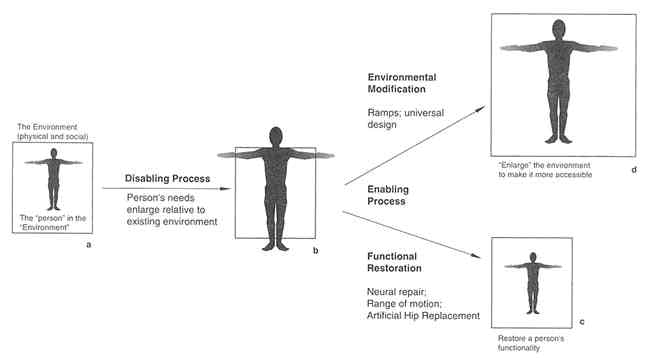
FIGURE 1 Conceptual overview of the enabling-disabling process. The environment, depicted as a square, represents both physical space and social structures (family, community, society). A person who does not manifest a disability (a) is fully integrated into society and ''fits within the square." A person with potentially disabling conditions has increased needs (expressed by the size of the individual) and is dislocated from his or her prior integration into the environment (b) that is, "doesn't fit in the square." The enabling (or rehabilitative) process attempts to rectify this displacement, either by restoring function in the individual (c) or by expanding access to the environment (d) (e.g., building ramps).
This does not mean to imply that functional restoration and environmental modification (sometimes characterized as cure and care) are mutually exclusive. Indeed, the most effective rehabilitation programs include both. This overview model separates the two only to illustrate that disability is the interaction between the disabling conditions of an individual and the environment, and therefore strategies that affect either the environment or the disabling conditions can affect disability.
Rehabilitation science and engineering, as defined in this report, is the field of study that encompasses basic and applied aspects of the health sciences, social sciences, and engineering related to restoring functional capacity in a person and improving their interactions with the surrounding environment. This term reflects the synergistic importance of both science and engineering in advancing rehabilitation efforts and addressing the needs of people with disabling conditions. What is unique about rehabilitation science and engineering is the melding of knowledge from several disciplines to understand the fundamental nature of the enabling-disabling processes, that is, how disabling conditions develop, progress, and reverse, and how biological, behavioral, and environmental factors can affect these transitions.
Disability Models
As originally described by Saad Nagi in the 1950s and refined most recently in the 1991 IOM report Disability in America, the disabling process has four major components: pathology, impairment, functional limitation, and disability (see Table 1). Pathology refers to molecular, cellular, or tissue changes caused by disease, infection, trauma, congenital conditions, or other factors. An example is the death of spinal cord neurons following injury. Impairment occurs at the organ or organ systems level and results in an individual's loss of a mental, physiological, or biochemical function, or abnormalities in these functions. Functional limitation is an inability or hampered ability to perform a specific task, such as climb a flight of stairs.
A disability is defined as a limitation in performing certain roles and tasks that society expects of an individual. It is the expression of the gap between a person's capabilities and the demands of the environment—the interaction of a person's limitations with social and physical environmental factors. Many disabling conditions are thus preventable or reversible with proper and adequate rehabilitation, including environmental modification. A secondary condition is any additional physical or mental health condition that occurs as a result of having a primary disabling condition. Secondary conditions quite often increase the severity of an individual's disability and are also highly preventable.
TABLE 1 Concepts of Pathology, Impairment, Functional Limitation, and Disability (IOM, 1991)
|
Pathology |
Impairment |
Functional Limitation |
Disability |
|
Definition |
|
|
|
|
Interruption or interference of normal bodily processes or structures |
Loss and/or abnormality of mental, emotional, physiological, or anatomical structure or function: includes all losses or abnormalities, not just those attributable to active pathology; also includes pain |
Restriction or lack of ability to perform an action or activity in the manner or within the range considered normal that results from impairment |
Inability or limitation in performing socially defined activities and roles expected of individuals within a social and physical environment |
|
Level of Reference |
|
|
|
|
Cells and tissues |
Organs and organ systems |
Organism—action or activity performance (consistent with the purpose or function of the organ or organ system) |
Society—task performance within the social and cultural context |
|
Example |
|
|
|
|
Denervated muscle in arm due to trauma |
Atrophy of muscle |
Cannot pull with arm |
Change of job; can no longer swim recreationally |
With this in mind, the committee enhanced the 1991 IOM model to show more clearly how biological, environmental (physical and social), and lifestyle/behavioral factors are involved in reversing the disabling process, i.e., rehabilitation, or the enabling process. The enhancements include bidirectional arrows between the various states of the enabling-disabling process to indicate that the disabling process (described in the 1991 IOM model) can be reversed with proper interventions (i.e., the enabling process; see Figure 2). The model also
The Enabling-Disabling Process
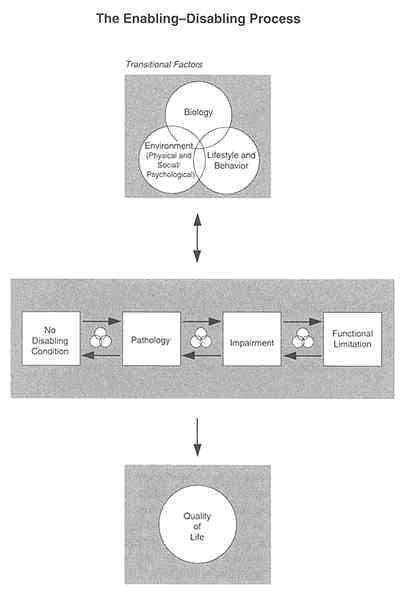
FIGURE 2 Modified IOM model. The Disability in America model (Institute of Medicine, 1991) is revised to include bidirectional arrows and a state of "no disabling condition," and to show transitional factors and quality of life interacting as part of the enabling-disabling process. The state of "disability" does not appear in this model since it is not inherent in the individual but, rather, a function of the interaction of the individual and the environment.
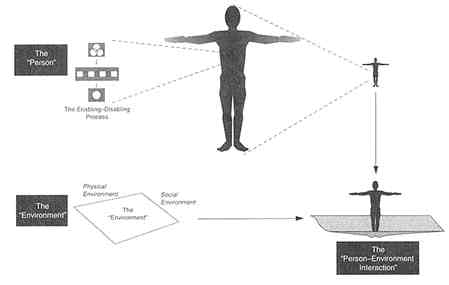
FIGURE 3 The person-environment interaction. The enabling-disabling process is depicted as being an active part of the individual person. The physical and social environments are depicted as a three-dimensional mat, with social factors on one side and physical factors on the other. The interaction of the person and the "environmental mat" is depicted as a deflection in the mat.
includes a new category—no disabling conditions—to indicate that complete rehabilitation is feasible.
To help clarify the fact that disability is not inherent in the individual, but rather is a product of the interaction of the individual with the environment, disability does not appear in Figure 2. Figures 3 and 4 show more accurately the committee's interpretation of disability as a function of the interaction of the person with the environment. More specifically, the fact that the amount of disability that an individual experiences results in large part from the quality of the surrounding environment—for example, whether appropriate and adequate care is accessible and whether a social support network is in place. Thus, for any given limitation in function, the amount of disability that one experiences will depend on the quality of the social and physical environment.
Rehabilitation Science and Engineering Research
As defined and described in this report, the major realms of knowledge and research within rehabilitation science and engineering are pa-
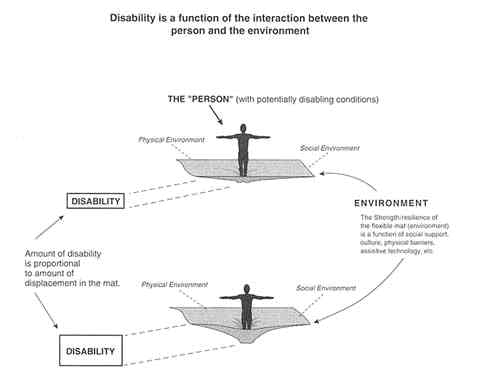
FIGURE 4 Disability as displacement of the environmental mat. The amount of disability that a person experiences is a function of the interaction between the person and the environment. The amount of displacement in the environmental mat is a function of the strength of the physical and social environments that support an individual and the magnitude of the potentially disabling condition. The amount of displacement represents the amount of disability that is experienced by the individual.
thology, impairment, functional limitation, and disability. Rehabilitation-related research in these areas are summarized below, followed by a section on health services research.
Pathology and Impairment Research
Rehabilitation-related research in pathology and impairment focuses on the altered function of molecules, cells, organs, and organ systems as it relates to human functional limitations and disabilities, including mechanisms for the recovery of, or compensation for, such altered function. A number of sciences contribute to this research, including medicine, physiology, cell biology, neuroscience, developmental biology, gerontology,
biochemistry, genetics, molecular biology, pharmacology, engineering and physical sciences, social and behavioral sciences, and health sciences. Genetics and molecular biology, for example, offer powerful investigative techniques that can be used to provide an understanding of the causes and nature of some inherited disabling diseases. This area of research also holds promise for generating biological markers and animal models for these diseases, as well as the means for replacing or restoring the functions of defective or missing genes. Genetics research may also lead to the development of the capacity for regrowth of cells, organs, or limbs.
One of the contributions of engineering to rehabilitation science and engineering is within the realm of creating altered, supportive environments (external or internal) for people with disabling conditions. These engineered environments limit or reverse the functional manifestations of pathology and organ impairment by compensating for or replacing the altered or lost function with engineered structures and devices. The majority of current rehabilitation engineering research is in the fields of material sciences, biomedical engineering, and engineering technology development. Research in the development of prosthetics and orthotics, implantable lenses and pacemakers, and implantable drug delivery systems are some examples of engineered devices that reduce or eliminate impairment and improve function.
Recent findings in neuroscience and medicine hold promise for helping prevent and reverse neurological impairments, which are major causes of disabling conditions. Many of the therapeutic advances in this area have centered on preventive, regenerative, and restorative therapies for spinal cord and brain injuries. For example, a number of drugs given shortly after traumatic brain or spinal cord injury can significantly improve neurological recovery. Other compounds have been shown in laboratory and animal studies to foster the regeneration of severed spinal cord tissue and restore lost motor functions. An understanding of the neuronal control of skeletal muscle contractions should also prove to be useful to researchers trying to artificially mimic that control with electrical devices for individuals with paralysis. Pharmacological and physical therapies for relaxation of skeletal muscles also are being developed and show promise for relieving the prolonged and often painful muscle contractions associated with various disabling conditions. In addition, recent studies with animals suggest that recovery of function of muscles atrophied as a result of a lack of use due to injury or illness is possible with appropriate exercise.
Functional Limitation Research
Functional limitation is the expression of a potentially disabling con-
dition at the level of the whole organism, and functional limitation research focuses on limiting or preventing disability by improving the capacity to perform specific activities.
Spinal dysfunction in general and back pain in particular, because they limit the ability to lift and to be generally active, are leading causes of functional limitation and potential disability. Among the research efforts that hold promise in this area are those that seek to determine the most mechanically efficient and least impairment-provoking means of lifting. The engineering of orthotic support structures, for example, offers potential assistance in this area.
Another important area of functional limitations research focuses on elimination in people who lack bladder and bowel control due to spinal cord injury, stroke, multiple sclerosis, prostate cancer, or other causes. New biomedical engineering approaches offer promising means of controlling micturition and defecation through implanted stimulators with external controls that can markedly reduce the limitations placed on individuals who sometimes find it difficult to work or travel because of continence problems.
Other common functional limitations include those associated with hearing and vision loss. Although research has defined many of the pathologies and impairments associated with many of these limitations, important research remains in understanding how damage to the visual pathways affects functional limitations. This may lead to the development of visual training programs, behavioral strategies, and environmental adaptations that can contribute to the optimal functioning of individuals with such disabling conditions. Science and engineering has developed low-vision aids, text-to-speech reading machines, advanced mobility and guidance aids, and other assistive devices for those with vision loss.
Another important research area centers on improvements to hearing aid devices and the rehabilitation strategies that put them to optimal use. Research in this area focuses on several levels, including the cellular level (e.g., improved electrodes for cochlear implants), signal processing level (e.g., improved digital processing software for enhancing speech perception with computer-based hearing aids), assessment level (e.g., physiologically based techniques for detecting and quantifying hearing impairments in neonates), and behavioral level (e.g., alternative communication skills).
Disability Research
Whether or not a particular physical condition is disabling to a particular individual depends on the natural and built environments, the culture of a society or the subculture of a group, the political, economic, or familial structures of a society, and the intrapersonal processes of an indi-
vidual. Providing the physical and social environmental adaptations and supports that a person with a potentially disabling condition needs can often ameliorate those conditions and facilitate full participation in society. Universal design and universal engineering of environments and equipment to meet the physical needs of a wide range of abilities clearly has many advantages. Social and behavioral sciences provide an understanding of the social variables that affect disability. Designing rehabilitation programs so that they maximize the consumer's psychological control can be an important step in preventing disability and facilitating rehabilitation.
Despite the growing recognition of the importance of the environment in determining the prevalence and severity of disability, the committee could find relatively little research that explicitly focused on the effects of the environment in producing or reducing disability.
Health Services Research
Health services research, with respect to rehabilitation, focuses on how best to organize, deliver, and finance interventions for people with disabling conditions. In general, there has been little interaction between the fields of health services research and rehabilitation science and engineering. However, to the extent that health services research has included disability and rehabilitation in its agenda, it has focused primarily on issues regarding the care of children and elderly people; few studies have focused on the needs of working-age adults. Yet the number of working-age adults is growing faster than any other segment of the population of people with disabling conditions.
The development of a more comprehensive health services research agenda in rehabilitation science and engineering is particularly important and timely because of the growing demand for rehabilitation services, the changing expectations of both providers and consumers, and the continued interest in health care reform with an emphasis on cost-containment and value. New approaches to the organization, financing, and delivery of health services are being proposed. The potential impacts of these changes on access, quality, and outcomes of services for people with disabling conditions need to be evaluated.
The committee identified three areas in which more research is particularly important if the field is to better ensure that people with disabilities have access to the best possible care at costs that are affordable to the individual consumer and to society as a whole. The three areas are: (1) evaluate the cost-effectiveness of specific interventions as well as new and existing approaches to the organization and delivery of services; (2) understand better the primary health-care and long-term support needs
of people with disabling conditions; and (3) evaluate the potential impact of alternative models of managed care on access to and use of services, quality of care, costs, and outcomes.
Technology Transfer
Technology transfer is the transmittal of developed ideas, products, and techniques from a research environment to one of practical application, and as such it is an important component of rehabilitation science and engineering. Opportunities for initiating effective technology transfer activities occur both at the beginning stages of a research project, and at its end. The former involves bringing academic and industrial participants into a research program as partners who then have a stake in the research and who are free to use or market the findings. The latter depends on disseminating the findings of research to the greater industrial or medical communities. Implementation usually consists of conferences, publications, easily accessed databases, and other means of publicizing the conclusions of research.
Many government agencies have programs that are designed to facilitate technology transfer. There is, however, no well-organized mechanism for distributing research findings in rehabilitation science and engineering to those providing services.
An important barrier to translating research into clinical practice is simply the paucity of relevant research. In addition, little formal theory exists in rehabilitation to guide researchers; practitioners' clinical decision "knowledge" is often obtained from experience. Finally, the mechanisms for effectively transferring the evidence that does exist to the practicing clinician and to the rehabilitation consumer are scarce.
Rehabilitation Science and Engineering as a Field of Study
Rehabilitation science and engineering, defined in this report as encompassing basic and applied aspects of the health sciences, social sciences, and engineering as they relate to restoring human functional capacity and improving a person's interactions with the surrounding environment, is beginning to emerge as an organized, multidisciplinary field of study. Three observations led to this conclusion. First, rehabilitation science and engineering research is currently conducted within a variety of health professional, basic science, and engineering disciplines. Second, the multidisciplinary understanding of the enabling-disabling process represents the overlap between the various and unique disciplines in rehabilitation science, each with a distinct perspective on disability and
rehabilitation. This common area of knowledge is the essence of the field of rehabilitation science and engineering. Finally, the research in the separate health, basic science, and engineering disciplines, although complementary, is not comprehensive or rigorously focused; each has more to give and more to learn from a well-developed confluence of knowledge. The organization of rehabilitation science and engineering as a field of study will help to stimulate innovations and coordinate the growth of knowledge from rehabilitation research.
As a field of study, rehabilitation science and engineering will not replace any existing discipline or necessitate the removal of content or research from the existing disciplines. It will, however, create new opportunities to coalesce the knowledge that is necessary to improve research and be more responsive to the needs of people with disabling conditions. By its nature, the emerging field of rehabilitation science and engineering is both scientific and academic, but not professional, and does not require the creation of a new category of health care professional. Its scientific strength comes from its use of rigorous, objective methods to determine acceptable knowledge and operation within the context of contemporary empiricism (i.e., using deductive reasoning, objectivity, and theoretical models). Likewise, rehabilitation science and engineering is a field of study whose primary aim is to elucidate and understand phenomena. With academic and scientific structure, rehabilitation science and engineering will provide a focus for multidisciplinary research and generate a common knowledge base for individuals working in a rehabilitation team.
Organization and Administration
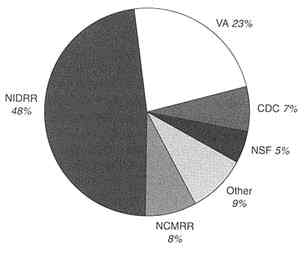
For the purpose of assessing the combined adequacy of federal efforts in addressing the health needs of people with disabling conditions, the committee reviewed the five major federal programs that focus on rehabilitation-related research and the overall organization and administration of these programs. Currently, the spectrum of federal programs that support research in rehabilitation science and engineering is such that each program has a unique, worthwhile, and complementary mission. The Centers for Disease Control and Prevention (CDC) investigates prevention and secondary conditions, the National Science Foundation and the National Center for Medical Rehabilitation Research (NCMRR) research basic engineering and medical rehabilitation, respectively, the National Institute for Disability and Rehabilitation Research (NIDRR) focuses on disability and the whole person in the environment, and the U.S. Department of Veterans Affairs is able to tailor its research agenda to the needs of its constituents. This represents a broad spectrum of rehabilita-
|
National Institute on Disability and Rehabilitation Research (NIDRR) |
$69,625,000 |
|
U.S. Department of Veterans Affairs (VA) |
32,398,000 |
|
National Center for Medical Rehabilitation Research (NCMRR) |
11,707,000 |
|
Centers for Disease Control and Prevention (CDC) |
9,500,000 |
|
National Science Foundation (NSF) |
6,582,000 |
|
Other includes: |
13,100,000 |
|
Architectural and Transportation Barriers Compliance Board |
300,000 |
|
Office of Disability, Aging, and Long-Term Care Policy |
5,000,000 |
|
Social Security Administration |
5,000,000 |
|
U.S. Department of Housing and Urban Development, Office of Policy Development and Research |
100,000 |
|
U.S. Department of Transportation |
2,700,000 |
FIGURE 5 Traditional view of federal spending in rehabilitation-related research.
tion research, with NIDRR representing 48 percent of the appropriated funding (see Figure 5).
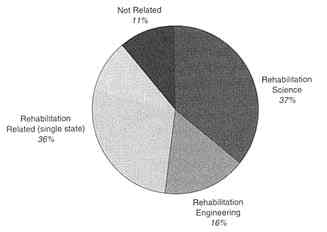
Further analysis of these programs—including the related efforts outside NCMRR at NIH—revealed certain trends in the overall federal research effort in rehabilitation science and engineering (see Figures 6 and 7). Given the current constraints and limitations of funding, these findings show a generally good balance of effort, but with most of the research focusing on pathology and impairment, and a relatively smaller proportion of research focusing on disability per se.
|
Relevance Category |
Amount Funded |
Number of Projects |
Percent Funding |
|
Rehabilitation science |
$101,105,292 |
543 |
37 |
|
Rehabilitation engineering |
$44,129,995 |
293 |
16 |
|
Rehabilitation related (single state) |
$100,540,664 |
540 |
36 |
|
Not related |
$30,207,510 |
193 |
11 |
|
Totals |
$275,983,461 |
1,569 |
100 |
FIGURE 6 Percentage of overall research funding (not including center grants) in four categories of relevance to rehabilitation research for the Fiscal Year 1995 program. Rehabilitation science: Projects that address movement among states in the enabling-disabling process. Rehabilitation engineering: Projects that address devices or technologies applicable to one of the rehabilitation states. Rehabilitation related (single state): Projects that address one rehabilitation state exclusively. Not related: Projects that do not clearly address any rehabilitation state. For additional information, see Appendix A in the full report.
In assessing a constellation of programs of this size and complexity, with the overall mission of addressing health needs of such magnitude, it is not surprising to find some apparent problems. Foremost among these are the need for improved coordination among the various and numerous federal research programs and the need for additional research in rehabilitation science and engineering that will help to improve the health, quality of life, and productivity of the millions of Americans with disabling conditions.
A series of options was considered for addressing the identified issues and problems. Of prime interest was a strategy to improve what is presently the largest program that focuses on disability and rehabilitation-related re-
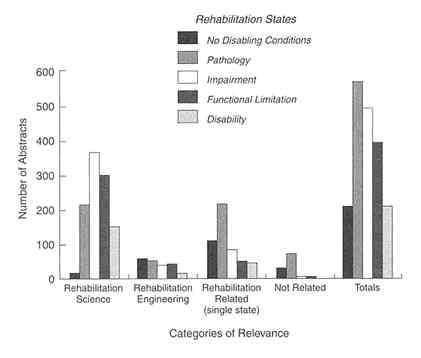
FIGURE 7 Number of abstracts within each category of relevancea that address the specific states of the enabling-disabling processb for Fiscal Year 1995. NOTE: Many abstracts address multiple states. For additional information, see Appendix A in the full report.
a Rehabilitation science: Projects that address movement among states in the enabling-disabling process. Rehabilitation engineering: Projects that address devices or technologies applicable to one of the rehabilitation states. Rehabilitation-related (single state): Projects that address one rehabilitation state exclusively. Not related: Projects that do not clearly address any rehabilitation state.
b No disabling conditions: Research that addresses the state of function or use of subjects with no disabling conditions to investigate mechanisms that are potentially relevant to assessing and treating disabling conditions. Pathology: Research that examines changes of molecules, cells, and tissues that may lead to impairment, functional limitation, or disability, distinguished from pathology by manifestation at organ or system level. Impairment: Research that analyzes changes in particular organs, systems, or parts of the body. Impairment is distinguished from functional limitation due to emphasis on organ and components instead of whole body. Functional limitation: Research that examines functional changes involving the entire subject, manifested by task performance. Disability: Research that focuses on the interaction of the subject with and in the larger context of the physical and social environment.
search: NIDRR. The committee's recommendation for how to accomplish this is one of the three overarching recommendations that follow.
Conclusions and Overarching Recommendations
The committee concludes that, given the large potential for improving the health, productivity, and quality of life for 49 million Americans, the field of rehabilitation science and engineering receives disproportionately inadequate attention from the federal government. The large annual cost estimates (approximately $300 billion—more than 4 percent of the gross domestic product) for disability and rehabilitation are in stark contrast to the relatively small amount of funding that is directed toward research in rehabilitation science and engineering. Current expenditures amount to less than $7 in research per year for each person with a disabling condition, whereas the costs of disability due to expenditures for health care and lost productivity are more than 1,000 times greater (approximately $7,500 per capita). Most importantly, however, significant savings in health care costs, lost wages, and reduced emotional costs could be realized by enhancing research in rehabilitation science and engineering and improving the health, productivity, and quality of life of people with disabling conditions.
With this in mind, three fundamental needs emerged from the committee's assessment and deliberations. The first is a need to recognize rehabilitation science and engineering as an academic and scientific field of study, the continued development of which will result in significant contributions to the science and ultimately to consumers. The second is a need to focus on a set of priorities for research that will advance the field of study and improve the health, productivity, and quality of life for people with disabling conditions. Perhaps most importantly, the third need is to enhance the federal effort in rehabilitation science and engineering by expanding research, raising visibility, and improving coordination. Three overarching recommendations on how to address these needs are described below.
Recognize the Field of Study
Rehabilitation science and engineering is the body of knowledge that exists at the confluence of multiple disciplines, drawing from and contributing to each one. At this point in the evolution of the science, there is a sufficient knowledge base and level of research to organize a rigorous scientific structure for the field. Such organization would facilitate accelerations in multidisciplinary education, training, and research, all of
which would combine to advance the field of rehabilitation science and engineering and more effectively address the needs of people with disabling conditions. Thus, the committee's first overarching recommendation is as follows:
Overarching Recommendation 1. Rehabilitation science and engineering should be more widely recognized and accepted as an academic and scientific field of study. As such, the field should receive greater financial support, serve as the basis for developing new opportunities in multidisciplinary research and education, and ultimately improve the health and quality of life of people with disabling conditions. This new field should be consistent with the model of the enabling-disabling process that is defined and described in this report.
Emphasize Priorities
Many topics and areas require investigation, and identifying priorities is not simple. The process cannot be based on prevalence alone or simply on cost. Recommendations for specific rehabilitation science and engineering research efforts are detailed in the individual chapters of this report. In addition, Appendix A contains suggested research priorities from various professional associations and other sources. Acknowledging the limited ability of any assembly of individuals to identify research priorities with great acuity and detail, the committee chose instead to describe general priorities that should be fundamentally important to any research and to the advancement of rehabilitation science and engineering as a whole. Thus, the committee's second overarching recommendation is as follows:
Overarching Recommendation 2. As the field of rehabilitation science and engineering continues to evolve and gain recognition as an academic and scientific field of study, three general priorities will and should be of fundamental importance to its growth and to the ultimate improvement of health, productivity, and quality of life for people with disabling conditions: strengthen the science, focus on the enabling-disabling process, and transfer the technology. (See Box 1.)
Enhance the Federal Effort
In general, weaknesses in the current spectrum of federal programs in disability and rehabilitation-related research are not due to inappropriate priorities or other problems within the programs themselves, but rather to a general insufficiency in the magnitude of the overall program of
|
BOX 1 General Priorities for Rehabilitation Science and Engineering As the field of rehabilitation science and engineering continues to evolve and gain recognition as an academic and scientific field of study, there are three general priorities that will and should be of fundamental importance to its growth and to the ultimate improvement of health, productivity, and quality of life for people with disabling conditions.
|
research, its limited visibility, and a lack of effective coordination of the overall constellation of programs. Thus, the constellation of federal research programs in rehabilitation science and engineering needs to be reorganized and administered in a fashion that will improve interagency coordination, enhance visibility, and expand research for the purposes of improving the health, independence, productivity, and quality of life for people with disabling conditions
As the largest federal program with a focus on disability and rehabilitation-related research, NIDRR's program was of major interest to the committee The NIDRR mission and its constituency of people with disabling conditions are fundamentally important to the research agenda of rehabilitation science and engineering espoused by this committee. The committee concluded, however, that despite vigorous pursuit of its mission, NIDRR has been restricted in its ability to fully execute its mission primarily by virtue of its administrative position within the U S. Department of Education and the Interagency Committee on Disability Research's lack of real authority An important example of the former is the need for improved peer review processes that are unobtainable in the present administrative location.
For the purpose of improving the overall federal effort and addressing the priorities described in Overarching Recommendation 2 above, the committee makes the following overarching recommendation
Overarching Recommendation 3. The committee recommends that the NIDRR program of activities and its annual appropriation of approxi-
mately $70 million be moved from the U.S. Department of Education to the U.S. Department of Health and Human Services and that it serve as the foundation for the creation of a new Agency on Disability and Rehabilitation Research (ADRR). ADRR would assume the tasks that were formerly assigned to the Interagency Committee on Disability Research and be given enhanced authority through review of disability and rehabilitation-related research plans and control of funding for interagency collaboration. To further support and enhance the overall federal effort, all major programs in disability and rehabilitation-related research should be elevated within their respective agencies or departments. (Recommendation 10.1)
There are several advantages and benefits to be gained from moving NIDRR to DHHS. First of all, the move would be an opportunity to review the program's mission and personnel, and make appropriate changes to the program's structure. Secondly, it would move NIDRR closer administratively to NIH and CDC, which should facilitate coordination among the agencies. Finally, it would allow improvements in the peer review process, including larger, more permanent peer review panels that could be formed to allow for the review of a more heterogeneous mix of applications, and broader representation (including people with disabling conditions) on the review panels. In addition, moving NIDRR from the U.S. Department of Education to the U.S. Department of Health and Human Services would provide the program with a more nurturing and supportive environment, raise the visibility of disability and rehabilitation as an important health issue, and perhaps most importantly, allow it to serve more effectively as the core of an interagency coordinating body for disability and rehabilitation-related research.
One of the most important activities of ADRR would be the coordination of federal research on rehabilitation science and engineering. To help achieve this objective, ADRR would annually review plans for research in the following year submitted by all relevant agencies and would also have the ability both to fund interagency research and to enhance funding in areas of identified need. To help ensure participation in the coordinating activities, ADRR could be supported in part by a set-aside fund from the major agencies and by direct appropriation.
In keeping with the committee's task of making recommendations within differing levels of fiscal expenditure, Table 2 presents guidance on how funds could be distributed in a configuration of programs consistent with this committee's recommendations. The table shows the present funding levels and two options for expanded programs of research at a cost of $100 million and $200 million.
TABLE 2 Major Federal Programs in Disability and Rehabilitation-Related Research Showing the Organization of the Proposed New ADRR in DHHS and Two Levels of Funding to Enhance the Overall Federal Effort
|
|
|
$100 Million of Additional Funds |
$200 Million of Additional Funds |
||
|
Agency |
Current Funds |
New Funds |
New Totals |
New Funds |
New Totals |
|
U.S. DEPARTMENT OF HEALTH AND HUMAN SERVICES |
|
|
|
|
|
|
Administration on Disability and Rehabilitation Research (new agency) |
$70* |
$52.5 |
$123 |
$105 |
$175 |
|
I. Coordination-Linkage Division |
0 |
25 |
25 |
35 |
35 |
|
a. Interagency committee and subcommittee |
|
|
|
|
|
|
b. Multiple agency projects |
|
|
|
|
|
|
c. Rehabilitation resource support centers |
|
|
|
|
|
|
II. Disability and Rehabilitation Research Division |
39 |
15 |
54 |
39 |
78 |
|
a. Rehabilitation research, including centers and field-initiated research of issues such as employment, education, personal assistance services, parenting, policy, independent living. |
|
|
|
|
|
|
b. Disability studies |
|
|
|
|
|
|
III. Engineering and Environmental Research Division |
22 |
7 |
29 |
22 |
44 |
|
a. Assistive technology and engineering, including centers and field-initiated research |
|
|
|
|
|
|
b. Universal design, including mass transportation and Americans with Disabilities Act compliance |
|
|
|
|
|
|
IV. Training and Career Development Division |
3 |
2.5 |
5.5 |
3 |
6 |
|
a. Allied health and engineering |
|
|
|
|
|
|
b. Services training |
|
|
|
|
|
|
c. Recruitment of scientists with disabling conditions |
|
|
|
|
|


