
7
Social Issues and Community Interactions
This chapter examines social issues involved in the siting and operation of waste-incineration facilities (such as incinerators and industrial boilers and furnaces), including possible social, economic, and psychological effects of incineration and how these might influence community interactions and estimates of health effects. Issues with respect to perceptions and values of local residents are also considered. In addition, this chapter addresses risk communication issues and approaches for involving the general public to a greater extent in siting and other decisions concerning incineration facilities. The committee recognized at the outset of its study that the social, economic, and psychological effects for a particular waste-incineration facility might be favorable, neutral, or adverse depending on many site-specific conditions and characteristics. However, the current state of understanding for many issues considered in this chapter is such that little or no data specific to waste incineration were available for analysis by the committee. In such cases, the committee identified key issues that should be addressed in the near future.
The social, psychological, and economic impacts of incineration facilities on their locales are even less well documented and understood than the health effects of waste incineration. When environmental-impact assessments are required for proposed federal or state actions, they typically must include socioeconomic-impact assessments, but the latter are often sketchy at best. They also might be given short shrift in the decision-making process (Wolf 1980; Freudenburg 1989; Rickson et al. 1990). Furthermore, these socioeconomic assessments attempt to be prospective—that is, they assess the likely effects of proposed actions. Little research has been done to evaluate systematically the socioeco-
nomic impacts of controversial waste-treatment or waste-disposal facilities that have been in place for several years or more (Finsterbusch 1985; Seyfrit 1988; English et al. 1991; Freudenburg and Gramling 1992). Moreover, the committee is not aware of any studies of the effects of removing an established incinerator. One reason for the lack of cumulative, retrospective socioeconomic-impact research is the lack of sufficient data. Although incineration facilities must routinely monitor and record emissions of specified pollutants, health-monitoring studies before or after a facility begins operation are only rarely performed, and periodic studies of the socioeconomic impacts of a facility over time are virtually nonexistent, partly because of methodological problems (Armour 1988) and the absence of regulations that necessitate continued monitoring of socioeconomic impacts.
Whether predictive or retrospective, socioeconomic-impact assessments share the challenge—also faced by health-effects assessments—of confounding factors. Isolating the impacts of a single facility from other contributing conditions is often difficult, especially as those conditions change over time (Greenberg et al. 1995). Furthermore, the demographic composition of the area around the facility can be expected to change as time passes, making it difficult to assess the relationship between the facility and the changing group (Maclaren 1987). Individuals also vary among themselves and over time in their sensitivity to socioeconomic impacts, such as a decline in property values.
The scant information that is available on predicted or observed socioeconomic impacts of various types of controversial waste-treatment or waste-disposal facilities cannot be readily generalized to waste-incineration facilities, nor can the impacts of one waste incinerator be generalized without qualification to other waste incinerators. The host areas and the facilities themselves are, in many instances, too dissimilar to permit drawing inferences from one facility to another without many caveats (Flynn et al. 1983; English et al. 1991). As discussed further below, simply identifying the geographic boundaries of an affected area can present problems.
Much of the following discussion is based on anecdotal evidence related to social issues posed by controversial waste facilities, including waste incinerators. It is clear that much more empirical research is needed on the socioeconomic impacts of waste-incineration facilities on their host areas, but for this research to be feasible on a large scale, detailed socioeconomic data will need to be gathered routinely before and during the operation of such facilities.
It is also clear, however, that citizen concerns about waste incinerators do exist. Newspapers and popular journals report heated disputes about them; the Waste Technologies Industries (WTI) hazardous-waste incinerator in East Liverpool, Ohio, is a prime example. The publications and World Wide Web sites of citizen-group networks, such as the Center for Health, Environment, and Justice (formerly the Citizens Clearinghouse for Hazardous Waste), have routinely reported opposition to incineration of municipal solid waste, medical waste, and
hazardous waste. Proposed facilities are often targets of citizen concern; existing facilities appear to receive less attention but are not altogether ignored. Groups opposed to incineration tend to focus on the adverse health and environmental effects of the facility but may also express concerns about socioeconomic impacts. Such groups do not necessarily represent the sentiments of all others living in their vicinity; in fact, it can be expected that a number of community members will be indifferent and that, among those who do care, some will advocate or be willing to consider the startup of the facility while others will be adamantly opposed (Elliott 1984a; Walsh et al. 1993). As is true of identifying the affected area, identifying who should be included as part of the “community” can be difficult.
As a waste-management option, incineration has features that some citizens might find attractive. It can be used to reduce waste volumes, produce electricity and destroy or reduce waste toxicity. Despite those features, the views of other citizens who are inclined to oppose waste incineration need to be heard and understood. If not, conflicts can intensify and they can increase the time and expense of developing waste incinerators that might be socially beneficial. Furthermore, continuing opposition to the facilities can indicate that important concerns are being given short shrift.
This chapter considers four related questions: What defines the affected area? What local concerns, in addition to concerns about direct health effects, can arise in connection with waste incineration? What underlying factors contribute to and help to explain local concerns? How can local concerns best be addressed in interactions with members of the affected area? The chapter points to issues outside the direct health impacts of waste incineration that appear to merit attention in future research and in the siting, licensing, and operation of such facilities.
IDENTIFYING THE AFFECTED AREA
The boundaries of the area potentially affected by a waste-incineration facility are not necessarily the same as the boundaries of the local jurisdiction. The affected area might be a relatively small section of the local jurisdiction; or, as illustrated in Figure 7-1, if an incinerator is at the edge of the jurisdiction, the affected area might extend into one or more other jurisdictions.
Complicating matters is the fact that different impacts (including health effects and socioeconomic effects) have different reaches across space and time. Some impacts, such as those on traffic volume, might occur mainly along narrow corridors; others, such as those on air quality or on property values, might be more diffuse. Some might be relatively transitory, such as those due to a demand for workers during facility construction or to an episode of unusually high emissions due to a process upset or an accident at a facility; others might be cumulative or of long duration, such as those due to chronically high emissions
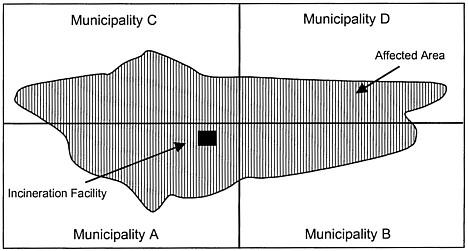
FIGURE 7-1 Hypothetical example of possible transjurisdictional impacts of an incineration facility.
or continued employment opportunities at a facility. Furthermore, health and socioeconomic effects vary in their intensity because of variations at the source, along environmental pathways, and among receptors. Consequently, preliminary mapping of the potentially affected area might necessitate a complex set of overlays for different types of impact (see Figure 7-2), each with its own gradations, boundaries, and time dimensions. Identification of areas for study and assessment will necessarily be somewhat arbitrary; what is crucial is that areas that are expected to receive substantial impacts should be included (Flynn et al. 1983).
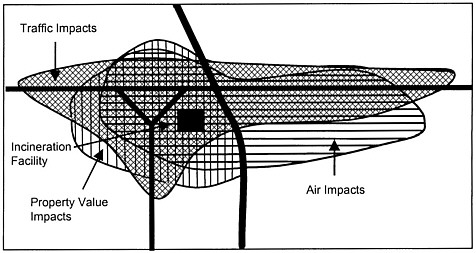
FIGURE 7-2 Hypothetical example of overlay mapping of different types of impacts of an incineration facility.
Identifying an affected area according to where, when, and to what extent impacts occur has at least two important implications for interactions with those who live and work in the vicinity of an incineration facility. First, it highlights considerations for local government decisions concerning waste incineration and other controversial facilities. Second, it describes what constitutes the “community” in less-formal, nongovernment interactions concerning the facility. Both those subjects are introduced below and are addressed in greater detail later in this chapter under the heading Risk Communication.
The Affected Area and Local Decision-Making
Typically, those making decisions or entering into negotiations about an incineration facility's location, size, and so on are the elected or appointed officials of the jurisdiction that the planned facility would be in, such as the mayor and city council or the county executive and county commissioners. When they consider the facility, they are likely to have in mind the interests of the jurisdiction as a whole, not just those of the affected area.
Waste facilities, like other land uses that have potentially undesirable side effects, present the possibility of uneven benefits and costs. A facility might produce substantial benefits, both for the larger region (by providing management capacity for some of its wastes) and for the host jurisdiction as a whole, but might have net adverse impacts on the immediately affected area (Greenberg et al. 1995). For example, as discussed further below, current approaches to the siting of large, controversial facilities sometimes include substantial payments to the host jurisdiction, which are then used as revenue to alleviate taxes or improve local schools, roads, and so forth. Depending on how the extra revenue is allocated, it might or might not benefit the affected area primarily. In some instances, a portion of it must, by prior agreement, be earmarked for improvements in the area immediately surrounding the facility; in other instances, it can be spent at the discretion of the local governing body.
When facilities like hazardous-waste and medical-waste incinerators are proposed, a general rallying of opposition—including opposition by local officials—sometimes occurs, if only because of the fear of the stigma that the facilities may bring. When facilities like municipal solid-waste incinerators are proposed, in contrast, elected officials and most voters in the jurisdiction may favor them, especially to the extent that they can help to meet local waste-management needs. If members of the affected area are only a few among many in local decisions concerning a facility, they run the risk of having their interests and concerns overruled. Decision-making about the facility might then have the appearance, but not the actuality, of fairness and impartiality. To correct for that possibility,
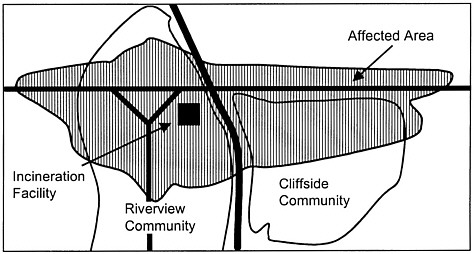
FIGURE 7-3 Hypothetical example of relationship of affected area to local communities.
augmentation of traditional forms of decision-making solely by elected officials or popular referenda is being explored, as discussed further below.
The Affected Area and Community Interactions
Although the term community is widely used, what counts as a community is often not clear. Communities are usually thought of as place-based, but the term is also used to refer to groups that, although widely dispersed, share interests (for example, a research community). Even when the term is used in its geographic sense, it is ambiguous: place helps to define a community, but other attributes—particularly those concerning social exchange —are often deemed essential (Catlin 1959; Ladd 1959; Minar and Greer 1969; Poplin 1972). On the basis of such attributes, people living or working in a particular area form their own conceptions of the boundaries and composition of the community. Thus, an affected area does not necessarily constitute a discrete community; instead, it might contain parts or the entirety of several communities (see Figure 7-3), or it might lack the social cohesiveness to have any communities.
If the affected area is not mirrored by a single community, informal interactions by facility proponents and regulators with members of the affected area may be more difficult to conduct. As has been noted elsewhere, “Success for risk communication does not require that every citizen be informed about the risks presented in every regulatory decision, but people need to be confident that some person or group that shares their interests and values is well informed and is representing those positions competently in the political system” (NRC 1989a). However, it is important that every citizen have an opportunity to be informed, whether they become so or not. The opportunity should not entail unnecessary
burden. Communication between facility developers, regulators, and members of the affected area is often essential; lacking a single, cohesive community, the conduits for communication with members of the affected area may not be readily apparent. In addition, people who live or work outside or at the far reaches of the affected area may have strong views about a proposed facility but not be part of the community (or communities) in the immediate vicinity of the facility; whether and how to integrate them into informal interactions concerning the facility can be among the most-difficult issues that arise in local interactions.
SOCIOECONOMIC IMPACTS OF INCINERATION FACILITIES
A list of possible socioeconomic effects of an incineration facility is provided in Table 7-1. (It is beyond the scope of this report to discuss the listed effects in detail.) These effects may be favorable or adverse, and they may be economic (such as job creation and decrease in property values), psychological (such as stress and stigma), or social (such as community fractionalization and unity). The effects can occur in individuals, groups in the affected area, or the entire population in the jurisdiction as a whole. In addition, different kinds of impacts
TABLE 7-1 Potential Impacts of Incineration Facilities to Be Considered in Socioeconomic Impact Assessments
|
|
Source: Adapted from Rau and Wooten 1980. |
can interact; for example, impacts that are primarily economic might have psychological and social elements as well.
Different types of incineration facilities will have different effects on their surrounding geographic areas. Some incineration operations are within larger facilities that have other functions, such as manufacturing; others are new, standalone facilities. Facilities may be owned and operated under a number of different arrangements, such as by federal, state, or local government; private companies; or joint public-private enterprises. Facilities in residential areas may have greater socioeconomic effects on the surrounding area than facilities in highly industrialized areas.
Economic Impacts
A waste-incineration facility may provide jobs, both directly and by attracting industry to the region because of the services offered by the facility. In addition, such a facility may contribute to the cogeneration of electricity and district heating. The number of jobs will depend on the size and type of incinerator. The number and types of jobs available to local residents (whether the jobs are abundant and well-paid or scarce, low-skilled, and low-paid) will depend on the type of facility and its hiring policies, on the policies of local unions and their willingness to accept new members, and on the characteristics of the local population.
A waste facility may have an adverse effect on local economic prospects, however, if businesses leave the affected area or decide not to locate there. Public perceptions may make the risk seem larger (Kasperson et al. 1988) and lead to the stigmatization of affected communities (Edelstein 1988; Slovic et al. 1994). That may be due in part to concern about health and ecological risks, but Gregory et al. (1995) have noted that “stigma goes beyond conceptions of hazard. It refers to something that is to be shunned or avoided not just because it is dangerous but because it overturns or destroys a positive condition; what was or should be something good is now marked as blemished or tainted.”
Stigmas can have both direct and indirect economic impacts. Local employment opportunities may be adversely affected, and a stagnation or decline in local retail businesses may necessitate traveling outside the neighborhood to shop for food, clothing and so on. For example Greenberg et al. (1995, p. 259) concluded that the Union County solid-waste incinerator in Rahway City, New Jersey, “will lead to rapid deterioration of the neighborhood because private investors with other choices will choose not to invest in a neighborhood with a prominent technological hazard, except perhaps to site LULUs [locally unwanted land uses]. ”
A waste-incineration facility may affect local public finances favorably insofar as it adds to local tax revenues or decreases the cost of local-waste disposal. However, such a facility may affect public finances adversely insofar as it
increases the need for public services, such as improvements in roads and emergency preparedness, increases the cost of local-waste disposal, or requires large investments of time by local and state officials in permitting and other regulatory activities. In some cases, the net effect on local public finances will depend at least partly on special mitigation and compensation measures. In the case of a proposed municipal solid-waste incinerator to be located in Montgomery County, Pennsylvania, for example, the host municipality, Plymouth Township, was offered a $350,000 annual fee in addition to various other inducements; this helped to build an initial base of support with the township's board members, although they later contested the project because of pressure from a Plymouth citizens ' protest group (Walsh et al. 1993).
An incineration facility might also affect property values in its vicinity. Whether it increases or decreases them will depend primarily on what the neighborhood was like before the facility was introduced. Actual property-value differentials near controversial facilities do not consistently reflect anticipated effects (Zeiss and Atwater 1989), but they have been observed in connection with some controversial facilities or contaminated sites partly because of stigma effects associated with those sites (Payne et al. 1987; Smolen et al. 1992); they remain a source of major concern for some people living near an existing waste facility, such as a solid-waste incinerator (Zeiss 1991).
Psychological Impacts
People in the surrounding area may be psychologically affected by the prospect or reality of an incineration facility in their midst. The risk associated with industrial activity is increasingly recognized as including a wide array of adverse and sometimes long-lived psychological impacts, which may be, but are not always, correlated with negative attitudes toward the risk source (Freudenburg and Jones 1991). Concerns about adverse health effects on oneself or one's children, parents, spouse, and so on, as well as fear of adverse economic effects, can contribute to stress or depression, which in turn can produce physical symptoms, such as headaches and sleeplessness (Neutra et al. 1991). Stress or depression may also be experienced if family, work, and social relationships are altered or terminated (through divorce or job loss) because of protracted outlays of time and energy to understand and combat a proposed or existing waste incinerator. In addition, feelings of powerlessness, distrust, and alienation may be fostered if people feel that their neighborhood has been “captured,” is not within their control, or lacks protection from the government. Feelings of a lack of community control and of a poor community image can rank with air and water pollution as sources of concern in areas around waste facilities (Zeiss 1991).
Favorable psychological impacts may also be experienced under some circumstances. In particular, people's self-esteem and feeling of social connection may increase as they learn about and interact with others about the facility; they
may even become acknowledged regional leaders (Gramling and Freudenburg 1992). Sieber and others have argued that multiple roles help to provide status, security, social prestige, new access to resources, and ego gratification (Sieber 1974; Thoits 1983). However, Menaghan (1989) has cautioned that age and gender expectations will often help to determine whether an individual's role repertoire is personally satisfying. Furthermore, some individuals opposing an incineration facility may feel offended by the notion that such stressful and time consuming efforts may have favorable psychological benefits.
Social Impacts
In addition to having favorable or adverse effects on the economic, physical, and mental well-being of individual people in the affected area, a proposed or existing incineration facility can affect the area's social fabric. Some changes may be precipitated by economic factors, but others may be structural; that is, they may concern the formal and informal relationships of groups and individuals in the area.
Like other potentially controversial land uses, an incineration facility can provoke factionalization in the affected area among those who are opposed to it, those who favor it, and those who do not want the area harmed by heated, widely publicized conflict. Local controversies over major facilities (and sometimes over relatively small-scale ones) can last for years and leave scars and permanently alter formal and informal relationships in the area. As Gramling and Freudenburg (1992) note, “impacts to social systems occur as interest groups form or redirect their energies, promoting or opposing the proposed activity and engaging in attempts to define the activity as involving opportunities or threats.” Depending on the outcome and people's perspectives, the altered relationships can be detrimental or beneficial. For example, the “old boy” network may become more-firmly entrenched or, in contrast, community organizations and a more-populist local government may be fostered. An expectation of ongoing factors that affect the quality of life (for example, noise, traffic, odors, and dust) can also be raised as concerns (Greenberg and Schneider 1996). Such concerns will need to be addressed regardless of whether some local residents do not share those concerns.
If individual health and well-being, property values, and the quality of life in a neighborhood are substantially affected by a proposed project (or even if it is expected that they will be affected), the neighborhood's character may begin to change. Change may be seen in an increasing ratio of industrial to nonindustrial activities in the area, in the types of homes and businesses, and in the demographic composition of residents. People who can afford to move out may do so, sometimes altering the ethnic mix and age composition of the area. The changes do not happen overnight, but they are likely to be more rapid and destabilizing
than the gradual demographic changes that occur in all communities because of births, deaths, and migration.
Similarities and Dissimilarities in the Impacts of Proposed and Existing Facilities
Facilities that are large, controversial, risky, or otherwise out of the range of the host area's ordinary experiences may have observable, measurable social and economic impacts from the time of the earliest announcements or rumors about a project (Freudenburg and Gramling 1992). Years may go by between the proposal of a facility for a particular area and the actual licensing, construction, and operation. During this interval, some of the impacts described above—such as favorable or adverse changes in property values, individual lives, or social structures—may be precipitated by the likelihood of the facility and the controversy about whether and how it should be developed. After a facility becomes operational, people in an area are able to use their own experiences (of changing property values, truck traffic, neighborhood composition, and so on) to assess the effects of an existing facility. However, the potential for mobilizing protest and blocking a proposed facility can be stronger than those for ensuring that an existing facility is being operated properly, with vigilant regulatory oversight and with minimal impacts on the surrounding area.
After a facility has been in operation for a long time, many of the impacts described above, if they occurred at all, will be in the past. The surrounding area may (or may not) have undergone wrenching changes because of the facility when it was in its formative stage, but over the years the area will have altered and adapted to its presence. The facility may continue to have adverse health effects, but it will not be likely to precipitate major new socioeconomic impacts; instead, to the extent that it continues to affect the character of the surrounding area and its residents, it may contribute to feelings of either acceptance or quiet powerlessness and alienation.
If, however, major alterations are proposed for an existing facility (especially an expansion of the volume or types of wastes that it will handle) or if another controversial facility is proposed to be built in or near the already affected area (especially one similar to the existing facility), the existing facility may receive renewed attention, provoking psychological and social impacts similar in many respects to those provoked by the proposal of a new facility. The door is then opened for a revival of broad-scoped interest and concern, even though from a regulatory standpoint only the relatively narrow question of facility expansion or addition of a new facility would typically be at issue. Note, however, that environmental justice concerns about cumulatively disproportionate environmental contaminant burdens on low-income communities or communities of color are beginning to change this regulatory stance in some instances. (See the discussion of environmental justice below.)
PERCEPTIONS AND VALUES
Even economic, psychological, and social impacts considered to be small by scientific and technical experts may be considered unbearable by people living in the affected area. Psychologists have identified a number of characteristics or risk attributes that help to explain the divergence between experts and the lay public—the so-called perception gap. It is well documented (Slovic 1987; Slovic et al. 1982) that members of the public tend to fear most the hazards that they do not impose on themselves voluntarily and that result in severe effects that are delayed (such as cancer). Other attributes, such as blame and distrust, have been singled out as especially important in shaping people's perceptions (Slovic 1993).
The differences between expert and lay perceptions reflect differences in values, however, not merely differences in information and understanding. They therefore cannot be bridged simply by introducing public-education programs and information campaigns. Indeed, efforts to inform and educate the public about controversial technical issues may actually exacerbate public concern and opposition (Johnson 1993). Furthermore, the inherent uncertainties and variability of technical issues make risk communication difficult, and disagreement among experts may itself exacerbate public concern. Members of the public take into consideration intangible attributes of risk in addition to estimates of mortality and morbidity, such as voluntariness, dread, and perceived extent of scientific knowledge; but they also question deeper underlying values. Running beneath the surface of many local, site-specific risk controversies are broader concerns about preservation and protection of the environment, the choice and control of technology, and the structure and function of society in general (Otway 1987; Otway and Wynne 1989; Schwarz and Thompson 1990). Given those concerns, members of the public often raise fundamental questions that are not easily addressed in siting processes or risk-management decision-making. For example, they may ask: Do we as a society really need the technology of incineration? How can we restructure society to produce less waste, rather than building incinerators and landfills?
In a study of conflicts about a variety of technologies, Von Winterfeldt and Edwards (1984) found that the controversies usually revolve around legitimate differences in values among the interested parties. Members of the public often become enraged by technical assessments and public review processes that implicitly or explicitly rule values to be outside the boundaries of discussion (Wynne 1992). Three key issues are whether those responsible for developing, operating, and regulating incineration facilities can be trusted; whether the facilities are needed; and whether fair processes are used to site them.
Social Distrust
The American public has less and less trust in the institutions and people responsible for the siting and management of potentially hazardous facilities, such as incinerators (Weinstein 1988; Renn and Levine 1991; Slovic et al. 1991; Kasperson et al. 1992). In 1983, a survey of attitudes toward the siting of hazardous-waste disposal facilities found that lack of trust in the companies that operate treatment facilities and the government agencies that regulate them was a primary source of concern (Laird 1989). A number of reasons for citizens ' distrust or lack of trust are possible (Slovic 1993). Some of the reasons concern the people operating or permitting and regulating a facility; for example, suspicions arise if track records are blemished or if it is sensed that facility proponents and regulators do not share one's own goals for society. Apart from whether facility operators and regulators are regarded as honest, competent, and well intended, scientific uncertainties can contribute to a lack of trust, especially in the case of facilities such as waste incinerators, for which questions remain about environmental transport and fate and about dose-response relationships of various emissions. How uncertainty bounds can be most appropriately communicated and how different tolerances for uncertainty can be reconciled are difficult questions and discussed further in Chapter 8.
Trust is easily lost and difficult to regain (English 1992). Attempts to regain social trust during the period of most risk-communication and facility-siting efforts are naive at best, in that its loss is a broad social phenomenon that affects all social and political institutions. Future risk-communication efforts will be undertaken in the context of continuing, intense social distrust and will have to be designed accordingly.
Need
One of the first questions likely to be asked by people in the prospective host area of a waste-incineration facility (or other waste facility) is, “Is this really needed?” (Chertoff and Buxbaum 1986). If proponents cannot convincingly demonstrate a pressing need for a new or expanded incineration facility, people who are skeptical of the need for the facility, or are otherwise opposed to it, will be disinclined to negotiate on other issues about it.
As grassroots environmental movements began to flourish, pressure was brought to bear to reduce or, if possible, eliminate waste volumes and waste toxicity. With more-stringent regulations and greater corporate attention to release of environmental pollutants, that pressure has led to more-advanced production and waste-management technologies and to reduced demand for hazardous-waste facilities, relative to population size and goods produced. However, there will always be some need for facilities to manage waste byproducts of
goods and services, thus society will still have to address how many facilities are needed, of what size, with what technologies, and—the hardest of all—in whose backyards.
Fairness
The second question typically asked by people in the prospective host area is, “Why here?” Siting a facility, such as an incinerator, presents an inherent and inescapable need to address equity: Whatever site is chosen, potential health risks and other adverse impacts are necessarily borne by a relatively small group, but the benefit (waste treatment or disposal) can accrue to a larger population. Using more and smaller, local facilities may avoid some of the larger-scale inequities (Morrell 1987), but it cannot escape the dilemma and may create other problems, such as concerns about an overall increase in emissions. Although building new facilities may create new jobs and provide substantial tax revenues and other benefits (such as property-value guarantees), there is a well-documented tendency (known as loss aversion) for people to focus on adverse impacts more than on possible benefits (Tversky and Kahneman 1991). In a survey of five communities in Canada, Zeiss (1991) found that residents were far more likely to be concerned about the possible adverse impacts of a waste facility than to be attracted by its benefits.
Aside from actual or perceived outcomes (benefits and costs), the process for choosing a particular site is often perceived to be unfair (English 1992; Kunreuther et al. 1993). In many cases, residents living near a proposed facility will feel that they have been unfairly singled out and that they have had little or no substantive input into the decision. Possible attendant risks will be considered an imposition, and the degree of involuntariness will exacerbate perceived risk.
Competing Distributional Principles
To answer the question “Why here?” appeals may be made to various distributional principles. For example, appeals can be made to the principle of “the greatest good for the greatest number,” which suggests that communities must be prepared to host a waste facility if they are physically and locationally well suited to do so and if society will thereby reap substantial benefits. Laws that provide for state preemption of local control over facility siting decisions (Tarlock 1987) tacitly invoke this utilitarian principle. In contrast, appeals can be made to the principle of equality, which suggests that each community has equal rights and deserves equal treatment; none should be singled out and compelled to take a waste facility if it will benefit outsiders primarily, but each should bear an appropriate share of responsibility for waste management. This principle is tacitly invoked in siting approaches that provide for “simultaneous siting of
numerous new facilities in accordance with regional needs and with local patterns of equity” (Morrell 1987, p. 118).
To mediate between those opposing views, some have argued for a market-driven distributive principle, whereby communities would voluntarily host waste facilities because of handsome incentive packages (Kunreuther et al. 1993). In contrast, it may be argued—using a “justice as fairness” concept (Rawls 1971) —that if the procedures for selecting a host area are open, inclusive, and scrupulously fair, their outcomes will by definition be fair. However, neither marketdriven nor process-driven approaches have as yet had widespread success in overcoming various concerns—particularly concerns about adverse health effects, about who will derive monetary and other benefits from the facility, and about who can consent on behalf of the affected area (or, if a public referendum is used, who should be able to vote, how large a majority is needed, and whether the referendum will be binding on elected officials).
Environmental Justice
When an incineration facility is placed in a disadvantaged community, concerns about fairness are likely to become more pressing. Minority groups, low-income groups, and urban dwellers probably suffer disproportionately from exposure to air pollutants (Berry 1977; Wernette and Nieves 1992). In addition, African-American children have the highest blood-lead concentrations among all groups, and blood-lead concentrations among Hispanics, urban dwellers, and low-income groups are higher than the national average (Montgomery and Carter-Pokras 1993; Schwartz and Levin 1992). Results of several studies indicate that hazardous-waste treatment, storage, and disposal facilities are more likely to be located within or adjacent to low-income and minority-group communities (United Church of Christ Commission for Racial Justice 1987; Bullard 1990; Bryant and Mohai 1992; Goldman and Fitton 1994). Some researchers have disputed those findings, however (Anderton et al. 1994), by citing differences in study design that make it impossible to compare results and reach a conclusive answer. On the basis of a review of the available scientific literature and the information obtained from various site visits, IOM (1999) concluded that there are identifiable communities of concern that experience higher levels of exposure to environmental contaminants. In addition, such communities are less able to deal with these exposures as a result of limited knowledge and disenfranchisement from the political process. Moreover, factors directly related to their socioeconomic status, such as poor nutrition and stress, can make people in those communities more susceptible to the adverse health effects of environmental hazards and less able to manage them by obtaining adequate health care.
Often low-income communities and communities of color speculate that some sources of environmental degradation were placed in their communities
because land was cheap and the citizens lacked economic and political power—including access to technical and legal expertise—to keep it out. Other sources of environmental degradation may have been in place for a long time, with disadvantaged communities growing up around them because of low incomes, low property values, and discriminatory exclusion from other areas.
Results of some studies indicate that additional factors worsen the environmental burden on low-income and minority-group people. Environmental pollution in the areas where they live and work may be worsened by lax and irregular enforcement of regulations and by inadequate public services, such as water-treatment and sewage systems. And the effects on local residents may be graver for a number of reasons. For example, members of sensitive populations (children, the elderly, pregnant women and their fetuses, people with impaired immune systems, and people with chronic diseases) who are poor often cannot afford to move elsewhere. In addition, because of necessity or tradition, their diets rely heavily on locally caught fish and home-grown food and to recreation on local lands and in local water. Also, those living in the affected areas often are exposed to occupational health hazards.
A growing awareness that health problems, as well as socioeconomic problems, are, at least partly, environmental in their origins has led a number of disadvantaged communities to mobilize against further assaults on the air, water, and land in their locales. They face an uphill battle, however. Many of the problems are slow to surface, so cause-effect arguments are difficult to make. And many problems result from factors that are cumulative and interactive, whereas regulatory standards have tended to focus on single sources of pollution, on single chemicals in a single transport medium, and on health and environmental effects exclusively, with little or no attention to related socioeconomic effects (EPA 1992e). However, even if it were determined that facilities like waste incinerators contribute only marginally to increased environmental degradation, they may be regarded by their host areas as presenting unacceptable additional increases in risk.
Numerous initiatives have been undertaken over the last 3 years to address environmental justice. In 1992, the U.S. Environmental Protection Agency (EPA) created the Office of Environmental Justice (now in EPA's Office of Enforcement and Compliance Assurance). On February 11, 1994, President Clinton issued executive order 12898, directing all federal agencies to develop strategies designed to promote enforcement of health and environmental statutes in areas with minority-group and low-income populations, ensure public participation, improve research and data collection on the health and environment of these populations, and identify differential patterns of natural-resource consumption among these populations. More recently, Title VI of the 1964 Civil Rights Act has been used as a basis for prohibiting federal agencies and recipients of federal financial assistance from issuing permits that—because they were expected to result in disproportionate environmental burdens—were determined to
have the effect of discriminating based on race, color, or national origin. Moreover, a number of states have enacted environmental-justice legislation and have considered environmental-justice bills (National Conference of State Legislatures Environmental Justice Group 1995). Finally, industry initiatives have recently begun to come to terms with these problems. Much of the attention, however, is still at the stage of “understanding the problem.”
RISK COMMUNICATION
Background
Risk communication has been broadly defined as any “purposeful exchange of information about health or environmental risks between interested parties” (Covello et al. 1986, p. 112) and by the National Research Council Committee on Risk Perception and Communication as “an interactive process of exchange of information and opinion among individuals, groups, and institutions” (NRC 1989a). A wide variety of activities can be considered risk communication, including individual exchanges (such as phone conversations) among members of the public, agency officials, and industry representatives; informational campaigns by government agencies and industry; and elaborate processes of stakeholder involvement and decision-making.
Good risk communication may ease community concerns, but there are no guarantees. Poor risk communication will almost certainly exacerbate public concerns. As noted by the National Research Council Committee on Risk Perception and Communication, “even though good risk communication cannot always be expected to improve a situation, poor risk communication will nearly always make it worse” (NRC 1989a). In spite of those caveats and the relative newness of the field, guidelines for conducting risk communication are emerging. Those are reviewed below, although the purpose here is not to provide a manual for communicating about incineration issues.
To know whether a risk-communication process is good or bad, one needs to know what the goals of the process are and what constitutes success. Different participants in the process may have strikingly dissimilar goals and criteria for success. Generically, risk communication can have several goals (Covello et al. 1986):
-
To inform and educate.
-
To encourage behavioral changes and protective actions.
-
To notify in case of emergencies.
-
To encourage joint problem-solving and conflict resolution.
Communicating about the health and environmental risks of incineration facilities is likely to involve elements of the 1st and 3rd goals, but most com-
monly will focus on the 4th. Given the extent of public distrust of industry and government roles in siting processes in general, the public often views risk communication with severe skepticism (Kasperson et al. 1992). Members of the public sometimes view risk-communication efforts as a thinly veiled attempt to foist unwanted facilities on unwilling communities rather than as sincere efforts in joint problem-solving and conflict resolution. Even well-meaning efforts to inform and educate the public may be viewed as, at best, attempts to bring public perceptions into line with expert assessments of risk and, at worst, attempts to obfuscate the issues and belittle public concerns. Some government and industry representatives see risk communication merely as a means to a particular end (in this context, a siting decision).
In keeping with this skepticism and disagreement over goals, there may also be no consensus on what constitutes a successful risk-communication process. The facility owners or operators may see siting the facility as a success, whereas members of the public may see preventing the facility from being sited or operated as success. Members of the public may see the siting of a new incineration facility as a threat to the successful development of recycling and source-reduction programs. Even if a majority of local residents agree to a siting decision after an elaborate process of public discussion and negotiation, many members of the public could claim that the siting process was unfair, undemocratic, and invalid. To avoid that situation, a measure of success has been developed in terms of the process of risk communication, independent of the outcome. Risk communication is construed to be successful “to the extent that it raises the level of understanding of relevant issues or action for those involved and satisfies them that they are adequately informed within the limits of available knowledge ” (NRC 1989a).
If demand for incineration diminishes, siting controversies may become less common, although they are unlikely to disappear soon. Some underserved regions could move to site new facilities, and some old facilities could be replaced (by the building of new facilities at the same locations or at new locations). But risk communication should remain as a continuing process at existing facilities or at future facilities after siting. Overt expressions of public concern may diminish after siting, but they could come to the fore again if accidents occur; if changes in facility design, ownership, and operation (such as a decision to accept medical or other hazardous wastes) are planned; if cancer clusters or other health effects that may be attributable to a facility are discovered; or if a facility is shut down and needs to be cleaned up.
Possible Approaches
Given the nature of the problem (differing perceptions and values, procedural and outcome inequities, and public distrust), what is the best way to proceed in communicating about the risks associated with incineration facilities? There
are three possible strategies: ignore public perceptions and concerns (including equity), try to change them, or work with them (Hadden 1991). Ignoring public perceptions and merely “informing” the public about events—the decide-announce-defend (DAD) approach—is now considered undemocratic, undesirable, and ineffective. Trying to change public perceptions, attitudes, and concerns through education to bring them more into line with expert views of the issues is doomed to disappoint; the public has a rich, multidimensional view of risk that is extremely resistant to change (Kahneman and Tversky 1982; Hadden 1991), and risk controversies often result from deeper debates about the relationship between technology and society (Ruckelshaus 1985; Otway 1987; Wynne 1992). Working with public perceptions and concerns—accepting them as legitimate and involving the public in consultative and participatory processes—makes the most sense, but how should one proceed?
General Principles
The field of risk communication generally has evolved from early efforts to transmit technical information to elaborate efforts involving public participation and empowerment (Fischoff 1995; NRC 1996; The Presidential/Congressional Commission on Risk Assessment and Risk Management 1997). That progression mirrors Sharon Arnstein's ladder of citizen participation (Arnstein 1969). When the field of risk communication began, the emphasis was on the duty to inform members of the public about risky activities. With the recognition that public and expert perceptions of risks differ greatly, the emphasis shifted to trying to educate the public and thereby narrow the perception gap; during this stage of development, researchers and practitioners looked for ways to improve the content and design of risk messages (Covello et al. 1988). It soon became evident that public perceptions, attitudes, and beliefs are extremely resistant to change, in part because they reflect deeply rooted values, not merely a lack of knowledge and understanding. It also became apparent that the members of various nontechnical communities had knowledge and expertise relevant to the resolution of risk controversies (Wynne 1992). Thus, there was a shift to consultative, two-way risk communication. Many researchers and practitioners in the field are now beginning to see that risk communication often must move beyond notions of two-way risk communication to more elaborate models of citizen participation and empowerment (Chess et al. 1995). The National Research Council report Understanding Risk: Informing Decisions in a Democratic Society (1996) emphasizes the need for a recursive analytical and deliberative process that involves all interested and affected parties from the earliest stage in the risk decision-making process.
Fiorino (1990) identifies three reasons (normative, substantive, and instrumental) why a good participatory approach is appropriate:
-
People have a democratic right to be involved in decisions that affect them.
-
Affected and interested parties could have important information that is relevant to the analytical and decision-making process.
-
Such involvement could in some cases be the only way to decrease conflict and reach a sustainable decision.
During the practical and theoretical development of the field, several authors have proposed general principles and designed excellent guidelines for risk communication (for example, Sandman 1985; Covello and Allen 1988; Covello et al. 1988; Hance et al. 1988, 1990). The guidelines often advocate involvement by interested and affected parties, although paradoxically they tend to have a unidirectional focus in that they assume that a company or government agency is “driving” the process (Otway and Wynne 1989). Risk communication is usually initiated by the proponent of a particular technology or by those responsible for its regulation and oversight, so it is not surprising that the guidelines place the burden of responsibility on those in control, who are admonished to do “better.” The field of risk communication has come a long way in the last 15 years, and there is a need for continued research. For example, many valuable guidelines have been derived from common-sense observations, but these sometimes lack well-developed theoretical bases and strict empirical validation (Kasperson and Palmlund 1989; Morgan et al. 1992). Sandman (1985) developed one of the earliest sets of guidelines which remains pertinent (see Table 7-2). Similar guidelines were developed by Covello and Allen (1988). Moreelaborate guidance can be found in Chess et al. (1988) and Hance et al. (1990). Much of the literature on risk communication overlaps with other social-science research on siting issues in general, and we see a similar development from the traditional DAD approach that was common through the 1970s to more-participatory processes (Kunreuther et al. 1993, p. 302). DAD failed because it alienat
TABLE 7-2 Some Typical Guidelines for Risk Communication According to Sandman (1985)
|
TABLE 7-3 The Facility-Siting Credo
|
Procedural Steps:
|
|
Desired Outcomes:
|
|
Source: Adapted from Kunreuther et al. 1993. |
ed many of the interested parties, especially the public, which ultimately recognized its ability to stymie the siting process (Morell and Magorian 1982; Kunreuther and Linnerooth 1983; O'Hare et al. 1983; Susskind and Cruikshank 1987; Portney 1991).
In an attempt to move beyond those limited approaches, a national facilitysiting workshop in 1990 developed the Facility-Siting Credo, which is a summation of much that has been learned over the last two decades of research on facility siting (Table 7-3). The credo includes a set of guidelines intended to achieve a siting process that is fairer to all parties, but it is not intended as a howto manual. The guidelines include procedural steps and desired outcomes. The following discussion of the credo is adapted from Kunreuther et al. (1993, p. 304). The credo was empirically tested in a survey of 104 persons involved in 29 waste-facility siting cases by Kunreuther et al. (1993). Of the 29 facilities, 24 incinerated some type of waste. Assuming that success is defined by the siting of a facility, they found that “the siting process is most likely to be successful when the community perceives the facility design to be appropriate and to satisfy the community's needs. Public participation also is seen to be an important process variable, particularly if it encourages a view that the facility best meets community needs” (Kunreuther et al. 1993). They concluded that “participatory siting procedures may stand a far better chance of success than the Decide Announce Defend (DAD) approach or legislated siting procedures.” They also found that “a siting process that encourages public participation and contributes to the formation of a view that the facility best meets community needs, explains
siting outcomes, whether or not the interested parties trust the facility supporters.” In other words, public participation could increase the likelihood of success in siting without necessarily increasing trust, although such participation will usually result in increased trust.
Elements for Consideration in Public-Involvement Programs
Given the general public opposition to the siting of waste-incineration facilities and the countless possible effects of such a facility, relationships between facility operators, developers, regulators, and members of the affected community are often strained at best. Fundamental differences in interests and values need to be acknowledged, but the relationships can be improved by carefully crafted methods of public participation. We briefly outline some of the major elements to be considered in crafting this process. The reader should consult other publications on risk decisions and public involvement for more-detailed consideration of the pros and cons of various approaches (for example, NRC 1996).
Sustained Discussion
Sustained discussion requires mechanisms that provide the opportunity not only for basic information exchange but also for all interested and affected parties to talk with each other in concrete terms over an extended period. The process of public involvement should be open and substantive, not merely window dressing. Members of the community should be involved early and often, and the DAD approach should be avoided. All possible approaches should be provisional and up for discussion; otherwise, the community will soon recognize that it has little useful input into the decision-making process. Once members of the community and the developers of a proposed facility acknowledge that the community has the power to stop the siting process, the discussion can proceed on a more equal footing. Because public empowerment —access to power and control over events—is often one of the underlying issues in incineration controversies, such discussion could evolve into a negotiating process, and the mechanisms adopted need to be designed accordingly.
A community advisory committee (CAC) is often the mechanism used for sustained discussions. CACs typically have 10-20 members, with a mixture of citizens from the community and local officials and with facility developers, operators, and regulators present in an ex officio capacity (Lynn and Busenberg 1995). Such groups may meet over several months or years and may discuss various facility-related topics. For example, they may review and provide reactions to proposed facility plans at various stages. Task forces (comprising members of the community and technical experts) could be used to address particular issues (such as alternatives for ash disposal and health effects of particular emis-
sions). Commitment of sponsors to the CAC may be a key factor in determining the effectiveness of the CAC.
Whatever the small-group mechanism used, the following questions (and many others) will have to be addressed explicitly for all members at the outset when the group is being established: Who is to participate, and how will they be chosen? Will members serve for set terms? If so, how will their replacements be chosen? Will members represent their own views, or will they be responsible to particular constituencies? How will decisions be made—by vote or consensus? Who sets the agendas? What are the goals of the group, and what issues will it tackle? How much (if any) decision-making power will the group have, or will it be merely advisory? What resources will be available to the group and how much discretion does the group have in the use of these resources?
Assessment of Needs and Concerns
One of the likely first tasks of any advisory group will be to assess the needs and concerns of the community. There is enormous diversity of opinion among members of the public regarding human-health and environmental-risk controversies; the public is not monolithic. Typically, members of the public are concerned about much more than direct health and safety impacts. As noted above, members of the public may also be concerned about quality of life (such as increased noise and traffic), socioeconomic effects (such as employment opportunities and property values), and other less tangible issues, such as stigma and equity. Because these effects are more difficult to characterize and measure than health effects, they are often omitted from traditional risk assessments; but their omission could be perceived by members of the public as an effort to ignore or belittle their concerns and is likely to exacerbate mistrust. In addition to concerns about the broad range of effects, members of the public are often concerned about oversight and control.
As mentioned previously, members of the public are likely to ask why an incinerator is needed and why wastes can't be reduced by recycling, source reduction, and so on. Even if need can be overwhelmingly demonstrated, the targeted community will likely ask, Why us? The developer, regulators, and advisory committee will have to address those questions, not as irrational or selfish responses to a proposed incinerator, but as valid “coherent positions that deserve respectful responses” (Sandman 1985, p. 446). Demonstrating need is the essential element of the siting process (Kunreuther et al. 1993, p. 303).
In developing this information, the advisory group could decide to form separate task forces from among its members or to recruiting additional expertise. Because autonomy is an important part of empowerment, the participatory process may encourage and facilitate the use of indigenous and independent expertise. It is reasonable for experts on behalf of the operators and regulators to expect to be trusted, but it is also reasonable for local citizens to withhold trust
and insist on relying on their own judgment and that of independent experts. Also, although it has been amply demonstrated that citizens are capable of mastering technical detail when sufficiently motivated (Lynn 1987), this may not be the most-efficient way of gathering information. Hiring independent consultants that members of the community trust may be best (Hadden 1991). Ways to make funds available for that purpose may need to be explored.
Ideally, information from facility developers and regulators should be timely, substantive, and honest. They should be forthright about who will make decisions and about what opportunities community members will have to influence the decisions. They should also make clear how much is known about issues relevant to the facility; for example, if dioxins are released from the facility, the debate within scientific and regulatory communities about the carcinogenic effects of dioxins should be stated.
Information from the members of the public and their representatives should also be timely, substantive, and honest. This information should, if possible, be provided to facility developers, operators, and regulators well in advance of key decisions so that they can take it into account. Information provided by members of the public should straightforwardly articulate the values of those speaking or writing. Information about the community and about facility effects that have been noticed (such as truck traffic, smoke, and lower property values) should be as well documented as possible, and the extent to which this information is current and reliable should be explained.
In sum, the goal is to develop an open process that maximizes information flow. Neither community nor facility proponents should hide any information, because “failure to disclose a relevant fact can poison the entire process once the information has wormed its way out—as it invariably does. . . . Any information that would be embarrassing if disclosed later, should be disclosed now” (Sandman 1985). Failure to provide information will exacerbate distrust on both sides of the debate.
Negotiation
Sustained dialogue provides the means for developers, operators, and regulators to listen to and exchange views with community members through detailed, fairly informal discussion. Dialogue may or may not entail negotiation that leads to formal contractual agreements about specific facility-related issues. If a small-group process is intended to lead to negotiations or if there is a possibility that it will, the ground rules for such negotiations need to be laid out explicitly at the beginning of the process so that all participants and members of the community observing the process are clear about their respective roles and responsibilities and about overall expectations.
Apart from the up-or-down question of whether a new facility will be sited or an existing facility expanded, a number of issues are appropriate for negotia-
tion with the affected community. These may include caps on the facility size and restrictions on waste types and imports; provisions to ensure that the facility's layout and appearance are as compatible as possible with the surrounding neighborhood; mitigation of potential nuisances, hazards, and burdens on local services through such measures as road improvements; property-value guarantees provided by the facility owner to property owners within a specified distance from the facility; guarantees from the facility owner about acceptable uses of the land when the facility closes; guarantees from the facility owner about local hiring and purchasing policies; and special compensations, both monetary (such as percentage of profits or a flat fee) and nonmonetary (such as parks and school improvements and free waste-disposal arrangements).
Two particularly important items for negotiation are issues of oversight and control and compensation. Psychometric studies of risk have found controllability to be one of the most-important attributes that shape risk perception (Slovic 1987). In siting and operating incineration facilities, measures of public oversight and control can be incorporated in various ways from the initial planning and design of a facility through its operation and eventual decommissioning. These may include citizen oversight boards and monitoring teams with the authority to close the facility. Results of several surveys indicate that the extent of control is a major influence on public attitudes and perceptions. For example, Elliott (1984b) found that a proposal to allow public officials and citizens to conduct safety inspections had the greatest effect on public attitudes toward a hazardous-waste facility. Kunreuther et al. (1990) found that respondents in Nevada would be more likely to accept a high-level nuclear-waste facility if a local panel had the authority to shut it down. Lynn (1987) found citizen review of the design and operation of a facility a critical element in the decision to accept its siting. “Citizens have even accepted incinerators when a group of citizens and local officials were designated to be present during any burns they choose in order to insure that optimal operating temperatures are achieved and maintained” (Hadden 1991). Similarly, public concerns about an incinerator in Japan declined when large neon signs were used to indicate the operating conditions of the facility (Hershkowitz and Salerni 1987). Providing that kind of information enhances public perceptions of control and reduces anxiety.
Compensation has been a common response to the problem of finding sites for noxious and hazardous facilities. Some compensation programs have achieved their goals of getting a facility sited, but other programs have run into enormous difficulties and extreme public opposition. Much has been written about the design and use of compensation programs, and we present here only the highlights.
There is a public distaste for trading health for money, and any compensation scheme needs to avoid the appearance of bribing a community. Because it is unseemly to compensate for risk itself, the goal should be to reduce risks first and compensate only for the non-health-related effects that cannot be reduced or
avoided. Compensation needs to be closely targeted to possible economic losses (such as loss in property values), and the form and content of any compensation package must be carefully negotiated with the affected parties. As noted above, siting an incineration facility necessarily creates inequities, and compensation may be the only way to try to redress them. There are two types of equity. One is procedural (who is involved and how) and the other is outcome (the distribution of harms and benefits). A compensation package needs to address both forms. Thus, negotiating the compensation package in an open, inclusive, participatory process that attempts to minimize any harms (for instance, with property-value guarantees) and maximize benefits (for instance, via preferential employment and purchasing) is more likely to be successful.
It should be noted that compensation is not a cure-all. In the absence of a good participatory decision-making process, no amount of compensation can ensure public acceptance. A Wyoming survey found respondents less inclined to consider accepting a facility deemed risky if they were offered compensation than if they were given good information and the opportunity to participate (Davis 1986).
Resolution of issues like these can help to reduce concerns about adverse health, environmental, and socioeconomic effects of a facility and can increase the benefits that the facility provides to the community. Resolution of the issues will not, however, make a suspect facility palatable; they should be tackled only after such issues as the suitability of the facility's site and its technology and the adequacy of the operator's record have been resolved.
Procedural questions become all the more crucial in sustained communication, including negotiation. What are the boundaries of the “community”? On which issues should the community have the final say? Who should speak for the community, future community residents, and the environment itself? How should division in community opinion be resolved? Should the interests and opinions of those who are most immediately and substantially affected carry the greatest weight even if they are outnumbered by others? Those are daunting questions, not easily resolved, but they should be tackled to ensure that interactions among the facility developer, the operator, regulators, the local government, and the affected community are substantive.
CONCLUSIONS
Assessing Socioeconomic Impacts
During and after the siting and building of a waste incineration facility, it may have various effects on members of the surrounding area in addition to physical health effects. The effects may be favorable or adverse, and they may be economic (such as job creation or decrease in property values), psychological (such as stress or stigma), or social (such as community factionalization or uni-
ty). They can affect individuals, groups, or the entire population in the surrounding area.
There is little reliable information on the socioeconomic impacts of wasteincineration facilities on their host areas. This chapter has identified issues that appear to merit attention, but these issues will not necessarily arise in the case of every incineration facility. Much more empirical research is needed, including longitudinal research on effects during the siting of the facility, as well as during its operation.
When research is conducted on the socioeconomic, health, and environmental impacts of a facility, the boundaries of the potentially affected area should not be predetermined; instead, they should be defined as a function of where, when, and to what extent various impacts may occur. That approach permits a moreaccurate and more-comprehensive analysis of the nature of the impacts. It also permits a better understanding of problems that may arise in connection with local interactions and decision-making concerning the facility.
Understanding Citizen Concerns
Even though a large body of research is not yet in hand on the possible health, environmental, and socioeconomic impacts of different types of waste-incineration facilities in different settings, it is clear that citizen concerns about these facilities do exist. The concerns need to be heard and understood, if only because escalated conflicts over waste incinerators may result and increase the time and expense of developing facilities that are potentially beneficial to society. Opposition to facilities also can indicate that important concerns are being given short shrift. Differences between expert and lay perceptions are not due merely to differences in information and understanding; they are also due to differences in values—particularly values concerning trust, need, and equity.
One of the first questions often asked by members of the prospective host area is likely to be, “Is this facility really needed?” If facility proponents cannot convincingly demonstrate a pressing need for a new or expanded waste facility, people who are skeptical of or opposed to the facility will be disinclined to negotiate on other issues regarding the facility.
Siting a facility like a waste incinerator presents an inherent and inescapable need to address equity. Whatever site is chosen, the associated health risks, if any, and other effects are necessarily borne by relatively small groups, whereas the benefits of waste treatment or disposal (for example, jobs and substantial tax revenues) can accrue to a larger population. More and smaller local facilities may alleviate, but cannot eliminate, this dilemma and may create other problems, such as an increase in total emissions. Equity issues are exacerbated when a facility is placed in a low-income or otherwise disadvantaged community, where it raises broader concerns about disproportionate health, environmental, and socioeconomic burdens already being borne.
Public Involvement
A good risk-communication program is not a panacea, but poor risk communication will nearly always make matters worse. Good risk communication is a continuing process at existing facilities or future facilities after siting.
People's perceptions are extraordinarily resistant to change, in part because they reflect underlying values. Efforts that ignore or try to change these perceptions radically are likely to fail. Given fundamental value differences, concern over procedural and outcome inequities, and distrust, there is growing consensus among academics and practitioners that effective risk communication should accept as legitimate the perceptions and concerns of various members of the public and involve them in consultative, participatory processes. Not only do members of the public have a democratic right and responsibility to be involved in the assessment and management of hazards in their communities, but such involvement may result in improved assessments and management strategies.
Developing effective participatory programs is extraordinarily difficult, but some general principles are beginning to emerge. The process of public involvement should be open, inclusive, and substantive, and members of the affected area should be involved early and often. Two of the first tasks in any process should be to solicit the broad array of people's concerns and to address the question of need for the proposed facility. Other major concerns are likely to include issues of safety, compensation, and local oversight and control. Risk communication can be considered successful, according to one measure, to the extent that it raises the level of understanding for those involved and satisfies them that they are adequately informed.
RECOMMENDATIONS
-
The social, psychological, environmental, and economic effects of proposed and existing waste incineration facilities should be assessed, and mitigation of or compensation for such effects should be considered where appropriate.
-
To enable large-scale empirical research on the socioeconomic impacts of waste-incineration facilities on their host areas, detailed socioeconomic data should be gathered routinely before and during the operation of such facilities.
-
The boundaries of an area potentially affected by a waste incinerator should not be defined at the outset by a particular community's political boundaries or jurisdiction. Instead, the assessment area should be based on the geographic extent over which various effects could reasonably occur.
-
Citizens, as well as all other parties involved, should ensure that their communications are timely, substantive, and honest. In addition, their
-
written or spoken statements should clearly indicate the extent to which they represent the views of others.
-
Risk-communication efforts concerning waste-incineration facilities should be designed and conducted with an understanding that citizens and experts may have different values, not simply different levels of knowledge and understanding, and that the phenomenon of social distrust is broad, intense, and likely to continue.
-
Continued communication concerning a facility—during its development and operation, as well as in the proposal stage—may best be conducted with a citizens advisory group. However, small-group exchanges should supplement, not supplant, participatory opportunities for the general public.
-
Proponents of an incineration facility should assume, in their interactions with local communities, that they (the proponents) should make the case for the new or expanded facility, especially if a waste combustor is not used solely within a manufacturing facility to incinerate waste on site.
-
If a new or expanded facility is contemplated, local citizens might consider conducting their own assessments of the proposed facility and its effects through various approaches, including, for example, hiring independent consultants that members of the community trust, seeking technical-assistance grants from the government, or finding technical advisors who are acceptable to both sides.
-
Particular attention should be paid to equity issues when a facility is to be placed in a community that is already experiencing disproportionate health, environmental, and socioeconomic burdens.
-
Participatory programs should be evaluated by the participants and external researchers to identify elements that can be used with benefit elsewhere and elements that should be avoided.


