
Executive Summary
Acknowledging that the main threats in the realm of undersea warfare, both currently and in the future, are mines and submarines, the Panel on Undersea Warfare focused on those technologies that support antisubmarine warfare (ASW); mine countermeasures (MCM); offensive mining; and intelligence, surveillance, and reconnaissance (ISR) capabilities that support ASW and MCM.
ANTISUBMARINE WARFARE
The Navy's ''…From the Sea"1 and "Forward…From the Sea"2 documents mark a sea change in Navy strategy by emphasizing battle space dominance and shifting focus from open-ocean, blue water operations to support of joint operations in the littorals. The littorals as an operating area, however, cannot be generalized, because virtually every variety of operating conditions can be found there, from deep (blue) water to shallow (brown) water. Whatever the conditions, it is clear that the undersea environment is an extremely complex and dynamic medium, and naval forces must be able to survey and control (i.e., dominate) this battle space to the degree necessary to accomplish their mission.
Antisubmarine warfare is one of the Navy's most fundamental core compe-
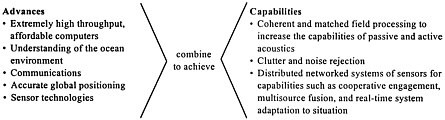
FIGURE.1 Technology advances and capabilities possible by combining them.
tencies, and it must remain so in the face of a submarine threat that will increase significantly-perhaps even dramatically-in the 21st century. This increase, which is being fueled by the proliferation of advanced submarine quieting, sensors, and processing techniques and technologies, could result in the submarine becoming the dominant threat to the accomplishment of naval missions. The psychology of both submarine and mine warfare enhances the effectiveness of the threat, since the adversary has only to possess these weapons to cause arriving forces to operate as if the threat were present and active. The presence of submarines in an adversary's inventory means that effective ASW is needed early on to provide intelligence, prepare the battle space, clear the area for operations, monitor choke points, and protect surface units. The primary weakness in ASW is the detection of quiet submarines. There are also shortfalls in the areas of effective weapons, fire control, and self-defense, but each of these problems generally follows from detection limitations.
Robust technological opportunities exist by which U.S. ASW capabilities can be enhanced to deal with future submarine threats. These advances and the capabilities possible from combinations of them are shown in Figure.1. However, resources and proper focusing of research are required to exploit these opportunities. In particular, significant gains in passive sonar appear possible based on larger multidimensional arrays of lightweight, smaller, cheaper sensors and telemetry; multichannel processing exploiting the advancing massively parallel computing technology; and robust characterization or incorporation of the ocean environment. These gains can be applied directly to active acoustics as well.
For tactical passive sonars, it is estimated that current programmed improvements will achieve a 10- to 15-decibel improvement in the near-term, with an additional 10 to 20 dB being possible over the time frame of this study if the technological advances shown in Figure .1 are exploited. These gains would more than offset the anticipated quieting of future submarines. Passive surveillance sensors should gain 15 to 20 dB from these same technologies, which will
support enhanced search capability in both deep- and shallow-water environments.
Historically, advances in ASW come about only as a result of dedicated, long-term research and development projects centered on at-sea operations, testing, measurements, and experimentation. It is precisely these types of R&D projects and operations that are largely absent from current Navy programs and plans.
Future ASW operations will likely evolve in a cooperative engagement context using, simultaneously, the capabilities of multiple assets and sensors on widely dispersed platforms, including those that are space based. In developing the new generations of ASW weapons, strong emphasis should be placed on those technologies that permit rapid attack from submarine, surface, and air platforms. Except for the general advances in information processing, positioning, communications networking, and some sensor materials, there are no specific commercial or alternative military developments that will yield ASW improvements.
MINE WARFARE
As with submarines, mines are a primary option for an enemy who wishes to interfere with or prevent the free movement of joint forces. With the continuing worldwide proliferation of mines and technology, mines will become more sophisticated while remaining a cheap and very effective weapon system. A widespread and/or sophisticated mine threat can readily thwart, halt, or forestall many naval operations, and technology will continue to favor those who deploy mines over those who attempt to detect and destroy them. Nevertheless, the United States must provide the spectrum of MCM tools that allow our forces to move with battle group speed, maneuver in any theater of operations, and operate in support of national objectives.
Since it is highly unlikely that a technology will emerge that can render the mine threat harmless, MCM will continue to be based on a number of discrete systems and techniques arranged in a balanced system of systems. This would include appropriate technologies that range from brute force methods to smart weapons and systems that can be either tethered or autonomous.
The panel believes that MCM systems, concepts, and technologies that are available in the near-term, when integrated with present capabilities, will provide the Navy and Marine Corps team with the ability to clear mines in stride. The following major categories of MCM efforts should receive the highest priority:
-
A factory-to-seabed intelligence, surveillance, and reconnaissance system is needed that will allow the most effective application of technology when it is required to hunt, detect, and neutralize mines, including destruction or neutralization before mines are laid. The desired ISR system includes imaging sensors and
-
sensors that can see through some obscuration, either deliberate or natural. This system will provide the knowledge of where mines are manufactured and stored, how and when they are moved, and when and where minefields are laid. This allows the elimination of mines before they are laid or the avoidance of mines, delivers information on the types of mines that will be encountered, and provides an understanding of how to defeat those mines that are laid.
-
Using advances in sensors, signal processing, and computational power, autonomous or semi-autonomous systems can be netted in an undersea surveillance system that uses distributed sensors and small undersea vehicles or bottom crawling devices to provide covert mine surveillance, deletion, and neutralization capabilities. These would be "smart" systems, with communications capability to operate autonomously in the most efficient manner, thereby avoiding personnel and platform losses.
-
To meet future threats, a dedicated, organic MCM capability must be made an integral part of naval forces by incorporating appropriate MCM capabilities into battle group combatants and by providing a support ship capable of transporting many small surface and air MCM platforms at battle group speed.
-
An aggressive program of naval platform acoustic and magnetic signature reduction should be pursued. Success in this effort will assist in both countering mines and making sophisticated mines increasingly subject to sweeping efforts.
-
Because of the density of the threat, lack of time, vagaries of the local environment, and/or need to go ashore at a particular point, there may be situations in which brute force methods of breaching are required. Such methods should be included in the suite of MCM capabilities.
-
Anticipating the inevitable retirement of the Avenger-class MCM ship, consideration should be given to a next-generation MCM ship, substantially smaller and lighter than the current classes, capable of operating with improved effectiveness in sea state 4 conditions, and carried on a mother ship capable of transporting up to 10 of the improved MCM units. This support vessel should also carry up to eight of the latest MCM vertical takeoff and landing (VTOL) aircraft; it would include the command, control, and communications capabilities of the current MCM command ship.
Although the Navy's current MCM force may be the most capable in the world, it is inadequate for the challenges of the future. This is a result of the refocusing of the Navy's strategy on the littorals, the lack of a sufficiently aggressive and focused R&D program, and the failure to view MCM as a complete system and provide it with sufficient sustained support from R&D through fleet introduction and operations.
RESEARCH AND DEVELOPMENT PRIORITIES
The Panel on Undersea Warfare considers efforts in the following research and development areas to be particularly important because of the potential improvements they offer to the ASW and MCM capabilities of U.S. forces.
Antisubmarine Warfare Recommendations
-
Establish and maintain a dedicated long-term program, centered on at-sea measurements and tests, to provide the science and technology bases for pushing active and passive acoustic array gain to the limits imposed by the ocean. Decades of experience have shown that advances in ASW come about only as a result of such programs.
-
Focus passive and active ASW sonar development on exploitation of the ocean's intrinsic coherence and on use of large volumetric arrays, as enabled by massive computational power, miniaturized sensors, and high-bandwidth transmission links, with a goal of 20-dB or greater detectability gains beyond near-term programmed improvements.
-
Develop networked, distributed sensor fields, including unmanned platforms (e.g., unmanned underwater vehicles (UUVs), unmanned aerial vehicles (UAVs), and satellites), for both submarine detection and local environmental characterization.
-
Develop weapon concepts and technologies that will exploit distributed sensor networks, permit rapid response, and provide more capability against countermeasure-equipped quiet submarines and torpedoes.
Mine Warfare Recommendations
Near Term
-
Implement a factory-to-seabed intelligence, surveillance, and reconnaissance capability, using a full set of ISR methods, including surveillance by satellite, atmospheric and undersea manned and unmanned vehicles, submarines, human intelligence assets, and special forces.
-
Develop technologies that will provide naval forces with organic MCM capability, including helicopter-compatible sweeping and hunting equipment, remotely operated off-board surface or UUV sensors, and on-board MCM sonars.
-
Aggressively pursue the development of so-called brute force technologies that will neutralize mines and obstacles in the very shallow water zone, the surf zone, and the craft landing zone.
Far Term
-
Develop technologies for advanced networked sensor and weapon systems consisting of the following:
-
Autonomous and semi-autonomous networked undersea systems using small, autonomous undersea vehicles, bottom-crawling variants, and fixed sensors for far-forward covert MCM; and
-
Controllable mines with remote fail-safe command and control (C2) and selective targeting.
-
Develop next-generation MCM ships as small platforms capable of sea state 4 operation, carried by a mother ship capable of battle group speeds. Develop the lightweight hunting and sweeping technologies required for these smaller units.
-
Apply reasonable mine shock hardening and effective acoustic and magnetic signature reduction technologies to all new-construction ships.


