
Experiments in the Swirling Wake of a Self-Propelled Axisymmetric Body
A.Sirviente, V.Patel (University of Iowa, USA)
Abstract
Measurements were made in the zero-momentum wake of an axisymmetric body propelled by a swirling jet issuing symmetrically from the tail. This study follows that of Hyun and Patel (1), who made measurements in the wake of the same body propelled by a marine propeller. Here, the jet conditions were adjusted to reproduce the overall effects of the propeller. Use of the same wind tunnel and similar instrumentation enabled a comparative study of the momentumless wake in the two cases.
Triple-sensor hot-wire anemometry was employed to measure the three mean velocity components and the six Reynolds stresses. The total and static pressure distributions were also measured with pitot probes, giving a complete set of data. This paper describes the experiments and a preliminary analysis of the data to elucidate the evolution of the wake. The momentumless wake of the jet-propelled body provides insights into the near-field mixing of the body boundary layer with the swirling jet, and their evolution toward a single flow.
Introduction
Swirl and longitudinal vorticity are basic characteristics of all three-dimensional turbulent shear flows. The wake of a body driven by a propeller or a jet, with appendages and controls in operation, is easily among the most complex of shear flows. A propeller introduces unsteadiness, high levels of turbulence, and tip and hub vortices, adding to the general complexity of the flow. The measurements of Hyun and Patel (1) indicate that, at a distance of the order of two propeller diameters downstream, the individual vortical structures are smeared and the flow is essentially a steady rotationally-symmetric shear layer with swirl but no net flux of axial momentum. The present experiment was designed to study the initial development of such a momentumless wake with swirl. The primary effects of a propeller, namely the addition of axial and circumferential momenta to the fluid, are reproduced here by means of a swirling jet issuing symmetrically from the tail of the body. The resulting flow is, of course, simpler in comparison to the propeller wake, but retains considerable complexity when compared to canonical turbulent shear flows such as boundary layers, jets and wakes.
The flow in the near wake of the jet-propelled body, in reality, depicts the mixing between the body boundary layer and an axisymmetric swirling jet. Sufficiently far downstream, there emerges a single shear flow, the momentumless axisymmetric wake with swirl, which is known to admit similarity solutions under certain simplifying assumptions. This, therefore, is also a study in the evolution of a single flow from the merger of two well documented shear flows. The experiment described below is the final experiment in a series conducted to study the development of the individual component flows and their combination, see Sirviente (2).
Design of Experiments
A new model of the axisymmetric body referred to in earlier studies as the “Iowa Body” was constructed with the tail truncated at a diameter of 3.96 cm to accommodate a swirling jet of diameter D=3.9 cm issuing from the base, as shown in Figure 1. The jet diameter is smaller than the diameter, Dp=10.16 cm, of the propeller used by Hyun and Patel (1). The modified body has a length (L) of 143.45 cm and a maximum radius (R) of 6.95 cm.
The boundary layer on the body was tripped by a 1.2-mm diameter wire, located at a distance of 9.5 cm from the nose. The thickness of the boundary layer at the tail, δ, was then 4.38 cm, i.e., δ/D= 1.12. Air was supplied through a 1.24 cm diameter pipe along the body axis, entering the body at the nose, to provide axial momentum to the jet. Air was also introduced separately through a 3.0 cm diameter
pipe concentric with the first pipe to impart tangential momentum to the flow. The tangential flow was injected into the axial stream at a distance 39 cm upstream from the jet exit through four 1.0 cm ×0.5 cm tangential slots. This method of swirl generation is simple, has no moving parts, and provides independent control of axial and tangential momenta.
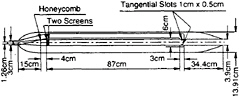
Figure 1. Modified Iowa Body
The experiments were conducted in the 1.07-m octagonal, open test-section, return-circuit wind tunnel of the Iowa Institute of Hydraulic Research. Figure 2 shows the wind tunnel and model arrangement along with the coordinate system used to report the data. The uniformity of mean velocity and turbulence intensity in the tunnel was investigated by Hyun (3), who reported a mean-flow uniformity better than 0.25% and a turbulence intensity of 0.5% in the test section. The freestream velocity U o was set at 16.5 m/s, resulting in a Reynolds number based on body length (Re=UoL/v) of 1.58×10⁶, where v is the kinematic viscosity of air. The jet velocity was adjusted to realize the self-propelled condition, i.e., such that the axial momentum of the jet was just equal to the momentum loss due to the body drag. This condition was achieved with a maximum axial velocity at the jet exit equal to twice the freestream velocity, i.e., Uj=2Uo. The tangential momentum was adjusted such that it matched that of the propeller employed by Hyun and Patel (1). The maximum tangential velocity at jet exit was then Wmj= 0.95Uo. These operating conditions translate into a swirl number,

(1)
based on jet radius (D/2), of 0.34, where  and
and  are, respectively, the axial fluxes of axial and tangential momenta of the swirling jet.
As shown in Figure 1, the model was mounted with a part of it extending into the tunnel contraction to maximize the axial length over which the wake could be studied. This enabled measurements in the axial direction up x/D=19.531, or x/L=0.531, where x is measured from the jet exit. It will be seen later that this distance was just sufficient to establish the asymptotic state of the wake. In the radial direction, measurements were made up to r/R=4.5 to recover the freestream conditions.
As this flow is, in principle, steady and rotationally symmetric, its description requires measurements along a single radial line at each axial position. However, measurements were taken across the (vertical) diameter to monitor flow symmetry. The measurements were made with a triple-sensor hot-wire probe and a five-hole Pitot probe. The latter was used to determine the mean flow direction so that proper yaw and pitch angles for the hot-wire probe could be selected. It also provided redundant data for the mean-velocity components. The probes were traversed in the vertical direction by a simple computer-controlled mechanism. Detailed description of the experimental equipment, instrumentation, and measurement procedures can be found in Sirviente (2), along with an analysis of the uncertainty in the data. There it is shown that the uncertainties of the mean velocity components measured with the hot-wire were less than 0.02Uo and those in flow directionality were 1.5 degrees. Uncertainties of the axial Reynolds stress,  and the shear stress,
  were estimated to be 10%, while those of the remaining stresses were 20%. Measurements with the five-hole Pitot probe had uncertainties of 0.02Uo in velocity magnitude and ±1.5 degrees in flow direction. The software used to control the experiments, and acquire and process the data, is described by Walter (4).
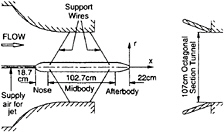
Figure 2. Wind Tunnel and Model Arrangement
Results
In the following, the data are presented in cylindrical polar coordinates (x,r,θ) where x is measured along the body axis from the base (jet exit). The mean and fluctuating velocity components in these directions are (U,V,W) and (u,v,w),
respectively. The freestream velocity Uo and either the body radius R or the jet diameter D are used to nondimensionalize the data.
Figure 3 shows sketches of typical profiles of the axial (U) and tangential or swirl (W) components of mean velocity for the jet- and popeller-driven flows. It is clear that these flows are characterized by multiple velocity and length scales, unlike simple wakes and jets. In the jet-driven flow three velocities, namely, centerline (Uc), minimum (Umn) and edge (Ue), are required to describe the axial component, and at least two radii, one (b1) where the local velocity is Umn, and the other (b2) where it is (Ue–Umn)/2 are required to describe the axial component. In the near wake, yet another velocity scale, the maximum velocity (Um), different from Uc (and not shown in Figure 3a) can be distinguished. The maximum swirl velocity (Wm) and the radius where it occurs (bs) are needed to describe the tangential velocity distribution. To all of these, may be added the velocity and length scales associated with distributions of the Reynolds stresses. To facilitate comparisons with the data of Hyun, Figure 3b shows similar sketches of the profiles of circumferentially-averaged velocity components in the wake of a propeller. Recall that the propeller diameter was Dp =10.16 cm. In this case, yet another velocity, at the edge of the propeller slipstream (Ul), is needed along with the radius (bm) where the velocity is maximum (Um).
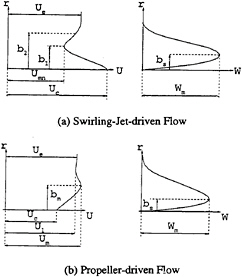
Figure 3. Typical Axial (U) and Tangential (W) Velocity Profiles
Streamwise Development
Figure 4a shows the mean velocity profiles at six representative streamwise stations, labeled A through F, from close to the jet exit at x/D=0.368 to the last station at x/D=19.531. The velocity and length scales described above are shown in Figures 4b and 4c, respectively, for all measurement stations. As the measurements indicated little difference between the velocity (Ue) at the edge of the wake and the constant freestream-velocity (U o), except at the
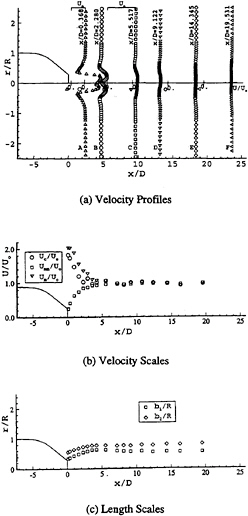
Figure 4. Streamwise Development of Axial Velocity Field
first few stations, Ue is not shown in Figure 4b. The profiles of the swirl (W) velocity and the scales associated with it are plotted in a similar format in Figure 5.
The symmetry of the data is evident from the velocity profiles (Figures 4a and 5a). Also seen from there is the very rapid mixing between the boundary layer and the jet in the axial velocity, and a somewhat slower decay of swirl. The axial velocity profile shows a peculiar hump in the central part of the wake, with a maximum velocity different from the centerline velocity. This is a characteristic of jets with moderate to strong swirl number and is produced by the centrifugal forces that are dominant in this
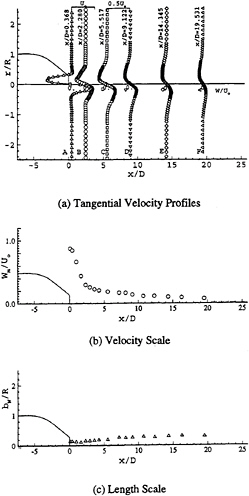
Figure 5. Overview of the Mean Tangential Velocity
region. This feature of the near-field flow is also evident from Figure 4b, where Um and Uc are plotted, and the turbulence data presented later. By x/D=5, and well before station C, the velocity maximum occurs at the centerline, the through in the axial velocity profile disappears, and the profile is as sketched in Figure 3a.
From Figure 4b it its seen that, within a distance of about x/D=4, the axial velocity along the wake centerline decreases rapidly from 2Uo at jet exit to very close to 1.1Uo where it becomes coincident with the maximum velocity, and the minimum velocity increases from zero at the jet exit to 0.9Uo. Thus, the usual small-defect assumption made in classical similarity theory of wakes is met quite early in the development of this flow. However, Figure 5b shows that it takes a distance of almost 15D for the maximum swirl velocity to decay from its value of 0.95Uo at the jet exit to 0.1Uo.
Following an initial increase and a decrease, the length scale b2, where the axial velocity is (Ue– Umn)/2, slowly increases after a streamwise distance of about x/D=10. On the other hand, there is an initially rapid increase in the scale b1 from D/2 at the jet exit, to follow a similar trend to that of b2 afterwards. From Figure 5c it is seen that the distance bs, where the swirl velocity is maximum, increases from about D/4 and follows a trend similar to b1, but remains smaller than b1 throughout. In other words, the location of maximum swirl velocity is much closer to the centerline than the minimum axial velocity, indicating a rather remarkable coherence of the swirl and its slow diffusion in the radial direction. It should be pointed out, however, that as the flow progresses downstream, all of these length scales are difficult to determine precisely from the data because the velocity variations across the wake become quite small.
Momentum Balance
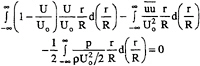
The integral form of the axial-momentum equation under the usual thin-layer (boundary layer) assumptions of nearly parallel mean streamlines may be written:
(2)
where the three terms represent the contributions from the mean velocity, turbulence and pressure, respectively. These terms were evaluated from the data and the results are plotted in Figure 6. In the wake of a self-propelled body, their sum is zero because there is no net force in the axial direction.
The maximum deviation of the sum of the three terms in Figure 6 was no more than 0.01 (i.e., 1% of  ). In fact, preliminary experiments were conducted in which these terms were measured at several locations and the jet conditions were adjusted to obtain the self-propelled (momentumless) state. Therefore, Figure 6 may be regarded also as a confirmation of the experimental procedures.
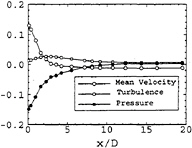
Figure 6. Axial Momentum Balance
Figure 6 shows that the contribution of pressure to the momentum equation is significant until about x/D=13. The negative pressure contribution is associated with increasing pressure in the axial direction, and is compensated by decreasing convection of momentum by the mean flow. The contribution from the turbulence term is also quite significant in the near field, reaching a peak around x/D=2.5.
The integral form of the tangential momentum equation under the same assumptions can be written:
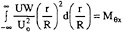
(3)
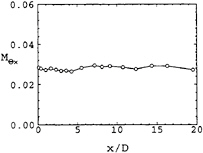
Figure 7. Flux of Tangential Momentum
As shown in Figure 7, this term remains constant at 0.028±0.002 along the wake. This momentum flux corresponds to that introduced by the propeller in Hyun and Patel's experiments. The difference in the numerical values of Mθx and the propeller torque coefficient (0.01614) lies in the different definitions of the two quantities. The constancy of Mθx is an indication that the axial symmetry of the mean flow is preserved.
On the basis of the mean-flow results presented in Figures 4–6, the wake of the jet-propelled body may be subdivided into at least three regions: (1) the near field, x/D<3, in which there is rapid decrease in axial and swirl velocities due to the intense shear and mixing between the fluid from the near-wall region of the body boundary layer and the outer layers of the jet; (2) an intermediate region, 3< x/D<13, where the pressure induced by the swirl continues to affect the momentum balance and the mixing between the boundary layer and the jet gradually encompasses the entire flow; and (3) the developed wake, x/D>13, say, where the mixing is complete, the pressure returns to its ambient value, the boundary layer and the jet lose their identity, and there results a single shear flow, that has the same status as other canonical free shear layers. This is, to be sure, a simplified picture, which makes no reference to the turbulence properties or structure.
Approach to Similarity of the Mean Flow
The existence of different velocity and length scales, and their different behaviors in the near and intermediate regions, are of course the most obvious characteristics of interacting shear layers. On the other hand, classical similarity theory applied to free shear layers is based on the assumption that multiple scales, if present, are in some constant proportion, i.e., each flow is described by just one velocity scale and one length scale. Clearly, it is of interest to inquire at what downstream distance does a momentumless swirling wake achieves such similarity conditions, if at all, or alternatively, whether the developed-wake region, x/D>13, satisfies the requirements of similarity theory.
Similarity solutions for two-dimensional and axisymmetric momentumless wakes have been known for some time, and Tennekes and Lumley (5) indicate that in the momentumless wake of an axisymmetric body (without swirl), the velocity scale decreases in proportion to x –4/5 and the length scale increases as x1/5. Ferry and Piquet (6) analyzed axisymmetric momentumless wakes, without and with swirl, and concluded that the powers just quoted are appropriate only for weak swirl, in which terms related to swirl in the axial-momentum equation are neglected. For weak swirl, the swirl velocity decays as x–3/5. For the case with strong swirl, they showed
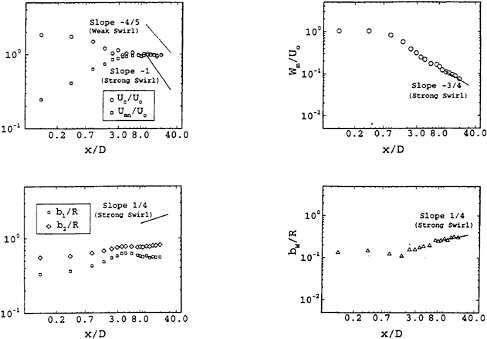
Figure 8. Log Plot of Mean Flow Velocity and Length Scales
that the axial velocity scale decays as x–1, the swirl velocity as x–3/4, and the length scale grows as x1/4. While a complete review of the theory is beyond the scope of this paper, it is of interest to plot the various velocity and length scales of Figures 4 and 5 to observe their approach to the predicted power laws. This is done in Figure 8.
The two characteristic axial velocities, Uc and Umn, do not follow either the –4/5 or the –1 power law, and instead approach the freestream velocity Uo rather early in the streamwise development. The corresponding length scales, b1 and b2, also do not grow with the expected 1/4 power. They appear to grow at a much slower rate. In spite of this, the velocity and length scales of the tangential (swirl) velocity show behaviors that are consistent with similarity theory for strong swirl at x/D>10, approximately. The different rates of growth and decay of the axial and tangential flows are quite surprising and would suggest that the mixing between the boundary layer and the jet is incomplete.
Streamwise Development of Turbulence
All six  Reynolds stresses were measured in the experiments. For the purpose of the present paper we shall consider only the sum of the three normal stresses, i.e., the turbulent kinetic energy,
  and two of the three shear stresses. The normal stresses at all stations were in the order:
  with the anisotropy persisting to the last station. Although none of the three shear stresses is zero in this flow, we shall consider only
  and
and  because they comprise important terms in the axial and tangential (swirl) momentum equations, respectively. The three chosen turbulence quantities are shown in Figures 9, 10 and 11 in the same format as the mean-velocity components in Figures 4 and 5. However, in the present case, changes in plotting scales were demanded by the very large changes in these quantities as the flow evolves downstream.
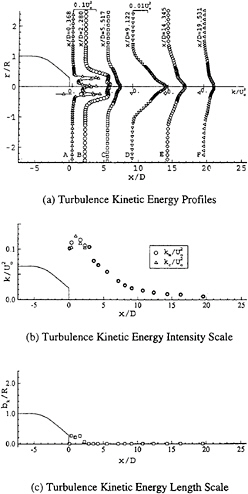
Figure 9. Overview of Turbulence Kinetic Energy
Each figure also shows appropriate intensity and length scales that describe the profile shape. The scales are of interest in the discussion of the approach to similarity conditions.
The profiles in Figures 9a–11a show certain common features which are discussed first. At the first two stations (A and B), which lie in the previously defined near field, x/D<3, all turbulence profiles show the coexistence of two shear layers, one associated with the large gradient of the swirl velocity at the center, and the other with the mixing between the jet and the boundary layer. Both produce peaks in the turbulence kinetic energy and shear stresses. The centerline peaks in k and  are associated with the swirl velocity, which is zero at the center and reaches a maximum before the interface between the jet and the body boundary layer. In fact, these peaks persist at all downstream stations, another indication of the slower decay of swirl noted earlier (Figure 5).
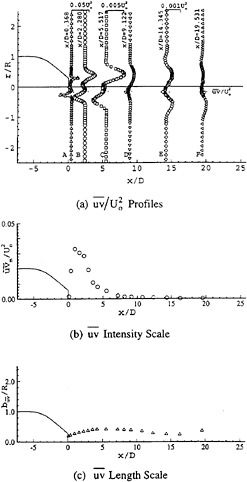
Figure 10. Overview of the  Shear Stress
The turbulence profiles at the next two stations (C and D) indicate that mixing between the boundary layer and the jet gradually penetrates to the flow centerline. Recall that this was judged to be a feature of the intermediate wake, 3<x/D<13. The magnitudes of the turbulence quantities have decreased such that an enlarged scale is needed to show the profile shape. It is also very significant that the
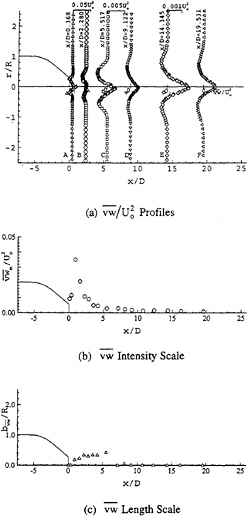
Figure 11. Overview of the  Shear Stress
shear stresses have practically vanished, being smaller than the estimated uncertainty limits of the data, although there remains significant levels of turbulent kinetic energy.
At the last two stations (E and F), lying in what was termed the developed-wake region on the basis of the mean flow, x/D>13, the magnitudes have further decreased such that yet another scale change is needed. Now the shapes of the shear-stress profiles have changed but the data themselves are no longer meaningful in the light of their uncertainties. For all practical purposes, the shear stresses transporting axial and tangential momentum are now negligible, and the turbulent kinetic energy slowly decays. It was found by Ridjanovic (7) and Wang (8) that an axisymmetric momentumless wake without swirl becomes shear-free beyond a certain distance, and consequently the flow in that region could be considered as that produced by a point source of turbulence. The flow at the last two measurement stations could be considered as nearly homogenous but anisotropic with nearly uniform mean velocity. This then is the region-where the rate of turbulence production is small, and there is a balance between convection, diffusion and dissipation.
The intensity and length scales plotted on Figures 9b,c–11b,c convey the foregoing observations in an integral sense. Thus, for example, Figure 9b shows the three stages in the decay of k, while 9c shows that the maximum value of k occurs at the wake centerline after the initial region. Similarly, Figure 10b shows the vanishing of the  shear stress within the intermediate zone, while Figure 11b shows a slower collapse of the
  shear stress, as expected from the slower decay of swirl.
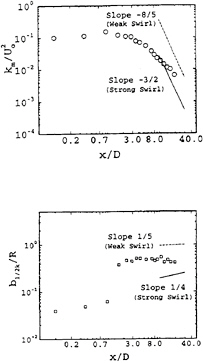
Figure 12. Turbulent Kinetic Energy Intensity and Length Scales
As pointed out by Ridjanovic (7) and Naudascher (9), length scales based on profiles of the turbulence quantities are better suited to define the overall length scale of the flow in the developed region because, as already implied, in that region the differences in mean velocity become small. Therefore, the scales presented in Figures 9b,c–11b,c are better suited for the study of the approach to similarity than those based on the mean velocity profiles (Figure 8).
Following Ferry and Piquet (6), similarity theory, under the assumption of weak swirl, predicts k ~ x–8/5,  and
and  and all the length scales b ~ x1/5. The results for strong swirl are: k ~ x–3/2,
  and b ~ x1/4. The maximum values of k,
  and
and  are plotted in logarithmic scales in Figures 12–14. All figures also show the power laws for weak and strong swirl. It can be seen that the intensity sales of the three turbulence quantities closely follow the power laws, initially with the powers corresponding to strong swirl and then showing a tendency toward weak swirl behavior. The latter is not complete, however, by the last measurement station.
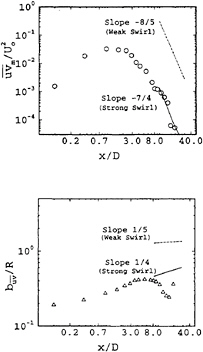
Figure 13.  Intensity and Length Scales
As the maximum values of k and  occur at the centerline, the most appropriate length scales for these quantities are the radii, b1/2 say, where they are one-half their respective maxima. For
  however, the location of the maximum suffices. The length scales so defined are also shown in Figures 12– 14. It is seen that the data sow a mixed behavior, with only the length scale of the
  stress indicating the 1/4-power growth predicted with the strong swirl assumption. The scale of k shows a behavior closer to that expected for weak swirl, while that of
  shows a decay. The latter feature is not entirely due to the low levels of stress and a deterioration in the accuracy of the data, however. It is an indication of the fact that this is not yet a single shear layer, i.e., the wake turbulence is not fully developed.
The approach to similarity of the mean flow and turbulence in the far wake also could be investigated by nondimensionalization of the velocity and the turbulence profiles using appropriate scales. Limitations of space preclude considerations of these aspects in the present paper. Reference should be made to Sirviente (2) for a more detailed discussion of this topic.
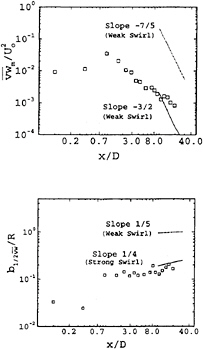
Figure 14.  Intensity and Length Scales
Propeller-driven Flow versus Swirling-jet-driven Flow
The most obvious difference between these two flows is the periodicity of the flow behind a propeller. The experiments of Hyun and Patel (1), Petersson et al. (10) and Faure (11) show that the wakes of the individual propeller blades are practically mixed with the ambient flow within a distance of approximately two propeller diameters. The wakes of propeller-driven and jet-driven bodies continue to evolve somewhat differently further downstream. On the other hand, similarity analysis suggests that the two flows must eventually have the same properties. In view of this, it is of interest to investigate the nature of the two wakes at some large distance downstream of the origin.
The present data are compared with the measurements of Hyun and Patel (1). Figure 15 shows a comparison of the streamwise variations of the centerline and maximum axial velocities in the two cases, the axial distance being normalized by the jet (D) or propeller (Dp) diameter. The maximum
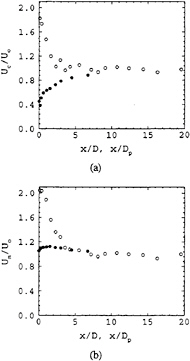
Figure 15. Comparisons of Uc and Um. Swirling-Jet-driven Flow (Open Symbols), Propeller-driven Flow (Filled Symbols).
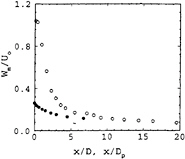
Figure 16. Comparisons of Wm. Swirling-Jet-driven Flow (Open Symbols), Propeller-driven Flow (Filled Symbols).
swirl velocities are compared in Figure 16 in a similar format. These results should be interpreted with reference to Figure 3, which shows the velocity profiles in the near field. Immediately downstream of a propeller the maximum axial velocity occurs some distance away from the centerline (around r/Rp=0.7 in Hyun and Patel (1), 0.5 in Petersson et al. (10), and 0.4 in Faure (11)), depending on the propeller characteristics. Figure 15a shows that the centerline velocity decreases with downstream distance in the jet-driven flow while it increases in the propeller-driven flow, but they become nearly the same at about 7 jet or propeller diameters. This is also the case for the maximum axial and tangential velocities. It is therefore interesting to take a closer look at the details of the two flows at this distance.
Figure 17 shows the axial and tangential velocity profiles at the last measurement station of Hyun and Patel (1) and a comparable location in the present experiment. Here the radial distance is
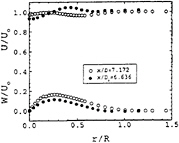
Figure 17. Mean Velocity Profiles. Swirling-Jet-driven Flow (Open Symbols), Propeller-driven Flow (Filled Symbols).
normalized by the body radius, R, which is the same in both cases. The difference in the axial velocity profile is clearly seen. In the jet-driven flow, the axial velocity is maximum at the centerline, reaches a minimum value below the freestream and then recovers to the freestream. In the propeller-driven flow, the centerline velocity is lower than the freestream while the maximum occurs some distance away from the centerline. Similarity theory requires that, sufficiently far downstream, the two profiles should assume the same shape, that of the jet-driven flow. The data of Hyun and Patel (1) do not extend to
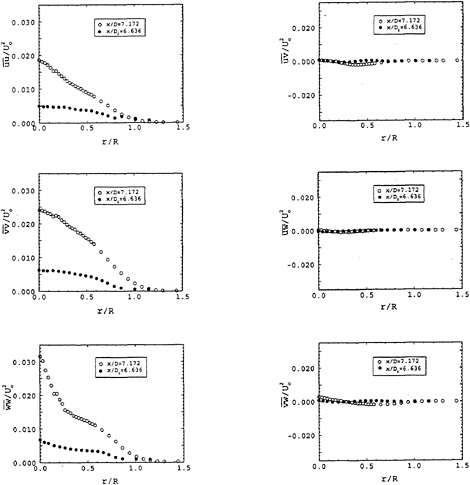
Figure 18. Reynolds Stress Profiles. Swirling-Jet-driven Flow (Open Symbols), Propeller-driven Flow (Filled Symbols).
such distances but the recent measurements of Faure (11), which were continued to x/Dp=50, show this behavior at and beyond x/Dp=17.5. Figure 17 also shows that the swirl velocity distributions in the two cases are quite similar.
The profiles of the six Reynolds stresses are compared in Figure 18. Clearly, the normal stresses in the jet-driven case are almost three times larger than those behind a propeller. The magnitudes of the shear stresses are small in both cases, and the differences in their profiles are consistent with the differences in the mean velocity shapes.
Conclusions
This paper reports detailed mean-flow and turbulence measurements in the momentumless wake of an axisymmetric body propelled by a swirling jet. The data elucidate the process of mixing between the boundary layer of the body and the jet and the evolution of the momentumless wake. It is found that the wake evolves in at least three stages. The first of these is the near-wake, extending to about 3 jet diameters, where the flow from the near-wall region of the boundary layer mixes with the jet periphery to produce an intense shear layer, distinct from the swirl-induced shear layer that is present at the jet center. There is rapid decay of the mean shear and turbulence in this region. In the second, intermediate region, extending to about 13 jet diameters, the mixing penetrates to the wake centerline, the individual shear layers are assimilated, the pressure field induced by the stern geometry and the swirling jet decays, and the mean shear and the Reynolds shear stresses become negligible by the end of this region. In the third region, called the developed-wake, the flow acquires the characteristics of a single shear layer, with very low levels of mean shear and shear stresses, implying negligible production of new turbulence, and decay of the normal stresses produced upstream.
Analysis of the data in the format of classical similarity theory reveals that the axial and swirling flows develop at quite different rates, as do the corresponding turbulence characteristics. Not all properties of the flow conform with the power-laws predicted by similarity theory. The decay of the swirl initially follows the trends predicted for high swirl and gradually moves towards those expected for weak swirl. However, not all flow properties show asymptotic behaviors, and therefore, it is concluded that a considerably larger streamwise distance is needed for the wake to achieve complete similarity. Further analysis of the data is needed to establish this limit.
The present flow was compared with that of Hyun and Patel (1) to reveal similarities and differences between momentumless wakes of jet- and propeller-driven bodies. Although the near-fields of the two flows are grossly different, as expected, there is strong similarity between the two after a distance of about 7 jet and propeller diameters. Hyun and Patel had shown that the periodicity of the flow associated with the wakes of the individual propeller blades died out beyond a distance of about 2 propeller diameters. The present data reveal that the identity of the jet and the body boundary layer is preserved up to at least 3 jet diameters. Further mixing is needed in both cases for the flow to acquire the characteristics of a single free shear layer. Similarity theory indicates that the two flows must evolve into a single unique state. Neither the experiments of Hyun and Patel nor the present extend into this range, but the comparisons presented here suggest that the two flows acquire considerable resemblance, justifying the intent of the present study to reproduce some elements of propeller wakes in a simpler environment.
Finally, it is important to point out that the present data, along with the data from complementary experiments in wakes and jets without swirl (see Sirviente (2)), comprise a rather comprehensive and unique set documenting the mixing of shear layers with diverse velocity and length scales, and their evolution toward a single shear layer. Consequently, these data are likely to prove of great value in the development and validation of models for nonequilibrium turbulent flows.
This research was partially supported by the Office of Naval Research, Grant N00014–91-J-1204, monitored by Dr. L.P.Purtell.
References
1. Hyun, B.S. and Patel, V.C., “Measurements in the Flow around a Marine Propeller at the Stern of an Axisymmetric Body. Part 1: Circumferentially-Averaged Flow,” Experiments in Fluids, Vol. 11, pp. 33–44. “Part 2: Phase-Averaged Flow,” Experiments in Fluids, Vol. 11, 1991, pp. 105–117.
2. Sirviente, A.I., “Wake of an Axisymmetric Body Propelled by a Jet with and without Swirl,” Ph.D. Thesis, 1996, Mechanical Engineering, The University of Iowa, Iowa City.
3. Hyun, B.S., “Measurements in the Flow around a Marine Propeller at the Stern of an Axisymmetric Body, “Ph.D. Thesis, 1990, Mechanical Engineering, The University of Iowa, Iowa City.
4. Walter, J.A., “Measurements in Near Wake of a Surface Mounted Semi Ellipsoidal Obstacle, ” Ph.D. Thesis, 1996, Mechanical Engineering, The University of Iowa, Iowa City.
5. Tennekes, H. and Lumley, J.L., “A First Course in Turbulence,” M.I.T. Press, Cambridge. ( 1972).
6. Ferry, M. and Piquet, J., “Sillage Visqueaus Lointain D'un Corps Sous-Marin Autopropulsé,” Rapport D'éttude Sirehna 86/14/R, 1987.
7. Ridjanovic, M., “Wake with Zero Change of Momentum Flux,” Ph.D. Thesis, 1963, Mechanics and Hydraulics, The University of Iowa, Iowa City.
8. Wang, H., “Flow Behind a Point Source of Turbulence,” Ph.D. Thesis, 1965, Mechanics and Hydraulics, The University of Iowa , Iowa City.
9. Naudascher, E., “Flow in the Wake of Self-Propelled Bodies and Related Sources of Turbulence,” Journal of Fluid Mechanics, Vol. 22, 1965, pp. 625–656.
10. Petersson, P., Larson, M. and Jönsson, L., “Measurements of the Velocity Field Downstream an Impeller,” to appear in Journal of Fluids Engineering, 1996.
11. Faure, T., “Étude Expérimentale du Sillage Turbulent d'un Corps à Symétrie de Révolution Autopropulsé par Hélice,” 1995, Docteur Thesis, Êcole Centrale de Lyon, France.


