
2
Improving the Capability to Detect Explosives
INTRODUCTION
Scenarios for Detection of Explosives
Most bombings in the United States target locations where no security is in place. No attempt is made to look for the explosive device in advance, and it therefore is not detected before it detonates. However, having the capability to detect explosives is highly desirable in at least three key scenarios, each of which involves unique detection requirements.
The first such situation involves a suspicious package, perhaps one discovered on a doorstep or in a public place and causing concern that it may contain an explosive device. An example is the backpack containing a bomb found during the 1996 Summer Olympics in Centennial Park, Atlanta. In that case, the bomb was discovered prior to detonation but exploded before it could be neutralized. Local law enforcement or explosive ordnance disposal personnel who respond in such cases require a detection system that is easy to transport, easy to operate, and inexpensive. The number of systems that can be used to address the threat posed by a suspicious package is inversely proportional to the cost and logistics burden of the system. An affordable, effective detection system might conceivably be placed in every squad car or provided to every explosive ordnance disposal team.
The second scenario for detection of explosives involves checkpoint screening, as seen in mail rooms, airports, and other public buildings. Everything that flows into an aircraft, for example, now passes through a checkpoint to ensure that it contains no bombs. The requirements for checkpoint screening are high
|
BOX 2.1 Finding the One in a Million All attempts at detection involve both false alarms and missed detections. These errors come from many sources but occur primarily in the measurement process. To recognize or detect something requires measuring the unique properties of the object of interest. The classic problem is recognizing the face of a friend in a crowd. Among the many faces, some more or less like that of the friend, is the particular one to be found. If one thinks he recognizes the friend but upon closer inspection and based on more data, realizes that the person is a stranger, one has a false alarm. If the friend is in the crowd but one never finds him, one has a missed detection. It is clear from this simple example that making a detection depends on using an appropriate sensor, collecting enough data, and being able to measure the difference between what one wants to detect and everything else that is present. |
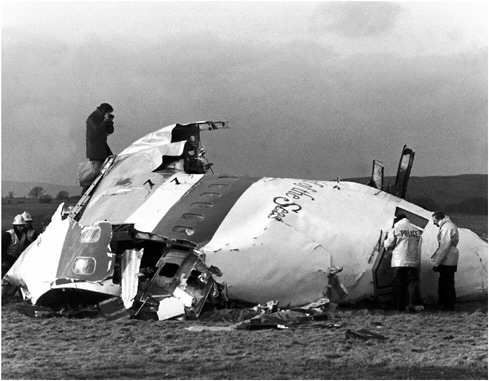
probability of detection and rapid processing. Because of the large number of objects to be screened, the checkpoint system's capital and operational costs and its size and weight are less important than its throughput. Detecting a bomb or deterring a potential bomber at a checkpoint could prevent a tragedy such as the bombing in 1988 of Pan American World Airways flight 103.1
The third scenario for detection of explosives involves large car or truck bombs similar to that used against the Alfred P. Murrah Federal Building in Oklahoma City. Detection of vehicles containing hundreds or thousands of pounds of explosives might be accomplished at checkpoints or weigh stations en route to the center of a city, at entrances to building compounds or parking garages, or at the curbside. A capability for detection of truck bombs from a movable platform, at a checkpoint, or from a distance might also be desirable. The time required for such a search could be critical; in the ideal case, the capability to detect vehicle bombs moving at freeway speeds would be desirable. The fundamental challenges to success in detection are evident in a familiar example (Box 2.1).
Two Strategic Approaches
A wide range of explosives are available for use by a determined terrorist or criminal. In considering the need to enhance the detectability of concealed explosives, the committee decided that the costs and benefits of adding detection markers to explosives must be evaluated in the context of the existing and projected
capabilities for detecting unmarked explosives. Two broad strategic approaches can be distinguished:
-
Improving the capabilities for detecting unmarked explosives, and
-
Adding markers to explosives to enhance detection.
For many reasons, improving the capability to detect unmarked explosives would be preferred if it could be shown to be technically and economically feasible. First, such a capability would save the expense of implementing a marking program. Particularly for high-volume, inexpensive explosives, the cost of marking may be prohibitive—in some cases equal to the cost of the explosive itself. Another problem with a marking program is that regardless of which explosives were included, bombers would still have access to unmarked explosives. Even if all commercial and military explosives were included in the program (a very unlikely supposition), it could not be implemented instantaneously. During the transition period in which manufacturers were implementing the program, bombers would have the opportunity to stockpile unmarked explosives. In addition, bombers could still obtain unmarked explosives from foreign countries with no marking programs, or simply improvise them from commonly available chemicals.
Given the fact that unmarked explosives will always be available, even under a fully implemented marking program, failure to detect a marker in a package, vehicle, or suitcase cannot be taken as proof that no explosives are present. Prudence dictates that a suspicious package or vehicle must still be treated as a threat even if no marker is detected.
In fact, the two strategies outlined above are complementary, rather than mutually exclusive. Some explosives are readily detected by current technologies without the need for marking agents. Other explosives are so difficult to detect with current technology that the addition of marking agents can greatly increase their detectability and add significantly to public safety. As technologies for detection and marking continue to be developed, and as the bombing threat changes, the most appropriate strategy for the detection of marked and unmarked explosives may change. The technical and economic factors that may drive these changes are discussed in subsequent sections.
OPTIONS FOR MARKING EXPLOSIVES TO ENHANCE DETECTION
Active marking and passive marking of explosives to enhance their detectability both require incorporation of marker into the explosive. An active marker announces its presence by continuously emitting some kind of signal, such as a chemical vapor, light, sound, x-rays, or radio waves. In contrast, a passive marker must be "asked" (or probed) before its presence can be detected.
An example of a passive marker is a dye particle that produces visible fluorescent light when probed with an ultraviolet light. This section discusses three classes of detection markers: active chemical vapor markers, active radiation-emitting markers, and passive markers.
Criteria for an Ideal Detection Marker
In assessing the value of any particular detection marker, it is useful to consider the characteristics of an ideal marker, although such a marker is probably unattainable in practice. In evaluating a real marker, the following desired characteristics may be given a different weights.
-
Wide applicability. The ideal detection marker would be applicable to all explosives threats. It would be versatile and could be used in a wide variety of configurations and scenarios. For example, the detection marker system could be used in airports to screen passengers, carry-on items, and checked baggage. It could be used to screen vehicles passing through checkpoints such as buildings, parking garages, and stadium entrances, and through freeway exits. It also would allow remote interrogation of suspicious packages or vehicles.
-
Rapid, reliable detection with low false alarm rates. The ideal marker would ensure that explosives detection is straightforward and unambiguous, requiring little or no operator training or subjective evaluation. It would have sufficient signal strength (and/or background suppression) to be rapidly detected, permitting high throughput of screened objects (people or things) passing through the detection system in any orientation. The ideal marker would not be common either in nature or in industrial use, so that the natural background would be low or nonexistent. The false alarm rate would be zero and the probability of detection would be 100 percent. The ideal marker detection system would be unobtrusive and when implemented would not cause significant delays or inconvenience to the public. Detection equipment would be portable, compact, and robust and would require little maintenance.
-
Unique signature impossible to mask or contaminate. The ideal detection marker would be impossible to remove or shield and would be impervious to countermeasures. The marked explosive would look and smell exactly like an unmarked explosive. The presence of the marker would be discernible only with state-of-the-art detection technology, not, for example, by an easily recognizable odor.
-
Suitable lifetime. The lifetime of the ideal marker would be comparable to the shelf life of explosive materials and could be tuned to operational requirements.
-
No effect on explosive performance, safety, or yield. The ideal marker would have no effect on an explosive's performance, safety, sensitivity, stability, shelf life, or explosive yield. In all respects, the explosive, either with or without
-
the marker, would behave in exactly the same way. Many laboratories in the United States are capable of running such tests, including those listed in Appendix I.
-
No real or perceived safety risks. The ideal marker would not adversely affect either the safe use of an explosive or the health or safety of explosives workers, explosives users, or the general public. It would pose no perceived risks and would be fully accepted by the public.
-
No adverse environmental impact or contamination. The ideal detection marker would have no negative impact on the atmosphere, the soil, the water, or the food chain. It would be consumed in the explosion or disintegrate into harmless materials and would not build up in the environment.
-
Low marking and detection costs. The ideal marker would be inexpensive, a small fraction of the total cost of the explosive. This low cost would include the cost of the marker itself, as well as all manufacturing, distribution, and tracking costs associated with the addition of the marker. The marker would be safe and simple to incorporate into the explosive and would have a minimal impact on the production process. In addition, corresponding detection equipment costs would be low enough to be affordable for a variety of applications (e.g., use in local law enforcement, screening in train stations and at building entrances.) If a single marker could be used for all explosives, detection would be simplified and the cost of the marker and the detection system would be reduced.
Chemical Vapor Markers
Rationale for Vapor Marking of Explosives
Scientists noticed in the late 1970s that many commercial and military explosives were fortuitously contaminated with ethylene glycol dinitrate (EGDN), a compound easily detectable because of its high vapor pressure. It was postulated that the contamination occurred during storage or manufacturing. These observations served as the basis for the U.N. Council of International Civil Aviation Organization's (ICAO's) efforts (Box 2.2) in developing an international convention for marking difficult-to-detect plastic and sheet explosives with one of four high-vapor-pressure chemicals (Table 2.1).
Marking of explosives with an appropriate vapor marker will greatly enhance the predetonation detection of concealed explosives, especially in the case of military high explosives such as composition C-4 (C-4),2 which consists of 91 percent 1,3,5-trinitro-1,3,5-triazacyclohexane (RDX) and 9 percent plasticizer. Because RDX has a vapor pressure of only 1.4 × 10⁻⁹ torr at 25 °C, the detection
|
2 |
See the discussion of military explosives in the section titled "Explosives and the Bombing Threat" in Chapter 1. |
|
BOX 2.2 Efforts of the U.N. Council of the International Civil Aviation Organization At the third meeting of its 126th Session, on January 30, 1989, the U.N. Council of the International Civil Aviation Organization (ICAO) considered the report of the Committee on Unlawful Interference, which related primarily to the downing of Pan Am flight 103. The council requested that the president establish an ad hoc group of explosives experts and scientists that would report to the council. This ad hoc Group of Specialists on the Detection of Explosives was established in March 1989 (ICAO, 1996, pp. ii-1). United Nations Security Council Resolution 635 of June 14, 1989, and United Nations General Assembly Resolution 44/29 of December 4, 1989, urged the ICAO to intensify its work on devising an international regime for the marking of plastic and sheet explosives for the purpose of detection. Resolution A27-8, adopted unanimously by the 27th Session of the Assembly of the ICAO, endorsed with the highest and overriding priority the development of such a marking program (ICAO, 1991). The concerted international efforts carried out under the auspices of the United Nations, specifically within the Council of the ICAO, culminated in the signing of the Convention on the Marking of Plastic Explosives for the Purpose of Detection by 39 nations on March 1, 1991. As of December 1997, more than 50 nations had signed the convention, and 34 nations had ratified it, including the United States and the United Kingdom, which both ratified in April 1997, and France, which ratified shortly after that. Recently, Japan also ratified the convention. Two nations, the Czech Republic and the United States, have been marking plastic compositions in large-scale production for several years. Thirty-five nations must ratify the convention for it to enter into force. The technical work in developing the ICAO detection markers has been done by the ad hoc Group of Specialists on the Detection of Explosives, which developed the Technical Annex to the convention. Since 1989, the Group of Specialists has been working on diverse tasks relating to detection of explosives in addition to reviewing the Technical Annex. |
of RDX vapors emanating from concealed C-4 by commercially available vapor detectors is essentially impossible (OTA, 1980). However, if C-4 is marked with an appropriate unique marker such as 2,3-dimethyl-2,3-dinitrobutane (DMNB), the concealed C-4 can be detected easily and reliably by relatively low cost commercial explosive vapor detectors. Since DMNB has a much higher vapor pressure than does RDX (Table 2.2), the detectability of C-4 marked with DMNB is enhanced essentially a million-fold (Elias, 1991).
Furthermore, since only picograms of DMNB markers are needed for detection, the quantities of marked explosive that can be detected with vapor detectors are much smaller than those that can be detected with bulk explosive detectors. Unlike detection based on the probing of explosives by nuclear or x-ray radiation,
TABLE 2.1 Abbreviations, Names, and Chemical Structures of International Civil Aviation Organization Vapor Markers
|
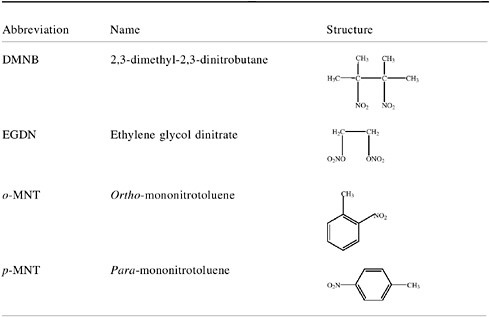 |
TABLE 2.2 Vapor Pressure of Some Common Explosive Chemicals and International Civil Aviation Organization vapor Markers
|
Abbreviation |
Name |
Vapor Pressure (Torr, 25 °C) |
|
Explosive Chemical |
|
|
|
AN |
Ammonium nitrate |
5.0 × 10⁻⁶ |
|
NG |
Nitroglycerine |
2.4 × 10⁻⁵ |
|
PETN |
Pentaerythritol tetranitrate |
3.8 × 10¹⁰ |
|
RDX |
1,3,5-Trinitro-1,3,5-triazacyclohexane |
1.4 × 10⁻⁹ |
|
TNT |
2,4,6-Trinitrotoluene |
3.0 × 10⁻⁶ |
|
Marker |
|
|
|
DMNB |
2,3-Dimethyl-2,3-dinitrobutane |
2.07 × 10⁻³ |
|
EGDN |
Ethylene glycol dinitrate |
2.80 × 10⁻² |
|
o-MNT |
Ortho-mononitrotoluene |
1.45 × 10⁻¹ |
|
p-MNT |
Para-mononitrotoluene |
4.12 × 10⁻² |
|
SOURCE: Vapor pressures for DMNB, o-MNT, and p-MNT are from Elias (1991); PETN is from Yinon and Zitrin (1993); all others are from OTA (1980). |
||
vapor marker detection is applicable in all scenarios, including detection of explosives concealed on people.
Research on Vapor Markers
Investigations on vapor markers include (1) the national efforts made from 1965 until about 1980, including the programs sponsored by the Bureau of Alcohol, Tobacco, and Firearms (ATF) (OTA, 1980), and (2) the concerted international efforts performed since 1989 under the auspices of ICAO following the explosion of Pan Am flight 103.
From 1965 to about 1980, the ATF funded research on several approaches to vapor marking of explosives, including the use of disproportionating salts, the direct absorption of vapor markers into the elastomeric plug materials of detonators, and the microencapsulation of marker materials. Among these, the microencapsulation of perfluorinated cycloalkane compounds was considered to be the most promising approach (OTA, 1980, p. 58), as evaluated according to criteria such as the need for long life, stability, specificity, and resistance to easy counter-measures. Around 1980, a number of preliminary tests had been conducted with five candidate markers, and compatibility tests had just been initiated (OTA, 1980). In 1980, ATF was prohibited from doing further research on marking or tagging of explosives.3
The period since 1988 has been characterized by the urgent international effort to sign and ratify the ICAO Convention on the Marking of Plastic Explosives for the Purpose of Detection (ICAO, 1991). This work has been carried out under the auspices of the United Nations, specifically within the Council of the ICAO (see Box 2.2).
A distinguishing feature of the post-1988 effort is the selection of vapor markers, detectable by existing explosives detectors, with appropriate vapor pressures to meet the requirement for a long lifetime. This eliminated the need for introducing into explosives the encapsulation materials required to achieve the appropriate shelf life for the high-vapor-pressure perfluorinated cycloalkanes.
ICAO Markers Selected and Evaluation of Their Suitability
Approximately 20 to 30 candidate compounds were evaluated by the Group of Specialists according to the following criteria: detectability, lifetime, compatibility with explosives, effects on the stability and performance of explosives, producibility, toxicity, environmental impact, and cost. Detectability depends on a marker's stability, permeability through materials, uniqueness or specificity for
detection, susceptibility to a false alarm, and robustness to countermeasures. Environmental impact includes a marker's potential role in depleting ozone and contributing to the greenhouse effect. The compounds investigated were primarily nitroalkanes, nitroaromatics, and related halocompounds. Four markers were selected for inclusion in the ICAO Convention and were listed in its Technical Annex. These are DMNB, ethylene glycol dinitrate (EDGN), ortho-mononitrotoluene (o-MNT), and para-mononitrotoluene (p-MNT). The minimum levels required for the four markers are specified in the annex to be 0.1 percent by weight (wt.%) for DMNB, 0.2 wt.% for EGDN, and 0.5 wt.% for both o-MNT and p-MNT.
DMNB
The consensus of the Group of Specialists is that among the four markers listed in the ICAO's Convention's Technical Annex, DMNB best meets the overall criteria for a suitable detection marker, except for its price. Efforts are under way to drastically reduce the cost of commercially producing DMNB (Chen, 1996a). Although DMNB is toxic, it is no more toxic than RDX, which constitutes 91 wt.% of C-4 (Chen, 1994). Thus, DMNB's toxicity is not an issue for marking plastic explosives, provided that adequate precautions are taken to deal with its higher vapor pressure. Because of DMNB's volatility, its use requires proper ventilation, as well as appropriate scrubber and personnel protection equipment, to reduce the permissible exposure limit (PEL) level to the acceptable value at the extrusion plant. The air concentration of DMNB in military storage magazines for C-4 demolition charges marked with DMNB was found to be below the PEL. Tests have shown that, at the 1.0 wt.% marking level currently used in the United States, DMNB does not affect such physicochemical or explosive properties of C-4, as its compatibility, stability, elasticity, impact sensitivity, and detonation velocity (Chen, 1990a,b).
Because DMNB is unique and apparently has no known industrial applications, there is little likelihood that it will be present in the background. In one set of experiments, the DMNB vapors emanating from the ICAO's standard suitcase as well as from a real-world suitcase packed with 11 pounds of cotton/polyester bedsheets were readily detectable with a portable, low-cost commercial explosives vapor detector with the use of a proper sampling device (Chen, 1996b). The suitcases contained small quantities of concealed C-4 marked with 0.1 or 1.0 wt.% DMNB. It was also shown that application of a vapor extraction interface between the suitcase and a hand-held explosive vapor sampler could increase DMNB's detectability by 10-fold or more (Chen et al., 1991).
The detectability of marker vapors emanating from a suitcase are strongly affected by their permeability through the materials packed inside the suitcase. The permeability of the four listed ICAO markers through wool, cotton, and polyester has been determined (Elias et al., 1990), and their permeability ranking
is as follows: o-MNT > DMNB > p-MNT > EGDN. In tests with the ICAO's standard suitcase, the permeability of EGDN through wool as well as through newsprint was very low.
Studies of DMNB's solubility in C-4 ingredients showed that nearly 0.07 percent of DMNB will dissolve in a liquid plasticizer (Chen, 1993), bis-(2-ethylhexyl) adipate, at 25 °C, which is difficult to remove by heat or vacuum. The lifetime of DMNB at 30 °C in a 1-inch C-4 block, marked at the 1.0 wt.% level and uncovered at the top of the block, has been predicted to be greater than 20 years (Chen et al., 1995). The test scenario approximated nearly the worst-case situation, and DMNB's lifetime was measured as a function of temperature, concentration, and thickness of the explosive. This study demonstrated clearly that thickness and concentration are important parameters affecting the lifetime of the marker. Specifically, in thin sheet explosives with a very high surface-to-volume ratio, the lifetime of the marker would be considerably shorter than, for example, that of the marker in a standard 1-inch C-4 block. Marking at higher concentrations will ensure adequate lifetime, especially in the case of thin sheet explosives, and will make it much harder to remove the marker.
In mass-produced blocks of C-4 marked with 0.1 wt.% DMNB and wrapped according to the method specified, the concentrations of DMNB at various locations in the block did not change except at the corners after 3 years' storage in a magazine (Nakamura, 1996). At the corners, the concentration losses amounted to about 20 percent in the first 5 months. However, no further losses were observed during the 3-year storage period. The detonation velocity and the shock sensitivity of aged marked C-4 were found to be identical to those of unmarked C-4.
Regarding producibility, marking of C-4 with DMNB requires only a minor change in the current manufacturing processes (Chen, 1990b). In fact, several signatory states of the ICAO Convention have easily made production-sized batches of plastic explosives marked with DMNB. The detonation products of unmarked C-4 and C-4 marked with 1.0 wt.% DMNB could not be distinguished.
The additional adverse environmental impact owing to use of DMNB in the manufacture of military explosives was assessed by ICAO to be minimal; the ozone depletion and the greenhouse effect are anticipated to be minor.
DMNB has been shown to be more stable than RDX, and large-scale hazard classification tests conducted according to the U.N. protocols demonstrated it to be nonexplosive (Chen, 1995). The safety assessment of DMNB for industrial use was conducted by drop hammer, ignition, electrostatic sensitivity, friction, and sensitivity tests, and DMNB was deemed to be safe for industrial applications (Kobayashi et al., 1992). At present, only DMNB has comprehensive test results supporting its suitability for marking applications. This, coupled with the fact that DMNB has been demonstrated by the Group of Specialists to best meet the overall criteria for vapor markers, makes it the international marker of choice.
EGDN
EGDN is a liquid nitrate ester with high sensitivity to mechanical impulses. Although 0.2 wt.% EGDN dissolved in a nitrocellulose matrix for safety reasons was used in the full-scale marking of Semtex (a plastic explosive similar to C-4 manufactured in the Czech Republic) after 1991, the use of this marker was discontinued in 1995 because its concentration in the air of the building in which it was being produced could not be reduced enough to meet the maximum allowable concentration level, despite efforts to improve the building's ventilation system (Mostak and Stancl, 1995). EGDN is intrinsically less stable than the other three listed ICAO markers. The issues regarding EGDN's safety in handling, stability, role in workplace safety, and poor permeability through paper and wool need to be resolved before it can be considered for use in marking explosives.
o-MNT and p-MNT
Early on, the problems of using o-MNT and p-MNT, especially the former, were recognized by the Group of Specialists. Both o-MNT and p-MNT exhibit distinct odors that will reveal their presence in marked explosives and cause acute headaches in explosive workers. Their vapor pressures are much higher than that of DMNB (see Tables 2.1 and 2.2). They are anticipated to have shorter lifetimes than DMNB; be easily removed by heat or vacuum; and have a higher false alarm rate. Recently, the Group of Specialists recommended to the Council of the ICAO that o-MNT be removed from the Technical Annex (Cartwright, 1995). The committee observes that p-MNT has been used in the full-scale marking of a plastic explosive (Mostak and Stancl, 1995).
Detectability of ICAO Markers by Modified Commercial Explosives Detectors
Recently, the detectability of each of the four listed ICAO markers incorporated into several plastic explosives was tested using commercial trace detection systems employing ICAO's standard box and suitcase tests (Malotky, 1995). The results demonstrated the effectiveness of the markers at a 0.1 wt.% level in facilitating the detection of plastic explosives, although EGDN was particularly difficult to detect, apparently due to its strong adsorption by the newsprint packed inside the standard ICAO suitcase. Under the same conditions, the nonvolatile explosive ingredients in the tested plastic compositions could not be detected by the same detectors. The gas chromatograph-electron capture detector and gas chromatograph-chemiluminescence detector performed considerably better than did the ion mobility spectrometer in these tests for some of the markers.
Cost of Marking Sheet and Plastic Explosives with DMNB in the United States
The research and development cost of selecting DMNB and evaluating its suitability as a marker in C-4 was $4.2 million.4 The cost related to modifications of plant production equipment and processes was $0.9 million, to preventive health issues was $0.5 million, and to research and development for identifying methods of low-cost commercial production of DMNB was $0.5 million. Thus, the total cost of developing the capability for marking C-4 with DMNB in the United States was approximately $6.1 million.
In the actual production of marked C-4, an incremental cost of approximately $0.40 per pound is currently incurred for marking with DMNB at the 1.0 wt.% level. The cost of C-4 is $11 to $20 per pound, and so addition of DMNB adds approximately 1 to 2 percent to its cost at the 1.0 wt.% marking level. It is anticipated that the cost of marking C-4 with DMNB will be reduced to about $0.20 per pound in the near future with the refinement of lower-cost methods for its synthesis.
Use of ICAO Markers in Nonplastic Military and Industrial Explosives
Although the Group of Specialists has focused on marking of plastic explosives, it has conducted some preliminary investigations on the marking of nonplastic military explosives and industrial explosive powders. These studies include one on marking a mixture of ammonium nitrate (AN) and 2,4,6-trinitrotoluene (TNT) with 0.1 to 0.7 wt.% DMNB and p-MNT (Smirnov et al., 1996); a study of the technical feasibility of marking detonating cord with DMNB (Mintz, 1996); a study on marking composition B and composition C with 1.0 wt.% DMNB and p-MNT (Bouisset, 1993); and one on marking a 50/50 RDX/TNT mixture with each of the four listed ICAO markers at the minimum concentration levels specified (Mostak et al., 1994). It appears from the results of these investigations that marking nonplastic military and industrial explosive powders is feasible and that the properties of the explosives would be unaffected by the markers at the time of manufacture and after a short storage period.
However, an overall evaluation is exceedingly complex. Adequate baseline data are not available at present and need to be gathered. Specifically, the issues of compatibility with TNT must be addressed. In general, marking nonplastic military and industrial explosives with DMNB appears to be more promising than does marking with p-MNT.
High-volume ammonium nitrate-based commercial explosives currently cost about $0.10 per pound. Thus, marking these explosives with DMNB—even at a 0.1 percent level—would add about 20 percent to the cost of these products. Marking of AN and ANFO with DMNB might also result in wide distribution of the marker in the environment, and consequent cross-contamination and false alarm problems with vapor detectors.
Recently, work with marking emulsion and water gel explosives has received increasing attention. The results obtained so far indicate that DMNB is technically suitable in the systems studied (Mintz et al., 1996). However, p-MNT exhibited mixed results, and o-MNT was deemed unsuitable for water gel and emulsion explosives. The effect of the added marker on the stability of the emulsion was found to depend on the type of emulsion system and the marker concentration.
Use of In Situ Impurities as Vapor Markers in Explosives
The possibility of detecting RDX-containing compositions by the detection of in situ impurities such as 1-oxa-3,5-dinitor-3,5-triazacyclohexane (ODNC), known to be formed in the manufacture of RDX, has been suggested (Smirnov, 1993). The presence of ODNC is expected to enhance RDX's detectability by about 10,000-fold since the vapor pressure of ODNC is reported to be 2.12 × 10⁻⁵ torr at 20 °C (Smirnov, 1993). Similarly, TNT-containing compositions typically have 2,4- and 2,6-dinitrotoluenes as impurities, with vapor pressures of approximately 1 × 10⁻⁴ torr at 25 °C, which is expected to enhance the detectability of TNT-containing compositions approximately 100-fold.
Radiation-emitting Markers
Extremely small amounts of a radioactive isotope (far below levels that threaten health, safety, or the environment) could be added to explosives to enhance their detectability. There are several radioactive isotopes that, because of their unique emission characteristics (i.e., the simultaneous production of two gamma rays), can be used in minute quantities that do not pose safety, health, or environmental hazards in final products. A gamma emitter (rather than an alpha or beta emitter) is necessary for sufficiently penetrating radiation. A gamma energy of 0.5 MeV or greater is necessary to prevent countermeasures—at these energies the amount of metal required to shield the signal becomes prohibitive. The coincident gamma marker approach, which requires large detection scintillators, is most appropriate for portal screening. A clear, detailed, and compelling discussion of the merits of this approach, including its safety, can be found in a JASON report (JASON, 1994).
Coincident Gamma-Ray Marker
60Co Double-Coincidence Emitter
The three possible candidates for double-coincidence gamma emitters are radioactive isotopes of sodium, cobalt, and bismuth, namely, 22Na, 60Co, and 207Bi. Of the three, 60Co has the best set of characteristics: it has a half-life of 5.3 years and emits a pair of nearly isotropic gamma rays with energies of 1.2 MeV and 1.3 MeV (JASON, 1994). The half-life of 22Na (2.6 years) is rather short, and that of 207Bi (30 years) is rather long. Further, the gammas emitted from 207Bi are sufficiently mismatched in energy (0.57 MeV and 1.06 MeV) to require a pair of energy windows in each detector, adding to cost and complexity.
The 60Co isotope is available and is relatively inexpensive. The quantity of 60Co needed to mark all commercial explosives, blasting agents and detonators in the United States would be less than 5 curie (Ci) annually, an amount that is negligible when compared with the kilocurie quantities required for medical use (JASON, 1994).
Various marking schemes range from the most aggressive approach of marking all explosives, including blasting agents, to the more conservative approach of marking only detonators. Marking bulk explosives with 60Co is technically feasible, relatively inexpensive, and believed to be safe at the 1 nCi/kg level (JASON, 1994). Marking only detonators should still constitute a significant deterrent to illegal use of explosives, since these essential devices are difficult and dangerous to fabricate. It is anticipated that less than 1 Ci of 60Co would be sufficient to mark the more than 50 million detonators produced in the United States in a year.
An explosive marked with 60Co should not pose a health hazard, even to explosives workers. The radioactivity of the marked explosive would be far below background levels. In the worst-case exposure of a person completely surrounded by marked explosive, the incremental exposure would be a fraction of natural background exposure. In a realistic scenario, an explosives worker would have an increased exposure equal to less than 1 percent of the natural radioactive background that all life on Earth is exposed to. Pound for pound, bananas have three times the radioactivity of bulk explosives marked with 60Co.5
The main health risk for explosives workers would be handling the radioactive cobalt components before addition of 60Co to an explosive, blasting cap, or detonator. Although the isotope would be highly diluted before its incorporation into the manufacturing process, even the diluted 60Co mixture would be radioactive, and its use would require implementation of standard protocols for handling
radioactive materials, including training, procedures, and controls. Costs associated with implementing new procedures and oversight are expected to be significant; the cost of the isotope itself in the small quantities required would probably be much smaller than associated environmental, safety, and health costs.
A proposed detection scheme for 60Co markers consists of two to three pairs of plastic scintillator panels coupled to a series of photomultiplier tubes (PMTs) with fast-pulse amplifiers, a broad energy window centered at 1.25 MeV, and coincident-detection electronics. A prototype detector of a size appropriate for screening luggage has been constructed and tested, although substantial engineering development will be required to achieve acceptable background discrimination and throughput times at the proposed 5-nCi doping levels.6
Three sources of interference in detection with 60Co markers are radon ''daughters," cosmic-ray muons, and cosmic-ray hadrons. Radon daughters result from the decay products of naturally occurring uranium, which in turn produces airborne radon. In turn, some of these radon daughters produce coincident gamma rays. The second source of interference is the abundance of cosmic-ray muons, which are sufficiently penetrating that they can pass through a pair of scintillator panels and appear to produce a coincident event. Finally, cosmic-ray hadrons (primarily protons and neutrons) can also contribute to background interference by a variety of mechanisms.
By clever tailoring of the detection system, however, it appears that all three sources of interference can be suppressed. Special Technologies Laboratory conducted a research project on 60Co marking of detonator bridge wires that included the fabrication of six scintillator/PMT gamma detectors and associated data acquisition electronics.7 The six detectors were configured geometrically and electronically to discriminate against the three sources of interference. The system demonstrated sensitivity at a level of a few nanocuries in less than 1 minute of detection time.
Two variables must be traded off—the minimum detectable amount of 60Co and the detection throughput. The amount of 60Co in a bridge wire is limited to 3 to 6 nCi. This maximum doping level is a function of safety limits that depend on proximity of the radioactive materials and is calculated assuming 1 million bridge wires stored on a single pallet.8 For a 5-nCi sample, the detection time is on the order of a minute. To be practical, the detection time would need to be a factor of
10 shorter, say 6 seconds or less. Future work has been suggested that is designed to increase the throughput to acceptable levels.
22Na Triple-Coincidence Emitter
Special Applications International Corporation and BioTraces Inc. have proposed a triple-coincidence detection scheme that uses 22Na as the marking agent.9 The system uses multiphoton detection based on the detection and measurement of radioactive isotopic tracers. The decay of isotopes known as positron-gamma emitters produces two 0.5-MeV gammas along with a higher-energy gamma—hence triple-coincidence detection will discriminate against virtually any interference. Detection limits are in the picocurie (10-12) regime. This intriguing technique has been developed and successfully tested for biomedical applications but has not yet been demonstrated as a marker for explosives detection.
Passive Markers
Passive markers for detection of explosives have been discussed in great detail in several JASON reports (JASON, 1986, 1987, 1994). None of the passive markers even approach the ideal marker—the majority of concepts have flaws that make their implementation either virtually impossible or totally unacceptable. The following discussion is not intended to be exhaustive. Some schemes have been proposed that either have not been demonstrated technically or are extremely impractical to implement—for these reasons, these schemes are not discussed in this report. Among the passive markers discussed in the JASON reports are the following:
-
X-ray opacifers. Transmission x-rays have been shown to be effective in detecting the presence of metals and other high-atomic-number (or "high-Z") materials. Typical x-ray probes have energies in the 40- to 80-keV range. High-Z materials are strong absorbers of x-rays in this range, creating high-contrast transmission shadowgraphs. Explosives typically consist of low-atomic-number (or "low-Z") elements such as carbon, hydrogen, nitrogen, and oxygen (so-called C, H, N, O explosives). These low-Z organic compounds have relatively weak transmission x-ray signatures because they are poor absorbers of x-rays with energies of less than 100 keV.
The attenuation of x-rays increases dramatically with atomic number because the attenuation, which is dominated by photoelectric absorption, is proportional to Z4, where Z is the atomic number. This suggests that marking explosives
-
with a high-Z material would give a strong (high-contrast) x-ray signature. This high-Z marker would act as a strong absorber or opacifier, creating a high-contrast shadowgraph, much like a high-Z metallic object. The two highest-Z stable elements that are at all practicable as markers are lead (Z = 82) and bismuth (Z = 83). Unfortunately, in a worst-case scenario of detecting a sheet of plastic explosive, the marker-doping required to create an acceptable contrast level (say 10 percent) is on the order of 3 percent by weight. A heavy element doped at this concentration is likely to affect an explosive's characteristics, including performance and safety. At reasonable concentrations (say, less than 1 part per 1,000), only lower-energy x-rays of 30 keV or less could be used. However, at these lower energies common, innocuous low-Z objects attenuate strongly, creating an unacceptably high background signal that would mask any marked explosive.
-
High-Z x-ray fluorescence markers. The concept of using high-Z x-ray fluorescence markers entails marking the explosive with a high-Z material that will fluoresce when irradiated by x-rays at energies above its K absorption edge (JASON, 1994). This system requires monochromatic x-rays at energies that will be absorbed by the marker but will be sufficiently different from the subsequent fluorescence x-rays.
This system has been considered for marking detonators in the following configuration: when rhenium is used as the marker, radioactive thulium (170Tm) is used to produce monochromatic x-ray irradiation, and large-area detectors along with critical absorbers (stable ytterbium and thulium) are used. However, this scheme has a number of disadvantages, including high marker cost, complex and bulky instrumentation, and high detection system cost. If this approach were used to mark bulk explosives, the marker concentration and its cost would be unacceptably high.
-
High-atomic-number x-ray absorption edge markers. Like the previous scheme, this concept involves x-ray absorption by a high-Z marker, but the decrease in x-ray intensity, rather than x-ray fluorescence from the marker, is detected. A proposed marker is erbium (Er), a rare-earth element that is a relatively good x-ray absorber. In this case, three sets of monochromatic x-rays are generated by an x-ray source with three switchable anodes made from tungsten, tantalum, and hafnium. The x-rays generated from these anode materials are absorbed to different degrees by the high-Z erbium marker (Z = 68). Signals resulting from the irradiation of each separate anode are compared against calculated values to confirm the presence of the marker and to discriminate against low-Z and medium-Z materials that might mask the marker.
A serious disadvantage to this scheme is that although Er is a relatively good x-ray absorber, at reasonable levels of bulk doping it could not be detected among the clutter of low-Z and medium-Z materials. The proposed implementation is to paint the Er on the surface of detonators or plastic explosives in a distinctive checkerboard pattern (JASON, 1994). The computed Er-marker image could then be displayed and detected spatially. This scheme, which is estimated to cost
-
about $0.01 per detonator marked and $5 per square foot of sheet explosive marked, could be defeated by scraping the marker off the surface or by shielding the surface with an x-ray absorbing material.
-
Magnetic markers. Magnetic detection methods, used in bookstores and libraries, employ a strip of material (permalloy) with an abrupt and narrow hysteresis loop. On exposure to a low-frequency alternating magnetic field, the permalloy undergoes sudden reversals of its magnetic polarization that are picked up by detection coils located in the exit portal.
Magnetic markers could be used only for objects with a rigid and fixed shape, such as detonators, dynamite, and cast boosters. The metallic strips would have to be mounted externally (and hence could easily be removed) and not in direct contact with the explosive material. In addition, the marker could be shielded by foils of ferromagnetic or conducting materials.
-
Thermal neutron markers. Thermal neutron analysis has been used to detect unmarked explosives (Yeaple, 1991), as discussed in the section below titled "Neutron-based Systems." This system is designed to detect nitrogen atoms (a component of many, but not all, explosives). Nitrogen atoms capture slow (thermal) neutrons, undergoing nuclear reactions (neutron, gamma) that produce high-energy 10.8-MeV gamma rays that are easily detected by scintillation detectors. However, the system is expensive and complex and cannot reliably detect subkilogram amounts of explosive.
Nitrogen has a relatively low capture cross section (0.075 barn) to produce gamma emission. Several rare-earth elements, along with cadmium, have quite high cross sections ranging from 900 to 49,000 barns. If gadolinium (Gd; 49,000 barns) were used as a marker to increase the gamma signal to 10 times as much the nitrogen gamma signal, the estimated doping level would be 25 parts per million by weight. The cost of Gd required to mark a ton of explosive is estimated to be on the order of $100, a substantial fraction of the cost of manufacturing commercial explosives.
Other problems with this approach are technical. Despite their high capture cross sections, most rare-earth (neutron, gamma) reactions produce lower-energy gammas (less than 1 MeV) and very small amounts of higher-energy gammas (up to 7 MeV). Gd produces only 2.3 percent of 6.7-MeV gammas, compared with 14 percent of nitrogen's gammas at 10.8 MeV. At the proposed doping levels, the Gd signal is not sufficient to overcome the background clutter. At 10 times higher doping, the cost of the Gd marker becomes prohibitive.
Another proposed means of overcoming clutter is to have a delayed gamma emitter that is detected after the "prompt" gammas of innocuous materials are gone. The marker must have a large neutron capture cross section, must produce an isotopic product that decays on a time scale comparable to the inspection time (say, a minute or less), and must produce a relatively high energy gamma that will penetrate its container. In addition, the marker must be safe and relatively inexpensive.
-
The best candidate appears to be vanadium, which has a cross section of 4.9 barns and produces a 52V isotope with a half-life of 3.8 minutes (JASON, 1994). All of the gammas produced have energies of 1.4 MeV. However, the safety issues associated with this approach make it unacceptable. Vanadium not only is toxic, but also requires doping levels on the order of 10 percent, a concentration high enough to adversely affect an explosive's performance and safety.
-
Thermal neutron absorbers. Adding a dopant material to function as a neutron absorber (analogous to the high-Z x-ray absorber) does not appear to be a viable approach (JASON, 1994). Boron is perhaps the most attractive candidate because of its high neutron absorption cross section (765 barns). However, achieving a high neutron opacity in a sheet explosive 0.5 centimeters thick would require a boron concentration of approximately 3 percent, which is much higher than appears desirable. If the requirement for high neutron opacity is relaxed, lower concentrations of boron are possible, but the marked explosive becomes harder to distinguish from other innocent neutron-absorbing materials, including water.
-
Dipole markers. A small length of conductive wire will behave like a resonant dipole, with a resonance wavelength equal to half the length of the wire. A radio-frequency probe will stimulate resonant scattering at these wavelengths. The proposed marker method would incorporate 1 mm × 0.25 mm wires embedded in bulk explosive at a density of 25 dipoles per cubic centimeter. The resonant scattering frequency of the 1-mm dipoles would be 100 GHz in material with a dielectric constant e = 1.5 (JASON, 1994).
There are two serious problems with this approach. First, the dipole marker is easily shielded by aluminum foil. More importantly, embedding sharp, brittle objects in explosives is known to increase explosive sensitivity. The introduction of wires into explosives would pose an unacceptable safety hazard.
-
Diode markers. A small diode marker, which consists of a foil antenna with a diode at the feed point, functions like a dipole marker. For many retail products, the diode is masked by a label that resembles a standard bar code. It responds to interrogation by producing a signal at the double frequency (and can be arranged to produce a signal at the half-frequency). It is highly discriminatory but can be shielded with aluminum foil. As with the dipole marker, ease of shielding and diminished explosive safety rule out the use of diode markers.
-
Rare-element NMR markers. In theory, explosives marked with certain rare elements could be detected with high specificity by nuclear magnetic resonance (JASON, 1994). However, to produce the necessary magnetic fields, bulky and expensive magnets would be required for detection. In addition, the technique is perturbed by the presence of ferromagnetic materials, and the markers are easily shielded by conductive foil.
-
Deuterium markers. Explosives could be marked with deuterium, a non-radioactive isotope of hydrogen (so called "heavy" hydrogen) (JASON, 1994). The marker could be introduced by substituting deuterium for some of the hydrogen
-
atoms in an explosive's molecules. When irradiated with a beam of 2- to 4- MeV x-rays, deuterium will undergo a nuclear reaction resulting in the emission of a neutron. The false alarm rate would be low, since the only other element that behaves in a similar fashion is beryllium, a highly toxic substance that is rarely used. A major disadvantage is the very high cost of buying and introducing such a marker at a detectable level into commercial products.
DIRECT DETECTION OF UNMARKED EXPLOSIVES
Since the initial signing on March 1, 1991, of the ICAO Convention on the Marking of Plastic Explosives for the Purpose of Detection (see Box 2.2), considerable progress has been made in the development of technology to detect unmarked explosives as well. Research has focused primarily on protection of civil aviation and detection of large (hundreds or thousands of pounds) bombs directed against the public or civil authorities. Two approaches have been emphasized: bulk detection (detection of the mass of explosive itself) and trace detection (detection of residues or vapors of the explosive ingredients).
Bulk Detection
Explosives can be detected by exploiting their bulk properties. Typically, radiation is used to probe the object to be screened, and the resulting change in the probing radiation is measured. An explosive is detected if the change caused by the explosive material is different from the change caused by all of the other innocent things contained in the item being screened. Various probes have been used to automatically detect concealed explosives. Because of system size and shielding requirements, most bulk detection systems are best used at fixed installations or checkpoints to which a suitcase, piece of mail, truck, or other object is brought for screening.
Enhanced X-ray Systems
The first x-ray security systems employed simple x-ray attenuation to produce a shadowgraph of the object being screened. This approach works well for high-contrast targets such as handguns but is not as effective for more subtle targets such as explosives. Scaled up transmission x-ray screening is currently being used for customs contraband screening of trucks and cargo containers.
With the advent of dual-energy x-ray systems beginning in the early 1990s, low-atomic-number organic materials, including many explosives, could also be imaged. Dual-energy systems using two different x-ray energies to differentiate high-atomic-number materials such as the iron in a weapon from low-atomic-number explosives are also used today for baggage screening. Inexpensive computing power has enabled basic automated detection of explosives based on analysis
of the dual-energy image. A significant number of these automated detection systems, currently costing about $350,000 each, are being used to screen checked baggage in the United States and many European countries.
Neutron-based Systems
Throughout the 1980s thermal neutron analysis was explored by three different contractors for the detection of explosives concealed in checked baggage and cargo (Brown and Gozani, 1997). Neutrons from radioactive decay or an electronic neutron generator were used. The neutron, once thermalized, reacts with the nitrogen atoms in all commercial and military explosives to give a high-energy gamma ray. This 10.8-MeV gamma ray is rare and stands out from the background, thus allowing an estimation of the nitrogen present. Innocent objects in baggage with high nitrogen densities cause nuisance alarms. Following the downing of Pan Am flight 103, thermal neutron analysis systems were deployed in six different airports to collect operational information. The performance and the operational availability of the systems were good. However, they were not accepted by the responsible air carriers because of system size, cost, and a limited ability to detect the subkilogram quantities of explosive that can destroy an airplane.
Fast neutrons have been used for detection of contraband (Brown et al., 1997). Fast neutrons are scattered by the elements they encounter. The energy of the gamma rays resulting from this scattering is characteristic of the elements encountered. Fast neutron analysis allows the operator to do an in situ elemental analysis. Explosives can be recognized by their characteristic elemental ratios of oxygen, carbon, and nitrogen. Elements present in improvised explosives, e.g., chlorine and very high levels of oxygen, may assist in their detection. Fast neutrons have been explored in at least three different geometries:
-
A sealed tube neutron generator with an imaging alpha detector was developed in the early 1980s. The collision of a tritium atom on deuterium produces a 14-MeV neutron and a colinear alpha particle. The alpha particle can be imaged and the position of each neutron of interest predicted as a function of time. The timed arrival of a gamma ray from the interaction of the fast neutron with an atom allows determination of its location in space.
-
Pulsed fast neutron analysis operates similarly to the system just described. The neutrons are created in narrow bursts about 1 nanosecond wide. The gamma-ray detectors are collimated to look at one line. The time of arrival of a gamma ray tells the operator where the element is on the line. The energies of the gamma ray tell which elements are in the beam.
-
Transmission shadowgraphs can also be done using broad-energy-range fast neutrons. Specific elements in the beam will scatter selected neutron energies. The determinations of which energies are absent allow the determination of
-
which elements are in the beam line. If these elements are those characteristic of explosives, the detection is positive.
The three neutron-based approaches outlined above are all in the experimental stage. The pulsed fast neutron approach is the most mature, performed by an operational prototype currently under construction. This approach has been demonstrated in the laboratory to be capable of accurately screening luggage and cargo for explosives in 20-foot containers.
Quadrupole Resonance
Quadrupole resonance uses radio-frequency radiation to excite the nuclei of selected atoms and to then receive a characteristic response (Rayner et al., 1997). The response is controlled by the atoms present and their crystalline geometry. The technique is highly specific, depending on the presence and unique energies of atomic transitions. Commercial equipment has been produced and evaluated to examine checked baggage and mail. The primary advantage of quadrupole resonance is also its major disadvantage. It is highly specific, with discrete frequencies and pulse sequences for each explosive. There are virtually no false alarms, but the optimum pulse sequencing and frequencies must be discovered for each explosive.
Computed Tomography
In 1994 the Federal Aviation Administration (FAA) certified the ability of the InVision CTX-5000 as an automated explosives detection system (Ott, 1996). The CTX-5000 takes selected tomographic slices through the object being screened and uses the density and size information generated to make a decision on the presence of an explosive. The system has demonstrated the ability to detect a broad range of commercial and military explosives in quantities that pose a threat to aircraft. CTX-5000 systems are now deployed in airports in the United States and abroad. The FAA is in the process of purchasing more than 50 units at about $900,000 each and providing them to the air carriers to screen checked baggage.
Trace Detection
For trace detection to be successful, the sample of explosive must be collected from a surface or an air stream, separated from all the background, detected, and identified. One approach is to try to detect the vapor emitted by explosives. Liquid explosives, such as nitroglycerine (NG) and EGDN, which are found in double-based propellants and some dynamites, have relatively high vapor pressures and are amenable to vapor detection. However, the vapor pressures
of common military explosives such as TNT and RDX are very low (see Table 2.2) and consequently are very difficult to detect by this method.
Dogs, the classic trace detection system, can detect the characteristic scent of explosives and/or the other ingredients in an explosive formulation. Dogs are used successfully for land mine clearance and detection of other explosives but have a limited attention span in tasks involving routine screening. Thus, dogs are very useful for search operations such as clearing an aircraft that has been the target of a bomb scare10 but would not perform well in the task of screening thousands of bags. It is therefore desirable to develop "sniffer" technologies to perform such routine tasks.
Scientists have been working to develop an electronic equivalent to the dog's nose since the early 1970s.11 Explosives detectors are now quite sensitive; commercial systems are capable of detecting and identifying a collected sample of RDX, PETN, and others weighing less than 1 nanogram. However, collecting this material currently requires intimate sampling, that is, close contact with surfaces that may contain the residues of low-vapor-pressure military explosives. Some of the systems employ very fast (typically 5 to 10 seconds) gas chromatography to separate the molecules of explosive collected from all the other chemicals that may interfere with the detection.
Systems for trace detection have been evaluated in U.S. airports, where they are used to examine electronic items for concealed explosives. The nuisance alarm rate is low, with the majority of positive alarms attributable to residues of explosive detected on people who have legitimate contact with explosives. The FAA is in the process of purchasing more than 400 trace detectors, costing between $45,000 and $160,000 each, for deployment in U.S. airports.12
Trace detection systems are in use in airports in Canada, Germany, and other locations and to protect selected federal installations. The same detection technology is being incorporated into walk-through portals in the United States and abroad to screen people for concealed explosives. Portable trace detectors mounted in a car are used currently at some vehicle checkpoints. Some of the systems have portable sample-collecting systems that can be used easily to clear a suspicious package.
Electron Capture
The first commercial vapor detection systems employed electron capture detectors to detect molecules of volatile explosives, specifically NG and EGDN (Aerospace, 1980a), which were present at high concentrations in vapor around many of the dynamites of the 1970s. These systems used preconcentration, semipermeable membranes and/or gas chromatography to separate the molecules of an explosive from the electronegative components of air. Explosives are highly electronegative—that is, they easily capture electrons—and the electron capture detector exploits this attribute. However, compounds other than explosives are also electronegative. Despite its low cost and ability to detect the vapor markers, current commercial trace detection systems have moved away from electron capture for detection of explosives, primarily because of its lack of specificity and the resulting high rate of false alarms.13
Chemiluminesence
Chemiluminesence is a nitro-group-specific indicator. The molecules of an explosive, which contain nitrogen-oxygen bonds, are separated by gas chromatography from the rest of the materials collected from the air. Once separated, they are pyrolyzed to give NO that is reacted with ozone to give excited NO2 that emits infrared radiation (Yinon and Zitrin, 1993). The chemiluminescence approach is very sensitive. Specificity is gained by a combination of nitro-group-only detection and chromatography.
Ion Mobility Spectrometry
In some ion mobility spectrometry (IMS) systems, the molecules of an explosive are separated from the air background by gas chromatography (Yinon and Zitrin, 1993). They are further separated by drift time. As the electronegative molecules are introduced into the system, they are ionized by attachment of an electron or a small charged molecule. Most molecules found in the air are not as electronegative as the molecules of explosives and therefore are not ionized under these conditions. A charged molecule of explosive is carried into an electrostatic field and is accelerated when released by a gate grid. Its time of flight through a countercurrent drift gas to the collecting electrode is measured and is characteristic of the molecular mobility. A detection is made by signal averaging over hundreds of these very fast events. There are several commercial vendors of trace explosives detectors employing IMS.
Mass Spectroscopy
The mass spectrometer is theoretically the ideal instrument to use in detecting explosives. It should provide instantaneous identification of the molecules of interest based on the pattern and mass of the fragments formed. Although this approach has worked in the laboratory, in practice the system cost, its complexity, and the demands of a high-vacuum system have kept this technology out of the commercial market.
Alternative Sensing Systems
A number of other technologies have been proposed for trace detection but have not achieved a strong position in the commercial marketplace. Specifically, surface acoustic wave sensors have the potential for sensitivity and should be low in cost and robust, because they are compact, solid-state devices. To separate an explosive from all other molecules present in the environment, these sensors must be coupled with a chromatographic front end. Antibodies for some explosives have been developed that are both sensitive and specific (Narang et al., 1997; Shriver-Lake et al., 1997), but the approach is slow and requires an aqueous-based sample analysis system. Several optical techniques are emerging with the sensitivity and specificity to detect explosives either in the vapor phase or on surfaces, but none are commercially available today (Luggar et al., 1997; Smith et al., 1997).
Trace Detection of Explosives Versus Detection of International Civil Aviation Organization Markers
Trace detection of an explosive is a less reliable indicator of the presence of a bomb than is detection of the bulk explosive itself. Currently deployed trace detection systems have given false positive detections, usually owing to traces of explosives adhering to individuals legitimately associated with the explosives industry, or to accidental contact of an object or person with such an individual.14 The introduction of ICAO markers was intended to enhance the sensitivity of trace detectors, a goal that has been realized for some trace detector technologies. However, some other current model detectors that are highly sensitive to trace amounts of an explosive (e.g., IMS) are not necessarily sensitive detectors of the ICAO markers (Chen, 1990b).
Since a strategy that emphasizes the direct detection of unmarked explosives is to be preferred over a strategy based on marking (see ''Two Strategic Approaches"
in the introduction to this chapter), technologies such as IMS, which have a proven ability to detect trace amounts of an explosive but poor performance in detecting the ICAO markers, should continue to be supported. At the same time, producers of such trace detection systems should be encouraged to adjust their detection parameters to facilitate detection of the ICAO markers as well as traces of explosives. The resulting capability would enhance the probability of detecting bombs made with marked explosives, since it would provide two detection opportunities—detection of the vapor or particulates from an explosive as well as detection of the marker—rather than one.
LEGAL ISSUES
The viability of any new technology for detecting explosives depends on its technological and economic feasibility. Basic to such an evaluation are an independent assessment and comparative weighing of the costs and benefits of each technology. Implementation of detection technologies described in this chapter would have significant legal ramifications for a variety of industries, the criminal justice system, the civil court system, and the public at large. These ramifications, in turn, represent additional costs and benefits that must be considered in determining the desirability of proposed or available technologies. The most important legal costs and benefits will likely arise in the prosecution of criminal bombers and in the litigation of civil lawsuits against those responsible for deploying detection technologies. These issues are analyzed in depth in Appendix G of this report; only a brief synopsis of that analysis is provided here.
Criminal Prosecutions
The Fourth Amendment to the United States Constitution requires that every government-conducted search or seizure be "reasonable." "Reasonableness" generally requires probable cause and a warrant, but there are many well-recognized exceptions to these requirements. Moreover, new exceptions will be crafted where state interests outweigh the intrusion on individual interests.
Because most of the techniques discussed in this report detect (subject to relatively small error rates) only contraband or items whose possession is highly suspicious, a "search" may not even be involved in many settings. A search is an invasion of a reasonable expectation of privacy, but there is no such expectation in contraband, and probably none in pseudo-contraband—that is, items whose possession is suspicious under the circumstances (Appendix G, pp. 225-23115). In some settings, however, such as detecting explosive materials kept in one's
|
15 |
Note that page numbers in parentheses in this "Legal Issues" section cross-reference related, more detailed discussion in Appendix G, "An Analysis of the Legal Issues Attendant to the Marking, Inerting, or Regulation of Explosive Materials." |
home, the argument becomes weaker, given the high expectation of privacy in settings like the home. If there is no search, then the Fourth Amendment does not apply. But even if there is a search, the search will be reasonable in many circumstances under the administrative search exception to the warrant and probable cause requirements.
The administrative search exception applies only if the government's primary purpose is administrative rather than prosecutorial or punitive. That criminal prosecution might ultimately result from such a search does not alter its administrative character. Where government interests require, an administrative search can be both warrantless and suspicionless. In the explosives detection context, the government's primary purpose in searching such high-risk locations as airports, schools, and roadway entrances to downtown business districts will be to protect the safety of persons and property. The Supreme Court tends to give safety interests great weight. Accordingly, it is highly likely that in many settings, suspicionless and warrantless efforts to detect tagged or untagged explosive materials and their precursors will be treated as reasonable administrative searches, provided that efforts are made to minimize intrusions on individual privacy and clear, written guidelines minimize the discretion of officers on the street (pp. 231-236). Even in settings where the administrative search exception might not apply, officers can stop individuals for questioning if they act on a reasonable suspicion that the suspects are engaged in illegal activity. If that stop creates, or the officer already had, reasonable suspicion that the suspect was armed and dangerous, then the officer may conduct a limited "patdown" for weapons. If the investigation then establishes probable cause, a full-blown search can be conducted (pp. 236-237).
Civil Liability
In addition to raising a number of issues for the criminal justice system, the explosives detection technologies examined in this chapter also may give rise to a host of civil liability actions. Anyone who makes, sells, transports, stores, or uses explosives detection markers, explosives detection equipment, or detection-marked explosive materials may be sued for damages if these products or activities cause harm to others. Included within this group of possible defendants are private parties, like common carriers and building owners, as well as public entities, such as governments and law enforcement agencies. The liabilities that such parties may incur depend on the type of harm they inflict. Governments or government officials that violate constitutional or civil rights—say, by conducting illegal searches and seizures—may be held liable under a theory of constitutional tort or under the Civil Rights Act of 1871 (see Appendix G, pp. 241-243). Public and private parties alike may be subject to liability for invasion of privacy (pp. 243-246) or false imprisonment (or false arrest) (pp. 247-248) if they unreasonably employ the detection equipment to search and detain others. Anyone
who uses these technologies to disseminate false information that damages the reputation of others may be sued for defamation (pp. 246-247). In situations where the markers, detection equipment, or detection-marked explosive materials cause physical harm to persons or property, the victims may seek relief under the theory of negligence (pp. 250-252) or under a number of intentional tort theories like battery (p. 247), intentional infliction of emotional distress (pp. 248-249), or trespass to chattels and conversion (p. 249). Even without any demonstrated negligence or bad intent, those who distribute or use detection technologies or explosive materials that injure others may be held strictly liable for engaging in ultrahazardous or abnormally dangerous activities (pp. 252-254). Finally, should any of the detection technologies or detection-tagged explosives under consideration be found defective or unmerchantable, or should false guarantees be made about their quality or safety, their makers and/or sellers may be held liable under a wide variety of product liability theories of recovery (pp. 254-265).
While these actions are diverse, their viability will likely turn on a few key considerations. For lawsuits premised on intrusive searches, the result usually will depend on whether the searches were initiated with probable cause and conducted in a reasonable fashion. For actions founded on the infliction of physical harm (caused either by the technologies themselves or by criminals able to circumvent them), both the foreseeability of the subject harm and the costs of avoiding it will play critical roles. Where the injury results from the explosion of an undetected bomb, the actions of the bomber typically will be a compelling or determinative factor in resolving the liability (or nonliability) of those supplying or using the failed detection devices. Whatever the cause of action being alleged, the high social utility of detection technologies in preventing criminal bombing incidents will weigh in favor of the parties challenged for deploying them.
Predicting outcomes in tort cases is always an uncertain and risky enterprise. Nevertheless, two conclusions may be offered with a reasonable degree of confidence. One is that any party instituting or participating in an explosives detection program may face a plethora of lawsuits and legal theories, thus increasing (regardless of outcome) the costs of pursuing such an endeavor. The other is that anyone bringing such an action will likely encounter a number of substantial obstacles (doctrinal, economic, and evidentiary) along the road to recovery.
PLANNED NATIONAL INVESTMENT TO ENHANCE DETECTION OF EXPLOSIVES
Increased accessibility to information on bomb making, the wide availability of a variety of explosive materials, and increased worldwide mobility have made it easier for bombers to threaten innocent victims. The committee proposes a proactive national approach for improving detection of explosives that has three components: increased use of existing commercial detection technology beyond airports; development and deployment of portable, lower-cost, easily implemented
detection systems; and continued research to develop new or improve existing techniques to detect unmarked explosives.
Two decades ago the United States and the world were confronted with increasingly frequent hijacks of airplanes and smuggling of explosive devices on board by foreign terrorists. To maintain public safety and restore the public's confidence in the safety of air travel, the federal government invested in development of technologies for detecting weapons and explosives carried either by passengers or in baggage. The resulting detection systems deployed under FAA direction to major airports have been effective in stemming terrorist attacks on airplanes. However, the systems' physical size and high purchase cost have limited their widespread use.
Today, major law enforcement organizations believe that a high priority should be given to protecting public areas beyond the airport, thus limiting risks to the public as well as to law enforcement personnel (TriData, 1997). The first component of the committee's proposed approach would be a limited program to deploy existing detection equipment in priority facilities beyond airports. This program would reduce manufacturing costs through economies of scale and give manufacturers incentives to invest in engineering improvements. Truly widespread deployment of detection equipment, however, will depend on development of low-cost, portable, and user-friendly detection systems. The development of such systems would be the second component of the committee's proposed approach.
Local law enforcement agencies, typically the first responders to both hoax and real bombing incidents, posses extremely limited explosives detection equipment. Their budgets generally do not allow for procurement and use of existing detection devices.16 Moreover, getting bulky detection equipment or even a bomb-sniffing dog on the scene quickly can be problematic. In a recent survey of 195 law enforcement officers aimed at identifying technology to combat terrorism, one of the highest priorities reported was the need for improved means, especially portable devices, for detecting explosives (TriData, 1997). Use of federal funds to support the modification and broader deployment of current explosives detection systems as well as the development and deployment of new systems would, in the committee's view, represent a wise national investment, with benefits likely to be realized within the next several years.17
The third component of a planned national investment, executed in parallel with the first two components, would emphasize continuing research on new methods of detection of unmarked explosives. An improved capability to locate
hard-to-detect explosives and a lower false alarm rate would be among the desired objectives. New and improved trace detection methods could have the additional benefit of facilitating the detection of plastic and sheet explosives marked with ICAO vapor markers.
CONCLUSIONS AND RECOMMENDATIONS
Conclusions
2,3-Dimethyl-2,3-dinitrobutane (DMNB) has been identified as a viable vapor detection marker to be added in low concentrations to plastic and sheet explosives. Its use is in full accord with the ICAO Convention, ratified by the United States in April 1997, which requires the detection marking of plastic and sheet explosives with one of four volatile compounds.
The potential presence in terrorist hands of unmarked explosives from a variety of noncommercial sources is a flaw in any marking approach where no provisions are made to detect the unmarked explosive as well. The addition of detection markers to any or all explosives would not address existing stocks of unmarked nonmilitary explosives diverted from the normal stream of commerce, unmarked military explosives, unmarked explosives provided by a state sponsor of terrorism, or unmarked improvised explosives.
The technology available to detect unmarked explosives is improving rapidly, so that it is now increasingly possible to detect a broad range of explosives in many scenarios. Future improvements will allow the extension of this capability to a wider range of applications.
Recommendations
-
Strategic national investment should focus on the detection of unmarked explosives. This broad effort should include the following actions:
-
Deploying detection equipment based on existing technology to other critical sectors beyond airports;18
-
Accelerating the engineering effort to make current detection equipment less costly and easier to implement, thus enabling wider operational deployment; and
-
Conducting research leading to the development of new or improved techniques to detect unmarked explosives.
Emphasis should be placed on and resources directed toward the deployment of existing explosives detection technology capable of detecting ICAO markers and unmarked explosives. Research on the detection of unmarked explosives is currently under way under the direction of the Federal Aviation Administration (for aviation applications), the Interagency Technical Support Working Group (for federal applications), and the National Institute of Justice (for civilian law enforcement applications).
-
The addition of detection markers to explosives beyond that required by the International Civil Aviation Organization Convention is not recommended at the present time. More than 5 billion pounds of commercial explosives (the majority of which cost $0.10 to $0.15 per pound) are used annually in the United States. The cost of marking with DMNB is projected to reach a lower limit of $0.02 to $0.20 per pound for, respectively, a 0.1 to 1 percent marking level. This cost increment, together with the cross-contamination concerns associated with widespread distribution of the marker in the environment, would appear to rule out the use of markers such as DMNB for all but the most high-value commercial explosives.
-
The United States should conduct research on the use of International Civil Aviation Organization markers (or similar markers that can be detected by the same equipment) in commercial boosters, detonating cord, and other low-vapor-pressure, cap-sensitive commercial explosives . Currently these critical components, used in the fabrication of terrorist explosive devices, are not easily detectable. If technically feasible, the capability for marking these components of explosives should be ready for implementation in the event that the threat of illegal bombings escalates. Such research might be carried out jointly by the Department of Defense and commercial explosives manufacturers.
-
The United States should conduct research leading to a commercial prototype system for the production and detection of detonators and/or explosives marked with coincident gamma-ray emitters. The coincident gamma-ray marking approach has great promise, but more operational information must be collected and evaluated before deployment can be considered. Research should be conducted to examine the real and perceived health hazards of the radioactive marker in manufacture, storage, and use. Methods of incorporation of the marker into detonators and methods of detection should be validated through a full-scale demonstration program. This option should be available for implementation if the bombing threat escalates. Some research in this area is currently being conducted within the Department of Energy.


