
4
Rendering Explosive Materials Inert
INTRODUCTION
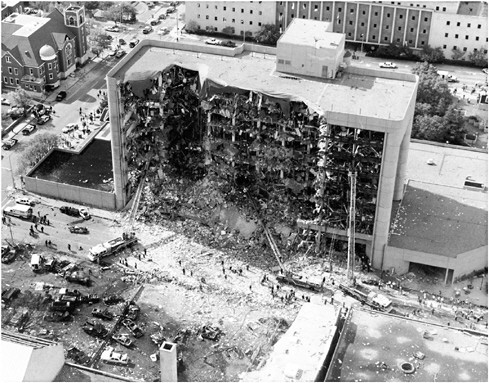
Many common chemicals have the potential to be used as explosives in terrorist bombs (Oxley, 1993, 1997). One approach to making the terrorist's job more difficult is to desensitize or render inert explosive chemicals that can be directly mixed and then made to detonate. A desensitized mixture can be more difficult to initiate (cause to explode) or may explode with a dramatically reduced energy output. A material that is difficult to initiate also requires a more energetic initiation scheme. Taken to its ultimate conclusion, desensitization renders a material inert or unable to detonate. Desensitization cannot eliminate the threat posed by illegal bomb making and use, but it places a heavier burden on the terrorist, thus increasing the chances that he will fail or be caught.
Criteria for an Ideal Inerting Method or Technology
The criteria for an ideal inerting method, which parallel and expand on items in the committee's statement of task (Appendix B), include those described below. In practice each would carry a different weight.
-
Is effective in preventing use of the chemical as an illegal explosive. The ideal inerting method is capable of preventing an explosion when the inerted chemical is intimately mixed with other materials (oxidizers or fuels) chosen to provide the correct reaction stoichiometry. The chemical, mixed with other
-
ingredients, does not detonate in a large-diameter charge, even when driven with a large booster.
-
Is immune to countermeasures. The ideal inerted substance is not readily separated from the diluent or detonation-arresting catalyst by physical size separation or other simple means. A material rendered inert by a change in its morphology is not readily convertible to the detonable form.
-
Retains the effectiveness of inerting over time. The efficacy of the ideal inerting method does not degrade with time owing to evaporation of the inerting materials or reversion to thermodynamically preferred (more explosive) morphologies.
-
Retains safety in manufacturing, distribution, or legitimate end use. The ideal inerting method does not make the target substance more hazardous to handle in commerce or in its intended legitimate use. Toxicity to humans through contact with skin, ingestion, or inhalation is not increased. Flammability is not increased.
-
Retains efficiency of the inerted substance for its normal, nonexplosive use. The ideal inerted substance retains its full utility in commerce; e.g., inerted fertilizer-grade ammonium nitrate is still usable as fertilizer. Neither the diluent nor the detonation-arresting catalyst has adverse effects on the commercial high-volume uses of the substance.
-
Has negligible environmental impact. The ideal inerting agent does not adversely affect the environment in any way. It has no negative impact on the atmosphere, soil, water, or food chain, does not contribute to destruction of the ozone layer or to global warming, and biodegrades safely.
-
Imposes no cost on the manufacturer, distributor, or user of the substance. Addition of the ideal inerting ingredient or use of a morphologically inactive form does not cause additional expense in the production, transportation, distribution, application, or other use of the inerted substance. The inerted substance would have no commercial disadvantage and would be as cost-effective as the initial (noninerted) substance in accomplishing the desired goals of industry or agriculture.
-
Is acceptable to the public. The ideal inerting method would be acceptable to the public. Its use would lead to no perceived or real negative consequences.
Potential of Common Explosive Chemicals for Use in Large Bombs
No records containing information on the use of common explosive chemicals in illegal bombings, prioritized by frequency of use, could be made available
to this study,1 perhaps because state and local law enforcement personnel, who commonly report data on illegal bombings, group many ingredients together in the "other chemicals" category. Accordingly, the committee developed a method of analysis to rank—by potential for use in bomb making—a committee-derived list of commonly available explosive chemicals that could be mixed to form explosives. The purpose of the ranking scheme, described in Appendix K, was to characterize commercially available common explosives chemicals according to the following criteria:
-
Availability and accessibility,
-
Ease of use in bomb making,
-
Cost, and
-
History of prior use in illegal explosives.
A search of the literature and other sources was conducted to obtain annual production, price, and related information on commercially available common explosive chemicals (see Appendix K), including some precursor chemicals. The committee's assessment of availability and accessibility was based on estimated annual U.S. production (Table 4.1) and on ease of retail purchase. The other three criteria were defined and evaluated as discussed in Appendix K. The results of the committee's analysis and its assessment of the chemicals' overall potential for use in bomb making are shown in Table 4.2.
The results in Table 4.2 suggest that ammonium nitrate (AN) is the common explosive chemical with the highest potential for use in a large terrorist bomb. The ease of purchase in large quantities coupled with ease of use confirms AN as the common chemical most likely to appeal to illicit users. The committee therefore focused on an examination of methods to inert AN. Although urea and nitric acid are produced in high volumes, neither can be used as an explosive without additional chemical processing, thus making them less threatening than AN. Many other chemicals such as ammonium perchlorate and other perchlorates could be considered as well. However, the committee chose to exclude military and a number of other explosives as well as energetic materials that could potentially be obtained by illegal means. Instead, it focused on those chemicals that could be obtained commercially in significant quantities, emphasizing history of actual use in large bombs.
AMMONIUM NITRATE IN MINING AND AGRICULTURE
Ammonium nitrate is a major commodity product in the United States, with billions of pounds used annually in agriculture and in the mining industry. For
TABLE 4.1 Ranking, by Estimated Annual U.S. Production, of Commercially Available Common Chemicals
|
Ranking |
Chemical |
Estimated Annual Productiona (millions of pounds per year) |
Year |
|
1 |
Nitric acidb |
18,597 |
1998c |
|
2 |
Ammonium nitrated |
17,631 |
|
|
3 |
Urea |
16,051 |
|
|
4 |
Calcium nitrate, sodium nitrate, calcium cyanamide, and ammonium chloride |
2,003e |
|
|
5 |
Sodium chlorate |
1,408 |
1995 |
|
6 |
Dinitrotoluene |
1,300 |
1998c |
|
7 |
Nitrobenzene |
1,246 |
1993 |
|
8 |
Hydrogen peroxide |
760 |
|
|
9 |
Sodium hypochlorite |
564 |
1997 |
|
10 |
Calcium carbide |
484 |
|
|
11 |
Potassium nitrate |
198 |
1995 |
|
12 |
Active halogen-type biocidesf |
178 |
1995 |
|
13 |
Calcium hypochlorite |
132 |
1997 |
|
14 |
Nitroparaffins |
90 |
|
|
15 |
Potassium permanganate |
46 |
|
|
16 |
Sodium chlorite |
11 |
|
|
17 |
Potassium chlorate |
4 |
|
|
18 |
Picric acid |
1g |
|
|
19 |
Potassium perchlorate |
0.1 |
|
|
a Based on data from sources cited in Appendix K, with all units standardized. b Approximately 80 percent of nitric acid is converted to other chemicals and would never appear on the market as such. c Projected data. d Includes production of solid, liquid, fertilizer-grade, and explosive-grade ammonium nitrate. e Average production capacity for all of these chemicals total. f Chemical compounds that react with water to yield hypohalites. The specialty biocides of this type include chlorinated isocyanurates, halogenated hydantoins, and halogenated amines. These chemicals are used in pools and spas, machine dishwashing powders, industrial water treatment facilities, bleaches, and sanitizers. g Amount of phenol consumed in producing picric acid. |
|||
both applications, AN is produced as prills, particles that resemble BBs or small shot. Grained or granulated AN is also produced. Grained AN is used in dynamite; it is also used by itself as a fertilizer and is incorporated into mixed or blended fertilizers.
Prilled Explosive-and Fertilizer-grade Forms
AN in the prilled form has been in general production since about 1948. The first fertilizer-grade ammonium nitrate was a fairly large spherical particle that
TABLE 4.2 Risk Factors and Assessment of Overall Potential for Use of Common Explosive Chemicals in Bomb Making
|
|
Risk Factor |
||||
|
Chemical |
Availability and Accessibility |
Ease of Use in Bomb Making |
Economy of Bomb Makinga |
History of Prior Useb |
Overall Potential for Use |
|
Ammonium nitratec |
High |
High |
High |
High |
High |
|
Sodium chlorate |
Medium |
High |
Medium |
High |
Medium |
|
Uread |
High |
Low |
High |
High |
Medium |
|
Nitric acidd |
High |
Very low |
High |
High |
Medium |
|
Potassium chlorate |
Very low |
High |
High |
Low |
Medium |
|
Potassium nitrate |
Low |
High |
Low |
Low |
Low |
|
Potassium perchlorate |
Very low |
High |
Low |
Low |
Low |
|
Low |
Medium |
Low |
Low |
Low |
|
|
Calcium nitrate mixturesf |
Medium |
High |
Low |
Very low |
Low |
|
Sodium hypochloritee |
Low |
Medium |
High |
Very low |
Low |
|
Calcium carbide |
Low |
High |
Medium |
Very low |
Low |
|
Dinitrotoluene |
Medium |
High |
Very low |
Very low |
Low |
|
Nitrobenzene |
Medium |
Medium |
Low |
Low |
Low |
|
Very low |
Medium |
Very low |
Low |
Very low |
|
|
Picric acid |
Very low |
High |
Very low |
Very low |
Very low |
|
Potassium permanganate |
Very low |
High |
Very low |
Very low |
Very low |
|
Sodium chlorite |
Very low |
High |
Very low |
Very low |
Very low |
|
Active halogen-type biocidesc |
Low |
Low |
Very low |
Very low |
Very low |
|
Calcium hypochlorite |
Low |
High |
Very low |
Very low |
Very low |
|
a Assessment of affordability based on costs of material from chemical supply houses (except for active halogen-type biocides, as indicated by footnote c). b As determined by the committee based on its experience and information provided by Richard Strobel, ATF, in a personal communication, September 11, 1997. c Available from garden, swimming pool, and racing supply outlets. d Precursor requiring chemical reaction for conversion to an explosive. e Typically available as aqueous solution. f Ca(NO3)2/NaNO3/NH4Cl/Calcium cyanamide. g Includes nitromethane. |
|||||
was very porous and therefore of low density. It had a heavy coating of clay to prevent caking. In the late 1950s an ammonium nitrate producer developed a special blasting prill with good oil absorbency and almost no coating. Almost simultaneously, an AN prill was introduced with a structure more suitable for farm use: Nearly solid, with a glassy, nonporous surface, it tended to dissolve more slowly in the fields than a prill with high porosity, and it withstood storage and rough handling better than the porous prill. This new fertilizer-grade, dense prill was less suitable for blasting use, although it could function as a blasting
agent in large holes when used in sufficient quantities and with efficient booster materials. Thus by the late 1950s, explosive-grade and fertilizer-grade prills had become two separate products, with their characteristics tailored to best serve their particular markets. But both kinds of prills, whether explosive-grade or fertilizer-grade, have the same chemical composition and can be used as explosives.
Manufacture
Prilled ammonium nitrate is a relatively simple material, but manufacturing it requires complex and expensive equipment. The raw material is ammonia, which is obtained by reacting hydrogen (from natural gas) with atmospheric nitrogen in the presence of a catalyst.
In the preparation of explosive-grade prilled AN, the ammonia is first converted into nitric acid, HNO3, by the high-temperature reaction (ca. 950 °C) of ammonia in the presence of air and a platinum catalyst. The resulting weak nitrate acid is injected with ammonia, resulting in an 83 percent ammonium nitrate solution that is concentrated by evaporation to approximately 95 percent AN and sprayed through ''shower heads" at the top of a 200-foot-tall tower. As the droplets fall against a rising current of air, they solidify into the prilled form. The prills then go through various drying, coating, and screening steps and ultimately are shipped either directly to a customer or to a storage facility.
The manufacture of fertilizer-grade AN differs only in that the sprayed solution is a 99 percent AN concentration rather than the 95 percent concentration used for explosive-grade AN. The resulting prill, nearly a solid sphere of AN with little porosity, is still a detonable material when mixed with a fuel, although it requires a larger booster and is not usable in small-diameter boreholes.
Shipping and Storage
Shipping of both explosive-and fertilizer-grade AN may be by truck, rail car, or barge, with shipment weights of approximately 20, 100, or 1,500 tons, respectively. Prill plants normally do not have facilities for bagging the AN, except for occasional "superbags" holding a few thousand pounds each that are loaded for export. If the prills are not shipped immediately, plants have large barn or dome-like buildings for temporary storage. Because ammonium nitrate is hygroscopic, these facilities are air-conditioned to maintain a relative humidity below 60 percent. In atmospheres with higher humidity, the prills absorb water and begin to dissolve; this ultimately causes caking, with the worse-case end result being a single chunk of ammonium nitrate weighing hundreds of tons.
Ammonium Nitrate as a Blasting Agent
Ammonium nitrate-based blasting agents are nonideal explosives—that is, they release their energy more slowly in a detonation than do conventional high explosives such as TNT. More specifically, nonideal explosives exhibit thicker chemical reaction zones, and they contribute a smaller fraction of their total energy to the shock wave. This generally means that a larger fraction of the energy from nonideal explosives is available for blast wave expansion, commonly termed "heaving" energy. Most commercial mining operations require the physical displacement of rock or ore materials into a pile where they can be handled efficiently by earth-moving equipment. Explosives with good heaving properties (i.e., high gas volume) are the most efficient at this function. Ideal explosives, which have a higher shock-to-gas-energy ratio, tend to shatter rock in place rather than move it. AN prills are now the main material used for blasting in the United States. In 1995 unprocessed ammonium nitrate—essentially prills sold to mining companies for on-site addition of the necessary fuel—accounted for nearly two-thirds of the 5.1-billion-pound U.S. explosives market (USGS, 1995).
Ammonium Nitrate as a Fertilizer
Ammonium nitrate is a very popular fertilizer in the United States and elsewhere in the world, accounting for about 9 percent of all fertilizer used. The productivity of U.S. agriculture rests heavily on the use of appropriate fertilizers. Furthermore, continued population growth and rising expectations for living standards will place increasing demands on future agricultural output of food and fiber, with a consequent rise in requirements for use of fertilizers. In spite of regional soil and climate differences, remediation of intrinsic nitrogen deficiency is a nearly universal agricultural objective. Nitrate-based fertilizers, most notably those containing AN, constitute a large fraction of the enormous annual output of the fertilizer industry; specifically, U.S. production capacity of AN in 1996-1997 was approximately 9.9 million short tons.2
RENDERING BULK AMMONIUM NITRATE INERT
In principle, desensitization or inerting can be done in three general ways: (1) by changing a material's physical form to make mixing less efficient to or
make the material less sensitive to initiation (Hopler, 1995), for example, separating the fuel from the oxidizer so that the concentrations within the reaction zone are not balanced chemically to support detonation; (2) by diluting the explosive material with an inert additive that will take energy from the chemical reaction, possibly leading to failure of a detonation or to a lower explosive yield; and (3) by combining the material with an active additive that will catalytically interfere with the detonation process, much as fire retardants are commonly added to textiles and polymers to reduce their potential to burn. There is a great attraction to the search for an additive that could, when added in small concentrations, render energetic chemicals inert to detonation.
Research on ways to decrease the explosive properties of ammonium nitrate has been conducted for many years (Burns et al., 1953; Foulger and Hubbard, 1996), initially motivated in part by the ammonium nitrate explosion in Texas City, Texas, in 1947 and continuing in response to the more recent spate of AN-based bombings or attempted bombings in this country.3 An extensive British research effort over the last decade (Foulger and Hubbard, 1996) has focused primarily on inerting AN by diluting it with similar, but inert, fertilizer ingredients. However, no practical system for inerting bulk AN has yet been found.
Curtailing Bomb Making in Northern Ireland and South Africa
In the early 1970s, terrorists in Northern Ireland used stolen dynamite and similar commercial explosives to make bombs (Foulger and Hubbard, 1996; Murray, 1996; Hubbard, 1996). In response to tightened controls on these explosives, terrorists began to use materials available as agricultural products, initially sodium chlorate and then AN. Beginning in 1972, regulations in Northern Ireland limited the availability of sodium chlorate and nitrobenzene, and restricted the manufacture, sale, and purchase of fertilizer to formulations containing no more than 79 percent AN. Following these actions most of the AN fertilizers used in agriculture contained dolomitic limestone or chalk as additives (in amounts of 21 percent). This fertilizer mixture, known as calcium ammonium nitrate (CAN), was soon adopted by terrorists for use in making bombs, several of which have been set off with devastating effects in Northern Ireland and in London. Although the 1972 regulations do not prevent AN bombings, they do make the construction of AN bombs somewhat more difficult.
During the early 1980s, a committee was created in Northern Ireland to investigate terrorist use of AN, find potential replacements for the fertilizer, and consider the agricultural, economic, political, and environmental ramifications of
any new regulatory actions (Foulger and Hubbard, 1996). To date, that group has not identified an acceptable solution to this complex problem.
Regulations in South Africa classify porous prilled AN as an explosive, raising its cost and effectively eliminating its use as a fertilizer. As a result, the agricultural and commercial mining industries in South Africa use lime ammonium nitrate, which is not regulated (Rorke et al., 1995). Like CAN, lime AN contains about 20 percent calcium carbonate (limestone) intimately mixed with the AN and manufactured to have little porosity. Lime AN can be combined with roughly equal weights of undiluted prilled AN and fuel oil and used as a material similar to regular ammonium nitrate/fuel oil for blasting (Rorke et al., 1995). Although this combination is chosen for reasons of economy, its use suggests that the desensitizing additives do not materially degrade the performance of the explosive under all circumstances.
Problems with Inerting Ammonium Nitrate
Changing Ammonium Nitrate's Physical Form
The physical form of an AN prill can be altered by changing properties such as particle size, density, crystal structure, or porosity. A hard, dense prill (or a prill with a nonporous outer shell) is more difficult to detonate than a low-density porous prill. Thus, decreasing AN particle porosity, perhaps through adjustments made in the prill manufacturing process, can desensitize the material (Hopler, 1995). Although a change in morphology may make detonation more difficult, it does not necessarily make it impossible. Nonporous fertilizer-grade AN prills may still be detonable in large charges. In addition, terrorists can make dense AN prills more easily detonable by simple (if tedious) means.
Diluting Ammonium Nitrate
The problems with diluting AN can be understood quite easily by looking at extreme cases. A slight dilution (for example, adding 1 part diluent per 99 parts AN) would likely have an insignificant effect on AN's function as a fertilizer. However, such a small dilution similarly would have very little effect in reducing the detonability of an AN/fuel mixture. Clearly, slight dilution of AN is not effective in inerting.
On the other hand, a drastic dilution (for example, a mixture of 99 parts inert diluent to 1 part AN) would certainly not be detonable, since the active components (the AN molecules) would be too widely separated in the mixture to sustain a detonation. Of course, this highly dilute mixture would also be virtually useless as an AN fertilizer, and so drastic dilution clearly is not practical.
Between the extremes of slight and drastic dilution, both of which present problems, there may exist a mixture that under most circumstances is nondetonable
but still is useful as an agricultural fertilizer. To the committee's knowledge, no such mixture exists that has a diluent concentration of less than 20 percent. It is likely that mixtures exist with a diluent concentration of 50 percent or more that are nondetonable under most circumstances. However, unless the diluent were an equivalent agricultural fertilizer, up to two times as much product would have to be used to yield the same agricultural benefit to farmers.
Limitations of the Porter Patent
Samuel J. Porter's 1968 patent4 claims to render fertilizer-grade ammonium nitrate resistant to flame and insensitive to detonation by the addition of specific amounts of ammonium phosphates and small amounts of potassium chloride or ammonium sulfate. It is interesting to note that Porter's intention seems to have been to reduce accidental detonation of fertilizer-grade AN, primarily as a result of initiation by fire, rather than to prevent intentional detonation.
The most straightforward desensitization scheme from the patent is the mixture of 10 percent ammonium phosphate and 90 percent ammonium nitrate. The patent claims that this AN mixture (when mixed with 5.5 percent fuel oil) is nondetonable under specific test conditions (i.e., when tested in a 4-inch-diameter by 10-inch-long cardboard container holding approximately 3 pounds of material and initiated by a No. 8 blasting cap or a blasting cap plus 24 inches of 50-grains-per foot detonating cord).
Following the 1995 bombing in Oklahoma City, additional tests were performed to evaluate the claims of the Porter patent (Eck, 1995). These tests showed that mixtures of AN with diammonium phosphate, claimed by Porter to be nondetonable, would detonate when tested in larger amounts and with greater confinement (in 6-inch-diameter steel pipes or in 80-pound quantities). The tests quoted in the patent were performed on too small a scale and with insufficient confinement to predict whether the mixtures were, in fact, detonable or not in sizes and conditions likely to be found in an illegal bombing situation.
Based on its examination of efforts abroad to render ammonium nitrate inert, the claims of the Porter patent, and its own knowledge and experience, the committee concluded that there is no established technical basis at this time to recommend a method for inerting bulk AN. To the committee's knowledge, no approach yet proposed—such as dilution of AN by 20 percent with inert additives such as limestone—achieves the desired inerting of AN, while preserving its utility as a fertilizer for use in agriculture.
Alternatives to Inerting—Limiting Access and Availability
Retail Sale of Packaged Ammonium Nitrate Fertilizers
Approximately 90 percent of all fertilizer-grade AN is shipped as prills and used as a bulk material. Of the 10 percent that is sold in packaged form, only half is bagged at the production site; the other half is bagged at subsequent points in the distribution system (IFDC, 1997), either as a mixture with other fertilizer ingredients or as pure ammonium nitrate. Much of the distribution and end-point sale of bulk AN occurs through agricultural distributors who are likely to know their customers or keep business records of the sale, thus potentially preventing untraceable large-scale sale of AN to terrorists. The small-scale retail fertilizer market, on the other hand, is a commercial source where AN can be purchased without purchaser identification or retailer record keeping. It is unlikely that records exist for purchases of AN from these sources, which include home improvement centers and discount retailers, where a potential terrorist might buy AN for the production of a large bomb.
The committee believes that obtaining pure prilled AN from these sources can be made more difficult without causing undue effects on the marketplace. Much of the fertilizer sold at the retail level is already blended and is likely nondetonable.5 The nondetonability of such mixtures could be established by following a suitable test protocol. Probably many fertilizer mixtures could be certified as nondetonable by analogy to similar mixtures with the same ingredients and with the same or lower concentration of AN, as is done in the Department of Transportation's classification of materials for transport (United Nations, 1995). Retail purchase of pure, packaged AN fertilizer could still be allowed, provided that purchasers provided identification and records of the sales were maintained.
Sale of Explosive-grade Ammonium Nitrate for Fertilizer
In considering the question of whether the markets for explosive-and fertilizer-grade ammonium nitrate should be kept separate, the committee observed that the prilled ammonium nitrate used by the fertilizer industry can also be used by a determined bomber. With respect to explosive performance, the basic difference between low-density, explosive-grade prills and high-density, fertilizer-grade prills—assuming the same prill particle size—when formulated as ammonium nitrate/fuel oil (ANFO) is (1) minimum charge diameter (explosive-grade
has a smaller minimum diameter than fertilizer-grade), and (2) detonation velocity (fertilizer-grade AN has a lower detonation rate, at least in charges close to the minimum diameter). This implies a lower detonation pressure for fertilizer-grade AN.
It has been shown that ANFO made from modified fertilizer-grade prills can be made to have explosive characteristics comparable to those achieved with explosive-grade prills. Even unmodified, fertilizer-grade AN mixed with fuel has been demonstrated to be detonable (Hopler, 1961). Therefore, there would be little public safety benefit in excluding explosive-grade AN from the fertilizer market.
RESEARCH AND TESTING NEEDED
Testing for Detonability of Inerted Bulk Fertilizer Mixtures
Unfortunately, questions about the detonability of various ammonium nitrate mixtures cannot be answered easily. Because ANFO, a so-called nonideal explosive, consists of a separate fuel (usually fuel oil, but possibly other carbonaceous materials) and an oxidizer (ammonium nitrate), it releases its energy more slowly over a longer period of time than does an "ideal" explosive such as TNT. In addition, the behavior of a nonideal explosive does not scale linearly with the mass of the explosive mixture (Cook, 1958). Thus, even though tests on a smaller charge mass indicate that a mixture will not detonate, a large charge of an AN mixture can in fact detonate (Eck, 1995). This nonideal behavior of AN has been the source of much confusion concerning the applicability of the claims of the Porter patent (see "Limitations of the Porter Patent" above).
Small-scale tests currently are used by industry to assess the detonability of explosive mixtures. In addition, it will be necessary to have a standard test protocol to evaluate the detonability of any proposed, inerted bulk fertilizer mixtures, whether they are based on ammonium nitrate or other ingredients, under the conditions likely to apply in large-scale bombings.
Tests to evaluate the detonability of bulk fertilizer mixtures and proposed inerting schemes should be performed at a sufficiently large scale to ensure that the conclusions will also hold true for car or truck bomb quantities (approximately 80 to 5,000 pounds). They must also employ a booster charge of sufficient size to adequately test the detonability of candidate inerted materials. A booster of several pounds would be typical for testing car-or truck-bomb quantities of candidate materials. For a nonideal explosive, the minimum, or critical, diameter of a cylindrical explosive charge that will detonate may be relatively large (e.g., 2 inches or more). It is important, in evaluating the detonability of a candidate inerted material, that the experimental tests be performed on charge sizes larger than the critical diameter. A suitable container must also be used to ensure adequate confinement.
Appendix H describes a proposed test protocol supplied for illustrative purposes. This test, or any other that is proposed, must be experimentally validated to confirm that it correctly predicts the detonability of known and candidate (inerted) formulations. Such a test should serve to uniformly indicate whether mixtures pose a potential threat in the hands of a person attempting to construct an illegal explosive device. Once a suitable test has been developed, many organizations should be capable of running it without difficulty (see Appendix I).
Research to Develop Methods of Inerting
Although no effective inerting or desensitizing methods have yet been found for use with bulk AN, research should be conducted to ensure adequate options for action in the event that terrorist bombings with AN become more frequent.
-
Fundamental research is needed to better understand how nonideal explosives react and might be desensitized or rendered inert. It is currently difficult to propose scientific approaches to achieve these goals, because tools are not available for analyzing nonideal explosives. Improved computer codes that accurately simulate the chemical reaction mechanisms of AN, a goal currently being pursued in several research laboratories, would be particularly useful.6
-
New ideas for both desensitizing and inerting several energetic chemicals should be pursued and tested using standard test protocols that also must be developed. This work should be coordinated with current work funded by government agencies.7
-
Candidate inerted fertilizer mixtures containing AN should be evaluated for detonability and for suitability as a fertilizer, again using standard test protocols. This work should be coordinated with efforts being performed in other countries.8
Evaluation of Any New Inerting Methods Affecting Fertilizers
Research to develop new methods of inerting must address effects on fertilizer efficiency that may result from any modification of bulk AN to inert it for use as an explosive. Important areas for study include, but may not be limited to, the following:
-
Possible incompatibility of any proposed inerting material with any crop for which bulk AN is used as a fertilizer (considering both crop yield and quality);
-
Possible disruption of AN manufacturing capacity and the AN distribution system to accommodate the transition to any proposed inerted material;
-
Cost increments to the end user incurred in use of inerted AN, e.g., the amount of fertilizer needed to achieve the same agricultural benefit as that provided by noninerted bulk material; and
-
Effects on the environment of widespread use of inerting material, e.g., contamination of runoff water, possibly requiring expensive treatment to avoid damaging lakes and rivers.
The committee emphasizes that so far none of these critical concerns has received a thorough agronomic or economic analysis.
LEGAL ISSUES
To properly evaluate the feasibility of inerting certain common explosive chemicals, it is necessary to consider the myriad legal issues involved. As in Chapters 2 and 3, no attempt is made here to provide a comprehensive analysis of these issues. Such a discussion is reserved for Appendix G, which addresses in more detail many of the relevant legal problems. What follows is a brief synopsis of the civil liability issues and questions of constitutionality that would likely arise if requirements for inerting was imposed in the future.
Civil Liability
A requirement that fertilizer-grade ammonium nitrate sold by retail outlets for private (i.e., noncommercial) use should be inerted by the addition of materials that render the mixture nondetonable may create liability problems for those who make, transport, store, sell, or use such products. If the chemical compound, once inerted, were to become unreasonably dangerous in its construction, design, or packaging, or if the inerting agent(s) failed to render the chemical nondetonable, thus creating the opportunity for accidental or intentional explosions, or if the inerting agent(s) adversely affected the chemical's fitness or utility for its normal, lawful use, both the distributors of the end product and the suppliers of its inertants might be held liable under a variety of product liability theories (see Appendix G, pp. 273-2759). However, such legal claims may run into a number of substantial roadblocks.
|
9 |
Note that page numbers in parentheses in this "Legal Issues" section cross-reference related, more detailed discussion in Appendix G, "An Analysis of the Legal Issues Attendant to the Marking, Inerting, or Regulation of Explosive Materials." |
The committee has seen no evidence that any of the current methods that attempt to inert AN would render it more dangerous than its original, unaltered state. In addition, although even highly diluted explosives may be detonated under certain circumstances, these circumstances are likely to be extremely rare and often will be beyond the power of the chemical maker, distributor, storer, seller, or user to control or prevent. And while it is possible that certain inerting agents may have a negative effect on fertilizer-grade AN when used for its intended purpose, further research is necessary to determine whether ammonium nitrate fertilizer may be inerted with other agents that will not reduce that product's efficacy in promoting crop growth.
Should a proposed inerting regimen be adopted in a statute or regulation, any party selling untreated ammonium nitrate may be found liable for violating the law. Under the doctrine of negligence per se, the retailer's noncompliance may provide conclusive, presumptive, or persuasive proof of a failure to exercise reasonable care (pp. 277-279). Even without such a statutory or regulatory provision, retail outlets are under a common-law duty to refrain from selling dangerous items, like explosives or perhaps explosives precursors, to persons who foreseeably may misuse these goods in a criminal or irresponsible fashion. Thus, any seller who negligently entrusts uninerted fertilizer-grade ammonium nitrate to a suspect buyer may be required to pay damages if the buyer uses the substance to make a bomb that injures others (pp. 275-277).
Constitutionality
In addition to the civil liability ramifications of any proposed inerting method for fertilizer-grade AN, restrictions on the retail sale of packaged ammonium nitrate would present several constitutional quandaries. As a general rule, the federal government has the power under the commerce clause of the U.S. Constitution to enact laws regulating goods or activities that either are "in" or "substantially affect" interstate commerce. Given the national scope of the ammonium nitrate market, the federal dimensions of terrorist bombing incidents, and the U.S. Supreme Court's broad interpretation of the commerce clause, there is a strong likelihood that regulations controlling the distribution and sale of packaged ammonium nitrate (or other common explosive chemicals) would pass constitutional muster (see Appendix G, pp. 283-288). However, the federal government does not have the authority to compel state or local governments to implement and/or enforce these regulations. Such coercion might offend the concept of federalism underlying the Tenth Amendment (pp. 288-291), which reserves to the states the power to protect the health, safety, and welfare of their citizens. Assuming that the federal government is acting within its delegated authority, Congress may take over the field of ammonium nitrate regulation by expressly or implicitly preempting any conflicting state laws (pp. 291-292).
Regardless of whether the federal government's regulations are duly authorized,
they still may be found unconstitutional if they are substantively (or procedurally) unfair. To be enforceable, the regulations may not have the effect of depriving the regulated parties of the equal protection of the law (pp. 292-294), denying the parties' substantive due process rights (pp. 294-295), or taking their property without adequate compensation (pp. 295-297). Restrictions on the retail sale of packaged ammonium nitrate do not appear to violate any of these fundamental principles. Such a program would not infringe the fundamental rights of those regulated, nor is it likely to significantly impair the economic welfare of any interested party. In any event, because control of the distribution and sale of packaged ammonium nitrate (and other explosive chemicals) is rationally related to the legitimate governmental goal of preventing bombings, such restrictions do not seem unnecessarily burdensome or unfair.
CONCLUSIONS AND RECOMMENDATIONS
Conclusions
Although a number of common chemicals could be used in illegal bombings, the common explosive chemical likely to be of greatest threat is ammonium nitrate. The committee's qualitative ranking of common explosive chemicals, based on availability and accessibility, ease of bomb making, cost, and history of prior use, indicated that ammonium nitrate (AN) is by far the most obvious material for making large bombs.
Despite ongoing research in both the United States and abroad, no practical method for inerting ammonium nitrate has yet been found. No additive (such as claimed by the Porter patent) has been shown to be capable of rendering fertilizer-grade AN nondetonable under all circumstances when the additive is present in concentrations of about 20 percent or less. The present state of knowledge identifies neither the additive nor the critical levels of inertant needed to guarantee nondetonability. High concentrations of inertants may not be practicable, because of both their cost and their deleterious effect on the utility of the fertilizer.
At present, there is no widely accepted standardized test protocol for determining whether a substance would be detonable under conditions likely to exist in large-scale bombings. A small quantity of an improvised explosive may not detonate, whereas a large quantity may make a very effective bomb. Thus, any suitable test of detonability must be experimentally validated to confirm that it correctly predicts the detonability of car-or truck-bomb quantities of known terrorist explosive formulations.
To date, methods proposed for inerting ammonium nitrate fertilizers have not received a thorough agronomic or economic analysis. Factors that should be examined include compatibility of any proposed inerting material with all crops grown in soil fertilized with bulk AN; any disruption of AN manufacturing and distribution processes caused by any proposed inerting material; cost increases to the end user caused by introducing any proposed inerting material; and potential environmental impacts of any proposed inerting material.
Although explosive-grade ammonium nitrate is sometimes sold in the fertilizer market, there is insufficient justification to recommend regulations prohibiting this practice. Occasional sale of explosive-grade AN in the fertilizer market has raised some concerns about its availability to potential bombers. However, simple techniques are available that transform fertilizer-grade AN into a bomb ingredient as effective as explosive-grade AN. Thus, there would be little public safety benefit in requiring that markets for explosive-and fertilizer-grade AN be kept separate.
Recommendations
-
No requirements for inerting bulk ammonium nitrate used as a fertilizer are recommended at the present time. No practical method of inerting AN has yet been found. Should the bombing threat escalate, inerting schemes not available today, but that might be developed in the future, could be considered.
-
Standard test protocols for evaluating the detonability of bulk ammonium nitrate-based fertilizers should be developed by the federal government. Appendix H describes a test protocol presented for illustrative purposes. Many laboratories in the United States are capable of running such tests, including those listed in Appendix I.
-
Research to identify, explore, and demonstrate practical methods of inerting ammonium nitrate used as a fertilizer should be undertaken. Current fundamental understanding of explosive reaction mechanisms is inadequate to guide research for inerting fertilizers. Both fundamental and applied research programs should be defined and funded to develop new inerting methods that could be ready for implementation if the bombing threat escalates.
-
Packaged ammonium nitrate-based fertilizers typically sold in retail outlets should be sold only as nondetonable mixtures (as defined by a standard test protocol developed in response to Recommendation 9). Alternatively, the purchaser should be required to produce identification and the seller to keep records of the transaction. This recommendation is intended to prevent
-
the undocumented retail purchase of pure AN, which might be used in illegal bombings.
-
The economic impact and agricultural suitability of proposed inerting methods should be thoroughly analyzed before requiring their application to bulk ammonium nitrate. The vast size, complexity, and societal significance of the agricultural sector of the U.S. economy require that caution be exercised when changes are considered.


