
Growing Up to Read
Birth Through Age Four
Children begin to develop their language skills in infancy. Even their babbles and coos and the ways their families speak to them before they really understand can help them to become speakers of their native tongue. When an infant shows excitement over pictures in a storybook, when a two-year-old scribbles with a crayon, when a four-year-old points out letters in a street sign—all of these actions signal a child’s growing literacy development.
The more children already know about the nature and purposes of reading before kindergarten, the more teachers have to build on in their reading instruction. Research reveals that the children most at risk for reading difficulties in the primary grades are those who began school with less verbal skill, less phonological awareness, less letter knowledge, and less familiarity with the basic purposes and mechanisms of reading.
To prepare children for reading instruction in the early grades, it is best that they be exposed to high-quality language and literacy environments—in their homes, day care centers, and preschools. The best time to start sharing books with children is during babyhood, even when they are as young as six weeks. In this chapter, we offer concrete examples, activities, and ideas for how families, early childhood educators, health care professionals, and communities can bring literacy into the lives of young children.
|
Everyday Literacy: One Family Home Promoting literacy at home does not mean creating an academic setting and formally teaching children. Parents and other caregivers can take advantage of opportunities that arise in daily life to help their children develop language and literacy. Often, these are unplanned, casual acts, like commenting on words on an article of clothing or engaging children in conversation. At other times, it is a conscious effort to read good books with children or provide toys that promote good literacy development. 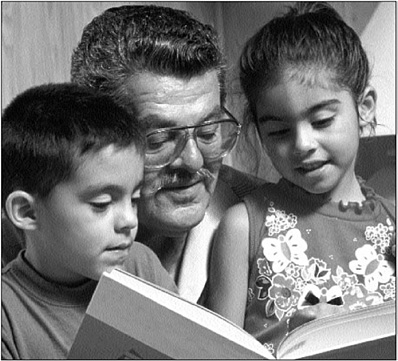 |
|
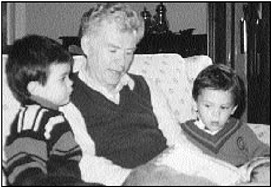
Three-year-old Carlos has just awakened from a nap and is lying on the floor, not fully awake yet. His older sister Rosa has been watching TV and is playing with her blocks and dinosaurs in the living room. Although their home is modest, these children have what they need to promote good language and literacy skills: a simple but appropriate array of toys and books and, most importantly, attentive parents. In the corner there is a little bookshelf with 20 or so children’s books, including 3 that are due back to the library the next day. (The children go to the library with their mother at least once a month.) There are puzzles, a magnetic board with letters, and, in a canvas bag, some plastic farm animals—treasured for pretend play. Dad is sitting on the sofa, reading the newspaper. In a few hours, the children’s mother will come home from work, and he will leave for his job as a night-shift security guard. Dad takes the children into the kitchen for some juice and crackers. Although he has several chores to finish, he makes the effort to ask if they want to hear a story. “Yes!” The children respond in enthusiastic unison. “Let’s read Tacky the Penguin,” cries Carlos. “No, I want the caterpillar,” Rosa whines. Before they can continue arguing, Dad steps in. “Cut it out, you guys. We’ll read them both. We read The Very Hungry Caterpillar last time, right? So this time, let’s start with Tacky.” The children seem satisfied with this. After their snack, they march into the living room and sit on either side of their father, who begins to read the story of a funny penguin named Tacky. They listen intently, sometimes asking questions about pictures or words that catch their attention. The father is responsive, answering when he can, or simply saying that he doesn’t know. Having heard songs from birth, young Rosa has come to love the rhythm of language. She is so engrossed that she recites the ends of rhyming lines and claps the beat as her father reads. After they finish Tacky, they turn to The Very Hungry Caterpillar. “Okay, guys. I’ve got some stuff to do. You can play here or in your room. No fighting, okay?” Dad goes to the kitchen table with a stack of bills and begins to write checks. Little Carlos is fast on his heels. “I want to do it!” “You want to write?” “Yeah.” Dad gives him a blank piece of paper and a not-too-sharp pencil. “Okay, sit here and write with me.” Carlos climbs on a chair and begins to make squiggles on the paper. 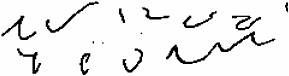 “Hey, buddy, that’s pretty good,” Dad says encouragingly. “What else can you write?” Carlos sweeps his finger slowly across his squiggly lines.“Carlos,” he pronounces, slowly and deliberately. He is imitating his older sister, who knows how to write her name. He writes a little longer, then joins his sister in the living room, who by this time has tired of blocks and dinosaurs and is holding a favorite book. Rosa knows many by heart and recites them, as if she is actually reading. Carlos listens attentively. Suddenly aware of her audience, Rosa holds the book up, as her prekindergarten teacher does, and “reads” to her younger brother, suddenly switching to a louder recitation voice. After a few minutes, Carlos proclaims,“I want to read!” “Carlos, you can’t read yet,” replies Rosa, a little impatiently. Suddenly, there is the sound of a key in the latch. “Mom’s home!” cries Rosa. She drops the book, and both children run to the front door. As Mom arrives, Dad says goodbye and hurriedly leaves for work. |
Early research dating back to the 1930s suggested that there was little use in teaching children how to read until they had already conquered specific readiness skills, such as certain fine motor skills and the ability to tell right from left. Today, researchers know more. They know that growing up to be a reader depends mostly on the child’s knowledge about language and print. A wide range of experiences with printed and spoken language, from infancy through early childhood, strongly influences a child’s future success in reading. What is good for a six-year-old, however, is not necessarily good for a three-year-old. Children need activities they will enjoy and can succeed at, without being pushed uncomfortably beyond their current developmental stage. Even when children cannot yet spell, they learn from trying to write. Even when children cannot yet read, they learn from being read to.
The following pages describe key aspects of language and literacy for children from birth through age four, along with activities that can be woven into daily life. In this section, we address parents, teachers, uncles, aunts, grandparents, babysitters, and day care providers—in short, everyone who is important in the child’s life, everyone who cares, everyone who is willing.
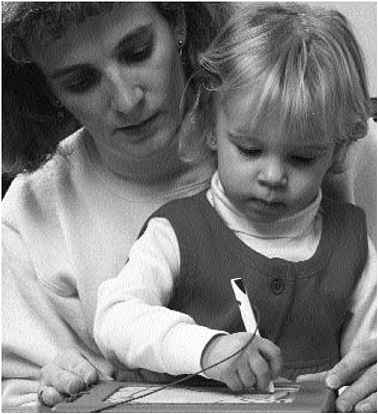
Key Aspects of Language and Literacy, Activities for Very Young Children
Extended Vocabulary and Language Development
Children who are exposed to sophisticated vocabulary in the course of interesting conversations learn the words they will later need to recognize and understand when reading. Vocalization in the crib gives way to play with rhyming language and nonsense words. Toddlers find that the words they use in conversation and the objects they represent are depicted in books—that the picture is a symbol for the real object and that the writing represents spoken language. In addition to listening to stories, children label the objects in books, comment on the characters, and request that an adult read to them. In their third and fourth years, children use new vocabulary and grammatical constructions in their own speech. Talking to adults is children’s best source of exposure to new vocabulary and ideas. 
Activities
 Labeling games are just right for little ones, for example, “Where is your nose?” Verbally label objects and events in your child’s world, for example, “Nina is on the swing.” Encourage your child to label objects and events, helping him or her with vocabulary and pronunciation. Do these types of labeling games with pictures in magazines, books, etc.
During necessary routines like baths, reading, and eating, be sure to make time to talk with children. Turn off the car radio and talk while you drive together. Watch children’s TV programs together and talk about them. Instead of channel surfing, turn off the TV and use the time to talk.
As adults, we sometimes view conversation as a luxury—an extra in our busy lives. But for young children whose developing minds are striving to become literate, talk is essential—the more meaningful and substantive, the better. Set aside a regular “talk time” for adults and children, when having conversations about their lives is your main focus.
When you take your child on outings, surround these new experiences and events with lots of comments, questions, and answers between you and your child. Talk about what you are going to do before you do it and, afterward, talk about what you did. Structure these conversations to encourage the children to do more of the talking by asking questions and sharing interest in your child’s thoughts and opinions. Support your child’s efforts to communicate complex thoughts by waiting patiently, suggesting words as needed. Let your child sometimes control the subject of the conversations, and encourage her or his efforts to use new words and to describe complex or distant topics.
Pick books that connect to a child’s life and talk about those connections. For example, when you read Green Eggs and Ham you might ask your child, “What color eggs do you eat?” “Shall we look for purple eggs in the store?”
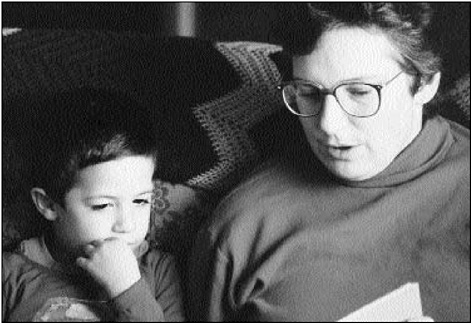
Try turning the tables during reading time. When most adults share a book with young children, they do the reading and the child does the listening. But once children reach preschool age, parents and teachers can encourage them to become the reader or teller of the story instead. Start by prompting the child to say something about the book. (You can get the ball rolling by asking a question or making a comment yourself.) After the child responds, rephrase his or her answer and expand it by adding information. Continue along in this manner, each time, encouraging the child to expand further on the narration.
Phonological Awareness
During the preschool years, most children gradually become sensitive to the sounds, as well as the meanings, of spoken words. They demonstrate this phonological awareness in many ways; for instance: they notice rhymes and enjoy poems and rhyming songs; they make up silly names for things by substituting one sound for another (e.g., bubblegum, bubblebum, gugglebum, bumbleyum); they break long words into syllables or clap along with each syllable in
a phrase; they notice that the pronunciations of several words (like “dog” and “dark” and “dusty”) all begin the same way.
Although younger preschoolers rarely pay attention to the smallest meaningful segments (phonemes) of words, gaining an awareness of these phonemes is a more advanced aspect of phonological awareness that becomes increasingly important as school approaches, because these segments are what letters usually stand for. That’s the alphabetic principle. A child who has attained phonemic awareness, for example, understands that there are three phonemes in the spoken word “mud.” Many activities can nurture phonological awareness in the preschool years.
Activities
Songs, rhyming games, language play, and nursery rhymes—these are all excellent ways to spark children’s awareness of language and sounds.
For example, sing the Teddy Bear song.
Teddy bear, Teddy bear, turn around.
Teddy bear, Teddy bear, touch the ground.
Teddy bear, Teddy bear, show your shoe.
Teddy bear, Teddy bear, that will do.
Teddy bear, Teddy bear, brush your hair.
Teddy bear, Teddy bear, climb the stair.
Teddy bear, Teddy bear, reach for the sky.
Teddy bear, Teddy bear, wave goodbye.
Take advantage of everyday activities to talk about words and sounds. For example, when buying fruit at the market, you might ask the child which sound is the same in the words peach and pineapple, or in peach and tea.
Choose some books that focus on sounds. For example, the Dr. Seuss books can lead to lots of chanting and fun with sounds—but don’t let the author do all the work. Invite the child to supply the last word of each rhyme. Follow the model the book provides and make some silly rhymes that are special for each child.
Make up your own games with rhyming words, silly sounds, and chants, like this one:
Ba Be Bi Bo Bu-dle-oo-dle-oo!
Ba Be Bi Bo Bu-dle-oo-dle-oo!
If the words sound crazy, don’t be lazy daisy
Ba Be Bi Bo Bu-dle-oo-dle-oo!
Have fun creating new verses by substituting different consonants for the letter B. If the child’s name is Sam, use “his” letter: Sa Se Si So Su-dle-oo-dle-oo!
Or try this traditional song made famous by the children’s performer, Raffi.
Apples and Bananas
I like to eat eat eat apples and bananas.
I like to eat eat eat apples and bananas.
I like to ate ate ate aypuls and baynaynays.
I like to ate ate ate aypuls and baynaynays.
I like to eet eet eet eeples and beeneenees
I like to eet eet eet eeples and beeneenees
I like to ote ote ote opples and bononos.
I like to ote ote ote opples and bononos.
I like to ute ute ute upples and bununus.
I like to ute ute ute upples and bununus.
|
Falling in Love with Words “Comfortable.” How I loved that word, the meaning, the times to use it, the rolling jumble of consonant sounds. If only I could pronounce it! Though I tried and tried again, only strange sounds came from my mouth,“comdafable” or “cofdumfable.” Sometimes I got so mad I threw a tantrum. Why could everyone say it but me? My mother, amazingly in tune with my spirit, gave me a great approach. “Remember,” she said. “Comfortable has two parts: comfort and table.” She had me practice the parts, then say them fast together. So comfort-table it was—a bit funny with the long “a” in table, but oddly enough, that didn’t bother me—it was a wonderful reminder of my mother helping me. After a while, I just started saying the word the same way everyone else does. But to this day, I always say “comfort” and “table” under my breath when I am writing or typing the word. 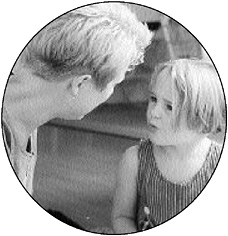 Years later, I still marvel at how easily my mother seemed to help me get ready to become a reader. By teaching me things like how to say “comfortable,” she helped me understand that a word is not just something that lets you say what you mean, but is also a thing with a form and substance. A word is something you can take apart and put together. This is a key insight in word attack for reading. It’s not just the meaning you attack, but the form. Of course, as it turned out, “comfortable” has more than two parts when it comes to reading the letters. But my mother’s advice was a great start on the central idea that you can think of and talk about a word separate from what it means. She helped me fall in love with words. |
Speech Discrimination
Most young children can accurately perceive the difference between similar-sounding words (“coat” and “goat,” “three” and ”free,” “witch” and “wish”), even though they may mispronounce words quite often in their own speech. Clearly, if a child cannot reliably make such distinctions, it will be difficult for him or her to engage in activities that help to develop phonological awareness, described above.
Activities
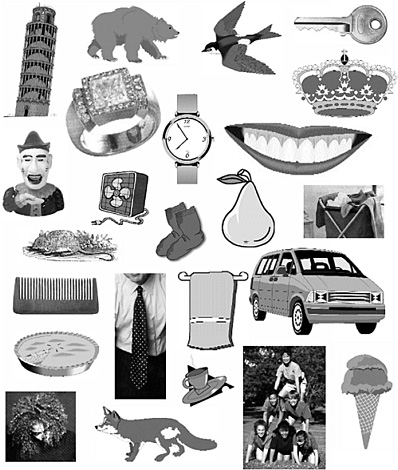
A simple game of pointing to pictures can be used to confirm that speech discrimination is reasonably accurate in a 3- to 5-year-old child. In a quiet place, show the child the array of pictures on page 25.
Speaking very clearly, say “Listen carefully. Show me the _________,” filling in the blank with a word from the list below. (For fun, you can sometimes let the child quiz you by naming a picture for you to find.) The words are printed here in similar-sounding pairs, but you should jump around, not asking for the two members of a pair in succession. Ask only for words that you’re sure are in the child’s vocabulary, and don’t do this when the child has a bad cold or ear infection.
If the child makes more than a few errors, repeat the exercise several weeks later. If performance is not any better, this could indicate a difficulty in hearing or speech perception, and a more thorough evaluation of these skills could be conducted by a professional speech pathologist. Many colleges and universities have clinics where children can be tested, with the cost based on ability to pay. Also, pediatricians can usually provide the names of private speech pathologists in the local area.
Show me the:
|
socks—fox |
mouth—mouse |
tea—key |
cone—comb |
|
pear—bear |
clown—crown |
fan—van |
tie—pie |
|
watch—wash |
tower—towel |
girls—curls |
ring—wing |
Knowledge of Narrative
Once children reach school age, stories will become a central part of their reading classes, so it is helpful for young children to become comfortable with narrative and its elements, such as characters, dialogue, and “what happens next.” Young children are sensitive to sequence in language, such as following directions, and to sequences of events in stories.
Activities
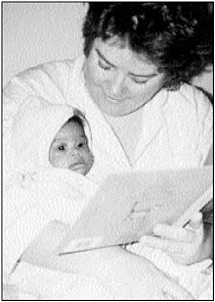
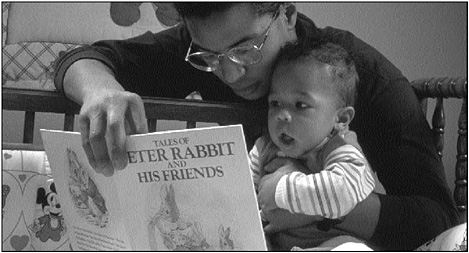
Storybooks: From infancy on, mothers, fathers, babysitters, uncles, aunts, grandparents and day care workers can help children learn about narrative simply by reading and enjoying good storybooks with them. Storybooks can be shared anywhere—at the breakfast table, in line at the supermarket, on the bus, and, of course, at bedtime. Daily reading periods can be brief but frequent for very young children. Encourage children to start to pretend to read by listening attentively, making appreciative comments, etc. Encourage children to start these emergent reading events by saying, “Now how about you read to me?” or “Your turn,” after a book has been read (and liked) numerous times.
Oral storytelling: Children also learn about narrative through the oral stories they hear in the world around them. When they witness one adult telling another, “You’ll never believe what happened to me on the way to the store,” they begin to learn the magic, fun, and purpose of stories. Tell children some of your own stories, about when you were a child, or about your own parents or grandparents. With encouragement, parents and teachers can get children to tell of their own adventures in the form of a story. Encourage children to tell about special events, like holidays or trips. Use photo albums to remember and prompt these kind of stories.
Pretend storytelling: Puppet shows and formal storytelling events are thrilling and valuable experiences for children. But at home
|
Everyday Narrative and Dinner Conversations Children learn about narrative when they hear their own personal experiences fed back in the form of stories, told in past tense, with themselves or people they know as main characters. They learn that certain happenings are noteworthy and make better stories then others—such as surprises, exciting events, or unexpected twists in daily life. At this family dinner table, a three-year-old boy hears his mother telling a story about his day. By the end of the meal, he has taken over the job. It’s dinner time. Three-year-old Matthew has his head down over a bowl of pasta, which he is vigorously slurping. His mother and grandmother sit beside him discussing the events of their day—work problems, errands done, good news about people they know. “But how about Matthew?” asks the grandmother. “How was Matthew’s day?” “Well,” starts his mother,“Aunt Lisa took Matthew out early this morning to go to storytime at the bookstore. But when they got there, they found out that the storytime was canceled.” “Oh no,” replies Grandma sympathetically. “So Aunt Lisa made a special day of it, and took Matthew down to the river for a ride on the ferry boat.” Matthew—who up until now appeared to be paying no attention—suddenly looks up from his bowl, cheeks covered in marinara sauce. “Matthew ride on a boat!” he exclaims. “Water goes splash!” he cries, waving his arms up in the air. “I’ll bet you saw some big buildings in the city,” says Grandma. “Big buildings. Up to the sky,” answers Matthew, tilting his head back as though he still can see them. “Then,” continues the mother, “Aunt Lisa and Matthew ate lunch in the city. And then they got back on the boat and came home.” “And give ticket to the man,” adds Matthew. The mother and grandmother both remark on what a fun day it must have been and Matthew adds a few more details—some real, and some made up (like the cup of coffee he now claims to have drunk.) Later, in his bath, he and his grandmother act out the major parts of his “story,” using toy boats in the water and two rubber ducks—one for Aunt Lisa, the other for Matthew—riding in the boat on their little adventure. |
and at school, children also benefit from acting out stories that have been read to them using their own simple puppets or dolls. The action often goes well beyond the original story line. Also, encourage children to talk about books they already know and ask them to elaborate or add to the story line with their own creations, such as new endings or new circumstances for characters.
Book and Print Awareness
A child’s sensitivity to print is a major first step toward reading. Young children can begin to understand that print is everywhere in the world around them, and that reading and writing are ways for them to get ideas, information, and knowledge. Children quickly settle into book-sharing routines with primary caregivers. Infants often kick their feet, make eye contact, smile in response to your talking,
and look where you point, as you read the book and share the pictures. Toddlers start recognizing favorite books by their cover, pretend to read books, and understand that books are handled in certain ways. As they reach their fourth year, children increasingly come to understand that it is the print that is read in stories, and that this print contains alphabet letters that are a special category of visual items, different even from numbers. They recognize print in their home, their neighborhood, and other local environments.
|
First Attempts: Pretending to Read—Emergent Reading “Goodnight Moon, by Margaret Wise Brown,” proclaims a three-year-old girl, who pretends to read the cover page and author’s name. With great relish, she opens the book and recites much of the book from memory. 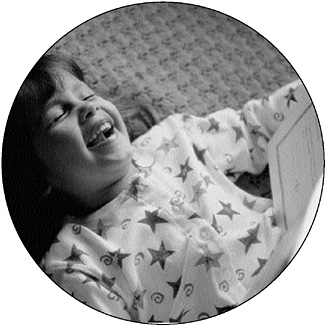 Her mother knows that she is not yet reading the print but encourages her just the same. Intuitively, she suspects what has been found by research to be true: that children who pretend to read at this early age are more likely to become successful readers later. “… and a picture of the cow jumping over the moon,” continues the girl. She lifts the book close to her eyes and scrutinizes the print on the page. “A-B-A-B-Z,” she recites, while pointing to the word “cow.” This is an important connection. Already, she knows that words are made of letters that can be named. She resumes the story word for word, turning pages slowly. “Goodnight noises everywhere,” she whispers, then suddenly shifts her voice, loudly pronouncing “The End” and proudly snapping the book shut. |
Activities
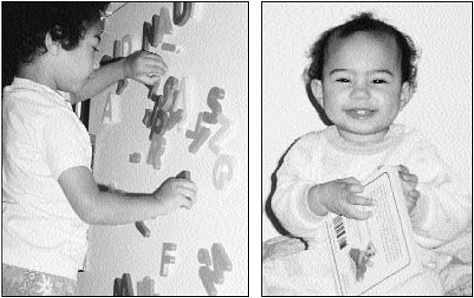
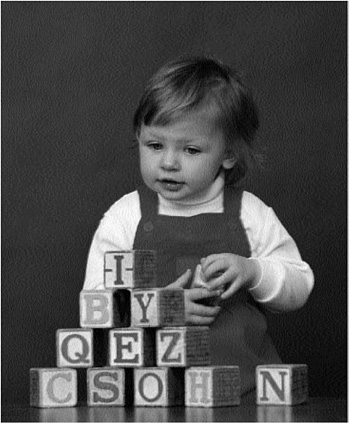
At home, at day care, at preschool, provide print-rich environments, including access to high-quality books , writing materials, and toys like alphabet blocks and alphabet refrigerator magnets. High-quality books are different for young children of different ages. For example, it is best to use cloth or cardboard books for babies because they will chew on the ones they like.
In the daily routine of life, point out and read print in the environment—such as words on a restaurant menu, labels on food containers, posters on a bus, and signs out on the street. Remember that, at early ages, children may not notice that what you are reading is the letters, not the entire sign or label. Help them notice how important small differences in the letters and words are, even when the general label or sign is the same. For example, when they pay attention to a product like ice cream with a favorite logo, help them notice the differences in flavors indicated by words on the label.
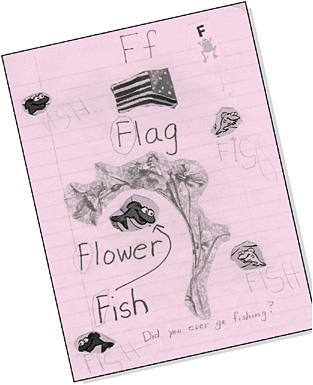
Label some of the important things in the child’s universe. To make it fun, explain what you are doing and get the child involved in making artwork on labels for items like videos, books, and art supplies. Be sure to put up some signs that use the child’s name, for example, “Marie’s Room,” “Sam’s Treasure Box.” Have the child decorate the sign.
|
Learning About Print When three-year-old Ella misses her grandparents, her mother suggests they write a letter and invite them for a visit. Here, enthusiastic Ella dictates—down to every detail—what she wants to say. 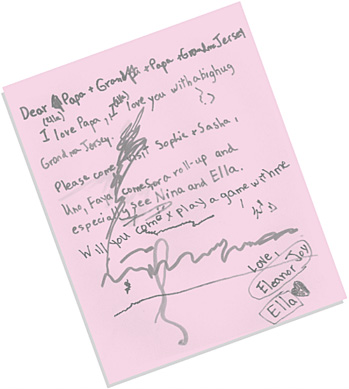 While her mother transcribes Ella’s words, she takes the opportunity to demonstrate some ordinary conventions of letter writing, like starting at the top of the page with “Dear” and writing the body of the letter in the middle. They hit a little stumbling block when Ella, who already knows how to recognize her own name in print, protests when she sees the pronoun “I.” She insists that her actual name be added. Her mother does so in parentheses. When reminded that her purpose is to invite her grandparents for a visit, the child takes the marker away from her mother and makes scribbles on the page while saying,“Please come visit Sophie and Sasha” (her pets). Gently, the mother takes back the marker and explains that she must write words in order for the grandparents to understand. After this, Ella dictates all they will do on their visit, such as play a game and eat a fruit roll-up. “Now we have to say that this is from you. We write that down here at the end of the letter. We write Love. Love who?” “Love Ella!” she declares. The mother goes on to explain that the letter will go to the post office and that the letter carrier will deliver it to Papa and Grandma’s house so they can read it. Whether or not Ella is listening is unclear. Already she is off to the next thing, picking up a doll, beginning a game of pretend. |
Functions of Print
Children need to understand that print is meaningful in their daily lives and has many functions. For example, young children can learn that print gives us information—such as directions to a friend’s house, how to bake a cake. They can learn that print helps us solve problems, like written instructions for assembling a toy.
Through exposure to a wide array of books, children learn that print can entertain us, amuse us, and even comfort us. Through experiences with “writing,” children learn to distinguish between drawing and writing. Their scribbling becomes more purposeful, and as older toddlers they make some scribbles that, to their total joy, look somewhat like English writing. In the preschool years they can be encouraged to write (scribble) messages as part of playful activity.
Activities
Show children how different sorts of written and printed materials work and give them a chance to imitate. For example, when ordinary texts come into the house—bills, mail, take-out menus, announcements—share some of them with children, pointing out what the print is intended to do. “Now I know that you are having a party at school next week,” a parent might explain, after reading a flyer from preschool. Similarly, the day-care teacher can talk with children about flyers and notes being sent home with the children.
When jotting down a shopping list or leaving a note on the table or bulletin board for a family member or another staff person, occasionally explain to the child why you are doing it and what it says. Make writing materials available so that children have the chance to write (or scribble) pretend items like lists, letters, and menus themselves.
Make a point of looking up answers to questions. For example, when deciding what to wear for the day, you and your child can find out what the weather will be by reading the newspaper. “Cold and windy, chance of snow,” reads one father aloud. “We’d better put on our coats today.” When several of the preschoolers are arguing about what kind of dog they saw outside the playground, a teacher can use a book to settle the question.
Print Concepts
Adults sometimes forget that children have to learn the most basic conventions that govern written language, such as the spaces that separate the words. The words of English text run from left to right and from top to bottom. That means that a sentence starts at the upper left of a page and continues from left to right. At the end of the line, the sentence continues until the punctuation indicates the end of one sentence and the beginning of the next.
Activities
During regular reading and writing sessions, adults can explain how print works. For example, before reading a book, look at the cover and read the title and author ’s name. While reading the book itself, occasionally run your finger along the text so children can discover that text is read from left to right.
When you need to take a break from reading, for example to answer a question, use the opportunity to point out something that experienced readers take for granted—that there are stops built into text. Say to the child, “Let me finish this sentence before I answer that question.” Then point to the period when you get there. “There—that’s the end of the sentence. Okay, now let’s see if we can figure out your question.” This helps children learn one aspect of how print works—that there are parts to it, such as sentences, paragraphs, and chapters, and that the end of a line or a page is not necessarily the end of a unit of meaning.
Letter and Early Word Recognition
Preschool-age children can begin to recognize some printed alphabet letters and words, especially the ones in their own names. Many children learn the names of the letters first by singing the alphabet song or reciting them to pushes on the swing. At three and four they begin to attach the names of letters to their shapes. With help, they may soon begin to attend to beginning letters in words that they are familiar with in printed form.
Activities
Help children to find the initial letter of their own names. Many three-year-olds delight in identifying “their letter” printed in signs and on labels in the world around them.
Write, display, and point out the child’s name often. Print it on their artwork and help them recognize it. As children get older, help them learn to recognize additional words they frequently see printed in the world around them: for example, a word on a favorite t-shirt, “STOP” in stop signs, and other favorites such as “zoo,” “mom,” and “dad.”
Watch TV programs such as Sesame Street with your child and learn the letter songs with them.
|
The Most Important Letter  Three-year-old Cara has just discovered the first letter in her name and suddenly she is in a world of “Cs.” Walking around the house, clutching the letter “C” from her alphabet block set, she is on the lookout. “Hey, there’s my C,” she cries pointing to a tin of cocoa in the kitchen. She notices the letter again, when she and her babysitter are reading a book about cats. Later that day, while riding on the bus, she looks out the window and calls out excitedly, “There’s my letter!” while passing by a large neon sign for Carl’s Restaurant.“There’s my C!” |
Comprehension
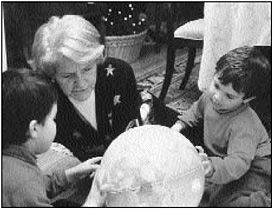
As children move from toddlerhood to school age, they should increasingly be able to grasp the meaning of language they hear spoken in everyday conversation, as well as in narrative forms, such as books. They show this understanding through their questions and comments. When reading a story, they should freely relate information and events in the book to real-life experiences. As they get older, they should become comfortable with following who said or did what in a story.
Activities
Listen to an audio recording of a book on tape. This can be done while looking at the accompanying book or listening to the tape alone. Then have the children draw a picture of their favorite part of the story and talk with them about it.
While reading a book together, ask children questions to help them think about or reflect on vocabulary words, the plot, or something about a character.
|
Storytime Questions At a storytime reading session, a librarian reads The Paper Bag Princess. After getting the children settled in a circle, the librarian holds up the cover of the book and reads the title. Then she points to the picture of a dragon on the cover. “Children, this is a dragon. Do you know what a dragon is?” 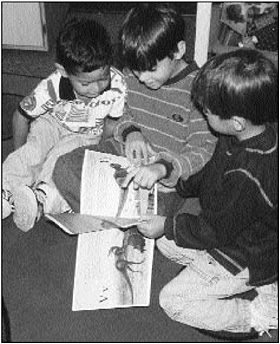 “A dragon is a monster!” answers one child. “A dragon is big and scary!” replies another. “A dragon is pretend!” replies another. After several similar responses, the librarian gives an encouraging, “Yes! exactly. A dragon is a big scary creature. It has wings, and some dragons can even breathe fire from their mouths, and it is pretend.” She then proceeds to read the story. As the plot unfolds, she pauses in her reading and asks questions to help the children predict what is coming next. “What do you think the prince is going to say to the paper bag princess?” she asks and waits patiently while several children put forth wildly different answers. “Well, let’s see if we got it,” she says, then moves forward. Later, to help children with their understanding of the main character, she asks,“Why do you think the princess is getting the dragon to show how strong he is?” With these sorts of questions, the reader helps ensure that children understand the text. But the questions also have another purpose: to help children learn how to think about literature and how to look for what is important in a story or any piece of text. |
Literacy as a Source of Enjoyment
Children need to feel positive about reading and literacy experiences. They often make displays of reading or writing attempts, calling attention to themselves: “Look at my story.” And the adults around should take time to find out about the child’s work.
Activities
Create a warm atmosphere around storytime, reading, and pretend play activities. Once in a while, invite other favorite people to join in during reading time. Respond to children’s remarks and observations about books, and take time to answer their questions while reading. Make literacy activities fun and a part of play—events they look forward to, rather than those they feel forced into. Give them a chance to choose the books they want to read, but you should choose a few too—both to make sure that you have some manageable selections in the pile you bring home and to let them see you participate in the fun of the choosing.
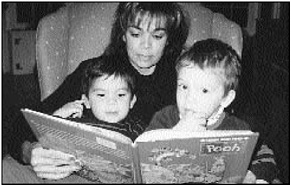
Take children to the library regularly, and remember to offer them many kinds of books. One child may dislike all storybooks, but fall in love with nonfiction books about dinosaurs, trains, animals, or nature. Other children love nursery rhymes and poetry. All young children will want you to read favorite books again and again, but four- and five-year-olds will also develop a frequent need for new and different books.
For children who love TV, videos, and CD-ROMs, connect these visual experiences to reading and books. For example, after watching a nature program about animals, get a book on a similar topic and extend their knowledge and enjoyment. Act out scenes from a favorite video. Or create homemade books with themes from television shows or videos. Use pictures cut out from magazines or catalogs, the child’s drawings, and labels written by an adult to create the child’s very own book.
|
Nourishing the Mind with High-Quality Books Reading nourishes growing young minds, and children need to have high-quality books in their lives. When taking a child to the library, ask the librarian for suggestions. Tell her your child’s age and interests. Be on the lookout look for award-winning literature, such as recipients of the Caldecott, Newberry, and American Library Association awards. Also, check your local paper’s book review section. 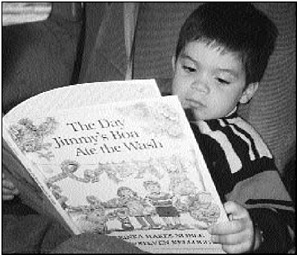 Many libraries and universities compile lists of all-time great books for kids, such as the following one, put together by the New York Public Library (available on the Internet at www.nypl.org/branch/kids/gloria.html). Similar lists are compiled and available from the Boulder Public Library (bcn.boulder.co.us/library/bpl/child/topclis.html) and Great Book Stuff (www.kels.org/webkids/grbkstuf.html). |
|
100 Great Picture Books Compiled by the New York Public Library Abuela by Arthur Dorros. Illustrated by Elisa Kleven. Dutton. Alexander and the Terrible, Horrible, No Good, Very Bad Day by Judith Viorst. Illustrated by Ray Cruz. Atheneum. Animals Should Definitely Not Wear Clothing by Judi Barrett. Illustrated by Ron Barrett. Atheneum. Anansi and the Moss-Covered Rock by Eric A. Kimmel. Illustrated by Janet Stevens. Holiday House. Andy and the Lion by Juan Daugherty. Viking. Ben’s Trumpet by Rachel Isadora. Greenwillow. Blueberries for Sal by Robert McCloskey. Viking. The Bossy Gallito: A Traditional Cuban Folk Tale retold by Lucia M. Gonzalez. Illustrated by Lulu Delacre. Scholastic. Bread and Jam for Frances by Russell Hoban. Illustrated by Lillian Hoban. HarperCollins. Brown Bear, Brown Bear, What Do You See? by Bill Martin, Jr. Illustrated by Eric Carle. Holt. Caps for Sale: A Tale of a Peddler, Some Monkeys and Their Monkey Business by Esphyr Slobodkina. HarperCollins. The Carrot Seed by Ruth Krauss. Illustrated by Crockett Johnson. HarperCollins. A Chair for My Mother by Vera B. Williams. Greenwillow. |
|
Chicka Chicka Boom Boom by Bill Martin, Jr., and John Archambault. Illustrated by Lois Ehlert. Simon & Schuster. Corduroy by Don Freeman. Viking. Curious George by H.A. Rey. Houghton. The Day Jimmy’s Boa Ate the Wash by Trinka H. Noble. Illustrated by Steven Kellogg. Dial. Dear Zoo by Rod Campbell. Simon & Schuster. Doctor De Soto by William Steig. Farrar. Farmer Duck by Martin Waddell. Illustrated by Helen Oxenbery. Candlewick Press. The Fortune-Tellers by Lloyd Alexander. Illustrated by Trina Schart Hyman. Dutton. Freight Train by Donald Crews. Greenwillow. George and Martha by James Marshall. Houghton. Go Away, Big Green Monster! by Ed Emberley. Little, Brown. Good Night, Gorilla by Peggy Rathmann. Putnam. Goodnight Moon by Margaret W. Brown. Illustrated by Clement Hurd. HarperCollins.  Grandfather’s Journey by Allen Say. Houghton. Happy Birthday, Moon by Frank Asch. Simon & Schuster. Harold and the Purple Crayon by Crockett Johnson. HarperCollins. Harry the Dirty Dog by Gene Zion. Illustrated by Margaret Graham. HarperCollins. Henny Penny illustrated by Paul Galdone. Clarion. Horton Hatches the Egg by Dr. Seuss. Random House. I Know an Old Lady Who Swallowed a Fly illustrated by Glen Rounds. Holiday House. If You Give a Mouse a Cookie by Laura J. Numeroff. Illustrated by Felicia Bond. HarperCollins. Is It Red? Is It Yellow? Is It Blue? An Adventure in Color by Tana Hoban. Greenwillow. It Could Always Be Worse: A Yiddish Folktale retold and illustrated by Margot Zemach. Farrar. John Henry by Julius Lester. Illustrated by Jerry Pinkney. Dial. The Judge: An Untrue Tale by Harve Zemach. Illustrated by Margot Zemach. Viking. Julius by Angela Johnson. Illustrated by Dav Pilkey. Orchard. Komodo! by Peter Sís. Greenwillow. Leo the Late Bloomer by Robert Kraus. Illustrated by Jose Aruego. HarperCollins. Little Blue and Little Yellow by Leo Lionni. Astor-Honor. The Little Dog Laughed and Other Nursery Rhymes by Lucy Cousins. Dutton. |
|
The Little Old Lady Who Was Not Afraid of Anything by Linda Williams. Illustrated by Megan Lloyd. HarperCollins. Little Red Riding Hood retold and illustrated by Paul Galdone. McGraw-Hill. Lunch by Denise Fleming. Holt. Lyle, Lyle, Crocodile by Bernard Waber. Houghton. Madeline by Ludwig Bemelmans. Viking. Maisie Goes Swimming by Lucy Cousins. Little, Brown. Make Way for Ducklings by Robert McCloskey. Viking. Martha Calling by Susan Meddaugh. Houghton. Mike Mulligan and His Steam Shovel by Virginia L. Burton. Houghton. Millions of Cats by Wanda Gág. Putnam. Miss Nelson Is Missing by Harry Allard and James Marshall. Illustrated by James Marshall. Houghton. Mr. Gumpy’s Outing by John Burningham. Holt. The Monkey and the Crocodile retold and illustrated by Paul Galdone. Clarion. Morris’ Disappearing Bag by Rosemary Wells. Dial. Mouse Paint by Ellen S. Walsh. Harcourt. Mufaro’s Beautiful Daughters: An African Tale retold and illustrated by John Steptoe. Lothrop. Mushroom in the Rain adapted from the Russian of V. Suteyev by Mirra Ginsburg. Illustrated by Jose Aruego and Ariane Dewey. Simon & Schuster. The Napping House by Audrey Wood. Illustrated by Don Wood. Harcourt. Officer Buckle and Gloria by Peggy Rathmann. Putnam. Old Black Fly by Jim Aylesworth. Illustrated by Stephen Gammell. Holt. Over in the Meadow by John Langstaff. Illustrated by Feodor Rojankovsky. Harcourt. Owen by Kevin Henkes. Greenwillow. Papa, Please Get the Moon for Me by Eric Carle. Simon & Schuster. Perez and Martina by Pura Belpré. Illustrated by Carlos Sanchez. Viking. Pierre: A Cautionary Tale by Maurice Sendak. HarperCollins. The Polar Express by Chris Van Allsburg. Houghton. The Random House Book of Mother Goose: A Treasury of 386 Timeless Nursery Rhymes selected and illustrated by Arnold Lobel. Random House. Rosie’s Walk by Pat Hutchins. Simon & Schuster. Round Trip by Ann Jonas. Greenwillow.  |
 Rumpelstiltskin retold and illustrated by Paul O. Zelinsky. Dutton. Seven Blind Mice by Ed Young. Putnam. The Snowy Day by Ezra Jack Keats. Viking. Stone Soup retold and illustrated by Marcia Brown. Simon & Schuster. The Story of Babar, the Little Elephant by Jean de Brunhoff. Random House. The Story of Ferdinand by Munro Leaf. Illustrated by Robert Lawson. Viking. Strega Nona by Tomie De Paola. Simon & Schuster. Swamp Angel by Anne Isaacs. Illustrated by Paul O. Zelinsky. Dutton. Swimmy by Leo Lionni. Knopf. Sylvester and the Magic Pebble by William Steig. Simon & Schuster. The Tale of Peter Rabbit by Beatrix Potter. Warne. Ten, Nine, Eight by Molly Bang. Greenwillow. There’s a Nightmare in My Closet by Mercer Mayer. Dial. The Three Billy Goats Gruff by P.C. Asbjfrnsen and J.E. Moe. Illustrated by Marcia Brown. Harcourt. The Three Robbers by Tomi Ungerer. Atheneum. Tikki Tikki Tembo retold by Arlene Mosel. Illustrated by Blair Lent. Holt. The True Story of the Three Little Pigs by A. Wolf as told to John Scieszka. Illustrated by Lane Smith. Viking. Tuesday by David Wiesner. Houghton. Two of Everything: A Chinese Folktale retold and illustrated by Lily Toy Hong. Whitman. The Very Hungry Caterpillar by Eric Carle. Philomel. We’re Going on a Bear Hunt retold by Michael Rosen. Illustrated by Helen Oxenbury. McElderry. The Wheels on the Bus adapted and illustrated by Paul O. Zelinsky. Dutton. When I Was Young in the Mountains by Cynthia Rylant. Illustrated by Diane Goode. Dutton. Where the Wild Things Are by Maurice Sendak. HarperCollins. Where’s Spot? by Eric Hill. Putnam. Whistle for Willie by Ezra Jack Keats. Viking. Why Mosquitoes Buzz in People’s Ears: A West African Tale retold by Verna Aardema. Illustrated by Leo and Diane Dillon. Dial. Zomo the Rabbit: A Trickster Tale from West Africa retold and illustrated by Gerald McDermott. Harcourt. |
Literacy—from Parent to Child
Parents can influence their children’s literacy by involving them in a wide variety of play and everyday activities that involve language. Talking to toddlers, sharing in making and using grocery lists, singing songs, telling stories—all of this helps children build literacy skills. Another important influence is having a positive attitude about learning. Children whose families communicate that achievement is expected and appreciated tend to do better.
Parents can learn a great deal about their children’s learning. For example, they can be on the lookout for potential difficulties and discuss some of their valuable observations with teachers. Starting at age three or four, parents can observe whether or not children remember nursery rhymes and can play rhyming games. At about age four, parents can notice if children have trouble getting information or directions from conversations or texts that are read aloud to them. Once children are in kindergarten, parents should be attuned to whether they are beginning to name the letters and numbers that they see in different contexts and to write them. Five-year-olds should also be happy and able to play simple alliterative games, enjoying, for example, “I’m thinking of something that starts with the letter ‘b’” as a way to pass the time on longer trips in the car. As a child gets to be five and six, parents can observe whether the child acts as if he or she understands that spoken words can be broken down into smaller parts (for example, noticing “big” in “bigger” and the “egg” in “beg”), and that you can change a small part of a word and it becomes a very different thing (for example, changing initial consonants to make “cat,” “hat,” “sat”). That said, it is critical that parents always be aware of the tremendous variability among normal, smart children, and that it can be difficult to measure progress.
Talking to a Baby: Day Care Environments
Babysitters and day care providers have an important—and growing—responsibility for children’s early literacy and reading development. They must understand that oral language is fundamental to reading, and they should have frequent one-to-one conversation with babies, maintaining eye contact with them. All day care settings should involve singing songs, reciting nursery rhymes, talking to babies in the course of everyday activity, and repeating back to a baby those “ba ba ba’s” and “ga ga ga’s.” As coos and gurgles give way to real words, caregivers should encourage children to talk, repeating what the child is saying and elaborating for the child when appropriate. (Appropriate language and literacy activities for very young children are featured earlier in this book. See pages 19-37.)
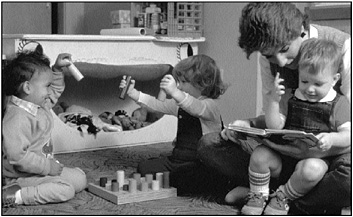
“We don’t drill toddlers with their ABCs. Instead, we create a language-rich environment. We have circle time, when we sing songs and use hand gestures to accompany the words. When I read The Three Little Bears, I don’t just tell stories. I’ll show them three stuffed animals. I’ll find three chairs. When the kids do begin to speak, I try to figure out what they’re saying and repeat it back—even if it’s not entirely comprehensible. I help them understand that language has a lot of power and they can get what they want by using language.”
—Scott Hirose
Teacher/therapist
Queens Child Guidance Center
Therapeutic nursery for children age 0 to 3
Jamaica, New York
High-Quality Preschool
High-quality preschool programs can boost language and literacy skills and, ultimately, reading achievement. But quality is essential, and many preschools fall short in promoting language and literacy.
In a high-quality preschool, the teacher should provide a good model of verbal language throughout the day. For example, when a child points a finger and says “Dat,” the teacher has a number of good choices. She could expand for him and say, “You want the red ball?” or she could say, gently, “Tell me what you want,” or “Tell me what you want in words.” Some teachers say, “Use your words” but accept the closest approximation that they think the child can produce. She should also have informal conversations with each child every day, encouraging them to use language by asking open-ended questions, such as why, how, and what-if.
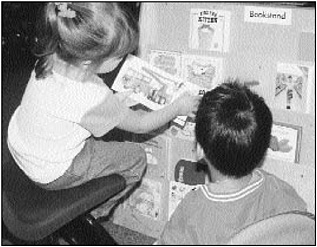
Preschools should help children to learn, think, and talk about new domains of knowledge. They do this by providing opportunities for children to use language in a variety of ways, by ensuring lots of interesting conversations in which children are involved, by offering opportunity to play with language in ways that support phonological awareness and by incorporating meaningful uses of literacy into everyday activities. Children who have a wide body of background knowledge and life experiences are more likely to succeed in reading. They are more likely to relate to stories, recognize words in them, and to understand events described in books.
Children in America need more opportunities to attend affordable preschools where they will experience high-quality language and literacy environments. If we are to prevent reading difficulties, then children must start school motivated to learn and with the language skills they need in order to learn.
All too often preschool and day care settings for young children provide poor language and literacy environments—particularly for those whose families have limited resources. It is critical that these settings be designed to support language and literacy. As part of this effort, parents, teachers, pediatricians, social workers, speech language therapists, and other preschool practitioners should strive, using research-derived guidelines, to help children overcome language problems as early as possible.
|
Excellence Makes the Difference How much of an impact can preschool make in a child’s life? An excellent preschool program can give children long-term benefits that follow them into adulthood. That’s what one study found when researchers tracked children from early childhood through high school and beyond. In this important study, data revealed that children in an excellent part-day preschool program had less need for special education, less grade retention, and significantly higher high school graduation rates than children who did not attend a good preschool. What accounted for this particular program’s success? Some of the essential features included: A well-supplied, well-designed preschool space. The room was divided into various interest areas (e.g., water play, drawing and painting, music, pretend play, reading, and writing). A regular daily routine. By providing regular expectations and schedules for classroom routines such as planning time, work time, clean-up time, small-group time, outside time, and circle time, children learn to conduct themselves in each activity and when and how to transition between them. Strong parent-teacher communication: Teachers had regular communication with parents, including home visits. Strong teaching methods and teamwork among teachers. Teachers gave children a comfortable, secure environment that promoted active learning. They encouraged and supported children’s actions and language. They helped children make choices and decisions and helped them solve their own problems and do things for themselves. Each day, teachers recorded and shared with other teachers notes on each child’s activities and progress. A varied curriculum. The curriculum promoted children’s learning in many domains, such as creative representations (pretend play, model-making, drawing, and painting); language and literacy; initiative-taking 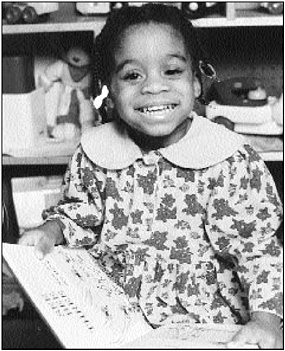 and social relations; movement; music; classification and seriation (arranging objects in order or patterns—such as color and size—and describing their relationship, such as biggest to smallest); numbers (counting and relationships—such as more, fewer, the same); space (experiencing and describing position, direction, and distances in the classroom, the building, and neighborhood); and time (concept of time and sequence of events). Language experiences. Adults regularly engaged children in conversation, soliciting their responses and focusing on their strengths. They talked with children about personally meaningful experiences, describing objects and events. Literacy experiences. Adults encouraged writing experiences (such as drawing, scribbling, and invented spelling), and reading (such as reading storybooks, signs, symbols, and one’s own writing). |
Language and Literacy Activities in Preschool
Earlier in this chapter, Growing Up to Read, we presented language and literacy activities for adults and children in a variety of informal settings. In this current section we present activities for the preschool. As with the first set of activities, our main purpose is to illustrate the underlying concepts important for preparing children for reading instruction. We expect that the individual activities included will be helpful for most children; however, they are examples rather than comprehensive curricula in themselves.
Phonological Awareness
As mentioned earlier in this book, phonological awareness involves an appreciation of the sounds, as well as the meanings, of spoken words. A child who is phonologically aware can demonstrate this, for example: by perceiving and producing rhymes (fan, tan, man, etc.); by dividing words up into their syllables (hel/i/cop/ter) and smaller components (sn/ake), and putting them back together; by noticing that groups of words have the same beginning (star, story), middle (bag, cat) or ending (pinch, lunch). Recent research has confirmed that children who have a greater degree of phonological awareness when they enter school are better equipped to learn to read.
A more advanced form of phonological awareness, called phonemic awareness, is the understanding that speech can be broken down into even smaller units (phonemes). This is very important for learning to read, because phonemes are what letters usually stand for. (The idea that letters, or groups of letters, represent phonemes is called the alphabetic principle.) For example, the word “book” is made up of three phonemes, represented in writing by “b,” “oo,” and “k.” Few preschoolers spontaneously attain phonemic awareness, but many studies have shown that they can acquire this understanding by engaging in activities that draw their attention to the existence of phonemes in spoken words.
Preschool teachers can use many appropriate activities to help build phonological awareness in young preschoolers and phonemic awareness in older children. Rhyming songs, syllable-clapping, and grouping objects according to how their names begin can all be used to draw children’s attention to the sounds of speech. Later, to promote phonemic awareness, the activities can include:
-
isolating the first segment of a word (Say the first little bit of “snake”);
-
finding all the objects on a poster that begin with the “nnn” sound;
-
discovering what is left when a particular segment is removed from a word (e.g., Say “smile” without the “sss.” Say “team” without the “mmm”);
-
breaking one-syllable words into their phonemes; and
-
blending phonemes to make a word (What word does “mmm…ooo…nnn” make?).
Commercial products (books, software) for preschool teachers, with games involving these kinds of activities, are becoming more and more available. Talking about phonemes can also be integrated with letter learning, so that children can be introduced to the sounds of letters (i.e., the phonemes that they stand for) as well as to their names.
Activities
Children should play with sound and rhymes through a variety of games and songs. Examples of these games and songs follow
Sing songs that play with sound
I Can Hear the Rain
Pitter patter, pitter patter, I can hear the rain.
Pitter patter, pitter patter, I can hear the rain.
OO, OO, I can hear the wind.
OO, OO, I can hear the wind.
Sing songs that play with rhyme
This Old Man
This old man, he played one. He played knick-knack on his thumb.
Refrain
With a knick-knack, paddy-wack, give your dog a bone.
This old man came rolling home.
2nd verse: This old man, he played two. He played knick-knack on his shoe.
3rd verse: This old man, he played three. He played knick-knack on his knee.
4th verse: This old man, he played four. He played knick-knack on his door.
5th verse: This old man, he played five. He played knick-knack on his hive.
6th verse: This old man, he played six. He played knick-knack on his sticks.
7th verse: This old man, he played seven. He played knick-knack up to heaven.
8th verse: This old man, he played eight. He played knick-knack on his gate.
9th verse: This old man, he played nine. He played knick-knack on his spine.
10th verse: This old man, he played ten. He played knick-knack once again.
Read rhyming poetry and rhyming stories
The Spider
I’m told that the spider
Has coiled up inside her
Enough silky material
To spin an aerial
One-way track
to the moon and back;
Whilst I
Cannot even catch a fly.
Sociodramatic Play
Through teacher and peer interactions in sociodramatic play, children use new language as they plan, negotiate, compose, and carry out the “script” of their play. In addition, they practice verbal and narrative skills that are important to the development of reading comprehension.
Activities
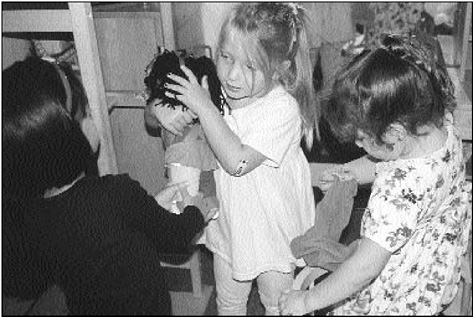
Every preschool classroom should have special materials and play areas geared toward encouraging children in particular domains while appealing to their interests. Such play centers might include an art center, a nature center, a puppet center, and real-world play areas, such as a store or a restaurant.
These areas should be stocked with writing supplies and printed materials that can be incorporated into play. For example, in a block area, maps and labeled photos of buildings and construction sites could be provided. In a toy area, use some originally labeled toy containers for storage. In a woodworking area, add tool catalogs, home repair magazines, and picture reference books about building. In a house area, include food packaging, menus, appliance instructions, plane tickets, travel brochures, and computer keyboards. In the outdoor area, provide colored chalk, gardening books, and bird and tree guides.
Listening
Integral to speech discrimination and phonological awareness is the basic ability to listen carefully.
Activities
Teachers can have children listen to books on tape in small groups or one at a time. Teachers can organize play activities, songs, and dances that involve listening to directions. Simon Says is an old favorite and can include sequences of directions at one time, once the children learn the basic game.
Oral Language
Through interesting conversations with teachers and peers, children learn vocabulary and language structures that will later help with reading. The key is to prepare for content that is rich and important to the children.
Activities
Make time each day for individual conversations with children. Give each child your full attention during the discussion and be
sure to spend enough time listening to what he or she has to say. Give the child the chance to take the conversational lead. Add your own brief responses and comments to draw him or her out. Although they may not always be factually accurate in their responses, it is important for children to learn how to use language to express and describe their impressions and ideas.
Encourage conversation when children are in a comfortable setting. They’re more likely to open up and talk when they are in a nonthreatening situation, such as a one-to-one reading session, a walk outside, and during snack time. Perhaps the most effective way to converse with children is to take time to join in their play.
Make a Personal Experiences Center in the classroom, where young children can talk with teachers about events in their lives while the teachers listen, prompt discussion, and record the experiences. Tell children personal stories. Talk about things that interest you. Acknowledge uncertainty about some things, and show children how you find answers to your questions.
Use readings of high-quality storybooks to lead children to reenactments and discussions during class. Have a child dictate his or her own story—”You tell me the story and I’ll write the words”—and then act out the story, including other children in the performance.
In story dictation, the teacher should move from taking verbatim dictation to asking the child questions about sequences that are unclear—like “Where did the ogre come from?”—and edit accordingly. Many teachers dramatize children’s stories and edit when the children recognize that something is missing.
Encourage children to write their own story. Tell them, “It doesn’t have to be like grown-up writing, use your own kid writing.” Encourage them to “read” it when they are done. Videotape them “reading” their stories from this emergent writing.
Shared Reading
Through teacher-child readings of books, young children learn many of the key aspects of literacy such as book and print awareness, functions of print, and listening comprehension.
Activities
With storybooks or big books, children should have shared reading experiences each and every day. The teacher must not only read out loud, but develop routine practices that will actively engage the children.
|
Reading With Preschoolers In addition to reading books to preschoolers while they listen, it is important to discuss the books with them. One program successfully taught child care providers and their parents a systematic way to discuss books. This method employs (1) a way of interacting with preschoolers while discussing books—called the PEER sequence—and (2) five types of prompts to use during the interactions—called CROWD. The PEER sequence and the CROWD principles always operate within the larger principles of following the child’s interests, expecting slightly more of the child each time through the book, and keeping interactions light and fun. In the PEER sequence:
For example, reading A Mother for Choco: Adult: “What is Mrs. Bear doing?” (Wh-prompt. See below) Child: “Standing on her toes.” Adult: “Yes, she’s standing on her toes and picking apples.” (Evaluates and expands) Adult (Next time through the book): “What is Mrs. Bear doing? Do you remember? (Repeats question) Child: “She’s standing on her toes and picking apples.” Adult: “That’s right, and she’s putting them in her basket.” (Evaluates and expands) The CROWD questions* include:
|
Exposure to Books
Children need to have high-quality books become a part of their daily experiences.
Activities
The classroom library should be well stocked with a variety of high-quality books and magazines. Children should have the opportunity to select their own books, and the teacher should also suggest books to extend an idea for a classroom activity or to suit an individual child’s interest.
|
Child Care and Literacy Increasing numbers of very young children are spending time in day care settings, where the main focus has traditionally been on providing good physical care. Literacy enrichment has not been a high priority.  One major obstacle to high-quality day care is the lack of good books in many day care and preschool settings. In one interesting program, a private foundation, a major city library system, and five surrounding county libraries teamed up with a university researcher, early childhood professionals, and day care teachers to bring literacy to the care of children from infancy through age five. In what they called the Great Book Flood of 1996, 322 child care centers serving 17,675 mainly poor children received large quantities of high-quality books—at a ratio of five per child. They also received materials needed to create book areas and library corners. Teachers received 10 hours of training in early literacy development, storybook reading techniques, book selection, and book-related activities. Libraries participated by offering speakers, activities, and celebrations focused on books. At the end of the program, teachers reported that they read more frequently and for longer periods to their children each day, in addition to giving them greater access to books in the classroom. Children showed substantial benefits, with improvements in their competence at narration, concepts of print, concepts of writing, and letter knowledge. The children continued to show gains at a follow-up study during their kindergarten year. |
Letter-Naming
Teachers should help children recognize at least some of the letters of the alphabet. Preschoolers who can recognize and print some letters have an advantage at school entry. Therefore, children should have easy access to letters in many forms: alphabet blocks, letter cards, board games, and ABC’s on wall charts at the child’s eye height, to name a few.
Activities
Include a number of alphabet books in the library. Share them frequently, inviting the children to name each letter and the pictures on the page that go with it.
Have a Letter of the Day for each of three days in a row. For each letter, decorate a big poster with the uppercase letter in the middle. Ask the children whose first name starts with that letter to come and tape their name cards to the poster. On the second day, compare the posters from the two days. On the third day, compare all three posters. Have all the children find the
|
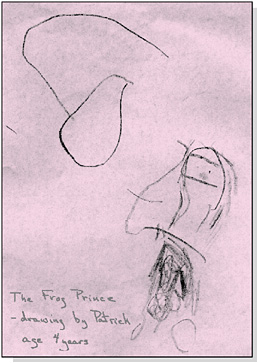
From a Well-Known Book on Beginning Reading  When challenged to name these two letters (“C” and “G”), my daughter, now just three years old, looked me squarely in the eye and said firmly,“I call them both ‘C’.” It is not that she could not discriminate their shapes: she regularly performs perfectly on an uppercase letter-matching game on the computer. Nor is she unaware that I like to call these letters by different names: her answer was clearly intended to preempt the correction that she knew I would produce. But she has a point. In what reasonable kind of world would people agree to call a dachshund and a St. Bernard “dogs” while calling one of these characters a “C” and the other a “G”? To us, the answer is obvious: in the kind of world where people use “C’s” and “G’s” discriminately for reading and writing—which, of course, she does not yet do. —Marilyn Jager Adams |
letter in their deck of letter cards and organize a treasure hunt to find the letter in other places in the room. Later, make a big version of the letter on the ground outside—have the children line up and march along the letter shape while chanting something rhythmic about the shape. For example, while marching along the letter “B,” they might chant, “Down up, around, around.” For the last two days of the week, play games with all three letters, encouraging children to see similarities and differences between the letters. Repeat the activity with additional letters. Start with the letters that start the children’s names.
When the children are pretending to write, be aware and congratulate them when they start to make letter-like forms. Talk with them about the difference between drawing and writing and, later, between letters and numbers. Encourage them to copy the letters from the wall chart, to sign their drawings, and to label them.
Remind them to use the letters of the day. When they ask you to label a picture or write down a story, let them print some of the letters they know and like.
Ask the children to bring in their favorite letters for show-and-tell. They can be on a t-shirt, in a book, or on a cereal box. Ask the children to talk about what helps them recognize the letter. One child might say, for example, that a lower case “b” looks like a baseball bat with a ball stuck to it.
Writing
Through early writing experiences, young children learn many of the key aspects of literacy such as print awareness and concepts, functions of print, and possibly phonological awareness.
Activities
Children need access to a variety of paper, writing utensils, and materials for bookmaking—glue, tape, stapler, and book covers. A well-equipped art area should offer paper in several sizes and colors, paints, markers, crayons, and colored pencils. You may also wish to set up a separate writing or office area that includes blank books, paper, envelopes, mailing labels, stickers, and stamps. Don’t discourage scribbling and pretend writing, but do provide support and encouragement for writing letters. As you do so, expect, gradually, that more letters will be recognizable. As the children learn to form letters and develop phonological awareness, expect, too, that invented
spellings will appear. It may take a few years before many conventional spellings come. Some, such as the child’s own name and special phrases like “I love you,” may appear early and be memorized, but a true appreciation of conventional spelling comes later.
In addition to letting children experiment with writing themselves, make time to write down their personal dictations. Read back exactly what the child said, without correcting grammar or word choices. This shows that you value the child’s work and helps children begin to understand the connection between spoken and written language. If a child dictates in a language you do not understand, get the help of a parent volunteer as a transcriber and translator. Children can also act out their dictated stories.
Computer-Based Literacy
Ideally, classrooms would offer preschoolers access to an easy-to-use word processor, printer, software programs for print concepts, stories on CD-ROM, and interactive programs.
|
Young Children and Computers In recent years, the consumer and school markets have become deluged with software products for children—products of dramatically varying quality. Following are three examples of highly rated programs
|
Accomplishments of the Very Young Child
Children engaged in language and literacy activities, observed at home and in preschools, appear mostly playful and exploratory, although in fact they are hard at work as scholars of language and literacy.
A particular set of accomplishments that the successful learner is likely to exhibit during the preschool years is shown in the table on page 59. Because of their importance, we present them in full, as published in Preventing Reading Difficulties in Young Children (National Academy Press, 1998). This list is neither exhaustive nor incontestable, but it does capture many highlights in the course of literacy acquisition that have been revealed through several decades of research. Of course, the timing of these accomplishments will to some extent depend on maturational and experiential differences among children.
Early Childhood Educators
Preschool teachers represent an important—and largely underutilized—resource in promoting literacy through promoting the acquisition of rich language and beginning literacy concepts and skills. Early childhood educators should not try to replicate the formal reading instruction provided in schools; instead, their job is to help children develop the basic knowledge, interest, and understandings that will allow them to flourish once it is time for such instruction. Central to achieving the goal of primary prevention of reading difficulties is the preschool teacher ’s knowledge base and experience, as well as the support provided to the teacher; each of these may vary according to where the teacher is in his or her professional development.
A critical component in the preparation of teachers before they begin their careers is supervised, relevant, experience in preschools in which they receive ongoing guidance and feedback. A principal goal of this experience is to achieve the ability to integrate and apply the knowledge learned in practice.
|
Birth to Three-Year-Old Accomplishments
Three- to Four-Year-Old Accomplishments
|
Collaborative support by the teacher preparation institution and the field placement is essential.
Programs that educate early childhood professionals should require mastery of information about the many kinds of knowledge and skills that can be acquired in the preschool years in preparation for reading achievement in school. Their knowledge base should include (at least) the following:
-
information about how to provide rich conceptual experiences that promote growth in vocabulary and reasoning skills;
-
knowledge about word and vocabulary development, from early referential (naming) abilities to relational and abstract terms and finer-shaded meanings;
-
knowledge of the early development of speaking and of listening comprehension skills, and the kinds of syntactic and prose structures that preschool children should be in the course of mastering;
-
information on young children’s sense of story;
-
information on young children’s sensitivity to the sounds of language;
-
information on young children’s understanding of concepts of print and the developmental patterns of emergent reading and writing;
-
information on young children’s development of concepts of space, including directionality;
-
knowledge of fine motor development; and
-
knowledge about how to instill motivation to read.
Young teachers need support from mentor teachers as they develop. Even after this training is completed, though, teachers need access to ongoing, career-long development.


