Promoting Children’s Reading Success
Why is a book like this needed? A devastatingly large number of people in America cannot read as well as they need to for success in life. Large numbers of school-age children, including children from all social classes, face significant difficulties in learning to read. An increasing proportion of children in American schools, particularly in certain school systems, are considered learning disabled; most of the children are so identified because of reading difficulties. Failure to learn to read adequately for continued school success is especially likely among poor children, among children who are members of racial minority groups, and among those whose native language is not English. Achieving educational excellence for all requires an understanding of why these disparities exist as well as serious, informed efforts to redress them.
We are most concerned with the children in this country who do not read well enough to meet the demands of an increasingly competitive economy. To be employable in the modern world, today’s high school graduates must be able to read challenging material and use printed matter to solve problems independently. In the United States, we should expect 100 percent literacy from our population.
In the past, ideologies and narrowly focused beliefs have made it difficult to implement genuine reforms in reading instruction. The teaching of reading evokes passions like few other subject areas. Often the debate has been heated,
and parents and educators have been understandably frustrated by school districts and states that shift curricula to embrace the latest solution. In fact, there is no simple solution. This is one of the most important messages of this book.
Reading is a complex and multifaceted process, and children need an approach to learning that integrates many elements. Children who are first learning to read need appropriate help in understanding, learning, and using the spelling-sound conventions of the writing system, as well as opportunities to appreciate the information and pleasures offered by print. They need to learn more and more about the vocabulary and sentence structure of written English. They need help with procedures for monitoring comprehension. They also need sufficient practice with a variety of texts to achieve fluency, so that both word recognition and reading comprehension become increasingly fast, accurate, and well coordinated. Three main accomplishments characterize good readers:
-
they understand the alphabetic system of English to identify printed words,
-
they have and use background knowledge and strategies to obtain meaning from print,
-
they read fluently.
In good instruction, these three goals are not only addressed but are also well integrated, enabling young readers to gain proficiency in all of them.
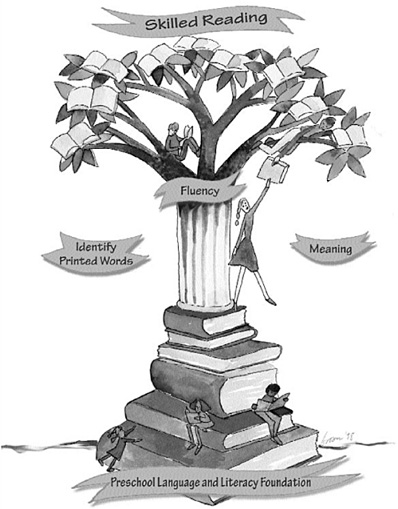
Children who learn to read successfully master the three core elements. They are able to Identify Printed Words using sound spelling connections and have a sight word repertoire. They are able to use previous knowledge, vocabulary, and comprehension strategies to read for Meaning. They read with Fluency, that is, they can identify words swiftly so that what is read is understood and reading itself is enjoyable. Children start to accumulate the skills needed for reading early in life—building a Preschool Language and Literacy Foundation—which includes opportunities for children to develop oral language skills, including phonological awareness, motivation to read, appreciation for literate forms, print awareness, and letter knowledge.
CIRCUMSTANCES THAT PROMOTE READING
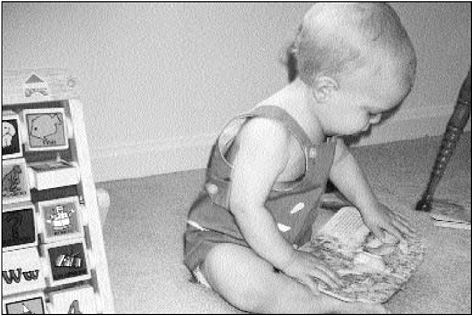
During the first months and years of life, children’s experiences with language and literacy can begin to form a basis for their later reading success. The ideal time to begin sharing books with children is during babyhood, even with children as young as six weeks. Research consistently demonstrates that the more children know about language and literacy before they arrive at school, the better equipped they are to succeed in reading. Main accomplishments include:
-
oral language skills and phonological awareness,
-
motivation to learn and appreciation for literate forms,
-
print awareness and letter knowledge.
These language and literacy accomplishments are achieved best through activities that are integrated across different developmental areas, that is, cognitive development, fine and gross motor development, social and emotional development, and language development.
Given the opportunity, young children develop vocabulary, other language skills, and basic knowledge about the world around them. They know what books are and how they work. They are enthusiastic about reading and are beginning to explore being readers and writers. They have opportunities to learn about letters and the structure of words.
Vocabulary, language skills, and knowledge about the world are acquired during interesting conversations with responsive adults. Talking about books, about daily happenings, about what happened at day care or at work not only contributes to children’s vocabularies, but also increases their ability to
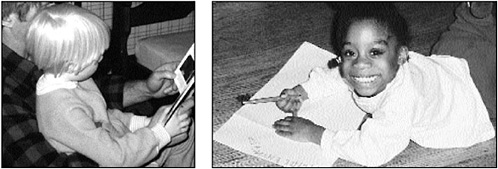
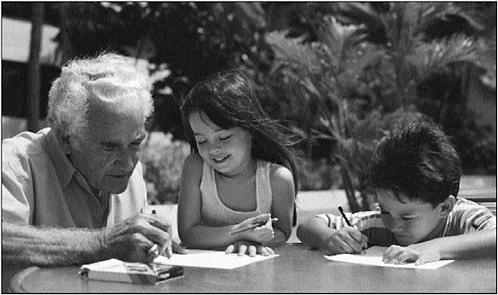
understand stories and explanations and their understanding of how things work—all skills that will be important in early reading.
Knowledge about and love for literacy can develop only through experience. Children should own books, should have access to books in their preschool and primary classrooms, should be read to often, and should see others reading and writing. Understanding the value of literacy as a means of communication, as well as coming to love book-reading as a time for emotional closeness, are accomplishments typical of the future good reader.
The committee’s larger report emphasized the importance of phonological awareness—not to be confused with phonics. When children achieve phonological awareness, they are able to think about how words sound, apart from what words mean. For example, they appreciate that the word “kitchen” has two spoken parts (syllables), that the word “bed” rhymes with “bread,” and that the words “cat” and “king” begin with the same sound. Children can and should develop some degree of phonological awareness in the preschool years, because it is a crucial early step toward understanding the alphabetic principle and, ultimately, toward learning to read.
Another necessary circumstance for reading success is, of course, excellent reading instruction once children begin school. Although there is no single reading program out there to solve all problems, we do know that the most
|
Reading Instruction in Kindergarten Through Third Grade Recommendations on the mechanics of reading:
Recommendations on comprehension:
Recommendations on writing:
Recommendations on reading practices and motivation:
Adapted from Preventing Reading Difficulties in Young Children (National Academy Press, 1998) |
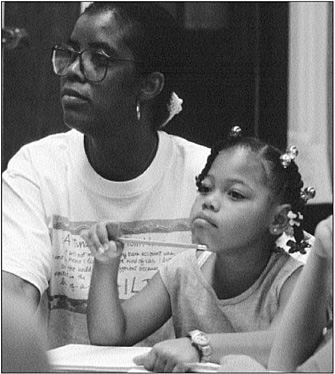
effective programs share certain common features. Formal instruction in reading needs to focus on the development of two sorts of mastery: word recognition and comprehension. In Preventing Reading Difficulties in Young Children (National Academy Press, 1998), we make recommendations for reading instruction for kindergarten through third grade. The concepts included in these recommendations, along with those relevant to preschoolers, toddlers, and babies, are those that we will clarify and illustrate throughout this book.
The majority of reading problems faced by today’s adolescents and adults could have been avoided or resolved in children’s early years. That is one reason why this book is partly addressed to policy makers, such as school superintendents, district leaders, and elected officials. If we, as a society, are to prevent
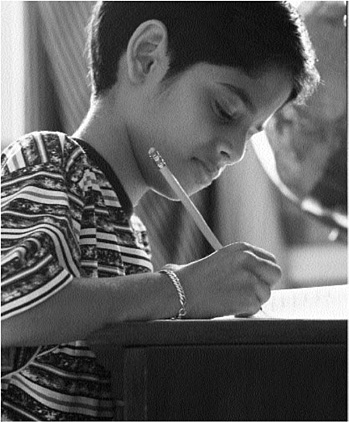
reading difficulties among the current generation of children in America, we must provide them with opportunities to:
-
explore the many uses and functions of written language and develop mastery of them,
-
understand, learn, and use the relationships between the spellings of words and the sounds of speech to recognize and spell written words,
-
practice and enhance vocabulary, language, and comprehension skills,
-
have adults read to them and discuss and react to the literature,
-
experience enthusiasm, joy, and success in learning to read and write,
-
use reading and writing as tools for learning,
-
receive effective prevention programs as early as possible if they are at risk of potential reading difficulties, and
-
receive effective intervention and remediation programs, well-integrated with their everyday classroom activities, as soon as they begin to have difficulty.
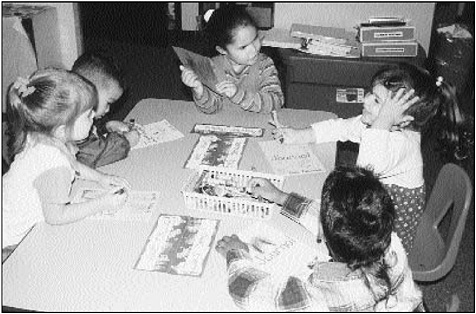
For the most high-risk children, enriched preschool environments and excellent primary grade instruction can be a deciding factor between success or failure that will follow them all their lives. That is why this book focuses mainly on early childhood environments and primary grade instruction. No time is as important, or as fleeting, as a child’s early years of life and schooling. Herein lies our greatest hope, and our most practical and effective opportunity for prevention.
Throughout the book we have tried to include the voices of a wide range of people—teachers, parents, pediatricians, volunteer tutors, and researchers. We also have provided vignettes of effective programs and interventions from around the country.