
3
Health and Safety at Work
Work may be an integral part of the lives of many children and adolescents, but how safe is the workplace for children? Despite child labor laws that are intended to protect children from hazardous working conditions, many young workers face health and safety hazards on the job. In fact, if one examines the major industries in which adolescents are employed, one finds that many of these industries—grocery stores, nursing homes, and agriculture—have higher-than-average injury rates for workers of all ages; see Table 3-1. In general, typical ''teen jobs" cannot be assumed to be safe. Such factors as inexperience, developmental characteristics (physical, physiological, cognitive, and psychosocial), and the need to balance school and work may place younger workers at greater risk than adults confronted with similar hazards.
Injuries are the leading cause of death among children (over age 1) and adolescents (Rosenberg et al., 1996). In 1995, 1,612 children aged 5 to 9 died from unintentional injuries, as did 1,932 children aged 10 to 14, and 6,622 adolescents aged 15 to 19 (National Center for Health Statistics, 1995). Injuries also are the leading cause of hospital admissions for young people (National Center for Health Statistics, 1990) and account for numerous visits to emergency departments and physicians (Baker et al., 1992). Between 1992 and 1994, injuries accounted for 43 percent of 31,447,000 annual emer-
TABLE 3-1 Incidence Rates of Nonfatal Occupational Injuries and Illnesses for All Workers in the Private Sector, by Industry
|
|
1992 |
1993 |
||
|
Industry |
Total Injuries (per 100 FTE) |
Lost Workday Cases (per 100 FTE) |
Total Injuries (per 100 FTE) |
Lost Workday Cases (per 100 FTE) |
|
All Private Industriesa |
8.9 |
3.9 |
8.5 |
3.8 |
|
Agriculturea |
12.2 |
5.5 |
11.5 |
5.3 |
|
Grocery Stores |
12.7 |
5.0 |
11.3 |
4.7 |
|
Eating Places |
9.1 |
3.1 |
8.5 |
3.0 |
|
Nursing Homesb |
18.6 |
9.3 |
17.3 |
8.9 |
|
NOTES: The incidence rates represent the number of injuries and illnesses per 100 full-time equivalent workers and were calculated as follows: (N/EH) × 200,000, where N = number of injuries and illnesses; EH = total hours worked by all employees during the calendar year; and 200,000 = base for 100 full-time equivalent workers (working 40 hours per week, 50 weeks per year). Lost workday cases involve injuries or illnesses that result in days away from work or days of restricted work activity or both. |
||||
gency department visits by children and adolescents. The highest rate of injury-related visits occurred among 15-to 17-year-olds (H.B. Weiss et al., 1997).
Occupational injuries and illnesses among young people have typically been overlooked in pediatric health care and pediatric public health. At the same time, occupational health experts have generally focused on the health and safety of adult workers. Consequently, until quite recently, the scientific literature has been notably silent on the subject of occupational injuries and illnesses among children and adolescents. Although information remains limited, a
|
1994 |
1995 |
1996 |
|||
|
Total Injuries (per 100 FTE) |
Lost Workday Cases (per 100 FTE) |
Total Injuries (per 100) |
Lost Workday Cases (per 100 FTE) |
Total Injuries (per 100 FTE) |
Lost Workday Cases (per 100 FTE) |
|
8.4 |
3.8 |
8.1 |
3.6 |
7.4 |
3.4 |
|
10.3 |
4.8 |
10.4 |
4.7 |
9.4 |
4.3 |
|
11.2 |
4.7 |
9.9 |
4.1 |
10.1 |
4.1 |
|
7.7 |
2.6 |
7.6 |
2.4 |
6.2 |
1.9 |
|
16.8 |
8.4 |
18.2 |
8.8 |
16.5 |
8.3 |
|
aExcludes farms with fewer than 11 employees. b These figures are for nursing and personal care facilities, the category that includes nursing homes, for which separate rates were not available. SOURCE: Data from Bureau of Labor Statistics. Available at: http://stats.bls.gov/sahome.html#OSH [1998, February 2]. |
|||||
growing body of research now suggests that occupational injuries contribute to the overall burden of injuries among youth.
This chapter first examines the data on work-related injuries and illnesses among children and adolescents. It then examines the factors that may increase their risk of injuries and illnesses in the work-place. Finally, it includes a review of the available sources of surveillance data and their strengths and weaknesses. Although the information presented here is relevant to both agricultural and nonagricultural settings, the special concerns of agriculture are addressed in Chapter 5.
NONFATAL WORK-RELATED INJURIES
Since the mid-1980s, a number of descriptive epidemiological studies have characterized the extent and nature of occupational injuries to children and adolescents. Because there is no national system for monitoring occupational illness and injuries, researchers have largely relied on administrative data, such as workers' compensation records, for documentation. No single data source captures all injuries; thus, findings based on any single data source should be considered conservative estimates. Because these data sources are not complete, exhaustive, or mutually exclusive, it is difficult to compare the data or to determine an accurate number of work-related injuries to young people. In addition, most of these data sources are not based on representative samples of working children and adolescents. As is discussed in more detail below (see "Sources of Surveillance Data"), official Bureau of Labor Statistics figures from the Annual Survey of Occupational Injuries and Illnesses are estimated to miss at least 11 percent of workers under the age of 18; hospital emergency rooms are estimated to see only one-third of all work-related injuries (and it is not known what percentage of injuries to young workers are seen in hospitals). Data from administrative sources, such as workers' compensation, differs from state to state. Taken together, however, studies provide an important picture, albeit incomplete, of work-related injuries suffered by young people in the United States.
Even less information is available on the severity of injuries suffered by young workers. None of the data sources specifically rates injury severity, but the sources include only injuries that require multiple days away from work or require medical attention—both commonly used indicators of serious injuries.
Extent of the Problem
One approach to estimating the magnitude of the problem is to examine workers' compensation claims filed for children and adolescents. A review of data from 26 states in 1987 to 1988 identified 59,000 injuries to minors (U.S. General Accounting Office, 1990).1
New York state alone reported that more than 1,200 youths received compensation for occupational injuries that resulted in 8 or more days lost from work each year from 1980 to 1987; more than 40 percent of the injuries resulted in permanent disability (Belville et al., 1993). In Washington state, which collects data on all injuries re-gardless of lost work time, more than 4,400 young workers were awarded workers' compensation benefits annually from 1988 to 1991 (Miller, 1995). Brooks et al. (1993) report that in Massachusetts from 1988 through 1990 approximately 700 workers under the age of 18 filed claims annually for injuries resulting in 5 or more days away from work. These findings vary widely because eligibility requirements for worker's compensation vary by state. Table 3-2 summarizes the findings from the major studies of work-related injuries.
Injury logs maintained by employers in accordance with the re-quirements of the Occupational Health and Safety Act also shed light on the extent of injuries to young workers. Each year the Bureau of Labor Statistics (BLS) conducts the Survey of Occupational Injuries and Illnesses (SOII), based on the injury logs required of a sample of private employers throughout the United States. According to these official statistics, in 1993 youngsters in private-sector industries suffered an estimated 21,620 injuries and illnesses that necessitated days away from work. The median number of lost work days was 3. The survey excludes the self-employed, farms with fewer than 11 employees, private households, and government, which means that the survey does not cover at least 11 percent of working youth, according to one estimate (Centers for Disease Control and Prevention, 1996).
Emergency-department records are another key source of information about work-related injuries suffered by adolescents. These records document not only serious injuries, but also injuries that do not necessarily require time away from work. In the National Hospital Ambulatory Medical Care Survey, the National Center for Health Statistics of the U.S. Department of Health and Human Services annually collects information on a nationally representative sample of emergency department visits. Between 1992 and 1994, there was an annual average of 2,111,000 emergency department visits by 15-to 17-year-olds for injuries. For 1993 and 1994, the years for which data on place of injury were collected, 5 percent
TABLE 3-2 Studies on Work-Related Injuries of Adolescents
|
Study |
Population/Source |
Sample |
|
Banco et al., 1992 |
14-to 17-year-olds/Connecticut workers' compensation reports for 1989 |
796 workers' compensation reports for 14-to 17-year-olds (.05% 14-year-olds; 10.2% 15-year-olds; 34.7% 16-year-olds; 54.6% 17-year-olds) |
|
Belville et al., 1993 |
14-to 17-year-olds/Workers' compensation records for 1980–1987; New York state |
9,656 work-related injury awards |
|
Injury |
Job Type |
Event |
|
35% cuts 25% contusions 22% sprains 7% burns 3% fractures dislocation 8% other |
42% food stores 27.5% general merchandise stores 11.3% restaurants 7.4% professional and related services 3.6% manufacturing 2.7% public admin 2.6% business and repair services 1.4% personal services 0.4% construction 0.3% agriculture 0.8% other |
30% case cutter, knife, other sharp objects 25% struck by object 17% overexertion 13% falls 7% burns 8% other |
|
35% lacerations 18% fracture 18% sprain, strain 9% contusion, crush 9% other traumatic injuries 7% burns 1% amputations 1% other skin conditions 1% systemic injuries |
52.3/1,000 unskilled labor 39.5/1,000 building service 38.9/1,000 food service 26.3/1,000 agriculture 25.0/1,000 construction, mechanics 20.2/1,000 clerical 15.9/1,000 sales 14.0/1,000 amusement and health 10.6/1,000 managerial, professional |
|
|
Study |
Population/Source |
Sample |
|
Brooks et al., 1993 |
14-to 17-year-olds/Emergency room and hospital admission records, 1979–1982; 14 Massachusetts communities |
1,176 work-related injuries |
|
Brooks and Davis, 1996 |
14-to 17-year-olds/Workers' compensation records for 1987–1990; Massachusetts |
2,551 work-related injury awards |
|
Broste et al., |
1989 872 high school vocational agriculture students in central Wisconsin/Audiometric assessment |
Noise-induced hearing loss in at least one ear |
|
Cooper and Rothstein, 1995 |
Under 18 years old in Texas/Workers' compensation reports, 1991 |
1,097 injuries and illnesses 2% 11–13 year olds; 7% 14–15 year olds; 90% 16–17 year olds |
|
Injury |
Job Type |
Event |
|
49.1% lacerations 12.2% contusions 9.6% strains, sprains 7.5% eye injuries 6.4% burns 3.0% fractures 2.0% concussion, cranial 0.4% amputation 9.9% other |
|
41.7% cutting, piercing objects 12% struck by object 9.6% falls 6.9% machinery 6.8% burns 6.3% overexertion 4.5% caught in or between objects (s) 4.4% foreign object 7.8% other |
|
33.1% sprain, strain 24.3% laceration 15.6% contusion, crushing 8.5% fracture 4.7% burn 0.7% amputation 13.1% other |
55.4% retain trade 20% services 11% manufacturing 4.6% construction 3.5% wholesale trade 2.0% transportation 1.2% agriculture 2.2% other |
|
|
57.1% of students who live and work on farms 54.5% of student who work on farms, but live elsewhere 24% of students who live, but do not work on farms 33% of students with no farm exposure |
|
|
|
|
35% vehicle drivers, material handlers 30% service laborers 19% sales workers |
|
|
Study |
Population/Source |
Sample |
|
Hayes-Lundy et al., 1991 |
15-to 19-year-olds/ Utah State Insurance fund data, 1982–1985 |
73 cases |
|
Heinzman et al., 1993 (Minnesota Adolescent Occupational Injury Study) |
13-to 17-year-olds/Workers' compensation records for 8/90–8/91 |
742 injured adolescents 534 usable records |
|
Heyer et al., 1992 |
17-year-olds and younger/Washington state Workers' compensation claims,1986–1989 |
16,481 claims |
|
Knight et al., 1995 |
14-to 16-year-olds/ Follow-up survey of all work-related injury cases seen in emergency rooms participating in NEISS, July 1 to Sept. 30, 1992 |
174 cases 146 interviews completed |
|
Layne et al., 1994 |
14-to 17-year-olds/Representative sample of emergency departments (NEISS), July 1 to Dec. 30, 1992 |
37,405 estimated injuries nationwide based on 679 injuries in sample |
|
Injury |
Job Type |
Event |
|
100% burns from hot grease |
100% fast-food restaurants |
25% adding, filtering, changing hot grease 16% splashed grease 14% cleaning grill 11% slipped on floor into grease 34% other |
|
13% burns (44% had permanent scars) |
39% fast food establishments 37% full service restaurants |
50% hot grease 25% grills, other cooking equipment 42% hot grease 35% hot water |
|
5.2% serious injuries 12.8% disabling injuries |
7% farm 43% food workers |
|
|
|
34% eating places 7% schools 6% grocery stores 6% amusement, recreation services 3% hospitals 44% other |
17% moving materials or freight 13% cooking, food preparation 12% janatorial work 10% stocking shelves, cutting up boxes |
|
34% lacerations 18% contusion, abrasion 16% sprain, strain 12% burn 4% fracture, dislocation 15% other |
38% eating establishments 7.8% food stores 7.6% other retail 6.7% health services 3.3% amusement, recreation 2.9% educational services 6.7% agriculture 4% manufacturing 15% all other |
|
|
Study |
Population/Source |
Sample |
|
Miller, 1995 |
11-to 17-year-olds (rates for 16-to 17-year-olds only)/ Workers' compensation records, 1988–1991; Washington state |
17,800 work-related injury awards |
|
NIOSH analysis of Survey of Occupational Illnesses and Injuries; U.S. Department of Health and Human Services, 1996 (state-specific numbers also available) |
Under 18-year-olds/1993 survey of national sample of employers |
21,620 injuries or illnesses involving lost work days |
|
Parker et al., 1994b (Minnesota Adolescent Occupational Injury Study) |
3,051 10th–12th grade students in 39 Minnesota high schools/Self-completed questionnaire survey |
379 work-related injuries reported (detailed information provided for 339) |
|
Injury |
Job Type |
Event |
|
|
45.3% restaurants 18.8% food stores and other sales |
50% struck by person or object 14.6% falls 10.1% overexertion 9.1% burns 4.9% toxic exposures 3.3% caught in machinery 0.7% moving vehicle |
|
31% sprains, strains 17% cuts, lacerations 13% contusions, abrasions 8% heat burns 5% fractures, dislocations |
39% eating, drinking establishments 14% grocery stores 6% nursing, personal care facilities 5% department stores |
21% falls on same level 17% over exertion 10% striking against objects 9% contact with hot objects 7% struck by falling object 6% struck by slipping hand-held object, such as knife, razor, tool |
|
29% burn 27% cut 23% sprain 10% bruise 3% puncture 12% other (36% of injuries met reporting criteria) |
|
31.6% striking or struck by object 25.4% contact with hot object 17.1% lifting, carrying, pushing, pulling 10% falls |
|
Study |
Population/Source |
Sample |
|
Parker et al., 1994a |
Under 18-year-olds/Injury reports to Minnesota Department of Labor and Industry, 8/15/90 to 8/14/91 and follow-up interviews of injured adolescents |
742 injuries (complete information on 534) |
|
Schober et al., 1988 |
17 years and younger/Workers' Compensation claims in the BLS Supplemental Data System, 1980 |
23,823 claims |
|
Injury |
Job Type |
Event |
|
37.6% strains and sprains 24.2% cuts and lacerations 13.1% burns 12.5% bruises 8.8% fractures |
a 3%/1% agriculture 4%/7% nurses aide 6%/7% dish buser 13%/8% carhop 14%/14% cashier (restaurant) 12%/14% fast food cook 11%/17% short order cook 13%/11% dishwater 4%/5% waiter 43%/45% janitor 2%/2% sales clerk 16%/15% stock clerk 16%/15% bagger |
|
|
36.5%, cut, laceration 17.3% sprains, strains 12.8% contusion, crush 9.7% burns 5.8% fracture 3.5% abrasions 0.7% dislocations 0.6% amputations 13.1% other |
49.7% retail trade 20.9% services 9.1% manufacturing 6.1% agriculture, forestry, fishing 3.9% wholesale trade 3.7% construction 3.7% public admin 1.2% transportation, utilities 1.2% finance, real estate 0.3% mining 0.3% not classified |
|
(103,000) of those injuries were identified as work-related (H.B. Weiss et al., 1997). In comparison, 15 percent of the emergency department visits by 18-to 20-year-olds for injuries were identified as work-related. No place of injury was recorded for 19 percent of the emergency department visits by 15-to 17-year-olds, some of which may have been work-related injuries. A Massachusetts study based on emergency-department data collected in the early 1980s found that 7 percent to 13 percent of all medically treated injuries among 14-to 17-year-olds were work-related. For 17-year-olds, the estimate for work-related injuries (where the locations at which injuries occurred were known) was as high as 26 percent and exceeded the proportion of injuries attributed to motor vehicles or to sports (Brooks et al., 1993). The National Institute for Occupational Safety and Health (NIOSH), in collaboration with the Consumer Product Safety Commission, has used data from the National Electronic Injury Surveillance System (NEISS) to assess the scope of the problem. NIOSH reports that in 1992 an estimated 64,100 adolescents, aged 14 to 17, required treatment in emergency departments for work-related injuries (Layne et al., 1994). Research suggests that only one-third of work-related injuries are treated in emergency departments (Centers for Disease Control and Prevention, 1983; unpublished tabulations, Occupational Supplement, 1988 National Health Interview Survey). Applying this figure to the NEISS findings, NIOSH has estimated that 200,000 adolescents are injured on the
|
Injury |
Job Type |
Event |
|
31.7% contusion, abrasion 28.3% laceration 16.7% fracture 8.3% puncture 6.7% burn 6.7% closed head injury 5% sprain 10% other |
31.7% observing farm work 68.3% working on farm |
|
job each year (National Institute for Occupational Safety and Health, 1995).
Surveys of young workers themselves highlight the extent of the problem. In several recent surveys of working high-school students, estimates of the proportion of teens who report having been injured at work range from 17 percent to 50 percent. Between 7 percent and 16 percent of teens who have worked report having been injured at work seriously enough to seek medical care (Bowling, 1996; Dunn et al., 1998; Parker et al., 1994b). For example, in a survey of 450 teens at a large urban high school in Massachusetts, 67 percent reported that they either were working currently or had worked in the past: Of these, 35 percent reported having been injured at work; 10 percent were injured seriously enough to seek medical care (Massachusetts Department of Public Health, 1997).
The numbers alone indicate a basis for considerable concern. Moreover, because teens typically work part-time, often in seasonal jobs, the numbers of injuries suffered by adolescent workers translate into high injury rates per hour worked. This fact is often lost in national statistics that cannot provide rates by age that are adjusted for hours of work. Healthy People 2000 calls for the reduction of occupational injuries among adolescents to no more than 3.8 per 100 full-time workers (National Center for Health Statistics, 1996). The fact that this objective is substantially lower than the goal for adults—6 per 100 full-time workers—reflects a social policy deci-
sion that youth deserve special protection in the workplace. Although the limitations of the data regarding both the number of young workers injured (numerator for injury rate calculations) and the total number of young workers (denominator for injury rate calculations) make it difficult to calculate injury rates for young workers, studies in which injury rates have been computed for both youngsters and adults using the same methods suggest that the injury rate per hours worked for young workers is higher than that for adults (Coleman and Sanderson, 1983; Miller, 1995). Current injury rates also appear to be well above the target for adolescents. The National Center for Health Statistics (1997) reports an occupational injury rate for 15-to 17-year-olds of 4.9 per 100 full-time-equivalent workers in 1996. The injury rate for all workers 16-years-old and older in 1996, based on the same sample, was 2.8 per 100 full-time-equivalent workers (National Institute for Occupational Safety and Health, 1998).
The injury rates alone do not provide a sense of the consequences of occupational injuries for the injured adolescents or for the adolescent population in general. Adolescents who are injured seriously enough to miss work may also miss days of school. In an effort to examine the burden that adolescent work-related injuries place on the community at large, Brooks et al. (1993) computed the rate of occupational injuries among teens residing in the community, regardless of their work status. Using emergency-department data collected from 14 Massachusetts communities and towns from 1979 to 1982, they report that approximately 1 out of every 30 adolescents aged 16 to 17 was seen in emergency departments for a work-related injury each year. Among males, the figure was I in 20.
Who Is Injured at Work: Age and Gender Differences
Studies show remarkably consistent patterns of nonfatal occupational injuries by age. In general, studies at both the national and state levels find older adolescents to have more injuries than younger adolescents (Banco et al., 1992; Belville et al., 1993; Brooks and Davis, 1996; Brooks et al., 1993; Castillo et al., 1994; Cooper and Rothstein, 1995; Heyer et al., 1992; Layne et al., 1994; Miller, 1995; Schober et al., 1988; Suruda and Halperin, 1991; Toscano and Windau, 1995); older adolescents also have higher injury rates (Belville et al., 1993; Brooks et al., 1993; Layne et al., 1994). Over-
all, more than 85 percent of nonfatal work-related injuries to adolescents are sustained by 16-and 17-year-olds (Banco et al., 1992; Belville et al., 1993; Brooks and Davis, 1996; Layne et al., 1994; Miller, 1995; Schober et al., 1988). The reasons behind this pattern are not entirely clear. Federal child labor laws and many state laws have stronger restrictions on the work that may be performed by those under the age of 16. Therefore, younger workers may be in less hazardous jobs. Or, because of limits on their hours of employment, they may simply have less exposure to situations in which they could be injured. Employers also may give older teens more responsibility and more hazardous tasks to perform than their younger counterparts are given. And older teens may be more likely to perceive themselves as mature, and therefore, attempt tasks for which they are unprepared.
Studies also consistently show that adolescent males have greater numbers and higher rates of injuries than adolescent females (Banco et al., 1992; Belville et al., 1993; Brooks and Davis, 1996; Brooks et al., 1993; Layne et al., 1994; Miller, 1995; Parker et al., 1994a, 1994b; Schober et al., 1988). Some studies show an injury rate for males that is nearly double that for females (Brooks et al., 1993; Coleman and Sanderson, 1983; Miller, 1995; Schober et al., 1988). Until recently adolescent males were more likely than adolescent females to be employed, which could partly explain the disparity in the numbers of injuries, but not the difference in rates. Males are more likely than females to work in risky industries, such as construction (Jacobs and Steinbery, 1990; Reskin, 1993). Dunn et al. (1998) report that teenage boys are more likely to be exposed to occupational hazards than are teenage girls. They conclude that the high rates of injury in adolescent males likely reflect their job experience, their exposure to work-related hazards, and employers' expectations, rather than the boys' risk-taking behaviors. Anecdotal evidence suggests that within the same jobs, boys are frequently asked to do ''heavier" tasks. In general, males tend to have higher rates of injury than those of females, at all ages. Baker et al. (1992) note that the annual rate of nonfatal injuries requiring medical treatment or at least one day of restricted activity for males is 1.4 times that for females. The extent to which the increased risk of occupational injuries among young males can be explained by gender-related differences in job and task assignments or to gender-related behavior remains to be more fully explored.
Types and Seriousness of Work-Related Injuries
The most common nonfatal injuries observed among working children are lacerations, sprains and strains, contusions, burns, and fractures (Banco et al., 1992; Belville et al., 1993; Brooks and Davis, 1996; Brooks et al., 1993; Bush and Baker, 1994; Layne et al., 1994; Miller, 1995; National Institute for Occupational Safety and Health, 1996; Parker et al., 1994a, 1994b; Schober et al., 1988) (see Figure 3-1 and Table 3-3). The rank ordering of these injury types varies depending on the data source. For example, studies based on emergency-department records indicate that cuts and lacerations are the leading type of injury, while studies based on workers' compensation claims for injuries resulting in lost work time and on Occupational Health and Safety Administration data from injury logs tend to report more sprains and strains (Brooks and Davis, 1996; Brooks et al., 1993; Centers for Disease Control and Prevention, 1996; Layne et al., 1994).
Although data on the extent of disability associated with these injuries are limited, the seriousness of these injuries should not be

FIGURE 3-1 Work-related injures of 14-to 17-year-olds, by type of injury. SOURCE: Data from Layne et al. (1994).
TABLE 3-3 Typical Nonfatal Youth Work Injuries, for Selected Industries
|
Industry |
Injury |
Circumstances |
|
Restaurants |
Cut fingers |
Knife slips while cutting Finger contacts blade while using or cleaning power meat slicers |
|
|
Burns |
Grease splatters onto worker from grill or deep fryer Hand contact with grill while cleaning Slips on a slick surface and contacts grill or fryer when trying to break fall Grease spills on worker when draining or transporting hot grease from a fryer Hot liquid or food spills on worker |
|
|
Strains |
Slips on a slick surface and strains muscles trying to avoid the fall |
|
|
Bruises (contusions) |
Slips on a slick surface and is bruised in fall |
|
Grocery Stores |
Cut arms or legs |
Case-cutter slips while opening cardboard boxes |
|
|
Torso strains |
Overexertion while lifting or moving inventory Overexertion while lifting customer bags Overexertion while retrieving carts from parking lot |
|
Nursing Homes |
Back strains |
Overexertion while lifting patients |
underestimated. The fact that the data come from hospital emergency rooms and workers' compensation claims indicates that the injuries were serious enough to require medical attention. Knight et al. (1995) report that 25 percent of adolescents who visit emergency rooms for work-related injuries experienced limitation in their normal activities for more than 1 week. Forty-four percent of adolescents who received workers' compensation payments in New York
suffered permanent disabilities; younger teens (14-and 15-year-olds) were more likely than older teens (16-and 17-year-olds) to be permanently disabled (Belville et al., 1993). Parker et al. (1994a) found that sprains and strains were the most common causes of severe injury, with strains to the back accounting for 73 percent of all strain injuries. Back injuries were more common in smaller workers and were positively associated with the amount of weight lifted at work. Back sprains and strains made up 15 percent of all young workers' compensated injuries in Massachusetts (Brooks and Davis, 1996). Back pain is unusual among adolescents. Because a history of back pain has been identified as a risk factor for new back injuries (Mitchell et al., 1994; Venning et al., 1987), back strains among adolescent workers may have consequences for their long-term health.
It has been estimated that work-related injuries for all workers in 1993 cost $121 billion in medical care, lost productivity, and wages (National Safety Council, 1995). In 1993–1994, hospital emergency department visits by 15-to 17-year-olds for injuries identified as occurring at work resulted in medical costs of $522 million (in 1993 dollars) (H.B. Weiss et al., 1997). There is no information on the long-term human and economic burden of occupational injuries suffered by young workers. The effects of these injuries on their future health and employment status and the costs incurred by the workers, their families, employers, and society at large remain to be documented.
Work Settings and Injuries
From a prevention standpoint, information about the types of work settings and circumstances in which working children and adolescents are injured is crucial. Not surprisingly, most injuries occur in those industries in which the majority of young workers are employed. Without exception, in studies of nonfatal injuries, half of the injuries occurred among youth employed in retail trades, predominantly in restaurants and food stores (Banco et al., 1992; Belville et al., 1993; Brooks et al., 1993; Brooks and Davis, 1996; Layne et al., 1994; Miller, 1995; Schober et al., 1988). Nationally, nearly 40 percent of work-related injuries suffered by youngsters occur in restaurants, and between 8 percent and 14 percent occur in food stores. Other industries that experience relatively high numbers of such
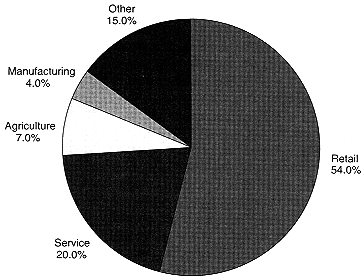
FIGURE 3-2 Work-related injuries of 14-to 17-year olds, by industry. SOURCE: Data from Layne et al. (1994).
injuries include general merchandise stores, nursing homes, and agriculture (Centers for Disease Control and Prevention, 1996; Layne et al., 1994); see Figure 3-2. Common occupations of youngsters who are injured include food-preparation and food-service workers, cashiers, stock handlers, and baggers (Banco et al., 1992; Cooper and Rothstein, 1995; Miller, 1995).
State-specific data reveal findings that are important for local prevention efforts but are obscured in national statistics. In Alaska, for example, laundry, cleaning, and garment services and the manufacture of specific food products each accounted for 16 percent to 17 percent of the injuries incurred by young workers. In Hawaii, nearly one-fourth of the incidents resulting in injuries occurred in construction. In Vermont, hotels and motels were the most common site of work-related injuries and illnesses (Centers for Disease Control and Prevention, 1996).
In targeting industries for prevention activities, it is important to consider not only those with high numbers of injuries, but also those with high rates of injury. The rates indicate the probability or risk of being injured at work. In a large industry that employs a lot of teens,
many may be injured, but the rate of injury may be low. By contrast, in a small but high-risk industry, the number of workers injured may be small, but the rate may be high. Limitations of data on both the number of young workers and the number of their work-related injuries pose significant challenges in calculating rates and comparing findings across studies, but injury rates reported in several state and national studies draw attention to high-risk industries, some of which are not necessarily highlighted solely by the numbers of injuries that occur in them. Layne et al. (1994) report that the retail-trade sector had not only the highest frequency of adolescent occupational injuries treated in emergency departments nationwide, but also the highest rate of such injuries. High rates of injuries have also generally been seen in the manufacturing and construction sectors (Belville et al., 1993; Brooks and Davis, 1996; Layne et al., 1994; Miller, 1995). In Washington state, 16-and 17-year-olds working in public administration had the highest rate of on-the-job injuries: Most of these youths were involved in summer job programs as trail-crew members, grounds keepers, and park maintenance workers (Miller, 1995). Banco et al. (1992) also reported high rates among young workers in public-sector jobs in Connecticut. The Massachusetts Department of Public Health (1998) reported that young workers employed in the trucking/warehousing industry had the highest injury rates. The injured workers were, for the most part, teens engaged in handling materials. Small numbers but high rates were also found among Massachusetts teens employed by temporary agencies and retail bakeries (Bowling, 1996; Massachusetts Department of Public Health, 1998).
An examination of the types of injuries, events, sources of injuries, and how these vary by industry provide information that is necessary for developing specific intervention strategies. The types of injury differ by industry. For example, lacerations and burns are the leading injuries among youth employed in restaurants (Miller, 1995), while contusions, lacerations, and sprains are the leading injuries among youth employed in service industries, such as nursing homes, recreational services, and hotels. Common events include falls on the same level, overexertion from activities like lifting, striking against objects, and contact with hot objects. Examples of commonly reported sources of injuries include case cutters (Banco et al.,
1992), hot water or oil (Miller, 1995), knives and slicers (Miller, 1995), and containers and surfaces (Schober et al., 1988).
Interviews with young workers demonstrate the prevalence of exposure to potential hazards at work. Of 562 North Carolina teens with work experience outside of farming, 36 percent reported using ladders or scaffolds at work; 31 percent reported using forklifts, tractors, or riding mowers on the job; and 27 percent reported working around very loud noises (Dunn et al., 1998). Of 300 Massachusetts high-school students who reported that they were currently working or had previously worked, 50 percent reported using cleaning chemicals at work, nearly 50 percent used case cutters, 37 percent used ladders, 19 percent used food slicers, and 13 percent used box crushers—despite the fact that child labor laws prohibit individuals under the age of 18 from operating either food slicers or box crushers. Twelve percent reported working alone at night (Bowling, 1996; unpublished tabulations, Massachusetts Department of Public Health).
FATAL INJURIES
Work-related injuries that result in death merit special attention. Each year from 1992 through 1995, approximately 70 youths younger than 18 died from injuries they received at work (Derstine 1996; Toscano and Windau, 1994). Table 3-4 summarizes findings from the major studies of work-related deaths. Estimates of the number of deaths, as well as where and how they occurred, vary from study to study. As discussed in more detail below ("Source of Surveillance Data"), there are many reasons for this variation. Most data sources rely on death certificates, but they capture only 81 percent of work-related deaths in general. For children and adolescents, the percentage may be even lower because it is less likely that the death will be recognized as work-related for them than for adults. A further difficulty in studying work-related deaths among youngsters results from the relatively small number of such deaths that occur each year. To have an adequate number of cases to analyze, researchers must aggregate data over a number of years and combine data for different ages. Differences in the years selected and the age groupings with a low base-rate phenomenon (such as children's work-related deaths) can result in fairly large differences among study findings. Of youths younger than 18, the majority of deaths
TABLE 3-4 Studies of Work-Related Deaths of Adolescents
|
Study |
Population/Source |
Sample |
Job Type |
Event |
|
Castillo et al., 1994 |
16-and 17-year olds/National Traumatic Occupational Fatality Surveillance System, 1980–1987 death certificate data |
670 nonmilitary deaths |
16.4% agriculture, forestry, fishing 8.8% construction 8.4% services 6.3% retail trade 5.1% manufacturing 3.7% transportation, public utilities 2.1% mining 1.5% wholesale trade 0.6% other 47.2% not classified |
24.2% motor vehicle related 16.9% machine related 11.9% electrocution 9.6% homicide 5.7% falls 4.6% struck by falling object 2.1% mining 4.3% suffocation 3.7% drowning 3.0% poisoning 2.5% natural and environmental 13.6% other |
|
Cooper and Rothstein, 1995 |
Under 18-years-old in Texas/Death certificates 1980–1990 |
125 work-related deaths, ages 6–17 |
23% farm 15% construction 10% mining/oil |
24% motor vehicle injuries 17% machinery (usually agricultural) |
|
Study |
Population/Source |
Sample |
Job Type |
Event |
|
Derstine, 1996 |
19-years-old and younger/1992–1995 Census of Fatal Occupational Injuries |
720 deaths |
22.1% retail 21.5% agriculture, fishing, farming 14.2% construction 12.5% services 10.3% manufacturing 8.2% public administration 11.3% other |
19% homicide 18.8% motor vehicle, highway |
|
|
17-years-old and younger |
269 deaths |
21.9% retail 40.1% agriculture, fishing, farming 11.2% construction 10.0% services 5.9% manufacturing 2.2% public administration 8.6% other |
|
|
Dunn and Runyan, 1993 |
Under 20-years-old/Medical examiner's records for 1980–1989 in North Carolina |
71 deaths |
21% farm/forestry 20% nonfarm laborer 7% sales |
51% motorized vehicles 14% homicide 11% electrocution 7% poisoning |
|
Hayden et al., 1995 |
Agricultural fatalities in Minnesota, 9/1/81 to 8/31/86/Death certificates and Minnesota Newspaper Association Clipping Service |
78 farm-related deaths of 19-year-olds and younger |
100% agriculture |
|
|
Study |
Population/Source |
Sample |
Job Type |
Event |
|
Suruda and Halperin, 1991 |
OSHA fatality investigations/ Integrated Management Information System and records from Michigan, California, and Washington for 1984–1987 |
104 deaths of 17-year-olds and younger |
24% construction 21% wholesale, retail trade 15% manufacturing 15% services 15% farming |
30% industrial vehicles, machines 16% electrocution 11% falls 11% asphyxiation 8% explosions 6% motor vehicle accidents 5% fire 3% drowning 10% other |
|
Toscano and Windau, 1994 |
All work-related deaths in 1993/Death certificates, medical examiner records, other state and federal records (Census of Fatal Occupational Injuries) |
29 deaths of under 16-year-olds 39 deaths of 16-year-olds and 17-year-olds |
|
34% transportation 21% assaults 28% contact with objects 10% harmful substances 38% transportation 28% assaults 21% contact with objects 8% falls |
occurred among 16-and 17-year-olds, but younger workers accounted for a substantial proportion (40 percent) of those killed, and 19 percent of the victims were younger than 14. Approximately 90 percent of youths killed at work were males, which is similar to the findings for adults (Bureau of Labor Statistics, 1996; Castillo and Malit, 1997; Castillo et al., 1994; Cooper and Rothstein, 1995; Derstine, 1996; Dunn and Runyan, 1993).
In 1992–1995, employment in agriculture accounted for the largest proportion (40 percent) of youngsters' work-related fatalities; more than half of these children worked on family farms (Derstine, 1996). Among youth under the age of 16, employment in family agricultural businesses accounted for 71 percent of fatalities in agriculture. Among 16-to 17-year-olds, deaths occurred somewhat more frequently in retail trades (28 percent of the work-related deaths in this age group) than in agriculture (26 percent). Deaths in the construction industry were also relatively frequent among the older adolescents, accounting for 15 percent of work-related deaths. Figure 3-3 shows work-related deaths, by industry, for workers 17 and younger.
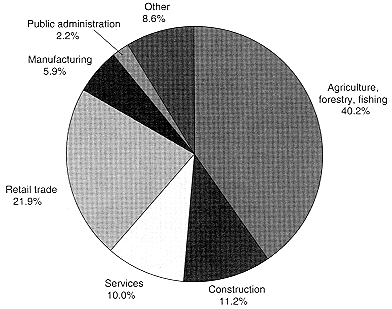
FIGURE 3-3 Work-related deaths of children 17 and younger, by industry. SOURCE: Data from Derstine (1996).
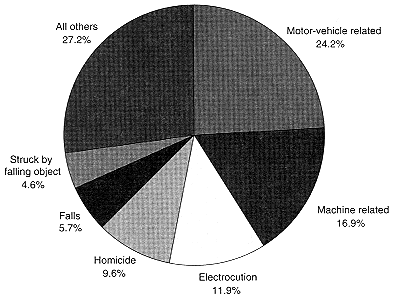
FIGURE 3-4 Causes of work-related deaths of 16-and 17-year-olds. SOURCE: Data from Castillo et al. (1994).
The leading causes of fatal occupational injuries among youths are motor-vehicle-related events, homicides, machine-related events, and electrocutions (Belville et al., 1993; Castillo and Malit, 1997; Castillo et al., 1994; Cooper and Rothstein, 1995; Derstine, 1996; Dunn and Runyan, 1993; Suruda and Halperin, 1991); see Figure 3-4. Motor-vehicle-related events are the leading causes of work-related deaths for males; for females, it is homicides (Castillo and Malit, 1997; Derstine, 1996). Although federal law prohibits workers under the age of 18 from driving for work, except for incidental or occasional driving, one-third of the motor-vehicle-related deaths involve youths driving motor vehicles at work (Castillo and Malit, 1997; Castillo et al., 1994). Findings for workers of all ages indicate that the majority of work-related homicides are associated with robberies in retail trades (National Institute for Occupational Safety and Health, 1996). Firearms were used in 21 of the 24 homicides of workers between the ages of 16 and 17 between 1990 and 1992 (Castillo and Malit, 1997). Tractors and forklifts account for most of the machine-related deaths of young workers (Castillo and Malit,
1997; Castillo et al., 1994; Dunn and Runyan, 1993; Suruda and Halperin, 1991).
NIOSH reports that for the 3-year period from 1990 through 1992, the rate of fatal occupational injury among 16-to 17-year-olds was 3.51 per 100,000 full-time-equivalent workers (Castillo and Malit, 1997). This rate is only slightly lower than that for older workers (3.87 per 100,000 full-time equivalent workers age 20–24, 3.95 for ages 25–34, 3.93 for ages 35–44, and 4.56 for ages 45–54), which is cause for concern inasmuch as federal and state labor laws prohibit youngsters from working in the most hazardous jobs. Although violations of these laws are common, employment data suggest that, in general, young people are less likely than adults to work in especially hazardous jobs. Given this pattern, children and adolescents may actually be at higher risk of fatal injury than adults in similar work.
EXPOSURES TO POTENTIAL HEALTH HAZARDS
Although recent research has contributed to understanding work-related injuries suffered by young people, little is known about the extent to which they incur illnesses from exposures to health hazards—such as toxic chemicals, vibration, noise, and temperature extremes—in the workplace. However, the limited surveys of exposures that are available, plus case reports of acute poisonings, suggest that acute illnesses do occur and do result in the need for medical care. By combining data on the types of jobs and tasks in which young people engage with information from the research on occupational medicine on job-specific exposures for adults, it seems likely that young workers are exposed to a wide variety of health hazards.
Exposures to such hazards may result in immediate illnesses or in illnesses that are not manifest until years after the exposure. Workers' compensation data and employers' illness and injury logs include information about work-related illnesses, but it is well recognized that illnesses are undercounted in these data systems (National Research Council, 1987). Illnesses captured by these systems tend to be those with short latencies and those that have the most visible acute effects. Because the systemic effects of exposures to some chemicals may mimic diseases, their causes may go unrecognized. Pesticide-related illness, for example, may be difficult to distinguish from the flu. Furthermore, the exclusion of agriculture from many
of the existing systems for gathering data results in significant under-counting of exposures.
Many chronic diseases that are related to work have long latency periods between the first exposure to the hazards and the onset of the disease, and they may also have causes other than hazards in the workplace. As a result, chronic occupational diseases frequently go unrecognized as work-related—for adults as well as youngsters. They certainly are not seen in young workers, either because they do not occur or because they will not be manifest until well into adulthood. Therefore, to address occupational health problems that may affect young people, it is essential to document the nature and extent of their exposures to health hazards in the workplace.
A number of hazardous substances or conditions at work could contribute to subsequent illnesses for young workers. Audiometric testing of vocational agricultural students in Wisconsin found that 57 percent of the students who lived and worked on farms had noise-induced hearing loss, a condition found in only 33 percent of the students who had little or no farm experience (Broste et al., 1989). To protect young people's health and safety, the Fair Labor Standards Act prohibits their working with hazardous agricultural chemicals. Yet in a survey of North Carolina teens, 38 percent of those who worked on farms reported using pesticides or other farm chemicals (Schulman et al., 1997). Similarly, a 1989 survey of migrant farmworkers under the age of 18 found that 10 percent had prepared or applied pesticides. Aside from gloves, no protective equipment was used, and the gloves were made of cloth and therefore inadequate as protection. More than 40 percent had worked in fields still wet with pesticides, in violation of regulations governing the time that must elapse between spraying and reentry by workers, and 40 percent had been sprayed while working in the fields, either directly by crop-dusting planes or indirectly by chemicals drifting from planes or tractors (Pollack et al., 1990). A recent Massachusetts survey, in which an industrial hygienist observed youth working in paid jobs and vocational shops, found young workers exposed to a wide range of potential hazards, including lead and asthma-causing agents in construction, ergonomic stressors in health-care settings, and reproductive hazards in a print shop.2
The paradigm used to establish exposure limits for many health
hazards assumes an 8-hour working day and a 40-hour working week over a lifetime of working. Because young people typically work part time, often in short-term jobs, many of their exposures to health hazards do not exceed existing standards. The short-term nature of their exposures may preclude or mitigate the potential long-term health effects, but there are challenging scientific questions about whether young people are more susceptible than adults, about how an individual's age at the time of first exposure affects the severity of any health consequences, and about the effects of multiple exposures over a working lifetime. There are also important policy considerations about what risks are acceptable for working children and adolescents.
DO CHILDREN AND ADOLESCENTS HAVE UNIQUE RISKS AT WORK?
It seems clear that work may pose substantial safety risks for young workers, and there is evidence of potential health risks as well. The overall injury rates suggest that young workers may be at greater risk than adults. Identification of the factors that place children and adolescents at risk in the workplace is essential for developing effective preventive efforts. These factors include characteristics of the work, the work environment, and the interaction between them and young workers.
This section examines factors that raise special concerns about working youth. It begins with a discussion of the concentration of young workers in certain types of work environments and addresses the issues of inadequate health and safety training, inadequate supervision, and inappropriate or illegal job assignments. The section then turns to the children and adolescents themselves and discusses the characteristics that may increase their risk of work-related injury or illness: inexperience, the need to balance school and work, fatigue, and developmental factors.
The Work: Types of Jobs
Many of the industries that employ large numbers of children and adolescents—grocery stores, hospitals and nursing homes, and agriculture—have higher-than-average injury rates for workers of all ages. Children and adolescents face the same workplace hazards
faced by adults in similar occupations, ranging from hot grease, large machinery, and unstable ladders to pesticides and other toxic chemicals.
Young workers are congregated in jobs that are characterized by the absence of opportunities for significant promotion within the firm, high turnover, little on-the-job training, limited scope for worker discretion or application of skill, heightened job insecurity, wide variation and uncertainty in hours, low pay, and few benefits (Doeringer and Piore, 1971; Osterman, 1982, 1988; Tilly, 1991, 1996). Jobs with these characteristics are, in general, more dangerous than those without them. For example, one study found the incidence of occupational injuries and illnesses positively associated with authoritarian work structures and negatively associated with on-the-job training, promotion opportunity, job security, and wages (Robinson, 1988). Using data from the Ontario workers' compensation system, a third study linked high lost-work-time frequency rates to high rates of turnover, low amounts of worker autonomy, and low ''long-term career commitment from employees" (Shannon et al., 1996). Finally, Robinson (1991) found that the risk of occupational injury is weakly correlated with the absence of promotion opportunity, moderately correlated with lack of control over work, and strongly correlated with the lack of on-the-job training and job security.
Jobs with the above characteristics are likely to be in small businesses. Researchers have found a negative relationship between a firm's size and its employees' risk of injury or death (Hunting and Weeks, 1993; Mendeloff and Kagey, 1990). There are many reasons that the safety records of small companies could be expected to be worse than those of large companies: Small firms tend to have high turnover, which means more inexperienced workers (Hunting and Weeks, 1993); they are more exposed to market pressure, which may lead them to cut corners on safety; and they have fewer resources to fall back on for improving their safety performance. NIOSH's 1988 National Occupational Exposure Survey, for instance, found that establishments with fewer than 100 workers took significantly fewer steps—such as providing training, conducting inspections, and using safety professionals—to ensure the safety of employees (National Institute for Occupational Safety and Health, 1988).
The Work Environment: Health and Safety Training
Health and safety training for workers is considered an essential component of comprehensive occupational health-and-safety programs (Keyserling, 1995; U.S. Office of Technology Assessment, 1985). In fact, more than 100 standards promulgated by the Occupational Safety and Health Administration explicitly require employers to train employees in the safety and health aspects of their jobs (U.S. Department of Labor, 1992). Although rigorous evaluations of training programs are limited, studies of adult workers suggest that safety training may reduce injuries and acute illness among young or inexperienced workers (Jensen and Sinkule, 1988; Perkins, 1995; Van Zelst, 1954). It is reasonable to assume that lack of training could affect working children and adolescents, who are by definition inexperienced, to a greater extent than adults. Recent, consistent evidence shows that young workers do not receive adequate health and safety training at work. General surveys of working youth find that about half of the young workers surveyed report no such training (Bowling et al., 1998; Runyan et al., 1997). Of 180 students interviewed in California, few had received any information about job safety from anyone at their workplaces or schools (Bush and Baker, 1994).
When I worked at [fast food chain] I thought the grill was hazardous.... I didn't receive any training, I was just thrown into it because someone didn't show up for work that day.
High school student in focus group Massachusetts Department of Public Health
Knight et al. (1995) surveyed 146 14-to 16-year-olds who were treated in hospital emergency rooms for occupational injuries: 54 percent of the respondents reported no safety training at all. These youngsters were much more likely to have serious injuries—involving eight or more days of restricted activity—than were those who had received such training. The Massachusetts Department of Public Health (1998) reports that only 50 percent of 300 teens injured at work indicated they had received health and safety training on the
job. The few studies of the effects of training on injuries among adolescents have examined health and safety training, but they have not examined the importance of job-skills training. In adult workers, the incidence of work-related injuries and illnesses has been found to be negatively associated with on-the-job training (Robinson, 1988, 1991). Workers who report no on-the-job training are 1.5 to 2.5 times as likely as other workers to have hazardous occupations (Robinson, 1991). It would be interesting to examine whether the role of jobs-skills training is different from or complementary to that of health and safety training in reducing injuries among young workers.
The Work Environment: Inappropriate Assignments and Structure
Work-related injuries and illnesses may also occur because children and adolescents are asked to or attempt to perform tasks for which they are developmentally not ready (see discussion of physiological development below). Very little research has been done on defining developmentally appropriate job tasks, which leaves employees to rely on Hazardous Orders, issued under the Fair Labor Standards Act, that prohibit young people from performing certain tasks (see Chapter 6). Studies indicate that working in legally prohibited occupations is a contributing factor to teens being injured or killed at work. For example, Knight et al. (1995) found that 19 percent of youth with work-related injuries who were treated in emergency departments appeared to have been injured in jobs declared to be hazardous or typically prohibited for their age by federal laws governing child labor. Of 104 deaths of children and adolescents investigated by the Occupational Safety and Health Administration from 1984 through 1987, 41 percent involved youths engaged in work prohibited by federal child labor laws (Suruda and Halperin, 1991). However, many youths are injured or killed while doing legally allowed tasks.
The structure of some work settings may also be inappropriate for teens. Greenberger and Steinberg (1986) noted a lack of adult supervision of young people on the job: The average young worker spent only 12 percent of his or her time in the presence of a supervisor. Inadequate supervision and certain aspects of work schedules have been associated with injuries on the job. Knight et al. (1995)
found that 80 percent of work-related injuries suffered by adolescents occurred when no supervisor was present. Some work schedules, such as those involving long or unusually late or early hours, may contribute to fatigue in adolescents, and fatigue is associated with an increased likelihood of injury (Miller, 1995; Rosa, 1995). Working alone or late at night may also be a risk factor for work-related assaults associated with robberies (National Institute for Occupational Safety and Health, 1996).
On one job, we were using these power saws. I knew how to use it, but if I ever got cut.... I mean I wasn't supposed to be doing it since I was only 15.
High school student Youth panel for the committee
Another issue that is just beginning to be recognized is the assignment of youths to jobs other than the ones they were hired to perform. Davis and Frank (1997) reported a wide discrepancy between job titles and "tasks ever done" by the employees who held the jobs. For example, a cashier in a fast-food restaurant may also regularly be asked to cook or clean; see Table 3-5. Anecdotal reports indicate that when there is a shortage of staff, young workers are often assigned to fill in on a variety of tasks for which they have had no preparation. Even if all the tasks are age-appropriate and performing them provides opportunities to explore new responsibilities, the assignment of a multiplicity of tasks has important implications for job-skills training and health and safety training.
The Workers: Characteristics of Children and Adolescents
Injury-control experts understand that prevention of workplace injuries requires that primary attention be focused on the elimination of hazards. At the same time, it is important to examine factors specific to young workers that may place them at risk, which include inexperience, lack of physical or emotional maturity, and the need to balance school and work. The fact that developmental characteristics may play a role in young workers' injury rates in no way implies that children and adolescents are to blame for their own injuries.
TABLE 3-5 Job Titles, Tasks Ever Done, Equipment Ever Used, in percent
Instead, these characteristics must be taken into account so that work environments can be structured to minimize the risks to which young people are exposed.
Experience
Inexperience is not unique to children and adolescents, but it is an inescapable characteristic of young workers. Studies of occupational injuries provide no clear-cut answers about the relative influences of inexperience and an individual worker's personal characteristics (such as age) on the occurrence of hazardous incidents, but a number of studies have found a relationship between injury rates and adult workers' ages. Band and Pismire (1984) reviewed coal-mining injuries and found that younger adult workers had much higher rates of disabling injuries than did older workers. Jensen and Sinkule (1988) report that the risk of amputation while operating a
power press is associated with age: The youngest press operators were at the greatest risk of amputation. In a study of factory workers, Van Zelst (1954) found that accident rates were highest in the first 5 months on a new job for all adult workers, but that younger workers consistently had accident rates above those of older workers. Based on workers' compensation data from nine states, Mitchell (1988) found higher rates of injury among workers under 25 years of age, although the more serious injuries were among older workers. LaFlamme et al. (1996) found similar results among Swedish miners.
In an examination of factors related to injury rates among petroleum-drilling workers, Mueller et al. (1987) found that age, rate of job changes, and rate of rig transfers each had independent effects on injury rates. Length of time on the job had little effect when the influence of age was statistically excluded from the analysis. The highest injury rates were observed among workers under the age of 25 when another risk factor, such as inexperience, job change, or rig transfer, was present. In contrast, Leigh (1986) studied a subset of a nationally representative sample of adult employees and concluded that job characteristics, including length of time on the job, were better predictors of hazardous incidents than were personal characteristics, including age. Age was only predictive when job characteristics were not taken into account.
None of these studies looked at children or adolescents. Because children and adolescents are, by definition, young, age most likely plays a role in their high rates of work-related injury. Findings like those of Mueller and colleagues (1987) suggest that it may be the interaction of age with job stressors, such as inexperience, that result in higher rates of injury for children and adolescents than for adults. The ways in which the relationship between injury rates and age, experience, and hazard exposure for children and adolescents differs from that of adults remains to be examined.
Developmental Factors
Adolescence is a unique period, marked by the second most rapid period of growth in an individual's life (infancy is first). Three aspects of development occur during adolescence—physical, cognitive, and emotional growth—each of which may affect young workers.
The issue central to concerns about adolescents' working and their potential physical vulnerabilities is whether anatomic and physiologic processes are mature in adolescence, or whether they are still developing. Considerable scientific study has been devoted to the issues of chemical exposures, toxicology, pharmacology, and metabolism among infants and young children. However, there are very few scientific data on these issues for the adolescent population, which is the group that encompasses most American young workers. Thus, one is left with minimal specifically relevant science and a great need for further research on these issues, and knowledge about adolescent growth, development, anatomy, and physiology.
The major points resulting from a review of the relevant literature are as follows:
-
Some basic science literature documents small increments in growth in some body systems during adolescence; they include renal excretion and the size of alveoli in the pulmonary system.
-
Pharmacokinetic studies and clinical experience make it apparent that, despite these increments in growth, adolescent body systems are similar to adult systems in most respects, and therefore, no inherent special vulnerability can be attributed to those systems. Exceptions to this include the endocrine system, which may be especially vulnerable during adolescence; the musculoskeletal system, which has special vulnerabilities in both childhood and adolescence as compared with adulthood; and the brain, in which altered learning capacity may have more serious implications for a teen who still has much to learn, than for an adult, who has more fully completed the task of learning the essentials facts of life.
-
The fact that rapid cell growth occurs during adolescence has raised concerns that young workers may be particularly vulnerable to potential carcinogens, and to substances associated with diseases of long latency. There are no data at present to inform either of these concerns beyond the hypothetical.
-
Because adolescents are of childbearing age, exposures to occupational hazards carry the same concerns about harm to reproductive functioning as they do for adults in the workplace.
With the exceptions noted above, the exposure to occupational chemicals appears to carry the same risks for adolescents as for adults. Any small differences in growth, anatomy, and physiology
appear to have virtually no clinical relevance. Thus, the essential issue becomes how to minimize the exposure to chemicals that would be hazardous for any worker.
Musculoskeletal Development and Ergonomic Factors
Approximately 15 to 20 percent of an individual's height is acquired between the ages of 10 and 20 years; about half of that growth occurs during a 2-year period that includes the phase of most rapid growth, the peak height velocity (Marks and Cohen, 1978), which girls reach at an average of 12 years of age and boys reach at an average of 14 years of age (Marshall and Tanner, 1969, 1970). During this period of rapid growth, adolescents are at particularly high risk of injury to ligaments and to bone growth plates (epiphyses)3 (Nelson, 1992; Pendergrast and Strong, 1992). Because the body grows in a disproportionate pattern, with bone growth preceding muscle, tendon, and ligament growth, some joints may experience limited ranges of motion (Nelson, 1992), and injuries that would result in torn ligaments in adults may produce fractures of the growth plates in adolescents (Macy, 1992). Injuries to growth plates can result in various osteochondroses (degeneration and abnormal regrowth of the epiphyses), some of which may have significant long-term orthopedic consequences, including limbs of unequal length (Garrick, 1992).
Also of concern are other musculoskeletal disorders that have been found to be work-related among adults. There is strong evidence that various disorders of the neck, elbow, hand and wrist, and back are related to factors in the workplace (Bernard, 1997). In particular, carpal tunnel syndrome, tendinitis of the hand and wrist, and various elbow problems are related to a combination of repetitive motion, force, or posture. Although little research has focused specifically on adolescents, adolescents are commonly employed in a number of settings where work-related risk factors, such as awkward postures, high force, and repetitive motions, can add to similar stresses inherent in school and leisure activities, resulting in musculoskeletal disorders. Back strains represent a fairly high proportion of the work-related strains that cause adolescents to experience pain
and to miss work (Parker et al., 1994a). Inasmuch as back pain is rare among adolescents, and history of back pain has been identified as a risk factor for new back injuries (Mitchell et al., 1994; Venning et al., 1987), the long-term consequences of back strains among adolescent workers are of substantial concern.
Besides being vulnerable because of their rapid growth, children and adolescents may be at risk because of mismatches between their size and the dimension of equipment or machinery designed for adults. For example, the Consumer Product Safety Commission found that young, short, and light-weight operators of ride-on mowers were more likely than others to be injured (unpublished 1993 Consumer Product Safety Commission data, as cited in National Institute for Occupational Safety and Health, 1997). Specifically, operators were at increased risk of injury if their height was less than 60 inches, weight was less than 125 pounds, or their age was less than 15. Growth charts suggest that about half of all 15-year-olds weigh less than 125 pounds. The association of small body size with injuries from ride-on mowers raises concerns about the operation of other machinery by children and young teens.
Development of the Endoctine System
Puberty is central to the normal development that occurs in adolescence. The biological systems that lead to reproductive capacity are initiated and maintained by a complex system of hormones in the brain and reproductive organs. Although the time of onset and the speed with which each stage occurs vary widely among individuals, the events that mark puberty for both girls and boys occur in a predictable sequence. Although there are no data to demonstrate adverse effects on normal hormonal development, there are concerns that any chemical exposures that alter the delicate balance of these hormones and their feedback loops could have devastating effects, given the importance of the endocrine system during adolescence.
Cognitive and Behavioral Development
A number of changes occur in cognitive abilities as an individual moves from childhood through adolescence and into adulthood. In general, from early adolescence on, "thinking tends to involve abstract rather than merely concrete representation; to become multidimensional rather than limited to a single issue; to become relative rather than absolute in the conception of knowledge; and to become self-reflective and
self aware" (Keating, 1990:64). Whereas younger children can focus on only one topic or problem at a time, adolescents are able to keep several dimensions in mind at once. This growth may be because of increased memory capacity, increased familiarity with a range of content knowledge, the automatization of basic processes, or some combination of these factors (Case, 1985).
Pertinent to the health and safety of young people at work is their ability to recognize and assess potential risks and to make decisions about them. The ability to generate options, to look at a situation from a variety of perspectives, to anticipate consequences, and to evaluate the credibility of sources increases throughout adolescence, with transitional periods falling at about 11 to 12 years, and again at 15 to 16 years (Mann et al., 1989). By mid-adolescence, most youngsters make decisions in ways similar to adults (Keating, 1990). It should be remembered, however, that adults are not perfect: Their decision making is subject to a number of well-studied biases and distortions (Fischhoff et al., 1981; Tversky and Kahneman, 1974, 1981). Research also consistently finds that reasoning is not separable from knowledge about content (Chi et al., 1982; Glaser, 1984; Resnick, 1986). Thus, adolescents may need specific information about the tasks they are asked to perform, in order to make reasoned decisions about safety. However, possessing knowledge and skills does not ensure their use in real situations; a number of influences besides decision-making skills and knowledge affect the actions of adolescents.
Focus group research with adolescents and interviews with teens injured at work suggest that some adolescents may undertake tasks on the job to demonstrate their responsibility and independence (Massachusetts Department of Public Health, 1996). Some indicated that they perform tasks they know to be dangerous or in violation of child labor laws out of fear of losing their jobs. Unfortunately, these may be tasks for which they are not developmentally ready.
Sleep Needs of Adolescents
As is now widely recognized, adolescents may actually need as much or more sleep as younger children. Sleep laboratory research has found that the amount of sleep needed by adolescents does not decrease significantly between ages 10 and 18, but remains at about 9.5 hours per night (Carskadon, 1990, 1997; Carskadon et al., 1980). Even though the total amount of
sleep needed remains constant throughout adolescence, a change in the physiological circadian rhythms seems to occur (Carskadon et al., 1993). There appears to be a shift, beginning in mid-adolescence (Tanner Stage 3),4 to a later timing of melatonin secretion, which is related to sleep onset. In addition, some new work suggests that adolescents may also have increased sensitivity to evening light, which would make them more likely to stay awake later (Carskadon, 1997; Carskadon et al., 1997). This pattern is accompanied by a tendency for mid-afternoon sleepiness, which occurs even in those youngsters who get adequate sleep at night, but it is exacerbated in those who get fewer hours of sleep.
Along with these biological changes, social and environmental factors affect the times at which adolescents go to bed and get up, which results in their getting less sleep than they may actually need. Parental regulation of bedtime decreases as children reach adolescence. More than half of 10-year-olds report that their parents set their bedtimes on school-nights; by age 13, only 19 percent report parental control of school-night bedtimes (Anders et al., 1978; Billiard et al., 1987; Petta et al., 1984). Bedtimes get later and later as youngsters age. By age 12, more than 70 percent of youngsters report that they no longer wake up spontaneously in the morning, but must rely on an alarm or parental awakening, which may indicate insufficient sleep.
Although adolescents' bedtimes get later with age, students in most school districts must start their schooldays earlier with age. This results in teens averaging about 7 hours of sleep on school nights, about 2 hours less than they need. Some school districts are experimenting with starting high school an hour later, at 8:30 a.m. Preliminary results suggest that students are more alert, exhibit fewer behavior problems, and earn better grades (R. Weiss, 1997) with a later starting time.
Having a job during the school week may decrease the amount of sleep an adolescent gets. Students who work more than 20 hours per week stay up later and sleep fewer hours per night than do those
who work fewer hours or not at all. Students who work more than 20 hours per week report more symptoms of daytime sleepiness, including tendencies to arrive at school late because of oversleeping and to have difficulty staying awake in school (Carskadon, 1990). They also report a higher use of stimulants, such as caffeine and cigarettes, possibly as an attempt to increase alertness.
Excessive sleepiness is associated with performance lapses and failures, which can interfere with learning (Carskadon, 1990). It is also possible that lapses in performance because of sleepiness play a role in the injury rates of adolescents. There is evidence that insufficient sleep is associated with moodiness, irritability, and difficulty in modulating impulses and emotions (Carskadon et al., 1989; Dahl, 1996; Pilcher and Huffcutt, 1996). An added risk arises from the tendency for sleepiness to increase the sedative effects of alcohol (Lumley et al., 1987; Roehrs et al., 1986; Zwyghuizen-Doorenbos et al., 1988). This effect may be particularly dangerous for adolescents who are experimenting with alcohol and other risky behaviors, as their sleepiness may increase their vulnerability.
SOURCES OF SURVEILLANCE DATA
Information about where, how, and under what circumstances young workers are injured or made ill is essential to both developing and evaluating prevention strategies. Surveillance systems can provide this information. Public health surveillance is generally defined as an ongoing systematic collection, analysis, and interpretation of health data that is essential to the planning, implementation, and evaluation of public health practice. Public health surveillance entails not only collecting data, but also using the data to take preventive action. In a surveillance system, the data collectors are responsible for providing information to those who set policy and implement programs and for following up to see how the data have been used.
A 1987 National Research Council report, Counting Injuries and Illnesses in the Workplace, concluded that the surveillance of occupational injuries and illnesses in the United States was inadequate; the report called for a number of changes. Since that time, federal and state agencies have substantially improved data collection and surveillance. Although no comprehensive national surveillance system for work-related injuries has been established and work-
related illnesses remain undercounted, several ongoing occupational-injury surveillance efforts can be used to monitor injuries among young workers. These efforts are described in the rest of this section. Different systems monitor nonfatal and fatal work-related injuries.
Nonfatal Work-Related Injuries
Survey of Occupational Injuries and Illnesses
The official source of statistics on nonfatal work-related injuries and illnesses in the United States is the Annual Survey of Occupational Injuries and Illnesses (SOII) of the Bureau of Labor Statistics (BLS). Information is collected through an annual survey mailed to a stratified random sample of employers in private industry. Excluded from the sample are self-employed individuals; farmers and other employers with fewer than 11 employees; private households; and federal, state, and local government agencies. Employers who receive the survey are asked for information on all job-related injuries and illnesses for which they were required to maintain records by the Occupational Safety and Health Act. This requirement applies to any injury that results in death, loss of consciousness, restricted work activity, transfer to another job, or medical treatment beyond simple first aid (see 29 U.S.C. §657). There has long been a concern about the accuracy of the records kept by employers (for a full discussion of problems with the SOII, see National Research Council, 1987). The concern over the validity of the record-keeping, and thus the information submitted to BLS, increased in 1981, when the Occupational Safety and Health Administration exempted industries with below-average injury rates from its general-schedule inspections.
A redesigned survey was fully implemented in 1992. The SOII now includes the following information on nonfatal incidents involving days away from work: the occupations and demographics (including age and sex) of workers who sustain injuries and illnesses, the nature of the injuries or illnesses and how they occurred, and the amount of time workers were away from work (Bureau of Labor Statistics, 1997a). In 1993 the survey documented an estimated 21,620 injuries and illnesses involving days away from work among employees under the age of 18 (Centers for Disease Control and Prevention, 1996). Older adolescents accounted for almost all of the
injuries and illnesses; only 4 percent of the reported injuries and illnesses were to youngsters under the age of 16. Males were somewhat more likely than females to be injured, accounting for 59 percent of reported injuries and illnesses.
Although the revised survey is an important source of information about young people's work-related injuries, it has a number of limitations. For several reasons, the survey's estimates may under-count incidents involving working children and adolescents. Because of the industries that are excluded from the survey, it has been estimated to miss at least 11 percent of working children and adolescents under the age of 18 (Centers for Disease Control and Prevention, 1996). Because most young people work only part-time, injuries or illnesses that might have prevented them from working on days they were not scheduled to work would not be counted, even though those injuries might have resulted in their missing school. For both children and adults, the survey is believed to undercount illnesses, especially long-latency illnesses, such as those caused by exposure to carcinogens (Bureau of Labor Statistics, 1997a).
Another limitation in using data from the SOII to assess the injuries suffered by working children and adolescents is that injury rates based on the survey's data are routinely computed using the information on hours of employment that is provided by the employers participating in the survey. This information is not broken down by age groups, which means that injury rates by age are not available. Also, data on the number of injuries suffered by young workers are aggregated with the data for adult workers in standard SOII reports, which makes them an inadequate source of information about the health and safety of working children and adolescents.
National Electronic Injury Surveillance System
The National Electronic Injury Surveillance System (NEISS), maintained by the Consumer Product Safety Commission (CPSC), collects information on product-related injuries from a national probability sample of 91 hospital emergency departments. The NEISS covers not only injuries sustained by individuals who are engaging in paid work, but also injuries suffered by those performing volunteer work for organized groups. Beginning in July 1992, NIOSH collaborated with CPSC to have this system collect information on work-related injuries to youngsters aged 14 through 17.
Based on an analysis of data from the NEISS, Layne et al. (1994) estimated that 64,100 adolescents aged 14 to 17 were treated in emergency rooms for work-related illnesses in 1992. Eating and drinking establishments (38 percent), followed by grocery stores (7.8 percent), accounted for the greatest number of injuries. Lacerations were the type of injury (34 percent) most likely to be seen in the emergency departments, followed by contusions and abrasions (18 percent), and sprains and strains (16 percent) (see Table 3.2, above, for more details).
One limitation of NEISS is that it covers only injuries treated in hospital emergency departments, which comprise only an estimated one-third of all work-related injuries (Ries, 1978; Unpublished tabulations, 1988 National Health Interview Survey, Occupational Supplement, NIOSH). Furthermore, for children and adolescents, emergency department personnel may not think to ask about the work-relatedness of an injury or may not note work-relatedness in the medical records. Comparing NEISS data to those from other systems is also difficult because NEISS uses unique coding systems and does not include the standard medical external-cause-of-injury coding (E-codes). Also, although the participating emergency departments are generally representative of emergency departments throughout the country, the youth populations served by the hospitals are not necessarily representative of the national population of young workers.
In spite of its limitations, NEISS data showed more than three times as many work-related injuries to adolescents for 1992 than were reported by employers in the 1993 SOII. Some of the injuries found by NEISS may not have met OSHA's reporting requirements, but that seems unlikely to account for all the differences. In fact, follow-up interviews with youngsters identified by the system found that 68 percent of them experienced limitations in their normal activities (including school, work, and play) for at least one day (Knight et al., 1995)—which requires reporting by employers.
National Hospital Ambulatory Medical Care Survey
Beginning in December 1991, the National Center for Health Statistics began collecting information annually on emergency department and outpatient department visits from a nationally rep-
resentative sample of hospitals, through its National Hospital Ambulatory Medical Care Survey (NHAMCS). The survey collects information on patients' symptoms and demographic characteristics, diagnoses, services provided, drugs prescribed, referral status, and expected payment source. Although not limited to visits for injuries, NHAMCS data includes information on work-related injuries. The injuries are coded using the standard E-codes, allowing this data to be compared to those from other sources.
Weiss et al. (1997) used NHAMCS data to study the incidence, characteristics, and payments of child and adolescent emergency department visits by narrow age groupings. No work-related injuries were recorded for youngsters under the age of 15 in the 1993–1994 survey. For adolescents aged 15 to 17 years, 103,000 visits were for injuries identified as work-related, more injuries than found by either SOII or NEISS data. Work-related injuries represented 5 percent of the emergency department visits for injuries by this age group. This may be a conservative estimate as place of injury was unspecified for 19 percent of the injuries.
State-Based Surveillance Systems
State-based surveillance activities provide important opportunities to link data collection efforts with active intervention in the workplace and community and to identify local concerns that may be obscured in national efforts. The Massachusetts Department of Public Health, for example, has been working since 1992, with funding provided by NIOSH, to establish a model state-based surveillance system for work-related injuries to youth. Recognizing that no single data source captures the full extent of the problem, the department uses several data sources to identify cases. New state regulations require physicians and hospitals to report to the department all cases of young people being injured at work. These reports, together with data from the workers' compensation system, the Census of Fatal Occupational Injuries, and the Fatality Assessment and Control Evaluation program, are used to identify cases. Some of the injured youngsters are interviewed to obtain additional information, and their cases may be referred to other agencies for workplace follow-up. Summary data are used to target a variety of broad-based intervention efforts, ranging from a community-based educa-
tion program to inform parents, teens, educators, and employers about the health and safety concerns of young workers to initiatives to update the state's child labor laws.
State-level data on the extent of work by young people and on work-related injuries could be helpful in targeting inspections and studying injury rates. Many states oversee health and safety inspections of workplaces, but do not have the resources to mount a surveillance system, so they need better information to target those inspections.
Other Data Sources
Information from workers' compensation reports and claims has been used to analyze injuries among workers under the age of 18 in several states, including California (Bush and Baker, 1994), Connecticut (Banco et al., 1992), Massachusetts (Brooks and Davis, 1996), Minnesota (Heinzman et al., 1993; Parker et al., 1994a), New York (Belville et al., 1993), Texas (Cooper and Rothstein, 1995), and Washington (Heyer et al., 1992; Miller, 1995). A study in Utah looked at work-related burns, using both data from a hospital burn center and the State Insurance Fund's industrial records (Hayes-Lundy et al., 1991). Emergency-department data in Massachusetts (Brooks et al., 1993), other medical records in Wisconsin (Stueland et al., 1996), and survey methodology in Minnesota (Parker et al., 1994b) have also been utilized in studying injuries of young workers (see Table 3-2, above).
The drawbacks to emergency department data have already been noted. Workers' compensation records also have some drawbacks. In no state are all employees covered; small-business employees, farm laborers, domestic servants, and casual employees are frequently excluded from workers' compensation. The self-employed are also excluded, and children working informally for family businesses are unlikely to be covered. The number of lost workdays required to qualify for workers' compensation payments differs by state, so comparisons of injuries across states are difficult. In addition, in many states, claims for medical treatment alone are not included in the computerized datasets, leaving only claims for lost worktime (indemnity claims) available for analysis. This exclusion may eliminate a large proportion of the cases. Between 1988 and 1991, for example, 76 percent of the claims for injuries to children
and adolescents in Washington state were claims for medical benefits only (Miller, 1995). There is also evidence that workers' compensation claims are less likely to be filed for injuries to adolescents than for injuries to adults (Brooks and Davis, 1996; Fingar et al., 1992).
Fatal Work-Related Injuries
There are a number of sources from which information on work-related deaths among children and adolescents can be garnered. State workers' compensation records, death certificates, medical examiner's records, federal and state safety-inspection records, and newspaper clippings are among those commonly examined. A number of federal systems draw on many of these records for their information. These datasets are collected for different purposes and from different sources, so each yields different estimates of the number of work-related fatalities. Each of the datasets also contains slightly different information and has its own advantages and drawbacks for understanding fatal injuries among youngsters under the age of 18. The Census of Fatal Occupational Injuries, an important recent initiative by the Bureau of Labor Statistics, combines data from multiple sources to obtain a comprehensive count of fatal injuries at work. There are four key sources of federal data on work-related fatalities:
-
Census of Fatal Occupational Injuries;
-
National Traumatic Occupational Fatality Surveillance System;
-
Fatality Assessment and Control Evaluation Program; and
-
Integrated Management Information System.
Census of Fatal Occupational Injuries
The Census of Fatal Occupational Injuries (CFOI), begun in 1992, is a cooperative effort of the Bureau of Labor Statistics (BLS) and the states to develop a complete and accurate count of work-related deaths. Because no single source of data provides an exhaustive count of all workplace fatalities, CFOI uses multiple sources to identify, verify, and profile all work-related fatalities. At least two independent source documents are used to verify the work-relatedness and the circumstances of the incident for each death recorded in CFOI. Source documents come from both the state and federal
levels and include workers' compensation records and claims, death certificates, newspaper articles, aircraft and highway transportation data, and other administrative records. Demographic information, the circumstances of each incident, the industry in which it occurred, the involvement of any equipment or machines, and the victim's occupation are recorded in CFOI. Data are available at the national, state, and metropolitan statistical area levels. BLS and the states share the costs and data-collection responsibilities.
From 1992 to 1996, CFOI recorded a total of 339 deaths of children and adolescents. There were annual averages of 27 work-related deaths of youngsters under the age of 16, and 41 work-related deaths of 16-and 17-year-olds (Bureau of Labor Statistics, 1997b; Derstine, 1996). The most common causes of death during the period from 1992 to 1995 (latest year available) were motor vehicle or other transportation-related incidents and homicides. Agriculture was the most deadly industry for younger teens: Some 80 percent of the fatalities of youngsters under the age of 14 were in agriculture, as were 46 percent of the fatalities of 14-and 15-year-olds (Derstine, 1996). For 16-and 17-year-olds, about a quarter of the fatalities occurred in agriculture and a quarter in retail. More than 25 percent of all fatalities of youngsters under the age of 18 occurred in family businesses (Derstine, 1996). As is discussed at greater length in Chapter 6, agriculture is exempt from many child labor and health and safety laws.
In 1993, homicides accounted for 28 percent of the work-related deaths of 16-and 17-year-olds recorded in CFOI (Toscano and Windau, 1994), compared with 10 percent of the work-related deaths from 1980 to 1989, as recorded in the National Traumatic Occupational Fatality surveillance system (NTOF) (Castillo et al., 1994). The differences between NTOF and CFOI, however, make it impossible to determine whether homicides at work have been increasing for this age group or were underreported in NTOF during the 1980s.
A strength of CFOI is its use of multiple data sources to develop a relatively complete count of fatalities. However, the final count still depends on the recognition, in individual cases, that the deceased was working at the time of the fatal incident. Young people are not typically thought of as workers. It is, therefore, reasonable to assume that deaths among children and adolescents who are fatally injured on the job may not be identified as work-related deaths
and may be undercounted in the CFOI system. This undercounting may be particularly true of young workers on family farms and in family businesses, where the boundaries between work and family life are blurred. Information about whether safety or child labor laws were being violated during the fatal incidents is not systematically recorded.
Another problem in using data from CFOI to assess the fatal injuries among young workers is that the rates presented by BLS in its standard reports are misleading. These rates are routinely computed using estimates of the number of employed persons in the denominator (e.g., deaths per 100,000 workers). For populations of workers who are employed part-time or temporarily, such as teens, calculating the rate using the number of workers overestimates the true period of exposure to job risks. In computing rates, the use of employment figures rather than numbers of full-time-equivalent workers results in underestimates of the risk-per-hour-worked for part-time workers. Exposure would be more closely approximated by hours of work. Ruser (1998) reports that the fatality rate for 15-to 19-year-olds is 4.0 per 100,000 full-time-equivalent workers, compared with a rate of 2.5 per 100,000 employed persons. (The rates for workers aged 20 to 64, who are more likely than youngsters to work full-time, remain substantially the same regardless of the denominator.)
National Traumatic Occupational Fatality Surveillance System
The National Traumatic Occupational Fatality Surveillance System (NTOF) is a census of all U.S. death certificates that have an external cause of death noted (i.e., are E-coded) and for which the certifier checked ''injured at work" on the death certificate. The National Institute for Occupational Safety and Health collects and automates death certificates from the 52 vital statistics reporting units (the 50 states, New York City, and Washington, D.C.) for workers 16 years of age and older. This system includes information on the victim's industry, occupation, cause of death, and a description of the injury, taken from the death certificate.
Between 1980 and 1989, NTOF listed 673 deaths of 16-and 17-year-olds (Castillo et al., 1994). The leading causes of death were incidents involving motor vehicles (24 percent), machines (17 percent), electrocution (12 percent), and homicide (10 percent). The
industries with the most deaths were agriculture (110), construction (59), and services (56). Nearly half of the death certificates for 16-and 17-year-olds did not contain information on industry or occupation, however, so these numbers should be interpreted with caution.
This surveillance system has a number of other limitations. Studies have found that, on average, death certificates capture only 81 percent of work-related deaths (Stout and Bell, 1991). Certain types of deaths are more likely to be undercounted by NTOF, including work-related homicides and motor-vehicle-related deaths—important causes of occupational fatalities among children and adolescents. Furthermore, only a 60–76 percent agreement exists between the "usual occupation" and "usual industry" entries on death certificates and the victim's actual employment at the time of death (Bell et al., 1990). For adolescents, the agreement may be even worse. Castillo et al. (1994) found the "usual occupation" of a high percentage of young people was listed as "student,'' even though other information on the death certificate indicated that the fatality was work-related.
The NTOF surveillance system predates the CFOI by 10 years. The National Institute for Occupational Safety and Health and the Bureau of Labor Statistics are working to merge the two systems.
Fatality Assessment and Control Evaluation Program
The Fatality Assessment and Control Evaluation (FACE) program was developed by NIOSH to obtain more detailed information about the interactions of the worker, work environment, and work processes in work-related fatalities, details that are necessary to devise prevention strategies. This program provides an important follow-up component to the occupational fatality surveillance system. It involves in-depth, research-oriented investigations of targeted occupational fatalities, including fatal falls and machinery-related deaths. Confined-space deaths and electrocutions have been targeted in the past. NIOSH staff investigate deaths due to targeted causes in West Virginia and five surrounding states. With the assistance of NIOSH, 14 states enumerate all work-related fatalities occurring within their borders and conduct investigations of targeted deaths. For each investigation, a FACE report is prepared; it includes recommended measures to prevent similar deaths in the fu-
ture. These reports are widely disseminated to relevant trade associations, workers' organizations, and health and safety professionals. Because only certain causes of death are targeted, not all deaths of young people are investigated in participating states. Massachusetts is an exception, in that it targets all deaths of young people. Even though not all work-related deaths are included in the FACE program, it provides important contextual information that is unavailable in the other systems and can be vital to prevention efforts.
Integrated Management Information System
The Integrated Management Information System (IMIS) is maintained by OSHA. It is an inspection-based system, containing only information obtained as a result of visits by agency inspectors. Employers are required to report work-related fatalities to OSHA within 48 hours of their occurrence, but only the information on fatalities that are investigated is entered into IMIS. This information is the basis for annual reports by the agency on the number of inspections it has undertaken, the number of violations cited, the penalties imposed, and so forth.
From 1984 through 1987, the database included 104 deaths of individuals under the age of 18; of these, 14 (13 percent) involved youngsters under the age of 15 (Suruda and Halperin, 1991). Incidents involving industrial vehicles or machines accounted for 30 percent of the deaths of children and youth under the age of 18. The other most frequent causes of death were electrocution (16 percent), falls (11 percent), and asphyxiation (11 percent).
It should be noted that OSHA investigates less than 30 percent of all work-related deaths (Stout and Bell, 1991; Suruda, 1992). It does not investigate work-related homicides or most transportation accidents—neither of which is under OSHA jurisdiction—deaths in industries regulated by other federal agencies, deaths among federal workers, or deaths among the self-employed. In many states, all state and local public-sector workers are also excluded. Although a large number of young workers' deaths occur in agriculture, the industry is little investigated by OSHA. Although IMIS does not include all work-related deaths of children, it offers the ability to match violations of safety and child labor laws with deaths. Of 104 children whose deaths were identified through this system for the period from 1984 to 1987, Suruda and Halperin (1991) found that
41 percent were doing work prohibited by federal child labor laws. Citations for safety violations were issued in 70 percent of these deaths.
CONCLUSIONS
Based on currently available data, injuries that are identified and specified as related to work appear to represent only a small percentage of all the injuries suffered by children and adolescents. Nevertheless, work-related injuries are widely recognized to be under-reported. As a national policy, the United States treats workplaces differently than other places. The Occupational Safety and Health Act was passed "to assure so far as possible every working man and woman in the Nation safe and healthful working conditions" (29 U.S.C. §651 (b)). Current child labor laws demand a higher degree of safety for those under the age of 18 by prohibiting them from engaging in jobs determined to be hazardous by the Secretary of Labor. Furthermore, people generally are more averse to risks that are not under their control (i.e., risks imposed on them) than they are to those over which they believe they have control or which they voluntarily assume (National Research Council, 1989; Slovik, 1987). The committee believes that most young people (and their parents) expect their workplaces to be safe and, therefore, do not voluntarily assume the risk of injury at work. The laws, in combination with the different values placed on voluntary versus involuntary risks, argue for attention to work-related injuries, particularly in cases when changes in the workplace could prevent injury.
Children and adolescents routinely face hazardous working conditions. In spite of being legally prohibited from the most hazardous jobs, significant numbers of teens are still injured on the job each year. Factors that contribute to these injuries are largely determined by where the youngsters work, but the specific characteristics of workplace risks need to be better understood. Attention also should be paid to the roles played by inexperience, age, and developmentally inappropriate work assignments, as well as to factors related to physical and emotional development. Virtually no research has been done on illnesses resulting from occupational exposure during adolescence.
Existing injury surveillance systems contain significant gaps. No single data source captures all occupational injuries. Although CFOI
combines data on fatal occupational injuries from multiple sources, no comparable system is available at the federal level for nonfatal work-related injuries.
Surveillance of young people's work-related injuries is contingent on reliable identification of work-relatedness. It is reasonable to assume that occupational injuries suffered by youngsters are less likely to be recognized as work-related than are those suffered by adults. The potential for systematic omission of injured youths from existing occupational injury surveillance systems has not been rigorously evaluated. Ambulatory care data may provide an important complement to conventional occupational injury surveillance data-sets, such as workers' compensation and the Survey of Occupational Injuries and Illnesses, and to the ability to examine occupational injuries in relation to other injuries suffered by children and adolescents.


