
5
Agriculture
Agriculture holds a special place among industries in the United States. It is often treated differently than other industries under federal and state laws and regulations. The child labor laws applied to agriculture are less restrictive than those applied to nonagricultural industries, despite that fact that agriculture is one of the most hazardous industries in the country (see Chapter 6). Children working on their parents' farms are exempt from many legal protections: They are allowed to perform even those tasks designated as hazardous, which is not the case in nonagricultural work, where children are prohibited from hazardous jobs even if working in their parents' businesses.1 Farms are also exempted from many health and safety standards under the Occupational Health and Safety Act. In fact, congressional riders to the annual appropriations bill prohibit the Occupational Health and Safety Administration (OSHA) from spending any money to "prescribe, issue, administer, or enforce any standard, rule, regulation, or order" under the act on farms that do not maintain temporary labor camps and that have ten or fewer employees (U.S. Departments of Labor, Health and Human Services, and
Education, and Related Agencies Appropriations Act, 1998, HR 2264, 105th Congress; this same language appears annually in the appropriations bill). In addition, farms are among the few work-places that also serve as homes to many children and adolescents, which can make it difficult to distinguish work-related agricultural injuries from nonwork-related injuries.
Today, rapid changes are occurring in agriculture in the United States and around the world. The globalization of trade, advances in biotechnology, and such engineering feats as the leveling of land with sophisticated laser equipment, are resulting in an industrialization of agriculture and a notion that farms are becoming firms (Department of Agricultural Economics, 1995). These changes affect not only the types of tasks and equipment used on farms, but also the numbers and sizes of farms. Since 1940, the numbers of farms and farmworkers in the United States have been decreasing; see Figure 5-1. At the same time, the average size of farms has increased. In 1960 there were 3.96 million farms averaging 297 acres each; by 1996 the number of farms had dropped to 2.06 million, and their
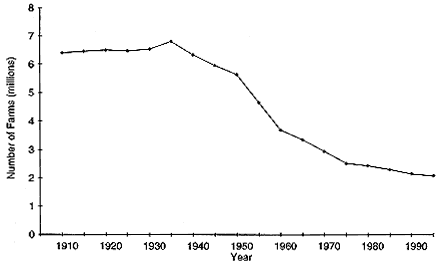
FIGURE 5-1 Number of U.S. farms, 1910 to 1995. SOURCE: Data from National Agricultural Statistics Service. Available at http://www.usda.gov.nass/graphics/data/fl_frmwk.txt.
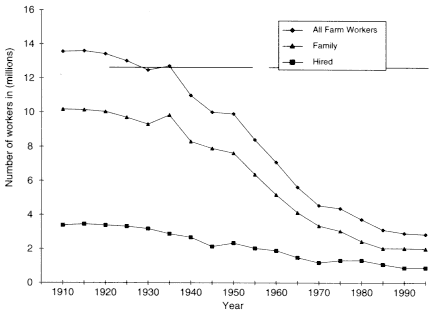
FIGURE 5-2 U.S. farmworkers by type, 1910 to 1995. SOURCE: Data from National Agricultural Statistics Service. Available at http://www.usda.gov/nass/graphics/data/fl_frmwk.txt.
average size had grown to 469 acres (Olenchock and Young, 1997a; U.S. Department of Agriculture, 1997). This change has also affected the prevalence of family farms and family labor. In 1940, 75.6 percent of all workers on farms were family members, defined by the U.S. Department of Agriculture as self-employed or unpaid family workers. This percentage had declined to 69.4 percent by 1995; see Figure 5-2. The results of changing farms and demographics of workers may yield new types of agricultural diseases and injuries (Olenchock and Young, 1997b), such as chemical and biological exposures, resulting in new acute syndromes or chronic conditions.
As the average size of farms continues to increase and more workers are hired, there will likely be fewer children and adolescents of the owners working on farms. However, there may be a subsequent increase in the number of adolescents hired as farmworkers and in the number of farmworkers' children who are working alongside their parents in the fields. The results of the National Agricul-
tural Workers Survey indicate a trend towards an increased percentage of hired farmworkers who are between 14 and 17 years old: This age group now makes up 7 percent of all hired farmworkers working on crops (U.S. General Accounting Office, 1998). The Bureau of Census's Current Population Report indicates that there were 923,000 children younger than 15 years and 346,000 children between the ages of 15 and 19 residing on U.S. farms and ranches in 1991 (Dacquel and Dahmann, 1993). There are no data on the number or proportion of children and adolescents residing on farms who are directly involved with agriculture as paid or unpaid workers. Nor are there good data on how many children of paid farmworkers work with their parents in the field.
Three somewhat distinct groups of young people work on farms: children living and working on their parents' farms, adolescents who are hired to work on farms not owned or operated by their parents and whose parents are not so employed, and children who accompany their migrant farmworker parents. No data adequately documents the numbers of any of these groups. In 1996 about 300,000 young people between the ages of 15 and 17 worked in agriculture according to Current Population Survey data (U.S. General Accounting Office, 1998). About 75 percent of them were paid farmworkers, 15 percent were self-employed, and 10 percent were unpaid family workers. From National Agricultural Workers Survey data for 1993–1996, it is estimated that there were an average each year of 128,500 hired agricultural workers between the ages of 14 and 17 (U.S. General Accounting Office, 1998). Almost one-half of those 14-to 17-year-olds were living on their own, away from their parents (Mines et al., 1997).
The Current Population Survey, which is a household sample, may be likely to miss populations who do not have a stable residence, such as migrant agricultural workers. The National Agricultural Workers Survey includes only hired farmworkers 14 years of age or older; self-employed and unpaid family farm workers are excluded. Therefore, both of these surveys are likely to undercount the actual number of children and adolescents working in agriculture (Arroyo and Kurre, 1997; U.S. General Accounting Office, 1998). There is anecdotal evidence of very young children, usually children of migrant farmworkers, working in the fields but they are
not counted in any systematic way, making it difficult to estimate the extent of agricultural work by children under the age of 14.
I'm 9 years old and I've been working in the fields with my parents since I was 4. We work hard, sometimes over 10 hours a day. We cut paprika with shears and stoop over to bag onions. We pick nuts and tap garlic.
Testimony before the Forum on Federal Study on Child Labor
March 23, 1998, San Francisco, California
Whether young people are working on their parents' farms, are hired to work on the farms of others, or are accompanying their migrant farmworker parents, many of the hazards they face are similar. Analysts of child labor issues in agriculture often differentiate between family farm children and migrant farmworker children. Although this distinction may be useful for selected purposes, it is misleading in suggesting that there are exclusive categories of children who work in agriculture. In reality, there is a spectrum of variables with a range of conditions that affect the health and safety of all child laborers in agriculture. For example, any child working in agriculture could incur a traumatic injury or chronic disease. Conditions external to the work itself, such as poverty, education, and public policy may have a far stronger effect on children's well-being, but these conditions affect individuals in different ways. For example, migrant farmworker children are more likely to be living in poor conditions than nonmigrant children. Because it is so difficult to distinguish among the different groups of young farmworkers in either the employment or injury data, this chapter deals with the agricultural setting in general. When a particular group may be more affected by a specific hazard, it is noted. This chapter details some of the unique features of agriculture as a work setting, the types of risks young people encounter on farms, the injuries they suffer, and the barriers to regulating child labor on farms.
UNIQUE FEATURES OF AGRICULTURE
Life-Style and Family Farms
Since colonial times, farming has been held in high regard in the United States. The continent was unsettled territory, and the primary occupation of the new settlers was farming. English traditions exerted strong influences on colonial life and agriculture: The new immigrants brought with them notions of private property, a market system, and such farming tools as plows, hoes, and harvesters. They planted wheat and vegetables from European seeds and borrowed corn and tobacco seeds from the Indians. Because land was plentiful, various domesticated animals, such as sheep, swine, cattle, and horses, were left to graze unsupervised in nearby forests. However, although the pattern in Europe was often for the farmers to live in central villages with their land holdings on the outskirts, in colonial America they lived on their individual farmsteads. This settlement pattern encouraged a reliance on family labor, plus a strong sense of independence, individualism, and personal freedom. What the colonists wanted to avoid at all costs was the feudal land tenure system where workers on farms were not the land owners. Thus, through the years, the United States has protected an almost unlimited right to buy and sell real estate, including farm land, and the freedom to work the land as owners choose (Wilkening and Gilbert, 1987).
The strong belief in "agrarianism" reached a peak in the nineteenth century. Farming was considered the most legitimate and beneficial of occupations, farmers the most moral and patriotic of citizens (Danbom, 1997). But even today, Americans believe that most farmers are the ideal citizens: They work for themselves, they control the production decisions, they are fiercely independent, and they express their opinions in the political process of voting. From focus groups with family farmers, most believe that the heritage they have gained from their great-grandparents has been passed down through the generations, along with the land; they yearn to continue their farming lineage to their children and grandchildren, even when economic times are difficult. Thus, farm families expect their children to learn the business, help with the chores from an early age, and "shadow" the same-sex parent in their farm duties. The lifestyle on many family farms maintains traditions of years past. Daily routines are directed by the farm operator (usually the father) and
TABLE 5-1 U.S. Farm Resident Population and Average Acres per Farm, 1850–1995
|
Year |
Farm Population (as percent of U.S. total) |
Average Acreage per Farm |
|
1850 |
68.1 |
203 |
|
1860 |
n/a |
199 |
|
1870 |
50.5 |
153 |
|
1880 |
43.8 |
134 |
|
1890 |
42.3 |
137 |
|
1900 |
41.9 |
147 |
|
1910 |
34.9 |
139 |
|
1920 |
30.1 |
149 |
|
1930 |
24.9 |
157 |
|
1940 |
23.2 |
175 |
|
1950 |
15.3 |
216 |
|
1960 |
8.7 |
297 |
|
1970 |
4.8 |
373 |
|
1980 |
2.1a |
426b |
|
1990 |
1.9a |
461b |
|
1995 |
n/a |
469c |
|
a Data from Dacquel and Dahmann (1993:Table A). b Data from Bureau of the Census (1992:Table 1077). c Data from Rasmussen (1997). SOURCE: For 1850–1970, data from Bureau of the Census (1970). |
||
are dominated by production needs, weather, and economic factors. Family participation plays a central role in preserving stability. The work and recreation activities of adults and children receive social support through public and privately sponsored programs, such as 4-H, Future Farmers of America, Cooperative Extension Service training, and rural churches.
However, over the past 150 years, there has been a remarkable decrease in the farm population and an increase in the average size of farms in acres (see Table 5-1). In 1780 and the revolutionary years, almost 95 percent of men reported being farmers; by 1880, the percentage had dropped just under 50 percent; today, less than 2 percent report farming as an occupation (Mills, 1995). What is
remarkable is that this ever smaller number of farms and farmers has increased production, keeping up with the food and fiber demands of a growing population and producing a sizable excess for export. This dramatic change is attributable to three factors: (1) mechanization—the replacement of human and animal labor with capital investments; (2) specialization—the move from varied products of smaller farms to monoculture, or the output of only one product (such as strawberries, wheat, apples) on much larger farms; and (3) technological advances, including herbicides that replace hand weeding, fertilizers that permit growing the same crop on the same land year after year, and genetic manipulations that produce blemish-free fruit or slow-ripening tomatoes so that they can be transported long distances, and animal husbandry that uses artificial insemination to produce animals with desirable traits.
The growth of large-scale, intensive, often irrigation-based agriculture is matched by the decline of the small-or medium-size farms. The survival of smaller farms often depends on farmers or their family members taking an off-farm job in order to ensure the economic survival of the farm. Farmers with smaller farms also seek specialty niches, such as special fruits and vegetables, aimed at urban markets. These products are more labor intensive and are not as prone to mechanization.
While the number of farm workers has declined, including both hired and family workers, there has been a steady increase in immigrant labor pools employed in agriculture. Fitchen (1995:252) comments:
... contrary to earlier forecasts, growers have not moved toward mechanization, but toward "Mexicanization" [a term coined by Palerm, 1991] ... in such crops as strawberries, apples, pears, broccoli and asparagus, and specialty nursery plants.
Especially in California and other Western states, thousands of Mexican Americans and Mexican nationals are filling the seasonal labor needs of intensive hand labor needed during the planting, weeding, and harvesting, especially in fruit and vegetable monocropping. Florida and the Eastern seaboard states also attract immigrant workers, many of whom are from Haiti and other West Indian nations, as well as from Mexico and other Central American countries.
What do these changes imply for the numbers of children working in agriculture in the future? The answer is mixed: With the
decline in the numbers of family farms, fewer farm children will be working on their parents' farms, but it is anticipated that there will be larger numbers of children of migrant farm laborers involved in agriculture. For the latter children, many are likely to be underage children traveling with and helping their parents during their search for temporary work.
Home and Work-Site Issues
Unlike most occupational settings, agriculture often has unclear distinctions between the home and the workplace. The majority of farms are contiguous with the families' residences and have few outside (i.e., nonfamily) employees. The nature of production agriculture may require work at any time of the day, every day of the year. Thus, the separation between obligations to attend to work and to children can rarely be made by adults who raise their families on farms.
The proximity of the worksite to the home facilitates having young people assist with planned or unscheduled work on the farm. Their easy availability to participate in work makes it difficult to distinguish when children are working rather than doing family chores or being present at the workplace. Often, the unpredictable nature of farming (e.g., the difficult delivery of a newborn calf) may place a young worker in a situation for which there is insufficient training and preparation. Agricultural injuries to children also may occur when they are bystanders to work (Stueland et al., 1996). Youngsters may be playing in or around large vehicles, moving machinery, and large animals. This makes it difficult to distinguish agricultural work-related injuries to children and adolescents from those not related to work.
Children who work in the fields are also exposed to numerous hazards. Many of these hazards are particularly germane to young migrant farmworkers, who work in the fields alongside their parents—a pattern that began at the turn of the century. At that time, many farms in the Northeast and on the Atlantic coast could not compete with the large, mechanized wheat and grain farms that were opening in the Midwest; many of the old farms switched to growing fruits and vegetables for the burgeoning urban markets. Because these were seasonal markets, the farms needed large numbers of workers for fairly short periods of time. Children were often in-
cluded in this labor pool. At first, immigrants and their children were brought in by truckloads from the cities. For example, Italian immigrants worked on New Jersey cranberry farms:
Since children and women can work efficiently in berry picking and vegetable cultivation, Italians made the family ''the working unit,"... There are women and children in swarms[;] old, young and middle-aged are found in every field (The Dillingham Commission, 1911, quoted in Hahamovitch, 1997:31).
When workers began to request better wages, the growers preferred to use displaced African American plantation workers from the South. Most of these workers brought their children along because there was no place to leave them, and they could assist their parents in picking berries and weeding the fields. The only groups who did not bring their children were the foreign workers contracted for by the U.S. government. This included workers from Jamaica, Haiti, and other places in the Caribbean. The formal contracts called for specific numbers of males or females, and children were not included.
The use of migrant seasonal workers was not limited to the East Coast. In the early 1900s, midwestern farms first attracted migrant seasonal workers from such cities as Chicago, Milwaukee, and Detroit (Slesinger and Muirragui, 1981). California farmers met their early need for farmworkers through waves of immigrants: Chinese in the 1880s, Japanese in the early 1900s, Mexicans and Filipinos after World War I, and Mexicans again during World War II (Martin, 1988:5). After World War II, cities offered good wages and steady work in the factories, which not only reduced the pool of available farmworkers, but also prompted rural workers to move to the city. Urged by the agricultural industry to relieve the resulting shortage by importing workers, the federal government stepped in. One well-known example was the Labor Importation Program (Bracero Program), which permitted Mexican nationals to seek agricultural work in the United States from 1941 to 1964. Since that time, even without a program, there has been a steady influx of workers from Mexico and other Latin American countries into the agricultural fields of the United States. Many of these migrant workers bring their families with them, and their children continue to be brought to the fields to work. Data from the National Agricultural Workers Survey indicate that 28 percent of hired farmworkers have
children living with them and 13 percent of those children are reported to be working in the fields (U.S. General Accounting Office, 1998).
Reasons for Children's Work in Agriculture
From the perspective of the parents whose children work in agriculture, there are numerous reasons for the practice. Hired farm laborers, including migrant and seasonal workers, often include children and adolescents in family work teams. Economic need, the availability of jobs for people with limited command of the English language, and the fact that little training is necessary may make working in agriculture an attractive choice for many people.
On family farms, the reasons for children's participation in hazardous work was recently reported in a study of Wisconsin farm fathers (Lee et al., 1997). Fathers were asked about selected factors that influenced their decision to allow young children to drive tractors, ride on tractors, and be near the hind (kicking) legs of dairy cows. These high-risk activities were very common practices, and the fathers believed strongly that they were justified because they would help children gain farm experience, develop a strong work ethic, spend time with other family members (during farm work), build self-confidence, and save work time and money for their fathers.
Economic necessity is the main reason migrant children work in the fields. Most migrant farmworkers do not earn enough to raise their families out of poverty (Davis, 1997). A national survey conducted between 1989 and 1991 estimated that about 57 percent of migrant farmworkers and 73 percent of migrant children under the age of 14 live in poverty (Gabbard et al., 1994). Added hands in the field mean more productivity for migrant families when they are paid on a piece-work basis.
Common payroll practices work to the detriment of children, among others, in farmworkers' families. Frequently, the earnings of whole families are listed in payroll records under the name of the male head of household. This practice keeps children and other family members from earning the minimum wage or receiving credit toward Social Security, unemployment compensation, or workers' compensation benefits. By appearing to have fewer workers on their payrolls, some employers are able to completely avoid coverage un-
der the Fair Labor Standards Act, because omitting all but the heads of households on their payroll lists may reduce the number of "man days" of labor in a calendar quarter to below the 500-man-day threshold that triggers coverage by the act (29 U.S.C. §213(a)). Although there are no reliable data on how many children of migrant farmworkers actually work in the fields, farmworker advocates and enforcement officials report that the single greatest problem facing children working in agriculture is children working under their parents' payroll numbers (U.S. General Accounting Office, 1998).
INJURIES TO CHILDREN AND ADOLESCENTS IN AGRICULTURE
As for other industrial sectors, there are no reliable annual U.S. statistics regarding fatal and nonfatal occupational injuries and disease in agriculture because there is no national surveillance system for agricultural workers. In addition to the general limitations of the data that are available (see Chapters 2 and 3) for both adult and young agricultural workers, in agriculture there are the added difficulties of differentiating bystanders from workers; inconsistencies in the definitions of work, farm, and child; and the lack of a universal classification scheme for coding agricultural injuries.
The estimates that have been made are based on adaptations of sources such as the National Electronic Injury Surveillance System (NEISS) of the Consumer Product Safety Commission and state fatality reports. A recent report suggests that an average of 104 individuals younger than 19 die in farm-related incidents every year, which is an annual rate of 8.0 deaths per 100,000 population (Rivara, 1997). Because the source of these estimates does not permit distinguishing deaths unrelated to work from those deaths associated with active labor on farms, the true rate of agricultural work-related childhood fatalities is unknown. There is evidence, however, that most of these fatalities are work-related because children 10 and older—who are more likely than younger children to be working—had substantially higher fatality rates than those in younger age groups. Furthermore, males, who are traditionally assigned more hazardous jobs on farms, had fatality rates that were 2.4 times greater rate than those of females, with the highest fatality rates occurring in the adolescent years.
Further evidence of the importance of agriculture's role in work-
related fatalities among children and adolescents comes from the Census of Fatal Occupational Injuries, which shows 108 deaths of children younger than 18 in agriculture for the years 1992 through 1995. Although only about 8 percent of all young workers are employed in agriculture, 40 percent of the work-related deaths of children and adolescents under the age of 18 during that period occurred in agriculture (Derstine, 1996).
A 1993 report from the National Institute for Occupational Safety and Health estimated that children aged 10 and older suffered nearly 13,000 agricultural work-related injuries that resulted in lost worktime (Myers, 1995). Of these injuries, nearly two-thirds occurred during the months of June, July, and August, when children would typically be out of school and available to work. It is estimated that each year more than 100,000 children suffer preventable injuries associated with agriculture (T. Miller, 1995); this figure includes children who are residents, visitors to farms, and active laborers.
HAZARDS FACED BY CHILDREN IN AGRICULTURE
Studies regarding children's work in agriculture reveal a variety of specific tasks and chores performed by children, beginning at very young ages (Aherin and Todd, 1989; Hawk et al., 1991; Tevis and Finck, 1989). Children's work on farms ranges from gathering eggs by the age of 5 to operating a pickup truck before the age of 11 (Tevis, 1994). Males perform nearly all tasks at a younger age than females. Some work is relatively low risk (e.g., carrying a feed bucket), but many tasks carry the risk of serious injury (e.g., feeding pigs, hauling manure, applying pesticides). Children who are working in the fields may be near or in the way of machinery, including tractors and trucks; they may fall off ladders while picking fruit; they may get dizzy from dehydration because they do not have access to drinking water. Studies show that the most common agents of minor injury to children are animals and falls, while the most common agents of serious injury are tractors and moving machinery (Purschwitz, 1990; Rivara, 1997; Stallones and Gunderson, 1994).
Other conditions that pose risks to children are poor sanitary facilities, inadequate housing, long hours in the fields, and heavy lifting and carrying of produce. Furthermore, there is concern for both the acute and long-term effects that might result from workers'
being exposed to pesticides and other agricultural chemicals, beginning at young ages.
Pesticides2
Pesticides that are used extensively in U.S. agriculture include such compounds as insecticides, herbicides, defoliants, molluscicides, nematocides, algicides, and acaricides (Shaver and Tong, 1991). Pesticides may be absorbed into the body through the skin, by inhalation, and by ingestion. Agricultural workers can experience exposure through these routes in a variety of ways. In addition to the exposure that occurs during the processes of diluting, mixing, and applying the substances, workers can be exposed to drifting chemicals from cropdusting, and can come into contact with residues during harvesting, weeding, and pruning and while eating in the field. Water may become contaminated and then be used for drinking, bathing, and cooking. Particularly hazardous are labor-intensive crops, such as fruits and vegetables, which are extensively treated with pesticides.
Pesticides have been associated with a number of delayed health effects, such as chronic dermatitis, fatigue, headaches, sleep disturbances, anxiety, memory problems, and different kinds of cancers, birth defects, sterility, blood disorders, and abnormalities in liver and kidney function, chronic neurotoxicity, and adverse reproductive consequences (Moses, 1989; Sharp et al., 1986; Wasserstrom and Wiles, 1985). Estimates of the occurrence of pesticide-related illnesses are difficult to make because underreporting is likely: Many migrant farmworkers who might be affected never see physicians or are never properly diagnosed; if the workers do seek medical attention, the health-care professionals may be unfamiliar with the symptoms of pesticide-related illnesses, and farmworkers may not know the names of the pesticides being used. Although relatively new regulations require workers to be informed if a field is to be sprayed, there is no information as to how well the warning procedure is being followed. In addition, there is relatively little information on the effects on children and adolescents of exposure to pesticides and whether they should stay out of sprayed fields longer than adults.
Although several reviews have addressed the association of cancer and pesticide exposure among farmers and permanent farm help (Council on Scientific Affairs, 1988; Zahm and Blair, 1993; Zahm et al., 1997), few population-based studies have been published about the effects of pesticides and virtually none have focused on young workers. In California, three projects—a case study of a childhood cancer cluster (California Department of Health Services, 1988), a hospital record-based study of birth defects (Schwartz and LoGerfo, 1988), and a health survey (Mines and Kearney, 1982)—examined some of the effects. The investigations suggest that chronic health problems increase as a result of exposure to pesticides, but the studies have been limited in size and scope, and no clear conclusions have been reached regarding the magnitude of pesticide-related effects, particularly for children.
Poor Field Sanitation
A lack of clean drinking water, hand-washing facilities, and toilets presents another hazard to agricultural workers. This lack of sanitary facilities contributes to a spread of parasites. Rates of parasitic infections among migrant farmworkers have been found to be much higher than rates among the general population (Occupational Safety and Health Administration, 1987). A lack of water to wash and an absence of toilets in the field may result in infections, dermatitis, parasites, urinary tract infections, respiratory illnesses, eye disease, and other illnesses (Occupational Safety and Health Administration, 1987).
Long Hours and Strenuous Labor
Fatigue has been associated with increased risk of injury on the job (M. Miller, 1995; Rosa, 1995). Children's work in agriculture may include assisting with daily chores (such as milking cows) or
periodic work (such as baling hay), which often involves early morning or late evening work, or both, in addition to standard work hours or school attendance. Adolescents may be particularly susceptible to fatigue due to physiological changes that cause them to require more sleep (Carskadon, 1990, 1997; Carskadon et al., 1980; see Chapter 4). Fatigue or drowsiness associated with extended work hours may lead to poor judgment in performing duties, including the temptation to take dangerous shortcuts. Agricultural work is strenuous physical work—such as lifting heavy loads, working in awkward positions, and constantly repeating actions—that has been linked to musculoskeletal trauma (Bernard, 1997). How these activities may differentially affect children and adolescents has yet to be examined. Strenuous physical labor may be compounded by the effects of high temperatures in the fields, making agricultural workers subject to heat-related illnesses and injuries (U.S. Environmental Protection Agency, 1993). It is known that young children are more vulnerable to heat-related illnesses than adults; however, whether older children and adolescents are also more vulnerable than adults is not known (Arroyo and Kurre, 1997).
Threats to the Well-Being of Migrant Farmworker Children
In addition to being exposed to the risks from agricultural work that all young workers on farms may experience, migrant farm-worker children experience additional risks, including living under adverse housing and sanitary conditions and having problems related to the children's inability to obtain consistent and good education. Because of moving on a seasonal basis, changing schools, missing the beginnings or ends of semesters, and possibly having difficulties with English as a second language, these children are candidates for dropping out of school before obtaining their high-school diplomas. They are also less likely to learn the skills that could lead to careers other than farm work as their primary occupation as adults. Migrant farmworker adolescents often lack their families' supervision. The National Agricultural Workers Survey found that 47 percent of farmworkers below the age of 18 do not live with their parents; 80 percent of farmworker teens born outside the United States live away from their parents (Mines et al., 1997).
REGULATION OF AGRICULTURE
The various labor laws and regulations that apply to children are discussed in detail in Chapter 6. Because of the many exemptions and exclusions that apply uniquely to children working in agriculture, however, information relevant to those children from the Fair Labor Standards Act (FLSA) and the Occupational Safety and Health Act is also discussed here.
Fair Labor Standards Act
Box 5-1 lists the current rules and regulations regarding hours and hazardous conditions that apply to children working in agriculture. Farmworkers were initially excluded from protection under the Fair Labor Standards Act of 1938. A 1974 amendment set a minimum of age 12 as the legal limit for children to participate in farm work, but exemptions were granted for 10-and 11-year-olds. In all other industries, children must reach the age of 14 before they can legally work. The list of hazardous conditions from which children under 16 are prohibited is also listed in Box 5-1. These conditions ban children from the most likely sources of nonfatal and fatal injuries: operating machinery and handling breeding animals. Despite the fact that operating tractors under 20 horsepower and handling nonbreeding animals present serious hazards to children, they are legally permitted (Purschwitz, 1990). None of the FLSA rules and regulations applies to children working on their parents' farms.
Occupational Safety and Health Act
Box 5-2 summarizes the regulations that pertain to agriculture under the Occupational Safety and Health Act. It must be noted, however, that regulations are enforced only on establishments with 11 or more employees, which covers only about 5 percent of agricultural establishments in the United States. This does not mean that smaller farms ignore these regulations; indeed, many do abide by most basic safety rules and provide protective equipment. However, the Occupational Safety and Health Administration is prohibited by Congress from enforcing any of its regulations on small farms (see Chapter 6 for further details).
|
BOX 5-1 Fair Labor Standards Act All children working on their parents' farm are exempt from limits on hours of work and hazardous conditions. For other children working in agriculture: Hours
For other children under 16 working in agriculture, they are prohibited from: Hazardous Conditions
|
|
BOX 5-2 Occupational Safety and Health Act Regulations Farms and ranches are exempt from Occupational Safety and Health Act regulations if they employ 10 or fewer employees and do not have labor camps. About 95 percent of farms in the United States are therefore exempt. Larger farms must abide by the regulations specific to agriculture:
Large farms must also abide by a limited number of standards that apply to all industries. These standards apply to the following:
See Chapter 6 for further details. |
The original Occupational Safety and Health Act was passed in 1970, but it took 17 years for the Occupational Safety and Health Administration to pass requirements pertaining to standards for sanitary facilities in agricultural fields. That is, only 1987 were regulations established to require a supply of drinking water, portable toilets, and water to wash hands in the fields of the larger farms.
BARRIERS TO REGULATION OF AGRICULTURE
Interventions protecting children from agricultural hazards generate philosophical debate over issues germane to parenting, public
policy, and agricultural economics (Aherin et al., 1992; Kelsey, 1991, 1994; Kelsey et al., 1994; Mull, 1994). Since the 1970s, an idealized view of farmers and farm work has led politicians to permit distancing of agriculture from the occupational safety movement (Kelsey, 1994). Major farm organizations oppose federal inspections or investigations on small farms (American Farm Bureau Federation, 1998). At the same time, child safety advocates strongly endorse the adoption of public policy measures to safeguard children, because of the demonstrated success of such measures in reducing injuries in other arenas (American Academy of Pediatrics, 1988; Finney et al., 1993; Pless and Arsenault, 1987).
In the majority of farm operations, farm owner-operators are responsible for seeking information on appropriate safety standards and for purchasing machinery equipped with safety features. Farm owner-operators are also responsible for maintaining safety in the operation of equipment, in the structures, and in the entire work environment, while monitoring the presence, training, and participation of others in the farm work. These responsibilities may prove daunting, both in terms of financial and time investments, to owners of small farms.
Under the Fair Labor Standards Act and the Occupational Safety and Health Act, legal exemptions limit federal or state authority over hours of work, salary, and occupational safety standards related to youngsters involved in farm work. Farm owner-operators who employ young workers other than members of their immediate families are required to abide by child labor laws and hazardous work orders for their nonexempt workers. They are exempt from abiding by these laws when they employ their own children. Evidence to date suggests that public policy regarding agriculture currently bestows very limited protection for children (Landrigan et al., 1994).
CONCLUSIONS
Agriculture remains one of the most hazardous occupations in the United States, and as many as one-third of the individuals who suffer farm-related injuries are children. Numerous studies have reported acute, traumatic injuries suffered by children who work with farm machinery, livestock, or tractors. Far fewer studies have reported on the chronic effects of farm work—such as those associ-
ated with extended work hours, adverse weather conditions, repetitive work methods, and exposures to bacteria, viruses, and pesticides and other compounds—on young people.
As with many types of employment, working on farms may yield positive outcomes for children. In some cases, they are eager to participate in farm work, knowing they may have the opportunity to acquire increasing work responsibility and, possibly, farm ownership in the future. Improved self-confidence, self-esteem, and work skills are attributes often detected in young people engaged in some aspects of farm work. At the same time, the lack of legal protections for many aspects of farm work by children and adolescents raises questions about the negative aspects of such work. Ideally, agriculture should provide safe, appropriate opportunities for young people to develop meaningful skills and attributes that increase their likelihood of succeeding in the adult labor market.


