
6
Organizing for Watershed Management
Given the great variety of sizes and types of watersheds and the economic and political landscapes, what is the best organizational structure for implementing successful watershed management? Organizational structure can be either a barrier or an avenue to success. In the United States, regionally defined water management organizations have traditionally fared poorly (Newson, 1992), and agencies with missions focused on specific functions have dominated the scene. From time to time, commentators have speculated about shaping watershed management organizations and activities to more closely approximate watershed boundaries. Yet it is not necessarily clear that such watershed-defined organizations would be any more successful than present institutional arrangements. This chapter explores the structure and responsibilities of institutions and organizations seeking insight about organizational approaches to help integrate ecologic, economic, and social aspects of watershed management.
The current structure of federal involvement in water management traces its origins to the early 1800s, when the federal government became involved in navigation projects (Kenney and Rieke, 1997). During the depression years of the 1930s, the federal government greatly expanded water resource development, with a strong emphasis on using water projects to stimulate economic development. With a few notable exceptions such as the Tennessee Valley Authority (TVA), these federal investments were on a project-by-project basis, rather than on a watershed basis. Virtually all of the projects were constructed with major federal subsidies, including very low cost irrigation water in the West, subsidized flood control projects, provision of low-cost hydropower, and subsidized recre-
ation facilities. The most significant revenue generation is from sale of hydropower.
Today we are in a much different economic situation and have different priorities for our water resources. Now, virtually all of the desirable dam sites have been developed, and flood control and navigation works exist on river systems throughout the country. These projects have brought major benefits to the citizens of the United States, but our past approaches to managing water resources also have imposed significant costs. They have at times encouraged inefficient practices such as wasteful use of water and energy and caused problems such as overdevelopment in floodplains; degraded water quality from return flows from urban, industrial, agricultural, and mining activities; and radically altered stream-flow hydrology due to hydropower generation. Current efforts to reexamine the structure and funding of the water agencies in light of the needs of the twenty-first century are appropriate.
Organizational fragmentation is often a major obstacle to effective watershed management. To begin with, divisions among levels of government—local, state, federal—may generate genuine disputes over the proper locus of taxing, spending, or regulatory authority. In addition, each governmental level may have different agencies pursuing apparent cross purposes. One state agency may advocate a new dam while another might oppose it; one local agency might advocate locating a new sewer outfall at a certain place while another may oppose it.
Such apparent contradictions among agencies are inevitable in a governmental structure that, by design, represents varied stakeholder groups. However, in general the various levels of government are in pursuit of common goals. Certainly, those empowered to act may have some jealousies about their authorities, but these conflicts are far less significant than the conflicts that arise over how the land and water of a watershed might be used. For example, a fisheries management organization will view (correctly) a decision by a water and sewer authority to locate a sewer outfall near an oyster ground as having a negative effect on their goals of promoting oyster production and harvester's income.
Governments must choose between legitimate but competing public purposes. Thus, general governments decide between the water and sewer authority's preference for locating a sewer outfall near an oyster ground, and the preferences of the fisheries organization.
Within this structure, decisions allocating watershed resources among competing uses are made through a bargaining process among the same levels of government as well as vertical organizations. Policy for any action results from the formal and informal ways organizations and their leaders seek to influence each other—by technical studies (economic assessments, environmental impact statements, water quality measurements, etc.), identification of policy constraints, exchanges of support, and exchanges of both threats and promises.
Throughout the nation's history, new agencies and new complexes of organizations have been created to make decisions about land and water use, and exist-
ing ones have been changed and reorganized to meet newly perceived needs. The present move toward watershed-based management is occurring in one such period of reassessment. The hope is that such changes would lead to coordination in spending and regulatory authority. In the following pages we assess the present organizational landscape in the United States, evaluate the various strategies for creating new American watershed management organizations, review the experiences of other nations, and offer a prescription to guide future organizational change in the United States.
The American Organizational Landscape
Any effort to coordinate programs in support of effective watershed management must contend with the reality that formal authorities for regulating, taxing, and spending for land and water use are diffused throughout the levels of government, and the patterns of organizational responsibility vary greatly.
At the local level, primary responsibility for water often resides in a department of public works, which typically operates the drinking water system, sewer system, and wastewater treatment plant. Sometimes them is a separate department of water. These departments operate as enterprise accounts, where the fees collected must equal the costs of running the service. Many drinking water systems are privately owned, but few wastewater treatment plants or sewer systems are private. State agencies such as utility commissions usually set the rates for privately owned utilities, while elected officials usually establish rates for publicly managed services. Rates structures can encourage (or discourage) water conservation. Local public works agencies must often apply to state agencies for discharge permits and for certification of the drinking water system. Communities often become involved in issues of stormwater runoff, especially now that such runoff must be permitted and meet acceptable standards. Local governments are also involved in erosion and sediment control ordinances; street cleaning that removes oils, organic, soil, and bacteria from streets; and education to encourage residents to avoid overuse of fertilizers and pesticides. Local land use regulations governing floodplains and storage of hazardous and toxic materials also influence water quality. In rural counties, local government may set controls on livestock waste and use of pesticides and fertilizers, which are important for preventing surface and ground-water contamination. Most rural counties rely on septic systems for wastewater disposal and wells for drinking water, and both are usually regulated at the state or county level.
Ultimately, each state has its own organizational structure for dealing with watershed-related issues. In many states, a natural resource or environmental protection agency is responsible for water supply and quality, another agency handles recreation, a wildlife agency is responsible for aquatic life, and an economic development agency may regulate dam construction and navigation. Some states have coastal zone management plans to deal with land use in coastal river
watersheds and estuaries. Other states have special wetlands boards to oversee wetland protection. Many states also have regional planning districts that address problems that go beyond one local jurisdiction's boundaries. Water is often one of their concerns, as well as air pollution.
The diversity of approaches to watershed-related issues is described in some detail in Guide to State Environmental Programs (Jessup, 1990), which notes:
- In 12 states, EPA has jurisdiction for administering the NPDES permits; the rest of the states administer their own permits.
- Twenty-six states have the same state agency handling point and nonpoint sources of pollution. Some of the remaining states rely on EPA to oversee point sources and a state agency covers nonpoint sources, while some states have separate state agencies for the two pollution sources.
- Most states have the same agency deal with ground water and surface quality issues; in Washington State, local governments handle ground-water protection.
- In the case of wetlands, 18 states have the Army Corps of Engineers handle permitting; 4 states have local governments work with the Corps and the rest have some mixture of state and Corps of Engineers programs.
- Coastal states use four different approaches to coastal zone management: two (California and South Carolina) have independent Coastal Commissions; eight use coastal agencies, nine have the coastal programs in their general environmental agencies, six handle coastal issues through their natural resources agencies, and three (Maine, New Jersey, and Washington) leave coastal issues to the local governments.
- Water allocation is handled by a separate department or agency in 29 states, while 17 states give responsibility for water allocation to their general environmental agency, Eight states give water allocation to their Departments of Natural Resources, while others give this to state engineers or a similar position. Illinois gives water allocation authority to its Department of Transportation, Florida to Water Management Districts, and Arkansas to its Soil and Water Conservation Districts.
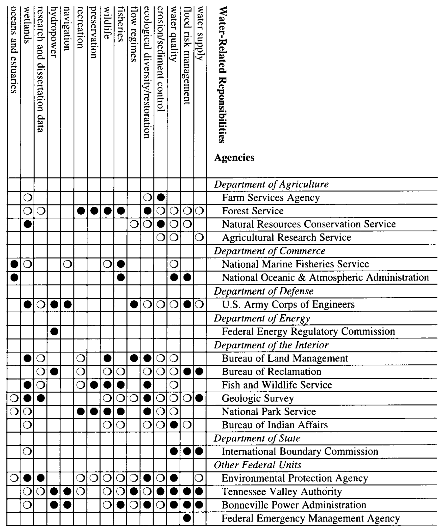
The federal level offers similar organizational diversity1. Table 6.1 is a matrix of federal agencies and their associated watershed-related responsibilities. These agencies share responsibilities for numerous important functions. The division of responsibility is sometimes based on geographical boundaries. The Bureau of Reclamation's activities, for example, are restricted to the western
United States. In other cases, agency responsibilities are divided according to jurisdictional divisions, as explained below.
Department of Agriculture
The Department of Agriculture has several divisions that address watershed issues.
Farm Services Agency
The Farm Services Agency (FSA) (formerly the Agricultural Stabilization and Conservation Service [ASCS]) administers various land-use programs to protect, expand, and conserve farmland, wetlands, and forests. The FSA is mandated to administer programs to control erosion and sedimentation, and to encourage voluntary compliance with state and federal regulations to control point and nonpoint-source pollution, as well as other programs that improve water quality (EPA, 1993). Under the Soil Conservation and Domestic Allotment Act [16 U.S.C. 590] the FSA administers programs to control erosion and sedimentation related to agricultural practices, develops programs to solve nonpoint and point source pollution, and conducts various other water quality improvement programs. The Soil and Water Resources Conservation Act [16 U.S.C. 2001] established Resource Conservation Districts (RCDs) under the Secretary of the Department of Agriculture to promote federal, state, and local cooperative efforts to conserve water during times of drought, conserve surface water, preserve and improve the nation's wetlands, and increase migratory waterfowl habitat.
Forest Service
The Forest Service (USFS) manages the National Forests and Grasslands and regulates the use of forest resources on those lands, including the activities of commercial forestry and recreation. The original authority for the USFS was derived from the Organic Administrative Act of 1897, which created the National Forest Service System. The National Forest System originally had the dual purposes of preserving favorable conditions of water flows and ensuring continuous timber supply [16 U.S.C. 473-482]. The USFS participates in general forest protection and balances timber harvest with watershed protection for water quality and fish. The Multiple Use and Sustained Yield Act of 1960 [16 U.S.C. 528] requires the USFS to "manage watershed and fish resources as equally valuable resources with recreation, range (livestock grazing) and wildlife" [16 U.S.C. 528]. The multiple-use and sustained-yield objectives integrate consideration of physical, biological, economic, and scientific issues in resource management, and consider the resource needs of future generations (Doppelt et al., 1993).
Under the National Forest Management Act of 1964 [16 U.S.C. 1600], the
USFS undertakes forest management and "regulates timber harvest when watershed conditions will be irreversibly damaged or where water conditions of fish habitat will be seriously or adversely affect" (Doppelt et al., 1993). The Act requires that the USFS establish guidelines for riparian areas, soil, and water. The fish and wildlife habitats are to be managed to maintain well-distributed, viable populations throughout the forest system. Along with other federal agencies, the USFS nominates and manages river sections that are within national forest boundaries, and that have outstanding natural, cultural, or recreation features in a free flowing condition for designation under the Wild and Scenic Rivers Act [16 U.S.C. 1271]. The USFS also manages the majority of the nation's wilderness areas under provisions of the Wilderness Act of 1964 [78 Stat. 890, 16 U.S.C. 1131-36]
National Resource Conservation Service
The National Resource Conservation Service (NRCS), formerly the Soil Conservation Service (SCS), participates in cooperative resource management programs to develop and conserve soil and water resources. The NRCS offers technical assistance on agricultural pollution control and environmental improvement projects. Nearly three-fourths of the technical assistance provided by the agency goes to help farmers and ranchers develop conservation systems uniquely suited to their individual properties and ways of doing business. NRCS has helped producers develop and implement 1.7 million conservation plans on 143 million acres of highly erodible cropland (Rosenbaum, 1991). It provides assistance to farmers and ranchers to improve water quality and teaches them how to conserve water by irrigating more efficiently.
The NRCS and FSA work together under the Soil Conservation and Domestic Allotment Act of 1936 to encourage and improve state and local programs for resource conservation and development. The NRCS assists in planning soil and water conservation programs; provides leadership in conservation and development of soil, water and related resources programs; and provides water supply forecasts, data on climate, and soil surveys. Under the Soil and Water Conservation Act of 1977, NRCS also provides technical assistance to the Conservation Districts regarding soil, water, air, plants, and animals for watershed protection, flood prevention, fish and wildlife management, community development and other purposes. This program was designed so that the USDA could cooperate with state agencies, Resource Conservation and Development councils, local units of government, land owners, and land users. The nation's 3000 conservation districts (virtually one in every county) are the heart of the conservation delivery systems. They link the NRCS with local communities and local priorities for soil and water conservation. The Act recognized the importance of a coordinated appraisal and program framework, "since individual and governmental decisions
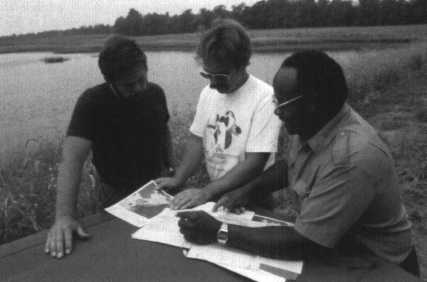
Technical specialists from USDA's National Resource Conservation Service work in the field with landowners to help them develop and implement sound conservation plans. Credit: USDA-Natural Resources Conservation Service.
concerning soil and water resources often transcend administrative boundaries and affect other programs and decisions. . ." [16 U.S.C. 2110, Section 2(3)].
NRCS administers a national watershed program that is integral to the USDA's National Conservation Program. Through this program, NRCS helps states, local units of government, tribes, and other sponsoring organizations address water-related and other natural resource issues, conduct studies, develop watershed plans, and implement resource management systems. The program includes projects carded out under the Watershed Protection and Hood Prevention Act of 1954 [PL 83-566] and the 11 watersheds authorized under the Flood Control Act of 1944 [PL 78-534]. Over 2000 plans covering 160 million acres in watersheds in every State, Puerto Rico, and the Pacific Basin have been completed or are under way. Authorized purposes for these NCR's-assisted watershed projects are watershed protection, flood prevention, agricultural water management, water based recreation, fish and wildlife habitat improvement, ground water recharge, water quality management, and municipal and industrial water supply.
Program objectives have changed over time in response to legislative direction, environmental concerns, and changing social values. The objectives of many of the original projects were to reduce flooding, improve drainage, and increase
irrigation efficiencies. In the 1960s, high priorities were placed on projects that provided jobs to combat poverty and encourage rural development; many of these projects involved establishing recreation areas. In recent years, projects have focused on land treatment measures to solve natural resource problems, such as substandard water quality and loss of wildlife habitat. To meet new challenges, the watershed program is being expanded and strengthened to support the agency's new emphasis on locally led conservation. Locally led conservation is an extension of the agency's traditional assistance to individual farmers and ranchers for planning and installing conservation practices for soil erosion control, water management, and other purposes and is an effort to better tailor NCR's assistance to meet the needs of individuals and communities.
Department of Commerce
The U.S. Department of Commerce has two divisions that play substantial roles in watershed-related issues.
National Marine Fisheries Service
The National Marine Fisheries Service (NMFS) is responsible for marine habitat management and the protection and restoration of marine water quality. The agency reviews water quality criteria as they affect threatened and endangered species in the marine environment.
The NMFS also works with the U.S. Fish and Wildlife Service to implement the Fish and Wildlife Conservation Act of 1934 [PL 89-72] and the Endangered Species Act of 1973. The Fish and Wildlife Conservation Act states that "wildlife conservation shall receive equal consideration and be coordinated with other features of water resource development programs" [16 U.S.C. 661]. The NMFS is required to work with the USFWS to provide assistance and cooperation among federal, state, and public and private agencies managing fish and wildlife. The agencies are mandated to make surveys, investigate lands and waters, and accept donations of lands and funds to further the purpose of the management of wildlife resources. Under the Endangered Species Act (ESA), the two agencies make the final decision on whether or not to list a species as threatened or endangered. The NMFS is responsible for listings of marine species, including anadromous salmonids such as salmon, sea run trout, and steelhead (Doppelt et al., 1993). Section 2(b)(1) and (2) of the ESA requires that all federal departments and agencies use their authority to further the purpose of the act and "shall cooperate with state and local agencies to resolve water resources issues in concert with conservation of endangered species."
National Oceanic and Atmospheric Administration
The National Oceanic and Atmospheric Administration (NOAA) is responsible for describing, monitoring, and predicting conditions in the atmosphere, ocean, sun, and space environment. The agency is also responsible for managing and conserving living marine resources and their habitats, including certain endangered species and marine mammals.
Under the authority of the Coastal Zone Management Act [PL 92-482], NOAA assists 29 coastal states in promoting effective management of coastal zones by balancing competing demands on resources, protecting the public health and safety, public access, and economic development. The reauthorization of the Coastal Zone Management Act in 1990 required states to develop, with the aid of NOAA, coastal nonpoint-source pollution control programs to restore and protect coastal waters of the nation. Managing coastal watersheds has become a major focus since the reauthorization of the Act. NOAA administers this Act by encouraging states to exercise full authority over the lands and waters in the coastal zone and contributing funds for projects (1992 funding was $40 million). The agency also assists states in cooperation with other federal and local government agencies and other vitally affected interests to develop land and water use programs for coastal zones. Section 302 (k) states that ''land uses in the coastal zone and the uses of adjacent lands which drain into the coastal zone, may significantly affect the quality of coastal waters and habitat." This statement emphasizes the importance of controlling land use activities in order to control coastal water pollution.
The Marine Protection Research Sanctuaries Act [PL 92-532] recognizes the long-term consequences of human activities in the coastal zone, as well as the importance of assessing the ecological, economic, and social impacts of humans on the physical and biotic environment. Under this Act, NOAA assists agencies in developing management alternatives that minimize human impacts on coastal and marine resources (EPA, 1993). NOAA is also responsible for administering the National Estuarine Research Reserve System. Under this program, NOAA establishes and manages a national system of reserves representing different coastal regions and estuarine types that exist in the United States. These reserves not only preserve important ecological areas, but act as field laboratories for study of natural and human processes (EPA, 1993).
Department of Defense
The U.S. Army Corps of Engineers (USACE), under the Department of Defense, has wide ranging authority regarding water resources. The Corps' activities include: regulating of all construction permits in navigable waters; transporting and dumping dredged materials; developing, planning, and building dams and other structures to protect areas from floods; providing a supply of water for
municipal and industrial use; creating recreational areas; improving water and wildlife quality; and protecting the shorelines of oceans and lakes.
The Corps is best known for its flood control facilities and major public works projects. It is authorized to construct and operate multipurpose dams and reservoirs for flood control and navigation. It also has authority over projects to protect public health, safety, and welfare; water quality; conservation; aesthetics; environment; historic values; and fish and wildlife values. The U.S. Army Corps of Engineers also helps communities with issues related to development and management strategies for flood control, coastal and shoreline erosion, outdoor recreation, environmental restoration, and water quality control (EPA, 1993). The Corps has become involved in major environmental restoration projects such as the Everglades Restoration Project in Florida and the Upper Mississippi Environmental Management Program (Eisel and Aiken, 1997).
Under the Rivers and Harbors Act of 1988, a permit is required from the Chief of Engineers for any activity that would cause physical alterations such as channelization in the nations' waterways (Portney, 1990). Later amendments to this law gave the Corps authority to control beach and shore erosion along public shores. Many such projects were designed and constructed by the USACE to assure that water pollution would not affect the public. The Corps' projects also involved some programs to provide recreational benefits and land enhancement.
Most of the various flood control acts adopted over the years provided for technical information and planning assistance by the USACE to local communities and involved cost sharing with local sponsors. The acts promote the development of projects that address flood hazards in land and water use planning for streams, lakes, and oceans [33 U.S.C. 701-709]. Ironically, section 1135 of the Flood Control Act of 1986 authorizes restoration in a watershed if a Corps project has directly contributed to a watershed problem, such as an area near a dam constructed by the Corps (EPA, 1993).
The Corps is the permitting agency for Clean Water Act section 404 permits for dredging or filling of wetlands. While the EPA has veto authority over the permits, the Corps does the day-to-day work in protection of wetlands. The Corps" manual also defines wetlands and how to delineate them (USACE, 1987).
Department of Energy
Federal law gives authority to license all nonfederal hydroelectric projects that use federal lands or affect navigable waterways to the Department of Energy's Federal Energy Regulatory Commission (FERC). Given its role in licensing hydropower facilities, FERC can have substantial impact on watersheds. Under the provisions of the Federal Power Act, FERC seeks to regulate the safe and efficient operation of hydropower facilities while also balancing other needs such as protection of fish habitat and provision of recreational opportunities (Rosenbaum, 1991). FERC can, for instance, require dam operators to meet
instream flow requirements or make changes in operation protocols. FERC's authority is limited by the National Environmental Policy Act, the Clean Water Act, the Endangered Species Act, the National Wild and Scenic Rivers Act, and other statutes (Doppelt et al., 1993). Although FERC's procedures have evolved over the past decade to give more consideration to nonpower values, it is still sometimes criticized for favoring development of water resources over protection of environmental values and for being an inefficient mechanism for resolving complex conflicts over the use of water resources, FERC is moving to consider cumulative impacts of multiple hydropower projects within watersheds, but these efforts also can be controversial both to state and private interests uneasy with such federal oversight and to environmental organizations pushing for increased resource protection.
Department of the Interior
The Department of the Interior has several divisions that have a variety of authorities related to water and watershed management.
Bureau of Land Management
The Bureau of Land Management (BLM) administers significant acreage of public lands and the resources found therein. These resources include timber, minerals, oil and gas, geothermal energy, wildlife habitats, endangered plant and animal species, rangeland vegetation, recreation areas, wild and scenic rivers, designated conservation and wilderness areas, and open space lands (Rosenbaum, 1991).
The organic act for BLM, the Federal Land Policy and Management Act calls on BLM to manage its lands for multiple use and sustained yields, while taking into consideration resource needs of future generations and protection of environmental quality. BLM develops plans for its lands and controls activities that could threaten water quality and watershed values, such as timber harvesting, road building, livestock grazing, mining, water diversions, and motorized recreation. BLM designates areas of critical environmental concern in its land use plans, giving equal consideration to fish and wildlife resources, restoring natural systems, habitats, and water quality. The Act requires that BLM comply with state and federal pollution control laws governing nonpoint-source pollution that might be caused by forestry, grazing, mining, and roadbuilding.
Bureau of Reclamation
The Bureau of Reclamation (BOR) is authorized to develop and manage the water and power resources in the western states. Projects administered by the Bureau include flood control, regulation of river flows, outdoor recreation, fish and wildlife enhancement, and water quality improvements. The BOR constructs
and operates federal multipurpose dams, reservoirs, and hydroelectric projects, and is responsible for managing the related natural resources (Doppelt et al., 1993). In addition, the BOR administers irrigation drainage programs and reclamation projects and develops other environmental enhancement projects.
To achieve its primary objectives, BOR exercises responsibility for protecting and restoring fish and wildlife resources, including endangered species and migratory birds, where water resources have been contaminated by pollutants resulting from irrigation. State and local projects receive federal assistance from the BOR for projects related to conservation of water, energy, the environment, and water quality. For instance, in the Platte River Basin, the BOR has revised project procedures and made other modifications to produce increased flows for wildlife habitat (Eisel and Aiken, 1997).
Fish and Wildlife Service
The U.S. Fish and Wildlife Service (FWS) regulates the development, protection, rearing, and stocking of wildlife resources and their habitats. The FWS is responsible for enforcing regulation of hunters, protects migratory and game birds, fish, and wildlife, threatened and endangered species, and preserves natural habitats of these resources.
FWS jointly administers the Fish and Wildlife Coordination Act of 1934 and (in partnership with the National Marine Fisheries Service) the Endangered Species Act of 1973. FWS has jurisdiction over terrestrial and native fresh water species. The FWS administers the National Wildlife Refuge System Act, and the refuges established under this authority provide for the conservation of fish and wildlife, including endangered and threatened species (Doppelt et al., 1993).
The Coastal Wetlands Planning, Protection, and Restoration Act authorizes FWS to facilitate the acquisition of coastal lands or waters for the restoration, enhancement, and management of coastal wetlands ecosystems and water quality. FWS administrators programs under this act for long-term conservation of coastal wetlands and the hydrology, water quality, fish, and wildlife dependent upon them (EPA, 1993). FWS also jointly administers the Wild and Scenic Rivers Act with BLM, the USFS, and the National Park Service, to preserve segments of rivers that have been designated part of the system. Other federal agencies involved in development, management, or policy relating to natural resources must work in consultation with FWS on potential impacts before implementation can begin.
United States Geological Survey
The U.S. Geological Survey (USGS) carries out comprehensive data collection and research and is responsible for classifying and managing the mineral and water resources on federal lands, including the outer continental shelf. Watershed research is conducted to expand understanding of basic hydrologic mecha-
nisms and their responses at the watershed scale and to provide information that serves as the basis for the water and environmental management activities carded out by other governmental and private agencies. Although the value of watershed research is well recognized within the USGS, financial resources to support it are modest (NRC, 1997).
Related to watersheds, the USGS maintains the "Earth Resources Observation System Data Center," which conducts and sponsors research to apply data findings in mapping, geography, mineral and land resources, water resources, rangelands, wildlife, and environmental monitoring and is a major depository for aerial photography as well as satellite imagery. USGS also operates the National Stream Quality Accounting Network, a national system for gathering data on various measures of water quality (Portney, 1990). This program identifies emerging water quality problems by tracking the status of water bodies through long-term monitoring. The USGS has provided information on water quality since 1895, and maintains a water quality and water resources database from which one can interpret water quality trends.
Under its National Water Quality Assessment Program, USGS collects geological data and conducts appraisals of the nation's ground water. and surface water resources. USGS publications and web sites provide consistent water quality and water quantity information for water resources decisionmaking at all levels of government. In addition, as a result of the Water Resources Research Act, USGS provides grants for limited research on water resources and water quality problems.
The USGS water resource program is financed by a combination of direct appropriations and reimbursable cooperative programs with other federal agencies and state and local governments (USGS, 1994). The fiscal year 1994 budget for the USGS water resources program was $400 million. Over half of these funds come from reimbursable sources. This high level of reimbursable support indicates a well developed network of cooperative interagency activities.
According to a recent review of watershed research at the USGS (NRC, 1997), the need for watershed science is considerable and diverse, and USGS, as a scientific nonregulatory agency, has important roles. to play in generating knowledge, information, and data. To be most effective, the review notes, USGS should focus on areas that can provide key information on significant problems. Four areas merit increased attention (NRC, 1997): (1) relatively larger watersheds, (2) urban and urbanizing watersheds, (3) restoration of damaged watersheds, and (4) erosion and sedimentation processes in watersheds.
National Park Service
The National Park Service (NPS) administers programs to conserve the scenery, natural and historic objects, and wildlife in the nation's national parks. The parks are preserved for the enjoyment of the public and future generations.
Preservation includes protection of fish and wildlife, their habitat, and the management of water quality and quantity. The NPS provides for the protection and restoration of riverine ecosystems and aquatic habitats within parks (Doppelt et al., 1993).
NPS jointly administers parts of the Wild and Scenic Rivers and wilderness systems with BLM, USFS, and the FWS. The goal of the NPS is to create and maintain high quality recreational areas and facilities in the United States, which includes rivers and river access. NPS administers the "Rivers, Trails, and Conservation Program" of the Department of Interior to help citizens develop programs to conserve rivers and establish trails on lands outside national parks. Working in partnership with state and local governments, NPS provides guidance and technical assistance for planning and developing trails and river access and preserving the quality of the land and water resources (EPA, 1993).
Bureau of Indian Affairs
Established in 1824 in the War Department, the Bureau of Indian Affairs (BIA) became a bureau in the Department of the Interior in 1849. BIA is the principal bureau within the federal government responsible for the administration of federal programs for recognized Indian tribes and for promoting Indian self-determination. As a result of the various treaties and other agreements with Native American groups, the BIA also has trust responsibilities. The mission of the Bureau is to enhance quality of life for American Indians, promote economic opportunity, and carry out the responsibility to protect and improve trust assets of Indian tribes and Alaska Natives.
BIA provides federal services to approximately 1.2 million American Indians and Alaska Natives who are members of more than 557 federally recognized Indian tribes. The Bureau administers 43,450,267 acres of tribally owned land, 10,183,530 acres of individually owned land, and 417,225 acres of federally owned land held in trust in 257 Indian land areas. Developing forest lands, leasing mineral rights, directing agricultural programs and protecting water and land rights are among its activities. The Office of Trust Responsibility in the BIA works closely with the tribes, who have more control over these lands than in the past. Lands administered by BIA include parts of many important watersheds, especially in the western states, and Indian water rights (mostly still undetermined) have a direct bearing on watershed management.
Independent Agencies
There are several major independent national or regional entities with significant authority over water resources and watersheds.
Environmental Protection Agency
In 1970 the Environmental Protection Agency (EPA) was created by an administrative reorganization plan and then established by statute, taking bureaus from the Department of the Interior; Department of Agriculture; Department of Health, Education, and Welfare; and the Atomic Energy Commission. The new agency was given the task of environmental protection, including responsibilities for enforcement of the Clean Water Act, the Clean Air Act, the Resource Conservation and Recycling Act, the Superfund Program, the Toxic Substances Control Act, and the Federal Insecticide, Fungicide, and Rodenticide Act. EPA works through regulations, enforcement action, grants, and the setting of standards. It is involved in numerous water quality, water quantity, and pollution prevention activities.
EPA maintains a series of national hydrologic databases, known as reach files, that identify and interconnect the stream segments or "reaches" that comprise the country's surface water drainage system. Reach codes uniquely identify, by watershed, the individual components of the nation's rivers and lakes. The hydrologic transport network defined within the reach files allows the modeling and visualization of waterborne pollution coming from both point and nonpoint sources. Thus permit writers, emergency management personnel, and other environmental managers can "navigate" upstream and downstream when assessing the causes or implications of actual or potential pollution events. The agency also maintains a publicly available database, STORET, containing data on water quality throughout the nation.
Tennessee Valley Authority
The Tennessee Valley Authority (TVA) was created in 1933 as an independent federal agency to "improve the navigability and provide for the flood control of the Tennessee River; to provide for the reforestation and the proper use of marginal lands in the Tennessee Valley; to provide for the agricultural and industrial development of said valley; to provide for the national defense by the creation Of a corporation for the operation of Government properties at and near Muscle Shoals in the State of Alabama" (Viessman and Welty, 1985). TVA, a $5.5 billion corporation, is the nation's largest power corporation, producing more than 130 billion kilowatt hours of electricity a year. Its power sales are financially self-supporting. TVA also manages 164 public recreation areas, including Land Between the Lakes, TVA's national recreation and environmental education area.
To achieve the two original primary purposes of flood control and navigation development, as required by the TVA act of 1933, the Tennessee River and its tributaries were developed into one of the most controlled river systems in the world. The series of dams and reservoirs built brought changes in water quality,
aquatic habitats, fisheries, hydrology, and water uses. Initially, some of these changes were accepted as inevitable trade-offs for the benefits provided, but over time the expectations of the people in the basin changed as the economy improved. The changing expectations caused TVA to evolve and respond, with its scientists and engineers working to understand the changing hydrology and conditions and looking for ways to facilitate multipurpose operations of the system of dams and reservoirs. A recent example of this is TVA's Clean Water Initiative, a way of focusing attention of smaller watershed units (see Box 2.1, Chapter 2).
Bonneville Power Administration
The Bonneville Power Administration (BPA) provides electric power, transmission, and energy services for the people of the Pacific Northwest. BPA is also responsible for conservation of fish and wildlife, energy, and renewable resources, and for enhancing the region's economic and environmental health. In 1995, BPA spent $399 million on fish and wildlife investments. Congress created the BPA in 1937 to market and transmit the power produced at Bonneville Dam on the Columbia River, but today, BPA markets the power from 29 federal dams and one nonfederal nuclear plant in the Pacific Northwest. The dams and electrical system constitute the Federal Columbia River Power System, which services an area of 300,000 sq. mi. (including most of the Columbia River Watershed) and a population of 10.1 million people (BPA, 1997).
The BPA power system has produced significant benefits for the region, but these have come at a substantial cost to the fish and wildlife resources of the Columbia River basin. Salmon and steelhead populations have been reduced to historic lows, and many fish species in this region are or are about to be listed under the federal Endangered Species Act. Other resident fish and wildlife populations have also been affected. Native Americans and fishery-dependent communities, businesses, and recreationists have suffered substantial losses. In 1996, the governors of Idaho, Montana, Oregon, and Washington assembled a broadly representative, 20-member team to undertake a "Comprehensive Review of the Northwest Energy System." The goal was to reach consensus on how to shape change, ensuring that environmental goals are met and the benefits of the hydroelectric system are preserved for the Northwest. One of the recommendations was to hold the Northwest Power Planning Council, or its successor, responsible for Columbia River system governance (Steering Committee of the Comprehensive Review of the Northwest Energy System, 1996). However, the listing of salmon under the Endangered Species Act has resulted in reregulation of river flow that has involved a multitude of federal and state agencies.
Federal Emergency Management Agency
A cabinet level independent agency, the Federal Emergency Management
Agency (FEMA) provides assistance to states and local communities struck by natural or other disasters. It does so by helping managers prepare for emergencies and disasters, responding to the disasters when they occur, helping people and institutions recover from them, reducing the risk of loss, and trying to prevent such disasters from reoccurring. FEMA's vision is that the nation "will have a public educated on what to do before, during, and after a disaster, to protect themselves, their families, their homes, and their businesses; structures located out of harm's way and built according to improved codes; government and private organizations with proven effective plans, necessary resources, and rigorous training for disaster response; and community plans, prepared in advance, for recovery and reconstruction after a disaster" (FEMA, 1996). FEMA works in partnership with federal, state, and local governments, nonprofit and private sector agencies.
FEMA manages the National Flood Insurance Program (NFIP). NFIP's major goal is to reduce flood losses by implementing floodplain management regulations to ensure the use of new and substantially improved construction in flood prone areas. Floodplain management is achieved primarily through local ordinances in over 18,000 participating communities. Participating communities adopt and enforce land use and floodplain management ordinances that meet NFIP minimum criteria. Flood insurance is available to property owners in participating communities. Communities use the agency's Floodplain Insurance Rate Maps (FIRM) to identify the 100-year floodplain which is the basis for the regulations. FEMA also provides a wide array of information and publications regarding NFIP construction requirements in 100-year floodplains (FEMA, 1997).
Organizational Strategies For Watershed Management: The Search For Coordination
The many agencies described in the previous section, along with hundreds of additional state and local agencies, as well as some transnational organizations, pose some important challenges to any attempt at integrated decisionmaking on watershed issues. Throughout the 20th century, water managers emphasized the need to control the timing and variability of river flows and overbank in order to advance the nation's material prosperity, and this emphasis drove the development of an increasingly complex administrative landscape. In the 1930s, massive public works programs such as TVA resulted in a rapid expansion of federal leadership and financial responsibility for water project development. The programs of the Bureau of Reclamation, the Corps of Engineers, the Soil Conservation Service grew significantly. It was also in this period that the Tennessee Valley Authority's water development program flourished. At the same time, the upland watershed programs of the Soil Conservation Service and Forest Service were being advanced as complementary programs that would help manage water-
sheds by improving forest and grassland cover on those areas not suited to farm cultivation. Constituencies for these agency programs grew, and strong stake-holder groups emerged with the purpose of advancing water development through the authorities and budgets of these federal agencies. As these water development programs grew and the federal role expanded, there were increasing calls for better interagency coordination.
The federal government began to establish interagency committees in the 1940s for the Missouri (1945), Columbia (1946), the Pacific Southwest (1948), the Arkansas-White-Red (1950), and the New York-New England basins (1950) (Featherstone, 1996). According to Featherstone (1996), these relatively informal committees were ineffective. Seven river basin commissions were formed in the late 1960s and early 1970s pursuant to Title II of the Water Resources Planning Act of 1965: New England, Ohio, Upper Mississippi, Souris-Red-Rainey, Missouri, Pacific Northwest, and Great Lakes. These commissions replaced the interagency committees (Featherstone, 1996). Each commission had federal and state members and a core staff of 20-30 employees. The federal government funded these commissions until 1981.
Three additional river basin commissions were formed for the Potomac, Susquehanna, and Delaware basins (Featherstone, 1996). The Interstate Commission on the Potomac River Basin was created as a nonregulatory agency to address water related issues throughout the basin. It is heavily involved in water supply management issues, water quality restoration issues, and planning projects throughout the watershed. The commission has been involved in coordinating the Chesapeake Bay nutrient reduction tributary strategies that are being developed for the Potomac by Virginia, Maryland, Pennsylvania, and the District of Columbia. The commission's modeling work has been used in the development of tributary strategies throughout the Chesapeake Bay area. The commission is writing the Bay Program's Regional Action Plan to control toxic pollution on one of the Potomac's tributaries, the Anacostia River. And it has been involved in fish stocking, the construction of fish passages, and habitat restoration. The commission also does research, such as developing a plankton database for the Potomac and other parts of the Bay. Congress voted that 1996 would be the last year the commission would receive federal funds, which typically accounted for about 25 percent of the commission's budget (Bay Journal, 1996).
The Susquehanna River Basin Commission (see Box 5.2) was also given its last year of federal funding in 1997—$250,000, which makes up about 15 percent of its budget (Bay Journal, 1996). Formed by an interstate-federal compact in 1971, the Susquehanna Commission has the authority to regulate water use in the Susquehanna watershed in Pennsylvania and Delaware to ensure the supply is adequate for all users. In the face of increasing development in the watershed, the commission has been studying how much fresh water flow is required throughout the basin to protect critical habitats in the rivers and to supply the Chesapeake Bay. To avoid major changes in the Bay ecosystem and to make sure there is
enough flow during droughts, the commission purchases water from federal reservoirs and sells it to utilities to help offset the discharges they need to run their power plants. The federal government has been an important partner in managing the river, and its several agencies (USACE, USGS, FWS and EPA) continue to make decisions that affect water management in the Susquehanna watershed.
Organizations for the Delaware River basin date to 1936 and the Interstate Commission on the Delaware River was formed because of the diversion of the river's flow by the city of New York. Low flows in the river during drought periods in the early 1960s spurred the creation of the Delaware River Basin Compact by the states of Delaware, New Jersey, New York, and Pennsylvania, with the federal government as a full member (Black, 1987). The compact has authority for planning, regulation, financing, construction, and operation of facilities that are agreed to by all the members. The Commission has succeeded in allocating water, a task especially important during periods of scarcity, but failed to build a major proposed reservoir. In cooperation with the Corps of Engineers, the commission proposed the construction of a large reservoir at the Delaware Water Gap on the border between New Jersey and Pennsylvania. The reservoir was to have augmented low flows, provided flood control, and offered an unusual recreational opportunity within a two-hour drive of New York City. The plan failed because some commission members objected because of environmental quality issues.
During the 1970s, studies of these and other large-scale watershed (river basin) organizations noted that the powers and duties expected of watershed organizations replicated some of those already existing within federal and (in some cases) state agencies (Ingram, 1973). Therefore, empowering these organizations required transferring some authority away from federal and state agencies. This, perhaps more than anything else, doomed these large-scale approaches.
A regional organization is not created into an empty word. Instead, a web of relationships already exists among federal, state, and local agencies and interest groups. A regional organization must fit into, and if it is to have substantial impact, alter and redirect these relationships. A regional agency must possess and maintain support for its operations. . .. political considerations cannot be sidestepped by granting a regional organization more formal authority . . . decisions are going to be made by a process of negotiation and consent building, not by the fiat of a regional agency (Ingram, 1973).
Others have reached similar conclusions about the commissions and their parent organization, the United States Water Resources Council (Eisel and Aiken, 1997). However, an unwillingness to share power is only one source of the demise of the river basin commission concept. The commissions were largely developed to serve the budgeting and planning needs of the federal water development agencies, and were largely administered by those federal agencies. EPA was not an active participant in or supporter of the organizations. In fact, EPA was not
convinced that the struggles of the council over issues such as cost sharing or water project planning guidelines were relevant to the execution of its water quality improvement mission.
The EPA attitude reflected a larger shift in the nation's water management concerns. As the nation's attention shifted away from water development and toward regulating water quality improvement, the mission and the membership of the Water Resources Council and the river basin commissions no longer served the role for which they were created. While this is understandable given the climate of the times, lost with the Water Resources Council was the last significant attempt to coordinate across federal agencies and political boundaries.
A new national vision for our waters was offered by the Federal Water Pollution Control Act Amendments of 1972 (generally known as the Clean Water Act or CWA), which called for restoring the ''chemical, physical and biological integrity" of the nation's waters. Early in the 1970s and then in the 1980s, the principal program to restore the "chemical, physical, and biological integrity" of the nation's water was EPA's requirements and standards for wastewater treatment plant construction. Water quality programs focused not on the watershed and its streams, but on the quality of the discharge waters from specific sources. Publicly owned treatment works (POTWs) were designed by engineers to meet a fixed wastewater (effluent) standard. Industrial and commercial dischargers were expected to employ specified wastewater treatment technologies or to achieve wastewater discharge quality that was comparable to that produced by the mandated technology. As a result there was an ascendancy of the agendas and mission of the then relatively new EPA and some other long-standing federal agencies such as the Fish and Wildlife Service.
While organizations that supported the federal water project construction waned in influence, the federal role in setting environmental standards and paying for the programs necessary to achieve the standards expanded. New stakeholder constituencies formed to ensure that EPA's increasingly stringent effluent discharge standards were matched by a federal commitment to offset the cost of compliance. Such compliance was bought with generous federal grant subsidies to local governments. The federal tax code offered accelerated depreciation provisions for pollution control equipment as a financial incentive to the private sector.
Meanwhile, Section 208 of the Clean Water Act Amendments of 1972 defined substate watersheds in which nonpoint source (NPS) pollution control, along with the control of point source discharges by required technologies, was to be addressed by a watershed water quality plan. Although both point and nonpoint-source pollution are cited, no organizations were able to gain sufficient power to expand federal authority to enforce land use practices needed to reduce NPS contributions or increase the federal financial role in implementation of NPS controls. The traditional soil conservation payment programs were partly redirected toward water quality objectives, but only limited federal funds were pro-
vided to pay for implementing nonpoint-source controls. Without such funding, state and local efforts remained modest. As a result, attention to implementation of nonpoint-source controls languished during the 1980s, even as these sources came to contribute more pollution than did the more successfully controlled point sources.
In many ways the national approach to water quality protection and ecological restoration initially mimicked the historical approach to water development as federal agencies assumed leadership roles abetted by funding. However, in recent years several forces have challenged this federal agency dominated system, not only for water project construction and management, but also for water quality and general environmental management. Perhaps the initiating force was the decline in the federal financial commitment to expansion of environmental programs.
At the same time, the management capacity at state and local levels was expanding as state and local funding for water management increased, agency numbers grew, and expertise broadened. In addition, there was growing recognition nationwide that many pressing issues required solution through the exercise of powers reserved to nonfederal levels of government. For example, a growing interest in restoring watershed ecological services sparked debates over low flows in rivers and to estuaries, and consequently over the wisdom of maintaining flood control and drainage projects that controlled flow in the nation's rivers.
While such issues were clearly related to water rights and water allocation, the legacy of the nation's water project construction program demanded a federal involvement. Of the total water storage capacity of reservoirs in the United States, 68 percent is controlled by three federal agencies: the Corps of Engineers (36.8 percent), Bureau of Reclamation (28.7 percent) and TVA (2.25 percent) (Federal Emergency Management Agency, 1996). These agencies have a major financial impact on water resource activities in the United States and exercise significant control over how water is used for municipal water supply, irrigation, flood control, hydropower, recreation, and in-stream flow needs.
USACE, BOR, and TVA project operations have had to serve new environmental restoration purposes in recent years. The largest claim on the Corps' future construction budget promises to be for environmental restoration efforts, such as recreating meanders in the Kissimmee River in Florida, reinitiating sheet flows in the Everglades, and securing the hydrologic regime necessary for downstream fish passage on the Columbia and Snake Rivers. Related issues focus on how to allocate water between off-stream consumptive uses and instream flows.
The emerging responsibilities of state and local governments include new emphasis on nonpoint-source discharges. With the decline of federal financing, contemporary watershed planning now includes a search for ways to advance the control over land use necessary for the control of nonpoint-source discharges, with less federal money and constrained federal regulatory authority. The burden of this effort must fall on local and state authorities.
Meanwhile another force is at work at the state and local levels. The public
increasingly questions government agency powers and motives. The 1990s saw energized, locally based nongovernmental groups advocate for improving the ecological conditions of watersheds where they live. Watershed management became synonymous for some with democratization of decisionmaking. Goals are set by "the people" and alternatives to achieve the goals are also selected in democratic process, informed by expert analysis. Sometimes, in the most extreme version, analysis has a limited place because watershed management transcends the resource itself. The following perspective offered by a keynote speaker at the Watershed 96 conference is frequently heard in discussions of watershed management:
Water is not a science issue, it is sociopolitical. Yes, we all want and need good science, but it is not enough. The challenge is to reconnect people who hold different values and restore civility. To depersonalize our conflicts, to create options for mutual gain, to each be a keeper of the other's dignity, to have open, conflicting discussions about experiences and values including pride, self-reliance, intergenerational equity, and yes, even fear.... Today, watershed planning may be as much about strengthening local communities and democracy as it is about resource management (Baril, 1996).
Successful water resource democracy requires that participants have a shared understanding of the resources and the administrative frameworks available to deal with the issues. The mistrust and disinformation that greeted the President's 1997 Executive Order on American Heritage Rivers crippled the efforts of some watershed groups in their attempts to participate in the program (Box 6.1) and provides an example of some of the problems that can arise when resource management enters the sociopolitical domain.
Contemporary Organizational Responses
As a result of the forces described above, various organizational arrangements have been developed in response to water quality and quantity problems. Partly because of the lessons of the river basin commissions, very few of these efforts have sought to transfer powers and authorities from existing agencies to a watershed authority. Instead, the organizational arrangements have evolved to mesh powers with existing authorities. Efforts of the once powerful TVA to advance water quality in the Tennessee River watershed illustrate this reality. TVA's original mandate—to use a series of dams and pools to create low cost hydroelectric power for economic development, control floods, and allow barge traffic to move goods—was accomplished with significant federal funding and by the exercise of significant powers vested in the agency.
One result of TVA's success in carrying out its original mandates is that a number of water quality problems developed, including low dissolved oxygen
levels in the water and increased PCB levels. TVA's Clean Water Initiative has the stated objective of making the Tennessee the cleanest commercial river in the United States. Using a watershed approach, TVA pinpoints problem areas of nonpoint source pollution and establishes mitigation activities. TVA has taken a partnership approach, involving private landowners, soil and water conservation districts, local government, and state natural resource and fish and wildlife agencies in the projects. It finds itself working under many different local land use laws, wildlife laws, and approaches to water quality objectives. Because of the uniqueness of TVA's original legislation, it has some discretion in how it allocates the funds appropriated by Congress, but it works to keep local people informed about the problems and issues and involved in TVA's efforts. TVA, even as a federal agency, has had to rely on the powers and persuasion of local entities and the states to accomplish its water quality goals.
Intrastate Watershed Management Initiatives
Arrangements among management agencies vary greatly among states and regions. At least 20 states have organized their activities in varying degrees around watersheds, as listed in Table 6.2. By a watershed program, we mean that
TABLE 6.2 States That Have Watershed-Oriented Organizational Structures
|
State |
Status |
|
Alaska |
In progress |
|
Arizona |
In progress |
|
California |
In progress |
|
Delaware |
Implemented |
|
Florida |
In progress |
|
Georgia |
Implemented |
|
Idaho |
In progress |
|
Massachusetts |
Implemented |
|
Minnesota |
Implemented |
|
Montana |
In progress |
|
Nebraska |
Implemented |
|
New Jersey |
In progress |
|
North Carolina |
Implemented |
|
Oregon |
In progress |
|
South Carolina |
Implemented |
|
Tennessee |
In progress |
|
Texas |
In progress |
|
Utah |
Implemented |
|
Washington |
Implemented |
|
Wisconsin |
Implemented |
|
SOURCE: Reprinted, with permission, from Nagle et al., 1996. © 1996 by Water Environment Federation. |
|
|
Box 6.1 American Heritage Rivers and the United Nations Plot  The fate of President Clint's American Heritage Initiative in some parts of the country illustrates the problems that cane generated by misinformation and extreme political positions. The Executive Order establishing the initiative on September 11, 1997 specified that the purpose was to "protect and restore rivers and their adjacent communities." The President ordered executive agencies to coordinate activities and resources to promote environmental restoration of waterways nominated for the program and economic restoration of the associated communities through partnerships with local authorities. In particular, the President ordered agencies to improve the delivery of federal services and programs and reduce procedural requirements and paperwork related to providing assistance. The policy directed that agencies make special efforts to coordinate federal planning and management efforts to protect the communities' goals, and to ensure that efforts for one community do not adversely affect neighboring communities. The focus of the program is to be a series of designated American Heritage Rivers that would be included in the system after nomination by local or state officials and citizens and demonstration of broad community support. The executive order specifically states as an objective the protection of private property rights. |
analysis of the water quality and/or quantity is handled at some watershed scale. Many of these states have nonpoint pollution control as a primary objective. Actually, any state using a total mean daily loading (TMDL) approach for setting permit standards for National Pollutant Discharge Elimination System (NPDES) permits is taking a watershed approach, because that approach focuses on the quality of the receiving waters and quality is a function of all the land uses and discharges into the river upstream. Watershed-based water quality management provides a mechanism for pollution permit trading which recognizes that it may be more cost-effective to control agricultural nonpoint pollution than to control urban runoff pollution. These state-based watershed water quality programs are supported by reallocating existing state program moneys, some of which comes
|
Despite some support from communities desiring to better coordinate their activities, the initiative triggered hundreds of critical responses from newspaper articles to a flood of communications to the White House. Much of the opposition came from private property advocates who feared that the initiative was related to an attempt to usurp their rights and cede rivers to United Nations control. "The U.N. wants our river," claimed an editorial in a California newspaper, which went on to predict that if the initiative was not stopped, new property restrictions would be enforced by satellite surveillance. In congressional hearings, some speakers equated the initiative with socialism, communism, and treason. As reported by Wanich (1997), the opposition became strong enough to elicit congressional support, including a resolution to block implementation of the program. Local watershed management groups also suffered from misinformation. In Arizona, for example, the Verde River Watershed Association considered applying for designation of the Verde River as part of the new program. Local opposition from residents fearing a take-over by distant authorities was strong enough to convince the association not to participate. The response to the American Heritage Initiative is not an isolated instance of intentional disinformation. The response represents an example of a major barrier to effective watershed management because it is the product of a strong undercurrent of anti-federal sentiments. In the absence of accurate information, readily available to citizens and decisionmakers, fear of outside control is likely to derail many partnership efforts that otherwise might be productive in improving the natural as well as the economic environment. |
from the EPA. Some of these state-organized watershed management programs have more traditional water resources development activities as their main mission. Nebraska, for example, formed 154 special-purpose districts and 24 natural resources districts (NRD) in 1969. (A 1989 merger reduced the NRDs from 24 to 12.) These NRDs are organized around river basin boundaries and deal with a wide variety of natural resource programs including water quality, water supply, flood control, soil conservation, habitat protection, and outdoor recreation. A property tax of 4.5 cents per $100 valuation funds the NRDs, which can also levy additional amounts for specific purposes.
Perhaps the oldest and most comprehensive state program is in Florida. Florida is a wet state with 53 inches of rain a year, yet 90 percent of its 14 million
people depend on ground water. In the early 1980s, rapid growth and increasing water problems made it clear that the state had to take control of its water to achieve full beneficial use of the resource.
The Florida Water Resources Management Act of 1972 provided for the management of any and all water (surface and ground) and related land uses in five water management districts (WMDs) established along watershed lines. The WMDs, which are run by politically appointed boards, have the power to tax, make contracts, construct works, purchase land, establish basin boards, and regulate well construction. They also have the authority to survey water resources, establish minimum levels and flows for surface water courses and ground water in an aquifer, declare a water shortage emergency, promulgate rules for management and storage of water, and develop alternative water supply systems. They issue permits for consumptive use of water. To receive a permit, an applicant must show that the consumptive use is a reasonable and beneficial use, will not interfere with any existing legal right, and is consistent with the public interest. The Florida Department of Environmental Protection (DEP) administers the act at the state level. It develops a state water plan and supervises the WMDs and ensures their activities are consistent with state water policy (Dziuk and Theriaque, 1996).
The Florida water management districts provide instructive lessons about the utility of such watershed approaches and arrangements. Two generalizations emerge from their experiences. First, the WMDs hold their power fairly exclusively, so they rarely overlap with other agencies, and this reduces the potential for "turf battles." Making the power transfer to establish such authority is a major political task, and one that has rarely occurred in other states. If the powers are not transferred, however, watershed organizations risk repeating the unsuccessful story of the river commissions.
Second, the change in boundaries does not necessarily eliminate controversy or political problems. The Florida WMDs still face many of the same financial and political pressures.
Another example of watershed organization is the Blue Earth River Basin Initiative (BERBI) of Minnesota. Unlike the Florida example, BERBI is not part of a statewide overlay of watershed management organizations with dedicated powers and authorities. The Blue Earth River Watershed is 3,560 sq. mi. located in South Central Minnesota and North Central Iowa (Figure 6.1). It includes the LeSeur River, the Blue Earth River, and Watonwan River within its boundaries. The area is dominated by prime farmland in corn/soybean rotation and the main livestock enterprise is swine. The landscape is gently rolling and has an extensive drainage network. The major water quality issues include sediment, nitrogen, phosphorus, and bacteria, as well as water for the cities of Mankato and Fairmont.
In 1993, BERBI formed as a joint powers organization of the Soil and Water Conservation Districts (SWCD) in Blue Earth, Faribault, Martin, Waseca, and Watonwan counties under a Memorandum of Understanding from all five coun-
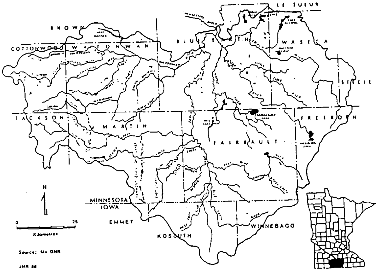
FIGURE 6.1
Blue Earth River Basin Watershed. SOURCE: Reprinted, with permission, from Meschke, 1997. © 1997 from Blue Earth River Basin Initiative.
ties. These five counties include about 80 percent of the Blue Earth River Watershed. Their goal is to improve the water quality of the Blue Earth River Basin through planning, coordination, and implementation of conservation practices and to share the water quality improvement strategies with others. Two committees make up the BERBI organization. A Policy Committee is made up of one supervisor from each of the five SWCDs plus a county commissioner, who serves in an ex-officio capacity. The Technical Committee includes a water planner and an SWCD staff member from each of the counties. This committee develops BERBI projects in each county. The SWCD staff works directly with landowners in their county on a regular basis to implement the projects. A coordinator writes and develops project proposals to secure funding and coordinates BERBI's work with the many other groups and agencies working within the region (Meschke, 1997).
Another Minnesota example is the Big Sandy Area Lakes Watershed (BSALW), a locally based watershed management organization with limited formal powers and authority. BSALW is an example of a watershed group working together, without benefit of formal organization structures, to practice stewardship over their region and their economy (Dziuk, 1997). BSALW covers 413 sq. mi. in portions of three counties in northern Minnesota, and includes 32 fishable lakes and 4 rivers that eventually feed the Mississippi River. The lakes in the BSALW have a surface area of about 14,996 acres and generate an estimated
$10,302,252 each year in customer purchases plus an estimated 247 jobs. Nearly 80 percent of the real estate taxes collected in Aitkin County are derived from shoreline property. Riparian lots on Big Sandy Lake alone have an assessed market evaluation of over $82 million. Clean water is needed for drinking, both in the area and downstream, and to support fishing and other recreation.
Between 1989 and 1992, it became apparent to citizens in the BSALW that the water resources required active management. In July 1993, citizen volunteers formed a partnership with employees of local, state, and federal governments to form a watershed management partnership that is citizen-driven, locally-directed, and agency-supported. The BSALW has no bylaws, no office, no bank account or payroll. However, in consultation with a committee of professional resource managers from local governments and state and federal agencies, two citizen committees recommended policies, planning, priorities, and budgets for area water management agencies and projects. The partnership is maintained by: (a) a determination to base decisions on wide consultation with citizens, (b) hard work, including a substantial amount of help from volunteers, (c) competent technical advice, science, information, and support, and (d) an ethic of treating partners as equals.
BSALW has encouraged the acceptance of voluntary best management practices (BMPs) by watershed landowners through informational workshops, newsletters, videos, meetings, local newspaper and TV stories. It promotes citizen participation in watershed committees, lake associations, and in a water quality monitoring network. BSALW has initiated 12 shoreland revegetation demonstration sites with partners from the University of Minnesota, done extensive water quality monitoring, sponsored writing and poster contests, seeded eroding areas, and produced and distributed a video "On Common Ground" schools, libraries, associations, and residents. BSALW finds that it spends a lot of time seeking ways to do projects without spending much money. It has found that getting governments to work with the organization as equal partners is very difficult, and that it is difficult for informed citizen volunteers to get elected officials to develop the political will to provide for sustainable development. The group is working to help counties find funds to identify and upgrade nonconforming septic systems and to educate planning commissioners on the impact of granting variances to such systems. Agricultural practices that degrade water quality need more attention, voluntary BMPs are not sufficient to halt the problems, and more financial incentives would strengthen the group's efforts.
Interstate and International Watershed Management
The Great Lakes Basin Compact is an effort to address the water quality issues in the Great Lakes Region within the structure of existing organizations. The Great Lakes stretch between the United States and Canada with a surface area of about 95,000 sq. mi. They contain about 20 percent of the world's surface
fresh water supply, and 95 percent of the surface fresh water in the United States (MacKenzie, 1996). They provide an important inland waterway transportation system and have about 10,000 miles of inland coastline. Approximately 40 million Canadians and Americans live within the Great Lakes watershed.
The Great Lakes have suffered many water quality problems. Among the earliest was sediment pollution from logging and agricultural practices that caused a decline in fisheries in the late 1800s. For decades, the lakes also received direct discharge of industrial waste, sewage, vessel waste, and other products that were seen as benign because it was believed that the vast amount of water would dilute any discharge to insignificant levels. However, as population development increased along the shorelines in the early 1900s, pollution from the discharge of domestic sewage resulted in typhoid and cholera epidemics.
In 1909, the United States and Canada signed the Boundary Waters Treaty which established the International Joint Commission (IJC) as a permanent binational body. The IJC became a forum for international cooperation and dispute resolution regarding water quality, and it served as the regulator of water levels and flow between the United States and Canada. The IJC's Great Lakes Water Quality Board and Great Lakes Science Advisory Board also help in the administration of the lakes. However, despite the efforts of the IJC, pollution discharges into the lakes continued, and their biotic systems declined.
In 1978, the United States and Canada reviewed their Great Lakes Water Quality Agreement and expanded it to address toxic contaminants in the lakes through a watershed approach. The document stated its purpose:
to restore and maintain the chemical, physical, and biological integrity of the waters of the Great Lake's Basin Ecosystem. In order to achieve this purpose, the parties agree to make a maximum effort to develop programs, practices, and technology necessary for a better understanding of the Great Lakes Basin Ecosystem and to eliminate or reduce, to the maximum extent practicable, the discharge of pollutants to the Great Lakes System.
The IJC Water Quality Board identified 43 tributaries or near-shore areas of the lakes with poor water quality. The board is developing remediation action plans to deal with problem areas around harbors, inlets, connecting channels, and major municipalities. Each action plan is expected to use an ecosystem approach that calls for a functional arrangement of organizations and interests as equal members of the team.
Evaluation of the action plans is ongoing, but MacKenzie (1996) reports that "creation of a successful ecosystem management plan turns on process-related issues. For example, success requires plenty of opportunities for meaningful participation by all interested stakeholders, real attempts to achieve consensus, and a commitment to quality of the ecosystem." MacKenzie also found that strong fiscal support was important, as well as nurturing political support. Con-
siderable barriers to the ecosystem approach at both the individual and institutional levels continue to be a problem.
Another example of an international effort is the International Boundary and Water Commission, created in 1848 by the governments of Mexico and the United States to apply the provisions of the various boundary and water treaties and settle differences arising from such applications. The boundary between the United States and Mexico is one of the longest, stretching 1,952 miles (3,141 km). Because most of the border (1,278 miles) is marked by rivers, the role in river management has become important. The international nature of the setting complicates watershed management in such areas, whether dealing with water quality or quantity. The IWBC states that its ''mission is to provide environmentally sensitive, timely and fiscally responsible boundary and water services along the United States and Mexico border" (www.ibwc.state.gov/index.html, 1997).
Another large-scale cooperative effort organized along watershed boundaries concerns Chesapeake Bay. The Chesapeake Bay effort has received international recognition as a cooperative program to restore the estuary. Located on the East Coast of the United States, the Chesapeake Bay is a large (193 miles long and 3 to 25 miles wide) fresh water estuary of the Savannah River, with headwaters in New York state. Major tributaries to the Bay come from New York, Virginia, Maryland, Pennsylvania, and Washington D.C. Efforts to restore the Chesapeake Bay are the results of voluntary cooperative efforts among Virginia, Maryland, the District of Columbia, the federal government, and the Chesapeake Bay Commission.
In 1980 Virginia and Maryland passed legislation creating the Chesapeake Bay Commission to coordinate interstate planning and programs. Pennsylvania joined the Commission in 1985, and it continues today as a part to the Agreement. In 1983, Virginia, Maryland, Pennsylvania, EPA, and the Bay Commission formally agreed to a cooperative approach to the restoration of the Bay. The opening paragraph of the 1987 Chesapeake Bay Agreement explains the effort (Chesapeake Bay Agreement, 1987):
The Chesapeake Bay is a national treasure and a resource of worldwide significance. Its ecological, economic, and cultural importance are felt far beyond its waters and the communities that line its shores. Man's use and abuse of its bounty, however, together with the continued growth and development of population in its watershed, have taken a toll on the Bay's systems. In recent decades the Bay has suffered serious declines in quality and productivity.
The agreement set 8 goals, 45 objectives, and 29 commitments or tasks with deadlines. Each state passed legislation consistent with its own philosophy on how to accomplish the goals and deadlines. Virginia chose to require local governments to amend their comprehensive plans, zoning codes, and subdivision ordinances to require buffers around streams, rivers, and wetlands to prevent soil erosion and polluted runoff from reaching the Bay. Maryland set aside "critical
areas" that met certain criteria. Intergovernmental committees continue to seek improved understanding of the ecosystem dynamics of the Bay and to define strategies that will accomplish the goals, but each state is left to decide on specific actions. This voluntary approach with commitments to goals and deadlines has so far been successful. Governors have agreed to continue to work toward the goals agreed to by their predecessors, although they may change methods.
By many measures, the health of the Bay is improving, but not all systems have returned to the quality levels of earlier times. Remaining problems include total suspended solids, nutrients, and toxic materials coming into the Bay from its tributaries. In response the Bay program states have initiated a tributary planning and implementation process with the intent of building water quality and habitat improvement from nonpoint-source controls from the small watershed to the larger Bay drainage area. The emphasis has been on a voluntary and cooperative approach with local governments and citizens, just as the overall program has been based on intergovernmental cooperation between state and federal agencies.
An older and more complicated regional watershed organization is the Colorado River Compact. This organization is part of a continuing effort to manage an "engineered hydrocommons," a water-use and allocation region that does not conform to the topographic boundaries of the river's watershed. This interstate cooperative effort concerns allocation of Colorado River water. It includes the upper basin states of Colorado, Wyoming, Utah, and New Mexico along with the lower basin states of Arizona, Nevada, and California. The river runs 1,440 miles to the Gulf of California and drains an area of 244,000 sq. mi.
In 1922, the seven states negotiated the Colorado River Compact which designated the upper and lower basins with a division on the Colorado River at Lees Ferry, Arizona. Under the assumption that the mean annual flow of the river was 15,000,000 acre-feet, the compact participants agreed that the upper basin states would deliver half that amount to the lower basin states. An additional later allocation was 1,500,000 acre-feet for Mexico as defined by a 1944 Treaty.
The Bureau of Reclamation manages the river primarily for hydroelectric power, irrigation, flood control, recreation, and navigation. A series of dams has been built, beginning with Hoover Dam in 1936 and continuing with Glen Canyon Dam in 1964, along with other structures on principal tributaries such as the Green River in Wyoming, the Gunnison in Colorado, and the San Juan in New Mexico. Parker Dam was built on the lower Colorado by the City of Los Angeles in order to transport more than 3,000 acre-feet (1 billion gallons) daily to southern California via a 250-mile open canal. Arizona takes its share of 2.2 million acre-feet per year via the Central Arizona Project canal to Phoenix and Tucson. The compact has been fraught with lawsuits over the amount of water sent to California and objections from Mexico regarding salinity of the water it receives. Rapidly growing Las Vegas has struggled to obtain more than its allocation of 300,000 acre-feet per year.
Although the Compact is a watershed approach with voluntary negotiations
among its states to agree on me amount of water each can receive, it has proven to be inflexible in meeting needs not envisioned in 1922, such as demands from Mexico and population growth in Arizona and Nevada. Incentives from the federal government, such as dams, have helped the negotiations along, and judges have helped keep states from taking more than their share, so the compact has remained in force. But the use of the water probably is not optimal.
An International Perspective
Organizing government agencies to integrate environmental, social, and economic perspectives on watershed management is not a new idea. Although we can find examples of watershed management activities in many nations (e.g., Costa Rica), the focus here is on nations whose general legal and policy frameworks resemble those of the United States because of a shared heritage of British common law. Among such nations, the United States alone adheres to the dominance of agencies like the U.S. Army Corps of Engineers, the Environmental Protection Agency, and the Bureau of Reclamation, each pursuing its own mission defined by topic. The experiences of Australia, New Zealand, Canada, and Great Britain provide examples of water-resource management with organizational structures dominated by watershed organizations.
In Canada, provincial governments traditionally have organized their water and environment planning activities according to watersheds (Newson, 1992). In Ontario, for example, 38 "conservation authorities" promote integrated planning for development. The authorities are organized by local interests, often municipalities, and usually consider issues such as flood control, recreation management, water supply, and water quality together rather than separately. However, it has proven challenging to coordinate actions between these local conservation authorities and the larger-scale activities of the federal government, and to deal with the complexities of interbasin water transfers. A review of Canadian water policy outlined five strategies for improving the situation; these strategies emphasize water pricing, science leadership, integrated planning, larger scale legislation to span jurisdictions, and improved public participation (Pearse et al., 1985).
Australia's experience with watershed management is similar to that of Canada in that both countries have states (Australia) and provinces (Canada) that are large with respect to most of the nation's river basins, and both nations tend to emphasize water and watershed management at the state or provincial level rather than the federal level. Two legislative changes in the state of South Australia are of interest: the Catchment Water Management Act of 1995 and the Water Resources Act of 1997. The 1995 legislation is one in a series of laws that specify the management capabilities of local agencies called "catchment water management boards" (State of South Australia, 1995). These boards have responsibility for significant aspects of planning and implementing efforts to manage water, controlling flooding, dealing with recreation issues, and preserving and improv-
ing environmental quality. The boards, staffed by state governor appointees, are supposed to serve as management connections between watersheds and river channels, and they are empowered to purchase land in pursuit of their objectives.
Two such boards manage portions of the Adelaide area of South Australia: the Patawalonga and the Torrens Catchment Water Management Boards, each responsible for watersheds about of about 100 sq. mi. (250 sq. km.) The boards have produced comprehensive plans that account for water supply and quality as well as a full range of water resource uses (see Box 6.2).
The management plans emphasize the integration of ecological, environmental, and economic considerations on a geographic basis (BC Tonkin & Associates, 1996; Torrens Catchment Water Management Board, 1997). In Australia, larger projects such as the restoration of the River Murray require management by state officials (State of South Australia, 1995). Recent legislation in Australia has defined the role of the catchment boards as being resource management, while state and federal agencies have responsibility for standard setting and regulatory enforcement (Dyson, 1997).
New Zealand's use of watersheds as administrative units is instructive because of its exceptionally long record. Beginning in 1868, New Zealand established River Boards to deal with flooding and erosion problems, and by the late 1980s the nation had 20 Regional Water Boards. Each board administered about 5,200 sq. mi. (13,500 sq. km.) (Quinn and Hickey, 1987). The board's objectives included meeting water quality criteria defined at the national level by the 1967 Water and Soil Conservation Act. The regional boards were made up of local interests in pursuit of national standards, but each board also took into account issues specific to individual watersheds. For example, some boards were most concerned with water pollution from upland applications of fertilizer, herbicides, and pesticides (McColl and Gibson, 1979), while others were more concerned with land rights of the native population, the Maori. The nation has 82 hydroelectric dams, but their distribution is unequal so water board interest in them varies accordingly. The boards were organized by region rather than by legal function (Ministry of the Environment, 1989).
In 1989, local governments in New Zealand reorganized and consolidated to create 16 new regions defined by watershed boundaries (Dixon and Wrathall, 1990). These watershed boundaries were useful because many of them had served as River Board boundaries, so that administrators and citizens understood and accepted them as definable regions. Combining the local governments into watershed groupings supported the general belief "that decisions relating to resource allocation and use should be taken by communities most affected by those decisions, taking explicit consideration of their own specific geographies" (Furuseth and Cocklin, 1995). Technical specialists in the physical science and engineering professions moved directly into the new organizations from the old River Boards. The regional councils have sole responsibility over soil conservation, water and air quality, waste disposal, and geothermal resources. They share responsibilities
|
Box 6.2 The Patawalonga Catchment and the Murray-Darling Basin, Australia  The Patawalonga Catchment and the River Murray in southern Australia illustrate the successful matching of scales between a physical watershed resource and its responsible administrative unit. The Patawalonga Catchment is a watershed that includes a main drainage basin plus a small associated basin that drains directly to the sea. More than 50 percent of the catchment is urbanized as part of Adelaide metropolitan area, so that stormwater drains augment its naturally defined stream system. The catchment also includes some agricultural areas in its headwaters area. Significant management problems in the catchment include water quality unsuitable for swimming, boating, or fishing; watercourses with eroded banks; stormwater that is piped directly to the sea rather than being used for other purposes; and urbanization that has increased downstream flooding on many tributaries (BC Tonkin and Associates, 1996). The Catchment Water Management Act of 1995 provided the legal framework for the Patawalonga Catchment Management Board, which consists of nine members, four appointed by local government, four appointed by the state government, and a chairperson jointly appointed by local and state governments. Financial support for the board's activities comes from a catchment levy raised by local government based on property values, as well as borrowing authority for some capital works. The board has established and begun implementing a management plan that calls for preventing polluting discharges, constructing physical works to improve water quality, and establishing wetlands; replacing concrete channel linings with more natural beds and banks, and adding paths to create linear parks; detaining stormwater for aquifer recharge; mapping flood-risk zones; and acquiring flood-prone land for inclusion into linear parks. |
with the central government for coastal resources and with local governments for natural hazards, noise, and cultural heritage.
The passage of the 1991 Resource Management Act (RMA) brought further changes to watershed management issues in New Zealand. The Act supersedes previous legislation (except for minerals and fisheries), and governs the manage-
|
These local scale activities contrast with simultaneous efforts at a regional scale for the basin of the River Murray and its principal tributary the Darling, a stream system draining 408,800 sq. mi. (about 1 million sq. km.) in the Australian interior near Adelaide. In this large basin, the management issues differ from those at the local scale for Patawalonga. The major problems are increasing salinity of the river's water, reduced economic vitality because of soil erosion and dryland salinity, lack of integrated management of flow regulation structures, lack of a regional perspective on stormwater runoff and urban effluent, loss of native bird populations, and declining health of riparian vegetation. These problems are so large scale, and the basin covers such a large geographic area (including parts of four states), that no single governmental entity can deal with them. The Murray-Darling Basin Initiative was created to bring together the state governments and the Commonwealth (federal) government in an organizational structure whose scale matches the basin scale. Established in 1985, the initiative began by maintaining the basin's physical water management structure, but the organization's new Murray-Darling 2001 project is designed to integrate ecological, economic, and social approaches to addressing the needs of the basin's natural and cultural resources (Brown, 1995). The primary proposed method of funding this broad effort is contributions from the participating state governments totaling about $150 million, with a matching contribution from the Commonwealth. These Australian examples show that watershed problems are essentially regional in nature, and they can be best approached using organizations that are regionally defined. Small regions such as the Patawalonga Catchment require organizations of local governments and citizens, while large regions require consortia of larger governmental entities. Watershed problems are scale specific, with some, like the problem of linear parks along restored waterways best addressed locally and others, like basinwide salinity problems, best attacked by large-scale approaches. In each case, however, it is easiest to integrate the ecologic, economic, and social approaches by using regionally defined administrative units rather than units defined by restricted missions such as environmental quality, engineering, or reclamation. |
ment of natural resources and environments (Furuseth and Cocklin, 1995). Two principles govern the RMA: sustainable management is the overall objective, and the mechanism for decisionmaking is to move from the central government to the regional and local levels. The RMA requires each region to formulate policy and vision statements to establish the local methods for reaching the goal of sustain-
able management. This policy process includes public participation and the involvement of the Maori. Territorial governments, in their land use plans and policies, as well as private resource owners and Commonwealth resource managers, must observe regional resource and environmental policies. The central government retains the responsibilities for setting national environmental standards, national policy, water conservation orders, heritage protection orders, and coastal policy.
In their evaluation of the reform process for New Zealand resource management, Dixon and Wrathall (1997) noted that implementation has largely been in the hands of local and regional councils, with minimal central governmental support. They indicate that while devolution of authority to the regional and local level should occur to improve management and control by local representatives, "there is no doubt that practitioners and councils would have benefited by more guidance from the center." They found that the new system is more complex than the former one, with several tiers of plans, often of variable quality. The New Zealand example shows that organizing according to watershed boundaries is a workable method for ensuring local control over water and water-related resources. The experience also shows that the natural boundaries must blend with previously established administrative boundaries, sometimes through aggregation of small administrative units to constitute regions approximating the watersheds. The New Zealand example also shows that there can be a logical division of responsibilities among local, regional, "and national authorities.
Great Britain also has reorganized its regional approach to water and watershed management. In recent decades the nation has managed these resources through River Authorities, agencies with management responsibility for individual drainage basins ranging in size up to several hundred square miles, with jurisdiction defined by watershed boundaries. Recently these River Authorities have been folded into the national Environment Agency, but the subdivisions within the Agency remain defined by watersheds. The boundaries of jurisdiction have been modified somewhat to coincide with local government boundaries that approximate as closely as possible the natural boundaries.
These experiences in other nations show that management of water as a resource and as a subject of scientific inquiry can be accomplished with organizational structures that parallel the natural organization of watersheds. Often, the precise outlines of the natural watershed are not the most effective as an organizing principle, and the continuing adjustments made by New Zealand in its primary division, by Canada in its arrangements, and by Britain in its reorganization and continued adjustments of administrative boundaries show that concerns other than the physical environment must be taken into account. Political, social, cultural, or financial regions may be just as important as the physical region for definitional purposes. As an example, interbasin transfers of water or electrical power logically distort the drainage basin boundaries to fit the realities of the human use of the resource. In all the cases reviewed above, however, the use of
geographically defined agencies has been critical to integrating ecological, economic, and social approaches. Yet for reasons of scale, complexity, governmental power, structures, and history, functionally defined agencies dominate the national organizational scene in the United States.
Watershed Organizations For The Future
New water and related land management organizations are developing across the nation. For example, according to McClurg (1997), several hundred watershed management programs are underway in California. In 1996, a new watershed initiative began to integrate water quality monitoring, assessment, planning, standard setting, permit writing, nonpoint source management, groundwater protection, and other staff work. Federal funding for some of these activities comes from modified administration of two EPA programs funded under sections 205(j) and 319(b) of the Clean Water Act.
Organizational structures for hydrologic resources and hydrologic research for watersheds in the United States are most likely to be effective if they follow watershed boundaries. Organizational structures for other resources and for integrated approaches, however, must often be more flexible, with the boundaries of organizational responsibility being defined by the issue at hand.
For the management of hydrologic resources, however, a nested hierarchy of hydrologic management organizations is preferable, with responsibilities for each organization dependent on the watershed scale of its responsibility (Table 6.3). This nested approach is required because the United States is large in terms of area (34 times larger than New Zealand, for example) and in terms of population (5 times more populous than Great Britain). This local to national continuum will help ensure the inclusion of all relevant stakeholders and provide an integrating framework.
Failing to match the scale of decisionmaking to the scale of the watershed can lead to two problems. If the decisionmaking body has authority over an area that is smaller than the watershed at issue, its policies will probably fall to take into account the impact that local decisions can have downstream. Those who benefit from such narrow decisions may not bear their true economic or environmental costs. If, on the other hand, a decisionmaking body has authority over an area that is too large or is dominated by federal interests, it will likely fail to take into account local interests that in the end must bear many of the ramifications of the decisions. Matching the decisionmaking authority with the watershed in question according to scale and geographic area thus helps resolve the questions of who benefits and who pays for watershed resources, including goods and services, and makes it easier to reach compromises.
We do not yet know how the nation's institutions need to change to achieve greater sustainability of natural resources (Cortner et al., 1996). In many cases, institutions that have served us well in the past have outlived their intended mis-
TABLE 6.3 Common Scales for Watershed Management Issues
|
Watershed Issues |
Small Watersheds, Less than 2,500 km2 1,000 mi2) |
Intermediate Systems, 2,500-25,00 km2 (1,000-10,000 mi2) |
Larger River Basins, Greater than 25,000 km2 (10,000 mi2) |
|
Establish overall regulatory thresholds |
|
|
|
|
Reservoir system management |
|
|
|
|
Management issue and needs analysis |
|
|
|
|
Goal, objective, and policy development |
|
|
|
|
Hydrologic modeling for water quality |
|
|
|
|
Management, water quality, point source |
|
|
|
|
Public education |
|
|
|
|
Floodplain management |
|
|
|
|
Management, water quality, nonpoint source |
|
|
|
|
Participatory planning |
|
|
|
|
Stream bank stabilization |
|
|
|
|
Wetland management |
|
|
|
|
Lake management |
|
|
|
|
Surface water recreation management |
|
|
|
|
Fisheries management |
|
|
|
|
Rare and endangered species management |
|
|
|
|
Land use planning and zoning |
|
|
|
|
Construction site erosion control |
|
|
|
|
Drainage ditch management |
|
|
|
|
Greenbelt development and management |
|
|
|
|
Irrigation management |
|
|
|
|
Local flood-control works |
|
|
|
|
Shoreline erosion control |
|
|
|

sions and, in some cases, usefulness (Wilkinson, 1992). This is not to say these organizations and the laws they support were not sensible when they were created, during an era when resources were believed to be inexhaustible, but rather that societal values and needs have changed. The institutions responsible for managing our natural resources may well be the most significant barriers to the adoption of new, more integrated approaches to management (Kessler, 1992, 1994; Slocombe, 1993; and Grumbine, 1994).
Research is needed to provide a better understanding of how people and institutions can be more effective. Stankey and Clark (1992), in studying the social aspects of implementing new approaches in forestry, identified six general areas for research that are appropriate here as well: integrating social values; understanding public values for resources; public acceptance of management approaches; public participation mechanisms; structure, procedures, and values of natural resource organizations; and forums for debating issues. In a companion study on institutional barriers and incentives for ecosystem management, Cortner et al., (1996) identified five problem areas where social science research might help improve our ability to implement new approaches to management:
- the extent to which existing laws policies, and programs may constrain or aid implementation;
- institutional mechanisms for managing across jurisdictions;
- internal organizational changes and new arrangements among resource agencies and the public;
- theoretical principles underlying natural resource management; and
- methodological approaches for researching institutional questions.
Such research can help build our understanding of current social values and how these values can be integrated into management strategies.
Conclusion
Documentary histories, field visits, workshops, and the experiences of individual committee members lead us to several conclusions about organization for watershed management. While these conclusions apply in many cases, there are also many exceptions because of local or regional variation.
Organize according to watershed boundaries for direct hydrologic management and related scientific research. The inherent nature of the hydrologic system is that it is organized according to nested watersheds, so organizations that deal primarily with the water resource should be organized in the same fashion. Integrative scientific research focusing on water and closely related resources should take advantage of the natural geographic characteristics of hydrologic systems.
Organize decisionmaking boundaries to fit the issue at hand when dealing with engineered hydrologic systems where economic or social systems are involved. A slavish adherence to watershed boundaries can lead to missed opportunities and inefficient decisions when factors such as interbasin transfers of water and power create a hydrologic system that operates outside the natural watershed boundaries. No one arrangement fits all situations, and flexibility is important.
With respect to scale in dealing with hydrologic issues, the organization scale should fit the scale of the natural system. The management of water and closely related resources of small watersheds should be handled by local organizations, while larger scale organizations should deal with aggregations or nested hierarchies of smaller units. Larger, more encompassing organizations can help resolve local differences. Some functions, such as land use planning and zoning, are best left to local levels of governmental organization, while other tasks such as setting regulatory standards are best left to the national level. No one size fits all situations.
New organizational strategies must recognize the limitations of transfer of powers. The historical development of governmental organizations in the United States dictates a certain distribution of powers among levels and among agencies within the same level. Watershed management through newly defined organizations will not succeed unless there is a transfer of powers from these established agencies, often an unlikely scenario. Therefore, watershed management in the United States is often best accomplished through partnerships of existing agencies that work together in ad hoc arrangements for particular watersheds.
Watershed organizations are most successful if they are self-organizing from the grass-roots level, rather than having an organizational structure imposed by national fiat. In the United States, regional variations in the natural environment, customs, politics, financial resources, and existing distribution of powers are so great that a national overlay of proposed watershed organizations is unlikely to be successful. The most effective watershed organizations seen by the committee are those that developed from local needs focused on particular problems. Successful organizations often solved one initial problem before expanding their interests to attack other issues.
Individuals make a difference—they create organizations and drive their success. In field visits and workshops, the committee found that the most successful organizations were the product of the initial effort of one individual or of a small group of persons. These few individuals committed themselves to addressing a problem of local or regional extent and exerted enthusiasm and leadership to organize for a solution. We should not underestimate the power people have to identify problems and take action to solve them.
References
Baril, K. 1996. Achieving results community by community. National satellite videoconference. In proceedings, Watersheds 96. Alexandria, Va.: Water Environment Federation.
Bay Journal. 1996. Susquehanna, Potomac commissions face funding cuts. Alliance for the Chesapeake Bay 6(9)(Jan-Feb).
BC Tonkin and Associates. 1996. Patawalonga Catchment Water Management Board Comprehensive Catchment Water Management Plan: Draft for Consultation. Adelaide, South Australia: BC Tonkin and Associates.
Black, P. E. 1987. Conservation of Water and Related Land Resources. 2d Ed. Totowa, N.J.: Roman & Littlefield.
Bonneville Power Administration (BPA). 1997. 1997 Annual Report. Portland, Oregon: Bonneville Power Administration.
Brown, D. 1995. Restoring the River Murray: Statement on the Environment. Adelaide, Australia: State of South Australia.
Chesapeake Bay Agreement. 1987. Chesapeake Bay Program Office, Annapolis, Maryland.
Cortner, H. J., M. A. Shannon, M. G. Wallace, S. Burke, and M. A. Moote. 1996. Institutional Barriers and Incentives for Ecosystem Management: a Problem Analysis. Gen. Tech. Rep. PNW-6TR-354. Portland, Oreg.: U.S. Dept. of Agriculture, Forest Service, Pacific Northwest Research Station.
Dixon, J., and A. Wrathall. 1990. The reorganization of local government: reform or rhetoric? New Zealand Journal of Geography 9:2-6.
Doppelt, B., C. Frissel, J. Karr, and M. Scurlock. 1993. Entering the Watershed: A New Approach to Save America's River Ecosystems. Washington, D.C.: Island Press.
Dyson, M. 1997. Navigating the South Australian Water Resources Act 1997. Adelaide, South Australia: South Australian Department of Environmental and Natural Resources.
Dziuk, H. E. 1997. Chairman, Steering Committee on Big Sandy Area Lakes Watershed. Personal communication.
Dzurik, A. A., and D. A. Theriaque. 1996. Water Resources Planning. 2d edition. Lanham, Maryland: Rowman and Littlefield Publishers, Inc.
Eisel, L. M., and J. D. Aiken. 1997. Final Draft Report for Platt River Basin Study. Denver, Co: Western Water Policy Review Advisory Commission.
Featherstone, J. P. 1996. Water resources coordination and planning at the federal level: The need for integration. Water Resources Update 104 (summer 1996):52-54.
Federal Emergency Management Agency. 1996. National Water Control Infrastructure: National Inventory of Dams. CD-ROM. Washington, D.C.: U.S. Army Corps of Engineers and Federal Emergency Management Agency.
Furuseth, O. and C. Cocklin. 1995. An institutional framework for sustainable resource management: the New Zealand Model. Natural Resources Journal 35(2):243-273.
Grumbine, R. E. 1994. What is ecosystem management? Conservation Biology 8:27-38.
Ingram, H. 1973. The political economy of regional water institutions. American Journal of Agricultural Economics 55(1):10-18.
Jessup, D. H. 1990. Guide to State Environmental Program. 2d edition. Washington, D.C.: The Bureau of National Affairs, Inc.
Kenney, D. and B. Rieke. 1997. Resource Management at the Watershed Level: An Assessment of the Changing Federal Role in the Emerging Era of Community-Based Watershed Management. Report prepared for the Western Water Policy Review Advisory Commission, Denver, Colorado.
Kessler, W. B. 1992. New perspectives for sustainable natural resources management. Ecological Applications 2(3):221-225.
Kessler, W. B. 1994. Significant barriers to further progress of ecosystem management. Discussion paper for Institutional Problem Analysis Workshop; October 20-22, 1994; Stevenson, WA. On file with: Water Resources Research Center, 350 North Campbell Ave., Tucson, AZ 85721.
MacKenzie, S. H. 1996. Integrated Resources Planning and Management: The Ecosystem Approach in the Great Lakes Basin. Washington, D.C.: Island Press.
McClurg, S. 1997. Sacramento-San Joaquin River Basin Study. Draft Final Report. Denver, Co: Western Water Policy Advisory Commission.
McColl, R. H. S., and A. R. Gibson. 1979. Downslope movement of nutrients in hill pasture, Taita, New Zealand, III: Amounts involved and management implication. Journal of Agricultural Research 22:279-286.
Meschke, L. 1997. BERBI Facts. Fairmont, Minn.: BERBI.
Ministry of the Environment. 1989. Update on the Resource Management Law Reform. Wellington, New Zealand.
Nagle, D. G., G. W. Currey, W. Hall, and J. L. Lape. 1996. Integrating the point source permitting the program into a watershed management program. In proceedings, Watersheds 96. Alexandria, Va.: Water Environment Federation.
National Research Council. 1997. Watershed Research in the U.S. Geological Survey. Washington, D.C.: National Academy Press.
Newson, M. 1992. Land, Water and Development: River Basin Systems and their Sustainable Management. London: Routledge. 351 pp.
O'Connor, K. A. 1995. Watershed Management Planning: Bringing the Pieces Together. M.S. Thesis. California State Polytechnic University, Pomona. 166 pp.
Pearse, P. H., F. Bertrand, and J. W. Maclaren. 1985. Currents of Change. Ottawa: Environment Canada.
Portney, P. R., ed. 1990. Public Policies for Environmental Protection. Washington, D.C.: Resources for the Future.
Quinn, J. M., and W. Hickey. 1987. How well are we protecting the life in our rivers? Soul and Water 23(4):7-12.
Rosenbaum, W. A. 1991. Environmental Politics and Policies. 2nd ed. Washington, D.C.: Congressional Quarterly Press.
Slocombe, D. S. 1993. Implementing ecosystem-based management: development of theory, practice, and research for planning and managing a region. BioScience 4(9): 612-622.
Stankey, G. H. and R. N. Clark. 1992. Social Aspects of New Perspectives in Forestry: a Problem Analysis. Milford, Pa.; Grey Towers Press.
State of South Australia. 1995. Catchment Water Management Act of 1995. No. 37.
Steering Committee of the Comprehensive Review of the Northwest Energy System. 1996. Toward a Competitive Electric Power Industry for the 21st Century: Comprehensive Review of the North-west Energy System Final Report. Portland, Oregon: Northwest Power Planning Council.
Torrens Catchment Water Management Board. 1997. Torrens Comprehensive Catchment Water Management Plan, 1997-2001. Adelaide, South Australia: Torrens Catchment Water Management Board.
U.S. Army Corps of Engineers (USACE). 1987. USACE Wetlands Delineation Manual. Environmental Laboratory, U.S. Army Waterways Experiment Station Technical Report Y-87-1.
U.S. Environmental Protection Agency (EPA). 1993. The Watershed Protection Approach: A Project Focus. Draft. Washington, D.C.: EPA Office of Water (WH-553).
Viessman, W., Jr., and C. Welty. 1985. Water Management Technology and Institutions. New York: Harper Row.
Wanich, J. 1997. River-cleanup plan alarms critics. Washington Post 29 September, 1997.
Wilkinson, C. 1992. Crossing the Next Meridian: Land, Water, and the Future of the West. Covelo, Calif.: Island Press.


