
7
Financing Watershed Organizations
Stable funding is one of the essential ingredients necessary to establish and maintain viable watershed organizations. In return, a truly integrated approach to watershed management offers the promise of improved economic efficiency and diverse benefits because it addresses multiple purposes and varied stakeholders. But the diversity that is the strength of watershed organizations is also a source of problems. It is difficult to assess each stakeholder a ''fair share" of the cost of operating the organization and its watershed, and the identification of funding sources satisfactory to all participants is a major issue. This chapter, provided mostly for the use of managers, addresses three aspects of the financing of watershed organizations. First, it reviews the funding mechanisms currently in use, ranging from highly localized arrangements to federal approaches. Second, it explores the problem of cost allocation in watershed organizations. Finally, it briefly identifies potential financing options that may offer useful approaches for watershed groups. Because watershed structure and funding are often related, there is some overlap between this chapter and the previous one, as the different agencies and organizations are reviewed, but the emphasis here is on the problems and opportunities for funding watershed activities.
Ample precedent exists among federal water agencies in financing individual, multipurpose water resources projects. However, with the notable exception of TVA, little financial support has been provided by federal agencies for water-shed-based organizations. Traditionally, federal funding has focused on the initial construction of facilities. After construction, the facilities were sometimes mined over to a local group to operate or sometimes a federal construction agency would operate the facilities. But the era of large-scale federal construction in
water resources appears to be over (Worster, 1985; Reisner, 1986; NRC, 1996), and attention has shifted to management of existing systems. A key motivation behind many contemporary watershed programs is watershed restoration to reverse some of these detrimental impacts caused by water development and urbanization. However, restoration is a relatively new goal in most watersheds and financing for it is not well defined.
Current Funding Mechanisms
Current funding mechanisms for water resource management activities can occur at the local, regional, and country levels, as well as by agricultural district, by state, by interstate efforts, and by various specific federal agencies.
Local Funding Opportunities
Local water management activities can be funded at either city or multi-city levels.
City Utilities
Many local water-related institutions are funded as utilities or service districts. At the municipal level, separate utilities may exist for water and wastewater systems. In recent years, many communities have also established storm-water management utilities. Funding is based on assessing charges for services rendered. Water utilities, for example, typically assess charges for hooking up to the system, for fixed administrative costs, and for the quantity of water used. Most wastewater utilities charge in a similar manner, with the wastewater flow being estimated by the indoor water use. Wastewater utilities may also vary their charges based on the strength of the sewage. Stormwater charges can be based on the amount of impervious area associated with each customer. These charges usually are a fixed monthly rate. Although many utilities do not adhere to a zero net revenue goal, it is generally considered good practice to base charges on cost recovery so that utilities neither subsidize their services nor provide surplus revenues for other areas of government. Nelson (1995) provides a current overview of utility financing in the water, wastewater, and stormwater areas. Local water, wastewater, and stormwater utilities can fund restoration activities as part of their charters if they are responsible for causing some of these impairments.
Metropolitan Utilities or Districts
Another popular local funding model is to form area-wide districts or utilities to serve specific purposes, like water supply, wastewater treatment, and stormwater management (e.g., the Denver Urban Drainage and Flood Control
District). The Environmental Protection Agency (EPA) encouraged area-wide wastewater management as part of its large construction grants program in the 1970s. Cities were required to demonstrate that any proposed area-wide wastewater management system was cost effective. Because of economies of scale, the analysis tended to favor the creation of larger area-wide wastewater control facilities as opposed to many smaller treatment plants. The federal government also nurtured the use of area-wide planning agencies, typically called Councils of Government (COGs), to encourage area-wide solutions to water, wastewater, stormwater, transportation, and other infrastructure problems. Much of their financing comes from the federal government. As with individual utilities, these agencies can fund watershed conservation or restoration activities if they view it as part of their responsibility.
The Anacostia River Watershed is a good example of federal agency involvement in an urbanized watershed (Interagency Ecosystem Management Task Force, 1996). This 170 sq. mi. (440 sq. km.) sub-basin of the Potomac River basin flows through parts of the Washington, D.C. metropolitan area, and the key water quality issues are degradation by urbanization and agricultural activities. Restoration activities are being facilitated by the Washington Council of Governments in cooperation with several federal agencies. The Interagency Ecosystem Management Task Force (1996) critiqued the funding aspects of these activities, and reached the following conclusions:
- Grant availability: The Task Force recommended creation of a federal clearinghouse to inform state and local governments of federal grants for environmental restoration.
- Grant scope: The allowable scope of grants tends to be too narrow.
- Matching fund requirements: Local people recommended the elimination of matching fund requirements, especially for financially strapped communities.
- Project operation and maintenance: The Task Force raised the issue that local communities may not have the resources to properly maintain projects, even if the federal government pays for installation.
County-Based and Agriculturally Oriented Districts
Some water organizations are formed around county boundaries. For example, Prince William County, Virginia, has established a three-county stormwater utility along the lines described for urban stormwater utilities (Pasquel et al., 1996). Some funds support watershed management, but in general counties are not significant funders of watershed activities.
Because of our nation's significant agricultural history and the importance of water to farming, a large number of agriculturally oriented districts have watershed responsibilities and provide some funding opportunities or in-kind services. The Natural Resources Conservation Service (NRCS) has developed water man-
agement programs for approximately 3,000 soil conservation districts covering virtually the entire United States. The NRCS also established hundreds of small watershed (<250,000 acres) programs as part of its PL 566 program, with the primary objectives of improving drainage and flood control.
Agriculturally oriented districts have a long history of federal involvement, although the assistance is more often technical than financial. Agricultural nonpoint pollution control programs rely primarily on financial incentives to encourage farmers to voluntarily adopt techniques that reduce nonpoint discharges. Thus, there is a strong tendency to expect the federal government to pay for watershed activities related to agriculture.
Funding for Regional and Interstate Watershed Organizations
Another level of spatial aggregation is by region within a state. This approach is typified by the five water management districts created in 1972 within Florida (described more fully in Chapter 6). Two of the districts, South Florida and Southwest Florida, already existed as drainage and flood control districts established as operating arms of large U.S. Army Corps of Engineers projects. Part of the St. Johns River Water Management District was also related to Corps of Engineers projects. The districts are funded by taxes, and each district sets its own tax rate. A comprehensive review of the water management districts was favorable (Water Management District Review Commission, 1995). For instance, the review notes that the Florida water management districts have moved aggressively into watershed management activities, especially the restoration of the Kissimmee River and the Everglades. These restoration projects are funded by a variety of sources, including the state, various counties, federal agencies such as the National Park Service and the Corps of Engineers, and taxes on agricultural operations in the Everglades Agricultural Area.
Other examples of regional approaches can be seen in the West. Kenney and Rieke (1997) surveyed western watershed management efforts to assess their evolution during the 1990s and found a wide variety of activities and financial strategies in use. For instance, the Verde Watershed Association in Arizona functions as an information dissemination organization, and it meets its modest financial needs by assessing annual dues on its members, including federal agencies. On a larger scale, the Animas River Stakeholder Group of the Upper Animas River (a tributary of the Colorado River) seeks to restore a viable brown trout fishery as its primary objective. The group receives most of its funds from EPA, in the form of Section 319 grants under the Clean Water Act, and from the Rocky Mountain Mine Waste Initiative. Other federal agencies have contributed resources such as in-kind services. A critical challenge for the Animas River group has been securing stable long-term financing for the planning process, in part because the effort lacks a statutory basis.
The Model Watershed Project of the Lemhi, Pahsimeroi, and East Fork of
the Salmon Rivers in Idaho has as its primary objective the restoration of salmon runs by encouraging water users to modify their water use practices. Project funding comes from the Bonneville Power Administration as part of the Northwest Power Planning Council's Columbia River Basin Fish and Wildlife Program. Soil and water conservation districts also have had important roles in the program.
Another important example is the McKenzie Watershed Council of the McKenzie River in Oregon, often touted as the cleanest river in Oregon. This effort was stimulated when hydropower facilities on the river came up to be relicensed in 1991, and there was a call to investigate the potential for developing an integrated watershed management program in the basin. In 1993, the Oregon congressional delegation secured $600,000 in EPA funds to support the work. Additional funds included $500,000 from the NRCS and $100,000 from the Northwest Power Planning Council. However, as federal funds diminish, the Council will need to develop a more diverse base of federal, state, and local funding.
Not all efforts involve hundreds of thousands of dollars. The South Platte River Forum of the South Platte River in Colorado conducts annual conferences to inform interested people of watershed activities. Funding consists solely of members contributing $500 to $1,500 per agency. Similarly, the Clear Creek Watershed Forum of the Clear Creek Basin in Colorado has been funded primarily by EPA as part of mine cleanup activities. The Forum focuses on the noncontroversial role of sponsoring workshops, but it has not been successful in obtaining funding from sources other than EPA.
Another type of funding is exemplified by the Plumas corporation, a nonprofit group that funds the Feather River Coordinated Resource Management Group in California. Because of their interest in sediment control, Pacific Gas & Electric (PG&E) and the Forest Service have provided $4 million to the group. The most pressing present problem is to find new sources of funding to replace direct project funds from PG&E, which is becoming less interested in underwriting restoration projects. Possible alternatives include a unit tax on exported water and support from the State of California.
The Upper Carson River Watershed Management Plan was established to coordinate research and management activities among several agencies concerned with surface and ground water in this watershed in California and Nevada. EPA Section 319 funds support a watershed coordinator, with additional in-kind services from the Fish and Wildlife Service and NRCS.
Finally, the Rio Puerco Management Committee of the Rio Puerco Watershed (New Mexico) was formed to help manage serious sediment problems. This organization was established by section 401 of the Omnibus Parks and Lands Act of 1996. Congress has authorized approximately $7 million over the next decade for the organization through Section 401 of the Omnibus Parks and Lands Act of 1996.
In studying these and other western examples, Kenney and Rieke (1997) (see Box 7.1) drew the following recommendations about steps necessary top improve the financial side of watershed activities:
|
Box 7.1 The Changing Federal Role in the Emerging Era of Community-Based Watershed Management In 1995, the Western Water Policy Review Advisory Commission was chartered by the Department of the Interior to undertake a comprehensive review of federal activities in the 19 western states which directly or indirectly affect the allocation and use of water resources (WWPRAC, 1998). As part of the Commission's information-gathering phase, it commissioned experts to prepare a number of detailed reports on topics such as demographic trends, water use, land use changes, alternative dispute resolution, as well as special assessments of six key large watersheds. One of these reports, Resource Management at the Watershed Level: An Assessment of the Changing Federal Role in the Emerging Era of Community-based Watershed Management (Kenney and Rieke, 1997) is especially relevant to this study. The report notes that one of the most striking trends of recent years is a focusing of water management activities at the watershed level, and it discusses this trend within an institutional and historical context. It presents 12 case studies of active watershed initiatives, looking primarily at smaller watersheds. The report offers the following overall finds:
|
- Simplify and standardize the procedures and paperwork requirements associated with applying for federal support of watershed initiatives.
- Promote federal collaboration across substantive and geographic boundaries by simplifying interagency transfers of funds.
- Modify rules that inhibit allocating resources to projects on private lands.
- Provide greater flexibility in cost-sharing requirements to make it easier for watersheds without significant local sponsors to obtain federal funds.
- Modify contracting rules to make it easier for watershed groups to hire and retain watershed coordinators.
- Stable funding is needed for watershed activities that cross agency boundaries. The federal government should promote the establishment of stable funding systems that spread the costs of resource management equitably among the beneficiaries.
The report goes on to provide recommendations, some pertaining to the federal role. For instance, it notes the need to train agency personnel in the theory and practice of collaborative watershed management and the great importance of reauthorizing the Clean Water Act and the Endangered Species Act, two essential but controversial statutes that support watershed initiatives. |
Perhaps the best known federally-funded interstate watershed management organization is the Tennessee Valley Authority, which was created in 1933. The federal government attempted to establish other basin-scale organizations in the 1940s including the Missouri (1945), Columbia (1946), the Pacific Southwest (1948), the Arkansas-White-Red (1950), and the New York-New England basins (1950). These relatively informal committees proved to be ineffective (Feather-stone, 1996). To replace them, Title II of the Water Resources Planning Act of 1965 created seven river-basin commissions to deal broadly with river basins in New England, Ohio, Upper Mississippi, Souris-Red-Rainy, Missouri, Pacific Northwest, and Great Lakes. As discussed in Chapter 6, each commission had federal and state members and a core staff of 20-30 employees. Lack of authority and an inability to come to grips with contentious problems led to the disbanding of the commissions in 1981. The Water Resources Council, the last vestige of attempts to coordinate water resources management across federal water agen-
cies, has not been funded since 1981. The only three remaining interstate organizations are those managing the Delaware, Potomac, and Susquehanna river basins (Featherstone, 1996).
In spite of recent interest in watershed management, no other broad-based organizations at the very large watershed or river basin scale have been formed. McLaughlin Water Engineers and Aiken (1997) outlined the reasons when they recommended against creating a river basin commission for the Platte River Basin. (The principal author from McLaughlin Water Engineers was Dr. Leo Eisel, who as a former Director of the Water Resources Council brings a unique perspective to this question.) This report noted:
The Title II River Basin Commissions failed to achieve their objectives in the past because of the reluctance by the states and federal agencies to provide authority to the river basin commissions to accomplish their missions. The reluctance still exists and, consequently, establishment of a river basin commission for the Platte River would probably not be successful today.
The principal reason for the demise of the Water Resources Council was the general reluctance of the states and federal agencies to provide a single entity, such as the Water Resources Council, with sufficient authority and responsibility to meet its objectives. After reviewing the current water resources planning, management, and development situation in the Platte River Basin and elsewhere, it appears there is little indication of support from either the states or the federal agencies for a successor to the Water Resources Council, with sufficient authority to meet its goals and objectives.
Funding at the Federal Level
Numerous federal agencies have responsibilities related to water management. The division of responsibility is sometimes based on geographical boundaries (e.g., the Bureau of Reclamation's activities are restricted to the western United States), but more often the responsibility is based on the nature of the problem being addressed (e.g., 10 agencies play some type of role in water quality improvement). This structure traces its origins to the 1930s, when the federal government first became involved in water resources on a large scale.
Perhaps the most significant federal agencies for water and watershed issues are the Corps of Engineers and Bureau of Reclamation, which together are responsible for 66 percent of the total water storage capacity of reservoirs in United States (about 37 and 29 percent, respectively) (Ruddy and Hitt, 1990). Decisions related to management of this large amount of storage have a major financial impact on water resources activities in the United States. These agencies also exercise a large of amount of control over how water is used for municipal water supply, irrigation, flood control, hydropower, navigation, recreation, and in-stream flow needs. Financially, these agencies provide a significant source of the construction and operating support for these systems.
The following paragraphs describe the role of several key federal agencies in the funding of watershed-related activities.
Bureau of Reclamation
In 1990, the BOR provided 31.6 million acre feet of water to western farmers. Nearly 85 percent of this water was used for irrigated agriculture, and 11.4 percent was used for municipalities and industries. Although the estimated gross benefits from this water are over $4 billion per year, actual charges levied on users were only $39.9 million and the BOR shows a revenue loss in providing this water supply. Also, a significant portion of the cost of irrigation water comes from power revenues. Thus, the charges for water supply, especially irrigation water supply, are well below actual costs.
Hydropower generation is the "cash register" of western water development because it plays such a dominant role in generating revenue, and hydropower generation is the dominant source of revenue for the BOR. In 1984, the BOR's gross revenue from hydropower was $607 million and net revenue was $196 million, which was nearly 97 percent of the net revenue of the BOR that year. Recreation is of growing importance in BOR operations with 53.5 million visitors in 1990. If a unit value of $5/visitor day is assumed, then the gross benefits of recreation would be $268 million per year. However, this benefit is nonreimbursable. The BOR estimates that its projects have reduced flood damages by an average of $197 million per year for the period from 1951-90. Like recreation, this benefit is nonreimbursable. Given this funding picture, the BOR is very much dependent on power revenues to support its operations. According to Block and Shadegg (1996), federal power is sold at prices that are well below market rates. Thus, the revenues from BOR operations could be 50 percent higher and still remain within market rates.
The Bureau of Reclamation budgets $1,000,000 for its watershed and river systems management program, which supports the development of a Decision Support System that is intended to improve its ability to make management decisions involving complex hydrologic systems. The Bureau of Reclamation's FY 97 total budget was $651 million (BOR, 1997). Thus, the $1 million commitment to watershed activities is a minute portion of the Bureau's total budget.
U.S. Army Corps of Engineers
The total appropriation for the U.S. Army Corps of Engineers (USACE) was $3.7 billion in FY 1992 (USACE, 1992). The USACE estimates that its projects prevent an average of $15 billion in flood damages each year. USACE projects generate about 80 billion kilowatt-hours per year, which translates to an estimated revenue of $1.6 billion. About 200 million visitor days of recreation per year occur at USACE facilities and generate $1 billion per year. Water supply is
not included in the USACE's national summary, although it is included in the summary of activities of the Missouri River Basin, discussed briefly below.
The Corps' Missouri River Basin is an example of a complex, multipurpose project. Many stakeholders are involved in determining the project's Annual Operating Plan (USACE, 1994). The estimated gross annual benefits for the Missouri River Basin are $1.1 billion. Water supply and hydropower are the primary benefits, with each accounting for about 44 percent of the total benefits. Flood control and recreation contribute about 10 percent each of the total benefits, with navigation contributing the remaining benefits (just under 2 percent).
Department of Energy
The Department of Energy (DOE) is a major player in water resources programs through its five Power Management Administrations (PMAs) (GAO, 1995). The service areas of these five PMAs and their FY 1994 revenues are shown in Figure 7.1. Bonneville Power Administration (BPA) is the largest (financially) of the five PMAs with annual revenues exceeding $2 billion per year. The Western Area Power Administration (WAPA) is the second largest PMA, with FY 1994 revenues of $714 million. The Southeastern Power Administration (FY 1994 revenues of $158 million) and the Southwest Power Administration (FY 1994 revenues of $109 million) are the third and fourth largest sources of revenue. The Alaska Power Administration (FY 1994 revenues of $10 million) is the smallest of the five PMAs. The Tennessee Valley Authority (TVA) operates both as a separate entity and as a partner with SEPA for part of its activities. These PMAs work in cooperation with the operators of the hydropower facilities. As shown in Table 7.1, these five PMAs and TVA account for nearly 10 percent of the nation's energy output. The output from these entities is sold at "cost" and results in charges of about 2 cents per kilowatt-hour, far less than the national average of 3.61 cents per kilowatt-hour.
These PMAs and the operating agencies (mainly the BOR and USACE) provide a wide variety of water resources functions (Table 7.2). Overall, over 78 percent of the appropriations are devoted to power generation. Irrigation accounts for 4.5 percent of the appropriations and other individual purposes are similarly less than 5 percent of the total appropriation. The power generation represents a $43 billion per year industry, with about $38 billion of that total generated by BPA and WAPA. By any comparative measure, hydropower is the national cash register of the water industry for federal agencies.
Environmental Protection Agency
EPA is a large agency with a diverse range of responsibilities, many related to water. One example of a relevant program is the State Revolving Fund, which can be used for financing watershed-based pollution control programs (Singells,
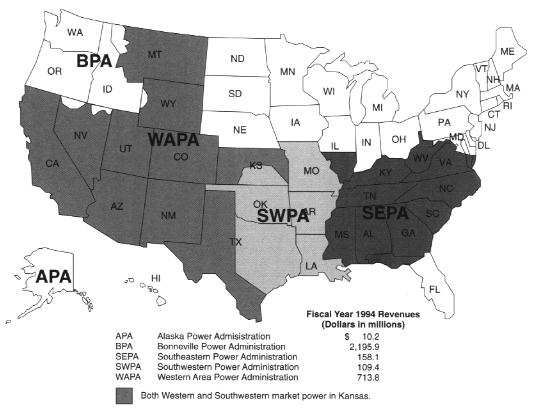
TABLE 7.1 Average Revenue Per kWhr of Wholesale Power in DOE's Power Marketing Administrative Service Areas (PMAs), FY 1994
|
PMA |
Energy delivered millions of kWhr |
Revenue from sales millions of $ |
Average revenue cents/kWhr |
Appropriation millions of $ |
|
APAa |
406 |
10 |
2.46 |
0.2 |
|
BPAb |
57,245 |
1,406 |
2.46 |
27.6 |
|
SEPAc |
8,745 |
165 |
1.89 |
2.4 |
|
SWPAd |
7,946 |
97 |
1.22 |
2.7 |
|
WAPAe |
29,358 |
536 |
1.83 |
10.6 |
|
Total-PMAs |
103,700 |
2,214 |
2.14 |
43.5 |
|
TVA Hydro |
18,000 |
339 |
|
|
|
Total-PMAs plus TVA Hydro |
121,700 |
2,553 |
|
|
|
Nationwide-wholesale |
1,202,902 |
43,384 |
3.61 |
|
|
PMAs plus TVA |
|
|
|
|
|
Percent of Total |
10.1% |
5.9% |
|
|
|
a APA: Alaska Power Administration b BPA: Bonneville Power Administration c SEPA: Southeastern Power Administration d SWPA: Southwestern Power Administration e WAPA: Western Power Administration |
||||
TABLE 7.2 Gross Appropriation Expended for Power and Nonpower Purposes (1995)
|
Purpose |
APA |
BPA |
SEPA |
SWPA |
WAPA |
Total |
Percent of Total |
|
Power |
$206.1 |
$25,331.0 |
$1,476.0 |
$1,007.6 |
$ 5,891.0 |
$33,911.7 |
78.1% |
|
Flood Control |
0.0 |
559.3 |
244.3 |
910.0 |
0.3 |
1,713.9 |
3.9% |
|
Irrigation |
0.0 |
409.2 |
0.0 |
0.0 |
1,558.4 |
1,967.6 |
4.5% |
|
Navigation |
0.0 |
815.8 |
320.9 |
231.7 |
0.0 |
1,368.4 |
3.2% |
|
Recreation |
0.0 |
113.8 |
231.3 |
402.3 |
28.6 |
836.0 |
1.9% |
|
Fish and Wildlife |
0.0 |
80.0 |
16.7 |
24.6 |
97.4 |
218.7 |
0.5% |
|
Multi-purpose |
0.0 |
0.0 |
0.0 |
0.0 |
2,801.6 |
2,801.6 |
6.5% |
|
Muncipal and Industrial |
0.0 |
0.0 |
0.0 |
0.0 |
197.6 |
197.6 |
0.5% |
|
Other |
0.0 |
244.2 |
14.3 |
121.1 |
6.1 |
385.7 |
0.9% |
|
Total |
$206.1 |
$27,553.3 |
$2,363.5 |
$2,697.3 |
$10,581.0 |
$43,401.2 |
100.0% |
|
Percent of Total |
0.5% |
63.5% |
5.4% |
6.2% |
24.4% |
100.0% |
|
|
SOURCE: GAO (1995). |
|||||||
1996). The fund, which currently has $17 billion available, offers low-interest loans that can help save an estimated 30 to 50 percent of the cost of a project by reducing interest payments. EPA also provides significant support to state water pollution control activities including watershed-based systems and restoration projects. The agency also funds science and policy research by investing in state and university partnerships.
Geological Survey
The U.S. Geological Survey (USGS) has four major divisions, including geology, water resources, mapping, and biological resources. The Water Resources Division is financed by a combination of direct appropriations and reimbursable cooperative programs with other federal agencies, and state and local governments (USGS, 1994). The FY 1994 budget for the USGS water resources program was $400 million, with over half of the funds from reimbursable sources.
This high level of reimbursable support indicates a well developed network of cooperative interagency activities.
Natural Resources Conservation Service
The Natural Resources Conservation Service (NCRS) program directly linked to watershed-based approaches is the NCRS's PL-566 program, which promotes development of drainage and flood control projects for agricultural watersheds smaller than 250,000 acres (100,000 ha or about 390 sq. mi.). The current funding for this program is about $100 million per year. The PL 566 program has come under attack for promoting drainage of wetlands and subsidizing floodplain use. On the positive side, the program encourages watershed planning as part of the development activities. In addition to NRCS, other Department of Agriculture programs affect watershed funding, such as soil conservation districts.
National Oceanic and Atmospheric Administration
The National Oceanic and Atmospheric Administration's (NOAA) Coastal Zone Management program provides financial support for planning activities for watersheds that link interior areas with valuable coastal environments and affects 29 states (Robertson et al., 1996). This watershed-based program focuses on nonpoint pollution control and is conducted in cooperation with EPA. NOAA provides a significant financial contribution: in 1992, funding for the Coastal Zone Management Program was $40 million.
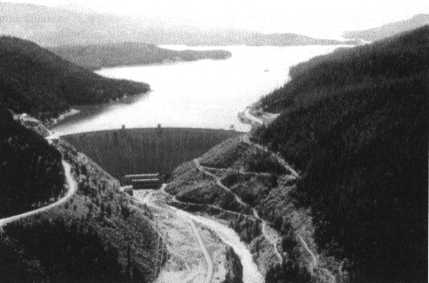
Hydropower production has long been the primary funding mechanism for water development projects, particularly in the West. Hungry Horse Dam, on the South Fork of the Flathead River in Montana, was built between 1948 and 1953 and was at the time of its completion the third largest concrete dam in the world. It was designed to provide flood protection and power generation, and contribute to downstream irrigation, navigation, and recreation. The powerplant can generate 285,000 kilowatts. Modifications were made in the early 1990s so that warmer water could be released to mitigate adverse impacts to downstream fish habitat. Credit: Bureau of Reclamation.
Hydropower Production and Watershed Financing
As noted earlier, hydropower production has long been the primary funding mechanism for water development, particularly in the West. This approach began in the 1930s when the federal government established the TVA and Power Marketing Administrations (PMAs) to sell subsidized power produced at federal hydroelectric plants in rural and underdeveloped areas. These organizations continue to function today even though electrification has been completed and many of the once-developing areas are now prosperous (e.g., Palo Alto, California, parts of Los Angeles and Kansas City, and Vail and Aspen, Colorado). Power from these federal dams is still sold at below market prices. According to Block
and Shadegg (1966), the PMAs receive numerous subsidies including very low interest rates, extensive payback periods, unrealistic depreciation periods, and tax exclusions. These hydropower operations cause many watershed problems because of their major disruption of the normal hydrological cycles (Collier et al., 1996).
These low rates benefit only certain portions of the United States. For example, people on one side of Los Angeles who are served by Southern California Edison pay 12.10 cents/kWhr, while elsewhere in Los Angeles customers who benefit from the PMAs pay 9.85 cents/kWhr. In Northern California, residents of Santa Clara (7.30 cents/kWhr) and Palo Alto (5.46 cents/kWhr) pay much less than customers in the Bay Area, who pay 12.25 cents/kWhr (Block and Shadegg, 1996). Many of the communities receiving these subsidies are among the most affluent in the United States. The federal power operatives receive Congressional appropriations for their operations, and the power revenues are deposited in the general fund. Public agencies control over 60 percent of the hydropower capacity in the United States (Table 7.3).
Western Water Policy Commission
The Western Water Policy Review Advisory Commission (see Box 7.2) provides some excellent insights into financing mechanisms for watershed activities in the western United States (WWPRAC, 1998). The following paragraphs summarize some of the commission's findings that are particularly relevant to funding of watershed management.
In a report to the commission, MacDonnell and Driver (1996) recommend the creation of a new Colorado River Basin Commission that would assume responsibility for all federal facilities and the water deliveries to Mexico, and be self-supporting with income from hydropower revenues. Another report by
TABLE 7.3 Summary of Private and Public Hydropower Projects in the United States
|
|
Number of Projects |
Total Installed Capacity (MW) |
||
|
Region |
Private |
Publica |
Private |
Public |
|
Northeast |
146 |
12 |
4,194 |
4,119 |
|
South |
80 |
60 |
7,330 |
5,669 |
|
Midwest |
115 |
28 |
3,452 |
3,111 |
|
West |
115 |
96 |
6,238 |
17,655 |
|
Total |
456 |
196 |
21,214 |
30,584 |
|
a Public agencies consist of rural electric cooperatives, municipal utilities, state utilities, and federal projects. SOURCE: Reprint, with permission, from Block and Shadegg (1996). © 1996 from The Progress Freedom Foundation. |
||||
|
Box 7.2 Water in the West: the Challenge for the Next Century In 1995, the Western Water Policy Review Advisory Commission (WWPRAC) was charged to undertake a comprehensive review of federal activities in the 19 western states which directly or indirectly affect the allocation and use of water resources, whether surface or subsurface. The commission had 22 members including the secretary of the Interior, the secretary of the Army, 12 ex-officio members of Congress, plus citizens, lawyers, and the deputy administrator of the Bonneville Power Administration. The group set out to identify the challenges that western water managers face in achieving sustainable use of water resources. During two years of activity, the commission gathered information at public hearings, undertook a scientific review of the status and trends of water and related resources, and authorized production of assessments of water conflicts in six key basins and the capability of existing management institutions to resolve them. Although focused on the West, the commission addressed issues of wide national importance and used a process that might work or be tailored to work in other regions. The Commission's report was still in draft form when this report was being written, so we cannot comment on it in any detail. However, the committee did have the opportunity to keep abreast of the Commission's activities and benefit from the basin assessments. Like this report, Water in the West: The Challenge for the Next Century (WWPRAC, 1998), com |
Pontius (1997) recommends establishing dedicated funding sources for financing programs for endangered species recovery, habitat restoration, and environmental enhancement in the Colorado River basin. Hydropower revenues already are being targeted for salinity control and fish recovery funding in the Upper Basin.
Volkman (1997) pointed out that the hydropower revenues from the Columbia River basin, which have supported a large salmon restoration effort, may dwindle in the face of competition from other low-cost power sources such as natural gas. He also concluded that watershed efforts need stable long-term funding if they are to be effective. In a related area, watershed activities in the Yakima River basin in the State of Washington address concerns about salmon habitat. Federal funding for the Yakima effort is from a congressional appropriation and matching funds from the Power Planning Council. The Umatilla River is Oregon illustrates a different funding approach for a somewhat similar basin. The State of Oregon, which has created 36 watershed or river basin councils, provides the funding.
|
ments on the maze of agencies and programs to deal with water issues and the conflicts caused by historic programs and laws aimed at developing water for economic purposes. They conclude that these problems cannot be resolved piecemeal, but rather must be addressed by fundamental changes in institutional structure and government processes. But this will not be easy, as they, too, note that the geographic, hydrologic, ecological, social, and economic diversity of the West will require regionally- and locally-tailored solutions. The WWPRAC report sees potential for a new approach to governancy of watersheds and river basins in the West based on hydrologic systems. In addition to opportunities for governance and management based on watersheds, the WWPRAC report identifies eight other key areas of challenge for western water managers, and addresses each at length in its report and its companion documents, including:
|
In the Columbia River basin, a governing principle is that hydropower is partially responsible for funding fish and wildlife mitigation. The current agreement calls for Bonneville Power Administration to pay $252 million per year for fish and wildlife programs (Volkman, 1997). Hydropower is not the only cause of the salmon decline in the Pacific Northwest. Flood control, irrigation, navigation, and recreation also cause impacts, and these other activities are also subsidized by the federal government. From an equity point of view, should these other purposes be required to share in the cost of river restoration programs?
McLaughlin Water Engineers and Aiken (1997) recommend that federal funding and technical assistance for the Platte River Endangered Species Recovery Program be expanded to levels commensurate with other programs such as the Columbia River Restoration Program, the Upper Mississippi Environmental Management Program, the Everglades Restoration Project, and the Central Valley Improvement Program. They recommended that federal funding be based on a determination of federal interests in these projects. A proposed Memorandum of Agreement for the Platte River Basin calls for the federal government to pay 50
percent of the total $75 million cost of the recovery program, with Nebraska and Colorado each paying 20 percent and Wyoming paying 10 percent.
Agricultural water users in the Upper Rio Grande, for example, and most of the West receive irrigation water at subsidized costs (ECONorthwest, 1997). These subsidies include subsidized construction costs, shifting some of the irrigator's repayment obligation to others because the obligation exceeds the irrigator's ability to pay, and relieving irrigators of part of their repayment obligations in special circumstances, such as drought or economic hardship (GAO, 1996). The net result of these subsidies is that irrigators in the Upper Rio Grande pay less than 20 percent of the total cost of their providing irrigation water. One would expect reductions in irrigation if these subsidies were eliminated.
Cost Allocation and Watershed Management
From the viewpoint of economic efficiency, it should be possible to take advantage of economies of scale, develop multi-purpose programs, and more fully exploit the benefits of integrated watershed management (Heaney, 1993). Unfortunately, as the size of the watershed organization and the number of purposes which it serves grows, it becomes increasingly complex to equitably apportion the benefits and costs. Is there a ''correct" way to assign the costs of watershed activities among stakeholders? Some understanding of the conceptual approaches available is useful, although taking this information from the abstract to the concrete, where it can be implemented by managers, is of course a significant challenge (Heaney, 1997).
How costs are allocated is a long-standing issue in water resources management, and certainly an issue when it comes to financing watershed-based organizations. Cost allocation is required whenever an activity deals with multiple purposes and/or groups, with the underlying problems of allocating costs in ways that are both efficient and equitable. There are different methods available for cost allocation in the water resources field. The important question, in general, is the context in which cost allocation takes place. Each cost allocation problem has its unique history and set of agreements as to what constitutes a "fair" division of costs. The economic efficiency of water resource projects can be improved by taking advantage of various factors, including (Heaney and Dickinson, 1982):
- economies of scale in production and distribution facilities,
- the assimilative capacity of the receiving environment,
- excess capacity in existing facilities,
- multipurpose opportunities; and
- multi-group cooperation.
Unfortunately, when potential solutions to watershed problems are analyzed, the most economical strategy is typically a complex blend of management op-
tions. When the optimal economic solution is complex, it creates complex cost allocation problems since it is necessary to divide the costs among many purposes and groups. Thus, the search for improved economic efficiency exacerbates the difficulty of deciding how costs should be divided. The concept of equity is an essential part of the cost allocation problem. Young (1994a) defines a number of key terms to provide language to further the discussion. According to Young, an allocation is an assignment of the objects to specific individuals or groups. It is a decision about who gets a good or who bears a burden, and it is usually decided by a group or an institution acting on behalf of the group. An allocation problem occurs whenever a bundle of resources, rights, burdens, or costs is temporarily held in common by a group of individuals and must be allotted to them individually. Exchange involves many voluntary, decentralized transactions and can only occur after the goods and burdens have been allocated. As a result, allocation comes first, and exchange follows.
With regard to equity, Young (1994a) stressed that it is a complex issue:
Equity is a complex idea that resists simple formulations. It is strongly shaped by cultural factors, by precedent, and by the specific types of goods and burdens being distributed. To understand what equity means in a given situation, we must therefore look at the contextual details.
According to Young (1994a), allocation rules usually exhibit one or a combination of three concepts of equity:
- Parity: claimants are treated equally.
- Proportionality: acknowledges differences among claimants and divides the goods in proportion to these differences.
- Priority: the person with the greatest claim to the good gets it.
The earliest reported literature on the cost allocation problem in water resources is a book by Ransmeier (1942), who reported on the results of several years of debate regarding how the costs of the Tennessee Valley Authority (TVA) should be divided among flood control, navigation, fertilizer production, national defense, and development of power. This debate was important because it represented the first time that public water projects would compete with private water development. In particular, there was strong concern that multipurpose public water projects could out compete existing private hydropower development, because a significant part of the total cost could be assigned to other purposes. These deliberations produced five criteria for cost allocation (Ransmeier, 1942):
- An allocation method should have a reasonable logical basis.
- The method should not be unduly complex.
- The method should be workable.
- The method should be flexible.
- The method should apportion to all purposes present at a multiple purpose enterprise a share in the overall economy of the operation.
The TVA group could not agree on whether it was essential that total costs be paid but later groups supported this notion of assigning the full cost among the participants. Thus, the sixth condition would be:
- The method should apportion the entire cost of the project among the stakeholders.
Large-scale, federally sponsored water development after World War II brought attention to the need to develop cost allocation methods for water projects. The "separable costs, remaining benefits" (SCRB) method originated in this initiative (Federal Interagency River Basin Committee, 1950). A separable cost is the incremental cost of adding group i as the last member of a large coalition of N members. If economies of scale exist, a group incurs the lowest incremental cost if it joins last. If group i cannot pay at least its separable cost, then it will have to be subsidized by the other groups. In the SCRB method, each group is assigned separable costs—that is, the cost it would incur if it joined last, which will likely be less than if it was an original member of the coalition. The remaining nonseparable costs are then apportioned based on each stakeholder's share of the total remaining benefits. Independent of the water resources field, game theorists have pondered the same questions of efficiency and equity using cooperative n person game theory (Aumann and Hart, 1994). Young (1994b) provided an explanation of game theory and cost allocation. Interestingly, the game theorists independently arrived at the same conclusions as did the professionals who evaluated the TVA problem (Heaney and Dickinson, 1982).
Importance of Context
For every cost allocation problem, it is essential to clearly define the context within which the calculations will be done. There is no single correct way to determine and allocate costs. However, some useful guidelines regarding the importance of context do exist. For example, Nelson (1995) describes various ways to determine System Development Charges (SDCs) for water, wastewater, and stormwater systems. SDCs are one-time charges paid by new system development to finance the construction of public facilities needed to serve it. Nelson (1995) describes the legal and other issues that have arisen in trying to establish "fair" charges for new developments. These lessons are applicable to financing watershed organizations.
Calculating Alternative Costs
An important component of cost allocation is to calculate the alternative costs for each participant. For example, assume that we have three stakeholders in a watershed organization. The following costs (C) need to be calculated:
- The costs for each stakeholder if they act alone: C(1), C(2), C(3)
- The costs for each pair of stakeholders if they act together: C(12), C(13), C(23).
- The cost for all three stakeholders in the watershed organization: C(123).
In general, the number of cost combinations that must be calculated is 2n - 1 where n is the number of stakeholders. Thus, the number of combinations where n is 3 is 7, whereas it is 31 if n is 5, and 1023 if n is 10. Obviously, the transactions costs associated with large watershed organizations increase rapidly as the number of stakeholders increases. As the size of the group grows, transactions costs would be expected to increase even more rapidly due to factors such as multiple jurisdictions, growing administration costs, and more complex environmental impacts (Heaney, 1983).
A key question in determining the alternative costs is who gets to go first. Consider a three purpose project: navigation, flood control, and hydropower. If the three purposes cooperate, then a single dam will be built and they will share the costs, but how do we calculate the cost of building a dam to serve a single purpose such as flood control? Do the flood control system builders get to pick their ideal site along the river, or should they get to calculate their cost after the other two purposes have built their system? Depending on the answer to this question, the cost allocation will be cooperative or competitive.
Who Should Pay for Watershed Remediation and Restoration?
Much of the current interest in watershed organizations has been stimulated by groups interested in remediating and restoring watersheds to reverse years of decline due to dams, diversions, point and nonpoint pollution, hydropower operations, and other development. But who will bear the cost? One principle holds that polluters should pay. Thus those who altered the hydrology for hydropower releases, or made the river more saline due to irrigation return flows, or added contaminants due to mine drainage or municipal and industrial wastes, should pay for remediating this damage. Others argue that taxpayers should pay, since they have enjoyed the benefits of these economic activities or will enjoy the remediated watershed. In many cases, the federal government subsidized the original activities, but does that make the federal government responsible for cleaning up the subsequent waste problems? These issues are complex and are being hotly debated in many places throughout the United States. These equity
issues are not related exclusively to environmental restoration. For example, federally financed flood control projects such as levees have caused significant external costs to other users. Who should pay to mitigate or eliminate these impacts?
Some degree of agreement exists as to what we mean by efficiency and equity and how to estimate "fair" ways to share costs. The importance of the context within which cost allocation takes place is, of course, critical. Participants may be willing to sacrifice a small gain in economic efficiency or choose not to accomplish all the intended goals to get a simpler cost allocation procedure. New institutions must be created to implement cooperative solutions. The associated transaction costs can offset the gains from a cooperative solution. The cost allocation problem is complex. Although practitioners have developed simple procedures for performing this task, the stakes are becoming higher as more competition enters the water resources field. It is essential that we fully understand the nature of and methods for properly answering the seemingly simple question, "How do we divide the cost of a watershed program?"
Financing Options
Given the great variation in watershed settings and the problems being addressed, no one approach to financing will fit all situations. One option for financing watershed organizations and activities is to maintain the status quo, and thus keep the current approach where different agencies have multiple responsibilities and programs and where the federal government plays an active role using water infrastructure develop as a way to stimulate economic development. This approach evolved over the past 60 years and has provided major gains in productivity for the U.S. economy, with the major return on the investment coming from hydropower revenues. A much larger return on the investment could be gained by assessing market rates for water supply, flood control, and recreation as well as hydropower production. At the other extreme are discussions of privatizing water resource management, an approach being tried for some purposes in a few U.S. locations and internationally (e.g., Great Britain). In between are various options for eliminating the federal water agencies and transferring control of watershed management to regional and local entities or creating major watershed agencies throughout the nation, along the lines of the old river basin commissions but with stable funding and actual management authority. Each of these broad approaches would require careful, detailed study before implementation to determine the associated advantages and disadvantages.
Much innovative thinking is occurring in the area of watershed management. For instance, MacDonnell and Driver (1996) suggested restructuring the governance of the Colorado River basin. Under the Colorado River Compact, the federal government paid most of the costs of developing the Colorado River to stimulate economic development and in return retained ownership and manage-
ment of the facilities constructed. Hydropower revenues were the main vehicle to be used to repay the federal investment. But MacDonnell and Driver recommend establishing a regional governance for the Colorado River basin, one financially independent from the federal government. They suggest using power revenues and charges to those diverting water to finance the approach.
Conclusion
A steady source of revenues is essential to sustain watershed organizations. Existing watershed organizations typically are funded as part of single-purpose organizations. At the local level, these groups include water, wastewater, and stormwater utilities. Much of the current literature on watershed management deals with using watershed organizations to provide better nonpoint pollution control. Up to a point, these groups can use funds from a stormwater utility to accomplish broad water quality objectives, but they are not always ideal for addressing the full range of watershed activities. Similarly, water utilities can fund watershed programs as part of their source protection activities. The federal government's last effort to directly plan and fund watershed management was through the Water Resources Council, but it operated as an interagency coordinating group with a relatively small budget and little real authority. Both stable budgets and real authority would be needed if similar organizations were formed in the future.
At present, hydropower revenues are the dominant source of income for the water resources-related activities of federal agencies. Other purposes such as flood control, drainage, irrigation, water supply, recreation, fish and wildlife protection, and environmental quality control are funded from direct appropriations, and beneficiaries are seldom required to repay the total costs. The focus of most federal water management efforts since the 1930s has been to stimulate economic development, but this paradigm is changing (NRC, 1996) and must continue to evolve if federal agency financing methods are conducive to sustainable watershed management. Many examples can be cited of federal agency cooperation on individual water projects, but we are a long way from having meaningful integration of federal activities at the watershed scale.
With much of the stimulus for watershed-based programs being rehabilitation or restoration, it is essential to better define who is responsible for financing these activities. At present, there is no clear federal policy and each case is being negotiated separately. Hydropower revenues appear to offer a significant potential source of funding for watershed organizations, although privatization of the electric industry raises some uncertainty for the future. In addition, user charges for water supply, flood control, recreation, and other uses might provide substantial funding sources. Another potential source of funding might be penalties assessed on polluters, but this is a complex and controversial area in need of careful study and discussion because of concerns about both equity and efficiency issues.
Financing is a complex and yet critical element in the search for ways to implement watershed-scale approaches, and lack of funding opportunities continues to be a roadblock to many potentially useful activities.
References
Aumann, R. J., and S. Hart., eds. 1994. Handbook of Game Theory, Vols. I and II. New York: Elsevier.
Block, M. K., and J. Shadegg. 1996. Lights Out on Federal Power: Privatization for the 21st Century. Washington, D.C.: The Progress Freedom Foundation.
Collier, M., Webb, R. H., and J. C. Schmidt. 1996. Dams and Rivers: A Primer on the Downstream Effects of Dams. U.S. Geological Survey Circular 1126. Tucson, Ariz.: U.S.G.S.
ECONorthwest. 1997. Water Management Study: Upper Rio Grande River Basin. Draft Report. Eugene, Oreg.: Western Water Policy Review Advisory Committee.
Featherstone, J. P. 1996. Water resources coordination and planning at the federal level: The need for integration. Water Resources Update, Issue 104, Summer: pp. 52-54.
Federal Interagency River Basin Committee. 1950. Proposed Practices for Economic Analysis of River Basin Projects. Washington, D.C.: Government Printing Office.
Heaney, J. P. and R. E. Dickinson. 1982. Methods for apportioning the cost of a water resource project. Water Resources Research 18(3):476-482.
Heaney, J. P. 1983. Coalition formation and the size of regional pollution control systems. In: Land Economics Monograph No. 6. Madison, Wisc.: University of Wisconsin Press.
Heaney, J. P. 1993. New Directions in Water Resources Planning and Management. Water Resources Update, Issue No. 93, Autumn.
Heaney, J. P. 1997. Cost Allocation. In Design and Operation of Civil and Environmental Engineering Systems: An Advanced Applications Text. New York: J. Wiley and Sons.
Interagency Ecosystem Management Task Force. 1996. The Ecosystem Approach: Healthy Ecosystems and Sustainable Economies. Volume I, PB95-265583, Volume II, PB95-265591, and Volume III, Case Studies. NTIS PB95-265609. Springfield, Va.
Kenney, D., and B. Rieke. 1997. Resource Management at the Watershed Level: An Assessment of the Changing Federal Role in the Emerging Era of Community-Based Watershed Management. Denver, Colo.: Western Water Policy Review Advisory Commission.
MacDonnell, L., and B. Driver. 1996. Rethinking Colorado River Governance. The Colorado River Workshop. Phoenix, Ariz.: Grand Canyon Trust.
McLaughlin Water Engineers, Ltd., and J. D. Aiken. 1997. Platte River Basin Study. Draft. Denver, Colo.: Western Water Policy Review Advisory Committee.
Nagle, D. G., G. W. Currey, W. Hall, and J. L. Lape. 1996. Integrating the point source permitting program into a watershed management program. In: Proceedings, Watershed 96: Moving Ahead Together. Alexandria, Va.: Water Environment Federation.
National Research Council. 1996. A New Era for Irrigation. Water Science and Technology Board. Washington, D.C.: National Academy Press.
Nelson, A. C. 1995. System Development Charges for Water, Wastewater, and Stormwater Facilities. Boca Raton, Fla.: CRC Press.
Pasquel, F., O. Guzman, and M. Mohan. 1996. Funding mechanisms for a watershed management program. In: Proceedings, Watershed 96: Moving Ahead Together. Alexandria, Va.: Water Environment Federation.
Pontius, D. 1997. Colorado River Basin Study. Denver, Colo.: Western Water Policy Review Advisory Commission.
Reisner, M. 1986. Cadillac Desert: The American West and Its Disappearing Water. New York, N.Y.: Viking Press.
Ransmeier, J. S. 1942. The Tennessee Valley Authority. Nashville, Tenn.: Vanderbilt University Press.
Robertson, P., M. Jansen, and K. Walker. 1996. Progress in addressing nonpoint source pollution. In: Proceedings, Watershed 96: Moving Ahead Together. Alexandria, Va.: Water Environment Federation.
Ruddy, B. C., and K. J. Hitt. 1990. Summary of Selected Characteristics of Large Reservoirs in the United States and Puerto Rico, 1988. Open-File Report 90-163. Denver, Colo.: U.S. Geological Survey.
Singells, N. D. 1996. Financing priority watershed projects with the state revolving fund. In: Proceedings, Watershed 96: Moving Ahead Together. Alexandria, Va.: Water Environment Federation.
U.S. Army Corps of Engineers (USACE). 1992. 1992 Annual Statistical Highlights . Washington, D.C.
U.S. Army Corps of Engineers (USACE). 1994. Master Water Control Manual-Missouri River Basin, Draft EIS.
U.S. Bureau of Reclamation (BOR). 1990. Summary: U.S. Bureau of Reclamation Budget Justification. Denver, Colo.
U.S. Bureau of Reclamation (BOR). 1997. Bureau of Reclamation Responses to Western Water Policy Review Advisory Commission Questions. Draft. Washington, D.C.: U. S. Dept. of the Interior.
U.S. General Accounting Office (GAO). 1995. Federal Electric Power: Operating and Financial Status of DOE's Power Marketing Administrations. GAO/RCED/AIMED-96-9FS, October. Washington, D.C.: U.S. General Accounting Office.
U.S. General Accounting Office (GAO). 1996. Information on allocation and repayment of costs of constructing water projects. GAO/RCED-96-109, July.
U.S. Geological Survey (USGS). 1994. U.S. Geological Survey Yearbook. Reston, Va.: Government Printing Office.
Volkman, J. M. 1997. A River in Common: the Columbia River, the Salmon Ecosystem, and Water Policy. Denver, Colo.: Western Water Policy Review Advisory Commission.
Water Management District Review Commission. 1995. Bridge over Troubled Water: Recommendations of the Water Management District Review Commission. Tallahassee, Fla.:
Western Water Policy Review Advisory Commission (WWPRAC). 1998. Water in the West: Challenge for the Next Century. Washington, D.C.: Government Printing Office.
Worster, D. 1985. Rivers of Empire: Water Aridity, and the Growth of the American West. New York: Pantheon Books.
Young, H. P. 1994a. Equity in Theory and Practice. Princeton, N.J.: Princeton University Press.
Young, H. P. 1994b. Cost allocation. Chapter 34 in Handbook of Game Theory with Economic Applications. Amsterdam: Elsevier.


