
1
Reclaiming Wastewater: An Overview
Growing urbanized populations and increasing constraints on the development of new water sources have spurred a variety of measures to conserve and reuse water over the last two or three decades. As part of this trend, some municipalities have begun to reuse municipal wastewater for nonpotable water needs, such as irrigation of parks and golf courses. And a small but increasing number of municipalities are augmenting or considering augmenting the general water supply (potable and nonpotable) with highly treated municipal wastewater.
These "potable reuse" projects are made possible by improved treatment technology that can turn municipal wastewater into reclaimed water that meets standards established by the Safe Water Drinking Act. However, questions remain regarding how much treatment and how much testing are necessary to protect human health when reclaimed water is used for potable purposes. Some public health and engineering professionals object in principle to the reuse of wastewater for potable purposes, because standard public health philosophy and engineering practice call for using the purest source possible for drinking water. Others worry that current techniques might not detect all the microbial and chemical contaminants that may be present in reclaimed water. Several states have issued regulations pertaining to potable reuse of municipal wastewater, but these regulations offer conflicting guidance on whether potable reuse is acceptable and, when it is acceptable, what safeguards should be in place.
This report assesses the health effects and safety of using reclaimed water as a sole source or as a component of the potable water supply. The report was prepared by the Committee to Evaluate the Viability of Augmenting Potable Water Supplies With Reclaimed Water, which was appointed by the National Research Council (NRC) to evaluate issues associated with potable reuse of municipal wastewater. The committee members were appointed based on their widely recognized expertise in municipal water supply, wastewater reclamation and reuse, and public health. In its evaluation, the committee considered the following questions:
- What are the appropriate definitions of water reuse? What distinguishes indirect from direct reuse?
- What are the considerations for ensuring reliability and for evaluating the suitability of a water source augmented with treated wastewater?
- Given the recent health-effect studies that have been conducted, what further research is required?
The committee based its evaluation on published literature and the expertise of committee members and others consulted during this project. The committee used as its starting point the findings and recommendations of a 1982 NRC committee that examined quality criteria that should be applied when a degraded water supply is used as a drinking water source (see Box 1-1). As part of its information gathering effort, the committee hosted a two-day workshop in Irvine, California, featuring principal investigators and project managers of several of the potable reuse projects that have conducted analytical and health-effect studies.
The committee views the planned use of reclaimed water to augment potable water supplies as a solution of last resort, to be adopted only when all other alternatives for nonpotable reuse, conservation, and demand management have been evaluated and rejected as technically or economically infeasible. This report should help communities considering potable reuse make decisions that will protect the populations they serve. Some of the issues relate to similar concerns for drinking water sources that receive incidental or unplanned upstream wastewater discharges.
This chapter describes the history of potable reuse of municipal wastewater, defines the different types of potable reuse, provides an overview of wastewater treatment technologies applicable to potable reuse projects, and describes existing federal guidelines and state regulations covering potable reuse. Chapter 2 describes the chemical contaminants found in wastewater, treatments aimed at reducing them, and issues re-
|
BOX 1-1 Results of the 1982 NRC Study of Quality Criteria for Water Reuse In 1982, the National Research Council issued a report titled Quality Criteria for Water Reuse (National Research Council, 1982) The report was developed to provide input to an experimental program commissioned by Congress to study the wastewater-contaminated Potomac Estuary as a potential new water source for the District of Columbia (National Research Council, 1982). The focus of the 1982 report was on the scientific questions concerning the quality criteria that should be applied if a degraded water supply is used as a source of drinking water At the time, very few communities in the United States, aside from Denver, Los Angeles, Washington, D.C. and Orange County, California, were considering water reuse to augment drinking water supplies The report concluded that the most practical way to judge the potential health hazards of reclaimed water is to compare it with conventional supplies, which have risks, if any, that are presumed to be acceptable initially, conventional water supplies and reclaimed water should be compared on the basis of identifiable individual compounds and microbiological organisms. The results of these tests would influence the need to proceed with additional testing, because reclaimed water that failed such a comparison would be rejected as not being as suitable as a conventional supply Because of the practical impossibility of identifying and testing all of the individual compounds present in reclaimed water, the report recommended testing of mixtures of chemicals. It also recommended that the mixtures be concentrated to increase the sensitivity of the tests. The report recommended that toxicological comparisons between reclaimed and conventional water be based on the outcomes of a series of tiered tests designed to provide information on the relative toxicities of the concentrates from the two water supplies Phase 1 tests would include in vitro assessments of mutagenic and carcinogenic potential by means of microbial and mammalian cell mutation and in vivo evaluations of acute and short-term subchronic toxicity, teratogenicity (birth defects), and clastogenicity (the production of chromosomal abnormalities) Phase 2 tests would include a longer term (90-day) subchronic study and a test for reproductive toxicity Phase 3 would consist of a chronic lifetime feeding study. The report concluded that depending on the results of the various comparative test phases, a judgment could be reached that reclaimed water is as safe as, more safe than, or less safe than a conventional water supply The final decision to use treated wastewater for potable purposes or for food processing would only be made after a careful evaluation of potential health effects treatment reliability cost, necessity, and public acceptance. Still, the report "strongly endorse[d] the generally accepted concept that drinking water should be obtained from the best quality source available" and noted that "U.S. drinking water regulations were not established to judge the suitability of raw water supplies heavily contaminated with municipal and industrial wastewater" The report suggested that planners should consider ''the much greater probability that adequately safe [reclaimed] water could be provided for short-term emergencies rather than for long-term use." |
lated to analytical methods for measuring water quality. Chapter 3 examines similar concerns related to microbial contaminants. Chapter 4 discusses methodological issues for conducting microbiological analysis, risk analysis, toxicological safety testing, and epidemiological studies. Chapter 5 reviews the health-related studies conducted by selected potable reuse projects. And Chapter 6 evaluates reliability and quality assurance issues for potable reuse projects.
Selection of Drinking Water Sources
Some public health authorities have been reluctant to allow or support the planned augmentation of water supplies with reclaimed municipal wastewater under any circumstances, subscribing to the maxim that only natural water derived from the most protected source should be used as a raw drinking water supply. This maxim has guided the selection of potable water supplies for more than 150 years. It was affirmed in the 1974 draft of the National Interim Primary Drinking Water Regulations, which states, "Production of water that poses no threat to the consumer's health depends on continuous protection. Because of human frailties associated with protection, priority should be given to selection of the purest source. Polluted sources should not be used unless other sources are economically unavailable" (U.S. EPA, 1975).
This principle was derived from earlier public health practices developed when understanding of drinking water contaminants was limited and when natural processes (such as dilution in rivers and natural filtration by soils), rather than technology, were relied upon to produce suitable drinking water. It is also derived from a time when the U.S. population was smaller, and our concern about protecting the environment from the impact of human-made impoundments less formalized, and when pristine water supplies were more available than they are today.
While a pristine drinking water source is still the ideal sought by most municipalities, the U.S. population has expanded, so that many large cities take water from sources that are exposed to sewage contamination. When these supplies were originally developed, the only health threats perceived were attributable to microbiological vectors of infectious disease. These vectors would be attenuated during flow in rivers and then easily eliminated with conventional water treatment processes such as coagulation, filtration, and disinfection. Such water supplies were generally less costly and more easily developed than higher quality upland supplies or underground sources. Today, however, most of these supply waters receive treated wastewaters from other communities upstream. Thus, cities such as Philadelphia, Cincinnati, and New Orleans, which draw water from the Delaware, Ohio, and Mississippi rivers, re-
spectively, are already practicing unplanned indirect potable reuse of municipal wastewater. In fact, more than two dozen major water utilities, serving populations from 25,000 to 2 million people, draw from rivers in which the total wastewater discharge accounts for more than 50 percent of stream flow during low flow conditions (Swayne et al., 1980).
Much of the impetus for water reuse comes from municipal utilities in the arid western United States. Many communities there already use a variety of measures to offset the rising costs of importing water long distances. Moving water entails satisfying a large number of environmental and health laws and permits, as well as the corresponding interests of competing users and local, state, tribal, and federal jurisdictions.
As high-quality water sources become scarcer and populations in arid regions grow, the phrase "economically unavailable" has taken on new significance. Communities looking for new water sources must examine a number of options, including water conservation, nonpotable reuse, and investing more money in the treatment of water supplies that are of poorer quality but more readily available. Most communities will readily pay a premium to obtain a pristine supply for their drinking water. But the premiums required get bigger each year, particularly in areas where water is already scarce.
Potable Reuse and Current Drinking Water Standards
Much of the objection to planned potable reuse of wastewater arises from a discussion of whether drinking water standards are adequate to ensure the safety of all waters regardless of source. Some argue that drinking water standards apply only to—and were designed only for—waters derived from relatively pristine sources. Although this argument has a long-standing basis in normal sanitation practice, it is becoming more difficult to determine what is the best available water source. Water sources in the United States vary from protected, pristine watersheds to waters that have received numerous discharges of various wastes, as illustrated in Figure 1-1. Highly treated wastewater does not differ substantially from some sources already being used as water supplies.
Because of the continuing degradation of raw water supplies in the United States and increased public concern about water quality, federal drinking water regulations, which in 1925 addressed only a handful of contaminants and applied only to municipalities that provided water to interstate carriers (such as buses, trains, and ships), now address nearly 100 contaminants and apply to all community water systems serving 25 people or more. The role of these drinking water standards should be evaluated against the continuum of available source waters.
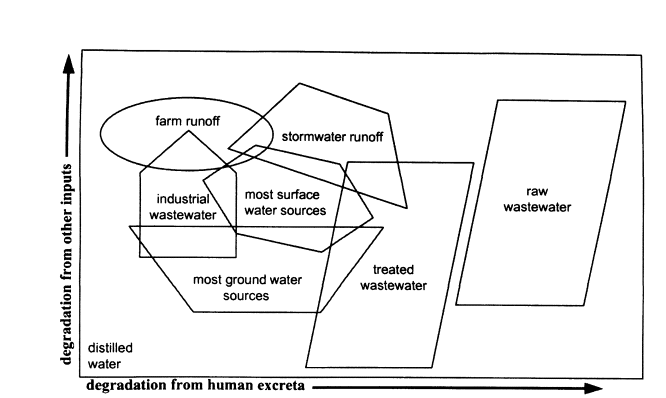
Drinking water standards' main function is to provide a benchmark for unacceptable risk from selected contaminants for which adequate health information exists. Up to a point, increasing the number of standards increases the confidence that a particular water supply is not contaminated by harmful chemicals or pathogens. However, the standards cannot guarantee that the water poses no health hazard. Modern analytical methods detect fewer than 10 percent of the organic chemicals typically present in a water (Ding et al., 1996). Further, drinking water standards exist only for a relatively small percentage of the possible chemical contaminants. In addition, these standards do not currently require monitoring for specific microbiological contaminants, but only for coliform bacteria, which merely indicate the possible presence of microbial pathogens—and only a fraction of microbial pathogens at that. Creating more standards, therefore, does not ensure the safety of drinking water, because as more chemical contaminants and pathogenic organisms are discovered the possibilities become almost infinite in scope.
In summary, caution is required when evaluating whether compliance with drinking water standards—or proposed or hypothetical additional standards—will ensure a water source is safe. As a water source comes to include (intentionally or not) increasing amounts of wastewater, a drinking water utility must become increasingly knowledgeable about contaminant inputs into the wastewater. The utility might identify potential contaminants of concern by surveying the industrial inputs into the wastewater, examining the wastewater for chemical constituents broader than those represented by drinking water standards, and/or using toxicological testing methods to ensure that the product water does not contain substantial concentrations of chemicals whose toxicological properties have not been established.
Types of Water Reuse
When discussing the reuse of treated municipal wastewater for potable purposes, it is useful to distinguish between "indirect" and "direct" potable reuse and between "unplanned" and "planned'' potable reuse.
Indirect potable water reuse is the abstraction, treatment, and distribution of water for drinking from a natural source water that is fed in part by the discharge of wastewater effluent.
Planned indirect potable water reuse is the purposeful augmentation of a water supply source with reclaimed water derived from treated municipal wastewater. The water receives additional treatment prior to distribution. For example, reclaimed water might be added to ambient water in a water supply reservoir or underground aquifer and the mixture withdrawn for subsequent treatment at a later time.
Unplanned indirect potable reuse is the unintentional addition of wastewater (treated or not) to a water supply that is subsequently used (usually by downstream communities) as a water source, with additional treatment prior to delivery. As noted earlier, many communities already unintentionally practice such unplanned indirect potable reuse.
Direct potable water reuse is the immediate addition of reclaimed wastewater to the water distribution system. This practice has not been adopted by, or approved for, any water system in the United States.
With planned or unplanned indirect potable reuse, the storage provided between treatment and consumption allows time for mixing, dilution, and natural physical, chemical, and biological processes to purify the water. In contrast, with direct potable reuse, the water is reused with no intervening environmental buffer.
With planned indirect potable reuse and direct potable reuse, the wastewater is treated to a much higher degree than it would be were it being discharged directly to a surface water without specific plans for reuse. The wastewater generally is first treated as it would be in a conventional municipal wastewater treatment plant, then subjected to various advanced treatment processes.
Conventional wastewater treatment begins with preliminary screening and grit removal to separate sands, solids, and rags that would settle in channels and interfere with treatment processes (Henry and Heinke, 1989). Primary treatment follows this preliminary screening and usually involves gravity sedimentation. Primary treatment removes slightly more than one-half of the suspended solids and about one-third of the biochemical oxygen demand (BOD) from decomposable organic matter, as well as some nutrients, pathogenic organisms, trace elements, and potentially toxic organic compounds.
Secondary treatment usually involves a biological process. Microorganisms in suspension (in the "activated sludge" process), attached to media (in a "trickling filter" or one of its variations), or in ponds or other processes are used to remove biodegradable organic material. Part of the organic material is oxidized by the microorganisms to produce carbon dioxide and other end products, and the remaining organic material provides the energy and materials needed to support the microorganism community. Secondary treatment processes can remove up to 95 percent of the BOD and suspended solids entering the process, as well as significant amounts of heavy metals and certain organic compounds (Water Pollution Control Federation, 1989). Conventional wastewater treatment usually ends with secondary treatment, except in special cases where tertiary treatment is needed to provide additional removal of contaminants such as microbial pathogens, particulates, or nutrients.
Advanced treatment processes beyond tertiary treatment are neces-
sary when wastewater is to be reclaimed for potable purposes. Table 1-1 provides a list of advanced treatment processes, arranged by the types of constituents they are designed to remove.
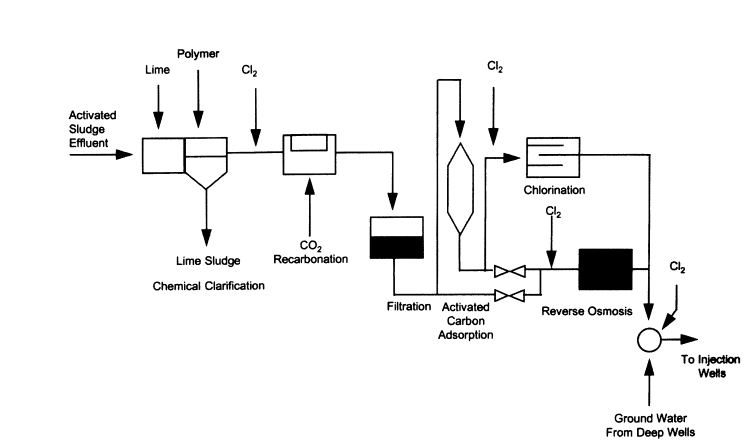
The process used by Water Factory 21 in Orange County, California, to treat wastewater prior to injecting it into selected coastal aquifers to form a seawater intrusion barrier is illustrative (see Figure 1-2 and Box 1-2). The advanced treatment of this water includes additional removal of suspended material by chemical coagulation with lime, alum, or a ferric salt. This process is generally quite effective in removing heavy metals as well as dissolved organic materials (McCarty et al., 1980). Recarbonation by the addition of carbon dioxide then neutralizes the high pH created by the addition of lime. After that, mixed media filtration is used to remove suspended solids. The flow is then split between granular activated carbon, which removes soluble organic materials, and reverse osmosis (RO), which is used for demineralization, so that when blended with the remaining water the mixture will meet total dissolved solids requirements specified for injected water. Reverse osmosis can also remove the majority of the dissolved nonvolatile organic materials and achieve less than 1 mg/liter of dissolved organic carbon in the treated water. According to measures of identifiable contaminants, water treated in this manner is often of better quality than some polluted surface waters now used as
TABLE 1-1 Constituent Removal by Advanced Wastewater Treatment Processes
|
Principal Removal Function |
Description of Process |
Type of Wastewater Treateda |
|
Suspended solids removal |
Filtration Microstrainers |
EPT, EST EST |
|
Ammonia oxidation |
Biological nitrification |
EPT, EBT, EST |
|
Nitrogen removal |
Biological nitrification/ denitrification |
EPT, EST |
|
Nitrate removal |
Separate-stage biological denitrification |
EPT + nitrification |
|
Biological phosphorus removal |
Mainstream phosphorus removalb |
RW, EPT |
|
|
Sidestream phosphorus removal |
RAS |
|
Principal Removal Function |
Description of Process |
Type of Wastewater Treateda |
|
Combined nitrogen and phosphorus removal by biological methods |
Biological nitrification/ denitrification and phosphorus removal |
RW, EPT |
|
Nitrogen removal by physical or chemical methods |
Air stripping |
EST |
|
|
Breakpoint chlorination |
EST + filtration |
|
|
Ion exchange |
EST + filtration |
|
Phosphorus removal by chemical addition |
Chemical precipitation with metal salts or lime |
RW, EPT, EBT, EST |
|
Toxic compounds and refractory organics removal |
Granular activated carbon adsorption |
EST + filtration |
|
|
Powdered activated carbon adsorption |
EPT |
|
|
Chemical oxidation |
EST + filtration |
|
Dissolved inorganic solids removal |
Chemical precipitation |
RW, EPT, EBT, EST |
|
|
Ion exchange |
EST + filtration |
|
|
Ultrafiltration |
EST + filtration |
|
|
Reverse osmosis |
EST + filtration |
|
|
Electrodialysis |
EST + filtration +carbon adsorption |
|
Volatile organic compounds |
Volatilization and gas stripping |
RW, EPT |
|
Microorganism removalc |
Reverse osmosis |
EST + filtration |
|
|
Nanofiltration/ultrafiltration |
EST + filtration |
|
|
Lime treatment EST |
|
|
a EBT = effluent from biological treatment (before clarification); EPT = effluent from primary treatment; EST = effluent from secondary treatment; RAS = return activated sludge; and RW = raw water (untreated sewage). b Removal process occurs in the main flowstream as opposed to during sidestream treatment. c Microorganism removal is also accomplished by any of several chemical disinfection processes (e.g., free Cl2, NH2Cl, C102, 03), but these are not usually considered as advanced wastewater treatment processes. SOURCE: Adapted from Metcalf and Eddy, Inc., 1991. |
||
|
BOX 1-2 Water Factory 21 in Orange County, California The Orange County Water District (OCWD) has been injecting high quality reclaimed water into selected coastal aquifers to establish a salt water intrusion barrier. Seawater intrusion was first observed in municipal wells during the 1930s as a consequence of basin overdraft. Overdrafting of the ground water continued into the 1950s. Overpumping of the ground water resulted in seawater intrusion as far as 5.6 km (3.5 miles) inland from the Pacific Ocean by the 1960s. OCWD began pilot studies in 1965 to determine the feasibility of injecting effluent from an advanced wastewater treatment (AWI) facility into potable water supply aquifers. Construction of an AWT facility, known as Water Factory 21, began in 1972 in Fountain Valley, and injection of the treated municipal wastewater into the ground began in 1976. Water Factory 21 accepts activated sludge secondary effluent from the adjacent County Sanitation Districts of Orange County wastewater treatment facility. The 5.7 x 10⁷ liter/day (15 x 106 gal/day) water reclamation plant processes consist of lime clarification for removal of suspended solids, heavy metals, and dissolved minerals; recarbonation for pH control; mixed-media filtration for removal of suspended solids; activated carbon absorption for removal of dissolved organic compounds; reverse osmosis for demineralization and removal of other constituents; and chlorination for disinfection and algae control (National Research Council, 1994). Prior to injection, the product water is blended 2:1 with deep well water from an aquifer not subject to contamination. The blended water is chlorinated in a blending reservoir before it is injected into the ground. Depending on conditions, the injected water flows toward the ocean, forming a seawater barrier; inland to augment the potable ground water supply; or in both directions. On average, well over 50 percent of the injected water flows inland. It is estimated that this injected water makes up no more than 5 percent of the water supply for area residents who rely on ground water. |
sources of drinking water supply. (The removal of particular chemical and microbiological constituents of concern is discussed in more detail in Chapter 2.)
History of Planned Potable Reuse and Its Motivation
Direct potable reuse is not currently approved for use in U.S. water systems. The only documented case of an operational direct potable reuse system is in Windhoek, Namibia, in southern Africa. For 30 years, this facility has been used intermittently to forestall water emergencies during drought conditions (Harhoff and van der Merwe, 1996; see Box 1-3). While direct potable reuse is not practiced in the United States,
planned indirect potable reuse is used to augment several U.S. drinking water systems, and pilot facilities have been constructed to evaluate the potential for direct and indirect potable reuse.
The Denver Water Department initiated a series of research projects from 1979 through 1990 on the viability of direct potable reuse of reclaimed water (see Box 1-4). However, Denver presently has no plans for direct potable reuse.
In the Washington, D.C., area, the wastewater-contaminated Potomac River Estuary was evaluated as a potential source of drinking water in an extensive study conducted from 1980 to 1983 by the U.S. Army Corps of Engineers and authorized as part of the Water Resource Development Act of 1974 (see Box 1-1). The Potomac Estuary Experimental Water Treatment Plant was completed in January 1980. The 3.8 x 10⁶ liter/day (1 x 10⁶ gal/day) plant was operated with influent water designed to simulate water quality during drought conditions, when as much as 50 to nearly 100 percent of the estuary flow would consist of treated wastewater. The plant influent contained a blend of Potomac River Estuary water
|
BOX 1-3 Windhoek Direct Water Reclamation System In 1968, a system for reclaiming potable water from domestic sewage was pioneered in Windhoek, Namibia, to supplement the potable water supply. Surface water sources and ground water extraction had been fully appropriated, and direct reuse of reclaimed water was instituted just in time to avert a water crisis caused by drought The system has been producing acceptable potable water to the city ever since as part of a larger program to conserve water and manage water demand (Harhoff and van der Merwe, 1996). The reclamation plant has been operated on an intermittent basis to supplement the main supplies during times of peak summer demand or during emergencies. This system went through a succession of modifications and improvements over the years, accompanied by comprehensive chemical, bacteriological virological, and epidemiological monitoring. The current sequence of treatment processes involves primary and secondary treatment at the Gammans wastewater treatment plant (primary settling activated sludge, secondary settling, and maturation ponds). The secondary effluent is then directed to the Goreangab water reclamation plant, where treatment includes alum addition, dissolved air flotation, chlorination, and lime addition, followed by settling, sand filtration chlorination, carbon filtration, and final chlorination. The final effluent is then blended with treated water from other sources before distribution. Water quality tests are conducted on samples taken from different points in the treatment sequence: in the storage reservoirs, at key points in the distribution system. and at consumer taps. The treated wastewater is also continuously monitored to ensure a consistent high-quality maturation pond effluent. |
|
BOX 1-4 Denver's Direct Potable Water Reuse Demonstration Project In 1968, the Environmental Protection Agency (EPA) allowed Denver to divert water from the Blue River on the west side of the Continental Divide on the condition that it examine a range of alternatives to satisfy projected future demands of a growing metropolitan area. The Direct Potable Water Reuse Demonstration Project was designed to examine the feasibility of converting secondary effluent from a wastewater treatment plant to water of potable quality that could be piped directly into the drinking water distribution system. In 1979, plans were developed for the construction of a demonstration facility to examine the cost and reliability of various treatment processes. The 1.0 mgd (44 liter/s) treatment plant began operation in 1985, and during the first three years, many processes were evaluated (Lauer and Rogers, 1996). Data from the evaluation period were used to select the optimum treatment sequence, which was used to produce samples for a two-year animal feeding health-effect study. Comprehensive analytical studies defined the product water quality in relation to existing standards and to Denver's current potable supply. The product water exceeded the quality of Denver drinking water for all chemical, physical, and microbial parameters tested except for nitrogen, and alternative treatment options were demonstrated for nitrogen removal. The final health-effect study demonstrated no health effects associated with either water. The raw water supply for the reuse plant is unchlorinated secondary effluent (treated biologically) from the metropolitan Denver wastewater treatment facility. Advanced treatment included high-pH lime treatment single or two-stage recarbonation, pressure filtration, selective ion exchange for amonia removal, two-stage activated carbon adsorption, ozonation, reverse osmosis, air stripping, and chlorine dioxide disinfection. Side stream processes included a fluidized bed carbon reactivation furnace, vacuum sludge filtration, and selective exchange regenerant recovery. |
and nitrified secondary effluent from the adjacent Blue Plains Wastewater Treatment Plant.
Artificial recharge is being practiced in some areas of the United States, including recharge of ground water sources with reclaimed water (a form of indirect reuse) in order to replenish depleted underground reserves or prevent salt water intrusion (National Research Council, 1994). Artificial recharge programs began in Whittier Narrows, near Los Angeles, California (see Box 1-5), in the early 1960s using surface percolation of blends of captured storm water, imported water, and treated wastewater in unlined river channels or specially constructed spreading basins (Nellor et al., 1984, 1995). In 1972, Orange County Water District in Fountain Valley, California, began operation of Water Factory 21 (see Box 1-2) to reclaim wastewater for injection into the aquifer as a salt
|
BOX 1-5 County Sanitation Districts of Los Angeles County Ground Water Recharge Projects Since 1962, the Whittier Narrows Water Reclamation Plant (WRP) has used reclaimed water along with surface water and storm water to recharge ground water in the Montebello Forebay area of Los Angeles County by surface spreading of the reclaimed water. The reclaimed water makes up a portion of the potable water supply for the area residents that rely on ground water. From 1962 until 1973, the Whittier Narrows WRP was the sole provider of reclaimed water in the form of disinfected secondary effluent. In 1973, the San Jose Creek WRP began supplying secondary effluent for recharge. Some surplus effluent from a third treatment plant the Pomona WRP, is released to the San Jose Wash, which ultimately flows to the San Gabriel River and becomes an incidental source for recharge in the Montebello Forebay (Nellor et al, 1984). The WRPs start their wastewater treatment with primary and secondary bio logical treatment. In 1978, all three WRPs added tertiary treatment with mono- or dual-media filtration and chlorination/dechlorination to their treatment regimes. After leaving the reclamation plants, the reclaimed water is conveyed to one of several spreading areas (either specially prepared spreading grounds or dry river channels or washes). In the process of ground water recharge, the water percolates through an unsaturated zone of soil ranging in average thickness from about 3 to 12 m (10 to 40 ft) before reaching the ground-water table. The usual spreading consists of five days of flooding during which water is piped into the basins and maintained at a constant depth. The flow is then discontinued. The basins are then allowed to drain and dry out for 16 days. This wet and dry cycle maintains the proper conditions for the percolation process (Crook et al., 1990, Nellor et al., 1984) |
water intrusion barrier On average, 50 percent of the injected water flows inland to augment the general water supply for Orange County
In West Texas, the Fred Hervey Water Reclamation Plant began operation in 1985 as a wastewater treatment facility incorporating advanced treatment processes designed for recycling wastewater from the northeast area of El Paso back to the Hueco Bolson aquifer, which supplies both El Paso, Texas, and Juarez, Mexico This artificial recharge project is necessary to protect the freshwater aquifer from depletion and salt water intrusion The overall recharge system consists of an advanced wastewater treatment plant, a pipeline system to the injection site, and 10 injection wells to reach the area's deep water table (about 107 m (350 ft) below the surface) After injection, the water travels approximately 1 2 km (0 75 mile) through the aquifer to production wells for municipal water supply (Knorr, 1985)
The city of Phoenix and other municipalities in the Salt River Valley of Arizona are interested in renovating part of their treated municipal
wastewater by soil aquifer treatment (SAT) so that it can be stored underground for eventual potable use The feasibility of SAT in the Phoenix area was studied with a small test project installed in 1967 and a larger demonstration project installed in 1975 The latter could be part of a future operational project that would have a basin area of 48 ha (119 acres) and a projected capacity of about 276 x 106 m3/year (73 x 109 gal/ year) Both projects were operated in the normally dry Salt River bed (Bouwer and Rice, 1984)
Planned augmentation of surface water supplies with reclaimed water is being investigated in both California and the eastern United States for different reasons San Diego is actively investigating the feasibility of augmenting its general water supplies with reclaimed municipal wastewater because of the high costs of importing water from other parts of the state and the lack of local water sources (see Box 1-6) In Florida, both water shortages and waste disposal requirements are generating increased interest in the use of reclaimed wastewater Increasingly stringent requirements regulating discharge to sensitive receiving waters have
|
Box 1-6 San Diego's Total Resource Recovery Project San Diego, California, imports virtually all of its water supply from other parts of the state. New sources of imported water are not readily available, and the availability of existing supplies is diminishing. The city is thus actively investigating advanced water treatment technologies for reclaiming municipal wastewater that is presently being discharged to the Pacific Ocean. Preliminary experiments were conducted at the bench-scale (0.02 x 10⁶ gal/day) Aqua I facility in Mission Valley from 1981 to 1986. the pilot-scale (0.3 x 10⁶ gal/day secondary, 0.05 x 10⁶ gal/day advanced) treatment Aqua II Total Resource Recovery facility operated at Mission Valley from 1984 through 1992. the full-scale demonstration Aqua III facility (1 x 10⁶ gal/day secondary, 0.5 x 10⁶ gal/day advanced) was constructed in Pasqual Valley and began full-time operation in October 1994. The Aqua II pilot facility uses channels containing water hyacinths for secondary treatment, followed by a 50,000 gal/day advanced treatment system designed to upgrade the secondary effluent water to a quality equivalent to raw water for potable reuse. The tertiary and advanced process trains were selected in 1985 by a technical advisory committee in conjunction with the city. Tertiary to produce a low-turbidity water suitable for reverse osmosis feedwater was provided by a package water treatment plant, with ferric chloride coagulation, flocculation, sedimentation, and multimedia filtration. The system included ultraviolet light dissinfection, cartridge filtration, chemical pretreatment, reverse osmosis using thin-film composite membranes, aeration tower decarbonation, and carbon adsorption. The final process train produces water that meets U.S. drinking water standards. |
|
BOX 1-7 Tampa Water Resource Recovery Project The Tampa Water Resource Recovery Project was developed to satisfy the future water demands of both the city of Tampa and the West Coast Regional Water Supply Authority. The proposed project involves the supplemental treatment of the Hookers Point Advanced Wastewater Treatment (AWT) Facility effluent to achieve acceptable quality for augmentation of the Hillsborough River raw water supply. A pilot plant was designed, constructed, and operated to evaluate supplemental treatment requirements, performance, reliability, and quality (CH2M Hill, 1993). Source water for the pilot plant was withdrawn downstream from AWT Facility denitrification filters prior to chlorination. The pilot plant facility evaluated four unit process trains, all of which included preaeration lime treatment and recarbonation, and gravity filtration, followed by either (1) ozone disinfection, (2) reverse osmosis and ozone disinfection, (3) ultrafiltration and ozone disinfection, or (4) granular activated carbon (GAC) adsorption and ozone disinfection. The process train including GAC adsorption and ozone disinfection was selected for design. The City of Tampa's industrial base is mostly food oriented. Inputs to the wastewater system were confirmed by a ''vulnerability analysis." Tampa has an active pretreatment program, and there has been no interference with the plant's biological process since startup in 1978. The design of the advanced treatment plant allows for rejection of water at any level of treatment and diversion back to the main plant. The use of a bypass canal for storage and mixing provides a large storage capacity and constant dilution of product water with canal and river water. Water can be diluted from the aquifer when river water is not available. Flood control gates allow canal to be flushed if a problem is detected. Canal water can be drawn through a "linear well field" along the canal to provide further ground water dilution. Five miles of canal and river provide additional natural treatment prior to the intake for the drinking water treatment plant. |
forced many municipal wastewater utilities to upgrade their treatment processes to decrease the level of nutrients in the effluent. This is causing many communities to consider reuse alternatives for municipal wastewater. For example, the City of Tampa has completed a feasibility study (CH2M Hill, 1993) and intends to implement a program to augment its river water supply with reclaimed water (see Box 1-7).
Since 1978, the Upper Occoquan Sewage Authority (UOSA), in northern Virginia, has discharged reclaimed wastewater to the upper reaches of the Occoquan Reservoir, which serves as the principal water supply source for approximately one million people. The UOSA reclamation plant was developed in 1978 in response to deteriorating water quality conditions in the reservoir, which occurred as a result of discharges into
the reservoir from several small and poorly operated wastewater treatment plants. The state of Virginia regulates UOSA as a wastewater discharger rather than as a water reclamation facility, though with somewhat more stringent discharge requirements and with recognition of its connection to the water supply. Such indirect reuse may be viewed as similar to the unplanned reuse that occurs when one city discharges its waste into a river or stream used by a downstream community for its water supply.
Overview of Relevant Federal Guidelines and State Regulations
Aside from current drinking water regulations, no enforceable federal regulations specifically address potable reuse. The Environmental Protection Agency (EPA) has developed suggested guidelines for indirect potable reuse (U.S. EPA, 1992), and a few states have developed regulatory criteria. California and Florida are in the forefront of promulgating specific criteria for planned indirect potable reuse. California has prepared draft criteria for ground water recharge, and Florida has adopted criteria for both ground water recharge and surface water augmentation. In Arizona, regulations addressing ground water recharge with treated wastewater are independent from the state's reuse criteria.
Federal Guidelines
EPA's guidance manual on water reuse, though not a formal regulatory document, provides recommendations for a wide range of reuse practices, including indirect potable reuse by ground water recharge or surface water augmentation, that should be useful to state agencies in developing appropriate regulations. Table 1-2 summarizes the suggested criteria related to indirect potable reuse.
In addition to specific wastewater treatment and reclaimed water quality recommendations, the guidelines provide general recommendations to indicate the types of treatment and water quality requirements that are likely to be imposed where indirect potable reuse is contemplated. The guidelines do not include a complete list of suggested water quality limits for all constituents of concern because water quality requirements are constantly changing as new contaminants are added to the list of those regulated under the Safe Drinking Water Act. The guidelines do not advocate direct potable reuse and do not include recommendations for such use.
TABLE 1-2 EPA Suggested Guidelines for Reuse of Municipal Wastewater
|
Type of Reuse |
Treatment |
Reclaimed Water Qualitya |
||||
|
Ground water recharge by spreading on ground above potable aquifers |
|
|
||||
|
Ground water recharge by injection into potable aquifers |
|
Includes, but is not limited to, the following: |
|
Reclaimed Water Monitoring |
Setback Distancesb |
Comments |
||||||||||||||||||||||||
|
Includes, but is not limited to, the following:
|
|
|
||||||||||||||||||||||||
|
Includes, but is not limited to, the following:
|
|
|
|
Type of Reuse |
Treatment |
Reclaimed Water Qualitya |
|
Augmentation of surface supplies |
|
Includes, but is not limited to, the following: |
|
NOTE: NTU = nephelometric turbidity units. a Unless otherwise noted, recommended quality limits apply to reclaimed water at the point of discharge from the treatment facility. b Setbacks are recommended to protect potable water supply sources from contamination and to protect humans from unreasonable health risks due to exposure to reclaimed water. c Secondary treatment processes include activated sludge, trickling filters, rotating biological contactors, and many stabilization pond systems. Secondary treatment should produce effluent in which both the BOD and suspended solids do not exceed 30 mg/liter. d Disinfection means the destruction, inactivation, or removal of pathogenic microorganisms by chemical, physical, or biological means. Disinfection may be accomplished by chlorination, ozonation, other chemical disinfectants, ultraviolet radiation, membrane processes, or other processes. e Filtration means the passing of wastewater through natural undisturbed soils or filter media such as sand and/or anthracite. f Advanced wastewater treatment processes include chemical clarification, carbon adsorption, reverse osmosis and other membrane processes, air stripping, ultrafiltration, and ion exchange. |
||
|
Reclaimed Water Monitoring |
Setback Distancesb |
Comments |
||||||||||||||||||||||
|
|
|
|
||||||||||||||||||||||
|
Includes, but is not limited to, the following:
|
|
|
||||||||||||||||||||||
|
g Monitoring should include measurement of the concentrations of inorganic and organic compounds, or classes of compounds, that are known or suspected to be toxic, carcinogenic, teratogenic, or mutagenic and are not included in the drinking water standards. h It is advisable to fully characterize the microbiological quality of the reclaimed water prior to implementation of a reuse program. i The recommended turbidity limit should be met prior to disinfection. The average turbidity should be based on a 24-hour time period. The turbidity should not exceed 5 NTU at any time. If suspended solids content is used in lieu of turbidity, the average suspended solids concentration should not exceed 5 mg/liter. j Unless otherwise noted, recommended coliform limits are median values determined from the bacteriological results of the last seven days for which analyses have been completed. Either the membrane filter or the fermentation tube technique may be used. k The number of fecal coliform organisms should not exceed 14/100 ml in any sample. l Total chlorine residual after a minimum contact time of 30 minutes. SOURCE: Adapted from U.S. EPA, 1992. |
||||||||||||||||||||||||
California Wastewater Reclamation Criteria
California currently includes general requirements for indirect potable water reuse via ground water recharge under the state's Wastewater Reclamation Criteria (State of California, 1978). These requirements are presently being replaced with more detailed regulations focusing specifically on ground water recharge (State of California, 1993). The proposed regulations, which have gone through several iterations, are designed to ensure that ground water extracted from an aquifer recharged by reclaimed water meets all drinking water standards and requires no treatment prior to distribution. Table 1-3 summarizes the proposed treatment process and site requirements. The criteria are intended to apply to any water reclamation project designed for the purpose of recharging ground water suitable for use as a drinking water source (Hultquist, 1995).
The proposed regulations prescribe both microbiological and chemical constituent limits, some of which are summarized in Table 1-3. The proposed regulations would require that concentrations of minerals, trace inorganic chemicals, and organic chemicals in reclaimed water prior to recharge must not exceed the maximum contaminant levels established in the state's drinking water regulations. The total nitrogen concentration of the reclaimed water cannot exceed 10 mg/liter unless it is demonstrated that in the process of percolating into the ground water, enough nitrogen will be removed from the reclaimed water to meet the 10 mg/liter standard.
Based principally on information and recommendations contained in a report prepared by an expert panel commissioned by California (State of California, 1987), the proposed regulations specify that extracted ground water should contain no more than 1 mg/liter of total organic carbon (TOC) of wastewater origin. TOC is considered to be a suitable measure of the gross organics content of reclaimed water for the purpose of determining organics removal efficiency in practice. The requirements shown in Table 1-3 are intended in part to ensure that the TOC concentration of wastewater origin is limited to 1 mg/liter in public water supply wells. Requirements for reduction of TOC concentrations are less restrictive for projects in which the reclaimed water is recharged into the ground via surface spreading than for projects in which the reclaimed water is injected directly into the aquifer, because additional TOC removal has been demonstrated to occur in the unsaturated zone with surface spreading projects (Nellor et al., 1984). Similarly, the proposed regulations require that the composition of the water at the point of extraction not exceed either 20 percent or 50 percent water of reclaimed water origin, depending on site-specific conditions, type of recharge, and treat-
TABLE 1-3 Proposed California Ground Water Recharge Criteria
|
Treatment and Recharge Site Requirements |
Project Categorya |
|||
|
|
I |
II |
III |
IV |
|
Required treatment |
|
|||
|
Secondary |
Xb |
X |
X |
X |
|
Filtration |
X |
X |
|
X |
|
Disinfection |
X |
X |
X |
X |
|
Organics removal |
X |
|
|
X |
|
Maximum allowable reclaimed water in extracted well water (%) |
50 |
20 |
20 |
20 |
|
Depth to ground water at initial percolation rate of <0.5 cm/min (<0.2 in/min) <0.8 cm/min (<0.3 in/min) |
3 m (10 ft) 6 m (20 ft) |
3 m (10 ft) 6 m (20 ft) |
6 m (20 ft) 15 m (50 ft) |
n.a.c n.a.c |
|
Minimum retention time underground (months) |
6 |
6 |
12 |
12 |
|
Horizontal separationd |
150 m (500 ft) |
150 m (500 ft) |
300 m (1000 ft) |
600 m (2000 ft) |
|
a Categories I, II, and III are for surface spreading projects with different levels of treatment. Category IV is for injection projects. b X means that the treatment process is required. c Not applicable. d From edge of recharge operation to the nearest potable water supply well. SOURCE: Adapted from State of California, 1993. |
||||
ment provided. The proposed dilution requirement must be met at all extraction wells.
To ensure removal of pathogens and trace organic constituents in surface spreading operations, the criteria include standards regarding percolation rates and depth to ground water. These standards are intended to provide unsaturated vadose zones that will allow the development of aerobic biological processes that retain or degrade organic chemicals and remove microorganisms from the water. The proposed minimum vadose zone depth varies from 3 m (10 ft) to 15 m (50 ft) depending on site-specific conditions and treatment. Studies have shown that a soil's initial percolation capacity must be less than 0.8 cm/min (0.3 in/min) if it
is to provide these benefits (State of California, 1979). If a soil's initial percolation capacity is less than 0.5 cm/min (0.2 in/min), the criteria provide an additional "credit" for soil column treatment that reduces the required vadose zone percolation distance. Maximum percolation capacities are to be determined from initial percolation test results conducted before the recharge operation starts and not from equilibrium infiltration rates (Hultquist, 1995).
The proposed criteria for minimum underground retention time are designed to ensure further die-off or removal of enteric viruses. The retention times are typical of those in current projects judged by state regulators to be safe (Hultquist, 1995). The criteria call for the actual retention time underground to be determined annually at the first (in time) domestic water supply well to receive reclaimed water. The California Department of Health Services does not quantify the expected level of virus reduction underground. Rather, the retention time requirement simply provides an extra barrier to virus survival.
California has not developed criteria for indirect potable reuse via surface water augmentation, although a framework has been proposed (California Potable Reuse Committee, 1996). Augmentation of surface drinking water sources with reclaimed water in California requires two state permits-a waste discharge or reclamation permit from a California Regional Water Quality Control Board and an amended water supply permit from the Department of Health Services.
Florida Water Reuse Requirements
Until the late 1970s, the primary force driving implementation of reuse projects in Florida was effluent disposal. The state's first reuse-related regulations addressed the land application of municipal wastewater (Florida Department of Environmental Regulation, 1983). In the late 1970s, however, demand for water supplies increased, treated wastewater began to be viewed as a drinking water resource, and the state embarked on a program to encourage water reuse and develop regulations that would provide appropriate public health and environmental protection. In 1989, Florida added a chapter entitled "Reuse of Reclaimed Water and Land Application" to its administrative code; these regulations have since been revised (Florida Department of Environmental Protection, 1996). Surface water augmentation is covered by Chapter 62-610 of the Florida Administrative Code (F.A.C.), entitled "Reclaimed Water and Land Application," and Chapter 62-600 F.A.C., entitled "Domestic Wastewater Facilities.'' Florida now requires the state's water management districts to identify water resource "caution areas" that have critical water supply problems or that are anticipated to have critical problems
within the next 20 years (Florida Department of Environmental Protection, 1995). State legislation requires preparation of water reuse feasibility studies for wastewater treatment facilities located within such caution areas and requires a "reasonable" amount of reclaimed water use unless such reuse is not economically, environmentally, or technically feasible. In addition, if reuse is found to be feasible, disposal by surface water discharge or deep well injection is limited to backups for reuse systems.
Table 1-4 summarizes Florida's requirements for reclaimed water used to augment potable water sources. Daily monitoring is required for fecal coliform organisms, carbonaceous biochemical oxygen demand (CBOD), and total suspended solids (TSS). The allowable limits for coliforms, CBOD, and TSS, as well as treatment requirements, vary depending on how the reclaimed water is discharged into the water supply source and the characteristics of the water source.
The first types of water reuse shown in Table 1-4, rapid-rate infiltration basin systems and absorption field systems, have less stringent water quality limits and treatment requirements than do the other types of reuse because the water receives some treatment as it percolates through the soil. Any wastewater land application system located over a potential source of drinking water must meet these standards. For absorption fields, a more stringent TSS limitation of 10 mg/liter may be imposed to protect against formation plugging. Loading to these systems is limited to 23 cm/day (9 in/day), and wetting and drying cycles must be used. For systems having higher loading rates or unfavorable geologic conditions that rapidly move reclaimed water into aquifers, the reclaimed water must receive secondary treatment, filtration, and high-level disinfection and must meet primary and secondary drinking water standards. These criteria are similar to those in the California regulations for surface spreading of reclaimed water.
The other types of water reuse shown in Table 1-4 involve rapid infiltration of reclaimed water into basins in which soil percolation will not provide appreciable additional treatment, direct injection into ground water, and discharge to class I surface waters used for potable supply. Accordingly, such waters must meet stricter standards regarding detectable fecal coliforms, total suspended solids, and chlorine residuals. The rules acknowledge that higher chlorine residuals and/or longer contact times may be needed to meet the fecal coliform requirement.
For augmentation of surface water sources, outfalls for discharge of reclaimed water cannot be located within 150 m (500 ft) of a potable water intake.
Water quality and treatment requirements are most stringent for injection into formations of the Floridian and Biscayne aquifers where total dissolved solids (TDS) do not exceed 500 mg/liter. For these situations
TABLE 1-4 Florida Treatment and Quality Criteria for Reclaimed Water
|
Type of Use |
Water Quality Limits |
Treatment Required |
|
Rapid infiltration basins and absorption fields |
200 fecal coliform/100 ml 20 mg/liter TSSa 20 mg/liter CBODb 12 mg/liter NO3 (as N) |
Secondary plus disinfection |
|
Rapid infiltration basins in unfavorable geohydrologic conditions |
No detectable fecal coliforms/100 mlc 5.0 mg/liter TSS Primary and secondary U.S. drinking water standards |
Secondary, filtration, and disinfection |
|
Injection to ground water |
No detectable fecal coliforms/100 mla 5.0 mg/liter TSS Primary and secondary U.S. drinking water standards |
Secondary, filtration, and disinfection |
|
Injection to formations of Floridian or Biscayne aquifers having TDS <500 mg/liter |
No detectable fecal coliforms/100 mla 5.0 mg/liter TSS 5 mg/liter TOC 0.2 mg/liter TOXd Primary and secondary U.S. drinking water standards |
Secondary, filtration, disinfection, and activated carbon adsorption |
|
Discharge to class I surface waters used for potable supply |
No detectable fecal coliforms/100 mla 5 mg/liter TSS 20 mg/liter CBOD 10 mg/liter NO3 (as N) Primary and secondary U.S. drinking water standards |
Secondary, filtration, and disinfection |
|
a TSS = total suspended solids. b CBOD = carbonaceous BOD. c No detectable fecal coliform organisms per 100 ml in at least 75% of the samples, with no single sample to exceed 25 fecal coliform organisms/100 ml. d TOX = total organic halogen. SOURCE: Florida Department of Environmental Protection, 1993, 1996. |
||
the regulations specify that reclaimed water must meet drinking water standards, be treated with activated carbon adsorption to remove organics, and have average TOC and total organic halogen (TOX) concentrations less than 5.0 mg/liter and 0.2 mg/liter, respectively. The rules also require that such systems undergo two years of full-scale operational testing.
The Florida Department of Environmental Protection (DEP) is currently refining the requirements for indirect potable reuse. The DEP is considering allowing streamlined pilot testing requirements for projects involving injection into formations of the Floridian and Biscayne aquifers where the TDS does not exceed 500 mg/liter. In addition, the average and maximum TOC limits may be reduced to 3 mg/liter and 5 mg/liter, respectively. Strict limits on TOC and TOX that are currently applicable only to high-quality (TDS < 500 mg/liter) portions of the Floridian and Biscayne aquifers may be extended to a wider range of injection applications.
Arizona Water Reuse Regulations
Arizona's water reclamation and reuse regulations specifically prohibit the use of reclaimed water for direct human consumption (State of Arizona, 1991). Ground water recharge projects are regulated by the Arizona Department of Environmental Quality (ADEQ) and the Arizona Department of Water Resources (ADWR).
In general, ADEQ regulates ground water quality and ADWR manages ground water supply. These agencies require several different permits for any ground water recharge project. A ground water recharge project must obtain an aquifer protection permit from ADEQ. Additionally, both the owner of the wastewater treatment plant that provides the reclaimed water for ground water recharge and the owner or operator of the ground water recharge project that uses the reclaimed water must obtain permits from the ADWR before any reclaimed water can be recharged (Arizona Department of Water Resources, 1995). A single permit may be issued if the same applicant applies for both permits and the permits are sought for facilities located in a contiguous geographic area.
To obtain an aquifer protection permit from ADEQ, the recharge project applicant must demonstrate that the project will not cause or contribute to a violation of an aquifer water quality standard. If aquifer water quality standards are already being violated in the receiving aquifer, the permit applicant must demonstrate that the ground water recharge project will not further degrade aquifer water quality. All aquifers in Arizona currently are classified for drinking water use, and the state has adopted National Primary Drinking Water Maximum Contami-
nant Levels (MCLs) as aquifer water quality standards. These standards apply to all ground water in saturated formations yielding more than 20 liters/day (5 gal/day) of water (which is essentially all ground water in Arizona). Thus, reclaimed water must be treated to meet drinking water standards before it can be injected into an aquifer.
A ground water recharge project that uses reclaimed water is also required to obtain an underground storage facility permit from ADWR. To get this permit the applicant must demonstrate that (1) the applicant possesses the technical and financial capability to construct and operate the ground water recharge project; (2) the aquifer contains sufficient capacity for the maximum amount of reclaimed water that could be in storage at any one time; (3) the storage of reclaimed water will not cause unreasonable harm to land or to other water users; (4) the applicant has applied for and received any required floodplain use permit from the county flood control district; and (5) the applicant has applied for and received an aquifer protection permit from ADEQ. If received, the underground storage facility permit will prescribe the design capacity of the ground water recharge project, the maximum annual amount of reclaimed water that may be stored, and monitoring requirements.
Before recovering any of the reclaimed water that has been stored underground, the person or entity seeking to recover the water must apply to ADWR for a recovery well permit. If the recovery well permit is for a new well, ADWR must determine that the proposed recovery of the stored water will not unreasonably increase damage to surrounding land or other water users. If the recovery well permit is for an existing well, the applicant must demonstrate that it has a right to use the existing well. A recovery well permit includes provisions that specify the maximum pumping capacity of the recovery well.
Conclusions
The historical approach to water supply development has been to withdraw water from the best available source. In some parts of the United States, however, high-quality source waters are becoming increasingly scarce, and some municipalities are using or are beginning to consider using reclaimed municipal wastewater to augment their potable water supplies. While the maxim that drinking water should be obtained from the best available source should still be the guiding principle for water supply development, in some instances the best available source of additional water to augment natural sources of supply may be reclaimed water. No enforceable federal regulations currently govern the use of reclaimed water for potable purposes, and only a few states have developed detailed criteria for water reuse. Any water utility considering a
potable water reuse project should carefully consider the public health, water treatment, and quality assurance issues discussed in this report to ensure that its consumers are protected from any potential adverse effects of water reuse.
References
Arizona Department of Water Resources. 1995. Environmental Quality Act. Arizona Revised Statutes Section 49-241. Phoenix: Arizona Department of Water Resources.
Bouwer, H., and R. C. Rice. 1984. Renovation of wastewater at the 23rd Avenue Rapid Infiltration Project. Journal-Water Pollution Control Federation 56(1):76-83.
California Potable Reuse Committee. 1996. A proposed framework for regulating the indirect potable reuse of advance treated reclaimed water by surface water augmentation in California. Sacramento: California Department of Water Resources.
CH2M Hill. 1993. Tampa Water Resource Recovery Project Pilot Studies. Tampa, Fla.: CH2M Hill.
Crook, J., T. Asano, and M. H. Nellor. 1990. Groundwater recharge with reclaimed water in California. Water Environment and Technology 2(8):42-49.
Ding, W., Y. Fujita, E. Aeschimann, and M. Reinhard. 1996. Identification of organic residues in tertiary effluents by GC/EI-MS, GS/CI-MS, and GC/TSQ-MS. Fresenius Journal of Analytical Chemistry 354:48-55.
Florida Department of Environmental Protection. 1993. Domestic wastewater facilities. Chapter 62-600, Florida Administrative Code. Tallahassee: Florida Department of Environmental Protection.
Florida Department of Environmental Protection. 1995. State water policy. Chapter 62-40, Florida Administrative Code. Tallahassee: Florida Department of Environmental Protection.
Florida Department of Environmental Protection. 1996. Reuse of Reclaimed Water and Land Application. Chapter 62-610, Florida Administrative Code. Tallahassee: Florida Department of Environmental Protection.
Florida Department of Environmental Regulation. 1983. Land Application of Domestic Wastewater. Tallahassee: Florida Department of Environmental Regulation.
Harhoff, J., and B. van de Merwe. 1996. Twenty-five years of wastewater reclamation in Windhoek, Namibia. Water Science and Technology 33(10-11):25-35.
Henry, J. G., and G. W. Heinke. 1989. Environmental Science Engineering. New York: Prentice Hall.
Hultquist, R. H. 1995. Augmentation of ground and surface drinking water sources with reclaimed water in California. Paper presented at AWWA Annual Conference, Workshop on Augmenting Potable Water Supplies with Reclaimed Water. June 18, 1995, Fountain Valley, Calif.
Knorr, D. B. 1985. Status of El Paso, Texas recharge project. Pp. 137-152 In Proceedings of Water Reuse Symposium III. Denver, Colo.: American Water Works Association.
Lauer, W.C., and S. E. Rogers. 1996. The demonstration of direct potable reuse: Denver's pioneer project. Pp. 269-289 in AWWA/WEF 1996 Water Reuse Conference Proceedings. Denver: American Water Works Association.
McCarty, P. L., M. Reinhard, J. Graydon, J. Schreiner, K. Sutherland, T. Everhart, and D. G. Argo. 1980. Wastewater Contaminant Removal for Groundwater Recharge. EPA600/2-80-114. Cincinnati, Oh.: U.S. Environmental Protection Agency.
Metcalf and Eddy, Inc. 1991. Wastewater Engineering: Treatment, Disposal, and Reuse. 3rd Ed. New York: McGraw-Hill.
National Research Council. 1982. Quality Criteria for Reuse. Washington, D.C.: National Academy Press.
National Research Council. 1984. The Potomac Estuary Experimental Water Treatment Plant. Washington, D.C.: National Academy Press.
National Research Council. 1994. Ground Water Recharge Using Waters of Impaired Quality. Washington, D.C.: National Academy Press.
Nellor, M. H., R. B. Baird, and J. R. Smyth. 1984. Health Effects Study—Final Report. Whittier, Calif.: County Sanitation Districts of Los Angeles County.
Nellor, M. H., R. B. Baird, and J. R. Smyth. 1995. Health effects of indirect potable water reuse. Journal of the American Water Works Association 77(7):88-89.
State of Arizona. 1991. Regulations for the Reuse of Wastewater. Arizona Administrative Code, Chapter 9, Article 7. Phoenix: Arizona Department of Environmental Quality.
State of California. 1975. A "state-of-the-art" review of health aspects of wastewater reclamation for ground water recharge. Report prepared by the State of California Water Resources Control Board, Department of Water Resources, and Department of Health. Published by the State of California Department of Water Resources, Sacramento, Calif.
State of California. 1978. Wastewater Reclamation Criteria. California Administrative Code, Title 22, Division 4, California Department of Health Services, Sanitary Engineering Section, Berkeley, Calif.
State of California. 1979. Minimum Guidelines for the Control of Individual Wastewater Treatment and Disposal Systems. California Regional Water Quality Control Board, San Francisco Bay Region, Oakland, Calif.
State of California. 1987. Report of the Scientific Advisory Panel on Ground Water Recharge with Reclaimed Water. G. Robeck (ed.). Prepared for the State of California Water Resources Control Board, Department of Water Resources, and Department of Health Services. Published by the State of California Department of Water Resources, Sacramento, Calif.
State of California. 1993. Draft Proposed Groundwater Recharge Regulation. Prepared by the State of California Department of Health Services, Division of Drinking Water and Environmental Management, Sacramento, Calif.
Swayne, M., G. Boone, D. Bauer, and J. Lee. 1980. Wastewater in Receiving Waters at Water Supply Abstraction Points. EPA-60012-80-044. Washington, D.C.: U.S. Environmental Protection Agency.
U.S. Environmental Protection Agency. 1975. National Interim Primary Drinking Water Regulations. Fed. Reg. 40(248), 59566-59587 (Dec. 24, 1975).
U.S. Environmental Protection Agency. 1992. Guidelines for Water Reuse. EPA/625/R92/004, U.S. Environmental Protection Agency, Center for Environmental Research Information, Cincinnati, Oh.
Water Pollution Control Federation. 1989. Water Reuse: Manual of Practice, 2nd ed. Alexandria, Va.: Water Environmental Federation.


