
A Workshop Summary, Agenda, Participants, and Abstracts
Workshop Summary
Introduction
At the request of the sponsor, the Committee on Body Composition, Nutrition, and Health of Military Women (BCNH committee) held a workshop in Irvine, California, on September 9–10, 1996, entitled "Assessing Readiness in Military Women: The Relationship to Nutrition." The purpose of the workshop was to gather information from military personnel and civilian researchers on issues related to body composition, fitness, nutrition, and pregnancy as they pertained to active-duty servicewomen and to identify areas where further research is needed. This is a brief summary of the data presented and issues discussed. Included are references supplied by the guest speakers.
Demographics
Over 191,000 women serve on active duty in the U.S. Armed Forces (Verdugo, 1996), with another 140,000 women serving in the reserves (Herrold, 1996).1 Women constitute 13, 14, and 17 percent of the personnel serving on active duty in the Navy, Army, and Air Force, respectively, but only 5 percent of those serving on active duty in the Marine Corps. In FY1995, women comprised 19, 20, and 24 percent of those enlisting in the Army, Navy, and Air Force, respectively, and 6 percent of those enlisting in the Marine Corps (Verdugo, 1996). Women are better represented among new enlistees than among active-duty forces for two reasons: the percentage of female enlistees has been increasing over the past several years, and women have a higher rate of attrition from the military than men.
The majority of women on active duty are enlisted personnel (84%), as are the majority of men (85%) (Bray, 1996). In each branch, the percentage of total enlisted personnel who are women is nearly identical to the percentage of total officers who are women.
The military population is a young one. An estimated 50 percent of active-duty women are between the ages of 17 and 25, and only 6 percent are over the age of 40.
The ethnic distribution among active-duty women differs from branch to branch and between enlisted personnel and officers. Overall, 40 percent of active-duty women classify themselves as minorities (African American, Hispanic, Asian American-Pacific Islander, Native American, and other). Minority group members comprise 53 percent of Army women (with the number of African American enlisted women exceeding the number of Caucasian enlisted women), 42 percent of Navy and Marine Corps enlisted women, and approximately 32 percent of Air Force enlisted women. (The percentage of minority women among officers is lower than that among enlisted women.) With the lifting of the combat exclusion laws in 1993, most positions in the military are now open to women, and occupational profiles of women have begun to change (Herrold, 1996). Although the majority of women still occupy support, administrative, and health care roles, more and more military women are accepting assignments to physically demanding jobs.
According to data presented by Naomi Verdugo (1996), 50 percent of military women have completed some college, 50 percent are married, and 50 percent are parents.
The military is concerned about maintaining the health and fitness of active-duty women (Bray, 1996; Verdugo, 1996). They are given free medical and dental care with an emphasis on preventive medicine and regular health checkups. In a survey of the four military services, 95 percent of active-duty women reported having had a Pap test in the last 3 years, and 82 percent reported that they received prenatal care in the first trimester of their last pregnancy (Bray, 1996).
However, a substantial proportion of military women make lifestyle choices that put their health at risk. For example, an estimated 30 percent of active-duty women smoke, 70 percent use alcohol regularly, 40 percent do not exercise at least three times a week for 20 minutes or more, 40 percent do not eat two full meals a day at least 5 days a week, and 40 percent do not sleep more than 6 consecutive hours at least 5 days a week (Bray, 1996).
|
1 |
Data presented at this workshop are drawn from a variety of military surveys. A list of these surveys is presented in Table A-1. |
To maintain fitness and as part of their job, military women are expected to exercise and are screened at least annually for weight and fitness; however, anecdotal reports suggest that compliance with this expectation varies widely (see Table A-1; Bray, 1996; Friedman, 1996; Graham, 1996; Hernandez, 1996; Herrold, 1996; Picariello, 1996). An estimated 25 to 50 percent of women report that they currently exceed the military weight standard or have difficulty meeting the weight standard, while 5 to 15 percent report a height and weight that converts to a body mass index (BMI, weight in kilograms divided by the square of the height in meters) greater than 27 (Baker-Fulco, 1996; Bray, 1996; Hourani, 1996; Verdugo, 1996). It is not surprising then that a variety of studies of Army and Navy women have shown that from 42 to 79 percent are
TABLE A-1 Surveys of U.S. Military Active-Duty Women Quoted by Speakers at the Workshop
|
Speaker |
Survey Cited |
Sample |
|
Drake |
Eating Disorders Inventory |
U.S. Naval Academy cadets |
|
Baker-Fulco |
Total Army Injury and Health Outcomes Database |
Army active-duty personnel |
|
Baker-Fulco, King |
Eating Attitudes Feelings and Behavior Study |
Selected Army personnel |
|
Baker-Fulco, King |
Army Food and Nutrition Survey |
Selected Army personnel |
|
Baker-Fulco; King |
Brief study-unique questionnaires |
Selected Army personnel, U.S. Military Academy cadets |
|
Bray |
Survey of Health-Related Behaviors among Military Personnel |
Department of Defense active-duty personnel |
|
Jones |
Health Risk Appraisal |
Army active-duty personnel |
|
Hourani |
Nutrition Knowledge of Active-Duty Navy Personnel |
Navy active-duty personnel |
|
Hourani |
Longitudinal Analysis of Lifestyle, Health, and Readiness |
Navy active-duty personnel |
|
Hourani, Graham |
Perceptions of Wellness and Readiness Assessment |
Navy active-duty personnel |
|
Sbrocco |
Health Survey of the Air Force |
Air Force active-duty personnel |
|
Verdugo |
Sample Survey of Military Personnel |
Army active-duty personnel |
trying to lose weight at any given time (Baker-Fulco, 1996; Drake, 1996; Hourani, 1996; King, 1996; Sbrocco; 1996).
Finally, an estimated 9 percent of active-duty women are pregnant at any given time. Available data suggest that pregnancy rates among active-duty women are lower than those of their age-matched civilian peers and that rates drop by more than 50 percent during troop deployment (Bray, 1996; Verdugo, 1996).
Readiness from a Command Perspective
CDR Susan B. Herrold, NC, USN (1996), presented to the BCNH committee an introduction to the components of military readiness. She stated that the primary mission of the military is to be warfighters, which leads to their operational primacy. According to Herrold, several factors have changed in military operations in recent years. These include the "operational tempo," or the rapidity of redeployment following completion of a mission, and the downsizing of the active-duty force, which has resulted in a decrease in the number of active-duty personnel. Both of these factors dictate that each individual soldier becomes much more important to the mission and has increased demands on her ability to perform. Overall readiness for a mission includes maximizing performance, minimizing unplanned losses, and adapting to changing environments; soldiers must be dependable, trained, healthy, physically fit, and well equipped. Among the day-to-day readiness issues, Herrold included health, fitness (both strength and flexibility), ability to withstand harsh environments (noise and extreme temperatures), and deployability at full-duty status (lack of injury or other incapacitating condition). Operational readiness issues include the ability to withstand irregular sleep and eating schedules, fatigue, limited medical resources, potential exposure to unfamiliar diseases, lack of hygiene, and such psychological stressors as lack of private toilet facilities. For women, this often results in voluntary decreases in fluid intake, leading to dehydration and its consequences. Herrold cited pregnancy and body composition issues as the most significant medical issues facing Navy women at the present time. She recommended that, although the Navy has taken the position that pregnancy is compatible with a Navy career, commanders must take the lead in advising young recruits to plan pregnancies at career-appropriate times.
Body Composition And Fitness
Policy and Rationale
According to LTC Karl E. Friedl, USA (1996), the origin of military body fat standards can be traced to a report on the physical fitness of the services (DoD, 1981), commissioned by President Carter who, along with several generals, expressed concern about the decrease in fitness and increase in obesity among peace-time military personnel. In the 1981 report, appearance of unfitness was regarded as an indication of actual lack of fitness. Following the report came Department of Defense (DoD) Directive 1308.1 (1981), "Physical Fitness and Weight Control Programs," which required all services to institute a physical fitness program and
weight control regulations, fitness evaluations (physical fitness tests or PFTs), body fat standards for accession and retention, and an appearance standard. The directive, written by a group that included physiologists, mandated a weight control program that would use measurement of body fat as the final discriminator of fitness. In response, each of the services devised its own weight control regulations. The first tier could be a weight screen, but this would be followed, if necessary, by a circumferentially based body fat determination (based on equations) using the standard of hydrodensitometry, which was the best standard available at the time. The Marine Corps already had devised its own anthropometric equations, whose primary aim, according to Friedl, was appearance, since appearance was viewed as an indicator of fitness and performance.
Long-term health consequences were apparently only a secondary consideration to the developers of the original DoD standards. The original DoD recommendation limited body fat to 20 percent of body weight for men and 30 percent for women (15% and 25%, respectively, plus a 5% margin of error) based on physiological measures of fit young men and women, but some individuals providing input to the standards ordered a decrease in the 30 percent body fat for women to 26 percent because they saw no reason for women to carry that much more fat than men. A 1995 update of the original directive (DoDD 1308.1, "Physical Fitness and Body Fat Programs") now states that the maximum allowable limit for men is 26 percent and for women 36 percent, although each service maintains its own standards.
The current Army regulation (AR 600-9, 1986) contains allowances for age, with four age categories. In comparison, the Air Force regulation (AFPD 40-5, 1994) contains one age break at 30, while the Navy and Marine Corps regulations (OPNAVINST 6110.1D, 1990) are age neutral. The higher body fat allowance for Army personnel over age 40 (26 and 36%, for men and women, respectively) is at least health based, according to Friedl, since it corresponds to the BMI that is the surgeon general's threshold for increased cardiovascular risk. All services use gender-adjusted body fat standards.
The Army weight control program uses a weight-for-height screen as its first tier, followed by circumferential measures for those who exceed their weight limit. Data were shown from a 1988 study of male soldiers (O'Connor et al., 1990), illustrating that approximately half of those found to be overweight were within the allowable fat limits, which kept them out of the weight control program but which would be recorded in their records nonetheless.
The validity of the circumferential equations used by the military was discussed by Friedl (1996). Equations based on circumferential measurements replaced those based on the more commonly used skinfold measures because of the greater reliability of circumferential measures in field conditions. The men's equations differ slightly from one service to another, but all of them focus on a measure of abdominal circumference (since this is the primary site of male fat deposition), correcting for body size by measuring the circumference of the neck. Although these equations have been validated against underwater weighing (based on a tow-compartment model of body composition), the latter method, itself, may not be valid for several reasons. Many military subjects cannot swim, resulting in a skewed sample or incorrect determinations. Moreover, one of the assumptions made in interpreting the data is that there are no individual differences in bone mineral density (BMD), when in fact there are significant ethnic differences in BMD. Efforts are being made to identify a better criterion method, such as the use of dualenergy x-ray absorptiometry (DXA) (based on a three-compartment model) and a four-compartment model that incorporates DXA. Although the male equations compare well
with DXA, according to Friedl, the female equations (which differ significantly among services) do not, particularly when used to measure longitudinal changes in body fat. In a study conducted by Westphal and coworkers (1995) of 150 women going through Army basic combat training (BCT), the use of a measure based on weight for height (BMI) surpassed the equations of all services in predicting body fat loss measured by DXA. The equations tended to underpredict fat loss, in some cases indicating fat gain.
Thus, Friedl (1996) recommended that the military consider replacing the anthropometric equations with simple BMI measurements, particularly for assessment of body fat loss or change in women. He also recommended more research on the time course and magnitude of changes in postpartum body composition and on the possibility that a lower minimal limit of body weight be set for women, in response to evidence that lower-weight women are at a significantly greater risk for early attrition.
LCDR René S. Hernandez, USN, MSC (1996), described the rationale for the Navy's body fat standard, which is based on the Metropolitan Life Insurance Company's tables of recommended weight for height (1983). The Navy standards originally limited men's body fat to 22 percent and women's to 33 percent. For reasons of appearance, an internal administrative decision subsequently reduced the upper limit for women to 30 percent body fat. Reversal of this decision is now under consideration. According to Hernandez, the decrease in the women's body fat limit is an indication that men continue to be judged by a standard that is compatible with health, while women are held to a standard that is appearance based. She added that in order to avoid using "appearance" as a retention standard, appearance is evaluated unofficially under the category of "military bearing." Body composition standards for accession and retention for each branch of the military can be found in Appendix B, Table B-1.
DoD Directive 1308.1 (1981) also includes a recommendation for fitness standards, and each service has developed programs and methods of evaluation of fitness (see Chapter 3 and Appendix B, Table B-1). The relationship of fitness to body composition and performance is not emphasized.
CDR Wayne Z. McBride, MC, USN (1996), provided a brief presentation on the efforts of a DoD committee to equalize body composition standards for accession across all branches of the military services and to "age neutralize" these standards. McBride also presented the possibility that the body composition standard should be based on BMI rather than on heights and weights or body fat.
The DoD effort to equalize standards is based on three perceived problems with current accession standards: first, height and weight accession standards currently allow both male and female recruits to exceed the service-specific body fat percentage limits for retention; second, a significant disparity exists in accession standards among the four branches. Finally, the difference between the maximum permissible accession weight for men and their maximum retention weight is greater than the comparable difference for women; thus, bias exists, with men judged to be qualified for accession at weights further from their ideal weight than are those for women. An analysis of the NHANES III database (Kuczmarski et al., 1994) also revealed that a significantly higher percentage of females than males in the general population would be disqualified from enlistment based on weight. The rationale for this difference is that according to statistics, male recruits lose significantly more weight than do female recruits during basic training, and men retain a greater weight loss. Friedl (1996) raised the question of whether there
are gender differences in weight loss physiology that should be considered. A number of other military speakers and attendees at the workshop offered an alternative explanation for the observations, namely that many, if not most, active-duty women work in sedentary jobs that do not promote time for fitness.
The question was raised regarding why appearance standards exist in the military and whether personnel would not be better served by eliminating these standards in favor of more stringent (job-related) fitness and body composition standards. Several of the military speakers expressed opposition to the appearance standard on the grounds that it is unrelated to health, fitness, and even body composition (a woman can be thin but overfat). COL Jeanne Picariello, USA (1996), emphasized that increasing the intensity of fitness training would increase fitness and decrease the number of personnel in danger of exceeding the weight standard. Friedl (1996) cited data showing that women with the largest waist-hip ratio have the greatest upper body strength but that these women are also at higher risk for cardiovascular disease, which illustrates the point that peak performance standards may at times conflict with health and appearance standards. Others acknowledged, however, that the appearance standard will not be abolished because of the importance to the military of appearance as a deterrent (that is, "show of force").
The group was asked to help guide the committee to establish body composition standards that will best serve women's health and fitness. One request was to provide a medical or scientific rationale on which to base these standards. James A. Hodgdon (1996) explained that the Navy's body composition tables are based on the Metropolitan Life Insurance tables (1983) so there is at least some health basis. Friedl (1996) suggested the need for multiple standards with built-in risk thresholds. Others mentioned the need to address the use of smoking as a weight control measure by some military personnel.
The most salient point from this discussion was that the relationships among appearance, health, body composition, and fitness are not clear. The interaction between the latter two was the topic of the next session.
Estimations of Percentage of Soldiers In and Out of Compliance
Verdugo (1996) reported on the results of a spring 1995 Army self-report Sample Survey of Military Personnel of female soldiers. While the demographic data are summarized above in the introduction, survey data related to body composition and the difficulty women have meeting weight standards are reviewed here. These data are stratified according to ethnic group and military rank; data by military rank are presented in Table A-2. These self-reported data show clearly that female soldiers experience more difficulty meeting the weight standards than do male soldiers and that the higher ranked officers and enlisted women experience the greatest difficulty. As age increased, the difficulty for both men and women increased, but a greater percentage of female soldiers self-reported difficulty in meeting weight standards than did older male soldiers (Table A-2). Likewise, female soldiers were more likely to experience difficulty meeting the Army PFT (Table A-3).
TABLE A-2 Percentage of U.S. Army Personnel Surveyed Who Self-Reported Difficulty Meeting Weight Standards
|
|
Rank of Officers |
Rank of Enlisted Personnel |
|||
|
|
01–03 |
04–06 |
E2–E4 |
E5–E6 |
E7–E9 |
|
Male |
14 |
17 |
15 |
17 |
16 |
|
Female |
20 |
28 |
23 |
26 |
28 |
|
SOURCE: Sample Survey of Military Personnel (Verdugo, 1996). |
|||||
Laurel L. Hourani (1996) summarized self-reported body composition data from the 1990 Survey of Nutrition Knowledge of Active-Duty Navy Personnel, a mail-in survey with approximately 3,000 respondents, of which 400 were female (73% response rate). Although only 9 percent of the females surveyed exceeded the percentage body fat standard (that is, 30% fat for females), 47 percent of the sample perceived themselves as overweight, and 60 percent were attempting to lose weight. More non-Caucasians than Caucasians exceeded the body fat standard, yet there was no difference in the percentages who were trying to lose weight. According to the survey, among those trying to lose weight, Caucasians relied equally on reducing caloric intake and increasing energy expenditure, whereas non-Caucasians were more likely to diet than exercise to lose weight. The problem of short-term dieting to meet the accession standards was highlighted by Hourani, who also noted that these same individuals may have chronic difficulties in meeting the retention standards if they fail to lose weight prior to weigh-in, which results in a pattern of weight cycling.
Current proposals by the Navy include: (1) increase the allowable fat for women to 33 percent, and (2) develop fair standards for women who fall outside of the height range of 58 to 71 inches. Because these heights form the limits to the Metropolitan Life Insurance table, some assumptions are made that may result in more stringent standards for individuals whose heights fall above or below those limits.
Robert M. Bray (1996) discussed the self-report Survey of Health-Related Behaviors among Military Personnel, which is conducted periodically among a cross-section of approximately
TABLE A-3 Percentage of U.S. Army Personnel Surveyed Who Self-Reported Difficulty Meeting the Army Physical Fitness Test Requirements
|
|
Rank of Officers |
Rank of Enlisted Personnel |
|||
|
|
01–03 |
04–06 |
E2–E4 |
E5–E6 |
E7–E9 |
|
Male |
5 |
8 |
16 |
9 |
8 |
|
Female |
10 |
16 |
17 |
11 |
14 |
|
SOURCE: Sample Survey of Military Personnel (Verdugo, 1996). |
|||||
16,000 military personnel worldwide. In the 1995 survey among all age groups, men were twice as likely as women to report being overweight. Women were more likely to report poor health, however, less likely to engage in regular strenuous physical exercise and less likely to eat two or more meals per day.
Perceptions of Wellness and Readiness Assessment
Wendy F. Graham (1996) presented the results of the 1995 Perceptions of Wellness and Readiness Assessment (POWR '95), a self-reported questionnaire study of 25,000 Navy and Marine Corps personnel. The goal of the study was to provide baseline anthropometric and strength characteristics and blood pressure.
The most significant finding of this study was that, according to self-report, 46 percent of Navy women exceed the 30 percent body fat standard. Graham (1996) also reported that the largest proportion of women of all ethnic groups exceeding the height and weight standards are in the age ranges of 18 to 24 and 45 to 54. African American women fail to meet the standards more frequently than do other ethnic groups.
Graham (1996) proposed the use of three standards for retention in the Armed Services: (1) appearance, (2) performance, and (3) physical and mental health. As assessment tools, she proposed the use of: (1) a measurement of truncal fat for appearance by measurement of waist-to-hip circumference ratio, (2) the physical assessment test for performance, and (3) BMI for health. In her opinion, this recommendation would account for the available pool of recruits and provide an ethnically equitable standard.
Variation In Body Composition Due To Ethnicity Or Gender
Lisa M. Stolarczyk (1996) presented data on ethnic differences in body composition. She indicated that although the densities of body compartments are based on cadaver analysis and are assumed to be constant (Table A-4), the possibility of inter- and intra-individual variability exists and depends on physiological conditions such as age, gender, diet, physical activity, genetics, and the degree of hydration of fat-free mass (FFM). The major ethnic variation in body composition is due to differences in bone density, skeletal muscle mass, and bone mineral mass
TABLE A-4 Assumed Densities of Body Compartments from Cadaver Analysis
|
Body Compartment |
Density (g/cc) |
|
Fat |
0.901 |
|
Lean |
1.100 |
|
Water |
1.000 |
|
SOURCE: Data are from McArdle et al., 1996. |
|
among ethnic groups. Stolarczyk suggested that the densities of FFM differ among ethnic groups, ranging from 1.111 g/cc in Asians to 1.097 g/cc in some Caucasians, depending primarily on hydration.
According to Stolarczyk (1996), prediction of body composition with a two-compartment model (fat and FFM) will systematically underestimate the relative body fat of Native American, African American, Asian, and Hispanic women by 2 to 4 percent because of differences in FFM density. Since the fat-free body density of Caucasian women may be less than 1.100 g/cc, their percentage body fat will be overestimated systematically by about 1 to 2 percent using the two-compartment model. Therefore, race- or ethnicity-specific conversion formulas should be used when estimating relative body fat from total body density to predict percentage body fat more accurately.
The use of a four-compartment model for estimating body composition would predict percentage body fat more accurately in all ethnic groups or in soldiers of mixed ethnicities according to Stolarczyk (1996) because this method accounts for differences in a major determinant of FFM density, namely bone. The method requires estimation of total body water using deuterium dilution and of BMD using DXA. This technique cannot easily be done in the field due to the limitations of these methods in the field.
Relationships Between Body Composition and Physical Performance
Hodgdon (1996) reported the results of a study of 62 male and 34 female Navy personnel (Beckett and Hodgdon, 1987; Hodgdon, 1992), in which the relationships between body composition and physical performance were investigated. The military-related physical performance tasks of lifting and carrying were studied and correlated with body composition data derived from a two-compartment model of fat and FFM (via hydrodensitometry). FFM, but not fat mass, was correlated positively with maximal box lifting capacity, strength measures, and box carrying. There were significant gender differences, with men performing better than women on all tasks (10% of women could not lift 100 lb). When data were corrected for FFM, differences between male and female performance disappeared. According to Hodgdon, these data suggest that FFM could be used as a screening tool for various occupations within the military. Although fat mass was associated positively with weight-bearing exercise (lifting and carrying), it was associated negatively with box carrying capacity and running performance. Hodgdon cautioned that any weight-bearing activity also has an endurance component after about 5 minutes of exercise and that even weight lifting had an endurance component after that time. Hodgdon also pointed out that this study was somewhat skewed in favor of the fit female, as those who could not generate 150 lb of upper body strength were restricted from participation.
Hodgdon (1996) also described two additional studies comparing circumference-based percentage body fat assessment with hydrostatic weighing or DXA (Beckett and Hodgdon, 1987; Jette et al., 1990). These studies indicated that anthropometrically based classification of body fat in military women is not significantly better than BMI. According to Hodgdon, a gender-fair weight control standard could be limited to weight or BMI for women. He also noted that simple anthropometrics do not accurately assess changes in body composition.
Relatively weak relationships exist between percentage body fat and aerobic capacity, and there is no relationship between maximal lift capacity or other strength measures and adiposity.
Gender-appropriate body fat and/or body weight standards combined with an appropriate level of support to the individual (for example, physical training programs, dietary counseling, and well-equipped fitness facilities) should enhance physical readiness of all soldiers.
Fitness Tests and Programs
At the workshop, representatives from the Army, Navy, and Air Force described the fitness evaluations and programs used within each service. Descriptions of the current fitness test for each of the services can be found in Appendix B, Table B-1.
Picariello (1996) described the Army program for which she is responsible in her role as commander of the U.S. Army Physical Fitness School at Fort Benning, Georgia. Each year, this school trains 2,000 to 3,000 trainers who then work with the troops to assist them in developing ongoing, personal, physical fitness programs. The goal of these programs is to establish regular, intense training schedules so that personnel are able to accomplish their increasingly physical, demanding jobs. The programs are designed to be relevant and interesting by engaging troops in a variety of job-related activities. Intensity and duration of work are increased gradually so that troops have the satisfaction of continual improvement. Picariello emphasized that, within the Army, the physical fitness program is considered part of duty time. The major drawbacks to its success are the failure at the command level to support the physical fitness program as part of the soldier's duty, and the reticence on the part of the young soldier ''raised in a sedentary lifestyle." She recommended a 5-d/wk program, emphasizing strength and endurance to ensure military fitness.
Picariello (1996) also described a 1994 study, the Army Physical Fitness Update Survey (Tomasi et al., 1995), conducted jointly by the U.S. Army Fitness School, U.S. Army Research Institute of Environmental Medicine, and U.S. Army Research Institute for the purpose of updating fitness standards (which were based on a sample of young men). In the 1994 study, 2,588 personnel were studied and found to be more fit than those surveyed in 1988, with half of the career women surpassing the maximum standard for the 2-mi run (twice the ratio of the career males) and female sit-up performance falling within 3 percent of that of males. Based on these results, Picariello recommended that fitness standards be adjusted for both genders, with sit-up and running test standards becoming more gender neutral and the push-up standard becoming less gender neutral. At the same time, she recommended de-emphasizing the PFT as a training goal, examining job requirements, increasing the intensity and work relatedness of physical training, and dealing with the health issues of smoking and repeated crash dieting. In de-emphasizing PFT as a training goal, she hopes to reorient the attitude of commanders and enlisted personnel to consider fitness training as an integral part of duty training and to avoid extreme behaviors to simply meet the PFT goal.
Hernandez (1996) described the Navy's approach to fitness, which focuses on ongoing physical fitness similar to that described by Picariello for the Army, although no formal Navy fitness trainer program exists as yet. As Hernandez described, the purpose of the Navy fitness program is to maintain the physical and mental stamina of sailors. Hernandez described the
physical readiness test (PRT: 1 1/2-mi run, 2 minutes of sit-ups, 2 minutes of push-ups, and a sit-reach test) (see Appendix B, Table B-1) as similar to tests used in the civilian sector by the Cooper Institute for Aerobics Research. Although the pass rate is 92 percent, Hernandez presented data showing the number of individuals who were separated from the Navy in 1995 due to repeated failure to pass the PRT (either the body fat portion or the PRT): 494 enlisted personnel and 1 officer. She also discussed the Navy body composition standards and the role of remedial fitness programs in meeting those standards.
MAJ Sylvia C. Friedman, USAF (1996), described the creation of the Air Force physical fitness program in response to a 1996 directive from the Air Force Secretary and Chief of Staff. The Air Force has mandated that Health and Wellness Centers be established at all Air Force bases. At present, there are 22 functioning centers; when the final goal is achieved, more than 75 centers will have been established. According to Friedman, these centers will be managed by health promotion managers who are within the wing commanders' chain of command. Attached to the centers will be civilian experts in exercise physiology, nutrition, and stress management who will prescribe exercise and diet programs, as well as stress management techniques. Finally, a fitness specialist will be attached to each center to run the fitness programs there. Mobile training teams will travel among the bases to train the trainers, to ensure adherence to programs, and to check procedures used for the cycle ergometry test that assesses physical fitness.
Friedman (1996) emphasized the need to market physical fitness programs to the troops and to the commanders in order to ensure acceptance of these programs as a tool to enhance readiness, rather than as a mechanism for passing a test. She emphasized the possibilities of greater work capacity and fewer sick days as positive outcomes that the commanders can understand.
The replacement of the 2-mi run with the cycle ergometry test as the Air Force's measure of physical fitness was also discussed. According to Friedman (1996), the rationale for this change, which occurred in 1992, appears to be that several people had died or suffered serious cardiovascular complications while doing the 2-mi run. Although both tests measure aerobic capacity, which the Air Force believes to be the best measure of total fitness and work capacity, the cycle ergometry test is a submaximal stress test, whereas the run was, at least for many people, a maximal stress test. During the discussion, Friedman explained that the annual pass rate is 81 percent, and while the Air Force hopes the new test will promote regular workouts, only 50 percent of personnel report doing regular physical activity. She also mentioned that no one as yet has correlated performance on the cycle ergometry test with performance on the PFTs used by the other three branches.
Further, according to Friedman (1996), personnel must be counseled not to rely on an exercycle for regular workouts, as it does not involve weight-bearing exercise and thus cannot help prevent osteoporosis. In response to a question on the effectiveness of the military's remedial fitness programs, Friedl (1996) remarked that the recidivism and drop-out rate from the Army program is still quite high, so that, as yet, there is a policy rather than a program in place.
A brief discussion ensued on the ability of women with low body weight to perform to expectations. While none of the speakers found a problem with this, Hernandez (1996) reminded the group that because each branch of the military has a different mission, each has different performance standards. This fact argues against a single (DoD-wide) accession standard.
In summary, all three speakers emphasized the following points:
- Due to the availability of new weaponry and the nature of the new, smaller military that must be ready to deploy at a moment's notice and take all necessary equipment to the field, there is a greater need for "readiness" to incorporate an ongoing approach to physical fitness. The practice of preparing dramatically for a few weeks just before the fitness test is outmoded and inappropriate for the modern military.
- Development and enforcement by the leadership of an ongoing physical fitness program would contribute greatly toward ensuring passage of the body composition and fitness evaluations.
- The present fitness tests should be only a "point-in-time" evaluation of the effectiveness of an ongoing training program, not a goal in itself.
- Attainment of these performance standards, especially under circumstances of deployment when adherence to a fitness program becomes much more of a personal responsibility, requires that personnel spend time outside regular duty hours in training.
Nutritional Issues
In planning the workshop, the BCNH committee recognized that while active-duty women must meet nutrient requirements appropriate to their age, physiological state, and (possibly higher than average) activity level, an additional consideration for these women is the need to comply with weight-for-height and body composition standards. Among the consequences of actions taken to meet these standards might be alterations in nutrient intake that would affect overall health and readiness. Several of the workshop presentations indicated that a significant proportion of military women report dissatisfaction with their current body weight and a desire, as well as attempts, to lose weight. Thus, the survey data discussed at the workshop suggested a high prevalence of behavior aimed at meeting appearance and body weight standards; this behavior might affect overall nutritional status. Of particular concern was the potential impact of altered nutritional status on the menstrual cycle, bone health, and cognitive performance.
Assessment of Nutritional Status and Knowledge among Active-Duty Women
A primary concern of the BCNH committee was to identify available data assessing the actual nutritional status of active-duty women in a variety of settings. Several speakers in the introductory session reported the results of surveys of eating practices among active-duty women and men. Hourani (1996) summarized the results of three self-report surveys of nutrition knowledge and eating behavior among active-duty Navy and Marine Corps personnel. The 1990 Health and Nutrition Survey (Trent, 1992) and the Follow-up for Fitness Survey (Trent and Hurtado, 1997) found a strong association between nutrition knowledge and diet score among Navy personnel. POWR'95 surveyed over 10,000 Navy and Marine Corps personnel to assess the Navy's progress toward the goals of Healthy People 2000 (DHHS, 1991). While women scored higher than men on many eating behaviors perceived as positive, such as eating breakfast, taking vitamins, and eating healthier foods, they also scored higher on wanting to lose weight, dieting, taking diet pills, and eating in secret (dieting behaviors are discussed in more detail
below). No relationship was observed between self-reported diet behavior and either body composition or physical fitness scores.
Bray (1996) reported on the results of the 1995 Survey of Health-Related Behaviors among Military Personnel, a DoD-wide survey. This survey showed that while active-duty women were less likely than men to consume high-fat meats, dairy products, and fried foods, women were no more likely than men to report consuming low-fat dairy products, high-fiber grain products, or vegetables, and they were only slightly more likely to report consuming fruit. Women were less likely than men to consume at least two meals a day. Related findings were reported by Edward Hirsch (1996) in the later session on nutrition. Based on a 1984 study of ration component preference (Wyant and Meiselman, 1984), he and his colleagues concluded that Army men indicated a preference for meats, eggs, fast-food sandwiches, and heavy desserts, whereas Army women indicated a preference for vegetable dishes (including salads) and fresh fruits. While the survey of food preferences clearly illustrated differences among men and women, Hirsch noted that the analysis of food preferences could lead to a menu preferred by both sexes, which could help overcome nutritional problems associated with military rations.
CDR A. J. Drake III, USN (1996), reported the results of a study he conducted with David W. Armstrong III and colleagues, which followed more than 250 female U.S. Naval Academy midshipmen from 1992 to 1996 and found that the median intake of calcium among these women was 900 mg/d, well under the Military Recommended Dietary Allowance (MRDA) (AR 40-25, 1985) for calcium (1,200 mg/d).
Finally, LTC Nancy King, USA (1996), reviewed the results of six Army nutrition studies that were conducted both in the field and in garrison between 1980 and 1993 (Edwards et al., 1991; King et al., 1994; Klicka et al., 1993; Kretsch et al., 1986; Rose et al., 1989; USACDEC/USARIEM, 1986), and included measurement of actual food intake of 278 female Army soldiers. The final study, conducted in a dining hall at Fort Jackson, South Carolina, was the first study specifically designed to determine female soldiers' food intake compared with the MRDAs (King et al., 1994). Thus, a study in garrison showed that the intake of calcium was less than 70 percent of the MRDA for over 60 percent of the female soldiers (King et al., 1994). The women gave two main reasons for not consuming more food: they were too full or they were not hungry. This suggests the possibility, according to King, that the nutrient density of the foods may be a problem and that female soldiers may not be able to eat enough to meet their nutritional requirements (particularly without gaining weight), given the food choices available. However, these intakes were similar to those reported for the general U.S. female population of comparable age, which suggests that the nutritional problems of military women in garrison may not be different from those of their civilian counterparts. Of greater concern to the military is the finding that, in general, intakes of energy, protein, calcium, iron, vitamin B6, and folic acid were lower in the field than in garrison. As noted by King, while the specific cause of the lower food intake under field conditions is not known, a recent report of the Committee on Military Nutrition Research (IOM, 1995) suggested that field conditions, extreme environment, and type of ration served all contributed to the lower food intake. In addition, it was noted in the workshop discussion that some military personnel desire to lose weight during field operations and may restrict food intake during this period.
Eating Disorders And Disturbed Eating
Several speakers at the workshop presented evidence to suggest there are some women within all branches of the military who practice what could be termed "disordered eating" behaviors in an attempt to meet the body fat standards required for retention. That is, their eating behaviors meet some of the criteria for an eating disorder but not enough so as to qualify as a full-blown eating disorder.
Hourani (1996), for example, reported on POWR'95, which included several questions from the Eating Disorders Inventory (Garner and Olmstead, 1991). Results indicated that 11 percent of the women polled reported having taken diet pills in the previous year to achieve a desired weight; in addition, 13 percent of the women reported eating in secret, and 50 percent were unsatisfied with their present weight. All three factors (items from the Eating Disorders Inventory) were determined in prior studies of eating disorders to be highly predictive of disordered eating behaviors. Administration of the Quick Diagnostic Interview Schedule2 to a group of 784 Navy and Marine personnel indicated a 1.5 percent lifetime prevalence and a 1.2 percent recent (within the previous year) incidence of bulimia (characterized by self-induced vomiting or laxative or purgative abuse for the purpose of losing or maintaining weight) similar to results reported for a group of college students (Pemberton et al., 1996).
Drake (1996) reported the results of ongoing studies involving U.S. Naval Academy midshipmen who took the Eating Disorders Inventory. Ten percent of women and 3.5 percent of men sampled showed evidence of being at risk for eating disorders. For women, this correlated with a tendency for greater weight gain in the first year and a greater incidence of menstrual dysfunction. However, no differences were seen in level of physical fitness. According to Drake, these observations could be accounted for by high stress levels.
Tracey Sbrocco (1996), in an overview of eating disorders among military women, emphasized that eating disorders as defined by the Diagnostic and Statistical Manual of Mental Disorders, 4th edition (DSM-IV, 1994) are uncommon in the military. The DSM-IV divides eating disorders into three categories: anorexia nervosa, bulimia nervosa, and "eating disorders, not otherwise specified (NOS)"; each has its own diagnostic criteria. Sbrocco cited the prevalence rate for anorexia both in the military and in the general population of young, Caucasian females as approximately 1 percent, with a prevalence rate for bulimia of 1 to 3 percent. What is also found among military women, she cautioned, is a high incidence of subclinical eating disorders, or disordered eating. An example she cited was chronic dieting. According to a Health Survey of the Air Force, for example, 40 percent of a sample of Caucasian women and 18 percent of a sample of African American women reported dieting chronically. Additional indications include restricting individual foods or food groups, engaging in compulsive exercise, and exhibiting a body image disturbance. She added that these factors may affect deployment by negatively affecting physical status and performance. She also cautioned, however, that all information regarding eating disorders and disordered eating in the military is subject to question because eating disorders represent grounds for separation; thus, the problem is at least partially a hidden one. She expressed the commonly held belief that because "appearance" is of primary
concern in the Navy's policy on body composition, the most importance is placed on that attribute in retention and promotion, contributing to an underweight female military, despite the lack of strong association between a "fit" appearance and the ability to perform. Sbrocco made four recommendations regarding the identification, treatment, and prevention of disordered eating within the military setting: (1) collect more prevalence data; (2) make weight standards performance based; (3) use multimodal assessment of food intake, such as handheld computers; and (4) devise education-based prevention strategies.
Carol J. Baker-Fulco (1996) presented results of several self-report surveys of small samples of active-duty Army personnel (Baker-Fulco et al., 1997; King et al., 1994; Klicka et al., 1993; Rose et al., 1993). She emphasized that although the intent of the surveys had not always been to assess weight loss practices, the incidence of disordered eating behaviors, or preoccupation with weight, some relevant observations could be made from the responses. One observation from a survey on weight loss practices was that while 8.5 percent of women reported being on the weight loss program at the time of survey, 21 percent reported exceeding their weight-for-height limit (Rose et al., 1993), which suggests that a significant proportion of women chronically diet to lose weight prior to the next weight assessment. A larger self-report survey showed that as many as 45 percent of women in some rank categories exceeded their weight-for-height limit at the time of the survey (Baker-Fulco et al., 1997). A study of U.S. Military Academy, West Point, cadets revealed that 79 percent of females reported they were trying to lose weight (Klicka et al., 1993), a prevalence rate similar to the percentage of women in the larger study who said that they wanted to lose weight (Baker-Fulco et al., 1997). This latter survey as well as a survey only of women in BCT (King et al., 1994) found that a high percentage of women had both gained and lost weight within the past year, suggesting the prevalence of weight cycling. Finally, results of one survey suggested that those who were trying to meet their weight limit were the most likely to report the use of undesirable weight loss practices (Rose et al, 1993).
David M. Garner (1996) focused on two areas: the risk factors for eating disorders in the military population and the unique problems of screening for disordered eating in a military population. First, he emphasized the presence of many known risk factors for eating disorders among the military population: gender, restrictive dieting, weight and shape dissatisfaction, the crucial role of appearance in judgments of readiness, and prior history of weight problems. He cited the following observations as bases for his recommendation that the body weight and appearance standards should give way to performance-based standards: apparent lack of strong association between body weight and physical performance (fitness), absence of clear health risks for moderate overweight, and lack of effective treatment for obesity. He went on to discuss the assessment of eating disorders and stated that while false negatives are rarely considered a problem in eating disorders screening, such would not be the case if, as Sbrocco (1996) had mentioned, eating disorders were grounds for discharge from the military. He recommended that a valid screen for eating disorders should employ a previously validated, widely used screening instrument, rather than a newly designed instrument or part of an instrument. He also emphasized that it would be impossible to screen for eating disorders with any validity as long as an identified eating disorder can lead to discharge.
In summary, many speakers expressed a concern that the emphasis on appearance, and consequent undereating, may lead to a chronic state of "unreadiness" on the part of female military personnel. A deeper concern is the possibility that some highly active, weight-conscious
women may have or develop serious health problems such as the female athlete triad, described below.
Health Consequences Of Undernutrition
In view of the apparent tendencies of military women to restrict food intake to meet weight and body composition standards, to undereat in field situations, and to fail to meet MRDAs for a number of vitamins and minerals even in garrison, a number of speakers presented data on the potential consequences of long- and short-term undernutrition to health and performance. These included concerns about bone growth and injury, reproductive function, and cognitive function.
Factors Influencing Bone Mineral Density
According to Richard J. Wood (1996), the maximum rate of bone mass accrual occurs during linear growth. During the decade of 20 to 30 years of age, most women have achieved maximum linear growth in bone but have not yet acquired their peak bone mass. During this period, 10 to 20 percent of bone mass is acquired. The difficulty in meeting calcium requirements from military rations as well as reports of stress fractures among young military women have raised concerns about bone health. COL Bruce H. Jones, USA (1996), reported that the incidence of stress fractures in women during BCT at Fort Leonard Wood, Missouri, is higher than among men. The incidence of injuries in both men and women during BCT was related to level of fitness and has increased in recent years. (During the discussion period, it was noted that the reported level of stress fractures was not unusually high, given the level of training involved.)
Wood (1996) presented a list of the factors that influence BMD: genetics, diet (including calcium intake), pregnancy and lactation, lean body mass, weight loss, physical activity, alcohol intake, and smoking. Findings related to these factors are summarized as follows:
Genetics. Wood (1996) indicated that about 80 percent of the variance in BMD is due to genetic factors. Among U.S. women at every age, African American women have a higher peak bone mass than Caucasian women, and African American premenopausal women have higher bone density than Caucasian premenopausal women (Looker et al., 1995). In both African American and Caucasian women, variation in genotype of the vitamin D receptor (VDR) gene predicts BMD. The variation in genotype is based on the presence or absence of a restriction enzyme site in the VDR gene, giving rise to two alleles of the gene; data have shown strong correlations among VDR genotype, markers of bone turnover and BMD in premenopausal Caucasian and African American women (Fleet et al., 1995; Morrison et al., 1994). However, more recent studies have found variable results (Cooper and Umbach, 1996).
Diet. An analysis of multiple studies indicates that calcium intake is positively associated with bone mass in premenopausal females (Recker et al., 1992).
Pregnancy and lactation. Parity does not predict hip BMD in women 60 to 89 years of age (Kritz-Silverstein et al., 1992). However, bone loss from the femoral neck is significantly higher in lactating than nonlactating women (Sowers et al., 1993). During lactation, approximately 5 percent of BMD can be lost even with a high calcium intake, but this loss can be regained during the postlactation period.
Lean body mass. Lean body mass is correlated positively with total body bone mineral content among 10- to 26-year-old twin females (Young et al., 1995).
Weight loss. Small increments in weight loss are not associated with loss of total body BMD in adult women. However, larger increments in body weight loss are associated with loss of BMD. In a group of women aged 18 to 44 years, an average weight loss of 4 kg (8.8 lb) over 6 months was associated with an average bone loss of 0.7 percent, and at weight loss greater than 10 percent of body weight, there appears to be a linear relationship between degree of weight loss and loss of BMD (Ramsdale and Bassey, 1994).
Physical activity. In young women, activity is associated with an increase in BMD under most circumstances, and exercise intervention can slow loss of BMD (Friedlander et al., 1995; Recker et al., 1992). This relationship appears to be complicated by menstrual status in part because amenorrhea is associated with loss of BMD and bone mass (Hetland et al., 1993).
Alcohol and smoking. Alcohol intake is not associated with lower femoral BMD (Laitinen et al., 1993). In contrast, heavy smoking (20 or more pack years) results in significantly lower BMD in the spine and femoral neck (Hopper and Seeman, 1994). During the discussion period, it was noted that caffeine intake and high protein intake have been associated with increased urinary calcium excretion.
Female Athlete Triad
Michelle P. Warren (1996) discussed the female athlete triad, which is a triad of disorders (disordered eating, amenorrhea, and skeletal abnormalities, including osteoporosis) that may occur in female athletes who train vigorously (especially those competing in appearance or endurance sports) and in ballet dancers. Knowledge concerning this triad may be of relevance to women in the military because of the emphasis on appearance and performance, two key factors that predispose to the female athlete triad.
Eating disorder component. According to Warren, the first component of the triad among the lower weight groups involves eating disorders, including starvation, vomiting, and purgative or laxative abuse. According to Garner (1996), the short- and long-term health consequences of eating disorders include fatigue, muscle weakness, cramps, cardiac arrhythmias, renal disturbances, dental destruction, swollen salivary glands, cerebral atrophy, and skeletal abnormalities.
The triad described for endurance athletes is associated with a slight energy intake deficit that results in a depressed metabolic state (Yeager et al., 1993). It is this energy deficit that is believed to give rise to the reproductive component of the triad. Overemphasis on appearance, fitness, and body weight may predispose to severe energy restriction relative to energy expenditure, that is, disordered eating.
Reproductive component. The second component of the triad consists of amenorrhea, which is defined as the absence of three to six consecutive menstrual cycles, or delayed menarche (to over 14 years of age), accompanied by a decrease in estrogen production. Another variation in hormonal dysfunction is a short luteal phase caused by inadequate progesterone synthesis secondary to a dysfunctional corpus luteum. Women with this abnormality have either amenorrhea or more frequent periods. The syndrome appears to afflict those in the lowest weight groups, such as gymnasts and runners.
Skeletal component. The third component of the triad is low bone density, which predisposes a person to pathological stress fractures, osteoporosis, and osteonecrosis. Bone demineralization similar to that observed in postmenopausal women and lack of normal bone development can be severe and are primarily the result of hypoestrogenemia. Thus, the normally beneficial effects of exercise on bone density can be negated if a hypoestrogenic amenorrhea is associated with an increase in exercise intensity. However, this reduction in bone mass is refractory to estrogen replacement therapy. In addition, weight gain may not be accompanied by an increase in bone density, which suggests a permanent effect (Constantini and Warren, 1992).
Mechanisms. Two theories prevail regarding the mechanism responsible for the female athlete triad. The first theory is that uncompensated negative energy balance due to chronically inadequate food intake leads to amenorrhea and reduced bone density. The second is that activation of the hypothalamic-pituitary-adrenal axis increases cortisol secretion, which in turn decreases the secretion of gonadotropin-releasing hormone, with resulting in changes in estrogen secretion and associated bone loss or a direct effect of cortisol on bone.
Military Factors, Menstrual Irregularities, Bone Mineral Density, and Stress Fracture Risk
The factors just described are important for bone health of all women, regardless of whether they are in the military. Specific questions about bone health for female military personnel have focused on the potential impact of training activities as well as actions taken by women to remain in compliance with body weight and body composition standards.
personnel have focused on the potential impact of training activities as well as actions taken by women to remain in compliance with body weight and body composition standards.
Jones (1996) presented the results of recent studies conducted with BCT units at Fort Leonard Wood, Missouri, which indicated that women in BCT had a 9 percent rate of stress fracture compared with 3.5 percent for the men (Canham et al., 1996). When risk of stress fracture is plotted against running speed (as an indication of fitness level), the curve is J shaped, with a small increase in risk for those with the fastest times and increasing risk for those with slower run times. Neither body fat nor BMI show strong associations with stress fracture risk in this population. Instead, women in the lowest and highest BMI groups appear to be at greatest risk, with a 2.5-fold increase in stress fracture risk among the highest BMI group. The most consistent observation among women in BCT is that lower fitness (and not fatness) levels tend to be associated with higher risk. No data were presented on the prevalence of menstrual problems secondary to training in this study.
Drake (1996) presented findings of an ongoing study he is conducting with Armstrong and colleagues to examine the factors associated with stress fracture and BMD in female midshipmen during their first year at the U.S. Naval Academy (average age at entry, 18.4 ± 0.9 years). Drake reported that U.S. Naval Academy stress injury rates for women are approximately 12 percent, compared with 3.4 percent for male midshipmen. The purpose of the ongoing study is to test two hypotheses: first, that low BMD is a significant risk factor for stress fractures, and second, that stress-induced oligomenorrhea or amenorrhea (and increased cortisol levels) might lead to lower BMD and increased risk of stress fractures. Results to date have shown that midshipmen are under high levels of stress, with cortisol concentrations at the high end of the normal range. Ten to 15 percent of first-year female midshipmen experience oligomenorrhea (defined as seven or fewer menses within a 12-mo period) during the first year. Five to 6 percent experienced amenorrhea (defined as two or fewer menses in a 12-mo period). Total body bone mineral content and tibial BMD increased over the first year regardless of menstrual status. However, hip BMD decreased with increasing menstrual dysfunction. Thus far, no association has been observed in the midshipmen between stress fracture incidence and menstrual status, but stress fractures are associated with a 6 percent decrease in BMD. Studies in this population of female military personnel are being continued.
Friedl (1996) reported that studies in young Army women have identified an association between increased prevalence of stress fractures and previous history of amenorrhea (which they defined as an absence of menses for greater than 6 months), as well as with smoking and previous family history of osteoporosis, while African American ethnic origin was found to be a negative risk factor (Friedl et al., 1992). These data, taken together, point to the potential role of menstrual status in influencing the impact of activity associated with military training on bone health.
Diet and Cognitive Function
Harold H. Sandstead (1996) summarized early reports from his laboratory and others demonstrating the importance of iron status in scholastic achievement and cognition of young children (Pollitt et al., 1982; Webb and Oski, 1973), and pilot work by Darnell and Sandstead (1991) indicating that iron repletion improved short-term memory in women. The rationale for
current studies is based on evidence that serum ferritin concentrations are low in a significant percentage of young women in the United States. Low serum ferritin concentrations are associated with an increase in the disappearance constant and turnover rate for zinc. Preliminary data were then presented illustrating the potential role of zinc in improving the response to certain standardized skill tests. The effect of zinc repletion, with or without additional micronutrients, was studied in Chinese school children (Penland, 1997). Supplementation with zinc alone improved (1) the number of taps by subjects on a keyboard in an interval of time, a test of neuromotor function; (2) the ability to match complex designs; and (3) concept formation or recognition of oddity.
A decline in the consumption of red meat by young women, as has been observed among young civilians and active-duty women (Briggs and Schweigert, 1990; Personal communication, LTC A.D. Cline, U.S. Army Research Institute of Environmental Medicine, Natick, Mass., 1996) is likely to contribute to an increased risk of inadequate iron and zinc intake. A study by Sandstead and coworkers to determine the impact of zinc supplementation, with or without iron or other micronutrients, on neuropsychological function in healthy women aged 19 to 40 years is currently under way.
In summary, results from a number of surveys of eating practices and preferences among military personnel show that active-duty women are concerned about body weight: prefer fruits and vegetables to meats and dairy foods, but are no more likely to consume them than are men; and frequently skip meals. According to the results of food intake studies reported by King (1996), the nutrient density of military rations may not be adequate to meet the nutrient needs of female soldiers within their optimal energy intake. Because approximately 50 percent of women in the military are over 25 years of age, consideration must be given to surveying these women adequately with respect to nutritional status. She also emphasized that nutrition education programs should be targeted to help women understand food choices that are low in fat and nutrient rich (dense). Studies reviewed by Baker-Fulco (1996) suggested that a significant percentage of active-duty women report exceeding the weight standards and that these women are likely to engage in unhealthy dieting practices prior to weigh-ins.
The potential health consequences of restrictive dieting were reviewed by several speakers. Wood (1996) reviewed the factors influencing BMD, including genetics, physical activity, hormonal status, smoking, and diet. Warren (1996) presented a review of the female athlete triad, a syndrome of disordered eating associated with altered reproductive status and compromised BMD. Drake (1996), Friedl (1996), and Jones (1996) reviewed studies of stress fracture incidence among female U.S. Naval Academy midshipmen and Army recruits; these studies pointed to a role for amenorrhea and fitness in helping to determine risk for stress fracture. Finally, Sandstead (1996) presented the results of recent and ongoing studies to examine the effect of zinc and iron repletion on cognitive function in children and in young active-duty women.
Pregnancy And Lactation
Pregnancy Rates and Reproductive History among Military Women
According to the Army Sample Survey of Military Personnel (as reported by Verdugo, 1996), 9 percent of enlisted females reported giving birth between spring 1994 and spring 1995. Pregnancy and childbirth accounted for 11 percent of the 27 percent absentee rate for women during this time period. The absentee rate for male soldiers was 17 percent. In the Army, the percentage of pregnant females is less than that among similarly aged females in the U.S. population as a whole. Taking the most recent civilian data available (Ventura et al., 1997), the percentages of females in each age group who gave birth in 1996 were as follows: 8.7 percent of those aged 18 to 19 years; 11.1 percent of those aged 20 to 24 years; 11.4 percent of those aged 25 to 29 years; and 8.5 percent of those aged 30 to 34 years.
Between December 18, 1995, and July 23, 1996, 80 of the 2,327 (3.4%) female soldiers deployed to the Operation Joint Endeavor were returned because of pregnancy. Eighty-eight other female soldiers were returned from the Operation Joint Endeavor for nonpregnancy-related medical reasons during this same time. Including all medical causes, 7.2 percent of the women were returned, compared with 2.5 percent of the men (Smith, 1996).
Navy hospital records on the annual number of pregnancies yield 8 to 9 percent of enlisted women (Calderon, 1994). Self-reported data from the Navy consistently have shown pregnancy rates to be 8 to 9 percent of enlisted women (Thomas and Edwards, 1989; Thomas and Thomas, 1993). Women under age 25 accounted for almost 65 percent of the pregnancies. Like their civilian counterparts, more than half of these younger servicewomen reported that the pregnancy was unplanned, although 56 percent had been using some form of birth control. The incidence of unplanned pregnancy constitutes a source of significant disability and affects readiness, according to CDR Michael John Hughey, MC, USNR (1996).
According to Bray (1996), the majority of active-duty women report easy access to OB/GYN care (73%), and most were satisfied with services received (62%). In 1995, about 18 percent of military women reported that they had been pregnant within the past year, and another 1.5 percent reported they may have been pregnant at the time of the survey. Across all services, 38 percent of military women had been pregnant in the past 5 years (Table A-5). The vast majority (82%) of military women who had been pregnant within the past 5 years received prenatal
TABLE A-5 Pregnancy History of U.S. Military Women (%)
|
|
Army |
Navy |
Marine Corps |
Air Force |
Total DoD |
|
Never been pregnant |
37.5 |
44.6 |
38.4 |
41.7 |
40.9 |
|
May currently be pregnant |
2.2 |
1.4 |
0.9 |
0.9 |
1.5 |
|
Pregnant in the past year |
17.4 |
16.4 |
21.6 |
19.2 |
18.0 |
|
Pregnant in the past 1–2 years |
7.7 |
6.7 |
8.4 |
7.3 |
7.3 |
|
Pregnant in the past 2–5 years |
13.2 |
13.1 |
14.8 |
12.6 |
13.0 |
|
Pregnant more than 5 years ago |
22.0 |
17.8 |
15.7 |
18.2 |
19.3 |
|
SOURCE: Survey of Health-Related Behaviors among Military Personnel (Bray et al., 1995). |
|||||
care within the first trimester of their pregnancy. About 14 percent of women who were pregnant in the past 5 years consumed some alcohol during their most recent pregnancy. About 3 percent of pregnant military women drank several times a month or more often. About 84 percent of military women who were pregnant in the past 5 years reported no cigarette use during their most recent pregnancy, about 16 percent reported some cigarette use, and approximately 3 percent reported heavy cigarette use.
Military Policies for Pregnant and Postpartum Soldiers
Army
As described by Paul N. Smith, COL MC USA (Ret) (1996), pregnant soldiers are issued an activity profile that is designed to ''protect the fetus while ensuring productive utilization of the servicewoman" (AR 40-501, para 7–9c, 1995). Pregnant soldiers are considered detrimental to unit readiness because of nondeployability, activity limitations, lost duty time, and unit morale effects. Postpartum soldiers are excused from fitness testing for 135 days and from Army body composition program standards for 6 months postpartum.
According to regulations, pregnant women are nondeployable and exempt from physical training, testing, wearing of load-bearing equipment including web belt, exposure to chemical agents, MOPP (Mission Oriented Protective Posture) for NBC (Nuclear, Biological, and Chemical) training, and immunizations except flu and tetanus-diphtheria. At 20 weeks, pregnant women are exempt from standing at parade rest/attention for more than 20 minutes, weapons training, swimming qualifications, drownproofing, and field duty. No assignment to duties where nausea, easy fatigability, or sudden lightheadedness would be hazardous to the soldier or others is permissible. At 28 weeks, the work week of a pregnant woman should not exceed 40 hours, including an 8-h workday with a 15-min rest period every 2 hours.
A postpartum profile is issued at hospital discharge. physical training is recommended at the woman's own pace for 45 days. Postpartum women are exempt from physical training testing for 135 days, weigh-in for 6 months, and deployment for 4 months. According to Smith, medical clearance is required before a woman's exemption from body composition and physical training testing is lifted.
Navy
Policies regarding the assignment and utilization of pregnant servicewomen in the Navy are based on known pregnancy physiologic changes, perinatal risks, and known or suspected environmental hazards. According to Hughey (1996), physiologic changes of pregnancy include increased cardiac output, heart rate, respiratory rate, and metabolic rate; decreased strength and athletic performance; diminished subjective workload; softening of cartilage and ligaments, which increases vulnerability to trauma and exercise-induced injury; impaired balance and danger of falling due to increasing weight, shifting center of gravity, and early disequilibrium; slower gastrointestinal tract motility; and increased energy extraction from food. Common problems associated with pregnancy include constipation, nausea, heartburn, sciatica, low back
pain, and carpal tunnel syndrome. During pregnancy, the military woman is more vulnerable to joint injuries, falls, chemical exposure, and contact allergens. The fetus inadvertently may be exposed to heat, vibration, sound, trauma, and teratogens. In humans, heat exposure has been shown to increase the risk of neural tube defects, although not all studies confirm adverse effects. In industrial environments, noise has been found to increase the incidence of spontaneous abortion, threatened abortion, premature labor, pregnancy-induced hypertension, fetal death, and low birth weight. Even though the abdominal wall attenuates sound, fetal hearing is not totally protected. Exposure to low-frequency, whole-body vibration and organic solvents, pesticides, and other chemical agents all are associated with pregnancy complications. Trauma during the second and third trimesters could result in placental abruption, fetal injury, premature rupture of membranes, and premature labor and delivery (OPNAVINST 6000.1A, 1989).
Hughey (1996) described Navy policies for pregnant women, including the 20-wk rule, the 6-h rule, and the commanding officer's prerogative (defined below, OPNAVINST 6000.1A, 1989). Physical training is restricted during pregnancy and for 6 months following delivery, along with weight standards. Standing at parade rest/attention is restricted to less than 15 minutes and work week is limited to less than 40 hours per week. Limited HAZMAT exposure is enforced. Overseas assignments are often restricted. Transfer (permanent change of station) while pregnant is disallowed. Discharge from the Navy depends on particular circumstances. Convalescent leave after uncomplicated vaginal delivery or cesarean section delivery is 6 weeks.
Naval Operations Instruction 6000.1A (1989) established the 20-wk rule, which dictates that pregnant women will not remain aboard ship after the twentieth week of gestation. The commanding officer's prerogative states that prior to the twentieth week, the ship's commanding officer will decide whether the pregnant woman may remain aboard safely. The 3-h rule states that in order for a pregnant woman to remain aboard the ship safely, medical evacuation to a treatment facility capable of evaluating and stabilizing obstetric emergencies must not exceed 3 hours. In 1989, the 3-hour rule was extended to 6 hours.
Air Force
Air Force pregnancy policy was not discussed at the workshop. The policy is outlined in Chapter 6 and Appendix B, Table B-1.
Postpartum Return to Duty Readiness: Lactation
Concern was raised as to whether inadequate gestational weight gain might adversely affect lactation performance. Megan A. McCrory (1996) presented observational studies from industrial countries that have not shown any association between gestational weight gain and lactation performance. However, an indirect effect could be mediated through birth weight, since birth weight is correlated with milk intake due to infant demand. Within the normal range of weight gains, there is no evidence that gestational weight gain will affect lactational performance.
Rates of weight loss during lactation have been studied in healthy, well-nourished populations (Boardley et al., 1995; Brewer et al., 1989; Butte et al., 1984; Dewey et al., 1993;
Dugdale and Eaton-Evans, 1989; Forsum et al., 1989; Heinig et al., 1990; Janney et al., 1997; Keppel and Taffel, 1993; Kramer et al., 1993; Manning-Dalton and Allen, 1983; Morse et al., 1975; Nommsen et al., 1991; Öhlin and Rössner, 1990; Parker and Abrams, 1993; Potter et al., 1991; Schauberger et al., 1992; Scholl et al., 1995). According to McCrory, these longitudinal data consistently indicate an average rate of weight loss of 0.6 to 0.8 kg/mo during the first 4 to 6 months postpartum, but there is wide variation among women. Weight loss continues between 6 to 12 months postpartum but at a slower rate (Heinig et al., 1990; Nommsen et al., 1991). Rates of weight loss in this latter study were 0.5, 0.8, 0.2, and 0.1 kg/mo at 3, 6, 9, and 12 months postpartum, respectively.
Exercise During Lactation
McCrory (1996) presented findings from Lovelady et al. (1990), who conducted a cross-sectional comparison of eight sedentary and eight highly-trained, exercising women who were breastfeeding exclusively. The latter group exercised an average of 88 min/d and their estimated energy expenditure was 700 kcal/d higher than the sedentary group. Vigorous exercise did not adversely affect lactation performance.
The effects of an exercise program on lactation performance were studied in a randomized intervention trial (Dewey et al., 1994). The experimental group undertook aerobic exercise 45 min/d, 5 d/wk for 12 weeks; and the control group partook in vigorous exercise no more than once per week. An increase in aerobic capacity was seen in the exercising group, but there was no difference in weight loss or body composition because they consumed more food. No adverse effects on lactation performance or infant weight gain were observed in the exercising group. Thus, breastfeeding women apparently can undertake exercise without jeopardizing milk volume or composition. One report cited a transitory increase in lactic acid in breast milk following exercise, but this is not a problem for most infants (Wallace et al., 1992).
Military Concerns
Military attendees at the workshop emphasized the need for scientifically based recommendations regarding appropriate weight gain, how much time to allow active-duty women to return to their prepregnancy weight, and whether these recommendations should consider individual factors such as total pregnancy weight gain and whether or not the woman is breastfeeding. Several speakers questioned whether active-duty women should receive more encouragement to breastfeed, given the beneficial effects on the infant and influence on postpartum weight loss.
Questions Raised At The Workshop
While the workshop presentations provided a context within which to consider the questions posed by the military, the presentations also raised a number of additional questions. Some of these fit within the framework of the questions originally posed by the military and became
topics for consideration in the final report, while others may lead to suggestions for future research.
Demographics
- What is the weight-for-height or BMI profile for active-duty women in all services?
- What is the prevalence of overweight or excess body fat for each service (according to service-specific standards)?
- What are the typical weight and fitness management practices across a representative sample of military sites?
- What percentage of personnel are separated from service each year for body fat or fitness violations?
Body Composition and Fitness
Minimum Lean Body Mass
- What levels of minimum lean body mass, and/or maximum body fat, are compatible with readiness (health, physical and cognitive performance, appearance)?
- How should the gender-specific differences in sites of fat deposition be best considered in establishing appearance or body composition standards?
- Should lean body mass be used as a criterion for job assignment due to its relationship with performance?
Appearance versus Health
- Should health be considered as the primary determinant of readiness, or should appearance be considered?
Minimal Accession Standards
- Should body composition standards for accession be lower than those for retention so that recruitment quotas are met? Can new recruits who exceed retention standards slim down and train up during BCT or the ensuing year in a manner compatible with optimum health and performance?
- Do women have a more difficult time losing excessive body weight and maintaining a body weight that is appropriate for the standards?
Nutritional Issues
- Will the results of previous food intake studies in small groups of women be borne out by larger studies that include more women?
- What is the energy expenditure of active-duty women in the field?
- Aside from energy, what nutritional factors influence the menstrual cycle and reproductive function?
- Do physically active women require less calcium to maintain bone density?
- Given the association between weight loss and decreases in BMD, what are the implications for BMD in individuals who are weight cycling?
- What are the influences of dieting, iron status, and other nutrient statuses on cognitive function (short-term memory) in active-duty women?
- Is protein intake adequate when women rely on operational rations, and how does the protein level of rations influence calcium status?
- Are women's protein requirements influenced by endurance exercise?
An expert panel, which was asked to design a training program that would reduce injuries, made recommendations to the Marines that decreased the amount of weight-bearing activity for women during training (i.e., running). Jones noted that recruits were able to achieve their desired level of fitness with fewer stress fractures. The Marines modified this recommended program to increase the amount of running. What data are available?
Pregnancy and Lactation
- What is known about the reproductive history of military women (menstruation regularity, fertility/infertility, contraception)?
- What is the average gestational weight gain of military women?
- What are the pregnancy complications in military women?
- Are military women at risk for poorer reproductive outcome due to low BMI, excessive exercise, anemia, adverse environmental conditions, and stress? What is the impact of low iron and folate status on pregnancy outcome?
- What data are available on the reproductive outcome of military women by rank, ethnicity, and age? How representative are these data of all enlisted servicewomen and officers?
- What factors may be implicated in the increase in low birth weight among offspring of military women, and what recommendations should be made?
- What is the impact of physical activity and exercise on pregnancy outcome?
- What is the rate of weight loss postpartum?
- Do military women attain weight, body fat, and fitness standards by 6 months postpartum?
- What is the incidence and duration of lactation?
- Is there a desire to breastfeed, and what is the feasibility of breastfeeding when redeployment is an option?
References
AFPD (Air Force Policy Directive) 40-5. 1994. See U.S. Department of the Air Force, 1994 .
American Psychiatric Association. 1994. Diagnostic and Statistical Manual of Mental Disorders, 4th ed. (DSM-IV). Washington, D.C.: American Psychiatric Association.
AR (Army Regulation) 40-25. 1985. See U.S. Departments of the Army, the Navy, and the Air Force, 1985.
AR (Army Regulation) 40-25. 1985. See U.S. Departments of the Army, the Navy, and the Air Force, 1985.
AR (Army Regulation) 600-9. 1986. See U.S. Department of the Army, 1986.
AR (Army Regulation) 40-501. 1995. See U.S. Department of the Army, 1995.
Baker-Fulco, C.J. 1996. Body weight satisfaction and status of Army women. Presentation at the workshop on Assessing Readiness in Military Women: The Relationship to Nutrition. September 9–10, Irvine, Calif.
Baker-Fulco, C.J., S. Strowman, A. Pusateri, A. Cline, and L. Marchitelli. 1997. Body weight satisfaction and weight loss attempts in Army women [abstract]. FASEB J. 11:A184.
Beckett, M.B., and J.A. Hodgdon. 1987. Lifting and carrying capacities relative to physical fitness measures. Report No. 87-26. San Diego, Calif.: Naval Health Research Center.
Boardley, D.J., R.G. Sargent, A.L. Coker, J.R. Hussey, and P.A. Sharpe. 1995. The relationship between diet, activity, and other factors, and postpartum weight change by race. Obstet. Gynecol. 86:834–838.
Bray, R.M. 1996. Health, fitness, and nutrition among military women and men. Presentation at the workshop on Assessing Readiness in Military Women: The Relationship to Nutrition. September 9–10, Irvine, Calif.
Bray, R.M., L.A. Kroutil, S.C. Wheeless, M.E. Marsden, S.L. Bailey, J.A. Fairbank, and T.C. Harford. 1995. Health behavior and health promotion. Department of Defense Survey of Health-Related Behaviors among Military Personnel. Report No. RTI/6019/06-FR. Research Triangle Park, N.C.: Research Triangle Institute.
Brewer, M.M., M.R. Bates, and L.P. Vannoy. 1989. Postpartum changes in maternal weight and body fat depots in lactating versus nonlactating women. Am. J. Clin. Nutr. 49:259–265.
Briggs, G.M., and B.S. Schweigert. 1990. An overview of meat in the diet. Pp. 1–20 in Meat and Health, A. Pearson and T. Dutson, eds. New York: Elsevier Applied Science.
Butte, N.F., C. Garza, J.E. Stuff, E.O. Smith, and B.L. Nichols. 1984. Effect of maternal diet and body composition on lactational performance. Am. J. Clin. Nutr. 39:296–306.
Calderon, R. 1994. Reproductive outcomes in Navy enlisted women: 1982–1992. Briefing to the U.S. Navy Bureau of Medicine. March. Washington, D.C.
Canham, M.L., M.A. McFerren, and B.H. Jones. 1996. The association of injury with physical fitness among men and women in gender integrated basic combat training units. Med. Surveill. Mon. Rep. 2(4):8–9.
Constantini, N.W., and M.P. Warren. 1992. Physical activity, fitness, and reproductive health in women: Clinical observations. Pp. 955–966 in Physical Activity, Fitness, and Health, 1992 Proceedings, C. Bouchard, R.J. Shepard, and T. Stephens, eds. Champaign, Ill.: Human Kinetics Publishing.
Cooper, G.S., and D.M. Umbach. 1996. Are vitamin D receptor polymorphisms associated with bone mineral density? A meta-analysis. J. Bone Miner. Res. 11:1841–1849.
Darnell, L.S., and H.H. Sandstead. 1991. Iron, zinc, and cognition of women . Am. J. Clin. Nutr. 53:16.
Dewey, K.G., M.J. Heinig, and L.A. Nommsen. 1993. Maternal weight-loss patterns during prolonged lactation. Am. J. Clin. Nutr. 58:162–166.
Dewey, K.G., C.A. Lovelady, L.A. Nommsen-Rivers, M.A. McCrory, and B. Lonnerdal. 1994. A randomized study of the effects of aerobic exercise by lactating women on breast-milk volume and composition. N. Engl. J. Med. 330:449–453.
DHHS (U.S. Department of Health and Human Services). 1991. Healthy People 2000: National Health Promotion and Disease Prevention Objectives. DHHS (PHS) Publ. No. 91-50212. Public Health Service, U.S. Department of Health and Human Services. Washington, D.C.: U.S. Government Printing Office.
DoD (Department of Defense). 1981. See U.S. Department of Defense, Office of the Assistant Secretary of Defense for Manpower, Reserve Affairs, and Logistics, 1981.
DoD (Department of Defense) Directive 1308.1. 1981. See U.S. Department of Defense, 1981.
DoDD (Department of Defense Directive) 1308.1. 1995. See U.S. Department of Defense, 1995.
Drake III, A.J. 1996. Characteristics of female midshipmen: 1992 to 1996. Workshop on Assessing Readiness in Military Women: The Relationship to Nutrition. September 9–10, Irvine, Calif.
DSM-IV (Diagnostic and Statistical Manual of Mental Disorders, 4th ed.). 1994. See American Psychiatric Association, 1994.
Dugdale, A.E., and J. Eaton-Evans. 1989. The effect of lactation and other factors on postpartum changes in body-weight and triceps skinfold thickness. Br. J. Nutr. 61:149–153.
Edwards, J.S.A., E.W. Askew, N. King, C.S. Fulco, R.W. Hoyt, and J.P. DeLany. 1991. An assessment of the nutritional intake and energy expenditure of unacclimatized U.S. Army soldiers living and working at high altitude. Technical Report No. T10-91. Natick, Mass.: U.S. Army Research Institute of Environmental Medicine.
Fleet, J., R. Wood, S. Harris, and B. Dawson-Hughes. 1995. The BSM-I vitamin D receptor restriction fragment length polymorphism (BB) predicts low bond density in premenopausal black and white women. J. Bone Min. Res. 10:985–990.
Forsum, E., A. Sadurskis, and J. Wager. 1989. Estimation of body fat in healthy Swedish women during pregnancy and lactation. Am. J. Clin. Nutr. 50:465–473.
Friedl, K.E. 1996. Methodological problems in the assessment of women's body composition by the military: Identification of valid and reliable methods for field use. Presentation at the workshop on Assessing Readiness in Military Women: The Relationship to Nutrition. September 9–10, Irvine, Calif.
Friedl, K.E., J.A. Nuovo, T.H. Patience, and J.R. Dettori. 1992. Factors associated with stress fracture in young Army women: Indications for further research. Mil. Med. 157:334–338.
Friedlander, A.L., H.K. Genant, S. Sadowsky, N.N. Byl, and C.C. Gluer. 1995. A two-year program of aerobics and weight training enhances bone mineral density of young women. J. Bone Min. Res. 10:574–585.
Friedman, S. 1996. Assessment of fitness in the Air Force: Evaluation of the cycle ergometry program. Presentation at the workshop on Assessing Readiness in Military Women: The Relationship to Nutrition. September 9–10, Irvine, Calif.
Garner, D.M. 1996. Health consequences and assessment of disordered eating and weight control behaviors. Presentation at the workshop on Assessing Readiness in Military Women: The Relationship to Nutrition. September 9–10, Irvine, Calif.
Garner, D.M., and M.P. Olmstead. 1991. The Eating Disorders Manual 2. Odessa, Fla.: Psychological Assessment Resources
Graham, W.F. 1996. Cross-sectional profile of body composition among active-duty Navy and Marine Corps personnel. Presentation at the workshop on Assessing Readiness in Military Women: The Relationship to Nutrition. September 9–10, Irvine, Calif.
Heinig, M.J., L.A. Nommsen, and K.G. Dewey. 1990. Lactation and postpartum weight loss [abstract]. FASEB J. 4:362.
Hernandez, R. 1996. Physical readiness program: U.S. Navy. Presentation at the workshop on Assessing Readiness in Military Women: The Relationship to Nutrition. September 9–10, Irvine, Calif.
Herrold, S.B. 1996. Military readiness of women: An overview from the command perspective. Presentation at the workshop on Assessing Readiness in Military Women: The Relationship to Nutrition. September 9–10, Irvine, Calif.
Hetland, M.L., J. Haarbo, C. Christiansen, and T. Larsen. 1993. Running induces menstrual disturbances but bone mass is unaffected, except in amenorrheic women. Am. J. Med. 95(1):53–60.
Hirsch, E. 1996. Gender differences in food ration preferences and consumption among military personnel. Presentation at the workshop on Assessing Readiness in Military Women: The Relationship to Nutrition. September 9–10, Irvine, Calif.
Hodgdon, J.A. 1992. Body composition in the military services: Standards and methods. Pp. 57–70 in Body Composition and Physical Performance, Applications for the Military Services, B.M. Marriott and J. Grumstrup-Scott, eds. A report of the Committee on Military Nutrition Research, Food and Nutrition Board, Institute of Medicine. Washington, D.C.: National Academy Press.
Hodgdon, J.A. 1996. Body composition and physical performance of women. Presentation at the workshop on Assessing Readiness in Military Women: The Relationship to Nutrition. September 9–10, Irvine, Calif.
Hopper, J.L., and E. Seeman. 1994. The bone density of female twins discordant for tobacco use. N. Engl. J. Med. 330:387–392.
Hourani, L.L. 1996. Health and nutrition profile of women in the Navy. Presentation at the workshop on Assessing Readiness in Military Women: The Relationship to Nutrition. September 9–10, Irvine, Calif.
Hughey, M.J. 1996. Pregnancy among Navy women. Presentation at the workshop on Assessing Readiness in Military Women: The Relationship to Nutrition. September 9–10, Irvine, Calif.
IOM (Institute of Medicine). 1995. Not Eating Enough, Overcoming Underconsumption of Military Operational Rations, B.M. Marriott, ed. Committee on Military Nutrition Research, Food and Nutrition Board. Washington, D.C.: National Academy Press.
Jette, M., K. Sidney, and W. Lewis. 1990. Fitness performance, and anthropometric characteristics of 19,185 Canadian Forces personnel classified according to body mass index. Milit. Med. 155:120–126.
Janney, C.A., D. Zhang, and M.F. Sowers. 1997. Lactation and weight retention. Am. J. Clin. Nutr. 66(5):1116–1124.
Jones, B.H. 1996. The impact of physical fitness and gender-integrated training on risks of stress fractures and other injuries among women in Army basic training. Presentation at the workshop on Assessing Readiness in Military Women: The Relationship to Nutrition. September 9–10, Irvine, Calif.
Keppel, K.G., and S.M. Taffel. 1993. Pregnancy-related weight gain and retention: Implications of the 1990 Institute of Medicine guidelines. Am. J. Public Health 83:1100–1103.
King, N. 1996. Perspectives on nutritional issues of Army women. Presentation at the workshop on Assessing Readiness in Military Women: The Relationship to Nutrition. September 9–10, Irvine, Calif.
King, N., J.E. Arsenault, S.H. Mutter, C. Champagne, T.C. Murphy, K.A. Westphal, E.W. Askew. 1994. Nutritional intake of female soldiers during the U.S. Army basic combat training. Technical Report No. 94-17. Natick, Mass.: U.S. Army Research Institute of Environmental Medicine.
Klicka, M.V., D.E. Sherman, N. King, K.E. Friedl, and E.W. Askew. 1993. Nutritional assessment of cadets at the U.S. Military Academy: Part 2. Assessment of nutritional intake. Technical Report No. T94-1. Natick, Mass.: U.S. Army Research Institute of Environmental Medicine.
Kramer, F.M., A.J. Stunkard, K.A. Marshall, S. McKinney, and J. Liebschutz. 1993. Breastfeeding reduces maternal lower-body fat. J. Am. Diet. Assoc. 93:429–433.
Kretsch, M.J., P.M. Conforti, and H.E. Sauberlich. 1986. Nutrient intake evaluation of male and female cadets at the U.S. Military Academy, West Point, New York. Report No. 218. Presidio of San Francisco, Calif.: Letterman Army Institute of Research.
Kritz-Silverstein, D., E. Barrett-Connor, and K. Hollenbach. 1992. Pregnancy and lactation as determinants of bone mineral density in postmenopausal women. Am. J. Epidemiol. 136:1052–1059.
Kuczmarski, R.J., K.M. Flegal, S.M. Campbell, and C.L. Johnson. 1994. Increasing prevalence of overweight among U.S. adults: The National Health and Nutrition Examination Surveys, 1960 to 1991. J. Am. Med. Assoc. 272:205–211.
Laitinen, K., M. Karkkainen, M. Lalla, C. Lamberg-Allardt, R. Tunninen, R. Tahtela, and M. Valimaki. 1993. Is alcohol an osteoporosis-inducing agent for young and middle-aged women? Metabolism 42:875–881.
Looker, A., H. Wahner, W. Dunn, M.S. Calvo, T.B. Harris, S.P. Heyse, C.C. Johnston Jr., and R.L. Lindsay. 1995. Proximal femur bone mineral levels of U.S. Adults. Osteoporosis Int. 5:389–409.
Lovelady, C.A., B. Lonnerdal, and K.G. Dewey. 1990. Lactation performance of exercising women. Am. J. Clin. Nutr. 52:103–109.
Manning-Dalton, C., and L.H. Allen. 1983. Effects of lactation on energy and protein consumption, postpartum weight change, and body composition of well nourished North American women. Nutr. Res. 3:293–308.
McArdle, W.D., F.I. Katch, and V.L. Katch. 1996. Exercise Physiology: Energy, Nutrition, and Human Performance, 4th ed. Philadelphia: Lea and Fibiger.
McBride, W.Z. 1996. Accession weight standards: Inconsistencies and gender bias. Presentation at the workshop on Assessing Readiness in Military Women: The Relationship to Nutrition. September 9–10, Irvine, Calif.
McCrory, M. 1996. The impact of pregnancy weight restriction, postpartum exercise and weight loss on lactation. Presentation at the workshop on Assessing Readiness in Military Women: The Relationship to Nutrition. September 9–10, Irvine, Calif.
Metropolitan Life Insurance Company. 1983. Metropolitan Life Insurance Company: 1983 Metropolitan height and weight tables. Stat Bull 64: 2-9.
Morrison, N., J. Qi, A. Tokita, L. Kelly, and J. Eisman. 1994. Prediction of bone density form vitamin D receptor alleles. Nature 367:284–287.
Morse, E.H., R.P. Clarke, S.B. Merrow, and B.E. Thibault. 1975. Comparison of the nutritional status of pregnant adolescents with adult pregnant women. II. Anthropometric and dietary findings. Am. J. Clin. Nutr. 28:1422–1428.
Nommsen, L.A., C.A. Lovelady, M.J. Heining, B. Lonnerdal, and K.G. Dewey. 1991. Determinants of energy, protein, lipid, and lactose concentrations in human milk during the first 12 months of lactation: The DARLING Study. Am. J. Clin. Nutr. 53:457–465.
O'Connor, J.S., M.S. Bahrke, and R.G. Tetu. 1990. 1988 active Army physical fitness survey. Mil. Med. 155:579–585.
Öhlin, A., and S. Rössner. 1990. Maternal body weight development after pregnancy. Int. J. Obes. 14:159–173.
OPNAVINST (Naval Operations Instruction) 6000.1A. 1989. See U.S. Department of the Navy, Office of the Chief of Naval Operations, 1989.
OPNAVINST (Naval Operations Instruction) 6110.1D. 1990. See U.S. Department of the Navy, Office of the Chief of Naval Operations, 1990.
Parker, J.D., and B. Abrams. 1993. Differences in postpartum weight retention between black and white mothers. Obstet. Gynecol. 81:768–774.
Pemberton, A.R., S.W. Vernon, and E.S. Lee. 1996. Prevalence and correlates of bulimia nervosa and bulimic behaviors in a racially diverse sample of undergraduate students in two universities in Southeast Texas. Am. J. Epidem. 144:450–455.
Penland, J. 1997. Trace elements, brain function, and behavior: Effects of zinc and boron. Trace Elements in Man and Animals-9. Proceedings of the Ninth International Symposium on Trace Elements in Man and Animals. P.W.F. Fischer, M.R. L'Abbé, K.A. Cockell, and R.S. Gibson, eds. Ottawa, Canada: National Research Council of Canada.
Picariello, J. 1996. Assessment of fitness in the Army: Current approaches and standards. Presentation at the workshop on Assessing Readiness in Military Women: The Relationship to Nutrition. September 9–10, Irvine, Calif.
Pollitt, E., F. Viteri, C. Saco-Pollitt, and R. Leibel. 1982. Behavioral effects of iron deficiency anemia in children. In Iron Deficiency: Brain Biochemistry and Behavior, E. Pollitt and R. Leibel, eds. New York: Raven Press.
Potter, S., S. Hannum, B. McFarlin, D. Essex-Sorlie, E. Campbell, and S. Trupin. 1991. Does infant feeding method influence maternal postpartum weight loss? J. Am. Diet. Assoc. 91:441–446.
Ramsdale, S.J. and E.J. Bassey. 1994. Changes in bone mineral density associated with dietary-induced loss of body mass in young women. Clin. Sci. (Colch) 87:343–348.
Recker, R.R., K.M. Davies, S.M. Hinders, R.P. Heaney, M.R. Stegman, and D.B. Kimel. 1992. Bone gain in young adult women. J. Am. Med. Assoc. 268:2403–2408.
Rose, M.S., R. Moore, R. Mahnke, E. Christensen, and E.W. Askew. 1993. Weight reduction techniques adopted when weight standards are enforced. Technical Report No. T-4-93. Natick, Mass.: U.S. Army Research Institute of Environmental Medicine.
Rose, R.W., C.J. Baker, C. Salter, W. Wisnaskas, J.S.A. Edwards, and M.S. Rose. 1989. Dietary assessment of U.S. Army basic trainees at Fort Jackson, S.C. Technical Report No. T6-89. Natick, Mass.: U.S. Army Research Institute of Environmental Medicine.
Sandstead, H.H. 1996. Zinc and iron nutriture: Neuropsychological function of women. Workshop on Assessing Readiness in Military Women: The Relationship to Nutrition. September 9–10, Irvine, Calif.
Sbrocco, T. 1996. Disordered eating among women in the Armed Forces. Presentation at the workshop on Assessing Readiness in Military Women: The Relationship to Nutrition. September 9–10, Irvine, Calif.
Schauberger, C.W., B.L. Rooney, and L.M. Brimer. 1992. Factors that influence weight loss in the puerperium . Obstet. Gynecol. 79:424–429.
Scholl, T.O., M.L. Hediger, J.I. Schall, I.G. Ances, and W.K. Smith. 1995. Gestational weight gain, pregnancy outcome, and postpartum weight retention. Obstet. Gynecol. 86:423–427.
Smith, P.N. 1996. Clinical impact of U.S. Army policies and procedures on pregnancy, the postpartum period, and body composition: Twenty years of experience. Presentation at the workshop on Assessing Readiness in Military Women: The Relationship to Nutrition. September 9–10, Irvine, Calif.
Sowers, M. G. Corton, B. Shapiro, M.L. Jannausch, M. Crutchfield, M.L. Smith, J.F. Randolph, and B. Hollis. 1993. Changes in bone density with lactation. J. Am. Med. Assoc. 269:3130–3135.
Stolarczyk, L. 1996. Ethnic differences in body composition: application to active military women. Presentation at the workshop on Assessing Readiness in Military Women: The Relationship to Nutrition. September 9–10, Irvine, Calif.
Thomas, M.D., and P.J. Thomas. 1993. Surveying pregnancy and single parenthood. In Improving Organizational Surveys, P. Rosenfeld, J.E. Edwards , and M.D. Thomas, eds. Newbury Park: Sage.
Thomas, P.J., and J.E. Edwards. 1989. Incidence of pregnancy and single parenthood among enlisted personnel in the Navy. NPRDC Technical Report 90-1. San Diego, Calif.: Naval Personnel Research and Development Center.
Tomasi, L.F., P.R. Regualos, G. Fober, and M. Christenson. 1995. Army Physical Fitness Test Update Survey. Technical Report. Fort Benning, Ga.: U.S. Army Physical Fitness School.
Trent, L.K. 1992. Nutrition knowledge of active-duty Navy personnel. J. Am. Diet. Assoc. 92:724–728.
Trent, L.K., and S.L. Hurtado. 1997. Longitudinal trends and gender differences in physical fitness and lifestyle factors in career U.S. Navy personnel. Technical Report No. 97-13. San Diego, Calif.: Naval Health Research Center.
USACDEC/USARIEM (U.S. Army Combat Developments Experimentation Center and U.S. Army Research Institute of Environmental Medicine). 1986. Combat Field Feeding System-Force Development Test and Experimentation (CFFS-FDTE). Technical Report CDEC-TR-85-006A. Vol. 1, Basic Report. Fort Ord, Calif.: U.S. Army Combat Developments Experimentation Center.
U.S. Department of Defense, Office of the Assistant Secretary of Defense for Manpower, Reserve Affairs, and Logistics. 1981. Reserve affairs and logistics: Study of the military services physical fitness. Unpublished report. Washington, D.C.
U.S. Department of Defense. 1981. Department of Defense Directive 1308.1. "Physical Fitness and Weight Control Programs." June 29. Washington, D.C.
U.S. Department of Defense. 1995. Department of Defense Directive 1308.1. "Physical Fitness and Body Fat Program." July 20. Washington, D.C.
U.S. Department of the Air Force. 1994. Air Force Policy Directive 40-5. "Fitness and Weight Management." May 20. Washington, D.C.
U.S. Department of the Army. 1986. Army Regulation 600-9. ''The Army Weight Control Program." September 1. Washington, D.C.
U.S. Department of the Army. 1995. Army Regulation 40-501. "Standards of Medical Fitness." August 30. Washington, D.C.
U.S. Department of the Navy, Office of the Chief of Naval Operations. 1989. Naval Operations Instruction 6000.1A. "Management of Pregnant Women." February 21. Washington, D.C.
U.S. Department of the Navy, Office of the Chief of Naval Operations. 1990. Naval Operations Instruction 6110.1D. "Physical Readiness Program." January 18. Washington, D.C.
U.S. Departments of the Army, the Navy, and the Air Force. 1985. Army Regulation 40-25/Navy Command Medical Instruction 10110.1/Air Force Regulation 160-95. "Nutritional Allowances, Standards, and Education." May 15. Washington, D.C.
Ventura, S.J., K.D. Peters, J.A. Martin, and J.D. Maurer. 1997. Births and deaths: United States, 1996 . Monthly Vital Statistics Report 46(1, suppl. 2). Hyattsville, Md.: National Center for Health Statistics.
Verdugo, N. 1996. Overview of the military woman. Presentation at the workshop on Assessing Readiness in Military Women: The Relationship to Nutrition. September 9–10, Irvine, Calif.
Wallace, J.P., G. Inbar, and K. Ernsthaüsen. 1992. Infant acceptance of postexercise breastmilk. Pediatrics 89:1245–1247.
Warren, M.P. 1996. The female athlete triad: Effects on the skeleton. Presentation at the workshop on Assessing Readiness in Military Women: The Relationship to Nutrition. September 9–10, Irvine, Calif.
Webb, T.E., and F.A. Oski. 1973. Iron deficiency anemia and scholastic achievement in young adolescents. J. Pediatr. 82:827–830.
Westphal, K.A., K.E. Friedl, M.A. Sharp, N. King, T.R. Kramer, K.L. Reynolds, and L.J. Marchitelli. 1995. Health, performance, and nutritional status of U.S. Army women during basic combat training. Technical Report No. T96-2. Natick, Mass.: U.S. Army Research Institute of Environmental Medicine.
Wood, R.J. 1996. Calcium needs of premenopausal women. Presentation at the workshop on Assessing Readiness in Military Women: The Relationship to Nutrition. September 9–10, Irvine, Calif.
Wyant, K.W., and H.L. Meiselman. 1984. Sex and race differences in food preferences of military personnel. J. Am. Diet. Assoc. 84:169–175.
Yeager, K.K., R. Agostini, A. Nattiv, and B. Drinkwater. 1993. The female athlete triad: Disordered eating, amenorrhea, osteoporosis. Med. Sci. Sports Exerc. 25:775–777.
Young, D., J.L. Hopper, C.A. Nowson, R.M. Green, A.J. Sherwin, B. Kaymakci, M. Smid, C.S. Guest, R.G. Larkins, and J.D. Wark. 1995. Determinants of bone mass in 10- to 26-year-old females: A twin study. J. Bone Min. Res. 10:558–567.
Workshop Agenda
ASSESSING READINESS IN MILITARY WOMEN: THE RELATIONSHIP TO NUTRITION
A Workshop Sponsored by Committee on Body Composition, Nutrition and Health of Military Women Food and Nutrition Board, Institute of Medicine
September 9–10, 1996 Arnold and Mabel Beckman Center National Academies of Science and Engineering Irvine, California
AGENDA
|
Monday, September 9, 1996 |
Lecture Room |
|
7:30 a.m. |
Breakfast available in the refectory |
|
I. WELCOME AND INTRODUCTION TO THE TOPIC |
|
|
8:30 a.m.–8:45 a.m. |
Welcome and Introductions Barbara O. Schneeman, Chair, Committee on Body Composition, Nutrition and Health of Military Women |
|
Presentations are 15 minutes in length followed by a 5 minute discussion period |
|
|
8:45 a.m.–9:05 a.m. |
Military Readiness of Women: An Overview from the Command Perspective CDR Susan B. Herrold, NC, USN, Bureau of Medicine and Surgery (BUMED), Washington, DC |
|
9:05 a.m.–9:25 a.m. |
Profile of the Military Woman Naomi Verdugo, U.S. Army Office of the Deputy Chief of Staff for Personnel, Washington, DC |
|
9:25 a.m.–9:45 a.m. |
Health and Nutrition Profile of Women in the Navy Laurel L. Hourani, Naval Health Research Center, San Diego, CA |
|
9:45 a.m.–10:00 a.m. |
Break |
|
10:00 a.m.–10:20 a.m. |
Characteristics of Female Midshipmen: 1992 to 1996 CDR A. J. Drake, III, USN, National Naval Medical Center, Bethesda, MD |
|
10:20 a.m.–10:40 a.m. |
Health, Fitness, and Nutrition Among Military Women and Men Robert M. Bray, Research Triangle Institute, Research Triangle Park, NC |
|
10:40 a.m.–11:00 a.m. |
Disordered Eating Among Women in the Armed Forces Tracey Sbrocco, Uniformed Services University of the Health Sciences, Bethesda, MD |
|
11:00 a.m.–11:40 a.m. |
Part I Discussion |
|
II. BODY COMPOSITION AND FITNESS |
|
|
11:40 a.m.–12:00 p.m. |
Body Composition and Physical Performance of Women James A. Hodgdon, Naval Health Research Center, San Diego, CA |
|
12:00 p.m.–12:20 p.m. |
Methodological Problems in the Assessment of Women's Body Composition by the Military: Identification of Valid and Reliable Methods for Field Use LTC Karl E. Friedl, USA, U.S. Army Medical Research and Materiel Command, Ft. Detrick, Frederick, MD |
|
12:20 p.m.–1:30 p.m. |
Lunch |
|
1:30 p.m.–1:50 p.m. |
Ethnic Differences in Body Composition: Application to Active Military Women Lisa M. Stolarczyk, University of New Mexico, Albuquerque |
|
1:50 p.m.–2:10 p.m. |
Cross-Sectional Profile of Body Composition Among Active-Duty Navy and Marine Corps Personnel Wendy F. Graham, Naval Health Research Center, San Diego, CA |
|
2:10 p.m.–2:30 p.m. |
Accession Weight Standards: Inconsistencies and Gender Bias CDR Wayne Z. McBride, MC, USN, Uniformed Services University of the Health Sciences, Bethesda, MD |
|
2:30 p.m.–3:10 p.m. |
Part II Discussion |
|
3:10 p.m.–3:30 p.m. |
Break |
|
III. FITNESS ASSESSMENT |
|
|
3:30 p.m.–3:50 p.m. |
Assessment of Fitness in the Army: Current Approaches and Standards COL Jeanne Picariello, USA, U.S. Army Physical Fitness School, Ft. Benning, GA |
|
3:50 p.m.–4:10 p.m. |
Physical Readiness Program: U.S. Navy LCDR René Hernandez, USN, Bureau of Naval Personnel (BUPERS), Washington, DC |
|
4:10 p.m.–4:30 p.m. |
Assessment of Fitness in the Air Force: Evaluation of the Cycle Ergometry Program MAJ Sylvia C. Friedman, USAF, Office of the Surgeon General, Bolling AFB, Washington, DC |
|
4:30 p.m.–4:50 p.m. |
Effect of Alterations in Excess Weight on the Physical Performance of Men and Women Kirk J. Cureton, University of Georgia, Athens, GA (unable to attend) |
|
4:50 p.m.–5:30 p.m. |
Part III Discussion |
|
5:30 p.m. |
Closing Remarks Barbara O. Schneeman Reception and dinner on the terrace |
|
7:00 p.m.–7:30 p.m. |
After-Dinner Presentation in the Lecture Room Zinc and Iron Nutriture: Neuropsychological Function of Women Harold H. Sandstead, University of Texas Medical Branch, Galveston, TX |
|
Tuesday, September 10, 1996 |
Lecture Room |
|
7:30 a.m. |
Breakfast available in the refectory |
|
8:30 a.m.–8:40 a.m. |
Opening Remarks Barbara O. Schneeman |
|
IV. HEALTH OUTCOMES OF WEIGHT CONTROL BEHAVIORS: THE IMPACT ON MILITARY READINESS |
|
|
8:40 a.m.–9:00 a.m. |
Perspectives on Nutritional Issues of Army Women LTC Nancy King, USA, Dwight David Eisenhower Army Medical Center, Ft. Gordon, GA |
|
9:00 a.m.–9:20 a.m. |
Body Weight Satisfaction and Status of Army Women Carol J. Baker-Fulco, U.S. Army Research Institute of Environmental Medicine, Natrick, MA |
|
9:20 a.m.–9:40 a.m. |
Gender Differences in Food Ration Preferences and Consumption Among Military Personnel Edward Hirsch, U.S. Army Natick Research, Development and Engineering Center, Natick, MA |
|
9:40 a.m.–10:00 a.m. |
Health Consequences and Assessment of Disordered Eating and Weight Control Behaviors David M. Garner, Toledo Center for Eating Disorders, Bowling Green State University, Toledo, OH |
|
10:00 a.m.–10:20 a.m. |
Part IV (A) Discussion |
|
10:20 a.m.–10:40 a.m. |
Break |
|
10:40 a.m.–11:00 a.m. |
Calcium Needs of Pre-Menopausal Women Richard J. Wood, USDA Human Nutrition Research Center, Boston, MA |
|
11:00 a.m.–11:20 a.m. |
The Female Athlete Triad: Effects on the Skeleton Michelle P. Warren, St. Luke's-Roosevelt Hospital and Columbia College of Physicians and Surgeons, New York |
|
11:20 a.m.–11:40 a.m. |
The Impact of Physical Fitness and Gender-Integrated Training on Risks of Stress Fractures and Other Injuries Among Women in Army Basic Training COL Bruce H. Jones, USA, U.S. Army Center for Health Promotion and Preventive Medicine, Aberdeen Proving Grounds, MD |
|
11:40 a.m.–12:00 p.m. |
Part IV (B) Discussion |
|
12:00 p.m.–1:00 p.m. |
Lunch |
|
V. BODY COMPOSITION AND PERFORMANCE ISSUES DURING PREGNANCY AND THE POSTPARTUM PERIOD |
|
|
1:00 p.m.–1:20 p.m. |
Clinical Impact of U.S. Army Policies and Procedures on Pregnancy, the Postpartum Period, and Body Composition: Twenty Years of Experience Paul N. Smith, COL MC USA (Ret), Tacoma, WA |
|
1:20 p.m.–1:40 p.m. |
The Impact of Pregnancy Weight Restriction, Postpartum Exercise and Weight Loss on Lactation Megan McCrory, University of California, Davis |
|
1:40 p.m.–2:00 p.m. |
Pregnancy Among Navy Women CDR Michael J. Hughey, MC USNR, Northwestern University School of Medicine, Wilmette, IL |
|
2:00 p.m.–2:20 p.m. |
Postpartum Fitness COL Joseph Dettori, USAF, Madigan AFB, Tacoma, WA (unable to attend) |
|
2:20 p.m.–2:40 p.m. |
The Impact of Graded Physical Activity Programs on Pregnancy Outcome CDR E. F. Magann, USN, Balboa Naval Health Center, San Diego, CA (unable to attend) |
|
2:40 p.m.–3:20 p.m. |
Part V Discussion |
|
3:20 p.m. |
Closing Remarks Barbar O. Schneeman |
Workshop Participants
Committee Members
Barbara O. Schneeman, Ph.D. (Chair)
Dean
College of Agricultural and Environmental Sciences
University of California
Davis, CA
Robert O. Nesheim, Ph.D. (Vice Chair)
Salinas, CA
Nancy F. Butte, Ph.D., M.P.H., R.D.
Associate Professor of Pediatrics
Children's Nutrition Research Center
Baylor College of Medicine
Houston, TX
Gail E. Butterfield, Ph.D., R.D. (CMNR Liaison)
Director, Nutrition Studies, Palo Alto Veterans Affairs Health Care System
Visiting Associate Professor, Program in Human Biology, Stanford University
Palo Alto, CA
Joan M. Conway, Ph.D., R.D.
Research Chemist, Diet and Human Performance Laboratory
USDA-ARS Beltsville Human Nutrition Research Center
Beltsville, MD
Janet C. King, Ph.D. (FNB Liaison)
Director, USDA Western Human Nutrition Research Center
Professor, University of California, Berkeley
San Francisco, CA
Mary Z. Mays, Ph.D.
Director
Eagle Creek Research Services
San Antonio, TX
Maritza Rubio-Stipec, M.S.
Professor, Department of Economics
University of Puerto Rico
San Juan
Military Liaison Panel Members
Carol J. Baker-Fulco, M.S., R.D.
Research Dietitian
U.S. Army Research Institute of Environmental Medicine
Military Nutrition Division
Natick, MA
LTC Alana Cline, Ph.D., R.D.
Research Dietitian
U.S. Army Research Institute of Environmental Medicine
Military Nutrition Division
Natick, MA
LT Leslie Cox
Bureau of Naval Personnel (BUPERS)
Washington, DC
MAJ Beth Foley, B.S.N., M.S., R.N.
Health Promotion Policy Officer
Headquarters, Department of the Army
Washington, DC
LTC Karl E. Friedl, Ph.D.
Staff Officer and Research Physiologist, Army Operational Medicine Research Program
U.S. Army Medical Research and Materiel Command
Ft. Detrick, Frederick, MD
LTC Dale E. Hill, M.H.A., R.D.
Nutrition Staff Officer, U.S. Army Office of the Surgeon General
Falls Church, VA
James A. Hodgdon, Ph.D.
Head, Human Performance Department
Naval Health Research Center
San Diego, CA
MAJ Joanne Spahn, M.A.
Deputy Director of Nutritional Medicine Services
U.S. Air Force
Andrews AFB, MD
CDR Faythe M. Weber, M.S., R.D.
Commander, U.S. Navy Medical Service Corps
Bureau of Medicine and Surgery (BUMED)
Washington, DC
IOM Staff
Rebecca B. Costello, Ph.D.
Project Director
Sydne J. Carlson-Newberry, Ph.D.
Program Officer
Susan M. Knasiak
Research Assistant
Donna F. Allen
Project Assistant
Speakers
Robert M. Bray, Ph.D.
Senior Research Psychologist
Research Triangle Institute
Research Triangle Park, NC
Kirk J. Cureton, Ph.D. (unable to attend)
Head, Department of Exercise Science
University of Georgia
Athens, GA
COL Joseph Detorri, Ph.D. (unable to attend)
Commander
Madigan Air Force Base, MAMC
Tacoma, WA
CDR A. J. Drake III, M.D.
Staff Endocrinologist
National Naval Medical Center
Division of Endocrinology
Bethesda, MD
MAJ Sylvia C. Friedman, M.S.
Nurse Fellow, Health Promotion
U.S. Air Force Office of the Surgeon General
Bolling AFB
Washington, DC
David M. Garner, Ph.D.
Director, Toledo Center for Eating Disorders
Central Behavioral Health Care Center
Bowling Green State University
Toledo, OH
Wendy Graham, Ph.D.
Naval Health Research Center
San Diego, CA
LCDR René Hernandez, Ph.D.
Research Physiologist
U.S. Navy Health and Physical Readiness Office
Bureau of Naval Personnel (BUPERS)
Washington, DC
CDR Susan B. Herrold, M.N., C.-F.N.P.
Special Assistant for Women's Health Issues
Bureau of Medicine and Surgery (BUMED)
Washington, DC
Edward Hirsch, Ph.D.
Natick Research, Development and Engineering Center
Natick, MA
Laurel L. Hourani, Ph.D., M.P.H.
Head, Division of Health Sciences
Naval Health Research Center
San Diego, CA
CDR Michael J. Hughey, M.D., MC, USNR
Assistant Professor of Ob-Gyn
Northwestern University School of Medicine
Wilmette, IL
COL Bruce H. Jones, M.D., M.P.H.
Director of Epidemiology and Disease Surveillance
U.S. Army Center for Health Promotion and Preventive Medicine
Aberdeen Proving Grounds, MD
LTC Nancy King, Ph.D., R.D.
Chief, Clinical Dietetics Branch
Nutrition Care Division
Dwight David Eisenhower Army Medical Center
Fort Gordon, GA
CDR E. F. Magann, M.D. (unable to attend)
Balboa Naval Health Center
San Diego, CA
CDR Wayne Z. McBride, D.O., M.P.H.
Uniformed Services University of the Health Sciences
Department of Preventive Medicine and Biometrics
Bethesda, MD
Megan McCrory, M.S.
Instructor, Department of Nutrition
University of California, Davis
Davis, CA
COL Jeanne Picariello, R.N., M.N.
Commandant
U.S. Army Physical Fitness School
Ft. Benning, GA
Harold H. Sandstead, M.D.
University of Texas Medical Branch
Department of Preventive Medicine and Community Health
Galveston, TX
Tracey Sbrocco, Ph.D.
Assistant Professor of Psychology
Uniformed Services University of the Health Sciences
Bethesda, MD
Paul N. Smith, M.D., COL MC USA (Ret)
Tacoma, WA
Lisa Stolarczyk, Ph.D.
Research Associate
University of New Mexico at Albuquerque
Department of Health Promotion, Physical Education, and Leisure Programs
Cedar Crest, NM
Naomi Verdugo, Ph.D.
U.S. Army Office of the Deputy Chief of Staff for Personnel
Washington, DC
Michelle P. Warren, M.D.
Director, Reproductive Endocrinology, St. Luke's-Roosevelt Hospital
Professor, Ob-Gyn and Medicine, Columbia College of Physicians and Surgeons
New York, NY
Richard J. Wood, Ph.D.
Laboratory Chief, Mineral Bioavailability Lab
USDA Human Nutrition Research Center
Boston, MA
Guests
LTC Margaret Applewhite, Ph.D.
Nutrition Care Program Manager
HQ USA MEDCOM
Ft. Sam Houston, TX
COL L. Sue Standage
HQ USA MEDCOM
Ft. Sam Houston, TX
Harris R. Lieberman, Ph.D.
Chief, Military Nutrition Division
U.S. Army Research Institute of Environmental Medicine
Natick, MA
Workshop Abstracts
The abstracts appear in the order in which they were presented during the workshop on ''Assessing Readiness in Military Women: The Relationship to Nutrition," which was held on September 9–10, 1996, in Irvine, Calif.
Military Readiness of Women: An Overview From The Command Perspective
CDR Susan B. Herrold, NC, USN, M.N., C.-F.N.P., Bureau of Medicine and Surgery (BUMED), Washington, DC 20372
Military readiness is a broad term that encompasses many elements. A unit's readiness depends on the readiness of the individuals. From a command perspective, readiness encompasses two major components: day-to-day productivity and the ability to deploy.
A unit's deployment readiness can be broken down into three basic categories of preparedness that concern a military commander: physical, mental, and administrative. Members must have the physical and mental stamina required to operate effectively in diverse environments to support military operations. Physical challenges include long hours, irregular and incomplete meals, altered sleep cycles, physical discomforts, and strenuous work. Mental challenges range from intense, stressful work to unrelenting tedium, noise, lack of privacy, lack of control and frustration over lack of supplies, equipment, and communications. And last, members must "have their affairs in order" and be administratively prepared for sudden and lengthy deployments. Administrative details include such things as power of attorney and a valid family care plan.
Overview Of The Military Woman
Naomi Verdugo, Ph.D., U.S. Army Office of the Deputy Chief of Staff for Personnel, Human Resources Directorate, Washington, DC 20310-0300
The percentage of women in the military currently stands at 13 percent. This represents an upward trend since the start of the All Volunteer Force in both female end-strength and the percentage of female recruits. There are differences in the number and percentage of women across each of the Armed Services. The Air Force has the highest percentage with 16.5 percent of their end-strength comprised of women, while the Marine Corps has the lowest percentage at 4.9 percent. The Army and Navy are similar with 13.8 and 13.4 percent, respectively. The relative percentage of female recruits in each service reflects the percentage of combat and combat-related positions closed to women.
The race and ethnic distribution across each of the services varies. The Air Force has the lowest percentage of minority (non-Caucasian) females, while the Army has the highest percentage. Indeed, African American females comprise the majority group among female enlisted in the Army. The percentage of African American and Hispanic women enlisted recruits
is on an upward trend. Among women who are officers in the Army, 70 percent are Caucasian with the balance being racial or ethnic minorities, but for the other services over 80 percent of the female officers are Caucasian. There is a higher percentage of racial and ethnic minorities among military women than among military men.
Female recruits tend to be a little younger and slightly more educated than their male counterparts, with fewer women having less than a high school diploma. Military recruits are much more likely to be high school graduates than the general U.S. population of the same age group.
Though women are more likely than men to enter the service married, they are less likely to be married at later points in their military career. It appears that women in the military are more likely to divorce than their male counterparts, and once divorced are less likely to remarry. About half of those servicewomen who are married are married to another servicemember.
While the majority of single parents in the military are males, the percentage of females who are single parents far exceeds the percentage of male single parents (ranging from 5–15% of the enlisted males and 12–20% of the enlisted females across services). The gap between males and females in the percentage of single parents is large for enlisted but negligible among male and female officers. Note that the term "single parents" does not necessarily mean custodial parents, but merely refers to a servicemember who is not currently married but who has one or more children with identification cards (that entitle them to certain benefits). Women, more than men, are likely to be custodial single parents.
The drawdown has not reduced the percentage of women in the services, though the overall number of women has declined. The drawdown did result in an aging of the force since the early out incentives were often taken by younger servicemembers.
Data on pregnancy should be more readily obtainable. There is a common perception that women become pregnant to escape deployments, though the few studies I could find on this topic did not bear this out. My analysis shows that military women are significantly less likely to bear a child than their same aged civilian counterparts. This differential becomes even more pronounced if you factor in race-ethnicity as well as age in comparing military and civilian women.
On a spring 1995 Army survey, women reported more difficulty meeting weight standards than did men. As age increased, the difficulty for both men and women increased, but a greater percentage of older women self-reported difficulty meeting weight standards than did older men. Similarly, women were more likely than men to report difficulty meeting the Army PFT than did men (with the exception of junior women officers).
Better data (or at least more access to extant data) are needed on pregnancy to definitively determine the effect of deployment on pregnancy. In general, family and marital status data is of suspect quality. Improvements are especially needed on marital status, particularly divorce which is not tracked except by an occasional survey, the number of children and whether children are custodial or noncustodial, and family data of any kind for the Reserve component.
Health And Nutrition Profile Of Women In The Navy
Laurel L. Hourani, Ph.D., and Linda K. Trent, M.A., Division of Health Sciences, Naval Health Research Center, San Diego, CA 92186-5122
This overview will draw from three large survey studies of active-duty Navy men and women conducted over the last 12 years. The first, a mailed survey of nutrition knowledge and practices, found that women had better diets and higher nutrition knowledge scores than did men. Knowledge scores were positively associated with healthful dietary choices. Caucasian women reported significantly better diets and higher knowledge scores than did non-Caucasians. While 9 percent of the women exceeded the Navy's percent body fat standard (cutpoint = 30% fat for women), 47 percent of the sample perceived themselves as being overweight, and 60 percent were attempting to lose weight. More non-Caucasians exceeded the body fat standard, yet there was no difference in the percentage of Causcasian and non-Caucasian women who felt that they were overweight. Among those trying to lose weight, Caucasians relied equally on calorie reduction and increased physical activity, whereas non-Caucasians were more likely to diet rather than exercise to lose weight. Feelings of helplessness with regard to eating behavior (e.g., "I have no willpower") were associated with poorer dietary choices. There were no significant differences between the within-standards and out-of-standards groups on nutrition knowledge, overeating, helplessness, or diet scores, though the small sample of overweight women (N = 23) might have precluded attaining statistical significance in analyses.
The second study, currently in progress, involves the longitudinal follow-up of several earlier Navy-wide samples, originally surveyed between 1983 and 1989, then contacted again in 1994 if the member was still on active duty. Results for a cohort of 97 women tracked over 10 years revealed that, although there was an increase in mean percent body fat and in the percentage of women exceeding standards, the women's aerobic and muscular fitness had also increased significantly, as measured by age- and sex-adjusted PRT scores for runs and sit-ups. In general, however, a significant negative relationship was observed between percent body fat and PRT performance. Although some researchers have found lean body mass to be a more promising index of military performance than percent body fat, lean body mass was not related to any of the PRT elements in this sample. An overview of the health habits of these women revealed 31 percent smokers and an average weekly intake of 3 to 4 alcoholic drinks. The women were physically active (approximately 1,300 calories expended per week in exercise), and 33 percent received overall PRT rating of excellent or outstanding. Dietary choices favored fruits, vegetables, and grains over meat and dairy products, and healthful food choices over poorer ones. Yet analyses failed to show a relationship between the overall diet score and physical fitness, body composition, medical visits, or self-perceived health.
A third large study, POWR'95, surveyed a representative sample of over 10,000 Navy and Marine Corps men and women. In addition to self-reported dietary behaviors and values, a clinically-based telephone interview of 784 active-duty personnel provided DSM-III, diagnoses of eating disorders. Preliminary analyses showed that both Navy and Marine Corps women had higher scores than men on many positive dietary behaviors such as eating breakfast, taking vitamins, and eating healthier foods; however, they also considered themselves overweight, wanted to lose weight, had tried to lose weight in the past year, had changed their eating patterns
due to a medical condition, took diet pills in the past year, were unsatisfied with their eating patterns, and ate in secret. The combination of the last two items, taken from the Eating Disorders Inventory, was shown to be a good predictor of bulimia. Prevalence rates for bulimia of 1.5 and 1.2, lifetime and recent diagnoses, respectively, were obtained with the Quick Diagnostic Interview Schedule, with all cases being among women.
Characteristics Of Female Midshipmen: 1992 To 1996
David W. Armstrong III, Ph.D., (replaced by CDR A. J. Drake III, USN, Ph.D.) Henry M. Jackson Foundation, Endocrinology Division, National Naval Medical Center, Bethesda, MD 20889-5600
Over 4,000 young men and women attend the U.S. Naval Academy. Preparation to become a naval officer occurs in a uniform environment of physical, intellectual, and psychological stress. Female midshipmen experience a significantly greater risk of injury, particularly stress fractures, than male midshipmen. Additionally, women incur a risk of attriting the U.S. Naval Academy 1.3 times that of men, with the majority leaving within the first 120 days.
Beginning in August 1992, we began to investigate the relationship between stress fracture injury and menstrual function. We have recruited more than 250 women to this study and have recently completed 4 years of data collection on women in the graduating class of 1996. Annual measurements have included total bone mineral content and BMD at specific sites by DXA, body composition by DXA, maintenance of individual daily menstrual calendars, physical activity history, PRT data, 24-h dietary recalls, and stress/anxiety measures. Additionally, the commandant's office at the U.S. Naval Academy has collected information on eating disorders form nearly 6,000 midshipmen using Garner's Eating Disorders Inventory. We continue to focus our efforts on delineating the contribution of the constellation of various stressors on menstrual dysfunction, bone mineral, and eating disorders or "female athlete triad." Using our study data on menstrual dysfunction and BMD and that of the Eating Disorders Inventory, we are pursuing the development of a female stress triad risk model for stress fracture injury.
The results of our work with female midshipmen include:
- Psychological and physiological stress markers are elevated.
- Percent body fat increases as food calorie consumption decreases.
- Approximately 15 percent of female midshipmen experience significant and recurring menstrual irregularity.
- Over 4 years, median calcium intake is 900 mg/d, well below the Recommended Dietary Allowance.
- Calcium intake prior to entry into the U.S. Naval Academy is highly correlated to total bone mineral content but not 2 years later.
- Symptoms of eating disorders as measured by the Eating Disorders Inventory rise to 11 percent of female midshipmen from 5.5 percent at entry to the U.S. Naval Academy.
- Use of oral contraceptives appears to provide protection from loss of bone mineral.
- Female midshipmen do not appear to differ for weight, percent body fat, and fitness compared to civilian college age women.
- Total bone mineral content and cortical BMD increase during a midshipman's tenure at the U.S. Naval Academy regardless of menstrual status.
- Oligomenorrhea appears to be associated with loss of BMD in the trabecular bone of the hip.
- Stress fractures of the tibia appear to be associated with increased tibial BMD.
- Stress fractures of the tibia are associated with decreased BMD of the spine and hip but not total bone mineral content.
-
We are continuing our efforts to link alterations in the reproductive axis, change in bone mineral and disordered eating behaviors with stress fracture injury in U.S. Naval Academy female midshipmen.
Health, Fitness, And Nutrition Among Military Women And Men
Robert M. Bray, Ph.D., Research Triangle Institute, Research Triangle Park, NC 27709-2194 and Mary Ellen Marsden, Ph.D., Brandeis University, Waltham, MA 02254
The percentage of women in the military has increased from under 10 percent in the 1980s to about 14 percent in 1995. This change is in response to the shift from a conscription-based to an all-volunteer force as well as increased acceptance of women's involvement in traditionally male-dominated occupations in the military. The increasing involvement of women in the military coupled with changes in the nature of that involvement has raised questions about military women's health, safety, and well-being and the implications of these issues for overall military readiness.
In this paper, we consider data on health, fitness, and nutrition among military women and men from the 1992 and 1995 worldwide Surveys of Health-Related Behaviors among Military Personnel, the two most recent surveys in the series conducted between 1980 and 1995. Both surveys used similar methods in which military personnel, under the direction of civilian data collection teams, completed self-administered questionnaires in group sessions at installations across the world. In 1992 the sample was comprised of 1,948 women and 14,447 men; in 1995, the sample contained 2,974 women and 13,219 men. From these data we examine health status, health practices, food consumption behaviors, health risk perceptions, and behavior changes from awareness of potential or actual health problems.
Findings show that:
- the demographic composition differs among military women and men—specifically, military women are more likely than men to be younger, African American, somewhat better educated, and single;
- military women are more likely than military men to report poorer health and more days of restricted activity from physical or mental health problems;
- both women and men are aware of risks of poor health practices, but differ in the likelihood of engaging in these actions; women are less likely than men to be substance users, but also
- less likely to engage in healthy behaviors such as strenuous exercise and eating at least two meals a day; women are also less likely than men to eat high cholesterol foods; and
- both military women and men who have high blood pressure or who are overweight follow medical advice; fewer women and men change smoking or exercise habits when advised to do so.
The findings regarding poorer health among military women than men are generally consistent with those from civilian studies. Although the differences are statistically significant, they are not large. Substance use is less likely to affect the work performance of military women than military men, but military women are less likely to engage in other sound health practices associated with productivity at work. These findings suggest areas where education and intervention efforts to improve health might be profitably directed.
Disordered Eating Among Women In The Armed Forces
Tracey Sbrocco, Ph.D., Uniformed Services University of the Health Sciences, Bethesda, MD 20814-4799
Disordered eating patterns and behaviors among women in the Armed Forces may seriously compromise military readiness. Furthermore, these problems may significantly impair the servicewoman's ability to effectively respond to stressors inherent in deployment or in military operations that occur under demanding conditions. The literature on the prevalence of disordered eating in the military is almost nonexistent. It is known that there is a high prevalence of disordered eating patterns and behaviors in the general population. Studies indicate that between 10 and 75 percent of women are dieting, dissatisfied with their body size, or unhappy with their perceived body image. The prevalence of diagnosable eating disorders ranges from 1 to 6 percent. Chronic dieting, dysfunctional beliefs, and self-destructive attitudes concerning body size and weight maintenance are indicators of "subclinical" issues that may be precursors to the development of eating disorders. Just as importantly, these subclinical issues may be compromising in their own right. The large literature generated from the Army's Nutrition Research Center addressing the impact of poor nutrition and ideal weight on physical fitness at least indirectly supports the occurrence of disordered eating and its detriment to military readiness. Although the prevalence of disordered eating among military women has not been thoroughly characterized, it is likely to be prevalent because the military culture place importance on factors that are known to be of etiological significance in the development of eating disorders. These factors include appearance, weight control, exercise, and perfectionism. Therefore, the military may be considered to have occupational risk factors that may exacerbate or contribute to the development of disordered eating patterns and behaviors and similarly precludes identification of the problem.
Body Composition And Physical Performance Of Women
James A. Hodgdon, Ph.D., Naval Health Research Center, San Diego, CA 92152
The presentation provides an overview of relationships between body composition elements and performance of physical tasks, and explores gender differences in these relationships. A review of body composition analysis was provided. A two-compartment model in which the body is divided into fat and fat-free masses was used as the basis for discussion in this paper. Relationships between body compartment masses and lifting and carrying tasks were explored. Lifting and carrying are the most common physically demanding tasks in the military. They differ from one another in that the body mass is moved in carrying tasks, whereas the body mass is not part of a lifting task. Women have a lower muscle mass, on average, than men, and the distribution of this mass differs between genders. It was hypothesized that (1) the magnitude of the fat mass would be negatively associated with work capacity for tasks that involve movement of the body; (2) women, having less fat-free mass than men, have a smaller work capacity, on average; and (3) differences in the distribution of muscle mass between genders will lead to a difference in the physical performance-fat free mass relationship between genders. Analysis of data collected from 62 male and 38 female Navy personnel revealed fat-free mass, but not fat mass, was related to maximal box lifting capacity (r2 = 0.71) and strength measures (typical r2 = 0.66); and fat-free mass was positively associated and fat mass negatively associated with box carrying capacity (R2 = 0.40) and running performance (R2 = 0.55). Men performed better, on average (p < 0.05), than women on all tasks. When body composition variables were used to predict performance, gender did not account for any additional variance. Furthermore, there was no gender interaction with body composition in the prediction of physical performance. There appear to be no gender differences in the relationships between body composition variables and physical task performance. Differences in physical performance between genders are related to differences in body composition.
Methodological Problems In The Assessment Of Women's Body Composition By The Military: Identification Of Valid And Reliable Methods For Field Use
LTC Karl E. Friedl, USA, Ph.D., Army Operational Medicine Research Program, U.S. Army Medical Research and Materiel Command, Ft. Detrick, Frederick, MD 21702-5012
Weight standards have been used in the U.S. military for over a century and have been applied to selection of female servicemembers since they were first applied as upper weight limits in World War II. Today, all of the services have body fat limits for men and women, and retention in the military depends on meeting these standards. The stated goals of the regulations vary across services, but all include some mix of physical fitness/job performance, long-term health, and military appearance.
A DoD directive specifies that all services will use circumference-based equations to assess body fat in overweight servicemembers to enforce weight control regulations. The intent of this directive is to distinguish between those individuals who are overweight because of excess
adiposity and those who exceed the normal range for muscularity. The upper limits of fatness originally recommended as appropriate standards were 20 and 30 percent body fat for men and women, respectively. Body fat standards vary between services and, in some services, by age; however, the services are consistent in recognizing that there is a gender-appropriate level of body fat that is higher in women.
The methods of body fat estimation using circumference-based equations also vary between services. While the equations are similar for males and consistently include waist girth adjusted by neck girth, the female equations differ considerably. Each of the female equations, derived by multiple regression from military populations by comparison to hydrostatic weighing, emphasizes different sites of typical fat deposition females, including upper arm and thigh (Marine Corps), hips and waist (Navy), and hips (Army) alone. Two comparisons of the various circumferential methods to criterion methods (hydrostatic weighing or DXA) suggest that none of these female equations substantially improves the prediction of adiposity over that of BMI, and body weight is superior in predicting DXA-assessed changes in fat. The BMI that corresponds to the upper limit of 30 percent body fat for young women is 24 kg/m2. These data suggest that a gender-fair weight control assessment could be limited to weight (or BMI) for women. Usually only those soldiers who are overweight are assessed for body fat; however, they must meet the fat standard to be removed from the weight control program. Thus, the inadequacy of female body fat prediction and prediction of change should be a critical concern. Because of a greater variability in muscularity in men, a circumferential-based fat estimation should continue to be used to distinguish overweight men with excess fat from men with extraordinary levels of lean mass.
Setting standards that are different for men and women is a sensitive issue in the services; however, it is generally accepted that body composition standards are important to ensuring military readiness. Although a relationship can be demonstrated between percent body fat and aerobic capacity, this is a relatively weak relationship. There is no relationship between maximal lift capacity or other strength measures and adiposity. Thus, as noted in the Committee on Military Nutrition Research report on Body Composition and Physical Performance, body fat standards do not efficiently select for physical performance. By motivating regular fitness activity and good nutrition, body fat0 standards are used to promote physical fitness habits. Generalized fitness testing alone is inadequate to ensure optimal fitness. Body composition standards complement fitness testing in the shared objective of maximizing fitness. Body composition measures are more stable than physical performance tests, with passive measurements which reflect longer-term health and fitness habits. Gender-neutral fat standards set to a level appropriate to males would substantially compromise the health and fitness of service-women because of their gender-appropriate fat which is in greater proportion to total weight and is situated in more locations for more complex physiological roles. Biologically inappropriate fat standards for women impair rather than enhance military readiness. Gender-appropriate body fat and/or body weight standards combined with an appropriate level of support to the individual (e.g., physical training programs, dietary counseling, and well-equipped fitness facilities) should enhance physical readiness of all soldiers.
Ethnic Differences In Body Composition: Application To Active Military Women
Lisa M. Stolarczyk and Vivian H. Heyward, University of New Mexico, Albuquerque, NM 87131
Background
Research suggests that there is a strong link between ethnicity and body composition, with documented differences in the composition of the fat-free body. Thus, ethnic variation needs to be considered when assessing body composition of women from diverse ethnic groups serving in the U.S. military.
To assess body composition, body weight is typically subdivided into fat and fat-free body compartments. The fat consists of all extractable lipids, and the fat-free body includes water, protein, and mineral (Siri, 1961). This two-component model assumes that the: (1) densities of fat and the fat-free body components are respectively, 0.901 g/cc (grams/cubic centimeter) and 1.100 g/cc, and these densities remain constant and are the same for all individuals, (2) respective densities and relative proportions of the fat-free body components, water (0.9937 g/cc; 73.8%), protein (1.34 g/cc; 19.4%), and mineral (3.038 g/cc; 6.8%) are constant within and among individuals, and (3) individuals being assessed differ from the reference body only in the amount of fat (Brozek et al., 1963; Siri, 1961). Using two-component equations of either Siri (1961) (percent body fat = [4.95/Db – 4.5] × 100) or Brozek et al. (1963) (percent body fat = [4.57/Db = 4.242] × 100), total body density from hydrostatic weighing can be converted to relative proportions of body fat (percent body fat).
Generally, two-component model equations provide accurate estimates of percent body fat as long as the basic assumptions of the model are met. However, researchers have reported that fat-free body density varies with ethnicity, depending mainly on the relative proportion of water and mineral comprising the fat-free body (Wang et al., 1989).
Fat-Free Body Composition of African American Women
Research demonstrates that African American women have relatively greater skeletal muscle mass, bone mineral mass, and bone density than Caucasians (Cohn et al., 1977; Ortiz et al., 1992). Thus, the estimated density of the fat-free body is 1.106 g/cc for African American women.
Although the relative hydration of the fat-free body is similar for African Americans and Caucasians (˜74%), the relative mineral content in the fat-free body of younger (7.8%) and middle-aged (7.5%) African American women is somewhat higher than that of their Caucasian counterparts (7.3% and 6.7%, respectively, for younger and middle-aged Caucasian women) (Cote and Adams, 1993; Ortiz et al., 1992). Also, the average bone mineral density of African American women (1.18 to 1.25 g/cm2) is significantly greater than that of Caucasian women (1.09 to 1.16 g/cm2) (Cote and Adams, 1993; Ortiz et al., 1992).
Fat-Free Body Composition of Native American Women
McHugh et al. (1993) found that the average bone mineral density (1.18 g/cc) of Native American women was significantly greater than age-matched reference data. The average relative total body mineral of Native American women was 8.1 percent of the fat-free mass, compared to 6.8 percent fat-free body assumed for the reference body. Based on this value, the density of the fat-free body for Native American women was estimated to be 1.108 g/cc.
Fat-Free Body Composition of Asian Women
Using the average total body water and FFM value reported by Wang et al. (1995), the relative hydration of the fat-free body was 78.3 percent for Asian women. This value indicates that the relative water content of the fat-free body of Asian American women is greater than the assumed value for the reference body (73.8% fat-free body).
Based on average bone mineral content (BMC) value reported for younger, middle-aged, and older Japanese Native adults, the relative mineral composition of the FFM was 8.6 percent for younger and middle-aged women and 6.6 percent for older women (Tsunenari et al., 1993). Compared to other ethnic groups, the relative mineral content of the fat-free body in younger and middle-aged Japanese women is higher and reflects a smaller FFM (34 kg) and higher fat content (32 and 36% body fat) for this population subgroup. Assuming a relative FFM hydration of 73 percent, the estimated density of the fat-free body is approximately 1.111 g/cc for younger and middle-aged women and 1.105 g/cc for older women.
Fat-Free Body Composition of Hispanic Women
Heyward and Stolarcyzk (1996) reported that the average total body BMD, BMC, total body mineral, and total body water of premenopausal Hispanic women were, respectively, 1.161 g/cm2, 2.41 kg, 3.08 kg, and 30.1 liters. Also, the relative mineral content was 7.4 percent fat-free body. Comparison of Siri's two-component model and Friedl's four-component model that adjusts body density for body mineral and body water yielded significantly different estimates of percent body fat for the Hispanic women in this sample (26.9% and 30.6% body fat, respectively). These data suggest that the fat-free body density of Hispanic women is greater than the assumed value for the reference body (1.10 g/cc). In fact, the density of the fat-free body of Hispanic women in this sample was estimated to be 1.105 g/cc using a fat-free body-mineral content of 7.4 percent and fat-free body-water content of 72.8 percent.
Fat-Free Body Composition of Caucasian Women
Research demonstrates that the bone mineral density and relative mineral content of the fat-free body of Caucasian women is 1.16 g/cm2 and 6.7 to 7.3 percent fat-free body, respectively. Also, the relative hydration of the fat-free body is estimated to be 74.2 percent fat-free body (Cote and Adams, 1993; Hansen et al., 1993; Ortiz et al., 1992). Thus, the average fat-free
body density in younger and middle-aged women (1.097 g/cc) is somewhat less than the assumed value for the reference body.
Conclusions and Recommendations
In summary, research clearly demonstrates that fat-free body composition is influenced by ethnicity. The average fat-free body-density for Native American, African American, Asian, and Hispanic women is greater than 1.100 g/cc; therefore, prediction equations based on two-component models will systematically underestimate the relative body fat of women in these ethnic groups by 2 to 4 percent body fat, on average. On the other hand, the fat-free body-density of Caucasian women is less than 1.100 g/cc and their percent body fat will be systematically overestimated by approximately 1 to 2 percent body fat, on average. Therefore, when estimating relative body fatness from total body density, ethnic-specific conversion formulas need to be used to derive a more accurate estimate of percent body fat for women in the military (Table A-6).
TABLE A-6 Ethnic-Specific Formulas for Conversion of Body Density (Db) to Percent Body Fat (BF) for Women
|
Ethnic Group |
Age (years) |
BF (%) |
Fat-Free Body (g/cc) |
|
Native American |
18–60 |
(4.81/Db)–4.34 |
1.108* |
|
African American |
24–79 |
(4.85/Db)–4.39 |
1.106† |
|
Hispanic |
20–40 |
(4.87/Db)–4.41 |
1.105‡ |
|
Asian |
18–48 |
(4.76/Db)–4.28 |
1.111§ |
|
Caucasian |
20–80 |
(5.01/Db)–4.57 |
1.097 |
|
* Assumes water and protein proportions are 7.3 percent and 18.9 percent, respectively. Measured mineral was 8.1 percent fat-free body (Hicks, 1992). † Assumes protein proportion is 19.2 percent. Measured mineral was 7.8 percent fat-free body and water was 73 percent fat-free body (Ortiz et al., 1992). ‡ Assumes protein proportion is 19.8 percent. Measured mineral was 7.4 percent fat-free body and water was 72.8 percent fat-free body (Stolarcyzk et al., 1995). § Assumes water and protein proportions are 73 percent and 18.4 percent, respectively. Measured mineral was 8.6 percent fat-free body (Tsunenari et al., 1993). Assumes protein proportion is 18.6 percent fat-free body. Measured mineral was 7.2 percent fat-free body and water was 74.2 percent fat-free body (Cote and Adams, 1993; Hansen et al., 1993; Ortiz et al., 1992). |
|||
References
Brozek, J., F. Grande, J.T. Anderson, and A. Keys. 1963. Densitometric analysis of body Composition: Revision of some quantitative assumptions. Ann. N.Y. Acad. Sci. 110:113–140.
Cohn, S.H., C. Abesamis, I. Zanzi, J.F. Aloia, S. Yasumura, and K.J. Ellis. 1977. Body elemental composition: Comparison between black and white adults. Am. J. Physiol. 232(4):E419–E422.
Cote, K.D., and W.C. Adams. 1993. Effect of bone density on body composition estimates in young adult black and white women. Med. Sci. Sports. Exerc. 25:290–296.
Hansen, N.J., T.G. Lohman, S.B. Going, M.C. Hall, R.W. Pamenter, L.A. Bare, T.W. Boyden, and L.B. Houtkooper. 1993. Prediction of body composition in premenopausal females from dual-energy x-ray absorptiometry. J. Appl. Physiol. 75:1637–1641.
Heyward, V.H., and L.M. Stolarczyk. 1996. Applied Body Composition Assessment. Champaign, Ill.: Human Kinetics.
Hicks, V.L. 1992. Validation of near-infrared interactance and skinfold methods for estimating body composition of American Indian Women. Doctoral dissertation. University of New Mexico, Albuquerque.
McHugh, D. R.N. Baumgartner, P.M. Stauber, S. Wayne, V.L. Hicks, and V.H. Heyward. 1993. Bone mineral in Native American women from New Mexico. Pp. 87–88 in Human Body Composition: In Vivo Methods, Models, and Assessment, K.J. Ellis and J.D. Eastman, eds. New York: Plenum Publishing.
Ortiz, O. M. Russell, T.L. Daley, R.N. Baumgartner, M. Waki, S. Lichtman, S. Wang, R.N. Pierson, and S.B. Heymsfield. 1992. Differences in skeletal muscle and bone mineral mass between black and white females and their relevance to estimates of body composition. Am. J. Clin. Nutr. 55:8–13.
Siri, W.E. 1961. Body composition from fluid spaces and density: Analysis of methods. Pp. 223–244 in Techniques for Measuring Body Composition, J. Brozek and A. Henschel, eds. Washington, D.C.: National Academy of Sciences.
Stolarcyzk, L.M., V. Heyward, J. Goodman, J. Grant, K. Kessler, P. Kocina, and V. Wilmerding. 1995. Predictive accuracy of bioelectrical impedance in estimating fat-free mass of Hispanic women. Med. Sci. Sports Exerc. 27:1450–1456.
Tsunenari, T. M. Tsutsumi, K. Ohno, Y. Yamamoto, M. Kawakatsu, K. Shimogaki, H. Negishi, T. Sugimoto, M. Fukase, and T. Fujita. 1993. Age- and gender-related changes in body composition in Japanese subjects. J. Bone Min. Res. 8:397–402.
Wang, J. S.B. Heymsfield, M. Aulet, J.C. Thornton, and R.N. Pierson. 1989. Body fat from body density: Underwater weighing versus dual-photon absorptiometry. Am. J. Physiol. 256:E829–E834.
Wang, J., J.C. Thornton, S. Burastero, S. Heymsfield, and R.N. Pierson. 1995. Bioimpedance analysis for estimation of total body potassium, total body water, and fat-free mass in white, black, and Asian adults. Am. J. Hum. Biol. 7:33–40.
Cross-Sectional Profile Of Body Composition Among Active-Duty Navy And Marine Corps Personnel
Wendy F. Graham, Ph.D., Naval Health Research Center, San Diego, CA 92186-5122
POWR'95 was designed to provide baseline health and risk factor information to estimate the prevalence of a wide range of physical and mental health conditions and to make relevant comparisons both within military subpopulations and between military and civilian populations. The three components of POWR'95 consisted of self-report questionnaires that were mailed to approximately 25,000 randomly-sampled active-duty Navy and Marine Corps personnel, physical measurements that were taken on 1,300 subjects who participated in the survey, and a
clinically-structured telephone interview that addressed issues of mental health with approximately 800 active-duty personnel.
The specific objective of POWR'95, as is addressed here, is to provide baseline information on the anthropometric characteristics of women and men in the Navy and Marine Corps. POWR'95 used noninvasive, standardized procedures and collected data on blood pressure; heart rate; height, weight, neck, waist, and hip circumferences; triceps and subscapular skinfolds; and handgrip strength. This presentation will focus on measures of body composition. The measures used in this study included (1) BMI or the ratio of a person's weight in kilograms to the square of the person's height in meters; (2) prevalence of overweight based on BMI; (3) percent body fat predicted from generalized equations using circumference measurements and height; (4) percent body fat estimated by circumferences, age, and height; and (5) percent exceeding current standards for body fat established by the Navy and for height/weight indices used by the Marine Corps. Use of the BMI as an overall indicator of obesity for the civilian population has been endorsed by the National Institutes of Health Consensus Development Panel (1985). The Department of the Navy currently uses circumference-derived percent body fat to ascertain fitness for continued duty as part of their PRT evaluation. Generalized equations based on girth measurements are commonly used to determine body fat in many special population studies. Preliminary analyses of the body measurement data include descriptive statistics on each of the indices of body fat/body mass and on the prevalence of overweight and over-standard by gender, race, and age. Attention is give to branch of service comparisons and to comparisons between BMI and the two circumference-based body fat measures.
Accession Weight Standards: Inconsistencies And Gender Bias
CDR Wayne Z. McBride, MC, USN, D.O., M.P.H., Uniformed Services University of the Health Sciences, Bethesda, MD 20814. Currently of Navy Environmental and Preventive Medicine Unit No. 2, Norfolk, VA 23511-3394
The increasing number and role of women in the military demand review of the differences in qualification rates for accession and allowable weight limits between males and females. Height and weight accession tables for the military services are characterized by wide variations. Their origins are largely unknown or based on arbitrary standards, lacking a scientific or medical basis. In comparing the weight standards for men with those for women, inconsistencies are noted. Using a regression formula to calculate an estimated percent body fat using height and weight, it was shown that the current standards allow many men and women to enter the military at weights that exceed the service-specific body fat percentage limits. Additionally, bias in these weight standards is noted, with men judged qualified for accession at weights further from their ideal weight than those for women. In an analysis of data from the NHANES III, a significantly higher percentage of women than men aged 18 to 24 years would be disqualified for weight if they attempted to enlist.
Army Physical Fitness Program
COL Jeanne Picariello, USA, R.N., M.N., U.S. Army Physical Fitness School, Fort Benning, GA 31905
The Army PFT is the commander's tool for measuring minimum physical fitness of all soldiers, regardless of military occupational specialty (MOS) or component. When applied to a command, the Army PFT results show a unit's overall level of physical fitness and provide a basis for determining training requirements and planning programs to address shortcomings. A passing score on the Army PFT suggests that soldiers possess the minimum fitness level to complete mission essential tasks successfully.
The Army PFT is a three-event test requiring no equipment so that it can be conducted in any setting, including the field. The events are push-ups and sit-ups (conducted in a 2-min time period) and a 2-mi run for time.
The U.S. Army Physical Fitness School was tasked by the Army chief of staff in 1994 to conduct an Army PFT update study to ensure the Army PFT measures baseline levels of physical fitness throughout the Army, to provide scientific review of Army PFT standards, and to seek gender equity (''equal effort" by both genders to achieve the same point scores on the test).
The study was conducted in conjunction with U.S. Army Research Institute of Environmental Medicine, U.S. Army Research Institute, and the AMEDD using a random sample of 2,588 personnel representing all age groups, both genders, and all MOSs.
Overall, the present force is more fit than in 1984 with great strides made by females. Half the career female soldiers (aged 26 and older) maxed the 2-mi run (twice the ratio of career males). Females' sit-ups were within 3 percent of males across all age groups. Recommendations include setting the same standards for both genders in the sit-up and generally toughening up the female run times. These new standards will "level the playing field" between the genders.
This study gives us confidence about what women can do and validates that we should not "dumb it down" when it comes to female readiness standards. The more we say women are "different," the harder it will be on the system. Tough, consistent battle-focused physical training is the key to weight reduction and body fat loss. Soldiers without weight problems are usually found with units who do tough, realistic, battle-focused physical training. Most Army TO&E (Table of Organization and Equipment) units conduct physical training 5 d/wk in order to ensure soldiers can meet mission requirements. For example, both men and women need to have the confidence in their ability to lift an unconscious comrade and drag him or her to safety, which could also include lifting them 4 ft off the ground to place on the back of an ambulance. Meeting weight standards alone may not necessarily enable a soldier to meet performance goals. The proposed tougher Army PFT standards will help soldiers lose weight in healthy ways.
Physical Readiness Program, U.S. Navy
LCDR Rene S. Hernandez, MSC, USN, Ph.D., Health and Physical Readiness, Bureau of Naval Personnel (BUPERS), Washington, DC 20370-6010
In June 1981, the DoD first released Instruction 1308.3, "Physical Fitness and Weight Control Programs," requiring that all services have a physical fitness program for servicemembers, and a testing procedure to evaluate the efficacy of their program. The Navy Health and Physical Readiness Program was established in response to this mandate.
The Navy Health and Physical Readiness Program requires that all servicemembers participate in physical exercise three times per week and that they be tested twice annually. The fitness testing portion of the Navy Health and Physical Readiness Program is the PRT. The Navy PRT includes evaluation of body composition and physical fitness. If members fail any portion(s) of the PRT three times in a 4-y period, they may be administratively separated from the Navy.
For the body composition evaluation, each member is first screened by a height-weight standard (from DoDI 1308.3, updated in 1995). If their weight is within the upper limit, they are "within standards;" if they fail, they must be evaluated using the Navy circumference measurement (SE = ± 3.5%) technique (OPNAVINST 6110.1D, 1990), developed by the Naval Health Research Center in San Diego, California. If the member is within the upper limit of body fat (currently, 22% for males and 30% for females), they are considered "within standards."
The fitness portion of the Navy PRT evaluates aerobic fitness, muscular endurance, and flexibility. Aerobic fitness is measured by a 1.5-mi run (or 500-yd swim); muscular endurance is measured by a 2-min push-up test and a 2-min curl-up test; flexibility is measured by a sit-reach test (OPNAVINST 6110.1D, 1990).
Pregnant servicemembers are exempt from the Navy PRT and body composition measurements from the time of medical diagnosis of pregnancy to 6 months following delivery (this can be extended by a physician). Except when contraindicated, pregnant members are expected to participate in an exercise program on the advice of their physician approved by the American College of Obstetricians and Gynecologists.
References
DoDI (Department of Defense Instruction) 1308.3. 1981. See U.S. Department of Defense, 1981.
DoDI (Department of Defense Instruction) 1308.3. 1995. See U.S. Department of Defense, 1995.
OPNAVINST (Naval Operations Instruction) 6110.1D. 1990. See U.S. Department of the Navy, 1990.
U.S. Department of Defense. 1981. Department of Defense Instruction 1308.3. "Physical Fitness and Weight Control Programs." June 29. Washington, D.C.
U.S. Department of Defense. 1995. Department of Defense Instruction 1308.3. "Physical Fitness and Body Fat Programs." August 30. Washington, D.C.
U.S. Department of the Navy. 1990. Naval Operations Instruction 6110.1D. "Physical Readiness Test Requirements, Procedures, Standards, and Scoring." January 18. Washington, D.C.
Assessment Of Fitness In The Air Force: Evaluation Of The Cycle Ergometry Program
MAJ Sylvia C. Friedman, USAF, M.S., Air Force Medical Operations Agency, Office of the Surgeon General, Bolling AFB, Washington, DC 20332-7050
Now more than ever, our smaller, deployable force requires the highest level of health and fitness. Since 1992, the Air Force has utilized submaximal cycle ergometry to safely estimate the maximal amount of oxygen consumed (VO2max) at maximum exercise. VO2max defines maximal aerobic capacity, which is an important indicator of the ability to perform sustained muscular work, fitness, cardiovascular health, and decreased mortality. The Cycle Ergometry Program is critical in educating our active-duty population in the positive health effects of aerobic exercise and its impact on total health.
The speaker will present an overview of the program, highlighting its history and implementation. In addition, the speaker will address the program's future goals.
- History of Fitness in the Air Force
- Goals and Mission
- Cycle Ergometry a. Improvements
- Fitness Program Office
- Critical Program Personnel
- Assessment Process a. Administrative Issues
- Future Research and Vision
Effect Of Alterations In Excess Weight On The Physical Performance Of Men And Women
Kirk J. Cureton (unable to attend), Ph.D., Department of Exercise Science, University of Georgia, Athens, GA 30602-3654
I will discuss the results of studies that we have done to quantify the effects of alterations in excess weight on physical performance in men and women. These studies provide experimental evidence that strongly suggest that the relationships between body fatness and physical performance described in cross-sectional studies are cause and effect. In addition, several of the studies attempt to directly determine the extent to which the sex difference in certain physical performances is related to the sex difference in percentage fat. The data provide insight into the importance of body fatness as a factor affecting physical performance of women in relation to that of men.
Zinc And Iron Nutriture: Neuropsychological Function Of Women
Harold H. Sandstead, M.D., Division of Human Nutrition, Department of Preventive Medicine and Community Health, University of Texas Medical Branch, Galveston, TX 77555-1109
This work is being done in collaboration with Nancy W. Alcock, Ph.D.; Hari H. Dayal, Ph.D.; Norman G. Egger, M.D.; and V. M. S. Ramanujam, Ph.D., from our department, and James G. Penland, Ph.D., of the USDA-ARS Human Nutrition Research Center in Grand Forks, N.D., and Katsuhiko Yokoi, M.D., Ph.D., of the Department of Social Medicine, University of Kyoto Medical School, Kyoto, Japan.
Our work is in progress. We are testing the hypothesis: zinc and iron repletion will improve neuromotor and cognitive functions of young women. Our study is based on the common occurrence of mild iron and zinc deficiencies among young women and the essentiality of iron and zinc for cognition.
Due to a decrease in consumption of red meat, the average intake of iron and zinc of young U.S. women decreased 40 percent from 1977 to 1985 (Briggs and Schweigert, 1990). This change in food choice accounts for the median iron (9.8 mg) and zinc (7.4 mg) intakes found by NHANES II (Murphy and Calloway, 1986), which were 69 and 59 percent of the calculated need at 20 percent bioavailability (Halberg and Rossander-Hultén, 1991; King and Turnland, 1989). Reflecting low iron intakes, the 25th percentile for serum ferritin was 14 µg/L, a level at which bone marrow iron is absent (Halberg and Rossander-Hultén, 1991).
It was found through regression analysis of food frequency data that red meat was one of five predictors of serum ferritin concentration in young women (N = 38, R2 = 0.53, p = 0.0001) and one of four predictors of zinc status, as indicated by the plasma zinc disappearance constant (k) (N = 19, R2 = 0.63, p = 0.005) (Yokoi et al., 1994).
In our study, zinc status and serum ferritin concentrations were related (Yokoi et al., 1994). Serum ferritin was lower when plasma zinc was less than 70 µg/dL (p < 0.03) in 18 subjects in whom the disappearance of injected 67Zn from plasma was measured, and plasma zinc disappearance and plasma zinc turnover were increased when serum ferritin was less than 20 µg/L (p < 0.05 and 0.01). When plasma zinc concentration was < 70 µg/dL, the disappearance of injected 67Zn was increased (p < 0.05). Regression analysis found that serum ferritin concentrations and the 30- to 60-min disappearance of injected 67Zn were inversely and nonlinearly related (N = 18, R2 = 0.777, p < 0.0003). The nonlinearity was probably caused by an increased intestinal absorption of zinc as iron status decreased (Pollack et al., 1965).
The essentiality of iron for human neuropsychological function was suggested 75 years ago (in retrospect) by findings in children with hookworm (International Health Board, 1919; Waite and Nelson, 1919). More recently, iron status was related to cognition of children (Oski and Honig, 1978; Pollitt et al., 1982; Webb and Oski, 1973), and to EEG power and lateralization, and cognition of young adults (Tucker et al., 1984).
The essentiality of zinc for human cognition was shown by experimental deficiency (Henkin et al., 1975; Penland et al., 1997) and repletion (Penland, 1997; Sandstead, 1992) studies. A recent double-blind randomized depletion-repletion study of 11 men found abnormal neuromotor, attention, perception, short-term visual memory, and spatial functions (p <0.05)
after 35 days of depletion when 1, 2, 3, or 4 mg zinc per 2,500 kcal were fed daily, as compared to function when 10 mg was fed (Penland et al., 1997). Consistent with the findings in men, an 8-wk double-blind randomized controlled trial of zinc repletion in 17 women with serum ferritin concentration less than 20 µg/Liter found improved (p < 0.004) short-term visual memory (Wechsler, 1981) in 11 subjects given 30 mg zinc plus selected micronutrients daily and no improvement in 6 women given micronutrients alone (Sandstead, 1992). A recent 10-wk double-blind randomized controlled repletion trial in urban first graders (6–9 years) from Chongqing, Qingdao, and Shanghai, China, found that zinc repletion with or without selected micronutrients improved key tapping, circular tracking, matching complex designs, visual memory of complex designs, and concept formation measured by recognition of oddity, while micronutrients alone did not (p < 0.05) (Penland, 1997).
The study we are doing that is of relevance to military women or young women is a 16-wk double-blind randomized controlled repletion trial of 30 mg iron or 30 mg zinc daily and/or selected micronutrients alone, with a crossover at 8 weeks, on neuropsychological functions of 60 nonanemic women, ages 19 to 40 years, who have serum ferritin concentrations ranging from 5 to 18µg/Liter. Zinc status is being characterized by 67Zn kinetics and white blood cell zinc concentrations. Twenty women with serum ferritin greater than 30 µg/Liter serve as normal controls. Measurements of neuropsychological functions are done using a computerized task battery developed by James G. Penland. In 2 years we will know the outcome.
This study has important implications for military women. Job performance often requires optimal neuropsychological function. If the hypothesis is proven true, dietary recommendations will need to be revised to assure that intakes of bioavailable iron and zinc are sufficient to meet the needs of women. On a broader scale, this study has implications for all persons at risk for iron and zinc deficiencies. If it is found that neuropsychological functions are improved by iron and/or zinc repletion, dietary guidelines and feeding programs for groups at risk will need to be revised to assure that intakes of bioavailable iron and zinc are adequate. Research will be needed to learn how iron and zinc affect human cognition throughout the life cycle.
References
Briggs, G.M., and B.S. Schweigert. 1990. An overview of meat in the diet. Pp. 1–20 in Meat and Health, A. Pearson and T. Dutson, eds. New York: Elsevier Applied Science.
Halberg, L., and L. Rossander-Hultén. 1991. Iron requirements in menstruating women. Am. J. Clin. Nutr. 54:1047–1058.
Henkin, R.I., B.M. Patten, P.K. Re, and D.A. Bronzert. 1975. A syndrome of acute zinc loss: Cerebellar dysfunction, mental changes, anorexia and taste and smell dysfunction. Arch. Neurol. 32:745–751.
International Health Board. 1919. Effects of hookworm infection. Report of the International Health Board, vol. 5, pp. 40–79. New York: Rockefeller Foundation.
King, J., and J. Turnlund. 1989. Human zinc requirements. Pp. 335–350 in Zinc in Human Biology, C. Mills, ed. London: Springer-Verlag.
Murphy, S., and D. Calloway. 1986. Nutrient intakes of women in NHANES II emphasizing trace minerals, fiber, and phytate. J. Am. Diet. Assn. 86:1366–1372.
Oski, F. and A. Honig. 1978. The effects of therapy on developmental scores of iron-deficient infants. Pediatrics 92:21–25.
Penland, J. 1997. Trace elements, brain function, and behavior: Effects of zinc and boron. Trace Elements in Man and Animals-9. Proceedings of the Ninth International Symposium on Trace Elements in Man and Animals. P.W.F. Fischer, M.R. L'Abbé, K.A. Cockell, and R.S. Gibson, eds. Ottawa, Canada: National Research Council of Canada.
Penland, J.G., H.H. Sandstead, N.W. Alcock, H.H. Dayal, X.C. Chen, J.S. Li, F. Zhao, and J.J. Yang. 1997. Preliminary report: Effects of zinc and micronutrient repletion on growth and neuropsychological function of urban Chinese children. J. Am. Coll. Nutr. 16:268–272.
Pollack, S., J. George, R. Reba, R. Kaufman, and W. Crosby. 1965. The absorption of nonferrous metals in iron deficiency. J. Clin. Invest. 44:1470–1473.
Pollitt, E., F. Biteri, C. Saco-Pollitt, and R. Leibel. 1982. Behavioral effects of iron deficiency anemia in children. In Iron Deficiency: Brain Biochemistry and Behavior, E. Pollitt and R. Leibel, eds. New York: Raven Press.
Sandstead, H. 1992. Zinc: Brain maturation and function. Pp. 514–517 in Proceedings of the First International Congress on Vitamins and Biofactors in Life Science in Kobe, 1991, T. Kobayashi, ed. J. Nutr. Sci. Vitaminology. Tokyo, Japan: Center for Academic Publications.
Tucker, D.M., H.H. Sandstead, J.G. Penland, M. Dawson, and D.B. Milne. 1984. Iron status and brain function: Serum ferritin levels associated with asymmetries of cortical electrophysiology and cognitive performance . Am. J. Clin. Nutr. 39:105–113.
Waite, J., and I. Nelson. 1919. A study of the effects of hookworm infection upon mental development of North Queensland school children. Med. J. Aust. 1:1–8.
Webb, T., and F. Oski. 1973. Iron deficiency anemia and scholastic achievement in young adolescents. J. Pediatr. 82:827–830.
Yokoi, K., N. Alcock, and H. Sandstead. 1994. Iron and zinc nutriture of premenopausal women: Associations of diet with serum ferritin and plasma zinc disappearance, and of serum ferritin with plasma zinc and plasma zinc disappearance. J. Lab. Clin. Med. 124:852–861.
Wechsler, D. 1981. WAIS-R Manual. New York: Psychological Corp.
Perspectives On Nutritional Issues Of Army Women
LTC Nancy King, USA, Ph.D., R.D., Dwight D. Eisenhower Army Medical Center, Fort Gordon, GA 30905
Between 1980 and 1993, 278 female soldiers participated in six military nutritional studies. However, the first study specifically designed to determine the nutritional intake of female soldiers was conducted in 1993 in Fort Jackson, South Carolina (King et al., 1994). The adequacy of nutritional intake was assessed using the MRDAs. Lower nutritional intakes were more often seen in the field studies than in the dining hall studies, for energy, protein, calcium, iron, vitamin B6, and folic acid. Even though mean nutritional intakes in the dining hall studies were marginal at worst, some soldiers had mean intakes of less than 60 percent of the MRDA. For instance, in the 1993 Fort Jackson study, 31 out of 49 soldiers consumed less than 70 percent of their calcium requirement. The two main reasons given for not eating more were "not being hungry" and "being too full," suggesting that female soldiers may not be able to eat as much as required to meet their nutritional requirements. Therefore, the nutrient density of the menu plays a significant role in low nutrient intakes. These low intakes are similar to the intakes reported in national nutritional surveys for the U.S. general female population ages 20 to 29 years. This suggests that the nutritional problems of military women may not be different from those of their civilian counterparts. However, the nutritional problems of military women may be exacerbated by the physical performance demands imposed by military training and the need to meet weight-for-height
and body fat standards. It appears that the potential for nutritional deficiencies among military women exists and further research is needed. Nutritional surveys of actual food consumption are crucial to the quantitative determination of food intake and assessment of nutritional status of military women. More research is needed to ascertain the short- and long-term effects of sporadic and routine suboptimal intake on nutritional status, health, and performance of military women. Considering that approximately 54 percent of the women in the U.S. Army are older than 25 years of age, particular emphasis should be given to including older military women in future studies. Further, nutrition education is crucial to motivate military personnel to select diets and adopt eating habits consistent with current knowledge relative to healthy eating practices.
References
King, N., J.E. Arsenault, S.H. Mutter, C. Champagne, T.C. Murphy, K.A. Westphal, E.W. Askew. 1994. Nutritional intake of female soldiers during the U.S. Army basic combat training. Technical Report No. 94-17. Natick, Mass.: U.S. Army Research Institute of Environmental Medicine.
Body Weight Satisfaction And Status Of Army Women
Carol J. Baker-Fulco, M.S., R.D., Military Nutrition Division (currently Military Nutrition and Biochemistry Division), U.S. Army Research Institute of Environmental Medicine, Natick, MA 01760-5007
Questions that ask about body weight, weight satisfaction, and weight change have been incorporated into many of the questionnaires administered during studies conducted by the Military Nutrition Division and other divisions of U.S. Army Research Institute of Environmental Medicine. This overview draws from the few studies that gathered this information from a substantial number of Army women.
The only randomized mail survey conducted by the Military Nutrition Division is reported by M. S. Rose et al. (1993) in the technical report entitled, "Weight Reduction Techniques Adopted When Weight Standards are Enforced." Unfortunately, there was an extremely poor response rate (26.3%) to this survey, and the report was not widely circulated. However, the information obtained from this survey is informative. Of the 1,069 correctly completed questionnaires, 189 (17.7%) were from women. Women composed 11.1 percent of the total Army at the time of the survey. The female respondents were 31.3 ± 7.1 (mean ± SD) years of age (range: 18–52 years), 65.1 ± 2.7 inches (58.5–72.0) tall, and weighed 134.6 ±16.7 lb (100–185). The technical report does not report the proportions of enlisted and officers by gender.
When asked if they had ever attempted to lose weight, 144 (76%) of the women responded yes. Sixty-two percent of these women reported gaining weight since entering the Army. Almost half of the weight gainers had gained more than 10 lb. Although most women gained weight after entering the Army, 35 percent of the women weighed less at the time of survey than they did when they entered the Army. Very few women seem to be able to maintain a stable body weight; 86 percent of the women reported a difference of greater than 10 lb between their maximum and minimum adult weights.
Most women desired to weigh less than they did. While most women were within 10 lb above their desired weight, one-third of the women weighed more than 10 lb above their desired weight. Women's desired body weights were well below the maximum allowable weights of the Army Weight Control Program. Only eight women (4%) wanted to weight more than their height and age specific screening table weight. Almost one-third of the women wanted to weigh greater than 20 lb less than their screening table weight. Although the data were not broken down by gender, the fact that 73 percent of men and women were attempting to lose weight suggests that a large proportion of women would have been actively trying to lose weight at the time they completed the survey. Although 40 (32%) of all female respondents weighed more than their height and age specific maximum allowable weight, only 16 (8.5%) were enrolled in the Army Weight Control Program at the time of the survey.
As part of a large nutrition assessment study conducted by Mary Klicka and colleagues (1993) at the U.S. Military Academy, West Point, 89 female cadets completed a background questionnaire that included questions dealing with body weight satisfaction. Mean age of cadets was 20.1 ± 1.5 years (18–25). Seventy-nine percent of the female cadets were trying to lose weight at the time of the study. Twenty-one percent were satisfied with their current weight, while no female cadet was trying to gain weight.
In a study of women in enlisted basic training, LTC Nancy King and colleagues (1994) administered a similar background questionnaire to 175 women. Mean age of the enlisted women was 21.4 ± 3.43 years (17–33). Heights ranged from 59–74 inches with a mean of 64.9 ± 2.55 inches; weights were 99–193 lb, mean 135 ± 19.2 lb. Sixty percent of the enlisted female recruits reported they were trying to lose weight. Sixty-seven percent of the women in basic training had lost weight in the prior year, while 69 percent had gained weight. Thirty-four percent of these women reported both losing and gaining weight during the prior year. Unlike the U.S. Military Academy cadets, almost 10 percent of the enlisted female recruits were trying to gain weight.
The largest survey of Army women to date has been performed under two Defense Women's Health Research Program protocols headed by CPT Anthony Pusateri and LTC Alana Cline. Questionnaires were completed by 1,216 women from four army installations. Study populations included women entering enlisted basic training (N = 159), enlisted women in Advanced Individual Training (AIT) (N = 316), enlisted women with at least 1 year of military experience (N = 538), women attending the Officer Basic Course (N = 45), and officers with military experience (N = 119). Questionnaires from 39 women were missing military group information and, therefore, were not included in group analyses.
Ages ranged from 18 to 52 years. Mean age was 26.5 ± 7.5 years. Self-reported height and weight were 65.1 ± 3.0 inches and 140.1 ± 19.9 lb, respectively. The women, on average, responded that they would like to weight 10 lb less than their current weight; however, almost 10 percent gave a desired weight greater than their current weight and 9 percent liked the weight they were at. Although 81 percent of the women wanted to lose weight, only 61 percent of the women indicated they were actually trying to lose weight at the time of the survey. Sixty-three percent of the women responded that they had lost weight in the prior year. The mean reported weight loss was 11.2 ± 7.9 lb. Eight percent of the women reportedly lost 25 lb or more. Conversely, 65 percent of women said they gained weight the prior year. The mean reported weight gain was 10.6 lb ± 8.0 lb. Almost 7 percent of the women said they gained 25 lb or more. Only 12 percent of women were weight stable in the year prior to the survey. Forty-one percent
said they both lost and gained weight. Of women who reported both losing and gaining weight during the prior year, 36 percent ended up back where they started, and 38 percent gained more weight than they lost. The average net weight change was + 0.7 lb. The group of women entering basic training was the only group of weight cyclers that exhibited a net weight loss.
Based on Army Weight Control Program standards, a large proportion of the women surveyed should lose weight. Of the 1,106 women who reported both height and weight, 486 (44%) exceeded their age and height specific screening table weight (Figure A-1). Greater proportions of enlisted women than officers exceeded their screening table weights, 46 percent versus 28 percent respectively. Of the women who exceeded their height-weight standard, 45 percent were within 10 lb of their table weight and, therefore, could relatively easily prepare for a weigh-in. But 21 percent of women who exceeded their maximum allowable weight were more than 20 lb overweight and would have to initiate a weight loss effort weeks before a weigh-in (Figure A-2).
The National Center for Health Statistics has defined obesity in terms of BMI as 27.3 for women. This value corresponds to a fat content of 32 ± 2 percent for women. Using a BMI of 27.3 as an indicator of obesity, instead of the screening table weight, only 9.3 percent of the women surveyed would be categorized as overweight. Although the emphasis is often on overweight individuals, there may be a significant number of underweight women who should not be overlooked. A Panel on Energy, Obesity, and Body Weight Standards deemed a BMI less than 20 undesirable. By this criterion, 12.4 percent of the Army women surveyed could potentially be classified as undernourished.
In summary, results of these questionnaires confirm that Army women, like their civilian counterparts, are not satisfied with their body weight or body image. Most Army women surveyed wanted to lose weight and slightly more than half were trying to do something about it. Weight cycling seems common. The findings that desirable body weights were well below the maximum allowable weights of the Army Weight Control Program indicates that most women do not consider the screening table weights overly strict. Body weight goals seem to be driven more by societal pressures than by the weight control program, although actual weight loss attempts may be strongly influenced by the semi-annual weigh-ins.
At any point in time, up to 44 percent of Army women exceed their age and height specific screening table weight, although very few of these women end up on the Army Weight Control Program. Whereas the Army Weight Control Program may be encouraging weight loss efforts, it is not promoting long-term weight maintenance and may, in fact, be encouraging unsound weigh loss methods. In the mail survey of M. S. Rose and colleagues, the major reason
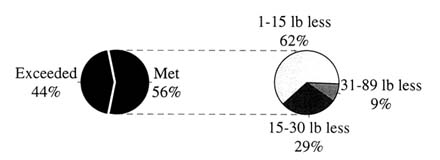
FIGURE A-1 Current weight versus screening table weight (n = 1,106).
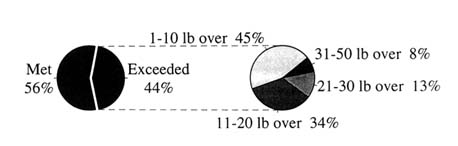
FIGURE A-2 Current weight versus screening table weight (n = 1,106).
cited for using undesirable weight loss practices (such as use of diuretics, laxatives, purging, or saunas) was upcoming weight-in. Since so few overweight women (and probably men) are actually placed on the weight control program, dietary counseling and nutrition education should be readily available to all soldiers without risk of stigma.
References
King, N. J.E. Arsenault, S.H. Mutter, C. Champagne, T.C. Murphy, K.A. Westphal, E.W. Askew. 1994. Nutritional intake of female soldiers during the U.S. Army basic combat training. Technical Report No. 94-17. Natick, Mass.: U.S. Army Research Institute of Environmental Medicine.
Klicka, M.V., D.E. Sherman, N. King, K.E. Friedl, and E.W. Askew. 1993. Nutritional assessment of U.S. Military Academy cadets at West Point: Part 2. Assessment of nutritional intake. Technical Report No. T94-1. Natick, Mass.: U.S. Army Research Institute of Environmental Medicine.
Rose, M.S., R. Moore, R. Mahnke, E. Christensen, and E.W. Askew. 1993. Weight reduction techniques adopted when weight standards are enforced. Technical Report No. T4-93. Natick, Mass.: U.S. Army Research Institute of Environmental Medicine.
Gender Differences In Food Ration Preferences And Consumption Among Military Personnel
Edward Hirsch, Ph.D., and Dianne Engell, Ph.D., Behavioral Sciences Division, U.S. Army Natick Research, Development and Engineering Center, Natick, MA 01760
Operational rations have been developed to satisfy the food preferences of male troops. They have been modified based on feedback from male personnel in focus groups and extensive field tests where detailed measures of nutrient intake, fluid balance, body weight, food acceptance, and troop perceptions of ration attributes are used both to evaluate the adequacy of the ration and to make improvements in future versions. This approach to ration development and design was fully justified when women comprised a small fraction of servicemembers and were rarely on the front lines where troops frequently subsist on operational rations as their sole source of food. This situation has changed dramatically as women have come to represent a larger fraction of servicemembers with over 203,000 in active-duty status as of 1993. The question, of course, arises as to whether current military rations satisfy the food preferences of female servicemembers and whether the rations are consumed in adequate quantity to meet women's nutritional needs.
The data that are available to address this issue are extremely limited. Food preference surveys conducted in the military during the past three decades have included female participants. These surveys reveal substantial gender differences in food preferences that are largely consistent with data from college populations. The detailed findings from these surveys as well as some of their limitations will be reviewed in this presentation.
Information on nutrient intake in female troops subsisting on operational rations is much more limited. Studies conducted in the 1980s and in the early 1990s included a very small number of female participants, and the limited data indicated a number of nutrients were not consumed in sufficient quantity to meet the MRDA. During 1995, a substantial number of women participated in a field study that was concerned with the effects of high environmental temperature and ration macronutrient composition on food and fluid intake. The data from this study and their limitations also will be reviewed in this presentation.
Health Consequences And Assessment Of Disordered Eating And Weight Control Behaviors
David M. Garner, Ph.D., Department of Psychology, Bowling Green State University and Toledo Center for Eating Disorders, Toledo, OH 43617
It is well recognized that there are significant health consequences to eating disorders and disordered eating. Research has documented complications associated with starvation, self-induced vomiting, and purgative abuse leading to electrolyte disturbances, general fatigue, muscle weakness, cramping, edema, constipation, cardiac arrhythmias, paresthesia, kidney disturbances, swollen salivary glands, dental deterioration, finger clubbing, edema, dehydration, bone demineralization, cerebral atrophy, and other physical symptoms (see Table A-7). Anorexia nervosa has the highest mortality rate of any psychiatric disorder. The mechanisms of action for the major complications will be briefly reviewed.
It is well recognized that there is a connection between restrictive dieting and eating disorders. The most important factor predicting restrictive dieting is weight and shape dissatisfaction. Various approaches to gathering information on disordered eating have been suggested, including standard clinical interviews, semistructured interviews, behavioral observation, standardized self-report measures, symptom checklists, clinical rating scales, self-monitoring procedures, and standardized test meals. These methods have different aims, strengths, and weaknesses. There are special problems associated with screening for psychopathology in samples such as military women, where identification could lead to censure. Overcoming these obstacles is a key to accurate identification and intervention with those suspected of disordered eating or eating disorders. Methods for gathering information must minimize defensiveness, denial, and falsification of responses. On POWR '95, two items from the Eating Disorders Inventory proved to be good screening items. However, there is a need for additional screening questions to improve ''hit rate." It was concluded that it is desirable to use existing measures such as the Eating Disorders Inventory or EAT since these instruments have demonstrated reliability and validity.
TABLE A-7 Physical Features that may Indicate an Eating Disorder
|
Weight loss or maintenance of a weight too low for optimal physical performance |
|
Precipitous weight loss |
|
Extreme fluctuations in weight |
|
Bloating or edema |
|
Swollen salivary glands (puffy cheeks or jaw just in front of the ear) |
|
Amenorrhea (loss of menstrual periods) |
|
Yellowish appearance on palms of hands or soles of feet (carotinemia) |
|
Sores or callous on knuckles or back of hand from inducting vomiting |
|
Hypoglycemia |
|
Cardiac arrhythmias, bradycardia |
|
Muscle cramps |
|
Gastrointestinal complaints |
|
Headaches, dizziness, weakness due to electrolyte disturbances |
|
Numbness and tingling in limbs due to electrolyte disturbances |
|
Renal dysfunction due to electrolyte disturbances |
|
Proclivity to stress fractures |
|
Loss or thinning of the hair |
|
Downy hair appearing on the face, back, or extremities (lanugo hair) |
Army Regulation 600-9 (1986) has stipulated the basis for assessing body composition to be (1) appearance, (2) performance, and (3) health. Concerns were reviewed related to the fact that Army Regulation 600-9 may lead to weight loss recommendations that are inconsistent with what is known about the feasibility of permanent weight loss and that also may inadvertently precipitate eating disorders. Moreover, this regulation may overlook the fact that high levels of military readiness may be achieved by military personnel who do not meet the present standards for body composition. They display acceptable or even superior performance and health but only fail on the grounds of appearance, and this may mean that a physical attribute, body weight, rather than performance, is forming the primary basis for enforcement. This may create a conflict between appearance goals and military readiness. The technological debate related to body composition must relate to the original basis for regulations. If health is the issue, then the magnitude of the health risk and the relative risk must be considered in relation to other known health risk factors (e.g., smoking) to determine if recommendations are consistent and proportional to relative risk. If appearance is the issue, and if the physical attribute is largely genetically determined (0.77–0.84), and if we do not have an effective treatment to reverse the condition, then are the recommendations out of step with other policies toward other historically stigmatized groups?
In contrast to the prevailing call for more aggressive dietary approaches to obesity, this presentation argued that an integration of the current scientific data and clinical experience supports the view that health professionals should, under most circumstances, not be advising patients to pursue restrictive dietary or behavioral treatments to try to achieve permanent weight loss. In part, this is based on the observation that, regardless of the specific techniques used, the vast majority of obese patients regain weight lost in treatment. No longer can we reasonably expect improved results with greater sophistication of techniques as was the case during the early period of development and refinement of behavioral technology. If inefficacy were not reason enough to abandon dietary treatments, additional arguments are receiving increasing support. The most common justification for treating obesity is its apparent adverse effects on health and longevity. These effects are, in fact, the subject of considerable controversy, and there is much evidence to suggest that maintenance of high but stable weight is safer than weight fluctuation, perhaps safer even than weight reduction. Moreover, dieting can lead to binge eating in individuals who have not experienced the symptom prior to attempting weight loss (Table A-8); it may also have other untoward psychological effects and can even precipitate serious eating disorders such as anorexia nervosa and bulimia nervosa. Instead, the focus of interventions should be on physical activity for health.
TABLE A-8 Psychological and Behavioral Symptoms That May Indicate an Eating Disorder
|
Excessive dieting |
|
Excessive eating without weight gain |
|
Excessive exercise that is not part of the training program |
|
Guilt about eating |
|
Claiming to feel fat when normal weight despite reassurances from others |
|
Preoccupation with food |
|
Avoidance of eating in public, denial of hunger |
|
Hoarding of food |
|
Frequent weighing |
|
Evidence of binge eating |
|
Evidence of self-induced vomiting |
|
Use of drugs to attempt to control weight (abuse of laxatives, diet pills, diuretics, emetics) |
Calcium Needs Of Premenopausal Women
Richard J. Wood, Ph.D., USDA Human Nutrition Research Center on Aging at Tufts University, Boston, MA 02111
Calcium plays an important role in the body as a major structural constituent of bone. Low bone mineral density is an important determinant of bone fracture risk in the elderly. At any point in time, absolute bone mass is the sum of the cumulative rates of bone formation and bone loss. The accrual of bone mass occurs mainly during the period of life during which linear growth is occurring in children. A small increase in bone mass continues to occur, however, during the third decade. Factors affecting bone mineral metabolism during this period of life may determine whether one's genetic potential for peak bone mass accrual is reached. It is believed that the risk of osteoporotic fracture is dependent on the level of peak bone mass.
Genetics play the major role in determining bone mass, accounting for as much as 80 percent of the variation in this measurement. Recently, polymorphisms of the vitamin D receptor gene have been shown to be an important marker of bone mineral in women. The influence of this individual genetic marker on bone mineral density is apparently modulated by dietary calcium intake.
Pregnancy and lactation are associated with increased calcium needs to offset the calcium loss attributed to the developing fetus and for milk production. Pregnancy has little or no effect on bone mineral density in the mother. Moreover, bone loss occurs during lactation, despite quite high calcium intakes. However, this lactation-associated bone loss is apparently recovered during the year following the lactation period. The rate of lactational bone loss and the degree of bone mass recovery postlactation may be modulated by the level of dietary calcium intake. Teenage women must meet both the additional calcium needs associated with growth of the skeleton and the calcium demands of pregnancy and lactation; therefore, they represent a high risk group.
In general, low dietary calcium intake has been demonstrated to be associated with low bone mineral density. However, other environmental factors, besides dietary calcium intake, also modulate bone mineral density. One of the most consistent factors that has been shown to be associated with bone mineral density is the level of physical activity. However, extreme levels of exercise sufficient to induce amenorrhea will have a negative effect on bone. Optimal calcium intakes for preserving bone mineral probably exceed the current Recommended Dietary Allowance of 800 mg/d for adult women. A recent NIH Consensus Conference on Optimal Calcium Intakes recommends that estrogen-sufficient premenopausal women should consume 1,200 mg Ca/d.
The Female Athlete Triad: Effects On The Skeleton
Michelle P. Warren, M.D., Women's Center for Health and Social Issues and Reproductive Endocrinology, St. Luke's-Roosevelt Hospital Center, New York, NY 10019. Currently at Columbia-Presbyterian Medical Center, New York, NY 10032-3784
The female athlete triad, the triad of amenorrhea, osteopenia, and eating disorders, has been the source of much publicity in the athlete. The basis of comorbidity of these variables was made in the setting of studies on exercise-induced amenorrhea. The mechanism by which caloric restriction and abnormal eating may compromise bone mass is unclear.
Exercise, particularly of a strenuous nature, can have a profound effect on reproductive function. This problem has been documented in women who participate in a variety of sports, including running, swimming, and ballet dancing. The clinical manifestations include delayed menarche, secondary amenorrhea, and irregular menses with prolonged cycles or shortened cycles because of inadequate luteal phases. The incidence of this problem varies widely among numerous reports but appears to be more common in athletic groups in which dieting to remain thin is necessary, particularly if thinness presents an athletic or artistic advantage. Reproduction dysfunction may range from minor changes in reproductive hormone production to long-term cessation of menstrual cycles and prolonged hypoestrogenism. Thus, recent work has shown that the amenorrhea, particularly with endurance training, is associated with a high incidence of eating disorders. This varies with the athletic discipline but is a definite underlying theme.
Intervals of hypoestrogenism associated with abnormal eating patterns may lead to premature bone loss or lack of bone accretion. Athletes with low bone density are susceptible to stress fractures due to overuse of bone weakened by osteopenia. A high incidence of scoliosis (23%) and stress fractures (46%) in a group of female ballet dancers has been reported. Scoliosis was most prevalent in the dancers with delayed menarche and rose significantly with increasing menarcheal age (p < 0.05) as did stress fractures (p < 0.01). The prevalence of stress fractures among dancers and runners with menstrual irregularities were found not only to have higher incidence of stress fractures (45% compared with 29% in regular runners) but also to have more multiple fractures.
Deficiency in the exercise-induced increase in bone mass in stressed bones of amenorrheic ballet dancers has also been identified. The lack of bone strengthening that usually occurs in this setting appears to lead to an increase in fracture rate, particularly in women with delayed menarche. The bone most stressed by activity (metatarsal) is the most severely deficient. Normal dancers studied had a higher metatarsal density than other groups, while the amenorrheic dancers had the lowest. The spine shows similar trends, although the strengthening process was not as marked as in the foot.
Aberrant nutrition and nutritional patterns may affect the skeleton even before changes in bone density are noted; dancers with recent stress fractures had a higher prevalence of both nutritional aberrations and weight fluctuations when compared with dancers without fractures, although differences in bone density were not noted. Treatment with estrogen replacement therapy is commonly suggested to maintain bone mass and encourage further accretion in young athletes. In a group of 26 amenorrheics, randomized into treatment with estrogen-progestin
replacement therapy (Premarin 0.625 mg, Provera 10 mg for 10 days) or placebo for 2 years, no differences were noted in treated vs. untreated groups. Thus, other factors besides hypoestrogenism appear to affect the (lowered) bone mass seen in young women and replacement doses of estrogen-progestin do not appear to change bone mineral density significantly over a 2-y period. The exercise-induced osteopenia is most likely affected by nutritional factors, which, in turn, probably have an effect on bone by multiple mechanisms.
The Impact Of Physical Fitness And Gender-Integrated Training On Risks Of Stress Fractures And Other Injuries Among Women In Army Basic Training
COL Bruce H. Jones, USA, M.D., M.P.H., M. Canham, M. Nee, L. Mahony, and M. Smutok, U.S. Army Center for Health Promotion and Preventive Medicine, Aberdeen Proving Grounds, MD 21010 and U.S. Army Research Institute of Environmental Medicine, Natick, MA 01760
Historically, the incidence of injuries among women during Army BCT has been twice as high as for men (Bensel and Kish, 1983; Jones, 1983; Jones et al., 1993a; Kowal, 1980). The reported incidence of stress fractures among women has been even higher, 2 to 10 times higher than for men. Knowledge of the higher rates of injury among women in BCT caused concern that the incidence of injury might be even higher when training for men and women was integrated into the same units in 1994. To determine the impact of integrated training on the incidence of injury among women, a study was conducted at Fort Leonard Wood, Missouri, in November and December 1995. Because it has been well established that lower levels of physical fitness are associated with higher risks of injury for both men and women (Jones et al., 1993a, b), physical fitness also was examined during this study.
The population for the study included men (N = 470) and women (N = 284) in 6 BCT companies in the sixth, seventh, or eighth week of training. The medical records of every trainee on the unit training rosters were screened for illnesses and injuries. An injury was defined as a musculoskeletal complaint requiring medical attention. Scores on the initial entry physical training test also were obtained for each participant. Overall, Fort Leonard Wood recruits had slower average run times, higher average weights, and higher average BMIs as compared to recruits in a similar study conducted at Fort Jackson in 1988 (see Table A-9). As with earlier studies, women entering BCT at Fort Leonard Wood exhibited lower levels of physical fitness than men. Analysis of data from two companies in their seventh week of training showed that the incidence of injury among women was found to be 1.6 times higher than for men (57% vs. 36%, p= 0.001). The stress fracture incidence was 2.5 times higher among women (9% vs. 3.6%, p = 0.06). These incidences of injury were somewhat higher than past rates for both men and women (see Table A-10) and may correspond to the lower physical fitness levels seen among the Fort Leonard Wood recruits.
Similar to past reports (Bell and Jones, 1993; Jones et al., 1992; Jones et al., 1993a), men and women exhibiting lower levels of physical fitness as measured by run time experienced higher rates of injury than their more fit peers. Male recruits with slower run times had
TABLE A-9 Physical Fitness of Men and Women Starting Army Basic Combat Training: A Comparison of 1995 and 1988 Data
|
Measurements |
Ft. LW, 1995 Men Mean (SD) |
Ft. Jackson, 1988 Men Mean (SD) |
Ft. LW, 1995 Women Mean (SD) |
Ft. Jackson, 1988 Women Mean (SD) |
|
2-mi run time |
17.3 (2.4) |
16.4 (2.2) |
22.5 (2.7) |
20.3 (2.3) |
|
Height |
175.5 (8.5) |
175.2 (7.1) |
161.5 (7.3) |
162.0 (6.5) |
|
Weight |
77.2 (12.3) |
75.7 (12.2) |
62.1 (7.6) |
58.3 (6.5) |
|
BMI (wt/ht2) |
25.1 (2.4) |
24.6 (3.6) |
23.0 (2.4) |
22.2 (2.0) |
|
SOURCE: Adapted from Canham et al. (1996) and Jones (1996). |
||||
significantly higher incidences of both overall injury (see Table A-11) and stress fractures (see Table A-12). Female recruits with slower run times had significantly higher incidence of stress fractures (see Table A-13) but did not exhibit significantly higher incidence of overall injury as compared to their faster peers (risk ratio, slow vs. fast = 1.3, p = 0.8). Also, as with several past studies (Bell and Jones, 1993; Jones et al., 1992), the incidence of injury was found to be similar for men and women of the same aerobic fitness level (i.e., when fitness was controlled for by stratified analysis the incidence of injury was similar for both genders, risk ratio, women vs. men = 1.2, p = 0.64). We concluded that integrated training did not increase the risk of injury among women in this population and that low levels of physical fitness were an important risk factor for men and women.
TABLE A-10 Incidence of Women and Men Injured During Basic Training Reported in Previous Studies from 1980 to 1995
|
Author |
Post |
Year |
Weeks in Training |
Women (%) |
Men (%) |
Relative Risk* |
|
— |
Ft. LW |
1995 |
7 |
57 |
36 |
1.6 |
|
Reynolds |
Ft. Jackson |
1993 |
8 |
67 |
— |
— |
|
Bell |
Ft. Jackson |
1988 |
8 |
62 |
29 |
2.1 |
|
Jones |
Ft. Jackson |
1984 |
7 |
50 |
28 |
1.8 |
|
Bensel |
Ft. Jackson |
1983 |
8 |
42 |
23 |
1.8 |
|
Kowal |
Ft. Jackson |
1980 |
8 |
54 |
26 |
2.1 |
|
* Relative risk, incidence in women/incidence in men. SOURCE: Adapted from Canham et al. (1996) and Jones (1996). |
||||||
TABLE A-11 Two-Mile Run Time and Incidence (%) of Injury Among Male Trainees at Fort Leonard Wood,* 1995
TABLE A-12 Two-Mile Run Time and Incidence (%) of Stress Fractures* Among Male Trainees at Fort Leonard Wood†, 1995
TABLE A-13 Two-Mile Run and Incidence (%) of Stress Fractures* Among Female Trainees at Fort Leonard Wood†, 1995
Bell, N., and B.H. Jones. 1993. Injury risk factors among male and female Army trainees [abstract]. 121st meeting of the American Public Health Association.
Bensel, C.K., and R.N. Kish. 1983. Lower extremity disorders among men and women in Army basic training and effects of two types of boots. Technical Report No. TR-83/026. Natick, Mass.: U.S. Army Natick Research and Development Laboratories .
Canham, M.L., M.A. McFerren, and B.H. Jones. 1996. The association of injury with physical fitness among men and women in gender integrated basic combat training units. Med. Surveill. Mon. Rep. 2(4):8–9.
Jones, B.H. 1983. Overuse injuries of the lower extremities associated with marching, jogging, and running: A review. Mil. Med. 148:783–787.
Jones, B.H. 1996. Injuries among women and men in gender integrated BCT units Fort Leonard Wood 1995. Med. Surveill. Mon. Rep. 2(2):2–3, 7–8.
Jones, B.H., M.W. Bovee, and J.J. Knapik. 1992. Associations among body composition, physical fitness, and injury in men and women Army trainees. Pp. 141–172 in Body Composition and Physical Performance, Applications for the Military Services, B.M. Marriott and J. Grumstrup-Scott, eds. Committee on Military Nutrition Research, Food and Nutrition Board, Institute of Medicine. Washington, D.C.: National Academy Press.
Jones, B.H., M.W. Bovee, J.M. Harris III, and D.N. Cowan. 1993a. Intrinsic risk factors for exercise-related injuries among male and female Army trainees. Am. J. Sports Med. 21:705–710.
Jones, B.H. D.N. Cowan, J.P. Tomlinson, J.R. Robinson, D.W. Polly, and P.N. Frykman. 1993b. Epidemiology of injuries associated with physical training among young men in the Army. Med. Sci. Sports. Exerc. 25(2):197–203.
Kowal, D. 1980. Nature and causes of injuries in women resulting from an endurance training program. Am. J. Sports. Med. 8(4):265–269.
Clinical Impact Of U.S. Army Policies And Procedures On Pregnancy, The Postpartum Period, And Body Composition: Twenty Years Of Experience
Paul N. Smith, COL MC USA (Ret), M.D., The Lakewood Clinic, Tacoma, WA 98499
Pregnant soldiers are issued an activity profile that is designed to "…protect the fetus while ensuring the productive utilization of the servicewoman." That goal seems to be achieved, although some studies have suggested that active-duty status is an independent risk factor for pregnancy (e.g., Magann and Nolan, 1991). Pregnancy outcomes are not improved over the general population in spite of defined limitation of work and ready access to health care. Pregnant soldiers are excused from the Army Body Composition Program standards and from physical fitness testing for the duration of the pregnancy. Postpartum soldiers are excused from those requirements for 6 months after delivery.
Pregnant soldiers are detrimental to unit readiness through nondeployability, activity limitations, lost duty time, and unit morale effects. There was an explosion of promiscuity among female soldiers in Europe beginning late 1991 when VIIth Corps deployment to the Gulf was announced, since pregnancy meant nondeployability. As an indicator, sexually-transmitted-disease rates in female American soldiers in Würzburg, Germany during that time increased several hundred percent. Female soldiers constituted only 6 percent of the Americans in the Gulf but accounted for 18 percent of the sick-call workload. Sixty percent of field hospital admissions
in the Gulf War were for pregnancy complications, and most evacuations of women were for pregnancy.
The Army Body Composition Program provides for body fat determination for soldiers who exceed screening weight or whose appearance suggests excessive body fat. Soldiers who exceed body fat standards have favorable personnel actions suspended: nonpromotable, no command, no professional military schooling. The Army expends literally hundreds of thousands of manhours annually on the Army Body Composition Program. In my personal conversations during my career with more than 50 current and former commanders, ranging in rank from 2LT to MG, not one of those officers thinks that the Army Body Composition Program helps them field better warfighters. Changing demographics of the U.S. population suggest that current Army Body Composition Program standards may not fit the solders of Army 21 well. The correlation between body fat and fitness is weak; the absence of policies which censure soldiers for tobacco use or excessive alcohol use undermines the assertion that the Army Body Composition Program is health-motivated rather than purely cosmetic.
The Army Body Composition Program should be discontinued, and the manhours currently consumed by the Army Body Composition Program should be diverted to battle drills and other activities which will enhance readiness. Research concerning body composition, nutrition, and physical training should focus on identifying valid performance criteria for selecting and training soldiers.
References
Magann, E.F., and T.E. Nolan. 1991. Pregnancy outcome in an active-duty population. Obstet. Gynecol. 78(part 1):391–393.
The Impact Of Pregnancy Weight Restriction, Postpartum Exercise, And Weight Loss On Lactation
Kathryn G. Dewey, Ph.D., and Megan A. McCrory, M.S., Department of Nutrition, University of California, Davis, CA 95616
Pregnancy Weight Restriction and Lactation Performance
Observational studies performed in industrialized countries have not shown a direct association between pregnancy weight gain and lactational performance. However, since mothers who gain more weight tend to have higher birth weight infants and higher fat stores than mothers who gain less weight, there may be an indirect association of pregnancy weight gain with lactational performance by the following two mechanisms. First, there is a positive relationship between infant milk intake and birth weight, due to the fact that larger infants demand more milk than smaller infants. Second, milk fat concentration is positively associated with maternal fatness. On the other hand, the impact of maternal fatness on milk energy output is modified by infant self regulation, such that infants of mothers with high milk fat will demand a lower milk volume. The model put forth by Perez-Escamilla et al. (1995) illustrates the relationships among maternal fatness, birthweight, and the role of the infant in determining infant milk energy intake
(Figure A-3). This model is consistent with the physiological regulation of lactation, which operates through endocrine and autocrine mechanisms governed by infant demand. Thus, within the range of weight gain normally observed during pregnancy, there is no evidence that pregnancy weight gain restriction will affect lactation performance.
Lactation and Weight Loss
The question of whether exercise poses any harm to maternal milk supply was first studied by Lovelady et al. (1990). There were no significant differences in lactation outcomes between lactating women who exercised aerobically for an average of 88 min/d and those who did not exercise. Because subjects in that study were self-selected, the same research group next undertook a randomized intervention trial (Dewey et al., 1994). Thirty-three exclusively breastfeeding women were assigned to either an aerobic exercise group (45 min/d, 5 d/wk) or a control group (no vigorous exercise > 1 d/wk) for 12 weeks. Although mothers in the exercise group increased their total daily energy expenditure by 400 kcal/d at the midpoint of the intervention compared to the control group (p < 0.05), there was little difference at the end of the intervention period because the exercising mothers cut back on other types of activities. There was no adverse impact of the exercise program on lactational performance. In addition, aerobic capacity significantly improved in the exercisers compared to controls p < 0.05). However, there was no difference in weight or body fat loss in the exercising group compared to the control group because the exercise group increased their energy intake. High intensity exercise has been shown to cause a transitory increase in breast milk lactic acid concentration (Wallace et al., 1992), but this is not harmful to the infant. Although some infants may find the more acidic taste less ''acceptable," this is not likely to interfere with milk intake in most cases.
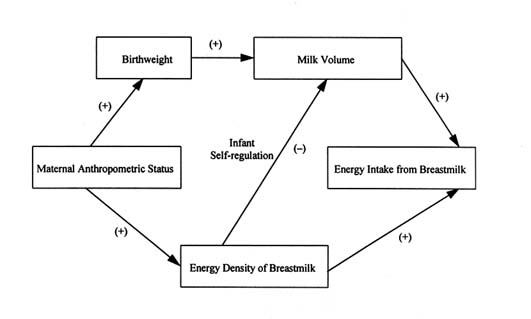
FIGURE A-3 Model illustrating the relationships among maternal fatness, birth weight, and the role of the infant in determining infant milk energy intake.
SOURCE: Perez-Escamilla et al. (1995), used with permission (© American Journal of Clinical Nutrition, American Society for Clinical Nutrition).
A gradual weight loss of about 0.8 kg/mo is normal during lactation. In fact, breastfeeding usually promotes weight loss (see Table A-14). In the 11 studies that have examined the impact of breastfeeding on postpartum weight loss, the results are mixed. But of the seven studies in which breastfeeding was clearly defined by more than simply yes/no or any/non (e.g., duration was known), six show that breastfeeding is related to greater maternal weight loss, or less maternal weight retention (defined as current minus prepregnancy weight). Studies in which skinfold thicknesses of postpartum mothers were measured demonstrate that there is a loss of fat associated with breastfeeding. There is no evidence that moderate weight loss (up to 2 kg/mo), in overweight women, has adverse effects on lactation. However, the effects of rapid weight loss are unknown. Lactation may be more vulnerable to the effects of weight loss in the first month postpartum, but there have been no studies on this question. Currently, the Institute of Medicine advises that lactating women who want to lose weight take in no less than 1,800 kcal/d, drink plenty of water, avoid liquid diets or weight loss medications, and continue to nurse on demand. Additional studies in this area are currently underway, which should provide more specific advice concerning weight loss among breastfeeding women.
References
Adair, L.S., and B.M. Popkin. 1992. Prolonged lactation contributes to depletion of maternal energy reserves in Filipino women. J. Nutr. 122(8):1643–1655.
Boardley, D.J., R.G. Sargent, A.L. Coker, J.R. Hussey, and P.A. Sharpe. 1995. The relationship between diet, activity, and other factors, and postpartum weight change by race. Obstet. Gynecol. 86:834–838.
Dewey, K.G., M.J. Heinig, and L.A. Nommsen. 1993. Maternal weight-loss patterns during prolonged lactation. Am. J. Clin. Nutr. 58:162–166.
Dewey, K.G., C.A. Lovelady, L.A. Nommsen-Rivers, M.A. McCrory, and B. Lonnerdal. 1994. A randomized study of the effects of aerobic exercise by lactating women on breast-milk volume and composition. N. Engl. J. Med. 330:449–453.
Janney, C.A., D. Zhang, and M.F. Sowers. 1997. Lactation and weight retention. Am. J. Clin. Nutr. 66(5):1116–1124.
Keppel, K.G., and S.M. Taffel. 1993. Pregnancy-related weight gain and retention: Implications of the 1990 Institute of Medicine guidelines. Am. J. Public Health 83:1100–1103.
Kramer, F.M., A.J. Stunkard, K.A. Marshall, S. McKinney, and J. Liebschutz. 1993. Breastfeeding reduces maternal lower-body fat. J. Am. Diet. Assoc. 93:429–433.
Lovelady, C.A., B. Lonnerdal, and K.G. Dewey. 1990. Lactation performance of exercising women. Am. J. Clin. Nutr. 52:103–109.
Öhlin, A., and S. Rössner. 1990. Maternal body weight development after pregnancy. Int. J. Obes. 14:159–173.
Parker, J.D., and B. Abrams. 1993. Differences in postpartum weight retention between black and white mothers. Obstet. Gynecol. 81:768–774.
Perez-Escamilla, R., R.J. Cohen, K.H. Brown, L.L. Rivera, J. Canahuati, and K.G. Dewey. 1995. Maternal anthropometric status and lactation performance in a low-income Honduran population: Evidence for the role of infants. Am. J. Clin. Nutr. 61:528–534.
Potter, S., S. Hannum, B. McFarlin, D. Essex-Sorlie, E. Campbell, and S. Trupin. 1991. Does infant feeding method influence maternal postpartum weight loss? J. Am. Diet. Assoc. 91:441–446.
TABLE A-14 Lactation and Postpartum Weight Loss
|
Reference |
Location |
N |
Design |
Def. BF |
Outcome |
Results |
Comments |
|
Öhlin and Rössner, 1990 |
Sweden |
1,423 |
Prosp. |
Score |
Weight loss |
Significant |
2.5–6 months only |
|
Potter et al., 1991 |
United States |
411 |
Retro. |
BF > 6 weeks |
Estimated weight loss |
Not significant or positive |
|
|
Schauberger et al., 1992 |
United States |
795 |
Prosp. |
Yes/no |
Weight loss |
Not significant |
|
|
Adair and Popkin, 1992 |
Philippines |
3,051 |
Prosp. |
Duration and intensity |
Weight loss |
Significant |
Also skinfold |
|
Dewey et al., 1993 |
United States |
85 |
Prosp. (matched cohorts) |
BF > 12 months |
Weight loss |
Significant |
Also skinfold, excluded dieters |
|
Parker and Abrams, 1993 |
United States |
2,119 |
Retro. |
Duration and intensity |
Excess weight retention |
Not significant |
|
|
Keppel and Taffel, 1993 |
United States |
2,944 |
Retro. |
BF > 4 months |
Weight retention |
Significant? |
|
|
Kramer et al., 1993 |
United States |
24 |
Prosp. |
BF > 6 months |
Weight loss |
Significant |
Also skinfold |
|
Boardley et al., 1995 |
United States |
345 |
Retro. |
Any BF |
Weight retention |
Not significant |
Low %FBF |
|
Scholl et al., 1995 |
United States |
274 |
Prosp. |
Any BF |
Weight retention |
Not significant |
Low %BF |
|
Janney et al., 1997 |
United States |
110 |
Prosp. |
Duration and intensity |
Weight retention |
Significant |
|
Schauberger, C.W., B.L. Rooney, and L.M. Brimer. 1992. Factors that influence weight loss in the puerperium. Obstet. Gynecol. 79:424–429.
Scholl, T.O., M.L. Hediger, J.I. Schall, I.G. Ances, and W.K. Smith. 1995. Gestational weight gain, pregnancy outcome, and postpartum weight retention. Obstet. Gynecol. 86:423–427.
Wallace, J.P., G. Inbar, and K. Ernsthaüsen. 1992. Infant acceptance of postexercise breastmilk. Pediatrics 89:1245–1247.
Pregnancy Among Navy Women
CDR Michael John Hughey, MC, USNR, M.D., Northwestern University Medical School, Wilmette, IL 60091
Pregnancy is not an illness, but is a time of physiologic changes which: (1) diminish some physical skills, (2) increase vulnerability to common hazards, (3) may lead to pregnancy-specific illnesses, and (4) leave the fetus vulnerable to common environmental hazards. Policies regarding the assignment and utilization of pregnant servicewomen in the Navy are based on the known pregnancy physiologic changes, perinatal risks, and known or suspected environmental hazards. Such policies include the "20-week rule," the "6-hour rule," and the "Commanding Officer's Prerogative." Overseas assignments often are restricted. Physical training is restricted during pregnancy and for 6 months following delivery.
| This page in the original is blank. |


