
Page 111
6
Crosscutting Issues
Certain issues cut across all the disciplines involved in climate research. Among them are the nature of our available climate information, modeling efforts, prediction efforts, detection and attribution issues, and linkages across time scales. Progress in these areas will go far to advance our understanding of climate change and variability over decade-to-century time scales.
Climate Information
Fundamental to our understanding of climate change is the information we use to investigate and study such change. For dec-cen time scales, the information is available through a variety of forms, and each of these must be exploited if we are to make significant headway. We have: (1) instrumental data for the past 100 years or so, which will be improved and extended into the future; (2) proxy indicators of climate change, both historical records and paleoclimate evidence; (3) analysis products, the results of applying some form of analysis to observations to yield a more focused picture or consistent interpolations; and (4) the output of models, our only tool for estimating future climate states. Each of these information products is briefly discussed here, with suggestions for future additions to our climate database.
Instrumental Data
To build the requisite understanding of climate change and variability, we must first recognize our current state of understanding and its limitations. The inadequacies of the current instrumental data available for exploring climate change and variability on dec-cen time scales are readily exposed when we try to use them to answer some of our most fundamental questions. For example: Is the planet getting warmer? Is the hydrologic cycle changing? Is the atmosphere-ocean circulation changing? Are the weather and climate becoming more extreme or variable? Is the radiative forcing of the climate changing? These questions cannot be answered definitively, because there is no global climate observing system that gathers all the information needed. Each of these apparently simple questions is actually quite complex, both because of its multivariate aspects, and because the spatial and temporal sampling required to adequately address it must be considered on a global scale.
A brief review of our ability to answer these questions reveals many areas of success, but also some glaring inadequacies that must be addressed if we are to understand and predict climate change, and to refine this database for future generations. The basic problems are the shortness and inaccuracy of the instrumental record and its lack of spatial coverage, together with the difficulty of interpreting the paleoclimatic proxy record, which is discussed in the next section. What we can do to improve our ability to detect and monitor climate change is outlined at the end of this section, following the discussion of the fundamental questions.
Is the Planet Getting Warmer?
Measurements show that near-surface air temperatures are increasing. Best estimates suggest that the overall warming has been around 0.5ºC since the late nineteenth century (IPCC, 1996a). Nonetheless, many questions have arisen regarding the adequacy of these estimates (IPCC, 1996a), and the relative scarcity of global measurements throughout the century is only the first. Changes in the methods of measuring land and marine surface-air temperatures from ships, buoys, and land-surface stations; changes in instrumentation, instrument exposures, and sampling times; urbanization effects—these are but a few of the time-varying biases that have plagued the interpretation of the surface air-temperature records for the twentieth century. Only by also considering other temperature-sensitive variables—e.g., snow cover, glaciers, sea level, and even some proxy non-real-time measurements such as ground temperatures from bore-holes—can we be confident that the planet has indeed warmed. The measurements we rely on to calculate global
Page 112
changes of temperature were never collected for that purpose; they were made primarily to aid in navigation, agriculture, commerce, and, in recent decades, weather forecasting. Thus, many uncertainties remain about important details of the temperature increase. The IPCC (1996a) has summarized known changes in the temperature record; this summary is presented in graphic form in the upper panel of Figure 6-1.
Recent global-scale measurements of layer-averaged atmospheric temperatures and sea surface temperatures from instruments aboard satellites have greatly aided our ability to monitor global temperature change (Spencer and Christy, 1992a,b; Reynolds, 1988), but the situation is far from satisfactory (Hurrell and Trenberth, 1996). Changes in satellite temporal sampling (e.g., orbital drift), changes in atmospheric composition (e.g., volcanic emissions), and techni-
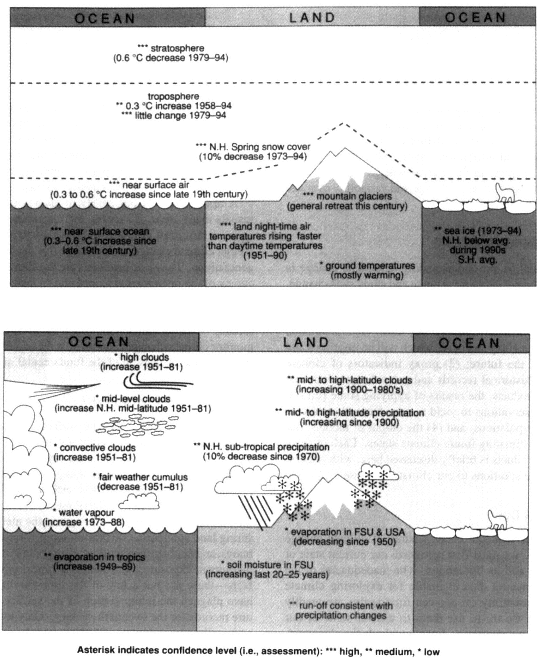
Figure 6-1
Schematic of observed variations of selected climate indicators. Upper panel, temperature indicators; lower
panel, hydrologic indicators. (From IPCC, 1996a; reprinted with permission of the Intergovernmental Panel on Climate Change.)
Page 113
cal difficulties related to overcoming surface-emissivity variability limit our ability to produce highly reliable products of near-surface global temperature change. Nonetheless, space-based measurements have shown that stratospheric temperatures have decreased over the past two decades, though perhaps not as much as suggested by measurements from weather balloons. (It is now known that the data from these balloons high in the atmosphere have an inadvertent temporal bias, because of improvements in shielding from direct and reflected solar radiation (Leurs and Eskridge, 1995).)
Even if the instrumental records of ground, atmosphere, and sea surface temperatures were accurate enough, the length of the records would still be an issue. To be certain that the system is getting warmer, we need a record long enough to enable us to distinguish a steady trend of warming from long-period variations, which we may be seeing only partially. Identifying and understanding dec-cen variability is crucial to determining whether the planet is getting warmer.
Is the Hydrologic Cycle Changing?
The source term for the hydrologic water balance, precipitation, has been measured for over two centuries in some locations. Even today, however, it is acknowledged that in many parts of the world we still cannot reliably measure true precipitation (Sevruk, 1982; IPCC, 1996a). For example, annual biases of more than 50 percent are not uncommon in cold climates (Karl et al., 1995), and even for more moderate climates precipitation is believed to be underestimated by 10 to 15 percent (IPCC, 1992). Improvements in instrumentation have also introduced time-varying biases (Karl et al., 1995). Satellite-derived measurements of precipitation are the only ones that provide large-scale ocean coverage. Although comprehensive estimates have been made of large-scale spatial precipitation variability over the oceans, where few measurements exist, problems inherent in developing such estimates limit our confidence in using them to identify global-scale decadal changes. For example, even the recent work of Spencer (1993) in estimating worldwide ocean precipitation using a microwave sounding unit aboard the NOAA polar orbiting satellites has several limitations: The observations are limited to ocean coverage (and hindered by the requirement of an unfrozen ocean), do not adequately measure solid precipitation, have low spatial resolution, and are affected by the diurnal sampling inadequacies associated with polar orbiters (e.g., limited overflight capability).
Documentation of past changes in land-surface precipitation has been compared with other hydrologic data, such as changes in streamflow, to ascertain its robustness. The lower panel of Figure 6-1 summarizes some of the more important known changes in precipitation, such as the increase in the middle to high latitudes and the decrease in the subtropics. There is also evidence to suggest that much of the increase in mid- to high-latitude precipitation arises from increased autumn and early-winter precipitation in much of North America and Europe. Color plate 5 depicts the spatial aspects of the changes in precipitation during this century; rather large-scale coherent patterns are apparent.
Other changes related to the hydrologic cycle are also summarized in Figure 6-1. Confidence is low for many of the changes noted, which is particularly distressing given the important role of clouds and water vapor in climate-feed-back effects. Records of cloud amount are the result of surface-based (human) observations (now being replaced by automated measurements in the United States) and satellite measurements. Neither surface-based nor space-based datasets have proven to be entirely satisfactory for detecting changes in clouds. Polar-orbiting satellites have enormous difficulties related to sampling aliasing and satellite drift (Rossow and Cairns, 1995). For human observations, changes in observer schedules, observing biases, and incomplete sampling have created serious problems in data interpretations, now compounded by the change to automated measurements at many stations. Nonetheless, there is still some indication (but low confidence) that global cloud amounts have tended to increase. This finding is supported by reductions in evaporation (as measured by pan evaporimeters) over the past several decades in Russia and the United States, and by a worldwide reduction in land-surface diurnal temperature range. Moreover, an increase in water vapor has been documented over much of North America and in the tropics (IPCC, 1996a).
Water vapor is the most important greenhouse gas in the atmosphere, so changes in water vapor, especially at upper levels of the troposphere, are very important for understanding climate change. The measurement of changes in atmospheric water vapor is hampered by data-processing and instrumental difficulties for both weather-balloon and satellite retrievals. Satellite data also suffer from discontinuities among successive satellites and from errors introduced by changes in orbits and calibrations. Upper-tropospheric water vapor is believed to be a particularly important climate-feedback quantity, but little can be said as yet about how it has varied over the course of the past few decades, how it responds to climate change, or how successful models are in simulating these changes.
Is the Atmosphere-Ocean Circulation Changing?
A number of the responses presented above suggest that the atmosphere and ocean circulation systems have been changing. This evidence is surprisingly meager, however. Daily analyses of circulation are performed routinely, but the analysis schemes have changed over time, so they are of limited use for monitoring climate change. Moreover, even the recent re-analysis efforts by the world's major numerical weather-prediction centers, for which the analysis scheme is fixed over the historical record, contains time-
Page 114
varying biases; some of the data carry embedded biases, and the data mix changes over the course of the re-analysis (Trenberth and Guillemot, 1998). Even less information is available on measured changes and variations in ocean circulation. Only recently has a single, coarse snapshot of the ocean been taken in the World Ocean Circulation Experiment (WOCE).
Are the Weather and Climate Becoming More Extreme or Variable?
Perhaps one of society's greatest concerns about weather and climate is their extremes. Only a limited quantity of reliable information is available about large-scale changes in extreme weather or climate variability, for two reasons. First, there is inadequate monitoring of the necessary quantities. Second, access to weather and climate data held by the world's national weather and environmental agencies is prohibitively expensive. The time-varying biases that affect climate means are even more difficult to effectively eliminate from the extremes of the distributions of various weather and climate elements. There are a few areas, however, where regional and global changes in weather and climate extremes have been reasonably well documented.
Interannual temperature variability has not changed significantly over the past century. On shorter time scales and higher frequencies, however (e.g., days to a week), there is some evidence for a decrease in high-frequency temperature variability across much of the Northern Hemisphere (Karl et al., 1996). Related to this decrease has been a tendency for fewer low-temperature extremes to occur, but widespread changes in extreme high temperatures have not been noted.
Trends in intense rainfalls have been examined for a variety of countries. There is some evidence for an increase in intense rainfalls (in the United States, tropical Australia, Japan, and Mexico), but analyses are far from complete and the record contains many discontinuities. The strongest increases in extreme precipitation are documented in the United States and Australia.
There are grounds for believing that intense tropical-cyclone activity has decreased in the North Atlantic, the one basin for which we have reasonably consistent tropical-cyclone data throughout the twentieth century. Even here, though, it is difficult to be certain of the tropical-cyclone strengths reflected in data obtained prior to World War II. Elsewhere, tropical-cyclone data do not reveal any long-term trends, or if they do, the trends are most likely to be the result of inconsistent analyses. Changes in meteorological assimilation schemes have introduced very difficult problems in interpreting changes in extratropical cyclone frequency. In some regions, however, such as the North Atlantic, a clear trend toward increased storm activity has been noted. This tendency has also been apparent in significant increases in wave heights in the northern half of the North Atlantic. In contrast, decreases in storm frequency and wave heights have been noted in the southern half of the North Atlantic over the past few decades. These changes are also reflected in the prolonged positive excursions of the NAO since the 1970s.
Is the Radiative Forcing of the Planet Changing?
Without an adequate time history of the important agents of climate change—that is, those factors that affect the radiative-heat balance of the planet—it is impossible to understand global change. The atmospheric concentration of CO2, an important greenhouse gas because of its long atmospheric residence time and relatively high atmospheric concentration, has increased substantially over the past few decades. This rise is quite certain; it is revealed by precise measurements made at Mauna Loa Observatory since the late 1950s (Keeling et al., 1976, 1989), at the South Pole since the mid-1960s (Keeling and Whorf, 1994), and at a number of other stations around the world that began operating in subsequent decades (WMO, 1984). Since CO2 is a long-lived atmospheric constituent and it is well mixed through the atmosphere, a moderate number of well-placed stations can provide a very robust estimate of global changes in carbon dioxide as long as they operate for the primary purpose of monitoring seasonal-to-decadal changes.
To understand the causes of the increase in atmospheric carbon dioxide, however, we must understand how the carbon cycle operates and how the anthropogenic carbon budget is balanced. Understanding the carbon cycle, which is discussed in greater detail in the first part of Chapter 5, requires estimates of anthropogenic sources of carbon: the emissions resulting from fossil-fuel burning and production and cement production, as well as the net emission from changes in land use, such as deforestation. These estimates are derived from a combination of modeling, sample measurements, high-resolution satellite imagery, and sophisticated analysis of different types of CO2 and climate records (Keeling et al., 1996a; Dettinger and Ghil, 1998). Understanding the carbon budget also requires measuring carbon storage in the atmosphere, the ocean uptake, and uptake by forest regrowth; assessing the effect on vegetation of CO2 and nitrogen fertilization; and taking into account climate-feedback effects, such as the increase in vegetation resulting from increased temperatures. At present many of these factors are still uncertain, because so few sustained ecosystem measurements have been made. It is clear, however, that anthropogenic emissions are the primary cause of the atmospheric increase of CO2. Indeed, a major unresolved issue is why the atmospheric concentration of CO2 is not even higher than observed.
Several other radiatively important anthropogenic atmospheric trace constituents have been measured over the past few decades. These measurements have confirmed significant increases in atmospheric concentrations of methane
Page 115
(CH4), nitrous oxide (N2O), and the halocarbons (including the stratospheric-ozone-destroying agents, the chlorofluorocarbons and the bromocarbons). Because of their long lifetimes, implying spatial homogeneity in the atmosphere, a few well-placed, high-quality in situ stations have been able to provide good estimates of global changes in the concentration of these constituents. Stratospheric ozone depletion has been monitored by satellite and by in situ ozonesondes. Both observing systems have been crucial in ascertaining changes in stratospheric ozone. (Note that ozone was originally of interest not because of its role as a radiative-forcing agent, but because of its ability to absorb UV radiation before it reached the Earth's surface.) The combination of the surface- and space-based observing systems has yielded much more precise measurements than either system could have provided alone. Over the past few years it has been possible to improve the ozonesonde and satellite data by using information about past calibration methods, in part because differences in trends between the two observing systems could be identified.
Color plate 6 depicts the IPCC (1996a) best estimate of the radiative forcing associated with various atmospheric constituents. Unfortunately, measurements of most of the forcings other than those already discussed have low or very low confidence, both because of our uncertainty about their role in the physical climate system and because we have not adequately monitored their change. For example, our current estimates of changes in sulfate-aerosol concentrations are derived from model estimates of source emissions, not from measured atmospheric concentrations. Monitoring sulfate aerosol is complicated because its short atmospheric lifetime causes its concentration to vary spatially. Another example of low confidence is measurements of solar irradiance. These measurements have been taken by balloons and rockets for several decades, but continuous measurements of top-of-the-atmosphere solar irradiance did not begin until the late 1970s with the Nimbus 7 and the Solar Maximum Mission satellites.
Significant absolute differences in total irradiance are found between different satellites' measurements, emphasizing the critical need for overlap between satellites and for absolute calibration of the irradiance measurements to determine decadal changes (NRC, 1994). Spectrally resolved measurements will be a key element in our ability to model the effects of solar variability, but at present no long-term commitment has been made to take such measurements. Another important forcing currently estimated through measured, modeled, and estimated changes in optical depth is that related to the aerosols sporadically injected high into the atmosphere by major volcanic eruptions. However, aerosols of volcanic origin usually persist in the atmosphere for at most a few years. Improved measurements of the size distribution, composition, and radiative properties of volcanic aerosols will help us better understand this agent of climate change.
What Can We Do to Improve Our Ability to Detect Climate and Global Changes?
Even after extensive re-working of past data, in many instances we are incapable of resolving important aspects of climate and global change. Better quality and continuity, and fewer time-varying biases, will be required of virtually every monitoring system and dataset if we expect to conclusively answer questions about how the planet has changed. Our inability to do so now is often a result of having to rely on observations that were never intended to be used to monitor the physical characteristics of the planet over the course of decades. Long-term monitoring capable of resolving dec-cen changes requires different strategies of operation.
In situ measurement systems are in a state of decay or decline, or are undergoing poorly documented change. Surface-based automated measurement is being introduced without adequate precautions to explore and record the differences between the old and new observing systems. Satellite-based systems alone cannot provide all the measurements necessary for detecting changes. Much wiser implementation and monitoring practices must be adhered to for both space-based and surface-based observing systems if we are to adequately understand global changes. A number of steps can be taken to improve our ability to monitor climate and global change:
• When changes are made to existing environmental monitoring systems, or new observing systems are introduced, standard practices should include an assessment of the impact of these changes on our ability to monitor environmental variations and alteration.
• For critical environmental variables, it should be standard practice to overlap measurements in time and space when a new observing system replaces an old one.
• Information on instrument calibration and validation, as well as the history of an observing station or platform, are essential for data interpretation and use. Changes in instrument sampling time, local environmental conditions, and any other factors pertinent to the interpretation of the observations and measurements should be recorded as a mandatory part of the observing routine and be archived with the original data. The algorithms used to process observations need to be well documented, and accessible to the scientific community. Documentation of changes and improvements in the algorithms should be carried along with the data throughout the archiving process.
• Timely, regular assessments of the quality and homogeneity of the instrumental databases are needed, and should include all data used to monitor past and present environmental variations and change. Special attention should be given to the long-term, high-resolution instrumental data required to identify change or variations in the occurrence of extreme environmental events.
• Societal and policymaking requirements for knowledge or observations of environmental variations and change
Page 116
should be taken into account in laying out a strategy for a global, comprehensive system for observing climate.
• Stations, platforms, and observation systems with long, uninterrupted records should be maintained. Every effort should be made to protect the datasets that document long-term homogeneous observations, particularly those encompassing a century or more. Priorities for sites or observation systems should be assigned on the basis of their contribution to long-term monitoring of each element of the climate system.
• In the design and implementation of new environmental observing systems, highest priority should be given to data-poor regions, regions sensitive to change, and key measurements that currently have inadequate temporal resolution. In addition, the appropriateness of the variables to be measured should be verified.
• Network designers, operators, and instrument engineers must be provided with long-term environmental monitoring requirements when they begin to design an observing system. Most observing systems now in place were designed for purposes other than long-term monitoring, and many of them do not acquire information in a suitable form. Instruments must have adequate precision, and their biases must be small enough, to resolve the environmental variations and changes that are of primary interest to climate research.
• Much of the development of new observational capabilities, and much of the evidence supporting the value of these observations, stemmed originally from research needs or research-oriented programs. Stable, long-term commitments to these observation systems, and a clear plan for their transition from research to operations, are two requirements for the development of adequate long-term environmental monitoring capabilities.
• Data-management systems that facilitate the use and interpretation of observational data are essential. Freedom of access, low cost, mechanisms that encourage use (directories, catalogs, browsing capabilities, and availability of metadata, including station histories, algorithm accessibility, documentation, and so on), and quality control should guide data management. International cooperation is critical for effective management and exchange of data used to monitor long-term environmental variability and change.
An ongoing study by the NRC Panel on Climate Observing Systems' Status is in the process of identifying and characterizing existing and emerging factors that could lead to a deterioration in the quality of climate data or in its availability from operational and research observational networks. The study will also make recommendations for maintaining the quality and availability of climate data.
How Can Other Observations Address Climate Models?
While detection of climate change is, as discussed above, a critical problem for instrumental observations, it is not the only one. Ultimately, the problem of assessing the importance of climate variability that occurs over decades and longer, and particularly the task of predicting it, will rest on using physically based models. It is unlikely that these models can be adequately validated through comparison of predicted and observed climate change alone. Such validation would require observing a large number of examples to separate random unmodeled noise from simulation skill, and each example would require decades to observe. Confidence in any understanding of climate variability on dec-cen time scales must rest on the verified realism of the components of our models. This confidence cannot be gained from theoretical arguments alone—each model component must be tested against appropriate observations. Much of this report addresses a large number of processes that affect climate and must be included in models and, therefore, must be verified before the models can be trusted to simulate climate variability. It would be exhausting to reiterate these processes and to point out what observations are needed to verify their model representations. Rather, it will suffice to emphasize that quantitative verification is needed, and to review some of the kinds of observations and studies that will yield the needed climate information:
• Accurate measurements for developing and verifying model components. A model that quantitatively simulates many of the important climate processes deserves greater confidence than one that does not. Thus accurate measurements of such quantities as air-sea fluxes of heat, water, and momentum at specific sites; the directional and wavelength distribution of atmospheric radiation under various meteorological and cloud conditions; the flow of water from the Pacific to Indian Oceans through the Indonesian Seas; or the flux of ice from Antarctica into the Southern Ocean would provide valuable tests of climate models. Measurements of this type are most likely to come from research projects aimed at specific processes. This approach was first applied to relatively small-scale processes that could be studied by a single discipline in a few weeks of extensive observation. TOGA COARE, however, provided an example of applying the same philosophy to a large-scale meteorological and oceanographic process. Studies of this type may provide the climate information best tuned to addressing specific climate phenomena.
• Surveys of climate indicators for assessing overall model performance. The large-scale spatial and seasonal variations of properties distributed by the climate system provide critical tests of the transport processes simulated by climate models. For example, the distribution and rates of accumulation of anthropogenic or chemically reactive gases and aerosols in the atmosphere, or the distribution of inorganic carbon and freshwater in the ocean, are fields whose simulation critically tests both the source/sink and transport processes in models. Diagnostic quantities such as the ratios of certain oceanic properties can in some cases be an even more useful
Page 117
tool for assessments of model simulations than the use of directly observed quantities. Global surveys of these property fields are large undertakings, so it will be useful to identify a few key property fields that will provide the most stringent and useful tests, and to develop ways of measuring them.
Proxy Data
If we had only the recent instrumental record as our guide, we might consider the climate system to be relatively stable on decade-to-century time scales. Instrumental records of atmospheric and oceanic conditions are too short to adequately define dec-cen variability: Atmospheric records rarely predate the current century, and high-quality ocean records are limited to recent decades. Moreover, the instrumental record is spatially biased; multidecadal temperature records from the oceans are concentrated in shipping lanes, and long atmospheric records originate mostly in western Europe and North America. The existing instrumental record of climate is thus insufficient to reveal most natural modes of climate variability on multidecadal to multicentury time scales. Models can simulate the climate systems over these time scales, but they must rely on the questionable assumption that the processes they incorporate behave and interact similarly over a range of time scales that far exceeds the instrumental baseline.
Fortunately, long-term records of climate exist in paleoclimatic archives worldwide. They offer the opportunity to extend our observational baseline into the dec-cen range of the spectrum of climate variability. Such records provide new information on the natural variability and sensitivity of climate, and they constitute an observational basis for evaluating the behavior of the numerical models used for climate prediction.
Poleoclimatic Contributions
Paleoclimatic records contribute in important ways to a better understanding of dec-cen climate variability. Simply extending the record of climate at a particular location makes possible evaluation of natural variability over time scales not represented by instrumental data. For example, proxy records of moisture balance from California and the Great Plains reveal that the droughts of this century pale by comparison with droughts over the rest of the millennium as regards both amplitude and duration (Muhs and Maat, 1993; Madole, 1994; Stine, 1994; Laird et al., 1996). Such long-term records allow us to place this century's warming in perspective—in particular, to evaluate whether it is unprecedented (Bradley and Jones, 1993; Briffa et al., 1995; Jacoby et al., 1996).
We can use information on past climate variability to assess whether the short-term (seasonal-to-interannual) modes and patterns observed today (see Chapter 3) have the same spatial patterns and global teleconnections as long-term (dec-cen) modes. For example, seasonal-to-interannual modes such as ENSO are apparently modulated on dec-cen time scales (Cole et al., 1993; Dunbar et al., 1994). The African and Asian monsoons probably respond in phase to large-scale forcing over multicentury time scales (Overpeck et al., 1996), even though over shorter periods the Asian monsoon weakens and East African rainfall increases during ENSO warm extremes. In addition, proxy records of snow accumulation (Alley et al., 1993) and temperature from ice cores (Dansgaard et al., 1993) can provide some insight into how rapidly climate regime changes can occur.
Paleoclimate reconstructions also allow us to observe the response of climate to changes in forcings or boundary conditions—for example, the relationship between drought and solar variability, or the behavior of ENSO during periods of warmer background SST or lower sea level. By improving our understanding of the natural variability and sensitivity of climate over dec-cen time scales, paleoclimatic reconstructions enable us to evaluate model behavior over these time scales (see, e.g., Knutson et al., 1997). Finally, paleoclimatic archives preserve records of climate forcings as well as responses (Zielinski et al., 1994; Lean et al., 1995). Reconstructions of volcanic aerosol loading or solar variability (for instance) can be incorporated into model simulations to test the system's responses (Rind and Overpeck, 1993). Fields of SSTs can also be interpolated from point reconstructions for use in initializing transient simulations with atmospheric GCMs.
Sources of Proxy Data
Many geologic and biologic archives preserve useful information on previous climate conditions. The primary sources of information useful on dec-cen time scales are described below. Certain of these archives (ice cores, coral reefs, and old-growth trees) are under threat of destruction from human and environmental influences, which will spell the loss of valuable climate information.
Ice cores have provided important records of quantities of atmospheric constituents from both high-latitude and high-altitude regions. Temperature can often be derived from the isotopic content of the ice (e.g., Thompson et al., 1995) on the basis of the relationship between the stable isotopic content of precipitation and the temperature of condensation, although large-scale climate features also control significant isotopic variance over dec-cen time scales (White et al., 1997a). Borehole temperature measurements permit verification of the temperature-isotope relationship for periods when precipitation, season, or other factors alter this dependence (Cuffey et al., 1995). Accumulation rates allow reconstruction of the hydrologic balance (Meese et al., 1994). Certain ice cores preserve pristine air bubbles throughout, making possible unique observations of past changes in atmospheric greenhouse-gas concentrations (Raynaud et al.,
Page 118
1993; Etheridge et al., 1996) and yielding chemical ratios that reflect biogeochemical processes (Whung et al., 1994). Ice cores preserve records of aerosol loading and chemistry (Zielinski et al., 1994; O'Brien et al., 1995) that reflect both source strengths and transport patterns, and ice-core pollen records track regional vegetation changes (Thompson et al., 1995). Record lengths range from millennia in many tropical sites to hundreds of millennia in the coldest regions; resolution is decadal or less at the base of the oldest cores, because the more deeply buried ice thins under pressure, but the resolution can be seasonal in records of recent centuries.
Corals represent a multivariate record of tropical surface-ocean variability. Oxygen isotopic variations in the geochemistry of coral skeletons track SST (Fairbanks and Dodge, 1979; Dunbar et al., 1994; Gagan et al., 1994; Wellington et al., 1996) and salinity where such variations are strong (Cole and Fairbanks, 1990; Linsley et al., 1994). Certain metals that substitute for calcium in the aragonite lattice also reflect temperature (Beck et al., 1992; Shen and Dunbar, 1996; Shen et al., 1996; Mitsuguchi et al., 1996), while others are incorporated in proportion to their concentration in surface water, which may be governed by processes such as upwelling, runoff, or wind mixing (Shen et al., 1987, 1992; Lea et al., 1989). In some locations, coral growth rates reflect SST (Lough et al., 1996), and fluorescent bands in their skeletons may track river discharges (Isdale, 1984). Radiocarbon concentrations in corals reflect surface water14C variations, which make possible the reconstruction of aspects of ocean circulation over recent centuries (Druffel, 1987, 1997; Druffel and Griffin, 1993). Coral record lengths range from 100 to 800 years, with weekly to quarter-year resolution depending on growth rate; shorter records at similar resolution can be found in fossil sequences over the past 103 to 105 years (Beck et al., 1997; Gagan et al., 1998).
Tree-ring climate reconstructions are generally derived from suites of many (10-50) cores from a single site, cross-dated to provide absolute age control and pooled to eliminate noise associated with individual tree responses (Fritts, 1976; Cook and Kairiukstis, 1990). Statistical calibration with local climate, including independent validation intervals, yields quantitative records of tree sensitivities to aspects of climate like summertime drought (Meko et al., 1993; Hughes and Graumlich, 1996), summer temperature (Briffa et al., 1990, 1995; Cook et al., 1991), or annual temperature (Jacoby and D'Arrigo, 1989; Jacoby et al., 1996). Different aspects of tree growth, including ring widths and the density of various aspects of the wood architecture, can be measured and calibrated against climate. Tree-ring reconstructions, which are already widely available over northern mid-latitudes, can be pooled and gridded to generate reconstructed fields of such parameters as drought (Cook et al., in press).
Sediments in oceans and freshwater environments preserve a wealth of information on global, regional, and local climate variations; when sedimentation rates are sufficiently high, dec-cen climate variability is recorded. Climate parameters interpreted from sedimentary evidence include a wide range of physical, ecological, hydrologic, and chemical aspects particular to a given site. In anoxic environments, where the uppermost layers of sediment are not disturbed by burrowing organisms, the sediments are laid down in annual couplets (varves) that make possible extremely high-resolution chronology and interpretations (see, e.g., Overpeck, 1996; Hughen et al., 1996; Behl and Kennett, 1996). Where sedimentation rates are high but varves do not form, decadal resolution is achievable (Hodell et al., 1995; Laird et al., 1996). Sediment records with this resolution can span on the order of 104 years. Signs of lake-level changes, including geomorphologic features and submerged forest remains, provide another type of sedimentary evidence for dec-cen variability of hydrologic controls on lake levels (Stine, 1994). These are not continuous records, but they offer a snapshot of hydrologic conditions useful in addressing century-scale climatic change.
Historical information about climate offers another source of information on past variability in attributes deemed important to a given society. Often these proxies are related to practical considerations, such as droughts, harvest records, fish catch, death records, the freezing of waterways, or the level of a river (Quinn, 1993; Frenzel et al., 1994). Although such records require a transfer function to produce strictly climatological quantities, their immediate relevance to societally important attributes can also be considered an advantage.
Other proxy sources of climatic information may prove useful for understanding dec-cen variability in specific locations, or as new archives are explored and calibrated. For example, relict tree stumps rooted in modem Sierra Nevada wetlands (Stine, 1994) and recently active dune fields in Colorado grasslands (Muhs and Maat, 1993; Madole, 1995) provide snapshots of considerably dryer weather in North America during the Holocene. Dating of tropical and temperate mollusc remains from archaeological sites in Peru has led Sandweiss et al. (1996) to conclude that ENSO variability was not present until about 5000 BP. A combination of reconstructions from ice cores and findings at archaeological sites in Greenland support the theory that Norse settlements were abandoned because of colder summertime temperatures associated with the early stages of the transition into the Little Ice Age which gripped the North Atlantic region for several centuries (Pringle, 1997).
Calibration of Proxy Records
The extraction of climatological quantities from proxy data requires an understanding of how the signal is incorporated into the proxy, and of any competing influences on the record. Calibration procedures vary among the different archives, and include both process-based and statistical approaches. For tree rings, precise chronologies permit the compositing of many individual records to reduce noise;
Page 119
standard practices include a model-development process that incorporates both calibration procedures and an independent period of validation against instrumental data. Although the processes that control tree growth are understood to the extent that certain relationships can be expected, statistical calibration provides the primary basis for most tree-ring reconstructions of climate. For most other types of archives, poorer replication and chronological uncertainties mean that compositing dozens of records is not feasible. Thus a more process-based approach is usually taken, involving such steps as automatic weather stations set up at ice-coring sites, automated temperature monitors and water-collection programs at coral sites, and sediment traps in regions of sediment coring. The resulting measurements indicate which processes are relevant to the incorporation of the paleoclimate signal, and statistical methods are used to evaluate the degree to which the chosen interpretation is correct.
Complications specific to calibration of paleoclimatic records include geochronology, biology, and the seasonality of response. All paleoclimatic data must contend with the issue of assigning accurate ages; annual precision is achievable in many cases where annual layers are deposited (particularly tree rings, but also many corals and ice cores). Age uncertainties for all methods need to be quantifiable in order to determine the limits of useful interpretations. Many paleoclimate archives are living organisms, whose biology can affect how a climate signal is recorded. Organisms may stop growing during a time of climate-induced stress, or long-term non-climatic growth trends may exist and must be removed. Biological processes can cause a consistent offset of a carbonate skeleton's geochemistry from the thermodynamically expected concentrations of isotopes and metals. Finally, many proxies reflect a seasonally specific or weighted response, based on nonconstant growth or deposition rates throughout the year or increased sensitivity during certain seasons. These potential complications need to be recognized if optimal reconstructions are to be developed.
Data Products
Once calibration has been established, paleoclimate interpretations produce a variety of types of data products. The simplest records are histories of past variations at a single site. These histories may be a snapshot or window on the past that reveals a scenario different from the modem climate, like the tree stumps in a lake bed or dune fields under modem grasslands mentioned earlier. A more typical reconstruction from ice and sediment cores, corals, and tree rings is a continuous, well-dated time series from which information about seasonal to centennial modes of temporal variability can be extracted. Just like a single instrumental temperature record, a single paleoclimatic record is of limited value in understanding large-scale climate variability. However, if the site is sensitive to large-scale variability, or if many sites are developed, indices of large-scale modes such as the NAO or ENSO can be reconstructed (Cook et al., 1997).
Taking this approach a step further, the synthesis of results from many sites can provide a basis for interpolating spatial fields of climate reconstructions. The development of paleoclimatic data into fields of climatic quantities improves the interface between these data and GCM simulations, which produce, and are usually forced by, such spatial fields. For example, CLIMAP (1981) produced SST and ice-extent maps for the last glacial maximum that have been used extensively as boundary conditions and even validation fields for GCM simulations of that period; similar approaches can be used for studies of dec-cen variability to assess the climate response to large forcing changes. Cook et al. (in press) describe how 388 drought-sensitive tree-ring chronologies from the continental United States can be combined into a reconstruction of the annual Palmer Drought Severity Index (PDSI) for the past 300 years. Overpeck et al. (1997) present a multi-proxy 400-year temperature reconstruction from the Arctic that confirms recent unprecedented warming associated with dramatic environmental changes. EOF-based interpolation techniques can be used to fill gaps between single-site reconstructions in order to generate fields from sparser datasets (Kaplan et al., in press; Mann et al., 1998), although this approach does assume that dominant EOF patterns are consistent through time. A global gridded annual-mean time series of, for example, surface temperature and precipitation for the past 1,000-2,000 years from reconstructed paleodata would allow the application of standard statistical techniques for comparison with modem data.
Summary
Proxy data provide a unique contribution to the objectives of a research program aimed at understanding climate change on dec-cen time scales. Indeed, there are few other continuous sources of observations on climate variability that extend beyond the middle of the nineteenth century. Paleoclimatic reconstructions provide a test bed for numerical climate models, and suggest new conceptual models for long-term climate variations. To take full advantage of this information resource will require broadening support for climate research in the following ways:
• Cross-disciplinary interaction among those climate scientists using proxy and instrumental data, and those developing and using numerical models, needs to be fostered. The combination of instrumental, paleoclimatic, and modeling approaches can provide answers to questions about calibration, limitations, and interpretation that cannot otherwise be resolved for more than the last hundred years or so.
• Climate-monitoring programs can provide important process and calibration baselines for paleoclimatic interpre-
Page 120
tations, particularly if such programs are designed from the start to include aspects of climate that proxy data can record.
• In some parts of the world, potential sources of paleoclimatic information are disappearing as tropical glaciers melt and old-growth trees and coral-reef environments are exploited. Quick efforts to sample these endangered resources will pay off in new understanding.
• Searches for new proxy records and refinements of existing ones are needed to expand spatial coverage, provide measures of additional climate parameters, and clarify the limitations of the various types of proxies.
• Open access to paleoclimate data can be assured through continued support for database activities, both to encourage data submission and to integrate a variety of proxy information into a single database for climate-variability studies. The World Data Center-A for Paleoclimatology archives paleodata and makes it available to the climate-science community. As can be seen from its website at <<http://www.ngdc.noaa.gov/paleo/paleo.html>, the WDC-A is continually developing this resource.
• The collection, processing, and interpretation of proxy data to yield a final climatological product require considerable effort. These efforts should be vigorously pursued in order to turn our currently sparse, though tantalizing, picture of past climate changes into a more complete set of time-varying spatial fields. This is the only currently available means by which we can advance our understanding of dec-cen variability from an observational perspective, and it should be fully exploited.
Analysis Products and Model Output
A special hybrid climate-information product involves the interpolation of climatic datasets into spatially consistent fields, through the use of climate modeling and assimilation techniques. In essence, the inaccurate, irregularly spaced, and often sparse observations are blended with a model simulation to produce a globally consistent sequence of climatological fields. In particular, major numerical and simulation centers, such as the European Centre for Medium-Range Weather Forecasting, NOAA's National Centers for Environmental Prediction, and NASA's Data Assimilation Office, have been carrying out retrospective analysis (''re-analysis'') projects over the past few decades, using a single model and data-assimilation scheme (Kalnay et al., 1996; Todling et al., 1998) to reconstruct climate evolution since World War II. These re-analysis products can be used as spatially and temporally interpolated data. Alternatively, statistical techniques such as optimal interpolation can be used, in which the spatial covariance structure is created from the observed data and then used to fill in spatial gaps that preserve this structure (assuming that the structure has not changed).
These methods allow us to expand the spatial and temporal coverage of the data in a way that is completely consistent with physical laws and observed data relationships. In this manner, the data are more accessible for incorporation into models or comparison with model output, facilitating the integration of models and observations that will be critical to the success of dec-cen-scale research. To the same end, it is important that observational data and model output be subjected to the same kind of processing (e.g., smoothing or gridding) so that they can be compared on an equal footing. Note too that if the instrumental record is to grow in a regular and systematic way, a single re-analysis will not suffice. A new re-analysis of the entire record must be performed every 5 to 10 years, using the best available model and any additional data that have become available since the previous re-analysis.
Coupled-Model Development and Infrastructure
All scientific understanding is crystallized, and all predictions are made, using models. They may be descriptive and intuitive, or more formal mathematical ones. Climate dynamics currently employs models that embody equations reflecting our admittedly incomplete knowledge of the physical, chemical, and biological laws that govern each of the climate system's subsystems, and also their interactions. These models vary in their degree of completeness and detail; some are very simple, mechanistic ones, whereas others are highly elaborate and require huge resources in people and computing power. Models are used to assimilate incomplete, imperfect, and irregularly distributed observations; to simulate known climate phenomena; to discover or help understand new, as yet unknown phenomena; and to predict the climate system's evolution over time. This section briefly reviews existing models, and then describes a model configuration that should permit achievement of the major goals of a research program in decade-to-century-scale climate variability.
Existing Models
Models for each of the climate system components—atmosphere, biosphere, cryosphere, and hydrosphere—and their predictive capabilities have been presented in the relevant sections of Chapter 4. This information is merely integrated and summarized here as a basis for building the model configuration described in the next subsection.
The modeling of each one of the climate system components is at a slightly different point in its evolution, both from simple to more detailed models and from the study of one model or class of models to an organic integration of all relevant models. Only a combined analysis of all these models with each other and with the observations can provide all the different types of information needed about the (sub)-system. The models in use range from scalar evolution equations to general-circulation models. A scalar equation can
Page 121
describe, for instance, the evolution of global surface air temperature due to various heat sources and sinks and climatic feedbacks, both positive and negative. The GCMs use numerically solvable forms of the most complete systems of evolution equations that describe local variations in the temperature, pressure, velocity, and composition of the atmosphere, ocean, and other subsystems. They have been successfully utilized for data assimilation, simulation of various atmospheric and oceanic phenomena, and weather prediction.
No single class of model can satisfy all needs. The GCMs' spatially detailed, local description of phenomena and their short-term variability limits these models' ability to provide such a description for sufficiently long time intervals and sufficiently broad ranges of the many unknown parameters that enter the governing equations. Simple models are flexible enough to explore broad swaths of parameter space and study variability on the long time scales of interest for dec-cen climate variability, but they can be evaluated against observations only through the use of intermediate models with greater spatial and physical detail. Such intermediate models describe variations in latitude or height only, in latitude and height, or in latitude and longitude, while averaging or integrating over the directions not explicitly included.
For the atmosphere, experience with GCMs as well as with the systematic use of the full hierarchy of models mentioned above is extensive, and can provide a pattern for similar usage in the other subsystems. Experience with ocean, cryosphere, biosphere, and continental hydrosphere models in climate studies is considerably less, but is rapidly reaching a similar level of sophistication.
Models that consider the tropical ocean coupled with the global atmosphere have played a key role in the advancement of coupled models, and have also played an important role in the TOGA program. TOGA has clearly had a great impact on the rapid and successful development of such models (NRC, 1996). A full hierarchy of TOGA-type models, from simple through intermediate to coupled GCMs (CGCMs), is now being used in data assimilation, in simulation of air-sea interactions, and in experimental but routine seasonal-to-interannual prediction. CGCMs and simple and intermediate coupled models for the global or mid- to -high-latitude oceans are also evolving rapidly. Models for snow, surface hydrology, and near-surface vegetation have already evolved, at least in part, as modules or appendices of atmospheric GCMs.
A Target Modeling Structure
As noted earlier, the enterprise of monitoring, understanding, and eventually predicting climate variability on dec-cen time scales is inseparable from that of modeling. Thus, the organized structure (or hierarchy) of coupled models described below is part of the process of building our understanding, and should evolve with it. A substantial part of the structure needs to be set up early in this process, and most of it should be in place by the time a concerted scientific program is ramped up.
At the top of this organized structure there should be at least one modular CGCM, with a very flexible interface between the subsystem models, or "modules," of which it is composed, and an architecture that permits an easy interchange of the modules. The complexity inherent in the climate system's behavior on the dec-cen scale will require the participation of the entire climate-dynamics community, at universities and at government laboratories, in the modeling enterprise. The interchangeable-module architecture is certainly one that would permit all members of this community, from graduate students to senior researchers, to distill their evolving knowledge of the subsystems into improved modules, and to use the full power of the CGCM in a configuration well adapted to their specific area of application. While a modular approach would have significant advantages, it is recognized that to obtain maximum computational efficiency, the module's computer-program codes may have to be optimized for specific machines.
This modular CGCM (or CGCMs) needs to be supported by a full hierarchy of simple and intermediate models of each subsystem and of subsets of the entire system. For example, an intermediate model of the global ocean or of a particular ocean basin may be coupled to a simple model of the global atmosphere, as one rung in such a hierarchy. This complementarity is required by the learning process involved in developing better modules for CGCMs, as well as by the need to evaluate CGCM performance and build knowledge of climate variability and its predictability on dec-cen time scales.
This target structure, in turn, requires adequate resources in data, people, and computing. The observations described in the preceding section are necessary for model evaluation and eventual climate prediction. Observations have to be combined, by the process of data assimilation using the models, to provide physically consistent descriptions of past and present climate change, as well as to permit the prediction of the future from an optimally described present.
A new generation of scientists needs to be educated to deal with the enormous complexities of modeling the entire climate system and predicting its behavior. These scientists will have to master not only the traditionally relevant disciplines of dynamic meteorology and physical oceanography, but also important aspects of analytic chemistry and biochemistry, ecology, and other biological disciplines. They must be at ease with small and large models—that is, have both theoretical and numerical skills, as well as a high degree of sophistication in the use of the most modern computing, communications, and observing technology. To achieve this, their education will have to bridge not only disciplines but also institutions.
The resources available for climate research will have to
Page 122
include computing, communications, and multimedia support at the highest levels of performance provided by current technology. A minimal network should incorporate at least one fully dedicated device capable of the highest throughput available at a single site at any given time. It should include communication links capable of sustaining information flow at a level consistent with this device. These resources will enable the various members of the community to operate as if housed on a single campus. Powerful workstations will be needed at many locations to support work on: simple and intermediate models; module development, testing, and applications; and analysis of simulations and experimental predictions with the modular CGCM (or CGCMs). Both central and distributed memory will have to be sufficient for the observations gathered, as well as for model simulations, model-assimilated datasets, and experimental predictions. Finally, hypertext information exchange—text, datasets, still and moving images—should be supported to facilitate the integration by many scientists of the rich information gathered and generated about the climate system, its components, and its decade-to-century-scale variability.
Detection, Attribution, and Simulation
The global-mean surface air temperature has increased by about 0.5ºC since the mid-nineteenth century, as was indicated in Figure 2-6. This increase is not monotonic; there is a fairly rapid rise from 1910 to 1940 and again from the mid-1970s to the present, and some decrease in the 1940s and 1960s-1970s. (The increase was more uniform in the Southern Hemisphere than in the Northern Hemisphere, where the cooling between 1960 and 1980 was more pronounced.) It has been suggested that the overall warming trend can be attributed to the observed increase in greenhouse gases, including CO2; the lack of monotonicity in the increase must then be interpreted as the result of natural climate variability or other forcings. Recent modeling studies indicate that it may be necessary to consider in particular the cooling effect of anthropogenic sulfate aerosols, which reflect solar radiation, in order to explain quantitatively the magnitude of the observed warming (IPCC, 1996a). However, the inclusion of sulfate aerosols is not sufficient to account for all of the variations in globally averaged surface temperature over the last century, especially the rapid warming during the 1920s and early 1930s.
One of the most important goals of dec-cen research is the reliable projection of future climate change (e.g., global warming) through the use of coupled ocean-atmosphere-land models. The best way of lending credence to future model predictions of climate is to successfully simulate past climate change. In order to assess how realistic the sensitivity of a climate model is to external forcing, it is necessary to simulate observed long-term change of climate by driving the model with time series of actual thermal forcings, such as increased concentrations of greenhouse gases and aerosols in the atmosphere. The performance of the model can then be evaluated by comparing the simulated and the observed long-term climate changes. The large uncertainties about the believability of model projections of future climate change must be reduced by assessing the models through the hindcast of climate, as described above. To carry out such a hindcast, long-term observational data for driving the model are essential. The highest priority should be given to:
(1) Obtaining reliable, long-term observations of factors that change thermal forcing, which drives the long-term variations of a climate model. These factors include not only the increase in greenhouse gases, but also changes in solar irradiance and in aerosol loading in the atmosphere.
(2) Making reliable, long-term observations of a carefully chosen set of basic climatic variables. Important variables include spectra of radiative fluxes at the top of the atmosphere, as well as satellite-observable radiances that are indicators of levels of cloudiness, snow cover, sea ice, vegetation, and possibly soil wetness. Other excellent candidates for long-term observation are sea level, surface salinity, and the water-mass structure of the oceans. The monitoring of variables such as total carbon content, alkalinity, and the partial pressure of CO2 will also be valuable for reliably projecting the future increase of atmospheric CO2.
(3) Reconstructing past changes of the variables listed above. This task will require comprehensive compilations of historical and other proxy data, with careful attention to their quality.
In order to evaluate a climate model through the hindcast strategy described above, it is also necessary to distinguish the anthropogenic change of climate from its natural, internally generated fluctuations. For this purpose, we need to improve our knowledge of internally generated (rather than externally forced) climate variability, with a view to separating the anthropogenic changes from the natural variations. The latter seem to contain quasi-periodic, and hence predictable, components with interannual and interdecadal periods (Plaut et al., 1995; Mann et al., 1995b).
Several groups have recently achieved some success in exploring this topic by analyzing the climate variability from very-long-term (thousand-year) integrations of coupled ocean-atmosphere-land models. For example, Stouffer et al. (1994) and Manabe and Stouffer (1996) have found that (with the notable exception of the tropical eastern Pacific, where SST anomalies are underestimated) their model approximates the standard deviation of annual mean surface air temperature and its geographical distribution. The model also simulates the broad-band spectrum of ob-
Page 123
served global-mean surface air temperature, from interannual to interdecadal time scales. However, it fails to reproduce the warming trend of centennial time scale (i.e., ~0.5ºC per century) that has been observed since the end of the last century. If the model is assumed to be realistic—in spite of its failure to reproduce the quasi-periodic components of the natural variability—this result suggests that the observed centennial-scale warming trend is not generated within the climate system by nonlinear interaction among the atmosphere, ocean, and continental surface. Instead, the trend must be caused by a sustained trend in natural and/or anthropogenic thermal forcing, such as changes in solar irradiance, greenhouse gases, and aerosol loading in the atmosphere. Essentially similar results have also been obtained from the long-term integration of a coupled model at the U.K. Meteorological Office (see, e.g., Mitchell et al., 1995).
Identifying predominant patterns associated with the natural, internally generated climate variability would aid in the detection of patterns of anthropogenic change (see, for example, Barnett and Schlesinger, 1987; Hasselmann, 1993; and Santer et al., 1995). If the effect of sulfate aerosols is considered together with the effect of greenhouse gases in GCMs, the spatial distribution of the model-generated change of atmospheric temperature over the decadal time scale appears to become more realistic (Santer et al., 1996). These and other recent results (see, e.g., IPCC, 1996a, for an overview) are leading to a more reliable estimate of the anthropogenically induced climate change, as well as of the natural variability caused by mechanisms internal to the climate system.
In the future, major effort will need to be devoted to observational and modeling studies of internally generated climate variability, so that this variation can be distinguished from anthropogenic climate change. Records from past observations of both ocean and the atmosphere should be compiled and analyzed for variables such as concentration of greenhouse gases in ice cores, sea-level pressure, surface and subsurface temperature and salinity in oceans, air temperature and humidity at the surfaces, and temperature and geopotential height at selected pressure levels in the atmosphere. It is also essential to improve model parameterizations of various feedback processes, in particular those involving cloud, snow, and sea-ice cover, all of which substantially affect incoming solar and/or outgoing terrestrial radiation at the top of the atmosphere. Other factors of critical importance are cumulus convection and land-surface heat and water budgets. Greater use of data from remote sensing and in situ measurements of radiative emissions and river runoff facilitate evaluating and improving the parameterizations of the important processes identified above.
Linkage Across Time Scales
As was noted in Chapter 4, there are practical reasons for dividing the study of climate variations by the time scales on which they occur. The climate system clearly evolves over a continuum of time scales, however, and no "spectral gap" in nature justifies such a separation. To advance our understanding of overall climate change and variability most efficiently, it is important that we explicitly recognize those processes that cannot easily be categorized by scale, and that we particularly emphasize those mechanisms which affect climate variability and change over a range of time scales.
A few specific examples of climate-variability patterns and their possible causal mechanisms that appear on more than one time scale are (1) the interdecadal variability of ENSO, in amplitude, periodicities, and warm or cold anomaly distribution; (2) the North Atlantic Oscillation (NAO) and its purely atmospheric, purely oceanic, or coupled mechanisms; and (3) changes in the carbon cycle, over land, ocean, and the tropical or mid-latitude or polar regions. The modes of variability that cross two or more time scales can arise either from the intrinsically broad-band behavior in time of a specific spatial mode, or from the nonlinear coupling between narrow-band spatio-temporal modes that share certain regional characteristics. Which one of these overall types of behavior is at the root of a given dec-cen climate phenomenon has important implications for its predictability.
Currently, the national and international organizations devoted to the study of physical climate are structured to address separately the high-frequency variability (GEWEX), seasonal-to-interannual variability (GOALS), decade-to-century-scale variability (CLIVAR DecCen), and millennial and longer-scale variability (e.g., PAGES). Each of these groups has identified a suite of high-priority issues that must be addressed. Many of the detailed processes involved in these issues are common to all four units. For example, improved understanding of air-sea exchanges is of fundamental importance to the study of climate, regardless of time scale. Similarly, the patterns of climate variability and the coupled modes are of equal importance to all groups, because their regional manifestations occur on a broad range of time scales. Issues related to these common processes and patterns warrant particular attention, and a dec-cen program that is highly coordinated with GOALS and GEWEX would enable them to be studied most effectively. Furthermore, the physically based studies of climate must be fully integrated with those investigating the chemical-biological aspects, which are currently being addressed by elements of the International Geosphere-Biosphere Programme.


