
4
THE COMMITTEE'S 10 HIGHEST-PRIORITY RESEARCH RECOMMENDATIONS
In this chapter, the committee identifies the 10 particulate-matter research needs that it judges to be of highest priority and describes general types of research that should be undertaken to address those needs. The research needs described herein are considered to be of equivalent importance. The committee evaluated approaches for obtaining such information within its framework linking source emissions to health responses (see Figure 3.1 in Chapter 3). The research priorities described below do not include the full universe of potentially useful research. Instead, in the committee's judgment, they are the 10 most critical scientific questions to be answered in pursuit of understanding the complex relationships that lead from particle sources (including formation of secondary particles from gaseous interactions) to ambient particulate-matter concentrations, actual human exposures, doses delivered to the lung, and, ultimately, to adverse health effects from the most biologically active constituents or characteristics of particulate matter.
The 10 particulate-matter research priorities identified in this chapter include some research activities that should be started immediately and others that should begin only after a better foundation is built from current or new research. Information obtained from approaches in one field can and should be used to advance methods and knowledge for other research needs. For example, epidemiological findings
that point to potentially susceptible subpopulations within the general population can be used as part of the basis to develop laboratory animal models and toxicological studies. Toxicological results, in turn, may help to identify biologically important constituents or characteristics of particulate matter or potentially susceptible subpopulations. This information can then be used to focus on human exposures to biologically important aspects of particulate matter. An iterative process involving interpretation of evidence from toxicological and exposure studies will lead to the selection of the metrics of exposure for designing future epidemiological studies on the health effects of particulate matter and other pollutants. The process should also lead to a better understanding of source-concentration-exposure-dose-response relationships through the application of successive generations of analytical tools for the most biologically important components or characteristics of particulate matter and gaseous copollutants. Although each of the research topics discussed below was evaluated individually, the committee recognized and addressed the fundamental interdependence of the individual elements. In the research investment portfolio presented in Chapter 5, the committee integrates these interdependent issues into a set of year-by-year timing recommendations and funding priorities for research. A truly integrated research strategy has rarely been used to investigate environmental problems, and it will require a major shift in current approaches to filling knowledge gaps and building toward a coherent understanding of the particulate-matter problem.
In addition to their scientific value, the research priorities described below are also expected to strengthen the basis of evidence for establishing allowable emission rates for the chemical components and precursors of particulate matter that are biologically important. This evidence base will be essential for designing and implementing effective control strategies for particulate matter in outdoor air through state implementation plans and for developing other mitigation approaches, including educational activities, voluntary emissions reductions, and product improvements for reducing indoor particulate-matter emissions that are not currently regulated.
Each research priority is presented with a description that includes
specific research tasks that are linked to individual steps and interactions among steps in the committee's framework. The value to scientific knowledge and the information needs of decisionmakers is also discussed. In addition, the feasibility, timing, and rough but informed collective-judgment estimates of the cost to conduct each recommended research task are discussed.
RESEARCH PRIORITIES
RESEARCH TOPIC 1
OUTDOOR MEASURES VS. ACTUAL HUMAN EXPOSURES
What are the quantitative relationships between concentrations of particulate matter and gaseous copollutants measured at stationary outdoor air-monitoring sites, and the contributions of these concentrations to actual personal exposures, especially for potentially susceptible subpopulations and individuals?
DESCRIPTION
Several studies have identified associations between measures of particulate-matter mass concentrations and health responses in ambient air (Dockery and Pope 1994; EPA 1996; Wilson and Spengler 1996; Vedal 1997). However, the currently available information is not sufficient for general characterization of the relationships of ambient air concentrations of particulate matter and gases to actual human exposures that include the indoor environments.
Personal exposures to certain air pollutants have consistently been found to differ from estimates based on corresponding outdoor concentrations. The differences are largely due to the variable contributions of outdoor air to indoor environments, the indoor fate of outdoor contaminants, and the substantial contribution of indoor sources and sinks to total personal exposures to particulate matter (Lioy et al. 1990). Most people spend the majority of their time indoors, exposed to a mixture of particles that penetrate from outdoors and those generated
indoors. Studies to date have found that a significant fraction (50-90%) of smaller indoor particles have outdoor origins (Koutrakis et al. 1992; Clayton et al. 1993; Thomas et al. 1993). Once indoors, particles may deposit on surfaces, or they can be altered through volatilization, as with ammonium nitrate, or through reactions with other pollutants present indoors, as with neutralization of sulfuric acid by ammonia. Indoor particles are further affected by the myriad of indoor particle sources, including cooking, resuspension, cleaning, tobacco smoking, pets, insects, and molds (lioy et al. 1990; Waldman et al. 1990; Koutrakis et al. 1992; Clayton et al. 1993; Thomas et al. 1993). The emission rates of most indoor-particle sources, however, have not been adequately quantified. Furthermore, factors that affect the contribution of outdoor particles to indoor concentrations have not been well characterized.
Information is especially lacking on the relationship between particulate matter in outdoor air and personal exposure to particulate matter for subpopulations that may be particularly susceptible to the effects of particulate-matter exposures, such as the elderly, individuals with respiratory or cardiovascular disease, and children. That gap in knowledge needs to be addressed immediately. Investigations must be designed specifically to test hypotheses related to actual human exposures. These studies should not be deferred while waiting for further health-effects studies. Hypothesis-driven exposure studies must be designed to provide fundamental information on actual human exposure to particulate matter and gaseous pollutants (NRC 1991). The recommended studies will be used to determine the exposure metrics that are most suitable for establishing exposure-response relationships. The following specific research tasks are needed to attain these goals:
-
Field studies that differentiate the contributions to personal particulate matter and gas exposures made by ambient air and by the penetration of ambient air indoors. These studies will require coordination and temporal resolution among measures of personal exposure and ambient concentrations of particulate matter and gases.
-
Longitudinal panel studies, in which a group of individuals is studied at successive points in time, to examine interpersonal and intrapersonal
-
variability, as well as seasonal and temporal variability in particulate-matter exposure. These studies should assess how such variability affects the relationship between personal exposures and ambient exposure estimates from measurements at central outdoor-monitoring sites. The studies should be extended later to characterize simultaneous personal exposures to particulate matter and pollutant gases.
-
Analyses of information collected from the field studies and longitudinal studies described above to determine the contributions of outdoor versus indoor sources for each pollutant, and to examine the degree to which the use of more accurate exposure information would, or would not, alter the findings of the epidemiological time-series studies concerning particulate matter and adverse health effects.
-
The sampling of particulate matter should include measurements of both PM2.5 and PM10.
SCIENTIFIC VALUE
Most epidemiological studies of particulate matter to date have been based on outdoor measurements. Therefore, the investigation of relationships between actual personal exposures and outdoor air-particle concentrations is crucial for validating and interpreting the results of epidemiological studies by providing better estimates of actual human exposure. Results from preliminary studies suggest significant intrapersonal and interpersonal variability in exposures to particles (Lioy et al. 1990). The recommended exposure-assessment studies will generate large data sets that will make it possible to assess factors influencing actual personal exposure. The results of these studies can also be used to design new prospective epidemiological and toxicological studies by establishing better metrics of exposure. Using the data base of exposure measurements for particles and gaseous pollutants, we will be able to provide better metrics of personal exposure in terms of concentrations of chemical species and of other covarying pollutants to be used in epidemiological investigations that focus on particulate matter while controlling confounding effects of gaseous pollutants. Differences between personal exposures and ambient measures can be
characterized and incorporated into subsequent analyses. (Also see section on measurement error.)
DECISIONMAKING VALUE
Pollutant concentrations in outdoor ambient air often are very different from actual personal exposures. Understanding the relationship between particulate-matter mass concentrations measured at fixed outdoor sites and actual human exposure to particulate matter will help guide and improve decisions about ambient pollution control strategies (NRC 1991). From a public-health perspective, it is very important to characterize actual exposures of particularly susceptible subpopulations to ambient particles and gaseous pollutants. Understanding the origin and composition of such exposures and their relationships to various human activities is of paramount importance for developing and implementing risk-reduction strategies for ambient sources and for nonregulatory (e.g., educational or product-improvement) strategies for indoor sources. That can be accomplished by determining the relative contributions of different sources to personal exposures, as well as by investigating how these contributions are influenced by patterns of personal activity.
FEASIBILITY AND TIMING
Many of the sampling and analysis techniques needed for this type of research have already been developed and field tested. Such methods can be used to measure 12-hour or 24-hour integrated personal exposures to particles and criteria gaseous pollutants (e.g., ozone, sulfur dioxide, nitrogen oxides, carbon monoxide). In addition, pilot exposure-assessment studies have already established the feasibility of conducting personal monitoring on presumed susceptible subpopulations, such as persons with chronic obstructive pulmonary disease (COPD), the elderly, and children. Continuous and semicontinuous personal
monitors are under development and will be available within the next couple of years.
The design and execution of a panel exposure-assessment study will take approximately 3 years. That includes subject recruitment, field measurements, collection of time-activity data, and data analysis. Therefore, it is feasible that panel exposure assessment studies be completed within a relative short period. Several such studies should be initiated almost immediately. These studies should examine different, potentially susceptible subpopulations in various geographical locations.
COST
A minimum of three studies in different parts of the United States will be needed to define ambient and personal exposures for populations at risk. Those studies should include at least one in the western United States, one in the northeast, and one in the southeast. The east-west differences will provide information on particulate-matter composition and variability, while the north-south studies will examine the effects of climate and living conditions. A possible design strategy might involve a study of 20 or more individuals for at least 15 days of sampling in the summer and winter. It would include members of presumed susceptible subpopulations, as well as representatives of the general population. Because of the complex aerometric measurements required, the three studies will require approximately $3.0 million per year for 3 years. Adding potentially susceptible subpopulations to such studies could increase that cost by a factor of 3 or more.
RESEARCH TOPIC 2
EXPOSURES OF SUSCEPTIBLE SUBPOPULATIONS TO TOXIC PARTICULATE-MATTER COMPONENTS
What are the exposures to biologically important constituents and specific
characteristics of particulate matter that cause responses in potentially susceptible subpopulations and the general population?
DESCRIPTION
As the database on particulate-matter constituents that induce health effects enlarges, and as specific chemical constituents or particle-size fractions are indicated as plausible causal agents, exposures to those constituents of particulate matter need to be quantified for both the general public and susceptible subpopulations. The process will be iterative, with information developed from earlier studies guiding the planning of later studies. Population-based field studies will provide information on the distribution and intensity of exposure of the general population to experimentally defined components and size fractions. The studies should be conducted for statistically representative groups of the general population, with some oversampling for potentially susceptible subgroups. The studies could be coupled to health outcome investigations, but they should be designed to determine the extent to which members of the population contact these biologically important constituents and size fractions of concern in outdoor air, outdoor air that has penetrated indoors, and air pollutants generated indoors.
The following specific research tasks should be addressed after obtaining and interpreting results of studies and information from Research Topic 1:
-
Measure population exposures to the most biologically important constituents and size fractions of particulate matter. These exposure studies should include members of the general population and potentially susceptible subgroups, using personal-monitoring studies and ambient stationary sites to examine the outdoor contributions to measurements of total personal exposure.
-
Further refine the sampling and analysis tools developed in Research Topic 3 (below) to permit their routine application for the determination of biologically important chemical constituents and size ranges of particulate matter.
SCIENTIFIC VALUE
This information will be vitally important in designing exposure assessments for critical particulate components as part of the prospective long-term epidemiological studies that will provide the basis for more accurate risk assessments. It is important to investigate through population-based studies the distribution of ambient particulate-matter exposures and doses for different susceptible subpopulations and to identify the differences between distributions and the exposures experienced by the general population.
DECISIONMAKING VALUE
Because these studies will focus on examining the actual exposures of individuals to the most biologically important components or characteristics of particulate matter, the results can be critical to the choice of the measured indicators that would be specified in the NAAQS and to standard setting for these critical indicators. At the same time, the identification of critical indicator species will help in the implementation of cost-effective strategies to protect individuals at high risk, because control resources will be devoted more efficiently to the sources of the specific causal agents of the health effects.
FEASIBILITY AND TIMING
Some population-exposure studies could be initiated soon, but a more targeted set of studies should await a better understanding of the physical, chemical, and biological properties of airborne particles responsible for the reported mortality and morbidity outcomes. This research in exposure should then be conducted expeditiously to affect decisions on source-reduction strategies. Focusing on the specific causal attributes of particulate matter will be essential to make population-exposure studies cost-effective.
Sampling and analysis techniques similar to those that will be used
for the panel exposure-assessment studies could also be used for population-based studies. Additional techniques for measuring biologically important parameters, like the oxidative potential of particles, should be developed and tested before the initiation of the studies called for in Research Topic 3. Statistical analysis and participant recruitment methods developed over the past decade can be used to select cohorts that are representative of the total population. Finally, once sampling and analysis techniques are available, 3 to 5 years will be needed to complete these studies successfully.
COST
The committee estimates that at least five studies will be needed to cover the range of conditions that exist across the country. In the western United States, at least two cities should be studied. In the northeastern and southeastern United States, cities that represent climatic variations of the region will need to be studied. A city in the midwestern United States would provide geographical balance and establish exposure profiles for specific segments of the U.S. population. The studies would need to include at least 400 to 500 people per city. These studies are estimated to cost approximately $4.0 million per year for 5 years, depending on the indicators being measured.
RESEARCH TOPIC 3
SOURCE-RECEPTOR MEASUREMENT TOOLS
What are the advanced mathematical, modeling, and monitoring tools needed to represent source-response relationships more accurately?
DESCRIPTION
Determination of the constituents and characteristics of particulate matter that cause adverse human health effects will provide an opportunity
for more effective protection of public health by permitting the control of the most important aspects of particles that cause health effects. In order to be able to utilize that information in effective strategies for monitoring and source emission control, new tools that link sources with ambient air quality will be needed. For example, a detailed knowledge of the specific nature of emissions (gases and particles) from sources, and the chemical reactions that these materials undergo in the atmosphere, will provide an inventory of the sources of potentially hazardous, airborne chemical substances that might be present at locations where people are exposed to ambient air. Because the development of a general capability to relate particulate-matter sources to the responses will take time, such an effort must begin as soon as possible. However, the implementation of source-response investigations should not begin until most of the biologically important components of particulate matter are believed to be identified. If source-response investigations were undertaken with the current limited knowledge, significant resources might be wasted by studying biologically unimportant components of particulate matter. That could also lead to false expectations about air-quality improvements relevant to health risks from particulate matter.
Unlike other criteria pollutants that are completely defined by their chemical structure, particulate matter consists of a wide variety of chemical components and a wide range of particle sizes. Without knowledge of the biologically important components and particle sizes, it would be impracticable to apply source-receptor techniques to each of those components. Therefore, accurate and precise analyses are needed for representative samples from emissions and ambient air with respect to chemical compositions of particulate matter, especially PM2.5, and gaseous pollutants. It is possible that the organic carbon fraction of particulate matter contains compounds that are biologically important or would provide useful marker compounds to characterize various source emissions. For example, wood smoke and motor vehicle emissions have been found to contribute to the mutagenic activity of particulate-matter extracts (Lewis et al., 1988). However, the capability currently exists only to separate, identify, and quantify a small fraction of the organic species associated with particulate matter.
Recently, new systems that can analyze size and composition on a particle-by-particle basis and in real time have been developed (Johnston and Wexler 1995; Gard et al. 1997; Murphy and Thompson 1997). Those systems permit the characterization of particles larger than about 0.2 to 0.3 µm in terms of aerodynamic diameter and their general chemical composition. The systems show real promise of providing real-time characterization of the ambient aerosol, but at this time, the particle compositional analyses are still qualitative, and their ability to accurately characterize the distribution of ambient aerosol properties is still uncertain.
The following specific research tasks should be undertaken to develop the capability to apply effective tools to understand the source-receptor relationships of biologically important particulate-matter components:
-
Develop advanced modeling techniques for relating source emissions to ambient concentrations of particulate matter by more quantitatively incorporating atmospheric dynamics—including the effects of complex terrain, passages of frontal air masses, vertical mixing of air, and cloud and fog processes—into source-oriented models. The first generation of first-principle models is available. The models need to be tested operationally (i.e., with data) and mechanistically (i.e., to diagnose specific atmospheric processes). Then they need to be improved, assessed for reliability, and made more accessible. It will also be necessary to collect urban data to test and improve the models. The modeling of organic compounds will pose a particularly difficult challenge; laboratory data and theoretical constructs will also be needed.
-
Develop better mathematical tools for assessing spatial and temporal variability in identifying and quantitatively apportioning particulate-matter properties, particularly for secondary particles (particles not directly emitted but formed in the atmosphere). These tools must deal with missing and below-detection-limit values and must impose appropriate constraints on the resulting solutions. Priority should also be placed on developing quantitative receptor models for secondary particulate matter. New models are needed for resolving the components of personal exposure incorporating ambient and indoor sources.
-
Develop new personal-and ambient-monitoring techniques that have the capability of measuring chemical species and particle sizes associated with the inorganic and organic fractions of PM2.5 and PM10. The methods must be able to account for a substantial portion of organic carbon, as well as the inorganic components of indoor and outdoor particulate matter and their sources.
-
Improve the ability of continuous particle-by-particle analysis systems to quantitatively determine the composition of individual particles and to quantitatively characterize their ambient distribution.
SCIENTIFIC VALUE
To advance exposure and risk assessment, it is necessary to be able to identify and quantify a much larger fraction of airborne particulate-matter mass in terms of specific biologically important compounds and to determine the intensity of the actual exposure of people to components of particulate matter that might produce adverse health effects. Carbonaceous particulate matter accounts for more than 30% of the PM2.5 mass in many urban and nonurban areas in the United States (Malm et al. 1994). A current major problem is the speciation of the organic carbon associated with particles and the associated positive and negative sampling artifacts. Current methods are only able to identify and quantify about one tenth of the organic material associated with particles. Much of the mass of that material is highly polar in nature and not amenable to simple separation and identification methods. It is critical that a substantial majority of the organic carbon mass be separated and identified to provide the basis for toxicological and epidemiological studies. That will require sampling on various media, in addition to quartz fiber filters, to capture the gaseous and solid phase of carbon compounds. Thus, significant improvement in analytical methods that lead to routinely applicable techniques would represent a significant advance in analytical science and provide for major improvements in exposure and risk assessment.
Improved understanding of atmospheric processes, and the codification of that knowledge in the form of models that can predict the transport
of source emissions and their transformation in transit to materials that either form new particles (nucleate) or condense on the surface of existing particles, would represent a significant advancement. Such models will require new information, including the thermodynamics of condensible organics and mixtures of organic and inorganic compounds.
The development and use of advanced receptor models would help to improve understanding of source-receptor relationships and provide critical complementary information to the advanced source-oriented models.
DECISIONMAKING VALUE
The ability to relate emissions to ambient concentrations accurately is critical to the development of effective and efficient air-quality management strategies focused on biologically important particulate-matter components. Such analyses will help to identify the significance of specific particulate-matter components that might cause adverse health effects, as well as to evaluate effects of emissions reduction strategies. The development of mathematical tools is also needed for continued development of receptor-modeling methods for the quantitative apportionment of particulate-matter mass for secondary and reactive species, as well as for predictions of the intensity of human exposures in various settings. The methods would provide quantitative estimates of uncertainties for identified source categories.
FEASIBILITY AND TIMING
Improved computational power has made it practical to develop much more sophisticated models of particle formation and transport, and the tools are in place to move ahead to the next generation of such models. Similarly, improved numerical tools can now be used to improve the quality of receptor models and exposure models. Measurement of the critical organic fraction has improved in recent years with
improved liquid chromatographic methods along with better methods to transfer the analyze from the output of the chromatograph to the mass spectrometer, but these improvements have not been fully validated. The resolution and sensitivity of mass spectrometers have also improved so that the necessary basic tools are available.
The modeling of emissions, atmospheric transport, and transformations of particulate matter are important for designing control strategies. Because the attainment or nonattainment status of outdoor monitoring sites will not be determined until after the next NAAQS review cycle, the models will not be needed until that time. However, to have appropriate models in place by the time they are needed, the development effort should start soon. Models are needed both to relate source emissions to ambient concentrations (source-oriented models) and to relate observed concentrations to their human receptors (receptor-oriented models). The current status of both types of models for evaluating particulate-matter source/receptor relationships has been reviewed recently by Seigneur et al. (1997).
To develop, evaluate, and improve the models, appropriate air quality-data will be needed. A well-designed monitoring program could help facilitate this effort and could minimize the costs of collecting incremental data for modeling purposes. It is unclear how EPA's currently planned PM2.5 monitoring program will adequately help the atmospheric-modeling community meet the needs of decisionmakers.
COST
The atmospheric modeling efforts, including the associated laboratory studies, are estimated to cost about $2.0 million per year for 6 years. The receptor modeling development will require about $1.0 million per year for 3 years. In addition, $1.0 million per year is needed in the first 3 years for the development of advanced exposure analytical methods for use in the epidemiology studies to be undertaken in year 4 and beyond. Advanced analytical methods for monitoring biological responses to toxic particulate-matter components will also be needed and are estimated to cost $1.5 million per year from years 4 through 6.
Data-collection efforts for model development and testing will require substantial additional resources if the data need to be collected independently of EPA's PM2.5 monitoring program. The additional costs could be as high as $2.0 million to $10.0 million per urban area.
RESEARCH TOPIC 4
APPLICATION OF METHODS AND MODELS
After biologically important components of particulate matter are identified, how can the analytical tools developed in Research Topic 3 be applied to link those components to their sources to provide effective and efficient air-quality management to protect human health?
DESCRIPTION
Source-oriented (air dispersion) models relate emissions to ambient concentrations by using either Eulerian or Lagrangian methods (Seigneur et al 1997). The current models that can be considered useful for state implementation plan (SIP) development are three-dimensional Eulerian models that include a particulate-matter module. Lagrangian models, such as plume-trajectory models, are not considered to be as suitable for SIP development as the Eulerian models (Seigneur et al. 1997). The Eulerian models can be classified into two groups. In the first group are models that include detailed atmospheric chemistry but are generally limited in their application to simulations of a few days because of their computational costs. The second group includes simplified treatment of the chemistry, but can be applied for longer intervals. In both cases, improving computer capabilities will permit more-detailed chemistry to be incorporated into the models without computational problems. However, Eulerian models will reach the point at which they are limited by the lack of basic physical chemical information fairly quickly. There is insufficient current and accurate information on the thermodynamics of important particulate species particularly in mixed-composition systems. At present, phenomena such as
nucleation and surface adsorption on heterogenous or agglomerate particles are treated with simplifications because they are not fully understood. A much better understanding of the processes leading to secondary organic particle formation from gaseous precursors is also needed to resolve a number of questions regarding the nature of the important precursors as well as the overall importance of such particles in the ambient atmosphere.
Receptor models have been effectively used to identify local sources of particulate matter. Most applications of receptor modeling have been to airborne particulate matter. EPA has approved the use of one model, the chemical mass balance (CMB) model, as part of the SIP process (EPA 1987). That model assumes that the number of sources and their compositional profiles are known, and that the only remaining unknowns in the equation
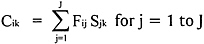
where:
Cik = concentration of chemical species i for sample k
Fij = source composition of species i in source j
Sjk = source contributions from the jth source to kth receptor
are the mass contribution of the sources to each sample. Such an approach works well for larger-sized particles (> 1 µm), where there are generally sufficient compositional differences between emissions from different sources to permit them to be distinguished from one another. The CMB model is a multiple-regression model. In the implementation prepared for EPA, the model incorporates the estimated uncertainties in the emitted source-material compositions, as well as the uncertainties in the measured elemental compositions of the particulate-matter samples (Watson et al. 1990). The effective variance least squares fitting procedure is used to solve the problem iteratively (Watson et al. 1984; Cheng et al. 1988). Source-apportionment studies have typically been carried out and reported for PM10 nonattainment areas, most of which are in the western United States.
Because of the separation of emitted primary particles from the secondary particle precursor gaseous emissions, some pollutants, such as oxides of sulfur, oxides of nitrogen, ammonia, and secondary organic particles, are not directly attributed to source categories. Those pollutants
will need to be controlled to meet a fine-particle standard. Thus, it is essential to be able to associate the observed concentrations of secondary species with specific source types, and potentially with specific source locations. Only then can an effective implementation plan be developed. Because the primary particle-source signatures are lost in transit, other kinds of information need to be included to identify and apportion sources of secondary particulate matter. Receptor models have considerable promise, but they require further development, testing, validation, and packaging for use by state and local air-quality managers. In addition, they must be linked to models that estimate population and individual exposures to particulate matter and gaseous pollutants.
The development of new personal-exposure samplers is critical to fulfilling the research needs discussed above. For investigations of the relationship between personal particulate exposures and outdoor concentrations, for example, new personal samplers for PM2.5 and PM1.0, that are sensitive enough to collect 12- and 24-hour integrated samples should be developed. Also, the samplers should be small, lightweight, inexpensive, and easy to operate, allowing them to be used in large-scale exposure studies. Because NAAQS have been issued for PM10 and PM2.5, the samplers should also allow personal exposures to be measured for both particle sizes simultaneously. In addition, samplers that are able to measure personal particulate exposures continuously or semicontinuously are needed to investigate the temporal variability in particulate exposures. Currently available continuous personal-particulate monitors (most of which measure particle concentrations based on light scattering) were originally developed to measure occupational exposures and are unable to measure the lower ambient particle concentrations accurately. New methods that are able to measure currently observed ambient concentrations accurately need to be developed. Finally, personal-sampling techniques should be developed to provide information about the physical, chemical, or biological properties of particulate exposures, such as particle size distribution, chemical composition, and oxidative potential. This information is critical to investigating and estimating the origin and the toxicity of personal particulate exposures.
The further development and targeted application of improved
source-oriented models, receptor models, and supporting sampling and analytical methods will be critical to effective air-quality management. The following specific research tasks should be addressed after biologically important components of particulate matter have been identified:
-
Enhance the modeling and measurement tools to provide estimates of emission sources of, and population and individual exposure to, biologically important particulate-matter components. This will require apportionment of exposure through source tests for biologically important components, inventories of appropriate sources, and development of the associated emission-source and emission-receptor models.
-
Modify the models, sampling, and analysis so that they can be easily applied and thus be readily accessible to the state or local air-quality-management officials who will be required to develop implementation plans. These modifications include providing for the diverse geographical and temporal scales needed by different states and localities.
SCIENTIFIC VALUE
Meeting these needs will help to improve understanding of atmospheric chemistry and source-emission characteristics. It will improve source and receptor models and improve the linkage between biological data and human exposure and atmospheric concentrations of particulate matter.
DECISIONMAKING VALUE
This research is essential to developing control strategies targeted at the emission sources of the most biologically important particulate-matter components. It will also help integrate source-receptor modeling information with biological and health effects information to evaluate better the effectiveness of control strategies, and will enhance the
cost-effectiveness of multi-pollutant control strategies through the application of improved source-receptor modeling.
FEASIBILITY AND TIMING
This research will require a more advanced biological understanding of important agents as a result of toxicological, clinical, and epidemiological research. Thus, it must be staged to follow the first stages of dose-to-response research, which should begin immediately.
COST
Research to link biologically important particulate-matter components to their emission sources does not require significant resources for the first 3-year timeframe during which improved analytic tools will be developed in response to Research Topic 3. Based on previous efforts at developing analytical methods, modeling source receptors (e.g., Ozone Transport Assessment Group (OTAG) and Ozone Transport Commission (OTC)), and accounting for the increased complexity inherent in collecting data and implementing source and receptor modeling for a complex mixture like particulate matter, the committee estimates that a budget of $4.0 million per year beginning in year 3 and extending to year 8 will be necessary to accomplish these goals. In addition, $1.0 million per year is needed in the first 2 years for the development of advanced exposure-measurement technology for the epidemiological studies to begin in year 4. Advanced tools for monitoring biological responses to toxic components of particulate matter will also be needed.
RESEARCH TOPIC 5
ASSESS HAZARDOUS PARTICULATE-MATTER COMPONENTS
What is the role of physicochemical characteristics of particulate matter in eliciting adverse health effects?
DESCRIPTION
There is insufficient understanding of the relationships between chemical composition, shape, and size of ambient particulates and resulting health effects. In fact, the results of epidemiological studies might be generally interpreted in two ways. On the one hand, general consistency among different studies performed in different areas with various populations might suggest that the responses are merely some function of the mass dose of the particle mixture common to many areas, rather than of specific chemical species within the mixture. Alternatively, variations among studies in the relative-risk estimates related to exposure suggest that toxicity might depend upon physicochemical characteristics of the particulate matter, which can differ among regions. The differences in the relative risk estimates may also reflect differences in designs, confounding effects, and other factors among studies. Moreover, present knowledge of the toxicity of various components of particulate matter strongly suggests that mass is not a sufficient metric for understanding health effects. Some of the uncertainty in epidemiological findings of adverse effects associated with particulate matter might be due to the possibility that mass concentration alone may not be sufficient to identify the putative portions of the particulate-matter fraction that produce mortality or morbidity. To explore adverse health effects of particulate matter requires coordinated efforts in epidemiological and controlled exposure studies that provide adequate exposure metrics that characterize size and chemistry. Thus, within this broad research area, several important points must be addressed, and studies should be designed such that results will provide input to the data base required to address these issues. The most relevant route of exposure is inhalation. Therefore, inhalation should be the route of choice.
Develop and use particulate matter surrogates for use in controlled exposure studies.
Ambient particulate matter is a complex mixture that includes material derived from natural and anthropogenic sources. The potential for
daily and seasonal changes in composition and for variability in particle composition between different regions limits the ability to describe a standard ambient aerosol or the ability to develop a reference ambient particulate-matter material. Thus, it is necessary to use surrogate particles for controlled exposure studies. Surrogates that have been employed include ambient particulate matter, which is resuspended for exposures; concentrated ambient particulate matter, which is directly delivered to an exposure system; and various potential components of ambient particulate matter, such as residual oil fly ash (ROFA), acidic sulfates, road dust, diesel soot, and carbon black. These atmospheres can be well defined and, with the exception of the concentrated ambient particulate matter, reproduced in the laboratory. Because of the exposure variability in studies using concentrated ambient particulate matter, these must include a careful characterization of particle composition (size and chemistry) and accompanying gaseous components. All surrogate atmospheres have advantages and disadvantages in terms of their usefulness in contributing to our knowledge of the toxicity of actual ambient particulate-matter exposure. Thus, efforts should be directed at determining the relevance of surrogate particles to ambient particulate matter and to determine which surrogates are most relevant. Within this effort, the potential role of biologically-derived particulate material must be considered.
Assess relevant dose metrics for particulate matter to explain adverse health outcomes.
Routine atmospheric sampling of particulate matter in recent years has typically produced data for PM10 and occasionally PM2.5. Only rarely have measurements of particle numbers been made. However, it is not clear whether mass is the appropriate metric to explain dose-response relationships for adverse health effects of particulate matter noted in epidemiological studies.
Dose is traditionally expressed by mass delivered to the exposed person. However, experimental studies have shown that a given mass of the same particulate compound delivered as distinctly different particle sizes (e.g., 20 nm vs. 250 nm) can elicit significantly different
toxic responses. Thus, in some cases, particle mass might not be the best dose metric for comparison of responses, but particle surface area might be more appropriate. It is, therefore, possible that the best dose metric for ambient particulate matter might differ for different particle types, depending perhaps upon the physicochemical properties of the specific particulate-matter exposure atmospheres. Because ambient air-quality standards are based upon mass concentration, current estimates of exposure derived from atmospheric sampling networks will not relate meaningfully to response in cases where adverse biological effects are causally associated with a different particle metric for a specific particle type. Potential dose metrics can include, in addition to particle mass, particle number, particle surface area, and others related to chemical constituents (e.g., oxidant reactivity, metal content, and organic content). Furthermore, more than one metric might be needed to understand dose-response relationships for particles having different physicochemical properties. Such dose-response information is necessary to determine the nature of the model for particulate matter, i.e., linear or threshold, or perhaps both, depending upon the particulate-matter characteristics.
Evaluate the role of particle size (e.g., ultrafine versus fine versus coarse) in toxicological responses to particulate matter that relate to epidemiological health outcomes.
Ambient particulate matter generally consists of coarse and fine particles (see Figure 1.1). Within the fine-particle fraction, there are a nucleation mode (i.e., up to about 0.01 µm) and an accumulation mode (from about 0.01 µm to 1 µm), each containing particles having distinctly different size ranges. Because of limited monitoring data, only a few epidemiological studies have been able to consider alternative fractions of particulate matter. The results from the studies vary. Some of the studies suggest that adverse health outcomes are more highly associated with the concentration of the fine particle mode; other studies have not shared that finding. Furthermore, toxicological studies using model atmospheres have noted that within this mode, particles in the ultrafine size range seem to have greater inflammatory
potential per unit mass than do particles within the larger accumulation mode. Although differences in deposition efficiencies and ultimate disposition within the respiratory tract between different-sized particles might be important factors modulating toxicity, they cannot fully explain observed differences in biological responses. Research using controlled exposures in humans and animals as well as in vitro systems is needed to evaluate particle size-dependent toxicological responses and to evaluate any mechanistic differences related to size.
Determine the role of particulate-matter chemistry in toxicological responses to particulate matter that relate to epidemiological health outcomes.
Are relevant biological responses to particulate matter nonspecific, or do they depend upon specific chemical composition of the particulates? One of the major issues in assessing particulate-matter toxicity is the question of generic toxicity of particles versus toxicity due to the presence of specific chemical components within or on the particles. As noted above, generic toxicity due to an as-yet undetermined mechanism has been suggested for one size range of particulate matter, namely the ultrafines. On the other hand, experimental studies using various biological end points have suggested that certain chemical constituents of particulate matter might underlie toxicity. Based upon the available evidence, chemical components that might contribute to the biological activity of ambient particulate matter are acidity, certain metals, reactive organic components, and biological agents, such as bacterial toxins, spores and pollen. Particles do not have to be composed entirely of those chemicals, since active chemical species might exist as a surface layer on what otherwise would be a fairly chemically inert core material, such as carbon. In this regard, surface-absorbed, short-lived radicals, such as peroxides, have been suggested as potential contributors to the toxicity of ambient particulate matter, and primary reactive organics, as well as secondary organics derived from the oxidation of hydrocarbons in the atmosphere, should also be considered in this regard. Thus, there is a need to study biological responses to particles having specific chemical compositions, bearing in mind the relevance of this chemistry to actual constituents of ambient
particulate matter. Of the above chemical components of particulate matter, the greatest body of research has addressed acidity.
SCIENTIFIC VALUE
Better understanding of the role of particulate-matter physicochemical characteristics in eliciting adverse health effects should assist in determining the mechanisms underlying toxicity and the relationship between response and specific chemical composition and particle size.
Furthermore, identification of particle characteristics that affect responses of experimental animals and humans undergoing controlled exposure studies, followed by comparison to populations undergoing exposure in the ambient environment, would provide powerful confirmation of the role of specific physicochemical properties of particulate matter. The development of surrogates for ambient particulate matter for use in controlled exposure studies as an outcome of studies of physical and chemical characteristics would then allow for reproducible interlaboratory exposure testing using relevant materials and provide for a research model for controlled exposure studies. The proper design of controlled exposure studies to assess physicochemical properties analysis in relationship to response will also provide information on proper dose metrics. Furthermore, results of controlled exposure studies can provide epidemiological studies with information that will allow for refined exposure analysis. Thus, there must be close interaction between epidemiological and toxicological studies (animal and clinical) in this research area.
DECISIONMAKING VALUE
Once the biologically important particulate-matter characteristics have been identified, emission sources of the most important components of ambient particulate matter contributing to adverse effects could be identified, and appropriate risk-management strategies can be developed, including the control of specific particle components as air
toxics under a separate part of the Clean Air Act. Thus, obtaining this information can contribute substantially to public health protection, especially for susceptible individuals.
FEASIBILITY AND TIMING
Methods need to be developed and applied to identify physical properties of particulate matter, such as size, shape, or number, or toxic components such as acids, transition metals, peroxides, reactive organics, and secondary organics. The toxicological and clinical studies should begin immediately. The necessary expertise and technology are available. Major epidemiological studies should be delayed until the fourth year when information on personal exposure and toxicological mechanisms is expected to become available.
Some epidemiological researchers might believe that new epidemiological studies should begin immediately. However, this committee, which includes several epidemiologists, concludes that it may be more cost effective to delay certain epidemiological studies until further information on personal exposure and biologically important components of particulate matter becomes available. Without such information, the committee does not anticipate that epidemiological studies could be designed to identify the aspects of particulate matter most associated with adverse health effects, nor would they be likely to help resolve the currently divisive policy debates over particulate matter.
COST
The recommended laboratory animal and human clinical research on the toxic components of particulate matter using controlled exposure studies is estimated to cost $8.0 million a year for 5 years. This amount includes research to identify relevant dose metrics for particulate matter to assess epidemiological results. The recommended epidemiological research activity will require the development of more refined particulate monitoring and are estimated to cost $1.0 million in
the second and third years and $6.0 million per year from 2001 until 2010 to enable major field studies in each of three regions of the United States to assess potential differences due to particle composition.
RESEARCH TOPIC 6
DOSIMETRY: DEPOSITION AND FATE OF PARTICLES IN THE RESPIRATORY TRACT
What are the deposition patterns and fate of particles in the respiratory tract of individuals belonging to presumed susceptible subpopulations?
DESCRIPTION
Knowledge of the tissue-specific and cell-specific dose of particulate matter, and of particulate-matter constituents, is a critical link between individual exposures and health responses. The concept of dose includes the magnitude and rate of deposition on respiratory tract surfaces, the clearance, dissolution, and translocation of particulate matter from various sites, and the bioavailability of particulate-matter-borne toxic compounds. This information is not only critical to understanding exposure-dose-response relationships for health risks, but also to extrapolating these relationships between different types of subjects and between experimental animals and humans.
At a given airborne concentration in the breathing zone, the deposited dose of particulate matter depends on the amount inhaled (inhaled concentration × volume breathed), the breathing pattern, particle characteristics (e.g., aerodynamic diameter and diffusion diameter which is affected by size, shape, and density), hygroscopic changes in the aerodynamic behavior of the particles after inhalation, and the physical characteristics of the air passages.
Mathematical models have been constructed for predicting the regional deposition of particles in the respiratory tract. Although these models are available for making useful predictions of deposition of particles of most sizes in normal adult human airways, there is a basic
need for experimental measurements to refine them and to validate them through studies of deposition in living subjects.
Few data are available on the regional deposition of particulate matter in lungs of people with respiratory diseases and normal elderly individuals. Not only can the variations be observed between normal and diseased airways, but the airway surface morphology might also differ. Because the latter subjects are subpopulations presumed to be at special risk from particulate matter, it is important to acquire data on the geometry of the lungs of such individuals, to develop mathematical deposition models and to validate the models by studies of deposition in living subjects.
The fate of particles once they deposit in the lung is another crucial link in determining the relationship between exposure and response. Depending on size, shape, solubility, and other physicochemical characteristics, particles can have wide ranges of lifetimes, anatomical locations, rates of movement in the body, and susceptibilities to the body's defenses. A knowledge of the dose retained at the organ, tissue, and cellular levels is important for linking the deposited dose to the nature and mechanisms of effects.
For many types of particulate matter, there is a good understanding of the clearance rate of particles via different pathways, given the deposited dose and the physical and chemical characteristics. Scientists also have a good working knowledge of the movement of some types of particles and their solubilized components in the lung, and of the transfer of some solubilized components to other organs. However, it is essential to validate the translocation pathways and rate constants for all particulate-matter types in appropriately designed experiments.
Little is understood about the deposition and fate of ultrafine particles (under 0.10 µm) in the respiratory tract. The efficiency with which alveolar macrophages scavenge ultrafine particles is uncertain. There is sufficient evidence that ultrafine particles penetrate into and through the epithelial cell layer at a greater rate than larger particles, but there is yet little ability to predict transfer rates and either mass-based or number-based concentrations with time in different tissue compartments. There is also evidence that ultrafine particles of sufficiently low solubility can transfer from the lung to other organs, but there is no
ability at this time to predict the portion or size fraction of the ultrafine dose transported to other organs or to predict transfer rates or residence times. Moreover, there is no information on interspecies similarities and differences for any of the above phenomena.
The extent to which specific chemicals (organics, metals, salts, acids,) carried on particle surfaces are available to cells and tissues is only partially understood. There is information for only a limited number of compounds comparing the bioavailability and biopotency of the compound deposited either as a pure material or as a coating on particle surfaces. Factors affecting bioavailability include the form and the physical and chemical state of the compound, the nature of its bonding with the particle surface, the thickness of the coating, and the location of the particle (e.g., intracellular or extracellular). As different classes of compounds are shown to be important in particulate-matter health effects, some will require a better understanding of bioavailability if the linkage between deposited dose and effects is to be understood.
The following specific research tasks should be undertaken with respect to deposition patterns and fate of particles in the respiratory tract:
-
Develop a quantitative description of representative lung morphometry and breathing patterns of potentially susceptible individuals (especially subjects with lung diseases, elderly subjects, and children).
-
Obtain better understanding of particle deposition patterns within the respiratory tracts of susceptible subpopulations as a function of particle size, hygroscopicity, and breathing rate over the entire range of particle sizes.
-
Develop and refine mathematical models for predicting the regional and local deposition in the respiratory tracts of subjects with lung diseases and elderly subjects for particles across the size ranges of interest, using deposition data collected experimentally to test the models to the extent possible.
-
Enhance understanding of the clearance mechanisms and other particulate defense mechanisms (e.g., phagocyte function), translocation to tissue and extrapulmonary compartments, and the bioavailability
-
of particle-borne constituents over the full range of particle sizes in susceptible subpopulations and any differences between those individuals and the general population.
SCIENTIFIC VALUE
This research will advance basic understanding of the influence of disease and senescence on respiratory-tract structure and physiology. The resulting information will extend current understanding of diseased lungs and will also be very valuable to the growing field of drug delivery by inhalation. Also, it is central to defining critical dose terms and then estimating critical doses at the organ, tissue, and cellular levels for particulate matter and its associated compounds in susceptible populations.
DECISIONMAKING VALUE
This information will be critical to estimating the relative doses of particulate matter and biologically important constituents in normal and abnormal lungs, thus helping to determine the techniques needed to control the exposures of susceptible subpopulations.
FEASIBILITY AND TIMING
The skills and technology and some of the basic information needed for this research are available. Because the initial phases of this effort will involve developing basic data for abnormal lungs, it is not necessary to wait until the most biologically important types or constituents of particulate matter or the biological mechanisms are identified before initiating the work. Thus, this research should begin immediately and can provide a significant portion of the needed information before the next NAAQS review, although some of the work will need to extend beyond that time.
COST
Approximately $3.0 million will be needed in the first year and about $1.5 million per year will be needed for each of the next 3 years. The research will include detailed morphometric measurements on abnormal lungs, development of deposition models based on the morphometric measurements, and validation of the deposition models using in vivo studies of individuals with abnormal lungs.
RESEARCH TOPIC 7
COMBINED EFFECTS OF PARTICULATE MATTER AND GASEOUS COPOLLUTANTS
How can the effects of particulate matter be disentangled from the effects of other pollutants? How can the effects of long-term exposure to particulate matter and other pollutants be better understood?
DESCRIPTION
Particulate matter exists in outdoor air in a mixture that includes other pollutants resulting from natural processes and human activities. In typical urban environments, many of the same sources that give rise to primary and secondary particles also release gaseous pollutants, including sulfur oxides, oxides of nitrogen, carbon monoxide, and other organic compounds. Vehicles and other sources of hydrocarbons and oxides of nitrogen result in the formation of ozone, organic vapors and organic particles, particularly in regions or seasons where sunlight is abundant. Moreover, meteorological conditions can influence the concentrations of most air pollutants in similar ways, such that when levels of one pollutant are high, levels of other pollutants may also rise. To support standard-setting, researchers have attempted to identify the independent effects of particulate matter. That task is made difficult by the common sources of particulate matter and other pollutants, and correlations among their concentrations in ambient air.
7a. COPOLLUTANTS (TOXICOLOGY)
Toxicological studies have shown that interactions between particulate matter and gaseous pollutants are very complex. For example, even in a simplified situation where there is a combination of only two pollutants, the nature of any interaction (e.g., additivity, synergism, or antagonism) depends upon various factors, including exposure duration and the ratio of the concentrations of the two chemicals within the mixture. Gas-particle interactions of multiple chemicals present in ambient air are even more difficult to evaluate, making determination of the specific role of the particulate-matter component in causing adverse health effects associated with exposure quite difficult. An additional complication is the potential for ambient gases to alter lung ventilation, thus affecting deposition of inhaled particulate matter and the resultant dose to various tissues in the respiratory tract. In addition, gases might interact chemically with particulate matter, perhaps altering surface characteristics of the particles.
7b. COPOLLUTANTS AND EFFECTS OF LONG-TERM EXPOSURE (EPIDEMIOLOGICAL STUDIES)
Epidemiologists have generally followed two approaches to try to characterize the independent effects of particulate matter: using regression models for data analysis that includes pollutants other than particulate matter, and examining the effects of particulate matter across areas having differing levels of other pollutants. The great majority of studies that relate particulate matter to health have evaluated acute health measures (e.g., death, emergency room visits, or hospital admissions) with increments above previous daily averages of particulate matter. These studies demonstrate a consistent positive association between these two factors, but not all of them have considered confounding effects of copollutants.
Long term exposure to particulate matter has also been associated with mortality in two large-scale cohort studies, the Harvard Six-Cities Study and the American Cancer Society Study of 151 U.S. cities. The two studies had certain limitations, including limited consideration of gaseous pollutants, and are currently undergoing detailed reanalysis to
confirm the original findings and to evaluate the robustness of the conclusions. New epidemiological investigations of the effects of long-term exposure are needed and should be designed to address also the influence of copollutants on the association between chronic health effects and exposure to particulate matter.
Further studies to investigate the influence of copollutants on health responses to particulate matter are needed in controlled-experiment laboratory studies (animal and controlled clinical studies) as well as in epidemiology.
The following questions need to be addressed:
-
Can effects of particulate matter or its components be identified among persons living in locations with unique particulate-matter sources or characteristics?
-
Do natural experiments involving changing patterns of source operation indicate effects of particulate matter?
-
Do parallel investigations of multiple locations with different pollution characteristics indicate an effect of particulate matter or its components?
-
Does the consideration of other pollutants in models influence the estimates of the association between particulate matter and acute health responses?
-
What is the contribution of long-term exposure to particulate matter (or its components) and other pollutants present in ambient air to morbidity and mortality in the general population?
-
How does exposure to mixtures of particulate matter with ambient gases alter toxic responses compared with those observed with particulate matter alone?
-
How does exposure to mixtures of particulate matter with ambient gases alter the deposition or retention of inhaled particulate matter compared with particulate matter alone and to predictions based upon biologically based deposition or retention models that do not consider effects of copollutants on disposition of particulate matter?
SCIENTIFIC VALUE
Investigation of the influence of copollutants will reduce uncertainty
in estimates of the association between particulate matter and health. The presence of copollutants could also alter the health response to particulate matter. Controlled experimental laboratory research can contribute needed information on the toxicology of these mixtures.
The development of new information on the health effects of long-term exposure to particulates and other copollutants would be of considerable scientific value. Such studies should focus on both morbidity and mortality attributable to long-term exposure to airborne particulates, adjusted for concomitant exposures to other pollutants. Since only two such studies have been conducted to date, additional long-term studies are needed to validate and extend the results of these initial findings. Long-term studies in which detailed information on the temporal patterns of exposure to airborne pollutants could also provide information on the critical exposure-time windows for particulate health effects. Long-term follow-up studies involving children could also be used to determine whether particulate-matter-related depression of pulmonary lung function in childhood persists into adolescence and adulthood. Although one such investigation is currently underway, it will be important to independently confirm the findings.
DECISIONMAKING VALUE
It is important to understand the relative importance of combinations of various pollutants to health responses so that relevant pollutants can be regulated appropriately. It is also critically important to understand better the nature and effects of long-term exposures to particulate matter and gaseous copollutants, so that the full public health effect of these combined exposures can be assessed.
FEASIBILITY AND TIMING
The feasibility and timing of studies addressing gaseous copollutants in analyses of epidemiological data depends upon the availability of measurements of these pollutants in areas where studies have been undertaken. If data have to be collected, only prospective epidemiological
studies are possible; those will require considerably more time and resources. Methods for experiments involving controlled exposures to mixed atmospheres are available.
COST
Controlled exposure studies of experimental animals and humans require from $200,000 to $5.0 million per study. The number of studies to be undertaken will depend upon the number of health end points to be examined and the number of mixed atmospheres to be evaluated. The committee estimates that controlled exposure studies will require $3.0 million per year for the first two years, $4.0 million per year for the third through sixth years, and $5.0 million per year for the remaining years.
The cost estimates for carrying out the recommended epidemiological analyses of routinely collected monitoring data, along with existing administratively collected health-record data (e.g., Medicare records and hospital admission computerized data) relate to the costs of reducing such data to analytical files and the cost of analytical support. Those costs are estimated at approximately $200,000 per separate analytical effort and could begin immediately with two to four studies per year. If additional data collection is required within a given region for either the aerometric data or the health-related data to supplement existing information from other administrative sources, the costs could easily double, simply from the need to validate that joining data from multiple sources has been accurately done. This represents an opportunity to use the EPA's planned PM2.5 monitoring network to reduce additional costs. Such an effort will require coordinated input into the EPA monitoring-network design to assure its utility for providing input to epidemiological studies.
New data, both aerometric and health-related, need to be actually measured, and the committee estimates the cost would be approximately $1.0 million per year for each kind of data from each site studied. Four studies would be needed to cover the different regions in the United States.
In the short term, existing population cohorts could be used, along
with available monitoring data for other pollutants. These relatively inexpensive studies should cost approximately $50,000-100,000 per study to augment existing analyses of epidemiology data. In the longer term, new data will need to be collected, for air quality and population cohorts. Analytical costs need to be augmented by the costs of exposure assessment for a considerable period, depending upon study design and populations needing to be followed for extended periods. The committee has estimated the cost of obtaining new data for the short terms to be $1.0 million per year per study for the 13-year period. The committee expects the design and implementation of new long-term epidemiological studies to be a principal activity of the university-based research centers.
An important long-term objective is the conduct of a large-scale prospective epidemiological study of the public health impacts of exposure to particulate air pollution, including both morbidity and mortality. Such a study would serve to validate and extend the results of two existing studies, and provide more definitive information on the effects of long-term exposure to airborne particulates. The committee recommends that such a study might begin in year two, and estimates the cost at $3.0 million annually for 10 years.
The committee also recommends that a study be conducted of the persistence of pulmonary lung function decrement observed in children. Such a study could be initiated in year two using a cohort of children 7-10 years of age, and following them through to adolescence or adulthood. The cost of such a study is estimated at $1.0 million annually over a twelve year period.
RESEARCH TOPIC 8
SUSCEPTIBLE SUBPOPULATIONS
What subpopulations are at increased risk of adverse health outcomes from particulate matter?
DESCRIPTION
in the same way or to the same degree (EPA 1996a). Individual levels of susceptibility are influenced by individual variations in physiology, behavior, exposure, biological mechanisms, host factors, exposure to copollutants, and the biologically effective dose. Toxicological, clinical, and epidemiological evidence suggests that asthmatics, school-aged children, elderly people, and individuals with pre-existing heart and respiratory conditions might be especially susceptible to particulate matter (Lebowitz et al. 1987; Stankus et al. 1988; Pope et al. 1991; Menon et al. 1992; Pope and Dockery 1992; Schwartz 1994; 1995; Schwartz et al. 1994). The possibility exists that important subgroups might also include infants, preschool children, and pregnant women (see Appendix B).
Susceptible subpopulations and the personal and environmental factors that affect particulate-matter susceptibility are largely unknown or poorly characterized. Susceptible individuals might experience different levels and types of particulate-matter exposures and doses than the general population. Their behavior and activity patterns might bring them into contact with varying mixtures of ambient particulate matter at varying concentrations at different times. For example, the lung morphology and increased breathing rates of children could increase their particulate-matter doses and cause them to experience greater health effects. In addition, the size and composition of the particulate matter, the presence of individual variations in deposition, retention and clearance rates, and personal characteristics (e.g., age, sex, prior disease, airway geometry, inflammatory and neural responses, or infectivity) could alter their biologically available and effective doses and responses. Important environmental factors might include secondhand smoke, gas, or kerosene heating or cooking, chemical reactions in indoor air, workplace exposures, pollen, insects, microbes, dander, or other factors. At this time, the limited knowledge about these and related factors in susceptible subpopulations prevents the development and validation of effective models for exposure assessment or prediction of actual doses. Controlled human-exposure studies and the development of appropriate animal models (that mimic human respiratory and cardiac disease) are needed to obtain the essential data for exposure and dose modeling in the subgroups. Once refined dose estimates can be made,
epidemiological field studies can complete the framework for defining susceptible subpopulations.
Concerns about the nature and severity of chronic adverse health outcomes have not been adequately addressed. The importance of short-term, peak, cumulative, and long-term exposures for long-term health effects needs to be determined. Although more research has been conducted on acute responses (particularly exacerbation of asthma), very little is known about the chronic or life-shortening effects of particulate matter in susceptible subpopulations. Therefore, it is essential to identify who is dying due to acute particulate-matter exposure, and the extent to which the mortality is premature. More work on ill adults and pregnant women should be considered. Clinical and epidemiological studies are needed to increase knowledge about the types and severity of health responses in susceptible subgroups.
SCIENTIFIC VALUE
The scientific value of studying susceptible subpopulations is considerable, because little is known about the host and environmental characteristics that place individuals at increased risk from exposure to particulate matter. Studies to identify and characterize the factors that affect exposures and biologically effective doses for subpopulations are especially needed to reduce uncertainties in risk assessment.
DECISIONMAKING VALUE
The decisionmaking value of new knowledge about susceptible subgroups is directly related to policy choices mandated by the Clean Air Act. EPA is charged with protecting the health of all Americans and has placed children's health in particular as a key priority. Without knowledge of susceptible subpopulations, decisionmakers cannot be fully informed and will not be able to meet the health-protection objectives of the Clean Air Act.
FEASIBILITY AND TIMING
It might not be feasible or timely for EPA to develop by 2002 all of the data and models needed for susceptible subgroups. Limitations in research capacity, technical capabilities to measure individual characteristics and exposures, and capacity to model biologically effective doses are current concerns. The agency's financial and human resources appear to be most suited to advancing knowledge about exposures. EPA should seek to leverage its capabilities with those of other agencies and organizations. Population-based field studies that emphasize key subpopulations would be timely and could be strengthened through such collaboration. Identification and characterization of the important aspects of particulate matter, copollutants, and acute and chronic adverse health outcomes should be pursued.
COST
Recognizing that studies of some subgroups are under way and others are nearing completion (see Appendix B), the near-term studies needed to address additional subgroups and factors is estimated to require $2.0 million per year for the first 2 years. Long-term studies of chronic health outcomes will require more time and extensive resources. The cost is estimated to be $3.0 million per year for the third through the eighth years.
RESEARCH TOPIC 9
MECHANISMS OF INJURY
What are the underlying mechanisms (local pulmonary and systemic) that can explain the epidemiological findings of mortality/morbidity associated with exposure to ambient particulate matter?
DESCRIPTION
The significance of results from epidemiological studies will be greatly
enhanced if results obtained in controlled exposure studies can contribute plausible explanations of underlying biological mechanisms for ambient particulate-matter-associated health effects. In this regard, there is a need to understand how inhalation of particulate matter can result in local pulmonary and systemic responses noted as health outcomes in epidemiological studies. Specific research recommendations related to mechanisms of injury are described below under subtopics 9a, b, and c.
SCIENTIFIC VALUE
Because mechanisms by which particulate matter in ambient air contribute to respiratory and cardiovascular diseases are largely unknown, elucidation of such mechanisms would fill an important scientific data gap. This will require carefully designed clinical studies, as well as in vivo and in vitro toxicological investigations. Controlled clinical studies afford an opportunity to examine the hypothesis that particulate matter exacerbates pre-existing cardiorespiratory conditions in susceptible subpopulations. Appropriately designed toxicological investigations would provide mechanistic information on particulate-matter-induced damage to pulmonary tissue and on the cellular and molecular events involved in the causal pathways responsible for cardiorespiratory morbidity and mortality.
DECISIONMAKING VALUE
Elucidation of the mechanisms by which particulate matter might lead to cardiorespiratory morbidity and mortality would be of great value in risk-management decisionmaking by adding to the weight of evidence for a causal relationship between particulate-matter exposure and adverse health outcomes. At present, the interpretation of observed epidemiological associations is hindered by the lack of well-established mechanistic pathways. A clearer understanding of the etiology of particulate-matter-related morbidity and mortality would
therefore enable decisionmakers to develop more targeted and cost-effective strategies for reducing particulate-matter-related risks.
FEASIBILITY AND TIMING
The scientific infrastructure needed to conduct clinical and toxicological investigations of mechanistic pathways of particulate-matter-related cardiorespiratory disease is well established. Because sufficient information exists to design studies that would be informative and relevant, such studies should be initiated immediately and carried out in parallel with other investigations.
Cost is discussed for each of the three approaches below.
9a. ANIMAL MODELS
What are the appropriate animal models to use in studies of particulate-matter toxicity?
DESCRIPTION
Associations between exposure to generally low ambient particulate-matter levels with morbidity and mortality have been observed in susceptible subpopulations, but it is not likely that low environmental concentrations of particulate matter will elicit acute health effects in healthy animals, which are the usual models in toxicological studies. Epidemiological data strongly suggest that the associations between particulate matter and mortality and morbidity are manifested in subpopulations having special susceptibility factors. Therefore, laboratory studies should focus primarily on the use of animal models of these susceptible populations. The data indicate that the mortality associated with short-term increases in particulate matter occurs primarily in subgroups with pre-existing susceptibility factors, such as old age and respiratory or cardiac disease. Morbidity from
short-term particulate-matter exposures has also been observed in susceptible subpopulations, primarily asthmatics of all ages and other individuals with respiratory disease. Similarly, chronic exposures appear to be associated with pulmonary diseases as well as lung cancer. Several animal models of human cardiorespiratory disease are in use, but all have serious limitations. First, it must be recognized that a good understanding does not exist of the precise human conditions that need to be modeled. Not all asthmatics or all elderly people are identically susceptible for the same reasons. Second, although all the animal models mimic some portion of the human condition, few, if any, can model all of the relevant features of the condition of interest. Third, all animal models present difficulties in extrapolation to humans, and validation of the degree to which an animal system models a human condition occurs far less frequently than needed.
There is a need to extend the range of human cardiorespiratory disorders modeled by animals or artificially induced animal preparations, and an equally important need to validate all animal models against their human counterparts. At present, we do not know whether the short-term or long-term associations between particulate matter and health will prove to be most important. Therefore, it appears that models of allergic and inflammatory respiratory disease, reduced defenses against infections, common forms of respiratory and cardiac insufficiency and failure, and lung cancer would all be useful models in studies of particulate-matter effects. At this point, it is difficult to prioritize among the conditions needed for laboratory modeling. Furthermore, particulate-matter inhalation studies should be designed at several exposure levels so that exposure-dose-response relationships can be established. Low exposure levels and relevant exposure routes and modes need to be emphasized. It is also necessary to assess deposition of particulate matter in different regions of the respiratory tract and to evaluate subsequent retention characteristics, which then can be correlated with specific biological responses and compared with results of exposure studies using healthy animals. Acute responses should be the initial focus, with effects caused by chronic exposure investigated later as more information is obtained on the significance of individual compounds or size fractions of particulate matter.
SCIENTIFIC VALUE
Animal models mimicking susceptible human subpopulations are a necessary prerequisite to studying effects of ambient or surrogate particulate matter. The models must be validated to reflect the human-disease state. Studies can be performed with these models that cannot be carried out in humans for ethical and technical reasons. In addition to particulate-matter-related research, they are also useful to investigate both the pathophysiology and treatment of human disease. The validated models provide insights into disease-oriented mechanisms of particulate matter, provided that physiological routes of exposure and relevant low doses are used. Furthermore, information on particulate-matter dosimetry in diseased lungs will be useful for purposes of extrapolation to humans. The ability to generate these validated models is of great value to developing a good data base by reducing variability in responses. Finally, the validated models form a valuable basis for developing clinical and appropriate in vitro mechanistic models.
DECISIONMAKING VALUE
Results from particulate-matter studies with validated animal models of human disease will provide information on pertinent particle characteristics for the purpose of particulate-matter standard setting. They will also provide valuable information for designing focused clinical and epidemiological studies that will contribute to the review of NAAQS for particulate matter. They will also contribute valuable information in guiding decisions on important policy issues such as the indicator for the standard and the amount of the margin of safety.
FEASIBILITY AND TIMING
An immediate, active program is required to develop new models and to validate existing animal models of human disease. The capacity and capability for this effort are available, but new research initiatives
are required to complete this important task successfully so that appropriate animal models are available within the next 2-3 years.
COST
The development and validation of these animal models is expected to cost approximately $3.0 million per year for the first 6 years.
9b. IN VITRO STUDIES
What are the appropriate in vitro models to use in studies of particulate-matter toxicity?
DESCRIPTION
In vitro studies with particulate matter have been performed to characterize specific cellular events and to determine underlying toxicological mechanisms. They are an important complement to studies in whole animals and humans. However, most in vitro studies have been executed without due consideration of doses administered to the cells. Therefore, it is important to use dose levels that are relevant to in vivo exposures. In vitro studies are useful to examine a specific hypothesis based upon results of in vivo studies and can be tested using target cells of the respiratory tract. However, the method of dosing has to be critically evaluated (e.g., via delivery of airborne particles or via particle suspension in the medium). Furthermore, the use of cell-lines versus primary cells or the use of cell co-cultures, as well as culture conditions, have to be carefully assessed. In general, in vitro studies should focus on specific mechanistic aspects of particulate-matter toxicity and might, therefore, be restricted to situations where results of in vivo studies indicate positive effects for a given particle type. Within this area, there is a need to test the usefulness of in vitro studies for investigating mechanistic events in cells that mimic those that occur in susceptible individuals (e.g., cells of old versus young organisms or sensitized cells).
SCIENTIFIC VALUE
In vitro models can be used to examine cellular and molecular mechanisms of toxicity due to particulate-matter exposure, including the role of specific tissues and cell types in the induction of toxic responses. To be of most value, it is essential to relate tissue doses to levels of exposure (i.e., in vivo) and to ambient levels and components of particulate matter. This will permit calibration of cellular and molecular events to ambient exposures, and will facilitate the use of such in vitro data for risk-assessment purposes. Positive results from such studies should be pursued by whole animal or clinical studies.
DECISIONMAKING VALUE
The use of appropriate in vitro models will provide valuable indirect information to support other investigations of the mechanisms of particulate-matter toxicity, which will assist in the interpretation of epidemiological data that show associations between particulate-matter exposure and cardiorespiratory disease. Specifically, disease-related mechanistic information at the cellular and molecular level could add significantly to the weight of evidence regarding a causal relationship between particulate-matter exposure and human morbidity. This information can also be helpful in interpreting the results of animal and clinical toxicity studies conducted in support of the development of the NAAQS.
FEASIBILITY AND TIMING
Several toxicology laboratories are well equipped to conduct mechanistic studies on the cellular and molecular events involved in particulate-matter toxicity. Such studies should be designed and conducted in conjunction with whole-animal and clinical toxicity studies.
COST
The cost of the recommended in vitro studies is estimated to be $3.0 million per year for the first 6 years.
9c. CLINICAL MODELS
What are the appropriate clinical models to use in studies of particulate-matter toxicity?
DESCRIPTION
The association between particulate-matter exposure and adverse health effects reported from ecological epidemiology studies appears strongest for respiratory and cardiovascular deaths, especially in individuals 65-74 years of age and older. It is not clear if there are mortality effects in healthy individuals of any age, particularly those younger than 65 years of age. There is weak evidence for morbidity in children. Based upon epidemiological findings, the population subgroups potentially susceptible to particulate matter and, therefore, candidates for clinical studies, include the elderly with pre-existing respiratory conditions (e.g., COPD), the elderly with cardiovascular disease (e.g., previous myocardial infarction or arrhythmia), asthmatic children and adults, impaired and nonimpaired cigarette smokers, healthy children and healthy elderly (Utell and Drew 1998). Other aspects of life style (e.g., nutrition and activity) should also be considered in assessing potential susceptibility to particulate matter. Clearly, clinical models will focus on acute responses that often have implications for chronic effects.
SCIENTIFIC VALUE
Associations between exposure to generally low ambient particulate-matter levels and morbidity have been observed in susceptible
subpopulations. Controlled human studies provide an opportunity to examine responses to particulate matter in both healthy and susceptible subpopulations. Carefully designed clinical studies will provide information on symptomatic, physiological, and cellular responses in healthy and susceptible subpopulations, namely those with pre-existing cardiorespiratory conditions. Such studies can also provide much-needed information on particulate-matter uptake and retention in healthy and susceptible subpopulations. Preventive intervention trials within susceptible groups should be considered (e.g., an NIEHS trial).
DECISIONMAKING VALUE
Clinical studies have provided important information for other regulatory decisions. Elucidation of responses in humans is a key to defining critical effects levels and determining the nature of adverse health effects. Assessing acute responses in groups with chronic diseases will provide important leads on plausible mechanistic pathways. Moreover, it will provide crucially required information on relative differences in responsiveness between at-risk and healthy populations. Clinical research also aids decisionmaking on the complex issue of margin of safety.
FEASIBILITY AND TIMING
Research facilities exist for clinical studies that use environmental chambers and mouthpiece exposures. Studies could be initiated immediately and carried out in parallel with animal studies.
COST
The human studies are estimated to cost $3.5 million/year for six years due to the complexities and multidisciplinary teams required for the conduct of such studies.
RESEARCH TOPIC 10
ANALYSIS AND MEASUREMENT
Several methodological advances are needed to facilitate understanding of health effects related to particulate matter. These range from the development of appropriate models to estimate the fate and deposition of inhaled particulate matter, to improved monitoring methods, exposure methods, and statistical tools to analyze collected data.
10a.
STATISTICAL ANALYSIS
To what extent does the choice of statistical methods in the analysis of data from epidemiological studies influence estimates of health risks from exposures to particulate matter? Can existing methods be improved?
DESCRIPTION
The statistical analysis of epidemiological data on particulate matter and human health presents several difficult methodological issues. Time-series studies require consideration of the appropriate dose-response time lag and long-term and short-term trends in health and exposure data (due to factors such as seasonal and day-of-the-week effects). Since observations taken at different points might be correlated, the nature of the serial correlation in time-series studies needs to be characterized, and autocorrelation needs to be adjusted for in subsequent analyses.
Studies of long-term exposure require analyses of time-dependent exposure patterns to identify critical exposure-time windows. Identification of the unique effects of particulate matter or its constituents requires careful adjustment for simultaneous exposure to a complex mixture of copollutants. Extensive covariate adjustment is required to minimize the possibility of confounding factors. Exposure measurement error can have the effect of understating risk, as well as overstating the precision of risk estimates. Flexible exposure-response models including time-dependent covariates, are also needed to described accurately the nature of the exposure-response relationships observed in epidemiological studies of particulates.
Several analysis methods have been used to address these issues; to date there is no consensus about which method is preferable. Evaluation of alternative existing methods would be useful, along with the exploration of more innovative methods. The most important questions are
-
What methods of removing the influence of long-term trends from parallel data on daily particulate-matter concentrations and population morbidity and mortality are most appropriate?
-
Should time-series of health and/or environmental data be filtered before analysis? What filters are most appropriate for this type of data?
-
What is the nature of the autocorrelation function in time-series studies? How should autocorrelation be taken into account in the analysis of time series data?
-
How can the critical timing of exposure (e.g., frequency or duration) for particulate-matter-related morbidity and mortality be determined?
-
How can the unique health effects of particulate matter and its biologically important constituents be determined in the presence of exposure to multiple copollutants?
-
Are existing epidemiological data adequate to identify the most relevant timing characteristics of exposure?
-
Is residual confounding a concern in particulate-matter epidemiological studies?
-
What types of exposure-response models are most appropriate to describe the observed relationships between mortality and morbidity and exposure to ambient particulate matter?
-
How can key covariates, including potential confounders and modifying factors, be best incorporated into risk models used to describe the effects of particulate matter on population health?
-
How can the effects of long and short-term exposures to particulate matter on mortality, including reduction in life expectancy, best be estimated?
-
Could the positive associations between particulate matter and adverse health outcomes, as observed in time-series studies, be false
-
positives resulting from multiple statistical tests using various regression models?
SCIENTIFIC VALUE
Analysis and evaluation of complex data on the health effects of particulate air pollution requires advanced statistical methods, including methods for the analysis of multivariate time series data. The application of such methods may involve a number of methodological choices during implementation, such as the method of detrending or filtering. With such complex analyses, it is important to ensure that the conclusions reached are not dependent on the choice of method used.
Validation of the statistical methods used in the analysis of epidemiological data on particulate air pollution will increase the level of confidence that can be attributed to conclusions drawn from such studies. The development of optimal methods of analysis may also lead to greater sensitivity in the detection of subtle health effects, and reduce the uncertainty associated with estimates of human-health risks due to exposure to particulate matter.
DECISIONMAKING VALUE
Given the potential public health impact of particulate air pollution, and the large costs associated with reducing pollution levels, it is critical that the scientific evidence on which air quality standards are based not be subject to uncertainty due to methods of data analysis and evaluation. Validation of analytic methods will not only enhance the scientific value of epidemiological findings, but will strengthen the basis on which future regulatory actions are taken.
FEASIBILITY AND TIMING
Although analytic methods for the evaluation of data from epidemiological studies of the health effects of particulate air pollution are relatively
well established, there exists considerable need for further methodological development. Given the existing knowledge base, such development is highly feasible. To be most effective, methodological research on the evaluation of epidemiological data on particulate health effects should be conducted in a multidisciplinary manner. The development of statistical methods of analysis should be undertaken in collaboration with scientists with expertise in biostatistics, epidemiology, and exposure assessment, and validated under conditions corresponding to those likely to be encountered in practice.
Methodological evaluation and development should be initiated immediately. This would enable the application of resulting methodological advances in the analysis of future epidemiological investigations initiated later, as well as in the reanalysis of previous epidemiological results.
COST
Methodological research is relatively inexpensive, compared to the costs of data acquisition. Methodological research could be established in the first year at a cost of $500,000. Subsequent development and application of methods could be undertaken by several multidisciplinary teams with an annual budget of $1 million per year for 6 years, including collection of data necessary to support this work. This program should include the conduct of focussed investigations designed to validate the methods used under conditions reflective of those encountered in practice.
10b. MEASUREMENT ERROR
What is the effect of measurement error and misclassification on estimates of the association between air pollution and health?
DESCRIPTION
Some of the studies undertaken to estimate the association between
particulate matter and human health relate population response to population exposures, whereas others are concerned with an individual's response to monitored particulate matter. To the extent that individual exposure measures are rarely available, most of the studies can be considered ecological in nature (Greenland and Robbins 1994; Kunzli and Tager 1997).
The response of a given individual to environmental agents such as particulate matter depends upon that individual's exposure to the agents. In the case of particulate matter, it is a complex mixture. Several differences between individual exposure to a pollutant and the monitored value of that pollutant must be considered in analyses of exposure and response. The components of this difference include errors in the accuracy and precision of the monitoring instrument; differences in exposure due to the placement of the ambient monitor (related to the zones of representation for a monitor or to the spatial homogeneity of the environmental agent measured); differences between ambient concentrations used to characterize a pollutant exposure and the average personal exposure to that pollutant or, for particulate matter, its mass or the size fractions and chemicals of biological significance; and the differences between average personal exposure levels and the exposure of a given individual.
Measurement error has several potential consequences. It can bias estimates of the association between a health end point and an environmental variable. (Usually the association is underestimated.) It can bias the estimated shape of any dose-response relationship between the health end point and environmental variable. Most often the bias is toward linearity; hence estimates of response thresholds can be obscured. In the context of a multivariate analysis, if the independent variables are correlated with each other and have relative differences in measurement error, then estimates of association can be biased. In general, associations between the health end point and those variables with smaller measurement error will be overestimated. The extent of the effect is determined very much by the type of analysis or statistical model used and by the nature of measurement error. For example, is the error linearly, nonlinearly, or multiplicatively related to the true measure? Is it systematic?
It is also possible for there to be misclassification error in the outcome variable. (For example, cause of death could be misclassified.) The effect of that type of misclassification will depend upon the nature of the misclassification and the statistical model used to analyze the data. For most of the models used to date, the effect of this error is not expected to be large. Other issues include
-
How large are the various components of measurement error for each independent environmental variable (e.g., pollutants or weather)?
-
How is the measurement error of one variable related to the measurement errors of other variables in the same model?
-
What are the statistical distribution and types (e.g., Berkson or classical) of measurement error?
-
What are the effects of measurement error on the estimated associations between particulate matter (or its size fractions and biologically important chemical constituents) and health?
-
Does the presence of differential measurement errors in other variables in the model influence the estimate of association between a specific environmental agent and health?
-
Is there any error or misclassification likely to be present in the outcome variable? Is that error likely to have any effect on the outcome of the statistical models used for analysis?
-
Can methods of adjusting for the effects of exposure measurement error be used to mitigate the effect of exposure measurement error on risk estimates?
-
Can spatial interpolation methods provide more accurate estimates of individual exposures to particulate air pollution?
-
How would the use of measures of personal exposure improve estimates of the association between particulate matter and health?
SCIENTIFIC VALUE
Relatively little is known about the nature of exposure estimation error for the suite of criteria air pollutants. Effects of measurement error are known for a few classical situations when fixed assumptions
are made about the nature of these errors. The validity of these assumptions needs to be ascertained.
DECISIONMAKING VALUE
Until the effects of measurement error are understood and taken into account, the association between exposures to ambient particulate matter (or its size fractions and biologically significant chemical constituents) and health effects cannot be estimated without acknowledging the source of uncertainty and its potential effect on risk estimates or particulate-matter reduction strategies.
FEASIBILITY AND TIMING
Data need to be collected to ascertain the nature of measurement error. Once that is understood, the effects can be ascertained and methods can be applied to correct for error.
COST
Much of the data required to address the issue of exposure measurement error will be collected through personal exposure studies conducted as part of the enhanced exposure monitoring component of the overall particulate research program. Nonetheless, additional studies designed to characterize distribution measurement error distributions will be needed. Such studies will involve replicate measurements under the same conditions, and are estimated to cost approximately $1.0 million annually for the first, second, third, and fourth years. Methodological development of exposure measurement error methods is recommended on an overlapping time frame, beginning with a workshop to identify methodological approaches ($100,000 in year 1), and followed by a five year program of methodological development and application, costing $500,000 per year.


