
8
Cardiovascular and Pulmonary Systems
Introduction
The cardiovascular system, which includes the heart and all the body's blood vessels, is responsible for delivering oxygen to all tissues of the body and also provides the transport system for metabolic waste products cleared by other systems, including the kidneys, lungs, and some components of the gastrointestinal tract. Because of variability in demand associated with exercise and changes in the gravity vector associated with various body positions in humans and other bipeds, the cardiovascular system has evolved with a range of responsiveness not found in other systems. Complex monitoring and control functions are required to meet normal physiological challenges. The cardiovascular system itself includes a four-chambered muscular pump (two atria and two ventricles) with both internal and external regulatory mechanisms, a vascular tree with arteries that transport oxygenated blood under relatively high pressures to the body at approximately 80 to 90 mm Hg pressure, and veins that return deoxygenated blood to the heart at lower pressures of 5 to 15 mm Hg. The capacity of the venous system is large, and at least 70 percent of the blood volume in humans is found in the veins. Virtually all components of the cardiovascular system have both internal and external control mechanisms, and a widely distributed system of stretch receptors (small nerve fibers in vessel walls that respond to stretch) that provide information about blood pressure and volume, as well as about heart function. The cardiovascular and pulmonary systems are linked to other systems controlling plasma volume and red blood cell mass through afferent autonomic signaling, and also through neurohormonal substances released in response to chamber and vessel distension, blood flow, and oxygen content at other sites in the body.
The pulmonary system includes the trachea (windpipe), the lungs, the muscles and bones of the rib cage, and the diaphragm. The lungs, like the heart and blood vessels in the neck and chest, are richly supplied with small nerve fibers that respond to stretch and function as low-pressure sensors, providing information about central blood volume. The highly expansive vascular tree is also the capacitance vessel between the right and left ventricles of the heart; it accommodates transient differences in right
and left ventricular output. The lungs have a unique gravity dependence in several ways, including blood flow distribution, alveolar gas exchange, and inhaled particulate deposition and clearance. The perfusion pressure of deoxygenated blood entering the pulmonary artery from the right ventricle is relatively low, typically 10 to 20 mm Hg. In an individual standing upright, this pressure may be insufficient to overcome hydrostatic gradients, and so very little flow reaches the upper regions of the lungs, but a relatively large portion of pulmonary blood flow perfuses the dependent portions of the lungs. Air in the alveoli flows somewhat preferentially into the middle and upper regions of the lungs. These regional differences create a mismatch of air ventilation (V) and blood perfusion (Q) and are the basis for the system of classification of lung zones.1 This classification system does not address differences between central and peripheral ventilation. These ventilation/perfusion (V/Q) mismatches account for the observation that clinical conditions associated with excessive fluid in the lungs (e.g., congestive heart failure) tend to affect the bases or dependent portions of the lungs, whereas airborne infections, such as tuberculosis, occur mainly in the upper regions of the lungs where the oxygen content is relatively high. The lungs have both intrinsic and extrinsic mechanisms to match ventilation and perfusion, but the main mechanism for accommodating changes in gravity and demand is redundancy, which provides a substantial excess capacity for gas exchange.
The lungs also have an elaborate system for clearing inhaled particulate materials existing as aerosols. (An aerosol is any system of solid or liquid particles sufficiently small to maintain stability as a suspension in air.2 3) The particles have to be too large to diffuse but must be sufficiently small to remain suspended (0.01 to 10 μm). Dust, smoke, chemicals, and inhaled bacteria all represent common threats to the lungs, both on Earth and, perhaps even more so, in microgravity. Three factors determine the location and extent of deposition of inhaled particles in the lungs: (1) the anatomy of the upper and lower respiratory tract, (2) patterns of inhalation and air flow, and (3) characteristics of the inhaled particles, including size, density, electric charge, and the tendency to absorb water. The effective size of a particle reflects its diameter d and density r, and is described by its aerodynamic diameter da,

Particles being deposited by gravitational sedimentation reach a terminal velocity Vt where gravitational acceleration g is balanced by air resistance and is described by the equation
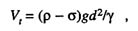
where α and γ are the density and viscosity of air, and ρ and d are the density and diameter of the particle. Particles larger than 5 to 10 μm are filtered by small hairs in the nares. Sharp bends in the nasal passages, trachea, and bronchi also cause these larger particles to impact the airway walls, where they adhere and are cleared by the mucocilary sweeping action of the bronchial lining cells. Inertial impaction of particulates leads to highly localized deposition at airway bifurcations and accounts for the observation that most smoking-related lung cancers occur at such locations. Flow velocity in the lower airways falls progressively as the airway cross-sectional area rises. Particles of 1 to 5 μm are deposited in the terminal bronchioles and alveolar regions mainly by sedimentation, with Brownian diffusion transporting particles smaller than 1 μm.
Cardiovascular Physiology In Microgravity
Given the gravity dependence of the cardiovascular and pulmonary systems, it is not surprising that humans exposed to altered gravity show significant cardiovascular and pulmonary changes. These were
observed on the very earliest spaceflights. On entering microgravity, there is an immediate headward shift of fluids in the body. This is easily seen by an impressive swelling in the face and neck that occurs within minutes of reaching orbit. Simultaneously, there is a loss of volume in the lower extremities.4 5 Studies on the nature and time course of this headward fluid shift have produced some surprises. As expected, the rapid initial loss of leg volume is from the deep venous system of the legs. This is quickly followed by loss of lower-extremity interstitial fluids. Ten percent or more of leg volume may be lost within the first 24 hours of spaceflight. Systemic plasma volume6 also decreases rapidly, but overall, cardiopulmonary blood volume increases.7 This is reflected in measured increases in pulmonary capillary blood volume and increased cardiac chamber volumes.8
Central venous pressure (CVP) is the pressure of blood as it enters the right atrium. The CVP is the heart's filling pressure and is an important determinant of cardiac output, the amount of blood pumped per minute by the heart. In a supine human on Earth, CVP is normally 4 to 7 mm Hg, but in microgravity, it is paradoxically low, typically around 0 to 2 mm Hg.9 10 11 The presence of extensive swelling of the face and neck as well as increased cardiac chamber dimensions would usually indicate a high CVP, but the opposite was found in microgravity. This means that in microgravity there is a change in the relationship between cardiac filling pressure and volume. This, by definition, means that cardiac compliance or "stretchiness" has increased. It is unlikely that the intrinsic properties of the heart muscle itself change with only a few seconds of exposure to microgravity. Therefore, some change in the transmyocardial pressure must be present. This is presumably due to some combination of the following: a loss of hydrostatic pressure gradient within the heart itself, a decreased pressure within the thorax, and less pressure being exerted by the lungs on the heart in microgravity.
This increased heart volume (preload) increases cardiac output, to levels at or somewhat above what is found on Earth when subjects are measured while resting in the supine position.12 13 14 Since cardiac output is the amount of blood pumped per beat times the number of beats per minute (stroke volume × heart rate = cardiac output), the basis for the increased cardiac output can be determined. In microgravity, the increased cardiac output is completely accounted for by an increased stroke volume, as pulse rate is usually the same or somewhat slower than what was seen on Earth when measured with the subject in a standing position. The cardiac output gradually declines during flight, and by 7 to 10 days in orbit, values approach, but do not quite reach, outputs seen with humans in the upright position in 1 g. There are various causes for the decline in cardiac output over time, including progressive decreases in plasma volume and red blood cell mass, altered autonomic cardiovascular control, and continued changes in body fluid distribution.15 16 It is of interest that the resting hemodynamic state achieved by humans in microgravity closely approximates that seen on Earth when compared with measurements taken of humans in the upright position. The human cardiovascular system is adapted to the upright, biped position and not the supine or quadruped position.
Blood pressure and its regulation are also altered by exposure to microgravity. The larger stroke volume in microgravity elevates systolic blood pressure.17 18 19 Decreased systemic vascular resistance reflects a compensatory vasodilation and leads to a widened pulse pressure and decreased diastolic pressure. Arterial blood pressure decreases over the first few days of spaceflight and approaches the values seen in humans who are in the upright position on Earth. Heart rate responsiveness to experimentally induced changes in carotid arterial pressure decreases in microgravity, demonstrating altered function of the carotid (high pressure) baroreflex (pressure sensing) system. 20 21 The magnitude and direction of baroreflex changes are similar to what is produced on Earth with 7 to 14 days of head-down bed rest. 22 Aerobic exercise capacity, assessed by bicycle ergometry, is well maintained in spaceflight, as is the relationship between systemic oxygen uptake and cardiac output.23 Orthostatic tolerance (the ability to maintain blood pressure and cerebral perfusion during gravitational stress) deteriorates significantly
in orbit, but this is not a problem as long as the astronauts are not exposed to gravitational stress.24 Overall, cardiovascular adaptation to microgravity is rapid and highly efficient, with no evidence of any functional impairment during spaceflight.25 26 27 28 29
Irregular heart rhythms, consisting primarily of isolated premature atrial or ventricular contractions, have been reported in crew members on U.S. and Soviet flights, especially during extravehicular activity (EVA). Evidence from the Apollo program and sporadic monitoring of U.S. shuttle flights suggest a very low incidence of spaceflight heart rhythm disturbances and little or no clinical or operational significance.30 31 Separate reports of operationally significant heart rhythm disturbances in 2 Mir cosmonauts have been thoroughly reviewed, and in neither case was there a significant medical problem. The heart rhythm irregularities recorded so far in crew members of the U.S. and Russian space programs would be considered normal in healthy individuals. Increased plasma catecholamines (adrena-line-like compounds) associated with psychological stress; heavy upper-body isometric exercise required to function in partial-pressure, soft-shell space suits during space walks and other EVA; or low serum potassium, elevated serum calcium, thermal loads, and nonspecific cardiac changes have been suggested as etiological factors for the heart rate irregularity, but there is no evidence that these factors have caused cardiac rhythm problems in spaceflight.32 33 Some of the apparent increase in heart rhythm disturbances during EVA may be due to ascertainment bias, as EVA is more often electrocardiographically monitored than most other activities of spaceflight.
Pulmonary Physiology In Microgravity
Alterations in pulmonary air flow and volume characteristics and gas exchange in microgravity have also been well characterized and, like the cardiovascular changes, seem to be adaptive (see Table 8.1). The increased lung blood flow in microgravity is not associated with any adverse effects. Specifically, there is no increase in alveolar fluid, as had been postulated by some investigators.34 There is a significant (15 percent) decrease in the average volume per breath (tidal volume), but an increase in breathing frequency and decreases in both alveolar (15 percent) and physiologic (18 percent) dead space. 35 These changes, along with increased lung blood flow and more uniform flow distribution, actually improved overall lung function in microgravity. The decreased functional reserve capacity may be due to increased pulmonary blood volume and the upward displacement of abdominal contents associated with the absence of gravity.36 The decreased alveolar dead space is probably due to the alveoli achieving a more uniform size without the compression that normally occurs in the lung bases as a result of crowding from the increased blood volume.37 38 Lung air-flow rates decreased initially in-flight but returned to normal by 7 to 9 days in-flight. It is possible that mild airway swelling was present initially, but the studies that were performed did not detect it.39 40 What were thought to be gravity-dependent lung V/Q inequalities should have disappeared in microgravity, but their persistence suggested that they were structural in nature.41 42 Gas exchange, as measured by carbon monoxide diffusing capacity (DLco), improved significantly in microgravity. It was postulated that the absence of gravity gradients in pulmonary blood flow distribution provided a much greater effective capillary surface area and increased alveolar-capillary gas exchange. Analysis of the DLco results showed that increases were due mainly to increased membrane diffusion surface area, while increased pulmonary capillary blood volume had only a minor contribution. 43 End-tidal pCO2 reflects the concentration of carbon dioxide at the end of expiration and is dependent on alveolar CO2 concentrations. It was normal when cabin CO2 level were normal, but rose 1 to 3 mm Hg when there was less efficient cabin CO2 removal on a subsequent flight. Increased CO2 levels within a spacecraft create a gradient that
TABLE 8.1 Changes in Pulmonary Function Observed and the Number of Subjects Studied During Spacelab Missions SLS-1 and D-2
decreases CO2 clearance from the body and can have profound effects on astronauts' health and function.44 Further studies should be performed to determine acceptable spacecraft CO2 levels.
Pulmonary gas mixing and alveolar ventilation were assessed by examining the concentrations of exhaled helium (He) and sulfur hexafluride (SF6).45 These gases, like all respiratory gases, have similar convective mixing properties, but their molecular weights are 4 and 146, respectively, and so the diffusivity of He is approximately 6 times that of SF6. Convective mixing of inspired gases occurs mainly in the centrally located alveoli, while peripheral acinar ventilation is much more dependent on diffusion. When measured in both standing and supine subjects on Earth, mixing inhomogeneities were much greater for SF 6, whereas in sustained microgravity, the differences disappeared. During breathholding in microgravity, SF6 actually exhibited better mixing properties than did He. These results were quite surprising and contradicted a widely accepted component of pulmonary physiology. The investigators were not able to explain their findings fully but postulated that changes in acinar architecture produced by the absence of gravity may have altered ventilation, especially in the peripheral regions. It is also possible that alterations in gas mixing caused by the normal cyclical compression of the lungs by the heart may also have played a role. Similar changes were not seen when measurements were made during short periods of microgravity (20 to 25 seconds) produced by parabolic flights.46 All of the observed changes in pulmonary function returned to the preflight baseline almost immediately after reentry to 1 g, whereas cardiovascular readaptation to 1 g appears to be slower and is associated with physiologically and operationally significant impairment. Aerosol deposition has been studied only during parabolic flight, but measurements taken then show unexpectedly high deposition of small particles compared to predictions. This suggests that the absence of sedimentation allows particles to travel more deeply into the alveolar region of the lung where they deposit. 47 Although the absence of sedimentation still reduces overall deposition, the potential health effects of deeper particle penetration are unknown.
Postflight Cardiovascular Physiology
Orthostatic intolerance, an impaired ability to maintain adequate blood pressure while in an upright position, has been found in almost all astronauts returning from spaceflights of even a few hours' duration. Overall, about two-thirds of the astronauts tested early postflight had hemodynamically significant orthostatic intolerance.48 Virtually no testing has been performed on shuttle pilots and flight engineers during reentry, but levels of postflight impairment suggest that orthostatic intolerance remains a major, unresolved, clinical and operational problem. The extent of orthostatic intolerance postflight is variable and depends on the duration of flight, interindividual differences in cardiovascular function among the astronauts, and the time and method of postflight testing. Careful hemodynamic measurements of astronauts immediately postflight show that heart rate and stroke volume are relatively well maintained initially, but a failure to increase total peripheral resistance adequately leads to a fall in blood pressure, insufficient brain blood flow, and an inability to stand quietly for more than 5 to 10 minutes postflight.
Decreased red blood cell mass and plasma volume (see the section "Hematology" in Chapter 9) is a major factor but does not fully explain the extent of cardiovascular deconditioning seen postflight. Excessive pooling of blood in the lower extremities, thought likely because of decreased mass and tone in postural muscles, does not seem to be present.49 50 51 Carotid baroreflex function is decreased in-flight and remains so for some days after return to Earth, but the extent to which it accounts for the observed orthostatic intolerance is not clear. Inadequate vasoconstriction may be due to baroreflex dysfunction, but in-flight experiments thus far have addressed only the heart-rate component of the baroreflex.52 53
Other abnormalities of autonomic nervous system regulation may also be present. Many of the autonomic function experiments flown on the recent Neurolab Life Sciences mission were designed to address these and other aspects of neurohumoral control of circulation.
Postflight orthostatic intolerance is also associated with a major decrease in exercise capacity. Maximal heart rates are unchanged compared with preflight test results.54 55 Blood pressure at the start of exercise is either unchanged or slightly elevated because of increased vasoconstriction. The major hemodynamic defect is an inadequate stroke volume, which is decreased by one-third or more from preflight levels and leads to proportionate decreases in cardiac output and skeletal muscle oxygen delivery. Undoubtedly, some component of skeletal muscle atrophy and decreased neuromuscular coordination contribute to the decreased aerobic capacity, but these are probably minor factors compared with decreased blood volume and autonomic nervous system dysregulation. Operational concerns about postflight orthostatic intolerance and aerobic deconditioning have increased since astronauts began using the heavy, bulky, partial-pressure launch and entry suit (LES) now required for all post-Challenger flights.
Recovery to preflight levels of orthostatic tolerance occurs within a day or so following flights of less than 1 month's duration, but longer recovery is associated with longer-duration flights.56 Recovery of aerobic capacity is also relatively rapid but takes about a week or so after landing. The time course of cardiovascular recovery consistent with return of autonomic control and intravascular volume is too fast for recovery of skeletal muscle atrophy. The recovery course is also slower than was believed from clinical observations only, pointing out the need for careful, objective measurements of physiological function and capacity for accurate assessment of functional status and capability. Serial, long-term data on recovery following long-duration flights are lacking. Magnetic resonance imaging has documented a 7 to 10 percent decrease in heart muscle mass following spaceflights as short as 10 days.57 58 59 The significance of this finding and its recovery time course are unknown.
In-Flight Countermeasures
A variety of cardiovascular countermeasures have been proposed and/or instituted to counteract the changes associated with spaceflight. 60 61 62 63 64 65 66 67 68 Most of these countermeasures have evolved over time and are frequently based on clinical intuition rather than prospectively collected data. The Russians use thigh constriction cuffs (braselet) to decrease cephalad fluid shifts at various phases of their long-duration spaceflights (Oleg Yu Atkov, M.D., Cosmonaut-USSR, personal communication). Data on the effectiveness of these cuffs are lacking, but many of the cosmonauts report significant relief from the head congestion and facial edema otherwise associated with microgravity. An aggressive in-flight exercise program seems to be only partially effective in maintaining postflight aerobic capacity, and its effects on orthostatic tolerance are largely unknown. On the Russian space station Mir, cosmonauts and astronauts currently exercise for almost 2 hours daily during flight and use saline loading and anti-g garments to minimize orthostatic intolerance postflight. On the U.S. shuttle, astronauts tend to perform some aerobic exercise, although there is no formal requirement for exercise during flight, and both exercise and fluid-loading regimens differ according to crew preference, so that actual practice is highly variable.
Analysis of the physiological responses to large amounts of intravenous normal saline solution administered to bed-rest subjects or to astronauts in-flight showed that the adapted blood volumes were maintained at their reduced bed-rest or 0-g levels and that the saline was cleared from the circulation of these reduced-blood-volume subjects as rapidly as in 1 g.69 70 Anecdotal reports suggest that much of the fluid load taken by shuttle astronauts just prior to reentry is also rapidly cleared by urination. The
Russian program also employs lower body negative pressure (LBNP) with salt loading in the last weeks of flight to improve orthostatic tolerance. LBNP is produced when a rigid chamber encloses the lower half of the astronaut's body and 10 to 50 mm Hg of suction is applied to shift blood footward, producing fluid shifts similar to what occurs with the standing position in 1 g. There is no evidence that salt loading itself prior to reentry increases intravascular volume, with or without LBNP stimulation. Early shuttle era data suggested that salt loading improved orthostatic tolerance postflight, but measurements were often made several hours after landing, and not all subjects were tested.71 The important question is whether the countermeasure improves blood pressure and orthostatic tolerance during reentry and in the first few minutes after landing, when an emergency egress might be required. Virtually no data are available from these time frames. A recent study measured multiple hemodynamic variables including cardiac outputs within 4 hours of landing and was unable to document a difference in orthostatic tolerance between those who did or did not fluid load prior to reentry to 1 g.72 A brief bout of maximal exercise performed just before reentry has been suggested as an intervention to promote fluid and salt retention, but this hypothesis has not been adequately tested.73 The mineralocorticoid fludrocortisone acetate (Florinef) showed promise for promoting fluid retention and elevating blood pressure in some bed-rest studies.74 However, when it was administered to a few astronauts in-flight to produce salt and water retention, the results were disappointing. Further studies have not been conducted.
Liquid-filled cooling garments used during EVA decrease thermally induced increases in skin blood flow and could be used during reentry to maintain cardiac output and blood pressure.75 76 Modified anti-g suits, similar to those used in high-performance military aircraft, have been employed to decrease the lower extremity and abdominal venous pooling that occurs during reentry hypergravity, and their use appears to produce the desired hemodynamic improvement. In addition to decreasing venous pooling, these suits raise systemic vascular resistance and blood pressure significantly when used at standard operating pressures.77 78 The Russians wrap the lower body tightly with inelastic strapping (karkas) to achieve the same effect as the anti-g suit.
The current exercise countermeasures are broadly applied and do not specifically address muscle atrophy, bone demineralization, aerobic deconditioning, or orthostatic intolerance. It is likely that more efficient, better-focused regimens could be devised if each problem were initially addressed separately, with attention paid to underlying physiological mechanisms. The current Russian exercise countermeasure regimen is enormously expensive in terms of crew time and the amount of additional food and water that must be supplied to support the metabolic requirements associated with daily, prolonged, high-intensity exercise. Also, major differences related to age and gender exist among crew members with respect to bone and muscle metabolism, as well as orthostatic tolerance and aerobic capacity. These differences would seem to require astronaut-specific countermeasure "prescriptions." In addition, current Russian and NASA flight rules require rigid adherence to inadequately tested antiorthostatic countermeasures. This confounds testing of any new interventions and impedes assessment of both current and future countermeasures.
Future Directions
Over the last few decades, a number of space physiology reviews and reports have identified important research questions and recommended studies to address them. The cardiopulmonary data discussed above, obtained during a series of Skylab, Salyut, Mir, and Spacelab Life Sciences missions, provide a fairly comprehensive, systems-level view of the nature and time course of cardiovascular and pulmonary changes that occur when humans are exposed to microgravity for periods ranging from a few days to 13 months. Many of the more observational research questions have been answered at least
partially, and future cardiopulmonary investigations should focus more on mechanisms. An improved understanding of underlying physiological mechanisms should also make it possible to address important operational questions more effectively. Postflight orthostatic hypotension remains one of the most important operational problems. Given the prospect of lunar or martian long-duration flights, orthostatic hypotension, aerobic deconditioning, and pulmonary particulate behavior in low- or 0-g environments must be understood and addressed. Important steps have already been taken, but current scientific knowledge and medical expertise must be increased to provide the level of security that will be required for such missions to proceed.
Cardiopulmonary Equipment
Much of the hardware needed for microgravity research with humans has already been developed for laboratory use, but flight or even portable units are often not available. Even less flight equipment and fewer facilities exist for animal research. Several techniques should be developed or obtained for space physiology research in both animals and humans. These are described briefly:
- Automated recording devices should be used extensively to capture physiological data with minimal additional astronaut involvement. Examples include exercise equipment that records astronaut identification, date, time, and workload; a simple body-mass measuring device; a dietary log system that does not require a manual logbook entry each time food or drink is consumed; and an automated urine measurement system that records void volumes, but also makes and records simple measures of electrolytes, creatinine levels, and so on. Such devices would greatly enhance the quality and quantity of physiological data obtained and would decrease the crew time required for such measurements.
- Accurate measurements should be made of cardiac output for both humans and animals. A human-rated, noninvasive foreign gas system would be appropriate for humans, but animal systems will require chronically implanted, stable, low-risk technologies, such as electromagnetic or Doppler flow probes.
- Systems for accurate measurement of heart rate and both cuff and beat-to-beat blood pressure should be readily available during all phases of flight. Such systems should be easy to apply and use and, where possible, should include data storage and suitable interfaces for down-link capability. Electrocardiograms and beat-to-beat blood pressure could be analyzed for first-order hemodynamics, variability, spectral content, power, and so on and correlated with other indices of cardiopulmonary function.
- Respiratory gas measurements are critical for most studies of pulmonary function. Equipment such as lightweight, stable mass spectrometers and ultrasonic flow meters, although complex, should be obtained and modified for flight.
- A scintigraphic imaging system should be developed for flight and should include a variety of imaging energy levels to support graphical and metabolic imaging of at least blood, bone, and muscle. Such a device would be multidisciplinary in its usage and would support metabolic, cardiopulmonary, and musculoskeletal discipline experiments. Ultrasound imaging systems should be available on the International Space Station. Magnetic resonance imaging (MRI) and computed tomography (CT) systems would be highly desirable for spaceflight and should be considered if continued advances in technology reduce their size and power consumption sufficiently.
- Exercise equipment should be multifunctional to permit exercise in multiple modalities, as well as testing and recording of astronaut data. Linkage with physiological monitoring equipment is also important.
- A microgravity-qualified system for aerosol generation, sizing, and counting will be needed to perform studies involving aerosols in microgravity.
- An in-suit bubble-detection system will be needed to assess the effectiveness of various regimens to counteract decompression sickness.
Research
Cardiovascular Research Recommendations
- Investigate the specific mechanisms underlying the inadequate total peripheral resistance during orthostatic stress observed postflight, and determine the effective countermeasures. Both human and instrumented animal models will be required.
- Determine the appropriate method for referencing intrathoracic vascular pressures to systemic pressures, given the observed changes in alveolar and thoracic volume and compliance in microgravity, and in this setting determine whether chest compression will produce sufficient intrathoracic pressure to achieve adequate cardiopulmonary resuscitation.
- Determine the nature, magnitude, and time course of cardiovascular adjustments to microgravity, including assessment of hemodynamic, neurohumoral, morphological, histological, and molecular changes in the cardiovascular system.
- Determine whether microgravity-induced changes in local perfusion cause changes in vascular or vasomotor control (vascular proliferation or atrophy, secretion of endothelially derived vasoactive substances and microcirculatory autoregulatory mechanisms, and so on) or organ function (pulmonary gas exchange, renal clearance mechanisms, blood-brain barrier and cerebral pressure, etc.).
- Identify and validate countermeasures that might be effective in combating long-duration spaceflight-associated cardiovascular changes, and determine the mechanisms by which changes in fluid distribution and metabolism affect countermeasures designed to protect against cardiovascular and musculoskeletal deconditioning (e.g., LBNP, fluid rehydration, centrifugation, exercise, drugs, etc.).
- Determine the relationship between the cardiovascular adjustments to spaceflight and those occurring in Earth-based models.
- Determine the relationship of cardiovascular adjustments to microgravity-induced changes in other systems, especially the neurovestibular, autonomic nervous, hematopoietic (blood forming), and renal-endocrine systems.
- Determine whether there are changes in myocardial function associated with microgravity (contractile proteins, excitation-contraction coupling mechanisms, cardiac energetics, atrophy, etc.).
- Determine whether there are additional uses of microgravity for the study of terrestrial cardiovascular processes.
- Determine whether weightlessness affects cardiovascular pathophysiological mechanisms otherwise commonly found in adults in a 1-g environment (e.g., development of hypertrophy, dilation, regurgitant lesions, endothelial repair, and tissue healing in cardiovascular and other tissues).
Pulmonary Research Recommendations
- Determine how microgravity alters lung deposition of aerosol and whether this constitutes a health hazard.
-
- Does the absence of the sedimentation mechanism cause deeper penetration of particles into the lung?
- What is the aerosol concentration, particle size profile, and bacterial contamination in the current spacecraft environments and atmospheres?
- Does microgravity alter nonventilatory responses to aerosolized antigens (immune responses, phagocytosis, etc.)?
- Determine and characterize long-duration, microgravity-induced topographical changes in pulmonary structure and function at rest and during exercise.
- What happens to the gravity-determined topographical differences of blood flow, ventilation, alveolar size, intrapleural pressures, and mechanical stresses in microgravity?
- What changes occur in rib cage, diaphragm, and abdominal wall configurations during microgravity?
- Are pulmonary function changes associated with long-duration exposure to microgravity different from those seen in short (<1 month) flights?
- Does long-duration exposure to microgravity affect pulmonary aging or disease processes?
- Determine whether lunar or martian dust particles are associated with mechanical, allergic, or biochemical pulmonary toxicity.
- Extend current denitrogenation protocols to address extended EVA work schedules that will occur in the International Space Station era.
- Do current denitrogenation/decompression schedules lead to microvascular gas emboli in the lung?
- What changes in pulmonary function occur during and after EVA as a result of the combined influences of exercise, oxygen breathing, and pulmonary microvascular gas emboli?
- What resuscitation procedures should be used in the event of loss of cabin or EVA suit pressure, and would counterpressure and/or pressure breathing prolong consciousness?
- Determine whether respiratory muscle structure and function deteriorate in weightlessness and, if so, whether the changes decrease maximal oxygen uptake.
- Determine and characterize intrathoracic lymph flow, and changes in blood pressure and volume associated with microgravity.
- If fluid leakage into the alveoli does occur, is this increased by exercise, and is the gas exchange defect exaggerated?
References
1. West, J. 1968. Regional differences in the lung. Postgrad. Med. J. 44: 120-122.
2. Clarke, S.W., and Pavia, D. 1994. Defense mechanisms and immunology: Deposition and clearance. Pp. 313-325 in Textbook of Respiratory Medicine, 2nd ed., Vol. 1 (J.F. Murray and J.A. Nadel, eds.). W.B. Saunders, Philadelphia.
3. Taulbee, D., and Yu, C. 1975. A theory of aerosol deposition in the human respiratory tract. J. Appl. Physiol. 38: 77-85.
4. Thorton, W.E., Moore, T.P., and Pool, S.L. 1987. Fluid shifts in weightlessness. Aviat. Space Environ. Med. 58(9, Suppl.): A86-A90.
5. Moore, T.P., and Thornton, W.E. 1987. Space shuttle in-flight and postflight fluid shifts measured by leg volume changes. Aviat. Space Environ. Med. 58: A91-A96.
6. Leach, C.S., Alfrey, C.P., Suki, W.N., Leonard, J.I., Rambaut, P.C., Inners, L.D., Smith, S.M., Lane, H.W., and Krauhs, J.M. 1996. Regulation of body fluid compartments during short-term spaceflight. J. Appl. Physiol. 81: 105-116.
7. Prisk, G.K., Guy, H.J., Elliott, A.R., Deutschman, R.A., and West, J.B. 1993. Pulmonary diffusing capacity, capillary blood volume, and cardiac output during sustained microgravity. J. Appl. Physiol. 75: 15-26.
8. Buckey, J.C., Jr., Gaffney, F.A., Lane, L.D, Levine, B.D., Watenpaugh, D.E., Wright, S.J., Yancy, C.W., Jr., Meyer, D.M., and Blomqvist, C.G. 1996. Central venous pressure in space. J. Appl. Physiol. 81: 19-25.
9. Kirsch, K.A., Rocker, L., Gauer, O.H., et al. 1984. Venous pressure in man during weightlessness. Science 225: 218-219.
10. Buckey, J.C., Jr., Gaffney, F.A., Lane, L.D., Levine, B.D., Watenpaugh, D.E., and Blomqvist, C.G. 1993. Central venous pressure in space. N. Engl. J. Med. 329: 1853-1854.
11. Foldager, N., Andersen, T.A.E., Jessen, F.B., Ellegaard, P., Stadeager, C., Videbæk, R., and Norsk, P. 1994. Central venous pressure during weightlessness in humans. Pp. 695-696 in Scientific Results of the German Spacelab Mission D-2 (P.R. Sahm, M.H. Keller, and B. Schiewe, eds.). Wissenschaftliche Projektführung D-2, Köln, Germany.
12. Buckey, J.C., Jr., Gaffney, F.A., Lane, L.D, Levine, B.D., Watenpaugh, D.E., Wright, S.J., Yancy, C.W., Jr., Meyer, D.M., and Blomqvist, C.G. 1996. Central venous pressure in space. J. Appl. Physiol. 81: 19-25.
13. Shykoff, B.E., Farhi, L.E., Olszowka, A.J., Pendergast, D.R., Rokitka, M.A., Eisenhardt, C.G., and Morin, R.A. 1996. Cardiovascular response to submaximal exercise in sustained microgravity. J. Appl. Physiol. 81: 26-32.
14. Prisk, G.K., Guy, H.J.B., Elliott, A.R., Deutschman III, R.A., and West, J.B. 1993. Pulmonary diffusing capacity, capillary blood volume, and cardiac output during sustained microgravity. J. Appl. Physiol. 75: 15-26.
15. Leach, C.S., Alfrey, C.P., Suki, W.N., Leonard, J.I., Rambaut, P.C., Inners, D., Smith, S.M., Lane, H.W., and Krauhs, J.M. 1996. Regulation of body fluid compartments during short-term spaceflight. J. Appl. Physiol. 81: 105-116.
16. Alfrey, C.P., Udden, M.M., Leach-Huntoon, C.S., Driscoll, T., and Pickett, M.H. 1996. Control of red blood cell mass in spaceflight. J. Appl. Physiol. 81: 98-104.
17. Buckey, J.C., Jr., Gaffney, F.A., Lane, L.D, Levine, B.D., Watenpaugh, D.E., Wright, S.J., Yancy, C.W., Jr., Meyer, D.M., and Blomqvist, C.G. 1996. Central venous pressure in space. J. Appl. Physiol. 81: 19-25.
18. Shykoff, B.E., Farhi, L.E., Olszowka, A.J., Pendergast, D.R., Rokitka, M.A., Eisenhardt, C.G., and Morin, R.A. 1996. Cardiovascular response to submaximal exercise in sustained microgravity. J. Appl. Physiol. 81: 26-32.
19. Prisk, G.K., Guy, H.J.B., Elliott, A.R., Deutschman III, R.A., and West, J.B. 1993. Pulmonary diffusing capacity, capillary blood volume, and cardiac output during sustained microgravity. J. Appl. Physiol. 75: 15-26.
20. Fritsch, J.M., Charles, J.B., Bennett, B.S., Jones, M.M., and Eckberg, D.L. 1992. Short-duration spaceflight impairs human carotid baroreceptor-cardiac reflex responses. J. Appl. Physiol. 73: 664-671.
21. Fritsch-Yelle, J.M., Charles, J.B., Jones, M.M., Beightol, L.A., and Eckberg, D.L. 1994. Spaceflight alters autonomic regulation of arterial pressure in humans. J. Appl. Physiol. 77:1776-1783.
22. Eckberg, D.L., and Fritsch, J.M. 1992. Influence of ten-day head-down bedrest on human carotid baroreceptor-cardiac reflex function. Acta Physiol. Scand. 604 (Suppl.): 69-76.
23. Shykoff, B.E., Farhi, L.E., Olszowka, A.J., Pendergast, D.R., Rokitka, M.A., Eisenhardt, C.G., and Morin, R.A. 1996. Cardiovascular response to submaximal exercise in sustained microgravity. J. Appl. Physiol. 81: 26-32.
24. Bungo, M.W., Charles, J.B., and Johnson, P.C., Jr. 1985. Cardiovascular deconditioning during spaceflight and the use of saline as a countermeasure to orthostatic intolerance. Aviat. Space Environ. Med. 56: 985-990.
25. Johnston, R., and Dietlen, F., eds. 1977. Biomedical Results from Skylab. NASA-SP-377. National Aeronautics and Space Administration, Washington, D.C.
26. Hinghoffer-Szalkay, H. 1996. Physiology of cardiovascular, respiratory, interstitial, endocrine, immune, and muscular systems. Pp 107-153 in Biological and Medical Research in Space (D. Moore, P. Bie, and H. Oser., eds.). Springer, Berlin.
27. Blomqvist, C., and Stone, H. 1983. Cardiovascular adjustments to gravitational stress. Pp. 1025-1063 in Handbook of Physiology, Vol. III (J. Shepard and F. Abboud, eds.). American Physiological Society, Bethesda, Md.
28. Watenpaughm, D.E., and Hargens, A.R. 1995. The cardiovascular system in microgravity. Pp. 631-734 in Handbook of Physiology, Vol. 1 (M.J. Fregly and C.M. Blatteis, eds.). Oxford University Press, New York.
29. Berry, C.A. 1976. Medical legacy of Skylab as of May 9, 1974: The manned Skylab missions. Aviat. Space Environ. Med. 47: 418-424.
30. Berry, C.A. 1974. Medical legacy of Apollo. Aerosp. Med. 45: 1046-1057.
31. Nicogossian, A.E., and Parker, J.F., Jr. 1982. The cardiovascular system. P. 180 in Space Physiology and Medicine. NASA SP-447. National Aeronautics and Space Administration, Washington, D.C.
32. Waligora, J., Sauer, R., and Bredt, J. 1989. Spacecraft life support systems. Pp. 104-120 in Space Physiology and Medicine (A. Nicogossian, C. Huntoon, and S. Pool, eds.). Lea and Febiger, Philadelphia.
33. Helmke, C. 1990. Advances in Soviet extravehicular activity (EVA) suit technology. Air Force Foreign Technology Division Bulletin FTD-2660P-127/38-90.
34. Prisk, G.K., Guy, H.J.B., Elliott, A.R., Deutschman III, R.A., and West, J.B. 1993. Pulmonary diffusing capacity, capillary blood volume, and cardiac output during sustained microgravity. J. Appl. Physiol. 75: 15-26.
35. Prisk, G.K., Guy, H.J.B., Elliott, A.R., Paiva, M., and West, J.B. 1995. Ventilatory inhomogeneity determined from multiple-breath washouts during sustained microgravity on Spacelab SLS-1. J. Appl. Physiol. 78: 597-607.
36. Elliott, A.R., Prisk, G.K., Guy, H.J.B., and West, J.B. 1994. Lung volumes during sustained microgravity on Spacelab SLS-1. J. Appl. Physiol. 77: 2005-2014.
37. Guy, H.J.B., Prisk, G.K., Elliott, A.R., Deutschman III, R.A., and West, J.B. 1994. Inhomogeneity of pulmonary ventilation during sustained microgravity as determined by single-breath washouts. J. Appl. Physiol. 76: 1719-1729.
38. Elliott, A.R., Prisk, G.K., Guy, H.J.B., and West, J.B. 1994. Lung volumes during sustained microgravity on Spacelab SLS-1. J. Appl. Physiol. 77: 2005-2014.
39. Guy, H.J.B., Prisk, G.K., Elliott, A.R., and West, J.B. 1991. Maximum expiratory flow-volume curves during short periods of microgravity. J. Appl. Physiol. 70: 2587-2596.
40. Elliott, A.R., Prisk, G.K., Guy, H.J.B., Kosonen, J.M., and West, J.B. 1996. Forced expirations and maximum expiratory flow-volume curves during sustained microgravity on SLS-1. J. Appl. Physiol. 81: 33-43.
41. Prisk, G.K., Elliott, A. R., Guy, H.J.B., Kosonen, J.M., and West, J.B. 1995. Pulmonary gas exchange and its determinants during sustained microgravity on Spacelabs SLS-1 and SLS-2. J. Appl. Physiol. 79: 1290-1298.
42. Lauzon, A.M., Elliott, A.R., Paiva, M., West, J.B., and Prisk, G.K. 1998. Cardiogenic oscillation phase relationships during single-breath tests performed in microgravity. J. Appl. Physiol. 84: In Press.
43. Prisk, G.K., Guy, H.J.B., Elliott, A.R., Deutschman III, R.A., and West, J.B. 1993. Pulmonary diffusing capacity, capillary blood volume, and cardiac output during sustained microgravity. J. Appl. Physiol. 75: 15-26.
44. Prisk, G.K., Elliott, A.R., Guy, H.J.B., Kosonen, J.M., and West, J.B. 1995. Pulmonary gas exchange and its determinants during sustained microgravity on Spacelabs SLS-1 and SLS-2. J. Appl. Physiol. 79: 1290-1298.
45. Prisk, G.K., Lauzon, A.M., Verbanck, S., Elliot, A.R., Guy, H.J., Paiva, M., and West, J.B. 1996. Anomalous behavior of helium and sulfur hexafluoride during single-breath tests in sustained microgravity. J. Appl. Physiol. 80: 1126-1132.
46. Lauzon, A.M., Prisk, G.K., Elliott, A.R., Verbanck, S., Paiva, M., and West, J.B. 1997. Paradoxical helium and sulfur hexafluoride single-breath washouts in short-term vs. sustained microgravity. J. Appl. Physiol. 82: 859-65.
47. Darquenne, C., Paiva, M., West, J.B., and Prisk, G.K. 1997. Effect of microgravity and hypergravity on deposition of 0.5- to 3-mm-diameter aerosol in the human lung. J. Appl. Physiol. 83: 966-974.
48. Buckey, J.C., Jr., Lane, L.D., Levine, B.D., Watenpaugh, D.E., Wright, S.J., Moore, W.E., Gaffney, F.A., and Blomqvist, C.G. 1996. Orthostatic intolerance after spaceflight. J. Appl. Physiol. 81: 7-18.
49. Buckey, J.C., Jr., Lane, L.D., Levine, B.D., Watenpaugh, D.E., Wright, S.J., Moore, W.E., Gaffney, F.A., and Blomqvist, C.G. 1996. Orthostatic intolerance after spaceflight. J. Appl. Physiol. 81: 7-18.
50. Moore, T.P., and Thornton, W.E. 1987. Space shuttle in-flight and postflight fluid shifts measured by leg volume changes. Aviat. Space Environ. Med. 58: A91-A96.
51. Thornton, W.E., Moore, T.P., and Pool, S.L. 1987. Fluid shifts in weightlessness. Aviat. Space Environ. Med. 58: A86-A90.
52. Fritsch-Yelle, J.M., Charles, J.B., Jones, M.M., Beightol, L.A., and Eckberg, D.L. 1994. Spacefligt alters autonomic regulation of arterial pressure in humans. J. Appl. Physiol. 77: 1776-1783.
53. Eckberg, D.L., and Fritsch, J.M. 1992. Influence of ten-day head-down bedrest on human carotid baroreceptor-cardiac reflex function. Acta Physiol. Scand. 604 (Suppl): 69-76.
54. Levine, B.D., Lane, L.D., Watenpaugh, D.E., Gaffney, F.A., Buckey, J.C., and Blomqvist, C.G. 1996. Maximal exercise performance after adaptation to microgravity. J. Appl. Physiol. 81: 686-694.
55. Shykoff, B.E., Farhi, L.E., Olszowka, A.J., Pendergast, D.R., Rokitka, M.A., Eisenhardt, C.G., and Morin, R.A. 1996. Cardiovascular response to submaximal exercise in sustained microgravity. J. Appl. Physiol. 81: 26-32.
56. Watenpaugh, D.E., and Hargens, A.R. 1995. The cardiovascular system in microgravity. Pp. 631-674 in Handbook of Physiology, Vol. 1 (M.J. Fregly and C.M. Blatteis, eds.). Oxford University Press, New York.
57. Buckey, J.C., Jr., Lane, L.D., Levine, B.D., Watenpaugh, D.E., Wright, S.J., Moore, W.E., Gaffney, F.A., and Blomqvist, C.G. 1996. Orthostatic intolerance after spaceflight. J. Appl. Physiol. 81: 7-18.
58. Charles, J.B., and Jones, M.M. 1992. Cardiovascular orthostaticfunction of space shuttle astronauts during and after return from orbit . In 43rd International Astronautics Federation Congress, Paris. Reprint 92-0262. International Astronautics Federation/International Astronautical Association, Paris.
59. Blomqvist C.G., Lane L.D., Wright S.J., Meny G.M, Levine B.D., Buckey J.C., Peashock R.M., Weatherall P., StrayGundersen J., Gaffney F.A., Watenpaugh D.E., Arbeille Ph. R.M., and Baisch, F. 1995. Cardiovascular regulation at microgravity. Pp. 688-690 in Proceedings of the Nordeney Symposium on Scientific Results of the German D-2 Spacelab Mission. (P.R. Sahm, M.H. Keller, and B. Schieve, eds.). WPF and Deutsche Agentur für Raumfahrtangelegenheiten (DARA), Bonn & Deutsche Forschungsanstalt für Luft- und Raumfahrt, Köln, Germany.
60. Mikhailov, V.M., Pometov, Y.D., and Andretsov, V.A. 1984. [LBNP training of crew members of the Saliut-6 orbital station]. Kosm. Biol. Aviakosmicheskaya Med. 18: 29-33.
61. Greenleaf, J.E., Bulbulian, R., Bernauer, E.M., Haskell, W.L., and Moore, T. 1989. Exercise-training protocols for astronauts in microgravity. J. Appl. Physiol. 67: 2191-204.
62. Arbeille, P., Gauquelin, G., Pottier, J.M., Pourcelot, L., Guell, A., and Gharib, C. 1992. Results of a 4-week head-down tilt with and without LBNP countermeasure: II. Cardiac and peripheral hemodynamics—comparison with a 25-day spaceflight. Aviat. Space Environ. Med. 63: 9-13.
63. Forthey, S. M. 1991. Development of lower body negative pressure as a countermeasure for orthostatic intolerance. J. Clin. Pharmacol. 31: 888-892.
64. Charles, J.B., and Lathers, C.M. 1994. Summary of lower body negative pressure experiments during spaceflight. J. Clin. Pharmacol. 34: 571-583.
65. Cavanagh, P.R., Davis, B.L., and Miller, T.A. 1992. A biomechanical perspective on exercise countermeasures for long term spaceflight. Aviat. Space Environ. Med. 63: 482-485.
66. Convertino, V.A. 1996. Exercise as a countermeasure for physiological adaptation to prolonged spaceflight. Med. Sci. Sports Exercise 28: 999-1014.
67. Hargens, A.R. 1994. Recent bed rest results and countermeasure development at NASA. Acta Physiol. Scand. 616 (Suppl.): 103-114.
68. Bungo, M.W., Charles, J.B., and Johnson, P.C., Jr. 1985. Cardiovascular deconditioning during spaceflight and the use of saline as a countermeasure to orthostatic intolerance. Aviat. Space Environ. Med. 56: 985-990.
69. Gaffney, F.A., Buckey, J.C., Lane, L.D., Hillebrecht, A., Schulz, H., Meyer, M., Baisch, F., Beck, L., Heer, M., and Maass, H. 1992. The effects of a 10-day period of head-down tilt on the cardiovascular responses to intravenous saline loading. Acta Physiol. Scand. 604 (Suppl.): 121-30.
70. Blomqvist C.G., Lane L.D., Wright S.J., Meny G.M, Levine B.D., Buckey J.C., Peashock R.M., Weatherall P., StrayGundersen J., Gaffney F.A., Watenpaugh D.E., Arbeille Ph. R.M., and Baisch, F. 1995. Cardiovascular regulation at microgravity. Pp. 688-690 in Proceedings of the Nordeney Symposium on Scientific Results of the German D-2 Spacelab Mission (P.R. Sahm, M.H. Keller, and B. Schieve, eds.). WPF and Deutsche Agentur für Raumfahrtangelegenheiten (DARA), Bonn & Deutsche Forschungsanstalt für Luft- und Raumfahrt (DLR), Köln.
71. Bungo, M.W., Charles, J.B., and Johnson, P.C. Cardiovascular deconditioning during spaceflight and the use of saline as a countermeasure to orthostatic intolerance. Aviat. Space Environ. Med. 56: 985-990.
72. Buckey, J.C., Jr., Lane, L.D., Levine, B.D., Watenpaugh, D.E., Wright, S.J., Moore, W.E., Gaffney, F.A., and Blomqvist, C.G. 1996. Orthostatic intolerance after spaceflight. J. Appl. Physiol. 81: 7-18.
73. Convertino, V.A., Polet, J.L., Engelke, K.A., Hoffler, G.W., and Lane, L.D., and Blomqvist, C.G. 1997. Evidence of increased beta-adrenoreceptor responsiveness induced by 14 days of simulated microgravity in humans. Am. J. Physiol. 273: R93-R99.
74. Vernikos, J., Dallman, M.F., Van Loon, G., and Keil, L.C. 1991. Drug effects on orthostatic intolerance induced by bedrest. J. Clin. Pharmacol. 31: 974-984.
75. Carson, M.A., Rouen, M.N., Lutz, C.C., McBarron II, J.W. 1975. Extravehicular mobility unit. Pp. 545-569 in Biomedical Results of APOLLO (R.S. Johnston, R.F. Dietlein, and C.A. Berry, eds.). NASA SP368. National Aeronautics and Space Administration, Washington, D.C.
76. Raven, P., Saito, M., Gaffney, F., Schutte, J., and Blomqvist, C. 1980. Interactions between surface cooling and LBNP-induced central hypovolemia. Aviat. Space Environ. Med. 51: 497-503.
77. Gaffney, F.A., Thal, E.R., Taylor, W.F., Bastian, B.C., Weigelt, J.A., Atkins, J.M., and Blomqvist, C.G. 1981. Hemodynamic effects of medical anti-shock trousers (MAST garment). J. Trauma 21: 931-937.
78. Pawelczyk, J., Query, R., Zuckerman, J., McMinn, S., and Raven, P. 1994. Sympathetic activation with abdominal compression: A mechanism for the action medical anti-shock trousers. FASEB J. 8: A604.


